Aletho News

ΑΛΗΘΩΣ

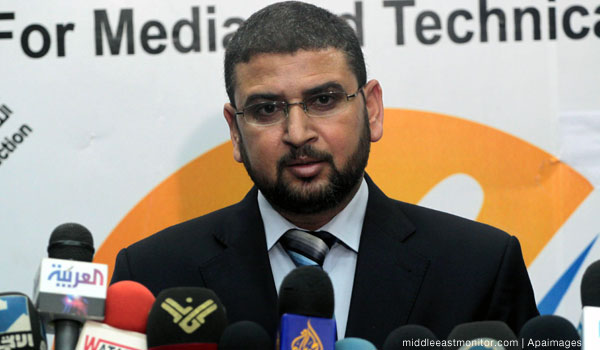
Hamas: Israeli announcement of names of kidnappers an attempt to cover its failure

MEMO | June 27, 2014

Hamas has described Israel’s announcement of the names of some of those it accuses of kidnapping the three settlers in Hebron as “an attempt to cover up its utter failure in finding them”, Anadolu news agency reported a Hamas official as saying.

Spokesman for the movement Sami Abu-Zuhri said yesterday: “The Israeli announcement of some of the names it accuses of implementing the Hebron operation reflects its continued state of confusion and an attempt to cover up its utter failure in finding them.”

The Israeli General Security Service, Shin Bet accused two Hamas activists from Hebron, in the south of the West Bank, “of kidnapping three Israeli settlers two weeks ago”.

An Israeli military spokeswoman confirmed reports that troops were seeking Marwan Kawasme and Amar Abu Aysha, members of Hamas in Hebron, both of whom have served time in Israeli prisons in the past.

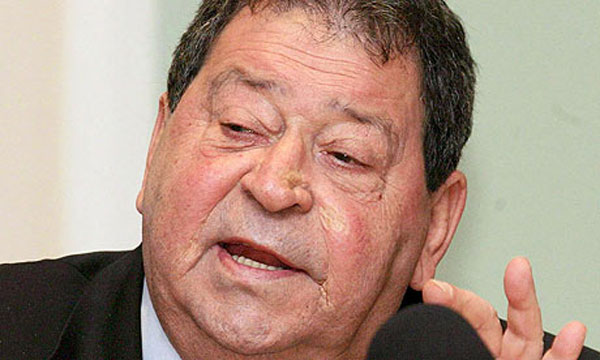
Israel’s Prime Minister, Benjamin Netanyahu said in a statement: “A short time after the kidnapping, I said that those who perpetrated this activity were terrorists of Hamas, and indeed today the security services of Israel published the names of two of the perpetrators of this heinous crime.”

He added: “I now expected President Abbas, who said important things in Saudi Arabia, to stand by those words and to break his pact with the Hamas terrorist organization that kidnaps children and calls for the destruction of Israel.”

Since the disappearance of three settlers from the south of the West Bank, the Israeli army has arrested nearly 571 Palestinians, mostly leaders and activists in the Hamas movement.

No Palestinian party has claimed responsibility for the abduction, but Netanyahu held Hamas responsible, an accusation the movement has rejected, without confirming or denying the charges.

June 27, 2014 Posted by | Deception, Ethnic Cleansing, Racism, Zionism | , , , | Leave a comment

Israel re-arrests 50 Palestinians freed in 2011 prisoner swap

MEMO | June 18, 2014

Israeli occupation forces arrested 65 Palestinians from the occupied West Bank last night, 50 of whom were prisoners released in Israeli soldier Gilad Shalit’s prisoners swap held between Hamas and Israel in 2011.

Head of Prisoners’ Centre for Studies Fuad Al-Kuffash said two Palestinian members of parliament were among those arrested. He added that Israeli forces told the families of the prisoners that they would expel them to the Gaza Strip.

Since last Thursday, when three Israeli settlers reportedly went missing, the Israeli occupation forces have been carrying out a wide house-to-house search in Hebron. They have arrested 240 Palestinians, at least 180 of whom are members of Hamas.

Israeli Prime Minister Benjamin Netanyahu praised the operation. “The activities carried out overnight, in which Hamas terrorists were arrested, including those who were released in the Gilad Shalit prisoner exchange deal, is an element with an important message that is part of a series of many actions that will continue,” he said.

Netanyahu said that the “goal is to retrieve the kidnapped teens and harm the Hamas movement in Judea and Samaria.”

Hamas kidnapped an Israeli soldier who was positioned in a military base in his tank on the Gaza borders in 2006. Israel released 1,027 Palestinians as part of prisoners’ swap with Hamas in 2011.

Israeli newspaper Haaretz said that the Israeli government is considering expelling top Hamas officials from the West Bank to Gaza.

According to the Israeli military commander in the West Bank Major General Nitzan Alon, “The battle against Hamas is complex and ongoing; it didn’t begin today and won’t end soon.” He vowed the movement would emerge from the current clash “weakened operationally and strategically”.

June 18, 2014 Posted by | Ethnic Cleansing, Racism, Zionism, Subjugation - Torture | , , , | 1 Comment

Hamas-Fatah Reconciliation

By Jonathon Cook | Dissident Voice | June 10, 2014

Nazareth – In the celebratory atmosphere last week as the Palestinian unity government was sworn in, ending a seven-year feud between Fatah and Hamas, it was easy to overlook who was absent.

Hamas had agreed to remain in the shadows to placate Washington, which is legally obligated to refuse aid to a government that includes a designated terrorist group. The new Palestinian cabinet looked little different from its predecessor; Hamas’ input was limited to three independents, all in low-level ministerial positions.

And because this transitional government is still operating within the confines of Israeli occupation, the three ministers from Gaza were refused permits to travel to the West Bank for the swearing-in ceremony on June 2.

The appointment of a temporary government of technocrats is likely to be the easiest phase of the reconciliation agreed in late April. The deal has endured so far – unlike earlier agreements – because Hamas, in even more desperate straits than its rival, Fatah, has capitulated.

For that reason, the United States and most of the world hurried to offer their blessing. Israeli prime minister Benjamin Netanyahu, on the other hand, made dire warnings about the “strengthening of terror” and okayed 3,300 settler homes to punish the Palestinians.

A far trickier stage is still to come: the Palestinian cabinet under President Mahmoud Abbas needs to oversee a bitterly contested national election between Fatah and Hamas expected early next year.

The elections are seen as vital. Palestinians have had no say in who rules them since 2006, when Hamas was victorious. A year later, after brief and vicious fighting, Hamas and Fatah created separate fiefdoms in Gaza and the West Bank. Both need to prove their legitimacy at the ballot box.

Should voting take place, and Hamas win again, the US and others can be expected to boycott the new government – withdrawing desperately needed aid – as they did back in 2006.

But far more likely, Israel will not allow the elections to take place.

Eight years ago, in the months prior to voting, Israel initiated a wave of arrests of Hamas leaders in an attempt to stymie the democratic process. Israel also hoped to block voting in occupied East Jerusalem, which it considers part of its “eternal, indivisible” capital. But the White House – realising a ballot without Jerusalem would lack credibility – pressured Israel into grudging acquiescence.

Less well remembered is that Fatah quietly conspired with Israel to try to postpone the national vote. Fearing that Hamas would sweep the board, Fatah hoped to use Israeli intransigence in Jerusalem as the necessary pretext to delay the wider elections to a time more favourable to its candidates.

Netanyahu has already announced that he will not allow an election in East Jerusalem, as well as indicating that Hamas will be barred from running elsewhere. That is hardly surprising: Israel has spent the past eight years eradicating Hamas from Jerusalem by jailing its leaders or expelling them to the West Bank.

But Fatah’s behaviour in 2006 hints at an even bigger obstacle to consummating the reconciliation. The reality is that Hamas and Fatah have entered the process only out of mutual despair.

Hamas’ political and geographical isolation in Gaza has plumbed new depths since the Egyptian regime turned hostile. Blockaded on all sides, Hamas has seen its support erode as the enclave’s economic crisis has deepened. A deal with Fatah seems the only way to open the borders.

The credibility of Fatah and Abbas, meanwhile, has been steadily undermined by years of cooperation with Israel – all while the settlements have expanded – in the hope of extracting a concession on statehood. With little to show for it, Fatah is increasingly seen as Israel’s craven security contractor.

Abbas’ new strategy – creating a momentum towards statehood at the United Nations – requires that his government-in-waiting establish its democratic credentials, territorial integrity, and a national consensus behind the diplomatic option.

The priority for Netanyahu is not only to void the elections but to weaken the two sides’ commitment to unity by punishing them for their insolence. He can do so given Israel’s control over all aspects of Palestinian life.

Israel has begun not only with another glut of settlement building, but by declaring war on the Palestinian economy, refusing to accept shekel deposits from Palestinian banks, and by imposing collective daily blackouts on Palestinians for unpaid bills to Israel’s electricity company.

Abbas, now responsible for paying the salaries of tens of thousands of public employees in Gaza each month, will be even more vulnerable to Israeli threats to refuse to transfer tax and customs revenues. On Monday it was reported that Israel had also been lobbying foreign capitals to ensure the Palestinian president is held directly responsible for any rockets fired from Gaza.

Hamas faces a no less difficult period ahead. If it strays too far from Fatah’s dictates, it will be blamed for destroying the unity pact; but if it adheres too close to Fatah, it will lose its identity and risk being outflanked by more militant groups like Islamic Jihad.

Samah Sabawi, a political analyst, observed of the unity government: “What we need more than ministries and authorities is resistance and liberation.” The unity government – whether of technocrats or elected officials – will still operate within the limitations imposed by Israel’s occupation.

In fact, the unity government simply breathes new life into the illusion – created by the Oslo accords of two decades ago – that good governance by the Palestinian Authority can change the Palestinians’ situation for the better. In practice, such governance has entailed submitting to Israel’s security demands, a Palestinian obligation Abbas termed “sacred” last week.

As Sabawi suggests, an occupied people needs not better rubbish collection or street lighting but an effective strategy for resistance.

Palestinians will not benefit from a PA that polices the occupation simply because it becomes more “unified”. Rather, their struggle to attain real freedom will grow that bit more daunting.


June 10, 2014 Posted by | Ethnic Cleansing, Racism, Zionism, Timeless or most popular | , , , , , | Leave a comment

Israel denies Gaza unity government ministers entrance to West Bank

Al-Akhbar | June 1, 2014

Israel has denied three future Palestinian Authority ministers from the Gaza Strip entry to the West Bank ahead of the unveiling of a new unity government, public radio said on Sunday.

The head of Israel’s military administration in the Palestinian territories, Major General Yoav Mordechai, had informed the Palestinians that the three would not be permitted to cross from Gaza to the West Bank, the radio said.

Palestinian Authority president Mahmoud Abbas said on Saturday that the line-up of a unity government would be announced Monday, following a delay over who would head the foreign ministry.

He also said Israel had informed the Palestinians that it would “boycott the government.”

“Israel wants to punish us because we have agreed with Hamas on this government,” he said.

And he also warned in remarks late on Saturday that the Palestinians would respond to every punitive step taken by Israel in respect to the new government.

The three ministers elect had applied to cross from Gaza to the West Bank on Thursday, but their application was immediately rejected, a senior Palestinian official responsible for coordinating exits and entries told AFP.

“We sent the application in on Thursday and explained that these officials are to be sworn in as ministers in Ramallah, but Israel immediately rejected the application,” he told AFP on condition of anonymity.

COGAT, the Israeli defense ministry unit responsible for Palestinian civilian coordination, refused to comment on the matter, as did the office of Prime Minister Benjamin Netanyahu.

But Netanyahu on Sunday warned against any international rush to recognize a Palestinian government.

“I call on all responsible elements in the international community not to rush to recognize a Palestinian government which has Hamas as part of it and which is dependent on Hamas,” Netanyahu, who has claimed such an administration would be a front for the Islamist group, told his cabinet.

Gaza’s Islamist ruling party and the Western-backed Palestine Liberation Organization, which is dominated by Abbas’s Fatah party, signed a surprise reconciliation agreement in April to end years of rivalry.

Under the deal, the sides agreed to work to form an “independent government” of technocrats, paving the way for long-delayed elections.

Israel denounced it as a deathblow to peace hopes and said it would not negotiate with any government backed by Hamas, which is committed to the destruction of the Zionist state.

However, Palestinians argued that Israel had already doomed the peace talk process by reneging on an agreement to release a final batch of Palestinian prisoners, and by its continued expansion of illegal settlements in the West Bank.

With the promised government to be sworn in at a ceremony on Monday, Israel appeared to be making good on its threats.

Speaking late on Saturday, Abbas said Israel was looking to punish the Palestinians for overcoming their years-long internal political differences.

“Israel wants to punish us for agreeing with Hamas on this government,” he said, explaining that Israeli officials had informed him that the Netanyahu administration would “boycott the government the moment it is announced.”

But the Palestinians would have an answer for every Israeli move, he warned.

“Each Israeli step will have a proper Palestinian response,” he warned, without elaborating.

“We will take everything step-by-step, we will not be the ones to react first.”

He appeared to be alluding to Palestinian intentions to seek further recognition for their promised state in the international diplomatic arena.

Such moves were put on hold for nearly all of the nine-month US-led peace talks, which collapsed in late April, but resumed after Israel blocked the promised release of two-dozen Palestinian prisoners.

The new government, which will pave the way for long-overdue legislative and presidential elections, will be chaired by Rami Hamdallah, who is currently serving as prime minister in the Fatah-dominated West Bank administration.

Israel has withheld tax revenues from Abbas’s aid-dependent Palestinian Authority, which exercises limited self-rule in the West Bank, in retaliation for his signing in April of international conventions and treaties after Israel reneged on a promised release of Palestinian prisoners.

(AFP, Reuters, Al-Akhbar)

June 1, 2014 Posted by | Ethnic Cleansing, Racism, Zionism | , , , , | 1 Comment

Al-Sabirin: a new resistance movement in Gaza

By Hani Ibrahim | Al-Akhbar | May 31, 2014

The flag and logo of an organization that was launched a few days ago in the Gaza Strip suggest a Hezbollah now exists in Gaza. The organization is called al-Sabirin (the patient) for the Victory of Palestine and its logo bears a striking similarity to Hezbollah’s logo. Local opponents accuse it of being a Shia movement but its officials deny the charge and stress that they coordinate with other factions to organize their positioning in the resistance.

Gaza: Despite all the major turning points in the lives of Palestinians over the past 10 years, no party has offered a new political vision except a few youth organizations that have been stamped out by factional strife. Domestic strife has primarily been between Fatah and Hamas as each organization has aimed to control the political and economic map in the occupied West Bank and Gaza over the past seven years.

The social makeup in Gaza, which prides itself on its strong family ties, was impacted by factional differences and clashes. However, on a religious level, Gaza does not tolerate diversity as Sunni Muslims constitute the overwhelming majority. Therefore, the creation of a new organization poses “serious concerns regarding the path it is going to take.” Al-Sabirin talks about fighting Israel but its slogan carries connotations that make some view it as a “sectarian movement.” The circumstances and timing that the organization chose to announce its creation further complicate the matter.There is the reconciliation process between Fatah and Hamas while the Islamic Jihad expressed reservations regarding some of the terms dealing with the weapons of the Resistance. In the Arab world, there are tensions simmering against a sectarian and ethnic backdrop under the banner of the Arab Spring. In this context, the new organization puts itself in a position that raises a lot of questions and is even subject to numerous accusations.

Sources from al-Sabirin say that they are “well aware of the difficulty of the Palestinian and regional circumstances,” that is why the organization is presenting itself as a “Palestinian resistance movement that seeks to free all of Palestine and does not believe in any negotiated agreements or even long-term truces with Israel.” Nevertheless, it announced its creation after the death of one of its cadres (Nizar Issa) in an explosion they said was the result of a manufacturing error. It was forced to declare itself so it can claim responsibility for him but the organization pointed out that they have been operating for years.

An al-Sabirin spokesperson, known as Abu Yousef, addresses the question of their sectarian affiliation. He tells Al-Akhbar: “We believe in Islamic unity and we reject any sectarian discourse. Whoever raises this issue serves our enemies the Zionists and the global arrogance that stands behind it which seeks to fragment and divide this nation.” However, he added, “we do not deny any of our members the freedom to choose the sect according to which they worship God within the context of the sects recognized by Islamic law. But highlighting this issue as though it were a problem is the strategy of those who try to exploit differences and sow the seeds of sedition.”

He continued: “The similarity between the logos is not a reason to accuse us of being Shia. The logos of resistance movements are similar to each other. The logo we chose includes common symbols such as the rifle that is firmly gripped by the hand, the map of Palestine with a mark for Jerusalem and a reference to planet Earth because we are advocates of peace and humanism.”

The Palestinian resistance had spawned in the 1960s more than 27 military and political organizations. Some of them have survived until today while others have become less important. Some organizations ceased to exist altogether and others turned to political activism. Each landmark juncture in the history of the struggle against Israel was characterized by the declaration of a new faction. The Arab defeat after al-Nakba led to the founding of the Popular Front for the Liberation of Palestine (PFLP) and the Palestinian National Liberation Movement also known as Fatah. With the decline of the communist movement in the region, the PFLP’s role declined and so did the role of Fatah after it left Beirut and became distant from the geographic region surrounding Palestine.

Before Fatah turned to political action, the first intifada (1987) which began as a popular movement shored up two Islamist resistance movements, Hamas and Islamic Jihad. With the start of the second intifada, Fatah – armed with a quasi-official decision – returned to military struggle through al-Aqsa Martyrs Brigade and Ahmed Abu al-Rish Brigades. But President Mahmoud Abbas diminished the role and presence of the former and the latter disintegrated. Since then, no Palestinian organization with a new political program has been declared, except for small military organizations.

A Hezbollah connection?

Al-Sabirin’s official spokesperson talked about their relationship with Hezbollah, especially after the controversy that erupted regarding the identity of the organization among Palestinians who received the news on social media: “There is no connection between us and Hezbollah. It is a Lebanese organization and we are a Palestinian movement.” He added: “We agree with our brothers in Hezbollah because we have chosen the same path, that is the path of resistance, we belong to the same axis, we confront the same enemy and we meet on the path of liberating Palestine. That, however, does not mean that we are opposed to dealing with them in order to learn from their experience and the expertise of other organizations.”

In 2008, an organization called the Palestinian Hezbollah was declared in the West Bank but the Palestinian Authority (PA) and Hamas met this move with skepticism. This new faction, however, which described itself as “Sunni Jihadi Islamist and opposed to the political process,” did not last for long and no one has heard from them again. In addition, a military cell in Gaza named the Imad Mughniyeh Groups declared its responsibility for several operations. Eventually, it became evident that this cell was associated with Fatah.

Linking these organizations to Iran and Hezbollah is a very sensitive subject in Gaza. That is why some Arab and Israeli media outlets try to associate resistance movements with certain sectarian situations. Such as the incident years ago when Palestinian police affiliated with the Hamas government attacked a group that was holding a consolation session on the 40-day memorial for Hussein in northern Gaza. The city of Khan Younis in the south of the Gaza Strip witnessed in the past months fist fights and armed clashes between the followers of a Salafi cleric who regularly attacked the Syrian regime, Iran, Hezbollah and Islamic Jihad members before Islamic Jihad contained the situation.

Security sources familiar with the coordination effort between Palestinian factions told Al-Akhbar that a meeting was held between al-Sabirin and Hamas to sort out the former’s status as a Palestinian resistance movement that is going to work out of Gaza, as long as it is committed to the general framework of the agreements between the various organizations. But they refused to delve into other details about having al-Sabirin representatives at the Factions Coordinating Committee and their view on pacification. The new organization said that they established good communication channels with other parties and with the government.

The security situation in Gaza forces any political or military faction to coordinate with Hamas since it is the largest resistance movement in Gaza irrespective of how the reconciliation effort and the security issue will play out. The internal security agency affiliated with the government and the special security agency affiliated with al-Qassam Brigades, Hamas’ military wing, follow up with these organizations. As to whether the Palestinian landscape needs another organization, Abu Yousef says: “In light of the new conspiracies to liquidate the Palestinian cause, the fact that the Arab and Islamic worlds are preoccupied with other issues and the two major Palestinian factions are heading towards a political solution, we concluded that we have a religious duty to step forward at this stage to help the Palestinian cause reclaim its rightful place and rectify the direction it is taking. Palestine requires sacrifices and this path does not end as long as our land is occupied.

Hezbollah’s announcement of the martyrdom of one of its leaders in Syria, Fawzi Ayoub, angered the Israeli media, which refocused on Hezbollah’s role in supporting the Palestinian factions inside Palestine. Especially Ayoub who was arrested in the West Bank in 2000 and was released as part of a prisoner swap deal. Tel Aviv always accuses Tehran, Damascus and Hezbollah of providing financial and military aid to Palestinian factions, training their fighters, sending experts to help them and creating sleeper cells.

In terms of arming them, Abu Islam said: “We are still a small group, which means our abilities are limited. But we depend on our morale which we consider the basis of our confrontation with the enemy.”

As for their funding, he refused to disclose a specific source. He said, however, that the financial support they receive is still limited and restricted to relationships with those he described as supporters of the Palestinian people in addition to personal donations. He said that, in the future, they are going to “open channels with parties that fund the Resistance and get the necessary support.”

The secretary general of al-Sabrin’s Shura Council

His nom de guerre is Abu Mohammed. Those close to him refuse to reveal his real name because he does not personally represent al-Sabirin as they say. “Rather, there is a Shura Council that takes decisions in the organization. This council is not new but its announcement was delayed because of certain circumstances that were preceded by a long latent period.”

Not much comes up on Abu Mohammed when you try to find out who he is because he is a mysterious figure and moves about secretly. He has been a wanted man by Israel for 18 years. His name became prominent in resistance circles after the Israeli forces tried to arrest him at the beginning of the Intifada for an operation that killed 35 Israeli soldiers in Tel Aviv. But he left his house before they arrived. So they decided to demolish his home, which consists of six floors. This led to the martyrdom of his father and displacement of his family. He is accused of having a strong relationship with influential figures in the Islamic Republic in Iran which means he is being watched by Hamas’ security agencies. They arrested him more than once without being able to prove anything against him. He was also imprisoned by Israel and the Palestinian Authority in the 1980s and 1990s.

June 1, 2014 Posted by | Ethnic Cleansing, Racism, Zionism, Solidarity and Activism | , , , | Leave a comment

Palestinian Unity

Hope and Gloom in the Beach Refugee Camp

By Ramzy Baroud | Palestine Chronicle | April 30, 2014

For years, Palestinian factions have striven for unity, and for years unity has evaded them. But is it possible that following several failed attempts, Fatah and Hamas have finally found that elusive middle ground? And if they have done so, why, to what end, and at what cost?

On April 23, top Fatah and Hamas officials hammered out the final details of the Beach Refugee Camp agreement without any Arab mediation. All major grievances have purportedly been smoothed over, differences have been abridged, and other sensitive issues have been referred to specialized committees. One of these committees will be entrusted to incorporate Hamas and the Islamic Jihad into the fold of the Palestine Liberation Organization (PLO).

A rift lasting seven years has been healed, rejoiced some headlines in Arabic media. Israelis and their media were divided. Some, close to right-wing parties, decried the betrayal of Palestinian Authority (PA) President Mahmoud Abbas of the ‘peace process’. Others, mostly on the left, pointed the finger at Israeli Prime Minister Benjamin Netanyahu for pushing Abbas over the edge –“into Hamas’s arms” per the assessment of Zehava Galon, leader of the left-wing party Meretz.

It is untrue that the rift between Fatah and Hamas goes back to the January 2006 elections, when Hamas won the majority of seats in the Palestinian Legislative Council (PLC), and formed a government. The feud is as old as Hamas itself. The Islamic Resistance Movement, Hamas, was founded in Gaza with two main objectives, one direct and the other inferred: to resist the Israeli military occupation at the start of the First Palestinian Intifada in 1987, and to counterbalance the influence of the PLO.

Since then, a staple argument has clouded the judgment of many analysts, most of them sympathetic to Palestinians. They claim that Hamas was the brainchild of the Israeli intelligence Shin Bet, to weaken Palestinian resistance. That too is a misjudgment.

Hamas founders were not the only Palestinians to have a problem with the PLO. The latter group, which represented and spoke on behalf of all Palestinians everywhere, was designated by an Arab League summit in 1974 as the sole and only representative of the Palestinian people. The target of such specific language was not Hamas, for at the time, it didn’t exist. The reference was aimed at other Arab governments who posed as Palestine’s representatives regionally and internationally.

The ‘sole representation’ bit, however, endured even after surpassing its usefulness. Following the Israeli war on Lebanon in 1982 that mainly targeted PLO factions, the leading Palestinian institution, now operating from Tunisia, Yemen, Egypt and other Arab entities, began to flounder. Its message grew more exclusivist and was dominated by a small clique within Fatah, one that was closest to former leader Yasser Arafat.

When the 1987 uprising broke out, it was a different breed of Palestinians who seemed to reflect the new mood on the ground, far away from Tunis and all Arab capitals. New movements included the United National Leadership of the Intifada, although it was quickly coaxed by PLO leadership in exile. Other movements, like Hamas, survived on its own.

That was the original rift, which grew wider with time. When Arafat signed the Oslo Accords with Israel in 1993, the once unifying character of the ‘sole representative’ of Palestinians began to quickly change. The PLO shrunk into the Palestinian Authority, which governed parts of the West Bank and Gaza under the watchful eye of Israel; and the parliament in exile became the Palestinian Legislative Council (PLC), a much more restricted parliament at home that was still under occupation. The blurred lines grew between the PLO, the PA and Fatah. It was clear that the liberation project, mounted by the PLO and Fatah in the early 1960’s, became anything but that.

In fact, the whole paradigm was fluctuating at all fronts. ‘Donor countries’ became the true friends of Palestine, and geography suddenly became a maze of confusing classifications of areas A, B and C. The status of Jerusalem was a deferred topic for later discussions; the refugees’ Right of Return was a mere problem that needed to be cleverly and creatively resolved with possible symbolic gestures.

The befuddling peace process has remained in motion, and is likely to continue even after the unity deal. On April 18, former Israel lobbyist and current US peace envoy Martin Indyk returned to the region in a last desperate effort to push both parties to an agreement, any agreement, even one that would simply postpone the US-imposed deadline for a ‘framework agreement’. But little could be done. Netanyahu had no reasons to move forward with the talks, especially being under little or no pressure to do so. Abbas’s only hope that Israel would release a few Palestinian prisoners, from the thousands of prisoners it currently holds, was dashed. He had nothing to show his people by way of an ‘achievement’.

Twenty some years after Abbas helped facilitate the Oslo agreement, he had nothing to show except for more settlements and a seemingly unbridgeable divide between factions within his own Fatah party, but also with others. With the imminent collapse of the peace process, this time engineered by Secretary of State John Kerry, Abbas needed an exit, thus the Beach Refugee Camp agreement with Hamas.

The timing for Hamas was devastatingly right. The group, which once represented Palestinian resistance, not just for Islamists, but for others as well, was running out of options. “Hamas is cornered, unpopular at home and boxed in as tightly as ever by both Egypt and Israel,” wrote the Economist on April 26. “Its former foreign patrons, such as Qatar, have been keeping their distance, withholding funds for projects that used to bolster Hamas.”

Indeed, the regional scene was getting too complicated, even for resourceful Hamas, a group that was born into a crisis and is used to navigating its way out of tough political terrains. Despite putting up stiff resistance to Israeli wars and incursions, the group has in recent years been obliged to facilitate hudnas (ceasefires) with Israel, doing its utmost in keeping Gaza’s border with Israel rocket-free. The destruction of the tunnels since the Egyptian army coup against the government of Mohammed Morsi in July had cost the Hamas government nearly 230 million dollars. To manage an economy in a poor region like Gaza is one thing; to sustain it under the harshest of sieges is proving nearly impossible.

As is the case for Abbas’s PA, for Hamas the agreement was necessitated by circumstances other than finding true ground for national unity to combat the Israeli occupation. In fact, the Beach Camp deal would allow Abbas to continue with his part of the peace process, as he will also remain at the helm of the prospected unity government, to be formed within a few weeks from the signing of the agreement. Although Arab governments were not directly involved in bringing both parties together – as was the case in previous agreements in Sana, Mecca, Cairo and Doha – some still hold a sway.

Egypt, in particular, holds an important key, the Rafah border with Gaza. Hamas is looking for any space to escape the siege and its own isolation. Egypt knows that well, and has played a clever game to manipulate, and at times, punish Hamas for its closeness to the Muslim Brotherhood.

The Americans and the Israelis have the largest keys to quashing the unity deal. Netanyahu immediately suspended the peace process, as the Hamas-Fatah agreement was a last minute escape route for his government to disown the futile talks, whose collapse is now being blamed on the Palestinians. The Americans are in agreement with Israel, as has always been the case.

Scenes in Gaza tell of much hope and rejoicing, but it is a repeated scene of past agreements that have failed. Sometimes despair and hope go hand in hand. The impoverished place has served as a battlefield for several wars and a continued siege. It is aching for a glimmer of hope.

April 30, 2014 Posted by | Ethnic Cleansing, Racism, Zionism | , , | Leave a comment

What ‘Destruction of Israel’?

Netanyahu’s 'destruction of Israel' mantra should not be taken seriously. (Photo: Wikimedia Commons)
Netanyahu’s ‘destruction of Israel’ mantra should not be taken seriously. (Photo: Wikimedia Commons)
By John V. Whitbeck | Palestine Chronicle | April 29, 2014

When, in response to the threat of potential Palestinian reconciliation and unity, the Israeli government suspended “negotiations” with the Palestine Liberation Organization on April 24 (five days before they were due to terminate in any event), Prime Minister Netanyahu’s office issued a statement asserting: “Instead of choosing peace, Abu Mazen formed an alliance with a murderous terrorist organization that calls for the destruction of Israel.”

In a series of related media appearances, Netanyahu hammered repeatedly on the “destruction of Israel” theme as a way of blaming Palestine for the predictable failure of the latest round of the seemingly perpetual “peace process”.

The extreme subjectivity of the epithet “terrorist” has been highlighted by two recent absurdities – the Egyptian military regime’s labeling of the Muslim Brotherhood, which has won all Egyptian elections since the overthrow of Hosni Mubarak, as a “terrorist” organization and the labeling by the de facto Ukrainian authorities, who came to power through illegally occupying government buildings in Kiev, of those opposing them by illegally occupying government buildings in eastern Ukraine as “terrorists”. In both cases, those who have overthrown democratically elected governments are labeling those who object to their coups as “terrorists”.

It is increasingly understood that the word “terrorist”, which has no agreed definition, is so subjective as to be devoid of any inherent meaning and that it is commonly abused by governments and others who apply it to whomever or whatever they hate in the hope of demonizing their adversaries, thereby discouraging and avoiding rational thought and discussion and, frequently, excusing their own illegal and immoral behavior.

Netanyahu’s assertion that Hamas “calls for the destruction of Israel” requires rational analysis as well.

He is not the only guilty party in this regard. The mainstream media in the West habitually attaches the phrase “pledged to the destruction of Israel” to each first mention of Hamas, almost as though it were part of Hamas’s name.

In the real world, what does the “destruction of Israel” actually mean? The land? The people? The ethno-religious-supremacist regime?

There can be no doubt that virtually all Palestinians – and probably still a significant number of Native Americans – wish that foreign colonists had never arrived in their homelands to ethnically cleanse them and take away their land and that some may even lay awake at night dreaming that they might, somehow, be able to turn back the clock or reverse history.

However, in the real world, Hamas is not remotely close to being in a position to cause Israel’s territory to sink beneath the Mediterranean or to wipe out its population or even to compel the Israeli regime to transform itself into a fully democratic state pledged to equal rights and dignity for all who live there. It is presumably the latter threat – the dreaded “bi-national state” – that Netanyahu has in mind when he speaks of the “destruction of Israel”.

For propaganda purposes, “destruction” sounds much less reasonable and desirable than “democracy” even when one is speaking about the same thing.

In the real world, Hamas has long made clear, notwithstanding its view that continuing negotiations within the framework of the American-monopolized “peace process” is pointless and a waste of time, that it does not object to the PLO’s trying to reach a two-state agreement with Israel; provided only that, to be accepted and respected by Hamas, any agreement reached would need to be submitted to and approved by the Palestinian people in a referendum.

In the real world, the Hamas vision (like the Fatah vision) of peaceful coexistence in Israel/Palestine is much closer to the “international consensus” on what a permanent peace should look like, as well as to international law and relevant UN resolutions, than the Israeli vision – to the extent that one can even discern the Israeli vision, since no Israeli government has ever seen fit to publicly reveal what its vision, if any exists beyond maintaining and managing the status quo indefinitely, actually looks like.

As the Fatah and Hamas visions have converged in recent years, the principal divergence has become Hamas’s insistence (entirely consistent with international law and relevant UN resolutions) that Israel must withdraw from the entire territory of the State of Palestine, which is defined in the UN General Assembly resolution of November 29, 2012, recognizing Palestine’s state status as “the Palestinian Territory occupied since 1967” (including, significantly, the definite article “the” missing from “withdraw from territories” in the arguably ambiguous UN Security Council Resolution 242), in contrast to Fatah’s more flexible willingness to consider agreed land swaps equal in size and value.

After winning the last Palestinian elections and after seven years of responsibility for governing Gaza under exceptionally difficult circumstances, Hamas has become a relatively “moderate” establishment party, struggling to rein in more radical groups and prevent them from firing artisanal rockets into southern Israel, a counterproductive symbolic gesture which Israeli governments publicly condemn but secretly welcome (and often seek to incite in response to their own more lethal violence) as evidence of Palestinian belligerence justifying their own intransigence.

Netanyahu’s “destruction of Israel” mantra should not be taken seriously, either by Western governments or by any thinking person. It is long overdue for the Western mainstream media to cease recycling mindless – and genuinely destructive – propaganda and to adapt their reporting to reality, and it is long overdue for Western governments to cease demonizing Hamas as an excuse for doing nothing constructive to end a brutal occupation which has now endured for almost 47 years.

April 29, 2014 Posted by | Ethnic Cleansing, Racism, Zionism, Illegal Occupation, Mainstream Media, Warmongering | , , , , | 2 Comments

The Sickly Smell of Lies and Death

By John Chuckman | Dissident Voice | April 26, 2014

Only the other day, Benjamin Netanyahu earned a small note of immortality when he said the peace talks were ended by the new arrangements between the Palestine Authority and Hamas: Netanyahu’s announcement bundled a record number of lies into one mouthful of words. There, of course, never was anything properly called peace talks with Israel. There has been only a long series of closed-door personal, and security-scrambled telephonic, exchanges with America’s superbly ineffectual John Kerry, exchanges in which the Palestinians played virtually no role and in which Mr. Netanyahu had absolutely no interest. Netanyahu was always setting an impossible set of conditions as prerequisites to anything happening precisely because he does not want anything to happen, while undoubtedly periodically raging with one of his mind-numbing harangues which are impossible to answer rationally for the simple reason they are not rational.

Netanyahu’s announcement is larded with layers of lies much like layers of rock in stratigraphic formations. Perhaps the chief of these being that Hamas – that democratically elected party led by middle-class professionals whose only concerns have been to obtain a fair deal for Palestinians and to provide clean government after the long-term corruption of Fatah – is a dreadful terrorist organization. Of course, you do have to say something along those lines to excuse your warring on civilians, blockading their needs (starting with a viciously-calculated minimal calorie allowance per person), cutting off services, piracy on the high seas, denying fishing rights, kidnapping and murdering politicians, and constant menaces. You wouldn’t do all that to people just trying to run a democratic, clean government, now would you? You might if you viewed the Palestinians in Gaza as a nightmare (a past Israeli prime minister’s actual word), as a source of constant fear, resembling fears in the Old South of revolt in the slave quarters some dark night, something which caused uneasy sleep for plantation families with pistols and knives tucked under their pillows.

Israel, despite the meaningless outpourings and rages of Netanyahu, is not looking for clean government and it certainly isn’t looking for democracy in any of its neighbors’ arrangements. Israel loved thirty years of corrupt and completely undemocratic government in Egypt, and it is Israel’s silent influence with the United States that has returned Egypt’s eighty million people, after one year of democratic government, to tyranny and openly corrupt arrangements. Israel also likes the absolute government of Saudi Arabia because it makes many secret deals with the Saudi princes, eager themselves to suppress democratic tendencies in the region. Saudi Arabia, with its Islamic fundamentalism, once was viewed as an implacable enemy of Israel, but the less-than-idealistic gritty interests of both states have nicely, quietly meshed in recent years with the fabulously wealthy aristocracy of Saudi Arabia viewing democracy and clean government through the same lens as the Middle East’s Crusader garrison state.

Israel is not even looking for peace, peace as any thoughtful, disinterested person in the world would define it. Netanyahu has given new ferocity to an old strategy towards what every past leader of Israel regarded as the problem of the Palestinians, and that involves the goal either of making them so miserable that they will leave en masse or become so compliant they will agree to arrangements which assure their perpetual isolation, inferiority, and servitude. Either or any combination of those two outcomes is what Netanyahu understands as peace. There is no other way of interpreting years of appallingly abusive behavior and law-breaking and injustice on a scale affecting millions. And there is no other way to interpret the American government’s tolerance for the abuse and law-breaking and injustice beyond its secretly sharing the same hopes as Israel’s malevolent leaders, being sick and tired of having to hear about and deal with a grotesque situation involving a few million people in a world where it tries to direct the destinies of billions.

Israel’s limited dealings with the Palestinian Authority – a kind of quasi-government formed out of the Oslo Accords of 1993 for the purpose of managing basic local services and negotiating with Israel – are themselves built on lies. The existing head of that quasi-government, Mahmoud Abbas, was last elected to serve as president until 2009, but with the connivance of the United States and Israel he regularly extends his term, never receiving the least recrimination for doing so, another demonstration of Israel’s love for democracy and clean government. His democratic credentials are further enhanced by the fact that he “governs” only in the West Bank – at least in those portions not yet seized by Israel – having been driven out of Gaza. Yet he is the only one of the Palestinians even admitted to symbolic membership in the “peace talks.” The reason for this is simple: up until very recently, Abbas has been a passive figure who offers Israel no open challenge to the huge injustices of the status quo, very much in contrast to the late Yasser Arafat, who is believed by many to have been assassinated by Israel after an extended period of abuse and threats including the shelling of his house and denying his even attending religious services. Netanyahu, by the way, is on record as having vigorously denounced as unworkable the now pretty much failed Oslo Accords, a case of self-fulfilling prophecy.

Analyzing “the peace talks,” discovering their rotten construction and the dishonest motives of those involved, yields unpleasant surprises much like those from stumbling accidentally upon a rotten timber and seeing a myriad of critters scrambling and flying off in all directions. John Kerry carries on his charade in the Middle East while at the same time lying about Russian news sources and threatening a red line for Russia to make it pay dearly for its “transgressions” in Ukraine. And there is still the hypocritical pretence about the induced horrors of Syria for which Mr. Kerry along with his boss bear direct responsibility.

Russia Today, the media Kerry recently publicly criticized, can have nothing to its shame to compare with The New York Times which one day published images supposedly proving Russian soldiers were active in Eastern Ukraine and shortly after retracted when the lie was hurled in its face. The same New York Times, it was revealed, passes its reportage on Israel through Israeli censors before publication, providing a standard of journalistic integrity it would be hard to match. What Kerry and Company are actually upset about is Russia’s new, sophisticated use of the press and broadcasting. Gone are the not-believable voices of the Soviet era, words by apparatchiks featuring such colorful expressions as “running dogs.” Instead we find thoughtful reportage and analysis reaching out to people in the West, correcting misrepresentations imposed by their own leaders through outlets like the New York Times and America’s major networks. America’s Cold War era monopoly on “credible press” is gone (in fact, it never was that credible, only seeming so by contrast to the old Soviet efforts). With the monopoly’s disappearance, America’s unrestricted ability to “get a story out there,” as someone from the CIA might say, also has suffered, and Mr. Kerry clearly isn’t happy about the fact.

As for Kerry’s comments about red lines and making Russia pay, it would be difficult to come up with a poorer example of diplomacy from America’s supposed chief of diplomacy. Of course, the last time we heard the expression “red line” concerned the use of chemical weapons by Syria’s government, something that never happened, but the American official words about a red line served as a kind of segue to the actual, totally-immoral use of such chemicals by some of the fanatics America secretly supports. And just a short while before that use of “red line,” we had the world’s most predictable liar talking about red lines for Iran, a country he threatened and continues to threaten but which has never threatened him.

Kerry’s public face on the situation in Ukraine is just as rankly dishonest as his “peace talks” in the Middle East and his words about Syria. The fact is the Ukrainian groups America has supported secretly for years with massive amounts of CIA-infiltrated money, overthrew an elected government, and they did so before previously-agreed arrangements for new elections which were intended to appease the divided factions in Ukraine. Part of the way these groups seized power was through the dirty work of right-wing thugs, who, among other acts, served as snipers shooting many hundreds of people dead in the streets of Kiev. Now, we see this self-proclaimed government receiving visits by America’s CIA Director and Vice President for unexplained reasons. Was there ever a less honest effort at pretending democratic forces are at work in a crisis? Please, Mr. Kerry, who is it that you think you are convincing of anything, beyond your own dishonesty and remarkably limited diplomatic skills?

April 26, 2014 Posted by | Deception, Ethnic Cleansing, Racism, Zionism, Mainstream Media, Warmongering | , , , , , , , , | Leave a comment

US ‘disappointed’ by Fatah-Hamas reconciliation

MEMO | April 24, 2014

Spokesperson of the US Department of State Jen Psaki said on Wednesday that the Obama administration is “disappointed” by the reconciliation pact between Fatah and Hamas, the two main Palestinian factions.

Speaking shortly after Israel cancelled its latest meeting with the Palestinians in the effort to save the faltering peace talks, Psaki told reporters that news of the political reconciliation was “disappointing in terms of the content as well as the timing”.

She suggested that the pact could “certainly complicate” the peace process, because: “It’s hard to see how Israel can be expected to sit down and negotiate with a group that denies its right to exist.”

Hamas refuses to normalise the occupation of Palestine by recognising the Israeli government. The peace talks, which resumed last summer under US auspices, stalled after Israel balked at releasing Palestinian prisoners while continuing to expand illegal settlements in the occupied territories.

Fatah and Hamas announced on Wednesday afternoon that they have agreed on a reconciliation pact, including the formation of a national unity government within five weeks.

The reconciliation pact was revealed during a press conference held by Hamas leader and Palestinian Prime Minister in Gaza Ismail Haniyeh and the head of Fatah’s parliamentary bloc, Azzam Al-Ahmad. A numbers of Palestinian faction leaders also attended the event.

According to the press statement, the Palestinian Authority (PA) along with Fatah leader and Palestinian President Mahmoud Abbas are to start discussions on the formation of a national unity government immediately, based on the previous Doha and Cairo agreements.

The statement also reiterated that elections for the legislative council, PA presidency and the Palestinian National Council must be held simultaneously and in coordination with other national factions. The elections are to take place six months after the unity government is formed.

April 24, 2014 Posted by | Ethnic Cleansing, Racism, Zionism | , , , | Leave a comment

How low will Israel stoop to win the propaganda war?

By Stuart Littlewood | September 15, 2009

“The Israel Project”, a US media advocacy group, has produced a revised training manual to help the worldwide Zionist movement win the propaganda war, keep their ill-gotten territorial gains and persuade international audiences to accept that their crimes are necessary and conform to “shared values” between Israel and the civilized West.

It’s a clever document.

The manual teaches how to justify the slaughter, the ethnic cleansing, the land-grabbing, the cruelty and the blatant disregard for international law and UN resolutions, and make it all smell sweeter with a liberal squirt of the aerosol of persuasive language. It is designed to hoodwink us ignorant and gullible Americans and Europeans into believing that we actually share values with the racist regime in Israel and that its abominable behaviour is therefore deserving of our support.

Israel is hoping for a public relations massacre. The other side – the Palestinian Authority and the Palestine Liberation Organization – don’t take communications seriously and have neglected to correct Israeli distortion. They are happy, it seems, for Israel’s one-sided definitions to prevail, which of course makes the task for Israel so much easier. This latest propaganda offensive is potentially the “coup de grace” to finish off the tormented Palestinians. See it here.

And the manual will no doubt serve as a communications primer for the army of cyber-scribblers that Israel’s Ministry of Dirty Tricks is recruiting to spread Zionism’s poison across the internet.

This quote at the beginning sets the tone: “Remember, it’s not what you say that counts. It’s what people hear.”

Top priority: demonize Hamas

The manual’s numerous messages are aimed at the mass of “persuadables”, primarily in America but also in the UK. The strategy from the start is to isolate the democratically-elected Hamas and to rob the resistance movement and the Palestinian population of their human rights.

  • “Clearly differentiate between the Palestinian people and Hamas. There is an immediate and clear distinction between the empathy Americans feel for the Palestinians and the scorn they direct at Palestinian leadership. Hamas is a terrorist organization – Americans get that already. But if it sounds like you are attacking the Palestinian people (even though they elected Hamas) rather than their leadership, you will lose public support. Right now, many Americans sympathize with the plight of the Palestinians, and that sympathy will increase if you fail to differentiate the people from their leaders.”

The plight of the Palestinians under Israel’s heel was an international concern long before Hamas appeared on the scene.

But this is familiar ground. We scorned George Bush and Tony Blair and had to differentiate between them and their respective peoples. We now have to do the same with Barack Obama and Gordon Brown. We are tired of having to make that same differentiation between the Israeli people and the dreadful leaders they produce.

  • “ISRAEL’S RIGHT TO DEFENSIBLE BORDERS: With more than three years of violent history since Israel’s agreement to withdraw from Gaza and portions of the West Bank [sic], Americans have had time to take stock of the situation and form opinions. The big picture: they believe that Hamas’s leadership of Gaza has made Israel and the region less safe, while some are more receptive to what they perceive as a moderate approach in the West Bank by Mahmoud Abbas. Based on these experiences, they are willing to grant Israel more leeway in resisting calls to give more land for more peace.”

Here we clearly see the motive for demonizing Hamas – Israel wants more leeway to continue its land-grabs and other criminal activities.

  • “If… If… If… Then”: Put the burden on Hamas to make the first move for peace by using If’s (and don’t forget to finish with a hard then to show Israel is a willing peace partner). “If Hamas reforms… If Hamas recognize our right to exist… If Hamas renounces terrorism… If Hamas supports international peace agreements… then we are willing to make peace today.”

How one-sided and daft can you get? Substitute Israel for Hamas.

Words that work

The manual sets out numerous examples of “words that work” – supposedly.

  • “We know that the Palestinians deserve leaders who will care about the well being of their people, and who do not simply take hundreds of millions of dollars in assistance from America and Europe, put them in Swiss bank accounts, and use them to support terror instead of peace.”

No mention here of the billions of tax dollars Israel takes from the US and spends on munitions to obliterate and vaporize its neighbours.

  • “Peace can only be made with adversaries who want to make peace with you. Terrorist organizations like Iran-backed Hezbollah, Hamas, and Islamic Jihad are, by definition, opposed to peaceful co-existence, and determined to prevent reconciliation. I ask you, how do you negotiate with those who want you dead?”

Hamas and Hezbollah are only regarded as terrorists by the White House and Tel Aviv and by US-Israeli stooges and flag-wavers in Westminster and elsewhere.

In Executive Order 13224 – “BLOCKING PROPERTY AND PROHIBITING TRANSACTIONS WITH PERSONS WHO COMMIT, THREATEN TO COMMIT, OR SUPPORT TERRORISM” – Bush used this definition: “The term “terrorism” means an activity that –

(i) involves a violent act or an act dangerous to human life, property, or infrastructure; and
(ii) appears to be intended —
(A) to intimidate or coerce a civilian population;
(B) to influence the policy of a government by intimidation or coercion; or
(C) to affect the conduct of a government by mass destruction, assassination, kidnapping, or hostage-taking
.”

It describes the antics of the US and Israel perfectly.

  • “There is NEVER, EVER, any justification for the deliberate slaughter of innocent women and children. NEVER… there is one fundamental principle that all peoples from all parts of the globe will agree on: civilized people do not target innocent women and children for death.”

Quite so. Where does that leave Israel, which recently killed 320 children in Gaza and 773 civilians, including 109 women? From 2000 (the start of the second Intifada – the Palestinian urising against the Israeli occupation) up to the end of last year Israel had slaughtered 4,936 Palestinians in their homeland, including 952 children, according to the Israeli human rights organization B’Tselem. In the same period Palestinians killed 490 Israelis in Israel including only 84 children. So, Israel’s kill-rate is at least 10 to 1, and rising since the blitzkrieg on Gaza.

Iran-backed or US-backed – take your pick

  • “Use humility. ‘I know that in trying to defend its children and citizens from terrorists that Israel has accidentally hurt innocent people. I know it, and I’m sorry for it. But what can Israel do to defend itself? If America had given up land for peace – and that land had been used for launching rockets at America, what would America do? Israel was attacked with thousands of rockets from Iran-backed Palestinian terrorists in Gaza. What should Israel have done to protect her children?’”

Palestinians too have a right to defend themselves. Hamas was the popular choice of Palestinians at the last election and is entitled under international law to take up arms against an illegal occupier and invader. If it is supported by Iran, so what? Israel is extravagantly funded and supplied by the US. Here’s part of their begging-bowl “Military Aid Speech”:

  • “Israel makes the request for military assistance out of self-defense. As a democracy, they have the right and the responsibility to protect our borders. As a democracy, they have the right and the responsibility to protect their citizens.
  • “Israel does not ask for US troops to protect itself. It does not ask for a single American soldier to protect its borders. It only asks for the funds for them to protect themselves. They need the equipment so that their own troops can ensure the safety of their civilian population through this gathering conflict with the enemies of democracy.
  • “They didn’t ask to have our nation built in range of Iranian missiles. They didn’t ask that their nation be a focal point for religious extremists who have declared war on the West and on democracy.
  • “But they are, and they need your help.”

And here’s the rationale behind it:

  • “Americans fundamentally believe that a democracy has a right to protect its people and its borders. And while Americans don’t want to increase foreign aid in a time of significant budgetary deficits and painful spending cuts, there is one and only one argument that will work for Israel (in four easy steps):

(1) As a democracy, Israel has the right and the responsibility to defend its borders and protect its people.

(2) Terrorist groups, including Iran-backed Hezbollah and Hamas, continue to pose a direct threat to Israeli security and have repeatedly taken innocent Israeli lives.

(3) Israel is America’s one and only true ally in the region. In these particularly unstable and dangerous times, Israel should not be forced to go it alone.

(4) With America’s financial assistance, Israel can defend its borders, protect its people, and provide invaluable assistance to the American effort against the war against terrorism.”

It’s evident that Americans don’t believe in democracy enough to allow Palestinian democracy to flourish.

  • “When the terror ends, Israel will no longer need to have challenging checkpoints to inspect goods and people. When the terror ends we will no longer need a security fence.”

There are no rockets coming out of the West Bank, so why is the security fence still there – and still being built? Why are the occupation troops still there? Why are hundreds of checkpoints still there? Why is Israel still stealing land, demolishing Palestinian homes and building settlements there?

  • “Remind people – again and again – that Israel wants peace.

Reason One: If Americans see no hope for peace – if they only see a continuation of a 2,000-year-long episode of “Family Feud” – Americans will not want their government to spend tax dollars or their president’s clout on helping Israel.

Reason Two: The speaker that is perceived as being most for PEACE will win the debate. Every time someone makes the plea for peace, the reaction is positive. If you want to regain the public relations advantage, peace should be at the core of whatever message you wish to convey.”

Israel has never met its peace agreement obligations. It doesn’t want peace – every action is directed at keeping the conflict going until the Israelis have stolen enough land and established enough ‘facts on the ground’ – Jews-only settlements, highways, disconnected Palestinian bantustans – to enable them to redraw the map to suit their expansionist agenda and make the occupation PERMANENT.

Gaza in a vice

  • “Israel made painful sacrifices and took a risk to give peace a chance. They voluntarily removed over 9,000 settlers from Gaza and parts of the West Bank, abandoning homes, schools, businesses and places of worship in the hopes of renewing the peace process. Despite making an overture for peace by withdrawing from Gaza, Israel continues to face terrorist attacks, including rocket attacks and drive-by shootings of innocent Israelis. Israel knows that for a lasting peace, they must be free from terrorism and live with defensible borders.”

Israel never left. It still occupies Gazan airspace, coastal waters and airwaves, and controls all borders except Rafah where it nevertheless exerts a veto. Israel has Gaza in a vice, which is crushing the tiny enclave’s economy, starving its 1.5 million citizens and creating a huge humanitarian crisis in an attempt to bring the elected government to its knees.

  • “Draw direct parallels between Israel and America – including the need to defend against terrorism… The more you focus on the similarities between Israel and America, the more likely you are to win the support of those who are neutral. Indeed, Israel is an important American ally in the war against terrorism, and faces many of the same challenges as America in protecting their citizens.”

Note how Israel’s strategy is almost totally dependent on the false idea that they are victims of terror and Western nations need to huddle together with Israel for mutual protection. Fortunately, level-headed people are beginning to realize who the terrorists really are.

It must be blindingly obvious by now that allowing parallels to be drawn between Israel and America only serves to increase the world’s hatred of America. US citizens need to wake up to this, and British citizens should avoid falling into the same trap.

Inject with “core values” and repeat over and over again…

  • “The language of Israel is the language of America: ‘democracy’, ‘freedom’, ‘security’, and ‘peace’. These four words are at the core of the American political, economic, social and cultural systems, and they should be repeated as often as possible because they resonate with virtually every American.”

If so fluent in this language, why doesn’t Israel acknowledge its neighbours’ rights to democracy, freedom, security and peace and end their military oppression?

  • “A simple rule of thumb is that once you get to the point of repeating the same message over and over again so many times that you think you might get sick – that is just about the time the public will wake up and say ‘Hey – this person just might be saying something interesting to me!’ But don’t confuse messages with facts…”

Never let facts get in the way of a good message!

  • “How can the current Palestinian leadership honestly say it will pursue peace when previous leaders rejected an offer to create a Palestinian state just a few short years ago and now refuse to live up to their responsibilities as outlined in the Road Map?”

This must be a reference to Ehud Barak’s so-called “generous offer”, another of the myths Israelis love to peddle. The West Bank and the Gaza Strip, seized by Israel in 1967 and occupied ever since, comprise just 22 per cent of pre-partition Palestine. When the Palestinians signed the Oslo Agreement in 1993 they agreed to accept the 22 per cent and to recognize Israel within “Green Line” borders (i.e. the 1949 armistice line established after the Arab-Israeli war). Conceding 78 per cent of the land that was originally theirs was an astonishing compromise on the part of the Palestinians.

But it wasn’t enough for greedy Barak. His “generous offer” required the inclusion of 69 Israeli settlements within the 22 per cent remnant. It was plain to see on the map that these settlement blocs created impossible borders and already severely disrupted Palestinian life in the West Bank. Barak also demanded the Palestinian territories be placed under “temporary Israeli control”, meaning Israeli military and administrative control indefinitely. The “generous offer” also gave Israel control over all the border crossings of the new Palestinian state. What nation in the world would accept that? The unacceptable reality of Barak’s offer, contained in the map, was hidden by propaganda spin.

Later, at Taba, Barak produced a revised map but withdrew it after his election defeat. Don’t take my word for it – the facts are well documented and explained by organizations such as Israel’s Gush Shalom.

  • “Why is the world so silent about the written, vocal, stated aims of Hamas?

And why is the world so silent about the written, stated aims of the racist regime and its political parties? Read their manifestos.

  • “Successful communications is not about being able to recite every fact from the long history of the Arab-Israeli conflict. It is about pointing out a few core principles of shared values – such as democracy and freedom – and repeating them over and over again… You need to start with empathy for both sides, remind your audience that Israel wants peace and then repeat the messages of democracy, freedom, and peace over and over again… we need to repeat the message, on average, 10 times to be effective.”

Is democracy a shared value? Israel is an ethnocracy not a democracy. Is freedom a shared value? The world is still waiting for Israel to allow the Palestinians their freedom.

  • “The situation in the Middle East may be complicated, but all parties should adopt a simple approach: peace first, political boundaries second.”

Renounce resistance while still under Israel’s jackboot? The correct approach is for the international community to insist first that Israel complies with international law and the many UN resolutions it has contemptuously ignored. The boundaries are already defined. Whatever issues remain to be decided, Palestinians should not have to negotiate under occupation or duress.

Rockets, bombs and atrocities: the language of peace

  • “Bottom line: What will happen if we fail to get the world to care about the fact that Israeli parents in southern Israel need to literally dodge rockets when they drive their children to kindergarten in the morning? What will happen if the world allows Iran, the world’s largest state sponsor of terrorism, to get nuclear weapons? What will Israel do if bad press causes American citizens to ask [their] government to turn its back on Israel? Why do I care so much about the success of your communications efforts? I care because I never want our children to live through what my family and yours lived through in the Holocaust.”

Only one in 500 makeshift Qassam rockets causes a fatality, small beer compared to the devastation and carnage resulting from Israel’s state-of-the-art rocketry targeted on Gaza. How does it look when Palestinians are forced to pay the price for the Holocaust? And how much does Israel care about the Palestinian holocaust it has caused?

The manual then gives a long glossary of terms. Here’s a sample:

  • “Deliberately firing rockets into civilian communities”: Combine terrorist motive with civilian visuals and you have the perfect illustration of what Israel faced in Gaza and Lebanon. Especially with regard to rocket attacks but useful for any kind of terrorist attack, deliberate is the right word to use to call out the intent behind the attacks. This is far more powerful than describing the attacks as “random”.

Israelis know all about bombarding civilian targets. And they are careful not to mention that Sderot, until recently the only Israeli township within range of Gazan rockets, is built on the ruins of an ethnically cleansed Palestinian village whose inhabitants were forced from their homes by Jewish terrorists.

  • “Economic Diplomacy”: This is a much more embracing and popular term than the current lexicon of “sanctions”. It has appeal across the political spectrum: the tough economic approach appeals to Republicans, and the diplomacy component satisfies Democrats.

We can all play this game. Israel is now beginning to suffer “economic diplomacy” in the form of worldwide boycotts.

  • “Economic Prosperity”: Whenever Israel talks about the “economic prosperity” of the Palestinians, it puts Israel in the most positive light possible. After all, who can disagree?

What sort of prosperity is it when nothing can be imported or exported without Israel’s approval and fisherman can’t even put to sea in their own waters without having their boats shot up by the Israeli navy?

  • “Human to Human”: “We know that the average Palestinian and the average Israeli want to come together and make peace. They want to live in peace. Israeli leaders have come together with Arab leaders to make peace in the past. But how do you make peace with Hamas and Hezbollah?”

Simple. You get off their land and stay off. There can be no peace under occupation. You have to be very stupid not to understand that.

  • Humanize Rockets”: Paint a vivid picture of what life is like in Israeli communities that are vulnerable to attack. Yes, cite the number of rocket attacks that have occurred. But immediately follow that up with what it is like to make the nightly trek to the bomb shelter.

Would Israel care to tell the world how many bombs, rockets and shells (including the illegal and prohibited variety) its US-supplied F-16s, tanks, armed drones and navy gunboats have poured into the densely-packed humanity that is Gaza?

Still more advice…

  • “Living together, side by side”. This is the best way to describe the ultimate vision of a two-state solution without using the phrase.

Sounds cute but is worn out. Who would want to live alongside bigots and extremists who have made your life a misery for 61 years?

  • “When talking about a Palestinian partner, it is essential to distinguish between Hamas and everyone else. Only the most anti-Israel, pro-Palestinian American expects Israel to negotiate with Hamas, so you have to be clear that you are seeking a ‘moderate Palestinian partner’.”

Where are the moderate Israeli partners?

  • “The fight is over IDEOLOGY – not land; terror, not territory. Thus, you must avoid using Israel’s religious claims to land as a reason why Israel should not give up land. Such claims only make Israel look extremist to people who are not religious Christians or Jews.”

If the fight isn’t about land, why did Israel steal it at gunpoint? And why won’t they give it back when told to by the UN?

  • “Think PRO-PALESTINIAN. While I have spoken about Israeli casualties, I want to recognize those Palestinians that have been killed or wounded, because they are suffering as well. I particularly want to reach out to Palestinian mothers who have lost their children. No parent should have to bury their child.”

Israel won’t even allow cement into Gaza to build the graves.

  • “And so I say to my Palestinian colleagues … you can stop the bloodshed. You can stop the suicide bombings and rocket attacks. If you really want to, you can put an end to this cycle of violence. If you won’t do it for our children, do it for your children.”

Effective Israeli sound bite. Speechless.

  • “I want to see a future where the Palestinians govern themselves. Israel does not want to govern a single Palestinian. Not one. We want them to govern themselves. We want them to have complete self-determination.”

Is that why Israel tried to snuff out Palestine’s democracy – and the people’s right to self-determination – immediately after the 2006 elections?

  • “The big picture approach is this: You must isolate Hamas as:

– A critical cause of the delay in achieving a two-state solution

– The biggest source of harm to the Palestinian people, and

– The reason why Israel must defend its people from living in terror.

Read from the Hamas Charter. Now, here’s how to attack Hamas: indict them with their own indoctrination materials. Yes, people know Hamas is a terrorist organization – but they don’t know just how terrifying Hamas can be. The absolute best way to heighten their awareness is to read from the Hamas Charter itself. Don’t just “quote” from it. Read it. Out loud. Again and again. Hand it out to everyone.”

At last Israel makes a good point. After three years of “government” Hamas must be mad to persist with its ill-advised charter. They have been severely tested. They have matured. They have earned credibility in many eyes. Israel’s behaviour makes Hamas look good. But all that will count for nothing if they don’t rewrite their charter as a matter of urgency.

Regev’s pearls of wisdom. But how safe is the region under the threat of Israel’s nukes?

  • “It’s not just Israel who refuses to speak to Hamas. It’s the whole international community… Most of the democratic world refuses to have a relationship with Hamas because Hamas has refused to meet the most minimal benchmarks of international behaviour.” Mark Regev

Isn’t that a little cheeky, Mr Regev, coming from a regime widely condemned for war crimes, piracy and mega-lawlessness?

  • “It was the former UN secretary-general, Kofi Anan, that put four benchmarks on the table. And he said, speaking for the international community…

That if Hamas reforms itself …

If Hamas recognizes my country’s right to live in freedom…

If Hamas renounces terrorism against innocent civilians…

If Hamas supports international agreements that are being signed and agreed to concerning the peace process… then the door is open. But unfortunately – tragically – Hamas has failed to meet even one of those four benchmarks. And that’s why today Hamas is isolated internationally. Even the United Nations refuses to speak to Hamas. – Mark Regev

Which of those benchmarks has Israel met, Mr Regev?

  • “Israel is very concerned about the Iranian nuclear programme. And for good reason. Iran’s president openly talks about wiping Israel off the map. We see them racing ahead on nuclear enrichment so they can have enough fissile material to build a bomb. We see them working on their ballistic missiles. We only saw, last week, shooting a rocket to launch a so-called satellite into outer space and so forth. The Iranian nuclear programme is a threat, not just to my country, but to the entire region. And it’s incumbent upon us all to do what needs to be done to keep from proliferating.” – Mark Regev

Why is Israel the only state in the region not to have signed the Nuclear Non-Proliferation Treaty, Mr Regev? Are we all supposed to believe that Israel’s 200 (or is it 400?) nuclear warheads pose no threat? Would you also like to comment on why Israel hasn’t signed the Biological and Toxin Weapons Convention, and why it has signed but not ratified the Comprehensive Nuclear Test-Ban Treaty, similarly the Chemical Weapons Convention? What proof do you have of Iran’s nuclear weapons plans?

And why do you persist in misquoting Mr Ahmadinejad?

The Holy City is not up for grabs

  • “The toughest issue to communicate will be the final resolution of Jerusalem. Americans overwhelmingly want Israel to be in charge of the religious holy sites and are frankly afraid of the consequences should Israel turn over control to the Palestinians. Consider:

– 71 per cent of Americans trust Israel most to protect the holy sites in Jerusalem, compared to 6.1 per cent who trust the Palestinian authority most. 8.5 per cent per cent trust neither.

– 54 per cent of Americans believe that ‘Jerusalem must remain united under Israeli sovereignty’ while just 23.9 per cent believe that ‘Jerusalem should be divided into Israeli controlled and Palestinian controlled areas’.

Given the choice between the two, Americans of all political and demographic stripes trust Israel to protect and have sovereignty over Jerusalem.”

Israel is in control right now and prevents Muslims and Christians from outside the city visiting the holy places. No way can Israel be trusted. The UN’s partition plan decreed that Jerusalem should become a ”corpus separatum” under international management. It is unlikely that the UN would wish to see its resolutions torn up or international law rewritten for Israel’s sole benefit, regardless of America’s misinformed opinion.

Get the name-calling right

I’ll close with the following extract:

  • Many on the left see an ‘Israel vs. Palestinian’ crisis where Israel is Goliath and the Palestinians are David. It is critical that they understand that this is an Arab-Israeli crisis and that the force undermining peace is Iran and their proxies Hezbollah, Hamas and Islamic Jihad. You must not call Hamas just Hamas. Call them what they are: Iran-backed Hamas. Indeed, when they know that Iran is behind Hamas and Hezbollah, they are much more supportive of Israel.”

By the same token we must call the racist regime what it is – US-backed Israel.

Iran’s support for Hamas is difficult to quantify and probably less than we think. More funding has probably come from Sunni Arab countries such as Saudi Arabia and Qatar. In any case, it is peanuts compared to America’s support for Israel.

Hamas is an offshoot of Egypt’s Muslim Brotherhood and was founded in 1987 during the first Intifada. Hezbollah came into being in 1982 in response to US-backed Israel’s invasion of Lebanon. So, the territorial ambitions of US-backed Israel provoked the rise of both. Israel’s problem is entirely self-inflicted and shouldn’t concern the rest of us.

Hamas’s election manifesto in 2006 called for maintaining the armed struggle against US-backed Israel’s occupation of the Palestinian territories, which seems a perfectly valid aim.

Our obligation to respect and promote human rights

The Israel Project’s training manual is an unpleasant piece of work. It runs to 116 pages and I have only scratched the surface. It recycles many of the discredited techniques used by the advertising industry before standards of honesty, decency and truthfulness were brought in to protect the public.

And it serves to undermine with clever words the inalienable rights pledged by the UN and the world’s civilized nations to all peoples, including the Palestinians.

When you have to stoop this low you simply don’t have a case.

The Palestinian side urgently needs to strip away the deception and re-frame the Holy Land situation in truthful language. And it needs to debunk this Zionist handbook. If the PA and the PLO won’t do it, who will?

Everyone should bear in mind the following, written nearly 61 years ago:

“Now, Therefore THE GENERAL ASSEMBLY proclaims THIS UNIVERSAL DECLARATION OF HUMAN RIGHTS as a common standard of achievement for all peoples and all nations, to the end that every individual and every organ of society, keeping this Declaration constantly in mind, shall strive by teaching and education to promote respect for these rights and freedoms and by progressive measures, national and international, to secure their universal and effective recognition and observance, both among the peoples of Member States themselves and among the peoples of territories under their jurisdiction.”

It would seem that Israel has not read or understood the principles enshrined in the Universal Declaration of Human Rights, which all nations signed up to. Attempts to wipe out the rights of people who happen to be in the way of the Zionist vision of a “Greater Israel” deserve no support whatever.

March 29, 2014 Posted by | Deception, Ethnic Cleansing, Racism, Zionism, Illegal Occupation, Timeless or most popular | , , , , , , , | 3 Comments

Abbas accuses Dahlan of assassinating key Palestinian figures

MEMO | March 13, 2014

Palestinian President Mahmoud Abbas waged an unprecedented attack on Wednesday against ousted Fatah member Mohammed Dahlan, accusing him of assassinating several key Palestinian figures, including the late President Yasser Arafat.

Official Palestinian TV broadcast a recorded speech by Abbas to the Fatah Revolutionary Council meeting in Ramallah, in which he claimed that an investigation conducted by Azzam Al-Ahmad, a member of the Fatah Central Committee, “revealed that Dahlan gave orders to murder six Palestinian figures: Mohammed Abu Shaaban, Asaad Saftawi, Hisham Makki, Khalil Ezzabin, Naim Abu Saif and Khalid Mahmood Shehdah”.

The Palestinian president added that: “the real question now is who killed Yasser Arafat? Although this is not direct proof, it is evidence that deserves to be investigated. Who delivered the poison to kill Yasser Arafat?”

Abbas devoted more than half of his two-hour-long speech to talk about Dahlan, who was believed to be Abbas’s rival before the Fatah movement dismissed him. He accused Dahlan of organising public demonstrations against Arafat, saying that he only apologised later on to cover up for his possible involvement in the late president’s assassination.

Dahlan, who fled in 2011 to the United Arab Emirates where he currently resides, was unavailable to comment on the accusations.

Following Abbas’s remarks, the Hamas-led government in Gaza called for the Palestinians to conduct a comprehensive investigation into the president’s accusations against Dahlan, including his involvement in the assassination of Sheikh Salah Shehadeh, the co-founder of the military wing of the Islamic Resistance movement Hamas 12 years ago.

Abbas also accused Dahlan of assassinating Sheikh Shehadeh on 22 July 2002, when the Israeli air force bombed his house in the Daraj neighbourhood of Gaza City with a ton of explosives, killing him, his wife, daughter and escort Zaher Nassar, as well as ten neighbours, and wounding dozens while a large number of houses in the area were destroyed.

The media adviser to the Palestinian prime minister in Gaza, Taher Al-Nono, issued a statement published by Quds Press insisting that a national investigation into the Palestinian Authority’s security services, including those officials who have been involved in security coordination with Israel, has to be conducted to prosecute anybody involved in committing crimes against the Palestinian people. Al-Nono pointed out that President Abbas’s accusations against Dahlan regarding his involvement in the assassination of Shehadeh are serious, adding that their timing is also dangerous.

Al-Nono explained that: “If the accusations are true, and they are more likely to be true, then what forced Abbas to remain silent all this time? Abbas commissioned Dahlan back then for senior leadership posts and ministerial positions, where he served as Minister of Security Affairs and was a top security official under Abbas’s presidency. Why did Abbas give him these positions while he was fully aware of his betrayals and subservience to Israel?”

He continued: “Did Abbas remember this information suddenly after all these years have passed to announce it to the public only now? How can we be sure that Abbas did not know Dahlan or any other security coordination leaders were involved in the killing of Palestinian leaders?”

March 13, 2014 Posted by | Timeless or most popular, War Crimes, Wars for Israel | , , , , | Leave a comment

UNRWA’s human rights curriculum suffocates Palestinian resistance

By Ramona Wadi | MEMO | February 27, 2014

The curriculum taught to students in schools run by the United Nations Relief and Works Agency for Palestine Refugees in the Near East (UNRWA) has been criticised by Hamas through a statement issued by the Education Ministry, which declared the human rights textbooks provided by UNRWA to be detached from Palestinian reality.

The statement denounced the syllabus distribution prior to proper consultation with the ministry and deemed the dissemination of human rights enshrined within the curriculum an exercise in “brainwashing Palestinian students and convincing them to accept the Zionist enemies”.

Apart from providing narratives which have been assimilated into Western mainstream discourse about human rights, Palestinian historical memory was also obscured by providing an alternative history of the Nakba which absolves Israel of the atrocities committed to establish the settler-colonial state, as well as depicting peaceful resistance “as the only way of achieving freedom and independence”.

According to the Times of Israel, UNRWA spokesperson Chris Gunness insisted that “UNRWA’s education system takes, as its basis, the curriculum taught by the PA. We have done our utmost in developing these materials to be sensitive to local values while also being true to the values that underpin the work of the United Nations.”

However, the issue is of greater complexity than the obvious disagreement about the legitimacy of armed struggle endorsed by Hamas and the peaceful resistance which UN-affiliated entities continue to uphold as sustainable.

It is important to evaluate the alleged universal values of human rights, the probable complicity between UNRWA and the PA as entities affiliated to the imperialist narrative and the inherent selective application with regard to human rights within the imperialist concept of what constitutes humanity.

The “universal” declaration of human rights is a fabricated substitute for freedom providing a backdrop for the constant and premeditated violations. Within this framework there exists oppression and selective application of human rights, decided by the imperialist collective that is also responsible for restraining the legitimacy of the armed struggle in return for a set of competently quoted and intentionally compromised rules.

By relying upon vague terms such as universal qualities and the concept of human rights, the UN is ensuring the depletion of history and memory as a means of preventing nations from asserting their liberation, thus consolidating the subjugation upon which imperialism is dependent.

Extending the imperialist interpretation of human rights to Palestinians remains a conspiracy through which to sabotage armed resistance and the insistence upon the dismantling of the Zionist state, which Hamas has repeatedly insisted upon.

The manipulation of Palestinian history by UNRWA in agreement with the PA, which has repeatedly exhibited its allegiances with oppressive institutions and the settler-colonial state, is an exercise in erasing memories to increase agreement with the dominant narrative.

While resistance is a natural phenomenon against oppression, discourse pertaining to human rights is just a convenient intervention to stifle the reclamation of freedom, perfectly compatible with the alleged values imparted by the UN.

Implementing the compromised education curriculum would limit the possibility of an organised and legitimate armed struggle against the settler-colonial state, as well as indoctrinate Palestinian students against their rights to assert their own historical legitimacy

February 27, 2014 Posted by | Deception, Ethnic Cleansing, Racism, Zionism | , , , , , | Leave a comment