Trump Enacts Bill Sanctioning Hamas, Hezbollah for Using Civilians as Shields
Sputnik – 22.12.2018
US President Donald Trump signed into law a bill ensuring the imposition of sanctions on members of the Palestinian group Hamas and Lebanese organization Hezbollah for the use of civilians as human shields, the White House said in a statement.
“On Friday, December 21, 2018, the President signed into law: H.R. 3342, the ‘Sanctioning the Use of Civilians as Defenseless Shields Act,’ which requires the President to identify and impose specified sanctions on members of Hizballah or Hamas who use civilians as human shields,” the statement read.
Washington has been supporting Israel in accusing Hamas and Hezbollah of using civilians as human shields and exploiting infrastructure as a cover-up for their offensive activities. The United States has designated both groups as terrorist organizations, while other countries including Russia and China, regard the two groups as legitimate political parties.
Last week, US Deputy Secretary of State John Sullivan said that the US was looking to lead the international fight against terrorism, however, wants other countries to do more to contribute to the effort.
In November, the US State Department offered a bounty of up to $5 million for information on a leader of the Hamas organization and two leaders of the Hezbollah.
Operation “Northern Shield” at the Israeli-Lebanese Border: Why Hassan Nasrallah Remains Silent
By Sayed Hasan | Resistance News, Unfiltered | December 16, 2018
The operation “Northern Shield” was launched with great fanfare by the Israeli occupier on December 4, allegedly aimed at “exposing and neutralizing the cross-border attack tunnels that Hezbollah dug from Lebanon to Israel”. Indeed, the Lebanese Resistance has repeatedly promised to no longer be on a defensive position in case of aggression or war, and carry the fighting inside occupied Palestine, or even to liberate Galilee. Spokesmen of the Israeli government ostensibly congratulated themselves on what they presented as thwarting the plans of the dreaded Hassan Nasrallah.
Israeli propaganda and its docile Western media relays presented the operation as a large-scale military offensive that would strike a huge blow to the Party of God, as if the Zionist entity had entered Lebanese territory (or was about to do so), whether on land or underground. A speech by the Hezbollah Secretary General was announced for the same day by the Israeli and Western media, which would have seemed to confirm the importance of the Israeli operation. And given Hezbollah’s silence, it was ultimately said that this silence was due to the shock in which the Lebanese Resistance found itself after this surprise operation that would have ruined its most secret plans.
But what is it all really about? First and foremost, it is ridiculous to equate drilling and excavation work taking place inside occupied Palestine, and not encroaching in any way on Lebanese territory, with some kind of offensive, or even a military operation. Heavy construction, earthworks and fortification work on the northern border of Israel have been conducted by the IDF since 2015, with the aim of creating a Maginot-kind line of defense against Hezbollah (to emphasize its anachronistic character, Al-Manar nicknamed it The Wall of Illusion).
If the Israeli and Western media refrained from any mediatization on this subject, it is because these works of engineering did not serve the propaganda of Israel, underlining on the contrary its weakness: the Zionist entity is indeed cornered to a defensive position for the first time in its existence. But Hezbollah itself has clearly boasted about this upheaval, notably by organizing a media tour in April 2017 to expose the Israeli measures to the world. The promise of February 16, 2011, in which Hassan Nasrallah announced to his fighters that they must be ready to receive, one day, the order to liberate Galilee, has indeed been taken very seriously by Israel. Even more so after the war in Syria, where Hezbollah has acquired and demonstrated its offensive capabilities by liberating vast areas of territory from the presence of ISIS, leading battles that, by their nature, extent and deployed personnel and weapons, are no longer guerrilla warfare. Hezbollah’s offensive capabilities have never been based on the existence of tunnels, as evidenced already by the cross-border capture of Israeli soldiers in July 2006, and are now more similar to operations launched by conventional armies, as Hassan Nasrallah pointed out in an interview on August 19, 2016:
When Hezbollah intervenes in the war in Syria, and fights as a very large formation, and with very different armaments, or as part of a very large formation with various armaments, and participates in major and very extensive offensive operations, when he manages to repel armed men (ISIS terrorists), who are not normal combatants, especially foreigners, fighters of such a level (of commitment, ready to die), when Hezbollah expels them from very large geographical areas, it means that Hezbollah gains an offensive experience, a vast experience of liberation of territory through continuous and direct military operations, and not through guerrilla warfare. And Hezbollah did not have such experience before the war in Syria.
This is where Israel is frightened and terrified. Because what Hezbollah does in Syria, if a war is launched against it, it will do it in Galilee. […] If Hezbollah emerged from the (2006) July war as a regional power, it will emerge from this war (in Syria) as a true military power representing a force capable to liberate (huge) territories not only through guerrilla warfare, but even in a war that looks much more like the classic wars (between national armies).
Hezbollah is not Hamas, and believing that their strategies and tactics are the same while their abilities and experiences are immeasurable is both an illusion and a hoax to which, of course, Hassan Nasrallah did not deign reply.
Why was this show-operation launched now? Netanyahu, who is altogether Prime Minister, Minister of Defense, Minister of Foreign Affairs and Minister of Health, is more discredited than ever in Israel, because of the recent military failure against Gaza –after which his Minister of Defense Avigdor Lieberman resigned, almost taking down his government–, and of his innumerable legal probes, which led the Israeli police to ask, at the beginning of December, his indictment as well as that of his wife in an umpteenth corruption case. The Israeli opposition, from the first days, openly expressed doubts as to the true goals of the Operation “Northern Shield”, as did Tzipi Livni, who denounced the overdramatization of this operation:
We are not now in a situation where our soldiers are behind enemy lines. We are talking about engineering activity within the sovereign territory of the state of Israel. Netanyahu is blowing the incident out of proportion. He made a defensive engineering event into a dramatic military operation. This was done for one of two reasons — either the Prime Minister is himself panicking, or he wants to sow panic to justify his actions both in delaying elections and abandoning the residents of southern Israel [against the rockets of Gaza].
But we must not rely on the Western media to bring to our knowledge this easily accessible data. For them, only the official Israeli propaganda is worthy of credit.
More weak than ever, Netanyahu wants to present himself as a strong man against Hezbollah, but the operation launched against alleged tunnels, a preposterous maneuver to divert the attention of the Israeli press and public opinion, reveals only the powerlessness of Israel against the Party of God. Hezbollah is well aware that Netanyahu will not dare to launch a war of aggression against Lebanon, and that against Hezbollah, Israel has no other recourse than Washington’s sanctions and its own appeals to international institutions –these same institutions and laws trampled on by Tel Aviv for decades– to condemn the alleged violations of Israeli sovereignty by Hezbollah –while Israel continues to violate Lebanese airspace daily– and take action against him.
In the face of such childishness –the Israeli army is more likely to find Digletts and other underground Pokemon than operational tunnels of Hezbollah–, Hassan Nasrallah was wary not to provide any fuel to Netanyahu’s show: any speech on his part would have added credibility to this hyped pseudo-operation. Hezbollah media and Lebanese civilians took care of responding, widely ridiculing the operation, mocking Israel on social media, and picnicking with family on the border to taunt Israeli soldiers on the war footing.
A clip called “We’ll meet up in Haifa”, subtitled in Hebrew, was directed by a Lebanese artist, parodying an Israeli song. Hezbollah fighters can be seen reaching Haifa by tunnel, and spying on Netanyahu in his own home.
For its part, Hezbollah’s war media published a picture of Israeli troops taken from behind, inside Israeli territory, while they were facing the Lebanese border, thus proving that even when the enemy is on high alert, its territory remains easily accessible.

Moreover, Hezbollah fighters have stolen two FN MAG machine guns under the noses of Israeli soldiers (the Israeli media have widely reported this theft), weapons that will certainly reappear in their hands at the most opportune moment to humiliate the Israeli army and its government.
And on December 12, Hezbollah released this video subtitled in Hebrew and recalling the reality of the situation: it is Israel that fears Hezbollah and takes all measures to guard against it, not the other way around.
It is unlikely that the confrontation between Israel and Hezbollah will turn into war in the near future. But psychological warfare continues to rage, and the electronic battalions of Hassan Nasrallah demonstrate day after day their superiority.
Iraqi fighters: Hezbollah not to be left alone in war
Press TV – December 15, 2018
An Iraqi anti-terror paramilitary group has pledged to stand by Hezbollah in the event of a war following recent Israeli operations near the Lebanese border.
“In the event of any war against Hezbollah, the movement is not going to be alone,” Harakat Hezbollah al-Nujaba spokesman Hashim al-Mousawi told Iran’s Tasnim news agency on Friday.
The group, simply known as Nujaba, is part of Hashd al-Sha’abi which is an umbrella counter-terrorism force gathering volunteer fighters from Iraq’s various ethnic groups, including Shias, Sunnis and Christians.
In the event of an attack on Lebanon’s Hezbollah, “all, including Nujaba, will be standing by its side,” Mousawi said.
Israel has recently launched an operation to destroy what it claims tunnels dug by Hezbollah into the occupied territories.
Israeli Prime Minister Benjamin Netanyahu on Tuesday warned that Hezbollah would be dealt “unimaginable blows” if it confronted the operation.
Hezbollah’s deputy secretary general Sheikh Naim Qassem warned last week that there is no spot across Israel outside the range of the Lebanese resistance movement’s missiles.
“Israel is not capable of confronting Hezbollah’s missiles. The Palestinian resistance is also advancing day by day. The resistance’s missile power is increasing,” Mousawi said.
He said a recent botched intelligence operation in the Gaza Strip in which a ranking Israeli officer was killed in clashes with Palestinian fighters showed Israel’s “obvious incapability.”
The incursion saw Hamas and other Palestinian resistance groups fire nearly 500 rockets into Israel during a two-day flare-up, forcing Tel Aviv to accept a hasty declaration of a ceasefire.
’US destabilizing Iraq-Syria border’
Al-Mousawi also said the United States is trying to create instability on the Iraqi-Syrian border by keeping the corridors used by terrorists open.
Washington, he said, keeps supporting terrorists along the passageways leading from its military base at the hugely-strategic al-Tanf border crossing.
The crossing lies at the intersection of Iraqi, Syrian, and Jordanian borders as well as the Wadi Hauran valley in the western Iraqi Anbar Province, where the US has built a sprawling military base.
Thousands of militants are trained at the base with the ultimate goal of toppling the government of President Bashar al-Assad.
“The US does not seek Daesh’s defeat and elimination. It seeks to keep Daesh as part of its international plans to target any country that opposes its policies,” Mousawi said.
“Daesh is a recruit and employee of the United States which uses the group for its special plans,” he added.
The Nujaba spokesman touched on the Syria developments, saying the US is “the main obstacle” to the Syrian army’s liberation of the last major terrorist bastion in the northwestern Idlib Province.
Idlib holds the largest concentration of militants and Takfiri terrorists, where Russia and Turkey have created a buffer zone to help end the violence there after the US prevented Syria from taking back the province.
Mousawi said the US is exploiting terrorist and armed groups depending on its own interests, adding whenever Washington perceives a political resolution is near, it resorts to obstructive efforts and stonewalling right away.
The US, he said, is pursuing its own political agenda in Syria, but American forces will not be able to remain in the country forever.
As Israel crimes on Gaza border hit zenith, US backs bill targeting Palestinian anti-occupation leaders
Palestine Information Center – December 12, 2018
RAMALLAH – The US House of Representatives on Tuesday approved a bill that would target for sanctions Hamas resistance movement and Hezbollah over allegations of using civilians as human shields, guaranteeing that it will become law, JTA reported.
The bill describes Hamas and Hezbollah groups as “repeated” practitioners of an action that violates international law, claiming that Hamas routinely launches missiles at Israel from densely populated areas.
The US Senate unanimously passed the bipartisan bill in October.
The bill was authored by Senators Ted Cruz (R-TX) and Joe Donnelly (D-IN) and was co-sponsored by 50 other senators. It was first introduced this past summer.
“This critical and timely legislation mandates new sanctions against Hamas, Hezbollah and foreign state agencies that use civilians as human shields or provide support to those doing so,” the American Israel Public Affairs Committee (AIPAC) said in a statement Tuesday after the House passed the bill, which now goes to President Donald Trump for his signature.
Last February, the House of Representatives unanimously passed the Hamas Human Shields Prevention Act which condemns Hamas for the alleged use of civilians, including children, as human shields, sanctioning those who use them.
The act, however, emphasizes the efforts made by the Israeli occupation military to avoid civilian casualties, a claim that analysts said amounts to an attempt to whitewash Israeli crimes and terrorism against Palestinian civilians and unarmed protesters, including on the Gaza border.
Putin tells Netanyahu of need for ‘strict’ stability in Mideast
Press TV – December 9, 2018
Russian President Vladimir Putin has reminded Israeli Prime Minister Benjamin Netanyahu of the need to maintain stability following the recent Israeli operations near the Lebanese border.
Speaking over the phone, Putin and Netanyahu discussed the Israeli operations, the Kremlin said in a statement on Sunday.
“The president of Russia stressed the importance of ensuring stability in the region,” the statement said.
Ties between Damascus and Tel Aviv have been strained since Russia’s delivery of the S-300 missile defense system to Syria following the September downing of a Russian spy aircraft during an Israeli airstrike.
Russia has blamed Israel for the incident, which killed 15 Russian crew members. The Defense Ministry has said Israeli jets used the Russian plane as cover to attack Syria.
In their late Saturday talks held at the initiative of Netanyahu, Putin told him that Israel must improve its military coordination with Russia, the Kremlin said.
The Russian leader also emphasized the importance of the upcoming talks between their military experts to examine the circumstances of the September incident.
Israel has recently deployed additional troops along Lebanon’s border under the pretext of “cutting off” Hezbollah tunnels near the occupied territories.
Netanyahu has boasted that the Israeli operation was “only a small piece of the big picture” of what he called efforts to ensure its security.
The operation has drawn rebuke and ridicule even from Israeli leaders, with opposition leader Tzipi Livni criticizing Netanyahu for overdramatizing the campaign “for political gain.”
“We are not now in a situation where our soldiers are behind enemy lines. We are talking about engineering activity …,” she said, accusing the Israeli premier of “blowing the incident out of proportion.”
Intelligence and transport minister Israel Katz said Friday that Israeli forces may need to go into Lebanon to deal with the alleged tunnels.
An Israeli incursion into Lebanon would likely spark a major confrontation with Hezbollah. The Lebanese resistance movement has warned that Israel would “regret” invading Lebanon.
In his talks with Netanyahu, Putin “stressed the importance of ensuring stability in the region in strict accordance with Resolution 1701 of the UN Security Council,” the Kremlin statement read.
He was referring to the 2006 UN Security Council resolution issued after the Second Lebanon War, the last major conflict between Israel and Hezbollah which ended with the victory of the Lebanese movement.
Israeli military commander calls for Hezbollah leader’s assassination
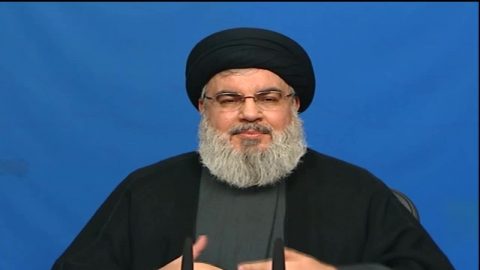
Press TV – November 26, 2018
Commander of the Israeli military’s 300th Infantry Brigade has called on the Tel Aviv regime to resort to the policy of “targeted killings,” arguing that the assassination of the Secretary General of Hezbollah will deal a fatal blow to the Lebanese resistance movement.
Colonel Roy Levy, in an article published in the Hebrew-language Ma’arakhot magazine, which is affiliated to the Israeli army, wrote that “targeted killings” must be carried out, and that Sayyed Hassan Nasrallah should be killed by commando forces backed by the air force, the Hebrew-language Walla news website reported.
“His personality and military experience have turned him into a center of gravity. All of his organization – from senior commanders to the low-ranking soldiers – and thus the fighting spirit of the enemy will be harmed once he is targeted,” Levy wrote.
He then recommended Israeli military operations deep inside Lebanon, asserting that the offensives would yield many benefits despite the risks associated with them.
The Israeli military commander also called for “a proper positioning of combat commando units with the aim of subjugating the enemy.”
“Should we make a similar decision and kill the leaders of enemy organizations, for example, Nasrallah? The answer is not easy.
“But the idea of harming the enemy’s fighting spirit by damaging its property must be examined. We must adopt a policy not anchored in force, but in ruse instead. The deep activity of commandos in a way that surprises the enemy and strikes its equipment will be an important means of damaging its fighting morale, and will lead to its defeat,” Levy commented.
On November 28, 2017, the Israeli military’s chief spokesman said Nasrallah would be a target for assassination in any war between Israel and Hezbollah.
Ronen Manelis added that the Israeli military is conducting psychological and media warfare against Hezbollah.
“One of the things we talk about is the transition from traditional media consumption to social media,” Manelis said, adding, “We are also active in this theater, and it is an operational theater in every respect. Just in the past few weeks, we’ve taken a great many actions that caused consternation on the other side.”
“There won’t be a clear victory picture in the next war, though it’s clear that Nasrallah is a target,” he added.
Nasrallah speech given on the first anniversary of the Liberation of Lebanon against terrorist groups
Translation: unz.com/sayedhasan
Transcript:
[…] I want to tell you, on this first anniversary of the (Second) Liberation (of Lebanon against terrorist groups in August 2017), that in these battles against the Al-Nusra Front on the one hand, and ISIS in the Jurd (Ersal) on the other hand, the number of our fighters was higher than what was required in numbers on both fronts. And I asked the military officials, “Why do you bring so many forces?” I was concerned above all by the preservation of the blood (life and health) of our brothers, and I also cared about the fact that each of them would open fire, and it would have a price in terms of ammunition and money, but my main concern was to preserve the blood of our brothers. They said that they could not prevent the youth (Hezbollah fighters) from coming (voluntarily and massively in Syria). Especially because it was summer and there was no school or university courses, which is why the majority of fighters were (Hezbollah) students in universities and high school, because our practice is not to allow young people under 18 to fight, and there was therefore a significant number of young people among our martyrs.
And today also, these same young people, the same generation (is fighting in Syria and elsewhere). Some may think that the generation of 1982 or 1985 was different (more heroic than today), as well as that which fought in 2000 or 2006, but not in any case! Today’s generation has all the momentum, enthusiasm, presence, consciousness and alertness (found in the earlier ones). And it proved it during all the past years.
But on the other side, when you look at Israel, for example, we see in studies of which the Israeli media are currently speaking that the real crisis of the enemy, of the Israeli army, is in the human element (the soldiers themselves). The leaders and staff of the Israeli army have great difficulty to attract young (Israeli soldiers) to the combat units and troops and to the special brigades (elite forces), because the young Israelis prefer to serve in other units than combat. They do not have any motivation, the spirit of sacrifice disappears and there is no cause in which they believe and for which they are ready to be killed. This is a real problem, which many studies are devoted to, but I do not have time to discuss them in detail.
And there is also another problem that was revealed a few days ago with precise figures, namely the increase of mental disorders among soldiers of the enemy, who are monitored by psychologists in the army. “During the year 2017 –I quote the Israeli media–, nearly 44,000 soldiers asked support from psychologists officers.” It is a figure quite significant for the Israeli army. Against 39 000 soldiers for 2003. Last year, 44,000 soldiers went to see who? Psychologists doctors. Psychologists doctors. And that’s why…
When they speak of the reasons (of their depression), they say they do not want to die, to sacrifice, to get tired, to get up at dawn, their morale is low or nonexistent, they want a more comfortable and better paid position, etc. That’s what they say themselves. And that is why the strategists of the enemy entity always say that this army is not ready to enter into a new war. Despite the fact that since 2006 to this day, they got new aircraft (F-35), new missiles and developed many of their assets and capabilities. We know this and monitor it (closely). But since 2006 and to date, they have not managed to change the spirit of defeat that swept over their officers, their soldiers, and their people. They have failed to remedy the state of doubt and suspicion (prevalent) between soldiers and officers, and they were unable to find historical leaders able to mobilize again.
As for us, today, our strength lies in our young generations of these true and sincere fighters, willing to sacrifice, loyal, ready to shed their blood, who believe in dignity, in glory and in honor, and for whom the dignity of their people, the glory of their country, the honor and life of their loved ones deserve from them all the sacrifices and all these gifts. And this is what has allowed the Second Liberation (of Lebanon in August 2017), as well as the First Liberation (in 2000). […]
Speech by Hezbollah Secretary General Sayed Hassan Nasrallah on September 20, 2018, on the tenth day of the Islamic month of Muharram, commemorating the martyrdom of Imam Hussein.
Transcript:
[…] Sixth, regarding Israel, we must always stay on alert, my brothers and sisters. The Israelis are angry, the Israelis are worried. They are angry because their project in the region collapsed. The Israelis had high hopes on what was happening in Syria and Iraq. In the past, they had high hopes on what was happening in Lebanon. But all their illusions were scattered to the four winds. The Israelis know that the Resistance Axis will come back (to face them) stronger than ever. The Israelis know that new countries (Iraq, Yemen) are now part of the Resistance Axis, and that (whole) peoples who were outside the sphere of the struggle against the Israeli enemy are now within this sphere, in a strong, active and integrated manner. Israel is angry, Israel is worried, and that is why we must all stay on alert. I am not speaking of assumptions (of aggression) here and there, but I know that no one should allow himself to be reassured concerning this enemy, or even with the analyzes (about it), even if, as I have always confirmed to you, he fears any confrontation in the region, especially against Lebanon. And he knows well that any battle, any war he would launch could have a huge impact on the region. He knows he now has weaknesses that have become exposed (to everyone), and he knows very well our strengths.
Some days ago, (the Israeli Minister of War) Lieberman said on the occasion (of the commemoration) of the 1973 war: “We must understand that in the Middle East, two truly strategic changes have occurred: the first is that our enemies –meaning us (Hezbollah) and our allies– now have high-precision missiles and the second thing –of course, he still has no solution to these missiles, and logically, this will delay and repel the prospect of an Israeli war– and the second thing is that the home front (of the Zionist entity) has become the central front in any future war. If, during the 1973 war, the (Israeli) soldiers could fight on the front, while in Tel Aviv, people were (peacefully) sitting in coffee shops, reading newspapers, –during the 1973 war, the fighting took place on the front, at the borders, but the people who lived in Tel Aviv were quietly sitting in coffe shops, reading newspapers– but now everything has changed.” What he said about the current situation is a treat (to our ears). “Now everything has changed.” Yes, today everything has changed. We must also be conscious of this reality, just like the enemy is aware of it. The enemy knows (well) that major changes have occurred in this region, which he did not expect and that he had not anticipated.
As for the high-precision missiles and his attempts in Syria to cut the way for this power and this ability, today, I want to say something he already knows, but I want to say it publicly, for his people to be informed and take heed, and for our people to be informed and gain confidence. I say to Israel: Whatever you do to prevent the (weapons transfers), it’s already too late. Everything has already been done and completed, and the Resistance (in Lebanon) already has all the high precision missiles and such, all the capabilities and armaments it needs, so much that if Israel imposes a war in Lebanon, they will face a destiny and a reality they never anticipated.
This is the reality of the situation. And likewise, many things that have changed within their army. When I spoke at Hermel (on August 26), in commemoration of the Second Liberation (of Lebanon from terrorists), I talked about the situation with regard to the morale, spirit and psychological state of the Israeli army (disastrous according to recent studies in Israel). There is almost no one inside the entity that has not answered me. The President of the entity, the Head of government, the War minister, other ministers, MPs, journalists, etc., all have answered me, some by naming me and others without naming me, but it was clear that they were referring to me. Because I put light on a painful truth for them, for their people and for their future. And they know that now, technology alone is not enough to win in a battle, and that the decisive factor in a battle is the human element (soldiers). This is what experience has shown, whether in 2000, in 2006 or in recent years (Syria, Iraq, Yemen).Look how ridiculous these Israelis are: how did they answer me? With what facts did they answer me? They responded, and here you can see their weakness, by threatening Lebanon, but what did they say? Long ago, before 1982, they threatened to invade Beirut. But today, does anyone hear them speak about an invasion of Beirut? Did you hear such a thing? From 2000 to today, my brothers, (say) from 2006 to the present, did Israel ever claim that they were going to invade Lebanon and reach Beirut? It’s over! Why? Because an invasion of Lebanon up to Beirut requires ground forces (worthy of the name). This is not aviation, missiles and warships that can achieve such a thing. This army (able) to invade Lebanon and reach Beirut no longer exists! There is nothing like that in Israel, but in Lebanon, the situation is very different. Today, in Lebanon, something very different is found (real fighters, battle-hardened and in high spirits). And that’s why all the (Israeli) response consisted of threats to destroy and raze Lebanon to the ground. That is to say, they drew their strength (only) from their firepower, and dare not boast of the human element. […]
Nasrallah: Lebanon’s resistance will respond to any Israeli aggression
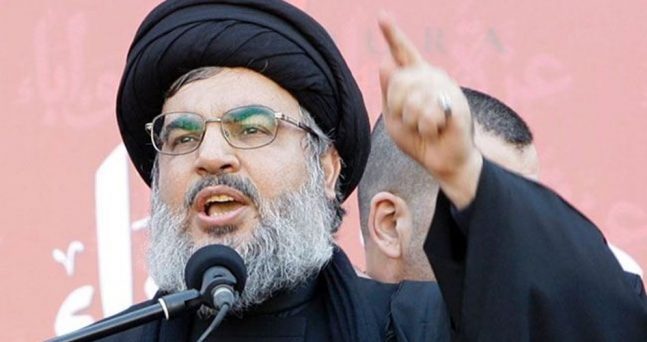
Palestine Information Center – November 11, 2018
BEIRUT – Hezbollah secretary-general Hasan Nasrallah has warned that any Israeli military attack on Lebanon will be strongly responded to, stressing that the Lebanese resistance will defend the country by all means.
In a ceremony held for Hezbollah martyrs, Nasrallah affirmed that any threats, pressures and sanctions would never affect Hezbollah, pointing out that Lebanon enjoys security and dignity thanks to what he described as “the golden equation which the resistance has imposed on the enemy.”
He said that the missile capability of the Lebanese resistance is the point of strength because the local army is not allowed to have advanced missiles.
Recent Israeli news reports claimed that Lebanon had received warning letters from European and American diplomats saying that Israel could take military action against Lebanon if alleged precision-missile factories built by Iran were not removed.
US sanctions on Hezbollah aim to punish Lebanon: Observers
Press TV – October 28, 2018
The US has imposed new sanctions on Hezbollah, but observers say Lebanon as a whole will be affected by the punitive measures.
Earlier this week, the administration of US President Donald Trump imposed a new round of sanctions on Hezbollah targeting individuals and international organizations that do business with the resistance group.
Economist Louis Hobeika said he thought “it is difficult to punish Hezbollah without punishing all of Lebanon.”
“No area fully belongs to Hezbollah. The southern suburb of Beirut is not confined to Hezbollah, so how will the sanctions apply here?” Hobeika told Arab News in remarks published Saturday.
Political activist Ali Al-Amin, the director of Janoubia news website, said the outcome of the US decision could be “disastrous” for Lebanon.
“Is the purpose of the sanctions to embarrass the Lebanese government and state?” he wondered.
In the May parliamentary elections, Hezbollah and its political allies won more than half of the seats at the legislature in a major victory for the party.
Former Lebanese lawmaker Fares Souaid told Arab News that the new sanctions are part of a series of US bans meant to “turn the party (Hezbollah) into a burden on the Lebanese after Hezbollah has come forward as a security guarantee for Lebanon.”
The US has its Arab allies in the Persian Gulf on board in cranking up pressure on the Lebanese leaders over their association with Hezbollah, and they all take their cue from Israel.
Israeli leaders have threatened that they would view the Lebanese state as part of Hezbollah in a future war with the resistance movement.
In May, the US Treasury Department imposed sanctions on the Hezbollah leadership jointly with members of the so-called Terrorist Financing and Targeting Center (TFTC), which includes Saudi Arabia, Bahrain, Kuwait, Oman, Qatar and the UAE.
Hezbollah was formed following the Israeli regime’s invasion of Lebanon and the ensuing occupation of its southern parts in 1980s, and currently constitutes Lebanon’s de facto military power.
Since then, the movement has helped the national army retake the occupied regions from Tel Aviv and thwart two Israeli acts of aggression in 2000 and 2006.
The movement has also been playing a significant role in the Syrian army’s fight against Takfiri terror groups, including Daesh and Nusra Front, thus preventing the spillover of the war into Lebanon.
Syria and Iran Sign Defense Agreement: Defying Outside Pressure
By Peter KORZUN | Strategic Culture Foundation | 29.08.2018
Iranian Defense Minister Amir Hatami visited Damascus Aug. 26-27 in order to have a new military cooperation agreement signed. The move is evidently a response to US and Israeli demands to withdraw Iranian forces from Syria. No details have been provided about the document’s content but it’s logical to surmise it contains a list of mutual obligations in the event that the Iranian military is attacked in Syria.
The deal mentions Iran’s role in the reconstruction of Syria’s defense industry, thus ending any hopes that its military presence in that country will end. According to the Iranian defense chief, the “defense and technical agreement” provides for the continued “presence and participation” of Iran in Syria. He added that an agreement had been reached with Syria that Iran would have “presence, participation, and assistance” in the reconstruction and that “no third party will be influential in this issue.”
The agreement was signed just as the Russia-Turkey-Iran summit was announced, which is scheduled for Sept. 7 in Tehran. Such events normally require thorough preparations. The parties are expected to reach an agreement on further joint steps to achieve progress in Syria. It’s important to align their positions before the UN talks in Geneva, which are slated for Sept. 11-12. UN Special Envoy Staffan de Mistura has invited the “big three” to participate. They can come up with joint initiatives while the US has nothing to offer but its demands for Iran’s withdrawal. It risks being left out in the cold, while diplomatic efforts initiated by other states bear fruit.
This turn of events will hardly be welcome news for those who would like to stymie the peace efforts and impose their own conditions for reaching any settlement of the problem.
The need to end Iranian assistance to Lebanon’s Hezbollah was emphasized during last week’s visit of US National Security Adviser John Bolton to Israel. The parties did not declare war on Iran, but there is no way to stop the supplies from reaching Hezbollah in Lebanon without cutting off the land routes going through Syria. The US official insisted before the visit to Israel that the withdrawal of Iran’s forces from Syria is a prerequisite to any resolution of the conflict.
The US and its allies in Syria find it important to scuttle Syria’s plans to liberate the province of Idlib from the rebels. A false-flag chemical attack is expected to be staged soon, to create a pretext for military action. Once Syria and Iran are in the same boat, it makes no difference which of them is attacked first or where. There have been media reports that a large-scale military operation is in the works and can be expected in August or September.
There is no way to know what exactly Mr. Bolton discussed with the Israeli authorities during his visit to Jerusalem on Aug. 19 but the reports about the military activities at the US al-Shaddadi base in the Syrian province of al-Hasakah emerged soon afterward. The facility has been reported to have been updated to enable the landing and takeoff of heavy cargo aircraft. Ayn al-Arab (Kobani) has also been expanded. In August, shipments of ammunition and military hardware were delivered to several US-controlled facilities in Syria and Iraq. Radars have been transported to the SDF-controlled areas east of the Euphrates River.
Meanwhile, several thousand militants with heavy weaponry and armored vehicles in Syria’s Idlib province are getting ready to launch an offensive against government-controlled regions of Hama and Aleppo. The attack will be targeted at Syrian as well as Iranian and pro-Iranian forces that have been invited in by the Syrian government.
It looks like plans are underway to force Syria to plunge into turmoil once again. In reality, the combat actions have already started. The US and Israel conducted their first joint operation against the Iranian Revolutionary Guards Quds Force and the Iraqi Shiite Khata’ib Hezbollah, their allies, on Aug. 23 near Abu Kamal, which is situated on the highway between Syria and Iraq. President Trump has said so many times and on so many occasions that he wants the Americans to leave Syria but US foreign policy is known for its flip-flops. Whatever is said today may be forgotten tomorrow.
This time, Lebanon may become a new front. It’s widely believed that a war between Israel and Hezbollah is inevitable. In February, US and Israeli troops held an exercise to practice for a potential war with Hezbollah in Lebanon, a country that holds a military agreement with Russia. The offshore drilling contracts Lebanon has signed with other countries, without solving its border dispute with Israel, are spurring the war preparations.
Syria and Iran have defied pressure and demonstrated their resolution not to bow but to protect their right to make independent decisions. They are offering a challenge. If the defense agreement just signed between those two allies provokes a military conflict, it will most certainly spill over to other countries, such as Yemen, Lebanon, and Iraq. It would lead to a long, protracted, and costly war.
Featured Video
Bombing Hitler’s Hometown
or go to
Aletho News Archives – Video-Images
From the Archives
‘Conspiracy Theory’ Now Fact: Greater Israel Has Arrived
By Kit Klarenberg | Mint Press News | January 28, 2025
Ever since Tel Aviv’s 1948 creation, much has been said and written about ‘Greater Israel’ – the notion Zionism’s ultimate end goal is the forcible annexation and ethnic cleansing of vast swaths of Arab and Muslim lands for Jewish settlement, based on Biblical claims this territory was promised to Jews by God. The mainstream media typically dismisses this concept as antisemitic conspiracy theory, or at most the fringe fantasy of a minuscule handful of extremist Israelis.
In reality … continue
Blog Roll
 Aletho News
- IRGC: Israeli, US universities in region legitimate targets after strikes on Iranian university
- Trump admits Iran hit USS Ford carrier: ‘We ran for our lives’
- Battle for Hungary: EU attacks on Orban are a sign of worse things to come
- Iraqi resistance conducts drone strike on US-run base in Syria
- Failing to Defeat Hezbollah, Israel & US Pressure Syria’s Ahmed al-Sharaa to Join War
- US-Israeli war on Iran drives global fertilizer prices up 40%
- Hezbollah’s Surprise Weapons Redefine Ground Battle with Israel
- Yemen joins fight against US, Israel by firing missiles at occupied territories
- Seizing the Kharg: Washington’s path to defeat in the Persian Gulf
- Iran reports 500 US casualties in strikes on covert US military sites
- If Americans Knew
- Over 300 US service members wounded, majority have brain injuries – Not a ceasefire Day 169
- Researchers at Human Rights Watch Resign Over Blocked Report on Palestinian Refugee Return
- Jewish Groups Are Backing a War Americans Don’t Want
- Eric Fingerhut Thinks He’s the President of the Jews
- Top Jewish Philanthropists, Rabbis Urge Israeli President to Take Action Against ‘Jewish Extremists’
- Don’t Be Fooled. Zionist Leaders Have Always Wanted to Control Southern Lebanon
- Israel’s widespread use of torture is a core element of its genocide against the Palestinian people
- In Israel’s War on Iran, Many Middle East US Bases Rendered “All But Uninhabitable”
- ‘Burn the lawn’: Israel pursues ‘Rafah model’ in southern Lebanon
- A genocide here, an amputation there
- No Tricks Zone
- Devastating Assessment Of Comirnaty Vaccine By Former Senior Pfizer Europe Toxicologist
- New Study: CO2 Is ‘Effectively Negligible’ As An Explanatory Climate Change Factor Since 2000
- Former Pfizer Toxicologist Dr. Helmut Sterz Tells Bundestag Hearing Pfizer Vaccine Should Have Never Been Approved
- Energy Expert: Germany’s Nuclear Phaseout Was A “500 Billion Euro Mistake”
- New Research: South Australia’s Mid-Holocene Sea Surface Temperatures Were 4°C Warmer Than Today
- Storing Green Energy To Last Germany 10 Days Would Require A 60-Million Tonne Battery
- New Studies: UK Sea Levels Were 4 Meters Higher Than Today During The Mid-Holocene
- Destructive Green New Deal: German Energy And Metal Group Warns Of Drastic Crisis
- New Study Documents A 20-Year Pause In Arctic Sea Ice Decline – Driven By Internal Variability
- Wake-up Call: Survey Shows Majority Of Germans Now Favor Postponing Climate Targets!
 Aletho News