Lebanon PM says coup attempt fell apart after violent riots
Press TV – June 14, 2020
Lebanon’s Prime Minister Hassan Diab has condemned the recent violent street protests, saying they were an attempt by opponents to overthrow his government and deepen a currency crisis in the debt-ridden country.
Diab made the remarks in a televised address late Saturday after demonstrations rocked the cities of Beirut, Tripoli and Sidon on Thursday, with participants calling for the government’s resignation.
Diab said his political opponents were stirring unrest in a bid to thwart the government’s fight against corruption.
The unrest was “a programmed campaign organized by parties known by name and method of thinking that are not deterred from using any method to shatter the image of others,” Diab said.
However, the Lebanese administration enjoys “a high percentage of citizens’ confidence, which has disturbed many of those who bet on its failure” and try to pump “lies and rumors to prevent the government from removing the rubble under which the secrets of corruption disappear,” he added.
Diab took office in January with Hezbollah’s backing, putting an end to a nine-month political deadlock amid an economic crisis and nationwide protests against the nation’s ruling class.
In his televised address Saturday, the Lebanese premier censured efforts to mount a “coup” against the government and manipulate the value of the Lebanese pound.
“The state and the people are being subjected to blackmail,” Diab said as he vowed to defeat graft in the cash-strapped country.
“The coup attempt fell apart and all secret and public meetings and orders of internal and joint operations to stop discovering of corruption failed as well,” he added.
Anti-government protests broke out in Lebanon on Thursday after a rapid devaluation of the national currency against the US dollar. The Lebanese pound has lost some 70 percent of its value over the past several months.
The crash in the Lebanese pound’s value and subsequent unrest coincided with the unveiling of the biggest-ever US sanctions package against Iran, which also targets Lebanon.
The 115-page strategy document put together by the Republican Study Committee (RSC), the largest Republican caucus in Congress, called for a halt of all US security assistance to Beirut, claiming that millions of dollars given to Lebanon were being used to aid Hezbollah.
The US gives about $160 million to the Lebanese armed forces each year.
The Republican document specifically calls for sanctions against Hezbollah allies, mentioning former foreign minister Gibran Bassil and incumbent Parliament speaker Nabih Berri by name.
Back in 2016, Saudi Arabia also declared that it was canceling $4 billion in aid to Beirut, $3 billion of which was earmarked for the Lebanese army.
Latest street rallies resembled those that broke out in Lebanon on October 17, 2019, when the government introduced a set of economic austerity measures.
Then prime minister Saad al-Hariri resigned almost two weeks later under pressure from protesters, touching off a period of political turmoil at a time of acute economic crisis.
In December 2019, Diab was tasked with forming the new administration and the following month, he managed to form a government after Hezbollah and its allies agreed on the new cabinet.
The downward political spiral for Hariri followed his humiliating saga in Saudi Arabia where he announced his surprise resignation in November 2017, apparently under the orders of Saudi rulers.
Hariri rescinded his withdrawal after returning to Lebanon, apparently putting himself on a collision course with his Saudi mentors, which culminated in his resignation amid violent riots.
According to a UN report, Hariri was verbally humiliated and beaten after being summoned to Riyadh in 2017. He was reportedly abducted and taken to the Riyadh Ritz-Carlton hotel where he was interrogated and subjected to “cruel, inhuman and degrading” treatment.
Annexation, War, Liberation
By Taxi | Plato’s Guns | June 3, 2020
Nothing sends chills down the spine of Israel more than the mere mention of the name ‘Hezbollah’. Nothing, no superpower nor hurtling supernova petrifies Israel more than the existence of Hezbollah’s muscle and missile at its doorstep. Israel does not fear Egypt; it does not fear Jordan or Syria or even faraway Iran, but, it is indeed absolutely and positively petrified of little Lebanon with its uncontested resistance army: the Hezbollah. And this deep-seated pathological fear has found much gory and exuberant expression since the Israeli military was soundly defeated by Hezbollah back in 2006. Every single Israeli military project right across the Middle East since 2006 has been about defeating Hezbollah and stopping the spread of its popular resistor-culture. And evidently, every Israeli attempt to achieve this for the past decade and a half has flatly failed.
Unable to best Hezbollah’s spectacular performance on the battlefield, unable to also access any consequential Intel on Hezbollah’s brains and brawn, and moreover, unable to ignite a sectarian civil war in Lebanon after numerous attempts over the years, a humiliated Israel resorted to engineering, through American hands and influence, the unleashing of an army of terrorist Takfiris on Syria: Damascus being the main artery of support from Tehran to Hezbollah in Lebanon. One could say that Syria was attacked by an army of head-choppers because Hezbophobic Israel could not directly retaliate against a victorious Hezbollah in Lebanon. The Israeli master plan here was to cut off Hezbollah from Syria, thereby from its Iranian sponsor, and to flood both Levantean nations with Takfiri terrorists, thus specifically busying Hezbollah’s hands while the Israeli military “attacked it from the back”. Yet, alas for the Israelis, this diabolical plan to defeat or weaken the Hezbollah has only produced the opposite results for Tel Aviv. Syria, though severely damaged, still stands and remains a main artery of Iranian support to Hezbollah, and Hezbollah itself has increased its wholesale military and geopolitical powers even further. Now Hezbollah possesses an even larger stockpile of sophisticated missiles pointing at Tel Aviv and at everywhere else of vital value in Israel proper. Presently, there is not a single inch of Israel that’s not in Hezbollah’s cross-hairs. The Israeli military’s top brass know only too well that Hezbollah will most certainly use these missiles on Israel if provoked, or, indeed when a wider regional war is ignited. And this is precisely what is causing an incurable insomnia to both Israel’s military architects, as well as to all its Judeo-centric allies in the West: all flaccidly scrambling to find ways to assist a geopolitically cornered Israel.
But, dear reader, there is also another issue that Israel equally fears and loses much sleep over. A fear that has rattled Israel’s shadowy bones since the Palestinian Nakba back in 1948. An old, old fear. A terrorizing fear that Tel Aviv has somewhat succeeded at camouflaging and suppressing from the public eye and ear with the help of its propaganda arm in Western media.
This primordial Israeli fear, this mortifying bugaboo is known as the Palestinian ‘Right of Return’.
If Israel were to describe its perpetual nightmare, it would be one where Palestinian refugees are at the three land borders of the Holy land and pouring back into their ancestral territory in their millions.
This is your standard Israeli tableau of horror.
This is the very scenario that Israel fears the most. This, and of course, Hezbollah’s missiles raining on Tel Aviv and Haifa and Eilat and Dimona and every single illegal Israeli settlement and post.
Realistically, it is impossible to imagine Palestinian refugees returning to their homelands without Resistance missiles first clearing the path for them. And this, dear reader, this very combination of missiles raining and refugees returning is THE absolute and ultimate Israeli tableau of horror.
Presently finding itself in an intractable geopolitical pit of despair, and with all its plans against its Resistor enemies having thus failed since 2006, all that Israel can now achieve is easy land-grabs and annexations inside of occupied Palestinian neighborhoods in Jerusalem, in the West Bank and in the Jordan Valley: all areas already under Israeli control. Considered criminal and illegal by International Law, these imminent annexation maneuvers are justified by Tel Aviv as part and parcel of the dictates and content of the Deal of the Century: a unilateral Israeli-centric deal that not a single Palestinian the world over has accepted – not one! In fact, it appears to be the case that the rejection of the Deal of the Century is the only issue that all Palestinians agree on. This is because fundamentally, the Deal demands the total cancellation of the Right of Return of Palestinian war refugees back to their ancestral villages and lands. No Palestinian would ever accept this condition.
Moreover, the Palestinians see an existential threat that’s writ in invisible ink between the lines of the Deal. They see Tel Aviv’s nefarious second stage of the Deal: they see the illegal mass transfer of all Palestinians out of Historic Palestine, including the eviction of the Palestinian ’48-ers who hold Israeli passports, should the Palestinians break out into a Third Intifada and physically rebel against the Deal when it’s actually being implemented on the ground. Presently, the visible parts of the Deal of the Century are being promoted by Israel and her global media agents and politicians. The invisible part of the Deal will undoubtedly follow because the Israelis already know that the Deal will be rejected by the Palestinians and they have already prepared for this rebellion: mass and total ethnic cleansing of Palestinians from Historic Palestine. The big move. The breathtaking move. The wettest dream for the terrorist invader Jews currently occupying Historic Palestine. The ruling Ashkenazim Jews of Europe have long been dreaming of this – nay they have orchestrated numerous wars including WWI, WWII, the Bolshevik Revolution and numerous wars against the Arabs just to realize this blood-splattered Jewish dream. Engineered the mass murder of some 170 million non-Jews just to enable them entrance into Historic Palestine, which they achieved in 1948. And since then, Israel’s Jews have been on the final leg of their grand mission of taking over the whole of Historic Palestine: using inhumane and incessant brutality, periodical mass murder and expulsion of the native Palestinians. In effect, a full-on genocide committed sneakily and incrementally for some 72 years now.
In other words, the Deal of the Century is but a massive land-grab facilitator and the prelude to Israel’s ‘Final Solution’ to their Palestinian problem: atrocious mass murders and absolute ethnic cleansing right across the board.
We all already know that Palestinians are not waiting on Abbas to rescue them from the lethal Deal, despite him recently cancelling Oslo as well as all security cooperation with the Jewish state. Palestinians are not waiting on any specific Arab state either, or on the international community to rescue them and their rich heritage and history. But Palestinians presently are indeed en mass looking to the Axis of Resistance for salvage and liberation.
So what can the Axis of Resistance do for them? How will it react to the Deal? What does it have planned to counter the implementation of the Deal that Netanyahu has promised to begin applying on July 1st, 2020?
The answer to this must be the closest held secret in the universe. But, let us, however, look at their options – and they do have several options, bar one: surrender. There will be no surrender to the Deal of the Century.
Obviously, non-surrender implies war. And so it is. The only question remaining therefore is ‘when’. Who controls the timing of an imminent war? Here, consider if you may, that the side that’s positively ready for war and sacrifice is not concerned with who fires the first bullet and at what hour of day, but how to go to war and win it with least casualties to their side. With this firmly in mind, let us then look at the options available to the Axis of Resistance and their assured response to Israel’s imminent annexation plans.
Option one: Upon Israel’s implementation of the first stage of annexation, the Resistance could conceivably go into immediate war with the state of Israel and its allies. A war where Israel will have to simultaneously defend itself on multiple fronts. Defend itself within against Palestinians in Gaza AND the West Bank: both sectors now fully armed by Iran and trained by Hezbollah. And defend itself without against its closest neighbors of Syria and Lebanon – and very plausibly against an incensed-by-Israel Jordan and Egypt too – as well as with Israel’s faraway regional enemies of Iran, Iraq and Yemen (including hundreds of thousands of trained volunteer fighters from Pakistan, Afghanistan and Malaysia). This means a regional war which the USA, UK and France (possibly other NATO nations too) will all jump into, either directly or indirectly, thus dragging Russia and China, either directly or indirectly, into a massive Mideastern power-grab confrontation: the eastern rising giants of China and Russia here geostrategically compelled and obliged to assist their mega assets-hosting nations of Syria and Iran. This option is a turbulent and bloody one that would lead to untold human and material losses, as well as needing much time and conferencing to negotiate a post-war disentanglement between a multitude of nations, all gridlocked in a foreign territory. Yet, despite the hectic burdens of this option, the Axis of Resistance’s sacrifices will still lead to victory for the Resistance as they have all the needed weapons to completely destroy a tiny Israel in a handful of days, and this despite the destructive hits they may suffer from Tel Aviv and its powerful allies. It’s a brutal ‘sooner than later’ liberation of Palestine and the eviction of Israeli and Western colonialists projects in the region. In this regard, we could say that the price for ‘instant liberation’ is the highest.
Option two: Wait for the Israelis to commit their usual and predictable atrocities against the rebelling Palestinian civilians – wait for massive global outrage then enter into warfare while riding the moral high ground and the coattails of massive global support for justice for the Palestinians. This option probably has the best optics: a war to save six million long-suffering Palestinian civilians from a rabidly racist, sadistic and genocidal occupier. A righteous war that aims to bring justice and freedom to the archetypal victim. The global masses will resonate with such an emotive narrative, and Western nations under the spell of Zionism would be hindered here from giving full or prolonged support to Israel on account of public opinion at home being massively against it. This option is costly on both civilian and armed Resistor, but not as costly as the first one.
Option three: Knowing that Israel is a coward who tiptoes hunchbacked in the shadows; knowing too that Israel would not dare implement ALL its annexation plans at once and overnight, but instead, it will implement them incrementally and with unsteady hands: knowing all this, the Axis of Resistance may very well decide to hold back on any immediate explosive reaction to the annexation; let time pass and remain coiled and ready: hold back and just wait for the US Empire to weaken even further before entering into a direct liberation war with Israel. The equation here being a weakened US equals a severely, nay fatally handicapped Israel. And let us all be very clear here that it is the United States’ military protection of Israel that puts oxygen into Israel’s lungs. Without America’s military support to Israel, the Resistance could easily take on the Israeli army and defeat it and liberate the whole of Palestine today: right this very second, in fact. This is not bravado, but sourced information. It is only American military power and this alone that stands in the way of liberating Palestine. Simply, Israel is currently incapable of defending itself against the Axis of Resistance, despite its stockpile of illegal nukes and its hi-tech American defensive weaponry, gifted to Tel Aviv through the corrupt fleecing of the American taxpayer by DC politicians. This option will cost less lives than the two above.
Option four: Post-annexation, allow for Jewish Apartheid to massively flourish for several years, thus allowing for Israeli society itself to further disintegrate its democracy internally and become an abhorrent and much hated racist, rogue nation in the eyes of the globe, with barely any support for it possible even by its traditional European allies. This method is known as ‘forcing the snake to eat its own tail’, thus eventually, through a self-defeating Apartheid system, swallowing up its own deflated shekel and body politik: eventually strangling itself with its own masticating mouth; leading thus to its political disintegration a-la the South African model in the 1980’s – a model that saw the natives overnight reclaiming their rightful territories without having to resort to mass bloodshed and all out war with the tyrannical ruling colonialists. This option will cost less lives for Resistance fighters but needs much civilian sacrifice, as indeed, the punitive Jewish occupiers will in the meantime unleash horrendous levels of violence against the increasingly restless native civilians.
Option five: Now, this here is an interesting option, an option that Hassan Nasrallah spoke of only last week. In a two and a half hour interview he gave to Al-Nour Radio, Nasrallah parsed various war issues and suggested for the first time ever the plausibility that Israelis, upon realizing in the near future that their American Empire protector is too weakened internally and externally and therefore unable to war any further on their behalf, and Tel Aviv also already knowing that an existential war with the Axis of Resistance would lead to a mass death of Jews and the utter destruction of Tel Aviv: these two sobering realizations will force it into radical withdrawal from the holy land altogether. In other words, facing sure material devastation and mass loss of Jewish life in the coming war, Israeli state architects would have no other smart option but to pack up suitcases and simply leave the holy land in peace before a lethal war is imposed on them by the Resistance. Indeed, the Axis of Resistance would most certainly take full advantage of America’s incapacitation and inability to protect Tel Aviv and activate thus their Liberation War. Just up and leave sans war is what Nasrallah is suggesting here. An astonishing yet plausible scenario. A scenario that is suddenly made more plausible by the rapid and palpable decline of American hegemony around the world, as well as the current disintegration of America’s society that we’ve all recently witnessed on the streets of half the existing American states: violent protests that the belligerent American security apparatus will find impossible to contain and control 100% and indefinitely, regardless of who is president. Protests that will keep waxing and waning till either the corrupt bi-partisan Status Quo itself surrenders and a new and more humane and equitable one takes its place, or, all out civil war breaks out in the United States of America: thus bringing with it proof positive that the American Empire has indeed fallen and its Republic now drowns in blood and chaos. That aside, the devastating affects of COVID-19 on the American military cannot be understated here either. Many of its bases are under COVID-19 restraints and presently, the US Navy has 26 of its navy warships under Covid-19 quarantine, thus leaving only two war-ready ships in the Middle East. And this, dear reader, is the major reason why the US did not, in fact could not challenge the Iranian vessels transporting fuel to Venezuela, despite an aggressive naval blockade against Caracas. This ‘suitcase’ option that Nasrallah spoke of is, of course, the most desired by the Axis of Resistance as it will be the least costly to its civilians and fighters. Of course, the death of an Empire does not occur overnight and this option requires extreme vigilance and exceptional patience on behalf of the Axis of Resistance. Two attributes that fortunately the Axis of Resistance is well-practiced in. And by the gauge of recent headlines on America’s speedy decline internally and externally, it would seem to be the case that the Empire’s fall will not occur in faraway decades, but in the near to medium future, meaning: inside of half a decade.
Dear reader, any of the above options will work to liberate Palestine and the region from all foreign control and abuse. There is not even the slightest glimmer of doubt about this in the minds of the Resistance strategists whatsoever. It is the cost of various options and paths to liberation that the leaders of the Resistance currently pontificate upon, not their military readiness or capability. This is the current status of the Axis of Resistance. And the option that will eventually be chosen will be dependent on the challenges that the US and Israel will throw at it in the meantime. Not forgetting here of course that the Masada-ists in Israel may very well panic in the meantime and reflexively and foolishly play a wild card out of dire, pathological fright: out of profound morbid fear of Resistance missiles clearing the way for the Right of Return. Their desperate fear and terror may very well drive them to miscalculate and choose a fight-to-death ‘today instead of tomorrow’, knowing that tomorrow Israel will be weaker than today. This would be the worst option for Israel as this will guarantee massive loss of life for them.
Whichever way the future wind blows in the Levant, all options and wild cards will lead to the liberation of Palestine. This we can be certain of: the death of Israel. Death at the heels of the fall of the American Empire.
The world will be forever changed with the coming momentous victory for the Axis of Resistance. And the countdown to victory begins… with Israel’s intended annexation on the 1st July, 2020.
Israel strikes Syria to keep the USA in the Levant
By Elijah J. Magnier – 19/05/2020
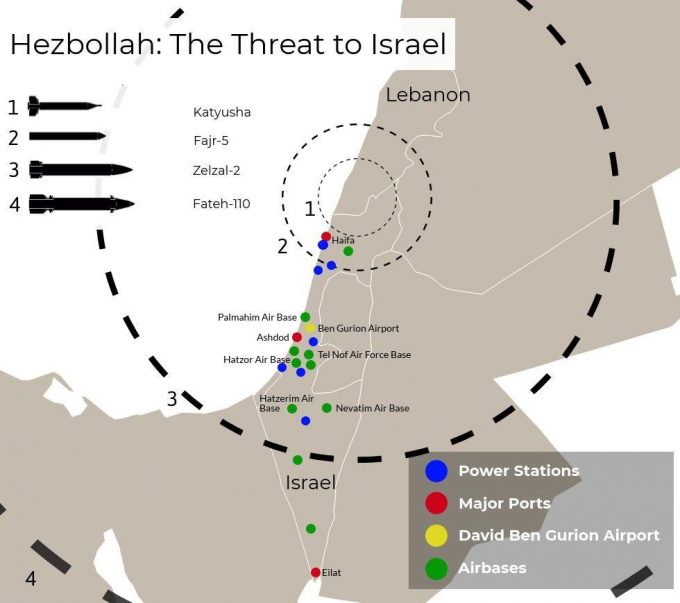
Following its defeat in the second war on Lebanon, Israel discovered that its only way to suppress Hezbollah would be to close the supply line between Lebanon and Syria. That could only be achieved by removing President Bashar al-Assad from power, disrupting the “Axis of the Resistance” that extends from Tehran to Baghdad, Damascus, Beirut and Gaza. But Israel and the US, supported by Saudi Arabia, Qatar, the Emirates, Turkey, Europe and many other countries all failed to achieve their goal of making Syria a failed state. President Assad called upon his allies whose own national security was in jeopardy. If Syria were to fall, jihadists of al-Qaeda and the “Islamic State” would be fighting in the streets of Beirut, Baghdad and Tehran. The jihadists would also be powerful enough to remove Russia from its Syrian naval base and to export the war beyond the Levant’s borders. So, Israel and the US failed to destroy Syria and to corner Hezbollah. On the contrary, Hezbollah has become stronger than ever. The Resistance has reaped the harvest of its victory. It has become the decision-maker with key institutions in Lebanon.
Israel sought to destroy Hezbollah because it is an obstacle to Israel’s expansionist plans in Lebanon, namely to steal Lebanon’s water and some of its territories, to force a peace deal of unconditional surrender, to break Lebanon’s alliance with Iran and deprive Tehran of its strongest ally in the Middle East. For the last forty years, since the victory of the “Islamic Republic” in 1979 led by Imam Ruhollah Khomeini which unseated the US proxy ruler, the Shah of Iran, Washington has imposed sanctions, because Iran has refused to submit to US power and because it supports its allies in the Middle East, mainly Palestine, Lebanon and Syria, to stand against Israel.
In 2006, the US was involved in the planning of Israel’s war on Lebanon. At the 2006 G8 Summit, President George W. Bush described the relationship between Hezbollah, Iran and Syria as one of the root causes of “instability”: “The World must deal with Hezbollah, with Syria, and continue to work to isolate Iran.” (Roshandel J. & Lean C.N. (2011) Iran, Israel and the United States, ABC-CLIO, CA, p. 109).
US Secretary Condoleezza Rice refused to mediate a ceasefire unless “the conditions are conducive”, thinking Israel would win the war. Hezbollah was not only left on its own to face the US and Israel, but Lebanese US-Saudi proxies (Prime Minister Fouad Siniora and Druse leader Walid Jumblat) supported the position of the US and Israel, and argued that there was “no point in a ceasefire.” (Wilkins H. (2013). The Making Of Lebanese Foreign Policy: understanding the 2006 Hezbollah-Israeli War, Routledge, Introduction).
When Israel failed to achieve its objectives, the US agreed to mediate an end to the war. Negotiations concentrated on ceasing all hostilities (not a ceasefire) between the two countries. Tel Aviv and Washington failed to obtain the deployment of United Nations Forces in Lebanon, UNIFIL, on the borders with Syria. The US sought to accommodate Israel in its attempt to gain by negotiation what it failed to achieve using its huge war machine in 33 days of the war in 2006. “Israel’s objective was never realistic”, said Israeli Foreign Minister Tzipi Livni.
When its attempt to control the Lebanese-Syrian borders failed after its defeat in the 2006 war, Israel had one remaining option with which to counter Hezbollah: close the road via Damascus and find a way to curb Hezbollah’s supply line. This required war on Syria.
Since confronting Hezbollah face-face was no longer an option, Syria became the next target in the campaign to isolate Iran, as President Bush declared. The motives behind the war in Syria have been erroneously described by many researchers and analysts around the globe, who have depicted the war as the outcome of an “Arab Spring” against a dictatorial regime. Yet Saudi Arabia, Bahrein and other Gulf countries have been ruled by dictatorships and the same family members for decades and indeed are considered by the west as its closest- oil-rich- partners!
Actually, the war on Syria started just after the al-Qaeda 9/11 attack on the US. Four-star US general Wesley Clark disclosed Washington’s plan as he learned of it in the days after 9/11: “occupy Iraq, Syria, Lebanon, Libya, Somalia, Sudan and finish with Iran.” Just a few months after the US invasion of Iraq, US Secretary of State Colin Powell visited President Bashar al-Assad and warned him that the US would invade Syria if he refused to interrupt his support for the anti-Israel organisations, Hezbollah and the Palestinian groups: the Syrian president would share the same fate as the Iraqi President Saddam Hussein.
The 2003 invasion of Iraq was far from being a piece of cake. The US occupation generated new resistance among both Sunni and the Shia. This encouraged President Assad to rebuff the US threat, unaware of what the future held for Syria. Dozens of states, including Saudi Arabia, Qatar, Jordan, Turkey, the Emirates, Europe and the US all supported a regime change operation via Takfiri proxies. But the consequences of destabilising Syria gave a unique opportunity for al-Qaeda to blossom in Syria and a more lethal group emerged, the “Islamic State” ISIS. President Assad called upon his few allies, Iran, Russia and Hezbollah, to stand against the massive coalition gathered to create this failed state in Syria. The Syrian war which ensued offered unprecedented experience to the Syrian army, gave birth to a new Syrian resistance and offered unique warfare knowledge to Hezbollah, with a base for Iran that Tehran could never before have dreamed of having in the Levant.
Hezbollah had forced unconditional Israeli withdrawal from Lebanon in the year 2000 and challenged all those Israeli-US plans for a “new Middle East” after the second Israeli war on Lebanon in 2006. And the long nine years of war in Syria forced Hezbollah to refine its tactics and armaments and provided Hezbollah with an unprecedented victory. Just as Israel had boosted the creation of Hezbollah, it taught this quasi-state actor all manner of skills and forced it to acquire more training and weapons to repel wars and dismantle the enemy’s objectives. Israel’s former Chief of Staff and Prime Ministerial candidate Benny Gantz believed that Hezbollah had become one of the strongest irregular-organised armies in the Middle East, capable of imposing its rules of engagement and its “balance of deterrence” on the strongest classical army in the Middle East.

“Show me four or five states with more firepower than Hezbollah: they are the US, China, Russia, Israel, France, & the UK,” Gantz said when speaking at the 2014 Herzliya Conference.
That was Israel’s assessment in 2014. Six years later, last February, Israel’s minister of defence Naftali Bennet said: “For every convoy you hit, you miss five convoys and slowly Hezbollah accumulates the critical mass of rockets [missiles] that threaten us.”
Hezbollah has become stronger than many armies in the Middle East. Hezbollah is no longer the organisation that clashes with the Israelis on a hill or site or ambushes a patrol behind an alley. Rather, in Syria and Iraq, it has successfully experienced different warfare scenarios. It has acquired many advanced weapons and became a strategic threat to Israel if it ever contemplated waging outright war on Lebanon and Syria.
Israel set as its goal bringing down Assad in Syria and separating Syria from the “Axis of Resistance.” Israeli defence minister Moshe Ya’alon said that “Israel prefers ISIS on its borders over Assad.” But Israel, America, Europe, Saudi Arabia, Qatar and the Emirates have lost the war. Israel has now chosen to maintain the conflict because it fears that America would let go. This is why Israel is hitting hundreds of targets in Syria, – most of the time without no strategic value whatsoever.
Sources in the “Axis of Resistance” in Syria say that:
“Israel targeted the Iranian HQ at Damascus airport (a building with green glass where Israel destroyed two floors). The following day, Iran restored it and it is back in operation. Israel has repeatedly targeted warehouses with Iranian weapons but also an abandoned training centre in the Kiswa area that has been empty for years. Their aim is to signal to the US that Israel is threatened and that the departure of the US forces would constitute a threat to Israel’s national security. It is indeed too late for Israeli jets to make any difference to Syria’s capabilities. Iran is not exporting weapons but manufacturing them. If it took Israel 9 years and 300 bombing raids to destroy Iranian warehouses in Syria, it took Iran only one year to refill and equip the Syrian army with much more sophisticated precision missiles – and all strategic missiles are in underground warehouses.”
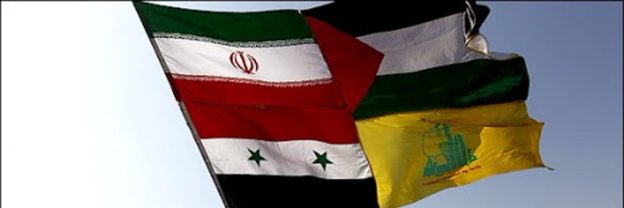
Iran has only a few hundred advisers and officers in Syria, but it leads some tens of thousands of allies from Lebanon, Iraq, Pakistan, Afghanistan, and auxiliary Syrian forces that resemble irregular-organised military formations.
In Syria, Hezbollah was able to operate in an area ten times the size of Lebanon, which gave it a unique experience any army in the world would have wished to have. It was also subjected to attacks by a NATO member, Turkey, which used armed drones on the battlefield. That provided Hezbollah with a wealth of experience and taught them lessons that have become integrated into curricula at military schools and colleges in Iran with Hezbollah and their allies.
President Assad does not say that it is time for his allies (especially Hezbollah) to leave Syria. Rather, he says – according to this source – that “Syria has a debt to Hezbollah. Wherever Hezbollah wants to be, it will be also Syria’s wishes.” America and Israel created an unbreakable alliance between Syria, Iran and Hezbollah.
In Lebanon, Hezbollah has started to harvest its gains. Hezbollah was able to impose the name of the President of the Republic, General Michel Aoun, despite repeated opposition from Saudi Arabia and the US, the losers in the Syrian war. Lebanon remained without a president for several months until General Aoun assumed the presidency.
Hezbollah rejected multiple offers from different countries by giving the Presidency of the Parliament to anyone other than President Nabih Berri, leader of the Amal movement, who has been on this throne for decades. Hezbollah holds the real power – though not all of it – in Lebanon to call for the appointment of the President of the Republic and the Speaker of the Parliament.
As for the premiership, it cannot be assumed without Hezbollah’s approval of the candidate. Hezbollah has sufficient political weight within the House of Representatives and the Presidency of the Republic to nominate or accept the nomination or direct the appointing of a prime minister. Former prime minister Saad Hariri is making sure his daily friendly contacts with Hezbollah are maintained because he would very much like to return to power. Hariri knows that the door to the premiership goes through one gate: Hezbollah.
This does not mean that Hezbollah wants to take control of Lebanon as a whole. Hezbollah leaders are aware that the Druse leader Kamal Jumblatt, Sunni leader Rafic Hariri, the Maronite Christian leader Bashir Gemayel and the Palestinians have all failed in controlling Lebanon and seizing the country. Hezbollah does not want to succumb to the same mistakes and doesn’t wish to control all of Lebanon. This means that the counter influence of other countries exists and is well-rooted in Lebanon. For example, the US ambassador in Beirut is threatening the Lebanese government with a warning not to remove the Central Bank Governor Riad Salama. Also, the US removed a Lebanese-Israeli agent, Amer Al-Fakhouri, via a plane which landed him at the US embassy without taking into consideration Lebanese sovereignty. The US supports the Lebanese army and internal security forces to maintain its dominance over certain key figures.
Syria has given the Secretary-General of Hezbollah, Sayyed Hassan Nasrallah, powers in Lebanon that he would not have obtained without the intervention of Israel and the allies in Syria. Hezbollah has managed to preserve its military pipeline via Syria by defeating the Takfiris (al-Qaeda and ISIS) and has prevented them from establishing an “Islamic emirate” in Lebanon and Syria.
Hezbollah’s victory comes at a price: thousands of martyrs and thousands of wounded. However, the resulting harvest is so abundant and strategic that the Lebanese Shiites now enjoy more power in Lebanon and Bilad al-Sham than they have since the year 661 when the fourth caliphate’s Imam Ali bin Abi Talib was killed.
Proofread by: C.G.B. and Maurice Brasher
This article is translated free to many languages by volunteers so readers can enjoy the content. It shall not be masked by Paywall. I’d like to thank my followers and readers for their confidence and support. If you liked it, please don’t feel embarrassed to contribute and help fund it, for as little as 1 Euro. Your contribution, however small, will help ensure its continuity. Thank you.
Copyright © https://ejmagnier.com 2020
How Israel Instructed Its Worst Nightmare in the Art of War
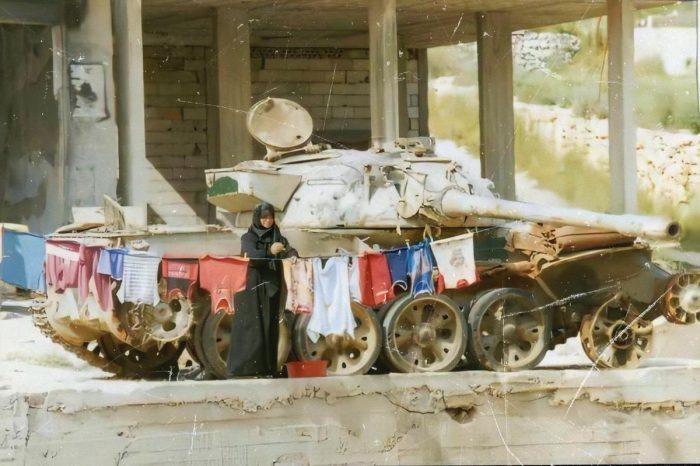
A woman mocks an Israeli tank left behind when withdrawing from south of Lebanon in the year 2000, using it as a hanger to dry cloths. Credit: Younes Zaatari
By Elijah J. Magnier | American Herlad Tribune | May 17, 2020
“We were Hezbollah trainers. It is an organization that learns quickly. The Hezbollah we met at the beginning (1982) is different from the one we left behind in 2000”. This is what the former Chief of Staff and former Minister of Foreign Affairs, Gabi Ashkenazi, said twenty years after the Israeli unconditional withdrawal from Lebanon.
“For the first time we met a non-conventional army, but also an ideological organization with deep faith: and this faith triumphed over us. We were more powerful, more technologically advanced and better armed but not possessing the fighting spirit …They were stronger than us”. This is what Brigadier General Effi Eitam, Commander of the 91st Division in counter-guerrilla operation in south Lebanon said.
Alon Ben-David, senior defense correspondent for Israel’s Channel 13, specialized in defense and military issues, said: “Hezbollah stood up and defeated the powerful Israeli Army”.
Former Prime Minister Ehud Barak, the architect of the Israeli withdrawal from Lebanon, said: “The withdrawal didn’t go as planned. The deterrence of Hezbollah and its capability increased greatly. We withdrew from a nightmare”. Barak meant he had planned to leave behind him a buffer zone under the control of his Israeli proxies led by the “South Lebanon Army” (SLA) commander Antoine Lahad. However, his plans were dismantled and the resistance forced Lahad’s men to run towards the borders, freeing the occupied buffer zone. As they left Lebanon, the Israeli soldiers said: “Thank God we are leaving: no one in Israel wants to return”.
In 1982, Israel believed the time had come to invade Lebanon and force it to sign a peace agreement after eliminating the various Palestinian organizations. These groups had deviated from the Palestinian compass and had become embroiled in sectarian conflict with the Lebanese Phalange, believing that “the road to Jerusalem passed through Jounieh” (the Maronite stronghold on Mt. Lebanon, northwest of Beirut, a slogan used by Abu Iyad). Israel intended Lebanon to become the domicile of its Palestinian conflict. It failed to realize that in so doing it was letting the Shiite genie out of the bottle. Signs of this genie began to appear after the arrival of Sayyed Musa al-Sadr in Lebanon and the return of students of Sayyed Muhammad Baqir al-Sadr from Najaf to their home country and residency in the Lebanese Bekaa. Also, the victory of Imam Khomeini and the “Islamic revolution” in Iran in 1979 was not taken into consideration by Israel, and the potential consequences for the Lebanese Shia were overlooked.
The 1982 Israeli invasion triggered the emergence of the “Islamic resistance in Lebanon”, which later became known as “Hezbollah”, and it forced Israel to leave Lebanon unconditionally in 2000. This made Lebanon the first country to humiliate the Israeli army. Following their victory over the Arabs in 1949, 1956, 1967 and 1973, Israeli officials had come to believe they could occupy any Arab country “with a brass band”.
Israeli soldiers exited through the “Fatima Gate” (on the Lebanese border, also known as Good Fence, HaGader HaTova) under the watchful eyes of Suzanne Goldenberg on the other side of the border. She wrote:
After two decades and the loss of more than 1000 men, the chaotic Israeli withdrawal from southern Lebanon leaves its northern flank dangerously exposed, with Hezbollah guerrillas sitting directly on its border. The scale of the Israeli fiasco was beginning to unfold… After the Israelis pulled out of Bint Jubayl in the middle of the night, their SLA allies, already in a state of collapse in the center of the strip, simply gave up. Branded collaborators, they and their families headed for exile. Behind them, they left tanks and other heavy equipment donated by their patrons. Shlomo Hayun, an Israeli farmer who lives on Shaar Yeshuv farm, said of the withdrawal, “This was the first time I have been ashamed to be Israeli. It was chaotic and disorganized.”
What did Israel and its allies in the Middle East achieve?
In 1978, Israel occupied a part of southern Lebanon and in 1982, for the first time, it occupied an Arab capital, Beirut. During its presence as an occupation force, Israel was responsible for several massacres amounting to war crimes. In 1992, Israel thought that it could strike a death blow to Hezbollah by assassinating its leader, Sayyed Abbas Al-Mousawi. He was replaced by his student, the charismatic leader, Sayyed Hassan Nasrallah. Nasrallah has proved to be more truthful than the Israeli leaders, and thus capable of affecting the Israeli public through his speeches, as Israeli colonel Ronen, chief Intelligence officer for the Central Command of Israel Defence Forces, has said.
The new Hezbollah leader showed his potential for standing up to and confronting Israel through TV appearances. He mastered the psychological aspects of warfare, just as he mastered the art of guerrilla war. He leads a non-conventional but organized army of militants “stronger than several armies in the Middle East,” according to Lieutenant General Gadi Eisenkot, the former Israeli Chief of Staff.
The Israeli doctrine relies on the principle of pre-emptively striking what is considered as a potential threat, in order to extinguish it in its cradle. Israel first annexed Jerusalem by declaring it in 1980 an integral part of the so-called “capital of the state of Israel”. In June 1981, it attacked and destroyed the Iraqi nuclear reactor that France had helped build. In 2007, Israel struck a building in Deir Ezzor, Syria, before it was completed, claiming that the government had been building a nuclear reactor.
6 years after its withdrawal, Israel declared war on Lebanon in 2006, with the aim of eradicating Hezbollah from the south and destroying its military capacity. Avi Kober, a member of the department of political studies at Bar Ilan University and researcher at the Israeli BESA center said:
“The war was conducted under unprecedented and favorable conditions the like which Israel has never enjoyed – internal consensus, broad international support (including tacit support on the part of moderate Arab States), and a sense of having almost unlimited time to achieve the war objectives. The IDF’s performance during this war was unsatisfactory, reflecting flawed military conceptions and poor professionalism and generalship. Not only the IDF fail in achieving battlefield decisions against Hezbollah, that is, denying the enemy’s ability to carry on the fight, despite some tactical achievements, throughout the war, it played into Hizballah’s hands.”
Israel withdrew from the battle without achieving its goals: it was surprised by Hezbollah’s military equipment and fighting capabilities. Hezbollah had managed to hide its advanced weapons from the eyes of Israeli intelligence and its allies, who are present in every country including Lebanon. The result was 121 Israeli soldiers killed, 2,000 wounded, and the pride of the Israeli army and industry destroyed in the Merkava Cemetery in southern Lebanon where the Israeli advance into Wadi al-Hujeir was thwarted.
Hezbollah hit the most advanced class Israeli destroyer, the INS Spear saar-5, opposite the Lebanese coast. In the last 72 hours of the war, Israel fired 2.7 million bomblets, or cluster bombs, to cause long-term pain for Lebanon’s population, either through impeding their return or disrupting cultivation and harvest once they did return. “An unjustified degree of vindictiveness and an effort to punish the population as a whole”, said the report of the UN commission of inquiry conducted in November 2006 (Arkin M. W. (2007), Divining Victory: Airpower in the 2006 Israel-Hezbollah War, Air University Press, Alabama, pp 67-71).
The battle ended, Israel withdrew again, closed the doors behind its army, raised a fence on the Lebanese borders, and installed electronic devices and cameras to prevent any possible Hezbollah crossing into Palestine.
When Israel’s chief of staff Gabi Ashkenazi said “Israel instructed Hezbollah in the art of war”, he was right. Hezbollah has learned from the wars that Israel has waged over the years. In every war, Hezbollah saw the necessity of developing its weapons and training to match and overcome the Israeli army (which is outnumbered) and which enjoys the tacit support of Middle Eastern regimes and the most powerful western countries. Hezbollah developed its special forces’ training and armed itself with precision missiles to impose new rules of engagement, posing a real threat to the continuity of the permanent Israeli violations of Lebanon’s sovereignty.
Today, Hezbollah has sophisticated weapons, including the armed drones that it used in Syria in its war against the Takfirists, and precision missiles that can reach every region, city and airport in Israel. It has anti-ship missiles to neutralize the Israeli navy in any future attack or war on Lebanon and to hit any harbor or oil platform. It is also equipped with missiles that prevent helicopters from being involved in any future battle. The balance of deterrence has been achieved. Hezbollah can take Israel back to the Stone Age just as easily as Israel envisages returning Lebanon to the Stone Age.
Hezbollah is Israel’s worst nightmare, and it was largely created by the Israeli attempt to overthrow the regime in Lebanon, occupy Lebanon, and impose an agreement that Israel could then mold to its own liking. But the tables were turned: a very small force emerged in Lebanon to become a regional power whose powerful support was then extended to the neighboring countries of Syria and Iraq. The harvest journey has begun.
German blacklisting of Hezbollah only serves Israel interests: Iran
Press TV – April 30, 2020
Iran has vehemently condemned the German government’s decision to designate the Lebanese resistance group Hezbollah a “terrorist organization”, saying Berlin must be held to account for the “consequences” its decision will have for the fight against terrorism in the region.
“Certain countries in Europe are apparently adopting their stances without considering the realities in the West Asia region,” said Iranian Foreign Ministry Spokesman Abbas Mousavi in a statement on Thursday night.
Mousavi said the German government’s blacklisting of Hezbollah only serves “the objectives of the propaganda machine of the Zionist regime and the bewildered US regime.”
He further noted that Berlin’s decision totally “disrespects” the Lebanese government and nation, as Hezbollah is a “legitimate and official part of the country’s government and parliament”.
Condemning the German move as “a decision of utmost imprudence”, the Iranian official said the Lebanese resistance movement has been playing a key role in combating the Daesh Takfiri terrorist group in the region.
Earlier in the day, Germany banned all of Hezbollah’s activities in the country and ordered raids on sites police said were linked to the group.
A number of properties in Berlin, Bremen and North Rhine-Westphalia were searched early on Thursday, according to the German police.
The German Interior Ministry, which has issued the ban, says four mosques and cultural associations were raided, as well as private homes of Hezbollah’s board members, treasurers and tax advisers.
Most EU member states have so far refrained from labeling the political arm of the Lebanese resistance movement a “terrorist organization”.
Last year, the British government broke with the rest of Europe to adopt a stance similar to that of Germany against the entire Hezbollah resistance movement.
Hezbollah’s role in an anti-militancy campaign in Syria has angered Western countries that have, for the past eight years, supported terrorist groups opposed to the government of President Bashar al-Assad.
Hezbollah has played a major role in helping Assad purge the Syrian territory from terrorist groups.
The resistance group also responds to Israel’s frequent aerial incursions into Lebanon.
Germany’s Move to Ban Hezbollah May ‘Clearly Be Seen as an Act Against Lebanon’
By Oleg Burunov – Sputnik – 30.04.2020
Germany’s decision to ban Hezbollah can be perceived, among other things, as an act against Lebanon, Middle East expert and Professor Emeritus Werner Ruf from the University of Kassel said on Thursday.
Also, “this is, to my mind, an example of obedience to Israel and the United States because there is no reason for the ban. On the other hand, it should be noted that Germany maintains normal diplomatic relations with Lebanon, where Hezbollah is represented in the government. So what’s the point [of banning the group]?” Ruf, who is also a lecturer at the Rosa Luxemburg Foundation, pointed out.
He added that even though one should not rule out that “donations are sent to certain associations or mosques, which are mainly controlled by Hezbollah”, there is no reason to believe that the organisation poses a security threat to Germany.
On the other hand, Ruf went on to say, the ban “will clearly be seen as an act against Lebanon”, as Hezbollah is represented in the Lebanese government and has great authority – something which should not be overlooked.
According to the expert, Hezbollah was “the only military force that forced Israel to leave Lebanon following the last war [between Beirut and Tel Aviv]”.
“These are completely different perspectives”, he said, adding that when it comes to anyone feeling a threat, “then it is most likely Lebanon [that] feels the menace coming from Israel than vice versa”.
At the same time, Ruf referred to Tel Aviv’s “military superiority”, arguing that Hezbollah is not going to target Israel, given that the Jewish state “has already shown in the last war that it is ready to use almost all types of weapons to destroy Lebanese infrastructure”.
“I do not think that in this situation, Hezbollah would be interested in a new military scenario with Israel”, the expert concluded.
His remarks came after German Interior Ministry spokesman Steve Alter tweeted earlier in the day that Berlin had banned all Hezbollah activities on the country’s territory.
According to him, security forces are currently involved in staging raids against suspected Hezbollah members in a number of German states.
Jewish Group Praises Germany’s ‘Much-Anticipated Move’
American Jewish Committee head David Harris hailed the move as a “welcome, much-anticipated, and significant German decision”, expressing hope that “other European nations will take a close look” at the move and “reach the same conclusion about the true nature of Hezbollah”.
This was preceded by German lawmakers approving a non-binding initiative in December 2019 to call on the government to ban Hezbollah, a Lebanese political party and militant group whose primary basis of support is the country’s Shiite Muslim community.
Iran breaks through US-led blockade to deliver record amount of oil to Syria
Al-Masdar News | April 28, 2020
Iran has managed to break through the U.S. blockade to deliver a large amount of oil to the Syrian Arab Republic, TankerTrackers website has revealed.
According to the website Tanker Trackers, Iran has significantly increased their oil exports to Syria, with several cargoes reportedly reaching the Port of Baniyas in the Tartous Governorate.
The website reported that Iran is currently delivering more than three times the normal amount they export to Syria, which is a significant increase to the Arab Republic, who relied heavily on the Islamic Republic’s oil last year.
“There can be several reasons why this is happening. Excess oil stocks in the midst of sanctions and a global oil glut is forcing Iran to ship and perhaps store the oil in a friendly country. Another reason is that Bashar Assad’s government and Hezbollah can be conduits to sell the oil on the black market. One place Hezbollah can manage to do this is Lebanon, where it has sway over the government,” the website Radio Farda reported.
However, despite these claims, the large oil exports to Syria have less to do with selling the petrol and more to do with the Arab Republic providing relief to its people.
Since the U.S. currently occupies some of Syria’s largest oil fields, the Arab Republic has been forced to find alternatives to meet the civil demand for this resource.
US seeking to replace Iraq’s PMU in the western Anbar province bordering Syria: Analyst
Press TV – April 26, 2020
An Iraqi military advisor and analyst has said that the US is seeking to replace Iraq’s Popular Mobilization Units in the western Anbar province bordering Syria with its own forces.
Speaking to Iraq’s al-Maloumah news agency on Sunday, Safa al-A’ssam said that Washington seeks to force the PMU out of the province’s al-Qaim border region by fanning sectarian tensions.
“The plan is to redeploy American forces to the al-Qaim region on the pretext of countering Deash terrorist attacks and filling the security vacuum following a PMU withdrawal,” he added.
The PMU formed shortly after the emergence of the Daesh terrorist group in Iraq in mid-2014.
The group played a major role pushing back and ultimately defeating the terrorist forces which had taken control of a large swathes of the country.
The Iraqi parliament voted to integrate the PMU into the Iraqi military in 2016, effectively placing the force under the command of the prime minister and granting the group a standing similar to that of other branches of Iraqi security forces.
Fazel Jaber, an Iraqi lawmaker affiliated with the Fatah Alliance, has also warned of attempts by certain Iraqi groups to undermine the PMU’s presence in the province despite being deployed under the command of Iraq’s federal government.
He said the attempts to weaken the PMU were led by Washington, which fears the group’s presence.
The PMU has long rejected Washington’s military presence in the country as an obstacle impeding long-lasting security and stability in Iraq.
In January, Washington assassinated the group’s deputy commander, Abu Mahdi al-Muhandis, alongside Iran’s top anti-terror Lieutenant General Qassem Soleimani in the capital city Baghdad.
Iraqi resistance groups have vowed to take up arms against US forces if Washington fails to comply with a parliamentary order calling for the expulsion of US troops following the assassination.
Buying Punishment for “Terrorists”: Washington’s Reward Program Is Largely Ineffective
By Philip Giraldi | American Herald tribune | April 15, 2020
Many people worldwide are aware of the fact that the United States government offers cash rewards to informants who provide information on individuals and groups that it chooses to define as terrorists. The program is referred to as the Rewards for Justice Program (RFJ). It was established in 1984 as part of the Act to Combat International Terrorism and is run by the Department of State’s Diplomatic Security Service (DS). The rewards can be substantial, up to the $25 million that was offered for Osama bin Laden, and they sometimes include resettlement in another country with a new identity for informants whose security is threatened by their cooperation.
The program relies on information provided by local people, referred to on the RFJ website as “tips.” The website itself is accessible in a number of languages and, in its English version, features a headline that promotes its mission as: “Stop a Terrorist Save Lives. The most important reasons to stop a terrorist are all around you. Terrorism kills innocent people in every walk of life. By providing information that prevents a terrorist act, you save lives, protect families, and preserve peace. The United States is offering a reward for information leading to the arrest of persons engaged in terrorism. If you have information that can help, please submit a tip now. Submit a Tip.”
RFJ elaborates its role in very broad terms as “… offering rewards for information that prevents or favorably resolves acts of international terrorism against U.S. persons or property worldwide. Rewards also may be paid for information leading to the arrest or conviction of terrorists attempting, committing, conspiring to commit, or aiding and abetting in the commission of such acts. The Rewards for Justice Program has paid more than $145 million for information that prevented international terrorist attacks or helped bring to justice those involved in prior acts.”
After a slow start in which the program was first called the Counter Terror Rewards Program and then HEROES, by 1997 the site was processing over one million contacts per year. Admittedly, many of the “tips” were little more than bids to obtain cash and resettlement from the American government, but the State Department’s periodic evaluations of the program have considered it to be a success.
Critics note, however, that the reward for bin Laden attracted thousands of calls but no substantive information was obtained. Nor has RFJ been very effective against Islamic radical groups, considered to be its primary target. The website identifies top terrorist targets, but apart from Ramzi Ahmed Yousef, the World Trade Center bomber of 1993 who was also involved in various plots involving airliners in the Philippines, no one important has been identified and arrested through information developed by way of the program. Ramzi was arrested in Pakistan in 1995 after an informant identified him. He is currently in prison in Colorado.
The RFJ program has also claimed several executions of claimed terrorists, to include the killing of two leaders of the Filipino radical group Abu Sayyaf. Many more terrorist leaders, like ISIS head Abu Bakr al-Baghdadi, were killed without any input from RFJ. The relative lack of success against actual militants from groups recognized generally as terrorist, inevitably led to a broadening of the target pool. On December 22, 2011, RFJ offered a $10 million for information leading to Ezedin Abdel Aziz Khalil, the alleged organizer of an al-Qaeda fundraising operation in Iran that sent money to Pakistan and Afghanistan. It was the first listing of what was claimed to be a terrorist financier.
Two major current targets of RFJ are, in fact, financiers and fund-raising mechanisms related to Lebanese Hizballah and the Iranian Revolutionary Guards Corps (IRGC). To include them on the list, the United States declared both organizations to be Foreign Terrorist Groups (FTOs) in 1997 and 2019 respectively. Regarding Hizballah, the RFJ website includes “Rewards for Justice is offering a reward of up to $10 million for information leading to the disruption of the financial mechanisms of Lebanese Hizballah. Terrorist groups such as Hizballah rely on financing and facilitation networks to sustain operations and launch attacks globally. Hizballah earns almost one billion dollars annually through direct financial support from Iran, international businesses and investments, donor networks, corruption, and money laundering activities. The group uses those funds to support its malign activities throughout the world, including: Deployment of its militia members to Syria in support of the Assad dictatorship; alleged operations to conduct surveillance and gather intelligence in the American homeland; and enhanced military capabilities to the point that Hizballah claims to possess precision-guided missiles. These terrorist operations are funded through Hizballah’s international network of financial supporters and activities — financial enablers and infrastructure that form the lifeblood of Hizballah.”
Regarding the IRGC, the RFJ site includes “The U.S. Department of State’s Reward for Justice Program is offering a reward of up to $15 million for information leading to the disruption of the financial mechanisms of Iran’s Islamic Revolutionary Guard Corps (IRGC) and its branches, including the IRGC-Qods Force (IRGC-QF). The IRGC has financed numerous terrorist attacks and activities globally. The IRGC-QF leads Iran’s terrorist operations outside Iran via its proxies, such as Hizballah and Hamas… Since its founding 40 years ago, the IRGC has been involved in terrorist plots and supports terrorism worldwide. The IRGC is responsible for numerous attacks targeting Americans and U.S. facilities, including those that killed U.S. citizens. The IRGC has supported attacks against U.S. and allied troops and diplomatic missions in Iraq and Afghanistan.”
The first thing that strikes the casual reader of the descriptions of the cases made against both Hizballah and the IRGC is that much of the “evidence” is unsubstantiated, fabricated or exaggerated. To be sure, neither group is a friend of the United States or of Israel, but the descriptions of worldwide terror operations is largely made up, particularly the claims about attacks against Americans which have been credibly attributed to ISIS, not to Iranian sources or proxies. That Lebanese Hizballah has been gathering intelligence on the “American homeland,” presumably to stage an attack, is complete nonsense.
To cite only one example of how the RFJ is primarily a vehicle for attacking individuals and groups that the U.S. and Israel do not like, one might cite Muhammad Kawtharani. Informants would be rewarded for information on the “… activities, networks, and associates of Muhammad Kawtharani, a senior Hizballah military commander. This announcement is part of the Department’s standing reward offer for information leading to the disruption of the financial mechanisms of the terrorist organization Lebanese Hizballah. Muhammad Kawtharani is a senior leader of Hizballah’s forces in Iraq and has taken over some of the political coordination of Iran-aligned paramilitary groups formerly organized by Qassim Soleimani after Soleimani’s death in January. In this capacity, he facilitates the actions of groups operating outside the control of the Government of Iraq that have violently suppressed protests, attacked foreign diplomatic missions, and engaged in wide-spread organized criminal activity. As a member of Hizballah’s Political Council, Kawtharani has worked to promote Hizballah’s interests in Iraq, including Hizballah efforts to provide training, funding, political, and logistical support to Iraqi Shi’a insurgent groups.”
Well, RFJ gets Kawtharani’s name right and he is a Hizballah commander, but from that point on the story is pure spin and disinformation. The militia groups that Kawtharani presumably associates with and that have been attacked by U.S. forces are not “outside control of the government,” nor are they “insurgents.” They are, in fact, integrated into the Iraqi army. Nor have attacks on foreign diplomatic missions been demonstrated to be their responsibility as the rage against U.S. presence in Iraq is widespread across sectarian lines. Kawtharani is present in Iraq as a guest of the government in Baghdad, as was Qassim Soleimani before him, largely to assist in the fighting against ISIS. And if he is in Iraq to promote Hizballah interests in that country, why should it surprise anyone? In short, his being featured in RFJ is part of a plan to create a major incentive to kill him, little more. If he committed an actual terrorism crime or act, where is it?
Rewards for Justice is not about justice at all, unless one is promoting vigilante justice, as virtually no one who appears on its site is actually arrested and tried. It is a kill list providing the United States with one more tool to target and eliminate political opponents from countries with which Washington is not at war. As it has now been expanded to include the targeting of organizations and funding mechanisms of groups that are considered hostile, it is a mechanism for widening the hideous global war on terror that has done such terrible damage to American democracy while also killing hundreds of thousands and upending whole countries worldwide.
Pompeo and Netanyahu paved a path to war with Iran, and they’re pushing Trump again
By Gareth Porter | The Grayzone | March 20, 2020
Though it narrowly averted war with Iran this January, the Trump administration is still pushing for all-out military conflict. The architects of the drive to war, Mike Pompeo and Benjamin Netanyahu, have relied on a series of cynical provocations to force Trump’s hand.
The US may escape the most recent conflict with Iran without war, however, a dangerous escalation is just over the horizon. And as before, the key factors driving the belligerence are not outraged Iraqi militia leaders or their allies in Iran, but Trump’s secretary of state, Mike Pompeo, and Israeli Prime Minister Benjamin Netanyahu, who has long sought to draw the US into a military confrontation with Iran.
Throughout the fall of 2019, Netanyahu ordered a series of Israeli strikes against Iranian allies in Iraq and against Lebanese Hezbollah units. He and Pompeo hoped the attacks would provoke a reaction from their targets that could provide a tripwire to outright war with Iran. As could have been expected, corporate US media missed the story, perhaps because it failed to reinforce the universally accepted narrative of a hyper-aggressive Iran emboldened by Trump’s failure to “deter” it following Iran’s shoot-down of a U.S. drone in June, and an alleged Iranian attack on Saudi oil facility in September.
Pompeo and John Bolton set the stage for the tripwire strategy in May 2019 with a statement by national security adviser John Bolton citing “troubling and escalatory indications and warnings,” implying an Iranian threat without providing concrete details. That vague language echoed a previous vow by Bolton that “any attack” by Iran or “proxy” forces “on United States interests or on those of our allies will be met with unrelenting force.”
Then came a campaign of leaks to major news outlet suggesting that Iran was planning attacks on U.S. military personnel. The day after Bolton’s statement, the Wall Street Journal reported that unnamed U.S. officials cited “U.S. intelligence” showing that Iran “drew up plans to target U.S. forces in Iraq and possibly Syria, to orchestrate attacks in the Bab el-Mandeb strait near Yemen through proxies and in the Persian Gulf with its own armed drones…”
The immediate aim of this campaign was to gain Trump’s approval for contingency plans for a possible war with Iran that included the option of sending as many as 120,000 U.S. troops into region. Trump balked at such war-planning, however, complaining privately that Bolton and Pompeo were pushing him into a war with Iran. Following Iran’s shoot-down of the U.S. drone over the Strait of Hormuz on June 20, Pompeo and Bolton suggested the option of killing Maj. Gen. Qassem Soleimani in retaliation. But Trump refused to sign off on the assassination of Iran’s top general unless Iran killed an American first, according to current and former officials.
From that point on, the provocation strategy was focused on trying to trigger an Iranian reaction that would involve a U.S. casualty. That’s when Israeli Prime Minister Benjamin Netanyahu interjected himself and his military as a central player in the drama. From July 19 through August 20, the Israeli army carried out five strikes against Iraqi militias allied with Iran, blowing up four weapons depots and killing as many Shiite militiamen and Iranian offcers, according to press accounts.
The Israeli bombing escalated on August 25, when two strikes on the brigade headquarters of a pro-Iranian militia and on a militia convoy killed the brigade commander and six other militiamen, and a drone strike on Hezbollah’s headquarters in south Beirut blew the windows out of one of Hezbollah’s media offices.
Netanyahu and Pompeo sabotage Trump and Macron’s attempt at diplomacy
Behind those strikes was Netanyahu’s sense of alarm over Trump toying with the idea of seeking negotiations with Iran. Netanyahu had likely learned about Trump’s moves toward detente from Pompeo, who had long been his primary contact in the administration. On August 26, French President Emanuel Macron revealed that he was working to broker a Trump-Rouhani meeting. Netanyahu grumbled about the prospect of U.S.-Iranian talks “several times” with his security cabinet the day before launching the strikes.
Two retired senior Israeli generals, Gen. Amos Yadlin and Gen. Assaf Oron, criticized those strikes for increasing the likelihood of harsh retaliation by Iran or one of its regional partners. The generals complained that Netanyahu’s attacks were “designed to prod [Iran] into a hasty response” and thus end Trump’s flirtation with talking to Iran. That much was obviously true, but Pompeo and Netanyahu also knew that provoking an attack by Iran or one of its allies might cause one or more of the American casualties they sought. And once American blood was spilled, Trump would have no means to resist authorizing a major escalation.
Kataib Hezbollah and other pro-Iran Iraqi militias blamed the United States for the wave of lethal Israeli attacks on their fighters. These militias responded in September by launching a series of rocket attacks on Iraqi government bases where U.S. troops were present. They also struck targets in the vicinity of the U.S. Embassy.
The problem for Netanyahu and Pompeo, however, was that none of those strikes killed an American. What’s more, U.S. intelligence officials knew from NSA monitoring of communications between the IRGC and the militias that Iran had explicitly forbidden direct attacks on US personnel.
Netanyahu was growing impatient. For several days in late October and early November, he met with his national security cabinet to discuss a new Israeli attack to precipitate a possible war with Iran, according to reports by former Israeli Ambassador Michael Oren. Oren hinted at how a war with Iran might start. ‘[P]erhaps Israel miscalculates,” he suggested, “hitting a particularly sensitive target,” which, in his view, could spark “a big war between Israel and Iran.”
But on December 27, before Netanyahu could put such a strategy into action, the situation changed dramatically. A barrage of rockets slammed into an Iraqi base near Kirkuk where U.S. military personnel were stationed, killing a U.S military contractor. Suddenly, Pompeo had the opening he needed. At a meeting the following day, Pompeo led Trump to believe that Iranian “proxies” had attacked the base, and pressed him to “reestablish deterrence” with Iran by carrying out a military response.
In fact, U.S. and Iraqi officials on the spot had reached no such conclusion, and the investigation led by the head of intelligence for the Iraqi federal police at the base was just beginning that same day. But Pompeo and his allies, Defense Secretary Mark Esper and Chairman of Joint Chiefs Gen. Mark A Milley, were not interested in waiting for its conclusion.
A deception brings the US and Iran to the brink of war
The results of a subsequent Iraqi investigation revealed that the rocket barrage had been launched from a Sunni area of Kirkuk with a strong Islamic State presence, and that IS fighters had carried out three attacks not far from the base on Iraqi forces stationed there in the previous ten days. US signals intercepts found no evidence that Iraqi militias had shifted from their policy of avoiding American casualties at all cost.
Kept in the dark by Pompeo about these crucial facts, Trump agreed to launch five airstrikes against Kataib Hezbollah and another pro-Iran militia at five locations in Iraq and Syria that killed 25 militiamen and wounded 51. He may have also agreed in principle to the killing of Soleimani when the opportunity presented itself.
Iran responded to the attacks on its Iraqi militia allies by approving a violent protest at the U.S. Embassy in Baghdad January 31. The demonstrators did not penetrate the embassy building itself and were abruptly halted the same day. But Pompeo managed to persuade Trump to authorize the assassination of Qassem Soleimani, Iran’s second most powerful figure, presumably by hammering on the theme of “reestablishing deterrence” with Iran.
Soleimani was not only the second most powerful man in Iran and the main figure in its foreign policy; he was idolized by millions of the most strongly nationalist citizens of the country. Killing him in a drone strike was an open invitation to the military confrontation Netanyahu and Pompeo so desperately sought.
During the crucial week from December 28 through January 4, while Pompeo was pressing Trump to retaliate against Iran not just once but twice, it was clear that he was coordinating closely with Netanyahu. During that single week, he spoke by phone with Netanyahu on three separate occasions.
What Pompeo and Netanyahu could not have anticipated was that Iran’s missile attack on the U.S. sector of Iraq’s sprawling al-Asad airbase in retaliation would be so precise that it scored direct hits on six U.S. targets without killing a single American. (The US service members were saved in part because the rockets were fired after the Iraqi government had passed on a warning from Iran to prepare for it). Because no American was killed in the strike, Trump again decided against further retaliation.
Towards another provocation
Although Pompeo and Netanyahu failed to ignite a military conflict with Iran, there is good reason to believe that they will try again before both are forced to leave their positions or power.
In an article for the Atlantic last November, former Israeli Ambassador Michael Oren, channeled Netanyahu when he declared it would be “better for conflict [with Iran] to occur during the current [Trump] administration, which can be counted on to provide Israel with the three sources of American assistance it traditionally receives in wartime,” than to “wait until later.”
Oren was not the only Israeli official to suggest that Israeli is likely to go even further in strikes against Iranian and Iranian allies targets in 2020. After listening to Israeli army Chief of Staff Aviv Kochavi speak in late December, Haaretz military correspondent Amos Harel reported that the Israeli army chief conveyed the clear impression that a “more serious confrontation with Iran in the coming year as an almost unquestionable necessity.” His interviews with Israeli military and political figures further indicated that Israel would “intensity its efforts to hit Iran in the northern area.”
Shockingly, Pompeo has exploited the Coronavirus pandemic to impose even harsher sanctions on Iran while intimidating foreign businesses to prevent urgently needed medical supplies from entering the country. The approaching presidential election gives both Pompeo and Netanyahu a powerful reason to plot another strike, or a series of strikes aimed at drawing the US into a potential Israeli confrontation with Iran.
Activists and members of Congress concerned about keeping the US out of war with Iran must be acutely aware of the danger and ready to respond decisively when the provocation occurs.
Iran and Hezbollah warn Turkey: all your forces are in our line of fire
Iranian Advisory Center in Syria: we call on Turkish forces to act rationally for the benefit of the Syrian and Turkish peoples
Al-Manar, February 29, 2020
The Iranian Advisory Center in Syria, which takes part in the fighting in northern Syria, issued a press release through the news agency U-News in reaction to the recent confrontation between the Syrian army and the Turkish army. It should be noted that the Iranian Advisory Center is made up of the group of Iranian experts who advise the Syrian State and its armed forces, and that this is the first statement it has issued since the beginning of the war in Syria.
Full text of the statement
In reaction to the latest confrontation between the Syrian Arab Army and the Turkish Army, it is important for us to inform the public of the following:
First: We fought alongside the Syrian Arab army and supported it, at the request of the Syrian State, to open the M5 highway, with a Syrian force led by elements of the Iranian Revolutionary Guards and of Hezbollah, and with the participation of factions of the Resistance within the force; and we have helped civilians and residents of the liberated villages.
Second: Protected by the Turkish army, the armed (terrorist) groups attacked the positions of the Syrian army, and so we participated in the fighting aimed at preventing the M5 highway to fall again in their hands.
Third: Since the beginning of the presence of our forces, the Turkish positions located in the Syrian territories have been in the sight of our forces, whether they comply with the Astana Agreements or violate them, but the elements of the Resistance did not strike these Turkish forces out of deference to the decision of their (respective) leaders, and this decision remains in effect until now.
Fourth: Four days ago, foreign elements, Tajiks from the Turkestan Party, elements from the Al-Nusra Front, as well as other terrorist factions, carried out a large-scale attack on the positions of the Syrian army. Our forces directly supported the Syrian Army to prevent the liberated areas from falling into their hands.
Fifth: Despite the defensive nature of the action of our forces, the Turkish army targeted our elements and our forces from the air, with precision missiles and artillery support, which prompted us to send mediators to the Turkish army to end its attacks and renounce this approach
Sixth: Our mediators announced to the Turkish army that the terrorists attacked our positions with their support, that our forces are there to confront the terrorists, and that we are on the side of the Syrian army for this mission; but unfortunately, the Turkish military ignored this request and continued its bombing, and a number of our fighters (Iranian & Hezbollah’s) were martyred.
Seventh: Syrian army artillery responded by striking the source of the fire; for our part, we did not retaliate directly, and once again, we announced to the Turkish army through mediators that we have no objective or decision to confront the Turkish army and that our leadership is determined to reach a political solution between Syria and Turkey.
Eighth: We have informed our forces since morning not to target Turkish forces inside Idlib in order to spare the lives of their soldiers, and our forces have not opened fire, but the Turkish army continues to shell the points and locations of the Syrian army (where we are also located) with artillery fire.
Ninth: The Iranian Advisory Center and the fighters of the Resistance front call on the Turkish forces to act rationally in the interest of the Syrian and Turkish peoples, reminding the Turkish people that their sons (soldiers) have been in our sights for one month and that we could have targeted them in revenge, but we did not do so in accordance with the orders of our leaders; we call on them to pressure the Turkish leadership to rectify its decisions and avoid spilling the blood of Turkish soldiers.
Tenth: Despite the current difficult circumstances, we reaffirm our continuing position alongside the people, the State and the army in Syria in their fight to defeat terrorism and preserve their full sovereignty over the Syrian territories, and we all call on actors to be rational and aware of the great risks of continuing the aggression against Syria.
Iranian Advisory Center in Syria
Translation: resistancenews.org
Israel Sends Condolences for Turkish “Martyrs”. Erdogan Expands War to Hezbollah, Iran
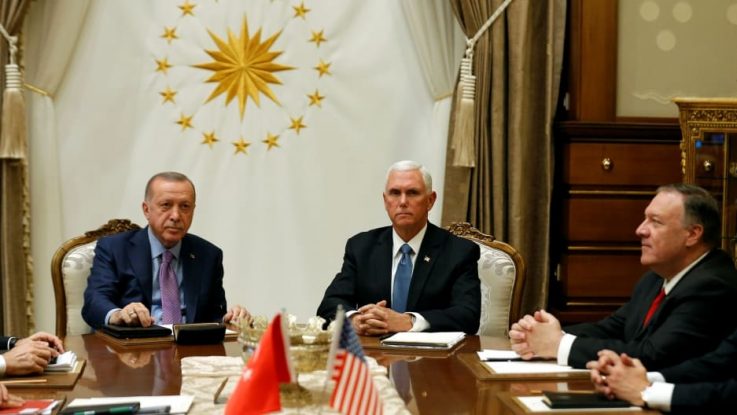
By Marko Marjanović | Anti-Empire | February 29, 2020
In the aftermath of the (probably Russian) strike that killed 33 Turkish soldiers in Syria late (10pm) Thursday Israel sent its condolences for the Turkish “martyrs”, ie using Islamic terminology:
Israel sends its condolences to Turkey over the killing of Turkish soldiers in Idlib.
“We are deeply saddened by the martyring of Turkish soldiers”
Interesting that they used “martyr” in Turkish https://t.co/X8SCOo3nWO
— Ragıp Soylu (@ragipsoylu) February 28, 2020
In fact, earlier that same day as Turkey was hitting the Syrian army heavily around Saraqib Israel snuck in two attacks on the other country:
Israeli helicopters struck Syrian military positions in the Quneitra province in the Syrian Golan Heights and wounded three Syrian soldiers, Syria’s official news agency SANA reported overnight Thursday.
Earlier Thursday, Syrian state TV reported that an Israeli drone fired a missile at a car in southern Syria, killing one person whom it named as a “civilian.” Several other media outlets aligned with Syrian President Bashar Assad’s regime said that the man was a local policeman.
Soon after Turkey expanded its Syria strikes to Hezbollah:
Turkish strikes using drones and smart missiles late on Friday that hit Hezbollah headquarters near Saraqeb killed nine of its members and wounded 30 in one of the bloodiest attacks on the Iran-backed group in Syria ever according to a commander in the regional alliance backing Damascus.
Sure the Shia Lebanese Hezbollah is fighting on the other side in Syria so hitting them would have some tactical value (at a great cost in other ways), but even at the time I wondered if that wasn’t really more a dog whistle to Tel-Aviv and the Israel supporters in DC and the US at large.
Apart from State Department apparatchiks and their hack boss Pompeo, Turkey had found itself very lonely in its new Syria adventure. The asked-for US-manned Patriot missiles to somehow wrestle the control of Idlib skies from Russia aren’t materializing.
But start hitting Hezbollah and suddenly you’ve got the attention of the powerful pro-Israel currents in the US, as well as of Israel itself.
My suspicion was confirmed Saturday when it became clear the Turks had hit Iranians as well:
Statement by Iran’s “advisory mission in Syria”: Turkish army is still shooting at our positions and bases. We call on Turkey to show rational behavior. The Turkish nation’s children are within range of our military forces.
(First statement by Iranian command in Syria, I guess)
— Reza Khaasteh (@Khaaasteh) February 29, 2020
The use of the word “children” above is a misleading translation, the Iranian communique spoke about “sons”, which naturally refers to Turkish troops.
Iranian embassy in Syria: “The Iranian government informed Erdogan that it would respond with full force to the Turkish points if it continued to bomb our forces and the Syrian army.”
— Rojava Network (@RojavaNetwork) February 29, 2020
Iran issued a warning to Erdogan to knock it off or his troops will face the consequences but you get the feeling that may be exactly what Erdogan is trying to provoke. Get the pathologically anti-Iranian Trump administration to see Turkey’s ‘safe-zone-for-bin-Ladenites’ Idlib invasion as an anti-Iranian enterprise and the prospects of American backing look quite a bit brighter.
#Turkey was informed in details of the position of Hezbollah and the Iranian brigades along with the Syrian army but decided to ignore the information and continued bombing these positions over and over again.
It is now clear that Turkey is in the battle with his army to stay.
— Elijah J. Magnier (@ejmalrai) February 29, 2020
Keep in mind that neither #Iran nor #Hezbollah ever attacked the Turkish army until this hour. It is #Turkey that took the initiative to bomb the Iranian-led forces and Hezbollah HQ and military hospital.
— Elijah J. Magnier (@ejmalrai) February 29, 2020
Featured Video
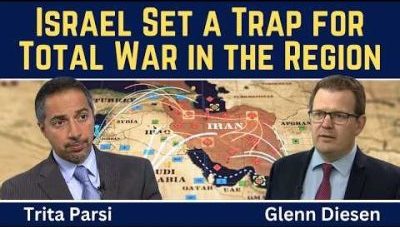
Trita Parsi: Israel Set a Trap for Total War in the Region
or go to
Aletho News Archives – Video-Images
From the Archive
Zionism’s Violent Legacy
By Donald Neff | Washington Report On Middle East Affairs | January 1996
On January 4, 1948, Jewish terrorists drove a truck loaded with explosives into the center of the all Arab city of Jaffa and detonated it, killing 26 and wounding around 100 Palestinian men, women and children.[1] The attack was the work of the Irgun Zvai Leumi – the “National Military Organization,” also known by the Hebrew letters Etzel – the largest Jewish terrorist group in Palestine. The Irgun was headed by Revisionist Zionist Menachem Begin and had been killing and maiming Arabs, Britons and even Jews for the previous ten years in its efforts to establish a Jewish state.
This terror campaign meant that at the core of Revisionist Zionism there existed a philosophical embrace of violence. … continue
Blog Roll
 Aletho News
- Trita Parsi: Israel Set a Trap for Total War in the Region
- Trump’s Iran war is on an Israeli leash
- Saudi oil boss issues global supply warning
- Riyadh Says Its Oil System Is Intact. The Numbers Say Otherwise.
- Trump and Netanyahu Want to “Finish the Job” on Iran
- US ‘one-sided dictation’ not Iran’s beliefs makes rational talks impossible: Baghaei
- Iran’s Next Strike May Not Explode. It Could Shut You Down /Col Doug Macgregor
- Iran: US political targets legitimate if assassinations return
- Iraq shuts key border crossing with Iran under US pressure: Report
- Undersea Internet cables could be targeted in retaliation for attacks on Iran: IRGC deputy chief
- If Americans Knew
- The Israel Lobby’s Changing Fortunes
- AIPAC has become such a political liability that it’s shifting to a more “nimble” approach to buying politicians
- At least 160 Israeli settler attacks in 2 weeks
- Will Gaza’s Ancient Christian Community Disappear Forever?
- Israel’s vision of regional security rests on keeping Arab states weak
- Heidi Levine recounts how Palestinian youths helped save her in settler attack
- DAILY UPDATE: Latest essential news on Palestine, Israel, & region
- Trump’s Intensifying Sabotage of the ICC, for Israel’s Sake
- Israeli military detain US and UK volunteers in West Bank including Democratic NY politician Brad Lander
- Americans at National Conservatism Conference held in Israel this year criticize Israel
- No Tricks Zone
- E-Cars Reduce CO2 Emissions By Only 41% Compared To Internal Combustion Engine Vehicles
- Predictions Made By Renowned Climate Professor Over Past Decades Have Been Proven To Be Poor
- New Study Suggests Large Regions Of The Pacific Ocean Have Been Cooling For The Last 80 Years
- Germany’s Green Energy Debacle: High Energy Costs Force Kahla Porzellan to Close After 182 Years!
- New Study: 50 Years Of The Most Aggressive ‘Net Zero’ Policies Can Only Affect The Global Climate By 0.03°C
- US September “Heat” Was No Record…Many Records Set Decades Ago
- Latest European Green Energy Debacle; Portugal’s Largest Flagship Solar Park Insolvent!
- Green Energy Debacle: German Expert Professor Fritz Vahrenholt Warns Of Severe Economic And Social Consequences
- Two More Paleo Reconstructions Affirm Meters-Higher Sea Levels Across Ireland, Brazil 7000-6000 Years Ago
- New Study: Earth And Venus Surface Warmth Largely Explained By Convection And Lapse Rate, Not CO2 Or Radiation

