Hariri tribunal: Hezbollah, Syria had no link with 2005 blast
Press TV – August 18, 2020
A UN-backed tribunal says it has not been able to establish any link between a 2005 blast in Beirut that killed Lebanon’s former prime minister Rafiq Hariri and the Hezbollah resistance movement or the Syrian government.
The so-called Special Tribunal for Lebanon (SDL) read out a summary of the 2,600-page verdict at The Hague on Tuesday after trying for 15 years and spending some $1 billion to prove allegations of association between the explosion and the Lebanese resistance movement or Damascus.
“There is no evidence that the Hezbollah leadership had any involvement in Mr. Hariri’s murder and there is no direct evidence of Syrian involvement,” said Judge David Re.
Lebanon’s an-Nahar daily ran the headline, “International Justice Defeats Intimidation” even before the decision was announced, referring to extensive attempts by certain parties within and outside the country to implicate the resistance group in the crime.
Hezbollah’s Secretary-General Seyyed Hassan Nasrallah had also said on Friday that he was not concerned about the proceedings, and that if any members of the resistance movement were claimed to be guilty, Hezbollah would stand by their innocence.
The tribunal, however, did not stop short of echoing those who have been trying to make the unfounded allegations against the resistance group and Damascus.
“The trial chamber is of the view that Syria and Hezbollah may have had motives to eliminate Mr. Hariri and his political allies,” the judge said.
Observers said the latter part of the verdict showed that the countries that forced the United Nations Security Council into forming the tribunal in the first place — based on unproven hypotheses, without any legal basis, and in violation of Lebanon’s sovereignty — were still influencing the verdicts that it issues.
Hezbollah — which has rejected the jurisdiction and independence of the court — has denied any link to or interest in the atrocity.
The group has invariably proven itself as a unifying factor in the country, including by forcing Israel into retreat in the occupying regime’s 2000 and 2006 wars on the country.
Israel’s Channel 1 once alleged an association between four people with alleged links to Hezbollah and the 2005 explosion.
The tribunal considered the allegations worthy of its consideration and convicted one of the four, whom it identified as “the main defendant.”
Even with regard to the four, lawyers appointed by the tribunal itself said there was no physical evidence linking them to the crime and that they had to be acquitted.
Hezbollah has condemned the tribunal for serving as an opportunity for Tel Aviv to achieve its “unachieved” goals in Lebanon.
Lebanon: The Paradise from Hell
By Jeremy Salt | American Herald Tribune | August 11, 2020
In the old days there was no more charming city in the eastern Mediterranean than Beirut. Set on a maritime plain with the mountains rising dramatically behind it, the scenery was magnificent, the culture charming, the people hospitable and the city rich in history.
Unfortunately, however, Lebanon’s prime geographical position sucked the country and its capital into the vortex of regional and international politics from the 19th century onwards. Sectarianism and the inability of the people to put the interests of their country ahead of their faith dragged it further down. There was no more potent weapon in the armory of scheming outside powers than this massive fault line running through Lebanese society.
Seizing Syria after the First World War, Britain and France chopped it up. Britain gave Palestine – southern Syria – to the Zionists. France kept the rest. In 1918 it occupied Beirut, with the support of the Maronite Christians and against the opposition of the Muslims. Moving across the mountains, it occupied Damascus after defeating a Syrian national force at Khan Maysalun, in the anti-Lebanon mountains about 25 kilometers from Damascus, in July 1920.
In October 1920 France separated Mt Lebanon and the maritime plain from the Syrian hinterland to create the republic of Grand Liban. Its strategic object was to cut a large segment of Syria’s Christians, the Maronites, off from the Syrian hinterland (which it then proceeded to divide even further along sectarian lines). Historically aligned culturally with France and the ‘west,’ the Maronites were hostile to what they saw as a Sunni Muslim-inflected Arab nationalism. In what they perceived as their own interests, they could be counted on to further French interests in the Near East.
Their sympathy for zionism reached the point in May, 1946, when the Maronite Patriarch, Antoine Arida, signed a ‘treaty’ with the Jewish Agency in which he acknowledged all core zionist claims, including the allegedly historical link with Palestine, the ‘right’ to open immigration “and independence” in a Jewish state. This ‘treaty’ was no more than the patriarch’s personal initiative, but it did represent broad Maronite identification with Zionism as an equally vulnerable minority presence in the Middle East.
As established under French supervision, the 1926 constitution describes Lebanon as “Arab in its identity and affiliation.” Elections to the Chamber of Deputies were to be held on a “national non-confessional basis” but at the same time – more than somewhat contradictorily – there was to be equal representation of Muslims and Christians in Parliament and proportional representation of the confessional groups within the two broader Muslim and Christian communities. The president was to be elected on the basis of two-thirds majority support in the Chamber.
In 1943 with Vichy France defeated in Syria and with Lebanon looking ahead to the end of the mandate, its Muslim (Sunni and Shia) and Christian leaders met to discuss what next. President Bishara al Khuri and Prime Minister Riad al Sulh fashioned the ‘national pact’ which has underpinned Lebanon’s ‘confessional democracy’ ever since. Broadly, Lebanon would remain only “affiliated” to the Arab world (rather than part of it) in return for a Christian pledge not to seek support from the ‘west.’
In its executive and parliamentary makeup, the president of the republic would always be a Maronite, the Prime Minister a Sunni Muslim, the speaker of the Chamber of Deputies a Shia Muslim, the deputy Prime Minister and deputy speaker of the Chamber a Greek Orthodox and the army chief of staff a Druze. Parliament would be elected on the basis of a 6-5 Christian-Muslim majority, this sectarian allocation of power applying across all state institutions.
Even by the 1930s it was doubtful that Lebanon had a Christian majority. It is for this reason that a census had not been held since. The Maronites would certainly not want to be confronted with the statistical proof of their shrunken minority status. On the available evidence now a census would show that the population is about 60 per cent Muslim, about evenly divided between Sunni and Shia. Of the 36 per cent of the Christian population, the Maronites account for perhaps 21 per cent. Talk of ‘Christian Lebanon’ is obviously misleading when the buk of the population is Muslim. Not only that, there is no consolidated Christian view, politically or religiously. Each confessional group has its own liturgies and political interests. The Maronites also have a long history of fighting savagely among themselves.
No Lebanese wanting to live in a proper democracy could possibly support the ‘confessional’ formula but with some modifications it has prevailed to the present day. It is the seedbed of all Lebanon’s problems. It has engendered corruption, endless feudal bargaining between the zaims – the sectarian political leaders – and it has kept Lebanon permanently open to meddling from outside.
Under British pressure the French finally withdrew from Lebanon in 1946. Lebanon’s first civil war had been fought in 1860s and the second was soon to come. In 1958 President Camille Chamoun abrogated the national pact by calling for western intervention to suppress the rising tide of support in Lebanon for Egypt’s President Gamal abd al Nasir. US marines landed on Beirut’s beaches from the Sixth Fleet but on this occasion the zaims managed to settle their differences themselves.
The third civil war followed in 1975 and lasted until 1989. Although sectarian affiliations would decide who died and who lived, the trigger for this conflict was the Palestine question. Driven out of their country in 1948, Palestinians flooded into Jordan, Syria and Lebanon, whose rickety social and political fabric could not withstand the pressure of this extra burden and finally collapsed.
Outside intervention in 1976 by Syria (at the request of the Arab League) and interference by the US and Israel turned Lebanon yet again into the epicentre of a regional and international power struggle. Tens of thousands of Lebanese died, with Israel’s invasion of 1982 alone ending the lives of about 20,000 people.
Succeeding in driving out the PLO, the Israeli invasion was the catalyst for the rise of a far more dangerous enemy, Hizbullah. By 2000 it had driven Israel out of southern Lebanon by standing firm in the war of 2006, so that zionist ground forces were unable to capture villages even a few kilometres from the armistice line, it again imposed humiliation on the enemy. Since then many of Israel’s senior political and military figures have warned that in the next round they will destroy Lebanon entirely, driving it back to the Stone Age or the Middle Ages, as they say. This is their ‘Dahiyya strategy,’ named after their widespread aerial destruction in 2006 of a largely Shia southern Beirut suburb of that name.
Spying for Israel
There is a chilling parallel between the port explosion and an event not nearly so destructive in damage and loss of life but the equivalent in its impact on Lebanon’s Lebanese social and political structure. This of course is the assassination of former Prime Minister Rafiq Hariri in February, 2005. Because of his sometimes difficult relationship with the Syrian government, it was Syria that was immediately blamed by Hariri’s son Saad, by Maronite Christian political factions and by ‘western’ governments. Syria was driven into a corner and forced to withdraw its remaining troops from Lebanon. They were few in number and stationed well away from the capital but the government in Damascus was humiliated internationally.
Four ‘pro-Syrian’ Lebanese army generals were arrested on August 30, 2005, and held in custody by the government for four years without being charged before being handed over to the UN-appointed Special Tribunal for Lebanon, which immediately released them for lack of evidence. The tribunal was established in 2009 on the basis of an agreement between the UN and the government of Lebanon but was never ratified by Lebanon’s Chamber of Deputies
In 2010 Hariri’s son, Saad, Prime Minister since November, 2009, admitted that he was wrong in accusing Syria: the charge had been “politically motivated” and the tribunal misled by false testimony against the four generals. Without apologizing or explaining how it came to be deceived, the tribunal proceeded in 2011 to lay charges of conspiracy to murder against four men linked with Hizbullah, Mustafa Amine Badreddine, Salim Jamil Ayyash, Hussein Hassan Oneissi and Assad Hasan Sabra.

*(Mustafa Amine Badreddine)
Badreddine was a cousin of Imad Mughniyah, a senior Hizbullah figure assassinated by Israel in Damascus in 2008. Badreddine himself was killed by an explosion near Damascus airport in 2016 but by that time another name had been added to the Special Tribunal’s list of accused, Hassan Habib Merhi, charged in 2012. These suspects are all being tried in absentia. Hasan Nasrallah says the charges are a politically motivated fabrication and that wherever they are, the men will never be handed over by Hizbullah.
The first important point to be made about the Special Tribunal is that it never canvassed the range of possible suspects. Against their record of extreme violence in Lebanon, the US and Israel would have to be high on the list of suspects but they were not even considered. The tribunal went straight for Syria and when that collapsed it went straight for Hizbullah.
On October 27, 2010, three of its agents went to Dr Iman Charara’s obstetrics clinic in Dahiyya, apparently with her prior approval but not with Hizbullah’s. Given the destruction of Dahiyya by Israel in 2006, this was understandable: Hizbullah had to be watchful about who was coming and going in the suburb. At the clinic the agents demanded the phone numbers and addresses of 17 patients dating back to 2003. They would all be the female relatives of Hizbullah members, but whoever they were, Dr Charara would have been violating doctor-patient confidentiality by surrendering this personal information.
Inside the clinic women waiting for their consultation physically attacked the three agents, calling them Israelis and Americans and seizing a computer, notebooks, a cell phone and other material, all later returned. (According to one account, largely based on the sight of a large hand, some of the women were actually men.)
The Special Tribunal made other extreme demands. It demanded and was apparently given access to the data base of all students at private universities from 2003-2006 but was blocked when it sought the fingerprints and passport details of all Lebanese along with all telephone and DNA records.
The second important point to be made about the tribunal is that its evidence is circumstantial and heavily based on totally compromised mobile phone calls. By the time of Hariri’s assassination, Israel had long since penetrated Lebanon’s two main telecommunications providers, with agents inside providing it with data that allowed it not just to monitor phone calls but to fabricate them.
In 2010, 50 employes of the Alfa state telecommunications company were arrested and charged with spying for Israel. They included two senior technical figures, Charbel Qazzi and Tariq Raba’a. In his confession Qazzi said he had first been contacted by Mossad in the 1990s. He had access to all passwords needed to enter mobile network computer systems remotely or online. These he had handed to Israel.
Raba’a was recruited by Mossad in 2001. He gave Israel full details of Lebanon’s mobile network plus the names of all Alfa employes. Israel’s infiltration included the tampering with BTS (base transceiver station) towers either physically or remotely and the use of a firewall manufactured by Israeli companies allowing Israel to install backdoors and give it access for remote logins.
A retired general who had spied for Israel from 1994-2009 provided Israel with Lebanese sim cards. In 2009 Hizbullah and Lebanese security exposed three Hizbullah members who had been spying for Israel. Their phones has been installed with a software program allowing a second line to be linked to their phones and a third person to access all their data. This ‘twinning’ on one sim card turned on when the phone was on and off when the phone was turned off.
Israel’s infiltration of the Lebanese telecommunications sector was so extensive that none of the calls allegedly connecting suspects to Hariri’s assassation can be regarded as authentic without the absolutely incontrovertible proof that the tribunal is unlikely to have. According to Hasan Nasrallah, Israel had gained complete control over Lebanon’s telecommunications network.
In August 2010, not long after the arrest of the Alfa spies, Nasrallah made an announcement he said he did not want to make because it would reveal how extensively Hizbullah had penetrated Israel’s electronic communications and drone surveillance. He said that for three months before his assassination (February 14, 2005), an Israeli drone had been shadowing Hariri, from his home in Beirut to the government offices, and from his home in the city to his home in the mountains. It had followed him along the corniche road on the day of his assassination.
According to Nasrallah, an Israeli AWACS plane was overhead and an Israeli agent on the ground when Hariri’s convoy was destroyed and the former Prime Minister and 21 others killed and hundreds injured. This evidence of possible Israeli involvement in the assassination was handed to the Special Tribunal by HIzbullah but apparently taken no further.
‘Hizbullah, Hizbullah, Hizbullah ..’
The trail to the destruction of Beirut’s port began in Batumi, Georgia, in September, 2013 when a Russian-owned ship, the MV Rhosus, set off for Mozambique loaded with 2750 tonnes of ammonium nitrate. The boat was owned by Igor Grechuskin, a ‘businessman’ in his early 40s, now living in Cyprus and last seen when photographed straddling a gleaming motorbike.

The Rhosus made it to Tuzla in Turkey and then Volos in Greece for refueling. After the crew could not be paid because the owner had run out of money the boat headed to Beirut to pick up additional cargo that could be sold in Aqaba. However, the excavators and road-making machinery stacked on deck were so heavy that the doors to the cargo hold buckled. In addition, there was no money to pay port fees and the Russian and Ukrainian crew had filed legal complaints over conditions and non-payment of salary. The ship also had a leak in the hull when it reached Beirut. The crew had been regularly pumping water out to keep it afloat.
Judged unsafe to sail and in breach of port and maritime regulations the Rhosus was allowed to go no further. By November 2014 the ammonium nitrate had been unloaded and stored in hangar 12. The crew was confined to the boat for 11 months before being released. Abandoned by its owner, the Rhosus sank close to the port’s breakwater in February, 2018.
There have been several spectacular explosions of ammonium nitrate in the 20th century. In 1921, at Oppau in Germany, a 4500-tonne mixture of ammonium sulfate and ammonium nitrate fertilizer exploded, killing 500-600 people. In 1947, fire on board a French freighter in the port of Texas City, Galveston Bay, ignited 2300 tonnes of ammonium nitrate, the explosion killing nearly 600 people.
The Beirut port explosion was one of the biggest in history outside the detonation of a nuclear bomb. The immediate port district was leveled, with the shock wave surging into the fashionable Gemmayzeh district and destroying or damaging apartment blocks and shops, restaurants and the clubs that were the centre of night life. The damage included the silos adjacent to the port where 80 per cent of Lebanon’s grain supplies were stored, leaving it with only enough to last a few weeks.
Negligence was obviously involved. The port customs authorities were aware of the danger and had made six requests between 2014-2017 for the ammonium nitrate to be be shifted but nothing was done.
The political finger-pointing started immediately. The Maronite Patriarch, Bechara Boutros al Rai, seized the opportunity to berate Hizbullah. Baha Hariri, one of Rafiq Hariri’s sons, claimed that “everyone in the city knows” that Hizbullah controlled the port. It was said to be storing arms and ammunitions which somehow triggered off the devastation on August 4. In fact, Hizbullah does not control the port and had no weaponry or ammunition stockpiled there.
In his reaction to the bombing, Nasrallah referred to Lebanese and Arab media commentators whose position had been decided in advance. In their view “the cause of the explosion in hangar number so-and-so at the port of Beirut was a Hizbullah missile warehouse that exploded and caused this unprecedented terror and cataclysm. Or, they said, it was stockpiles of Hizbullah ammunition, explosives or weapons. The bottom line is that it must have belonged to Hizbullah, whether it was missiles, ammunition, or explosives … and even when the authorities announced that it was not missiles, weapons, ammunition, explosives or anything like that but (ammonium) nitrate used as a fertilizer or an explosive, these people said that this nitrate belonged to Hizbullah, that it was Hizbullah that brought it, that it was Hizbullah that stored it for six years and again, Hizbullah, Hizbullah, Hizbullah …”
Fury swept the streets in the aftermath of the explosion. Demonstrators broke into government ministries in various parts of the city, cabinet ministers and members of parliament until the government of Prime Minister Hasan Diab finally fell, Diab saying that corruption was systemic and larger than the state.
The ‘west’ had already plunged into the crisis. President Macron immediately flew to Beirut, offering aid. Speaking like a French High Commissioner during the 1930s, he took it upon himself to call for a new political order and demand that Hizbullah stop serving the interests of another government. The US called for ‘peaceful’ regime change. At the same time, both Trump and Defence Secretary Mark Esper raised the possibility that the explosion had been the result of a deliberate attack.
President Michel Aoun called for some clear answers within a few days but like the Hariri assassination, clear answers to what exactly happened at the port of Beirut on August 4 may never be forthcoming.
Apparently (or clearly) photoshopped images of a missile about to strike the port soon filled the social media. Other material was more persuasive, with one video showing men walking along the street and pointing at something in the sky seconds before the shock wave hit them. Another clip shows a group of young women stopping to look up at the sky after apparently hearing something. Nasser Yassin, a professor at the American University of Beirut, described hearing a sound like a jet aircraft or a missile flying overhead a few seconds before the explosion … “we’re like 35 or 40 kilometers from Beirut, overlooking Beirut, and we heard this very clear.”
The general context is not complete without referring to the pending decision of the Special Tribunal. Due on August 7 it will be issued on the morning of August 18. Furthermore, in the week before the explosion tension had also been rising on the Israel-Lebanon 1949 armistice line, with Hizbullah denying an Israeli claim that it had launched an attack in the occupied Shaba’a farm zone following the killing of a Hizbullah fighter in Syria.
The ‘floating bomb’
The clear answer as to who benefits from the Beirut port explosion is Israel and the instability which has followed. Israel has periodically devastated Lebanon, killing tens of thousands of people. Its aircraft and drones routinely violate Lebanese air space, frequently launching missiles into Syria from Lebanon. It has run rings of spies in Lebanon for decades and has the entire country under surveillance from satellites, from human intelligence and from spying devices seeded from north to south. It badly wants Hizbullah destroyed and its political and military figures have repeatedly threatened Lebanon with an attack that will dwarf the destruction wrought in 2006. The port explosion has broken the government and put Hizbullah under extreme pressure domestically and from the outside.
A further consideration is that Beirut was always seen in Israel as a rival financial and business centre to Tel Aviv in the eastern Mediterranean. Decades of instability created by civil war, Israel’s repeated attacks and interference in its political and financial affairs by outside governments have wrecked the position the city held in the 1960s as a financial hub for the entire Middle East. Economic crisis – partly brought on by ‘western’ sanctions directed against Hizbullah – followed by the explosion in the port leave behind only the shards of this reputation.
Could Israel have arranged the destruction of the port? Given its long experience of causing chaos across the Middle East, the answer is obviously ‘yes.’ The ammonium nitrate was a floating bomb taken to Beirut and stored in a warehouse for six years. It only needed someone to light the fuse. Compared to the intricacy of other Israeli operations, this would surely be a comparatively simple matter.
So Israel could have done it, but would it have done it? Certainly, on the basis of its merciless destruction of Lebanon in the past, not to speak of its frequent devastation of Gaza, it would not have been impeded by moral considerations. Was it in any way responsible, or was the explosion wholly the outcome of utterly criminal negligence? An inquiry, international or Lebanese, may never be able to satisfactorily answer these questions.
Lebanon remains trapped in the mire of 1943. It is not a change of government that is needed but a change of the system and a change in the mentality of the Lebanese people so that they uniformly put their country ahead of sectarian loyalties. The old system needs to be torn up by the roots. Otherwise this blood-soaked cycle is never going to end. Lebanon will remain forever exposed to sectarian division stoked by regional and global powers in their own interests.
This cycle of disasters has been going on in Lebanon since the 19th century. It is part of ‘the game of nations’ as described by CIA agent Miles Copeland in his 1969 book of the same name, a ‘game’ in which the kings, presidents, prime ministers, army chiefs, entire countries and ordinary citizens across the Middle East are ultimately no more than expendable pawns on the board.
Jeremy Salt has taught at the University of Melbourne, Bosporus University (Istanbul) and Bilkent University (Ankara), specialising in the modern history of the Middle East. His publications include “The Unmaking of the Middle East. A History of Western Disorder in Arab Lands” (Berkeley: University of California Press, 2008.) His latest book is “The Last Ottoman Wars. The Human Cost 1877-1923” (Salt Lake City: University of Utah Press, 2019).
Lebanese government resigns: ‘Corruption is stronger than the State’

Statement by Lebanese Prime Minister Hassan Diab announcing the resignation of his government, August 10, 2020.
This technocratic government formed in January 2020 was the first ever in which Hezbollah’s strongest opponents didn’t hold positions.
Transcript:
We are still in the throes of the tragedy that struck Lebanon. This disaster that struck the Lebanese people to the core occurred as a result of chronic corruption in politics, administration and the State.
I said previously that the system of corruption is rooted in all articulations of the State, but I have found that the system of corruption is bigger than the State, and the State is constrained by this system and can’t face it or get rid of it.
One of the examples of this endemic corruption has exploded in the port of Beirut, and this calamity has struck Lebanon, but such examples of corruption are widespread in the political and administrative geography of the country, and the danger is very great that other hidden woes (still threaten the people), very present in many minds and stored in other warehouses, with the protection of the class which controls the fate of the country and threatens the lives of the people, falsifies the facts and lives off the sedition, trading in the blood of the Lebanese people as soon as the opportunity arises, depending on fluctuating interests, whims, calculations and allegiances.
Today, we are facing a great tragedy, and all the forces concerned with preserving the country and the interests of the people were supposed to cooperate to overcome this ordeal, by imposing on themselves silence for several days, mourning for the souls of the martyrs, respecting the pain of the bereaved, parents, siblings and orphans, striving to help people, heal their wounds, and provide them with housing, and helping those who have lost their livelihood.
The scale of the tragedy is too great to describe, but some live in another era. They are not interested in everything that has happened except to the extent that it can allow them to score political points, launch populist electoral speeches and demolish what remains of the State.
They should have been ashamed of themselves, for their corruption has produced this calamity hidden for seven years, and God knows how many calamities they hide under the cloak of their corruption.
But these people have the habit of changing their position according to the circumstances, to falsify the facts, when what is needed is to change them (get rid of them permanently), because they are the real tragedy of Lebanese people. Yes, they are the real tragedy of the Lebanese people.
They have changed and evolved a lot in the past, (to neutralize) every opportunity to get rid of their corruption.
They did not correctly interpret the Lebanese revolution of October 17, 2019. This revolution was against them, but they did not understand it well. They continued with their practices and calculations, believing they could dilute the Lebanese people’s demands for change, for a just and strong State, for an independent judiciary, to end corruption, waste and theft, and the policies that have emptied the State treasury, squandered the savings of the people and placed the country under enormous debt burdens, causing this financial, economic and social collapse.
But the greatest paradox is that a few weeks (only) after the formation of this government, they tried to make it bear the responsibility for their infamies, and to hold it responsible for the collapse, the waste and the public debt.
Really, they should die of shame.
This government has gone to great lengths to chart a road map to save the country.
Each minister in this government has given his maximum because we are concerned about the country, and we care about its future and that of our children.
We have no personal interests, and all that matters to us is saving the country. Because we have taken on this mission, we have suffered many attacks and false accusations. But we refused to let ourselves be drawn into futile polemics, because we wanted to work. Nevertheless, the enraged trumpets did not stop their attempts to falsify the facts, to protect themselves and cover up their crimes.
We carried the Lebanese demand for change. But between us and change lies a very thick and very thorny wall, protected by a class which resists by all dirty methods, in order to preserve its privileges, its positions and its ability to control the state.
We fought fiercely and with honor, but this battle could not be won. We were alone and they were united against us. They have used all their weapons, distorted the truths, falsified the facts, spread rumors, lied to people, committed all mortal and venal sins. They knew that we were a threat to them, and that the success of this government would mean real change in this class which has always reigned until the country was suffocated by the smells of its corruption.
Today we have come to this, with the earthquake that struck the country, with all its humanitarian, social, economic and national repercussions. Our first concern is to deal with these repercussions, along with a swift investigation that defines responsibility and does not let the disaster be forgotten over time.
Today we appeal to the people, to their demand that those responsible for this hidden disaster for seven years be held to account, to their genuine desire to move from a state of corruption, waste, bribes and thefts to a rule of law, justice and transparency. To a State that respects its children.
Faced with this reality, we are taking a step backwards, in order to stand alongside the people, to lead the battle for change with them. We want to open the door to a national salvation that the Lebanese will help shape.
Therefore, today I am announcing the resignation of this government.
May God protect Lebanon. May God protect Lebanon. May God protect Lebanon.
Long live the Lebanese people. Long live Lebanon.
Source: http://www.pcm.gov.lb/arabic/subpg.aspx?pageid=18047
Translation: resistancenews.org
***
Hassan Nasrallah: our opponents have demonstrated their moral bankruptcy and lack of lucidity
Echoing extracts from the speech of Hezbollah Secretary General on August 7, 2020.
[…] In general, it is said that dignified peoples, who have a certain level of culture and ethics, a certain sense of responsibility and humanity, a sense of national interest, even when there are struggles and disputes among themselves, when a great national tragedy occurs, or a terrible event occurs, everyone temporarily freezes their struggles and disputes, as well as their personal calculations, to rise above all these (partisan) considerations, and to behave on a nobler ethical and human basis, and everyone helps each other to overcome this tragedy or this catastrophe. Once the crisis is over, things can resume their usual course. Things are like this (in general) all over the world.
Sometimes we have even seen that in the midst of war, when a tragic event such as a massacre occurs, the enemies conclude a truce, a ceasefire, even in the midst of war! It does happen and it is well known (even against Israel), but I will not waste time citing examples. But outside of war, within the same country, where there is a government, an opposition, rival political forces, when a catastrophe affects everyone, all regions, all families. What happened was not a tragedy that only targeted certain categories of the population, no. In general, in such situations (of national disaster), differences are temporarily put aside, and everyone helps and cooperates (even with their political opponents), and adopts more dignified language, with different sentiments, and different statements and political speeches. Likewise, the media behave differently, with humanity and ethics, each granting a respite (to their adversaries), if only for a few days, at least a few days (of truce)! I’m not talking about months or years, no, a few days, (one or) two weeks! To give people time to recover the remains of their martyrs, to heal their wounds, to visit the wounded, to assert the fate of the missing people, to put out the fires, to clear the debris, to find a way to relocate the displaced, etc. After that, we can reopen the accounts (and rekindle the rivalries), no problem.
But unfortunately what happened in Lebanon with this incident is that from the first hours of this tragedy and this cataclysm, and even from the first hour, not the first hours, when no one yet knew what was going on or had happened [our adversaries flooded the media with lies accusing Hezbollah of the explosion]. […] Even before anyone knew the answer to these questions, the Lebanese and Arab media, and certain political forces expressed through their official social networks, and even through some public statements by officials… These are not from obscure people running (Twitter or Facebook) accounts, but statements on television and in the media, made as soon as the explosion was known to the public, and while the fires in the port were not yet extinguished, and the destruction and amazement was the lot of all the Lebanese and the whole world. But these people spoke out in the media and announced their position before they knew anything. Their position was decided in advance: the cause of the explosion in hangar number so-and-so at the port of Beirut was a Hezbollah missile warehouse that exploded and caused this unprecedented terror and cataclysm. Or, they said it was stockpiles of Hezbollah ammunition, explosives, or weapons. The bottom line is that it must have belonged to Hezbollah, whether it was missiles, ammunition, explosives. […] Even before an investigation was launched, before anyone knew what happened, some media, some Lebanese and Arab TV channels, since the incident began and until now —they haven’t changed their tune— asserted that the hangar belonged to Hezbollah, that what exploded was Hezbollah missiles, Hezbollah explosives, Hezbollah nitrate, Hezbollah, Hezbollah, Hezbollah, Hezbollah… We heard nothing else from them, because there is no other (hypothesis) for them. It is a great crime committed against us. And their method has been to lie, lie, lie and lie and lie again, until people believe it. […]
I have seen yesterday and today that the majority of international media and journalists have abandoned the hypothesis (of a stockpile of Hezbollah weapons), except for a few voices in Lebanon and the Arab world. Thus, those who launched (this slander) are now all alone (to support it), because all the media and all the voices in the world are anxious to keep a minimum of credibility, even if they are our enemies engaged in a political war against us; but when it turns out that the accusation is clearly a lie as shiny as the sun at its zenith, they (have enough good sense to) back off and conjure up other possibilities.
Either way, investigations are ongoing, and the truths will emerge quickly, as this is not a question that will take time. I believe that the criminal, security, military and technical investigation will be able to quickly establish (with certainty) what was in the hangar, what was the nature of the explosives and how it was triggered, because at the technical level, this does not require much time, and the truths can be expected to come to light quickly.
When the truths come to light, I hope that the Lebanese public opinion, in all regions of Lebanon, because in our country there is a problem in terms of punishments and responsibilities, and in the name of freedom of opinion and expression, some (media and politicians) accuse, insult, abuse, oppress and lead the country to the brink of civil war, and (despite all this), ultimately, the Criminal Court imposes them a (mere) fine of 10 to 50 million Lebanese pounds (6,000 to 35,000 dollars), and it stops there. What I want to ask the Lebanese people is that they should themselves judge these media (and politicians) and condemn them. In what way? By ceasing to give them the least credit, the least importance, and by ceasing to consult them or to look at them. Because when we know that such media has no credibility, and that it is based on lies, manipulation and falsification, and that it participates in the battle that targets our country (to destroy it), then we must condemn them and turn our backs on them for good. And it is in my opinion the most important punishment (that can befall) these false and falsifying television stations which push to the civil war. This should not be taken lightly! This is not a (simple) political accusation. When somebody comes and tells hundreds of thousands of people that it is Hezbollah who is responsible for this carnage, all these deaths and injuries, all this destruction and all this displacement, what is it (if not pushing the country towards civil war)?
On the other hand, still concerning the political scene, on the other hand we saw the political instrumentalisation of the incident, and all those who had a problem with so and so reopened this problem (in this tragic context), whether it is the Lebanese National Pact, the government or other political forces, and of course those who have a problem with us. Today, I do not want to open an argument with anyone, and we are putting off (the settling of accounts) for later because we remain attached to avoid settling political or personal disputes, out of ethical, humanitarian and national considerations. This is the time for solidarity, compassion, mutual aid, to heal wounds, to clear debris, to determine the fate of the missing, to treat the wounded, to help people return home, which is a vital priority. The country needs this kind of attitude and calm for several days in order to overcome the crisis. Then we can talk politics and settle accounts. Our position will be firm. And as for certain analyses which compare the current situation with previous experiences (assassination of Hariri in 2005, etc.) or build hopes (on capitalizing on this tragedy for political gains) like so many of their past illusions, (remember that) for a long time, some people (Hezbollah adversaries) chased after mirages, only to realize that they were all mirages, but I will talk about that later. At this point, I don’t want to get into these considerations, and I don’t want to attack anyone. I’ll put it off until later. The priority is compassion, cooperation and mutual aid, to overcome these days of pain, suffering and humanitarian crisis. Let’s put all the differences aside and get back to political (disputes) later.
My last point, which is most important, is investigation and retribution. A huge, terrible and dangerous event has happened. First, there must be an investigation. His Excellency the President of the Republic and the Prime Minister declared from the outset that there will be an impartial, resolute, firm, definitive and strong investigation, and that whoever will be identified as having a responsibility in this incident, by his actions or by negligence, corruption or insufficiency, will be held to account, whoever he is, big or small. Very well. It’s a good start. The Lebanese are now asking for action and effort (in this direction). I consider that faced with the shock of the event, there is national, popular and governmental unanimity, of all political parties and all deputies, etc., demanding that an exhaustive, frank, transparent, precise, fair and impartial investigation be carried out on this event, and that whoever bears any share of responsibility be judged and condemned in the most severe and exemplary manner —a fair punishment, of course (not a lynching). We are also among the voices that demand this loud and clear. We must not allow anyone to be covered or protected during the investigation, and truths to be withheld about anyone. It is not tolerable that the investigation and then the trial should be done in the “Lebanese fashion”, that is to say in this well-known way where one takes into account religious and sectarian calculations and balances. Anyone who was inadequate or negligent, instigated (this event) or engaged in corruption, has no religion or sect, as is the case with collaborators (of the Israeli enemy). They should be judged on the basis of what they have done, not on the basis of their sectarian, religious or political affiliation. Neither the investigation nor the trial should be conducted on a sectarian basis (requiring a precise ratio of Sunnis, Shiites or Christians). Whoever is in charge, whether they belong to several sects or are all from the same sect, whatever their political affiliation and group, whatever their family clan, truth and justice must prevail and determine the position, the investigation and the punishment. […]
In this regard, I would also like to add something very important. Just as the event is exceptional, today the attitude of the Lebanese State towards this event will be in our eyes decisive and fateful. This will determine the future of Lebanon. In what way? Today it is not about the President of the Republic, the National Pact or the government (which can come and go at the whim of elections and crises). It is about (the safeguard of) the Lebanese State, (which will depend) on the way in which the authorities will behave in this regard, be it the judicial body, the army, the security services, and even the Chamber of Deputies. It is about (the sustainability) of the (Lebanese) State and its institutions. Everyone has some responsibility for the trial and the punishment. The way to act in the face of such a catastrophe, which has affected all sects, all neighborhoods and all regions, and must in no way be tinged with sectarianism, religion or politicization, a national and humanitarian tragedy par excellence, the way State institutions will behave about it, as well as political leaders and the various political forces in the country, will have a fateful consequence for the whole country. What will this fateful consequence be? How this tragedy is dealt with will determine in the eyes of the Lebanese people —and in my eyes the verdict will be irrevocable— whether there is a (genuine) State in Lebanon or not. The second question (which will find an irrevocable answer) is about the hope of building a State (in Lebanon). Because I tell you quite frankly: if the Lebanese State and the Lebanese political forces —whether in power or in the opposition—, in such a case and such a cause, do not achieve a result in the investigation, and fail to punish (all those responsible), it means that the Lebanese people, political forces, State institutions (are bankrupt), and that there is no hope to build an (authentic) State. I don’t want anybody to despair, but I accurately describe the reality.
But we must (all) work so that this despair does not happen, in order to confirm, create and sow hope (to see a real State) among the Lebanese. Today, all the calls to fight against corruption that may have denounced a biased judge, a cowardly judge, a force that buried court files for such or such consideration, (are eclipsed by the magnitude of this case). We have to see a heavy punishment, because even if the investigation reveals that it was an intentional act or an aerial bombardment, the fact that this nitrate was stored in this way for 6 or 7 years clearly implies that there was a (criminal) negligence, inadequacy and corruption on the part of judges. This is where the war on corruption must (be a priority)! If in this case all those who call for a war on corruption, and we are part of it, if we are unable to do anything (to identify and punish all the culprits), it means that we are unable to do anything (forever). Game over. We will frankly declare to the Lebanese people that it is impossible to fight corruption, to fight neglect and insufficiency, and we will say, “O Lebanese people, you have no State and there is no hope of building an (authentic) State, so it’s up to you to see what you can do with yourselves”. To me, such is the magnitude of the question. So that people do not say later that it was a tragedy (without culprits) and forget about the matter, we make it clear that as far as we are concerned, it is impossible to forget this disaster, to move on and to allow let it be neglected. The whole truth must be revealed about this tragedy, and those responsible must be tried without any protection, whether political, sectarian or partisan. If that doesn’t happen, yes, I will consider that there is a crisis of the regime, a crisis of the State, maybe even a crisis of the (Lebanese) entity, some will be entitled to go this far. And some people try to ignore it, one way or another.
Therefore, I call on State officials, at all levels and in all authorities, to show the utmost seriousness and determination, whether to complete the investigation or to judge and blame, and chastise all those responsible for this tragedy. This is required so that the leaders and the political forces can give hope to the Lebanese people that there are authorities, a State and institutions, or at least that there is hope that a State be erected on the basis of truth, justice, transparency and the protection of the Lebanese, because sometimes the consequences of corruption, negligence and incompetence accumulate and become apparent after several years, and can be destructive, like what happened in this terrible event where in seconds, in a matter of seconds, tens of people were killed or missing, thousands were injured, hundreds of thousands of families were affected and had to leave their homes… And some people say that God prevented an even greater tragedy, and that if this hangar had not been so close to the sea, and without such and such peculiarities of the site, if this same amount of nitrate had exploded in a different geographic configuration, perhaps the whole city (of Beirut) would have been destroyed. All this in an instant, in a matter of seconds, because of corruption, neglect and incompetence, and no one should say it is simply because of the intricacies of the bureaucracy. Never. We are talking about stocks that could completely destroy the capital and certain suburbs (in an instant). The blame cannot be blamed on the intricacies of bureaucracy. […]
I declare to all those who, from the first moment, launched a campaign against us, against the Resistance and against the Axis of Resistance, trying to take advantage of this tragedy, you will get nowhere, and I tell you that frankly and sincerely. I also declare to the masses (who support) the Resistance, and some of whom are perhaps worried, scared, wonder what is the (underlying) atmosphere, if this is a big regional or international plot , (I reassure them by reminding them) that the regional situation is very different (from what it was before), as is the international situation (much more favorable to us than ever). We are very different from what we were, and so is the (Axis of) the Resistance (we are stronger than ever), so there is really nothing to worry about (for us). These people (our adversaries) run after mirages, as they have always run after mirages. All of their choices have always been doomed to failure and defeat.
And I say this to our adversaries: just as you have been disappointed and defeated (in all your past undertakings: Special Tribunal for Lebanon, 2006 war, war in Syria, etc.), you will once again be disappointed and defeated. You will not achieve anything. This Resistance, by its credibility, its sincerity, by the confidence of the Lebanese people in it, by its (victorious) battles, by its positions, by its attitude and its behavior, and by its strength, its place in the country and in the region, is too large, too strong and too noble for it to be tainted by (the slanders) of certain oppressors, liars and falsifiers of the truth, who (constantly) incite sectarian rivalry, and who encourage civil war. They have always worked at this and have always failed, and they will fail again. […]
Beirut Devastated: The New Paradigm May Be Explosive
By Alastair Crooke | Strategic Culture Foundation | August 9, 2020
Sometimes the news cycle and the geo-political cycle simply part company. This is one such occasion – the devastation of Beirut Port. What happened there is destined to constitute a major geo-political event – whatever way its sequellae should cascade out and shape the future. There are good, historic reasons for this parting of the ways: One (which explains the regional silence), is that we have not yet had the forensics. Yes, satellite photos galore, but not the nitty-gritty from the ground. Not the forensics.
The main stream media is in a hurry to ‘shape’ its story of the explosion in advance of the Special Tribunal verdict on the death of Rafic Hariri (now due on 18 August), and which is expected to indict Hizbullah members. Yet there are still many unanswered questions. It will be a further few days until these forensics become available from the site. They will of course be contested, and may resolve very little.
Against this silence, awaiting word from key players, the western and Israeli media headlines are churning out ‘everything you need to know’, and their ‘wrap-ups’ from Beirut. It is however, far from wrapped-up. More questions arise as the days pass. And the region has a collective memory of such geo-political inflection points.
The ‘popular’ 1953 uprising against PM Mossadegh, which transpired to be an MI6/CIA coup, and which – subsequently – was to usher in the game-changing Iranian Revolution; the 2005 assassination of Rafic Hariri, which led to Syria’s exit from Lebanon – and on flimsy computer patterning of calls (of unknown content) on ‘families’ of cell phones – was institutionalised into shaping the culpability of Hizbullah, and concomitantly, the movement’s widespread terrorist designation. (Hizbullah has, from the outset, disputed the western/international narrative on the Hariri assassination).
Yet the truth is, that what happened to Rafic Hariri remains still obscured in the fog of partisan war (as maybe will be the fate of this week’s Beirut devastation). In Syria, the Chemical Weapons story for Douma became another ‘turning point’, amidst the roar of U.S. Tomahawk missiles (as Assad became a Chemical Weapons pariah). Yet, documents from the OPCW in last days show the chemical weapons claim was a fabrication.
Yes, the region has good cause to pause. On the one hand, we have not had the forensics on the Port explosion, and on the other, we have Trump’s assertion – later reiterated by him – that he was told by his military generals that what happened in Beirut was “an attack” (a bomb). The President did not “speculate” that it was an attack. He said plainly that his generals had told him so.
This statement cannot entirely be air-brushed out of the calculus. And nor can the exact mirroring of the strangely unified ‘shape’ and mushroom effect of the Beirut main explosion with a similar ‘unexplained explosion’ some months ago in Syria – be discounted. And finally, there is the question: Were there three explosions?
So, we await what is likely to be a perfectly binary outcome. Either the devastation resulted from culpable negligence by the port security authorities, or was a bold attempt to audaciously ‘explode’ the current regional dynamics; to re-shape narratives and radically to re-cast geopolitics. Both are possible.
What then? The Israeli narrative is that the destruction in Beirut will cause the Lebanese population to rise up against Hizballah, and will demand that its munitions be removed away from population centres. (Israel of course would welcome the visibility into Hizbullah’s arsenals that this would entail). The scheduling of an emergency UNSC meeting for Monday, and calls to place Lebanon under international supervision, suggest that western states will be seeking to use the crisis further to weaken and constrain Hizbullah.
March 14th will seek to capitalise on what has happened to mobilise the Lebanese against Hizballah, but it is unlikely to get the domestic resonance that others may anticipate. The port of Beirut historically has been a Sunni patrimony. It has no single security structure, and these latter are no friend to Hizbullah. The port is also open to inspection by UNIFIL. If the management of the facility were to be characterised, it would be said to be one of decay and rampant venality. It is possible that this – culpable negligence leading to accident – was responsible fully or partially, for what happened.
If so, it would seem that public anger may focus more on the corrupt Za’im (the ‘capos’ of the system that have been ravaging the economic structure for their own enrichment for decades), than necessarily be directed at Hizbullah. Indeed, the present government may have a tough time to survive – even though it was not in office at the time any negligence may have occurred. That responsibility belongs to the Old Guard.
Were it to transpire that Trump was broadly correct, and that what occurred was an attack of some sort, it would not be hard to answer to the question cui bono? Israeli journalists are already preening themselves over the ‘event’s auspicious timing: That “Lebanon [now] is bound to implode”, and that the explosion’s ‘shockwaves’ will discomfort Hizbullah for a long time to come, but more especially in advance of the Special Tribunal report.
One Israeli journalist added that the explosion “at Lebanon’s main port sends a warning message to Iran, too, who only about a month ago said it would deploy ships and oil tankers to Lebanon. There were even talks of a vessel that would host a power station, which would give Beirut electricity … Israel and the United States in particular, fear these ships, if they do make it to Lebanon, would start a regular supply line not only of oil, flour and medicine, but also of weapons, ammunitions and missile parts”.
Much then, hangs on the forensics: Was this a bold ‘false flag’ initiative to upturn the strategic status quo (of the kind on which Israel once prided itself), hiding beneath, and making use of a publicly known vulnerability at the Beirut port – the storage of 2,700 kg of ammonium nitrate – in order to destroy Hizbullah’s strategic place in the region, and to shift politics in an unexpected new direction (favourable to Israel)?
Or, a further example of Lebanese élite lassitude and venality, caring only for themselves and nothing for the well-being of its people?
If the former, and events presage a renewed attempt to crush Hizbullah, the new regional paradigm indeed may be explosive.
Saudi king suggested ground invasion of Qatar to Trump in June 2017: Report
Press TV – August 9, 2020
A new report has revealed that Saudi King Salman bin Abdulaziz Al Saud proposed a plan to US President Donald Trump to invade Qatar in the summer of 2017, as a bitter feud between Saudi Arabia and the Doha government escalated.
According to American news magazine Foreign Policy, the Saudi monarch put forward the proposal during a telephone conversation with Trump back on June 6, 2017, suggesting a ground invasion of Qatar.
Trump, however, roundly dismissed the idea, and requested Kuwait to mediate between Saudi Arabia and Qatar to resolve the conflict.
Saudi Arabia, the United Arab Emirates, Bahrain and Egypt severed diplomatic and trade ties with Qatar on June 5, 2017, after the quartet officially accused Doha of meddling in regional affairs and supporting terrorism.
Qatar’s Foreign Ministry condemned the decision to cut diplomatic ties as unjustified and based on false claims and assumptions.
That year, Saudi Arabia and its allies issued a 13-point list of demands, including the closure of al-Jazeera television news network and downgrade of relations with Iran, in return for the reconciliation.
The document also asked Qatar to cut all ties with the Muslim Brotherhood and the Lebanese resistance movement Hezbollah. Qatar rebuffed the demands as “unreasonable.”
Director of the Information Office at the Qatari Foreign Ministry, Ahmed bin Saeed bin Jabor al-Rumaihi, reacted to the report, stating that charges that Saudi Arabia and its allies have been trying to level against his country since June 2017 are meant “only to create justifications to achieve other targets that gamble with the future of the region and its people.”
“The military option, which was considered by the blockading countries, violates international law and all international conventions, which we have approved as a member country of the UN, to resolve disputes peacefully. It also clearly indicates a ‘gambling irresponsible policy’, similar to that which led the region to a state of instability in the beginning of the 1970s,” Rumaihi said in a series of Arabic posts published on his Twitter page.
He underlined that Saudi Arabia’s decision up until now not to deny the report of the US magazine “indicates the reality of what had happened.”
“The military option proposal, as revealed by the magazine, corroborates remarks made by Emir of Kuwait Sheikh Sabah al-Ahmad al-Jaber al-Sabah at a joint press conference with US President Donald Trump on September 7, 2017 at the White House, where he said the Kuwaiti mediation successfully stopped military invasion of Qatar,” he pointed out.
Back in May 2019, US daily The Wall Street Journal revealed that the Saudi army prepared in 2017 to invade Qatar.
The newspaper quoted American, Saudi and Qatari officials as saying that the Saudi plan included the seizure of the North Field, which is the largest single, non-associated gas reservoir in the world.
Lebanon SITREP: second letter from a Lebanese friend
The Saker | August 7, 2020
My Lebanese friend just sent me this report about Hassan Nasrallah’s speech today:
– There is much to say, but Sayyed did not allow the enemies any chance to turn this disaster into a ‘campaign’ against the Resistance, whereby the Resistance ‘reacts’ and gets led into their traps, further leading the country into chaos and destruction
– it must be said, Sayyed calmly but categorically denied that Hezbolllah had any knowledge of what goes on at the Port of Beirut, including what goes into it and what goes out of it. To quote his exact words:
‘We neither adminster the port (of Beirut), nor do we control it, nor do we interfere in it, nor do we know what was going on in the port, nor do we know what was present in the port. Some people said: ‘is it possible that you know about the Port of Haifa (in Israel) more than you know about the Port of Beirut?’. Hezbollah’s main responsibility is resistance. Hezbollah might know more about the Port of Haifa more than it knows about the Port of Beirut. (Knowing about) the Port of Beirut is not (Hezbollah’s) responsibility, yet (knowing about) the Port of Haifa is in fact (Hezbollah’s) responsibility, because it is part of the deterence equation and the (Resistance’s) defense strategy for Lebanon. Yet Hezbollah is not administering, nor controlling, nor is it interferring in, nor does it know what is happening in the Port of Beirut, nor what is present there and not present there, and how things are being administered there, this is something we don’t interfere in at all.’
– Sayyed also calmly but categorically denied that there were any weapons or ammunition belonging to Hezbollah at the port, and that the investigation will soon reflect this reality too.
– Sayyed said that even if this explosion was caused by sabotage, the point now is for the Lebanese state to uproot and rid itself of internal enemies (whether out of negligence they are enemies, or out of intentional malice)
– If the state cannot do that, then the belief in Lebanon as an entity and an idea may be completely lost, even for Hezbollah
– in general, the speech was 1) one of compassion towards Lebanon and its people, and 2) turning the apparent threat (against Lebanon and the Resistance) into a major opportunity.
– Sayyed said this disaster could in a positive sense, allow Lebanon to get out of the (economic and political) siege and difficulty that it was in
– So it seems Hezbollah sees real possibilities in this track (and not as some thought, that the US will be able to continue besieging Lebanon as it was doing prior to the disaster)
– to illustrate, you know there are many oil tankers that are on their way from Iraq to Lebanon via Syria (this is a major development), not to mention the changing international (particularly Western) political attitude towards Lebanon and support for it (even if only officially and publicly, because no state wants to appear like it is harming and besieging Lebanon at this moment before public opinion)
– Perhaps the Resistance sees that even economically, what Sayyed was saying about looking politically and economically eastward (in addition to any westward options) will now be an undeniable option (one that opponents of the Resistance cannot possibly argue against)
– Sayyed said all those that think we are beseiged today and are launching all of these political and media campaigns following the disaster, must know that the Resistance is way too powerful today, and that the whole regional situation is different
– let’s not forget that the US Elections are almost upon us, so perhaps any chance for the Trump administration to really escalate its confrontation any further with Hezbollah and the Resistance Axis has been severely compromised by this national disaster in Lebanon
– Not to mention the Resistance Axis has the upper hand across the region today, if seen purely from a military perspective
– I heard one anti-Hezbollah commentator on Lebanese TV saying: let’s see what Nasrallah is going to say in his speech, there is so much pressure on him now, Hezbollah is cornered, if this explosion is by Israel, then Hezbollah will be pressured to militarily respond, and if the explosion was caused directly or indirectly by Hezbollah, or even that Hezbollah had knowledge of the ammonium nitrate that was stored at the port all these years but didn’t do enough to rectify this situation, then the blame of the Lebanese people will be on the group etc etc
– So Sayyed basically does the opposite to the ill-wishes of such people. He calmly refutes all the lies, and sends out a message of compassion, condolence, support, calmness and hope for the Lebanese as a whole, and a message of power and strength to the supporters of the Resistance
– Even if there was sabotage (by say Israel) that led to the explosion, there was definitely major ‘negligence’ by Lebanese officials, and so they need to be punished strongly and harshly and before all the eyes of the Lebanese. This will be the final opportunity and test for the viability of Lebanon as a state. If the Lebanese state does not pass this test, then lebanon is finished.
– So, what point or value is there, especially at this moment, for Hezbollah to entertain the idea, or go down the track of: this may have been a sabotage by Israel and we must respond? No value whatsoever, it just further corners the Resistance and in the wrong corner (i.e turns this disaster into a defensive one for Hezbollah, one in which the group apparently needs to respond to Israel due to a crime that cannot be proven, and at a time when the Lebanon is in no position for such a confrontation)
– And Sayyed mentioned it, he said regardless if it was a missile or sabotage that caused the explosion, a major reason that led to this disaster is the utter negligence of certain Lebanese officials
– So either Lebanon does indeed have hope as an entity (so show us oh officials by holding the negligent ones to account, regardless of their sect and party, just as we say regarding the enemy collaborators), otherwise, Lebanon has no hope any longer, and Hezbollah will then draw its equations accordingly
– All Lebanese are furious and now watching: who will be punished, will those responsible really be punished?
– Anyway, just by Sayyed highlighting all of this, it completely removes all pressure and focus away from Hezbollah, and places it where it belongs: the ones responsible for this disaster. Even the Harriri tribunal is now completely defused by Sayyed’s intelligent approach today. Lebanese popular opinion is now looking for the perpetrators of this crime, not the crime in 2005 (which has been for many years used by the pro-US camp in Lebanon politically)
And by the way, with one swipe Sayyed completely defuses talk of a new international tribunal and foreign intervention after the explosion, by telling all Lebanese: you all claim you trust the Lebanese army don’t you?!! Well, let the army carry out the investigation. Complete check mate. The administration of this crisis remains Lebanese, no internationalisation nor politicisation of this disaster on the official Lebanese level can now be justified
US cannot disarm Lebanon’s Hezbollah through sanctions: Russian ambassador to Beirut
Press TV – August 1, 2020
The Russian ambassador to Beirut says US officials are under the illusion that they can disarm the Lebanese Hezbollah resistance movement through sanctions.
“Disarming Hezbollah is the primary purpose of US sanctions… I do not think that such a goal would be achieved through this method. The United States will not manage to force Hezbollah into laying down its weapons. This is an illusion,” Zasypkin said in an exclusive interview with Beirut-based Arabic-language al-Mayadeen television news network on Friday.
In late October 2018, US President Donald Trump’s administration imposed a new round of sanctions on Hezbollah, targeting individuals and international organizations that do business with the group.
“Over the past year, we have levied the highest sanctions ever imposed on Hezbollah, in a single year, by far. Just a few moments ago, I signed legislation imposing even more hard-hitting sanctions on Hezbollah to further starve them of their funds. And they are starving for them,” Trump said during an event in Washington, DC, that marked the 35th anniversary of an attack on US marine barracks in the Lebanese capital of Beirut.
Zasypkin added, “We (Russia) have made efforts in Syria. This is not only beneficial to Syria, but also to Lebanon as it protects the country against the potential threat of terrorism. If terrorism prevails in Syria, it will be easy for thousands of terrorists to cross into Lebanon, and this would lead to the partitioning of the country.”
He noted that Iran plays a positive role in the Middle East region, condemning the recent harassment of an Iranian passenger plane flying from Tehran to Beirut by two US fighter jets over Syria.
“Americans are creating problems and violating international law. The goal is to create tensions and reestablish their presence, role and influence,” the Russian diplomat said.
He went on to say that the balance of power in Syria is changing. “Over the past four years, the balance of power had been in the interest of terrorists. The ensuing terrorism allowed outsiders, including the US-led coalition, to come into play.”
“I think Americans have numerous problems there (in Syria), but al-Tanf region is still under their control. They are clinging to the area in order to have influence. Their main goal is to sever ties between Iran and Syria,” Zasypkin pointed out.
He noted that Moscow honors the principle of non-interference in Syria’s domestic affairs, lauding “close relations” between Russian President Vladimir Putin and his Syrian counterpart Bashar al-Assad as well as military forces of the two countries.
Zasypkin said Russian and Syrian institutions are closely cooperating with each other in various fields, including combat against terrorism, maintenance, reconstruction and humanitarian activities.
Elsewhere in his remarks, the Russian ambassador pointed to the recent rafts of economic sanctions against Syria under the so-called Caesar Act.
“The United States has used the leverage of sanctions for decades against Russia, Venezuela, Cuba and Iran. The essence of the idea has been to starve people in those countries in a way that they would ultimately turn against their own ruling systems. The scheme is now being applied to all countries,” Zasypkin highlighted.
He added, “Caesar Act is broad and comprehensive, and affects other parties since Syria has been under sanctions for a long time. Foreign companies are now targeted by the ruling. It is a preemptive battle against the possibility of restoration of ties between Syria and Western or Arab parties.”
Lebanon-Israel border fire: Scandal or victory for Tel Aviv?
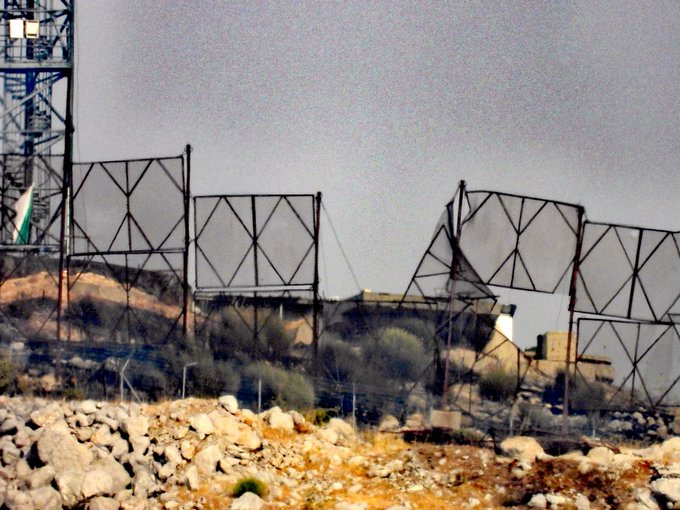
Photo: Fear of Hezbollah Pushes Israeli Artillery to Bombard Israeli Military Site
Middle East Observer | July 31, 2020
Description:
Senior Lebanese political analyst Anees Naqqash provides his analysis of the recent flareup on the Lebanese-Israeli border, an incident which is becoming the subject of many questions, theories and debates.
In this interview on Al-Manar TV, Naqqash says something ‘very strange and major’ occurred in this incident, and perhaps the ambiguity will be removed in the future. However, the senior analyst, who is closely-tied to Hezbollah, affirmed that the events at the border were a ‘major scandal for the entire state of Israel’.
Here’s the necessary context:
For days Israeli forces had been on high alert on the Lebanese border after Tel Aviv understood that a Hezbollah reprisal attack was imminent after the Lebanese group announced that one of its cadres (namely Ali Kamil Mohsen) had been killed by an Israeli airstrike near Damascus International Airport.
On the 27th of July, 2020, a military incident occurred at the border between Lebanon and Israel. Much debate ensued regarding what actually occurred. As the apparent cross-border fire unfolded on that Monday afternoon at the Shebaa Farms border region, Israeli media reported the developing situation minute by minute, albeit with contradictory accounts. Meanwhile, Hezbollah remained silent, while Lebanese media outlets like Al Mayadeen TV largely relayed Israeli media’s breaking news reports.
The final account that Israeli media and officials generally settled on hours later was this: the Israeli army had thwarted a Hezbollah infiltration attempt into Israeli-controlled territory, and that the army remains alert for any future attempts to breach the border.
Thereafter, when the dust had settled, Hezbollah issued a statement denying Israeli media reports that a Hezbollah infiltration attempt was foiled, and asserted that all the fire that was opened was carried out unilaterally by the Israelis. Hezbollah unequivocally asserted that there were no ‘clashes’, nor exchange of cross-border fire, nor ‘martyrs’ that fell from its side, but rather ‘terrified and anxious’ Israeli forces ‘firing at each other’.
The Hezbollah statement also assured that the reprisal for Israel’s killing of Ali Kamil Mohsen, one of its cadres in Syria, is undoubtedly coming.
Source: Al-Manar TV
Date: July 27,2020
Transcript:
Host:
Mr. Anees, let us return to the point raised by Mr. Hijazi (Al-Manar journalist) regarding the (various) scenarios. What are the potential scenarios that led the enemy entity (Israel) to this situation today? Is it truly the case that the huge (Israeli) confusion and tension (in anticipation of the promised Hezbollah reprisal), this idea (invoked initially by Nasrallah, that the Israelis ought to wait for the reprisal by) “standing on a leg and a half” , also after Hezbollah’s (media) statement, which we’re going to mention after a while, and I don’t know how much they’ll last standing on a leg and a half moving forward… what are the scenarios that led to this scene? Or is it truly a trick (by Israeli officials) aimed at getting rid of the burden of (Hezbollah’s promised) reprisal through any way possible, by say fabricating a story or scenario to reach this end?
Naqqash:
This scenario, in which (the Israelis purposefully) commit an attack against their own selves in order to prevent Hezbollah from responding by drawing a statement from Hezbollah (in which the Lebanese group can claim) that “We have retaliated and carried out our reprisal”, this (possibility) is abit unlikely, unless of course (the Israelis) are that stupid, But whoever knows Hezbollah well, knows that they won’t engage in such a game.
There’s something that I don’t know how we will reach one day, but something (in what occurred today) looks like the Ansariya operation (of 1997, which occurred at the Lebanese coastal town of Ansariya). When the Ansariya operation took place, Robert Fisk, the famous correspondent from The Independent, came to me and said, “Anees, my estimation of this operation is that it is impossible for it to have occurred in the manner in which it did.” In what sense (did Fisk mean)? (He meant that) Hezbollah (during the Ansariya operation) was awaiting the Israeli special forces in order to trap them, and these (Israeli special) forces do not move into action except by the command of the (Israeli) Prime Minister and (Israeli army’s) Chief of Staff, so this means complete secrecy, a large part of the (Israeli army) does not know about the movements (of these special forces).
Fisk continued, “So, I believe that Hezbollah was awaiting (the arrival of these forces at Ansariya), and there’s no way (this ambush could have occurred) except by (Hezbollah) having penetrated the Israeli (Chief of) Staff Command.” (Fisk) wasn’t joking at all. He said “my estimation”, and you know Fisk’s (journalistic) experience, he has extensive experience in the (Middle East) region for over 30 years. I replied to Fisk’s claim and told him, “No, I don’t think it required (Hezbollah) to penetrate the (Israeli Chief of) Staff Command. There’s something major that happened, maybe one day it will be clarified.”
What was the major thing (that was revealed later)? That an (Israeli) spy drone had been capturing images of an area (in the Lebanese town of) Ansariya, (Hezbollah) operatives (had intercepted this drone) and were collecting these images, which allowed them in turn to uncover the enemy’s intended target (i.e. Hezbollah anticipated where the Israeli special forces were intending to land and strike). They uncovered the enemy’s intended target via the enemy’s eye (in the sky). Through the enemy’s eye they prepared for them an ambush.
I believe the day will come when the major fact (behind today’s events) is revealed, because what happened today was very strange. It wasn’t merely a confused Israeli soldier who was firing a M16 or PKM, or even a single tank firing at an invisible target. Rather, it consisted of extremely heavy shelling from several (Israeli) sources of fire, all of which were targeting an (Israeli) military base, and this lasted for several minutes. The information was delivered to the (Israeli) prime minister and he (immediately) issued threats and assessed the (magnitude of the) situation. Something major occurred at this (military) site. I think that the enemy today is extremely confused to the maximum level possible. What happened to its forces? Who gave the order to open fire? What (is the nature of the) penetration that took place? What camouflage (tactics) were used?
During war, armies carry out spy missions, deception operations, I give him fake targets (to shoot at), and perhaps behind these fake targets his own forces could be stationed. All this occurs. What happened today? No one can say exactly what happened, but one thing could be said, “It is a scandal for the Zionist enemy and its army and its (entire) state as a (political) entity, because it is not just the (Israeli) Northern (Army) Command which is involved in this scandal, as I said in the beginning, from the Prime Minister, to the ‘Minister of War’, to the (local commanders) on the ground, all are embroiled in this scandal.
Something major has happened today, which is forcing (the Israelis) to reconsider their calculations. Great powers today are looking at this (Israeli) entity today and saying: something major has happened. This is an entity that cannot be relied upon (to achieve any military advances). This reminds us of reports written by great powers after 2006 which said that this army cannot win any (future) war, because its performance in 2006 was one of the worst performances, (a war waged against) only two thousand fighters from Hezbollah. Today the situation is (even) totally different in terms of (Hezbollah’s) numbers, equipment and weapons, but this is another issue. Yet the confusion that took place today, the scenario that caused a total collapse of the (Israeli) media and intelligence (apparatus), of the Chief of Staff, of the Prime Minister, to the (actual) Israeli base on the ground that bombarded the other military base.
Recently I received information that large plumes of smoke were rising from some (Israeli) bases. My estimates were that the enemy was evacuating from these bases and did not want (Hezbollah) to know that it had evacuated. This base (that was bombarded by Israel) was part of the scenario. Did the enemy evacuate this base in order to create this scenario? This would indicate the level of disgrace of the Zionist enemy, as it imagines Hezbollah would feel satisfied with this scenario and claim that it carried out this operation. It’s as if (the Israelis) are convincing themselves that (Hezbollah) might do such a thing. And this is impossible (Hezbollah would never do it) . As you heard today (the Israelis) saying: “What annoys us more is that Hezbollah did has not issued a statement yet.” And when the situation became clear, Hezbollah issued that very clear statement, and by doing so, revealed the weakness of the enemy, as it revealed Hezbollah had no hands in the clashes, and that the Israelis were clashing with themselves. Today there is a great defeat for the enemy at all levels, and this must be further closely studied.
(Important note: Please help us keep producing independent translations for you by contributing as little as $1/month here)
What happened —and didn’t happen— at the Israel-Lebanon border?
By Sayed Hasan for The Saker blog | July 29, 2020
On the night of Sunday, July 19th, airstrikes hit Damascus International Airport. Though Israel didn’t claim responsibility for them, sticking to their longtime “zone of denial” policy, no one doubts they were the perpetrators. On Monday, the Syrian Army announced 7 soldiers were injured. It could have been one strike among hundreds of others, soon forgotten because of the lack of Syrian retaliatory measure. But the day after, Hezbollah announced the martyrdom of one of its combatants, Ali Kamel Mohsen, killed during the Israeli raid. As an Israeli commentator on Arab affairs put it in a tweet, this announcement “certainly changes the picture”. In fact, it is an understatement: it turned a tactical success into a PR disaster for the Netanyahu government, and a nightmare for the Israeli’s Army Northern Command and settlers living close to the Lebanese border. Because as everyone knew, a Hezbollah retaliation was inevitable.
We cannot understand what is happening now if we don’t put it in its larger context. Hezbollah’s rules of engagement against Israel in Syria were spelled out in January 2015, after Israel targeted two of their vehicles in Syria’s Quneitra region, killing 6 Hezbollah fighters (including Jihad Moghniyeh, son of Hezbollah’s martyred commander Imad Moghniyeh), along with an Iranian IRGC General. Back then, Nasrallah didn’t make any speech until the retaliation, which came out 10 days later, on January 28, when Hezbollah destroyed 3 vehicles in an Israeli convoy patrolling the occupied Shebaa farms, killing 2 to 5 soldiers —the sources differ— and wounding seven others (Israel retaliated by killing a Spanish UN soldier). Here is what Nasrallah stated in a speech two days later:
“The Resistance operation happened in broad daylight (just before noon), at the highest state of alert of the Israeli enemy, who until now is incapable of understanding how it happened. […] Because they are cowards and not (real) men, and because “They will not fight you (even) together, except in fortified townships, or from behind walls” (Quran, 59, 14), they struck us treacherously and didn’t dare to claim responsibility for the attack. As for Hezbollah fighters, because they are (real) men who don’t fear death, they attacked them frontally, face to face, and we claimed responsibility for the attack immediately after it happened. […] My message today is the following: from now on, any Hezbollah cadre or commander, any young Hezbollah (combatant) who will be assassinated (in Lebanon or in Syria), we will blame Israel for it, and we will consider it our right to retaliate anywhere, anytime and in any way we see fit.”
This equation was put in practice and even broadened in August 2019, after Yasser Dhaher and Hassan Zbib, two Hezbollah combatants, were killed in an Israeli airstrike in Damascus suburbs, and an Israeli drone attack against Beirut’s southern suburb, a Hezbollah stronghold, was foiled. Here is what Nasrallah stated in an August 25th speech:
“We will retaliate from Lebanon, and not (necessarily) from the Shebaa farms! I declare to the Israeli soldiers at the border tonight: wait for us against the (separation) wall (standing) on one foot and a half (be ready to flee for your lives)! Wait for us on one foot and a half! Wait for us (because we’ll certainly come at you)! In one day, two days, three days, four days… Just wait for us!”
While Hezbollah used to attack Israel exclusively in the Shebaa farms, a Lebanese territory occupied by Israel, they now vowed to strike anywhere, a dramatic development which put tremendous pressure on the Israeli side. Drastic & unprecedented measures were taken to foil Hezbollah’s retaliation: Israeli forces didn’t “hole up” in their bases as Nasrallah had advised them to, but went as far as evacuating all their positions close to Lebanon, in a width of 5 to 7 kilometers, and along the whole length of the border line. All Israeli defenses were activated. Strict security measures were taken to evacuate some settlements and forbid the remaining settlers to perform most daily activities —video footage showed empty streets & closed shops, most people being holed up in their house all day long.
For 8 days, the mighty Israeli army appeared as the “spider web” it was, frightened and terrorized, its border barracks and outposts left deserted —as was shown by an RT crew who got inside—, its vehicles abandoned with dummy soldiers inside, with tanks scattered everywhere for days hoping to lure Hezbollah to attack an empty target (see all security measures Israel took detailed in Nasrallah’s speech back then).
The psychological warfare is a key element to understand what is happening —and not happening— right now, even before we speak of the retaliation itself. As Nasrallah put it in his September 2nd speech,
“We warned the enemy that he had to expect us (any time) from now on. This is a strength point of the Resistance. We could have remained silent, refrained from threatening (Israel of an imminent retaliation), not revealing our intentions, keeping quiet as we say, for 1, 2 or 3 days, then hit them by surprise. The military know that one of the most important aspects of a military operation is the element of surprise. But we have not done so, because our fight against the Zionist entity has a major psychological component, affecting the morale and soul of the enemy (which we strive to undermine). So we told them from the beginning to wait for us, because we were coming. In itself, it is an enormous challenge issued by the Resistance.[…] [This high alert of the enemy and the evacuation of the border outposts] are part of the punishment (we inflicted on Israel). Before we retaliated with our military operation, some people were (ironically) asking: where is your response? But (this terror situation on the Israeli side) was already a punishment and a retaliation. […] [The whole world saw the staggering difference between] our good Lebanese people (who) was normally moving in border areas, whether in villages or fields, and led a completely normal life, [while Israeli settlers were forbidden to approach “their” fields in occupied Palestine and where holed up in their houses].”
Thus, Israel seemed humiliated and defeated even before the retaliation came. It did happen on September 1st, when a moving Israeli military vehicle was destroyed in broad daylight by three anti-tank missiles near Avivim barracks, killing or wounding its occupants. While Israel had promised to hit Lebanon hard and return it to the Stone Age via all channels (diplomatic, media, etc.) in case of retaliation, the IDF didn’t hit back at all, merely firing “defensive phosphorous strikes aimed at building a smokescreen to protect themselves from further strikes”, as Nasrallah put it. Israeli TV channels showed the evacuation of a seemingly badly wounded soldier by helicopter, and his arrival at a Haifa hospital.

But Netanyahu claimed there was not as much as a scratch in the Israeli side, and that everything had been staged in order to convince Hezbollah they had avenged their martyr and avoid any further escalation. While this seems like a PR stunt aimed at damage control (especially when we consider that on September 4th, Israeli media reported that a soldier stationed in the North was severely injured by a bizarre game of stone-throwing, suggesting a ludicrous cover-up only made possible by the strict military censorship), Nasrallah didn’t rule it out, and stated in a September 10th speech:
“Everything that was done by the Israelis in recent days, for example the Israeli dummy soldiers (in their vehicles), this shows the weakness of the Israeli army. And when things have come to what they called “the deception operation”, in which they allegedly staged the evacuation of soldiers with fake injuries that they carried on stretchers, covered in fake blood, and would thus have deceived Hezbollah (into believing that his goal was reached, to prevent him from launching new strikes). Let us imagine that you really tricked us: all that would prove is, in few words, that your renowned legendary and invincible army has turned into a Hollywood army, which makes movies for the cinema, because it became helpless on the ground, incapable, weak, fearful and cowardly, withdrawing from the border to a width of 5 to 7 kilometers (for fear of the promised response by Hezbollah.”
It would be difficult to conclude that this 2019 round ended in anything but a crushing defeat for Israel, be it on the military, psychological or PR level. Though all of this is little known to the Western public, where the media is but an echo chamber of the Israeli Army’s propaganda (even RT, Sputnik and most alternative media often take their claims at face value), there is no doubt that it was strongly present in the mind of Israel’s political & military leaders when they heard of a Hezbollah operative killed in their latest strike on Syria ten days ago. Israeli media reported the high alert status of the Army in the North, where military drills were canceled, reinforcements sent and units & defenses put in high alert in the expectation of an imminent Hezbollah attack. The usual huff and puff about Israel’s forceful response in case of an attack was heard from Netanyahu & Gantz. But as Israel is in the eye of the storm because of the coronavirus crisis & current civil unrest and daily & violent protests against Netanyahu, another round against Hezbollah, Israel’s most dreaded enemy, is the last thing they’d want. That’s why Israel took the unprecedented step of sending an apology letter to Hezbollah via the UN representative in Lebanon, as was reported by Lebanese & Israeli media, and confirmed by Hezbollah’s Deputy Secretary General Naim Qassem, though the latter wouldn’t speak of its contents, and only stated that Hezbollah didn’t and wouldn’t reply to it.
Commenting on this development, Senior Lebanese political analyst Anis Naqqash, closely linked to Hezbollah, stated the following in an interview to Al-Mayadeen on July 26:
Anis Naqqash: This letter is the greatest proof of Israel’s weakness and fear of Hezbollah’s response. (Recall that in the past) Israel slaughtered (civilians) by the hundreds, and did not apologize or send (explanatory) letters. Israel committed aggressions and occupied territories, and did not apologize or send (explanatory) letters. (But) today, fearing Hezbollah’s reaction, Israel sends an urgent letter via the UN as an apology, because they are afraid of the reaction.
First, the fact that Hezbollah did not make the contents of the letter public helps to make it irrelevant. If they had published it, they would have given the impression of wanting to make public what Israel said. Second, the fact that Hezbollah did not respond to the letter confuses Israel. Despite their apologies and asking for forgiveness, what is Hezbollah’s response? Absolute silence. This leaves Israel in a state of great disarray. (Hezbollah) has also confirmed (via its Deputy Secretary General) that Hezbollah will do what they have to do when the time comes, which also leaves more to fear (in Israel).
Therefore, today Israel is clearly in a state of continued confusion and fear, and the statements of Sheikh Naim (Qassem) today will not allow them to sleep peacefully, on the contrary, they are even more worried (after hearing him).
Journalist: Israel therefore stands on one foot and a half (Nasrallah’s formula to designate the fear and terror of Israeli soldiers, ready to flee at full speed at the slightest alarm) without even the Hezbollah Secretary General needing to speak (and warn them of an imminent response)?
Anis Naqqash: The last time he warned them, but this time they (already) know what to expect. It’s like an unruly pupil standing up and facing the wall on his own every time he does something silly. Today Israel stands up and faces the wall, and does so on one foot and a half, taking (drastic) precautions. No one can say if the response will come before the Eid-el-Kebir (on July 31st) or after, or even if the response will take the Eid festival into account or not. Everything is possible on the part of the Resistance.
Journalist: But isn’t the fact that Hezbollah has not made public the contents of the letter a sign of seriousness, respect and responsibility given that it is an official letter that has been delivered via the United Nations? Isn’t that an important sign (of maturity)?
Anis Naqqash: This can only be understood by comparison with what the Arab leaders and Presidents, and even the former leaders of the Palestinian resistance factions, used to do when they received such marks of attention from the (Israeli) enemy, or from the United States or Europe. The mere fact that one of these countries paid attention to them, made a mere gesture of consideration towards them, they were quick to show it to everyone (as a sign of pride), (boasting) that they had received a glance, a letter from such or such country, an apology, etc. Their opponents saw them as eager for any sign of recognition from the enemy.
As far as Hezbollah is concerned, it is quite the opposite. Hezbollah does not attach any importance to the enemy and its stances. Of course, they study them closely (one has to know its enemy very well), but they do not give them this importance; they don’t manifest this avidity (towards any sign of respect from the enemy). Hezbollah doesn’t rush to their people telling them, “Look, look, they’ve apologized to us!” The confidence of Hezbollah’s grassroots in the Resistance is much higher than that, and they know Israel is afraid of it regardless of what they can say in any letter. This is why Hezbollah does not attach importance to it and does not bother to respond to it, making it clear that for them, whether Israel sent the letter or not, it is the same thing and it will not change anything (about the inevitable response). We have to analyze this from the point of view of psychological warfare, of politics, in order to correctly assess the strategic capacities of the Resistance with regard to political, security and media battles. […]
While Israel’s “apologies” to Hezbollah are pathetic and can prevent in no way the inevitable retaliation, it must be emphasized that Israel certainly does everything it can to avoid hitting Hezbollah operatives when it strikes Syria —and therefore tries hard not to kill anyone at all—, going so far as warning them before hitting one of their vehicles, as we can see in this video from last April.
Israel was therefore left with the crushing pressure of the unknown, especially that Hezbollah didn’t comment on what it would do or not do, Naim Qassem merely stating that the rules of engagement previously stated where still in force, and that the coming days would answer everyone’s questions. There were no doubts in Israel & Lebanon that an imminent Hezbollah retaliation was coming. The pressure & nervousness —and downright panic— at the border are probably the cause of the death of an Israeli soldier on July 22 when his car crashed in the Shebaa farms, near the Lebanese border. As a Koweiti put it on Twitter, “Hezbollah’s silence is sometimes more powerful and painful to the Zionist enemy than their missiles, because they live hours, days and weeks in a state of fear, terror and high nervousness. Silence is a destructive weapon of psychological warfare against the Israeli entity, both at the political and psychological levels.” Avigdor Lieberman, former Israeli Defense Minister, stated that “I am still worried because the North is paralyzed by the killing of one single Hezbollah member in Damascus. Unfortunately, Nasrallah proved that he does what he says, an eye for an eye, a tooth for a tooth.”
On July 27th, the Israeli Army, parroted by the Western media (both mainstream and alternative), stated that the Israeli Army had foiled a Hezbollah attempt to infiltrate the Israeli-occupied Shebaa Farms, killing and wounding the operatives in the following skirmish while suffering no death or injuries itself. Later reports made no mention of Hezbollah casualties, alleging that their lives were willfully spared as a de-escalation measure. Here is the account of the “battle” by Haaretz’s military correspondent Amos Harel:
“While some of the details are still shrouded in fog, it’s clear that the IDF forces – soldiers from the Nahal Brigade, the elite Egoz unit and a tank crew – weren’t taken by surprise and were well prepared for their mission. An IDF lookout spotted the Hezbollah cell while it was still moving toward Har Dov (Shebaa Farms). When the cell had made it about 20 meters into Israel, in a hilly, wooded area where there’s no border fence, tanks and machine guns opened fire at it from a few hundred meters away.The Shi’ite militiamen quickly left the area.
There have been no reports of them taking casualties.
They entered Israel not that far from an IDF outpost and a road that serves troops in the area. (Har Dov is always closed to civilian traffic.) Their goal was presumably to carry out an attack – via sniper fire or bombs – on the IDF forces posted there. But given what has been reported about how the cell operated, the attempt does not seem to have been particularly sophisticated.
Thick vegetation makes it hard to hit an enemy moving cautiously even in broad daylight. The IDF has refused to say whether the soldiers were ordered to shoot to kill, or whether the plan was always to drive off the Hezbollah cell without causing casualties.
Nevertheless, there are fairly solid grounds for assuming that Israel deliberately decided on the latter course of action. Any such decision would have had to be made at the highest levels.
Had Hezbollah suffered losses in the incident, it might have felt compelled to mount an additional retaliation, and that could have escalated the situation along the border. Thus what looks like a tie with no casualties appears to be very convenient for both sides.”
This scenario makes Israel look good: according to this report, not only did they successfully foil an attack, but they did it with a concern for enemy human lives in order to avoid an escalation. Hezbollah’s “unsophisticated” attack, for a change, is supposed to make its outcome more plausible, and more acceptable to the Party of God, who can go along with it, claim he retaliated somewhat and climb down the ladder. Thus, this alleged round gives a military & PR victory for Israel, while allowing Hezbollah to save face, and Netanyahu & Gantz wasted no time in collecting their medal and warning Nasrallah that he was “playing with fire”, and that any further Hezbollah operations against Israel “would be a mistake and would be followed by a harsh military response”. Interestingly, both Netanyahu and Gantz left directly after reading their short statement, without taking any questions from the journalists. One wonders why they wouldn’t enjoy their victory.
This story is very unlikely, as the Israeli media themselves were quick to point out. In an article titled ‘Was Mount Dov incident another Hollywood show for Hezbollah?’, the Jerusalem Post recalled the Avivim mascarade and asked:
“In this day and age, everything is filmed. So where is the footage of the infiltrators crossing into Israel? Where is the drone footage of the area at the time of the incident?”
The IDF stated that they had footage of the incident and were considering releasing it, but haven’t done so far, which adds to the skepticism. Even Naftali Bennett, former Defense Minister, seemed to indirectly deny that any skirmish happenned, stating to Israel’s Channel 13 that in the region of the incident, one can get the impression that something is moving while there is nothing at all.
As for Hezbollah, they denied that anything at all had taken place in the following statement:
“It appears that the state of terror in which the Zionist occupation army and its settlers on the Lebanese border find themselves, the high alert status and the extreme concern over the Resistance’s reaction to the enemy crime which led to the martyrdom of our mujahid brother Ali Kamel Mohsen, as well as the enemy’s complete inability to know the intentions of the Resistance, all these factors made the enemy extremely nervous on the ground and in the media, and he behaves as someone afraid of his own shadow.
Everything that the enemy media claim about Israel thwarting an infiltration operation from Lebanese territory into occupied Palestine, as well as their claims that there were martyrs and wounded on the Resistance side as a result of the bombardments which took place near the occupation sites in the Shebaa farms, is absolutely not true. This is just a futile attempt to forge illusory & bogus victories.
The Islamic Resistance affirms that there has been no clash or shooting on its part in the events of the day so far. Rather, it was one single part, meaning the frightened, anxious and nervous (Israeli) enemy, who fired all the shots (against imaginary targets).
Our response to the martyrdom of our mujahedin brother Ali Kamel Mohsen, who found martyrdom in the Zionist aggression on the outskirts of Damascus International Airport, will inevitably come, and the Zionists have only to await punishment for their crimes.
Moreover, the strikes which took place today on the (Lebanese) village of Al-Habaria and hit a civilian’s house will not go unpunished.
The next few days will soon deliver their verdict (our response to all of this is imminent).
Victory comes only from Almighty God.
Islamic Resistance in Lebanon”
Even if it was a matter of Hezbollah’s word against Israel’s, given their respective PR record, it would be safe to trust Hezbollah’s account. In fact, the Israelis themselves believe Nasrallah more than their own leaders, as was shown by polls held in Israel, Hezbollah’s huge credibility being one of its great achievements. Anyway, Israel has gained nothing from what is most likely a new PR stunt. Whether the incident started as a mistake of Israeli troops firing at inexistent Hezbollah combatants conjured by their panicked imagination (IDF soldiers are world-class cowards), or whether it was all staged from the beginning in order to claim a fake victory before the inevitable, real retaliation, it is safe to believe that no Hezbollah attack happened.
However, it would be a mistake to think that all this show was futile. First, Hezbollah stated for the first time that the retaliation was coming indeed, though it was pretty much a given anyway. Second, they now have two reasons to strike back: their combatant killed in Damascus, and the attack against a civilian house, which puts all the Israeli settlers in the line of fire. Thus, Israel went from a bad situation to an even worse one. Back in August 2019, Nasrallah had already stated that the failed drone attack against Beirut’s southern suburb meant that from now on, the settlers would be seen as fair game:
« I declare to all the inhabitants of northern Israel and everywhere in occupied Palestine: do not live (normally), do not be in peace, do not feel safe, and do not think for one second that Hezbollah will accept such a scenario (where he would suffer such attacks in his neighborhoods without retaliating against settlers). »
Hezbollah still refrained from attacking settlements back then, focusing on military targets, but the latest escalation, even if it was likely accidental, could very well change their mind.
The only remaining question is when and where Hezbollah’s retaliation will come, and how will it unfold? As surprise is a major component of Hezbollah’s strategy, it would be vain to speculate, but Nasrallah gave us an interesting hint in his ‘Hollywood Army’ Speech:
“O Hollywood army, the lesson we draw from this experience, if indeed it is real (it remains to be proven true that you tricked us), is that the next time, you invite us not be content to hit one vehicle or one place, but several vehicles and several positions, so as not to be fooled by new Hollywood movies. (This comedy simulating injuries so that we’d stop hitting you) is a demonstration of weakness and helplessness (and not a sign of strength or intelligence).”
Also, many wonder if Hezbollah’s inevitable retaliation can lead to a war? It is most unlikely, and this idea has been dismissed by Hezbollah Deputy Secretary General, though he stated that they were always ready for war. But the daily threats heard from Netanyahu or Gantz should fool no one: Israel’s bite has never been a match for its bark, and their threats towards Hezbollah always turned out to be a damp squib. Netanyahu boasted of having won an imaginary round only because he knew that he had already lost the real one at all levels —military, psychological, PR—, and that when the deterrence & rules of engagement between Hezbollah and Israel change, it is only at the latter’s expense.
US policy against Lebanon not to weaken but strengthen Hezbollah: Nasrallah

Press TV – July 7, 2020
The Secretary General of the Lebanese resistance movement Hezbollah has censured the US interference in the country’s internal affairs, saying Washington’s hostile policy against Lebanon will not weaken the popular movement but will strengthen it.
Sayyed Hassan Nasrallah made the remarks during a televised speech broadcast by the Arabic-language al-Manar satellite television station in the Lebanese capital of Beirut on Tuesday.
Nasrallah blasted the US ambassador to Lebanon for “openly” meddling in the country’s domestic affairs and called on the Lebanese government to stand up against US provocations.
“The US ambassador to Lebanon has been openly interfering in our internal affairs. The US meddling in Lebanon is rejected and the Lebanese state must move in this regard,” the Hezbollah chief said.
“Your policy in Lebanon won’t weaken Hezbollah but will strengthen it and that blockade on Lebanon is futile, my advice is to abandon this policy,” Nasrallah underlined.
Moreover, the Secretary General of the Lebanese resistance movement lashed out at the US ambassador and said, “Don’t give lectures on human rights especially that your country is the great violator of human rights worldwide,” adding that, “Your country has funded terrorism in the region.”
In an interview with Saudi-owned al-Hadath television news network last week, US Ambassador to Beirut Dorothy Shea said Washington has “great concerns” over Hezbollah’s role in the Lebanese government.
The US has labeled the entire Hezbollah a terrorist organization and levied several rounds of sanctions on the Lebanese resistance movement as well as its top officials.
Hezbollah’s growing popularity in the Arab and Muslim world after the resistance movement shattered the Israeli military’s myth of invincibility during the 33-day military offensive on Lebanon in the summer of 2006 has been a matter of serious concern for the Tel Aviv regime and its Western allies.
The resistance movement’s heroic defense as well as its vehement opposition to any foreign intervention in Lebanon’s domestic affairs has turned the group into a major stakeholder in the country’s political and military domains.
‘Why are you afraid of Iran?’
During the televised speech on Tuesday, Nasrallah also dismissed accusations that Hezbollah wants to turn Lebanon into another Iran and said, “Iran is a self-sufficient model, why are you afraid of this model?”
The Hezbollah chief stressed that the hard living conditions and the economic crisis Lebanon has been witnessing require a national approach and exerting united efforts by all Lebanese parties.
Since October, Lebanon has been in a financial crisis that has seen businesses close and prices and unemployment soar. The Lebanese pound has also continued to plummet against the US dollar.
Lebanese protesters have resumed demonstrations, demanding early Parliamentary elections and tougher measures to fight corruption and the return of looted state funds.
Nasrallah went on to say on Tuesday that the movement could use all its capabilities in agricultural and industrial sectors to help overcome the country’s current economic crisis.
“As Lebanese people, we have to unite efforts in agriculture and in finding markets for our crops. And the same thing applies to the industry,” he said, adding, “We in Hezbollah, we call on the Lebanese to revive the agricultural and industrial sectors as one of the major factors of steadfastness.”
The Hezbollah leader concluded his speech by condemning the Israeli plan to annex significant portions of the occupied West Bank, saying, “Lebanon’s current crisis must not divert us from supporting the Palestinian cause especially now as the Zionist regime is planning to annex areas of the West Bank and Jordan Valley.”
The contentious plan — which would allow Tel Aviv to annex about 30 percent of the West Bank — is in accordance with a Middle East scheme drawn up by the administration of US President Donald Trump and unveiled in January on the Israeli-Palestinian conflict.
The scheme — which Trump calls the deal of the century — largely gives in to Israel’s demands while creating a Palestinian state with limited control over its own security and borders, enshrining the occupied Jerusalem al-Quds as Israel’s “capital.”
The US-backed annexation scheme has drawn international criticism and triggered waves of protest rallies around the globe.
Israeli Prime Minister Benjamin Netanyahu had set July 1 as the date for starting the annexation plan’s implementation, but the move faced delays amid internal rifts and as Tel Aviv awaits a green light from Washington.
If Suez Canal Blocks Iran’s Aid Ships to Lebanon & Syria, Strait of Hormuz Will Be Closed: Al-Akhbar Report
Al-Manar | July 1, 2020
Amid the squeezing US economic blockade on Lebanon and Syria, the Islamic Republic of Iran seeks to aid allies and provide them with the basic consumption items by all means.
The Lebanese daily newspaper, Al-Akhbar, reported Wednesday that Iran has offered to sell oil to Lebanon which would pay in the national currency in return, adding that the Iranian ships are ready to sail without any political or geographical barrier.
In this context, the paper pointed out that the Iranians have threatened to close the Strait of Hormuz in case the Suez Canal is blocked to the aid ships heading to Lebanon and Syria, citing a positive Egyptian stance in this regard.
The Iranian offer, expected to leave Tehran losing hundreds of millions of dollars, is inexactly viewed in Lebanon, according to the Al-Akhbar report Hezbollah has informed the Lebanese authorities it will help finalize the deal when they approve it.
Hezbollah Secretary General Sayyed Hasan Nasrallah’s latest speech tackled the Iranian offer on the basis of a promise his eminence received from the Supreme Leader Imam Sayyed Ali Khamenei, Al-Akhbar mentioned.
Nasrallah: Syria triumphs, Israel is waging an imaginary war
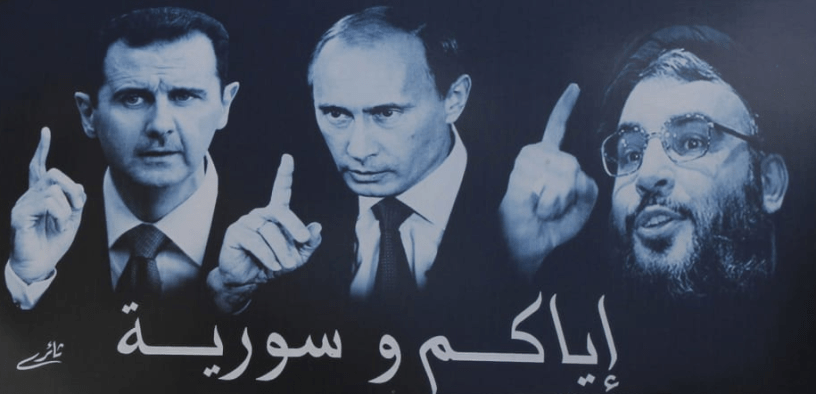
Speech by Hezbollah Secretary General Sayed Hassan Nasrallah on May 13, 2020, in commemoration of the martyrdom of Hezbollah Commander Mostapha Badreddine, killed in Syria in May 2016.
Summary:
- Syria has already won the war, even if there are still some minor battles to be fought
- Having failed militarily, the enemies of Syria strive doubly hard in their diplomatic, economic and psychological warfare
- There is no dissension between the allies of Damascus, nor a struggle for influence between Iran and Russia
- News of Bashar al-Assad being sidelined is just propaganda
- There are no Iranian armed forces in Syria, just military cadres and advisers
- Having bet everything on the terrorists, Israel sees its defeat and fears the recovery of Syria and the threat it will pose to the occupation of the Golan and the very existence of the Zionist entity
- The so-called Israeli campaign against the Iranian presence in Syria is nothing but window dressing aimed at reassuring Israeli opinion and providing cover for attacks on the Syrian ballistic power
- Israel presents as a victory a simple redeployment of forces due to successive victories over almost the entire Syrian territory, and a reduction in air movements between Iran and Syria due to the coronavirus
- Iran, Hezbollah and other Resistance movements will never leave Syria
- Israeli incursions into Syria are caused by worry, fear and adventurism, but can lead to uncontrolled escalation and regional war
This video only subtitles the last section of the transcript below, ‘Israel in Syria‘
Transcript:
Syria won the world war against it
[…] Today we can say that Syria won this war. In previous battles, when great achievements were made, such as after the liberation of Homs, Damascus, the South and even Aleppo, it was said that Syria had won the war, and analysts and specialists in strategic issues said no: Syria had won one (or more) battles, but had not (yet) won the war. Because a war is made of many battles: you can win a battle, lose another, win a third, lose the fourth, but all that does not (necessarily) mean that the whole war is won, or that the whole war is lost.
Today, in all simplicity, and via an objective and genuine assessment (of the situation), whoever goes to Syria and travels there —except for the politicized Arab (and Western) media—, whoever goes to Syria, in its provinces, in its cities, in its villages and boroughs, in all the regions currently in the hands of the State, anyone who observes the overall situation in Syria can easily affirm that Syria won the war, although there are still some battles going on. It should not be said that Syria has won one, two or three battles, and has lost one or two others, and that the war is still going on, without it being clear whether Syria will win it or not, no. The fair and accurate strategic assessment is that the Syrian leaders, the Syrian army, the Syrian State and the great majority of the Syrian people who stood firm in this struggle won this war.
Of course, there are still a few battles left, military or political, which require persistence and continuity of action, whether in Idlib, East of the Euphrates or certain areas North of Syria, but this is only a partial, limited and circumscribed part (of Syria). Syria has triumphed over partition projects, Syria has won this war, and suffice it to say that the objectives of this world war (against Syria) for which, according to their own admission, hundreds of billions of Arabian dollars have been spent —the dollar is American, but it is the Arab (countries) that have paid the bills; if this money had been spent for the good of the Arab peoples of our region, they would have extricated them from ignorance, poverty, misery, illiteracy, diseases, and the said funding countries (Saudi Arabia, etc. ) would not face financial incapacity in the face of the economic consequences of the Covid-19 pandemic as they do now—, thousands of tons of weapons and ammunition, tens of thousands of terrorists and takfiris who were brought from all over the world, dozens of international conferences, etc., etc., etc. They have deployed everything, done everything, absolutely everything, to achieve their objective in Syria: sectarian or political slogans, incitement (to racial or religious hatred), everything that the front of Arrogance (imperialism) and its instruments were able to mobilize in terms of resources and ideology, everything they could do against Syria, they did. And Syria, through the perseverance of its leaders, its army, its people and the State, and thanks to the presence and perseverance of its allies by its side, managed to win this war.
And that is why today, when we talk about our martyr leader, Sayed Mustapha Badreddine, and our other martyrs in Syria, we feel, in addition to the consequences for their afterlife and their (eminent) position close to God the Most High and the Exalted as martyrs, we have the feeling that their blood has borne fruit and enabled these results to be achieved, and that the objective for which they went to fight and for which they sacrificed their blood, their peace and their life, and for which they made unremitting efforts night and day, this goal was achieved and it is before our eyes today.
Economic, diplomatic & psychological warfare
I will now raise some points (concerning Syria). The first point is that naturally, what (the enemies of Syria) have been unable to achieve militarily, they have been trying for the past few years to obtain it politically, through political pressure on the Syrian leaders, on the allies of Syria, on Iran, on Russia, on those who stand alongside Syria, through international relations, through the UN Security Council, through intimidation, threats and tempting promises, so that the allies of Damascus will abandon Syria. But all of this has failed so far. And we know that sometimes the political battle is just as intense as the armed struggle. And sometimes its dangers are even greater, and require all of our vigilance and attention. Syria is still plunged into political war and is facing political pressures which, so far, have failed to achieve any of their goals.
Naturally, and I come to the second point, after the failure of the military war and the impotence and the ineffectiveness of the political war and the political pressures in achieving any objective at all, the front of Arrogance (imperialism), the American despots and their Allies resorted to other means, namely psychological warfare on the one hand, and sanctions and blockade on the other. With regard to psychological warfare, a very broad front has been open for years against Syria, and lately there has been an intensification of psychological warfare, some aspects of which I will touch on in a moment. Likewise, the sanctions and the state of siege against Syria are increasing, and they are betting on the economic consequences (which they hope will become unbearable for Syria and its allies). The coronavirus has added to these pressures, but this pandemic is not specific to Syria: the pressures of the coronavirus are weighing on the whole world. Today, those who besiege Iran, Syria, Venezuela and other countries, Gaza, Yemen, etc., are starting to suffer the economic consequences of the coronavirus themselves. We have all seen the catastrophe hitting the United States, the countries of Western Europe, as well as certain countries in our region (Saudi Arabia, etc.). In any event, it is also a means of attacking Syria, namely economic pressures, sanctions, the state of siege against Syria.
With regard to the sanctions and the blockade, we place our hopes on the endurance of the Syrian leaders, the Syrian State and the Syrian people, just as they persevered in the face of the military and political war. What gives us hope is that Syria is a country endowed with human capital and colossal possibilities; the Syrian people are full of liveliness, the wealth and innate means of Syria are many and huge. Before the crisis, Syria was not a debt-ridden or weak country, nor was it a country brimming with wealth, but its economy was entirely viable. In some Arab countries, millions of people live in cemeteries, but no family lived in a cemetery in Syria. Anyway, in the economic battle, the livelihood battle, the financial battle, we have good hope in the endurance and initiative of Syria, just as we trust Syria to succeed against the psychological battle.
Tensions between Syria’s allies ?
With regard to the psychological battle, I would like to give an example, before addressing my last point concerning Syria. Part of the psychological battle concerns the situation of the allies, and we often hear that the allies of Damascus have started to abandon Syria. (According to these rumors), Iran would be entangled in its internal situation and would prepare to abandon Syria. Russia, because of the pressures, its internal situation, such pressures or such problems or I don’t know what other rubbish, would abandon Syria. All these words express only dreams and hopes that we have been hearing for years, and some have been disseminated as if they were information, etc., but they were only aspirations (US / Israeli / Saudi wishful thinking).
Among the talking points of the current psychological warfare, let us quote again the recurrent remarks that we find in the media of the Gulf and certain Western media —the Western media are more reluctant to diffuse these reports, because they try to preserve the (little) credibility they still have— about an Iranian-Russian power struggle in Syria. There is no hint of truth in it. I said at the beginning of my speech that I was going to talk about Iran again. In the two points that remain for me to address (on Syria), I will clearly point out certain sensitive points which concern the Islamic Republic of Iran.
Neither the Islamic Republic of Iran, nor Hezbollah, nor the Resistance factions from different countries —Iraq, Afghanistan, Pakistan, etc. ; yes, Resistance movements came from these countries and fought in Syria alongside the Syrian Arab Army, the Syrian people and the Syrian popular forces, and are still present there… The Islamic Republic of Iran is not fighting for influence against anyone in Syria. Neither against Russia —regardless of what Russia is doing— nor against anyone. The position of the Islamic Republic in Syria was clear from the beginning: its (only) goal was to prevent the fall of Syria under American-Israeli control, and under the control of the instruments of Arrogance (imperialism), our common enemy. This was Iran’s goal, and nothing else. The Islamic Republic does not seek any influence in Syria, it has no aims and no greed in Syria, and has no desire to interfere in the internal affairs of Syria. Iranian interference in Syria has never existed, does not exist and will never exist with regard to internal Syrian issues, whether in the form of the regime, government, laws, the State… Iran will never do anything that some other States (especially the imperialist and neo-colonialist West) do, in any case. All that mattered and still matters for the Islamic Republic of Iran is that Syria remains in its (pro-) Arab, (pro-) Islamic, (pro-) Resistance position, that it preserves its identity, its independence, its sovereignty, its unity, that Syria remains a noble and dignified, persevering fortress, does not submit to American and Zionist hegemony, and does not compromise on its rights (over the Golan). This is all that Iran wants in Syria, no more no less. And that does not enter into any struggle for influence with anyone.
Certainly, to be completely frank and sincere, there may be differences between the allies as regards the definition of certain military or ground priorities, political questions, at the level of negotiations, etc. But this in no way leads to a struggle for influence, because the decisions of the Islamic Republic are categorical as regards the position alongside the Syrian leaders (who have the final say on all matters), Iran complying with what they determine and accept. The Islamic Republic has a position of support towards the endurance, the persistence, the maintenance and the independence of Syria, and its resilience in the face of projects of hegemony and control over it, and of liquidation of the Axis of Resistance in the region. In this regard, I would therefore like to reassure the masses & supporters of the Resistance in the Arab-Islamic world: in Syria, there is no struggle for influence between Iran and Russia. So could we say that the front of the allies and supporters of Damascus is plagued by internal strife or is in withdrawal? This is absolutely not true.
Israel in Syria
The other point I also wanted to talk about concerning Syria and Iran in Syria, and the Israeli enemy in Syria, is the Israeli aggression and the Israeli project in Syria. Especially in the past few weeks, the Zionist Israeli Minister of War (Naftali Bennett) is trying to brag and present (false victories) to the Israeli masses, lying to them and misleading them, and also to the public opinion in the Arab-Muslim world —and there are also Arab media that spread these lies and falsifications—, in order to highlight the imaginary victories and achievements of Israel in Syria at the expense of Syria, the Islamic Republic of Iran and the Axis of Resistance. I want to talk about it a bit, and it may be the first time that I do it in such a frank and detailed way, even if it will be synthetic.
During the first years (of the war in Syria), from 2011, Israel bet on the (terrorist) armed groups. The relations of the armed groups —especially in the south of Syria— with Israel are absolutely undeniable: exchange of information, financing, supplies, medical care, aid and support of all kinds, up to transit, all this is well known and obvious. Israel has been active in the war in Syria since 2011, and has counted & invested heavily on those who fight the regime in Syria. Israel had a whole set of objectives, the highest of which was the fall of the regime and the liquidation of the current administration (of Bashar al-Assad). But there were several other lesser goals.
When this war against Syria failed, and the Zionists understood that their instruments and the horse on which they had bet had failed in Syria, and that they had lost the war… They are still fighting in Syria, but they lost the war, as I just explained. The proof is that all of southern Syria, the vast majority of which was under the control of armed groups, which cooperated with Israel, was assisted by Israel and were Israel’s allies both openly and secretly, they all left, and some left Syria via the Zionist entity. We don’t forget their buses at night.
The Israelis therefore understood that their objective (to bring down the regime) had failed. They therefore aimed at a new objective, namely to fight against a new danger which appears to them, new dangers which will emanate from the situation and the victory in Syria. What are these new dangers? Some reside in the Syrian Arab forces themselves, in the Syrian army and in the Syrian military capabilities, especially with regard to ballistic capability and the manufacture of precision missiles. And that’s why we see that Israel is attacking everything related to the production of missiles in Syria, because he considers that the ballistic capacity and the manufacture of missiles constitute a (enormous) force for Syria, and obviously also for the Axis of Resistance.
Israel therefore considers Syria as a future threat, Syria which has stood firm during all these years in the face of a universal war waged against it: if Damascus regains its strength and regains its health, and develops its military, human and material capabilities, this will give Syria prevalence in the region and in the Arab-Israeli struggle. Therefore, Israel considers Syria as a threat, a future threat: Syria may not be a current threat, because it remains entangled in its internal situation and the few battles that remain to be fought. Likewise, Israel views the presence of Iran and Resistance factions in Syria as a threat. Israel is worried about Syria, Israel is afraid. Israel is terrified of what the future holds for it in Syria. This is the true description of the situation.
So look at the way Israeli officials express themselves about the Golan Heights, claiming that in southern Syria, for example, Hezbollah has a certain presence and a certain activity, and is trying to create a structure (of Resistance), with the help, silence or complicity of the Syrian authorities, cooperating with young Syrians (combatants) in order to recover the Golan and attack the Israeli occupation in the Golan. And all this while nothing important has happened yet. But this simple assumption, this simple fact created an atmosphere of terror within the Zionist entity, and sometimes pushes it to escalation measures which can lead to unforeseen and dramatic consequences (an open regional war). This indicates that Israel behaves towards Syria from a position of worry, fear and terror in the face of the consequences of the great victory in Syria. You have to keep that in mind in the first place.
Israel has therefore announced a goal in Syria. He cannot declare that he strikes Syria and the Syrian army, even if that is what he is doing concretely. Israel has therefore announced a goal linked to the Iranian presence in Syria, and the presence of Hezbollah, even if he insists above all on the Iranian presence. So they launched a campaign under the slogan “We want to expel Iran from Syria.” And their stupidity is such that it prompted the Israeli Minister of War, Naftali Bennett, to go so far as to set a timetable, promising that before the end of 2020, he would have ended the Iranian presence in Syria. So remember this deadline and count the months that we have before the end of the year to see what will happen to the promise of this stupid minister.
Israel has therefore worked to achieve this goal. What did they do, apart from the international, regional and domestic incitement, and the attempt to present the Iranian presence in Syria —which I will describe in detail— as having gone from a factor of assistance to a burden for Syria, which is a gross lie? They began with airstrikes and air operations which occasionally hit means of transport, warehouses or certain locations in Syria. This has been happening for years, and I never talked about it (in detail).
What is new? The new thing is that Israel goes astray, tricks its people and deceives the opinion in our region (and in the world) —and we are always fighting this battle to raise public awareness by revealing the truth—, trying to present certain details like the proofs of his victory in Syria and the beginning of the defeat of the Axis of Resistance or the Islamic Republic of Iran, the beginning of our exit and withdrawal (from Syria).
What are the clues and evidence that Israel puts forward? For several weeks, certain Israeli officials, media and analysts have been propagating these statements, even if other Israeli analysts say that these statements are inaccurate and just for show —and the latter are the ones who are right. Israel has spoken of several points (put forward as evidence of an Iranian withdrawal from Syria):
1/ the number of troops: the “Iranian (armed) forces”, to use their expression, would have greatly decreased in Syria;
2/ certain bases that have been evacuated, returned (to the Syrian authorities) or abandoned;
3/ the concentration of efforts on eastern Syria and the presence in the region of al-Boukamal, Deir Ezzor, etc.
The conclusion of all of this, (if we are to believe the Zionist enemy), is that the result of intelligence operations, military actions and aerial bombardments carried out by Israel, have largely fulfilled their objectives: Iran would leave Syria, the Iranians would be in full withdrawal, Hezbollah would retreat, and this moron (Bennett) believes he achieved an historic exploit which he trumpets at every occasion, predicting the full achievement of this objective before the end of 2020. Just see how he spreads these lies and fools public opinion.
Let me show you the real situation. First, regarding the situation on the ground, Israel keeps talking about the presence of “Iranian (armed) forces”, but in Syria there have only been Iranian military advisers and experts since 2011. I would like to say that they were present even before 2011 alongside the Syrian Arab Army and alongside the Resistance in Lebanon (Hezbollah), and after 2011, they remained, and due to the events, their number increased. But there are no Iranian military forces in Syria. When we talk about Iranian military forces, we mean one or more battalions, one or more units, legions, etc. That is what we are referring to when we talk about the armed forces.
There are a number of military advisers and experts in Syria, the number of which has increased with the events (since 2011). They had and still have a very important role:
1/ providing support and advice to the Syrian armed forces;
2/ managing groups of Syrian, Arab and Islamic popular forces which they train, arm and lead in the various battles in progress;
3/ coordinating operations with Resistance movements, including Hezbollah;
4/ coordinating the logistical support operations provided by the Iranian defense ministry to the Syrian defense ministry.
These Iranian advisers are not Iranian (armed) forces. It is not an Iranian armed presence.
You see, the Israelis announced a nonexistent, illusory, imaginary goal, similar to the objective of successive American administrations to prevent Iran from manufacturing nuclear weapons, while the Iranians do not have nuclear weapons and do not want to obtain nuclear weapons. In Syria, Israel is waging an imaginary battle to prevent Iranian forces from being present in Syria. While in Syria there are only Iranian military advisers and military experts. Despite all the difficulties, the situation in Syria in no way requires the arrival of Iranian (armed) forces in Syria.
To be frank and honest, at one point, a real discussion took place on this subject with the Iranian leaders, and at one point, for a few months, certain Iranian armed forces came to Aleppo, for 2 or 3 months. But apart from this exceptional case, there have never been Iranian forces in Syria, and I say and repeat that there are only advisers, in the number required by the situation: there may be more or less according to the needs of the field, and many of them fell martyrs —some could put forward this argument as proof of an armed presence; but it’s because these advisers were on the front lines alongside the Syrian Arab Army and Resistance factions, fighting and participating in battles, in the manner of the school of their commander of the al-Quds Forces, the martyr Qassem Soleimani, may God the Most High be pleased with him. This is therefore the real and precise description of the situation.
Secondly, naturally, as the battles were won, whether for the Iranians or the factions of the Resistance, and sometimes even for the Syrian army, when the battle or the threat ended in a region, there was no longer any reason to maintain a presence of combatants or military bases, nor our positions on combat axes and front lines. At one time, the fighting was taking place (simultaneously) in Homs, in the rif of Damascus, in Damascus, in the East of Homs, in the suburbs of Aleppo and in Aleppo itself, in Idlib, in the south of Syria, Badiya, al-Boukamal, Deir Ezzor, etc. It was therefore natural to have a presence (of the armed forces) in all these regions. While on the coast, there were no battles, and there was therefore no reason to have this presence.
When the province of Homs was liberated, this presence ceased. Same thing when the battles in Damascus and in the rif of Hama ended, as well as in southern Syria, in Palmyra and in the Badiya. If the Syrian army, of which it is the country, wanted to maintain a certain presence in certain barracks, to take the necessary precautions (to face a possible resurgence of the terrorists), that made sense; but as for the auxiliary forces, whether Iranians, Hezbollah or other factions of the Resistance, it is quite natural that they left this region, maintaining only the minimum of personnel, of combatants and of material there as a precaution. There would have been no reason to maintain the same number of forces, the same bases, etc.
For about two years, when this victory became clear, especially after the liberation of the Badiya and the opening of the highway to Aleppo, and the end of the battle in Damascus, in the rif of Damascus and in the south, the (Syrian & allied) forces gathered (in the last places of activity of the terrorists). The presence of many Iranian advisers was no longer required, and so they returned to Iran. Likewise for a number of Hezbollah fighters and cadres in Syria, whose presence was no longer useful, so they returned to Lebanon. Many of our Iraqi brothers and other nationalities were no longer required, so they returned home.
The situation in Syria having become very good, (what would have been the point of maintaining all this presence)? Some bases and barracks have always remained empty, and had been prepared in case there was a need for additional manpower. Many bases and barracks were no longer useful because there were no more fights, and were therefore abandoned. It all started two years ago or more, and has nothing to do with Israeli operations and attacks in Syria. It has nothing to do with the Israeli strikes in Syria. And that has nothing to do with the martyrdom of brother commander Hajj Qassem Soleimani. It started under his leadership, and the current leadership of the Al-Quds Forces (IRGC) continues the same program it began operating over two years ago.
Likewise, Hezbollah and the rest of the factions of the Resistance have started to do the same for more than two years, namely to decrease the troops, decrease the number of (active) bases, decrease the presence, because Syria begins to recover, Syria has won, the Syrian Arab Army has won, many frontlines no longer exist, the battles having been definitively won there. This is the truth.
Today, when anyone talks about a downsizing of foreign forces in Syria… Let me give you an example for Lebanon. At some point I announced that on the whole axis of Qalamoun, we ended our presence (that used to be massive), keeping only one or two positions. Same thing for the whole axis of Zabadani. All was done in coordination with the Syrian army. Is this an Israeli success? Or is this fact explained because the Syrian army and the Resistance won all the battles in these regions, as well as in the rif of Damascus, in the rif of Homs, etc. What would be the point, once the fighting is over, of staying on the mountains, in the cold, in the heat, what good is it to mobilize and use resources, etc. All that would be useless, it would be a waste of material and human resources. When the fighting is over, all we have to do is pack up and return to our main front, namely southern Lebanon (facing Israel).
The pseudo-evidence put forward by Israel today, namely the issue of the reduction of troops in Syria, the total or partial evacuation of certain places, bases or positions, this is only due to the fact that the presence there would no longer make any sense, as for example in Damascus or around Damascus, where the fighting has stopped. It is quite natural that the military presence should go to al-Boukamal, Deir Ezzor, Aleppo, Idlib, because the front lines are there, and there is no more fighting elsewhere. The remaining battles are there, so those who want to help must go there and not sit (arms crossed) in Damascus.
The pseudo-evidence advanced by Israel in no way proves Israeli successes, but proves the victory of Syria, the victory of the Islamic Republic of Iran, the victory of Hezbollah, the victory of the Axis of Resistance in Syria. This victory in the war involves, as with any army and any military force in the world, a redeployment of forces in accordance with new responsibilities and new challenges, in the light of our achievements and victories.
More so, a sign of the imbecility and lies of the Israeli media is that they have tried to explain the fact that for example, lately, the movements between Syria and Iran have decreased somewhat —air freight, the movement of airplanes—, and this has also been put forward as evidence of the Israeli military successes in Syria, while these claims are nothing but lies and falsifications. The cause is the coronavirus. The covid-19 which impacted the US military, European armies, and even the army of the Israeli enemy itself, which canceled maneuvers, training, and large military parades planned to celebrate the anniversary of the victory of 1945, and it is only natural that the pandemic also affects Syria, the Islamic Republic, ourselves and everyone.
To summarize this point, by way of synthesis before evoking the internal situation in Lebanon in the minutes that I have left, I would like to address the Israeli public to invite them to check their information and not to believe the lies of their leaders, who put forward imaginary victories in Syria, whether against Syria or against Iran. Admittedly, Syria suffers prejudice, just as Iranian advisers, Hezbollah and the Resistance in Syria are affected by the Israeli aggressions, which the Syrian, Iranian and Resistance leaders consider as they should —I don’t have time to speak in detail about our point of view on the issue, I will do it another time if necessary—, but the Israelis need to know that what their leaders are saying is only lies, deception and illusions, purely imaginary achievements. And if Israel continues on this path, they can make a mistake or a blunder that would blow up the whole region.
As for the announced objective, namely to expel the Iranian presence —the military advisers, and not the pseudo Iranian forces, as I explained— or even to expel Hezbollah and the Resistance from Syria, this objective will never be achieved, o Zionists. This objective will never be achieved. These advisers are present following a joint decision by Syria and Iran, and the Resistance movements are present at the request of the Syrian leaders and in accordance with the will of the Resistance movements themselves, and all those who, since 2011 to date, have sacrificed thousands of martyrs and suffered thousands of injuries, will not be defeated or deterred by an air strike or an assassination here and there. They will remain firmly on their positions, and will not abandon the battlefield or the place under any circumstances. This goal is unachievable.
These are just illusions that you live in your imagination; you are engaging in sheer adventurism, and at any moment, you can make a serious error in Syria that you will regret bitterly. […]
Source: https://video.moqawama.org/details.php?cid=1&linkid=2112
Translation: resistancenews.org
Featured Video
Trita Parsi: Israel Set a Trap for Total War in the Region
or go to
Aletho News Archives – Video-Images
From the Archive
Zionism’s Violent Legacy
By Donald Neff | Washington Report On Middle East Affairs | January 1996
On January 4, 1948, Jewish terrorists drove a truck loaded with explosives into the center of the all Arab city of Jaffa and detonated it, killing 26 and wounding around 100 Palestinian men, women and children.[1] The attack was the work of the Irgun Zvai Leumi – the “National Military Organization,” also known by the Hebrew letters Etzel – the largest Jewish terrorist group in Palestine. The Irgun was headed by Revisionist Zionist Menachem Begin and had been killing and maiming Arabs, Britons and even Jews for the previous ten years in its efforts to establish a Jewish state.
This terror campaign meant that at the core of Revisionist Zionism there existed a philosophical embrace of violence. … continue
Blog Roll
 Aletho News
- Trita Parsi: Israel Set a Trap for Total War in the Region
- Trump’s Iran war is on an Israeli leash
- Saudi oil boss issues global supply warning
- Riyadh Says Its Oil System Is Intact. The Numbers Say Otherwise.
- Trump and Netanyahu Want to “Finish the Job” on Iran
- US ‘one-sided dictation’ not Iran’s beliefs makes rational talks impossible: Baghaei
- Iran’s Next Strike May Not Explode. It Could Shut You Down /Col Doug Macgregor
- Iran: US political targets legitimate if assassinations return
- Iraq shuts key border crossing with Iran under US pressure: Report
- Undersea Internet cables could be targeted in retaliation for attacks on Iran: IRGC deputy chief
- If Americans Knew
- The Israel Lobby’s Changing Fortunes
- AIPAC has become such a political liability that it’s shifting to a more “nimble” approach to buying politicians
- At least 160 Israeli settler attacks in 2 weeks
- Will Gaza’s Ancient Christian Community Disappear Forever?
- Israel’s vision of regional security rests on keeping Arab states weak
- Heidi Levine recounts how Palestinian youths helped save her in settler attack
- DAILY UPDATE: Latest essential news on Palestine, Israel, & region
- Trump’s Intensifying Sabotage of the ICC, for Israel’s Sake
- Israeli military detain US and UK volunteers in West Bank including Democratic NY politician Brad Lander
- Americans at National Conservatism Conference held in Israel this year criticize Israel
- No Tricks Zone
- E-Cars Reduce CO2 Emissions By Only 41% Compared To Internal Combustion Engine Vehicles
- Predictions Made By Renowned Climate Professor Over Past Decades Have Been Proven To Be Poor
- New Study Suggests Large Regions Of The Pacific Ocean Have Been Cooling For The Last 80 Years
- Germany’s Green Energy Debacle: High Energy Costs Force Kahla Porzellan to Close After 182 Years!
- New Study: 50 Years Of The Most Aggressive ‘Net Zero’ Policies Can Only Affect The Global Climate By 0.03°C
- US September “Heat” Was No Record…Many Records Set Decades Ago
- Latest European Green Energy Debacle; Portugal’s Largest Flagship Solar Park Insolvent!
- Green Energy Debacle: German Expert Professor Fritz Vahrenholt Warns Of Severe Economic And Social Consequences
- Two More Paleo Reconstructions Affirm Meters-Higher Sea Levels Across Ireland, Brazil 7000-6000 Years Ago
- New Study: Earth And Venus Surface Warmth Largely Explained By Convection And Lapse Rate, Not CO2 Or Radiation

