US withdraws scholarships to Gaza students
Al Akhbar | October 15, 2012
The American Consulate in Jerusalem has withdrawn scholarships awarded to students in Gaza to study in the United States after Israel announced it would deny them permission to travel outside the coastal enclave, the Associated Press reported Monday.
“Under Israeli pressure, US officials have quietly canceled a two-year-old scholarship program for students in the Gaza Strip, undercutting one of the few American outreach programs to people in the Hamas-ruled territory,” the AP reported.
It added: “The program now faces an uncertain future, just two years after being launched with great fanfare by US Secretary of State Hillary Rodham Clinton during a visit to the region.”
 The program, launched in 2010, offered about 30 students from the West Bank and Gaza scholarships to study at US universities.
Israel, which has imposed a paralyzing land, air and sea blockade on Gaza since 2007, allowed the students to travel when the program originally launched, but now cites security concerns over its decision to deny them travel permits.
Israel bans Palestinians of Gaza from travelling to the West Bank except in rare cases. The ban also applies to students who want to travel to the West Bank to study.
Israel’s supreme court last month upheld the ban after rights groups petitioned to allow five students from Gaza to travel to the West Bank for a master’s program.
Hillary’s Projection

Voltaire Network | August 9, 2012
On 7 August 2012, following a meeting with the Foreign Minister of South Africa, Maite Nkoana-Mashabane, Hillary Clinton who was asked about the situation in Syria had this to say:
“I do think we can begin talking about and planning for what happens next, the day after the regime does fall. I’m not going to put a timeline on it. I can’t possibly predict it, but I know it’s going to happen, as does most observers around the world. So we have to make sure that the state’s institutions stay intact. We have to make sure that we send very clear expectations about avoiding sectarian warfare. Those who are attempting to exploit the misery of the Syrian people, either by sending in proxies or sending in terrorist fighters, must recognize that that will not be tolerated, first and foremost by the Syrian people.”
Clearly stated,
- The U.S. Secretary of State rebuffs any involvement by third parties, yet she is preparing to administer a country that does not belong to her.
- Clinton condemns terrorism, even though she hailed the July 18 attack in Damascus which decapitated the Syrian military command, and her President, Barack Obama, has signed a secret directive to practice terrorism in Syria.
Sudan, South Sudan agree on oil deal
Al Akhbar | August 4, 2012
Sudan and South Sudan have hammered out a deal on how to share their oil wealth, one of a series of disputes that brought the rivals to the brink of all-out war earlier this year, it was announced on Saturday.
“The parties have agreed on all of the financial arrangements regarding oil, so that’s done,” African Union (AU) mediator Thabo Mbeki said early on Saturday after talks in the Ethiopian capital.
The two countries had faced an August 2 deadline set by the United Nations to resolve their differences on oil and borders, and Mbeki said they would meet next month to try to find a compromise on the disputed region of Abyei, whose status was the most sensitive issue left unresolved before South Sudan’s independence.
The former South African leader said a timetable would now be drawn up for the resumption of oil production and exports, which are vital to the economies of both deeply impoverished countries.
“What will remain, given that there is an agreement, is to then discuss the next steps as to when the oil companies should be asked to prepare for resumption of production and export,” he said.
The AU has been mediating long-running talks to try to resolve a series of disputes that have flared since South Sudan became independent in July 2011 following a 2005 peace deal that ended one of Africa’s longest civil wars.
Landlocked South Sudan took with it three-quarters of the oil held by the previously united nation, but the pipelines and processing facilities remained in Sudan.
And the two sides were unable to agree on how much Juba should pay to export its crude through a northern pipeline and port, leading the South to shut down production in January after Khartoum began seizing the oil in lieu of payment.
Oil generates about 98 percent of South Sudan’s revenue and the move crippled the economies of both countries.
Ahead of the agreement announced by Mbeki, Sudan had lowered its demand for oil fees from South Sudan. Sudan had been seeking up to $36 a barrel in fees, but in a position paper released on Thursday said it was proposing $22.20 a barrel, compared with $7.61 offered by South Sudan.
Despite the oil agreement, South Sudan’s chief negotiator Pagan Amum accused Khartoum of violating a peace plan drawn up by the African Union in April urging both sides to reach a comprehensive deal on all outstanding issues.
“The government of Sudan continues to violate the road map and continues to bomb South Sudan,” Amum told reporters.
“The (AU) peace and security council in its road map and resolution decided that they would impose sanctions on Sudan if they fail to comply, Sudan has failed to comply,” he said.
Mbeki’s announcement came hours after US Secretary of State Hillary Clinton called on the two Sudans to strike an urgent compromise on outstanding issues such as oil revenue sharing, security, citizenship and border demarcation, saying the countries “remain inextricably linked”.
Clinton’s comments came after a meeting with South Sudan’s President Salva Kiir in Juba as part of her tour of Africa.
Sudan accuses South Sudan of supporting insurgents on its territory, a charge that analysts believe despite denials by Juba, which in turn accuses Khartoum of backing rebels south of the border.
The two countries fought along their undemarcated frontier in March and April, sparking fears of wider war and leading to a UN Security Council resolution that ordered a ceasefire.
Mbeki said an agreement had also been reached between Sudan, the United Nations, the AU and the Arab League to allow for humanitarian access in the conflict-wracked Blue Nile and South Kordofan states.
Prolonged clashes between Sudanese forces and rebel groups in the two disputed territories have left thousands in a “desperate state” and in need of emergency aid, according to the United Nations.
(AFP, Al-Akhbar)
Related articles
- Sudan, South Sudan reach oil deal (english.ruvr.ru)
US Sanctions Policy on a Collision Course against Iran; Increasing Tensions with China
By Flynt Leverett and Hillary Mann Leverett | Race for Iran | June 27th, 2012

America’s policy on Iran-related secondary sanctions is on a collision course with itself as well as China. Secondary sanctions violate the United States’ obligations under the World Trade Organization and are, thus, illegal. (While a WTO signatory may decide, on national security grounds, to restrict its trade with another country, there is no legal basis for one state to impose sanctions against another over business that the second state conducts with a third country.) If Washington actually imposed secondary sanctions on another state for, say, buying Iranian oil and the sanctioned country took the United States to the WTO’s Dispute Resolution Mechanism, the United States would almost certainly lose the case.
Given this reality, the whole edifice of Iran-related secondary sanctions is in reality a house of cards. It rests on an assumption that no state will ever really challenge the legitimacy of America’s Iran-related extraterritorial sanctions—and this means that the United States cannot ever really impose them. Instead, successive U.S. administrations have used the threat of such sanctions to elicit modifications of other countries’ commercial relations with the Islamic Republic; when these administrations finally reach the limit of their capacity to leverage other countries’ decision-making regarding Iran, the United States backs off.
The Obama Administration is bringing this glaring contradiction increasingly to the fore, by supinely collaborating with the Congress to enact secondary sanctions into laws that give the executive branch less and less discretion over their actual application. This dynamic is now coming to a head in the Administration’s dealings with China.
We are currently in China, as Visiting Scholars at Peking University’s School of International Studies. And that means we are here during the run-up to formal implementation of the United States’ newest round of Iran-related secondary sanctions, due to go into effect on June 28.
These new sanctions, at least as legislated, threaten to punish financial and corporate entities in countries that continue to purchase Iranian oil at their historic levels of consumption. So far, the Obama Administration has issued sanctions waivers to all of the major buyers of Iranian oil, see here and here—all the major buyers, that is, except the People’s Republic of China.
Trade data indicate that China’s imports of Iranian oil declined significantly in the first quarter of this year. It is unclear to what extent this reduction was intended as an accommodation to the United States and to what extent it was the product of a payment dispute with Tehran. But, whatever the reason, the reduction prompted Secretary of State Hillary Clinton to note last week that “we’ve seen China slowly but surely take actions,” see here. Clinton even seemed to hint that the Administration might be looking for an opening to waive the imposition of sanctions against China: “I have to certify under American laws whether or not countries are reducing their purchases of crude oil from Iran and I was able to certify that India was, Japan was, South Korea was… And we think, based on the latest data, that China is also moving in that direction.”
Since the resolution of the payments dispute between China and Iran, however, China’s imports of Iranian oil have picked up once again, see here and here. And the Chinese government continues to insist that the country’s purchases of oil from the Islamic Republic are “fully reasonable and legitimate,” see here.
Once June 28 comes the White House and State Department will be under enormous pressure from the Congress (Hill Democrats will provide the President no cover on the issue), the Romney campaign, and various domestic interest groups to sanction China over its continued oil buys from Iran. The Administration’s alliance with Congress and the pro-Israel lobby on Iran sanctions, combined with its misguided assessment that the United States can somehow compel Iran’s “surrender” on the nuclear issue, have put the President and his team in a “damned if you do, damned if you don’t” position. This is very much a problem of the Administration’s own making.
Related articles
- Russia: US anti-Iran sanctions against international law (alethonews.wordpress.com)
The MV Alead : A high seas drama
Penny For Your Thoughts | June 19, 2012
The MV Alead. The ship supposedly filled with “attack helicopters”.
This ship originated in Kaliningrad, Russia was purported to have been reportedly stopped dead in it’s tracks, unable to provide Syria with helicopters because the ships insurance was cancelled and the ship is heading home to Russia.
Do you notice the words “purported” “reportedly” and “allegedly”?
Nothing concrete. Why?
Here is my take on this story.
The whole sorry tale has been promoted to bolster Hilary’s claim of “Russia sending attack helicopters.” She made the claim last week , I covered that here. The State department admitted she had ‘put a spin’ on the story.
“She put a little spin on it to put the Russians in a difficult position”
And the boat from Kaliningrad bolstered the narrative for the main stream media audience.
The Guardian makes clear that this narrative bolstered the bogus claims that spewed forth from Hilary Clinton’s vile mouth.
“British officials were aghast last week when Clinton first revealed news of the delivery.. But failed to mention they were refurbished.”
Refurbished? Or non-existent?
Look at the language in the stories! Even from William Hague and I quote.
“I am pleased that the ship that was reported to be carrying arms to Syria has turned back apparently towards Russia,” British Foreign Secretary William Hague told the House of Commons
Reported and apparently? Come on. With all the surveillance ongoing? Not credible.
William Hague should know this with certainty. He doesn’t. Because the story is bogus.
Here is what Russia said about the ship-
The warship was taking part in the Kiel Week festival in Germany and was not heading to the Mediterranean sea, the Russian Defense Ministry said, adding that the vessel would return to its base after the German voyage, with no plan to visit Tartous.
Reports on the alleged visit were full of loopholes, and the only correct element in the reports is that “the Kaliningrad really belongs to the Baltic Fleet,” a ministry spokesman said.
On June 15/12 Russia made clear there were no helicopters being returned to Syria at that time
“As regards helicopters, planned repairs of (helicopters) delivered to Syria many years ago were conducted earlier”
I would take this to mean, repairs were done previously and helicopters returned as was likely contracted at the time. The sole benefactor of the drama on the high seas was the NATO war machine in their demonization campaign of Syria and Russia.
Russian Shipping Company Denies Arms Deliveries to Syria
RIA Novosti | June 16, 2012
Russia’s Universal Cargo Logistics Holding (UCL Holding), owned by billionaire Vladimir Lisin, dismissed on Saturday media reports claiming that the company’s vessel had shipped weapons to violence-hit Syria, UCL Holding said.
“It was a general cargo of non-military purpose featuring electrical equipment and repair parts (rotor blades) in containers and wooden crates,” the company said in a statement, calling the reports “absurd speculations.”
The UCL Holding’s statement comes after several Russian and Western media as well as a U.S.-based advocacy group, Human Rights First, reported in late May that the Russian-flagged bulk cargo vessel Professor Katsman, operated by Lisin’s shipping company, docked at the Syrian port of Tartus on May 26, allegedly carrying weapons for the President Bashar Al-Assad’s forces.
Soon after the reports the U.S. Secretary of State Hillary Clinton and the U.S. Ambassador to the United Nations Susan Rice have lashed out at Russia over its alleged arms supplies to Syria. Moscow strongly rejected the claims, saying that Russia was not “delivering to Syria, or anywhere else, items that could be used against peaceful demonstrators.”
Foreign Minister Sergei Lavrov said on Wednesday that Moscow was “completing right now the implementation of military contracts that were signed and paid for a long time ago.”
All the contracts feature anti-aircraft defense, Lavrov said.
“We feel really upset when some politicians use inaccurate and unverified information. As a result, a well-respected people support statements which are based not on pure facts, but on gossips and their own stereotypical notions from the times of “Cold War,” UCL Holding said.
Syria is one of Russia’s major weapons clients, and Moscow has opposed a proposal for a UN arms embargo on Damascus.
Russia has supplied Syria with Bastion coastal missile systems with Yakhont cruise missiles and Buk surface-to-air missile systems under a contract signed in 2007.
Related articles
- Russia Rejects U.S. Allegations on Arms Deliveries to Syria (alethonews.wordpress.com)
Russia Rejects U.S. Allegations on Arms Deliveries to Syria
RIA Novosti | June 13, 2012
Russia dismissed on Wednesday claims by U.S. Secretary of State Hillary Clinton that it was selling attack helicopters to Syria and accused the United States of arming rebels fighting against the rule of Syrian President Bashar al-Assad.
“We are completing right now the implementation of contracts that were signed and paid for a long time ago,” Foreign Minister Sergei Lavrov said after talks in the Iranian capital of Tehran. “All these contracts concern exclusively anti-aircraft defense.”
“We are not delivering to Syria, or anywhere else, items that could be used against peaceful demonstrators,” Lavrov went on. “In this we differ from the United States, which regularly delivers riot control equipment to the region, including a recent delivery to a Persian Gulf country. But for some reason the Americans consider this to be fine.”
And Lavrov, speaking on Iranian state television, also said the United States was “providing arms and weapons to the Syrian opposition that can be used in fighting against the Damascus government.”
Russia’s top diplomat’s comments came a day after Clinton told a forum in Washington that Moscow’s repeated assurances that the arms it supplies to Syria could not be used to attack protesters in the Middle East country were “patently untrue.”
“We are concerned about the latest information we have that there are attack helicopters on the way from Russia to Syria,” she added, without giving further details.
Clinton also warned that such supplies would “escalate the conflict quite dramatically.”
“We know that the Assad regime is using helicopter gunships against their own people,” Pentagon spokesman Captain John Kirby said later. He also said, however, that he had no information on a new shipment of attack helicopters from Russia to Syria.
Syria is one of Russia’s major weapons clients, and Moscow has opposed proposals for an arms embargo on Damascus, saying this would give rebel forces an unfair advantage in the conflict.
Russia – along with China – has also twice vetoed UN resolutions against Damascus over what it says is a pro-rebel bias. Moscow has, however, fully backed UN envoy Kofi Annan’s faltering peace plan for Syria.
And Lavrov repeated again on Wednesday Moscow’s assertion that its stance was not based on support for Assad, who rules Russia’s sole remaining ally in the Arab world.
“Our position is not based on support for Bashar al-Assad or anyone else,” he said. “We do not want to see Syria disintegrate.”
Russian military experts suggested on Tuesday that Moscow may be repairing earlier-supplied helicopters for Syria, rather than providing Damascus with new models.
“There were large-scale deliveries of attack helicopters to Syria in the Soviet era,” said Andrei Frolov, editor of the Arms Exports research journal. “The last deliveries of Russian helicopters took place at the start of the 1990s.”
“There is no information about new contracts for the delivery of attack helicopters,” he went on. “This might be a case of the repair or possible modernization of earlier delivered machines.”
The editor of the Moscow Defense journal, Mikhail Barabanov, said the helicopters possibly being repaired in Russia might be Soviet-era “Mi-24 or Mi-17” models. … Full article
Related articles
Clinton says US will force Syria’s president to leave the country

US Secretary of State Hillary Clinton attends a “Friends of Syria” meeting in Istanbul, Turkey, on June 6, 2012.
Press TV – June 7, 2012
US Secretary of State Hilary Clinton says Washington will continue to mount pressure on the Syrian government until President Bashar al-Assad leaves office.
“Assad must transfer power and depart Syria,” she said after a late night strategy session on Wednesday with Arab and Western powers on how to mount pressure on Damascus.
During the “Friends of Syria” meeting in the Turkish city of Istanbul, Clinton emphasized that measures against the Syrian government will continue until Assad is sent into exile, warning that such measures will be both political and economic.
Clinton admitted to Washington’s failure in rallying international support to topple Assad’s government, calling for unity among US allies to align other nations on the issue of Syria.
“We have to reiterate our unity, we have to send a clear message to other nations that are not yet working with us, or even actively supporting the Assad regime, that there is no future in that,” she said.
Syria has been getting a lot of heat from Washington after an escalation of violence in the country.
Syrian opposition groups and their Western sympathizers blame the government for the violence, but Damascus says the United States and its allies are funding armed groups to carry out terrorist attacks inside Syria.
Meanwhile, Clinton sent her special representative on Syria to Moscow on Thursday to persuade Russia, which along with China have voiced opposition to any military action against the Syrian government.
“Russia and China are decisively against attempts to regulate the Syrian crisis with outside military intervention, as well as imposing … a policy of regime change,” they said in a joint statement issued on Wednesday.
Featured Video
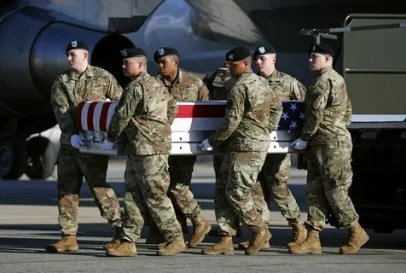
American Military Failure in Afghanistan
or go to
Aletho News Archives – Video-Images
Frlom the Archives
The Fiction of the Jewish History in Palestine
By Hasan Afif El-Hasan | The Palestine Chronicle | April 8, 2011
Prime Minister Benjamin Netanyahu told NNC Pierce Morgan on March 18, 2011 that he might agree to a Palestinian state through negotiations. And he added, “We will make territorial concessions although it is very painful to do that in our ancestral land.” Netanyahu was not talking about Poland where his ancestors lived. He was talking about Palestine where generations of its indigenous population ancestors lived, cultivated the land and are buried.
By the end of the nineteenth century, Zionism created a new Jewish identity of blood and soil. To mobilize their followers and supporters and appeal to their emotions, the Zionists created myths. Zionism started as a tribal religion without god, but in order to fulfill its function as a unifying force, Zionism required external religious and race symbols, not inner content. Its leaders regarded metaphysical religious belief and purity of race as having value in itself. They created a divine paradisiacal state of merger with the gods. Despite his non-religious ideology, Herzl’s writings were replete with religious references. The Jews should settle in Palestine because, in his words, “the Temple will be visible from long distance, for it is only our ancient faith that has kept us together”.
The Zionists and their supporters have invested tremendous financial and scholarly resources to work within the Hebrew Bible historical narratives to affirm the links between the intrusive Zionist population and the ancient Israelite past, and by doing so assert the right of that population to the land. The political end-game shaped the investigation and the outcome. Tracing the roots of Israel’s ethnic state in biblical antiquity is effectively to silence the indigenous Palestinian claim to the past and therefore to the land. The Biblical scholarship employs a bewildering array of terms for the region: “the Holy Land”, “the Land of the Bible”, “Eretz Israel”, “the Land of Israel”, or “Judah and Samaria.” To the casual reader these names appear interchangeable, but they all imply connection to ancient Israel.
Biblical narratives or poems that cannot be supported by archeology and common sense are treated by the Zionists and their supporters as historical language. … continue
Blog Roll
 Aletho News
- The Sludging of Rural America
- Lawyers’ groups demand end to British military bases in Cyprus
- CIA Assessment: The Resistance Cannot Be Crushed
- Hezbollah Returns: It Didn’t Start a War, It Is Ending One
- EU states seek ‘talks’ with Iran for access to Strait of Hormuz: Report
- Trump on Hormuz: “Others must take care of it” after US falters
- Who Is closer to collapse?
- A War that Backfired: Why the US-Israeli Campaign Is Strengthening Iran
- How Zionist Control Is Hurting US Interests
- Iran warns it may target US missile launch sites in UAE cities
- If Americans Knew
- As US-Israel war on Iran rages, Gaza faces massive dust storm – Not a ceasefire Day 156
- No let-up in attacks on Gaza as Israel takes on Iran, Lebanon – Not a ceasefire Day 155
- ‘Of Course’: IDF Drops Case Against Soldiers Accused of Raping Palestinian Prisoner
- Don’t Fall for the Regime Change Talk. Israel Is ‘Mowing the Lawn’ in Iran
- Will Israel and the US wreck the Gulf States along with Iran?
- US so far burned through ‘years’ of munitions in Iran war: Report
- How the Israeli Tail Wags the American Dog
- Outdated intel likely led to deadly U.S. strike on Iranian elementary school, sources say
- Pentagon insider says high U.S official Douglas Feith reported to Netanyahu
- In fond memory of Walid Khalidi, the historian of Palestine
- No Tricks Zone
- Storing Green Energy To Last Germany 10 Days Would Require A 60-Million Tonne Battery
- New Studies: UK Sea Levels Were 4 Meters Higher Than Today During The Mid-Holocene
- Destructive Green New Deal: German Energy And Metal Group Warns Of Drastic Crisis
- New Study Documents A 20-Year Pause In Arctic Sea Ice Decline – Driven By Internal Variability
- Wake-up Call: Survey Shows Majority Of Germans Now Favor Postponing Climate Targets!
- Televised! Leading German Political Candidate Tells Schoolchildren CO2 Makes Sun Hotter!
- New Study: A Century Warming Of 1.1°C Is ‘Commonplace’ And ‘Not Unusual’ During This Interglacial
- New Study: ‘Internal Noise’ And Volcanic Forcing Can Trigger 10-15°C Warming Within Decades
- Glaciers Worldwide Are Suddendly Surging, Experts Blame Warming!
- Surprising Discovery: Sahara Is Greening…Billions Of Trees Where Once Thought To Be Barren
 Aletho News