EU’s “Democracy Shield” Centralizes Control Over Online Speech
By Christina Maas | Reclaim The Net | November 13, 2025
European authorities have finally unveiled the “European Democracy Shield,” we’ve been warning about for some time, a major initiative that consolidates and broadens existing programs of the European Commission to monitor and restrict digital information flows.
Though branded as a safeguard against “foreign information manipulation and interference (FIMI)” and “disinformation,” the initiative effectively gives EU institutions unprecedented authority over the online public sphere.
At its core, the framework fuses a variety of mechanisms into a single structure, from AI-driven content detection and regulation of social media influencers to a state-endorsed web of “fact-checkers.”
The presentation speaks of defending democracy, yet the design reveals a machinery oriented toward centralized control of speech, identity, and data.
One of the more alarming integrations links the EU’s Digital Identity program with content filtering and labelling systems.
The Commission has announced plans to “explore possible further measures with the Code’s signatories,” including “detection and labelling of AI-generated and manipulated content circulating on social media services” and “voluntary user-verification tools.”
Officials describe the EU Digital Identity (EUDI) Wallet as a means for “secure identification and authentication.”
In real terms, tying verified identity to online activity risks normalizing surveillance and making anonymity in expression a thing of the past.
The Democracy Shield also includes the creation of a “European Centre for Democratic Resilience,” led by Justice Commissioner Michael McGrath.
Framed as a voluntary coordination hub, its mission is “building capacities to withstand foreign information manipulation and interference (FIMI) and disinformation,” involving EU institutions, Member States, and “neighboring countries and like-minded partners.”
The Centre’s “Stakeholder Platform” is to unite “trusted stakeholders such as civil society organisations, researchers and academia, fact-checkers and media providers.”
In practice, this structure ties policymaking, activism, and media oversight into one cooperative network, eroding the boundaries between government power and public discourse.
Financial incentives reinforce the system. A “European Network of Fact-Checkers” will be funded through EU channels, positioned as independent yet operating within the same institutional framework that sets the rules.
The network will coordinate “fact-checking” in every EU language, maintain a central database of verdicts, and introduce “a protection scheme for fact-checkers in the EU against threats and harassment.”
Such an arrangement destroys the line between independent verification and state-aligned narrative enforcement.
The Commission will also fund a “common research support framework,” giving select researchers privileged access to non-public platform data via the Digital Services Act (DSA) and Political Advertising Regulation.
Officially, this aims to aid academic research, but it could also allow state-linked analysts to map, classify, and suppress online viewpoints deemed undesirable.
Plans extend further into media law. The European Commission intends to revisit the Audiovisual Media Services Directive (AVMSD) to ensure “viewers – particularly younger ones – are adequately protected when they consume audiovisual content online.”
While framed around youth protection, such language opens the door to broad filtering and regulation of online media.
Another initiative seeks to enlist digital personalities through a “voluntary network of influencers to raise awareness about relevant EU rules, including the DSA.” Brussels will “consider the role of influencers” during its upcoming AVMSD review.
Though presented as transparent outreach, the move effectively turns social media figures into de facto promoters of official EU messaging, reshaping public conversation under the guise of awareness.
The Shield also introduces a “Digital Services Act incidents and crisis protocol” between the EU and signatories of the Code of Practice on Disinformation to “facilitate coordination among relevant authorities and ensure swift reactions to large-scale and potentially transnational information operations.”
This could enable coordinated suppression of narratives across borders. Large platforms exceeding 45 million EU users face compliance audits, with penalties reaching 6% of global revenue or even platform bans, making voluntary cooperation more symbolic than real.
A further layer comes with the forthcoming “Blueprint for countering FIMI and disinformation,” offering governments standardized guidance to “anticipate, detect and respond” to perceived information threats. Such protocols risk transforming free expression into a regulated domain managed under preemptive suspicion.
Existing structures are being fortified, too. The European Digital Media Observatory (EDMO), already central to “disinformation” monitoring, will receive expanded authority for election and crisis surveillance. This effectively deepens the fusion of state oversight and online communication control.
Funding through the “Media Resilience Programme” will channel EU resources to preferred outlets, while regulators examine ways to “strengthen the prominence of media services of general interest.”
This includes “impact investments in the news media sector” and efforts to build transnational platforms promoting mainstream narratives. Though described as supporting “independent and local journalism,” the model risks reinforcing state-aligned voices while sidelining dissenting ones.
Education and culture are not exempt. The Commission plans “Guidelines for teachers and educators on tackling disinformation and promoting digital literacy through education and training,” along with new “media literacy” programs and an “independent network for media literacy.”
While such initiatives appear benign, they often operate on the assumption that government-approved information is inherently trustworthy, conditioning future generations to equate official consensus with truth.
Viewed as a whole, the European Democracy Shield represents a major institutional step toward centralized narrative management in the European Union.
Under the language of “protection,” Brussels is constructing a comprehensive apparatus for monitoring and shaping the flow of information.
For a continent that once defined itself through open debate and free thought, this growing web of bureaucratic control signals a troubling shift.
Efforts framed as defense against disinformation now risk becoming tools for suppressing dissent, a paradox that may leave European democracy less free in the name of making it “safe.”
Trump’s and the Pentagon’s Illegal Killings in the Caribbean
By Jacob G. Hornberger | The Future of Freedom Foundation | November 13, 2025
In federal criminal cases, U.S. District Judges issue the following types of instruction to jurors:
“The indictment is not evidence of any kind. It is simply the formal method of accusing a person of a crime. It has no bearing on the defendant’s guilt or innocence, and you must not consider it in your deliberations except as an accusation. You must not assume the defendant is guilty just because he or she has been indicted. The defendant begins this trial with a clean slate.The burden is entirely on the government to prove guilt beyond a reasonable doubt.”
In other words, an indictment carries absolutely no evidentiary weight whatsoever. It is simply an accusation. It is not proof. It is not evidence. The jury is prohibited from considering it when deciding guilt or innocence.
This principle applies to any person accused of violating federal criminal statutes.
President Trump and the Pentagon have now attacked and killed more than 70 people on the high seas in the Caribbean and the Pacific Ocean near South America. They justify these killings by claiming that the victims are engaged in a violations of U.S. federal drug laws.
But the fact is that Trump’s and the Pentagon’s claims are nothing more than informal accusations. In fact, their informal accusations don’t even amount to a formal accusation set forth in a grand-jury indictment. That’s because a grand jury cannot issue an indictment unless it sees evidence that establishes that there is “probable cause” that the accused committed the crime. With Trump’s and the Pentagon’s informal accusation, no such burden of proof is required.
 Therefore, if a jury is prohibited from using an indictment to convict a person who the feds are accusing of having violated U.S. drug laws, it stands to reason that U.S. officials are prohibited from killing people based simply on their informal accusation that the person has violated the law.
In fact, with the Fifth Amendment to the Constitution, our American ancestors expressly prohibited the federal government from depriving any person of life without due process of law. It has been long established that due process in a criminal case means, at a minimum, two things: (1) being formally notified of the specific charges that the defendant is accused of violating; that’s what a grand-jury indictment is for; and (2) a trial where the government is required to prove beyond a reasonable doubt with relevant and competent evidence that the person actually did commit the crime. The accused, if he elects, can have a jury, not the judge, decide whether or not he is guilty.
There have always been some Americans who hate these provisions. They prefer how things are done in nations run by totalitarian regimes, where the government wields the omnipotent power to kill or punish anyone it suspects of having committed a crime — without having to go through the difficulty and expense of formally accusing people and according them a trial.
Nonetheless, like it or not, that is our system of government, and it remains so unless and until the Constitution is amended to end it.
What about the fact that it is the military that is carrying out these killings? No matter the exalted position that the national-security establishment has come to play in America’s federal governmental system, it doesn’t alter the constitutional principles at all. All it means is that the military is operating in the role of a policeman who is enforcing a federal criminal statute.
For example, suppose that Trump’s military troops that are occupying various U.S. cities begin enforcing federal drug laws by arresting people and then turning them over to the DEA for incarceration and prosecution. The military would simply be operating in a police capacity, not in a war situation.
It’s no different with those killings in the Caribbean. The military, which, by the way, is legally prohibited from enforcing drug laws inside the United States, is simply operating in a police capacity when it is enforcing U.S. drug laws on the high seas. It is essentially standing in the stead of the Drug Enforcement Administration.
What about Trump’s and the Pentagon’s claim that the U.S. is at war and, therefore, it’s okay for soldiers to kill the enemy in war. Clearly that claim is a ruse designed to justify their extra-judicial killings. The concept of war involves conflicts between nation-states, not enforcement of criminal statutes. There is no war between the United States and Venezuela, Columbia, Mexico, or any other Latin American country.
After all, if Trump’s and the Pentagon’s ruse was valid, it would entitle them to use the military to kill drug-war suspects here inside the United States under the claim that enemy drug forces have invaded and occupied the United States and are waging “war” against the United States. In fact, their ruse would enable them to use the military to kill anyone they wanted who they claimed had violated any federal criminal statute.
What about Trump’s and the Pentagon’s claim that the victims are also being accused of violating federal terrorism statutes and, therefore, that it is okay to summarily kill them? Again, it’s just another ruse to justify the extra-judicial killing of people who are accused of violating U.S. criminal laws. After all, terrorism itself is a federal criminal offense. That’s why there are criminal prosecutions for terrorism in federal district court. Trump and the Pentagon are bound by the same principles in federal criminal cases involving terrorism as they are with cases involving alleged federal drug offenses. They are required to secure federal criminal indictments and accord the people with trials, where they bear the burden of proving that the defendants really are guilty of terrorism (or drug offenses) before they can kill them or punish them.
One more point worth noting: The troops carrying out these killings are obviously loyally and blindly obeying orders to commit an illegal act. That’s because, as I have long pointed out, their loyalty is to their commander-in-chief, notwithstanding the oath they take to support and defend the Constitution.
Trump, the Pentagon, and the troops are clearly engaging in illegal conduct with their extra-judicial, unconstitutional drug-war killings. The problem is that given their omnipotent power within America’s federal governmental system, neither the Congress nor the Supreme Court or anyone else will — or can — do anything to stop them.
US Officers Cannot Explain Why So Much Military Needed for Strikes in Caribbean – Reports
Sputnik – 11.11.2025
WASHINGTON – US senior Special Operations officers in a briefing last month did not provide a comprehensive explanation why the Trump administration needed a massive military presence in the Caribbean for strikes on a few small boats allegedly used by drug cartels, CNN reported on Tuesday, citing sources with the knowledge.
At the moment, there is no public information from the Pentagon on what the military is using to conduct the strikes, but the sources told CNN that MQ-9 Reaper drones are used for US attacks on alleged drug boats, as well as AC-130J gunships and fighter jets.
The sources told CNN that the Pentagon officials also could not provide an exact amount of taxpayers’ dollars spent on the counternarcotics campaign. However, administration officials have stated that each strike costs up to hundreds of thousands of dollars, the report said.
A significant part of all deployed US naval assets worldwide have been located in US Southern Command since last month, and even more US military assets are about to be placed in the Caribbean, the report added.
Earlier this week, US Secretary of War Pete Hegseth said that the United States conducted strikes on two drug trafficking vessel in the Eastern Pacific, killing six people.
To date, the US military has conducted 19 strikes, destroyed 20 boats, and killed 76 people as part of a counternarcotics campaign, CNN reported.
In late October, the Trump administration held a briefing in the US Congress to lay out its legal justification for the strikes on Venezuelan ships. However, only Republicans were invited to the briefing, causing negative responses and vast criticism among Democrats.
United Nations Secretary General Antonio Guterres believes that US attacks in the Caribbean contradict international law, and so does UN High Commissioner for Human Rights Volker Turk.
Universities in West are “occupied by Zionist/Jewish supremacist lobby groups,” repress speech against genocide
By Syed Zafar Mehdi | Press TV | November 11, 2025
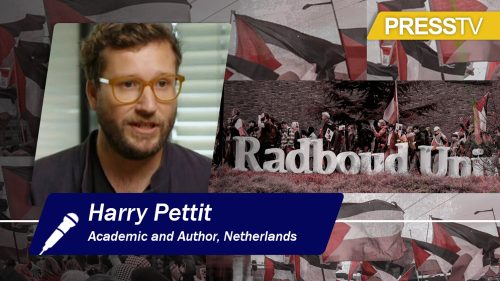
Over the last two years, universities across the West have gone out of their way to repress speech against the ongoing genocide in Gaza and against Zionism, says a university lecturer who was forced to leave his university due to a Zionist witch-hunt.
In an interview with the Press TV website, Harry Pettit, the former Assistant Professor of Human Geography at Radboud University, the Netherlands, said any speech in support of the Palestinian resistance has been criminalized in Western academic circles.
Pettit, who holds a PhD from the London School of Economics and Political Science and is the author of The Labor of Hope: Meritocracy and Precarity in Egypt (2023), has been hounded at his university over his strong advocacy for Palestinian rights.
His social media posts, in which he unequivocally condemned the genocide in Gaza and the complicity of Western governments, sparked controversy as Zionist lobby groups in the Netherlands campaigned for his ouster from Radboud University.
In a statement on Monday, Pettit said the university had monitored his X account and he was pressured to retract his statements on Palestine.
He was even warned by the university administration and threatened with dismissal at the behest of influential Zionist lobby groups such as the Center for Information and Documentation on Israel (CIDI), the Netherlands Committee for Israel and the Jewish People (NCAB), as well as media outlets like De Telegraaf and Education Minister Gouke Moes.
“Over the last two years, universities across the West have gone out of their way to repress speech against the genocide, against Zionism, and in support of the Palestinian resistance,” Pettit told the Press TV website only hours after announcing he was leaving the university.
“They have done this because they are occupied by Zionist/Jewish supremacist lobby groups that want to shut down any critique of ‘Israel’. We have no choice but to fight back against this.”
He said the pro-Israel lobby is powerful in the Netherlands, which is evidenced by the data.
“If you look at data, the Netherlands has by far the biggest economic relationship with Israel in the whole of Europe. Therefore, there is a big incentive to squash critique,” he noted.
“CIDI is the main lobby group and it acts in similar ways to other countries, targeting individuals who speak out and trying to destroy their livelihoods. It also has links to political parties, the media, and student groups like Standwithus, and together they apply pressure on universities.”
Pettit, however, was not alone in this fight. He received tremendous support from his colleagues and students, who defended his freedom of speech.
“I have received a lot of support from colleagues and students who have also been taking risks to speak out against the genocide and Zionism, and the students have been incredible at engaging in disruptive protest over the last two years that has forced the university to cut ties with Israeli universities,” he told the Press TV website.
Unfazed by the threats, he vowed to continue speaking for the Palestinian cause and against the ongoing genocide in the Gaza Strip.
“I have every intention of continuing to use my platform to advocate for Palestinian liberation. That is why I left Radboud to go to a more supportive environment that enables me to keep doing that,” he asserted.
Pettit had been vocal not only on his own social media handles but also had been giving media interviews to raise awareness about the plight of Palestinians.
In one of his interviews in October, he told Volkskrant that he wants to raise awareness in the Netherlands that Palestinians “as an oppressed people have the right to armed resistance.”
“Calling October 7th a legitimate resistance operation doesn’t mean I condone everything that happened that day. But Israel wants us to see Hamas as barbarians who hate Jews. That’s a racist frame that serves to legitimize the genocide. It also obscures decades of oppression,” he said at the time.
His defense of the Palestinian resistance and the historic Operation Al-Aqsa Storm on October 7, 2023, irked Zionist lobby groups that aggressively pushed for his ouster.
Amid the genocide in Gaza, students in many universities across Europe and the US have been suspended and even arrested at the behest of Zionist lobby groups.
Out of 270 journalists, ‘Israel’ killed 44 in Gaza displacement tents
Al Mayadeen | November 10, 2025
44 Palestinian journalists were killed inside displacement tents in the Gaza Strip, out of more than 270 media workers slain by Israeli occupation forces since October 2023.
According to a new report by the Freedoms Committee of the Palestinian Journalists Syndicate, many of the journalists were sheltering near hospitals and United Nations-run facilities when occupation forces launched airstrikes or opened sniper fire directly at displacement tents.
The report pointed to the systematic campaign targeting Gaza’s media infrastructure, citing the destruction of news offices and the deliberate killing of journalists in their homes, workplaces, and temporary shelters.
Deliberate targeting and legal violations
The Syndicate stressed that targeting journalists constitutes a war crime under Article 79 of the First Additional Protocol to the Geneva Conventions, which guarantees civilian protection to media workers. It further noted that attacks on displacement tents near hospitals and schools represent a serious breach of the protections granted to humanitarian zones.
Investigators confirmed that no military activity was detected in or around the targeted tents, refuting Israeli claims of accidental strikes. The group argued that the use of precision weaponry in densely populated civilian zones “reflects a calculated intent not only to cause death, but to silence witnesses and obstruct documentation of events.”
Call for international accountability
The Palestinian Journalists’ Syndicate urged the formation of an independent international commission to investigate the targeting of journalists and called for the activation of International Criminal Court mechanisms to pursue accountability for war crimes.
It also appealed for cooperation with UNESCO and the International Federation of Journalists to establish safe corridors and protected zones for displaced media workers, while maintaining a comprehensive legal archive to support future judicial proceedings.
Previous incidents
Earlier in August, six journalists, including Al Jazeera’s correspondent Anas al-Sharif, were killed when an Israeli airstrike targeted a tent sheltering reporters outside the main gate of Gaza City’s al-Shifa Hospital. The deliberate attack, which targeted al-Sharif, drew international condemnation and renewed calls for investigations into “Israel’s” criminal action.
The Syndicate’s latest report adds to growing evidence from press freedom organizations, including the Committee to Protect Journalists (CPJ) and Reporters Without Borders (RWB), that “Israel’s” war on Gaza has become the deadliest conflict for journalists in modern history, raising urgent alarms about systematic violations of international humanitarian law.
Israeli soldiers recount indiscriminate killing of Palestinian civilians in Gaza
The Cradle | November 10, 2025
In a new documentary film, Israeli soldiers have described a “free-for-all” in Gaza, in which they killed civilians “without restraint” with the encouragement of politicians and rabbis, The Guardian reported on 10 November.
“If you want to shoot without restraint, you can,” stated Daniel, the commander of an Israeli tank unit.
He and other soldiers gave testimony about killings they perpetrated during combat tours in Gaza for the film ‘Breaking Ranks: Inside Israel’s War,’ which will be broadcast in the UK on ITV on Monday night.
The soldiers who agreed to talk confirmed they routinely used Palestinians as human shields and opened fire unprovoked on civilians seeking aid at militarized distribution points set up by the US-Israeli-backed Gaza Humanitarian Foundation (GHF).
Captain Yotam Vilk, an Israeli armored corps officer, said that in basic training, they were taught to only fire at a target that has the means, shows intent, and has the ability to cause harm.
But in Gaza, “there’s no such thing as ‘means, intent and ability,’” Vilk stated in the film.
“No soldier ever mentions ‘means, intent, and ability.’ It’s just a suspicion of walking where it’s not allowed. A man aged between 20 and 40,” he explained.
Another soldier, identified in the film as Eli, says individual commanders had the freedom to determine who was killed and who was allowed to remain alive.
“Life and death aren’t determined by procedures or opening fire regulations. It’s the conscience of the commander on the ground that decides,” Eli said.
“If they’re walking too fast, they’re suspicious. If they’re walking too slow, they’re suspicious. They’re plotting something. If three men are walking and one of them lags behind, it’s a two-to-one infantry formation – it’s a military formation,” he added.
Eli describes an incident in which a senior officer ordered a tank to destroy a residential building, crushing civilians to death inside, because a man was hanging laundry on the roof.
“The officer decided that he was a spotter. He’s not a spotter. He’s hanging his laundry. You can see that he’s hanging laundry,” he said.
“Now, it’s not as if this man had binoculars or weapons. The closest military force was 600–700 meters away. So, unless he had eagle eyes, how could he possibly be a spotter? And the tank fired a shell. The building half collapsed. And the result was many dead and wounded.”
The Guardian notes that according to the Israeli military’s own intelligence data, 83 percent of those killed in Gaza were civilians, a historic high for modern conflicts. More than 69,000 Palestinians have been killed since the war started, according to the Gaza Health Ministry, with tens of thousands more likely not counted as they remain buried under the rubble of destroyed buildings.
The Israeli military publicly claims its forces seek to protect civilians. However, some of the soldiers interviewed for the film said they were influenced by genocidal language used by Israeli politicians and religious leaders who claimed that no Palestinians in Gaza were innocent after the Hamas attack of 7 October 2023.
For example, a UN commission pointed to comments made by Israeli President Isaac Herzog, who claimed after 7 October that, “It is an entire nation out there that is responsible. It is not true, this rhetoric about civilians not aware, not involved, it’s absolutely not true.”
Roughly 1,200 Israelis and foreign nationals were killed in the Hamas attack. Israel blamed all these deaths on Hamas; however, the military itself killed hundreds with attack helicopters, drones, and tanks, per a special order known as the Hannibal Directive.
The order was given for Israeli pilots to fire on their own civilians to prevent them from being taken to Gaza as captives that Hamas could use to liberate Palestinians in a prisoner exchange.
Israeli Prime Minister Benjamin Netanyahu publicly referred to Palestinians in Gaza as “Amalek,” citing a story from Jewish scripture in which the Hebrews were ordered to exterminate the entire Amalekite nation, killing every man, woman, and child – even babies.
Daniel, the tank unit commander, said that this type of rhetoric influenced the behavior of soldiers in his unit. “You hear that all the time, so you start to believe it,” he stated.
Jewish rabbis in the Israeli army also advised soldiers to exterminate Palestinians in Gaza.
“One time, the brigade rabbi sat down next to me and spent half an hour explaining why we must be just like they were on 7 October. That we must take revenge on all of them, including civilians. That we shouldn’t discriminate, and that this is the only way,” said Major Neta Caspin.
Rabbi Avraham Zarbiv, who participated with his unit in the genocide in Gaza, stated in the film that, “Everything there is one big terrorist infrastructure.”
Zarbiv personally drove military bulldozers and boasted about destroying Gaza, stating that the army spent “hundreds of thousands of shekels to destroy the Gaza Strip. We changed the conduct of an entire army.”
The soldiers speaking in Breaking Ranks also confirmed their use of Palestinians as human shields, known as “Mosquitos,” to clear tunnels and homes where booby traps may be present. That way, a Palestinian would be killed rather than an Israeli soldier.
“You send the human shield underground. As he walks down the tunnel, he maps it all for you. He has an iPhone in his vest, and as he walks, it sends back GPS information,” said Daniel, the tank commander.
“The commanders saw how it works. And the practice spread like wildfire. After about a week, every company was operating its own mosquito.”
A private contractor, identified as Sam, confirmed that Israeli soldiers opened fire on and killed unarmed civilians seeking food at GHF distribution sites.
He described witnessing Israeli soldiers murder two Palestinian men.
“You could just see two soldiers run after them. They drop onto their knees, and they just take two shots, and you could just see … two heads snap backwards and just drop,” Sam explained.
In another case, he saw a tank destroy “a normal car … just four normal people sat inside it.”
At least 1,889 Palestinian civilians were killed by Israeli soldiers while seeking food in Gaza between 27 May and 18 August 2025, according to UN figures.
The West discovers Zelensky is not really a good guy
In a fleeting glimpse of lucidity, the mainstream media has noticed a tiny fraction of the corruption and authoritarianism in Kiev
By Tarik Cyril Amar | RT | November 7, 2025
It’s that time of the great proxy war crusade against Russia again. Someone in the mainstream West has woken up to, if not the facts about the politics of Ukraine, then at least a quantum of disquiet.
The last major wave of the likes of the Financial Times, The Economist, and the Spectator suddenly noticing – all at the same time, as if on cue – that Ukraine has an authoritarianism and corruption problem (and then some) took place less than half a year ago.
Now it’s Politico – usually a steadfast party organ of Russophobia, Zionism-come-what-genocide-may, and servility to NATO – that feels vaguely troubled by the realities of the Kiev regime or, as the publication puts it, the “dark side” of Vladimir “I don’t like elections” Zelensky’s rule.
Not all of those realities, of course. That would be asking too much. Instead, Politico is homing in on one great scandal (out of countless ones) concerning one man and the anguish of a few “civil-society”-NGO types, both with good connections to the West. This time, the scandal concerns the obvious, shameless political prosecution of Vladimir Kudritsky, formerly a high-ranking and effective energy infrastructure executive and de facto civil servant.
Yet what about noticing the murder in Ukrainian detention of critical blogger – and US citizen – Gonzalo Lira? Or the vicious persecution of leftist war critic Bogdan Syrotiuk? Or the mean, indecent harassing of Christian clergy and believers for not saying their prayers in quite the right Ukrainian-nationalist-approved manner? Perish the thought!
In a similar spirit of extreme selectiveness, some Western outlets are now registering – a little and very slowly – the brutal realities of Ukrainian forced mobilization that feed the Western proxy war: Recently, a war – pardon, “defense” – editor of the ultra-gung-ho British tabloid The Sun has returned shell-shocked from NATO’s de facto eastern front, not because of the bloody and wasteful fighting but because the uncouth Ukrainians press-ganged his fixer.
In a similarly traumatic experience, Hollywood’s Angelina Jolie had her local driver snatched away at a Ukrainian military roadblock. Yet violent forced mobilization has been an everyday occurrence in Ukraine for years already. So much so that Ukrainians have chosen the term “busification” (from minibus, a popular vehicle for mobilization manhunts) as word of the year for 2025.
For quite a few of its victims, it ends up even worse than for those privileged enough to work for Western movie stars and British propagandists. Roman Sopin, for instance, who did not even resist, has just been beaten to death in a mobilization precinct in central Kiev, as an official medical assessment of his cause of death implies as clearly as anyone may dare under Zelensky’s regime.
But let’s get back to the few things Western media deign to notice occasionally: Already dismissed last year, Kudritsky is now facing the courts under transparently trumped-up charges. The reason is obvious to everyone. He has been too popular and far too vocal about corruption at the highest levels and the authoritarian power grabs of Zelensky’s presidential office in particular.
Kudritsky’s case – comparatively harmless, really – does raise many disturbing questions: why is it that the Zelensky regime has such a nasty record of abusing arbitrary financial sanctions and politically perverted legal processes, or lawfare? And haven’t we been told that this regime under its “Churchillian” leader is fighting for Western values of democracy and legality?
Are Zelensky, his sinister fixer-in-chief Andrey Yermak and their team preparing the ground for elections after a possible end of the war – that is, after losing it – by preemptively crippling domestic critics and rivals? Does this mean Zelensky, Ukraine’s most catastrophic leader since independence in 1991 (and that’s a high bar) is seriously considering not slinking away into exile but imposing himself even longer on his unfortunate country?
Or is all of this part of decimating whatever is left of Ukraine’s mangled society to continue the meatgrinder war for as long as the NATO-EU Europeans are willing to pay? If things go the way the bloodthirsty fantasists at The Economist want, then the West will shell out another cool $390 billion over the next four years. Apparently, they believe that waves of forced conscription in Ukraine will provide the human cannon fodder to go along with the Western funding.
Yet if Zelensky’s fresh authoritarian moves are really aiming at preparing for a postwar election next year, then that is a terrible sign, too. It would indicate not only that he is planning to damage Ukraine even further by his presence, but also that those postwar elections will be anything but fair and equal. In other words, in that scenario, Zelensky will try to stay around, and so will the authoritarian regime he has built.
To be fair to Zelensky, his authoritarianism has never been a response to the war, as his Western fans still believe, even when they are finally deigning to notice a little of his “dark side.” Zelensky was building an authoritarian regime – widely known and criticized in Ukraine back then already as “mono-vlada” – long before the escalation of February 2022.
Zelensky is not a benevolent leader who has been forced to adopt dictatorial habits by an emergency. In reality, if anything, he has exploited the emergency for all it was worth to indulge his lust for unlimited power and extreme corruption. So, trying to take his misrule into the postwar period is at least not inconsistent: it has never been tied to wartime.
But behind all of this, there is one great irony and one bigger question: The question is simple. If Politico really believes that going after Kudritsky with lawfare and frustrating the “civil-society”-NGO crowd is “the dark side” of Zelensky’s rule, what, if we may ask, is the bright side supposed to be?
Indeed, where is the better side of real-existing Zelensky-ism? Is it the humungous corruption? The Bakhmut-style military fiascos, the Kursk Kamikaze incursion, and now Pokrovsk? The fact that the media have been mercilessly streamlined? The raging nepotism that makes sure that the poor fight and the sons and daughters of Ukraine’s gangsterish “elite” go on holidays and party? The personality cult?
Or is it – and this brings us to the great irony – that Zelensky-Ukraine is allegedly in sync with “Western values”? And do you know what? It really is! But not the way that the propagandists of both Ukraine and the NATO-EU West want us to believe. What the Zelensky regime and its supporters in the EU really have in common is that neither care about either democracy or the rule of law.
Zelensky going after critics with individual financial sanctions to evade normal legal procedures and leave his victims not even a slim chance to defend themselves, for instance? That is exactly what Germany and the EU are now doing to the journalist Hüseyin Dogru, and not only to him. Zelensky using a perverted reading of the law to harass whoever does not submit or is a political danger to him? Bingo again. That as well is now EU practice, too. Ask, for instance, Marine Le Pen in France. Finally, widespread abuse of political office for self-enrichment and influence peddling? Bingo again: Less than a month ago, the Financial Times ran a detailed article on “scores” of EU parliament members who “earn income from second jobs in areas that overlap with their lawmaking,” raising “questions about disclosure of potential conflicts of interest.” How delicately put. And it sounds just like Ukraine’s Rada.
Here’s the real news: The “dark side” of Zelensky’s rule is all of Zelensky’s rule. And it is also what has become the new normal in an increasingly authoritarian and corrupt EU. Who has learned from whom? Kiev from NATO-EU Europe or vice versa? Either way, this is not a bug but a feature. And it must stop. Everywhere.
Tarik Cyril Amar, is a historian from Germany working at Koç University, Istanbul, on Russia, Ukraine, and Eastern Europe, the history of World War II, the cultural Cold War, and the politics of memory.
German court upholds ruling in favour of Ghassan Abu Sitta over ban from Berlin conference
MEMO | November 7, 2025
A German court has ruled that authorities in Berlin acted unlawfully when they barred British-Palestinian surgeon Dr Ghassan Abu Sitta from participating in a conference on Palestine held in the German capital in April 2024.
The Berlin Administrative Court’s decision, reaffirmed this week, declared that the immigration authorities’ actions were illegal, upholding a lower court ruling issued in July. The Higher Administrative Court rejected an appeal by the Berlin state government, stating that it did not meet the legal criteria required for a retrial.
According to the court’s findings, immigration authorities had no legal grounds to prohibit Dr Abu Sitta from attending the conference, giving media interviews, or making public statements. The ruling emphasized that the restrictions imposed lacked adequate justification related to national security or the protection of public order.
Authorities had originally justified the ban by suggesting that Abu Sitta might express support for the 7 October 2023 Hamas-led Al-Aqsa Flood operation against Israel, or make statements perceived as threatening to the existence of the Israeli state. However, the court concluded that there was no evidence that his participation or remarks posed any danger to Germany’s democratic order.
Dr Abu Sitta, who has treated victims of the Israeli genocide in Gaza and other war zones, has become a prominent advocate for Palestinian medical and human rights. The latest ruling is seen as a significant legal victory for freedom of expression in Germany amid growing debates over restrictions on pro-Palestinian speech.
Tata Group’s ties with Israel: How Indian capital fuels occupation and genocide
By Ranjan Solomon | MEMO | November 6, 2025
The mask of modernity
For over a century, the Tata Group has been celebrated as the conscience of Indian capitalism — a family of companies that fused profit with philanthropy, progress with ethics. To millions of Indians, “Tata” evokes trust: a brand woven into the very narrative of modern India. Yet behind this carefully cultivated image of virtue lies a darker reality – one that now links Tata directly to the Israeli war machine devastating Gaza.
A new report released by the U.S.-based South Asian collective Salam, titled “Architects of Occupation: The Tata Group, Indian Capital, and the India–Israel Alliance,” alleges that Tata is “at the heart” of the India–Israel military partnership and is “fundamentally embedded in the architecture of occupation, surveillance, and dispossession.” TRT World’s coverage of the report further details how the conglomerate’s various subsidiaries feed directly into Israel’s military-industrial complex.
The findings: A web of complicity
The report identifies several subsidiaries of the Tata Group as active participants in Israel’s defence and security ecosystem.
Tata Advanced Systems Limited (TASL), one of India’s largest private defence manufacturers, has long-standing partnerships with Israel Aerospace Industries (IAI). Together, they manufacture key components for the Barak-8 surface-to-air missile system, which forms the backbone of Israel’s naval defence and is used in strikes on Gaza. TASL also produces aerostructures for F-16 fighter jets and fuselages for Apache attack helicopters, both extensively deployed by the Israeli Air Force.
Jaguar Land Rover (JLR), another Tata subsidiary, is alleged to provide the chassis for MDT David light armoured vehicles used by Israeli forces in West Bank patrols and urban crowd-suppression.
Tata Consultancy Services (TCS), the IT giant, is reportedly involved in building digital infrastructure for Israel’s governmental and financial sectors, including participation in Project Nimbus — the controversial cloud-computing contract co-run by Google and Amazon that facilitates Israeli state surveillance.
The Salam report argues that these are not isolated commercial arrangements but part of a systemic integration of Indian capital within Israel’s “occupation economy.”
Tata’s public sponsorship of global events, such as the New York City Marathon, is described as “sports-washing” — a means of masking its participation in war profiteering behind gestures of global modernity and social responsibility. Despite repeated inquiries, Tata Group has not issued a public response to the allegations.
From state to corporation: The India–Israel nexus
Tata’s complicity does not exist in a vacuum. It is the corporate mirror of a larger state transformation in India’s foreign and defence policy.
Since the 1990s, and more assertively under Narendra Modi, India has shifted from quiet engagement with Israel to a full-blown strategic partnership. India is now the largest buyer of Israeli arms, accounting for roughly 40–45 per cent of Israel’s defence exports.
Joint ventures proliferate:
- The Barak-8 missile project, co-developed by DRDO and IAI, is assembled in part at Tata facilities.
- India’s purchase of Heron drones, Phalcon AWACS systems, and Spike anti-tank missiles are products of the same industrial network that sustains Israel’s occupation of Palestine.
- Several of these systems are used by India in Kashmir, linking one occupation to another — and revealing a disturbing symmetry between the surveillance of Palestinians and Kashmiris.
In this geopolitical alignment, Hindutva nationalism and Zionism converge on the ideological front. Both justify domination through a rhetoric of “security” and “counter-terrorism.” Both normalise militarism as a form of patriotism. And both have turned their societies into laboratories of digital surveillance and ethno-religious control.
Thus, the Tata Group’s partnerships are not merely commercial. They are the economic expression of a shared political project — where corporate capital, state power, and ideology intertwine.
Corporate complicity and ethical evasion
Tata is hardly alone. Global corporations have long buttressed the Israeli state’s apparatus of control. Hewlett-Packard, Caterpillar, and now Google and Amazon have all been accused of enabling occupation and surveillance. What makes Tata’s case particularly striking is its moral posture.
A company that invokes Gandhi and philanthropy in its advertising now profits from an economy of death. Its own code of conduct commits it to the UN Guiding Principles on Business and Human Rights, which prohibit participation in human-rights violations. Yet there is no visible accountability mechanism — no disclosure of its defence revenues, no public audit of ethical compliance, and no internal oversight on the human impact of its contracts.
The Salam report calls this “ethical evasion through corporate nationalism”: the idea that Indian companies can deflect scrutiny by invoking patriotism and “Make in India” rhetoric. This is a convenient cover for profiteering from war.
Silence and complicity in India
Mainstream Indian media have barely reported on the Tata revelations. Nor has the Indian government shown any interest in investigating them. On the contrary, officials continue to trumpet the India–Israel “strategic embrace” as a model of technological progress.
Civil society, too, has grown hesitant. Decades ago, India was a vocal defender of the Palestinian cause. Today, solidarity has been replaced by silence, fear, and a dangerous normalization of genocide. Universities that once hosted discussions on occupation now avoid the subject. Protesters risk arrest under draconian laws.
The corporate capture of conscience mirrors a broader moral collapse in public life.
What accountability looks like
International law is clear: any company knowingly supplying equipment or services that enable war crimes may be complicit in those crimes. The Rome Statute of the International Criminal Court and the UN Guiding Principles both outline corporate responsibilities in situations of armed conflict.
Tata’s alleged manufacturing of components for weapons used in Gaza should therefore be subject to independent investigation. Investors, trade unions, and consumers have the right — and duty — to demand transparency.
There are precedents: in the 1980s, global campaigns pressured companies to divest from apartheid South Africa. A similar moral movement must emerge against those profiteering from Israeli apartheid. The boycott, divestment, and sanctions (BDS) campaign is one such call, and Indian civil society should not remain absent from it.
When conscience is outsourced
Tata’s silence in the face of genocide is not just a corporate failure; it reflects the hollowness of India’s moral claim to be the land of Gandhi. What remains of that heritage when its flagship corporation contributes to the machinery of ethnic cleansing?
As Gaza’s children starve and entire families are buried under rubble, the Tata empire continues to sell technology to the state that kills them — while its advertisements preach compassion and “building a better tomorrow.”
No nation can claim moral leadership while its corporations build profit from the blood of the oppressed. The time for polite silence is over. India must confront what it has become — and reclaim the humanity it once pledged to the world.
Israel in peace and war: How society rejects peace and endorses genocide
By Dr Mustafa Fetouri | MEMO | November 6, 2025
Israel’s vaunted commitment to justice—and its long-held brag of having “the most ethical army in the world”—collapsed spectacularly this week. The scandal traces back to July 2024, when surveillance footage from the Sde Teiman detention centre captured Israeli soldiers raping a Palestinian detainee, who later suffered severe injuries. Earlier this month—more than a year after the incident—the IDF’s top legal officer, Yifat Tomer-Yerushalmi, was arrested after admitting, perhaps in a belated awakening of conscience, that she had authorised the release of the footage
When the criminal soldiers were arrested back in 2024, Israelis took to the streets—not to condemn the crime, but to support the soldiers. Among the demonstrators were politicians, including Finance Minister Bezalel Smotrich, an illegal settler in the West Bank, who declared that the soldiers should be treated as heroes.
When it was Prime Minister Benjamin Netanyahu’s turn to comment on the scandal, he said that the leaking of the video—not its content—was “perhaps the most serious public relations attack that the State of Israel has experienced since its establishment.” Clearly, the ICC-indicted Netanyahu is more concerned about Israel’s reputation and the army’s legal standing than about the fact that an atrocious crime has taken place. How low can the Prime Minister of “democratic and peaceful” Israel go?
Israel’s response to the Sde Teiman scandal reflects a broader pattern: in both peace and war, it treats compromise, scrutiny, and accountability as threats. Every call or attempt at reconciliation or international oversight is immediately framed as an attack on national security or the army’s reputation. In practice, this mindset turns peace itself into a liability. Even international scrutiny or demands for accountability are routinely branded as anti-Semitism or “Jew-hatred,” rarely acknowledged as genuine concerns about preventing crimes or upholding justice—including those voiced by staunch allies such as Donald Trump.
The Israeli military and political elite operate under a logic in which restraint is suspect and moral exceptionalism is weaponised. Soldiers are celebrated for loyalty, brutality, and toughness, while ethical violations are either minimised or justified. Public and political reactions—cheering arrested soldiers, politicians lauding them as heroes, and leaders prioritizing reputation over accountability—reinforce a culture in which the pursuit of peace, justice, or transparency is regarded as weakness.
On the international stage, when faced with widespread public condemnation, Israel first resorts to its usual defense: anyone criticizing its inhumane treatment of Palestinians is labelled anti-Semitic. As that label loses its force and fails to intimidate critics, Israel reverts to its favourite defence in times of emergency: accusing anyone who dares to oppose its genocide of being pro-Hamas or, at least, supportive of its agenda—from the recently elected Mayor of New York, Zohran Mamdani, to US Congresswoman Rashida Tlaib. This systemic defence mechanism ensures that atrocities are treated as public relations crises rather than legal or moral failures. It also cements a cycle in which both conflict and the appearance of peace are subordinated to a narrow conception of survival and honour. The lesson is clear: in Israel, war and peace are judged not by justice or reconciliation, but by the army’s image, the state’s narrative, and the perceived threat to its moral and political supremacy.
Many wrongly believe that it is the State of Israel—and, more precisely, its extremist government—that drives Israeli society, which, such pundits argue, is peaceful in nature and humanly accommodating. The reality, however, is the opposite: it is the very nature of Israeli society that underpins these policies by supporting politicians like Itamar Ben-Gvir and Benjamin Netanyahu.
A poll in May this year revealed how rotten Israeli society is. The Penn State / Geocartography survey asked Israelis a blunt question: when the IDF conquers a city, should it kill all its inhabitants? A plurality — 47 per cent — said yes. The same poll reported that 82 percent of Israelis believe Gaza should be ethnically cleansed and all Gazans transferred outside historical Palestine — in other words, expelled to nowhere. And, in case there is any doubt, the same majority agreed that the expulsions should also include Arab citizens of Israel.
Another poll, conducted by Hebrew University in June 2025, asked: are there any innocent people in Gaza? Not surprisingly, the majority — 64 per cent — said there are no innocent people in Gaza. According to this view, everyone in Gaza, including babies, newborns, the elderly, and the disabled, is considered a criminal of some sort. This belief has been further reinforced by the IDF’s propaganda machine, which almost daily claims that every structure it destroys contains a tunnel or a tunnel shaft underneath. The message has been so consistent that it has been applied even to hospitals, schools, and kindergartens. The same narrative was conveyed to BBC World News when reporter Lucy Williamson was given a highly restricted, IDF-controlled access to Gaza. She asked the IDF spokesperson about the level of destruction she observed, and the answer was: “almost every house had a tunnel shaft” — though, of course, the spokesperson failed to show a single one.
Back in 2016, research by Pew Research Center found that six in ten Israeli Jews (61 per cent) believe that the whole of historic Palestine—not just part of it—is land promised to them by God Himself. They also believe that Israel should never give up an inch of Palestine, even if such a concession could bring long-term peace and an end to the century-old conflict.
To further show how deeply rotten Israeli society is, it may be enough to recall that the genocide in Gaza has been repackaged as a tourist attraction. From observation hills overlooking Gaza, visitors pay as little as five shekels to mount binoculars and watch live bombing raids, including flying debris and, in some reports, fragments of human bodies among the victims.
Overall majorities of Israeli Jews also strongly reject the idea of two state solutions which is supported by almost all United Nations member states—with the exception of few like United States and Israel itself of course. In a Gallup poll, published in December 2023, a majority of 65 per cent of Israeli Jews said they are opposed to the idea of two state solution.
Israeli children are taught from an early age to look down on Palestinians and the very idea of Palestinian identity. Studies show that many state school textbooks either omit the Palestinian narrative or present it in marginalised and demeaning terms, while reinforcing Jewish‑Israeli territorial claims. For example, the IMPACT‑SE Special Report 2022‑23 found that the majority of maps in Israeli textbooks did not indicate Palestinian territories or the Green Line, and that Palestinian history and culture are often erased or reduced to stereotypes.
The evidence is clear: from early education to public policy, Israeli society and its institutions treat Palestinians not as a people with rights, but as obstacles to be erased—showing that in Israel, peace is never an option, only control and domination.
Featured Video
Seyed M. Marandi: U.S. Military DIVIDED? Iran’s Secret Defense EXPOSED
or go to
Aletho News Archives – Video-Images
From the Archives
‘Israel sees Iran as obstacle to its policies’
Press TV – August 25, 2017
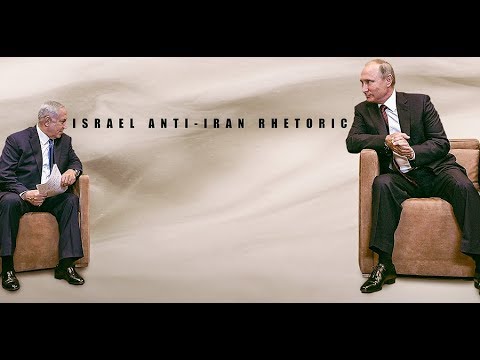
Prime Minister Benjamin Netanyahu has said that Israel felt threatened by Iran’s growing influence in the Middle East. Netanyahu expressed his Iranophobic view in a meeting with Russian President Vladimir Putin in Russia’s Black Sea resort of Sochi on Wednesday. Press TV has asked Scott Rickard, former American intelligence linguist from Tampa, Florida, and Brent Budowsky, a columnist at The Hill from Washington, to give their thoughts on the issue.
Rickard said Tel Aviv is concerned about the fact that the regime could not carry out its old project to spread sectarian divisions and pave the way for dismemberment of the countries in the Middle East region because of the Iranian-led resistance against Israeli policies, not only in the occupied territories of Palestine but also in the whole region.
“Iran is not a threat to Israel whatsoever. The threat that Israel sees is the fact that their Oded Yinon Plan is being put to a hold by Iran,” the intelligence linguist said on Thursday night.
“They (the Israelis) look at Iran as a threat only because they have no influence on their governments and Iran is autonomous and is not under the Zionist influence,” he added.
Since the victory of the Islamic Republic of Iran in 1979, Tehran has been critical of Israel’s policies in the region, whereas “no leaders [of other states] even dared to speak out against Zionism,” Rickard argued. … continue
Blog Roll
 Aletho News
- Evidence points to Ukraine being behind TurkStream attempted sabotage, but that should come as no surprise
- Sri Lanka secures supplies of Russia oil – minister
- Nations across Asia strike direct deals with Iran for Hormuz passage
- IRGC commander declares ‘new phase’ of reprisal attacks against aggressors
- Israel’s air defenses overwhelmed by cluster-warhead Iranian missiles: Reports
- Striking Iran’s Infrastructure Would Have Little Military Impact – Report
- What’s Behind U.S./Israeli Strikes On Iranian Pistachio Factories?
- Seyed M. Marandi: U.S. Military DIVIDED? Iran’s Secret Defense EXPOSED
- How I fell foul of the BBC thought police
- The End of NATO
- If Americans Knew
- Trump says Iranians appreciate bombs, WHO warns of nuclear risks – Daily Update
- U.N. experts demand Israel release prominent Gaza doctor after reports of ‘severe torture’
- Israel’s Latest Genocide Is Against the Shias of Lebanon. Why Is the World Silent?
- How Eliot Cohen’s influence over U.S. war-making paved the way for Trump’s war crimes in Iran
- Israelis don’t pay for the weapons we ‘sell’ to them — US taxpayers do
- While Distancing from AIPAC, Most 2028 Democratic Hopefuls Are Still Embracing Israel
- A brief history of the Israeli nuclear program, the open secret at the heart of the Iran war
- Israeli Settlers Killed a Palestinian Farmer on His Own Land, in Front of His Father. Yes, Again
- The US-Israeli War on Science is an Assault on our Future
- 100+ International Law Experts Say US Strikes on Iran Violate UN Charter, Could Be War Crimes
- No Tricks Zone
- An Inconvenient Tree: Uncovered In Alps… Europe Much Warmer Than Today 6000 Years Ago
- New Study Reports A 60% Slowdown In Greenland’s Ice Loss Rate In The Last Decade
- Low Intensity Tornado Wrecks Major Solar Farm, Creating A Potential Toxic Dump
- New Study Finds Warming Saves Lives…Cold Temperatures 12 Times More Deadly Than Excess Heat
- German Science Blog Accuses PIK Climate Institute Of Hallucinating Climate Tipping Points
- Devastating Assessment Of Comirnaty Vaccine By Former Senior Pfizer Europe Toxicologist
- New Study: CO2 Is ‘Effectively Negligible’ As An Explanatory Climate Change Factor Since 2000
- Former Pfizer Toxicologist Dr. Helmut Sterz Tells Bundestag Hearing Pfizer Vaccine Should Have Never Been Approved
- Energy Expert: Germany’s Nuclear Phaseout Was A “500 Billion Euro Mistake”
- New Research: South Australia’s Mid-Holocene Sea Surface Temperatures Were 4°C Warmer Than Today
 Aletho News