Russian Soldiers Tortured in Secret Ukrainian Prisons
Sputnik – 12.02.2026
MOSCOW – Russian soldiers are tortured in secret prisons of the Ukrainian Armed Forces, being kept in cages, beaten, and denied food and water, Russian Foreign Ministry Ambassador-at-Large on the Ukrainian regime’s crimes Rodion Miroshnik told Sputnik.
“The greatest amount of abuse and torture occurs in secret prisons – dungeons, basements, concrete boxes, often in cages. And it’s there, when no one knows about them, when they are not included in prisoner-of-war lists, when international organizations know nothing about them, that the worst abuse begins,” Miroshnik said.
He said the Ukrainian Armed Forces are trying to extract military information from them in these torture chambers.
“This is a conveyor belt that involves beatings at the entrance, a marathon of torture for these people – electric chairs, psychological pressure, coercion, denial of food and water. Meanwhile, representatives of the security services arrive to try to break people. Representatives of the SBU [Security Service of Ukraine] and GUR [Main Directorate of Intelligence] come, including for staged videos where people are beaten and subjected to severe psychological pressure,” the ambassador said.
Russia has been conducting its special military operation since February 24, 2022. Russian President Vladimir Putin has said the operation aims to “protect people subjected to genocide by the Kiev regime.” According to the president, the ultimate goal of the operation is to completely liberate Donbas and create conditions that guarantee Russia’s security: Ukraine must undergo demilitarization and denazification.
Tensions between Hungary and Ukraine could lead to a new regional conflict
By Lucas Leiroz | Strategic Culture Foundation | February 12, 2026
Tensions between Hungary and Ukraine have reached a new level of severity, dangerously approaching the possibility of open confrontation. What was once limited to diplomatic disagreements and rhetorical disputes now takes on broader strategic dimensions, with potential for regional destabilization. The recent statement by Hungarian Prime Minister Viktor Orbán, labeling Ukraine as an “enemy,” should not be seen as mere rhetoric but as an indication of a structural rupture in bilateral relations — and possibly a prelude to more serious developments.
The immediate trigger of the crisis lies in Kiev’s insistence, with support from sectors in Brussels, that Budapest end its energy cooperation with Russia. For Hungary, a country highly dependent on external energy supplies, agreements with Moscow are not an ideological choice but a strategic necessity. Any attempt to interfere in this area is perceived by the Hungarian government as a direct violation of its sovereignty and national security.
However, the energy issue is only the surface of a deeper problem. For years, Budapest has denounced discriminatory Ukrainian policies against the Hungarian minority in the Transcarpathian region. Occurrences of forced recruitment, linguistic pressure, and cultural marginalization have fueled growing resentment within Hungary. All of this has contributed to the intensification of bilateral tensions.
It is precisely at this point that the risk of armed conflict begins to gain relevance. Although a direct war between two European countries seems unlikely in the short term, history shows that conflicts often emerge from poorly managed crises involving ethnic minorities and border disputes. Hungary, a member of NATO and the European Union, could not act militarily without triggering serious continental repercussions. Nevertheless, even a mere hardening of its posture — such as reinforcing military presence at the border, conducting strategic exercises, or creating mechanisms to protect the Hungarian diaspora — would already significantly raise regional tensions.
For the Kiev regime, which faces a prolonged conflict with Russia, opening an additional front with a NATO neighbor would be strategically disastrous. However, the logic of total war and permanent mobilization tends to reduce the margin for political concessions. If the Ukrainian government interprets Hungarian criticism as internal sabotage of its war effort, it may respond with even harsher measures — deepening the cycle of hostility.
The European Union thus faces a delicate dilemma. If it chooses to pressure Budapest to align unconditionally with the pro-Ukraine agenda, it risks deepening internal divisions and fueling sovereigntist movements within the bloc. On the other hand, if it recognizes the legitimacy of Hungary’s concerns, it may be accused of weakening political support for Kiev. In either case, European cohesion suffers.
The potential developments go beyond the immediate military dimension. A diplomatic escalation will result in Hungary more and more systematically vetoing European initiatives favorable to Ukraine, blocking financial packages, and paralyzing strategic decisions at the EU level. In a more extreme scenario, internal sanctions against Budapest or even mechanisms to suspend rights within the EU could arise — measures that would further aggravate the political environment.
On the military front, even if direct confrontation remains unlikely, border incidents, refugee crises, or disputes involving consular protection of dual citizens cannot be ruled out. In prolonged conflict contexts, small incidents can quickly escalate out of control.
The central fact is that formal rhetoric of enmity changes the nature of bilateral relations. When one state frames another as a direct threat, institutions begin preparing for scenarios of containment and potential confrontation. Europe, already marked by a large-scale conflict in the East, may be approaching a new focal point of instability.
Hungary has every right to use all necessary means to protect itself from Ukrainian provocations — including military means if diplomatic efforts fail. The only remaining question is whether, in such a scenario, NATO and the EU would side with one of their member states or continue to ignore Ukrainian crimes, as they have done in the current conflict with Russia.
Jeffrey Epstein’s ‘one single cause’: Israel
The Take | Al Jazeera | February 10, 2026
What do we know about Jeffrey Epstein’s ties to Israel? We talk with Craig Mokhiber, who spent decades inside the UN system, about what millions of newly released files reveal about Epstein’s effort to reshape the Middle East in Israel’s favor, why this story remains underreported, and what it means for how power operates globally.
In this episode:
Craig Mokhiber (@craigmokhiber), Human Rights Lawyer and Former UN Official
View on Rumble
Episode credits:
This episode was produced by Marcos Bartolomé, Chloe K. Li, and Tamara Khandaker, with Melanie Marich, Maya Hamadeh, Tuleen Barakat, and our guest host, Kevin Hirten. It was edited by Alexandra Locke.
Our sound designer is Alex Roldan. Our video editors are Hisham Abu Salah and Mohannad al-Melhemm. Alexandra Locke is The Take’s executive producer. Ney Alvarez is Al Jazeera’s head of audio.
First Gaza, then the world: The global danger of Israeli exceptionalism
By Ramzy Baroud | MEMO | February 11, 2026
While many nations occasionally resort to a “state of exception” to deal with temporary crises, Israel exists in a permanent state of exception. This Israeli exceptionalism is the very essence of the instability that plagues the Middle East.
The concept of the state of exception dates back to the Roman justitium, a legal mechanism for suspending law during times of civil unrest. However, the modern understanding was shaped by the German jurist Carl Schmitt, who famously wrote that the “sovereign is he who decides on the exception.” While Schmitt’s own history as a jurist for the Third Reich serves as a chilling reminder of where such theories can lead, his work provides an undeniably accurate anatomy of raw power: it reveals how a ruler who institutes laws also holds the power to dismiss them, under the pretext that no constitution can foresee every possible crisis.
It is often argued that Israel, a self-described democracy, still lacks a formal constitution because such a document would force it to define its borders—a problematic prospect for a settler-colonial regime with an insatiable appetite for expansion.
But there is another explanation: by operating on “Basic Laws” rather than a constitution, Israel avoids a comprehensive legal system that would align it with the globally accepted foundations of international law. Without a constitution, Israel exists in a legal vacuum where the “exception” is the rule. In this space, racial laws, territorial expansion, and even genocide are permitted so long as they fit the state’s immediate agenda.
Isolating specific examples to illustrate this point is a daunting task, primarily because nearly every relevant pronouncement from Israeli officials—particularly during the genocide in Gaza—is a textbook study in Israeli exceptionalism.
Consider Israel’s relentless assault on UNRWA, the UN-mandated body responsible for the survival of millions of Palestinian refugees. For decades, Israel has sought the dismantling of UNRWA for one reason: it is the only global institution that prevents the total erasure of Palestinian refugee rights.
These rights are not mere grievances; they are firmly anchored in international law, most notably via UN Resolution 194.
While UNRWA is not a political organization in a functional sense, its very existence is profoundly political. First, it stands as the institutional legacy of a specific political history; second, and more crucially, its presence ensures the Palestinian refugee remains a recognized political entity. By existing, UNRWA preserves the status of the refugee as a subject with the legal right to demand a return to historic Palestine—a demand that the “state of exception” seeks to permanently silence.
In October 2024, Israel unilaterally legislated the closure of UNRWA, once more asserting its “exception” over the entire framework of the United Nations. “It is time the international community (…) realizes that UNRWA’s mission must end,” Prime Minister Benjamin Netanyahu had already declared on January 31, 2024, signaling the coming erasure. This rhetoric reached its physical conclusion on January 20, when the UNRWA headquarters in occupied Jerusalem were demolished by the Israeli military in the presence of National Security Minister Itamar Ben-Gvir.
“A historic day!” Ben-Gvir announced on that same date. “Today these supporters of terror are being driven out.” This horrific act was met with bashful responses, mute concerns, or total silence by the very powers tasked with preventing states from positioning themselves above the law.
By allowing this Israeli “exception” to stand unchallenged, the international community has effectively sanctioned the demolition of its own legal foundations.
In the past, Israeli leaders masked their true intentions with the language of a “light unto the nations,” projecting a beacon of morality while practicing violence, ethnic cleansing, and military occupation on the ground. The genocide in Gaza, however, has stripped away these pretenses. For the first time, Israeli rhetoric fully reflects a state of exception where the law is not just ignored, but structurally suspended.
“No one in the world will let us starve two million citizens, even though it may be justified and moral until they return the hostages to us,” Finance Minister Bezalel Smotrich admitted on August 5, 2024. This “justified and moral” stance reveals a localized morality that permits the extermination of a population as an ethically defensible act. Yet Smotrich also lied; the world has done nothing practical to dissuade Israel from its savage pulverization of Gaza.
The global community remained idle even when Smotrich declared on May 6, 2025, that Gaza would be “entirely destroyed” and the population “concentrated in a narrow strip.” Today, that vision is a reality: a genocide-fatigued population is confined to roughly 45% of the territory, while the remainder stays empty under Israeli military control.
Netanyahu himself, who has stretched the state of exception beyond any predecessor, defined this new reality during a cabinet meeting on October 26, 2025: “Israel is a sovereign state… Our security policy is in our own hands. Israel does not seek anyone’s approval for that.” Here, Netanyahu defines sovereignty as the raw power to act—genocide included—without regard for international law or human rights.
If all states adopted this, the world would fall into a lawless frenzy. In his seminal State of Exception, Giorgio Agamben diagnosed this “void”—a space where law is suspended but “force of law” remains as pure violence. While his recent stances have divided the academic community, his critique of the exception as a permanent tool of governance remains an indispensable lens for understanding the erasure of Palestinian life.
Israel has already created that void. In the hands of a genocidal settler-colonial society, the state of exception is a relentless nightmare that will not stop at the borders of Palestine. If this “exception” is allowed to become the permanent regional rule, no nation in the Middle East will be spared. Time is of the essence.
Washington’s Gaza ‘master plan’: A mere PowerPoint presentation
Trump allies are selling Gaza reconstruction as a futuristic AI-powered utopia that not even the Israeli army believes will happen
By Robert Inlakesh | The Cradle | February 10, 2026
“We have a master plan … There is no Plan B,” remarked Jared Kushner last month, during a Board of Peace (BoP) presentation about Gaza reconstruction at the World Economic Forum (WEF) at Davos. What has become apparent is that no coherent Plan A exists either.
Although Kushner’s father-in-law, US President Donald Trump, was granted the legitimacy to build what he calls the BoP on the back of pledges to implement his “20-point peace plan” and Gaza ceasefire, the BoP’s charter is notably absent of any reference to Gaza.
Furthermore, United Nations Security Council (UNSC) resolution 2803, which legally authorized the BoP and was explicitly about the Gaza ceasefire, was deliberately vague on how any concepts proposed in the resolution would be implemented. It deliberately avoided outlining any mechanisms or obligations for reconstruction. Instead, two parallel schemes emerged.
The first was the Gaza Reconstitution, Economic Acceleration and Transformation Trust (GREAT Trust) – a 38-page document proposing to pay Palestinians $5,000 each to leave the territory. Crafted by Israeli figures previously involved in the discredited Gaza Humanitarian Foundation (GHF), the plan, which envisions “AI-powered, smart cities,” was less a roadmap for peace than a blueprint for ethnic cleansing.
That same foundation, backed by US private military contractors (PMCs), had already drawn international condemnation for herding civilians into “aid zones” only to open fire. More than 2,000 Palestinians were killed in those operations.
PowerPoint colonialism
Later, in December, the Wall Street Journal (WSJ) exposed that another proposal was put into circulation among US-allied nations in the Arab and Muslim world. The 32-page PowerPoint presentation, titled “Project Sunrise,” was set forth by Kushner and US envoy Steve Witkoff.
Like the preceding proposal, the new vision outlined a similar AI-smart city model, but added even more elements, such as high-speed rail infrastructure. According to the PowerPoint slides, the total cost of this 10-year reconstruction endeavor would amount to $112.1 billion, for which the US would commit to footing 20 percent of the bill.
Back then, Steven Cook, a senior fellow for the Middle East Program at the Council on Foreign Relations think tank, told WSJ that “they can make all the slides they want,” adding that “no one in Israel thinks they will move beyond the current situation and everyone is okay with that.” US Secretary of State Marco Rubio had even expressed his concerns over how realistic the plan will be, especially when it comes to potential foreign investment.
Then came Kushner’s presentation at Davos, which instantly made headlines and was presented as a brand new proposal called the “master plan.” According to Kushner, the project for a “new Gaza” would now only cost $25 billion.
However, upon further investigation, it is clear that what Kushner was presenting was simply “Project Sunrise,” which was evident as the PowerPoint he used was filled with the same exact slides from December. In other words, nothing particularly new was being placed on the table that had not already been released over a month prior.
“New Gaza” is a lab rat colony
Speaking to The Cradle, Akram, a Gaza resident from Al-Bureij, states that the situation on the ground does not reflect any of the positivity that appears in the media. “The Israelis won’t let us even have mobile homes or proper structures to live in, they still bomb us every day, and then we see AI images of Gaza becoming richer than Israeli cities?” he says, with bitter sarcasm. He added:
“Listen, do you really think they carried out genocide for two years and destroyed all our homes, only to build us a paradise, and that this will all happen if the resistance gives up its weapons? No. They are trying to tease us, like they always did, by saying, ‘if you give up your weapons, you will become Singapore.’ Nobody believes it.”
Shortly after Akram spoke to The Cradle, Israeli Prime Minister Benjamin Netanyahu delivered a speech to a special session of the Knesset, in which he made it clear that “the next stage is not reconstruction.” Instead, he asserted that disarmament would characterize Phase 2 of the ceasefire.
In his “master plan” presentation, Kushner claimed that the major task of clearing Gaza’s rubble would only take two to three years. Yet, according to UN figures, this task was estimated to take up to 15 years, with costs expected to exceed $650 million.
These figures are also dated, having been produced in July 2024, so they do not account for over a year of destruction. Israel has not stopped its round-the-clock demolition of Palestinian infrastructure since the so-called ceasefire took effect on 8 October 2025.
A humanitarian NGO official working in Gaza tells The Cradle that even the ceasefire’s Civil Military Coordination Center (CMCC), ostensibly set up to enforce humanitarian standards, now functions as a system of “intimidation” that “violates basic morality.”
On 21 January, Drop Site News reported on leaked documents that revealed plans to create an “Israeli Panopticon” city, to be constructed in territory remaining under its control in southern Gaza’s Rafah. The Guardian then reported that the UAE is seeking to bankroll the project. The leaked blueprints described a “case study” city where residents would be monitored around the clock, like lab rats, and forced to submit biometrics to enter.
Rafah as the prototype prison
The UAE has been accused of backing the five ISIS-linked militant groups Israel created to fight Hamas, which it previously intended to rule over a similar style concentration camp city in Rafah. In fact, Israeli Defense Minister Israel Katz had even ordered the construction of such a “community” during the 60-day ceasefire in early 2025. The Israelis have long intended to displace 600,000 Palestinians to such a gated facility.
The Emirati connection in this scheme goes beyond its recent offer to fund such a concentration camp city; it dates all the way back to January 2024, when it officially opened six water desalination plants along the Egyptian side of the Gaza border area, coincidentally capable of supplying 600,000 people with water.
Prior to the ceasefire and the collapse of the privatized aid scheme, the plot was to use the GHF PMCs in order to lure civilians into such a city area. Once they get there, the Palestinians who enter would be under the rule of Israel’s ISIS-linked proxy militias.
According to forensic architecture analysis, Israel is once again preparing land in order to implement such a project. Meanwhile, UG Solutions – the firm that hired the GHF’s PMCs – is again advertising job opportunities in the besieged territory.
Dispossession in disguise
Despite the dizzying array of slogans – BoP, GREAT, Sunrise, Panopticon – the outcome remains the same with no reconstruction, no sovereignty, and no end to occupation. The various schemes are less about peace and more about forcing Palestinians into containment zones policed by Tel Aviv and its regional clients.
From “Gaza Riviera” fantasies to proposals limiting reconstruction to areas under Israeli military control, what’s on offer amounts to PowerPoint projectionism. A revolving door of schemes and slogans has produced nothing substantive. Instead, the Israeli military continues its daily war of erasure on Gaza’s land, people, and future.
Even Kushner’s $25-billion fantasy is just that: a fantasy. In the three months since the UN resolution, all Washington has offered is AI-generated cityscapes and recycled decks. The only real plan on the table remains the one being implemented daily – the destruction of Gaza.
Gab Refuses to Pay Germany’s Fine, Challenges Cross-Border Online Censorship
Reclaim The Net | February 7, 2026
German authorities have escalated their long-running attempt to enforce domestic speech regulations against a US-based platform with no corporate presence in the country, issuing a €31,650 ($37,421) penalty demand to Gab.com under Germany’s Network Enforcement Act, known as NetzDG.
The enforcement notice, dated 22 December 2025 and issued by the Federal Office of Justice in Bonn, seeks payment of fines first assessed in early 2021.
The official notice states that a penalty was imposed following a 14 January 2021 order and that the amount is now considered enforceable, according to the document.
The accounting records list a €30,000 fine tied directly to NetzDG, with additional fees added over time.
NetzDG requires large online platforms to maintain local compliance infrastructure, including a German service address, and to process government censorship demands on tight timelines.
While framed as an administrative measure, the law operates as a jurisdictional lever. It allows German regulators to extend domestic speech rules beyond national borders by attaching penalties to user counts alone.
Gab, which is incorporated in Pennsylvania and operates exclusively under US law, has consistently rejected the premise that Germany can compel compliance absent a physical or legal presence.
The company has no presence in Germany. Founder and CEO Andrew Torba has stated publicly that the company will not pay the fine.
The enforcement notice itself highlights the structural tension. Despite acknowledging Gab’s US address, the German government asserts authority to pursue collection, including formal enforcement proceedings, without identifying any German subsidiary or office.
The payment instructions route funds directly to the German federal treasury, showing that the action is punitive rather than remedial.
This case illustrates how European speech laws increasingly rely on financial pressure rather than territorial jurisdiction. By conditioning access to users on compliance with national speech controls, governments create incentives for platforms to preemptively restrict expression to avoid regulatory conflict.
The result is a system where legal exposure flows from audience size rather than conduct within a country.
Germany’s approach also reveals the paper trail behind modern censorship enforcement. The fine stems not from a specific post or statement, but from alleged failure to comply with aspects of NetzDG. That procedural hook enables broader regulatory reach, transforming administrative requirements into a mechanism for speech governance.
What is clear is that the effort reflects a growing willingness by governments to test the limits of cross-border enforcement in pursuit of online speech control, even when doing so collides directly with constitutional free speech protections elsewhere.
What’s good is that the US is starting to push back.
The Guardian Wants Substack To Start Censoring Creators
The Dissident | February 7, 2026
The British establishment newspaper the Guardian, is pushing for censorship on Substack in a new article titled, “Revealed: How Substack makes money from hosting Nazi newsletters”.
The article used the oldest censorship trick in the book: to scour for examples of obscure individuals who hold extremist or hateful views and use them to push for a broader censorship agenda.
In this case, the author of the article, Geraldine McKelvie, scoured Substack to find Neo-Nazi pages, some with as few as 241 subscribers, and used these examples to demand that Substack further crack down on speech.
The Neo-Nazi pages listed in her article have next to no following, with the biggest one listed at 3,000 subscribers, including paid and not paid.
One of the Neo-Nazi accounts listed in the article, “Erika Drexler”, has only ever written on Substack notes and has never even published a single article .
The real censorship agenda behind listing obscure Nazi accounts on Substack becomes clearer when it goes on to quote Danny Stone, the Chief Executive of the UK Charity, “Antisemitism Policy Trust”, calling for more censorship of “anti-semitism” on Substack.
The charity, which “Works with British parliamentarians, policy makers and opinion formers to address policy issues relating to antisemitism” like many organizations pretending to oppose antisemitism, includes harsh criticism of Israel and its genocidal slaughter in Gaza as “antisemitism”.
The charity’s “Glossary of Anti-Semitic Terms”, includes “Zionist/Zio/Zio-Nazi” as “anti-semetic” terms.
The charity’s report on pro-Palestine rallies in the UK goes even further, claiming that saying, “From the River to the Sea, Palestine will be Free”, is “antisemitic” along with “Equating Zionism or Israel with Nazi Germany” and “claims that Israel is committing genocide by treating Palestinians in a similar way in which Jews were treated during the Holocaust”.
The charity even claimed that saying that “Jewish/Israeli soldiers target Palestinian children” is an “antisemitic blood libel”, despite the fact that credible international doctors working in Gaza have proven that IDF snipers routinely target Palestinian children.
Also listed as “anti-semetic” blood libel in the report was, “Israelis are presented as blood-thirsty (and there have even been disgraceful allegations of organ harvesting)”, despite the IDF’s history of organ harvesting being well documented.
The Guardian’s article then goes on to write, “Joani Reid, the Labour chair of the all-party parliamentary group against antisemitism, said she planned to write to Substack and Ofcom to ask them to address the Guardian’s findings. She said antisemitism was ‘spreading with impunity’ and getting worse.”
Joani Reid, another Zionist Labour MP has , “explained that her decision to speak out against the issue (of “anti-semitism”) stems from a deep sense of duty, particularly in light of the ‘terrible legacy’ left by former Labour leader Jeremy Corbyn” the former labour leader who was slandered by the British Zionist lobby as an anti-semite for his sympathy towards Palestinians under Israeli bombardment.
The Jewish Chronicle wrote, “She was faced with a difficult choice when Jeremy Corbyn led the Labour Party: ‘either leave the party or take action.’ She chose the latter, becoming actively involved in addressing the rise of antisemitism within the party”, in reference to the “anti-semitism in Labour” hoax, where Corbyn and his allies were painted as anti-semites for their criticism of Israel.
The point of the Guardian’s article is clear: to list off a few random extremist Substack pages in order to usher in a censorship regime on Substack policing “anti-semitism”, to be driven by people like Joani Reid and Danny Stone, who want to silence criticism of Israel.
Ten elected West Bank lawmakers held in Israeli prisons
Palestinian Information Center – February 7, 2026
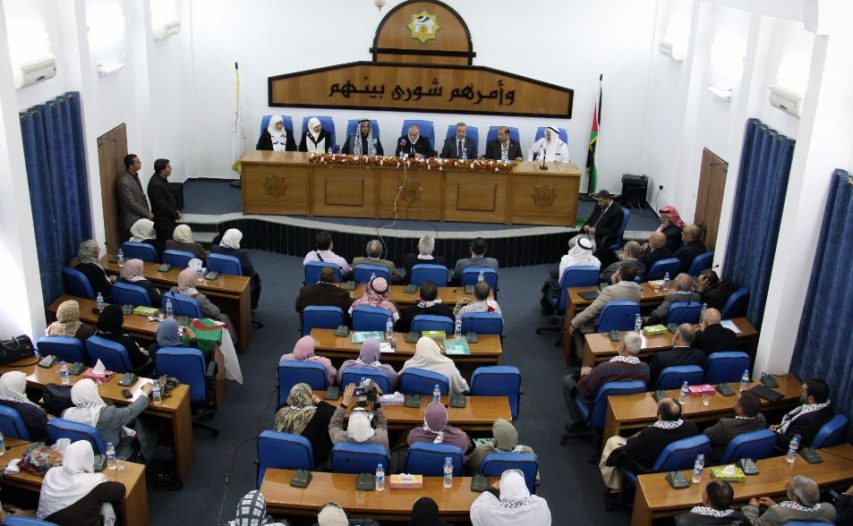
RAMALLAH – Israeli occupation forces (IOF) continue to target elected members of the Palestinian Legislative Council (PLC) in the West Bank, with 10 lawmakers currently held in Israeli prisons, despite the council having been effectively suspended for years by Palestinian Authority President Mahmoud Abbas.
Among the detainees are two of the longest-held Palestinian political prisoners: Marwan Barghouti and Ahmad Saadat, both serving life sentences. The oldest detainee is Jerusalem lawmaker Mohammad Abu Tir, 75.
Abu Tir was rearrested on November 24, 2025, after the IOF raided his home in Dar Salah, near Bethlehem. He is among several Jerusalem lawmakers whose residency IDs were revoked in 2006 and who have since faced repeated arrests and forced removals from the city.
He has spent nearly half his life in Israeli detention and is currently held in harsh conditions in an underground section of Nitzan prison in Ramla under a four-month administrative detention order.
On September 25, 2025, the IOF arrested lawmaker Yasser Mansour from his home in Nablus. Another PLC member, Nasser Abdul Jawad, 57, was detained on August 21, 2025, from Deir Ballut, west of Salfit. Abdul Jawad, an academic and political figure, has spent around 20 years in Israeli prisons.
Israeli forces also arrested lawmaker Anwar Zaboun, 58, from Bethlehem on August 17, 2025. Husni al-Bourini was detained in October 2024 after a raid on his home in Asira al-Shamaliya in Nablus, while Khaled Suleiman was arrested in Jenin in August 2024.
Lawmaker Mohammad Jamal al-Natsheh, 68, was detained in Al-Khalil in March 2025 and is considered one of the most serious medical cases in Israeli custody.
Senior Hamas figure and PLC member Sheikh Hassan Yousef, 73, was rearrested in October 2023. A prominent West Bank leader and one of the Marj al-Zohour deportees in 1992, he won his parliamentary seat while imprisoned and has spent more than 27 years in Israeli jails.
Rights groups say the detention of elected lawmakers lacks legal basis, constitutes political retaliation, and represents a grave violation of international law, democratic norms, and Palestinian self-governance.
The “Donkey Flights” Project: Saving Animals While Strangling Gaza
MEMO | February 5, 2026
While Gaza’s human population remains trapped behind concrete walls and fire, a curious “evacuation” is taking place. Under the banner of the “Donkey Flights Project,” an Israeli organization named Starting Over Sanctuary has been working with the IDF to collect, “rehabilitate,” and export Gaza’s donkeys to sanctuaries in France and Belgium. To the Western donor, it is a heartwarming tale of saving the innocent from “slavery” and abuse. But to the Gazans whose hospitals, ambulances, and fuel supplies have been pulverized, the removal of these animals is the final act of a scorched-earth policy.
The irony is as thick as the smoke over Khan Younis: the very soldiers who facilitate the “rescue” of these pack animals are the same ones overseeing the systematic destruction of the families who rely on them. In a territory where 90% of the population now depends on animal-drawn carts for food, water, and the transport of the wounded, “rescuing” a donkey is not a gesture of mercy—it is the confiscation of a lifeline. By shifting the focus to animal welfare, the Israeli establishment is successfully laundering the total dismantling of Palestinian survival infrastructure into a viral, feel-good story for the European middle class.
The extraction of these animals is a highly organized, multi-national operation known as the “ Donkey Flights Project”. Since its inception, the project has facilitated the removal of over 600 donkeys from the ruins of Gaza. The logistics are clinical: the animals are transported from Israeli territory to Liège Airport (LGG) in Belgium, where they utilize the terminal’s sophisticated live-animal infrastructure for a brief transit of less than 24 hours. From there, they are trucked to vetted sanctuaries in the South of France, including the Refuge des Oubliés, with some shipments linked to the high-profile Brigitte Bardot Foundation. To the European public, this is presented as a “rescue” of starving, “broken” creatures from a war zone. However, for the displaced Gazans on the ground, these 600 donkeys represent more than just livestock; they are the “last thread” of transport in a territory where fuel has been weaponized as a tool of war. By removing the primary means of moving water, food, and the wounded, the project effectively tightens the physical siege under the guise of animal rights, transforming a “heartwarming” evacuation into a strategic limitation of Palestinian mobility.
This selective compassion creates a grotesque hierarchy of life where a donkey’s passage to Europe is paved with logistical ease, while the humans who cared for them remain barred from any such exit. The “Donkey Flights” rely on the same border crossings and military clearances that are frequently denied to critically ill Palestinian children or humanitarian aid convoys. Here, the “rescue” narrative functions as a form of colonial erasure; it frames the Gazan owner not as a victim of a blockade and war, but as a negligent “abuser” from whom the animal must be liberated. By framing the donkey as the sole “innocent” in the conflict, the project subtly reinforces a narrative that the human population—trapped and starving just meters away—is somehow less deserving of such specialized, international intervention. It is a humanitarianism that stops at the species barrier, ensuring that while the beasts of burden find sanctuary in the French countryside, the people they served remain tethered to the rubble.
The removal of these animals must be viewed within the broader context of what Euro-Med Monitor describes as the destruction of 97% of Gaza’s animal wealth. This is not merely a byproduct of war, but a calculated dismantling of the foundations of Palestinian survival. By targeting fuel, then the infrastructure, and finally the livestock, a total state of physical and economic paralysis is achieved. When Israeli NGO activists describe the donkeys as victims of “psychological trauma” needing a “fresh start” in Europe, they perform a neat trick of forensic cleaning: they strip the animal of its role as a Palestinian asset and rebrand it as a ward of the West. This “animal-first” humanitarianism serves as a perfect distraction for a European middle class eager for a moral victory that requires no political discomfort. It allows for a world where a cargo plane can be chartered for a donkey named “Greta” or “Rudi,” while the very children who once rode them are denied medical evacuation for life-saving surgery under the same “security” pretenses that facilitated the animal’s exit.
Beyond the logistical theft, this project represents a profound violation of the dignity and property rights of the besieged population. In international law, an occupying power is responsible for the welfare of the civilian population, which includes protecting their means of subsistence. Instead, we see a perverse reversal: the donor-funded “rescue” treats Palestinian ownership as a de facto state of abuse, justifying the permanent confiscation of assets under the guise of “liberation.” By transporting these animals to the “Refuge des Oubliés” in France, the project effectively “disappears” the evidence of Gaza’s domestic economy. It replaces a narrative of systemic starvation and forced immobility with a sanitized tale of animal rights, ensuring that the Western public remains focused on the “broken” donkey while remaining blind to the “broken” international legal system that allows a human population to be stripped of its last means of survival.
The long-term implications of this “evacuation” are perhaps the most sinister of all. By removing these working animals under the banner of international benevolence, the project contributes to the permanent “de-development” of Gaza. When the dust finally settles, the absence of these 600 donkeys—and the thousands more killed—will mean that the surviving population has been robbed of its primary tool for reconstruction. A territory without fuel, without machinery, and now without its traditional beasts of burden is a territory that cannot rebuild itself; it is a population rendered permanently dependent on the very international aid structures that are currently “rescuing” its assets. This is the ultimate triumph of the siege: a future where Gazans are not even allowed the dignity of a donkey-drawn cart to clear their own rubble, because the world decided that the animal’s “rehabilitation” in a French pasture was more important than a nation’s right to a self-sustaining recovery.
Ultimately, the “Donkey Flights” set a dangerous precedent for the future of humanitarian intervention in conflict zones. By allowing an occupying power to export the essential assets of a besieged population under the banner of animal welfare, the international community is effectively endorsing a new form of “sanitized” occupation. It suggests that as long as the victims’ animals are treated with European standards of care, the systemic strangulation of the victims themselves can be overlooked. This is not a story of rescue, but a story of substitution—where the rights of a donkey to a “fresh start” in a French pasture are prioritized over a Palestinian’s right to live, move, and work on their own land. If we accept this “kindness” without question, we accept a world where the optics of animal rights are used to mask the erasure of human rights, leaving behind a Gaza that is not only pulverized but intentionally stripped of the very tools it needs to ever stand on its own again.
Israel to shut water, electricity at UNRWA facilities in occupied territories
Press TV – February 4, 2026
Israel will begin cutting off water and electricity to United Nations Relief and Works Agency (UNRWA) facilities in the occupied Palestinian territories, a top Israeli minister announced on Wednesday.
Israel’s Energy and Infrastructure Minister Eli Cohen told The Jerusalem Post that he will “personally” oversee the shutdown of utilities to UNRWA offices in occupied al-Quds starting today.
Cohen accused the agency of operating “in a systematic way to incite against Israel.” He said utility companies had been formally instructed to carry out the cutoff, which is expected to be completed within two weeks.”
“In principle, the law was passed about two weeks ago. Warning letters have already been sent to properties that we identified as belonging to UNRWA,” he added.
“We are now working to locate all UNRWA assets, evacuate them where necessary, and in some cases, seize the properties,” Cohen said. “Where they continue operating, we will disconnect electricity and shut down the buildings.”
Israel’s parliament, known as the Knesset, passed legislation in late December stripping UNRWA of diplomatic immunity. The law exposes the agency to legal action in Israeli courts, bars the regime’s companies from supplying it with water, electricity, or financial services, and allows authorities to seize its offices in occupied East al-Quds.
UN agencies are normally protected by diplomatic immunity under international conventions ratified by Israel. Tel Aviv’s move to revoke these protections comes amid a broader crackdown that began after it launched its genocidal war on Gaza in October 2023.
Israel also began demolishing UNRWA’s headquarters in al-Quds on Tuesday.
UNRWA Commissioner-General Philippe Lazzarini condemned the demolition, calling it “an unprecedented attack” and “a new level of deliberate defiance of international law.”
Francesca Albanese has called for Israel’s suspension from the United Nations following the regime’s destruction of UNRWA headquarters in occupied East al-Quds.
Established in 1949 by a UN General Assembly resolution, UNRWA provides assistance and protection to Palestinian refugees across Jordan, Syria, Lebanon, the occupied West Bank, and the Gaza Strip.
The shutdown of its facilities has drawn sharp international criticism since Israel first moved to curtail the agency’s operations in areas under its control.
The ban severed contact between UNRWA and Israeli authorities, severely restricting its ability to operate in Gaza and the occupied West Bank. Israel has also stopped issuing visas to UNRWA staff.
The agency, which provides essential education, healthcare and humanitarian aid to millions of Palestinians, played a central role in delivering food, medicine and shelter during Israel’s war on Gaza, with many of its schools used as shelters for displaced civilians.
Featured Video

Rewriting the risk? Inside the government’s vaccine safety messaging
or go to
Aletho News Archives – Video-Images
Book Review
“Davos Can Really Replace the UN”
Inside the book that maps the architecture behind global governance — from the Epstein files to the Pact for the Future
Lies are Unbekoming | April 1, 2026
On June 13, 2019, the United Nations and the World Economic Forum signed a partnership deal to “accelerate the implementation of the 2030 Agenda for Sustainable Development.” That same evening, WEF president Börge Brende — Norway’s former Foreign Minister — had dinner with Jeffrey Epstein at Epstein’s Manhattan townhouse. The Epstein files, released January 2026, contain an exchange between the two from the previous year. Epstein to Brende: “Davos can really replace the UN. C21, cyber, crypto . genetics… intl coordination.” Brende back to Epstein: “Exactly — we need a new global architecture. World Economic Forum (Davos) is uniquely positioned — public private.”
The next day, the UN General Assembly adopted the framework for restructuring global governance.
That sequence — the partnership signing, the Epstein dinner, the candid admission about replacing the UN with a public-private architecture, and then the formal adoption — opens Jacob Nordangård’s The Digital World Brain. Pages two and three. Footnoted to the UN resolution number, the Epstein files, and the General Assembly record.
I keep coming back to it because it captures what this book does that almost nothing else in the independent research space manages. I’ve followed Jacob’s work for years now and interviewed him about his research. Each book peels back another layer of the same institutional architecture, and each time I think he’s reached the limit of what can be documented, the next one goes further. Nordangård doesn’t speculate. He doesn’t editorialize much. He lays institutional actions next to each other in chronological order and lets the pattern announce itself. … continue
Blog Roll
 Aletho News
- The End of NATO
- 37 days of war on Iran cost US staggering $42bln, tracker shows
- Baghdad tells Asian refiners, traders to begin loading Iraqi crude amid Iranian exemption
- Under fire, Moscow and Tehran close ranks
- Iran, US receive Pakistan-mediated plan for ceasefire then final deal
- Iran submits demands for end to war as mediators scramble ahead of Trump deadline
- Iran Threatens Retaliatory Strike on Stargate AI Project in UAE
- US sent ‘a lot’ of arms to Iranian protesters – Trump
- Barak Ravid Launders Deception To Allow Trump To Back Off Of His Power Plant Threat – Again
- REWRITING THE RISK? INSIDE THE GOVERNMENT’S VACCINE SAFETY MESSAGING
- If Americans Knew
- Trump poised to “blow everything up” (ie. commit war crimes) in Iran – Daily Update
- In Iran, Israel-US take aim at “reason, research, and freedom of thought” – Daily Update
- US loses planes over Iran, Israel downgrades Lebanon war goals – Daily Update
- Israel Is Blocking Palestinians from Easter at Church Where Jesus Resurrected
- Plot to assassinate Palestinian activist follows harassment campaign promoted by Zionist groups and elected officials
- Prominent New York synagogue hosts presentation on why U.S. Jews should support the ethnic cleansing of Gaza
- Tapper vs. Piker: Is the CNN Anchor Auditioning for David Ellison?
- Shouldn’t Democrats Be Able to Condemn Genocide?
- Israel-US kill negotiators, destroy civilian structures, but Iran’s military capabilities still largely intact – Daily Update
- ‘War crime’: Global condemnation as Israeli ministers celebrate death penalty law targeting Palestinian prisoners
- No Tricks Zone
- An Inconvenient Tree: Uncovered In Alps… Europe Much Warmer Than Today 6000 Years Ago
- New Study Reports A 60% Slowdown In Greenland’s Ice Loss Rate In The Last Decade
- Low Intensity Tornado Wrecks Major Solar Farm, Creating A Potential Toxic Dump
- New Study Finds Warming Saves Lives…Cold Temperatures 12 Times More Deadly Than Excess Heat
- German Science Blog Accuses PIK Climate Institute Of Hallucinating Climate Tipping Points
- Devastating Assessment Of Comirnaty Vaccine By Former Senior Pfizer Europe Toxicologist
- New Study: CO2 Is ‘Effectively Negligible’ As An Explanatory Climate Change Factor Since 2000
- Former Pfizer Toxicologist Dr. Helmut Sterz Tells Bundestag Hearing Pfizer Vaccine Should Have Never Been Approved
- Energy Expert: Germany’s Nuclear Phaseout Was A “500 Billion Euro Mistake”
- New Research: South Australia’s Mid-Holocene Sea Surface Temperatures Were 4°C Warmer Than Today
 Aletho News