Israeli forces in Jerusalem attack Palestinians at random
International Solidarity Movement | October 16, 2015
Occupied Palestine – The Old City of al-Quds (Jerusalem) in the last few weeks has witnessed an explosion of Israeli forces’ presence, supposedly for ‘security reasons’. But having a closer look at – or just opening your eyes for – the multitude of restrictions, hindrances and fears aroused by this, proves that all of this has nothing to do with ‘security’ – but everything with instilling fear in the Palestinians still resisting the manifold ways the Israeli forces are trying to expel them not only from the Old City of Jerusalem, but all of Jerusalem in general. … Full article
Sometimes People Fight Back: Amer Jubran Names His Torturers
By Lana Habash | CounterPunch | October 16, 2015
When Amer Jubran reported that he had been tortured by Jordan’s General Intelligence Directorate (Jordan’s secret police or mukhabarat) while in detention in Jordan in 2014, no one was surprised. For years, human rights groups have cited the Jordanian government’s abysmal human rights record. Violations of the Universal Declaration of Human Rights and the International Covenant on Civil and Political Rights (ICCPR), of which Jordan is a signatory, have continued with impunity at every level of what is supposed to be Jordan’s “justice system.”
Amer Jubran is a Jordanian citizen of Palestinian descent. He is an internationally known activist and speaker who has written about the rights of Palestinians and against unjust policies of the US and Israel in the Arab world. The Jordanian government violently arrested and detained Jubran in May, 2014 and he was later sentenced to ten years in prison in July, 2015. His verdict and sentence are currently being appealed in Jordan’s Court of Cassation. Amer Jubran’s experiences as a political prisoner highlight the human rights abuses for which Jordan is best known:
1) Arrest without a warrant;
2) Incommunicado detention for 2 months;
3) No access to legal counsel for at least 2 months while in detention;
4) Torture including forced stress positions, sleep deprivation, beatings, 72 to 120 hour interrogation sessions, and threats to family members;
5) Forced confessions obtained through torture that the defendant was not even permitted to read before signing;
6) Charges that include “committing acts that threaten to harm relations with a foreign government” based on a law promulgated one month after his arrest and that effectively criminalizes speech or any expression of protest directed at a foreign government;
7) A trial in Jordan’s State Security Court, a military tribunal with no judicial independence (the UN has called for its abolition since 1994); and
8) The State Security Court ruling on July 29, 2015 which states openly that the Court is “not obliged to discuss defense’s evidence presented by defense attorneys since accepting prosecution’s evidence automatically implies rejection of defense’s evidence” and relies solely on the forced confessions obtained through torture that Jubran and all his co-defendants recanted during trial.
What is disturbing is that Jubran’s case is not the exception, but rather the rule in Jordan’s State Security Court system. Inès Osman, Legal Officer at Alkarama Foundation states, “The Jordanian special courts continue to rely heavily on confessions extracted under torture, which, added to their lack of independence, often leads to the arbitrary sentencing of people like Amer.”
But this is not just the story of Jordanian prisoners either. It is the story of the thousands of Arabs and Muslims who continue to be detained illegally by proxy governments of the US and Israel, for the US and Israel.
The involvement of foreign governments in Jubran’s detention is not mere speculation. Jubran was told by his GID interrogators that the outcome of his arrest and detention would be determined by the GID’s “American and Israeli friends.” During his interrogation, Jubran was questioned about his friends in the US, and when Jubran asked why, he was told that the information was for the GID and their “friends in the States.” Even the nature of the charges that Jubran finally received months after he was arrested points to an arrest at the behest of foreign governments. A review of Jubran’s activism and writing clearly show that his efforts were not directed at Jordan’s king or the Jordanian government and certainly involved no threat to the people of Jordan. Jubran’s charges involved alleged threats to only two entities: the US and Israel. The charges included “planning attacks” on American soldiers in Jordan (although the Jordanian government had denied the presence of American soldiers in Jordan during the alleged period) and affiliation with Hizballah, an organization that poses no direct threat to Jordanian citizens or the royal family, but is the only organization that poses a threat to American and Israeli interests in the region. Though Jubran has expressed his respect for Hizballah, he denies any affiliation and has stated that all the charges against him are false.
What is compelling about Jubran’s case is that he knows the names of those who tortured him. And the reason Jubran knows those names underlines the absolute confidence that the Jordanian government has in the State Security Court to act as a rubber stamp for the government’s agenda. There is not even the need for the pretense of a fair system. Coerced confessions of different co-defendants carried identical phrasing and were literally edited several times throughout the course of the trial to serve the needs of the prosecution. Jubran discovered the names of his torturers because they were the first five witnesses for the prosecution. In a recent statement by Jubran on October 10, 2015, he names two of the torturers: Colonel Habes Rizk (who threatened Jubran with being disappeared) and Captain Motaz Ahmad Abdurrahman (who threatened to assault Jubran’s wife to get Jubran to cooperate and also physically tortured Jubran). (See transcript of Jubran’s October 10th statement here).
Impunity for torturers is dependent on a system that permits those who torture to remain anonymous. Though it may benefit repressive regimes to advertise what can happen to you if you are criminalized, it certainly doesn’t benefit those regimes for the names of those doing the dirty work to be common knowledge. Anonymity is the main source of protection for those who torture. It is what permits them to “dissolve into the mist of the system.” (St. Clair, When Torturers Walk, Counterpunch, March, 2015 ). But the Jordanian government’s hubris in the trial of Amer Jubran threw a wrench into their own plans. The government was so confident in its ability to intimidate that they saw no risk in having the torturers testify at the trial. They didn’t calculate on Jubran naming them publicly.
Sometimes people fight back.
Jubran has taken great personal risks to expose Captain Adurrahman and Colonel Rizk, and Jubran has already experienced retaliation within the prison for speaking out. It is our job as those not held captive by Jordan’s penal system, to demand and assure that Jubran at long last receives justice, and that the people responsible for his torture be held accountable for their crimes. As long as the torturers can still do their jobs with impunity, the Jordanian government will continue to play a central role in the US and Israel’s geopolitical agenda for the region– playing the henchman to oppress their own people.
More details about the case of Amer Jubran can be found at freeamer.wordpress.com .
Lana Habash is a Palestinian physician living in Boston, MA. She can be reached at defense@amerjubrandefense.org.
Hey Mr. Cameron, Who’s the Extremist?
By Finian Cunningham – Sputnik – 15.10.2015
When British Prime Minister David Cameron lambasted Labour Party leader Jeremy Corbyn for having a “terrorist-sympathising, Britain-hating ideology” the rightwing British media went into raptures over the bashing.
But amid the boorish braying, the question is: what about Cameron’s own extremist-supporting politics? And not just Cameron, but the whole British establishment.Cameron made his cheap shot at Corbyn while addressing his Conservative Party annual conference last week. With the fulsome help of British media, Corbyn’s views on the death of Al Qaeda leader Osama bin Laden, as well as on foreign policy issues, including Russia, Palestine, Hezbollah and Irish republicanism, have been wildly distorted. But the crude demonisation of Corbyn as national traitor is an easy job when you have a phalanx of willing media hatchet-wielders on your side.
How richly ironic it is then that a week after Cameron’s mud-slinging at Corbyn, news emerges of a British man who is facing a death sentence in Saudi Arabia.
Karl Andree, a 74-year-old British expatriate living in the oil-rich kingdom for the past 25 years is to receive 350 lashes under the archaic Saudi justice system. The man was caught last year reportedly in possession of homemade wine — in a country where alcohol is officially forbidden.
His family in Britain are making desperate appeals to British premier David Cameron to intervene in the case to save the pensioner’s life.
Suffering from cancer and asthma, the family of Karl Andree fear that he will die from the flogging, especially after having spent a year already in a Saudi jail. A son of the man told British media this week that Cameron’s government had done little to seek clemency from the Saudi rulers. Simon Andree “accused the Foreign Office of allowing business interests to get in the way of helping to free his father.”
Cameron may be obliged to finally intervene, such is the furore. But the mere fact that London has to be pushed into doing something to save the man’s life shows just how deeply entwined the British establishment is with the House of Saud.
The case is just one of many instances where the British government has steadfastly given the Saudi rulers political cover for their extremist practices. With an estimated 30,000 political prisoners languishing in Saudi jails and over 100 people executed by public beheadings every year, the kingdom has been described as one of the most despotic regimes on Earth. Some observers have noted that the House of Saud beheads as many people as the notorious terror group, Islamic State, which shares the same Wahhabi ideology as the Saudi rulers. Indeed probably bankrolled by the Saudi monarchs, as are other extremist jihadi groups, including Al Qaeda and Jabhat al Nusra.
Yet while Cameron and his government make high-profile calls for sanctions against Russia over alleged violations in Ukraine, London keeps silent when it comes to international appeals for human rights in Saudi Arabia.
Earlier this year it emerged from leaked cables that Cameron’s government was involved in “back-room deals” with the Saudis for the kingdom to be appointed to a chair on the United Nations Human Rights Council. This is while international campaigners have recently appealed in two particularly disturbing cases, one involving a Saudi blogger sentenced to receive a 1,000 lashes and the other of a pro-democracy activist, Ali Mohammed al-Nimr, who is due to be beheaded and crucified. Labour’s Jeremy Corbyn has personally entreated Cameron to intervene — but so far, Downing Street has declined to mediate.
Cameron has gone on the defensive about British-Saudi relations, telling media that Britain has a “special relationship” with the kingdom, and insisting that it must maintain “close ties”.
The British leader never fails to pontificate to international audiences about how Britain is “supporting democracy and human rights” around the world.
Cameron’s double-think fails, spectacularly, to acknowledge that his government and Downing Street predecessors have “close ties” with the Saudi regime, where elections are banned, women are prohibited from driving cars, and freedom of speech is exercised under the pain of death.
Even as Saudi Arabia carries out more than six months of slaughter in Yemen, the British government maintains a stony silence. Evidence of war crimes involving Saudi bombing of civilians in Yemen has not registered a pause by Britain in supplying the Saudis with Tornado and Typhoon fighter jets equipped with 500-pound Pave IV missiles.Thousands of women and children have been massacred in the onslaught, while Britain reportedly finds new reserves for ordnance to sustain the Saudi bombardment, along with deadly supplies from Washington of course.
In 1985, former Conservative Prime Minister Margaret Thatcher — a political heroine of Cameron — lent her personal intervention in signing the al Yamamah arms deal between Saudi Arabia and Britain.
That ongoing deal — worth an estimated £80 billion ($120 billion) — is the biggest weapons contract ever signed by Britain. A reputed 50,000 jobs depend on its fulfilment, mainly by Britain’s top weapons manufacturer, British Aerospace Engineering (BAE).
The contract is mired in corruption. Investigations have shown that some $1 billion in bribes were funnelled to key members of the House of Saud by BAE, including the former spy chief Bandar bin Sultan. In 2010, a US court found BAE guilty of corruption, for which the firm had to pay $400 million in fines.But Britain’s own legal probe into corruption over the Al Yamamah arms deal was dramatically blocked in 2006 by then Labour leader and Prime Minister Tony Blair. Blair, as with Cameron recently, simply invoked “national security interests” to close the prosecution. Once again, the supposed “special relationship” between Britain and Saudi Arabia trumped any concerns about criminality or the despotic nature of the House of Saud.
One factor in why Blair gave cover to Britain’s Saudi clients was the threat from the House of Saud that it would pull the plug on the whole Al Yamamah contract, and instead direct its business to France. The French-made Rafale fighter jets were dangled as an alternative to the British-made Typhoon.
Resonating with that, this week a French delegation led by Prime Minister Manuel Valls, Foreign Minister Laurent Fabius and Defence Minister Jean-Yves Le Drian was in Saudi Arabia where it signed $11 billion in contracts for various industrial and military products.
This is the same French government that cancelled the $1.3 billion Mistral helicopter ship contract with Russia over alleged — yet unproven — violations by Moscow in Ukraine.
As with the British, the French government’s high-minded claims of democracy, rule of law and human rights are nothing but cynical public relations when it comes to the altar of financial profits, no matter how “extremist” the customers are.
So, let’s re-run that clip again of David Cameron denouncing others for “extremist-sympathising ideology”. Whatever Jeremy Corbyn’s alleged views are, they are nothing, absolutely nothing, when compared with the extremist-supporting practices of David Cameron and a host of British governments in their courting of Saudi oil money.
Saudi Arabia set to behead two Pakistanis for drug offences
Reprieve | October 16, 2015
Two Pakistani men are facing imminent beheading in Saudi Arabia after being forced by traffickers to bring drugs into the country.
Muhammad Irfan and Safeer Ahmad, from Pakistan, were taken to Saudi Arabia in 2010 and 2012 by men posing as ’employment agents’, believing they would find work there. Instead both were forced into bringing drugs into the country, and were arrested by Saudi police on arrival. Both were sentenced to beheading, and it is understood that the sentences have now been upheld, and that they face imminent execution.
Irfan and Safeer have both been denied access to a lawyer throughout their imprisonment, and faced secretive trial proceedings that were conducted in Arabic – a language neither of them understands. Both men are believed to have told Saudi police that they had been trafficked – however, the courts disregarded the complaints, in violation of international and Saudi law.
The plans come amid an outcry over the imminent beheading of two Saudi juveniles arrested at protests. Ali al-Nimr and Dawoud al-Marhoon were both 17 when they were tortured into ‘confessions’ that would be used to convict them in the country’s secretive Specialized Criminal Court.
The British government faced questions from MPs this week over its continued cooperation with the Saudi criminal justice system, following the cancellation of a controversial Ministry of Justice bid to provide services to the country’s prisons.
Lawyers at international human rights organization Reprieve and Justice Project Pakistan (JPP) have urgently appealed to the UN Special Rapporteurs to intervene to stop the Pakistani men’s executions from going ahead.
Commenting, Maya Foa, head of the death penalty team at Reprieve, said: “It is shocking that, amid an outcry over the planned executions of two juveniles, the Saudis are also preparing to behead two exploited drug mules – two men who travelled to Saudi Arabia in the belief that they would be better able to support their families back home. They have been denied justice at every turn, and now face imminent execution. The Pakistani government must urgently intervene with the Saudi authorities on behalf of Irfan and Safeer – while other countries must also step in and prevent this outrage from going ahead.”
Saudi Arabia jails two human rights activists
Press TV – October 15, 2015
Saudi Arabia has sentenced two human rights activists to prison for various charges, including calling for political reform, a human rights lawyer says.
The lawyer, speaking anonymously over fear of reprisal, told the Associated Press that the pair were sentenced by Saudi Arabia’s Specialized Criminal Court on Tuesday.
The court was initially established to deal with cases related to terrorism but since a 2014 law that defined actions towards “defaming the state’s reputation” as terrorism, it has been convicting rights activists.
According to the lawyer, both men, who are in their 40s and from the country’s central al-Qassim region, do have the right to appeal the court verdicts.
Abdelrahman al-Hamid, the founding member of the Saudi Association for Civil and Political Rights (HASEM), received a nine year sentence and was banned from traveling abroad for another nine years after his release. He also should pay a penalty equal to $13,300.
He was arrested last year over accusations of the illegal establishment of a human rights organization and questioning the judiciary’s credibility and independence.
A large number of HASEM’s members are currently behind bars. Apart from Hamid, six other founders are serving time in Saudi prisons and four others are yet to be sentenced.
The second activist, Abdelaziz al-Sinedi, received an eight-year sentence plus an eight-year travel ban and a $13,300 fine for social media activity concerning calling for reforms.
Settlers terrorize Palestinian farmers in Burin: burn trees and disrupt olive harvest
International Solidarity Movement | October 14, 2015
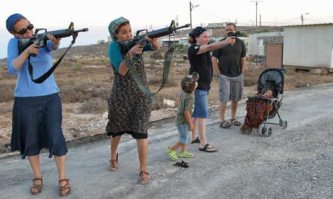
Burin, occupied Palestine – A Palestinian farmer and English human rights defender have been hospitalized and at least 40 olive trees burned following an attack by illegal Israeli settlers in the northern West Bank town of Burin today.
At 10am this morning, as ISM and other international volunteers accompanied olive farmers who have repeatedly been restricted from accessing their fields, gun shots were heard ringing out across the valley from the settlement above. Approximately thirty masked settlers from the illegal Yizhar settlement then descended the hill and started throwing stones at the group which had peacefully been picking olives for several hours. International human rights defender David Amos, a Quaker from London, was repeatedly attacked with rocks from three meters away, causing two head wounds and copious bleeding. The owner of the land, Abed Musaa, was hit in the front and back with stones and has been treated for lacerations and bruising. The attacking settlers also stole phones, a camera and a bag from the international human rights defenders.
The settlers were then witnessed setting four separate fires to grass on the edge of the olive groves which rapidly grew in dimensions, consuming olive trees and the grasslands between family plots. Two Israeli forces jeeps and two collaborating illegal settler vehicles drove into the valley, took photos of the scene, and then parked alongside each other on the road to Yizhar as more fires were lit by the masked settlers throughout the valley.
Israeli forces then scaled the valley and were witnessed saying to Palestinians, “yes you want peace, we want peace, they want peace,” referring to the settlers. Burin farmer and school teacher Doha and Samir were prohibited from continuing to pick olives on their land, being told they required a permit despite no legal provision to that effect, being within Area B zoning under the Oslo accords.
Palestinian firefighters were prohibited from accessing the fire for three hours, being told that a permit was required to utilize the road to the Yizhar settlement, which has been heavily restricted to Palestinian traffic in recent weeks. Palestinian civil workers, farmers, and international human rights defenders attempted to put out the blaze with sand, shovels, and olive branches but were unable to stop the spread of the fire amid 30 degree heat and rising winds.
Olives are a traditional produce of the Nablus district and constitute 25% of the West Bank’s economy (OCHA 2014). This critical October harvest season falls amid rising tensions in the West Bank, as Israeli forces increase their deployment of soldiers and use of violence in the occupied territories. The Yizhar settlement has also been implicated in the tragic [arson] death of 18 month old Ali Dawabsheh and his parents in the Palestinian village of Duma two months ago.
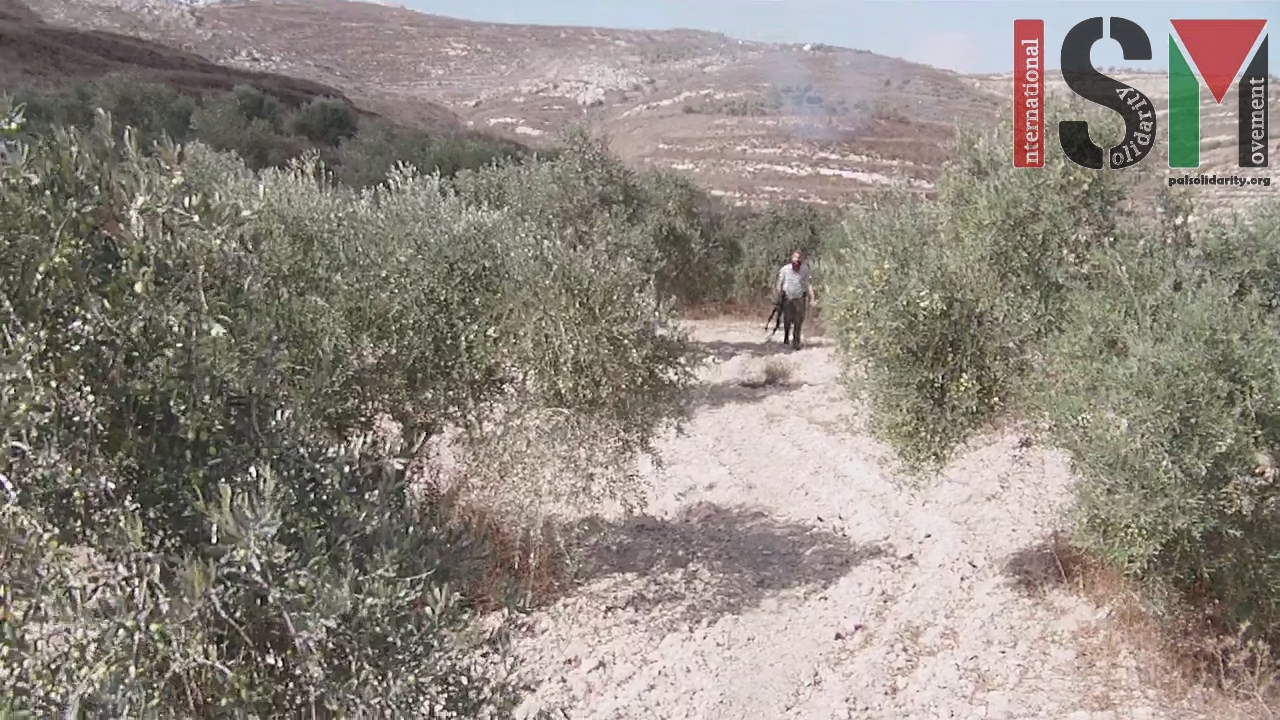
Armed illegal settler
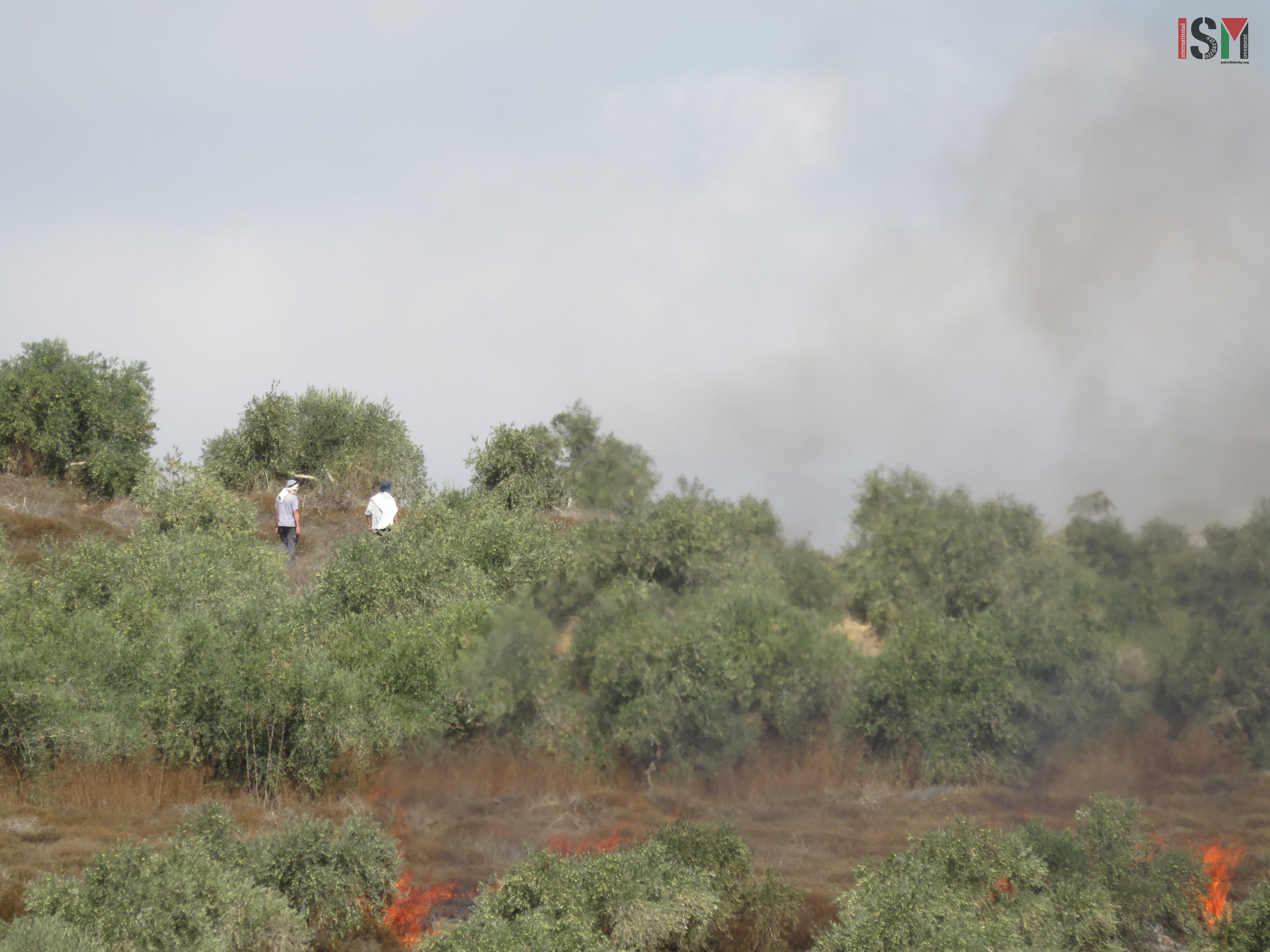
Settlers lighting fires throughout valley
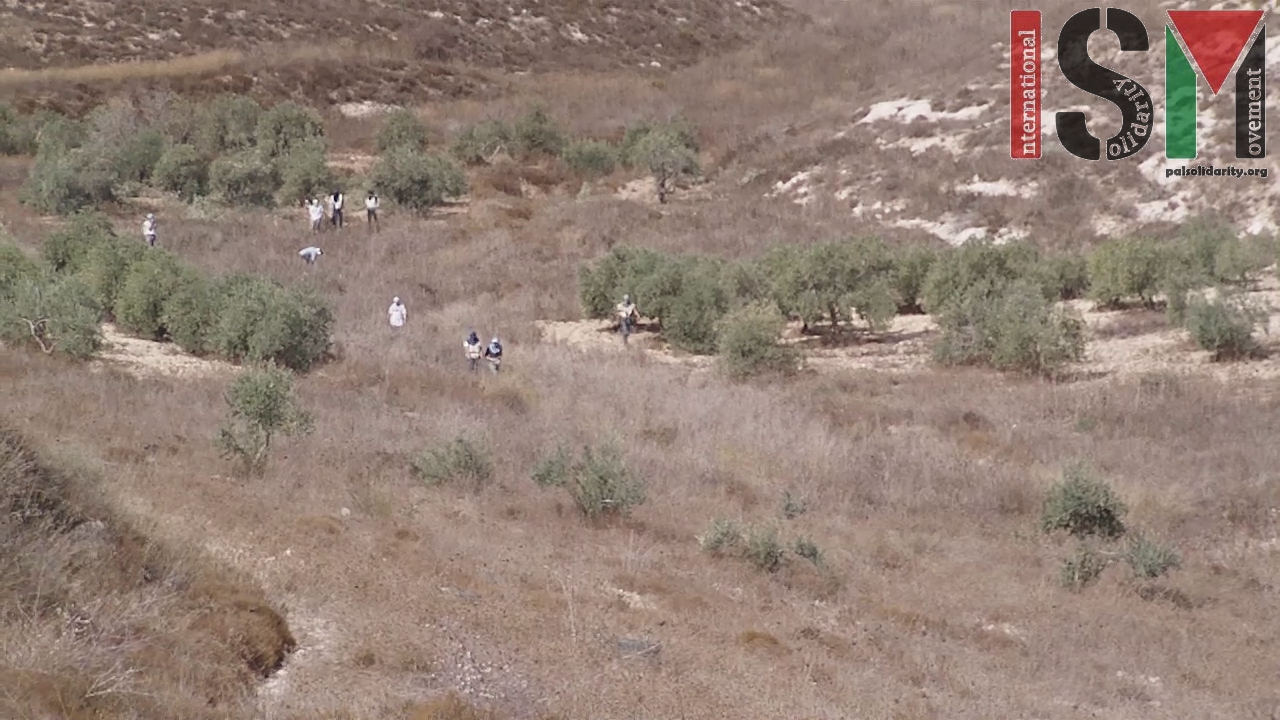
Masked settlers in the olive fields
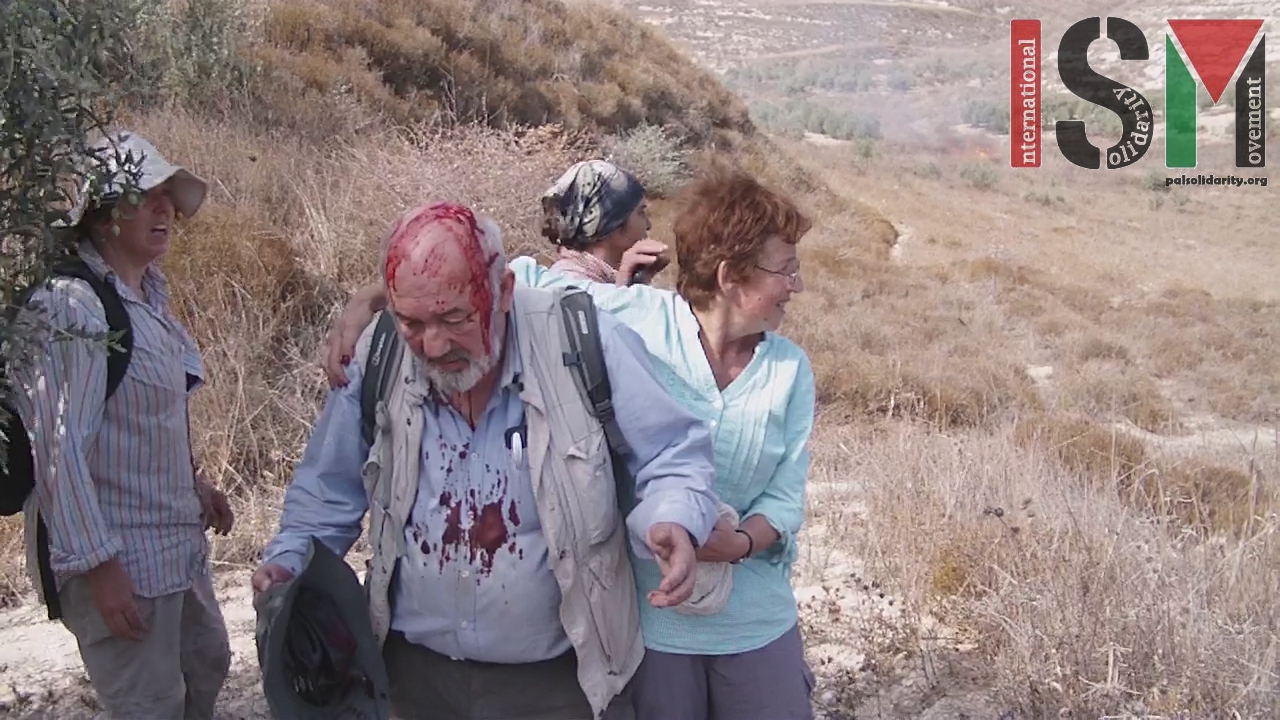
International human rights observer David Amos attacked by settlers
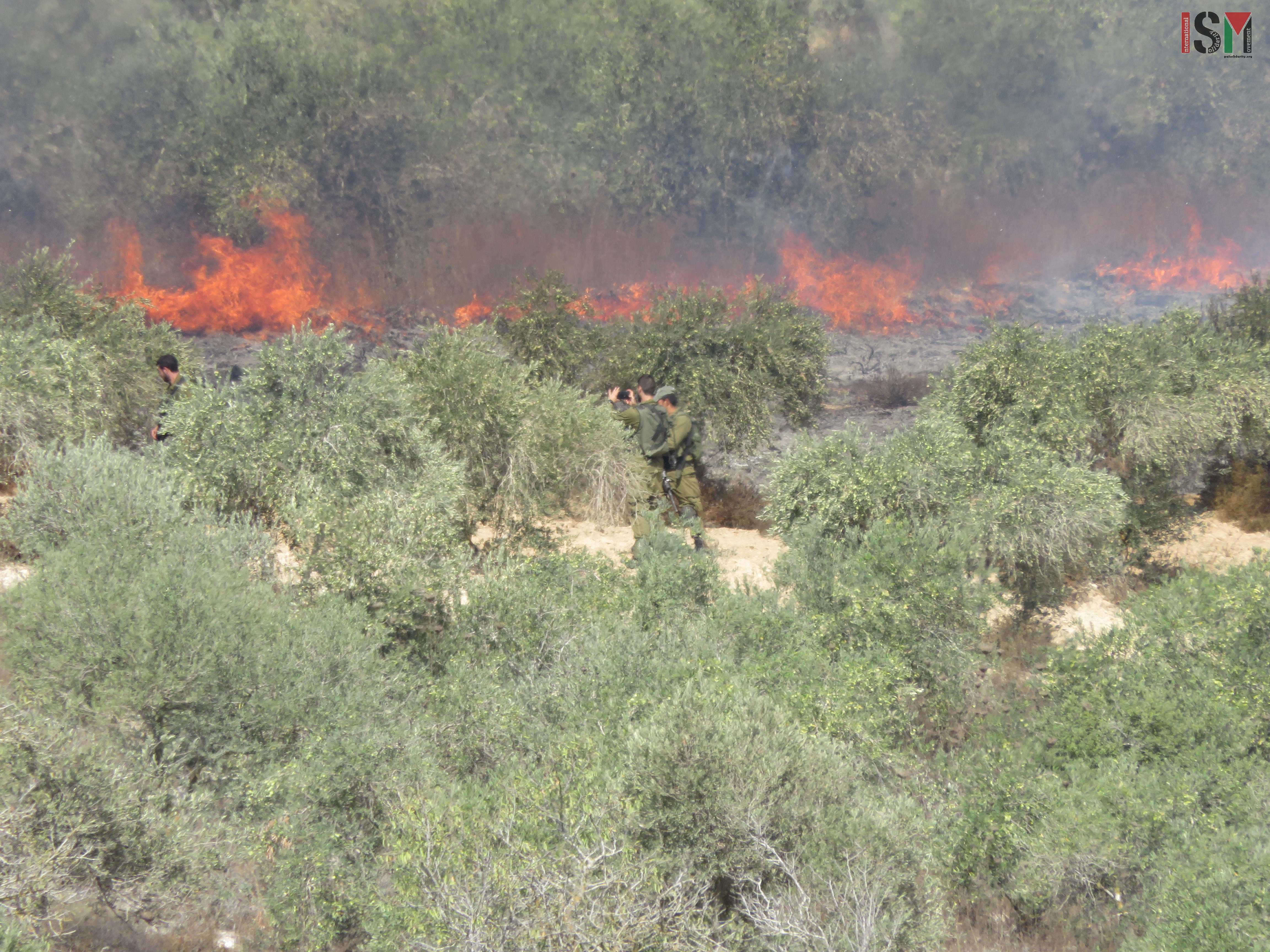
Israeli forces photograph fires
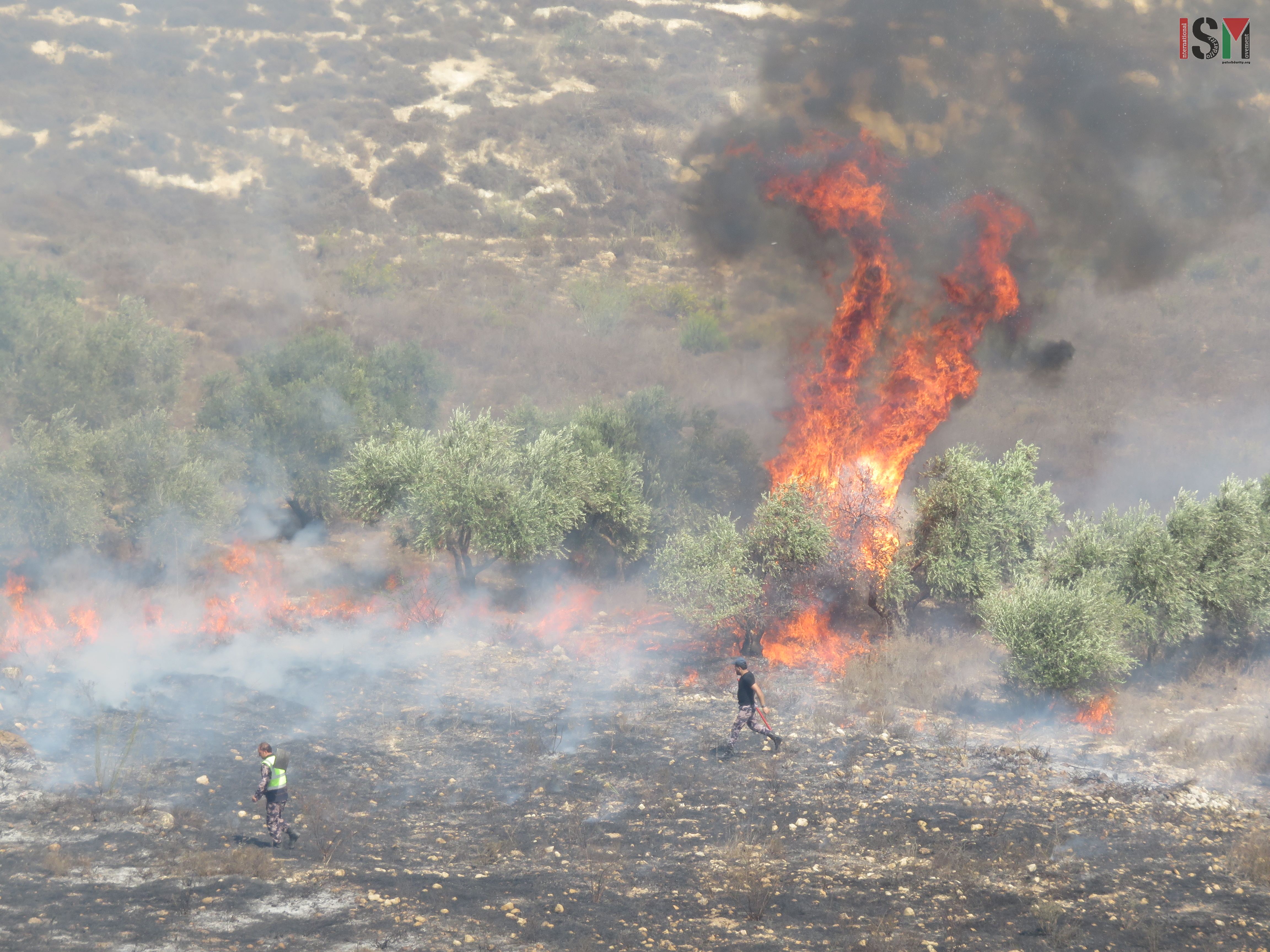
Palestinian civil workers attempt to put out fires while fire truck prohibited entry
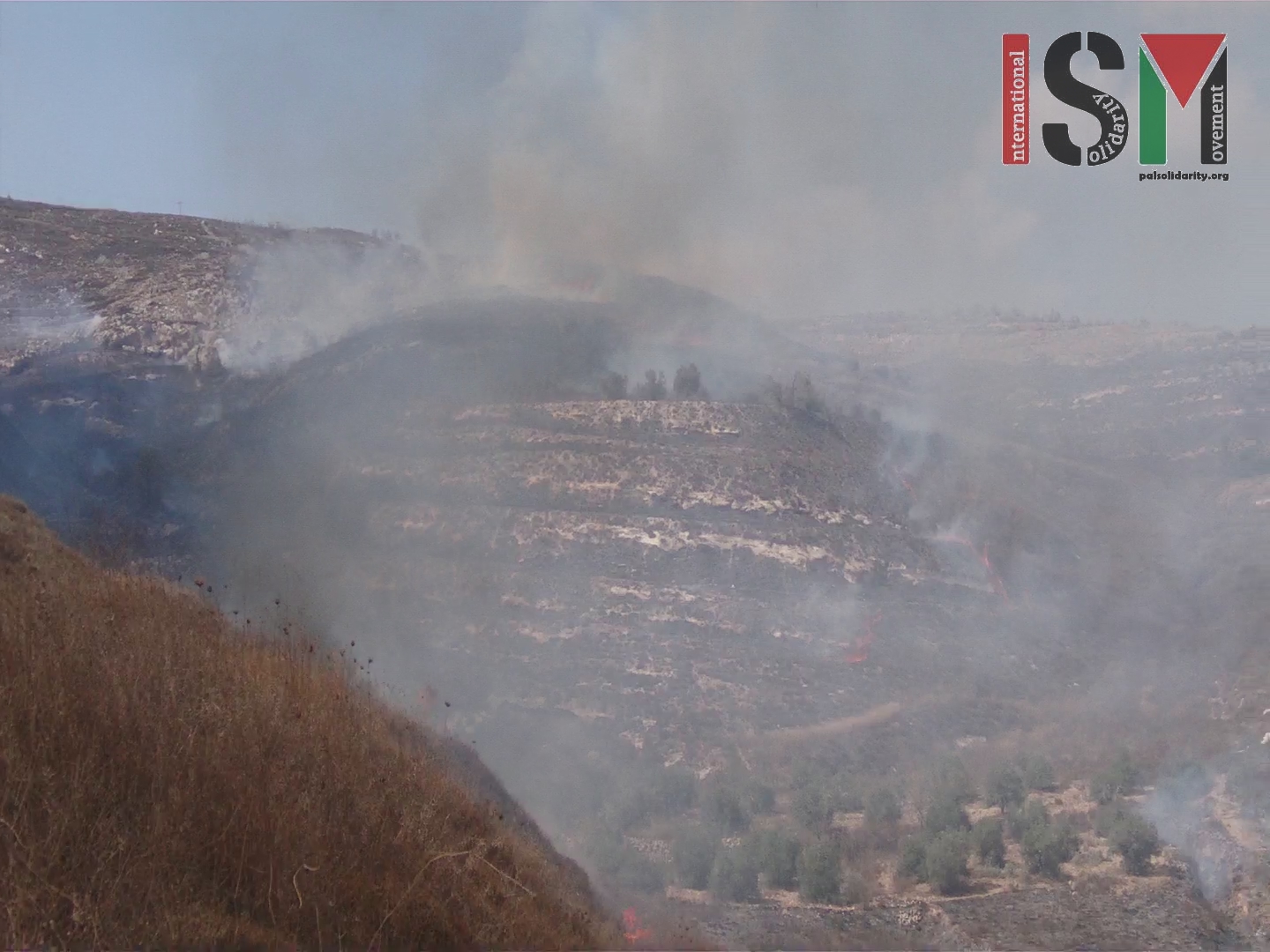
Fires rage across Burin valley
Pentagon approves $495 million sale of Sikorsky helicopters to Riyadh
Press TV – October 15, 2015
The United States has approved selling Saudi Arabia nine UH-60M Black Hawk helicopters, valued at $495 million, the Pentagon says.
According to Pentagon’s Defense Security Cooperation Agency, the deal is aimed at providing security to the country, engaged in daily bombardment of neighboring Yemen, Reuters reported Wednesday.
Tasked with overseeing foreign arms sales, the agency said the Saudis had requested nine helicopters, 21 T700-GE-701D engines built by General Electric Co, embedded GPS systems, machine guns, and missile warning systems.
It further claimed they were supposed to be used by the Royal Saudi Land Forces Aviation Command (RSLFAC) for search and rescue, disaster relief, humanitarian support, counterterrorism, and combat operations.
Earlier in the day, Saudi Arabian warplanes bombarded Sa’ada and Ta’izz provinces, respectively in the northwest and southwest of the impoverished Yemen, taking the lives of at least five people.
Yemen has been under military strikes on a daily basis since Saudi forces launched a military aggression on March 26, in a bid to undermine the Houthi Ansarullah movement and restore power to fugitive former Yemeni President Abd Rabbuh Mansour Hadi, a staunch ally of Riyadh.
Around 7,000 people have reportedly lost their lives, including hundreds of Yemeni children.
France signs deals worth €10bn with Saudi
MEMO | October 14, 2015
France has signed deals worth €10 billion with Saudi Arabia, French Prime Minister Manuel Valls said yesterday.
Valls, who is visiting the gulf kingdom, announced the deal on his official Twitter account saying it aimed to “mobilise our companies and employment”.
Saudi King Salman Bin Abdulaziz met Valls in his palace in Riyadh yesterday.
The Saudi Press Agency said the two leaders discussed bilateral relations and ways of enhancing them as well as the latest developments in the region.
Meanwhile, French Defence Minister Jean-Yves Le Drian announced during a press conference in Riyadh that the kingdom intends to purchase 30 French naval corvettes before the end of this year. France’s foreign ministry said in a statement that the deal includes the start of negotiations to provide Saudi Arabia with its own communication and observation satellites.
Valls arrived in Saudi Arabia on Monday after a regional tour that included visiting Egypt and Jordan.
31 martyrs in 14 days: 14 year old murdered today in Jerusalem
International Solidarity Movement | October 14, 2015
The oldest was 30, the youngest just 2 years old.
31 Palestinians have been murdered by Israeli forces since an escalation in violence, triggered by restrictions on al Aqsa Mosque, spread like wild fire across the occupied Palestinian territories and the besieged Gaza strip. A 14 year old Palestinian boy, just shot to death by ten bullets close range near Jerusalem’s Damascus Gate joins 30 others martyred by their occupiers in just two weeks. As of now, the boy’s name is unknown though he is believed to be from al-Khalil (Hebron).
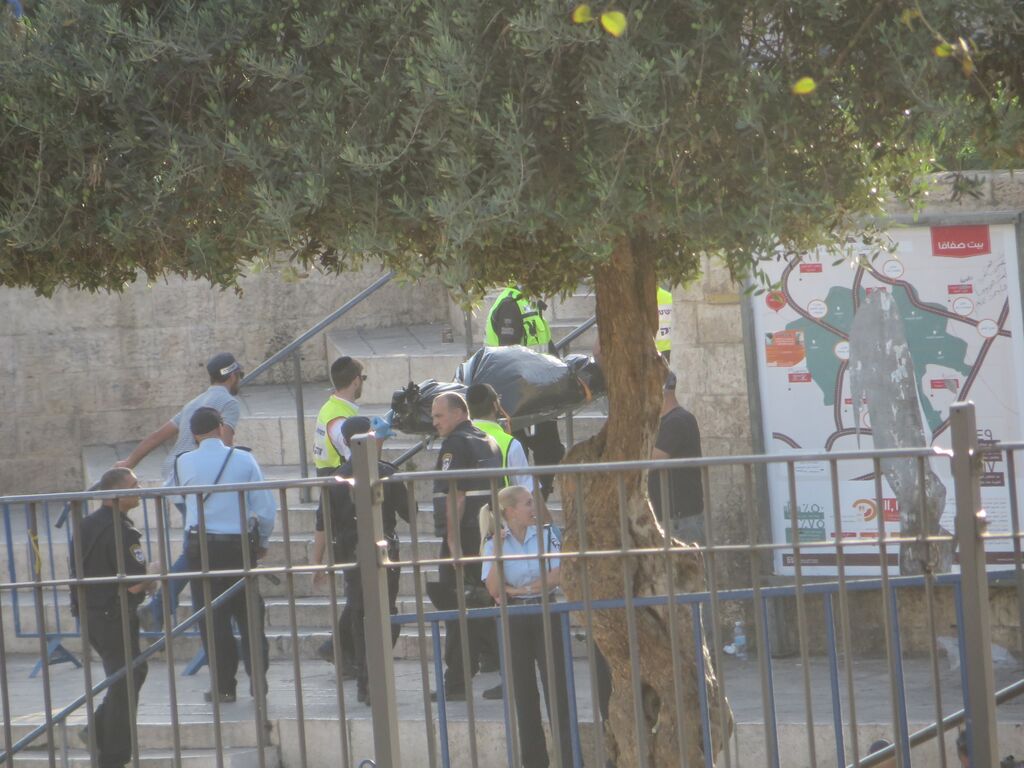
Body bag of 14 year old Palestinian boy murdered by Israeli forces is removed from the scene by Israeli police
The latest death comes amidst disturbing news that the Israeli government has passed a decision, as part of new restrictions being deployed in occupied East Jerusalem, that the bodies of Palestinian’s murdered by Israeli forces will not be released to their families. This adds agonizing and acute new cruelties to an already tragic, ongoing situation. The reason for the decision was stated to be a deterrent for post funeral demonstrations by Palestinians. Thus the refusal of Palestinian’s remains to their families is the refusal of the right to resistance of an illegally occupied people.
The decision is linked to measures currently being enacted in East Jerusalem where Israeli forces have set up checkpoints at the entrances to Palestinian neighborhoods beginning early Wednesday. As well, occupation forces were issuing citations to Palestinian drivers at random as well as inspecting several Palestinian youths and students in humiliating ways, forcing them to take off their clothes.
An international human rights monitor on the scene where the youth was killed noted that the he was shot to death after running from Israeli forces. Immediately after the shooting, Palestinians were threatened by Israeli forces with being beaten if they didn’t leave the area immediately, thus they were doubly frightened. Run and get shot, or don’t run and get beaten and possibly arrested. “People were too scared to put their phones in their trouser-pockets in fear they might be shot when taking them out.” Although Palestinians were threatened and chased from the scene, settlers were allowed to get close to the boy’s body to take photos.
Rather than taking measures to de-escalate the violence, Israeli officials and military have seemingly done the opposite. Israeli rights group B’Tselem has called the Israeli government’s response to recent escalation in the area as “the very inverse of what ought to be done” in realistic efforts to stop current violence. “The events of recent weeks cannot be viewed in a vacuum, isolated from the reality of the ongoing, daily oppression of 4 million people, with no hope of change in sight,” the group said in a statement on Tuesday.
Every death means a lifetime of suffering for the families left behind.
They are:
1. Mohannad Halabi, 19, al-Biereh – Ramallah.
2. Fadi Alloun, 19, Jerusalem.
3. Amjad Hatem al-Jundi, 17, Hebron.
4. Thaer Abu Ghazala, 19, Jerusalem.
5. Abdul-Rahma Obeidallah, 11, Bethlehem.
6. Hotheifa Suleiman, 18, Tulkarem.
7. Wisam Jamal, 20, Jerusalem.
8. Mohammad al-Ja’bari, 19, Hebron.
9. Ahmad Jamal Salah, 20, Jerusalem.
10. Ishaq Badran, 19, Jerusalem.
11. Mohammad Said Ali, 19, Jerusalem.
12. Ibrahim Ahmad Mustafa Awad, 28, Hebron.
13. Ahmad Abedullah Sharakka, 13, Al Jalazoun Refugee camp-Ramallah.
14. Mostafa Al Khateeb, 18, Sur-Baher – Jerusalem.
15. Hassan Khalid Manassra, 15, Jerusalem.
16. Mohamed Nathmie Shamassnah, 22, Kutneh-Jerusalem.
17. Baha’ Elian,22, Jabal Al Mokaber-Jerusalem.
18. Mutaz Ibrahim Zawahreh, 27, Bethlehem.
19. Unknown man from Jerusalem in his thirties. (no name was available until the time of his report )
Gaza Strip:
20. Shadi Hussam Doula, 20.
21. Ahmad Abdul-Rahman al-Harbawi, 20.
22. Abed al-Wahidi, 20.
23. Mohammad Hisham al-Roqab, 15.
24. Adnan Mousa Abu ‘Oleyyan, 22.
25. Ziad Nabil Sharaf, 20.
26. Jihad al-‘Obeid, 22.
27. Marwan Hisham Barbakh, 13.
28. Khalil Omar Othman, 15.
29. Nour Rasmie Hassan, 30.
30. Rahaf Yihiya Hassan, two years old.
The fourteen year old boy whose life was violently ended today in East Jerusalem brings the list to 31.
Israeli settlers shoot live fire at Palestinian homes
Ma’an – October 14, 2015
 HEBRON – Israeli settlers on Tuesday attacked Palestinian homes in the Jabal Jalis area east of Hebron in the occupied West Bank, locals said.
Local sources told Ma’an that settlers from the illegal Givat Gal outpost opened live fire on homes in the village. No injuries were reported.
Attacks carried out by settlers on Palestinians in the occupied Palestinian territory are near-daily, and have increased in recent weeks after two settlers were killed near Nablus by suspected Palestinian gunmen on Oct 1.
The Palestinian government has no jurisdiction over Israelis living illegally in the occupied West Bank, and settlers often carry out attacks in the presence of armed Israeli forces.
Settlers clashed with Palestinians in Hebron on Sunday and Israeli forces reportedly intervened in the confrontation, shooting off tear gas and rubber-coated steel bullets at Palestinians. Several were injured with the rubber bullets, while others suffered from tear gas inhalation.
The day before, locals said that settlers attacked Palestinian homes in the Hebron-area village of Wad al-Hisn, spraying waste water and firing tear gas canisters while Israeli soldiers reportedly protected them.
According to the Palestinian Negotiation Affairs department, over 130 attacks were carried out by Israeli settlers in the first week of October.
Featured Video

Why Hamas Really Attacked Israel on Oct. 7
or go to
Aletho News Archives – Video-Images
From the Archives
Confronting the Threat of Ethnic Bioweapons
By Tony Cartalucci – New Eastern Outlook – 29.11.2017
The United States Air Force’s 59th Medical Wing’s molecular biology branch recently was revealed to have been collecting specifically Russian RNA and synovial (connective) tissue samples, prompting fears in Russia of a possible US directed ethnic-specific bioweapons program. … continue
Blog Roll
 Aletho News
- Russia accuses France of ‘piracy’ over tanker seizure
- Why Yemen Is Bombing Saudi Arabia’s Airports: The War Behind the Headlines
- Sally Rooney’s books pulled from UK over support for Palestine Action
- Bombs for Tel Aviv, Promises for Riyadh
- Israeli ad agency conducted vast global espionage campaign using online ads: Report
- Oct. 7 Forever Marks The Big Reveal: ‘We See You, Israel, We Revile You, We Reject You!’
- Meet the US generals and admirals advancing Israeli policy
- Israel’s Straw Widow Protocol: The Kill Zones Where Civilians Were Labelled ‘Terrorists’
- Leading Israeli Think Tank Publishes Psychotic Israeli ‘National Security’ Doctrine
- Are the United States and Israel in Decline-and-Fall Mode?
- If Americans Knew
- Israeli firm used online ads to run vast spy operation, researchers say
- No, the world zionist movement is not an antisemitic conspiracy theory
- Hundreds of IDF investigations into killings still have no public outcome, BBC Verify finds
- After Ashley Moody Epstein Probe, Donors Linked to Him Poured Money Into her Senate Campaign
- Worried about Russian meddling in UK politics? Wait till you see what Israel is up to
- Israeli settlers attack West Bank center for disabled children, church leader calls for int’l action
- Pulling Out Teeth Just to Live: How Israel Has Devastated Dental Care in Gaza
- Gaza’s “ceasefire” death toll passes 1,500 – Daily Update
- Activists Abused By Israel Return to New Freedom Flotilla Mission
- 60 Minutes won’t tell the full truth about Israeli settler violence
- No Tricks Zone
- New Study Suggests Large Regions Of The Pacific Ocean Have Been Cooling For The Last 80 Years
- Germany’s Green Energy Debacle: High Energy Costs Force Kahla Porzellan to Close After 182 Years!
- New Study: 50 Years Of The Most Aggressive ‘Net Zero’ Policies Can Only Affect The Global Climate By 0.03°C
- US September “Heat” Was No Record…Many Records Set Decades Ago
- Latest European Green Energy Debacle; Portugal’s Largest Flagship Solar Park Insolvent!
- Green Energy Debacle: German Expert Professor Fritz Vahrenholt Warns Of Severe Economic And Social Consequences
- Two More Paleo Reconstructions Affirm Meters-Higher Sea Levels Across Ireland, Brazil 7000-6000 Years Ago
- New Study: Earth And Venus Surface Warmth Largely Explained By Convection And Lapse Rate, Not CO2 Or Radiation
- 2025 Nature Paper Claiming Worsening Global Drought Gets RETRACTED …Heavily Flawed
- New Study: ‘Global Drought Shows No Detectable Recent Acceleration Under Climate Warming’

