Conservatives will ‘rip up’ human rights laws, halt war crime claims, say Tory ministers
RT | April 1, 2015
Soldiers will be safe from the “persistent human rights claims” that have dogged the British military for years because the Conservatives will “rip up” human rights legislation if they win the general election, two top Tories have pledged.
Defence Secretary Michael Fallon called for an end to what he called the “abuse” of the Human Rights Act to bring about costly inquiries into the conduct of British soldiers during wartime operations in Iraq and Afghanistan.
He warned that legal claims such as those emerging from the Iraq War had undermined the military’s work and had cost the taxpayer millions of pounds.
Fallon told the Daily Mail : “This abuse has got to stop and the next Tory government will limit the reach of human rights cases to the UK so our forces overseas are not subject to persistent human rights claims.”
Justice Secretary Chris Grayling MP added his voice on Tuesday, telling the Mail: ‘We can’t go on with a situation where our boys are hamstrung by human rights laws … I made it clear last year that I want to rip up Labour’s Human Rights Act and that it is only the Conservatives who will make real changes to the human rights framework to restore some common sense.”
The pledge reflects a broader Tory commitment to remove the UK from the European Convention on Human Rights (ECHR) and instead develop a British Bill of Rights in its place.
It is said this would then govern the actions of UK troops on operations and take proper account of the pressures faced by service personnel in wartime if legal cases arise.
The MP’s comments come in the wake of a study by a right-wing think tank released on Monday
It argued that Britain must scrap the European Convention on Human Rights (ECHR) in times of warfare because British soldiers cannot fight under the restraints of “judicial imperialism.”
Offering enemy combatants the right to sue the British government and expecting soldiers on the battlefield to operate with the same level of caution as police patrolling London streets will render future foreign combat operations unworkable, the report by Policy Exchange said.
The British military establishment has been dogged by inquiries into allegations of human rights abuses on the battlefield perpetrated by UK forces.
Although the Al Sweady investigation into allegations of murder and mutilation of Iraqis by British troops in 2004 found the majority of accusations “completely baseless” in December last year, there are still cases pending.
Last month, the High Court ruled that grieving families of Iraqis gunned down by British soldiers in Iraq may sue Britain’s Ministry of Defence (MoD) for violating international law.
The milestone ruling could pave the way for over 1,200 claims, brought by Iraqi families.
British law firm Public Interest Lawyers (PIL), which specializes in judicial review cases relating to human rights violations, would represent the claimants.
Despite Ever-Expanding Police State Measures, Cops Worse than Ever at Solving Crimes, Here’s Why.
By Matt Agorist | The Free Thought Project | March 31, 2015
If you were murdered today, there’s only a 60% chance of police catching the person who did it. That number drops to 3% if you’re raped. 50 years ago, that number was much higher. What happened?
Despite overwhelming disapproval from the public, the war on drugs wages on and we are witnessing the inevitable materialization of a fascist police state before us.
The irony here is that no matter how much money the state steals from us to fund themselves, and no matter how many tanks or AR-15s they acquire, they are solving far fewer crimes than before.
Police aren’t getting any closer to “winning” this ridiculous and immoral war on drugs either.
So, why aren’t police solving crimes?
The answer to that question can be found by looking at where police allocate much of their time and resources.
Civil asset forfeiture pays. Busting low-level drug dealers by the dozen and confiscating their drugs, guns, cars, houses, and money pays. Writing tickets for victimless crime pays. Pulling you over for window tint, seat belts, arbitrary traveling speeds, and expired license plates; these are the things that pay, not solving crimes.
In criminal justice, clearance rates are used as a measure of crimes solved by the police. The clearance rate is calculated by dividing the number of crimes that are “cleared” (a charge being laid) by the total number of crimes recorded.
In the United States, the murder clearance rate in 1965 was more than 90 percent. Since the inception of the war on drugs, the murder clearance rate has plummetted to an average of less than 65 percent per year.
This decline is in spite of there being far fewer murders. It is also in spite of new technological developments to help police solve crimes, like DNA testing, advanced forensic labs, and unethical spying devices like the stingray.
Despite the near complete erosion of the constitutional protections against unlawful search and seizure, the clearance rate for murder continued its free fall. This highlights the fact that no matter how many rights are given up or freedoms diminished, police cannot guarantee your safety.
It’s not just murders that police fail to investigate, it’s rapes too.
According to the Department of Justice, there are currently over 400,000 untested rape kits collecting dust in police evidence rooms nationwide, and many other estimates suggest that this number could be as high as one million.
As a result of this horrific negligence, roughly 3% of rape cases in America are actually solved. This is in spite of the fact that many rape kits have a high chance of leading to an arrest since most rapists are career criminals who have their DNA on file.
In some cases, the victims even know who their attackers were, but they can not prosecute these criminals because the evidence has yet to be processed by police.
Arresting rapists and murderers simply falls short in the two areas police are worried about; revenue collection and keeping their inflated drug war budgets flowing.
It’s not that police are incapable of solving these crimes either; they’re just not interested in doing so.
“Take for example, homicides of police officers in the course of their duty,” University of Maryland criminologist Charles Wellford points out. On paper, they’re the kind of homicide that’s hardest to solve — “they’re frequently done in communities that generally have low clearance rates … they’re stranger-to-stranger homicides, they [have] high potential of retaliation [for] witnesses.” And yet, Wellford says, they’re almost always cleared. … Full article
Amnesty International Whitewashes Venezuelan Opposition Abuses
By Ryan Mallett-Outtrim | TeleSUR | March 31, 2015
Amnesty International’s latest report on Venezuela calls for justice for the dozens of people killed during the unrest that shook the country a year ago, while using sleight of hand to deflect attention away from those responsible.
“The Amnesty International report documents events of February 2014 when thousands of anti-government protesters took to the streets, resulting in the death of 43 people, including eight law enforcement officials,” Amnesty said in a press release accompanying the release of the report’s executive summary.
While the full report was unavailable online at the time of writing, the executive summary unequivocally laid the blame for 2014’s violence at the feet of state security forces, but ironically chose to shy away from actually admitting how those 43 people died.
“The use of unnecessary or disproportionate force is precisely what exacerbated the wave of tragic events last year,” said Erika Guevara Rosas, Amnesty’s Americas director.
The summary levels blame at both security forces and government supporters. The latter were accused of engaging in state sanctioned human rights abuses. However, Amnesty’s allegations don’t match the facts. How did those 43 people die?
At the time of the protests, the independent news organization Venezuelanalysis.com listed a total of 40 deaths, 20 of which were deemed to have been caused by opposition barricades, or opposition violence. The deaths included people gunned down while trying to clear barricades, ambulances being blocked from hospitals by opposition groups, and a motorbike rider who was decapitated after opposition groups strung razor wire across a road. A similar death toll count by the Center for Economic and Policy Research reflected a similar consensus: while security forces were indeed responsible for a few deaths, the opposition groups were hardly peaceful. Around half the victims of the 2014 unrest were either government supporters, members of security forces or innocent bystanders.
While condemning the government for supposedly cracking down on freedom, the report shied away from any criticism of the opposition’s intentional restriction of movement through the use of barricades, widespread intimidation and attacks on government supporters, and repeated attacks on journalists ranging from state media workers and community radio stations to international media. For example, in March 2014, a mob of anti-government protesters beat journalists working for organizations such as Reuters and AFP. One photo-journalist, Cristian Hernandez, was beaten with a lead pipe, but was rescued by state security forces.
Another journalist that witnessed the beating tweeted, “They protest for freedom of expression and against censorship, and they attack photo-journalists … for no reason? Where’s the coherence?”
Unlike that witness, Amnesty chose not to question why incidents like this took place – instead preferring to turn a blind eye to widespread human rights abuses committed by anti-government groups.
Indeed, none of this is included in Amnesty’s executive summary. teleSUR did try to contact Amnesty for clarification as to whether any of this would be included in the full report, but received no reply.
One possible explanation is that Amnesty prefers to criticize governments, rather than call out substate actors. However, this doesn’t stand up to scrutiny. On Feb. 20, 2015, Amnesty International issued a report accusing both Boko Haram and the Nigerian government of human rights abuses. Then on March 26, 2015, they accused Palestinian militants of war crimes, after also condemning Israeli forces for human rights abuses in 2014. Clearly, in many parts of the world, Amnesty is capable of critiquing both sides of a conflict – but not in Venezuela.
At first, the question of what makes Venezuela unique may seem baffling, but it all became clear after I spoke to a former Amnesty employee, who asked to remain anonymous. He explained quite simply that within Amnesty, the biggest priority isn’t human rights. It is securing funding – mostly from wealthy donors in the West.
Amnesty isn’t alone – other former NGO workers I’ve spoken to in the past have made similar comments. Some have gone as far as arguing NGOs will engage in projects or research they know is next to worthless to the people they claim to defend, so long as it produces a photo opportunity that could woo Western donors. These former workers affirmed that human rights are important to many NGOs; they just take a back seat to fund-raising.
The claim that Amnesty and other NGOs are primarily concerned with money may seem excessively cynical, but a glance at pay for those at the top of the organization shatters any rose tinted glasses. In 2011, Amnesty’s 2009 decision to hand their outgoing head Irene Khan more than £533,000 (around US$794,000 at current exchange rates) in a hefty severance package sparked a public outrage. The payout was worth more than four years of Khan’s salary. In late 2012, Amnesty again found itself in the spotlight after it announced plans to offshore much of its workforce from the U.K., sparking a bitter showdown with the Unite workers’ union. While management claimed the offshoring would put a higher proportion of their workforce on the ground in the countries they report on, workers accused the NGO of trying to cut costs, while failing to adequately assess the physical risks to workers. One worker told the Guardian newspaper the deal could turn out to be a “cash cow” for Amnesty.
Assuming cash speaks louder than justice, the reason why Amnesty is willing to criticize the Venezuelan government but unwilling to lift a finger against the opposition suddenly makes perfect sense. While condemning Boko Haram or Hamas is palatable to much of the Western public, criticizing Venezuela’s wealthy, Westernized opposition would be edgy at best, financial suicide at worst. On the other hand, while Venezuela’s government has plenty of supporters in Latin America, it doesn’t have many friends within the well-heeled elite of Western nations. The latter, of course, are prime targets for appeals for donations. In the competitive world of NGOs, Amnesty can’t afford to risk tarnishing its appeal to wealthy donors by accusing Venezuela’s opposition of human rights violations.
In a surprising way, this makes Amnesty an inherently ideological organization, it just doesn’t have its own ideology per se. Instead, because of its pursuit of the wealthiest donors (generally liberal Westerners), Amnesty reflects the ideology of middle and upper class Westerners. It’s staunchly vanilla liberal: willing to call out miscellaneous African militias, but unwilling to accuse an element of Venezuela’s middle class of giving birth to a violent movement. It’s willing to criticize Israeli colonialism in the name of liberal values, but allergic to revolutionary politics driven from the bottom up by the world’s poor. Amnesty doesn’t reflect the ideology of the poor and repressed, but rather of its privileged, yet guilt-stricken donors.
Unfortunately, Amnesty International’s whitewash of the right-wing opposition’s human rights abuses in Venezuela is symptomatic of a deeper crisis in the world of NGOs, where fierce competition for funding means adjusting the message to suit Western audiences — and occasionally letting human rights take a back seat.
Palestinian woman sentenced to 70 months in jail
Ma’an – 01/04/2015
 JENIN – An Israeli military court on Tuesday sentenced a Palestinian woman to 70 months in jail, with a suspended sentence of 24 months, a local foundation said.
Muhjat al-Quds Foundation for Prisoners and Martyrs said Muna Qadan, 43, was arrested from her house on Nov. 13, 2012 and has attended over 22 court hearings since. She is currently being held at Hasharon prison and has been ordered to pay a fine of 30,000 shekels.
Qadan, from Arraba village near Jenin, is the sister of jailed Islamic Jihad leader Tariq Qadan, and the fiance of another Islamic Jihad leader serving a life term in Israeli jails, Ibrahim Ighbariya.
Qadan has previously spent over four years in Israeli jails on several terms for being associated with the political group Islamic Jihad, and was one of the prisoners freed in the 2011 Shalit prisoner swap deal. Rights groups criticized Qadan’s rearrest as clear violation of the terms of the prisoner swap.
The Qadan family has been active in resistance activities within Israeli prisons. Tariq engaged in a life-threatening hunger strike in February 2013, while Muna threatened Israeli authorities with a jail-wide hunger strike in June 2013 in response to Israeli denial of medical treatment to fellow detainee Lina al-Jarbouni.
The majority of Palestinian political organizations are considered illegal by Israel, and association with such parties is often used as grounds for imprisonment, according to Prisoner Support and Human Rights Association Addameer.
The use by Israel of political affiliation as punishable by imprisonment has brought international criticism. Political prisoners held in Israeli jails routinely face isolation, torture, medical neglect, denial of family visits, as well as denial of fair legal processes, as reported by Addameer.
From Gaza To Southampton – We Are All Palestinians
By Gilad Atzmon | April 1, 2015
For the second time in just a month, a British academic institution has been intimidated by an orchestrated Zionist lobby.
Yesterday we learned that Southampton University has decided to withdraw its permission to hold the academic conference on International Law and the State of Israel. The decision was taken on the grounds of “health and safety” with the university claiming it did not have enough resources to mitigate the “risks.”
This comes just one month after the Royal Northern College Of Music cancelled a concert of mine for similar safety reasons. Like Southampton University, the RNCM was bullied by a violent pro-Israel group and it took us only a few hours to learn that the spokesperson for the pro-Israeli body was an infamous crook as well as a football hooligan (see here).
This raises the immediate question: Is it possible that like the Palestinians, British academia is now also subject to Zionist terror?
The vile campaign against the Southampton Conference was led by the Board Of Deputies of British Jews, a body that claims to represent Jews in Britain. So far, not one single British Jewish body has stood up for the conference and for elementary academic freedom nor has a single Jewish institution criticised the Board of Deputies’ campaign against British academic institutes. I guess that the meaning of it is as simple as it is devastating: We now see a clear conflict between the Jewish community and those precious British values of tolerance and academic freedom.
Recently, Jewish community leaders have been concerned by the rise of anti-Semitism in Britain. In this connection, I would use this opportunity to remind them that Jewish institutional bullying of British academic institutes does not reflect well on British Jewry. In fact it has a most disastrous effect.
So, as we witness this devastating continuum between Gaza and Britain we once again come to realise that the plight of the Palestinians is not an isolated event in contemporary world affairs or history.
Brits are also now subject to Zionist terror and the meaning of it is simple: Now, more than ever we are all Palestinians.
Will Yemen kick-off the ‘War of the two Blocs?’
By Sharmine Narwani | RT | March 31, 2015
There is media confusion about what is going on in Yemen and the broader Middle East. Pundits are pointing out that the US is looking schizophrenic with policies that back opposite sides of the fight against al-Qaeda-style extremism in Iraq and in Yemen.
But it isn’t that hard to understand the divergent policies once you comprehend the underlying drivers of the fight brewing in the region.
No, it isn’t a battle between Shia and Sunni, Iranian and Arab or the much-ballyhooed Iran-Saudi stand-off. Yes, these narratives have played a part in defining ‘sides,’ but often only in the most simplistic fashion, to rally constituencies behind a policy objective. And they do often reflect some truth.
But the ‘sides’ demarcated for our consumption do not explain, for instance, why Oman or Algeria refuse to participate, why Turkey is where it is, why Russia, China and the BRICS are participants, why the US is so conflicted in its direction – and why, in a number of regional conflicts, Sunni, Shia, Islamist, secularist, liberal, conservative, Christian, Muslim, Arab and Iranian sometimes find themselves on the same side.
This is not just a regional fight – it is a global one with ramifications that go well beyond the Middle East. The region is quite simply the theatre where it is coming to a head. And Yemen, Syria and Iraq are merely the tinderboxes that may or may not set off the conflagration.
“The battle, at its very essence, in its lowest common denominator, is a war between a colonial past and a post-colonial future.”
For the sake of clarity, let’s call these two axes the Neo-Colonial Axis and the Post-Colonial Axis. The former seeks to maintain the status quo of the past century; the latter strives to shrug off old orders and carve out new, independent directions.
If you look at the regional chessboard, the Middle East is plump with governments and monarchies backed to the hilt by the United States, Britain and France. These are the West’s “proxies” and they have not advanced their countries in the least – neither in self-sufficiencies nor in genuine democratic or developmental milestones. Indebted to ‘Empire’s’ patronage, these states form the regional arm of the Neo-Colonial Axis.
On the other side of the Mideast’s geopolitical fault line, Iran has set the standard for the Post-Colonial Axis – often referred to as the ‘Resistance Axis.’ Based on the inherent anti-imperialist worldview of the 1979 Islamic revolution, and also as a result of US/UK-driven isolating sanctions and global politics, Tehran has bucked the system by creating an indigenous system of governance, advancing its developmental ambitions and crafting alliances that challenge the status quo.
Iran’s staunchest allies have typically included Syria, Hezbollah and a handful of Palestinian resistance groups. But today, in the aftermath of the Arab Spring counter-revolutions – and the sheer havoc these have created – other independent players have discovered commonalities with the Resistance Axis. In the region, these include Iraq, Algeria and Oman. While outside the Mideast, we have seen Russia, China and other non-aligned nations step in to challenge the Neo-Colonial order.
Neo-Colonial Axis hits an Arab Spring wall
Today, the Neo-Colonials simply can’t win. They lack two essential components to maintain their hegemony: economy and common objectives.
Nowhere is that more clear than in the Middle East, where numerous initiatives and coalitions have floundered shortly after inception.
Once Muammar Gaddafi was overthrown in Libya, all parties went their own way and the country fractured. In Egypt, a power struggle pitted Sunni against Sunni, highlighting the growing schism between two Gulf Cooperation Council (GCC) patrons Saudi Arabia and Qatar. In Syria, a heavyweight line-up of Turkey, Qatar, Saudi Arabia, France, the US and UK could not pull together a coherent regime-change plan or back the same horse.
In the vacuum created by these competing agendas, highly-organized al-Qaeda-style extremists stepped in to create further divergence among old allies.
Western hegemons – the original colonials and imperialists – grew fatigued, alarmed, and sought a way out of the increasingly dangerous quagmire. To do so, they needed to strike a compromise with the one regional state that enjoyed the necessary stability and military prowess to lead the fight against extremism from within the region. That would be their old adversary, Iran.
But the West is geographically distant from the Mideast, and can take these losses to a certain extent. For regional hegemons, however, the retreat of their Western patrons was anathema. As we can see, Turkey, Saudi Arabia and Qatar have recently rushed to resolve their differences so they can continue to design the region’s direction in this Western vacuum.
These counter-revolutionary states, however, share grandiose visions of their own regional influence – each ultimately only keen to achieve their own primacy. And the continued ascendance of Iran has really grated: the Islamic Republic seems to have moved from strength to strength during this ‘Arab Spring,’ picking up new allies – regional and global – and consolidating its gains.
For Saudi Arabia, in particular, Iran’s incremental victories go beyond the pale. Riyadh has, after all, staked its regional leadership role on a sectarian and ethnic divide, representing Arab and Sunni stakeholders against “Iranian” and “Shiite” ones. Now suddenly, not only are the Americans, British and French dallying with the Iranians, but the GCC itself has been split down the center over the issue of ‘engagement vs. confrontation’ with the Islamic Republic.
Worse yet, the Saudi efforts to participate in the overthrow of Gaddafi, squash uprisings in Bahrain, control political outcomes in Yemen, destabilize Syria, divide Iraq and conquer Egypt seem to have come to naught.
In all instances, they have yet to see cemented, meaningful gains – and each quagmire threatens to unravel further and deplete ever more Saudi funds
Today, the Saudis find themselves surrounded by the sickly fruits of their various regional interventions. They have endured recent attacks by violent extremists on their Iraqi and Jordanian borders – many of these recipients of past Saudi funding – and now find themselves challenged on a third border, in Yemen, by a determined constituency that seeks to halt Saudi interventions.
Beyond that, Syria and Lebanon have slipped out of Riyadh’s grip, little Qatar seeks to usurp the traditional Saudi role in the Persian Gulf, Egypt dallies with Russia and China, and Pakistan and Turkey continue a meaningful engagement with Iran.
Meanwhile, the Iranians don’t have to do much of anything to raise the Saudi ire. Iran has stepped up its regional role largely because of the Saudi-led counter-revolution, and has cautiously thwarted Riyadh’s onslaughts where it could. It has buoyed allies – much like NATO or the GCC would in similar circumstances – but with considerably less aggression and while cleaving to the letter of international law.
The Saudis see Iranian hands everywhere in the region, but this is a fantasy at best. Iran has simply stepped into an opportunity when it arises, met the threats coming its way, and utilized all its available channels to blunt the Saudi advances in various military and political theaters.
Even the US intelligence community’s annual security assessment – a report card that regularly highlights the “Iranian threat” – concludes in 2015 that the Islamic Republic of Iran has “intentions to dampen sectarianism, build responsive partners, and deescalate tensions with Saudi Arabia.”
Yet all we hear these days blaring from Western and Arab media headlines is “Shia sectarianism, Iranian expansionism and Persian Empire.”
Tellingly, the American intelligence assessment launches its section on “terrorism” with the following: “Sunni violent extremists are gaining momentum and the number of Sunni violent extremist groups, members, and safe havens is greater than at any other point in history.”
And US officials admit: many of these Sunni extremists have been assisted and financed by none other than Washington allies Saudi Arabia, Turkey and Qatar.
The Yemeni theater – a final battleground?
A senior official within a Resistance Axis state tells me: “The biggest mistake the Saudis made is to attack Yemen. I didn’t think they were that stupid.”
In the past week, the Saudis have cobbled together yet another Neo-Colonial ‘coalition’ – this time to punish Yemenis for ousting their made-in-Riyadh transitional government and pushing into the southern city of Aden.
The main Saudi adversaries are the Houthis, a group of northern, rural highlanders who have amassed a popular base throughout the north and other parts of Yemen over the course of ten years and six wars.
The Saudis (and the US) identify the Houthis as ‘Shiites’ and ‘Iranian-backed’ in order to galvanize their own bases in the region. But Iran has had little to do with the Houthis since their emergence as a political force in Yemen. And WikiLeaks showed us that US officials know this too. A 2009 cable from the US Embassy in Riyadh notes that Yemen’s former Saudi-backed President Ali Abdullah Saleh provided “false or exaggerated information on Iranian assistance to the Houthis in order to enlist direct Saudi involvement and regionalize the conflict.”
And allegations that Iran arms the Houthis also fall flat. Another secret cable makes clear: “Contrary to ROYG (Republic of Yemen Government) claims that Iran is arming the Houthis, most local political analysts report that the Houthis obtain their weapons from the Yemeni black market and even from the ROYG military itself.”
Saleh was deposed in 2011 as a result of Arab Spring pressures, and in a twist worthy of the complicated Middle East, the wily former president now appears to be backing his former adversaries, the Houthis, against his old patrons, the Saudis.
The Houthis are adherents of the Muslim Zaydi sect – which falls somewhere between Sunnism and Shiism, and is followed by around 40 percent of Yemenis. Saleh, who fought the Houthis in half a dozen wars, is also a Zaydi – evidence that Yemen’s internal strife is anything but sectarian.
In fact, it could be argued that the Houthi – or Ansarallah movement – are a central constituency of Yemen’s ‘Arab Spring.’ Their demands since 2003 have, after all, largely been about ending disenfranchisement, gaining economic, political and religious rights, eliminating corruption, railing against the twin evils of America and Israel (a popular Post-Colonial Arab sentiment), and becoming stakeholders in the state.
To ensure the balance continued in their favor during the Arab Spring, the Neo-Colonial Axis installed a puppet transitional leader upon Saleh’s departure – an unelected president whose term ran out a year ago.
Then a few months ago, the Houthis – allegedly with the support of Saleh and his tens of thousands of followers – ousted their rivals in the puppet regime and took over the Yemeni capital, Sana’a. When the Saudis threatened retaliation, the Houthis pushed further southward… which brings us to the war front amassing against Yemen today.
This is not a battle the Saudis and their Neo-Colonial Axis can win. Airstrikes alone cannot turn this war, and it is unlikely that Riyadh and its coalition partners can expect troops on the ground to be any more successful – if they are even deployed.
The Houthis have learned over the past decade to fight both conventional and guerilla wars. This relatively small band of highlanders managed in 2009 to push 30 kilometers into Saudi territory and take over several dozen Saudi towns. When coalition-partner Egypt last fought a war with ground troops in Yemen, it became Gamal Abdel Nasser’s ‘Vietnam’ and nearly bankrupted the state.
Even majority-Sunni Pakistan, a traditional pipeline for staffing GCC armies, seems wary about this conflict. It too is fighting elsewhere on the same side as the Houthis, Iranians, Syrians, Iraqis – against violent Sunni extremists inside its borders and from their bases in neighboring Afghanistan. No amount of Saudi money will quench the anger of militant-weary Pakistanis if their government commits to this Yemeni fight – against the very groups (Houthis) that are battling al-Qaeda in the Arabian Peninsula (AQAP).
And, yes, it is ironic that the United States is now providing assistance and intelligence for the Saudi-led coalition – against the Houthis, who are fighting al-Qaeda.
But as mentioned earlier, this is not Washington’s neighborhood, and it does not approach this fight with the same goals of its close ally, Saudi Arabia.
The Resistance Axis official explains:
“The Americans see all outcomes as good: If the Houthis win, they will help get rid of al-Qaeda in Yemen. If the Saudis win, well, these are still the US’s allies. And if both sides enter a protracted war, that is “not a problem either,” referring to the ever-present US interest of selling weapons in conflict zones.
Despite a global ban, the United States has sold the Saudis $640 million worth of cluster bombs over the past two years, some of which have been used to carpet bomb parts of Yemen in the past few days. The cluster munitions were part of an overall $67 billion worth of arm deals with Saudi Arabia since the Arab uprisings kicked off in 2011.
The Iranians, meanwhile, are not doing much of anything, except insisting – like the Russians and others – that the bombardment of Yemen is criminal and that Yemenis need to solve their own problems via an internal dialogue.
And why should they make any moves? The Saudis are digging their own graves right now – and hastening the demise of the entire Neo-Colonial project in the Middle East, to boot.
“Tehran realizes that the fact that Riyadh had to bring together a major coalition to fight a group that is only on the outskirts of Iranian influence is a victory in itself,” says the US-based, conservative risk-analysis group, Stratfor.
Riyadh’s move to attack Yemen has just dragged the not-so-financially-flush Kingdom into yet another military quagmire, and this time directly, bypassing proxies altogether. Every airstrike in Yemen – and it is clear in the first few days that dozens of civilians, including children, have been killed – threatens to draw more adherents to the Houthi cause.
And every day that the Houthis are tied up in this battle, AQAP gets an opportunity to cement its hold elsewhere in the country. The net winner in this conflict is unlikely to be Saudi Arabia, but it may just be al-Qaeda – which is guaranteed to draw the Post-Colonial Axis into the strategically vital waterways surrounding Yemen.
The Arab League, under Saudi Arabia’s arm-twisting, just upped the ante by demanding that only a complete Houthi surrender (laying down weapons and withdrawing) would end the airstrikes. This ultimatum leaves very little room to jumpstart dialogue, and shows shocking disregard for the normal goals of military engagement, which try to leave ‘negotiation windows’ open.
It may be that the Saudis, who have rapidly lost influence and control in Syria, Iraq, Lebanon, Oman, and other states in the past few years, have decided to go to the wall in Yemen.
Or it may just be some posturing to create momentum and bolster bruised egos.
But conflict has a way of balancing itself out – as in Syria and Iraq – by drawing other, unforeseen elements into the fray. With all the conflicts raging in the Middle East and encroaching on their borders, the Post-Colonial Axis has been forced to take a stand. And they bring to the field something their adversaries lack: common objectives and efficiency.
This is possibly the first time in the modern Mideast we have seen this kind of efficiency from within. And I speak specifically of Iran and its allies, both regional and external. They cannot ignore the threats that emanate from conflict, any more than the west can ignore the jihadi genie that threatens from thousands of miles away. So this Post-Colonial Axis moves further into the region to protect itself, bringing with it lessons learned and laser-focused common goals.
The Neo-Colonials will hit a wall in Yemen, just as they have in Syria, Iraq and elsewhere. Their disparate objectives will ensure that. The main concern as we enter yet another storm in Yemen is whether a flailing Empire will turn ugly at the eleventh hour and launch a direct war against its actual adversary, the Post-Colonial Axis. The Saudis are a real wild card – as are the Israelis – and may try to light that fuse. When the threat is existential, anything goes.
Yes, a regional war is as much a possibility over Yemen as it was over Syria. But this battle lies on a direct border of Saudi Arabia – ground zero for both violent extremism and the most virulently sectarian and ethnocentric elements of the anti-Resistance crowd – and so promises to deliver yet another decisive geopolitical shift in the Mideast. From Yemen, as from any confrontation between the two global blocs, a new regional reality is likely to emerge: what the Americans might call “the birth pangs of a new Middle East.”
And Yemen may yet become the next Arab state to enter a Post-Colonial order.

Sharmine Narwani is a commentator and analyst of Middle East geopolitics. She tweets @snarwani
Torture of political prisoners in Egypt confirmed by National Council for Human Rights
Mada Masr | March 31, 2015
A source in the public prosecutor’s office told Mada Masr that the head of the National Council for Human Rights (NCHR) Mohamed Fayek presented findings by a delegation of the council on allegations of violations against political prisoners to the Prosecutor General’s office, and that the top prosecutor had subsequently ordered an investigation.
The NCHR said in a statement Monday night that the Abu Zaabal Prison administration had violated prison bylaws by mistreating political prisoners.
The NCHR findings came after a visit to the prison upon the request of journalist Ahmed Gamal Zeyada, who is imprisoned pending investigation on charges of violence. Zeyada and other inmates complained in a letter last week of torture and maltreatment by prison authorities.
In addition to Zeyada, the delegation met with prisoners Amer Ali Gomaa, Abdel Rahman Tarek Abdel Samea, and Ahmed Mahrous Rostom.
“All the political prisoners were tortured and the cells were raided by masked central security forces, causing chaos,” the letter read. “We were attacked with batons and dogs, which led to several injuries; others passed out due to tear gas.”
The council stated that prison bylaws were not implemented, as inmates were not let out during the day, and were subjected to inhumane punitive measures. These measures included confining them in very small prison cells, not allowing them to go to bathrooms and providing only one meal per day. According to testimonies, inmates were forced to stay in these prison cells for long periods, ranging from one week to 16 days.
In a visit that lasted for an hour and a half, the NCHR said that the council’s delegation was allowed to meet only four inmates who were allegedly subjected to torture.
The NCHR also confirmed that they examined the inmates and found signs of torture on one of the prisoners the delegation met. The NCHR report also stated that the prisoners were afraid to voice their concerns to the delegation due to alleged threats they received from prison authorities.
The delegation also revealed that the prisoners had been subject to long periods of detention without trial, pending investigation. The NCHR called for the respect of prison bylaws, and for the review of laws that allow extending prison sentences in cases pending investigation, and for the formation of independent committees to investigate violations in Abu Zaabal Prison.
NCHR member Salah Salem said in a televised interview to the privately owned CBC Extra channel: “I was not happy at all with this visit.”
According to Salem, the delegation asked prison authorities to meet 12 inmates who complained of violations, but the delegation was only allowed to meet four. “The four inmates we met said that the remaining inmates were badly tortured and were transferred to another prison facility. When we asked prison authorities for confirmation, authorities said that the prisoners were transferred to another prison and they cannot locate which prison because the network is down,” Salem added.
Salem explained that extended prison sentences pending investigation are a form of punishment for inmates. He added, “These prisoners are young and most of them are university students. What if they are later acquitted? Who will compensate them?”
The NCHR is only permitted to visit prisoners after obtaining permission from the Prosecutor General and prison authorities, and its recommendations are not legally binding. Advocates for NCHR independence called for enabling its members to visit prisons without prior permission, and to make NCHR recommendations legally binding.
Commenting on violations of the security system in Egypt, founder of Al-Nadeem Center for the Rehabilitation of Torture Victims Aida Seif al-Dawla told Mada Masr that torture is a “state policy and police don’t deny it.”
“The Ministry of Interior wants to make a point that it is the highest authority in the state,” she added.
However, head of the human rights unit at the Interior Ministry Abu Bakr Abdel Karim denied in press reports all allegations of torture inside prisons. “[The prisoners] claim that they are tortured, none of them had a single bruise on their faces. Complaints are only coming from one or two people, not from 2,500 prisoners,” he asserted.
In a letter leaked by the Freedom for the Brave campaign following the visit, Zeyada slammed the Interior Ministry for complicity in hiding evidence of torture against him and the rest of the inmates.
“Why didn’t the Interior Ministry allow the NHCR delegation to visit the inmates right after the complaints? Why are they allowed to visit us two weeks after our complaints? Of course, to cook up the whole thing and let any signs of torture disappear,” he said, adding that prison authorities had forced younger inmates to sign statements without being made aware of the content of the documents.
The prison authorities, according to Zeyada, investigated the torture claims during the interrogation of inmates. “How can the criminals investigate the crime they committed?” he wondered.
Activist Ali Halaby, who is following up on the conditions of the detainees, told Mada Masr that prison authorities threatened prisoners who were subject to disciplinary measures, telling them that fabricated drug dealing cases would be raised against them if they spoke to council members. The inmates, however, still voiced their concerns to the council delegation.
The NCHR has previously complained that its members were not able to visit certain inmates, as the Interior Ministry declined to issue the necessary permissions. The council pledged earlier to provide proper medical care to imprisoned activist Ahmed Douma, to no avail.
On previous occasions, NCHR performance was slammed by families of detainees for not fulfilling its role in exposing rights violations inside prisons.
In a previous press conference, council member Kamal Abbas said that the council’s agency is limited. “The current law regulating the council stipulates that it obtains permits from the Prosecutor General for prison visits as well as from the Interior Ministry,” he said, “We rejected this law and called on the Prime Minister to amend it, to no avail.”
Famed political prisoner, Mumia Abu-Jamal in critical condition
By Herb Boyd | Amsterdam News | March 31, 2015
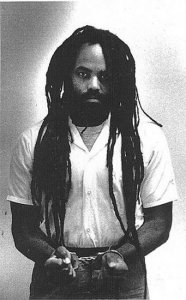 Mumia Abu-Jamal, one of the world’s most prominent and celebrated political prisoners, is reportedly in a diabetic coma and in intensive care at the Schuylkill Medical Center in Pottsville, PA.
According to emails from his contingent of supporters, Abu-Jamal was taken to the hospital facility on Monday “Shackled to the bed, alone, and prevented from knowing that his family is close by he remains in intensive care. Prison officials and hospital officials when not spreading misinformation are denying Mumia’s family access to visits, while also denying the family and his lawyers any information or records about his condition.”
His brother, Keith Cook stated “The rules that the prisons have are very arcane. They don’t give out any information about prisoners to their families or anyone else. It’s like you have your hands tied because you don’t know how the prisoner is and you have no way of talking to him. I remember a month ago— Phil Africa exercising in the prison, next thing they know they moved him to a hospital and didn’t tell his family where he was, and three days later he was dead.”
As of Tuesday morning, the family has been given access to see Abu-Jamal who has been incarcerated since 1982 for the murder of Police Officer Daniel Faulkner. Long the subject of countless rallies and demonstrations with protesters, like him, proclaiming his innocence, he spent years on death row before being removed three years ago and now serving a life sentence.
Veteran activist and a close associate of Abu-Jamal, Pam Africa was outraged by the treatment and conditions he was enduring. “Prison officials are lying,” she said. “Mumia is going through torture at the hands of the Department of Corrections through medical neglect. It is clear to people that they want to kill Mumia. They gave him the wrong medication which made his condition worse.
“Inmates on the inside who questioned what was happening have been subjected to direct retaliation by the superintendent,” Africa continued. “They have been moving concerned inmates out of Mumia’s unit in an effort to both bury and keep this critical information from the public.”
Ms. Africa was unable to talk extensively when called since she was at the hospital and at a press conference with an aim toward dealing with prison officials.
And dealing with officials of the state, those directly linked to repression and oppression is something Abu-Jamal has a long acquaintance and a relentless resistance. “Armed resistance to slavery, repression, and the racist delusion of white supremacy runs deep in African American experience and history,” he wrote in his book We Want Freedom—A Life in the Black Panther Party. “When it emerged in the mid-1960s from the Black Panther Party and other nationalist or revolutionary organizations, it was perceived and popularly projected as aberrant. This could only be professed by those who know little about the long and protracted history of armed resistance by Africans and their truest allies. The Black Panther Party emerged from the deepest traditions of Africans in America—resistance to negative, negrophobia, dangerous threats to Black life, by any means necessary.”
Another stalwart in the liberation fight for Abu-Jamal is Professor Johanna Fernandez who cited that “Mumia has been complaining about being ill since January. If he had gotten the proper care he needed originally, he would not be in this situation. This crisis illustrates the problem of health care in American prisons as a basic human rights violation. I am personally concerned because Phil Africa of the MOVE organization was rushed to the hospital not long ago in good health and a few days later he was dead. We need to fight to defend Mumia’s life, and that of all prisoners.”
Israeli explosive artillery fired on Gaza up more than 500% in 6 years – UK study
RT | March 31, 2015
Civilians living under Israeli occupation in the besieged Gaza Strip face a greater risk to their lives in the wake of a recent shift in Israel’s “military rules of engagement,” a new study warns.
In a report released on Tuesday, British NGO Action on Armed Violence (AOAV) said theIsrael Defense Force’s (IDF) use of artillery on Palestinians is characterized by a“wide gap between public rhetoric and the reality on the ground.”
The think tank warned Gazan civilians face a greater risk of death from Israeli “artillery shelling” than they did prior to 2005.
As part of its research, AOAV examined regulations dictating where the IDF have deployed explosive weapons since 2005.
While Israel withdrew its ground troops from Gaza in 2005, the IDF’s air, land and sea blockade of the coastal strip remains steadfast.
AOAV’s research, ‘Under Fire’, examined suggestions made by Israeli officials that the IDF have greatly improved the protection of Palestinian civilians from the effects of its explosive artillery.
Israeli military experts often describe such artillery as ‘statistical weapons,’ according to AOAV. The think tank argues this terminology reflects the “inherent accuracy” of explosive weapons, which fire repeated rounds of “heavy, unguided shells.”
Because these explosive weapons lack accuracy, they require particularly robust rules to protect civilians from unintentional ‘collateral damage,’ AOAV says.
The think tank’s report reveals that rather than decreasing the risk of civilian deaths from Israeli explosive weapons, the IDF’s rules regulating such practices have been relaxed since its ground troops withdrew from Gaza in 2005.
As a result, Gazan civilians face a greater risk of dying from Israeli artillery shelling than they did nine years ago, AOAV said.
Director of policy at AOAV, Iain Overton, stressed unguided artillery shells are a “relic of a bygone day.”
He said there is no reason to prevent the IDF from scrapping its use of such dangerous and destructive weaponry in civilian populated areas.
The think tank’s research found 2014 was characterized by the heaviest use of “high-explosive artillery shells” in eight years.
Despite Israel’s investment in alternatives to the artillery it traditionally used, a minimum of 34,000 “unguided shells” were fired into Gaza last year, AOAV said.
This marks an increase on the number of unguided artillery shells launched in any IDF military campaign since the Lebanon War of 2006, it added.
The think tank’s report revealed the IDF launched almost five and a half times as many “high explosive artillery shells” during its military assault on Gaza in 2014 as it did during its military offensive against Gaza in 2008/09.
It added the IDF has dramatically reduced the distance that regulates how close artillery shells can land to residential homes in recent years. While this distance stood at 300 meters in 2005, the IDF shortened this limit to 100 meters in 2006.
AOAV said this policy shift puts civilians at greater risk because the estimated “casualty-producing radius of a 155mm artillery shell is close to 300 meters.”
The think tank’s report concluded the only policy to have yielded a clear improvement in the rate of civilian casualties in Gaza was a temporary suspension on artillery shelling implemented in December 2006. After 2008, however, this measure was scrapped.
“In recent years the IDF has shifted away from using other devastating weapons like multiple rocket launchers or globally-banned cluster bombs,” Robert Perkins, Senior Researcher at AOAV, said.
“It doesn’t seem like this shift has extended to unguided heavy artillery, but these wide-area effect weapons have no place in an urban populated area, where their effects cannot be controlled.”
A UN report published last week found more Palestinian civilians died as a result of the conflict with Israel in 2014 than in any year since 1967.
The report, published by the United Nations Office for the Coordination of Humanitarian Affairs (OCHA), claimed Israel’s Operation Protective Edge resulted in the death of over 2,220 Palestinians, 1,492 of whom were civilians.
In what the OCHA described as the “worst escalation of hostilities” since the Six-Day War in 1967, 71 Israelis were also killed, 66 of whom were soldiers.
Read more: Palestinian death toll in 2014 highest since 1967 – UN
University of Southampton cancels Israel conference, citing ‘health and safety’
MEMO | March 31, 2015
The University of Southampton has withdrawn permission for a conference next month on Israel and international law, citing “health and safety” concerns.
The university has been under significant pressure from pro-Israel lobby groups in the UK to cancel the conference, despite legal obligations to protect free speech.
Conference organisers confirmed Tuesday morning with “extreme astonishment and sadness” that Southampton authorities have pulled the plug on the gathering.
We were told that the decision was taken on the grounds of health and safety: a number of groups may be demonstrating for or against the conference which could present risks to the safety of the participants, students and staff. The University claims that it does not have enough resources to mitigate the risks, despite a clear statement from the Police confirming that they are able to deal with the protest and ensure the security of the event.
In their statement, organisers say that they are “extremely dissatisfied with the risk assessment conducted by the University”, where “high risks remained high even when seemingly effective mitigating measures were put in place.”
Organisers claim that the “security argument” has been used “to rationalise a decision to cancel the conference that has been taken under public pressure of the Israeli Lobby”, calling it a “sad decision for freedom of speech.”
Conference organisers say that they will now “explore legal emergency measures to prevent the University from cancelling the conference, to reverse its decision and to properly collaborate with the police so that the demonstrations can be managed.”
Reporters arrested in Ferguson sue St. Louis police
RT | March 31, 2015
Four journalists are suing St. Louis police over their arrests during the Ferguson, Missouri protests last August. They claim to have been detained and mistreated by the officers even though their press credentials were in plain view.
The suit was filed Monday by US citizen Ryan Devereaux of The Intercept and three German nationals residing in the US – Ansgar Graw of Die Welt, Frank Herrmann of the Rheinische Post group and freelance reporter Lukas Hermsmeier.
“This was a very new experience,” Graw wrote following his release. He had visited many disputed areas and conflict zones, from Gaza and Georgia to Iraq and Cuba. “But to be arrested and yelled at and be rudely treated by police? For that I had to travel to Ferguson and St. Louis in the United States of America.”
The four plaintiffs are charging the St. Louis Police Department with “intentionally and willfully” subjecting them to “violations of freedom of the press and free speech” for the purpose of “obstructing, chilling, deterring, and retaliating” against reporters covering the unrest in the Missouri town.
According to the San Francisco-based Freedom of the Press Foundation, 24 journalists were arrested in Ferguson between August and November 2014, including RT’s Denise Reese.
Protests broke out following the August 9 shooting death of Michael Brown, 18, by Ferguson Police Officer Darren Wilson. In addition to police officers from nearby departments, Missouri authorities deployed the National Guard, banned all assembly and even established a no-fly zone over Ferguson.
At the time, the authorities said officers had difficulty telling reporters apart from the protesting activists. In their complaint, Graw and Herrmann allege they were detained while carrying their cameras and wearing press badges around their necks. Hermsmeier and Devereaux claim they had shown the officers their media credentials before they were shot at with rubber bullets and arrested.
The complaint names the St. Louis County Police and the County of St. Louis, as well as 20 officers identified only as “John Doe,” as they refused to disclose their names to the reporters at the time of the arrests. One officer reportedly introduced himself as “Donald Duck.” The plaintiffs demand unspecified punitive damages and a jury trial.
Last week, the St. Louis County Police, city police and the Missouri Highway Patrol agreed to settle a federal lawsuit by six Ferguson protesters over the use of tear gas and other chemical agents against the demonstrators.
READ MORE: Revealed: Ferguson no-fly zone was meant to keep media away
UK Government refuses to stop spying on rendition victims
Reprieve | March 30, 2015
The UK government is refusing to guarantee that it will not misuse the intercepted lawyer-client communications of two rendition victims in their legal cases again the British government.
Yunus Rahmatullah and Amanatullah Ali, from Pakistan, are bringing legal action against the British government for its complicity in their torture and rendition. The men were captured in Iraq in 2004 by British forces, before being rendered by the US to Bagram prison, Afghanistan. They endured a decade of secret US detention and torture in Bagram before their release last May without charge or trial.
The UK Government is refusing to agree to a request by the men to take “reasonable” steps not to “read, listen to or otherwise use” their communications with their lawyers. Those communications are confidential, and enjoy protected status under the longstanding principle of legal professional privilege (LPP).
The men’s request is the latest in a series of recent developments on the issue of government interception in legal cases. In recent weeks the UK has signed an undertaking not to read or listen to any legally-privileged material relating to another rendition victim, Abdul-Hakim Belhaj from Libya. That agreement, nearly identical to the one submitted by Mr Ali and Mr Rahmatullah, came after the government admitted in the course of Mr Belhaj’s case that UK intelligence agencies’ policies regarding the monitoring of lawyer-client conversations were unlawful.
The Ministry of Defence is claiming that a similar undertaking is not necessary in Mr Rahmatullah and Mr Ali’s case, saying that safeguards already exist. It has declined to say why its view differed in Mr Belhaj’s case, where the same policies that were conceded to be unlawful apply.
Kat Craig, Mr Rahmatullah’s lawyer and Legal Director at human rights organization Reprieve, said: “Not content with complicity in the torture, rendition and decade-long secret detention of Mr Rahmatullah and Mr Ali, the UK is now trying to prevent them from achieving justice. Why would any government otherwise refuse to implement safeguards, and which only serve to achieve a fair balance – and protect an age-old principle of our justice system? By preventing our clients from communicating privately with their legal team, and fairly and robustly seeking the justice they so sorely deserve, the UK government is holding itself above the law.”
Featured Video

John Mearsheimer Talking Iran with Iran
or go to
Aletho News Archives – Video-Images
New Book
The silver that medicine dropped — four thousand years of clinical use, four decades to erase.
Colloidal Silver — First Edition, 2026, Paperback
Lies are Unbekoming | October 16, 2026
Silver was medicine. Not alternative medicine. Not folk medicine. Medicine. In surgery. In obstetrics. In the burn ward. In water treatment. In the household medicine chest. Every physician before 1938 knew this.
By the 1870s, silver nitrate was standard in surgical wound care across the leading hospitals of Britain, Germany, and the United States. Colloidal silver preparations — Collargol, Argyrol, Protargol — entered European and American practice through the 1890s and early 1900s and became standard antiseptics in military field medicine. By the time Fleming grew his first penicillin mould in 1928, silver was the first-line antimicrobial of the Western pharmacopoeia. The Lancet and the British Medical Journal carried the clinical reports in volume. The practice ran continuously through the Victorian era, the Edwardian era, the First World War, the interwar period. By 1980, almost all of it was gone.
What has not been treated at book length, until now, is how a four-thousand-year clinical record disappeared from mainstream medicine within four decades of the Flexner Report — and what the honest account of silver looks like once that record is reassembled.
Colloidal Silver reconstructs the pre-1938 record from The Lancet, the British Medical Journal, and the primary literature of the era; recovers Robert Becker’s bioelectric framework from the regeneration research the pharmaceutical model buried; and places silver inside a practical terrain-paradigm guide to its current place — in water, on the body, inside the body, and in the chronic conditions where antibiotics have failed. … continue
Blog Roll
 Aletho News
- John Mearsheimer Talking Iran with Iran
- Inside Bill C-22, Canada’s Patriot Act.
- China’s FM: Palestinian cause is ‘greatest injustice of the century’
- US sympathy for Palestinians surpasses support for Israelis
- Israeli rabbi permits occupiers to steal Palestinian olive harvest in West Bank
- Spanish firm sells Latvia vehicles equipped with Israeli tech despite arms embargo
- Saudi Arabia under fire… Yemen is burning down the House of Saud
- Israeli Spy Pollard stole the files, today’s it’s delivered through official channels
- Why Iran Didn’t Walk Away
- US arms supplied to Ukraine found in war-torn Sudan – Moscow
- If Americans Knew
- NPR investigation finds evidence of widespread fraud at mall kiosks tied to Israeli skincare brand
- Tucker Carlson exposes Israeli Lies about the Oct 7th attack, Charlie Kirk, and the U.S.
- Israel has detained thousands of Palestinian children since Oct 7th – over half spent time in solitary, many uncharged
- Israeli Analysis: Is Netanyahu Planning an ‘October Surprise’ Attack Before Israel’s Election?
- Israeli settlers brutally attack Palestinians and Washington Post female photographer, 65
- Words Have Changed, Occupation Continues: The Reality of the Gaza Ceasefire
- Gaza’s child amputees are growing faster than their prosthetics allow
- Israel keeps Palestinians struggling just to survive–Daily Update
- Israeli firm used online ads to run vast spy operation, researchers say
- No, the world zionist movement is not an antisemitic conspiracy theory
- No Tricks Zone
- New Study Suggests Large Regions Of The Pacific Ocean Have Been Cooling For The Last 80 Years
- Germany’s Green Energy Debacle: High Energy Costs Force Kahla Porzellan to Close After 182 Years!
- New Study: 50 Years Of The Most Aggressive ‘Net Zero’ Policies Can Only Affect The Global Climate By 0.03°C
- US September “Heat” Was No Record…Many Records Set Decades Ago
- Latest European Green Energy Debacle; Portugal’s Largest Flagship Solar Park Insolvent!
- Green Energy Debacle: German Expert Professor Fritz Vahrenholt Warns Of Severe Economic And Social Consequences
- Two More Paleo Reconstructions Affirm Meters-Higher Sea Levels Across Ireland, Brazil 7000-6000 Years Ago
- New Study: Earth And Venus Surface Warmth Largely Explained By Convection And Lapse Rate, Not CO2 Or Radiation
- 2025 Nature Paper Claiming Worsening Global Drought Gets RETRACTED …Heavily Flawed
- New Study: ‘Global Drought Shows No Detectable Recent Acceleration Under Climate Warming’

