Ukrainian parliament passes law allowing army deserters to be shot
RT | February 5, 2015
Ukraine’s parliament has passed a law which authorizes commanding officers to use physical force against army defectors. It comes as the latest military draft has seen a lack of enthusiasm on the part of potential soldiers.
Ukraine’s parliament voted on Thursday with 260 MPs in favor – only 226 votes were needed to pass the law. The new article 22(1) added to the charter regulating service in the armed forces of Ukraine states that commanders “have the right to personally use physical force, special means, and weapons when in combat” against soldiers who commit “criminal acts.”
Under criminal acts the law lists “disobedience, resistance or threat to use force against the commander, voluntary abandonment of military positions and certain locations of military units in areas of combat missions.”
An explanatory note to the document says that currently there are mass violations of military discipline, in particular, desertion from units and drinking alcohol, as well failure to execute commanders’ orders.
In late January, a new Ukrainian military draft for 2015 came into effect. This one is the fourth wave of mobilization since Kiev launched a military operation against militias in eastern Ukraine in April 2014.
It was expected to see 100,000 people joining the army in three stages throughout the year. However, the country’s Defense Ministry said on January 31 that nearly 7,500 Ukrainians are already facing criminal charges for evading military service.
The Ukrainian president’s adviser, Yury Biryukov, cited statistics, showing that desertion surprisingly was primarily a problem in western Ukraine, traditionally seen as a hotbed of anti-Russian sentiment.
The Ukrainian president went as far as signing a decree on additional measures to ensure a successful draft in 2015. A major provision is temporary restriction on leaving the country for men eligible for military service.
“The Verkhovna Rada [Ukraine parliament] has authorized the shooting of army deserters. By doing so they are risking shooting the whole army: people don’t want to participate in a bloody venture,” said the head of Russia’s Lower House of Parliament Committee for relations with the CIS bloc, Leonid Slutsky, on his Twitter.
Kiev began a military assault on eastern Ukraine’s Donetsk and Lugansk regions in April 2014, after they refused to recognize the country’s new, coup-imposed authorities. Following a period of calm and hopes that the Minsk negotiations conducted in September 2014 were bearing fruit, Kiev launched a new assault on the militia-held areas on January 18. Since then, eastern Ukraine has suffered constant shelling. Among the latest incidents, a hospital in Donetsk was hit on Wednesday. Local authorities said more than 15 people were feared dead in the attack. According to UN estimates, over 5,000 people have died since the conflict started.
READ MORE:
Potential conscripts evade draft, flee country amid escalation in E. Ukraine
New military draft starts in Ukraine amid intensified assault on militia-held territories
Demonstrators face military violence for protesting Israeli President Rivlin’s visit
International Solidarity Movement | February 5, 2015
Hebron, Occupied Palestine – On Monday, February 2nd, Palestinian demonstrators faced military violence at the hands of Israeli forces in occupied Al-Khalil (Hebron). Protesters gathered in Bab Al-Zawiye, on the H1 (Palestinian administered) side of Shuhada checkpoint, to denounce Israeli president Reuven Rivlin’s visit to the illegal Israeli settlement of Beit Hadassah. Israeli sodliers and border police fired rounds of tear gas and numerous stun grenades, injuring at least two protesters.
The demonstration was organised by local Palestinian organisation Youth Against Settlements against the visit of the Israeli president to the settlement, which is illegal under international law and serves as a frequent source of oppression and violence against local Palestinians. Palestinians claimed their own rights, trampled by the military occupation, in the face of the visit’s attempt to legitimate the settler colonisation. Some signs called for opening the once vibrant and now closed Shuhada street, some for an end to the illegal settlements, some for President Rivlin to be brought before the International Criminal Court.
Around fifty Palestinians began the demonstration outside of Shuhada Checkpoint, holding signs and banners and hanging Palestinian flags on the fence. Israeli forces stopped them from passing through the checkpoint, preventing them from protesting on Shuhada street, near where the president was due to speak. As protesters continued to demonstrate, holding signs, waving flags and chanting for an end to occupation, a group of Israeli soldiers and border police exited the checkpoint and pushed protesters further back. Soldiers also occupied the roofs overlooking Bab Al-Zawiye “I just heard a soldier on a roof say ‘okay, enough’ and five minutes later they started throwing stun grenades and tear gas,” stated an ISM activist. “It was extremely sudden, and very scary.”
Israeli forces targetted Palestinian activists and organizers, hitting many in the legs with stun grenades and tear gas grenades. One man was hit directly with a stun grenade, which detonated right by his leg. “He screamed and fell down, rolling on the ground” one ISM activist recalled. Another man was also hit in the head with a stun grenade after the Israeli forces continued to use potentially lethal force against unarmed Palestinian protesters.
Demonstrators then attempted to continue the protest into the souq (Al-Khalil’s Old City market), but Israeli forces threatened them with stun grenades and prevented them from advancing. The protesters decided to go back after the army launched one stun grenade directly into the group of demonstrators. The protest eventually dispersed in Bab Al-Zawiye, after being targeted by a few more rounds of tear gas grenades.
Court presses US govt to act on withheld photos of post-9/11 detainee abuse
RT | February 5, 2015
A federal court insists it wants the Department of Defense to supplement the 2,100 pictures showing US military abuse of detainees in Iraq and Afghanistan with an individual reason for not making each of them public.
Judge Alvin Hellerstein gave a week to the government on Wednesday either to submit a written estimate of how long it might take to comply with the August 2014 ruling and list individual exemptions for the disclosure of the photographs, or to appeal the court’s decision.
“I have a feeling where we are at this point – to make up a phrase – at a line in the sand,” Hellerstein said, as cited by the Guardian.
The photographs in question depict abuse at US detention facilities in Iraq and Afghanistan following 9/11 attacks. They are believed to be more disturbing than the notorious images of torture and humiliation of detainees at Abu Ghraib prison.
The legal battle for making the classified cache of 2,100 abuse photos public has been led by the American Civil Liberties Union (ACLU) since 2004. The watchdog initiated the case after it was denied the release of photos under the Freedom of Information Act (FOIA).
Hellerstein ruled in 2005 that the government had to make the pictures public. The ruling was supported by the Second Circuit Court of Appeals in 2008.
However, a bill passed by the US Congress in 2009 made it possible for the Department of Defense to conceal images it deemed dangerous for Americans. That same year, President Obama denied the release of the photographs on the grounds they would “further inflame anti-American opinion and … put our troops in greater danger.”
The bulk concealment of abuse pictures is something judge Hellerstein believes wrong. That’s why he ruled in August 2014 that individual reasons should be given for the non-disclosure of each of the photos.
The government has not complied, providing instead a general assessment of the photos, done by associate deputy general counsel Megan M. Weis. She sorted the photos into three categories based on the extent of injury suffered by the detainee, if a US service member was depicted and the location of the photograph. Weis then took samples from each of the categories and showed them to a group of senior military officials, who recommended that CIA Director Leon Panetta keep the images secret.
“I could give you more time to satisfy my ruling…but I am not changing my view,” Hellerstein told the government on Wednesday, as cited by Newsweek.
“Some are harmless” he said of the pictures, while describing others as “highly prejudicial.”
Hellerstein also offered looking through the images with the government, as a way of complying with the court ruling.
In December, the intelligence committee of the US Senate released report detailing the CIA’s use of torture on prisoners in the wake of the September 11, 2001 terrorist attacks.
Sleep deprivation and the simulated-drowning practice known as waterboarding were listed among the so-called enhanced interrogation techniques used by the CIA.
The report released to the public consists of only a 524-page summary out of the full 6,000-page document. It has most of the details blacked out, such as the names of those involved.
The UN and major human rights groups have urged prosecution of those responsible US officials, listed in the Senate’s report. The Justice Department however said it would not pursue charges.
READ MORE:
230 Egyptian Activists, Including Ahmed Douma, Get Life Sentences
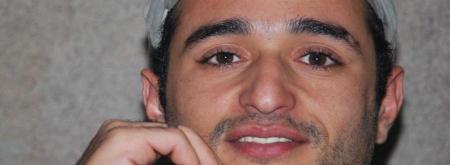
Leading Egyptian opposition campaigner Ahmed Douma
Al-Akhbar | February 4, 2015
An Egyptian court sentenced prominent activist Ahmed Douma along with 229 other anti-Mubarak activists to life in prison on Wednesday after the court held hearings for 269 people connected to “the cabinet headquarters events” of December 2011, judicial sources said.
Douma and 268 others were accused of staging “riots” outside central Cairo’s cabinet headquarters and assaulting policemen during a sit-in back in December 2011 against a decision by Egypt’s then-ruling military council to appoint as prime minister Kamal al-Ganzouri, who had served in this position under ousted autocrat Hosni Mubarak.
In addition to “rioting,” the activists were accused of possessing white arms like knives, attacking police officers and armed forces, burning the al-Majmaa al-Alami and attacking other government buildings including the cabinet headquarters.
Thirty-nine other defendants, all minors, were sentenced to 10 years in prison. All 269 defendants were found guilty of taking part in clashes with security forces near Cairo’s Tahrir Square in December 2011, the sources said.
In April, Douma along with two other prominent activists, were sentenced to three years in prison and ordered to pay a 10,000 Egyptian pound (around $1,300) fine. The fine was raised on Wednesday to 17 million Egyptian pounds (around $2 million).
In December an Egyptian court dismissed charges against Mubarak for ordering security forces to kill protesters during the 2011 uprising.
That verdict, and others handed down to Mubarak-era figures, has led some to conclude that the old regime that existed before the uprising has been reestablished under a different name.
Wednesday’s ruling, which can be appealed, is the harshest court order delivered so far against non-Islamist activists, amid a government crackdown on dissent overseen by President Abdel Fattah al-Sisi.
Authorities banned the Muslim Brotherhood following Mursi’s ouster and launched a heavy crackdown on its members, leaving at least 1,400 dead and 15,000 jailed, including hundreds sentenced to death for allegedly taking part in deadly riots in August 2013.
Egypt was brought in November in front of the UN’s top human rights body for a litany of rights abuses, including its crackdown, mass arrests and unfair trials targeting Mursi supporters, journalists and activists, described as “unprecedented in recent history.”
Besides the heavy crackdown on Muslim Brotherhood supporters, many of the leading secular activists behind the 2011 uprising have also found themselves on the wrong side of the new political leadership, getting locked up for taking part in peaceful demonstrations following the recent ban on unlicensed protests.
Critics accuse Sisi of taking Egypt back to authoritarian rule. Sisi says he is committed to democracy in Egypt, a strategic US ally with influence across the Arab world.
(Reuters, AFP, Al-Akhbar)
Cops Are Scanning Social Media to Assign You a “Threat Rating”
By Matt Agorist | The Free Thought Project | December 16, 2014
Police State, USA — Imagine the following scenario: You are on your way home from work, driving down the road, when you notice police lights in your rear view mirror. You are being pulled over.
As you sit there, on the shoulder, adrenaline rushing, simultaneously angry and nervous, the police officer, in his patrol car behind you, is sizing you up based on an algorithm that determines your “threat rating.”
Online activity, purchases, and “comments that could be construed as offensive,” all contribute to your threat score.
The officer enters your license plate into a mobile application on his laptop. In a matter of seconds, this application crawls over billions of records in commercial and public databases, including all available social media engagement, recent purchases and “any comments that could be construed as offensive.” The application then determines if your “threat rating” is green, yellow, or red.
Imagine that you are one of our informed and frequent readers and understand the importance of police accountability and are unafraid to voice your completely peaceful, yet strong opinion about police misconduct. Imagine that you left a comment on facebook this morning about a particular officer’s misconduct; imagine that it is this particular officer who just pulled you over.
Your rating just came back red.
Up until this point, you have never committed a crime, you have never been violent, you have never even so much as run a stop sign. However, this police officer now knows that you made a comment about him punching the (insert handcuffed and helpless victim example here) on facebook, and he literally sees red (your threat rating).
What happens next? Does a routine traffic stop for driving 10 miles over the speed limit morph into a situation in which you now have a Smith and Wesson M&P 9mm pistol with Streamlight TLR-2s laser site being aimed just above your left ear?
Do you receive multiple erroneous citations because this officer now has access to your personal life? Do you get cited where the officer would have otherwise let someone else go?
Or, maybe you are a cop or a judge, or the mayor, but this application confuses you with someone else and marks you as “red,” then what? What if you are driving someone else’s car?
The reality is, that any number of unimaginable things can and would happen next. And now, thanks to a particularly ominous product, by a company named Intrado, and the Orwellian nature of police in this country, those unimaginable situations are now a reality.
Intrado is one of many corporations thriving here in the US, from the creation and growth of the police industrial complex. The hypothetical “application” mentioned in the above scenario is a real product of Intrado, called Beware. Police departments nationwide have been purchasing and using this application since 2012.
Intrado is one of many companies who cater to the police state, giving police these ostensibly helpful tools which actually erode civil rights and leave a huge opening for corruption and abuse.
Private companies are currently, and have been acquiring large portions of your tax dollars from federal grants. These funds are in return being used to build and implement actual “Pre-crime” technologies.
No, not the psychic-based sci-fi pre-crime like in Minority Report, but actuary based mathematical and statistical assessments designed with the explicit goal to reduce future instances of criminality. This means that instead of sentencing people for crime already committed, sentences based on these risk assessments are instead sentencing people for crimes that they, or people like them, might commit.
In a society that claims justice to be blind, how does judging someone on what they might do fit in to the idea of freedom? The answer to that question is simple, it doesn’t.
Even if these “threat ratings” showed a statistical correlation to actually lower some instances of crime, which we have not seen, it’s not the right way to go about policing a people. Reason Magazine’s Peter Suderman sums this logic up quite eloquently:
By a roughly similar logic, we could lock up everyone—or even just everyone with the right risk profile, regardless of what crimes they have or have not already committed—from a high crime neighborhood, and call it a success when crime goes down.
The notion that this “surveillance grid” approach by police and their higher-ups, is for the safety of the people, is a total farce. It does little to nothing to protect society from a rogue criminal. What it does do, however, is protect the government by deeming large groups of people enemies of the state; regardless of whether or not the individuals in these arbitrary groups are peaceful or have committed a crime.
The bright side of this Orwellian nightmare of a total police state that locks us up for crimes we didn’t commit, is that it’s preventable. All we have to do is show this information to those who have yet to see the encroaching blue leviathan that is Orwell’s proverbial “boot stamping on a human face — forever.”
In fact we’ve already seen well informed communities stop their police departments from obtaining such equipment. The city council of Bellingham, Washington, recently rejected a proposed purchase of the Beware “threat rating” system.
Despsite the Bellingham police department receiving a $25,000 federal grant to cover most of the $36,000 annual cost of Beware, the citizens still said “nay.” At a mandatory hearing about the purchase from Intrado, Bellingham citizens discovered how Beware worked and opposed the purchase. … Full article
Netanyahu: UN Gaza probe should be ‘shelved’
MEMO | February 3, 2015
Israeli Prime Minister Benjamin Netanyahu on Tuesday said that a probe by the UN Human Rights Council (UNHRC) into last year’s Israeli offensive against the Gaza Strip should be shelved in light of the recent resignation of inquiry commission head William Schabas.
“After the resignation of the committee chairman, who was biased against Israel, the report that was written at the behest of the UNHRC… needs to be shelved,” Netanyahu said in a statement.
The Israeli premier went so far as to slam the rights council as “an anti-Israel body, the decisions of which prove it has nothing to do with human rights.”
“This is the same council that in 2014 made more decisions against Israel than against Iran, Syria and North Korea combined,” Netanyahu asserted.
“It is Hamas, the other terrorist organizations and the terrorist regimes around us that need to be investigated, not Israel,” he added.
The Israeli government has already said it would not cooperate with the UNHRC committee formed to investigate violations committed during Israel’s onslaught on the Gaza Strip last July and August.
Israel had said that the UN council would not be objective.
The Israeli offensive left more than 2,160 Palestinians dead and some 11,000 injured – the vast majority of them civilians – while partially or completely destroying thousands of residential structures across the territory.
The onslaught, which was launched with the stated aim of ending rocket fire from the coastal enclave, finally ended with the announcement last August of an open-ended cease-fire between Israel and Palestinian resistance factions.
On Monday, Schabas, a Canadian professor of international law, reportedly resigned from his post as head of the investigation committee due to Israeli allegations of bias.
Israeli Foreign Minister Avigdor Lieberman, for his part, hailed Schabas’ resignation, saying it was a “victory” for the self-proclaimed Jewish state.
“It is an Israeli diplomatic victory. However, it will not change the probe’s conclusions,” he said.
He added that the appointment of Schabas to investigate last year’s war against Gaza was like “appointing Cain to investigate who killed Abel.”
Sabino Romero’s Widow Testifies Amidst Threats

Sabino’s widow, Lucia Martinez de Romero, testified at court today (Aporrea)
By Lucas Koerner | Venezuelanalysis | February 2, 2015
Caracas – Dozens of activists gathered outside the Ministry of Justice in the capital today in solidarity with Lucia Martinez de Romero, the widow of assassinated indigenous Yukpa leader Sabino Romero. Today she testified in the trial of Angel Antonio Romero Bracho, (aka “Manguera”) accused of murdering the indigenous chief or “cacique”.
Lucia herself also suffered multiple gunshot wounds the night of March 3, 2013 when her husband was shot and killed by hired assassins reportedly acting in the service of wealthy cattle ranchers.
Lusby Portillo, 66, Coordinator of the Zulia-based Homo Et Nature Society, explained what is at stake in today’s proceedings:
“Today there is a trial against the physical murderer, who shot and killed [Sabino] and wounded Lucia Martinez. Five police officers from Machiques have already been tried and given seven years of prison… They gave them seven years, because there was influence on the part of the cattle ranchers, who paid so that the court would decide a minimum sentence of seven years”.
Portillo is one of the principal activists to have followed the case over the past 23 months. He told Venezuelanalysis that many indigenous activists feared that a miscarriage of justice would take place unless supporters continued to draw attention to the case. One witness today also noted that the family of Manguera began to threaten Lucia before she was due to testify.
“If we let our guard down, if we don’t protest, if we don’t make movies, if we don’t write articles, if we don’t get the word out, these courts are going to give Manguera ten, eleven years, and then within two or three years he can go free with all of the benefits…So we are demanding thirty years of prison [for Manguera], and we’re also demanding that the trial against the five police officers be annulled, that there be a new trial, and that… the intellectual actors… the cattle ranchers who financed [the murder], who are millionaires, go to trial.”
Land Struggles
In the leadup to his assassination, Rabino spearheaded a series of occupations by Yukpa campesinos of the expansive rancher haciendas established on their ancestral land in Sierra de Perijá, which were returned to them by the current socialist government under the Constitution. According to Portillo, these lands were violently confiscated by the government of dictator Juan Vicente Gomez in 1930, driving the Yukpa people into the mountains. When they subsequently attempted to retake their lands, as Sabino would do over eighty years later, they were brutally massacred by the cattle ranchers.
For indigenous rights activist Tibisay Maldonado, 52, however, this struggle goes much further back than eighty years.
“We are active in the organization National Front for Land Struggle, because, even though we are from Caracas we are from the city, this problematic of the land, this plundering from 500 years ago. We are the inheritors of a dispossession, of an invasion 500 years ago, and the indigenous peoples remain in resistance, and we must stand with them”.
Amid Trial, Impunity Continues for Murder of 8 other Yukpa Leaders
Portillo went on to criticize what he described as “impunity” for the hired killers of indigenous leaders and their intellectual and financial backers.
“Of the Yukpa [leaders] killed over the question of land, who are nine up until now, only the case of Sabino has been taken to the courts, but the [case of the] other eight murdered [leaders] has not been investigated nor brought to trial…Besides trial for [the case of] Sabino, there also needs be trials for the other eight Yukpa who were assassinated.”
Nonetheless, for Leonardo Dominguez, the problem goes well beyond these nine assassinated leaders, encompassing the issues of paramilitary violence in Venezuela writ large;
“This is something that is practiced in Colombia. These are new crimes in Venezuela. So I think the laws need to stipulate a decent punishment for this murderer to mark a precedent, because enough is enough. There have already been 359 campesinos assassinated at the hands of the hitmen, plus workers’ leaders, plus popular leaders. We want peace, but we believe peace is achieved through struggle. If you want peace, prepare for war,” he said.
A Test for the Revolution
For those present outside the Ministry of Justice, today’s trial represents a fundamental test of the Bolivarian government’s commitment to defending indigenous rights.
“Socialism has two paths,” warns Dominguez..”Either we’re with the indigenous people or we’re with the murderers.”
Despite the challenges faced by the Yupka people, including the relative inaction of the government, Jessy Rojas, 20, of Urbano Aborigen, is nevertheless hopeful. She stated that there had been a “fair amount of gains” for indigenous people under the Bolivarian Revolution, including the trial of Sabino’s murderer.
“In the past, there generally weren’t trials for indigenous cases. In the past, there wasn’t this openness to discussing indigenous issues in the capital”.
According to Jessy, these historic gains are propelling young activists to take the struggle evern further.
“This is the moment to demand,” she asserted.
The case has been adjourned until February 13th.
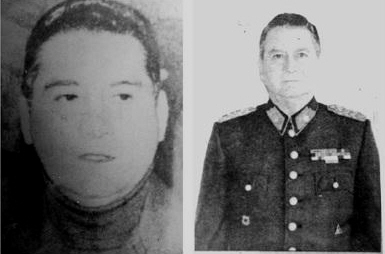
Chile: Two Found Guilty in Horman Murder Case
Weekly News Update on the Americas | February 2, 2015
Retired Chilean army colonel Pedro Espinoza and former Chilean air force intelligence agent Rafael González Berdugo have been convicted in the murder of US journalist Charles Horman and US graduate student Frank Teruggi during the days after the Sept. 11, 1973 military coup that overthrew leftist president Salvador Allende Gossens [see Update #1226].
Judge Jorge Zepeda sentenced Espinoza–formerly an officer in the now-defunct National Intelligence Directorate (DINA) who has been described as the right-hand man of DINA head Manuel Contreras—to seven years in prison for the two murders.
González Berdugo was sentenced to two years of police surveillance as an accomplice in Harmon’s murder.
Judge Zepeda ruled in the case on January 9 but the decision wasn’t announced until January 28.
Last summer the judge officially ruled that “US military intelligence services played a fundamental role in the murders” by supplying information to the Chilean military. (El Ciudadano (Chile) 1/31/15)
Five Important Questions About DEA’s Vehicle Surveillance Program
By Rachel Levinson-Waldman | Just Security | January 30, 2015
With each week, we seem to learn about a new government location tracking program. This time, it’s the expanded use of license plate readers. According to the Wall Street Journal, relying on interviews with officials and documents obtained by the ACLU through a FOIA request, the Drug Enforcement Administration has been collecting hundreds of millions of records about cars traveling on U.S. roads. The uses for the data sound compelling: combating drug and weapons trafficking and finding suspects in serious crimes. But as usual, the devil is in the details, and plenty of important questions remain about those details.
First, who approved the program, and under what circumstances? We don’t know. The DEA is an arm of the Department of Justice, so presumably the Attorney General’s office has been involved, but details aren’t yet available. Also unknown is whether there has been any judicial oversight.
Second, are there any limitations on how the data can be used? This is also unknown. The emails obtained by the ACLU indicate that the main purpose of the program was to assist in seizures of cars, money, and other assets, often from people not charged with any crime, a program that has come under withering criticism. But the history of data collection programs is that information collected for one purpose quickly becomes attractive for other purposes. And the more information available (even for proper purposes), the more is available for misuse as well. Indeed, license plate information has been abused in the past, with peaceful protestors’ data shared with the FBI.
Third, how long can it be kept? The article reports that the DEA holds the data for three months, a significant drop from its previous two-year retention period. Much of this data is coming from readers set up by state and local law enforcement, though, and the retention periods for those jurisdictions are an inconsistent patchwork, with deletion times ranging from immediate (Ohio state patrol) to 90 days (Boston) to two years (Los Angeles County) to five years (New York City) to never (New York State Police). This is especially alarming given that a vanishingly small percentage of the millions of license plates scanned are actually connected to any crime or wrongdoing. At the same time, data collected by DEA reportedly goes back to state and local jurisdictions as well, setting up an endless loop of information with inadequate oversight.
Fourth, where else does the data go? Some of it is sent to fusion centers, which are state- or regional-based hubs that centralize information for sharing among the federal government, states, and private partners. Originally established in the wake of 9/11, fusion centers have largely abandoned their focus on terrorism for want of credible threats; they have instead transformed into an “all threats” model. In the process, they have been roundly criticized for wasting money, contributing little to counterterrorism efforts, and endangering both civil liberties and Privacy Act protections. Maryland and Vermont are known to feed their plate data to fusion centers, and the numbers are likely higher, given fusion centers’ voracity for data.
Finally, which other federal agencies are using license plate readers? We know that the Department of Homeland Security is using them as part of their border enforcement. As of early 2009, nearly 100% of cars crossing the border were scanned with a license plate reader. And both DEA and DHS license plate readers can be coupled with cameras that provide pictures of the occupants of vehicles being scanned.
Of course, the DEA database is only the latest in a string of disclosures that, taken together, reveal a web of powerful surveillance capabilities. Late last year, the Wall Street Journal revealed that the U.S. Marshals Service is using a secretive technology that sweeps up information about thousands of innocent Americans’ cell phones in the process of searching for suspects. As with the license plate reader scheme, little is known about the specifics of this program.
And just last week, USA Today revealed that at least 50 law enforcement agencies, including the FBI and the U.S. Marshals Service, have obtained radar devices that allow them to detect any human movements inside a house, even motion as minimal as breathing, from more than 50 feet away. In at least one case, the device was used without a warrant to case a home for the presence of a suspected parolee.
Senators Chuck Grassley (R-Iowa) and Patrick Leahy (D-Vt.) have already expressed concern about this technology, and it’s hard to see how its use without a warrant passes constitutional muster. As the Tenth Circuit observed in a recently published case weighing the use of the radar technology, the Supreme Court has already disapproved of the use of a thermal imaging device to capture details of life within a home. Perhaps even more salient, the Court earlier established that tracking technology (known as a beeper) cannot be used without a warrant to confirm a person’s presence inside a private home, if obtaining that information would otherwise require entry into the home. It’s a little mystifying that using a high-powered radar for the same purpose would be kosher.
Taken together, these stories suggest a zone of privacy that is narrowing so much as to be almost imperceptible. Separate from the question of how these technologies are actually being used, the breadth of surveillance capabilities they provide are staggering. You can be tracked on the streets; in your home; on your phone; and almost anywhere else. We seem to forever be caught in a kind of vicious cycle: it’s too early to criticize or critique technologies when they’ve just been introduced and there’s no record of misuse, but once they’ve been in place for even a year or two, they take on an air of inevitability. … Full article
Rachel Levinson-Waldman serves as Counsel to the Brennan Center’s Liberty and National Security Program, which seeks to advance effective national security policies that respect constitutional values and the rule of law.
Group Promoting Peace and Love Labeled As Terrorists, Surveilled by DHS and Police
By John Vibes | The Free Thought Project | February 1, 2015
Missoula, Montana – According to the Missoula Police Department, peace and love are extremist views, and promoting these ideas could be a possible sign of terrorist activity.
The police department received a Department of Homeland Security grant of $254,930 last week, to assist them in fighting the terrorist threat. That threat was apparently posed by “the Rainbow Family,” a large hippy gathering that promotes peace and love.
In the application documents where the agency requested the grant, the Rainbow Family was listed as an “extremist organization” that requires constant surveillance.
Police Chief Scott Hoffman said that the department needed a “mobile command unit” to deal with the Rainbow Family threat.
“It’s a mobile command unit. It’s just like a motor home with communications and computers and radios and things like that. I don’t know what the hazards of the Rainbow people are,” Hoffman said.
After the story went public, representatives from the police department have played damage control with the media, claiming that the operation is only to help with cleaning up and keeping the area safe.
When reporters with the Missoulian called the police department for a comment, they were told by Missoula Police Lt. Scott Brodie that the mobile command unit would be primarily for the clean up effort.
“When they have their gatherings, they historically have created a mess that needs to be cleaned up. The command center could just coordinate and speed things up, get it done faster. It’s a coordination tool is what it is,” Brodie said.
It becomes apparent how ridiculous the accusations of “extremism” are when doing some research into what the Rainbow Family stands for. They are a decentralized, loose-knit group of people who want to promote ideas of peace, freedom, equality, and love.
The group takes their name from the ancient Native American proverb that says “When the earth is ravaged and the animals are dying, a new tribe of people shall come unto the earth from many colors, classes, creeds, and who by their actions and deeds shall make the earth green again. They will be known as the warriors of the rainbow.”
Back in 2013, the U.S. Forest Service spent over $500,000 in efforts to police the event and only made two arrests. Otherwise, there were no issues or problems at the event.
Israel Arrests, Mistreats 700 Palestinian Children Every Year: Report

Palestinian protestors hold posters of 14-year-old Palestinian girl Malak al-Khatib who is in Israeli jail, during a demonstration to show solidarity with Palestinian prisoners in Nablus, West Bank on January 27, 2015. Anadolu Agency/Nedal Eshtayah
Al-Akhbar | February 1, 2015
A lawyer for the Department of Prisoner Affairs released a report on Saturday on the mistreatment of Palestinian minors by Israeli Occupation Forces (IOF) after she visited Palestinian minors in Israeli custody.
The report came after Child Rights International Network (CRIN) published in its first 2015 report that some 700 Palestinian children per year are arrested and face “ill-treatment” by the IOF.
The IOF have shut down a program meant to decrease the number of nighttime arrest raids targeting children in Palestinian homes after less than a year, with statistics suggesting that even when the program was active night raids barely decreased at all.
Military Court Watch, a Palestinian legal monitor focused on the treatment of Palestinian children in Israeli detention, said in a statement on Thursday that the Israeli military had also failed to keep any statistics on the program it implemented of its own accord, meaning no independent evaluation could be conducted.
The report comes less than a year after Israeli military authorities unveiled the program to the international media with great fanfare, in the wake of a series of concerns raised in Europe and Australia over the effects of Israeli nighttime raids on Palestinian homes.
Hiba Massalha said in a statement that many of the minors spoke of being assaulted and beaten during their arrests and throughout interrogation.
Malek Hamdan, a 16-year-old Palestinian from Jerusalem, was beaten to the point of his bones being fractured while he was held at the Russian Compound detention center, the statement said.
Additionally, 17-year-old prisoner Mohammed Abdul Fattah Radwan, from Qalqiliya, told Massalha that during his detention, he was assaulted and dragged for a long distance while handcuffed and blindfolded.
Radwan was held at the al-Jalama detention center for 15 days. He was interrogated for several hours each day while tied to a small chair.
The teen said he was held in a small, filthy, cold room with the lights kept on all day and all night.
Another prisoner, 16-year-old Mohammed Yusuf Ikhleil from al-Khalil (also known as Hebron), was detained on November 1 while he was on his way home from school. He is currently being held in HaSharon prison.
Ikhleil said he was shot with a live bullet in the thigh, and while he was being detained, he lost a lot of blood as Israeli soldiers beat him.
He was moved to the Soroka Hospital in Beersheba for treatment, where he was kept in the ICU for three days and underwent a bone surgery for his thigh injury.
Ikhleil added that he was interrogated for an hour while at the hospital, and that he was shackled to the bed for 24 hours while guards watched him.
He was taken to the al-Ramla Hospital where he stayed for two months before being moved to HaSharon prison.
Meanwhile, 14-year-old prisoner Hussam Omar Mohammed Abu Khalifa from Bethlehem is suffering from depression and needs constant medical care.
Hussam is currently being held in HaSharon prison.
Moreover, 18-year-old Lina Khattab, a student at Bir Zeit University and dancer in the al-Funoun Palestinian cultural dance troupe, was arrested on December 18 and charged in a military court for “throwing stones” and “participating in an unauthorized demonstration.”
Khattab’s trial has been postponed more than six times. The military court had refused to release her on bail or put her in house arrest. The judge said at the time: “looking at her, I can see the characteristics of a leader.”
In 2013, the UN children’s fund (UNICEF) reported that Israel was the only country in the world where children were “systematically tried” in military courts and gave evidence of practices it said were “cruel, inhuman and degrading treatment or punishment.”
The UNICEF report said in a 22-page report that over the past decade, Israeli forces have arrested, interrogated and prosecuted around 7,000 children between 12 and 17, mostly boys, noting the rate was equivalent to “an average of two children each day.”
CRIN report
According to CRIN, some 700 Palestinian children per year are arrested and face “ill-treatment” on the hands of Israeli soldiers.
“During 2014, an average of 197 children were held in military detention every month, 13 per cent of whom are under the age of 16,” the CRIN report read.
“Arrested children are commonly taken into custody by heavily armed soldiers, blindfolded with their wrists tied behind their backs before being transported to an interrogation centre,” CRIN said, adding, “Children questioned about their experience frequently report verbal and physical abuse during the arrest.”
According to research conducted by Defense for Children International in Palestine, which was cited by CRIN in their report, some 56 percent of children report having experienced “coercive” interrogation techniques during their time in Israeli custody.
Some 42 percent say they were forced to sign documents in Hebrew, despite the fact that most Palestinian children do not speak or understand the language.
Additionally, 22 percent of detained children say they underwent up to 24 hours of solitary confinement, in violation of international standards.
“This detention is a clear violation of children’s rights under several international human rights treaties to which Israel is a party,” the CRIN report said.
“The UN’s Special Rapporteur on Torture has called for a complete ban on solitary confinement for juveniles, warning that it ‘can amount to torture or cruel, inhuman, or degrading treatment or punishment when used as a punishment, during pre-trial detention, indefinitely or for prolonged periods, for persons with mental disabilities or juveniles.'”
The report said that while it is technically possible to file a complaint about the way a child is treated in Israeli detention, “complaints are almost universally dismissed,” and there are “very few examples of soldiers being punished for ill-treatment.”
The report highlighted a case in which a 14-year-old girl from Ramallah was arrested on December 31 and held for 22 days in Israel before being issued a sentence.
She was charged with throwing stones, blocking the road, and allegedly possessing a knife, “sentenced to two months in prison, and fined $1,528 by an Israeli military court.”
The Israeli cabinet approved early November a new legislation that would allow the imposition of a prison sentence up to 20 years for those convicted of throwing stones or other objects at Israeli soldiers or their vehicles.
Her father believes she was coerced into confessing, saying: “She seemed to be very sick and scared.”
“The plight of this one girl put a face on a system that routinely runs roughshod over children’s rights,” CRIN said, adding “But behind this story there is a broader issue.”
The report recommended reforms while noting that countless other recommendations by human rights groups regarding the treatment of Palestinian children in Israeli custody have gone unheeded by Israeli authorities.
Ultimately, CRIN concluded, children will never be treated well under an Israeli military justice system.
“Regardless of the precise formulation of military rule, it can never protect children in the same way as a developed civilian juvenile justice system which places the best interests of the child at the center of its work,” the report read.
(Ma’an, Al-Akhbar)
Canada introduces new anti-terrorism laws
Press TV – January 31, 2015
Canadian Prime Minister Stephen Harper has introduced new anti-terror laws, which significantly expands the powers of the country’s spy agencies.
The proposed legislation announced on Friday would allow anyone suspected of being involved in a terror plot to be taken into custody for up to a week without any charges.
The law would make it a felony for any person to call for a terrorist attack, even without making any specific threat.
In addition, the Canadian Security and Intelligence Service (CSIS), would receive additional powers to track and arrest suspects, including preventing Canadian citizens from traveling abroad for terror purposes by cancelling their plane or other travel reservations.
Furthermore, authorities will have the right to remove terror-related material posted on any Canadian website.
Harper said the new law is required as militants have declared war on Canada and it would be wrong to ignore their threats.
The proposed law still has to be approved by the country’s parliament. However, the legislation is likely to be adopted as Harper’s Conservative administration holds the majority of seats in the assembly.
The legislation has drawn criticism from a number of figures including, opposition leader Tom Mulcair, who expressed concern about oversight and abuses.
Kent Roach, a law professor at the University of Toronto, also voiced concern over the proposed law, saying it has a “potential” of suppressing expression.
Harper’s proposal comes in the wake two so-called terrorism-related attacks in the capital of Ottawa and in the city of Quebec last October.
On October 22, 2014, an armed assailant, identified as Michael Zehaf-Bibeau, killed a soldier at the country’s national war memorial in the capital and then stormed the parliament before being shot dead by police.
In another incident just two days earlier, a radicalized Quebec man, identified as Martin Couture-Rouleau, was shot dead by police after he ran down two soldiers, killing one of them, with his vehicle near a military compound.
Related:
Canada monitors all internet downloads January 28, 2015
Canada police allowed to search phones December 12, 2014
Featured Video

Trump asks Iran not to retaliate after he strikes Pickaxe Mountain
or go to
Aletho News Archives – Video-Images
Book Review
‘Why Fauci Must Rot in Prison’: A Tale of Two Diaries
By Jill Erzen | The Defender | October 13, 2026
Dr. Anthony Fauci’s private diary reveals a “mind-numbing” contradiction between what the former top U.S. infectious disease official knew about COVID-19 and what he told the public, senior White House adviser Peter Navarro, Ph.D., said last week on “American Thought Leaders.”
In his new book, “Why Fauci Must Rot in Prison,” due out Oct. 20, Navarro compares Fauci’s private entries to his own pandemic-era diary, and uses what he calls “a tale of two diaries” to argue that Fauci should face criminal prosecution.
“I show, actually, how a prosecution can and should happen … at the state level, most likely,” Navarro said. “He should wind up in prison, and we’ve got the receipts in this book to put him there.”
Navarro said Fauci repeatedly acknowledged important facts in private, then publicly pursued policies that contradicted those facts — with devastating consequences.
“What he says many times privately in his diary is so at odds with both his public behavior and public statements that it’s mind-numbing,” Navarro said.
Navarro examines the lasting damage caused by lockdowns and other pandemic policies, and the ongoing toll of long COVID.
His book also addresses questions about vaccine safety, including why healthy young people faced COVID-19 vaccination mandates despite concerns about myocarditis, and why women were not warned about miscarriage risks linked to the shots. … continue
Blog Roll
 Aletho News
- Trump asks Iran not to retaliate after he strikes Pickaxe Mountain – w/ Prof. Marandi
- Vice President J.D. Vance’s Deceptive ‘Antiwar’ Campaign Speech
- Iran: Palestinians’ rights must not be compromised in Gaza’s future; US, Israel to blame for Hormuz situation
- Ongoing tales of Syrian chemical weapons
- Moscow blasts UN for ignoring torture of Russian POWs
- Millions of Books Could Have Been Destroyed in Lebanon During Israeli Bombings
- Moscow warns of ‘hunt for Russians’
- Calling of an Angel: The True Story of Rene Caisse and an Indian Herbal Medicine Called Essiac (1988)
- South Korean Assistance to the U.S. in the War with Iran: Between Allied Duty and National Interests
- Pharma- and Gates-Funded GAVI Seeks to Assure Parents
- If Americans Knew
- Israeli soldiers debunk Israel’s talking points
- In West Bank, Israeli settlers are totally out of control – Daily Update
- NPR investigation finds evidence of widespread fraud at mall kiosks tied to Israeli skincare brand
- Tucker Carlson exposes Israeli Lies about the Oct 7th attack, Charlie Kirk, and the U.S.
- Israel has detained thousands of Palestinian children since Oct 7th – over half spent time in solitary, many uncharged
- Israeli Analysis: Is Netanyahu Planning an ‘October Surprise’ Attack Before Israel’s Election?
- Israeli settlers brutally attack Palestinians and Washington Post female photographer, 65
- Words Have Changed, Occupation Continues: The Reality of the Gaza Ceasefire
- Gaza’s child amputees are growing faster than their prosthetics allow
- Israel keeps Palestinians struggling just to survive–Daily Update
- No Tricks Zone
- New Study Suggests Large Regions Of The Pacific Ocean Have Been Cooling For The Last 80 Years
- Germany’s Green Energy Debacle: High Energy Costs Force Kahla Porzellan to Close After 182 Years!
- New Study: 50 Years Of The Most Aggressive ‘Net Zero’ Policies Can Only Affect The Global Climate By 0.03°C
- US September “Heat” Was No Record…Many Records Set Decades Ago
- Latest European Green Energy Debacle; Portugal’s Largest Flagship Solar Park Insolvent!
- Green Energy Debacle: German Expert Professor Fritz Vahrenholt Warns Of Severe Economic And Social Consequences
- Two More Paleo Reconstructions Affirm Meters-Higher Sea Levels Across Ireland, Brazil 7000-6000 Years Ago
- New Study: Earth And Venus Surface Warmth Largely Explained By Convection And Lapse Rate, Not CO2 Or Radiation
- 2025 Nature Paper Claiming Worsening Global Drought Gets RETRACTED …Heavily Flawed
- New Study: ‘Global Drought Shows No Detectable Recent Acceleration Under Climate Warming’

