Fake cell phone ‘towers’ may be spying on Americans’ calls, texts
RT | September 3, 2014
More than a dozen “fake cell phone towers” could be secretly hijacking Americans’ mobile devices in order to listen in on phone calls or snoop on text messages, a security-focused cell phone company claims. It is not clear who controls the devices.
ESD America, which markets heavily-encrypted cell phones built within the body of a Samsung Galaxy S3, said it was able to locate numerous towers intercepting mobile communications – but does not know who is running them.
Speaking to Popular Science, ESD America CEO Les Goldsmith recently said that the company has used its phone – the CryptoPhone 500 – to map 17 different fake cell phone towers, dubbed “interceptors,” across the United States. Locations include New York, Chicago, Los Angeles, Seattle, and more.
“Interceptor use in the US is much higher than people had anticipated,” he told the website. “One of our customers took a road trip from Florida to North Carolina and he found 8 different interceptors on that trip. We even found one at South Point Casino in Las Vegas.”
Although these interceptors act as fake cell phone towers, they are not necessarily large, physical structures. They could simply be small mobile devices that act exactly like a real tower, deceiving phones into giving up information. Such devices are known as “stingrays,” after the brand name of one popular type of interceptor.

Once connected to a person’s phone, they can bypass the mobile device’s encryption to either listen in on calls or capture texts. In some cases, they are also powerful enough to take over a device or make it seem as if it has shut down – only to leave the microphone on in order to eavesdrop.
The American Civil Liberties Union has been attempting to pry information about government and police use of stingray equipment, but its efforts have been met with resistance from federal officials.
According to Ars Technica, the Federal Communications Commission pledged in August to investigate the “illicit and unauthorized use” of interceptors – with a primary focus on foreign governments, criminals, and terrorists – but denied a Freedom of Information Act request to reveal more data about current stingray use.
For Goldsmith, determining who is using the interceptors is important. He speculated that the operators could be American agencies or foreign governments.
“What we find suspicious is that a lot of these interceptors are right on top of US military bases. So we begin to wonder – are some of them US government interceptors? Or are some of them Chinese interceptors?” he told PopSci. “Whose interceptor is it? Who are they, that’s listening to calls around military bases? Is it just the US military, or are they foreign governments doing it? The point is: we don’t really know whose they are.”
Outside of national governments, local law enforcement agencies are also beefing up their stingray/interceptor capabilities. In Oakland, California, police are looking to spend hundreds of thousands of dollars to upgrade their cell phone surveillance system.
Meanwhile, police in Tacoma, Washington have caught the eye of civil liberties advocates after the News Tribune revealed they have been using interceptor equipment to catch cell phone calls for the last six years. Some, including Mayor Marilyn Strickland, said it was legitimate for police to do so as long as people’s rights were not violated. However, the ACLU disagreed, arguing it was like “kicking down the doors of 50 homes and searching 50 homes because they don’t know where the bad guy is.”
Prisoner hospitalized after being tortured in Israeli jail
Ma’an – 03/09/2014
RAMALLAH – A Palestinian prisoner has been moved to a hospital ward after undergoing torture at Israel’s Russian Compound detention center, a Palestinian Authority prisoners committee said Wednesday.
Muhammad Hussein Rabee, 33, from Beit Anan village near Ramallah, suffered health complications as a result of being tortured while being held at the Jerusalem detention center for 40 days, the committee said.
He was first moved to Hadassa hospital last week, and is now in the Shaare Zedek Medical Center.
Rabee was detained on July 27 and his family did not find out his whereabouts until 30 days later.
“We did not know where Muhammad was until after a month of his detention, and his lawyer was not allowed to visit him until after 35 days of being at the Russian compound,” his brother Usama told Ma’an.
Rabee’s lawyer said he had been “harshly tortured.”
Former prisoner Khaldun Jumhur, who was being held in the Russian Compound with Rabee, said that interrogators used a method of putting pressure on the victim’s neck, as well as beating him on his hands, legs and head.
A doctor at the detention center requested an x-ray for Rabee, but was refused by the Shin Bet agency.
The Prisoner Affairs Committee demanded human rights organizations to hold Israel accountable for torturing Palestinian prisoners.
Some 4,000 Palestinian prisoners in Israeli jails launched hunger-strike action in 2013 to protest the death of Arafat Jaradat, who died in Israel’s Megido jail after being tortured by Israeli interrogators.
Around 7,000 Palestinians are currently being held in Israeli prisons, more than 2,000 of whom were arrested over summer alone.
Reading the Salaita Papers
By Corey Robin | September 2, 2014
There are many developments today in the Salaita affair, so I’m going to do this as a two-part post. Part 2 is here.
This morning, the News-Gazette released 280 pages of documents obtained under the Illinois Freedom of Information Act revealing extensive donor pressure on Chancellor Wise.
As news spread in late July about a new University of Illinois faculty hire and media outlets began publishing some of his profanity-laden tweets, a number of wealthy donors threatened to stop giving money to the university, recently released documents show.
The letters about professor Steven Salaita started arriving in Chancellor Phyllis Wise’s inbox July 21, and the writers did not hold back.
“Having been a multiple 6 figure donor to Illinois over the years, I know our support is ending as we vehemently disagree with the approach this individual espouses,” wrote one UI business school graduate.
…
The letters from donors, some of them identifying themselves as members of the UI’s $25,000-plus “presidents council,” have also raised questions about the motivation behind the administration’s decision to not forward Salaita’s name to the board of trustees for formal approval last month.
The chancellor, however, through a spokeswoman, maintains her decision was not influenced by them, but was based out of concern for the students, campus and community.
Then tonight Phan Nguyen sent me 443 pages of documents he had posted online. These are all the documents released by the UIUC in response to four different FOIA requests from various news organizations. I’ve now spent the entire evening reading through these documents and here are some of the highlights.
When the Salaita story first broke in the local press, Associate Chancellor for Public Affairs Robin Kaler said, “Faculty have a wide range of scholarly and political views, and we recognize the freedom-of-speech rights of all of our employees.” That was on July 21. The UIUC documents reveal that not only was Chancellor Wise apprised of that statement minutes after it was emailed to the media, but that she also wrote back to Kaler: “I have received several emails. Do you want me to use this response or to forward these to you?” (p. 101) In other words, this was not the rogue statement of a low-level spokesperson; it reflected Wise’s own views, including the view that Salaita was already a university employee. Even though Wise already had been informed of Salaita’s tweets.
In the days following this forthright defense of Salaita, the Chancellor and her associates begin to back-pedal. Around July 23, Wise starts reaching out to select alumni, trying to arrange phone calls (and in one instance, struggling to rearrange her travel schedule just so she can meet one alum in person [pp. 78-94]). To another such alum, she writes, “Let me say that I just recently learned about Steven Salaita’s background, beyond his academic history, and am learning more now.” (p. 293) That “beyond his academic history” is going to get Wise in trouble on academic freedom grounds.
In the background of this change of tune are the donors and the university’s fundraising and development people. In a July 24 email to Dan Peterson, Leanne Barnhart, and Travis Michael Smith (all part of the UIUC money machine), Wise reports about a meeting she has had with what appears to be a big donor. In Wise’s words:
He said that he knows [REDACTED] and [REDACTED] well and both have less loyalty for Illinois because of their perception of anti-Semitism. He gave me a two-pager filled with information on Steven Salaita and said how we handle this situation will be very telling. (p. 206)
Once Wise and her team start back-tracking, the trustees are brought into the picture. On July 28, Susan Mary Kies, who is the secretary of the Board of Trustees, writes Wise, who had been apologetic about “filling your inbox” with Salaita info, “No problem, we will place the letters in weekly dispatch (as we did last week) so the trustees can see the depth of the matter!” (p. 62) The next day, Kaler starts writing to complaining alums that the final decision regarding Salaita lies with the trustees (this is the first we hear of what will become the ultimate strategy of the administration: putting it all on the trustees):
While I cannot comment on any specific employment decisions of the university, pursuant to the governing documents for the university the final decision for any faculty appointment at the level of assistant professor or above rests with the Board of Trustees. I, therefore, have passed your concerns along to the Secretary of the Board of Trustees. (p. 62)
What’s most stunning about these documents is that they show how removed and isolated Chancellor Wise is from any of the academic voices in the university, even the academic voices on her own team. As she heads toward her August 2 decision to dehire Salaita, she is only speaking to and consulting with donors, alums, PR people, and development types. Ilesanmi Adesida, the provost and vice chancellor for academic affairs, makes exactly one appearance in these 443 pages. That is on Tuesday, July 22. Even though Wise has been inundated with emails about Salaita for days, she only finally emails Adesida about the matter a day after the story has broken in the local press. His response: “Thanks for sending these emails. I was not aware of any controversy on this person until yesterday!” (p. 95) And he’s never heard from again.
Then on August 4, two days after Wise has informed Salaita and Robert Warrior, chair of the American Indian Studies department, that Salaita won’t be hired, Warrior writes Brian Ross, interim dean of the College of Arts and Sciences, to find out what happened. Warrior first gets an email back from one of Ross’s associates, who says, “Brian is not in the office today, and I’m not sure he knows anything about this because I presume he would have discussed it with me if he had” (p. 361). And then Ross himself writes back, “i am in NY, traveling back tomorrow. I have not seen the letter but have a request in and will let you know when I hear any more” (p.362). In other words, even two days after the Chancellor has dehired Salaita, she still hasn’t informed the dean of the largest college at the UIUC of her decision.
What’s also clear from reading these documents is just how high up the chain Salaita’s appointment had gone, and how ensconced at the university he was becoming—up until the day that he wasn’t. On September 27, 2013, for example, Reginald Alston, one of two associate chancellors who works directly in Phyllis Wise’s office, writes the following report on Salaita’s candidacy (pp. 238-239):
After closely reviewing Dr. Steven Salaita’s dossier, I support the Department of American Indian Studies’ (AIS) request to grant him the rank of Associate Professor with indefinite tenure at the University of Illinois. The uniqueness of his scholarship on the intersection of American Indian, Palestinian, and American Palestinian experiences presents a rare opportunity to add an esoteric perspective on indigeneity to our cultural studies programs on campus.
…
Again, I support offering Dr. Salaita a tenured position because of the obvious intellectual value that his scholarship and background would bring to our campus. His presence would elevate AIS internationally and convey Illinois’ commitment to maintaining a leading academic program on the historical and sociopolitical intricacies of American Indian culture.
On January 15, 2014, his appointment is approved by the Office of Diversity, Equity, and Access, which is one of the key and most powerful offices in any university hiring decision; if they don’t sign off, the appointment goes nowhere (p. 398).
Then, between July 22 and July 25, while the chancellor and her aides are formulating their strategy to deal with the backlash, Salaita and Warrior email back and forth about Salaita’s moving expenses. The UIUC had originally promised to cover up to $5000 of Salaita’s expenses (p. 387), but when the University-approved moving company comes back with an estimate of $7500, the department decides to cover the difference (pp. 341-347).
And then, when the tech support start asking Warrior about Salaita’s computer needs (“Did Steven Salaita say he had any special PC laptop needs? Does he run SPSS or any other resource intensive applications? Does he need something geared toward video work or any other special area?”), Warrior replies, “He’s pretty much a meat and potatoes user. Nothing complicated” (pp. 341-347).
That was on August 1. The next day, Chancellor Wise fired Salaita.
Update (12:20 am)
Apparently, Carol Tilley on Twitter revealed earlier today the identity of that the alum whom Wise scrambled to rearrange her schedule over. His name is Steve Miller; the UIUC redactor failed to catch it. Tilley then tweeted some other information about Miller. He’s a huge venture capitalist. In 2010, he donated a half-million dollars to endow a professorship in the UIUC business school. He’s given money for years to endow the Steven N. Miller Entrepreneurial Scholarships. He believes in “venture philanthropy.” And he’s on the board of Hillel.
Hamas: US is partner to Israeli crimes in Gaza
MEMO | September 2, 2014
Senior Hamas leader Mahmoud Al-Zahar said on Monday that the United States is a partner to the Israeli occupation and its crimes committed in the Gaza Strip.
Speaking to the Palestinian Al-Quds television, he said: “We mean the US administration, not the American people, who took to the streets in large rallies against Israel’s crimes.”
He explained that lifting the Israeli siege of Gaza is not a demand, but a right. “We have the right to exist and lifting the siege is one of our rights,” he said, “it has to be lifted without a price.”
Regarding the Israeli soldiers who were abducted during Israel’s latest invasion of the Gaza Strip, he said their price is the release of the Palestinian prisoners. “This is our policy, which the enemy knows very well,” he said.
He continued: “There are two kinds of prisoners: MPs, former ministers, Hamas leaders and those prisoners freed in previous swaps; and the prisoners who are spending long terms in Israeli jails.”
The first kind should be released without a price, he asserted, while “the Israeli prisoners in our hands” are the price for the second kind of prisoners.
He also spoke about the seaport and airport that Hamas insisted on during the ceasefire talks in Cairo. “The airport was built during the time of late Yasser Arafat, but the occupation forces demolished it,” he said. “It is our right to rebuild it.”
“The seaport was supposed to be built in Gaza’s central port, but the occupation forces have stopped any positive measures from happening in the Strip, including the seaport,” he explained. “The Palestinian Authority was too weak to defend establishing the seaport. It is our right, which we seek to achieve. Whoever attacks us, we will attack them.”
Al-Zahar stressed that the Israeli occupation has to be prosecuted before the International Criminal Court (ICC). If the Palestinian Authority does not carry out this mission, individuals in Europe and Latin America and every free country should pursue Israeli criminals at the ICC.
He concluded by comparing negotiations and resistance as methods to gain Palestinians rights. “There are diplomatic negotiations, which supporters think will gain a Palestinian state,” he said. “However, they have now failed and its supporters warn that they are going to join international organisations if negotiations are not revived.”
Meanwhile, he said the resistance programme is more “successful” and it insists on not making any concessions on Palestinians’ rights.
New York academics publish open letter in support of Students for Justice in Palestine
MEMO | September 2, 2014
More than one hundred university professors in New York City have signed an open letter, which was published on Monday, to administrators throughout the City University of New York (CUNY) system regarding the “principles of freedom of speech and assembly, and how such freedoms apply to students involved in organising with Students for Justice in Palestine (SJP) at several of the CUNY colleges”.
In the letter, the professors explain that: “We have viewed with great concern instances of unequal and unfair treatment of SJP by members of the CUNY administration over the past few years. These have been well documented by legal rights groups such as the Centre for Constitutional Rights, the National Lawyers Guild, and Palestine Solidarity Legal Support, as well as by students involved in SJP at CUNY and their faculty advisers. These include arbitrary changes in policies regarding student groups, aimed specifically at curtailing SJP activities; the over-policing of SJP events and activities, including simple actions like handing out fliers, in a way that has caused intimidation to students; and making unfounded accusations that lead to ‘investigations’ into widely publicised events. All of these actions have a chilling effect on free exchange and open dialogue.”
The letter calls “upon members of the administration throughout the CUNY system to treat SJP as they would any other student organisation, respecting their right to organise events and activities within the existing rules and practices governing such organisations and refraining from setting up unfair barriers or subjecting SJP to standards different from those applied to other student groups. These students are acting within the traditions of intellectual inquiry and public responsibility that have guided CUNY since its inception.”
The CUNY professors urge the administrators at their university to “show courage in upholding the principles of freedom of speech and assembly”. They point out that while not all faculty members who have signed the letter always agree with the views expressed at SJP events, they support “unconditionally” the students’ “right to express these views without fear of reprisals or unfair treatment by this university.”
Amongst the many dozens of esteemed faculty in the CUNY system who signed the letter are: David Harvey, Distinguished Professor of Anthropology, Earth and Environmental Sciences, and History; Talal Asad, Distinguished Professor of Anthropology; Linda Martín Alcoff, Director, Women’s Studies Certificate Program and Centre for the Study of Women and Society; Moustafa Bayoumi, Professor of English; Corey Robin, Professor of Political Science; Susan Buck-Morss, Distinguished Professor of Political Science; Stanley Aronowitz, Distinguished Professor of Sociology; Ervand Abrahamian, Distinguished Professor of History; and Sarah Schulman, Distinguished Professor of the Humanities.
To view the full letter and its list of signatories, please visit here.
Nebraska Cops Receive no Jail Time for Stealing Memory Card, Despite Big Talk from County Attorney
By Carlos Miller | Photography Is Not A Crime | August 30, 2014

A Nebraska cop who chased a man into his home after he had video recorded cops arresting his brother, confiscating his camera and later admitting to throwing the memory card away, received a year of probation this week after his charge was reduced from a felony to misdemeanors, proving once again that the system will always side with the cops, even in cases like this one where the prosecutor talks a big game.
James Kinsella was part of a mob of cops from the Omaha Police Department who chased a man inside his home without a warrant last year after the man attempted to video record them abusing his brother, a scene that was captured on a camera by a neighbor from an upstairs window in a shocking video that went viral.
But what took place inside the home was even more egregious, according to Douglas County Attorney Don Kleine, who called a press conference last year to announce he was charging Kinsella with felony tampering with evidence – a rare move by any prosecutor when it comes to cop deleting footage.
However, Klein later reduced the charge to two misdemeanor counts of obstruction of government operations because the cop claimed there was no video on the memory card.
Klein also dropped charges against another cop he had charged last year, Aaron Von Behren, a sergeant who was facing two misdemeanors, accessory to a felony and obstruction of government operations, for orchestrating the coverup by ordering his officers to keep hush about the disposal of the memory card – which they claim contained no video evidence anyway.
Uh huh.
Why would he knowingly commit a felony if there was nothing incriminating on the phone that he and other officers illegally searched through?
This is how his attorney explained it, according to the Omaha World-Herald.
“He gets there, and he finds a melee,” Fabian said. “He does what he’s directed to do: secure a residence. He retrieves the cellphone. He determines that there is no video on the phone.
“Because he’s angry, he decides, ‘I’m going to take this memory card and stick it in my pocket.’ It was done out of frustration,” Fabian said. “He made a comment, ‘He won’t be using this any more.’ ”
Fabian said his client believed in public service and had received a chief’s commendation for corralling a suicidal person before he could jump off of an Interstate 480 bridge. He also volunteered with the Special Olympics.
“My point is this: The events that were involved in this incident were regrettable,” Fabian said. “But my client didn’t strike anyone, didn’t kick anyone, didn’t abuse anyone, didn’t threaten anyone.”
And how did Von Behren emerge without a conviction?
Kleine said, prosecutors had a few obstacles in prosecuting Von Behren. Much of the information gleaned about Von Behren’s instructions came from an Omaha police internal affairs investigation, Kleine said.
By law, authorities cannot use any admissions or statements made in such internal investigations because officers don’t have the right to refuse interviews with their supervisors. That prevented prosecutors from using officers’ statements to internal affairs about Von Behren’s purported instructions.
And because Kinsella no longer faced a felony, Von Behren could no longer be considered an accessory to a felony.
Kinsella and Von Behren were fired for the incident along with two other officers, one who was rehired earlier this year.
Meanwhile, a civl lawsuit against the department and the officers is still pending.
Liberals’ darling Elizabeth Warren defends Israeli attacks on Gaza schools and hospitals
RT | August 29, 2014
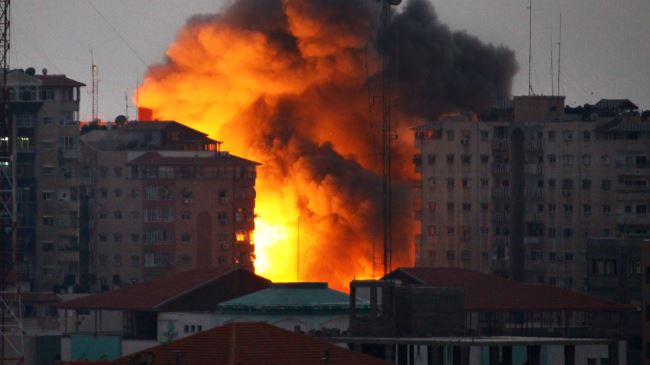
Israel has the right to shell Palestinian hospitals and schools out of self defense as long as Hamas stores rocket launchers next to them, US Sen. Elizabeth Warren said during a town hall meeting in Massachusetts this week.
Warren, darling du jour of American liberals, defended her vote to send more defense funding to Israel in the middle of its recent fierce offensive on Gaza, saying she believes civilian casualties are the “last thing Israel wants,” according to the Cape Cod Times.
“But when Hamas puts its rocket launchers next to hospitals, next to schools, they’re using their civilian population to protect their military assets. And I believe Israel has a right, at that point, to defend itself,” she said.
Israel and Palestinian authorities reached a long-term ceasefire agreement this week after Israel started its campaign in Gaza on July 8. The death toll from the Gaza conflict has reached at least 2,120 people, of which 577 are children, according to the Palestinian Health Ministry.
During the conflict, Israel targeted schools and hospitals in Gaza, claiming that rockets and militant fighters were nearby. The United Nations Relief and Works Agency criticized both Hamas for storing rockets in two schools and Israel for attacks on separate schools.
Attacks on hospitals are prohibited by the Geneva Convention’s Protection of Civilian Persons in Time of War “unless they are used to commit, outside their humanitarian duties, acts harmful to the enemy.” Even then, civilian hospitals can only be targeted “after due warning has been given, naming, in all appropriate cases, a reasonable time limit and after such warning has remained unheeded.”
Warren said Hamas has attacked Israel “indiscriminately.” Thanks to Israel’s vaunted Iron Dome defense system, though, those rockets have “not had the terrorist effect Hamas hoped for.”
Warren supported Israel’s military aggression, justifying its use of force based on America’s “very special relationship with Israel.”
“Israel lives in a very dangerous part of the world, and a part of the world where there aren’t many liberal democracies and democracies that are controlled by the rule of law,” she said. “And we very much need an ally in that part of the world.”
Warren also expressed unease with conditioning future US funding for Israel on the cessation of Israeli settlements in the West Bank.
“I think there’s a question of whether we should go that far,” Warren said.
Last month, UN High Commissioner for Human Rights said Israel may have committed war crimes in Gaza. Navi Pillay said house demolitions and the killing of children raise the “strong possibility” that Israel is violating international law.
More than 17,000 homes in Gaza were destroyed or damaged beyond repair, making around 100,000 Palestinians homeless, since the war began, according to UN estimates.
According to a senior UN Children’s Fund (UNICEF) official, 373,000 Palestinian children are in need of “immediate psychosocial first aid” due to the onslaught of Israeli strikes.
“The impact has truly been vast, both at a very physical level, in terms of casualties, injuries, the infrastructure that’s been damaged, but also importantly, emotionally and psychologically in terms of the destabilizing impact that not knowing, not truly feeling like there is anywhere safe place to go in Gaza,” Pernilla Ironside said last week.
UNICEF estimated that at least 219 schools have been damaged by Israeli airstrikes, while 22 were completely destroyed.
To demonstrate the extent of the damage in Gaza, Ironside estimated that it could take up to 18 years to rebuild the 17,000 housing units that were damaged in the conflict and in light of the ongoing blockade of the region limiting the movement of goods and people.
Israel has also barred major human rights organizations from entering Gaza territory.
Meanwhile, back in the United States, US Sen. Bernie Sanders, American liberals’ other favorite among establishment progressive politicians, has also defended US funding and arms for Israel. At a recent tense town hall in his native Vermont, Sanders condemned Israeli targeting of civilians, but then defended Israel “in a situation where Hamas is sending missiles into Israel” sent from “populated areas.”
“This is a very depressing and difficult issue. This has gone on for 60 bloody years,” he said. “If you’re asking me, do I have a magical solution? I don’t. And you know what, I doubt very much that you do.”
Coroner says man fatally shot himself in the chest while handcuffed behind his back
RT | August 26, 2014
The release of an autopsy report in Louisiana is raising new questions about the unusual shooting death of a 22-year-old black male who died earlier this year in a police car while his hands were cuffed behind his back.
RT reported earlier this year that police in Iberia Parish, LA said Victor White III died in early March after he fatally shot himself while handcuffed in the back of a squad car. White had reportedly been apprehended for possession of drugs, and was searched no fewer than two times before being cuffed and placed in the backseat of a police vehicle. According to the police report from the time, White uncovered a gun while in the car and shot himself in the back.
According to a coroner’s report just recently obtained by NBC News, however, White died from a gunshot wound that entered his body in the chest. Nevertheless, Dr. Carl Ditch wrote in the report that White was capable of firing the shot while cuffed “due to his body habitus” and has agreed to rule the death a suicide.
Hannah Rappleye, a reporter for NBC, compared the coroner’s story with the official police report from March in an article published by the outlet this week.
“White was shot in the front, not the back. The bullet entered his right chest and exited under his left armpit. White was left-handed, according to family members. According to the report, the forensic pathologist found gunshot residue in the wound, but not the sort of stippling that a close-range shot can sometimes produce. He also found abrasions on White’s face,” she wrote. “And yet, despite the contradictions – and even though White’s hands were never tested for gunpowder residue – the Iberia Parish coroner still supported the central contention of the initial police statement issued back in March.”
“Although the decedent was handcuffed at the time with his hands to his back, due to his body habitus, the pathologist and investigators agree that he would have been able to manipulate the weapon to the point where the contact entrance wound was found,” Ditch wrote.
The deceased’s father, Rev. Victor White II, told NBC that he had his doubts about the coroner’s report.
“You can’t make me understand,” he said. “You can’t make me understand how my son took his left hand, when he was handcuffed behind the back, and shot himself. I don’t believe a thing they’re saying at this point.”
According to the coroner, however, White was indeed capable of causing his own death.
“As Coroner of lberia Parish it is my duty to rule on cause and manner of death in all such cases as Mr. White’s to the best of my ability and without bias. Based on the forensic evidence and information gained from the ongoing State Police investigation, I have determined the cause of death is a single contact gunshot wound to the right lateral chest, and the manner of death is suicide,” he wrote.
Meanwhile, though, the Louisiana State Police remain in the midst of an investigation launched nearly nine months ago into the shooting death. Writing for NBC, Rappleye wrote that that probe has so far failed to reveal any new information about the tragic death.
“Due to the pending investigation, records normally considered public are not available. The State Police will not yet release dash cam footage, or the number of or names of any officers present during White’s death. They will not give any timeframe as to when they expect the investigation to conclude,” she wrote.
“You always want to make sure in the end you did whatever you could do possible, that in whatever case you put forward, is the right case, and the outcome is the right outcome,” Trooper Brooks David, public information officer for the Louisiana State Police, told NBC. “So if it takes us eight months, or two months, you always want to make sure that you do the right thing.”
According to Rev. White, however, legal action might be the next step if the eventual release of the Louisiana State Police’s report raises more doubts about his son’s death.
“I don’t’ think anything is going to be different from what they already said,” he told NBC. “It’s difficult to see that anything else would bring us back what we need. The only thing we want back is our son.”
Ghosts of Olavarría: Human Rights Trial in Argentina Seeks Justice for Victims of Military Dictatorship
By Nick MacWilliam | Upside Down World | August 26, 2014
The central quarter of the Argentine city of Olavarría, with its leafy main square, whitewashed church, and historical architecture, merits its National Heritage status. Thanks to mineral extraction of the rock on which it stands, Olavarría is a prosperous and tranquil place, and home to the social science and engineering schools of the University of Buenos Aires Province. Now, however, this seemingly pleasant city has become the latest battleground in Argentina’s ongoing struggle to bring justice to those guilty of crimes during the military dictatorship of 1976–1983.
Olavarría, a city of around 100,000 inhabitants, is the setting for the upcoming trial of several ex-army officials accused of human rights abuses during the dictatorship. A high level of public interest surrounds the proceedings, due to one of the defendants’ alleged involvement in a case which has dominated national media in recent weeks.
 In early August, the human rights organization Grandmothers of the Plaza de Mayo announced that the long-lost grandson of its president Estela de Carlotto had been identified and was living in Olavarría under a different name. Guido Montoya Carlotto had been taken from his detained mother in 1978 when just a few hours old, one of hundreds of babies born in captivity and then raised by families linked to the military authorities. In most cases, their biological parents were murdered by the military. The Grandmothers of the Plaza de Mayo have campaigned since the 1970s to reunite the stolen babies with their natural families and to expose the guilty parties.
Estela de Carlotto The recent news, a welcome dose of positivity on front pages of the country’s newspapers, has received intense media interest. Estela de Carlotto is highly-respected within Argentine society for her tireless campaigning as president of the famous headscarf-wearing Grandmothers. But, as the story has moved on from its initial feel-good element, there are now many questions over who was responsible for taking Guido from his mother, Estela’s 22-year-old daughter Laura Carlotto, who was killed soon after giving birth. The father, Walmir Montoya, abducted alongside his pregnant partner, had been murdered several months earlier.
The spotlight has shifted to Olavarría, location of the impending trial and the city in which Guido Montoya had lived until recently as Ignacio Hurbán. Although the trial date was set several months ago, it is now alleged that one of the accused participated in the transfer of Laura Carlotto’s baby to an adoptive family. Laura, who was handcuffed to a stretcher throughout the entire labor and birthing process, spent only a few hours with her newborn before being returned to her cell at the La Cacha detention center in La Plata.
On September 22, a court will begin listening to evidence against a number of ex-military officials charged with crimes against humanity, including kidnapping, torture and murder, committed at the Monte Peloni detention center in Olavarría. The officials on trial are: the local commander, Ignacio Verdura; Chief of Intelligence, Walter Grosse; Officer Horacio Leites; and Sub-Officer Omar Ferreyra. All of them are currently serving sentences for earlier convictions. While the trial is not directly connected to the removal of the Montoya Carlotto baby, it is suspected that Verdura was involved in the appropriation of babies.
For the last few years, the Grandmothers of the Plaza de Mayo have claimed that an Olavarría businessman, Carlos Francisco Aguilar, acted as an intermediary between the military and adoptive families. Aguilar, who died earlier this year, owned the land on which Guido Montoya’s adoptive parents worked and was known to have strong links to the armed forces and the church. As a wealthy landowner, he moved in the same social circles as high-ranking military figures, such as Ignacio Verdura, the then-chief of the regional 2nd Tank Regiment.
Throughout the 1970s, Olavarría was a site of left-wing militant activity, which brought the city to the military’s attention. State repression began with worker organizations before targeting the lawyers representing them, and later moving on to the student movement. Those who felt the heavy hand of the state included striking workers at the Loma Negra (Black Hill) cement company. The company’s response to the strike was to call in the military to end the dispute with detentions and other suppressive tactics.
Carlos Moreno was a lawyer who represented the Loma Negra workers. He was detained in Olavarría and tortured before being killed in May 1977. A trial in 2012 exposed links between the military and civilians who had allowed their property to be used for detaining prisoners. The trial also ordered an investigation into the role of Loma Negra, whose president was Amalia Lacroze de Fortabat, one of the world’s wealthiest women until her death two years ago at the age of 90.
Speaking to the Página 12 newspaper, Moreno’s son Matías said companies such as Loma Negra reaped the benefits of military rule.
“Before the dictatorship, Loma Negra was suffering losses, but its profits tripled under the dictatorship. The abduction of my father was intended as a disciplinary measure, after which there was a fall in labor costs,” said Matías. This was the aim of all the abductions.”
He also revealed that Commander Verdura lived next-door to the Moreno family. Any neighborly recognition, however, was irrelevant when it came to the military eliminating its opponents.
The Monte Peloni detention centerThe Monte Peloni detention center, where the majority of those detained in the zone were held, was a farmhouse in the countryside near Olavarría. Several prisoners, many of whom remain disappeared, passed through the center, which was administrated by the 2nd Tank Regiment of Ignacio Verdura.
Among the crimes that Verdura and his cohorts stand accused of are the disappearance of a young couple, Isabel Gutiérrez and Juan Carlos Ledesma, the detention of Isabel’s father Francisco Gutiérrez, and the murders of Jorge Oscar Fernández and Alfredo Serafín Maccarini. The latter was a prison guard whose rumored empathy for political prisoners made him a target for the military. Another ex-prisoner, Lidia Araceli Gutiérrez, who was raped and tortured in Monte Peloni, is to give evidence at the trial.
The Olavarría trial is the latest step in the legal battle to hold those involved in the abuses of the dictatorship accountable. As many as 2,000 people connected to the dictatorship have been accused of complicity in abuses, as, according to Human Rights Watch, Argentina has made “significant progress in prosecuting military and police personnel for enforced disappearances, killings and torture during the country’s ‘Dirty War.’” Yet the fact remains that a great many of those who willingly participated in dictatorship abuses have yet to answer for their crimes.
The stealing of babies from people who were subsequently killed continues to be a matter of great sensitivity, as the majority of stolen babies are now unidentified adults living normal lives in Argentine society. The Guido Montoya case was the 114th positive identification of a baby forcibly removed from its biological parents. However, it is estimated that there are hundreds of other citizens now approaching middle-age with little idea of their true identities. For families of the disappeared, the discovery of lost relatives can serve as an act of closure for their longstanding grief. Having spent decades dwelling on the past, they are finally able to look ahead.
In 2012, the dictator Rafael Videla, already serving a life sentence for human rights abuses, was given a further 50 years for his part in the systematic transfer of babies from prisoners to families linked to the military regime. Several other officials, including the country’s last military leader Reynaldo Bignone, have been convicted and imprisoned for their involvement in abuses. Bignone, who like Videla had already been found guilty of torture and murder in earlier trials, was said by the court to be complicit in “the crimes of theft, retention and hiding of minors, as well as replacing their identities.”
But the campaign of forced removal was perpetrated at all levels of the military hierarchy. As Guido Montoya Carlotto said in a recent interview with the newspaper El Popular de Olavarría, in his hometown “there are people who have to thoroughly explain themselves … I hope that people learn to question that which has been covered up, so that this not only represents my restitution but also the restitution for other people experiencing doubts.”
As Argentina continues to come to terms with the traumas of military rule, stories like the Carlottos’ provide inspiration for the justice movement to keep fighting. Yet, this is a journey that is unlikely to ever be fully resolved. The entrenched political system of brutality and repression was too widespread to hold all the guilty to account. But each small step signifies progress. Many will be closely watching the Olavarría trial in the hope that Argentina continues on its path toward redemption.
Nick MacWilliam is a British freelance writer and editor based in Buenos Aires.
Gaza Under Siege: Israel Destroys Hospitals, Denies Entry to Doctors and Medical Aid
Al-Mayadeen | August 23, 2014
Interview with Dr. Swee Ang Chai, co-Founder and Patron of British Charity Medical Aid for Palestinians
Why was the Lancet letter which has 24 signatories of doctors and scientists published?
 Dr. Swee Ang Chai: All the authors and signatories fear the worse at the beginning of this crisis which erupted in early July based on their previous experience. However the situation has got much worse since the publication of the letter. Gaza has already been declared a disaster area by the UK government. Despite the destruction of infrastructure, doctors and healthcare workers in Gaza continued to work despite severe conditions and their personal circumstances. Their own homes are being destroyed and families killed, and to be landed with more than 12,000 wounded is simply overwhelming for any medical system. That this is why Swee and her surgical colleagues wanted to assist by volunteering to go to Gaza. As of yesterday (22 August 2014) the death toll reached 2083, with 50% women and children. Eighty five families were annihilated, and 12,656 injured. Forty five clinics and fifteen hospital were destroyed (two of the hospitals completely flattened), 8 fire stations, 1 ambulance station. Health institutions should be protected as sanctuaries under international law for the wounded and sick people, but they were targeted.
You and your consultant surgical colleague have just been deported as you entered Israel to get to Gaza… elaborate.
They first gave me a three month Israeli visa of the B2 type when they thought I was a tourist. Then when they realized I was going to Gaza, my colleague and I were taken aside and interrogated in a very humiliating way for three hours, following that we were detained, and deported after around 16-17 hours. But the personal humiliation, detention and deportation is not the worst part. It is the realisation that this is part of the siege imposed on Gaza. The siege does not only apply to medical equipment and supplies for Gaza but also to people who want to get to Gaza to assist. They can stop me from getting to Gaza but they cannot stop me from caring for and supporting the Palestinians, and they cannot stop the world from knowing about what they do to Palestinians. These crimes committed against Palestinians cannot be covered up. I will raise my voice and say what happened in Gaza. Gaza was shelled with tons of ammunition and depleted uranium which not only kill immediately but leave residues which emit radioactive rays causing malformations in utero and miscarriages. And this will continue despite repeated ceasefires. Gazans want to rebuild their broken homes but building materials are blockaded. People have no choice but to rebuild their broken homes with rubble contaminated with radioactive uranium as the siege continues. What do you want them to do? They have no choice but to rebuild their homes over mounds of destruction and ‘nuclear’ waste. Even if the war stops, these rays will have an impact on people’s lives.
Is Britain and the USA complicit in this?
I will not say that all of Britain and the US are complicit. Some in high positions are. But I can tell you that within a week of having published the Lancet letter, we got 20,000 signatures endorsing the letter. But there are others who are protesting against the letter at the same time. And there are people who have been subjected to threats via email saying that if you continue to support Palestinians you will be killed. But we must say what we have to say, this is the truth. This is what is happening, massacres, and if we are silent in the face of massacres we would not be fit to be doctors and scientists. We have to be witnesses. 32 years ago, I was a doctor supporting Israel, and my family and I used to support Israel. But when Israel invaded and occupied Lebanon in 1982, and bombed Lebanon for ten weeks, I could not tolerate it anymore. I decided not to support Israel and volunteered to help the wounded in Lebanon. Later I went to Gaza. My life changed, when I went to Lebanon, I went to Sabra and Shatilla, and I did not find terrorists. I found a people who are patient, gentle and generous and they welcomed me, amidst their enormous suffering. But they were labeled as terrorists. After the evacuation of the PLO, when they were defenceless, they were massacred. I went back after the attack (1982), and I found that some of the patients I treated were killed. I went back to London, and continued with my work and it is impossible to say nothing. For 32 years, I decided not to be silent , and will speak up for Palestinians as a witness to what happened to them. I am also a friend of the Palestinians. So wherever I go I will talk about what happened to Palestinians and the injustice which they have been enduring, and I will do this until I die.
Interviewer: You have written a book: From Beirut to Jerusalem, but since that time, there has been no change for the Palestinians. You were very angry. Let me read a section of the Gaza letter (published by Lancet):
“We register with dismay that only 5% of our Israeli academic colleagues signed an appeal to their government to stop the military operation against Gaza. We are tempted to conclude that with the exception of this 5%, the rest of the Israeli academics are complicit in the massacre and destruction of Gaza. We also see the complicity of our countries in Europe and North America in this massacre and the impotence once again of the international institutions and organisations to stop this massacre” the letter is directed to Who?
Dr. Swee Ang Chai: This paragraph refers to all people who are guilty of knowing that the massacre is going on and yet say nothing. They are complicit in the crime. There are also the people who deliberately cover it up. It is our duty and that of Mayadeen to inform the world of what is happening. But when we speak up, many attacked us because they were complicit in this crime , and tried to cover up what is happening by intimidating and silencing us. For example deporting doctors so that we do not see and witness what is happening. But they forget that the Palestinian doctors are still there, and they can tell the world what is going on because they are there. For the rest of the world, some do not take a stand because of lack of knowledge and it is our role to inform them. Others are worried about speaking up through fear, but we must support them to take a stand.
What do you think of Israel’s attack on people, children etc., why do you think they are killing them?
I am very sad because only 10% of Israel want the massacre to stop and the rest want it to continue. In other words the other 90% of Israelis want Palestinians chucked out or killed, and this is compatible with ethnic cleansing and mass extermination, a strong word, but what is happening in Gaza is an attempted or incremental genocide..
Why do you decide to publish the letter in the Lancet?
As you know this is a strong letter. many editors have difficulty with it. But we know the Lancet is a prestigious journal, and Richard Horton took the risk in publishing this. He knows Palestine well, since several years. His conscience made him publish this letter. He is paying a high price for publishing the letter. There is a nasty campaign to get him fired.
Thank you Dr. Swee Ang Chai, founder of Medical Aid for Palestinians and for your voice as a medical doctor and humanitarian.
An open letter for the people in Gaza
by Paola Manduca, Iain Chalmers, Derek Summerfield, Mads Gilbert, Swee Ange, on behalf of 24 signatories
We are doctors and scientists, who spend our lives developing means to care and protect health and lives. We are also informed people; we teach the ethics of our professions, together with the knowledge and practice of it. We all have worked in and known the situation of Gaza for years.
On the basis of our ethics and practice, we are denouncing what we witness in the aggression of Gaza by Israel.
We ask our colleagues, old and young professionals, to denounce this Israeli aggression. We challenge the perversity of a propaganda that justifies the creation of an emergency to masquerade a massacre, a so-called “defensive aggression”. In reality it is a ruthless assault of unlimited duration, extent, and intensity. We wish to report the facts as we see them and their implications on the lives of the people.
We are appalled by the military onslaught on civilians in Gaza under the guise of punishing terrorists. This is the third large scale military assault on Gaza since 2008. Each time the death toll is borne mainly by innocent people in Gaza, especially women and children under the unacceptable pretext of Israel eradicating political parties and resistance to the occupation and siege they impose.
This action also terrifies those who are not directly hit, and wounds the soul, mind, and resilience of the young generation. Our condemnation and disgust are further compounded by the denial and prohibition for Gaza to receive external help and supplies to alleviate the dire circumstances.
The blockade on Gaza has tightened further since last year and this has worsened the toll on Gaza’s population. In Gaza, people suffer from hunger, thirst, pollution, shortage of medicines, electricity, and any means to get an income, not only by being bombed and shelled. Power crisis, gasoline shortage, water and food scarcity, sewage outflow and ever decreasing resources are disasters caused directly and indirectly by the siege.1
People in Gaza are resisting this aggression because they want a better and normal life and, even while crying in sorrow, pain, and terror, they reject a temporary truce that does not provide a real chance for a better future. A voice under the attacks in Gaza is that of Um Al Ramlawi who speaks for all in Gaza: “They are killing us all anyway—either a slow death by the siege, or a fast one by military attacks. We have nothing left to lose—we must fight for our rights, or die trying.”2
Gaza has been blockaded by sea and land since 2006. Any individual of Gaza, including fishermen venturing beyond 3 nautical miles of the coast of Gaza, face being shot by the Israeli Navy. No one from Gaza can leave from the only two checkpoints, Erez or Rafah, without special permission from the Israelis and the Egyptians, which is hard to come by for many, if not impossible. People in Gaza are unable to go abroad to study, work, visit families, or do business. Wounded and sick people cannot leave easily to get specialised treatment outside Gaza. Entries of food and medicines into Gaza have been restricted and many essential items for survival are prohibited.3 Before the present assault, medical stock items in Gaza were already at an all time low because of the blockade.3 They have run out now. Likewise, Gaza is unable to export its produce. Agriculture has been severely impaired by the imposition of a buffer zone, and agricultural products cannot be exported due to the blockade. 80% of Gaza’s population is dependent on food rations from the UN.
Much of Gaza’s buildings and infrastructure had been destroyed during Operation Cast Lead, 2008—09, and building materials have been blockaded so that schools, homes, and institutions cannot be properly rebuilt. Factories destroyed by bombardment have rarely been rebuilt adding unemployment to destitution.
Despite the difficult conditions, the people of Gaza and their political leaders have recently moved to resolve their conflicts “without arms and harm” through the process of reconciliation between factions, their leadership renouncing titles and positions, so that a unity government can be formed abolishing the divisive factional politics operating since 2007. This reconciliation, although accepted by many in the international community, was rejected by Israel. The present Israeli attacks stop this chance of political unity between Gaza and the West Bank and single out a part of the Palestinian society by destroying the lives of people of Gaza. Under the pretext of eliminating terrorism, Israel is trying to destroy the growing Palestinian unity. Among other lies, it is stated that civilians in Gaza are hostages of Hamas whereas the truth is that the Gaza Strip is sealed by the Israelis and Egyptians.
Gaza has been bombed continuously for the past 14 days followed now by invasion on land by tanks and thousands of Israeli troops. More than 60 000 civilians from Northern Gaza were ordered to leave their homes. These internally displaced people have nowhere to go since Central and Southern Gaza are also subjected to heavy artillery bombardment. The whole of Gaza is under attack. The only shelters in Gaza are the schools of the UN Relief and Works Agency for Palestine Refugees in the Near East (UNRWA), uncertain shelters already targeted during Cast Lead, killing many.
According to Gaza Ministry of Health and UN Office for the Coordination of Humanitarian Affairs (OCHA),1 as of July 21, 149 of the 558 killed in Gaza and 1100 of the 3504 wounded are children. Those buried under the rubble are not counted yet. As we write, the BBC reports of the bombing of another hospital, hitting the intensive care unit and operating theatres, with deaths of patients and staff. There are now fears for the main hospital Al Shifa. Moreover, most people are psychologically traumatised in Gaza. Anyone older than 6 years has already lived through their third military assault by Israel.
The massacre in Gaza spares no one, and includes the disabled and sick in hospitals, children playing on the beach or on the roof top, with a large majority of non-combatants. Hospitals, clinics, ambulances, mosques, schools, and press buildings have all been attacked, with thousands of private homes bombed, clearly directing fire to target whole families killing them within their homes, depriving families of their homes by chasing them out a few minutes before destruction. An entire area was destroyed on July 20, leaving thousands of displaced people homeless, beside wounding hundreds and killing at least 70—this is way beyond the purpose of finding tunnels. None of these are military objectives. These attacks aim to terrorise, wound the soul and the body of the people, and make their life impossible in the future, as well as also demolishing their homes and prohibiting the means to rebuild.
Weaponry known to cause long-term damages on health of the whole population are used; particularly non fragmentation weaponry and hard-head bombs.4, 5 We witnessed targeted weaponry used indiscriminately and on children and we constantly see that so-called intelligent weapons fail to be precise, unless they are deliberately used to destroy innocent lives.
We denounce the myth propagated by Israel that the aggression is done caring about saving civilian lives and children’s wellbeing.
Israel’s behaviour has insulted our humanity, intelligence, and dignity as well as our professional ethics and efforts. Even those of us who want to go and help are unable to reach Gaza due to the blockade.
This “defensive aggression” of unlimited duration, extent, and intensity must be stopped.
Additionally, should the use of gas be further confirmed, this is unequivocally a war crime for which, before anything else, high sanctions will have to be taken immediately on Israel with cessation of any trade and collaborative agreements with Europe.
As we write, other massacres and threats to the medical personnel in emergency services and denial of entry for international humanitarian convoys are reported.6 We as scientists and doctors cannot keep silent while this crime against humanity continues. We urge readers not to be silent too. Gaza trapped under siege, is being killed by one of the world’s largest and most sophisticated modern military machines. The land is poisoned by weapon debris, with consequences for future generations. If those of us capable of speaking up fail to do so and take a stand against this war crime, we are also complicit in the destruction of the lives and homes of 1·8 million people in Gaza.
We register with dismay that only 5% of our Israeli academic colleagues signed an appeal to their government to stop the military operation against Gaza. We are tempted to conclude that with the exception of this 5%, the rest of the Israeli academics are complicit in the massacre and destruction of Gaza. We also see the complicity of our countries in Europe and North America in this massacre and the impotence once again of the international institutions and organisations to stop this massacre.
Featured Video

Why the U.S. Should Pull Back From the First Island Chain
or go to
Aletho News Archives – Video-Images
Book Review
‘Why Fauci Must Rot in Prison’: A Tale of Two Diaries
By Jill Erzen | The Defender | October 13, 2026
Dr. Anthony Fauci’s private diary reveals a “mind-numbing” contradiction between what the former top U.S. infectious disease official knew about COVID-19 and what he told the public, senior White House adviser Peter Navarro, Ph.D., said last week on “American Thought Leaders.”
In his new book, “Why Fauci Must Rot in Prison,” due out Oct. 20, Navarro compares Fauci’s private entries to his own pandemic-era diary, and uses what he calls “a tale of two diaries” to argue that Fauci should face criminal prosecution.
“I show, actually, how a prosecution can and should happen … at the state level, most likely,” Navarro said. “He should wind up in prison, and we’ve got the receipts in this book to put him there.”
Navarro said Fauci repeatedly acknowledged important facts in private, then publicly pursued policies that contradicted those facts — with devastating consequences.
“What he says many times privately in his diary is so at odds with both his public behavior and public statements that it’s mind-numbing,” Navarro said.
Navarro examines the lasting damage caused by lockdowns and other pandemic policies, and the ongoing toll of long COVID.
His book also addresses questions about vaccine safety, including why healthy young people faced COVID-19 vaccination mandates despite concerns about myocarditis, and why women were not warned about miscarriage risks linked to the shots. … continue
Blog Roll
 Aletho News
- Jennifer Kavanagh: Why the U.S. Should Pull Back From the First Island Chain
- Yemen denounces international community’s silence on Saudi aggression, siege
- UAE and Saudi Arabia move toward renewed coordination against Sanaa
- How Iran’s two-week retaliatory strikes exposed cracks in US military architecture in Persian Gulf
- The mother of all propaganda: Why the hype over US MOAB strike against Iran is nothing but theater
- Iran says it possesses technology behind US 14-ton GBU bunker-buster
- Trump asks Iran not to retaliate after he strikes Pickaxe Mountain – w/ Prof. Marandi
- Vice President J.D. Vance’s Deceptive ‘Antiwar’ Campaign Speech
- Iran: Palestinians’ rights must not be compromised in Gaza’s future; US, Israel to blame for Hormuz situation
- Ongoing tales of Syrian chemical weapons
- If Americans Knew
- Israeli rabbi permits occupiers to steal Palestinian olive harvest in West Bank
- Netanyahu’s spin on latest settler attack is laughable – Daily Update
- Israeli soldiers debunk Israel’s talking points
- In West Bank, Israeli settlers are totally out of control – Daily Update
- NPR investigation finds evidence of widespread fraud at mall kiosks tied to Israeli skincare brand
- Tucker Carlson exposes Israeli Lies about the Oct 7th attack, Charlie Kirk, and the U.S.
- Israel has detained thousands of Palestinian children since Oct 7th – over half spent time in solitary, many uncharged
- Israeli Analysis: Is Netanyahu Planning an ‘October Surprise’ Attack Before Israel’s Election?
- Israeli settlers brutally attack Palestinians and Washington Post female photographer, 65
- Words Have Changed, Occupation Continues: The Reality of the Gaza Ceasefire
- No Tricks Zone
- Predictions Made By Renowned Climate Proifessor Over Past Decades Have Been Proven To Be Poor
- New Study Suggests Large Regions Of The Pacific Ocean Have Been Cooling For The Last 80 Years
- Germany’s Green Energy Debacle: High Energy Costs Force Kahla Porzellan to Close After 182 Years!
- New Study: 50 Years Of The Most Aggressive ‘Net Zero’ Policies Can Only Affect The Global Climate By 0.03°C
- US September “Heat” Was No Record…Many Records Set Decades Ago
- Latest European Green Energy Debacle; Portugal’s Largest Flagship Solar Park Insolvent!
- Green Energy Debacle: German Expert Professor Fritz Vahrenholt Warns Of Severe Economic And Social Consequences
- Two More Paleo Reconstructions Affirm Meters-Higher Sea Levels Across Ireland, Brazil 7000-6000 Years Ago
- New Study: Earth And Venus Surface Warmth Largely Explained By Convection And Lapse Rate, Not CO2 Or Radiation
- 2025 Nature Paper Claiming Worsening Global Drought Gets RETRACTED …Heavily Flawed

