Palestinian journalist succumbs to wounds sustained in Israeli onslaught
Palestine Information Center – 26/08/2014
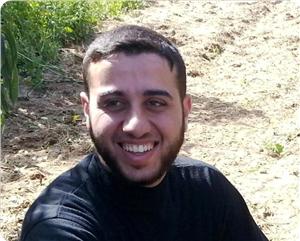 GAZA – Abdullah Mortaja, a Palestinian journalist working for al-Aqsa TV Channel, died on Monday evening of wounds he sustained in an Israeli artillery attack on al-Shujaiya neighborhood, east of Gaza city.
Palestinian medics said Mortaja breathed his last after his health status went downhill and he kept bleeding non-stop due to the injuries incurred in the attack.
Mortaja is a graduate of the Journalism and Media Department at the Islamic University of Gaza. He worked as a correspondent for al-Aqsa TV Channel and a youth activist in Gaza.
Mortaja is the son-in-law of Hamas spokesman, Fawzi Barhoum. His murder brings the death toll of journalists killed during the Israeli offensive, rocking besieged Gaza since July 7, to at least 17.
Scores of human rights and humanitarian organizations have called for the need to immediately launch an international investigation into Israel’s premeditated slaughter of journalists covering Gaza war.
The Palestinian Information Ministry said in a statement on Monday that 102 Israeli violations, targeting journalists and news reporters working for local and foreign news agencies have been registered.
The casualties’ list includes: Ali Shahta Abu Afsh, working for the American Agency, Italian journalist Simone Camili, working for the Associated Press, driver of Media 24 agency, Hamed Abdullah Shihab, and female media activist, Najla al-Haj among others.
According to the ministry, at least 16 Palestinian journalists and an Italian journalist were killed while 18 others sustained severe wounds. 29 journalists’ family homes and 17 media offices came under Israeli shelling, including the headquarters of al-Jazeera, al-Aqsa, Associated Press, and Doha Media Center.
More than 15 media sites, radios and TV channels have been jammed, the ministry further documented.
The report outlined a detailed account of journalists who have turned homeless as barrages of Israeli strikes rocked their family homes. Journalist Mahmoud Ahmad al-Athamna and his wife, along with their little child, sustained deadly wounds after Israeli fighter jets hit their home, razing it entirely to the ground.
Homes of journalists Rami al-Ajala, Shahda Naim, and al-Jazeera reporter Ahmad Fayadh, along with brothers Youssef and Atiya Abu Sharia’ were all subject to the same fate.
The Israeli occupation has stepped up its belligerent aggression on Palestinian and foreign pro-Gaza journalists since the launch of the Gaza offensive on July 7, denying local and international news agencies the right to broadcast an authentic coverage of Israel’s mass-murder of Gaza people.
Israeli occupation forces exterminate 90 Palestinian families in Gaza
MEMO | August 25, 2014
Palestinian medical sources in Gaza have confirmed that 90 Palestinian families were completely exterminated by Israeli forces in their ongoing war on the Gaza Strip.
According to the Palestinian Ministry of Health in Gaza, the number of fatalities on the 49th day of the war was 20 with more than 60 wounded.
On Sunday, the total deaths since the beginning of the war had climbed to 2,120, including 577 children, 260 women and 101 elderly. The number of wounded also became 10,854, including 3,307 children, 2,042 women and 401 elderly.
Spokesman of the ministry of health, Dr Ashraf al-Qudra, said: “The Israeli occupation took the Joudeh family out of the civil record. This massacre is added to 89 similar others.”
Al-Qudra noted that the 90 massacred families consisted of 530 members.
In recent days the Israeli occupation stepped up its attacks on residential areas. During the last 48 hours they destroyed a 14-story building in Gaza city, an entire neighbourhood in Khan Younis, a shopping centre in Rafah and three mosques in Rafah, Gaza and Beit Hanoun.
Israel tells Palestinian prisoners: We bombed your homes and killed your families
By Ibtisam Mahdi | Al-Akhbar | August 26, 2014
“We killed your brother and destroyed your family home.” The words hit the prisoner, Said Abu Shaluf, like a slap to the face. A few hours after bombing his home, Said was summoned by the Israeli prison administrators. They informed him that they killed his 31-year-old brother Abdel Rahman and destroyed their family home. This is Israel’s latest attempt to break the spirit of Palestinian prisoners, who dared to challenge the Israeli authorities through hunger strikes in more than one struggle, in a long line of struggles, for dignity. But who can hear the prisoners’ added pain now in light of the ongoing war on Gaza?
Abu Shaluf’s family tried to avoid informing their imprisoned son about the death of his brother Abdel Rahman or the destruction of their home by Israeli bombs, especially out of concern for his psychological state inside prison. But the Israelis beat the family and the media, where news is usually muddled yet moves quickly, delivering the devastating news in an insensitive manner. Since that day, the family learned that Said is in a very difficult psychological state, and he is refusing to eat even though his prison mates are trying to comfort and console him. This has naturally compounded his mother’s pain.
Abu Shaluf’s story is not unique. Before him, a 31-year-old prisoner called Basel Arif, who was serving two life sentences, was informed that Israeli forces killed four of his cousins in the massacre in al-Shujayeh neighborhood, east of Gaza City.
Other [Israeli] prison administrations have used a similar tactic. And so the story was repeated with a 24-year-old prisoner called Ahmed al-Soufi, who lost his brother Abdel Hadi and the homes of his family and relatives suffered major damage after an Israeli strike. The families of the two prisoners, Alaa Sheikh al-Eid (detained since December 2002) and Raafat Abu Snaimeh (detained since April 2009) said the Israelis also told their sons that their homes were destroyed. The same thing happened with prisoner Saleh Abu Shusheh (sentenced for 14 years) and all of them are residents of Rafah in southern Gaza.
The Fatah representative of the prisoners’ committee in Gaza, Nashaat al-Wahidi, stressed that the prisoners’ living and health conditions are deteriorating in light of Israel’s vengeful policies that are escalating as the assault on Gaza rages on. “The prisons’ administrations exploited the fact that people are preoccupied with the war and distracted from the plight of the prisoners to impose on them extra punishment, such as reducing the time they can be outside from four to two hours daily and allowing only 15 prisoners out at one time,” he added.
Some of the other penalties, according to Wahidi, include reducing each prisoner’s stipend from 1,200 shekel to 400 ($300 to $110), reducing family visits to half an hour every month, and disconnecting seven satellite channels out of 10. Two channels of the three that are left are in Hebrew.
Despite these penalties, Wahidi told Al-Akhbar that what weighs down on the prisoners the most is the psychological state that accompanies the war.
“Those whose homes are not destroyed or whose families are not hurt spend their time consoling their colleagues, worrying for their families and following the news,” he said.
Wahidi pointed out that prisoners have been deprived of the ability to follow the news of what their families are subjected to in Gaza after the prison administration decided to cancel Palestine TV and “prevented them from communicating with their families to check on them, not to mention the provocative searches and messing with their personal belongings as they look for cell phones.”
According to sources close to the prisoners, the Israeli Prison Service imposed strict penalties at the Megiddo Prison in north of occupied Palestine after the administration heard cries of “God is Great” emanating from prison cells when prisoners heard that the Resistance captured an Israeli soldier. The administration closed certain prison sections, prevented the prisoners from going out and buying stuff from the prison shop and suspended the broadcast of TV stations.
But the war did not only affect prisoners inside Israeli jails, it also affected those who have been liberated, especially those who were released during the 2011 Loyalty to the Free prisoner exchange deal. They are living through the second war since their release, compounded by the fact some of them had their homes bombed by the Israeli forces. One of the liberated prisoners exiled to Gaza is Hilal Jaradat, his apartment in one of the towers in al-Zahraa City in central Gaza which was recently bombed and badly damaged.
The house of another liberated prisoner, 54-year-old Mohammed Nashbat, in al-Nusairat refugee camp in central Gaza was hit and Nashbat is being treated overseas, especially since he came out of prison suffering from a heart disease. Another prisoner, liberated with the first group of prisoners prior to Oslo, 41-year-old Ayman Abu Sitta, lives in the al-Zawayda area in central Gaza. His home was completely destroyed.
According to an unofficial count, the Israeli occupation targeted seven other homes belonging to liberated prisoners during the course of this recent war. The Ministry of Prisoner Affairs said there are extensive and comprehensive punitive measures exercised against the prisoners linked to Hamas and the Islamic Jihad since before the war began, specifically after the Israeli authorities announced the disappearance of three settlers in Hebron. These measures intensified during the current war.
Russia will do whatever necessary to protect its legitimate interests – Lavrov
RT | August 25, 2014
Russia doesn’t want to escalate tit-for-tat sanctions with the West, but is ready to do whatever is necessary to protect its legitimate interests, including those of national security in all its dimensions, Russia’s FM told The Daily Telegraph.
Peace in Ukraine can only be attained through a broad national dialogue that includes all regions and its terms cannot simply be dictated by a “government of the winners,” Russian FM Sergey Lavrov said in an interview with The Daily Telegraph.
“The point is for Kiev to stop war games and to abandon the illusion that the deep crisis in Ukraine can be resolved by winning the war against your own people,” Lavrov said, reiterating that with support from US and EU, Kiev continues to ignore its numerous commitments to a “government of national unity.”
“Unfortunately, the logic of “the winner takes it all” remains the thrust of Kiev’s actions resulting in thousands of victims among civilians, hundreds of thousands of refugees and displaced persons, as well as almost totally destroyed social infrastructure in many cities and towns in Eastern Ukraine.”

A house in Donetsk destroyed by shelling. (RIA Novosti / Maks Vetrov)
Speaking further on the humanitarian catastrophe, Lavrov once again said it is “crucial to ensure immediate supply of humanitarian aid to the people of south-eastern Ukraine.”
The first convoy of Russian aid was ready to move as early as 17 August, but was delayed “primarily due to procrastination tactics employed by Kiev authorities,” he added, urging the Ukrainian government “to deliver on its promises and to facilitate safe and unhindered passage of future humanitarian assistance.”
Lavrov also spoke about the “meaningless tit-for-tat vicious circle” started by unilateral sanctions imposed on Russia, and called them “counterproductive” and “contradicting” the norms and principles of the international law.
“It is absolutely unacceptable to talk to Russia – and to anyone, for that matter – in the language of ultimatums and coercive measures,” the minister said, emphasizing that Russia’s response was balanced.
“It is not at all our choice, but there should be no doubt that we will do whatever is necessary to protect our legitimate interests, including the interests of national security in all its dimensions.”
Lavrov also touched on the topic of the dragging Malaysian MH17 airliner tragedy, reminding that a number of simple questions which could shed some light on the incident still remain unanswered.
“Unfortunately, from the very beginning we have been witnessing attempts to conceal evidence and to hinder the implementation” of the resolution adopted by the UN Security Council, the minister said. “Russia is the only country which officially presented to the international community the data related to the incident as received through our space monitoring capacity.”
“We hope to get answers to these and other questions both from the states which took the leading role in the international investigation and from those who made unsubstantiated public statements,” Lavrov said. “We must not allow the investigation of MH17 crash to be manipulated into oblivion like already happened to investigations of many Ukrainian tragedies, including the sniper assault against civilians in Kiev in February, massacres in Odessa and Mariupol in May and others.”
In the meantime, Lavrov once again rejected groundless speculation about Russian troops crossing into Ukrainian territory as obviously “part of an information war.”
“Unfortunately, the mass media continue to spread rumours, distorted information and even outright lies. Recently there were claims by Ukraine that its artillery destroyed an armoured column that had allegedly crossed from Russia into Ukraine,” he said. “No evidence, however, was presented, and even the US State Department could not confirm the incident.”
READ MORE: Malaysian Boeing disaster – Russia’s questions to Ukraine
Ukraine’s Right Sector ‘seizes’ Crimea reporter, AFP freelancer
RT | August 25, 2014
 Two Crimean journalists, including a photographer who works with AFP and RIA news agencies, say they have been detained by enforcers from Ukraine’s Right Sector movement, while covering the conflict in the east of the country.
Reporter Evgeniya Korolyova and photographer Maksim Vasylenko were returning on a bus from the war zone near Donetsk, which is besieged by government forces, when a Right Sector patrol made them disembark, before taking them prisoner.
The information was reported by the Crimean Telegraph newspaper, where both journalists are on the payroll, which says that it received a phone call from the detainees on Sunday night.
“Evgeniya was allowed one phone call, but it seemed that there were people watching her every word as she spoke, so she couldn’t say exactly where she was arrested. Asked if her life was in danger, she denied it, but specified that she was detained as a journalist, not an ordinary citizen,” wrote the Crimean Telegraph.
The newspaper said that the pair were not on an editorial assignment, while Russia’s RIA news and AFP’s bureau in Moscow confirmed that Vasylenko had been working for them as a freelance photographer.
Crimean Telegraph editor in chief Maria Volkonskaya said the newspaper would submit an official query about the whereabouts of the two, while journalists in the Crimean capital Simferopol have scheduled a demonstration demanding their release for Tuesday afternoon.
(Image from ktelegraf.com.ua)
Lavrov: Russia to send another humanitarian convoy to Ukraine
RT | August 25, 2014
Russian Foreign Minister Sergey Lavrov has announced plans for a second humanitarian convoy to be sent to eastern Ukraine, urging foreign actors and agencies to participate in continuing efforts at relieving the crisis.
Failure to do so would constitute a violation of international law, he warned.
“Anyone in need of aid shall receive it,” the FM said, stressing that it is important to learn from the mistakes of the first attempt and to look forward to closer cooperation with the Ukrainian authorities this time around.
He stressed that as the indiscriminate shelling of areas such as Lugansk continues, the humanitarian need for water and food grows. This has been acknowledged by humanitarian agencies and international actors at large.
The distribution of aid is currently underway, and is headed by the ICRC.
The FM also added that the shelling of schools, hospitals, kindergartens and other vulnerable institutions and structures can no longer be excused by claims of “wrongful shooting” or be written off as “accidental.”
Minister Lavrov emphasized that Russia is willing and ready to participate in full in any type of negotiations on ending hostilities in the east, and expressed hope that Tuesday’s meeting in Minsk will include a focus on the crisis in Ukraine.
“We certainly expect that tomorrow’s meeting in Minsk will feature a discussion on the humanitarian crisis,” Lavrov said. “We express hope that all participants will urge for the removal of any obstacles to smooth aid delivery to those who are most in need of it,” he added.
The upcoming gathering will be attended by the Customs Union, the Ukrainian authorities and members of the EU.
Sergey Lavrov was asked a wide range of questions on the situations in Ukraine, including the claims that Russian arms were crossing the border.
Allegations of Russian attempts to smuggle military equipment into Ukraine are false and are the latest in a string of bad information that has been circulating in recent days, the minister said. No one, including Ukraine’s special services, could confirm those suspicions.
Lavrov went on to stress that reports of Russian forces crossing into Ukraine have not been confirmed by the OSCE, which is evidenced in their report.
“We were ready at the August 17 meeting in Berlin to urge the provision of any support necessary – including drones – to the OSCE mission.”
He further mentioned OSCE concerns that indiscriminate arrests carried out by the militias are beginning to resemble a “witch hunt.”
The people migrating into the west are not being taken in, nor are their children being given places in schools, he stressed.
If this is the sort of national unity Klichko, Tyangibok and Yatsenyuk spoke of, they lied to their own people, he said, referring to national unity agenda promoted by the leaders of the opposition to former president Viktor Yanukovich.
The minister was dismayed at the ongoing investigation into the downing of flight MH17 over eastern Ukraine, which aroused much controversy and finger-pointing. He said that at this point it would appear that Russia “seems to be the only interested party in giving this serious issue any further attention.”
US Law Requiring Annual Report on Excessive Force by Police has been Ignored for 20 Years
By Steve Straehley | AllGov | August 22, 2014
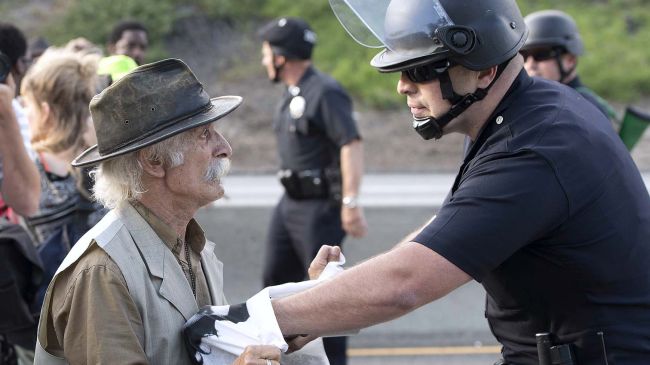
The circumstances of the death of Michael Brown in Ferguson, Missouri, have brought that one police shooting into the national conscience. But many other Americans are killed by police and their deaths go unnoticed and mostly uncounted, despite a Congressional mandate.
In 1994, Congress passed the Violent Crime Control and Law Enforcement Act. Among its provisions was the order that “the Attorney General shall, through appropriate means, acquire data about the use of excessive force by law enforcement officers.” The Justice Department was also required to publish an annual report on the data collected.
And… that’s pretty much the last anyone heard of that. The work of collecting the data was shuffled off to the International Association for Chiefs of Police, which made a few efforts at collecting data and put together a report in 2001, but has produced nothing since.
“That’s a clear, clear problem,” Matthew Hickman, an associate professor of criminal justice at Seattle University, told Michael Doyle of McClatchy. “When it comes to use of force, we have almost nothing.”
Part of the reason is that the term “excessive force” is open to interpretation. Even a shooting ending in the death of an unarmed pedestrian could be judged by a jury to be justified. In addition, police departments are expected to report on their own incidences of excessive force, which some might be reluctant to do.
The Justice Department began to compile statistics on police shootings in 2001, according to the International Business Times. However, their reports cover only the years from 2003 to 2009 and don’t tell the whole story because of incomplete reporting and problems with research methods.
Wikipedia has tried to crowd-source a shootings database and blogger Jim Fisher, who scours the internet for information on police shootings, has had some success.
For now, Congress is still waiting for the statistics, although the head of the Senate Judiciary Committee that sought the data has moved on. His name is Joe Biden and he’s now Vice President of the United States.
To Learn More:
Data On Police Shootings Is Hard To Find (by Michael Doyle, McClatchy)
How Many Police Shootings Have There Been? (by Ross Keith, International Business Times)
How Many People are Killed by Police in U.S.? Who Knows? (by Steve Straehley, AllGov)
First trucks with Russian aid reach Lugansk, E. Ukraine – reports
RT | August 22, 2014

Trucks of a Russian convoy carrying humanitarian aid for Ukraine, August, 22, 2014 (RIA Novosti / Maksim Blinov)
The first Russian trucks carrying humanitarian aid have reportedly reached the east Ukrainian city of Lugansk. Moscow ordered the convoy to proceed, without waiting for further permission from Kiev.
The first trucks in the Russian humanitarian convoy have arrived in Lugansk, leaders of the self-proclaimed People’s Republic of Lugansk confirmed to RIA Novosti.
Earlier, the LifeNews TV channel and Interfax agency also reported that several Russian vehicles carrying aid to the conflict zone made it to their final destination.
On Friday morning, several dozen Russian trucks crossed the Ukrainian border and started moving towards Lugansk, after Moscow ordered the convoy to proceed, without waiting for further permission from Kiev.
By 10:30 GMT on Friday, 145 vehicles from the 280-truck Russian aid convoy had crossed into Ukraine, reported RIA Novosti, citing the Ukrainian border guard service.
Moscow has accused Kiev of deliberately holding up the delivery of Russian humanitarian aid to the Donetsk and Lugansk regions in eastern Ukraine, according to the statement by the Russian Foreign Ministry.
“Our convoy with humanitarian aid is starting to move in the direction of Lugansk,” the Foreign Ministry’s statement reads. “We are of course ready for it to be accompanied by Red Cross representatives and for their participation in the aid’s distribution.”
The International Committee of the Red Cross (ICRC) is not escorting the convoy.
“That’s because of the problems with security,” Galina Balzamova of the ICRC told RT. “Lugansk was shelled all night long. We believe we did not get sufficient guarantees of safety from all the parties to the conflict to start escorting the convoy.”
The head of the Russian Red Cross, Raisa Lukutsova, has said the organization supported the decision to get the humanitarian convoy moving.
“The fact that the humanitarian mission has started – this has probably been the right decision,” Lukutsova said. “For how long do we have to put up with this mockery? They put forward one demand after another. All of them unrealistic.”
She added the Russian Red Cross is ready to escort the humanitarian convoy and has appealed to the ICRC for permission to do so.
ICRC, meanwhile, confirms that people in areas affected by the ongoing conflict in eastern Ukraine are in “urgent need for essentials like food and medical supplies.”
The crisis is particularly acute in Lugansk, where people have gone for weeks without water and electricity and have to queue every day for whatever scarce food supplies are brought to the city.
RT’s Maria Finoshina has spoken to Lugansk residents, who fear hunger is the reality they are about to face.
Ukraine’s intelligence (SBU) chief, Valentyn Nalivaychenko, has described the convoy crossing the Russian border as a “direct invasion.”
“We call it a direct invasion,” Nalivaichenko told journalists. “Under the cynical cover of the Red Cross these are military vehicles with documents to cover them up.”
The Ukrainian Border Service has said that by ordering the convoy to proceed Moscow has “ignored the agreements reached on registering the humanitarian load.”
“The trucks started moving through Ukraine, after a group of Ukrainian border customs’ officers had been blocked at the Russian check-point ‘Donetsk’,” a statement by the Ukrainian Border Service reads.
The Ukrainian Foreign Ministry has accused Moscow of “smuggling humanitarian aid to Ukraine” and said it had to allow the convoy to pass.
“To avoid provocations we have given all the necessary orders to let the convoy pass safely,” the ministry’s statement says.
The Russian Foreign Ministry said the “excuses” for delaying the aid from entering Ukraine have been “exhausted”.
Ukraine agreed to let the convoy pass during an August 20 phone call between the Russian and Ukrainian foreign ministers. That gave a start to customs procedures for checking and registering the contents of the trucks comprising the convoy.
The next day the process was stopped by Ukraine, citing intensified shelling of Lugansk.
“In other words Ukrainian authorities are bombing the place of the aid’s point of destination and cite this as a reason for banning delivery of the aid,” the Russian Foreign Ministry said in a statement.
A convoy of 280 Kamaz trucks carrying food, medicines and other essentials for Lugansk and Donetsk in eastern Ukraine left the Moscow region on August 12.
It has been stuck at the border with Ukraine for more than a week.
“There’s a feeling that the current Ukrainian authorities have been consciously putting the humanitarian aid delivery on hold to arrive at a situation where there’ll be just no one left to get it,” the Ministry’s statement reads.
See also: Russian Red Cross volunteers ready to escort aid convoy to Lugansk, E. Ukraine
The ICC Should Live Up To Its Mandate
By Cesar Chelala | CounterPunch | August 21, 2014
The 1998 Rome Statute, the International Criminal Court’s founding charter, states that one of the critical ICC’s tasks is that “the most serious crimes of concern to the international community as a whole must not go unpunished.” However, under pressure from the US and the European Community, the ICC has avoided opening an investigation into alleged war crimes in Gaza. By doing so, the ICC is not living up to its mandate.
Lawyers for the Palestinians -whose civilian population has been most punished by the ongoing war in Gaza- state that the ICC prosecutor, Fatou Bensouda, has the legal authority to launch an investigation based on a Palestinian request in 2009. However, Bensouda claims that she needs a new Palestinian declaration to do it.
Luis Moreno Ocampo, who was the ICC prosecutor at the time of the Palestinian declaration, supports Bensouda’s position. However, The Guardian quotes a former official from the ICC prosecutor’s office stating, “They are trying to hide behind legal jargon to disguise what is a political decision, to rule out competence and not get involved.”
Moreno Ocampo took three years to decide on the status of the 2009 Palestinian request for an investigation, following the tragic events of the Israeli offensive on Gaza, called Cast Lead. During that time, both the US and Israel intensely pressured him not to allow an investigation, warning him that the future of the ICC was at stake.
According to legal experts, Palestinians were misled in 2009 into thinking that their request for a war crimes investigation would remain open pending confirmation of statehood. However, no investigation was launched after the UN General Assembly (UNGA) voted in November 2012 to grant Palestine the status of non-member observer state.
Although Bensouda initially appeared open to review the standing Palestinian request, in 2010 she issued a statement saying that the UNGA vote made no difference to the “legal validity” of the 2009 request. She has been accused of being under pressure from the US and its European allies (mainly France and the United Kingdom -the ICC’s main contributors to the ICC budget- to prevent the investigation.
The Rome Statute established four main international crimes: genocide, crimes against humanity, war crimes and the crime of aggression. Those crimes “shall not be subject to any statute of limitations.” Furthermore, under the Rome Statute, the ICC can only investigate and prosecute the four core international crimes in situations where states are “unable” or “unwilling” to do so themselves.
The court has jurisdiction over crimes only if they are carried out in the territory of a state party or if they are committed in the territory of a state party or if they are committed by a national of a state party. However, an exception to this rule is that the ICC may also have jurisdiction over crimes if its jurisdiction is authorized by the United Nations Security Council.
It is conceivable that Israel, to a certain extent Hamas and even the US could be tried under the Rome Statute. In the case of Israel, because it carried out actions that amount to war crimes, and in the case of the United States by lending Israel financial and military support. Palestinians argue that the small number of Israeli civilians killed by Hamas couldn’t amount to a war crime.
On January 2013 Israel became the first country refusing to participate in a “universal periodic review” of the human rights records of the UN’s 193 member states conducted by the United Nations Human Rights Council (UNHRC).
Palestinian and Israeli human rights groups sharply criticized Israel for its refusal to participate stating that this conduct sets a “dangerous precedent… that could be followed by other states refusing to engage with the UN in order to avoid critical appraisals.” Although from a different context, these words could easily apply now to Israel and the US’s blocking of any investigation into the ongoing Gaza tragedy.
Israel Bans International Human Rights Workers from Gaza
By Celine Hagbard | IMEMC News | August 21, 2014
Since beginning its assault on the Gaza Strip on July 8th, Israeli officials have prevented human rights observers and experts employed by Amnesty International and Human Rights Watch from entering Gaza to conduct independent investigations.
Both groups are known worldwide for their work in exposing human rights abuses, and both groups have, in the past, filed reports critical of both the Hamas party in Gaza and of Israel’s practices toward Palestinians. But Amnesty International and Human Rights Watch employees have been unsuccessful in their attempts to bring observers into Gaza during the Israeli invasion.
The groups have called on both Israel and Egypt to lift the restrictions on human rights observers, and allow their employees to enter Gaza.
The joint press release filed by the two groups reads as follows:
Israel should immediately allow access to Gaza for Amnesty International, Human Rights Watch and other international human rights organizations so they can investigate allegations of serious violations of international humanitarian law by all parties to the conflict, Amnesty International and Human Rights Watch said today.
“The Israeli authorities appear to have been playing bureaucratic games with us over access to Gaza, conditioning it on entirely unreasonable criteria even as the death toll mounted” said Anne FitzGerald, Amnesty International’s Director of Research and Crisis Response. “The victims’ and the public’s right to know about what happened during the recent hostilities requires the Israeli authorities to ensure full transparency about their actions and to refrain from hindering independent and impartial research into all alleged violations.”
Since the beginning of Israel’s military operation on July 8, 2014 in Gaza, code-named “Protective Edge”, Israeli authorities have denied repeated requests by both Amnesty International and Human Rights Watch to enter Gaza via the Israeli-controlled Erez Crossing. Both groups also requested access from Egyptian authorities, who so far have not granted it.
“If Israel is confident in its claim that Hamas is responsible for civilian deaths in Gaza, it shouldn’t be blocking human rights organizations from carrying out on-site investigations,” said Sarah Leah Whitson, Middle East and North Africa director at Human Rights Watch. “Public pronouncements by a warring party don’t determine whether attacks violated the laws of war, but field investigations could.”
Since July 7, Amnesty International’s International Secretariat has submitted three applications for permission to enter Gaza via the Erez Crossing to Israel’s Civil Administration, which operates under Israel’s Defense Ministry. In each case, the Civil Administration said it could not process the requests, and that the Erez Crossing was closed. Journalists, United Nations staff, humanitarian workers, and others with permits have been able to enter and exit via Erez throughout this period.
“Valuable time has already been lost and it’s essential that human rights organizations are now able to enter the Gaza Strip to begin the vital job of verifying allegations of war crimes,” FitzGerald said.
Amnesty International requested assistance on this matter from Israel’s Foreign Affairs Ministry, and various third-party governments have raised the issue with their Israeli counterparts on Amnesty International’s behalf, but none of these efforts has been successful.
Human Rights Watch received similar responses from the Civil Administration to its request for permission to enter Gaza since the recent escalation in hostilities. Israeli authorities at the Erez Crossing also said that Human Rights Watch was not eligible for permits to enter Gaza because it was not a registered organization. However, the Israeli authorities acknowledged that they had discretion to make an exception. On August 17, Human Rights Watch requested such an exception as soon as possible; Israeli authorities denied it on August 19. Prior to 2006, Israeli authorities repeatedly granted Human Rights Watch access to Gaza without requiring the group to register or seek a special exception.
During the recent hostilities, Israeli forces have intensively bombarded the Gaza Strip from the air, land and sea, severely affecting the civilian population there. According to the UN Office for the Coordination of Humanitarian Affairs, 1,975 Palestinians have been killed, including 1,417 civilians of whom 459 are children and 239 women. Thousands of unexploded remnants of war are dispersed throughout the Gaza Strip. Hundreds of thousands of people have been displaced. Sixty-seven Israelis have been killed including three civilians.
Palestinian armed groups have fired thousands of indiscriminate rockets toward Israeli population centers; have reportedly stored rockets in empty school buildings; and allegedly deployed their forces without taking all feasible precautions to prevent harm to civilians, in violation of international law. Amnesty International and Human Rights Watch had some staff already stationed on the ground in Gaza but the quantity and magnitude of reported violations require the investigative assistance of other researchers, which Israel is blocking.
The Israeli government must allow all allegations of war crimes and other violations to be independently verified and the victims to obtain justice. Active human rights monitoring on the ground can also help serve to prevent further abuses being carried out – by all sides.
The Israeli authorities last granted Human Rights Watch access to Gaza through the Erez Crossing in 2006, and Amnesty International in the summer of 2012.
Since then, Amnesty International and Human Rights Watch have repeatedly been told that they must register with Israel’s Foreign Affairs Ministry, which only registers diplomats and UN personnel, or the Social Welfare Ministry. Registration with the Social Welfare Ministry is an option for humanitarian and development organizations with offices in Israel and the Occupied Palestinian Territories, but it is virtually impossible for Amnesty International and Human Rights Watch, as international human rights organizations, to meet the conditions for registration.
Ferguson Unmasks the War on Black America
A Black Agenda Radio commentary by Glen Ford | August 20, 2014
The brave and besieged people of Ferguson, Missouri, have already caused serious complications for the U.S. National Security State. By virtue of simply standing their ground in their own small city, the demonstrators have forced the local, county and state police to show their true, thoroughly militarized colors. Ferguson’s righteous agitators and rebellious Black youth have succeeded in pinning down in one small space the armed forces of racist repression in full view of the corporate and the people’s media, so that the whole world can bear witness to the truth of what another generation proclaimed nearly half a century ago: that, in the Black community, the police are an army of occupation.
The military character and mission of the police is more clear today than when the Black Panther Party and others sounded the alarm in the Sixties. Back then, the first SWAT teams were staking out sniper positions on city streets and the federal Law Enforcement Assistance Administration had only just begun to funnel millions of dollars in surveillance technology, guns, body armor and all manner of lethal equipment to local and state police departments across the country. The term “mass Black incarceration” had not yet been coined, but it was only a matter of time before a permanent, militarized police offensive against rebellion-prone ghettos would cause unprecedented numbers of Black prisoners to flow into the greatest gulag in the history of the world.
A Force to Crush a People
White America perceived that it was at war with Black people, who no longer knew their place – and so, places of confinement were made for them; fortified dungeons to house millions. Since America tells itself and the rest of the world that it does not make war on its own citizens, and that there is a sharp and Constitutionally defined separation between the military and civilian functions of the State, the war against Black people had to be called something else – a War on Drugs, or simply a War on Crime. Therefore, it was not long before the words “crime” and “drugs” and “Black” came to mean the same thing since, really, there was only one war going on. And, it continues, still.
The young people of Ferguson, and greater St. Louis, and all of urban, suburban and rural Black America understand perfectly well that war is being waged against them. The powers-that-be every day of the year make it is crystal clear to Black people, especially Black men, that an overwhelming and lethal force is prepared to crush them – for any reason, or for no reason at all. This is the definition of a war of terror. It requires the aggressor to engage in constant and ever escalating displays of disciplined force – which is what militaries do. By refusing to disperse, the Black people of Ferguson have compelled the police to flaunt their military nature and mission before the eyes of the world. The American National Security State is embarrassed. But it will take a social transformation – that is, a revolution – to disarm the beast.
Glen Ford can be contacted at Glen.Ford@BlackAgendaReport.com.
Featured Video

Why the U.S. Should Pull Back From the First Island Chain
or go to
Aletho News Archives – Video-Images
Book Review
‘Why Fauci Must Rot in Prison’: A Tale of Two Diaries
By Jill Erzen | The Defender | October 13, 2026
Dr. Anthony Fauci’s private diary reveals a “mind-numbing” contradiction between what the former top U.S. infectious disease official knew about COVID-19 and what he told the public, senior White House adviser Peter Navarro, Ph.D., said last week on “American Thought Leaders.”
In his new book, “Why Fauci Must Rot in Prison,” due out Oct. 20, Navarro compares Fauci’s private entries to his own pandemic-era diary, and uses what he calls “a tale of two diaries” to argue that Fauci should face criminal prosecution.
“I show, actually, how a prosecution can and should happen … at the state level, most likely,” Navarro said. “He should wind up in prison, and we’ve got the receipts in this book to put him there.”
Navarro said Fauci repeatedly acknowledged important facts in private, then publicly pursued policies that contradicted those facts — with devastating consequences.
“What he says many times privately in his diary is so at odds with both his public behavior and public statements that it’s mind-numbing,” Navarro said.
Navarro examines the lasting damage caused by lockdowns and other pandemic policies, and the ongoing toll of long COVID.
His book also addresses questions about vaccine safety, including why healthy young people faced COVID-19 vaccination mandates despite concerns about myocarditis, and why women were not warned about miscarriage risks linked to the shots. … continue
Blog Roll
 Aletho News
- Jennifer Kavanagh: Why the U.S. Should Pull Back From the First Island Chain
- Yemen denounces international community’s silence on Saudi aggression, siege
- UAE and Saudi Arabia move toward renewed coordination against Sanaa
- How Iran’s two-week retaliatory strikes exposed cracks in US military architecture in Persian Gulf
- The mother of all propaganda: Why the hype over US MOAB strike against Iran is nothing but theater
- Iran says it possesses technology behind US 14-ton GBU bunker-buster
- Trump asks Iran not to retaliate after he strikes Pickaxe Mountain – w/ Prof. Marandi
- Vice President J.D. Vance’s Deceptive ‘Antiwar’ Campaign Speech
- Iran: Palestinians’ rights must not be compromised in Gaza’s future; US, Israel to blame for Hormuz situation
- Ongoing tales of Syrian chemical weapons
- If Americans Knew
- Israeli rabbi permits occupiers to steal Palestinian olive harvest in West Bank
- Netanyahu’s spin on latest settler attack is laughable – Daily Update
- Israeli soldiers debunk Israel’s talking points
- In West Bank, Israeli settlers are totally out of control – Daily Update
- NPR investigation finds evidence of widespread fraud at mall kiosks tied to Israeli skincare brand
- Tucker Carlson exposes Israeli Lies about the Oct 7th attack, Charlie Kirk, and the U.S.
- Israel has detained thousands of Palestinian children since Oct 7th – over half spent time in solitary, many uncharged
- Israeli Analysis: Is Netanyahu Planning an ‘October Surprise’ Attack Before Israel’s Election?
- Israeli settlers brutally attack Palestinians and Washington Post female photographer, 65
- Words Have Changed, Occupation Continues: The Reality of the Gaza Ceasefire
- No Tricks Zone
- Predictions Made By Renowned Climate Proifessor Over Past Decades Have Been Proven To Be Poor
- New Study Suggests Large Regions Of The Pacific Ocean Have Been Cooling For The Last 80 Years
- Germany’s Green Energy Debacle: High Energy Costs Force Kahla Porzellan to Close After 182 Years!
- New Study: 50 Years Of The Most Aggressive ‘Net Zero’ Policies Can Only Affect The Global Climate By 0.03°C
- US September “Heat” Was No Record…Many Records Set Decades Ago
- Latest European Green Energy Debacle; Portugal’s Largest Flagship Solar Park Insolvent!
- Green Energy Debacle: German Expert Professor Fritz Vahrenholt Warns Of Severe Economic And Social Consequences
- Two More Paleo Reconstructions Affirm Meters-Higher Sea Levels Across Ireland, Brazil 7000-6000 Years Ago
- New Study: Earth And Venus Surface Warmth Largely Explained By Convection And Lapse Rate, Not CO2 Or Radiation
- 2025 Nature Paper Claiming Worsening Global Drought Gets RETRACTED …Heavily Flawed

