Medical teams under fire
International Solidarity Movement | July 25, 2014
Gaza, Occupied Palestine – At 19:00 Beit Hanoun Hospital was hit by an Israeli tank shell. Inside the hospital are 61 medical staff, three patients, civilians, and ISM volunteers who are all trapped inside. Israeli soldiers are in the area, approximately 150 meters behind the hospital. Gunfire can be heard in the area.
This afternoon Israeli forces targeted an ambulance with two paramedics inside in Beit Hanoun, North Gaza. One paramedic was killed and another was critically injured.
This is the third Israeli attack on Gazan medical facilities and personnel in the last 24 hours. The first resulted in the destruction of Al Durrah Children’s Hospital in Gaza City last night. A two year-old child in the Intensive Care Unit was killed, and 30 others injured.
Since Israel began its attack on Gaza, 13 ambulances have been completely destroyed and two paramedics have been killed. Throughout the massacre, medical staff and facilities have been repeatedly targeted.
“Israel’s attacks on Gaza hospitals are ongoing, with those in areas by the separation barrier forced to evacuate their patients, paramedics and other rescue workers are doing what they can under conditions of great risk.” Stated Joe Catron, U.S. International Solidarity Movement activist.
According to the Gazan Ministry of Health, six out of Gaza’s 13 hospitals have already been severely damaged. One, el-Wafa rehabilitation hospital, has been completely destroyed. Two medical clinics have been completely destroyed, seven other clinics have been damaged, 13 medical staff members have been injured, and five have been killed.
The Ministry of Health in Gaza has demanded, “the immediate cessation of Israeli occupation military attacks against medical facilities and personnel in Gaza, and demands that the international community soundly condemn this latest Israeli atrocity, and hold Israel accountable for these war crimes.”
Here are some of the numbers you can call:
Swedish Ministry for Foreign Affairs
Carl Bildt
+46 8 405 10 00 [4]
(Plus a load more phone numbers on this page: http://www.government.se/sb/d/2085)
@carlbildt
@SweMFA
The German Foreign Office:
Federal Foreign Office
Frank-Walter Steinmeier, Minister
Tel. (24 hours service): +49 30 1817 0
Telefax: +49 30 1817 3402
German Embassy Tel Aviv emergency number / for German citizens only: +972-54-9944724 (mobile)
Twitter
Auswärtiges Amt @AuswaertigesAmt
UK Foreign and Commonwealth Office
MP Philip Hammond
+44 20 7008 1500
020 7219 4055
@foreignoffice
US Department of State
Israel Foreign Service Desk: 202-647-3672
@StateDept
Spain
José García-Margallo y Marfil
91 379 97 00
@MAECgob
New Zealand Ministry of Foreign Affairs and Trade
Murray McCully
+64 4 439 8000
@NZNationalParty
French Ministry of Foreign Affairs
Laurent Fabius
@francediplo
@laurentfabius
Australian Department of Foreign Affairs and Trade
Julie Bishop
+61 2 6261 1111 (office)
1300 555 135 (24-hour Consular Emergency Centre)
@dfat
@JulieBishopMP
Venezuelan Ministry Foreign Affairs
Elías Jaua
+58 212 806.4400
+58 212 8061111
@ Vencancilleria
Jewish mob attacks 2 Palestinians in West Jerusalem
Ma’an – 24/07/2014
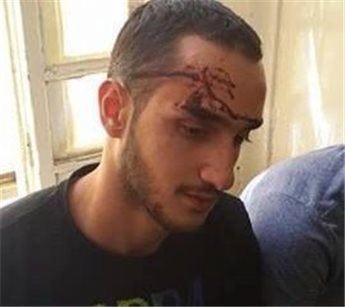 JERUSALEM – A mob assaulted two Palestinians as they were walking on the trendy Jaffa street in the center of West Jerusalem on Thursday, their lawyer said, potentially the latest in a string of hate attacks targeting Arabs across Israel in recent weeks.
The two Palestinians — who were identified as Amir Mazin Abu Eisha, 20, and Laith Ubeidat — were injured and subsequently arrested by police, who reportedly said they had threatened people in the crowd “with knives.”
The lawyer for the two Palestinians, Khaldun Nijim, told Ma’an that the two were surrounded by around 20-30 Jewish passerby as they were distributing bread at grocery shops on Jaffa street, the central thoroughfare of West Jerusalem.
After Jewish passerby began verbally and physically assaulting them, he added, “The Israeli police stopped them in their van and pointed guns at them” while the mob “beat them with empty bottles.”
“After they drove away a few meters, the police shot at them. They then stopped and were assaulted again.”
The two sustained injuries in the assault and were detained by Israeli police, who transferred them to the nearby Russian compound police station for “having a knife and obstructing the work of the police.”
An ambulance was called for Abu Eisha to treat his head and ear injuries, but he was prevented from being taken to a hospital for treatment.
Nijim added that a number of members of the mob filed a complaint against the two for “attempting to attack them with a knife,” but he insisted that he planned to file a complaint against the mob and the police officer.
The pair were bailed out and sentenced for 10 days of house arrest.
An Israeli police spokesman did not respond to a request for comment.
Cities across Israel have witnessed a string of attacks against Palestinians in recent months, as a “price tag” crime wave that targeted Palestinians inside Israel for perceived slights against Jewish settlements in the West Bank has evolved into recurring mob attacks and anti-Arab rallies.
In recent weeks, Palestinian passerby have been repeatedly assaulted on Jerusalem’s Jaffa street, and one video that showed a young boy being surrounded and assaulted by dozens was shared repeatedly on social media.
Jaffa street has been covered with flyers warning Arabs not to “touch” Jewish women in recent weeks, as part of a right-wing Jewish campaign to prevent mixing among Jews and Arabs.
Although the majority of Palestinians were expelled from their homes inside Israel during the 1948 conflict that led to the creation of the State of Israel, some Palestinians managed to remain in their villages and their descendants today make up around 20 percent of Israel’s population.
In Jerusalem, however, the majority of Palestinians are not Israeli citizens but residents of Jerusalem who fell under Israeli military occupation in 1967 but unlike West Bank Palestinians were given permanent residency cards entitling them to certain benefits.
Israeli forces invade Azzun and use Palestinian civilians as human shields
International Solidarity Movement | July 24, 2014
Azzun, Occupied Palestine – On Monday, July 21st, Israeli forces used Palestinian civilians as human shields in the village of Azzun, a village west of the city of Nablus.
On most evenings several Israeli jeeps are stationed just outside the Azzun’s north gate. At 10 o’clock in the evening on the night in question, approximately 15 soldiers entered the main square of the village.
Witnesses report that a few young men responded to this invasion by throwing stones at the jeeps from a distance of approximately 200 meters. The soldiers spent the next few minutes stopping cars on the road and began forcing the drivers to arrange their cars in a circle. The soldiers then forced these residents of Azzun to surrender their keys. The occupants of the cars included women and children. They were very frightened and the soldiers did not allow them to leave. The Israeli forces positioned themselves inside the circle formed by the cars, began to fire tear gas at the youths, and knelt behind the civilian occupants of the cars as to protect themselves.
The use of civilian human shields is prohibited by Fourth Geneva Convention. Israel ratified this convention in 1951.
Israeli forces have a long history of using Palestinian civilians as human shields. From the years 2000 to 2005, they admitted to using human shields more than 1,200 times. This practice was banned by the Israeli Supreme Court in 2005, but human rights groups have accused the Israeli army of continuing to use it. During the Gaza massacre of 2008-2009 Israeli occupation forces were accused by Amnesty International, as well as former Israeli soldiers, of using Palestinian children as human shields.
Israeli forces bomb UNRWA school in Gaza, killing at least 15
Al-Akhbar | July 24, 2014
At least 15 people were killed, including a baby, when an Israeli tank shell slammed into a UN-run school in the northern Gaza Strip on Thursday, Gaza health ministry sources said.
The ministry also estimated that at least 200 people were wounded in the bombing.
A UN official confirmed “multiple dead and injured” at the school in Beit Hanoun, which was being used as a shelter by hundreds of Palestinians fleeing a major Israeli operation in the area.
“At 14:50, a shell landed in or near” an UNRWA school being used as a shelter, a UN official told AFP.
“People in the shelter were hurt,” he said, with a spokesman for Gaza’s emergency services reporting deaths.
The director of a local hospital said various medical centers around Beit Hanoun were receiving the wounded.
“Such a massacre requires more than one hospital to deal with it,” said Ayman Hamdan, director of the Beit Hanoun hospital.
A Reuters photographer at the scene said pools of blood had collected on the ground and on student desks in the courtyard of the school near the apparent impact mark of the shell.
Scores of crying families who had been living in the school ran with their children to the hospital where the victims were being treated a few hundred meters away.
Laila Al-Shinbari, a woman who was at school when it was shelled, told Reuters families had gathered in the courtyard expecting to be evacuated shortly in a Red Cross convoy.
“All of us sat in one place when suddenly four shells landed on our heads … Bodies were on the ground, (there was) blood and screams. My son is dead and all my relatives are wounded including my other kids,” she wept.
UNRWA spokesman Chris Gunness said that the UN agency had unsuccessfully tried to coordinate with Israeli forces prior to the attack to let civilians evacuate the school.
Israel has attacked at least three UNRWA schools in the past four days. UNRWA facilities have served as shelters for tens of thousands of Palestinians since the beginning of the offensive.
At least 76 Palestinians have been killed on Thursday, the 17th day of a deadly Israeli assault on the Gaza Strip. In total more than 770 Palestinians have been killed in Operation “Protective Edge.”
(Reuters, AFP, Al-Akhbar)
Journalist captured in E. Ukraine released, RT stringer remains hostage
RT | July 24, 2014

Graham Phillips (Photo from grahamwphillips.com)
A journalist released from the ANNA news agency, who was captured along with RT contributor Graham Phillips, told RT that they were taken hostage by the Ukrainian army and tortured and beaten. Phillips’ fate remains unknown.
ANNA news agency cameraman, Vadim Aksyonov, has been released while RT contributor Graham Phillips, a UK national, is being held captive, ANNA news told RT.
According to the ANNA news press service, Aksyonov who was released about 3 hours ago is in “terrible state” as he hasn’t slept for a day and was tortured.
The journalist told RT how he and his colleague – RT contributor Graham Phillips were taken hostages.
“We were captured in [Donetsk] airport. Graham [Phillips] ran to the parking, I ran after him. Then we were taken by people with guns,” Aksyonov told RT.
Vadim Aksyonov said he is sure that the Ukrainian army was behind their kidnapping as they were wearing its insignia.
When they were taken to the cells at some checkpoint, they were tortured and beaten, he added.
“At first we were kept together, then separately. I heard him [Phillips] screaming from pain and he heard me screaming, too,” he told RT.
According to Aksyonov, their captors then took them somewhere. He heard that Phillips was dropped in the city of Krasnoarmeisk, in the Donetsk Region of eastern Ukraine.
Aksyonov thinks that Graham Philips might be taken to either Kiev, Ukraine’s capital, or Zaporizhie, a city in southern Ukraine which borders on the Donetsk Region, or to the city of Uzhhorod in western Ukraine.
The agency still hasn’t reveal the fate of two other hostages – an employee of the press service of the self-proclaimed Donetsk People’s Republic, and possibly an acquaintance of Phillips, who accompanied the journalist to the airport.
Phillips has been reporting about the developments in Ukraine for several months now. According to research from Brandwatch social networks monitor, he has become the most popular author in Twitter reporting on the situation in Ukraine.
It is not the first time, the RT contributor has been taken hostage. He was detained once at a checkpoint in Mariupol and held captive by Kiev military for over 36 hours in May.
Journalists from a range of media outlets have come under fire, some of them even detained, during the conflict in eastern Ukraine. There have also been reports that Ukrainian troops have fired at people with cameras, as well as people wearing press vests.
Russian journalists have been captured by Kiev’s forces throughout the conflict in eastern Ukraine.
In June, journalists from Russia’s Zvezda TV channel spent two days in captivity, after being detained by the Ukrainian National Guard.
In May, two LifeNews journalists were taken hostage for two days by the National Guard, prompting an online #SaveOurGuys campaign.
Several journalists have also been killed while covering the unrest in eastern Ukraine.
In June, a Russian cameraman from Channel One TV, Anatoly Klyan, was shot by Kiev forces in Donetsk. Also in June, Rossiya TV journalist Igor Kornelyuk and his colleague, sound engineer Anton Voloshin, were killed in shelling near Lugansk.
In May, Italian journalist Andrea Rocchelli and his Russian interpreter Andrey Mironov were killed when they were caught in a mortar attack close to the village of Andreevka, a couple of kilometers from Slavyansk.
Fears Grow of Possible Massacre in East Khan Younis; Area Completely Cut Off Until Early Thursday
Palestinian Ministry of Health Report | July 24, 2014
The Khuza’a area of east Khan Younis was cut off from the rest of the city for hours on Wednesday night, with medics unable to enter, journalists forced out and Israeli military forces engaged in a ground and air assault that has been ongoing, and has now sparked fears of a massacre similar to the one on Sunday, in Shuja’eyya, in which more than 75 people were killed.
Early Thursday, Israeli forces agreed to let up the assault for an hour to allow medics to retrieve the bodies of the dead and wounded.
Doctor Yusef Abu Al-Rish, the Deputy Health Minister of Gaza, issued a statement that reads:
Another massacre is underway in Khan Younis, where relentless Israeli shelling and sniper fire are wreaking death and destruction on all that moves in the zone east of Khan Younis city.
The villages of Khuza’a, Al Fukhari, Abasan Alkabir, Abasan Al Sa’ir, Jarara, and Bani Suhela received no warning of the attacks, and no warnings to evacuate before the bombardment began at around 11pm last night.
The intensity of Israeli shelling around the Algerian Hospital in Abasan Alkabir shattered its windows, and led to its evacuation, leaving only the emergency department operational.
Despite residents’ frantic calls to the International Committee of the Red Cross (ICRC) for help in finding a safe route and safe vehicles to escape, the ICRC was unable to get a response from Israeli authorities until dawn today, when five bodies and 17 injured were retrieved and taken to Nasser Hospital in Khan Younis.
An unknown number of dead and injured remain behind, as ambulances are prevented access.
Israeli military has declared the Khuza’a area a closed military zone, preventing even medics from entering it, but reports from Khuza’a stated that 12 were dead by morning.
The casualties in other villages are unable to be established at this time. Random shelling continues unabated, and Israeli snipers inside houses are attacking anything that moves.
Homes are being destroyed over the heads of entire families. Thousands have been displaced, many fleeing to the Nasser and European Gaza Hospitals.
Even hospitals are not safe, however. Monday’s attack on Al Aqsa hospital has left staff and patients alike fearing for their lives even within medical facilities.
The reality is that there is no safe sanctuary, for residents, patients or health personnel alike.
As they did in Shuja’eyya, the Israeli military is indiscriminately attacking civilians.
As they did in Shuja’eyya, the Israelis military is refusing to provide humanitarian access to the dead and injured, in clear breach of humanitarian law.
As they did in Shuja’eyya, the Israeli military is committing war crimes, with apparent impunity.
The Ministry of Health Gaza demands that the international community require the Israeli military to
1. Immediately cease all attacks on civilian targets in Gaza;
2. Immediately cease all attacks on medical facilities and personnel in Gaza;
3. Immediately provide access to the dead and injured, as required by international humanitarian law.
Medical Aid as a Weapon
By Paul Larudee | Dissident Voice | July 22, 2014
Q: Why is Egypt preventing medical aid to Gaza?
A: So that Israel can use it as a weapon, that’s why.
This explains why dozens of volunteer medical personnel cannot reach the desperately understaffed hospitals in Gaza. It explains why Egypt turned away a convoy of desperately needed medical supplies.
In this time of crisis, Egypt has sealed the border with Gaza, except occasionally to Palestinians who are registered with Israel as residents of Gaza. For anything else, please apply to Israel.
That’s fine for UNRWA, ANERA, UPA and other groups Israel has approved as relief agencies and who buy a lot of their supplies from Israeli sources, store it in Israeli warehouses, use Israeli transportation, have personnel that live in Israel and generally meet Israeli requirements and contribute to the Israeli economy. But what about doctors that carry Lebanese passports? Or Pakistanis, Algerians, Venezuelans, Sudanese, Iranians, Cubans or Syrians? Or who are not permitted to travel to or through Israel because they are on a long list of people who are critical of Israel, such as the organizers of the relief convoy that was turned away? Until the Sisi administration they used to be able to enter through Egypt.
That’s exactly the point. Israel wants them all to go to hell because they are not friends of Israel. Even better, let the people of Gaza go to hell – its children, mothers, grandparents – let them die or better still become infirm and a burden on this already crippled society.
Ashy grey faces – Oh NO! not one more load of tens of maimed and bleeding, we still have lakes of blood on the floor in the ER, piles of dripping, blood-soaked bandages to clear out – oh – the cleaners, everywhere, swiftly shovelling the blood and discarded tissues, hair, clothes, cannulas – the leftovers from death – all taken away…to be prepared again, to be repeated all over. More then 100 cases came to Shifa last 24 hrs. enough for a large well trained hospital with everything, but here – almost nothing: electricity, water, disposables, drugs, OR-tables, instruments, monitors – all rusted and as if taken from museums of yesterdays hospitals. But they do not complain, these heroes. They get on with it, like warriors, head on, enormous resolute.
– Dr. Mads Gilbert, al-Shifa Hospital, Gaza
This is what Israel has in mind. In effect, it has turned back the clock to when it destroyed nearly two thousand homes along the Gaza border, making homeless around 20,000 Palestinians and creating the “Philadelphi corridor”, a path of destruction the width of three football fields and eight miles long. It then controlled all of the borders of the Gaza strip, encroaching and destroying everything on the Gaza side up to an average depth of a half kilometer, and in the sea from a treaty-protected twenty kilometers to less than three unprotected, confining the ever growing population into an ever shrinking area with ever fewer resources.
Now, with Israel’s sweethearts running Egypt, it is once again fully in charge of that border, as well, and can treat the Gaza Strip like a hunting reserve, where its troops can practice their skills every couple of years. This is necessary in order to assure that the new recruits acquire the same genocidal experience as their older peers and preserve Israel’s shared cultural traditions.
These are the real aims of the Gaza invasion.
Paul Larudee is one of the founders of the Free Gaza and Free Palestine Movements and an organizer in the International Solidarity Movement.
Why Are These Indian Children Being Torn Away From Their Homes?
By Stephen Pevar | ACLU | July 23, 2014
Imagine entering family court and knowing that what’s at stake is the person you hold most dear – your child. Now imagine having a judge tell you that he’s removing your child from your custody, from your home. When you ask him why, the judge’s replies, “I honestly can’t tell you.” The judge then signs an order giving custody of your son to Social Services.
You might think that such a court proceeding could never happen in the United States – but you’d be wrong.
It happened not long ago to the father of an American Indian child in South Dakota. What’s more, many similar hearings in which Indian children are removed from their homes for no reasons given to the parents occur at least 100 times a year in Rapid City, South Dakota, alone.
Congress passed the Indian Child Welfare Act (ICWA) in 1978 in an effort to stop American Indian families from having their children removed by state and local officials for invalid and sometimes even racist reasons. Yet 36 years later, Indian children in South Dakota are 11 times more likely to be removed from their families and placed in foster care than non-Indian children.
The ACLU filed a lawsuit in March 2013 in federal court on behalf of the Oglala Sioux and the Rosebud Sioux tribes in South Dakota and on behalf of a class of all Indian families living in Rapid City, South Dakota, the state’s second largest city. We sued state and local officials who, we contend, repeatedly violate ICWA.
We recently examined 120 transcripts of initial custody hearings – known as “48-hour” hearings – held during the past four years involving Indian children. Nearly 100 percent of the time, Indian children were removed from their homes in those hearings. The average length of time those hearings took was less than 4 minutes. Within that time, of the six different judges that oversaw the hearings, not one judge ever told one Indian parent that they have a right to contest the state’s petition for temporary custody of their children in the hearing on the petition.
During those hearings, the parents were not told the reasons for the removal, not provided with an attorney, not allowed to submit any evidence, and not allowed to cross-examine the Social Services worker who had submitted an affidavit against them. In most cases, the parents were not even allowed to see the affidavit.
And what were the parents in these hearings “guilty” of? Here is a snapshot of some of the cases discussed in the transcripts:
- A mother abused by her boyfriend lost custody of her child even though the abuser was not being allowed to return to the home. Before the judge’s decision, the mother pleaded with the judge not to punish her for what the abuser had done.
- A father going through divorce was denied custody of his children solely because his estranged wife got into trouble with the police, even though no evidence was introduced suggesting that the children would be at risk staying with the father.
- A mother lost custody of her daughter merely because the daughter’s babysitter had become intoxicated, without any showing that the mother knew that such a thing might occur.
- A father who tried to discuss the merits of his case was interrupted by the judge and told that the details of child custody removals were not to be discussed in 48-hour hearings, and then the judge signed an order removing the child from the father’s custody.
Our lawsuit seeks to stop state judges and social workers from continuing to remove Indian children from their homes unless the parents are provided with basic guarantees of due process of law and rights afforded 36 years ago in ICWA These include the right to a fair and prompt hearing, the right to notice of the charges against them, the right to an attorney, the right to present evidence, and the right to cross-examine the state’s witnesses.
Based on the 120 transcripts, we recently filed motions asking the federal court to rule that South Dakota officials engage in a pattern and practice of denying Indian families and Indian tribes their basic rights to fairness under ICWA and the Constitution. And next month, the UN Committee on the Elimination of Racial Discrimination will consider a report submitted by the ACLU on U.S. failure to meet its international treaty obligations to end pervasive and institutionalized discrimination, including the lack of due process in American Indian child custody proceedings in South Dakota.
Ultimately, we hope to restore justice to a group of people who our legal system has repeatedly failed.
Interview with an international human shield in Gaza
By Roqayah Chamseddine | Al-Akhbar | July 23, 2014
Israel’s bombardment of Gaza continues, with a death toll that has reached 655 – and just as an array of munitions rain down indiscriminately on the heads of those living in Gaza, turning night into day and forcing the residents of one of the most densely populated places on earth into becoming mourners in an instant, Gaza’s hospitals are made to endure the incoming salvo of missiles as well as a crippling siege.
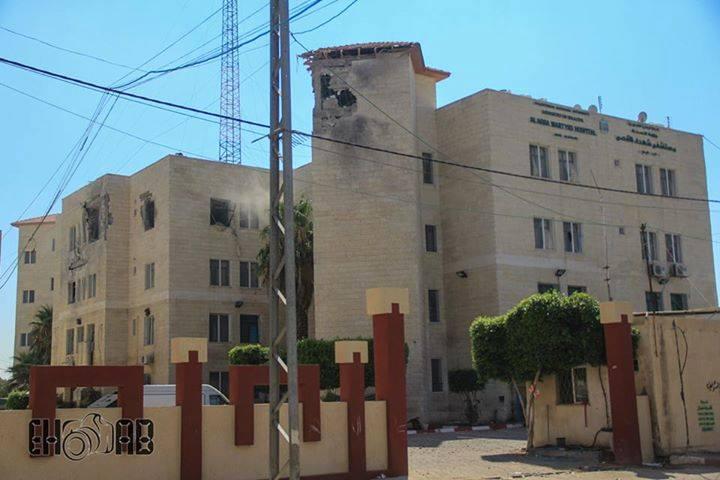
Israel has a well-documented history of deliberately targeting civilian infrastructure in Gaza and Lebanon – homes, police stations, mosques, power plants, sport facilities, schools and hospitals. On Monday in central Gaza the floor housing operating rooms and the intensive care unit of al-Aqsa Hospital was struck by at least three tank shells, which killed five, according to Al-Jazeera correspondent Stephanie Dekker in Gaza. Gaza’s Ministry of Health released a statement denouncing the attack and demanding medical facilities be protected and medical staff, who have also been targeted by Israel, be allowed to provide urgent medical care:
We deplore the escalating violence against Gazan civilians and civilian infrastructure, and demand that the Israeli occupation respect their obligations under international humanitarian law to protect civilians, health facilities and health professionals.
We note that attacks against health facilities can be considered war crimes under international law, and call upon the international community and the United Nations to take immediate action to prevent further such outrages against the Gazan citizenry by the Israeli occupation.
Al-Aqsa Hospital was not the only medical facility directly targeted by Israel, but one of four – another casualty of Israel’s unrelenting assault on the people of Gaza is charity-run al-Wafa Medical Rehabilitation Hospital, the only medical rehabilitation hospital in Gaza that treats and rehabilitates those with special needs and functions as a nursing home. On July 11, the International Solidarity Movement (ISM) released a statement on the conditions around the hospital, relaying that not only had Israel fired “warning missiles” at the roof of al-Wafa but international activists were hearing missiles falling nearby Israel and so in an act of selflessness, foreign activists from the USA, Sweden, Spain, UK, Venezuela, Australia, New Zealand and France were maintaining a presence in the hospital so as to protect the patients and doctors inside. “The civilian population of Gaza is being bombed. We will stay with them in solidarity until the international community and our governments take action to stop Israel’s crimes against humanity,” states Swedish International Solidarity Movement (ISM) activist Fred Ekblad.
Joe Catron, a freelance reporter who writes for the Electronic Intifada, Middle East Eye and other media outlets, is one of the ISM activists from the United States who remained inside al-Wafa Medical Rehabilitation Hospital. He entered the Gaza Strip in 2011 as part of the first solidarity delegation to arrive after the fall of the Mubarak regime in Egypt, and has lived there since. Catron and I spoke by way of email regarding his experiences as well as how doctors and Gaza’s medical facilities are coping as a result of Israel’s continued bombing:
Al-Akhbar English (AAE): What is the situation on the ground in Gaza currently, and how are Palestinians coping?
Joe Catron (JC): The situation is very difficult. Aside from the rapidly-mounting deaths and injuries, tens of thousands have been displaced by Israel’s destruction of their homes, or shelling and airstrikes on their neighborhoods. With many businesses and charities shuttered due to the risks of commuting, obtaining even basic supplies has become difficult for many. And Israel’s attacks on electrical and water infrastructure have made these resources even more inaccessible than the ongoing siege already had.
But people are pulling together, as they always do in times of escalated Israeli aggression, opening their homes to the displaced and sharing what they have. It’s the worst of times; in a strange way, it’s also the best of times. Palestinians are rarely more united than during an offensive.
AAE: What hospitals have you visited and what have you witnessed?
JC: I and seven other foreign activists spent a week in shifts at al-Wafa hospital, the only rehabilitation facility of its kind dedicated to occupational and physical therapy in the Gaza Strip. After an initial flurry of five Israeli missiles damaged it on July 11, we hoped our presence might discourage further Israeli aggression against it.
Unfortunately, it was insufficient. After a week of telephone threats and heavy shelling of the area, Israeli forces struck the hospital hard on July 17, forcing the evacuation of its patients at great risk and leaving smoking craters in its walls.
Al-Shifa hospital, Gaza’s main and largest medical facility, is simply flooded. With new patients pouring in every hour, others are being discharged or transferred as quickly as possible.
On Sunday, four international activists accompanied rescue workers into Gaza’s Shujayeh neighborhood, the site of Israel’s largest massacre yet in its current offensive. Days of Israeli shelling have reduced this once-thriving neighborhood to an apocalyptic landscape of fire and rubble, bombed ambulances and demolished homes. We saw a young man trying to reach his family’s home and locate survivors shot by an Israeli sniper, then repeatedly shot again while prone on the ground. He lay only meters from us, but Israeli gun and artillery fire blocked us from reaching him.
AAE: What else can you tell me about the situation in the hospitals?
JC: Hospitals are crowded and chaotic, but also oddly inspiring. They’re sites to treat the wounded, but also for others to show support for them, their families, and the health care workers looking after them. A number of my friends here are doing what they can for the struggle by preparing food and bringing it to al-Shifa. Many political factions and civil society organizations are doing the same.
AAE: How are doctors dealing with what has been transpiring in Gaza?
JC: Doctors and other health care workers face grave challenges not only from a massive influx of new casualties and critical shortages of medications and other supplies, but also in threats to their own safety. Israel’s attacks on at least four hospitals and six clinics have shown that in its current offensive, they are its targets as much as anything else.
Hospitals and clinics face critical shortages not only of essential medications, but also of supplies as routine as bandages. In some cases, like Israel’s shelling of el-Wafa hospital, staff have been forced to abandon supplies in their facilities while evacuating patients, which hasn’t helped matters.
AAE: What do you want people to know about Gaza, in terms of this situation and beyond it? Anything else to add?
JC: Like most places, the Gaza Strip is a product of its history more than the news. The overwhelming majority of its population are Palestinian refugees ethnically cleansed from land now claimed by Israel. This is the single most important factor in its resistance to the occupation, and also the one most quickly obscured in mainstream reporting, which focuses instead, and almost exclusively, on the events of the day.
You can follow Joe Catron’s updates from the Gaza Strip on Twitter @jncatron
Roqayah Chamseddine is a Sydney based Lebanese-American journalist and commentator. She tweets @roqchams and writes ‘Letters From the Underground.‘
Israeli occupation massacres two families overnight
MEMO | July 21, 2014
Israeli occupation forces massacred overnight two Palestinian families, killing at least 35 people from these two families, paramedics said.
Occupation forces targeted the four-story building of the Abu-Jamei family in Bani-Suhaila City in the south of the Gaza Strip, killing 25 family members and wounding several others.
One of the family members, who survived the massacre, said that their relatives came to their house to stay with them after they had been pushed to leave their own homes for security.
He explained that not long afterwards, at the time of the Iftar, an Israeli F16 rocket hit their house without any warning.
In Rafah, in the far south of the Gaza Strip, Israeli occupation forces targeted another house at dawn, killing ten members of the same family. The number of wounded is still unknown.
According to an official medical source, the attacks against these two families bring the number of Palestinian families massacred during the on-going Israeli war on Gaza to 32.
The source said that the medical situation in the hospitals of the Gaza Strip is disastrous because of the strict Israeli siege. He said that the hospitals are suffering from severe shortages of spare parts for medical equipment and medicines.
Over the past two weeks, Israel has been waging a massive military campaign against Palestinians in the Gaza Strip, killing more than 500 people and injuring thousands.
Featured Video

Why the U.S. Should Pull Back From the First Island Chain
or go to
Aletho News Archives – Video-Images
From the Archives
Only 19.7% of Americans agree with US State Dept on Israeli settlements
… Most American adults of voting age don’t appear willing to reject the applicability of international law to Israel’s ongoing colonization of occupied territories in East Jerusalem, the West Bank and Golan Heights. … Full article
Blog Roll
 Aletho News
- Tokyo protests demand Takaichi’s resignation over support for ‘Israel’
- Jennifer Kavanagh: Why the U.S. Should Pull Back From the First Island Chain
- Yemen denounces international community’s silence on Saudi aggression, siege
- UAE and Saudi Arabia move toward renewed coordination against Sanaa
- How Iran’s two-week retaliatory strikes exposed cracks in US military architecture in Persian Gulf
- The mother of all propaganda: Why the hype over US MOAB strike against Iran is nothing but theater
- Iran says it possesses technology behind US 14-ton GBU bunker-buster
- Trump asks Iran not to retaliate after he strikes Pickaxe Mountain – w/ Prof. Marandi
- Vice President J.D. Vance’s Deceptive ‘Antiwar’ Campaign Speech
- Iran: Palestinians’ rights must not be compromised in Gaza’s future; US, Israel to blame for Hormuz situation
- If Americans Knew
- Israeli rabbi permits occupiers to steal Palestinian olive harvest in West Bank
- Netanyahu’s spin on latest settler attack is laughable – Daily Update
- Israeli soldiers debunk Israel’s talking points
- In West Bank, Israeli settlers are totally out of control – Daily Update
- NPR investigation finds evidence of widespread fraud at mall kiosks tied to Israeli skincare brand
- Tucker Carlson exposes Israeli Lies about the Oct 7th attack, Charlie Kirk, and the U.S.
- Israel has detained thousands of Palestinian children since Oct 7th – over half spent time in solitary, many uncharged
- Israeli Analysis: Is Netanyahu Planning an ‘October Surprise’ Attack Before Israel’s Election?
- Israeli settlers brutally attack Palestinians and Washington Post female photographer, 65
- Words Have Changed, Occupation Continues: The Reality of the Gaza Ceasefire
- No Tricks Zone
- Predictions Made By Renowned Climate Proifessor Over Past Decades Have Been Proven To Be Poor
- New Study Suggests Large Regions Of The Pacific Ocean Have Been Cooling For The Last 80 Years
- Germany’s Green Energy Debacle: High Energy Costs Force Kahla Porzellan to Close After 182 Years!
- New Study: 50 Years Of The Most Aggressive ‘Net Zero’ Policies Can Only Affect The Global Climate By 0.03°C
- US September “Heat” Was No Record…Many Records Set Decades Ago
- Latest European Green Energy Debacle; Portugal’s Largest Flagship Solar Park Insolvent!
- Green Energy Debacle: German Expert Professor Fritz Vahrenholt Warns Of Severe Economic And Social Consequences
- Two More Paleo Reconstructions Affirm Meters-Higher Sea Levels Across Ireland, Brazil 7000-6000 Years Ago
- New Study: Earth And Venus Surface Warmth Largely Explained By Convection And Lapse Rate, Not CO2 Or Radiation
- 2025 Nature Paper Claiming Worsening Global Drought Gets RETRACTED …Heavily Flawed

