2 Palestinians shot dead at Nakba rally

Ma’an – 15/05/2014
RAMALLAH – Israeli forces shot and killed a young Palestinian man and a teenage boy Thursday during a protest rally marking the 66th anniversary of the Nakba west of Ramallah in the central West Bank.
Witnesses and medical sources identified the victims as 22-year-old Muhammad Audah Abu al-Thahir from the Ramallah-area village of Abu Shukheidim and 17-year-old Nadim Siyam Nuwarah from al-Mazraa al-Qibliyya village in Ramallah district.
The victims, according to medical sources, were shot by live ammunition in the chest. Their bodies were evacuated to Ramallah Medical Complex.
Medics said three teenagers were also injured by live bullets. One was struck in the chest, one in the foot, and one in the leg. Doctors say they are in stable condition.
An Israeli military spokeswoman did not immediately return calls.
Participants in the rally near Ofer detention center said they also wanted to show solidarity with Palestinian prisoners held without trial who have been on hunger strike for 22 days.
Palestinians across the occupied territories and elsewhere were commemorating the Nakba, or catastrophe, of the founding of the State of Israel on Thursday.
During the Nakba, more than 760,000 Palestinians — estimated today to number more than 5 million with their descendants — fled or were driven from their homes in 1948.
‘Israel can’t erase the Nakba from history’
By Saeb Erekat | Ma’an | May 15, 2014
 Today is the anniversary of what we Palestinians refer to as the Nakba, our catastrophe – although a single word cannot begin to explain it, and a single day cannot begin to commemorate it.
More than ever before, Israel needs come to terms with the horrors it has caused since 1948, by ending its subjugation of millions rather than intensifying its denial and trying to legitimize its persecution. Peace can only come through justice and reconciliation.
This day, in 1948, marks the forced exile of over 750,000 Palestinians from their homes and lands. Some were subjected to brutal massacres, many fled for fear of their lives. A few managed to stay in what would become Israel. All suffered. Sixty-six years later, all continue to suffer.
The Nakba is a story of fear and intimidation, of denial and persecution, a cruel, unending reality.
Today in occupied East Jerusalem, Palestinian families are evicted from their homes due to claims that their property belonged to Jews before 1948, while being forbidden from returning to their pre-1948 homes in West Jerusalem.
In Gaza – one of the most densely populated areas in the world – 1.2 million refugees overlook the open areas of what is now southern Israel. In my own home town, Jericho, there are two refugee camps where thousands continue to live in miserable conditions. In 2014, Palestinian children died of starvation at the Yarmouk refugee camp in Syria.
Israel, which claims to be a democracy for all its citizens, continues to ban the villagers of Iqrit and Kufr Birem, two Christian villages in the Galilee, from returning to their lands, despite a ruling from the Israeli High Court of Justice on the matter.
This is not the only example of persecution within Israel. Prime Minister Benjamin Netanyahu’s promotion of the “nationality bill,” determining Israel as the Jewish nation-state, is one more in a long line of discriminatory laws against a fifth of Israel’s own population, the original inhabitants of the land.
A list of laws make it not only acceptable, but legally admissible, to discriminate against Israel’s own citizens for belonging to a different ethnic-religious group.
Meanwhile, in the land which Israel has illegally occupied since 1967, settlers and soldiers use similar methods of intimidation and fear to force Palestinians from their homes.
The reality in the West Bank is no less than apartheid, and, in Gaza, out and out siege. Both within occupied Palestine and further afield, those who have been waiting 66 years, with their keys in hand, continue to wait.
Palestine has recognized Israel’s right to exist since 1988. We are not asking for Hebrew not to be an official language or Jewish holidays not to be official holidays. The character of Israel is not for us to define.
But we will not allow any Palestinian to be portrayed as the immigrant or intruder in his or her own land. We were here in 1948: We were here for centuries before that – Muslims, Christians and Jews – all Palestinians. The concept of an exclusively Jewish state naturally entails the denial of the Nakba. It tells us: “This is our land. You were on it illegally, temporarily, by mistake.” It is a way of asking us to deny the existence of our people and the horrors that befell them in 1948. No people should be asked to do that.
We will not be complicit in the notion that any ethnic-religious group should have dominance over any other. We will not accept the denial of basic human rights to which all are entitled.
Rather than accepting historical responsibility, rather than acknowledging a painful truth about the birth of Israel and addressing it, as a step toward peace, the Israeli government attempts to wipe the event from history.
In Israel, it is forbidden by law to even commemorate the Nakba. If you can erase the narrative, it is much easier to erase the people. This Israeli government, in particular, is taking extraordinary measures to achieve this. Is it any wonder that we have not managed to reach an agreement at this time?
Today, we remember those who have lost their lives, at the hands of their oppressors, in their quest for freedom and dignity. Despite this, we are ready to live side by side in peace with our Israeli neighbors. We hope Israelis, if not their current government, will move in that direction.
At this point we do not know what the future will look like in terms of a solution, or when it will come. What we know for certain is that we will remain.
Saeb Erekat is chief negotiator for the PLO.
Syria’s Aleppo faces deadly water shortage after rebels block supply
RT | May 14, 2014
Islamist militants from Syria’s opposition have cut off the water supply to most parts of the city of Aleppo by targeting pumping stations. The city has now been plunged into abject misery, as the government and NGOs race to find alternative sources.
More than two million people have been affected by the resulting water shortage after two pumping stations were shut down. Water has stopped flowing not only into government-held areas, as intended, but into practically every corner of Syria’s largest city, which is presently divided in two spheres of control.
Fighters of the Al-Nusra Front and related groups were interested in keeping the water flowing to east Aleppo and prevent it from flowing into the western parts, AFP reports. But the plan backfired, and now tons of water have been squandered irretrievably in the Quqayq river.
Both government media, and the pro-opposition Syrian Observatory for Human Rights are condemning the act and trading blame. The rebels say it was, in fact, a campaign by President Bashar Assad’s forces to bomb the water pumps. The Al-Nusra Front made no statements following the incident.
The misery is spreading, report various journalists on the scene.
In recent pictures from Aleppo, children can be seen scooping up water from puddles along the city’s roads, as others make use of jerry cans and various containers.
The residents queue up with all manner of receptacles in front of places like mosques, wells and ancient fountains, where the water isn’t safe for consumption, Lebanon’s Al-Akhbar daily says.
Residents have been without water for over ten days now. This comes as just last month the Al-Nusra Front targeted the electrical grid distributing power to Syria’s second city and its surroundings.
The situation in western Aleppo seems somewhat more stable, with the Red Crescent working with the government to provide a modicum of water for people.
“The situation signals a humanitarian and health disaster, but we are doing what we can to avert this risk,” a source in the Syrian Red Crescent told Al-Akhbar.
The source added it is only a temporary solution, as the water provided is not of the best quality for drinking. And the overall picture is unsanitary, as trucks normally used for waste-water disposal can be seen ferrying water around the city.
Locals have been digging wells themselves just to alleviate some of the stress on government and aid organizations, the Syrian Observatory for Human Rights said.
The latest news was that activists on Tuesday reported a slight reappearance of water pressure in one of the pumps. The cause of this is as yet unknown.
Aleppo has now become a key battleground once again, after the Al-Nusra Front and related gangs lost control of Homs to the Syrian army last week, and 1,200 of them escaped the fighting in a number of buses. Currently, the only area in Syria still more or less under terrorist control is to the northwest of the old battleground of Homs. But that appears to be a temporary situation, as government forces are moving in from different sides.
Before the northern city lost its water, the Syrian Red Crescent had to coordinate between the government and the rebels in sharing what water was available. The pumping station had been dependent on diesel fuel, which the government had agreed to provide in April in exchange for the insurgents turning the electricity back on. It remains unclear what caused the latest targeting of the water pumps, and whether that signaled the end of the precarious deal between the two sides.
Israeli Supreme Court to Hear Rachel Corrie Appeal on May 21
Rachel Corrie Foundation for Peace & Justice | May 12, 2014
Nine years after filing a civil suit against the State of Israel for the wrongful death of American peace activist Rachel Corrie, her family will have their appeal heard before the Israeli Supreme Court on May 21 at 11:30 a.m. in Jerusalem. The appeal, which will be argued by attorney Hussein Abu Hussein, challenges the Haifa District Court’s August 2012 ruling which concluded that the Israeli military was not responsible for Rachel’s death and that it conducted a credible investigation.
“During the past nine years, we have sought accountability in the Israeli courts for Rachel’s killing but were handed a verdict that showed blind indifference to the rights of the victim and little interest in seeking truth and justice,” said Craig Corrie, Rachel’s father.
The Corrie family appeal focuses on serious flaws in the lower court verdict which erred by ignoring and misinterpreting essential facts and misapplying legal norms. The appeal also challenges the lower court’s total disregard of international law obligations as well as procedural advantages that were regularly granted to the state during the proceedings. Lawyers for the Corries and the State of Israel have submitted their arguments in writing to the panel of three justices – Deputy-President of the Court Miriam Naor, Esther Hayut, and Zvi Zylbertal.
Speaking of his family’s hopes, Craig Corrie said, “It is a tragedy when the law is broken, but far, far worse when it is abandoned altogether. The Supreme Court now has a choice, to either show the world that the Israeli legal system honors the most basic principles of human rights and can hold its military accountable, or to add to mounting evidence that justice can not be found in Israel.”
Rachel, a 23-year-old human rights defender from Olympia, Washington, was crushed to death March 16, 2003, by an Israeli military bulldozer while nonviolently protesting demolition of Palestinian civilian homes in Rafah, Gaza. The following day, Israeli Prime Minister Ariel Sharon promised President George W. Bush a “thorough, credible, and transparent” investigation into Rachel’s killing. In 2004, Secretary of State Colin Powell’s Chief of Staff informed the Corrie family of the U.S. Government’s position that the Israeli investigation did not meet these standards and advised them to “use the Israeli court system.” The Corries filed suit in 2005, charging the State of Israel and its Ministry of Defense with responsibility for Rachel’s killing.
The civil trial before Haifa District Court Judge Oded Gershon began March 10, 2010, and 23 witnesses testified in 15 hearings, spread over 16 months. Each session was attended by the Corrie family, American Embassy officials, and numerous legal and human rights observers.
Testimony exposed serious chain-of-command failures in relation to civilian killings, as well as indiscriminate destruction of civilian property at the hands of the Israeli military in southern Gaza. Four eyewitnesses from the International Solidarity Movement (ISM) testified that Rachel was visible to soldiers in the bulldozer as it approached. Military witnesses testified that they saw ISM protesters in the area; and the on-site commander asked to stop operations due to their presence, but was ordered to continue working. An Israeli colonel testified that there are no civilians in war, and the lead military police investigator, himself, stated his belief that the Israeli military was at war with all in Gaza, including peace activists.
Testimony also revealed serious flaws in the military’s investigation into Rachel’s killing. Investigators failed to question key military witnesses, including those recording communications; failed to secure the military video, allowing it to be taken for nearly a week by senior commanders with only segments submitted to court; failed to address conflicting testimony given by soldiers; and ignored damning statements in the military log confirming a “shoot to kill” order and a command mentality to continue work in order to avoid setting a precedent with international activists.
On August 28, 2012, Judge Gershon ruled against the Corrie family, handing down a verdict stating the Israeli military was not to blame for Rachel’s death and that she alone was responsible for her demise. The Judge lauded the military police investigation and dismissed the case, adopting the Israeli Government’s position that the military should be fully absolved of civil liability, because soldiers were engaged in operational activities in a war zone.
The verdict was widely condemned by legal and human rights organizations monitoring the case, citing misrepresentation of facts and the fundamental principle of international humanitarian law – that in a time of war, military forces are obligated to take all measures to avoid harm to both civilians and their property. President Jimmy Carter stated that the court’s decision confirmed “a climate of impunity, which facilitates Israeli human rights violations against Palestinian civilians in the Occupied Territory.”
Seating in the courtroom is limited, and members of the press are advised to arrive early with press credentials. Proceedings will be in Hebrew. The family is seeking permission from the Court to provide simultaneous translation for court observers. However, pending the Court’s decision, journalists should make plans to bring their own translator. Cameras and audio recording equipment will not be permitted once proceedings begin. Photos may be taken before the judges enter the room.
A performance of My Name is Rachel Corrie, a play drawn from the diaries and e-mails of Rachel and staged around the world, will be presented in Hebrew on Monday, May 19 at 21:00 at the Arab-Hebrew Theatre in Jaffa. It will be followed by a panel discussion with the Corrie family, moderated by human rights lawyer Michael Sfard. For more information, visit The Coalition of Women for Peace, which is sponsoring the event.
For more information please visit http://rachelcorriefoundation.org/trial
The Government’s Antipathy Towards Transparency Has Made FOIA Lawsuits The Default Process
By Tim Cushing | Techdirt | May 12, 2014
This is default mode for the Freedom of Information Act.
In a federal FOIA complaint, the ACLU and University of Arizona Professor Derek Bambauer and Associate Professor Jane Yakowitz Bambauer claim that the Department of Homeland Security has failed to respond to requests made in January and February for records that may “shed light on Border Patrol’s extensive but largely opaque interior enforcement operations.”
The professors seek “records related to U.S. Border Patrol’s interior enforcement operations in Tucson and Yuma Sectors, including relevant agency policies, stop data, and complaint records.”
The CBP (Border Patrol) operates far inland these days with the blessing of the DHS. To live in states bordering Mexico is to have your freedom to travel within the country needlessly interrupted by uniformed officers inquiring about your country of origin.
The CBP’s surveillance technology has also wandered much further inland, far past the so-called “Constitution-Free Zone” that extends 100 miles in from the country’s borders. Its drones, which are specifically to be used for border surveillance, have been loaned out to an assortment of federal agencies and local law enforcement.
The CBP has also become a deadlier force, responsible for 27 fatalities in the last three years. This number has increased dramatically, in part because CBP agents seemed to be looking for reasons to open fire — like standing directly in the path of escaping vehicles.
But this isn’t so much about the CBP as it is about the government’s betrayal of the ideals behind the Freedom of Information Act.
“We shouldn’t have to go as far as filing a lawsuit to get these records,” Professor Bambauer said in a statement. “This is public information about a matter of pressing public concern. We cannot allow DHS and Border Patrol to continue operating in our communities without being subject to public scrutiny.”
No, citizens shouldn’t have to file lawsuits just to get the government to turn over responsive records. And, yet, this has become the expected route to freeing information. Nearly every document handed out by the Office of the Director of National Intelligence has been prompted by a lawsuit. The CBP drone documents mentioned above? Those are also tied to a FOIA lawsuit. Without the court’s prompting, it’s highly unlikely any of the documents the CBP “failed” to turn up during its first FOIA search would ever have been made public.
This is now the standard process for obtaining information from the government, whether at the federal level or below. There are many agencies that handle requests with few problems. But the agencies leaning towards the law enforcement/counterterrorism end of the spectrum are far from compliant. They resist, stall or simply ignore requests, pushing inquiring entities towards the courtroom.
This is completely wrong. A FOIA lawsuit is a remedy. Now, it’s just standard practice. And this goes far past simply unacceptable into sickening territory.
Government agencies are supposed to be accountable to the public that pays for everything they do. The FOIA law is simply a tool of accountability that can be wielded by any citizen. But these agencies have perverted the FOIA system so thoroughly that what was supposed to be a last resort (a lawsuit) is now just another step in the FOIA process.
The DOJ likely has no problem with the DHS, CBP and others blowing off FOIA requests until the judicial system orders them to turn over the requested info. After all, in its ridiculous argument for warrantless cellphone searches, it stated that if people felt the police shouldn’t have had access to their cellphone contents, they could always argue for suppression in court. This is the same mentality. Instead of respecting the limitations set by the Fourth Amendment, the DOJ suggests people should use a remedy (suppression) to hold cops accountable rather than expecting the police to police themselves and avoid violating citizens’ privacy and civil liberties.
These agencies know that not everyone has the time or money to battle for the release of documents, so their exposure is limited should they choose not to comply. It’s extremely hard for a nation’s citizens to hold its government accountable if the government is going to use the citizens’ own money against them.
ACLU, EPIC and the EFF have gone to court time and time again with no greater goal than getting government agencies to comply with a federal law. This ongoing subversion of the FOIA is completely unacceptable. This government is giving the public the finger, letting it know that it will only be accountable when forced to.
Freedom Flotilla Update: “We Will Sail in the Fall!”
Statement from the Freedom Flotilla Coalition regarding the attack on Gaza’s Ark | May 12, 2014
The Freedom Flotilla Coalition met in London over the last two days to discuss future plans in the wake of the terrorist attack on Gaza’s Ark in the port of Gaza, as well as future plans to struggle against the blockade of Gaza
The attack, which occurred on April 29th, caused substantial damage to the hull of the boat. These hull damages and others caused by the explosion need a minimum of 2 months work to repair at a cost of approximately US $30,000.
In response to this attack we will increase our efforts to challenge the blockade through non-violent direct action. We now plan to sail Gaza’s Ark early in the fall of 2014.
The authorities have not yet concluded their investigations of the incident, so it is premature to blame anyone, but it is well known who enforces the blockade on Gaza and who doesn’t want it challenged.
Preliminary results of the investigation and inspection by our partners indicate that the materials which were used in the attack are not readily found in Gaza.
Freedom Flotilla boats have been sabotaged before in the ports of Cyprus, Greece and Turkey, over the last 5 years, as they were preparing to sail to Gaza to challenge the blockade.
Boats that sailed to Gaza have been attacked by the Israeli Navy in international water, in one case lethally, and in others with force which caused a boat to sink. Boats that were not sabotaged (over half a dozen) were hijacked and towed to Ashdod.
This attack on Gaza’s Ark took place as Israel is under increased legal pressure for its deadly attack on the first Freedom Flotilla in 2010 at the International Criminal Court (ICC) and in Turkish courts.
It also happens as Israel is increasing pressure against all Palestinians in retaliation against efforts at national reconciliation between the West Bank and Gaza.
The Freedom Flotilla Coalition commits to continue its work against the blockade of Gaza in all ways and by all non-violent means possible, including supporting the May 31st International Freedom Day for Gaza.
For further information:
Ehab Lotayef +44 (753) 877 0353 or +1 (514) 941 9792
Ann Ighe +46 (70) 974 0739
Zaher Birawi +44 (785) 089 6057
Israel jails 20% of Palestinian children in solitary confinement: monitor
Al-Akhbar | May 12, 2014
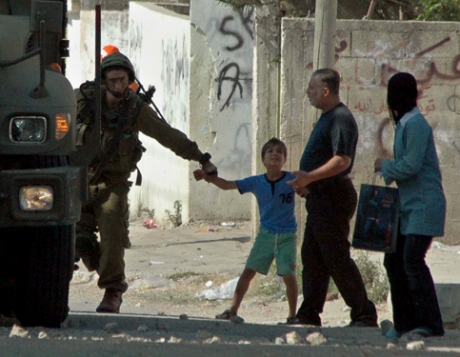
Israel is placing increasing numbers of arrested Palestinian children in solitary confinement, an international children’s rights group said in a report issued Monday.
The report came just months after Israel’s army, under international pressure to introduce reforms, agreed to test alternative treatment for children it detains in the West Bank.
In more than one in five cases recorded by Defense for Children International (DCI) in 2013, children detained for questioning by the army reported “undergoing solitary confinement,” it said in a statement.
This was a two-percent rise on 2012 figures, it added.
“Use of isolation against Palestinian children as an interrogation tool is a growing trend,” said Ayed Abu Eqtaish of DCI in the occupied Palestinian territories.
“This is a violation of children’s rights and the international community must demand justice and accountability,” he said.
“Globally, children and juvenile offenders are often held in isolation either as a disciplinary measure or to separate them from adult populations,” DCI said.
“The use of solitary confinement by Israeli authorities does not appear to be related to any disciplinary, protective, or medical rationale.”
DCI’s research included 98 sworn affidavits from Palestinian children aged 12 to 17.
In October, the UN children’s fund (UNICEF) said Israel had agreed to test alternative treatment for Palestinian children arrested in the West Bank.
These included issuing summons instead of arresting children at their homes in violent, overnight raids that often lead into street battles with locals who confront the occupation forces.
But UNICEF said that “ongoing” violations by the army were rife and included physical violence and verbal abuse.
Over the past decade, Israeli forces have arrested, interrogated and prosecuted around 7,000 children between 12 and 17, mostly boys, UNICEF found, noting the rate was equivalent to “an average of two children each day.”
(AFP, Al-Akhbar)
Syrian rebels could swap 1,500 families for prisoners, food
Al-Akhbar | May 12, 2014
Syrian rebels have agreed to free 1,500 families in exchange for food and the release of jailed opponents of President Bashar al-Assad, a newspaper close to his government said Monday.
The reported agreement involves the release of families held by rebels in Adra, a pro-government town northeast of Damascus controlled by rebels and under siege by army troops.
Under the deal, food supplies would be allowed into Adra, and an unspecified number of people held in government jails would be set free, in exchange for the release of the 1,500 families held in the town, said Al-Watan.
In a first phase and as a gesture of goodwill, “a family of eight people would be released in exchange for food for civilians in Adra,” said the newspaper.
Afterwards, “the exchange would involve the release of one family held hostage in Adra per each detainee released” from government jails, it reported.
While the edges of Adra are under government control, the interior of the town is in rebel hands.
It is strategically located on the northeastern entrance to Damascus, and has in the past been used as a launching pad for attacks on the edges of the capital.
When the rebels took Adra in mid-December, they prevented thousands of people — many of them from Syria’s Alawi and Christian minorities — from leaving.
An activist in Adra told AFP via the Internet he could not confirm whether any deal was in the making, but he said the humanitarian situation for people in the town was dire.
“A kilo of rice is sold here at $8. Today, a little child died as a result of the food shortages,” said Abul Baraa.
The deal reported by Al-Watan was being discussed with religious leaders in Douma, a rebel bastion near Adra.
National Reconciliation Minister Ali Haidar told AFP: “I don’t want to discuss this question with the press before the talks are completed.”
At the end of December, at the height of the fighting around Adra, the government said it had evacuated more than 5,000 residents who had been blocked from leaving by rebels, according to state news agency SANA.
The rebels control Adra’s workers’ city, once home to workers of all religious groups who traveled to the Damascus outskirts for work. The army is still in control of the rest of Adra.
(AFP, Al-Akhbar)
Bethlehem village of 15,000 blockaded by Israeli forces
Ma’an – 12/05/2014
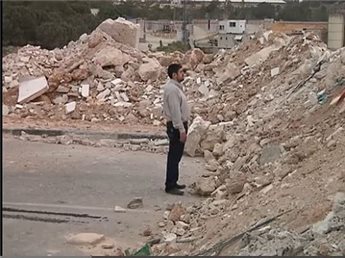 BETHLEHEM – Israeli forces have blocked the main entrances to a southern West Bank village since Saturday night, locals said, impeding villagers’ ability to travel freely.
Locals in the village of Beit Fajjar south of Bethlehem told Ma’an on Tuesday that Israeli forces had shut the roads in and out of the village by constructing large earth mounds on them.
Locals said that they were unsure of the reasons behind what they called the “collective punishment” of the village, highlighting that the Israeli authorities had cited security reasons without giving any explanation.
As a result of the closure, residents need to take bypass routes through the nearby al-Arrub refugee camp or Tuqu village. However, these routes are bumpy mountainous paths unqualified as roads.
The town has a population of about 15,000 many of whom leave every day to work outside. In addition, the town does not have a hospital or a major medical center, and so access to Bethlehem, about 10 kilometers to the north, is important for healthcare and emergencies.
The town is also known for stone factories and quarries, and the closure of the main road creates a serious problem for truck drivers who need to travel back and forth every day.
Furthermore, dozens of teachers who work at several public schools in the town come from other cities and village in Bethlehem district every day.
The Case of Amer Jubran
By Richard Hugus | May 11, 2014
Zionism is a system that chafes against the world. With its idea of a chosen people and its privileged control of states and institutions, where one whisper behind the scenes can outweigh the voice of millions, it offends us as an injustice. That injustice continues day in and day out for all the world to see in Palestine as occupation soldiers arrest even small children and shoot young demonstrators with impunity, as settlers burn olive trees and go on rampages of theft and harassment, and as settlers and soldiers together increase their attacks on the sacred buildings and grounds of the al-Aqsa mosque.
The idea that nothing is sacred seems to be at the front of Zionist ideology. This may be the motive for the terror we associate with it. We are stupefied by the brazenness of the repeated attacks on Lebanon, the bombings of Gaza, the rocket assassinations of Palestinian leaders, bulldozer and tear gas rifle murders of solidarity activists, the massacre of humanitarian volunteers on the Mavi Marmara, home demolitions, the killing of Palestinians in their own streets and on their own farmland. Perhaps this is the point — brazenness inspires fear, and fear inspires obedience. They seem to think that if you can sufficiently shock your enemy and the rest of the world, you have control. For people in the US, 9/11 would be the paradigm of this. Zionist planners Michael Ledeen and Philip Zelikow have defined covert US foreign policy by promoting the ideas of “creative chaos” and the power of “the searing event,” respectively, to establish a “new world order.”
But fear is not effective in the long run. We may immediately see through the act that tried to impose it, or, when we have had time to think, instead of being mystified, we are disgusted. As they say, the truth comes out; lies are hard to maintain. In the end perhaps this is because some things have remained sacred — human dignity, the right to live, the right to have a place to live, the innocence of children, the beauty of nature — and we remember that. Our feeling for these things is of a spiritual nature, and can’t ultimately be taken away by the aggressive and predatory weapons used by those who have power in the world.
Zionism chafes because each of the several million people it has expelled remember that they had a home in Palestine, and they know that to have that home back is their right. It is a constant irritant to the Arab people who have not yet been forced out, each of whom have a story to tell of wrongs committed against them during the nightmare occupation. After 67 years of attack and dispossession, Zionism has built up a long list of souls who have been wrongly treated and who have not forgotten.
This is the context in which one might understand the case of a Palestinian activist named Amer Jubran. The facts of Amer’s life are comprised of a number of wrongs attributable to Zionism. His family was forced to leave the area of al-Khalil in Palestine before he was born. They went into exile in Jordan. Amer’s grandfather was shot by an Israeli soldier in Palestine and left to bleed to death in the middle of a road. His relatives who remained in Palestine live under occupation and undergo each day the harassment and mistreatment which we all know now are the Israelis’ method of making all the rest of the indigenous people leave. At college age Amer chose a second country of exile – the United States. He may not have known then but he soon learned that he had moved to a country which Zionism had made its principal host (in the biological sense). He brought the cause of Palestine with him. In 2000 he was arrested for protesting an “Israel Day” celebration in a wealthy suburb of Boston. A long court struggle followed, and he was found not guilty. He was arrested again in 2002 during the Ashcroft-inspired attack on all Arabs and Muslims in the US, which Ashcroft waged through immigration authorities. This arrest followed two days after a march for Palestinian rights in the streets of downtown Boston which Amer helped to organize, and which had wide support. But one person whispered, and the deed was done. Another long court struggle followed. In 2004, unable to stand up against the stacked deck which is the US judicial system, he was forced to leave the US and return to Jordan.
In Jordan Amer began working at his family’s business and started a family, but continued to raise the cause of Palestine. In 2006 he was beaten and arrested at a protest at the Zionist embassy in Amman. In 2010 he gave a lecture at the American University in Beirut and was under noticeable surveillance both leaving and returning to Amman. Just a few days ago, May 5, 2014 he was arrested at his home in Amman by the Jordanian secret police, the Mukhabarat, and has since been held in an unknown location with no charges and no representation by a lawyer. No one is able to reach him. His most recent arrest is due to his being a supporter of the resistance to the Zionist project in the entire region. Where Zionism is concerned, it is no different in Jordan than in the United States. Zionism is indeed a world movement. Politically motivated police and judicial harassment of critics of Zionism can be found on every continent.
It is amazing that so many power structures in so many parts of the world have been so thoroughly invaded that a relatively few people could steal the relatively small piece of land which is historic Palestine. But there it is. And there is the constant irritation which this theft has brought about in the world. The irritation will not go away until the injustice is addressed. It will chafe and spring up in odd places forever until the truth is able to come out.
Richard Hugus is a Palestine solidarity activist who worked with Amer Jubran from 2002-2003 in The New England Committee to Defend Palestine
~~~~~~~~~~~~~~~~~~~
Additional information on the case of Amer Jubran can be found here.
5,000 prisoners begin mass hunger strike in Israeli jails

Ma’an – 08/05/2014
RAMALLAH – Over 5,000 Palestinian prisoners started an open hunger strike on Thursday in solidarity with detainees held in administrative detention by Israeli authorities, a Palestinian official said.
Palestinian Authority Minister of Detainees Issa Qaraqe said that the prisoners are demanding that Israel end the practice of holding Palestinians in custody without charge or trial.
More than 100 Palestinians in Israeli prisons launched a mass, open-ended hunger strike on April 24 in protest against their detention without trial.
Qaraqe said he holds Israeli authorities responsible for this “explosion” in protest action. He declared May 9 a ‘Day of Rage’ in solidarity with administrative detainees, which will see a range of solidarity activities after noon prayers.
A number of the strike leaders have been placed into isolation in Beersheba prison, including Muayad Sharab, Sufian Jamjoum and Abd al-Kareem Qawasmi.
An Israeli prison services spokesperson could not be reached for comment.
A 2012 agreement which ended a hunger strike of 2,000 Palestinian prisoners was meant to end the detention without trial of Palestinians, but as of March 1, 183 Palestinians were still being held under administrative detention.
Palestinians held in administrative detention are often held without charge or trial for months and without access to the evidence leading to their detention, even though international law stipulates this tactic only be used in exceptional circumstances.
Featured Video

Why the U.S. Should Pull Back From the First Island Chain
or go to
Aletho News Archives – Video-Images
From the Archives
Only 19.7% of Americans agree with US State Dept on Israeli settlements
… Most American adults of voting age don’t appear willing to reject the applicability of international law to Israel’s ongoing colonization of occupied territories in East Jerusalem, the West Bank and Golan Heights. … Full article
Blog Roll
 Aletho News
- Albania on fire: who’s behind the riots?
- Egypt’s Civil Democratic Movement rejects involvement in regional war
- Egypt collaborates with Israel to build ‘Green Rafah’ project over erased Palestinian city
- Rising fuel prices and shortages have helped drive ongoing protests and rioting in France
- Tokyo protests demand Takaichi’s resignation over support for ‘Israel’
- Jennifer Kavanagh: Why the U.S. Should Pull Back From the First Island Chain
- Yemen denounces international community’s silence on Saudi aggression, siege
- UAE and Saudi Arabia move toward renewed coordination against Sanaa
- How Iran’s two-week retaliatory strikes exposed cracks in US military architecture in Persian Gulf
- The mother of all propaganda: Why the hype over US MOAB strike against Iran is nothing but theater
- If Americans Knew
- What the UK Is Doing to Pro-Palestine Novelist Sally Rooney Is an Act of Orwellian Villainy
- ‘We will build palaces for Jews in Gaza’: Right-wing activists establish new outpost near border
- ‘You see us burning, you stay silent’: Family’s agony over mother and sons burned to death in Gaza tent
- Israel keeps Palestinian journalist Bushra al-Tawil in isolation for 46 days
- US-Israel integration plan puts US military tech in Israel’s hands
- Israeli Strike Burns Gaza Mother Alive in Front of Toddler, ‘Without Generating Any Headlines’
- ‘The Israel Experience with Mike Huckabee’: The Ambassador’s Family Sells Trips to Israel
- As Gazans carry out mass burial, food insecurity is getting worse – Daily Update
- Israeli rabbi permits occupiers to steal Palestinian olive harvest in West Bank
- Netanyahu’s spin on latest settler attack is laughable – Daily Update
- No Tricks Zone
- Predictions Made By Renowned Climate Proifessor Over Past Decades Have Been Proven To Be Poor
- New Study Suggests Large Regions Of The Pacific Ocean Have Been Cooling For The Last 80 Years
- Germany’s Green Energy Debacle: High Energy Costs Force Kahla Porzellan to Close After 182 Years!
- New Study: 50 Years Of The Most Aggressive ‘Net Zero’ Policies Can Only Affect The Global Climate By 0.03°C
- US September “Heat” Was No Record…Many Records Set Decades Ago
- Latest European Green Energy Debacle; Portugal’s Largest Flagship Solar Park Insolvent!
- Green Energy Debacle: German Expert Professor Fritz Vahrenholt Warns Of Severe Economic And Social Consequences
- Two More Paleo Reconstructions Affirm Meters-Higher Sea Levels Across Ireland, Brazil 7000-6000 Years Ago
- New Study: Earth And Venus Surface Warmth Largely Explained By Convection And Lapse Rate, Not CO2 Or Radiation
- 2025 Nature Paper Claiming Worsening Global Drought Gets RETRACTED …Heavily Flawed

