ICC to launch probe into US war crimes in Afghanistan: Report
Press TV – November 1, 2016
The International Criminal Court (ICC) is preparing to launch an investigation of a range of possible war crimes in Afghanistan, including those committed by US troops, according to a new report.
ICC chief prosecutor, Fatou Bensouda, will seek to initiate an investigation in the coming weeks, according to the Foreign Policy magazine, citing several knowledgeable sources.
The probe will likely be launched after the US presidential election but before the end of the year, multiple sources have indicated.
However, it is not clear whether the ICC would ever bring charges against Americans after the investigation because doing so would require significantly more evidence than the chief prosecutor’s office currently possesses, the report said.
If indeed launched, the move would mark the first time a formal ICC investigation has scrutinized US crimes.
In order to discuss the potential investigation and to express concerns about its scope, US officials recently visited the ICC, an international tribunal that sits in The Hague in the Netherlands.
The ICC has repeatedly highlighted alleged abuses of detainees by American troops between 2003 and 2005 that it believes have not been adequately addressed by the US government.
This file photo by shows the bodies of several men and a child who witnesses said were killed by a United States Army sergeant in southern Afghanistan. (AP)
“Crimes were allegedly committed with particular cruelty and in a manner that debased the basic human dignity of the victims,” the tribunal noted in a report last year.
The US government has insisted that the ICC does not have jurisdiction over US citizens because Washington never ratified the Rome Statute that established the court in the first place.
Afghanistan is still suffering from insecurity and violence years after the United States and its allies invaded the country in 2001 as part of Washington’s so-called war on terror.
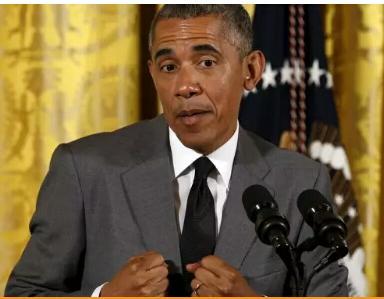
In October last year, President Barack Obama announced plans to keep 9,800 US troops in Afghanistan through 2016 and 5,500 in 2017, reneging on his promise to end the war there and bring home most American forces from the Asian country before he leaves office.
Gambia announces intention to withdraw from International Criminal Court
Press TV – October 26, 2016
Gambia has followed in the footsteps of Burundi and South Africa by declaring its intention to withdraw from the International Criminal Court (ICC).
The West African country’s Information Minister Sheriff Bojang announced the decision on television Tuesday night, accusing the ICC of being biased against Africa.
Bojang said that the court — set up to pursue some of the world’s worst crimes — had been used “for the persecution of Africans and especially their leaders” while ignoring crimes committed by the West.
He singled out the case of Tony Blair, a former British prime minister, whom the ICC failed to indict over the 2003 Iraq war.
“There are many Western countries, at least 30, that have committed heinous war crimes against independent sovereign states and their citizens since the creation of the ICC and not a single Western war criminal has been indicted,” the Gambian minister said.
He said the tribunal was an “international Caucasian court for the persecution and humiliation of people of color, especially Africans.”
The minister said Gambia has begun the process of withdrawing from the ICC, which involves notifying the United Nations secretary general and takes effect a year after the notification is received.
The ICC’s chief prosecutor, Fatou Bensouda, is ironically a former Gambian justice minister.
Only Africans have been charged in the six ICC cases that are ongoing or about to begin, though preliminary investigations have opened elsewhere, too.
The ICC has opened probes involving Kenya, the Ivory Coast, Libya, Sudan, the Democratic Republic of the Congo, the Central African Republic, Uganda and Mali.
The International Criminal Court was set up in 2002 to try war criminals and the perpetrators of genocide.
Last Friday, the South African government gave a formal notice of its intention to pull out of the ICC. Earlier that week, Burundi’s President Pierre Nkurunziza had signed a decree to quit the court’s jurisdiction.
US Impunity Erodes World Justice
By Nicolas J S Davies | Consortium news | October 25, 2016
In the past week, Burundi and South Africa have joined Namibia in declaring their intention to withdraw from the jurisdiction of the International Criminal Court (ICC). They are likely to be followed by a parade of other African countries, jeopardizing the future of an international court that has prosecuted 39 officials from eight African countries but has failed to indict a single person who is not African.
Ironically, African countries were among the first to embrace the ICC, so it is a striking turnaround that they are now the first to give up on it.
But it is the United States that has played the leading role in preventing the ICC from fulfilling the universal mandate for which it was formed, to hold officials of all countries accountable for the worst crimes in the world: genocide; crimes against humanity; and war crimes – not least the crime of international aggression, which the judges at Nuremberg defined as “the supreme international crime” from which all other war crimes follow.
As the ICC’s founding father, former Nuremberg prosecutor Benjamin Ferencz, lamented in 2011, “You don’t have to be a criminologist to realize that if you want to deter a crime, you must persuade potential criminals that, if they commit crimes, they will be hauled into court and be held accountable. It is the policy of the United States to do just the opposite as far as the crime of aggression is concerned. Our government has gone to great pains to be sure that no American will be tried by any international criminal court for the supreme crime of illegal war-making.”
The U.S. has not only refused to accept the jurisdiction of the ICC over its own citizens. It has gone further, pressuring other countries to sign Bilateral Immunity Agreements (BIA), in which they renounce the right to refer U.S. citizens to the ICC for war crimes committed on their territory.
The U.S. has also threatened to cut off U.S. aid to countries that refuse to sign them. The BIAs violate those countries’ own commitments under the ICC statute, and the U.S. pressure to sign them has been rightly condemned as an outrageous effort to ensure impunity for U.S. war crimes.
Resistance to U.S. Impunity
To the credit of our international neighbors, this U.S. strategy has met with substantial resistance. The European Parliament overwhelmingly passed a resolution stating that BIAs are incompatible with E.U. membership, and urged E.U.- member states and countries seeking E.U. membership not to sign them.
Fifty-four countries have publicly refused to sign BIAs, and 24 have accepted cut-offs of U.S. aid as a consequence of their refusal. Of 102 countries that have signed a BIA, only 48 are members of the ICC in any case, and only 15 of those countries are on record as having ratified the BIAs in their own parliaments.
Thirty-two other ICC members have apparently allowed BIAs to take effect without parliamentary ratification, but this has been challenged by their own country’s legal experts in many cases.
The U.S. campaign to undermine the ICC is part of a much broader effort by the U.S. government to evade all forms of accountability under the laws that are supposed to govern international behavior in the modern world, even as it continues to masquerade as a global champion of the rule of law.
The treaties that U.S. policy systematically violates today were crafted by American statesmen and diplomats, working with their foreign colleagues, to build a world where all people would enjoy some basic protections from the worst atrocities, instead of being subject only to the law of the jungle or “might makes right.”
So current U.S. policy is a cynical betrayal of the work and wisdom of past generations of Americans, as well as of countless victims all over the world to whom we are effectively denying the protections of the U.N. Charter, the Geneva Conventions, the U.N. Convention on the Rights of the Child and other multilateral treaties that our country ignores, violates or refuses to ratify.
Avoiding the jurisdiction of international courts is only one of the ways that the U.S. evades international accountability for its criminal behavior. Another involves an elaborate and well-disguised public relations campaign that exploit the powerful position of U.S. corporations in the world of commercial media.
Major Propaganda Funding
The U.S. government spends a billion dollars per year on public relations or, more bluntly, propaganda, including $600 million from the Pentagon budget. The work of its P.R. teams and contractors is laundered by U.S. newspapers and repeated and analyzed ad nauseam by monolithic, flag-waving TV networks.
These profitable corporate operations monopolize the public airwaves in the U.S., and also use their financial clout, slick marketing and the support of the U.S. State Department to maintain a powerful presence in foreign and international media markets.
Foreign media in allied countries provide further legitimacy and credibility to U.S. talking-points and narratives as they echo around the world. Meanwhile, Hollywood fills cinema and TV screens across the world with an idealized, glamorized, inspirational version of America that still mesmerizes many people.
This whole elaborate “information warfare” machine presents the United States as a global leader for democracy, human rights and the rule of law, even as it systematically and catastrophically undermines those same principles. It enables our leaders to loudly and persuasively demonize other countries and their leaders as dangerous violators of international law, even as the U.S. and its allies commit far worse crimes.
Double Standards in Syria/Iraq
Today, for instance, the U.S. and its allies are accusing Syria and Russia of war crimes in east Aleppo, even as America’s own and allied forces launch a similar assault on Mosul. Both attacks are killing civilians and reducing much of a city to rubble; the rationale is the same, counterterrorism; and there are many more people in the line of fire in Mosul than in east Aleppo.
But the U.S. propaganda machine ensures that most Americans see one, in Mosul, as a legitimate counterterrorism operation (with Islamic State accused of using the civilians as “human shields”) and the other, in east Aleppo, as a massacre (with the presence of Al Qaeda’s Syrian affiliate, the former Nusra Front, virtually whited out of the West’s coverage, which focuses almost entirely on the children and makes no mention of “human shields”).
The phrase “aggressive war” is also a no-no in the Western media when the U.S. government launches attacks across international borders. In the past 20 years, the U.S. has violated the U.N. Charter to attack at least eight countries (Yugoslavia, Afghanistan, Iraq, Pakistan, Yemen, Somalia, Libya and Syria), and the resulting wars have killed about two million people.
A complex whirlwind of conflict and chaos rages on in all the countries where the U.S. and its allies have lit the flames of war since 2001, but U.S. leaders still debate new interventions and escalations as if we are the fire brigade not the arsonists. (By contrast, the U.S. government and the Western media are quick to accuse Russia or other countries of “aggression” even in legally murky situations, such as after the U.S.-backed coup in 2014 that ousted the elected president of Ukraine.)
Systematic violations of the Geneva Conventions are an integral part of U.S. war-making. Most are shrouded in secrecy, and the propaganda machine spins the atrocities that slip through into the public record as a disconnected series of aberrations, accidents and “bad apples,” instead of as the result of illegal rules of engagement and unlawful orders from higher-ups.
The senior officers and civilian officials who are criminally responsible for these crimes under U.S. and international law systematically abuse their powerful positions to subvert investigations, cover up their crimes and avoid any accountability whatsoever.
Pinter’s Complaint
When British playwright Harold Pinter was awarded the Nobel Prize for Literature in 2005, he bravely and brilliantly used his Nobel lecture to speak about the real role that the U.S. plays in the world and how it whitewashes its crimes. Pinter recounted a meeting at the U.S. Embassy in London in the 1980s in which a senior embassy official, Raymond Seitz, flatly denied U.S. war crimes against Nicaragua for which the U.S. was in fact convicted of aggression by the International Court of Justice (ICJ). Seitz went on to serve as Assistant Secretary of State, U.S. Ambassador to the U.K., and then Vice-Chairman of Lehman Brothers.
As Pinter explained: “this ‘policy’ was by no means restricted to Central America. It was conducted throughout the world. It was never-ending. And it is as if it never happened.
“The United States supported and in many cases engendered every right wing military dictatorship in the world after the end of the Second World War. I refer to Indonesia, Greece, Uruguay, Brazil, Paraguay, Haiti, Turkey, the Philippines, Guatemala, El Salvador, and, of course, Chile. The horror the United States inflicted upon Chile in 1973 can never be purged and can never be forgiven.
“Hundreds of thousands of deaths took place throughout these countries. Did they take place? And are they in all cases attributable to US foreign policy? The answer is yes they did take place and they are attributable to American foreign policy. But you wouldn’t know it.
“It never happened. Nothing ever happened. Even while it was happening it wasn’t happening. It didn’t matter. It was of no interest. The crimes of the United States have been systematic, constant, vicious, remorseless, but very few people have actually talked about them. You have to hand it to America. It has exercised a quite clinical manipulation of power worldwide while masquerading as a force for universal good. It’s a brilliant, even witty, highly successful act of hypnosis.”
If in 2016 the world seems to be more violent and chaotic than ever, it is not because the United States lacks the will to use force or project power, as both major party candidates for President and their military advisers appear to believe, but because our leaders have placed too much stock in the illegal threat and use of force and have lost faith in the rule of law, international cooperation and diplomacy.
After a century of commercial dominance, and 75 years of investing disproportionately in weapons, military forces and geopolitical schemes, perhaps it is understandable that U.S. leaders have forgotten how to deal fairly and respectfully with our international neighbors. But it is no longer an option to muddle along, leaving a trail of death, ruin and chaos in our wake, counting on an elaborate propaganda machine to minimize the blowback on our country and our lives.
Sooner rather than later, Americans and our leaders must knuckle down and master the very different attitudes and skills we will need to become law-abiding global citizens in a peaceful, sustainable, multipolar world.
Nicolas J S Davies is the author of Blood On Our Hands: the American Invasion and Destruction of Iraq. He also wrote the chapters on “Obama at War” in Grading the 44th President: a Report Card on Barack Obama’s First Term as a Progressive Leader.
South Africa announces decision to quit International Criminal Court
Press TV – October 21, 2016
South Africa has joined Burundi in officially announcing its withdrawal from the International Criminal Court (ICC), saying its laws are incompatible with obligations under the ICC.
The South African government gave a formal notice of its intention to pull out of the ICC on Friday.
South Africa “found that its obligations with respect to the peaceful resolution of conflicts at times are incompatible with the interpretation given by the International Criminal Court,” the document, signed by International Relations Minister Maite Nkoana-Mashabane, read.
Meanwhile, Justice Minister Michael Masutha told a media conference in the administrative capital, Pretoria, that the ICC’s obligations are inconsistent with laws giving sitting leaders diplomatic immunity.
“The Implementation of the Rome Statute of the International Criminal Court Act, 2002, is in conflict and inconsistent with the provisions of the Diplomatic Immunities and Privileges Act, 2001,” Masutha said.
South Africa says a bill over the matter, i.e. the withdrawal from ICC, will soon go to the country’s parliament.
The decision comes amid a dispute over last year’s visit by Sudanese President Omar Hassan al-Bashir to attend an African Union summit in Johannesburg. Bashir is wanted by the ICC over alleged war crimes. South Africa, however, said he had immunity as the head of a member state.
Nevertheless, the ICC criticized the South African government for its failure to arrest Bashir.
The announcement of the decision by South Africa to withdraw from the ICC sparked rapid criticism from the New York-based Human Rights Watch (HRW).
South Africa’s proposed withdrawal “shows startling disregard for justice from a country long seen as a global leader on accountability for victims of the gravest crimes,” HRW said in a statement. “It’s important both for South Africa and the region that this runaway train be slowed down and South Africa’s hard-won legacy of standing with victims of mass atrocities be restored.”
South Africa is the second African country to declare its withdrawal from the ICC. Earlier this week, Burundi’s President Pierre Nkurunziza signed a decree to quit the court’s jurisdiction.
Namibia and Kenya have also raised the possibility of withdrawal from the ICC.
Some African governments say the ICC has shown a post-colonial bias against the continent’s leaders.
Hamas calls ICC visit to Palestine ‘useless’ as delegation skips Gaza
Ma’an – October 8, 2016
BETHLEHEM – The Hamas movement called a visit by an International Criminal Court (ICC) delegation to the occupied Palestinian territory and Israel this weekend “pointless and useless” on Monday, after the delegation declined to include the Gaza Strip in their visit.
“It is regrettable that the ICC delegation yielded to the demands of the Israeli occupation to exclude the Gaza Strip from the delegation’s schedule, despite the fact that the Gaza Strip was the main site of Israeli crimes in 2014,” a statement released on the movement’s website said.
Various human rights groups have charged Israel with international war crimes and submitted several cases to the ICC related to Israel’s devastating 51-day assault on the Gaza Strip in 2014 that culminated in the deaths of more than 1,000 civilians. Meanwhile, critics have questioned the ICC’s ability to bring justice on issues related to Palestine in the face of Israel’s refusal to cooperate with the court, and have even faulted the ICC itself with playing a key role in the slow process of holding Israel accountable.
“As a result, Hamas considers the delegation’s visit pointless and useless. The visit has caused more pain and suffering for the families of victims who counted on the ICC to bring justice to them and bring the Israeli killers before the court.”
The fierce condemnation by Hamas, the de facto rulers of the blockaded Gaza Strip, came as the Palestinian Authority (PA)-governed occupied West Bank welcomed the delegation of the ICC’s Office of the Prosecutor (OTP) to the city of Ramallah on Saturday.
They were scheduled to meet with the committee that is charged with following up on ICC investigations, the state-run television network Palestine TV, and a Palestinian newspaper, according to the Palestine Liberation Organization (PLO). On Sunday, the delegation will travel to the city of Bethlehem in the West Bank to attend an academic meeting at Bethlehem University. Meanwhile, the OTP also plans to visit Israel.
“The State of Palestine had officially requested the OTP visit Gaza, though it was declined. We hope that on their next visit the ICC delegation will visit other areas of the Occupied State of Palestine, including Hebron and the Jordan Valley,” the PLO’s ICC Higher National Committee said Friday.
The ICC’s decision to skip visiting the besieged Gaza Strip comes after the small Palestinian territory was was bombarded by a wave of Israeli airstrikes in recent days, and after Israel imprisoned activists aboard an all-female flotilla that attempted to reach Gaza this past week.
The flotilla was the fourth of its kind since 2010, when the first Freedom Flotilla was brutally attacked by Israeli naval forces, who killed ten Turkish activists aboard the Mavi Marmara ship.
No Israelis were ever charged for the killings on the Mavi Marmara, despite a case being filed at the International Criminal Court (ICC) charging Israeli officials with war crimes.
Meanwhile in August, the Israeli military closed 13 criminal investigations into cases of Israeli soldiers committing violations against Palestinian civilians during the 2014 Gaza war, without imposing any punitive measures, while some 80 incidents were closed without opening a criminal investigation.
The 51-day Israeli offensive, termed “Operation Protective Edge” by Israeli authorities, resulted in the killings of 1,462 Palestinian civilians, a third of whom were children, according to the United Nations.
According to a UN report, there were incidents in which hundreds of Gazans were killed at the same time, many belonging to the same family, when Israeli air forces bombed residential buildings — credible allegations that the incidents amounted to war crimes. … Full article
Time to Defund the International Criminal Court
By David Hoile | Dissident Voice | November 22, 2015
The Assembly of States Parties is meeting this month in The Hague to review the work of the International Criminal Court and to discuss the ICC’s budget. The ASP is the International Criminal Court’s management oversight and legislative body. The Assembly also elects the judges and prosecutors and decides the Court’s budget. The court’s proposed budget for 2016 amounts to €153.32 million, representing an increase of €22.66 million, or 17.3 per cent, over the 2015 approved budget. At face value, far from increasing the budget for the ICC, the Assembly of State Parties should be demanding a refund.
Established in 2002, the ICC is an impotent billion euro white elephant. 2015 has been a particularly bad year for the court. It has botched the Kenyan cases it has undertaken and its continuing alienation from Africa was centre-stage internationally when South Africa, previously a keen member, publicly ignored ICC arrest warrants and appears on the verge of withdrawal from the organisation – something seen by observers as a death knell for the court.
The International Criminal Court has self-evidently failed across the board. In 2010 the ICC-friendly Economist had already found it necessary to publish an article about the ICC entitled “International justice: Courting disaster?” Things have worsened considerably since then. The ICC has consumed more than a billion euros in its 13-year existence and has only secured two deeply questionable convictions. The ICC’s claims to international jurisdiction and judicial independence are institutionally flawed and the court’s reputation has been irretrievably damaged by its racism, blatant double standards, hypocrisy, corruption and serious judicial irregularities. The Assembly of State Parties should also accept that it has grotesquely neglected its responsibility to manage the court. The ASP has turned a blind eye to systemic failure on the part of the ICC.
While the ICC pretends to be the world’s court this is simply not the case. Its members, however, represent under one-third of the world’s population: China, Russia, the United States, Pakistan and Indonesia are just some of the many countries that have remained outside the court’s jurisdiction. India, the world’s largest democracy, has chosen not to join the ICC because the court is subordinate to the United Nations Security Council and because it does not criminalise terrorism and the use of nuclear weapons. The United States has forcefully pointed out that the ICC is a kangaroo court, a travesty of justice open to political influence, and has said that no American citizen will ever come before it. That said, Washington is perfectly happy when it suits American foreign policy objectives to demand that black Africans appear before a deeply flawed court peddling sub-prime justice.
The ICC pretends to be independent. Far from being an independent and impartial court, the ICC grants special “prosecutorial” rights of referral and deferral to the UN Security Council – by default its five permanent members (three of which are not even ICC members). The court is also inextricably tied to the European Union which provides over 60 percent of its funding. The ICC has come to be seen within Africa very much as a European-funded and directed instrument of European foreign policy. The Office of the Prosecutor, for example, has to date received approximately 9,000 complaints about alleged crimes in 139 countries. From these almost nine thousand alleged instances of serious abuses of human rights, the ICC has acted in eight African “situations”, and indicted 39 Africans, to the exclusion of any complaints implicating white Europeans and North Americans or their protégés. The ICC has turned a blind eye to self-evident human rights abuses well within its jurisdiction in Iraq and Afghanistan. Afghanistan is an ICC member state. As a result the court can investigate alleged war crimes committed by citizens of any country, ICC Member State or not, within its borders. Tens of thousands of civilians have died and well over one hundred thousand have been injured in the conflict in Afghanistan, many of them at the hands of NATO and US forces. The ICC has however ignored any allegations of war crimes by NATO, US or EU citizens in Afghanistan.
The ICC promised “swift justice” but took several years to bring the first accused to trial for allegedly using child soldiers. The Nuremberg trials, which addressed infinitely more serious charges, were over and done within a year. The ICC pretends to be victim-centred yet Human Rights Watch has publicly criticised the ICC’s ambivalence toward victim communities. The court promised to usher in a new era of gender justice. Women’s rights specialists such as Professor Louise Chappell have noted that the ICC’s record in this respect “has been partial and inconsistent”, and that “The ICC’s legitimacy is fragile.”
Despite having consumed more than one billion euros the ICC has also shown itself to be stunningly dysfunctional. The court’s proceedings thus far have often been questionable where not simply farcical. At the heart of any judicial process is testimony provided by witnesses. The court has produced witnesses who recanted their testimony the moment they got into the witness box, admitting that they were coached by non-governmental organisations as to what false statements to make. In its first trial, that of Thomas Lubanga, a process that lasted seven years, the judges found all but one of the alleged former child soldiers presented as witnesses by the Prosecution to be unreliable. Dozens of other “witnesses” have either been similarly discredited or disavowed their “evidence”. This hallmark of incompetence continues to this day. Most recently the ICC prosecutor had to admit that one of its own star witnesses in its case against Kenyan Vice-President Ruto was “thoroughly unreliable and incredible”. In reality it is the Office of the Prosecutor that has been revealed to be thoroughly unreliable and unprofessional.
There have been scandalous examples of prosecutorial misconduct, not least of which the ICC Chief Prosecutor hiding hundreds of items of exculpatory evidence, which should have ended any trial because they would have compromised the integrity of any legal process. The ASP has simply stood by doing nothing.
That the International Criminal Court is corrupt is also self-evident. The Shorter Oxford English Dictionary defines “corrupt” as “destroyed in purity, debased; vitiated by errors or alterations.” The Assembly of State Parties is responsible for the appointment of judges to the ICC. It is in the selection of judges that the ASP and ICC have been at their most corrupt. ICC judges – some of whom have never been lawyers, let alone judges – are the result of grubbily corrupt vote-trading within the Assembly of State Parties amongst member states and delegates. The relationship between appointments to the ICC and vote trading between states is an open secret. Selecting International Judges: Principle, Process, and Politics, a ground-breaking study of international judicial appointments, written by Professor Philippe Sands QC, and others as part of Oxford University Press’ International Courts and Tribunals Series, concluded that “the evidence leads unequivocally to the conclusion that merit is not the main driving factor in the election processes.” The study also revealed that “[m]any individuals who participate in the ICC process believe it to be even more politicized than other international judicial elections.” The sheer corruption of the process aside, the reality is that vote-trading results in mediocre judges which in turn leads to a dysfunctional, politicised court.
It is clear that the both the Assembly of States Parties and the International Criminal Court are simply unfit for purpose. Far from granting the ICC yet more money, both the ASP and the ICC should be defunded and disbanded.
Dr David Hoile is the Director of the Africa Research Centre and author of Justice Denied: the Reality of the International Criminal Court, a 610-page study of the ICC. The book is available to read or download at www.africaresearchcentre.org. The author can be contacted by email at africaresearchcentre@gmail.com.
Africa Must Leave the ICC
By Dr. David Hoile | Black Agenda Report | July 1, 2015

It has taken Africa just over a decade to conclude that the International Criminal Court (ICC), established in 2002 by the Rome Statute, is simply unfit for purpose. That certainly is the conclusion of the South African government following the recent African Union summit in Johannesburg. The institution African countries signed up for post 1998, a court that promised to pursue injustice without fear or favor, is not the one they see before them today. They were sold a false bill of goods. The ICC’s claims to international jurisdiction and judicial independence are institutionally flawed and the Court’s reputation has been irretrievably damaged by its racism, blatant double-standards, hypocrisy, corruption and serious judicial irregularities.
While the ICC presents itself as the world’s court this is simply not the case. Its members represent just over one quarter of the world’s population: China, Russia, the United States, India, Pakistan and Indonesia are just some of the many countries that have remained outside of the Court’s jurisdiction.
A court is also only as credible as its independence. Far from being an independent and impartial court, the ICC’s own statute grants special “prosecutorial” rights of referral and deferral to the Security Council – by default its five permanent members (three of which are not even ICC members). Political interference in the legal process was thus made part of the Court’s founding terms of reference. The Court is also inextricably tied to the European Union which provides over 60 percent of its funding. The expression “He who pays the piper calls the tune” could not be more appropriate. The fact that the big five ICC funders are Africa’s former colonial masters also sits uneasily with a continent suspicious of recolonization by questionable legal diktat. The EU is additionally guilty of blatant political and economic blackmail in tying aid for developing countries to ICC membership.
Africa is also correct when it points out that the ICC is self-evidently a racist court, in that it treats one race of people differently to all others. Instead of impartially enforcing the Rome Statute, the Europeans have chosen to focus the Court exclusively on Africa. African heads of state have spoken of “race hunting.” Despite having received almost 9,000 formal complaints about alleged war crimes in at least 139 countries, the ICC has chosen to indict 36 black Africans in eight African countries. In so doing the ICC has ignored all European or Western human rights abuses in conflicts such as those in Afghanistan and Iraq or human rights abuses by Western client states. While the ICC’s key first two cases were African “self-referrals” it is now clear that the African governments were made “an offer they could not refuse”: refer yourself and we will only indict your rebels – if not we will indict both government and rebels.
The ICC has emerged very much as a European-funded and directed instrument of European foreign policy. Broader western hypocrisy is all too evident. The United States has forcefully pointed out that the ICC is a kangaroo court, a travesty of justice open to political influence and that no American citizen will ever come before it. Washington is nonetheless very happy, for its own political reasons, to demand that black Africans appear before it.
Double standards and politics aside, the ICC has shown itself to be irretrievably dysfunctional. The court’s proceedings thus far have often been questionable where not simply farcical. Its judges – some of whom have never been lawyers, let alone judges – are the result of grubbily corrupt vote-trading amongst member states. Far from securing the best legal minds in the world this produces mediocrity. At least one elected “judge” had neither law degree nor legal experience but her country had contributed handsomely to the ICC budget. The Court has produced witnesses who recanted their testimony the moment they got into the witness box, admitting that they were coached by non-governmental organizations as to what false statements to make. Dozens of other “witnesses” have similarly disavowed their “evidence.” Most recently the ICC prosecutor had to admit that one of its own star witnesses in its case against Kenyan Vice-President Ruto was “a thoroughly unreliable and incredible” witness.
And then there has also been the ICC prosecutor who was not only seemingly unaware of the legal concept of presumption of innocence but also threatened to criminalize third-parties who might argue a presumption of innocence on the part of those indicted – and as yet unconvicted – by the Court. A clearer case of Alice in Wonderland justice, along the lines of “sentence first, verdict afterwards,” is difficult to find. There has been prosecutorial misconduct, not least of which hiding exculpatory evidence, which should have ended any fair trial because they would have compromised the integrity of any legal process. The ICC’s first trial proceeded erratically because of crass prosecutorial misbehavior and judicial decisions to add new charges half-way through proceedings, a move that was subsequently overturned. Simply put, the Court and the prosecutor have been making things up as they go along.
The ICC claims to be “economical” and to bring “swift justice,” yet it has consumed more than a billion Euros in its 13-year existence and has only secured two questionable convictions. The ICC claims to be victim-centered yet Human Rights Watch has publicly criticized the ICC’s ambivalence towards victim communities. The ICC claims to be fighting impunity, yet it has granted de jure immunity to the United States and afforded de facto immunity and impunity to NATO member states and several serial abusers of human rights who happen to be friends of the European Union and United States.
Far from bringing peace to Africa, the ICC’s double-standards and autistic legal blundering has derailed delicate peace processes across the continent – thereby prolonging devastating civil wars. The court is responsible for the death, injury and displacement of many thousands of Africans. The ICC’s involvement in Uganda, for example, destroyed peace talks in that country, intensifying the conflict which then spread into three neighboring countries.”
The reality is that the ICC is an inept, corrupt, political court that does not have Africa’s welfare at heart, only the furtherance of Western, and especially European, foreign policy and its own bureaucratic imperative – to exist, to employ more Europeans and North Americans and where possible to continue to increase its budget – all at the expense of African lives. Three cheers for South Africa pointing out that the Emperor is naked.
Dr. David Hoile is the author of Justice Denied: The Reality of the International Criminal Court, a 610-page study of the International Criminal Court published by the Africa Research Centre. The book is available to read or download at www.africaresearchcentre.org. The author can be contacted by email at africaresearchcentre@gmail.com.
Palestine to submit hundreds of documents to ICC for 1st time
Ma’an – June 25, 2015
BETHLEHEM – Palestinian Authority foreign minister Riyad al-Maliki is scheduled to make the State of Palestine’s first submission to the International Criminal Court in the Hague on Thursday in pursuit of war crime charges against Israel.
The PA foreign minister and a high-profile delegation are expected to arrive at the office of the prosecutor of the ICC at 3 p.m. and will deliver hundreds of pages of documents describing in detail Israeli breaches of international law, Palestinian ambassador to the Netherlands Nabil Abu Zneid told Ma’an.
“It will take the ICC a long time to take action, possibly 5-10 years as this is one out of a hundred steps,” Abu Zneid said.
The PLO will continue to collate information and testimonies to later be submitted to the ICC as evidence of Israeli crimes.
The report due to be submitted Thursday was prepared by a 45-member committee appointed by President Mahmoud Abbas in February and chaired by PLO negotiator Saeb Erekat.
The Higher National Committee includes PLO Executive Committee Members, political parties, security forces, unions, ministries and senior Hamas official in Gaza Ghazi Hamid.
A team led by five senior international lawyers commissioned by the PA guided the drafting of the report.
Committee member Mustafa Barghouthi, secretary-general of the Palestinian National Initiative, told Ma’an that Thursday is just the first step in removing Israel’s immunity for violations of international humanitarian law.
The documents will include violations committed by Israel from June 13, 2014 to May 31, 2015 in the occupied West Bank, East Jerusalem and Gaza Strip.
Among the specific cases is the mass Israeli crackdown on the Hebron district in 2014, the war on Gaza last summer, and ongoing settlement activities and crimes against Palestinian prisoners, including administrative detention.
“Our goal is to prove that crimes were committed so as to convince the general prosecutor to start investigations,” Barghouthi said.
“We are also seeking to remove the immunity of Israel and its leaders as we seek to reach justice, protect the Palestinian people and make sure criminals do not avoid punishment.”
Such achievements will strengthen international solidarity with the Palestinian people, including the BDS movement, he added.
On Monday, a UN Commission of Inquiry on the 2014 Gaza conflict announced it had gathered “credible allegations” that both sides had committed war crimes during the conflict, which killed more than 2,140 Palestinians, most of them civilians, and 73 people on the Israeli side, mostly soldiers.
The PLO has been seeking to open criminal proceedings against Israel at the ICC as part of an increased focus on diplomatic maneuvering and appeals to international bodies.
Featured Video

The Most Important Bet You’ve Never Heard Of
or go to
Aletho News Archives – Video-Images
From the Archives
Wars for Israel: A reminder of who’s giving the marching orders
By Damian Lataan | February 7, 2012
As the West prepares to march off to yet another war in the Middle East, we should perhaps remind ourselves of who is giving the West their marching orders.
In February 2003, just weeks before the US and their allies launched their attack on Iraq and her peoples, a delegation of US congressmen, together with the US Ambassador to the United Nations, John Bolton, a well known pro-Zionist and neoconservative war-hawk, were in Israel at the invitation of the Israeli government then led by Israeli Prime Minister Ariel Sharon.
Addressing the congressmen, Sharon told them ‘that Iran, Libya and Syria should be stripped of weapons of mass destruction after Iraq’. Later, Sharon told John Bolton ‘that Israel was concerned about the security threat posed by Iran, and stressed that it was important to deal with Iran even while American attention was focused on Iraq’. … continue
Blog Roll
 Aletho News
- UAE rejects report claiming it is ready to join war on Iran to reopen Hormuz
- A New Resistance Front: How Does Syria Factor into the Regional War?
- Gulf states weigh pipeline expansion plans, hoping to bypass Hormuz
- Iran sets up ‘tollbooth’ system in Strait of Hormuz
- Wave 90: IRGC strikes US-linked industrial sites in Gulf
- Iran Says US-Israeli Claims of Its Military Strength Are Wrong
- Trump’s April Fools’ Address to the nation
- The Most Important Bet You’ve Never Heard Of
- The killing of three Indonesian soldiers in Lebanon should remind Jakarta that Israel does not want peace
- Defeated and delusional: Netanyahu’s remarks reveal $80bn war failure, says analyst
- If Americans Knew
- ‘War crime’: Global condemnation as Israeli ministers celebrate death penalty law targeting Palestinian prisoners
- 7 Ways Israel Is Turning Lebanon Into Gaza
- World’s Leading Football Bodies Under Fire Over Israel Policies
- Experts warn of possible use of nukes against Iran
- Israeli invasion of Lebanon could be worse than 1982, warn European officials
- Passover: Liberation and collective punishment
- Trump says the quiet part out loud: (Israel’s) war on Iran > Americans’ health – Daily Update
- Gaza families reunite years after babies evacuated amid Israel’s war
- International Rescue Committee warns Gaza’s children face grave protection risks
- Iran’s Alleged 47-Year War on America: Debunking the 1,050 American Deaths Canard
- No Tricks Zone
- Low Intensity Tornado Wrecks Major Solar Farm, Creating A Potential Toxic Dump
- New Study Finds Warming Saves Lives…Cold Temperatures 12 Times More Deadly Than Excess Heat
- German Science Blog Accuses PIK Climate Institute Of Hallucinating Climate Tipping Points
- Devastating Assessment Of Comirnaty Vaccine By Former Senior Pfizer Europe Toxicologist
- New Study: CO2 Is ‘Effectively Negligible’ As An Explanatory Climate Change Factor Since 2000
- Former Pfizer Toxicologist Dr. Helmut Sterz Tells Bundestag Hearing Pfizer Vaccine Should Have Never Been Approved
- Energy Expert: Germany’s Nuclear Phaseout Was A “500 Billion Euro Mistake”
- New Research: South Australia’s Mid-Holocene Sea Surface Temperatures Were 4°C Warmer Than Today
- Storing Green Energy To Last Germany 10 Days Would Require A 60-Million Tonne Battery
- New Studies: UK Sea Levels Were 4 Meters Higher Than Today During The Mid-Holocene
 Aletho News