Four Kaupthing Banking Executives Sentenced To Prison
By Paul Fontaine – Grapevine – December 12, 2013
In a landmark ruling, Reykjavík District Court sentenced four former executives of Kaupthing Bank to between 3 and 5 1/2 years in prison for financial crimes dating back to 2008.
Vísir reports that former Kaupthing director Hreiðar Már Sigurðsson received the heaviest sentence: five and a half years, minus time already spent in custody. He was also sentenced to pay 33.4 million ISK in legal fees.
Former Kaupthing chairperson – and former Interpol fugitive – Sigurður Einarsson was sentenced to five years, and a total of 14.3 million ISK in legal fees.
Investor Ólafur Ólafsson was sentenced to three and a half years, and 20.6 million ISK in legal fees.
Former director of the Luxemborg branch of Kaupthing Magnús Guðmundsson was sentenced to three years in prison.
In the court’s opinion, the four conspired to conceal the fact that one of the investors in Kaupthing, Mohammad Bin Khalifa Al-Thani, owned his 5.01% stake in the bank thanks to money lent to him by the bank itself.
Investigations into the four go back to the Icelandic bank crash of autumn 2008. In the wake of a report on the contributing causes of the crash from the Special Investigative Commission, the Special Prosecutor’s Office was created. The office targeted many top bank officials from Glitnir and Kaupthing.
Eva Joly, who at one point served as an assistant to the Special Prosecutor, told the Grapevine last year that Iceland should “be proud you invested in these investigations”, while cautioning to have patience – investigations were three years along at the time.
The four are expected to appeal the decision to the Supreme Court. All of their prison sentences are non-probationary.
Iceland’s recovery continues, declared ‘impressive’
Ice News | August 22, 2012
Experts continue to praise Iceland’s recovery success after the country’s bank bailouts of 2008.
Unlike the US and several countries in the eurozone, Iceland allowed its banking system to fail in the global economic downturn and put the burden on the industry’s creditors rather than taxpayers.
In the following years, the Icelandic government made drastic cuts that reduced the fiscal deficit from 14 percent of GDP to just two percent. At the same time, unemployment in Iceland has shrunk to less than five percent, while analysts predict the North Atlantic economy to grow some 2.8 percent by the end of 2012, according to recent reports.
The rebound continues to wow officials, including International Monetary Fund chief Christine Lagarde, who recently referred to the Icelandic recovery as “impressive”. And experts continue to reiterate that European officials should look to Iceland for lessons regarding austerity measures and similar issues.
The Financial Times outlined a number of important points for countries in the eurozone to consider in an article published on Monday. These include Iceland’s tactic of pursing “politics of social and economic inclusion”. This includes heavier taxes on the higher brackets while cutting welfare schemes less than other areas of the budget to retain the purchasing power of lower income groups.
Related articles
- IMF Says Bailouts Iceland-Style Hold Lessons in Crisis Times (businessweek.com)
- Iceland Was Right..We Were Wrong: The IMF (seeker401.wordpress.com)
Featured Video
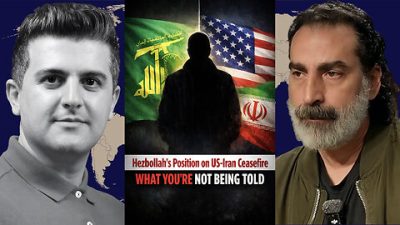
Laith Marouf: Hezbollah’s position on US-Iran ceasefire
or go to
Aletho News Archives – Video-Images
From the Archives
The Dirty Little Secret behind the “Global Terrorism Index”
The Omission of Israeli Terrorism in the Occupied Palestinian Territories
By Karin Brothers | Global Research | December 6, 2014
… The Israeli settlements — all of which are illegal – have been identified as a major impediment to peace. The refusal of a major “global” terrorism report to name the Israeli settlers as one of the groups most responsible for terrorism not only misrepresents a major source of regional violence but exposes the Global Terrorism Index as a propaganda tool that supports a U.S. agenda.
In recent years, governments have been attempting to thwart terrorism by blocking supportive fund-raising. When it comes to Israeli settlements, however, the US and Canada actually encourage fund-raising by giving organizations (such as Christian Friends of Israeli Communities (CFOIC) and the Jewish National Fund) financial support in the form of donor tax-deductions.
Charities which provide funds for the Israeli settlements should be regarded as terror-financing organizations. They should not only lose their tax-deductible status, but they should be banned because they support the violation of international humanitarian law. The terror-financing laws that are being strictly enforced for Muslim charities should be applied to Christian and Jewish charities as well. … Read full article
Blog Roll
 Aletho News
- Trump Administration Moves To Automate U.S. Military Draft Registration
- Spain orders reopening of Tehran embassy, condemns Israel’s carpet bombing of Lebanon
- Israel faces ‘unsustainable’ strategic crisis following 40-day war against Iran: Analyst
- Iran restricts Hormuz access to 15 vessels per day under ceasefire terms: Report
- The ‘Opposition Party’ Has Done Nothing to Stop the Iran War and Much to Goad Trump Into Continuing It
- Moscow backs Tehran on status of Lebanon in US-Iran deal
- How UK Regulator Ofcom Quietly Bypassed International Law to Police American Speech
- The Black Cube Files: How Former Mossad Operatives Flipped a Nation
- Laith Marouf: Hezbollah’s position on US-Iran ceasefire: What you’re not being told
- Israel’s priority lies in destroying chances of peace between Iran, US: Ex-UN nuclear chief
- If Americans Knew
- The gallows law: Israel moves toward executing Palestinian children
- Tucker Carlson: The Path to Peace requires ending ‘special alliance’ with Israel
- This is ceasefire? Israel’s biggest massacre yet in Lebanon, another journalist killed in Gaza – Daily Update
- Tucker Carlson on Israel: This Is the Behavior of an Ally? Really?
- Gazans face a triple crisis: severe shortages of water and bread, healthcare in tatters
- NY Times reports how Netanyahu took the US into Iran War
- A sigh of relief over Iran, but Gaza and Lebanon in dire straits – Daily Update
- Thousands dead and neighborhoods razed to the ground: Aid agencies fear southern Lebanon is becoming the new Gaza
- The war the US is fighting for Israel could cost trillions
- ‘Cigarette Burns, Nail Wounds’: Toddler Tortured in Gaza to Coerce Father
- No Tricks Zone
- An Inconvenient Tree: Uncovered In Alps… Europe Much Warmer Than Today 6000 Years Ago
- New Study Reports A 60% Slowdown In Greenland’s Ice Loss Rate In The Last Decade
- Low Intensity Tornado Wrecks Major Solar Farm, Creating A Potential Toxic Dump
- New Study Finds Warming Saves Lives…Cold Temperatures 12 Times More Deadly Than Excess Heat
- German Science Blog Accuses PIK Climate Institute Of Hallucinating Climate Tipping Points
- Devastating Assessment Of Comirnaty Vaccine By Former Senior Pfizer Europe Toxicologist
- New Study: CO2 Is ‘Effectively Negligible’ As An Explanatory Climate Change Factor Since 2000
- Former Pfizer Toxicologist Dr. Helmut Sterz Tells Bundestag Hearing Pfizer Vaccine Should Have Never Been Approved
- Energy Expert: Germany’s Nuclear Phaseout Was A “500 Billion Euro Mistake”
- New Research: South Australia’s Mid-Holocene Sea Surface Temperatures Were 4°C Warmer Than Today
 Aletho News