Iran blasts ICJ vice-president’s ‘blatant bias’ toward ‘Israel’
Al Mayadeen | August 16, 2025
Deputy Foreign Minister for Legal and International Affairs Kazem Gharibabadi has sharply condemned what he described as a “shocking breach of judicial ethics,” accusing International Court of Justice (ICJ) Vice-President Julia Sebutinde of openly siding with “Israel”, an entity currently facing multiple cases before the Court.
He warned that such “blatant bias” undermines the ICJ’s integrity and violates the core principle of judicial impartiality.
Gharibabadi’s comments follow Justice Julia Sebutinde’s controversial remarks defending her dissenting opinion in the ongoing Israeli genocide against Palestinians in Gaza.
Sebutinde, the only judge to oppose provisional measures against “Israel”, has now further stoked anger with a public speech that critics say confirms long-standing suspicions of personal bias and ideological alignment with Zionist narratives.
“There are now about 30 countries against Israel… the Lord is counting on me to stand on the side of Israel. The whole world was against Israel, including my country,” she declared on August 10 at Watoto Church in Uganda.
Speaking during the launch of the Golden Legacy ministry for members aged 55 and above, Sebutinde added, “I will never forget the day the judgment came out. Even though the government was against me, I remember one ambassador saying, ‘Ignore her because her ruling is not a representation of Uganda.’ The media ran this to fuel more anger and sentiment. Such sentiments can only come from the pit of hell.”
Her speech, laced with religious justification and inflammatory rhetoric, has intensified scrutiny over her role at the court, especially given the gravity of the charges brought against “Israel” by South Africa.
Controversial dissent at ICJ
Justice Sebutinde stood alone among the 17-judge panel at the ICJ, voting against emergency measures directing “Israel” to prevent and punish incitement to genocide in Gaza. Her lone dissent drew widespread condemnation and triggered accusations of both political and religious bias, particularly due to her openly expressed Zionist leanings.
Ugandan officials moved quickly to distance themselves from her stance. Uganda’s Permanent Representative to the UN, Adonia Ayebare, clarified in January: “Justice Sebutinde’s ruling at the ICJ does not represent the Government of Uganda’s position on the situation in Palestine. Uganda’s support for the plight of the Palestinian people has been expressed through our voting pattern at the United Nations.”
Public reaction in the region has been overwhelmingly critical. A Kenyan social media user wrote: “Judge Julia Sebutinde is such an embarrassment to her country and a disgrace to humanity. She didn’t just vote against South Africa’s petition; she voted against reason and morality, justice and freedom, love and compassion. She voted against the very soul of humanity.”
South Africa’s genocide case
On December 29, 2024, South Africa filed a case against “Israel” at the ICJ, accusing it of committing genocidal acts during its military campaign in Gaza. The case prompted global attention, with legal experts and rights advocates calling it a historic test of international law.
Uganda’s Permanent Secretary at the Ministry of Foreign Affairs, Vincent Bagiire Wasswa, reinforced the government’s position, saying, “She made an independent decision that was being misconstrued to be a decision of Uganda. The comments were to make clear that her decision was independent.”
Adding another layer of controversy, Sebutinde revealed that at the time of her dissent, she was also seeking election as ICJ vice-president. She claims she was hesitant to continue due to public backlash but said she was “compelled by God” to go through with it.
She added that a fellow judge later told her she had been elected because of her “character and independence.”
“So whatever the devil had planned for me, God turned it around. This happened a day after the verdict,” she added
Critics argue that such remarks, invoking divine guidance in judicial matters and portraying dissenters as influenced by “the devil”, raise serious questions about her suitability for one of the highest judicial offices in the world.
Genocide Court Calls on Israel to Prevent ‘Exponential Increase of Humanitarian Nightmare’
By Kyle Anzalone | The Libertarian Institute | February 18, 2024
The International Court of Justice demanded that Israel abide by a ruling the court issued last month as Palestinians suffer in a “perilous situation.” The court issued the statement in response to a request by South Africa for the court to intervene and prevent an Israeli attack on Rafah.
Near the end of last year, South Africa filed a suit with the ICJ alleging Israel was committing genocide in Gaza. In January, the court issued a primary ruling that Israel was committing a genocide fueled by statements from Israeli officials.
The ICJ ruling demanded that Israel halt operations that endanger civilians, end genocidal rhetoric, and punish those who commit or encourage war crimes. Israel and the US dismissed the ICJ ruling.
Last week, Pretoria filed a request with the court to issue an additional ruling against Israel as Tel Aviv planned operations in Rafah. Rafah is the last remaining city in Gaza not completely decimated by the Israeli military operations. At least 1.5 million Palestinians are sheltering in the city, many in tents and on the streets.
The ICJ responded to the South African request by declining to issue further orders to Israel but cited its previous ruling that called on Israel to halt operations that could endanger Palestinian civilians. “The Court notes that the most recent developments in the Gaza Strip, and in Rafah in particular, would exponentially increase what is already a humanitarian nightmare with untold regional consequences,” A statement from the ICJ said.
“This perilous situation demands immediate and effective implementation of the provisional measures indicated by the Court in its Order of 26 January 2024.” The press release continues, “The Court emphasizes that the State of Israel remains bound to fully comply with its obligations under the Genocide Convention and with the said Order, including by ensuring the safety and security of the Palestinians in the Gaza Strip.”
The Israeli government is planning the attack on Rafah, and Prime Minister Netanyahu says it will go ahead despite international pressure. Human rights organizations and Western governments are warning Israel not to attack the city because of the suffering it will inflict on Palestinian civilians.
It is unclear where the Palestinians will go once Israel destroys Rafah. Tel Aviv says it will not push the Palestinians from Rafah across the border into Egypt. However, Cairo is preparing for an influx of refugees.
The ICJ Ruling: Who Will Drain the Swamp of Injustice?
By Christopher Black – New Eastern Outlook – 01.02.2024
On January 26, the International Court of Justice proved once again that it is mired in the putrid fermenting swamp of Western corruption, decay and injustice with its pro-Israeli ruling in the legal case South Africa brought against Israel for committing genocide in its attacks on the people of Gaza.
The Western commentators, everyone, left or right, to cover up the real meaning of the ruling, to justify it, claimed that Israel had been ordered to stop genocide. The Court did nothing of the kind. It simply reminded Israel to obey the laws of war but refused to grant the South African request for an order compelling Israel to stop its operations and to withdraw its forces. The Court did the opposite and allowed Israel to continue its campaign of genocide. Essentially, the Court said, “Your genocide attack can continue, just behave yourselves as you commit genocide.”
The logic is lost on everyone except the deluded talking heads of the West. Russian and Chinese media largely ignored the ruling. And for good reason, because the ICJ and the commentators ignored the important fact that the ICJ, just 22 months before, issued a ruling in the case that Ukraine brought against Russia regarding its military operations in Ukraine. The Kiev regime, with the help of its masters in Washington, filed a case with the ICJ against Russia alleging that Russia was committing genocide. Unlike the Israeli case, Ukraine filed no evidence before the ICJ to back up its false allegations. Russia refused to take part as the ICJ had no jurisdiction since there was no dispute between Russia and Ukraine on the issue, that is, no formal dispute about genocide or no genocide, and further because Russia’s action were purely military in nature, and there was and has been no attack on the civilian population of Ukraine except by the Kiev Nazis attacking the civilians of the Donbass Republics and Russia. Russia told the ICJ it had no jurisdiction and refused to take part in a farce.
But despite the fact there was no jurisdiction for the ICJ to act, and no evidence of genocide or any war crimes were presented to the Court by Ukraine except simple assertions, the ICJ on March 16, 2022 made a provisional order that Russia must stop its military operations and withdraw its forces.
The double standard is stunning. The more so since even in the ICJ ruling on the 26th of January 2023, the judges of the Court cited the compelling evidence presented by South Africa that proved that Israel was and is committing genocide against the Palestinians, Yet, the judges of the ICJ ignored their own references to this evidence and instead accepted the Israeli sophistry that Israel has a right to defend itself and that it was trying to obey the laws of war.
But the law is very clear Israel has no right to self defence under international law against legitimate attacks by resistance forces on its forces engaged in the illegal occupation of Palestinian territories. The Hamas attack of October 7, 2022 was an attack against the Israel occupation forces. Israel has no legal right to retaliate whatsoever. Its only legal recourse in the face of such an attack is to withdraw its forces.
No only did the Court display vividly its hypocrisy and double standards by ruling that Russia must stop its military actions in defence of the Donbass peoples and Russia, while permitting Israel to continue its campaign of slaughter, and by ignoring the law that Israel has no right to self defence, it even purported to make an order, or to “urge” Hamas to release the Israeli hostages it holds, even though Hamas is not a party to the South African-Israeli case and even though the Court refused to order the Israelis to release the thousands of Palestinian hostages it has held for years, including women and children, some of the then born in Israeli prisons.
Prime Minister Netanyahu of Israel rightly scoffed at the ICJ ruling, stating the Israeli war will continue and that Israel is already complying with the laws of war. Washington, London, Ottawa and the rest all welcomed the decision and that it upheld Israel’s right to self-defence. Commentators, trying to put a brave face on the ruling to save face for South Africa, wrung their hands and moaned there was no ceasefire order but whimpered at least the Israelis were told to watch their behaviour and that the ruling confirmed Israel was committing genocide.
Well, twist the ruling anyway they want, it does not say that at all, The judges said South Africa had presented evidence that made that claim of genocide plausible, but did not affirm it was taking place. That remains to be determined when the main case is argued some time in the unknown future and unless these commentators can collapse Time and have a future decision now, they are stuck with what they have, a loss for South Africa, a win for Israel and a continuing tragedy for Palestine.
But the lawyers for South Africa have some explaining to do themselves, as they left the door open for this injustice. Their opening remarks in the oral hearings of the case began with a recitation of the Israeli propaganda version of the October 7 Hamas attack. There was no need for them to have done that. They should have instead simply stated the fact that Hamas attacked Israeli forces illegally occupying Palestinian territory in a legitimate resistance attack. They should have stated firmly that Israel has no right of self-defence against such an attack. But they did not state that. In fact, they evaded the issue entirely and when the British lawyer for Israel stated in his opening remarks that Hamas attacked “Israeli sovereign territory, the lawyers should have risen immediately and objected that was a lie. But they did nothing, said nothing.”
And despite the fact the Irish lawyer for South Africa referenced Russia’s military operations in Ukraine and, by the way, in a disparaging manner, never once reminded the Court that just 22 months prior they had ordered Russia to stop its military operations where no evidence was presented of crimes so that the Court now had no choice but to order Israel to stop its military operations in Gaza, It was not mentioned at all. The failure to do so was fatal to their case and as a lawyer, can only be explained by negligence and incompetence, or a deliberate decision was made to not refer to that precedent. And one made so recently.
Why their legal team would decide such a thing I will leave for readers to ponder. But it seems to this writer that South Africa was trying to please two sides at the same time, the global south by filing the action in the first place, which we all commend, and the West, that is Washington, by providing the Court with space to make a decision which would allow Israel to get away with the very thing South Africa brought the case to prevent-genocide.
Once again we observe the injustice of the international legal justice system, the corruption of and within that system, and, once again, that international justice is just a tool of power politics and instead of serving to stop war, does its best to enable it, justify it and encourage it. The fumes from the swamp have become overwhelming. But who is going to drain that swamp before we all die from suffocation from the stench?
Christopher Black is an international criminal lawyer based in Toronto. He is known for a number of high-profile war crimes cases and recently published his novel Beneath the Clouds. He writes essays on international law, politics and world events, especially for the online magazine “New Eastern Outlook”.
ICJ Rules Against Ukraine on Terrorism, MH17
In a blow to Ukraine, the World Court ruled Russia didn’t finance terrorism in Donbass and the court refused to blame Moscow for the downing of Flight MH17.
By Joe Lauria | Consortium News | February 1, 2024
The World Court ruled on Wednesday that Russia did not finance terrorism in its defense of separatists in Ukraine and the court refused to find Russia guilty of downing Malaysian Airlines Flight 17 as Ukraine had asked.
The case was brought to the ICJ by Ukraine in 2017, three years after the U.S.-backed coup in Kiev overthrew the democratically-elected President Viktor Yanukovych.
When Russian speakers in Donbass rebelled against the unconstitutional change in government that they had voted for, the coup leaders in 2014 launched what it called an “anti-terrorist” military operation to put down the rebellion.
Russia responded by helping ethnic Russians with arms and other military equipment. Ukraine claimed to the court that that was in breach of a treaty barring terrorism financing.
But the ICJ ruled on Wednesday that the treaty only covered cash transfers made to alleged terrorist groups. This “does not include the means used to commit acts of terrorism, including weapons or training camps,” the Court said in its judgement.
“Consequently, the alleged supply of weapons to various armed groups operating in Ukraine… fall outside the material scope” of the anti-terrorism financing convention, the Court ruled. The Court also said it had no evidence to show that any of the armed militias in Donbass fighting against the government could be characterized as terrorist groups.
The ICJ found only that Russia was, “failing to take measures to investigate facts… regarding persons who have allegedly committed an offense.” It added that the court “rejects all other submissions made by the Ukraine.”
The ruling is highly significant in undermining Kiev’s claim to be fighting a war against terrorists in Donbass, an essential part of the Ukraine’s and the West’s narrative in justifying its brutal operation that left more than 10,000 civilians dead.
Russia invaded Ukraine in February 2022 amid indications that Kiev was beginning a new offensive against Donbass. Ukraine and the West had failed to implement two peace agreements negotiated in Minsk and endorsed by the U.N. Security Council.
Western and Ukrainian officials later admitted they never had any intention of implementing the deal and pretended to to buy time to build up its forces against Russia.
Rejected MH17 Claim
In its complaint to the Court, Ukraine had also claimed that Russia was responsible for the downing of Malaysia Airlines flight MH17 in 2014, killing all 298 civilian passengers and crew on board. Kiev wanted Russia to pay compensation to the victims.
But the court refused to rule whether Russia was responsible and to order compensation. This ruling appears to contradict the results of the official investigation into the incident.
The Dutch Safety Board (DSB) and a Dutch-led joint investigation team (JIT) concluded in 2016 that the plane was shot down by ethnic Russian separatists using a missile supplied by Russia. Moscow has denied involvement in the incident.
The ruling on MH17 came two weeks after the European Court of Justice decided that the Dutch government was not required to release information it has about the incident. The Dutch news outlet RTL Nieuws had brought the case before the ICJ.
It wanted to know what reports the Dutch government had received about Ukrainian airspace before the plane was shot down. The government refused to release that data and the European court ruled it did not have to divulge information regarding aviation safety.
No Discrimination
Ukraine was also denied compensation for what it said was discrimination against ethnic Tatars and Ukrainians in Crimea after Russia annexed the peninsula in 2014.
The court only agreed that Russia failed to adequately protect Ukrainian language education in Crimea. This complaint came as Ukraine passed laws discriminating against the Russian language in the country.
US Judge Votes Against Russia
Joan Donoghue, the American judge who is president of the Court, voted to protect Ukraine against several of the measures of the judgement.
For instance, she voted (in a 10-5 vote) against rejecting “all other submissions made by Ukraine with respect to the International Convention for the Suppression of the Financing of Terrorism.” She only voted for the point criticizing Russia for not properly investigating the charge and against rejecting Ukraine’s demands for compensation.
Donoghue also voted (in another 10-5 vote) against rejecting Ukraine’s charge regarding discrimination against Ukrainians and Tartars in Crimea.
Joe Lauria is editor-in-chief of Consortium News and a former U.N. correspondent for The Wall Street Journal, Boston Globe, and other newspapers, including The Montreal Gazette, the London Daily Mail and The Star of Johannesburg. He was an investigative reporter for the Sunday Times of London, a financial reporter for Bloomberg News and began his professional work as a 19-year old stringer for The New York Times. He is the author of two books, A Political Odyssey, with Sen. Mike Gravel, foreword by Daniel Ellsberg; and How I Lost By Hillary Clinton, foreword by Julian Assange. He can be reached at joelauria@consortiumnews.com and followed on Twitter @unjoe
ICJ Rejects Ukraine’s Claim to Recognize Russia as Aggressor State – Russian Foreign Ministry
Sputnik – 01.02.2024
MOSCOW – The International Court of Justice (ICJ) rejected Kiev’s claim to recognize Russia as an “aggressor state” and the Donetsk People’s Republic (DPR) and Lugansk People’s Republic (LPR) as “terrorist organizations,” the Russian Foreign Ministry said on Wednesday.
Earlier in the day, the ICJ rejected most of Ukraine’s claims against Russia under the International Convention on the Elimination of All Forms of Racial Discrimination in Crimea, Court President Joan Donoghue said.
“The International Court of Justice did not follow Kiev’s whim and refused to recognize Russia as an ‘aggressor state.’ The court also rejected Ukrainian insinuations that the DPR and LPR are allegedly ‘terrorist organizations,'” the statement said.
Kiev hoped to back up its demands for the transfer of Russian assets frozen in the West and the introduction of international restrictions against Russia with the court claim, the ministry added.
Ukraine filed the lawsuit with the ICJ in 2017, accusing Russia of violating international conventions on anti-terrorism and racial discrimination over actions in Donbass and Crimea.
The ICJ found that Russia had breached the anti-discrimination treaty by “the way in which it has implemented its educational system in Crimea after 2014 with regard to school education in the Ukrainian language,” and rejected all other claims.
The Hague-based court also found that Russia had faithfully fulfilled its obligations to cooperate in the fight against terrorism financing, including the obligation to identify and block funds used to finance terrorism.
The ICJ declined to rule on Kiev’s accusations of Russia’s alleged responsibility for the downing of Malaysia Airlines flight MH17 over eastern Ukraine in 2014.
Has International Law Survived, or Has the Western Political Class Killed It?
By Craig Murray | January 28, 2024
In finding there is a plausible case against Israel, the International Court of Justice treated with contempt the argument from Israel that the case should be dismissed as it is exercising its right of self-defence. This argument took up over half of Israel’s pleadings. Not only did the court find there is a plausible case of genocide, the court only mentioned self-defence once in its interim ruling – and that was merely to note that Israel had claimed it. Para 41:

That the ICJ has not affirmed Israel’s right to self-defence is perhaps the most important point in this interim order. It is the dog that did not bark. The argument which every western leader has been using is spurned by the ICJ.
Now the ICJ did not repeat that an occupying power has no right of self-defence. It did not need to. It simply ignored Israel’s specious assertion.
It could do that because what it went on to iterate went way beyond any plausible assertion of self-defence. What struck me most about the ICJ ruling was that the Order went into far more detail about the evidence of genocide than it needed to. Its description was stark.
Here Para 46 is crucial

The reason this is so crucial, is that the Court is not saying that South Africa asserts this. The Court is saying these are the facts. It is a finding of fact by the Court. I cannot emphasise too strongly the importance of that description by the court of the state of affairs in Gaza.
The Court then goes on to detail accounts by the United Nations of the factual situation, quoting three different senior officials at length, including Philippe Lazzarini, Commissioner General of UNRWA:


This of course explains why the immediate response to the ICJ ruling was a coordinated attack by Israel and the combined imperialist powers on UNRWA, designed to accelerate the genocide by stopping aid, to provide a propaganda counter-narrative to the ICJ judgment, and to reduce the credibility of UNRWA’s evidence before the court.
The Court works very closely with the UN and is very much an entrenched part of the UN system. It has a particularly close relationship with the UN General Assembly – many of the Court’s cases are based on requests from the UN General Assembly. In a fortnight’s time the Court will be starting its substantive hearings on the legal position in the Occupied Territories of Palestine, at the request of the UNGA. There are five specific references to the UNGA in the Order.
The Court spent a great deal of time outlining the facts of the unfolding genocide in the Gaza Strip. It did not have to do so in nearly so much detail, and far too little attention has been paid to this. I was equally surprised by how much detail the court gave on the evidence of genocidal intent by Israel.
It is especially humiliating for Israel that the Court quoted the Israeli Head of State, the President of Israel himself, as giving clear evidence of genocidal intent, along with two other government ministers.
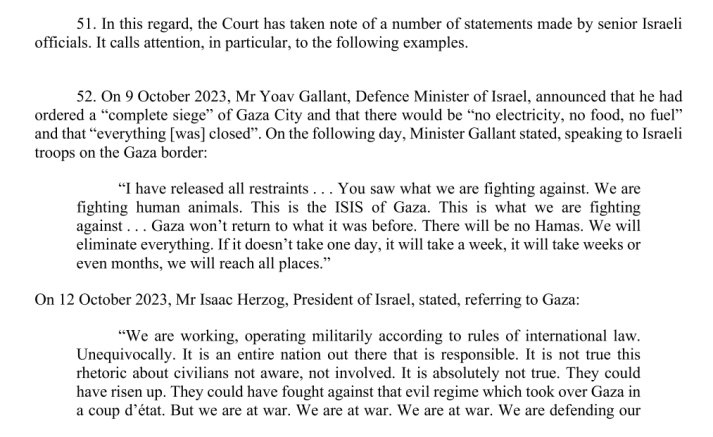

Again, this is not the Court saying that South Africa has alleged this. It is a finding of fact by the Court. The ICJ has already found to be untrue Israel’s denial in court of incitement to genocide.
Now think of this: the very next day after President Herzog made a genocidal statement, as determined by the International Court of Justice, he was met and offered “full support” by Ursula von der Leyen, President of the European Commission and Roberta Metsola, President of the European Parliament.

When you take the detail of what the Court has found to be the actual facts of the case, in death and destruction and in intent, I have no doubt that this is a court which is currently minded to find Israel guilty of genocide once the substantive case comes before the Court.
All of Israel’s arguments were lost. Every one. The substantial effort Israel put into having the case dismissed on procedural grounds was brushed aside. So was self-defence. And in its findings of the facts, the Court plainly found to be untrue the Israeli lies about avoidance of civilian casualties, the responsibility of Hamas for the damage to infrastructure, and the access of relief aid to Gaza.

Those are the facts of what happened.
Do not be confused by the absence of the word “ceasefire” from the Court order. What the Court has ordered is very close to that. It has explicitly ordered the Israeli military to stop killing Palestinians.

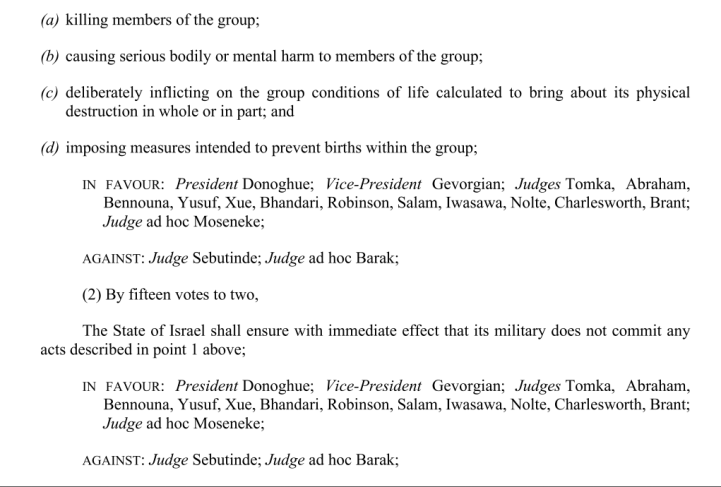
That is absolutely clear. And while I accept it is tautologous, in the sense it is ordering Israel to obey a Convention which Israel is already bound to follow, there could be no clearer indication that the Court believes that Israel is not currently obeying it.
So what happens now?
Well, Israel has responded by killing over 180 Palestinian civilians since the Order was given from the International Court of Justice. If that continues, South Africa may return to the Court for more urgent measures even before the ordered monthly report from Israel is due. Algeria has announced it will take the Order to the UN Security Council for enforcement.
I doubt the United States will veto. There has been a schizophrenic reaction from Israel and its supporters to the ICJ Order. On the one hand, the ICJ has been denounced as antisemitic. On the other hand the official narrative has been (incredibly) to claim Israel actually won the case, while minimising the coverage in mainstream media. This has been reinforced by the massive and coordinated attack on UNRWA, to create alternative headlines.
It is difficult to both claim that Israel somehow won, and at the same time seek to block UNSC enforcement of the Order. My suspicion is that there will be a continuing dual track: pretending that there is no genocide and Israel is obeying the “unnecessary” order, while at the same time attacking and ridiculing the ICJ and the wider UN.
No matter what the ICJ said, Israel would not have stopped the genocide; that is the simple truth. The immediate reaction of the US and allies to the Order has been to try to accelerate the genocide by crippling the UN’s aid relief work. I confess I did not expect anything quite that vicious and blatant.
The wheels of God grind slowly, but they grind exceedingly small. The ICJ having flagged up a potential genocide so strongly, it may well fall to judges in individual nations to restrain international support for the genocide. As I explained in detail, the Genocide Convention has been incorporated into UK law by the International Criminal Court Act of 2001.
There will, beyond any doubt, have been minutes issued by FCDO legal advisers warning of ministers being at risk of personal liability in UK law for complicity in genocide now, should arms shipments and other military and intelligence cooperation with the Israeli genocide continue. In the US, hearings started already in California on a genocide complicity suit brought against Joe Biden.
Of course I wish this would all work faster. It will not. The UN General Assembly may suspend Israel from the UN. There are other useful actions to be taken. But this is a long slog, not a quick fix, and people like you and I continue to have a vital role, as everybody does, in using the power of the people to wrest control from a vicious political class of killers.
This was a good win. I am pleased that this course for which I advocated and lobbied has worked and increased pressure on the Zionists, and that my judgment that the International Court of Justice is not just a NATO tool like the corrupt International Criminal Court, has been vindicated.
It cannot help the infants killed and maimed last night or those to die in the coming few days. But it is a glimmer of hope on the horizon.
Israel’s Day of Reckoning
BY JOHN J. MEARSHEIMER | JANUARY 27, 2024
The International Court of Justice (ICJ) issued its Order yesterday (26 January 2024) on the South African case against Israel involving possible genocide in Gaza.
Predictably, the coverage of the Order in the mainstream media in the West aims to spin the story in ways that are most favorable to Israel, which means minimizing or omitting those elements of the story that make Israel look bad and emphasizing that the ICJ did not order Israel to cease all military operations in Gaza.
Hardly anyone expected the ICJ to rule that Israel would have to stop all military operations in Gaza, since it is at war with Hamas, and the court cannot order Hamas to cease its military operations against Israel. What the ICJ did tell Israel, however, is that it must focus its offensive on Hamas, and not target the civilian population. After all, the genocide charge revolves around what Israel is doing to the civilian population in Gaza, not Hamas.
What really matters in the Order is what it says about Israel committing genocide. How could it be otherwise? Genocide is the crime of all crimes.
The Order clearly states that there is: 1) plausible evidence that Israel has the intent to commit genocide; and 2) there is plausible evidence that Israel is committing genocide.
In response to that dire situation the court ordered Israel to stop committing those acts that appear to be genocidal, and to preserve any evidence that bears on this matter, obviously for the trial ahead.
In short, the ICJ did not make a final decision on the charge of genocide against Israel, but said there is sufficient evidence at this point to believe there is a “real and imminent risk” of genocide, and therefore Israel must fundamentally alter its conduct of the war in Gaza.
I think this is a stunning outcome, especially when you consider the votes among the 17 members of the ICJ.
There were six separate votes on six provisional measures that Israel was instructed to obey.
Four of the votes were 15-2.
Two of the votes were 16-1.
Amazingly, the Israeli judge — who was recently appointed by Prime Minister Netanyahu — voted in favor of two of the measures.
The American judge, who is also the head of the ICJ, voted in favor of all 6 of the measures.
The only judge who voted against all six measures is from Uganda.
I watched the ICJ proceedings on 11-12 January 2024, and they were conducted in a professional and fair-minded manner.
Both the Israelis and the South Africans sent their “A” teams to the proceedings, and each took over three hours to lay out its arguments systematically and comprehensively.
Finally, I have read the ICJ’s 27-page Order, and it is an impressive document, which is not to say one must agree with all its conclusions.
This was not a kangaroo court.
It seems clear that yesterday was a black day for Israel, as the ICJ Order will leave a deep and lasting stain on its reputation.
Here’s why the ICJ ruling on genocide is a crushing defeat for Israel
The Hague-based court has not called for a ceasefire and has no enforcement power, but its decision is resounding nonetheless
By Tarik Cyril Amar | RT | January 28, 2024
The United Nations’ International Court of Justice (ICJ) has ruled on the case that South Africa had brought against Israel. Those who mistake realism for simplistic materialism – the ‘it’s only there if I can touch it’ variety – may underestimate the significance of that ruling. In reality, it is historic. Here’s why.
First, and most importantly, the court has ruled against Israel. South Africa’s well-prepared brief was over 80 pages long, closely argued, and very detailed. But its gist was simple: It had applied to the ICJ – which only handles cases between countries, not individuals – to find that Israel is committing genocide in its attack on Gaza, thereby infringing on fundamental Palestinian rights as brutally as possible.
Such a finding always takes years. For now, at this preliminary stage, South Africa’s immediate request was for the judges to decide that there is, in essence, a high enough probability of this genocide taking place to do two things: First, continue the case (instead of dismissing it) and, secondly, issue an injunction (in this context called “preliminary measures”) ordering Israel to abstain from its genocidal actions so that the rights of its Palestinian victims receive due protection.
The court has done both, with a majority of 15 to 2. One of the two judges dissenting is from Israel. Those voting, in effect, against Tel Aviv included even the president of the court, from the US, and the judge from Germany, a country that has taken a self-damagingly pro-Israel line. As to the Israeli pseudo-argument claiming ‘self-defense,’ the court rightly ignored it. (Occupying powers simply do not have that right regarding occupied entities under international law. Period.)
This is a clear victory for South Africa – and for Palestine and Palestinians – and a crushing defeat for Israel, as even Kenneth Roth, head of thoroughly pro-Western Human Rights Watch recognizes with commendable clarity.
It is true that the ICJ has no power to enforce its rulings. That would have to come through the UN Security Council, where the US is protecting Israel, whatever it does, including genocide. Yet there are good reasons why representatives of Israel have reacted with statements so arrogant and aggressive that they only further damage Tel Aviv’s badly damaged international standing:
Prime Minister Benjamin Netanyahu, for instance, has displayed his legal nihilism by dismissing as “outrageous” the closely reasoned finding of the court, at which Israel had every opportunity to argue its case. Israel’s far-right Minister of National Security, convicted racist and terrorist supporter Itamar Ben-Gvir, has derided the ruling with an X post simply saying: “Hague schmague.”
And, of course, as always, everyone not toeing Israel’s line is smeared as an “antisemite”: The ICJ is now joining the UN, the World Health Organization and, by now, almost everyone and everything outside the ideological bubble of Zionism on the list of those slandered in this manner.
Notwithstanding the ICJ’s lack of an army to compel Tel Aviv to obey the law, these outbursts of rage betray great fear. You may ask why. After all, the one thing the ICJ did not do was order a ceasefire. Some commenters have focused on that fact, to argue – gleefully on the side of Israel and its allies, with great disappointment on the side of Israel’s victims, opponents, and critics – that this vitiates the ruling.
They are wrong. As, for instance, the Palestinian legal expert Nimer Sultany (based at the London School of Oriental and Asian Studies) has explained, a direct ceasefire order was always unlikely. There are several reasons for that: The ICJ cannot issue such an order to Hamas, so issuing one to Israel alone would have been difficult in principle and, by the way, would also have provided ammunition for Israeli propaganda. Since only the UN Security Council could give teeth to the ICJ’s ruling, trying to decree such a one-sided ceasefire would have made it easier for the US to sabotage the Council by discrediting the court’s ruling as biased. Although it was consistent for South Africa to ask for a ceasefire at the ICJ, the best institution to order one is still the Security Council. And it is plausible to interpret the specific demands that the ICJ has made of Israel as practicable only under an official or de-facto ceasefire. Indeed, Arab countries are now, it seems, gearing up to take that position and use the court’s ruling to demand a ceasefire at the Security Council. This may very well fail again, but even that failure will serve to weaken the position of the US, Israel’s vital sponsor.
Beyond the issue of the ceasefire, there are other – and, from an Israeli perspective, probably more frightening – factors. For even if the US keeps shielding Israel, this is a bigger world. Western governments and politicians that have supported Tel Aviv unconditionally – with arms, diplomatic and public-relations cover, and by repressing Israel’s critics – will feel a chill: The UN Genocide Convention and the Rome Statute don’t just condemn perpetrating a genocide but also not preventing or being complicit in one.
With the ICJ now having confirmed at the very least that genocide is probable enough to merit a case and require immediate action, Joe Biden, Antony Blinken, Ursula von der Leyen, Olaf Scholz, Rishi Sunak, Keir Starmer, Emmanuel Macron, Annalena Baerbock, to name only a few, should start worrying: While the ICJ does not go after individuals, the International Criminal Court (ICC) does. Despite dragging its feet as much as it could, it is now especially likely to be compelled to open a full-fledged investigation.
In addition, cases can also be brought under national jurisdictions. All of this will take years. But it could end very badly for hubris-addled Western politicians who never imagined that such charges could escape their control (where they serve as politicized tools to go after African leaders and geopolitical opponents) and become their very own, potentially life-changing problem. In sum, the cost of siding with Israel has gone up. Not all but most politicians are solid opportunists. Tel Aviv will find it harder to mobilize its friends.
It is true that some Western governments and leaders, for instance, Canada or Rishi Sunak, have hurried to show their disdain for international law by attacking the ICJ’s ruling. But there’s an element of desperate bravado, of whistling in a darkening forest. And there’s a Catch-22 as well: Because, the more representatives of the West display their arrogance, the more they alienate the world. They may think that they are relieving Israel’s isolation. In reality, they are joining it on its downward trajectory: They are showing, once again, that their touted “rules-based order” is the opposite of the equal rule of international law for all.
Non-Western powers like China and Russia that have long resisted the hypocrisy of that ‘rules-based order’ and are not complicit in Israel’s atrocities, are earning global good will and geopolitical advantage. Hence, their positions and strategy will be confirmed by the ICJ ruling. This, as well, will weaken Israel further in the international arena.
If the world is bigger than the US or the West, it also contains much more than politics in the narrow sense of the term. In the realm of narratives, this is also a harsh setback for Israel and its supporters: Those who arrogantly dismissed the South African case as baseless or “a mockery,” for instance in The Economist, are now paying with their credibility. Their value as weapons in Israel’s struggle for global public opinion is reduced.
Last but not least, the domains of politics and narratives intersect, of course, with that of war: It is inevitable that those fighting Israel with arms will feel encouraged, and rightly so. For forces such as the Palestinian Resistance, the Ansar Allah (Houthi) movement de facto ruling Yemen, Hezbollah, and Iran, this ICJ ruling coincides with Israel’s military failure in Gaza: For while its troops have massacred civilians (and obsessively recorded proud evidence of their crimes that is now coming to haunt them), they are far from either “eradicating Hamas” (the putative war aim) or freeing the hostages by force. Seeing that Israel’s international isolation is getting worse, its opponents will have ever less reason to give up.
This, in short, was a great setback for Israel. Its political model, combining apartheid, militarism, and a might-makes-right outlook, is not ‘working’ any longer, not even on its own terms. The future is not predictable. That Israel will be in worsening trouble is.
Tarik Cyril Amar is a historian from Germany working at Koç University, Istanbul.
ICJ orders Israel to prevent acts of genocide in Gaza
Press TV – January 26, 2024
The United Nations’ top court has ordered the Israeli regime to take all measures within its power to prevent genocide in Gaza, but stopped short of ordering a ceasefire.
The order by the International Court of Justice was part of its interim ruling on the emergency measures requested by South Africa in its genocide case against Israel over its war on the Gaza Strip.
The court demanded Israel try to contain death and damage in the Gaza Strip and warned it to “take all measures in its power to prevent” acts that could fall under the UN Genocide Convention set up in 1948.
The court also ordered Israel to take measures to prevent and punish direct incitement of genocide in the Gaza Strip.
Israel must take “immediate and effective measures to enable the provision of urgently needed basic services and humanitarian assistance to address the adverse conditions of life faced by Palestinians,” the court said.
It ordered the regime to report back in one month on the measures it has been asked to carry out.
Palestinians appear to be a protected group under the genocide convention, the court said, noting that it has jurisdiction to rule in the case.
Friday’s ruling at the ICJ did not deal with the core accusation of the case – whether genocide occurred – but focused on the urgent intervention sought by South Africa.
The case was brought by South Africa, which has accused Israel of breaching the UN Genocide Convention.
Over two days of hearings earlier this month in the gilded hall of the Peace Palace, where the ICJ sits, lawyers from both sides battled over the interpretation of this Convention.
South Africa said Israel had carried out “genocidal” acts that were intended to cause the “destruction of a substantial part of the Palestinian national, racial and ethnical group.”
It urged the court to order Israel to “immediately suspend” its military operations in Gaza and allow humanitarian aid to reach the civilians there.
The question now is whether the court’s rulings will be obeyed. Although its rulings are legally binding, the ICJ has no mechanism to enforce them and they are sometimes completely ignored.
South Africa has been one of the outspoken critics of Israel’s ongoing onslaught against Palestinians and has led some initiatives to hold Israel accountable for its actions in Gaza. The African country, which has experienced long years of an apartheid regime, has been praised by activists as the vanguard of the global conscience and voice of the oppressed.
At least 26,083 Palestinians, around 70 percent of them women, young children, and adolescents, have been killed in the Gaza Strip in Israeli bombardments and ground offensive since October 7.
Foreign Office maintains deafening silence on Chagos Islands despite UN ruling
Press TV – February 2, 2021
Five days after a legal body of the United Nations dismissed British claims of sovereignty over the Chagos Islands, the Foreign Office continues to avoid meaningful engagement the issue.
The United Nation’s International Tribunal for the Law of the Sea ruled on January 28 that Mauritius has sole sovereignty over the Chagos Islands, thus delivering a fatal blow to the UK’s weak legal position.
The UN body’s judgment follows a ruling by the International Court of Justice (ICJ) in February 2019 that the UK must end its occupation, which in turn triggered a vote to that effect in the UN General Assembly in May 2019.
Despite the gravity of the situation, the British Foreign Office has hitherto released just a single terse statement on the issue, essentially reaffirming the UK’s recalcitrant attitude.
“The UK has no doubt as to our sovereignty over the British Indian Ocean Territory (BIOT), which has been under continuous British sovereignty since 1814. Mauritius has never held sovereignty over the BIOT and the UK does not recognize its claim”.
That curt statement, and the subsequent silence, underscores the UK’s resolve to flout international law and maintain a stranglehold over the occupied Chagos Islands.
But despite London’s oft-stated determination to hold onto the Chagos Islands indefinitely, there will inevitably be concerted legal push back by the international community, the state of Mauritius and even by individual aggrieved Chagos islanders.
On the issue of Chagos islanders – who were forcibly removed from their ancestral lands by the UK in the mid-1960s – the long-delayed issue of compensation by the British government is finally attracting attention.
According to the Observer (January 31), less than £12,000 of a £40 million fund set up to compensate Chagos islanders for the loss of their homeland has actually been given to those islanders living in Britain.
The fund was reportedly set up four years ago and yet the Foreign Office has distributed less than one percent in direct support to Chagos islanders who have lost homes and livelihoods as a result of the 55-year British occupation.
According to the Observer, which claims to have seen internal documents, the “English council” tasked with allocating the money has “abandoned the work” and “returned the funds” to the Foreign Office.
The FCO’s mistreatment of Chagos islanders over a 55-year period has even elicited criticism from some sections of the ruling Tories, a party committed to keeping occupied territories around the world.
The Tory MP Henry Smith, whose Crawley constituency is home to the majority of Chagossians living in the UK, has described the process of extracting compensation money from the Foreign office as “tortuous”.
“While there’s some uncertainty among the Chagos community about engaging with the UK government over these funds, it’s outrageous that next to none of this funding has actually been utilized. The fact that this sort of funding hasn’t been deployed is another failure of Foreign Office promises over half a century to the Chagossian community”, Smith said.
It remains to be seen if class action undertaken by the Chagossian community – coupled with pressure from the UN and the broader international system – will produce a shift in the UK’s position in the mid to long term.
Venezuela Rejects ICJ Ruling, Reaffirms Claim Over Essequibo Strip
By Ricardo Vaz | Venezuelanalysis | January 8, 2021
Mérida – The Venezuelan government has taken actions to defend its claim over the disputed Essequibo region.
President Nicolas Maduro held a meeting with the country’s National Defense Council and State Council on Thursday to address the territorial dispute between Venezuela and neighboring Guyana.
The Venezuelan government rejects a recent decision by the United Nations’ International Court of Justice (ICJ). On December 18, with a 12-4 majority, the ICJ judges ruled that the court has jurisdiction to settle a claim brought forward by the Guyanese government arguing that the border was established by a controversial 1899 arbitration agreement in which no Venezuelan negotiators were present.
In response, the Maduro government reaffirmed its rejection of the 1899 ruling and its adherence to the UN-brokered Geneva Agreement signed by all parties in 1966 as the only binding international framework.
“This is a cause uniting an entire nation to fight against the dispossession of a territory that always belonged to Venezuela,” the Venezuelan president said in the televised meeting.
Maduro added that the Geneva Agreement stipulates that the border dispute must be settled by direct negotiations between the two countries and that his administration would send a letter to UN Secretary General Antonio Guterres to defend Caracas’ claim over the Essequibo.
“We believe your good will and efforts are more needed than ever to restart direct talks between Guyana and Venezuela in order to achieve a peaceful and mutually beneficial agreement,” the letter reads.
The Venezuelan government will likewise address a letter to ICJ President Abdulqawi Ahmed Yusuf, arguing that the Hague-based court has no jurisdiction to rule on a unilateral Guyanese suit and demanding that Venezuela be allowed to defend its territorial claim. Maduro went on to denounce “suspicious” efforts to rush the hearings, which are set for January 25 after the Caribbean nation allegedly objected to the original January 15 date.
Earlier on Thursday, the newly-seated National Assembly (AN) unanimously approved a nine-point motion rejecting the ICJ ruling and defending the 1966 Geneva Agreement.
The AN document endorsed the government’s diplomatic efforts and the reopening of direct talks with Venezuela’s eastern neighbor. The legislative body also formed a special commission, headed by lawyer Hermann Escarra, to focus on the Essequibo claim.
The diplomatic quarrel over the 160,000 square kilometer, sparsely populated strip of land, which was taken by the British colonial regime in the late 19th century, recently came to the fore following the discovery of an estimated 15 billion barrels of oil in the Essequibo’s maritime waters.
Caracas has repeatedly voiced its opposition to Guyana’s decision to allow US multinational Exxon Mobil to drill in the disputed area, claiming that it violates the 1966 accords. For its part, Washington has backed Georgetown’s claim to the strip and pledged to execute joint military drills.
Featured Video
Seyed M. Marandi: U.S. Military DIVIDED? Iran’s Secret Defense EXPOSED
or go to
Aletho News Archives – Video-Images
From the Archives
‘Israel sees Iran as obstacle to its policies’
Press TV – August 25, 2017
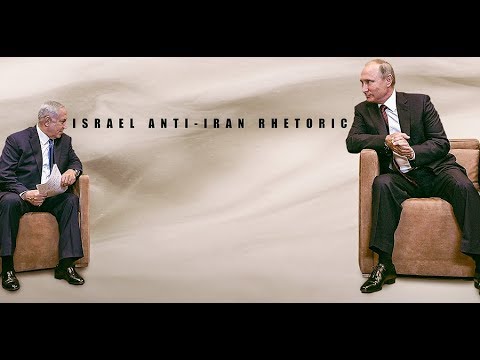
Prime Minister Benjamin Netanyahu has said that Israel felt threatened by Iran’s growing influence in the Middle East. Netanyahu expressed his Iranophobic view in a meeting with Russian President Vladimir Putin in Russia’s Black Sea resort of Sochi on Wednesday. Press TV has asked Scott Rickard, former American intelligence linguist from Tampa, Florida, and Brent Budowsky, a columnist at The Hill from Washington, to give their thoughts on the issue.
Rickard said Tel Aviv is concerned about the fact that the regime could not carry out its old project to spread sectarian divisions and pave the way for dismemberment of the countries in the Middle East region because of the Iranian-led resistance against Israeli policies, not only in the occupied territories of Palestine but also in the whole region.
“Iran is not a threat to Israel whatsoever. The threat that Israel sees is the fact that their Oded Yinon Plan is being put to a hold by Iran,” the intelligence linguist said on Thursday night.
“They (the Israelis) look at Iran as a threat only because they have no influence on their governments and Iran is autonomous and is not under the Zionist influence,” he added.
Since the victory of the Islamic Republic of Iran in 1979, Tehran has been critical of Israel’s policies in the region, whereas “no leaders [of other states] even dared to speak out against Zionism,” Rickard argued. … continue
Blog Roll
 Aletho News
- The US-Israeli War on Science is an Assault on our Future
- Trump’s Promise to Bomb Iran ‘Like Never Before’ Faces Brutal Logistics — Expert
- Germany seeks to restrict stays abroad for men of fighting age – Berliner Zeitung
- Evidence points to Ukraine being behind TurkStream attempted sabotage, but that should come as no surprise
- Sri Lanka secures supplies of Russia oil – minister
- Nations across Asia strike direct deals with Iran for Hormuz passage
- IRGC commander declares ‘new phase’ of reprisal attacks against aggressors
- Israel’s air defenses overwhelmed by cluster-warhead Iranian missiles: Reports
- Striking Iran’s Infrastructure Would Have Little Military Impact – Report
- What’s Behind U.S./Israeli Strikes On Iranian Pistachio Factories?
- If Americans Knew
- Trump says Iranians appreciate bombs, WHO warns of nuclear risks – Daily Update
- U.N. experts demand Israel release prominent Gaza doctor after reports of ‘severe torture’
- Israel’s Latest Genocide Is Against the Shias of Lebanon. Why Is the World Silent?
- How Eliot Cohen’s influence over U.S. war-making paved the way for Trump’s war crimes in Iran
- Israelis don’t pay for the weapons we ‘sell’ to them — US taxpayers do
- While Distancing from AIPAC, Most 2028 Democratic Hopefuls Are Still Embracing Israel
- A brief history of the Israeli nuclear program, the open secret at the heart of the Iran war
- Israeli Settlers Killed a Palestinian Farmer on His Own Land, in Front of His Father. Yes, Again
- The US-Israeli War on Science is an Assault on our Future
- 100+ International Law Experts Say US Strikes on Iran Violate UN Charter, Could Be War Crimes
- No Tricks Zone
- An Inconvenient Tree: Uncovered In Alps… Europe Much Warmer Than Today 6000 Years Ago
- New Study Reports A 60% Slowdown In Greenland’s Ice Loss Rate In The Last Decade
- Low Intensity Tornado Wrecks Major Solar Farm, Creating A Potential Toxic Dump
- New Study Finds Warming Saves Lives…Cold Temperatures 12 Times More Deadly Than Excess Heat
- German Science Blog Accuses PIK Climate Institute Of Hallucinating Climate Tipping Points
- Devastating Assessment Of Comirnaty Vaccine By Former Senior Pfizer Europe Toxicologist
- New Study: CO2 Is ‘Effectively Negligible’ As An Explanatory Climate Change Factor Since 2000
- Former Pfizer Toxicologist Dr. Helmut Sterz Tells Bundestag Hearing Pfizer Vaccine Should Have Never Been Approved
- Energy Expert: Germany’s Nuclear Phaseout Was A “500 Billion Euro Mistake”
- New Research: South Australia’s Mid-Holocene Sea Surface Temperatures Were 4°C Warmer Than Today
 Aletho News