Ileana Ros-Lehtinen Under Federal Probe for Campaign Fund Theft

teleSUR | September 25, 2020
According to a Miami CBS affiliate, several one-time staffers have been subpoenaed to provide records or testify before a grand jury on Ros-Lehtinen’s alleged misuse of campaign funds for personal expenses, vacations, and ornate meals—part of an investigation by the DOJ’s Public Integrity Section.
Announcing in April 2017 she would not be seeking re-election in 2018, Ros-Lehtinen transferred almost $180,000 from her re-election campaign fund to a political action committee (PAC) she ran, not an unusual move. However, personal use of these funds is illegal under federal law, even if transferred first to a PAC.
Expense reports from the PAC show Ros-Lehtinen indulged in a nearly $4,000 family trip to Walt Disney World in December 2017, a $3,100 dinner at Coral Gables restaurant Mesa Mar for New Years 2018, more than $10,000 in rooms at New York’s Lotte New York Palace and $28,000 at the W Hotel on South Beach, among many other expenditures.
Nonpartisan watchdog group Campaign Legal Center filed a complaint against Ros-Lehtinen with the FEC in October 2019, claiming her PAC violated federal law by “converting contributions for personal use…none of which have any apparent connections to Rep. Ros-Lehtinen candidacy or duties as an officeholder.” It remains unclear if the FEC referred the case to the DOJ or whether the DOJ began its own investigation independently.
In a statement to CBS Miami, Ros-Lehtinen’s attorney Jeffrey Weiner said: “She and her former staff members and volunteers are cooperating fully with the Federal Elections Commission and the Department of Justice. We are gathering the information requested by the Department of Justice and are confident that, if bookkeeping errors were committed, they were due to negligence and not willful or intentional misconduct by the former congresswoman or anyone on her staff or her accountants.”
Weiner added: “As my team and I have investigated and studied the facts in this matter, we have not found any evidence whatsoever of intentional wrongdoing by Ileana or anyone on her behalf.”
Ros-Lehtinen, who represented Miami-Dade county from 1989-2019 and was the first Latina and Cuban-American elected to Congress, served as the Chairwoman of the House Foreign Affairs Committee from 2011-2013, widely known her punitive and interventionist positions towards Cuba, Venezuela, and Nicaragua.
Ileana Ros-Lehtinen registers as lobbyist for Emirates in Washington
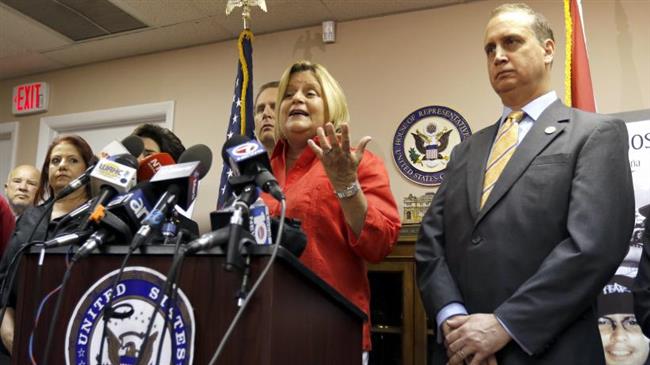
Press TV – January 30, 2020
A former US congresswoman has been registered as a foreign agent for the United Arab Emirates (UAE) to lobby US officials regarding “export controls and sanctions, and foreign and defense policies.”
Ileana Ros-Lehtinen’s registration comes as the United Arab Emirates has managed so far to stave off US congressional restrictions on arms sales over its controversial role in the deadly Saudi war on Yemen.
The former chairwoman of the House Foreign Affairs Committee was registered as lobbyist to represent Abu Dhabi earlier this month.
She will “provide outreach to US government officials and counsel on policy issues,” according to a Justice Department filing.
According to the document, she will also be counseling officials on “human rights, trade policies, foreign media registration, and strengthening trilateral relations and regional security.”
Ros-Lehtinen, who is known as a pro-Israel hawk on Iran and Latin America, has passed her one-year cooling-off period for retired lawmakers and became eligible to lobby her former colleagues.
She was registered on Jan. 21 by US lobby firm — Akin Gump Strauss Hauer & Feld — which is one of over a dozen lobbying firms the UAE has under contract, according to al-Monitor.
Akin Gump, which has been lobbying for Abu Dhabi since 2007, campaigned last year for more US sanctions against Iran, the UAE’s role in Saudi Arabia’s war on Yemen and arms sale.
The United Arab Emirates has been among the major buyers of US weapons, clinching a $1.8-billion arms deal with Washington last year.
Many countries, including Denmark, Finland, Germany and Belgium, have suspended arms exports to UAE either upon court orders or receiving evidence that the weapons were indeed used against civilians in Yemen.
According to a December 2018 report by the Armed Conflict Location and Event Data Project (ACLED), a nonprofit conflict-research organization, the Saudi war has claimed the lives of more than 60,000 Yemenis since March 2015.
The war has also taken a heavy toll on the Arab country’s infrastructure, destroying hospitals, schools, and factories. The UN says more than 24 million Yemenis are in dire need of humanitarian aid, including 10 million suffering from extreme levels of hunger.
First Senate bill of 2019 would give Israel billions of dollars, combat BDS, and rebut Trump’s Syria withdrawal
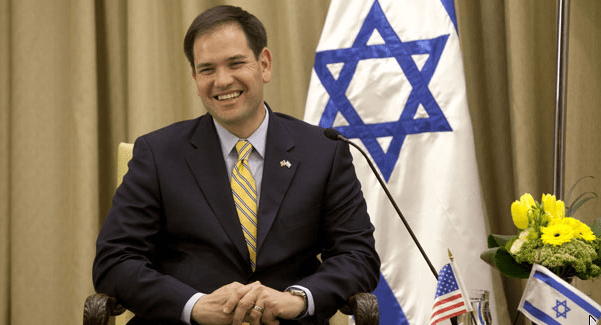
Marco Rubio’s career has been funded by pro-Israel billionaires such as Normal Braman, Paul Singer, Sheldon Adelson, and Larry Ellison. (Photo from Politico )
By Alison Weir | If Americans Knew | January 6, 2019
According to Marco Rubio, the first bill the 2019 U.S. Senate will take up is one that is focused on Israel. His twitter announcement shows a number of people suggesting that he should instead focus on getting the U.S. government running.

The four-part bill, designated S.1, is composed of measures on behalf of Israel that Congress tried and failed to pass in 2018. Some were pioneered by AIPAC, the American Israel Public Affairs Committee.
The first component is the “Ileana Ros-Lehtinen United States-Israel Security Assistance Authorization Act of 2019” – the 2018 text can be seen here. This would give Israel $33 billion over the next ten years in addition to the $5.5 billion enacted in last year’s defense spending bill. This is reportedly the largest military aid package in U.S. history. The bill was held up by Senator Rand Paul, who threatened a filibuster against it. Most Americans feel the U.S. already gives Israel too much money.
Unlike the memorandum of understanding (MOU) that the Obama administration negotiated with Israel in 2016, this would make the $38 billion a floor rather than a ceiling and cements it into law (an MOU is non-binding). It also provides Israel additional perks, including calling for NASA to work with Israel’s space agency, despite Israel’s alleged acquisition of classified U.S. research.
Another component of the bill is the “Combatting BDS Act of 2019” (the text of the previous version is here). This allows state and local governments to prohibit contracting with any entity that participates in BDS, the boycott of Israel over Israel’s violations of human rights and international law. Many groups and individuals oppose the bill on the ground that it violates freedom of speech. AIPAC is a strong supporter of such legislation.
A third component is “The United States-Jordan Defense Cooperation Extension Act,” which would provide money to Jordan. Israel has long used U.S. aid packages to Mideast governments to enable Israel’s regional divide-and-conquer strategies.
Similarly, the fourth component is the “Caesar Syria Civilian Protection Act of 2019” (2018 version here), which imposes sanctions on Syria. Roll Call reports that the bill “could serve as a rebuttal” to President Trump’s recent announcement that he was going to withdraw troops from Syria. NBC reports: “They can’t make Trump keep troops in Syria. They’ve asked for increased sanctions on Syria instead.”
Bill being fast-tracked
According to Roll Call, the composite bill, entitled “Strengthening America’s Security in the Middle East Act of 2019,” is being “expedited through a Senate procedure that allows for bypassing the committee process, and the new chairman of the committee of jurisdiction for most of the bills is on board with the approach.”
The chairman is Sen. Jim Risch, R-Idaho. According to Open Secrets, one of Risch’s main sources of campaign donations is the pro-Israel lobby.
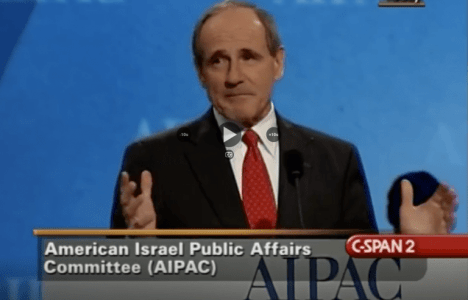
Image from video of Risch’s speech at AIPAC convention; view it here
It appears that none of the U.S. news reports on the legislation inform voters how much U.S. tax money the bill will give to Israel; many reports don’t even mention that aspect of the bill. This continues the media omission on this subject.
Alison Weir is executive director of If Americans Knew, president of the Council for the National Interest, and author of Against Our Better Judgment: The Hidden History of How the U.S. Was Used to Create Israel.
Fun at the United Nations and in Congress: Israel Wins the Comedy Competition
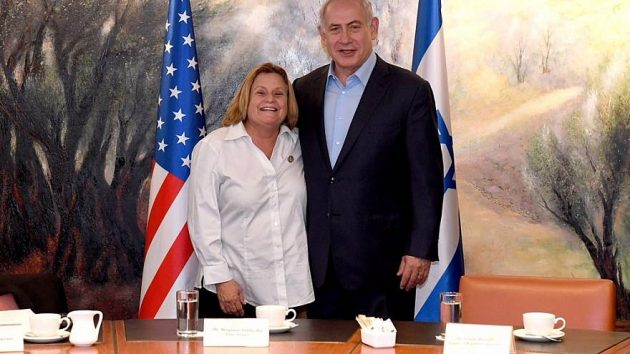
Rep. Ileana Ros-Lehtinen (R-Fla.) with Israeli Prime Minister Benjamin Netanyahu. Image Credit: GPO
By Philip Giraldi | American Herald Tribune | October 8, 2018
Most people are unaware of the fact that the annual opening of the United Nations General Assembly, which takes place in September, is actually a major audition opportunity for aspiring stand-up comedians. This year, American President Donald Trump was one of the pre-event favorites according to the Las Vegas betting line based on his hilarious tweets back in January explaining that he is “like, really smart,” before observing that he “would qualify as not smart, but genius…. and a very stable genius at that!”
To be sure, when he addressed the assembly on September 25th and rambled on about how “In less than two years, my administration has accomplished more than almost any administration in the history of our country,” the audience was ready to share in the fun and laughed out loud at the absurdity of the notion. They were still giggling on the following day when U.S. Ambassador to the United Nations Nikki Haley quipped with a straight face that the audience was actually laughing with Trump out of respect for him and what he was saying.

Trump’s tour de force seemed unbeatable but the wily Israeli Prime Minister Benjamin Netanyahu had an ace up his sleeve. Bibi’s performance back in 2012 when he produced the by now infamous cartoon of an alleged Iranian nuclear bomb about to go off was still recalled by many in the audience as the ultimate stand-up joke U.N. style, a legendary performance. But the same creative thinking that produced the bomb with its lit fuse had come up with a different kind of delayed action joke that Bibi knew would confuse his audience before being revealed for what it was, trumping Trump’s attempt at humor, so to speak. Netanyahu produced a series of large photos taken near Tehran by Israeli intelligence showing a wall and a gate. He said it was an Iranian “secret atomic warehouse for storing massive amounts of equipment and material for Iran’s secret nuclear weapons program.”

The audience gasped, clearly impressed by Bibi’s unexpected rollout of a hitherto unknown top secret installation, but the joke came the next day when it was revealed that the complex inside the wall actually contained a number of businesses, including a scrap metal dealership and a carpet cleaning service. Bibi likely reacted with his Gary Cooper grin, “Hey, the joke’s on you guys who are always whining about Israel’s nuclear stockpile.” A U.S. intelligence official was also apparently in on the jape, commenting a day later that “What Netanyahu said last night was slightly misleading. We knew about the facility in Tehran and it’s a place full of file cabinets and documents, not aluminum pipes or centrifuges.”
So it was a weekend of fun for the Israeli delegation, including convivial friendly banter with the representatives of all Israel’s four or five friends in the General Assembly, but you can only generate so much excitement when talking to a dry stick like Nikki Haley or the ambassador from Micronesia. Fortunately, good news had come through late in the week, concerning how seven more demonstrating Gazans had been shot dead by Israeli snipers, and there was also an exciting new development in that the Israeli navy had now gotten into the game, shooting Gazans demonstrating on the beaches along their own seafront since Israel regards anyone who seeks to access the water as being a terrorist, transgressing against Israel’s modern-day Mare Nostrum. Ninety-three more Palestinians were injured, 37 of whom were wounded by gunfire.
There was also a lot of funny stuff going on in Washington, perhaps driven by a desire to outdo the frolicking taking place at the U.N. building in New York City. Congressmen got together and said, “Hey, let’s see what we can give to Israel without anyone in the media coming out with so much as a peep.” One Congressman, possibly Chuck Schumer or Ben Cardin or even Lindsay Graham, must have come up with the idea for a new law that would compel the White House to give to Israel a minimum of $3.8 billion dollars a year for the next ten years no matter what Israel does or says. Shoot Arabs, kick them out of their homes, or just simply treat them like shit, it will all be the same to Uncle Sam. If they want to bomb Peoria, be my guest. Written into the bill is the provision that the president cannot in any way reduce or delay the payment going from the U.S. Treasury to the Israeli Central Bank.
And $3.8 billion is only a minimum. Section 103 of the House bill removes all limitations on how much money Israel gets. Under the new act, instead of $38 billion being the cap, as stipulated in the 2016 memorandum of understanding, it will be a minimum payment until 2028. Constant lobbying by Israel and its friends in the Congress will inevitably mean that the amount might double or triple during that time period. This is a huge gift to Netanyahu, who is undoubtedly laughing all the way to the bank, as the expression goes.
Section 106 of the bill is another freebee, increasing Israel’s access to a U.S. provided war-reserve stockpile that is maintained in Israel by completely removing the limits on how many weapons can be “transferred,” without any payment or charge. The existing limit of $200 million worth of arms per annum charged against the aid package has now been eliminated, allowing the Israelis to take whatever they want.
And there’s more. Section 108 of the Act permits Israel to export arms it receives from the United States, even though that violates U.S. law. And it will also be allowed to use the American aid to buy weapons from its own defense industries, eliminating any benefit for U.S. domestic arms manufacturers.
In short, the comedy routine by the U.S. Congress vis-à-vis Israel has consisted of rolling over and playing dead while handing over the reins of American foreign policy to a foreign power. Netanyahu has scored a hat trick, defying U.S. interests while increasing both aid and concessions. The House bill that spells it all out in detail will now go back for Senate approval, and then to Trump to be signed into law.
The only ones not laughing at the comedy routines both at the U.N. and in Washington are the American taxpayers and those of us who want U.S. foreign policy to respect American values and interests. And by the way, the House has named the bill after Miami Congresswoman Ileana Ros-Lehtinen, a well-known Israel firster whose groveling before Netanyahu and Jewish groups has been notable even by the low standards of the House of Representatives. The bill is now officially the “Ileana Ros-Lehtinen United States-Israel Security Assistance Authorization Act of 2018.”
Saudi Arabia teams up with Israel in anti-Qatar lobbying in the US Congress
By Abdus Sattar Ghazali – Journal of America – June 10, 2017
US proposed legislation – Palestinian International Terrorism Support Prevention Act of 2017 – threatening to sanction Qatar for its support of the so-called “Palestinian terror” was sponsored by 10 lawmakers who received more than $1m over the last 18 months from lobbyists and groups linked to Israel, Saudi Arabia, and the United Arab Emirates, Al Jazeera reported Friday.
The HR 2712 bill was introduced to the US House of Representatives on May 25, but the text wasn’t available until Friday morning, hours after Saudi Arabia, UAE, and Egypt put 59 people and 12 institutions linked to Qatar on a “terror list”, Al Jazeera said.
HR 2712’s sponsors received donations totaling $1,009,796 from pro-Israel individuals and groups for the 2016 election cycle alone, according data collected by the Center for Responsive Politics, an independent research group tracking money in US politics and its effect on elections and public policy, and then compiled by Al Jazeera.
Sponsors of the bill are: Congressmen Brian Mast (FL-18), Josh Gottheimer (NJ-5), Foreign Affairs Committee Chairman Ed Royce (CA-39) and Foreign Affairs Committee Ranking Member Eliot Engel (NY-16). The bill is co-sponsored by Congressmen Brad Sherman (CA-30), Ileana Ros-Lehtinen (FL-27), Ted Poe (TX-2), Ted Lieu (CA-33), Ted Deutch (FL-22) and Thomas Suozzi (NY-3).
Al Jazeera reported that Royce received $242,143 from pro-Israel sources for the 2016 election cycle, $190,150 went to Engel. Mast, who volunteered with the Israeli military after he finished serving in the US Army, received $90,178.
“Following my service in the U.S. Army, I chose to volunteer alongside the Israeli Defense Forces because our countries share the common ideals of freedom, democracy and mutual respect for all people. Hamas preaches destruction to Israel and death to the values we hold dear in the United States. They have murdered more than 400 Israelis and at least 25 American citizens.” Rep. Mast was quoted as saying.
According to Trita Parsi, the founder of the National Iranian American Council (NIAC), a nonprofit that aims to strengthen the voice of US citizens of Iranian descent, there are similarities between the US-allied Arab nations’ “terror list” and HR 2712 show[ing] growing cooperation between Gulf Arab states and Israel.
“The coordination between hawkish pro-Israel groups and UAE and Saudi Arabia has been going on for quite some time,” Parsi told Al Jazeera. What is new, he continued, is pro-Israel groups such as the Foundation for Defense of Democracies “coming out with pro-Saudi [articles] and lobbying for them on Capitol Hill”.
Parsi was quoted as saying that the sponsors of the bill are traditional pro-Saudi lawmakers, however they are in the pro-Likud camp. Likud is the party of Israeli PM Benjamin Netanyahu.
President is required
The Palestinian International Terrorism Support Prevention Act requires the President to submit to Congress an annual report for the next three years identifying foreign persons, agencies or instrumentalities of a foreign state who knowingly and materially assist Hamas, the Palestinian Islamic Jihad, or an affiliate or successor of one of those organizations.
After identifying the organizations, the President must impose two or more sanctions, including denying
a) Export-Import guarantees,
b) defense support under the Arms Export Control Act,
c) export of munitions to any agreement to which a person identified is a part,
d) export of goods or technology controlled for national security reasons,
e) loans more than $10 million, or
f) seizure of property held within the United States.
The bill also requires the President to report to Congress on each government that provides support for acts of terrorism and provides material support to Hamas, the Palestinian Islamic Jihad, or any affiliate or successor organization, or the President determines to have engaged in a significant transaction to knowingly and materially provide support to Hamas, the Palestinian Islamic Jihad or any affiliate or successor organization.
After identifying the governments, the President must suspend U.S. assistance to that government for one year, instruct the executive directors of each international finance institution to vote against any loan or technical assistance to that government and prohibit any munitions export to that government for one year.
Additionally, the President must prohibit that government’s transactions in foreign exchanges that are subject to the jurisdiction of the United States and prevent that government’s transfers of credits or payments between financial institutions subject to the jurisdiction of the United States.
Important Sections of the HR 2712 Bill
Section 2: Findings and Statement of Policy
Subsections (a)(3) and (4) state that “Hamas has received significant financial and military support” from Qatar and that the Under Secretary of Treasury for Terrorism and Financial Intelligence confirmed that “Qatar, a longtime US ally has for many years openly financed Hamas.” The bill also finds that Qatar hosts a number of high-ranking Hamas officials, including Khaled Mashal.
Subsections (a)(5) through (7) outline Iran’s material and financial support and subsections (8) through (10) detail Iranian support to the PIJ.
Section 3: Imposition of Sanctions with Respect to Foreign Persons and Agencies and Instrumentalities of Foreign States Supporting Hamas, the PIJ, or Any Affiliate or Successor Group
No later than 120 days after H.R. 2712 is enacted—then once a year for no more than three years—the president must report to Congress the foreign persons, agencies, and instrumentalities of foreign states that provide support to the aforementioned groups. Two exceptions are reserved for the president, however. If the president notifies Congress 15 days prior to completing a “significant transaction” with a foreign entity or agency that is in the “national interest” of the United States, the foreign entity or agency may be exempt from sanctions. The other exception is reserved for the president to issue waivers that would exempt a foreign entity or agency from sanctions for 120 days, as long as Congress is notified seven days prior.
Set forth in this bill are sanctions on the following:
- Banking and financing (e.g., extensions of credit, guarantees, insurance, etc.)
- Defense-related sales (including munitions, defense services, and construction services)
- Goods and technologies regulated through the Export Administration or included in the US Munitions List
- Medical, agricultural, and humanitarian goods and services are not included among sanctioned items.
Section 4: Imposition of Sanctions with Respect to Foreign Governments That Provide Material Support to Hamas, the PIJ, or Any Affiliate or Successor Thereof
Much like Section 3, Section 4 sets a 120-day deadline after enactment for the president to report to Congress any governments the Secretary of State has determined “repeatedly provided support for acts of international terrorism.” This report must be resubmitted, with relevant information, every 180 days.
The sanctions set forth in this section include the prohibition or suspension of the following for one year:
- US aid to the foreign government
- Extension of loans and financial or technical services
- Export of items on the US Munitions List or Commerce Control List
- Transactions in foreign exchanges in which the United States has jurisdiction
- Transfers of credit or payments between one or more financial institutions subject to US jurisdiction
- Should the president determine it is in US security interests and notify Congress seven days in advance, he can waive any foreign government sanctions for 180 days.
Section 5: Report on Activities of Foreign Countries to Disrupt Global Fundraising, Financing, and Money Laundering Activities of Hamas, the PIJ, or Any Successor or Affiliate Thereof
This bill outlines a reporting requirement for the president, no later than 180 days after the bill’s enactment. The president must report a list of foreign countries providing support for the aforementioned organizations and further assessments including:
- Steps the foreign government is taking to freeze assets of these groups
- Any reasons the government is not taking adequate steps to freeze assets
- Measures taken by the United States to freeze assets
- List of countries where the aforementioned groups fundraise and steps those countries are taking to disrupt the fundraising efforts
- List of countries from which the groups receive surveillance equipment and what measures are being taken to disrupt the acquisition.
To borrow from Marcus Montgomery, an Analyst at the Washington DC-based Arab Center, the language of HR 2712 is interesting since it introduces sanctions for actions likely already covered under existing legislation. Hamas and the PIJ are both designated Foreign Terrorist Organizations (FTOs) and Specially Designated Global Terrorists (SDGTs) by the State and Treasury Departments, respectively. With that in mind, it is already illegal for US entities or institutions to support such groups. Thus, the sanctions proposed in this bill that pertain to US jurisdiction are redundant.
Formally targeting Iran is redundant as well because Tehran has been declared a state sponsor of terror by the State Department and prohibitions against exports of arms, financial and technical services, and US aid to Iran are already in place.
For Marcus Montgomery, Qatar would be the truly new target under this legislation, but as an ally with which the United States has economic and military ties, it is tough to see many in the Senate agreeing to label Qatar a de facto state sponsor of terror.
Erdogan vows to stand by ‘Qatari brothers’
Interestingly, Turkish President Tayyip Erdogan Friday called for full removal of a Saudi-led blockade of Qatar after approving the deployment of Turkish troops there, saying Riyadh needed to put brotherhood ahead of animosity.
Erdogan said isolating Qatar would not resolve any regional problems and vowed to do everything in his power to help end the regional crisis. “We will not abandon our Qatari brothers,” Erdogan told members of his ruling Justice and Development (AK) Party at a fast-breaking meal on Friday in Istanbul during the Muslim holy month of Ramadan.
“I also have a special request from the Saudi administration. You are the largest and most powerful state in the Gulf. We call you the Custodian of the Holy Places. You especially should work for brotherhood, not animosity. You have to work for bringing brothers together. This is what we expect from Saudi, the Custodian of the Holy Mosques,” Erdogan was quoted by Al Jazeera as saying.
“I say it should be lifted completely,” Erdogan said of the embargo.
Turkey, which has maintained good relations with Qatar, as well as several of its Gulf Arab neighbors, offered food and water supplies to stave off possible shortages. “There are those who are uncomfortable with us standing by our Qatari brothers, providing them with food. I’m sorry, we will continue to give Qatar every kind of support,” Erdogan said, adding that he had never witnessed Doha supporting “terrorism”.
On Wednesday, Turkey’s parliament ratified two deals on deploying troops to Qatar and training the Gulf nation’s security forces. The deal to send Turkish soldiers in Qatar, aimed at improving the country’s army and boosting military cooperation, was signed in April 2016 in Doha.
After an initial deployment of Turkish soldiers at a base in Doha, Turkish fighter jets and ships will also be sent, the mass-circulation Hurriyet newspaper said on its website on Friday.
“The number of Turkish warplanes and Turkish warships going to the base will become clear after the preparation of a report based on an initial assessment at the base,” Hurriyet said.
A Turkish delegation will go to Qatar in the coming days to assess the situation at the base, where about 90 Turkish soldiers are currently based, Hurriyet said adding: there were plans send some 200 to 250 soldiers within two months in the initial stage.
Abdus Sattar Ghazali is the Chief Editor of the Journal of America.
U.S. Senate Committee Approves Sanctions, Venezuela to Appeal to United Nations
By Z.C. Dutka | Venezuelanalysis | May 20th 2014
Earlier this afternoon in Washington, the Foreign Relations Committee of the U.S. Senate approved 13 to 2 the “Venezuelan Human Rights and Democracy Protection Act.” The bill includes sanctions on key individuals of the Venezuelan government and at least $15 million to “defend human rights… and strengthen the rule of law.”
The Menendez Bill
Committee chair, Democrat Robert Menendez, who played a lead role in the writing of the proposed legislation, plans to present the bill before the whole Senate within the coming weeks.
The legal measures proposed are in regards to recent anti-government protests that have reached levels of extreme violence in certain Venezuelan cities, resulting in 42 dead, 800 injured, and millions of dollars of public property damaged, including the burning of multiple universities.
Menendez said the US can’t “play the role of bystander” while Venezuelan president is going to “dangerous extremes to silence political dissent.”
“The U.S. should always be on the side of human rights around the world,” said another lead supporter, Florida Republican senator Marco Rubio.
Rubio has prepared list of Venezuelan military and government officials who would be targeted for sanctions if the bill were to pass. Among those listed are attorney general Luisa Ortega Diaz and the head of operations for the National Guard, Manuel Quevedo.
Earlier this month another piece of similar legislation, the Venezuelan Liberty and Democratic Solidarity Act, promoted by Florida congresswoman Ileana Ros-Lehtinen, passed the corresponding foreign committee of the U.S. Congress. It has yet to be addressed by Congress as a whole.
Roberta Jacobson, Assistant Secretary of State for Western Hemisphere Affairs, has attended the senate hearings and expressed concern on behalf of the White House.
“This is not a U.S.-Venezuela issue,” she said. “We have strongly resisted attempts to be used as a distraction from Venezuela’s real problems.”
She has displayed equal unease that the bill might distract from the important dialogue that is taking place between the Venezuelan government and the opposition.
Appeal to the UN
Even before the bill passed today’s Senate committee, Venezuelan foreign minister Elias Jaua expressed outrage at what he considers repeated US “interference” in Venezuelan affairs.
On Thursday Jaua announced his plan to present a formal claim to the United Nations, the Organization of American States (OAS), the Union of South American Nations (UNASUR), and the Community of Latin American and Caribbean States (CELAC).
“We’ve had enough of the United States assuming a role that belongs to multilateral bodies, Jaua said Thursday. “We must remember that as a free and independent nation we do not recognize the United States parliament… as a legislative [force] over Venezuela. There are basic principles of the United Nations Charter that must be respected.”
The minister has called a meeting with the UNASUR, to be held next week in Ecuador. He plans to bring with him a “dossier of all the declarations of interference posed by representatives of the United States, starting with president Obama, Secretary [of State John] Kerry, and others…”
U.S. Bill Proposing Sanctions on Venezuela Passes House Foreign Affairs Committee
By Z.C. Dutka | Venezuelanalysis | May 9, 2014
Santa Elena de Uairen – A Human Rights bill proposed by Florida Republican Congresswoman Ileana Ros-Lehtinen, which includes sanctions on the Venezuelan government, cleared its first legislative hurdle this morning after passing the House Foreign Affairs Committee.
Individual Sanctions
The bill, known as the Venezuelan Liberty and Democratic Solidarity Act, will sanction individuals responsible for “serious human rights abuses” against those participating in the anti-government protests that have received widespread media attention since February. It also includes those individuals who have supported those acts, whether financially or otherwise, and those officials who called for the arrest of those “legitimately exercising their freedom of expression and assembly.”
The most recent draft presented to the Committee listed asset blocking and inadmissibility to the US as types of individual sanctions. It also included the possibility of a presidential waiver of the application of sanctions, if the U.S. president should consider national security interests call for it, or conditions in Venezuela have improved.
Democracy Promotion
Section 7 of the bill outlines a “Comprehensive Strategy to Promote Internet Freedom and Access to Information,” including the expansion of activities to “train HR, civil society, and democracy activists” and the expansion of proxy servers for said activists, as well as access to “uncensored news sources.”
Section 8 asks that US Secretary of State, John Kerry, submit a “comprehensive strategy outlining how the US is supporting the citizens of Venezuela” in seeking basic civil liberties, development of an independent civil society, and free and transparent elections.
Section 9 offers refugee status or political asylum in the US to Venezuelan political dissidents if requested, and a direct effort on behalf of the US state department to identify cases of “prisoners of conscience and HR abuses in Venezuela.”
The bill ends with Section 10, the Authorization of Appropriations for Assistance to Support Civil Society in Venezuela, which pledges a minimum of $5 million through USAID, and finally, a Sunset Clause of two years after the date of enactment of the legislation.
Response
Venezuelan president Nicolas Maduro has accused possible sanctions of being “encouragement to extremist groups,” those protestors who he believes have sparked violence in their widespread call for regime change. Members of the Venezuelan opposition coalition, the Democratic Unity Roundtable (MUD), have also expressed their misgivings at the prospect of sanctions.
This morning Roberta Jacobson, Assistant Secretary of State for Western Hemisphere Affairs, heard testimonies from Venezuelan opposition representatives regarding the alleged use of extreme force on behalf of Venezuelan security forces. She admitted to hearing a “diversity of opinions,” from “different oppositional factions” but that the majority asked that the U.S. not impose sanctions “yet.”
“They have asked us not to introduce sanctions at this time,” Jacobson said.
A caravan of Venezuelans, residents of South Florida, traveled to Washington D.C. yesterday to show support for the bill.
Only two committee representatives, Gregory Meeks and Karen Bass, voted against the bill this morning. In recent weeks, many Latin American leaders have expressed their distaste for the possibility of US interference in Venezuela.
Uruguayan president Pepe Mujica said, “When the entire world asks the U.S. to shelve its economic blockade policy against Cuba, voices emerge from within that government threatening sanctions against Venezuela. Are the lessons of history never learned? (…) the first thing that Venezuela and all of Latin America need is to be respected.”
Many sources believe the bill will reach the House floor the week of May 12th, and will likely be approved with little resistance. A number of organizations, including the Alliance for Global Justice, have organized petitions in attempts to prevent this from taking place.
Ecuadorian Fugitives Gave Large Sums of Money to US Politicians
Prensa Latina | March 13, 2014
Washington – Ecuadorian bankers Roberto and William Isaias, current fugitives, donated large sums of money to campaigns of U.S. politicians, the press revealed today.
Reports underline that the Federal Bureau of Investigation (FBI) is investigating cases that involve Congressional Republican Senator Marco Rubio, Democrat Robert Menendez and Republican Representative Ileana Ros-Lehtinen, among other politicians.
New York’s NBC network says the FBI suspects that Menendez, through phone calls and recommendation letters to the Department of State and other bodies, helped the Ecuadorian brothers establish themselves in the U.S. in exchange for donations to his reelection campaign.
Journalist and blogger Alberto Padilla claims he can confirm that, since they arrived to live in Miami, the Isaias have financed an active lobbying campaign against the Rafael Correa administration in Ecuador and have also aided senators, in exchange for being allowed to remain in the United States.
The Isaias were sentenced in absentia to eight years of imprisonment on April 11, 2012 by the National Court of Justice after a judicial process that lasted 13 years and in which 54 judges participated.
In the Ros-Lehtinen case, the Daily Beast website assured that she recently received money from the former bankers in exchange for help.
The Isaias had donated at least $23,700 USD to Ros-Lehtinen during the 2010, 2012 and 2014 electoral cycles, according to federal contribution campaign registers.
The Isaias also contributed to the campaign funds of Florida’s Senator Bill Nelson, and Congresswoman and also President of the National Democrat Committee Debbie Wasserman-Schultz and Representative Joe Garcia.
Related article


US Administration Considering Targeted Sanctions against Members of Venezuelan Government
By Jake Johnston | CEPR Americas Blog | March 4, 2014
Members of Congress and the Obama administration have consistently placed the blame for the violence stemming from protests on the Venezuelan government, while overlooking or ignoring violent incidents by opposition protesters, including the decapitation of motorcycle riders, the burning of government buildings and metro stations, attacks against state media companies, and the killing of individuals seeking to dismantle barricades, including a National Guard officer. Officials have referred instead to “systematic” human rights abuses and government repression, without citing evidence.
Based on these assertions, momentum is building to implement sanctions on members of the Venezuelan government. U.S. Rep. Debbie Wasserman Schultz (D-FL) told the press on Monday that, “There should be sanctions on individuals. … The administration is looking at those.” Wasserman Schultz, the Democratic National Committee chairwoman, cited a “high-level” State Department official that she had recently spoken to.
That the administration is considering sanctions comes on the heels of demands from members of congress that the Obama administration go further in its application of pressure on the Venezuelan government. After introducing legislation “supporting the people of Venezuela as they protest peacefully for democracy,” Rep. Ileana Ros-Lehtinen (R-FL) stated that:
“But this resolution can only be the first step to hold Maduro and his fellow regime thugs accountable for their violent response and their abuses of the Venezuelan people’s liberties and human rights. I have already begun circulating a letter amongst my colleagues in the House, addressed to President Obama, asking him to take immediate actions against Maduro and other Venezuelan officials who are responsible for violations of their people’s human rights. We are calling for the President to enact immediate sanctions against these officials, under authorities granted to him under the International Emergency Economic Powers Act (IEEPA), including denying them visas to enter the United States, blocking their property and freezing their assets in the U.S., as well as prohibiting them from making any financial transactions in the U.S.”
Ros-Lehtinen also plans to introduce a bill that would require the administration to take these steps. The moves from the House of Representatives have been echoed in the Senate, where the Senate Foreign Relations Committee Chairman Bob Menendez (D-NJ) and U.S. Senators Marco Rubio (R-FL), Dick Durbin (D-IL) and Ted Cruz (R-TX) have introduced a resolution calling for sanctions. Menendez stated:
“Now is the time to pursue a course of targeted sanctions by denying and revoking visas, and freezing the assets of Venezuelan officials complicit in the deaths of peaceful protestors. Human rights violators should be held accountable for the crimes they committed and their presence should not be welcome in our nation. Venezuelans today are denied basic rights, freedoms, and the ability to peacefully protest the dire economic circumstances caused by President Maduro and his government. We stand with the Venezuelan people and the brave opposition leaders in their pursuit to build a more hopeful Venezuela that embraces a bright future while discarding a failed past.”
Marco Rubio even made the case for sanctions on NBC News’ “Meet The Press,” telling host David Gregory that, “I would like to see specific U.S. sanctions against individuals in the Maduro government that are systematically participating in the violation of human rights and anti-democratic actions.” Florida Governor Rick Scott has also called for sanctions. Although neither the House nor the Senate have passed these resolutions calling for sanctions, Secretary of State John Kerry told reporters last week that, “with respect to Venezuela, Congress has urged sanctions.”
The call for sanctions has also been trumpeted by the press, with Miami Herald columnist Andres Oppenheimer saying that if Venezuela does not respond to “international diplomatic pressures,” then the Congress “should revoke the U.S. visas of Venezuelan government and military leaders.” Further, Otto Reich, the former U.S. Ambassador to Venezuela and Assistant Secretary of State for Western Hemisphere Affairs at the time of the U.S.-backed coup of 2002, wrote an opinion piece for the National Review titled “It’s Time for Sanctions in Venezuela.”
None of the members of congress nor any of the resolutions mention the fact that of the 18 tragic deaths in Venezuela since the protests began, many were not protestors, but individuals removing barricades and motorcyclists killed by wires strung across streets, or by crashing into barricades. In one case, a member of the Venezuelan National Guard was shot and killed. The Senate resolution makes no call for both sides to refrain from violence nor does it condemn the violent actions of some from the protest movement, however it does deplore “the use of excessive and unlawful force against peaceful demonstrators in Venezuela and the inexcusable use of violence…to intimidate the country’s political opposition.”
While, undoubtedly, excessive force has been used by members of the Venezuelan security forces, over 10 individuals have been arrested for these actions and further investigations are under way. According to the Attorney General (AG) of Venezuela, there are currently 27 investigations into violations of human rights. The AG, Luisa Ortega Diaz, stated that her office “will not tolerate violations of human rights under any circumstance and that any official turns out to be responsible will be sanctioned as established by the laws of Venezuela.” Far from censoring information or trying to hide the extent of the arrests or of those killed in the last few weeks, Diaz has provided regular updates to the press and has kept the public informed about the status of investigations.
ProPublica and the Fear Campaign Against Iran

By Jim Lobe | LobeLog | July 18, 2013
Last Thursday, the highly respected, non-profit investigative news agency ProPublica featured a 2,400-word article, “The Terror Threat and Iran’s Inroads in Latin America”, by its award-winning senior reporter, Sebastian Rotella, who has long specialized in terrorism and national-security coverage. In support of its main thesis that Iran appears to be expanding its alleged criminal and terrorist infrastructure in Venezuela and other “leftist, populist, anti-U.S. governments throughout the region,” Rotella quotes the Director of National Intelligence (DNI), Lt. Gen. James Clapper (ret.), as telling a Senate hearing last year that Iran’s alliances with Venezuela and other “leftist, populist, anti-U.S. government” could pose
…an immediate threat by giving Iran – directly through the IRGC, the Quds Force [an external unit of the IRGC] or its proxies like Hezbollah – a platform in the region to carry out attacks against the United States, our interests, and allies.
Now, there is a serious problem with that quotation: Clapper never said any such thing. Indeed, the exact words attributed to the DNI were first spoken at a House Foreign Affairs Committee hearing entitled “Ahmadinejad’s Tour of Tyrants and Iran’s Agenda in the Western Hemisphere” (page 2) by none other than the Committee’s then-chair, Florida Republican Rep. Ileana Ros-Lehtinen, whose hostility toward Iran is exceeded only by her views on Cuba and Venezuela.* It is, after all, one thing to have the head of the U.S. intelligence community tell Congress that the threat of an attack against the United States from various “platforms” in Latin America is “immediate.” It’s quite another for a far-right Cuban-American congresswomen from Miami to offer that assessment, particularly given her past record of championing Luis Posada Carriles and the late Orlando Bosch, both of whom, according to declassified CIA and FBI documents, were almost certainly involved in the 1976 mid-air bombing of a Cuban civilian airliner, among other terrorist acts.
I personally have no doubt that the misattribution was unintentional and merely the product of sloppiness or negligence. But negligence matters, particularly when it is committed in pursuit of a thesis that Rotella has long propagated (more on that in upcoming posts) and that comes amid an ongoing and well-orchestrated campaign against Iran that could eventually result in war, as Israeli Prime Minister Binyamin Netanyahu reminded us yet again Sunday. Of course, such a glaring mistake also detracts from the credibility of the rest of the article, much of which is based on anonymous sources whose own credibility is very difficult to assess.
The Iranian threat and anonymous sourcing
Most of the article concerns a hearing with the rather suggestive title, “Threat to the Homeland: Iran’s Extending Influence in the Western Hemisphere”, which was held July 9 by the Subcommittee on Oversight and Management Efficiency of the Republican-led House Homeland Security Committee with the apparent purpose of rebutting a still-classified State Department report, which included a two-page unclassified appendix concluding that Iran’s influence in the region is actually on the wane. In addition to reporting on the hearing, however, Rotella provides some original reporting of his own in the lede paragraphs, setting an appropriately dark and menacing tone for the rest of his story:
Last year, Iranian President Mahmoud Ahmadinejad visited his ally President Hugo Chavez in Venezuela, where the firebrand leaders unleashed defiant rhetoric at the United States.
There was a quieter aspect to Ahmadinejad’s visit in January 2012, according to Western intelligence officials. A senior officer in the Iranian Revolutionary Guards Corps (IRGC) traveled secretly with the presidential delegation and met with Venezuelan military and security chiefs. His mission: to set up a joint intelligence program between Iranian and Venezuelan spy agencies, according to the Western officials.
At the secret meeting, Venezuelan spymasters agreed to provide systematic help to Iran with intelligence infrastructure such as arms, identification documents, bank accounts and pipelines for moving operatives and equipment between Iran and Latin America, according to Western intelligence officials. Although suffering from cancer, Chavez took interest in the secret talks as part of his energetic embrace of Iran, an intelligence official told ProPublica.
The senior IRGC officer’s meeting in Caracas has not been previously reported.
The aim is to enable the IRGC to be able to distance itself from the criminal activities it is conducting in the region, removing the Iranian fingerprint,” said the intelligence official, who requested anonymity because he is not authorized to speak publicly. “Since Chavez’s early days in power, Iran and Venezuela have grown consistently closer, with Venezuela serving as a gateway to South America for the Iranians.”
The bold face, added for emphasis, is designed to illustrate Rotella’s heavy reliance on anonymous “intelligence officials”, none of whose nationalities are specified. In the context of an investigative report, that failure begs a series of questions that bear on the credibility of the account.
For example, does he include Israelis in his definition of “Western officials” or “Western intelligence officials?” After all, it would be one thing to cite a Swedish intelligence official who may tend to be somewhat more objective in describing Iranian-Venezuelan intelligence cooperation; it’s quite another to quote an Israeli “official” responsible to a government that has been aggressively promoting a policy of confrontation with Iran for many years now. And if his sources agreed to talk to Rotella only on the condition of being identified as “Western officials” or “Western intelligence officials”, why did they do so? (Indeed, the only identified “Western intelligence official” quoted — or misquoted — by Rotella in the entire article is Clapper.) Identifying at least the nationality of the officials with whom Rotella spoke with would help readers assess their credibility, but he offers no help in that regard.
Moreover, given the details about the meeting provided by Rotella’s sources, why was the senior IRGC officer who set up the purported joint intelligence program with the Venezuelans not named? That omission sticks out like a sore thumb.
But the problems in Rotella’s article go beyond the misattribution of the Ros-Lehtinen quote or his heavy reliance on anonymous sources. Indeed, it took all of about 30 minutes of Googling (most of which was devoted to tracking down the alleged Clapper quote) to discover that the story also includes distortions of the record in relevant criminal proceedings and a major error of fact in reporting the testimony of at least one of the hearing’s four witnesses — all of whom, incidentally, share well-established records of hostility toward Iran.
But before going into the results of my Google foray, let’s hear what a former top U.S. intelligence analyst had to say about Rotella’s article. I asked Paul Pillar, a 28-year CIA veteran who served as the National Intelligence Officer for the Near East and South Asia from 2000 to 2005 (which means he was in charge of the analysis of those regions for the CIA and all other U.S. intelligence agencies), if he could read it. This was his emailed reply:
The article certainly seems to be an effort to go out of the way to raise suspicions about Iranian activities in the hemisphere, by dumping together material that is either old news or not really nefarious, and stringing it together with innuendo. Almost all of the specifics that get into anything like possible terrorist activities are old. The Iranian efforts to make diplomatic friends in Latin America by cozying up with the regimes in Venezuela and elsewhere that have an anti-U.S. streak is all well known, but none of that adds up to an increase in clandestine networks or a terrorist threat. The closest the article gets in that regard is with very vague references to Venezuela being used by “suspected Middle Eastern operatives” and the like, which of course demonstrates nothing as far as Iran specifically is concerned. Sourcing to an unnamed “intelligence officer” is pretty meaningless.
As we will try to show in subsequent posts by Marsha Cohen and Gareth Porter (who both contributed substantially to this post), Pillar’s assessment could apply to a number of Rotella’s articles, especially about the Middle East and alleged Iranian or Hezbollah terrorism, going back to his years at the Los Angeles Times. What virtually all of them have in common is the heavy reliance on anonymous intelligence sources; a mixture of limited original reporting combined with lots of recycled news; a proclivity for citing highly ideological, often staunchly hawkish neoconservative “experts” on Middle East issues from such think tanks as the Washington Institute for Near East Policy (WINEP), the Foundation for the Defense of Democracies (FDD), the American Enterprise Institute (AEI) and the American Foreign Policy Council (AFPC) without identifying them as such; a surprising deference (considering his status as an investigative reporter) toward “official” accounts or reports by friendly security agencies, some of which work very closely with their Israeli counterparts (see, for example, this 2009 story about an alleged plot against the Israeli embassy in Azerbaijan about which Gareth plans to write a post); and a general failure to offer critical analysis or alternative explanations about specific terrorist incidents or groups that are often readily available from academic or other more independent and disinterested regional or local specialists.
Iran in Latin America
In the meantime, it’s also important to set the context for Rotella’s latest article. It came amid an intense campaign over the past couple of years by Iran hawks, including individuals from the various neoconservative think tanks cited above, to highlight the purported terrorist threat posed by Iran and Hezbollah from their Latin American “platforms,” as Ros-Lehtinen put it. Those efforts culminated in legislation, the “Countering Iran in the Western Hemisphere Act of 2012,” approved overwhelmingly by Congress last December. Among other provisions, it required the State Department to report to Congress on Iran’s “growing hostile presence and activity in the Western Hemisphere,” along with a strategy for neutralizing it, within six months. That report, only a two-page annex of which was publicly released, was submitted at the end of last month.
To the disappointment of the bill’s chief sponsors, notably the Republican chairman of the subcommittee, Rep. Jeff Duncan, the report concluded that, despite an increase in Tehran’s “outreach to the region working to strengthen its political, economic, cultural and military ties, … Iranian influence in Latin America and the Caribbean is waning.” And while the rest of the report remains classified, its contents reportedly were consistent with those of the State Department’s 2013 Country Reports on Terrorism, also released last month, which found no evidence of Iranian or Hezbollah terrorist plotting or operations in the Americas, in contrast to what it described as a sharp increase of such activity in Europe, the Middle East and Asia during the past year.
Duncan, who, incidentally, spoke on a panel on Evangelical Christian support for Israel at AIPAC’s annual conference last year, and who in 2011 became the only member of Congress given a 100-percent rating on the Heritage Action for America legislative scorecard, expressed outrage at these conclusions, accusing the State Department of failing to “consider all the facts.” In particular, he charged that the State Department had not taken into account new evidence “documenting Iran’s [ongoing] terrorism activities and operations in the Western Hemisphere” compiled by an Argentine prosecutor, Alberto Nisman, in a 502-page report released (perhaps not entirely coincidentally) just one month before the State Department was due to submit its study.
The Nisman Report and the AMIA bombing
In 2006, Nisman, the chief prosecutor in the case of the 1994 bombing of the Argentine-Israeli Mutual Association (AMIA) building, released an even longer controversial report on that case in which he concluded that the bombing had been ordered by Iran’s top leadership and carried out by Hezbollah operatives under the direction of Iran’s cultural attaché at its Argentine embassy, Mohsen Rabbani. (Gareth wrote his own critique of the 2006 report for the The Nation in 2008, joining many Argentine journalists and researchers in questioning Nisman’s theory of the case. Last week he published a related story for IPS that noted the diminished credibility of Nisman’s primary source, a former Iranian intelligence operative named Abdolghassem Mesbahi. He plans a new series on the subject to begin later this month.) The State Department report, Duncan said at the hearing, “directly contradicts the findings from Mr. Nisman’s three-year investigation, which showed clear infiltration of the Iranian regime within countries in Latin America using embassies, mosques, and cultural centers.”
Indeed, according to Nisman’s new report, Iran, through Rabbani and other operatives, has established “clandestine intelligence stations and operative agents” throughout Latin America, including in Guyana, Brazil, Chile, Colombia, Paraguay, Suriname, Trinidad & Tobago and Uruguay and, most especially in the Tri-Border Area (TBA) of Argentina, Brazil, and Paraguay, a region about which Rotella wrote rather darkly when he was Buenos Aires bureau chief for the Los Angeles Times in the late 1990’s. (In fact, a 15-year-old article on the TBA as a “Jungle Hub for World’s Outlaws” and a refuge for terrorists was cited by WINEP’s Matthew Levitt in written testimony submitted at last week’s hearing. Long one of Rotella’s favorite sources, Levitt, the subject of a rather devastating — albeit pay-walled — profile by Ken Silverstein in Harper’s Magazine last year, has been a major figure in the U.S.- and Israeli-led campaign to persuade the European Union to list Hezbollah as a terrorist entity, a campaign that has been boosted by Rotella’s work, as reflected in this article published by ProPublica last April. The symbiotic relationship between the two men may be the subject of a subsequent LobeLog post.)
Nisman, whose new report has been promoted heavily by neoconservative media and institutions over the past six weeks (see, for example, here, here, here, and here), had been invited by the chairman of the Homeland Security Committee, Texas Rep. Michael McCaul, to testify at last week’s hearing. But, as noted by Rotella in the article, “his government abruptly barred him from traveling to Washington”, a development which, according to McCaul, constituted a “slap in the face of this committee and the U.S. Congress” and was an indication that Argentine President Cristina Fernandez de Kirchner had no intention to “pursue justice and truth on Iranian involvement in the AMIA bombing.”
(In his message to me, Pillar noted that there were other good reasons why Kirchner would not want to see Nisman “being used as a prop in Duncan’s hearing …[given] other equities …regarding relations with Washington,” including the ongoing lawsuit against Argentina by a group of hedge funds — led by Paul Singer, a billionaire and major funder of hard-line pro-Israel organizations — that have sponsored full-page ads in the Washington Post and other publications highlighting, among other things, Argentina’s allegedly cozy relationship with Iran.)
In his article, Rotella, who appears to have accepted without question the conclusions of Nisman’s 2006 report on the AMIA bombing, also offers an uncritical account of the prosecutor’s latest report, quoting affirmations by Duncan, McCaul, as well as the four witnesses who testified at the hearing, that the report’s main contentions were true — Iran and Hezbollah are indeed building up their terrorist infrastructure in the region. “The attacks in Buenos Aires in the 1990s revealed the existence of Iranian operational networks in the Americas,” Rotella’s writes. “The Argentine investigation connected the plots to hubs of criminal activity and Hezbollah operational and financing cells in lawless zones, such as the triple border of Argentina, Brazil and Paraguay and the border between Colombia and Venezuela.”
The Nisman Report and the JFK Bomb Plot
After noting U.S. Treasury designations in 2008 of two Venezuelans as terrorists “for allegedly raising funds for Hezbollah, discussing terrorist operations with Hezbollah operatives, and aiding travel of militants from Venezuela to training sessions in Iran”, Rotella provides the purported Clapper quote about Venezuela and its allies offering “a platform in the region to carry out attacks against the United States, our interests, and allies”, suggesting (falsely) that the DNI himself endorsed Nisman’s view that Iran was behind a plot to attack JFK airport six years ago:
The aborted 2007 plot to attack JFK (airport) was an attempt to use that platform, according to the Argentine special prosecutor. A Guyanese-American Muslim who had once worked as a cargo handler conceived an idea to blow up jet fuel tanks at the airport. He formed a homegrown cell that first sought aid from al Qaida, then coalesced around Abdul Kadir, a Guyanese politician and Shiite Muslim leader.
The trial in New York federal court revealed that Kadir was a longtime intelligence operative for Iran, reporting to the Iranian ambassador in Caracas and communicating also with Rabbani, the accused AMIA plotter.
‘Kadir agreed to participate in the conspiracy, committing himself to reach out to his contacts in Venezuela and the Islamic Republic of Iran,’ Nisman’s report says. ‘The entry of Kadir into the conspiracy brought the involvement and the support of the intelligence station established in Guyana by the Islamic regime.’
Police arrested Kadir as he prepared to fly to Iran to discuss the New York plot with Iranian officials. He was convicted and sentenced to life in prison.
But this account of the case is tendentious, to say the least, and here I am relying on Gareth’s research into the case which he covered in an IPS story last week. While Rotella claimed that the would-be terrorist “cell” had “coalesced around” Kadir, the original criminal complaint that was submitted to the U.S. district court in New York on which the arrests of the four men accused in the plot were based makes clear that Kadir was a secondary participant at the time the arrest was made. In addition, the complaint made no mention of any ties between Kadir and Iran.
Moreover, Rotella’s assertion that the trial revealed Kadir to have been “longtime intelligence operative for Iran” is unfounded, apparently based on nothing more than a set of personal letters Kadir had sent by ordinary mail to Rabbani and the Iranian ambassador to Venezuela and the fact that some contact information for Rabbani was found in Kadir’s address book.
But Kadir’s letters to Rabbani were clearly not the work of an Iranian intelligence operative. They consisted of publicly available information about the political, social and economic situation in Guyana, where Kadir was a member of parliament. Indeed, the fact that they were sent by regular mail — and the lack of any known replies by the addressees — suggests that Kadir’s relationship to Iranian intelligence was even more distant and less interactive than that of George Zimmerman’s to the Seminole County Sheriff’s office in Florida.
During the subsequent trial in 2010, the prosecution tried to play up the letters and even asked Kadir if he was a spy for Iran, which he denied strongly. No other evidence implicating Iran in the plot was introduced. Even the U.S. Attorney’s press release issued after Kadir’s sentencing (and discoverable within milliseconds on Google) offers no indication that Iran had any knowledge of the plot at the time of his arrest. Finally, if indeed the U.S. government had acquired any evidence that Rabbani or any other Iranian official had a role in the plot, as asserted by Nisman, it seems reasonable to ask why he wasn’t indicted along with Kadir and the three others? Yet, in spite of all these factors, Rotella appears to accept Nisman’s argument that the Iranian government had a role in the case and that Kadir was its “long-time intelligence operative” presumably in charge of its “intelligence station” in Guyana.
Rotella next cites the purported testimony (of unknown origin) of Fernando Tabares, the former director of Colombia’s intelligence agency who
…described a mission by an Iranian operative to Colombia via Venezuela in 2008 or 2009. Working with Iranian officials based at the embassy in Bogota, the operative, according to Nisman’s report, ‘was looking at targets in order to carry out possible attacks here in Colombia,’ Tabares testified.
Apart from the vagueness of this account about the unidentified Iranian operative and his mission — as well as the absence of any corroborating evidence — Rotella omitted the easily discoverable fact (via Google) that Tabares himself was sentenced in 2010 to eight years in prison for abuse of trust and illegal wire-tapping, a detail that may reflect on the former intelligence chief’s credibility.
Iranian migrants (refugees?) to Canada
A couple of paragraphs later, Rotella cites the testimony of Joseph Humire, “a security expert” and one of the four witnesses who testified at last week’s hearing. According to Rotella, Humire, executive director at the Center for a Secure Free Society
…cited a report last year in which the Canadian Border Services Agency described Iran as the top source of illegal migrants to Canada, most of them coming through Latin America. Between 2009 and 2011, the majority of those Iranian migrants passed through Caracas, where airport and airline personnel were implicated in providing them with fraudulent documents, according to the Canadian border agency.
But Rotella misreports Humire’s testimony. Humire did not say that Iran was the top source of illegal migrants to Canada; he said Iran was the top source country of improperly documented migrants who make refugee claims in Canada — a not insignificant difference, particularly because the number of Iranian asylum-seekers who come to Canada each year averages only about 300, according to the CSBA report, which noted that 86% won their asylum claims. In addition, the report, a heavily redacted copy of which was graciously provided to me by Humire, indicates that, between 2009 and 2012, more of these migrants flew into Canada from Mexico City and London than from Caracas.
Moreover, the picture painted by the redacted CSBA report is considerably less frightening than that offered by either Rotella or, for that matter, Humire’s testimony.
Many of these migrants use “facilitators” to enter Canada, according to the report. “…Information provided by the migrants on their smugglers suggest possible links to organized criminal elements both within and outside of Canada…Many people seeking refuge in Canada use fake documents and rely on middlemen to help them flee persecution in their homelands.“
“While Iranian irregular migrants mainly enter Canada to make refugee claims, it is possible that certain individuals may enter with more sinister motives”, the report cautioned, observing that 19 Iranian immigrants had been denied entry on security grounds since 2008.
So, instead of the flood of Iranian operatives pouring into Canada as suggested by Rotella, what we are talking about is a relatively small number of Iranians who are seeking asylum from a repressive regime. And, like hundreds of thousands of other refugees around the world, they rely on traffickers who provide them with forged or otherwise questionable documents. A few of these may be entering Canada for “more sinister motives”, but Rotella offers no concrete evidence that they have done so.
Yet Rotella follows his brief — if fundamentally flawed — summary of Humire’s remarks about Iranian asylum-seekers in Canada with his own riff, going “out of the way to raise suspicions about Iranian activities,” as Pillar notes, and returning once again to those anonymous “security officials” as his sources.
Humire’s allegations are consistent with interviews in recent years in which U.S., Latin America and Israeli security officials have told ProPublica about suspected Middle Eastern operatives and Latin American drug lords obtaining Venezuelan documents through corruption or ideological complicity.
“There seems to be an effort by the Venezuelan government to make sure that Iranians have a full set of credentials,” a U.S. law enforcement official said.
Last year’s secret talks between Iranian and Venezuelan spies intensified such cooperation, according to Western intelligence officials who described the meetings to ProPublica. The senior Iranian officer who traveled with the presidential entourage asked Venezuelan counterparts to ensure access to key officials in the airport police, customs and other agencies and “permits for transferring cargo through airports and swiftly arranging various bureaucratic matters,” the intelligence official said.
Venezuelan leaders have denied that their alliance with Iran has hostile intent. They have rejected concerns about flights that operated for years between Caracas and Tehran. The State Department and other U.S. agencies criticized Venezuela for failing to make public passenger and cargo manifests and other information about secretive flights to Iran, raising the fear of a pipeline for clandestine movement of people and goods.
The flights have been discontinued, U.S. officials say.
ProPublica’s high standards
I personally believe that ProPublica, since it launched its operations in 2008, has performed an invaluable public service in providing high-quality investigative journalism at a time when the genre risked (and still risks) becoming virtually extinct. As a result, readers of the agency have come to expect its articles not only to compile existing information that is already publicly available in ways that connect the dots, but also provide significant, previously unpublished material with important insights into the events of the day in ways that seriously challenge conventional wisdom as defined by mainstream media and, as ProPublica’s mission statement puts it, “those with power.” The question posed by Rotella’s latest article — as well as other work he has published on alleged Iranian and Hezbollah terrorism — is whether it meets the mission and high standards that ProPublica readers expect.
Given the misattribution of a quotation critical to the story’s thesis; the prolific use of anonymous “Western intelligence sources” and the like; the citation of sources with a clear ideological or political axe to grind; the omission of information that could bear on those sources’ credibility; the more or less uncritical acceptance of official reports that are known to be controversial but that generally reflect the interests of the axe-grinders; and the failure to confirm misinformation that can be quickly searched and verified, one can’t help but ask whether Rotella’s work meets ProPublica’s standards.
That question takes on additional and urgent importance given the subject — alleged terrorist activities by Iran and Hezbollah — Rotella specializes in. All of us remember the media’s deplorable failure to critically challenge the Bush administration’s allegations — and those of anonymous “Western intelligence sources”, etc. — about Saddam Hussein’s links to Al Qaeda and other terrorist groups, as well as his vast and fast-growing arsenal of weapons of mass destruction (WMD), including a supposedly advanced nuclear-weapons program. We now face, in many respects, a comparable situation with respect to Iran. Bearing that history in mind, any media organization — but especially one of ProPublica’s stature and mission — should be expected to make extraordinary efforts not only to verify its information, reduce its reliance on anonymous sources and avoid innuendo, but also to aggressively challenge “official” narratives or those that are quite obviously being promoted as part of a campaign by parties with a clear interest in confrontation — even war — with Iran. The stakes are considerable.
Gareth Porter and Marsha Cohen contributed substantially to this report.
*Today, shortly before this blog post was published and one day after I contacted the DNI press office to confirm that the quotation had been misattributed to DNI Clapper, ProPublica issued the following correction: “Due to an error in testimony by a congressional witness, this story initially misattributed a statement made by Rep. Ileana Ros-Lehtinen, R-Fla., to James Clapper, the Director of National Intelligence. The story has been revised to correct the attribution and incorporate Clapper’s actual statement to a Senate committee.” In my view, the wording of the correction, suggesting that the misattribution was the fault of a witness, underlines the importance of meticulous fact-checking when dealing with such a charged issue. As noted above, Clapper was the only identified Western intelligence official cited in the article, and his quotation — or non-quotation — is critical to the overall credibility of the underlying thesis: that Iran and Hezbollah are building a terrorist infrastructure in the Americas aimed at the U.S. While the quote in question is now properly attributed to Ros-Lehtinen (who was never mentioned in the original version), the implicit suggestion that she has serious expertise on the issue, in my opinion, makes the article’s underlying thesis even less credible.
Further weakening the thesis is the introduction in the article’s corrected version of the Arbabsiar case (the alleged 2011 plot to kill the Saudi ambassador in Washington) about which Rotella was initially skeptical but which he and/or his editors have now seen fit to include in the story. But citing the Arbabsiar case begs a serious question: If Iran, the Quds Force and Hezbollah have built up all these terrorist hubs and smuggling networks throughout Latin America and the Caribbean (and even into Canada), why would Quds Force commanders resort to recruiting a totally inexperienced, obviously unstable Iranian-American failed used-car salesman (now described by Rotella as “an Iranian-American operative”) to make contact with the Zetas to arrange the assassination? Conversely, if the Quds commanders felt they had to resort to Arbabsiar to establish contact with the Zetas to get the job done, then the existence of the terrorist infrastructure depicted in Rotella’s article looks even more doubtful than it did in the original story.
UPDATE: Apparently, the witness who misattributed the Ros-Lehtinen/Clapper quote was AFPC’s Ilan Berman (who most recently misattributed the quote in a usnews.com op-ed co-authored with Netanel Levitt on July 15). Berman, a leading figure in the continuing sanctions campaign against Iran, suggested shortly after the 2003 U.S. invasion of Iraq that Washington should pursue regime change in Iran.
Photo Credit: Prensa Miraflores
Related article
Rafael Correa, the Press, and Whistleblowers
By ADAM CHIMIENTI | CounterPunch | June 25, 2013
Once again, we are witnessing a growing frustration with “tiny” Ecuador. The United States government is clearly not happy with what would be the latest diplomatic slap in the face coming from the South American country, i.e. the pending arrival of NSA whistleblower Edward Snowden in the coming days. Beyond the United States’ government though, the US press corps are also seemingly up in arms. Why are they so angry? Well, it appears that they are indignant over the perceived hypocrisy of President Rafael Correa.
According to an article from The Atlantic (and another similar one from NPR here), the Ecuadorian leader “has created a safe space for foreigners like Assange — and now possibly Snowden –[but] he doesn’t do the same for dissenters within his own country.” News agencies like NBC News and The Atlantic think this is “interesting” and want to know ‘Why Ecuador?’ Such inquiries naturally turn to the NGOs, who are also less than pleased with this unruly little country. Freedom House, the Committee to Protect Journalists and others are upset that this very week, the one-year anniversary of Assange being holed up in the Ecuadorian Embassy in London (and the same week that the Snowden asylum request is being reviewed), the Ecuadorian National Assembly has passed a Communications Bill that detractors claim is a major blow to a free press.
Claims of Hypocrisy
For several of the opposition figures and US-based observers, Ecuador’s new media legislation has sealed the deal on the stasi-like state that they imply or openly charge Correa has been dreaming about for years. In other words, transparency advocates like Assange and Snowden are compromising their credibility by associating with the Correa government. Ileana Ros-Lehtinen, the right-wing terrorist supporter/US Congresswoman representing Miami, has been busy tweeting as much. The Ecuadorian government, however, asserts that the bill is meant to place more media power in the hands of public groups and move away from privately owned media monopolies.
Meanwhile, the Council of Hemispheric Relations, Center for Strategic and International Studies, and the Heritage Foundation all say that Ecuador must be punished for this latest insult to the US government. James Roberts of Heritage lashed out at the South American leader on June 24, writing in the National Review Online:
“Rafael Correa has demonstrated a blatant disregard for international standards of justice. That kind of conduct may not be surprising from a man who seeks to don the mantle of Chávez, but it should not be rewarded with trade preferences.”
It doesn’t take much imagination to understand how a figure like Correa would have been dealt with a few decades back, but it appears that the more heavy-handed approach is not really possible at the moment, much to the dismay of the powerful and connected.
Returning to the issue of freedom, has the defiant president of Ecuador used the National Assembly to pass a law that NPR, The Atlantic and others tell us will be used to make the country less transparent and more hostile to journalists who only wish to be free to monitor the government and act as a check on state power? Well, let’s hold off on the most absurd elements of irony here for a moment and address the issue at hand.
About a Coup
It should certainly not be regarded as a good thing if the case was simply a cut-and-dry example of authoritarian overreach. Freedom of the press, as we are learning with the Snowden case, has seemingly never before been so important, or so contentious for that matter. However, the Ecuadorian issue is not so simple and it was certainly complicated after a day of crisis nearly three years earlier when factions of the National Police and armed forces attacked the president of Ecuador on September 30, 2010. The event was widely regarded as a coup attempt. What exactly went down is still somewhat unclear. There was a dramatic showdown between Correa himself and police officers that were angered by a supposed attempt to cut their pay. What is for certain, though, is that it was a countrywide, well-coordinated attempt to shut down the National Assembly, the two major airports in Guayaquil and Quito and eventually a hospital where the president was being treated for wounds. Furthermore, the plotters were also attacking journalists throughout the country, and most of these were pro-government reporters working for public media outlets.
The opposition press has taken an active role in attempts to discredit Correa since he first ran for president. He has elaborated on his views of the press and they are certainly not very congenial. In 2012, during a public TV interview in Spain, Correa said, “one of the main problems around the world is that there are private networks in the communication business, for-profit businesses providing public information, which is very important for society. It is a fundamental contradiction.”
One of the issues that NGOs and journalists have cited in their litany of complaints about Ecuador’s endangered freedom of the press actually stems from the 2010 police and military uprising. During the chaos that ensued during the alleged coup attempt, one reporter from the paper of record in Guayaquil took the opportunity to claim that Correa had ordered police to fire on a crowd of innocent onlookers caught up in the melee, presumably aiming to provoke anti-government sentiments. The claim turned out to be completely unsubstantiated. The government fined the journalist and his paper El Universo some $40 million for defamation but later withdrew the charges. Consider what might have happened in the US if the Los Angeles Times or Washington Post would have falsely claimed that Barack Obama had personally ordered military or police forces to fire on a crowd of protesters and innocent people were injured as a result somewhere in Washington, D.C It would be difficult to imagine a reporter and his editors ever committing such a stupid move, but if they had, there would have been some serious consequences. Alas, this is not really too shocking in the context of a sensationalist Latin American press.
Televised and Untelevised Revolutions
That dramatic Ecuadorian affair is reminiscent of the 2003 documentary film The Revolution Will Not Be Televised,directed by the Irish filmmakers Kim Bartley and Donnacha Ó Briai. The pair happened to be in Caracas, Venezuela during one of several 21st century Latin American coup attempts thus far. The film provided a key glimpse into the nature of media in the region, so often dominated by pro-US elites. It showed the efforts expended by private media outlets to incite anger and get people out in the streets in order to challenge the power of anti-Washington governments.
Right up until his death, it was a sort of requirement for US and European governments, journalists and NGOs to claim that Hugo Chávez Frías was a dictator for not renewing the license of RCTV. The outlet, owned by Marcel Granier, was one of the most virulent anti-government television stations operating on the state-owned airwaves and the Venezuelan government eventually forced them over to cable television. The criticism of the allegedly authoritarian leader served to cover up the very questionable coverage by corporate media. Indeed, one anti-Chávez commentator honestly noted six months ago that the idea that Chavez ever controlled the Venezuelan media was a myth. He pointed out that back in April 2002,
“Coup plotters collaborated with Venezuelan media figures before the coup. The media refused to show statements by officials condemning the coup d’état. When the coup d’état failed, the private Venezuelan networks refused to broadcast the news that Chávez had returned to power.”
“Correa is a Very Smart Guy”
The Venezuelan experience did not escape the attention of the rather astute and confident Correa. Neither did the fact that, only 15 months prior to the attempted coup in Ecuador, there was a successful coup in Honduras, removing the president of that country, Manuel Zelaya, by gunpoint in the middle of the night. This was considered to be illegal by President Obama himself, although soon after the offending and illegitimate new government of Roberto Micheletti was accepted by his administration and is still backed to this day by Washington (under current President Porfirio Lobo). This support comes despite a terrible record of human rights abuses and, yes, a genuine threat to a the flow of crucial information. Journalists have been censored and intimidated since the 2009 coup in Tegucigalpa and, what’s worse, have frequently been murdered by the government and its allies. Honduras consistently ranks as one of the most dangerous places in the world to be a journalist. The double standards are blatant and many would like to see the opinion-makers from the States take a closer look in the mirror.
Popular Support and Popular Media
Anyone who would have spent some time watching The Revolution Will Not Be Televised would have also learned what President Hugo Chávez, then only a mere three years into his presidency, meant to the millions of impoverished and the historically marginalized majority in Venezuela. This did not stop the State Department and its allies from focusing on how best to rid Venezuela of its president. (Incidentally, while doing an internship for the State Department in the fall of 2001, I was invited by the Public Diplomacy department to work on ideas on how to get the message out to Venezuelan people about the dangerous nature of President Chávez.) That coup attempt failed, as the one in Ecuador would eight and a half years later, mainly because the people staunchly backed the president of the Republic.
At the time of the 2002 coup attempt, Chávez was wildly popular and the same was true of Rafael Correa in September 2010; two weeks before the coup attempt, polls found that he had the support of 67% of respondents in the capital Quito and nearly 60% in his native Guayaquil, the second largest city. Correa actually got a nice bump in approval ratings after the whole affair and, more recently, he has just won a major reelection bid in February of this year precisely because he has brought political and economic stability to the country of 15 million people. Poverty has been reduced dramatically since Correa took office. Public works projects have resulted in huge improvements to the country’s infrastructure and, more importantly, there is a sense of independence from the yoke of neocolonialism so prevalent in years past.
It appears that Correa and the government may have some good reasons to increase the influence of publicly owned media companies and challenge private corporate media elites. This foray into press control is a dangerous game, however, especially since there appear to be some genuine concerns from indigenous and environmental activists who oppose the government’s expansive plans for an economy based primarily on extraction. Often, those who disagree with Correa are dismissed as childish Marxists, or more alarmingly, terrorists. There must be more attempts to reach a humane and considerate consensus on some of these crucial issues, especially as the Chinese enter the fray in search of resources to fuel their economic needs and a gateway into South America (and Ecuador recovers from two major oil spills so far this year). There are clearly opportunities, but also responsibilities to the environment and the people that live outside of the metropoles.
With such considerations in mind, is there a reason to agree with the opinion-makers in the US who would dub Correa as a dictator, increasingly revealing his dangerous nature?
One of Correa’s main antagonists is Martin Pallares, a senior political editor at one of the major national newspapers El Comercio. Pallares recently said, “I think freedom of press in Ecuador is gravely threatened by a system managed by the government. They have the objective to discredit the media, affect their credibility. And they also want to characterize the press like political adversaries and destabilization agents.” In a very important sense, the media should or even must by its nature act like political adversaries. Destabilization is a different story however. In the case of the coups in Latin America, there is typically interference by Western powers, especially the United States, and this often serves to destabilize governments Washington deems troublesome (through the funding of local civil society groups via the National Endowment for Democracy, USAID and, of course, the CIA). The message is often that these groups are just trying to further democratic causes, but this belies an obvious mission by colluding corporate and government powers that is evident throughout the many anti-democratic interventions and support of such leaders in postwar history (from Iran in 1953 to both the Maldives and Paraguay in 2012).
Felonious Journalists
Returning to the issue of irony, here you have several of the leading news outlets in the US reporting on the lack of media freedom in Ecuador, yet ignoring the major issues raised by leakers, journalists, and publishers such as Bradley Manning, Julian Assange, Glenn Greenwald and Edward Snowden. In effect, these major corporate outlets are legitimizing or are even themselves guilty of demonization of these individuals who have put everything on the line to get the public talking about some serious violations of human rights and privacy, and the dangerous encroachment of the corporate state. One has to wonder if the fact that many of these commentators themselves are getting paid major corporate money has anything to do with their take on the Snowden/Ecuador affair.
If you watched the Sunday morning talk show highlights, you should be able to draw your own conclusion. One jaw-dropping example of the corporate media’s lack of objectivity in this discussion was the meticulously staged interview that George Stephanopoulos did with General Keith Alexander, the man who has access to the personal data of nearly anyone he so chooses to target. There were several moments in which the responses to some of the host’s softball questions were so weak (lots of babbling about dots) that it was unbelievable that Stephanopoulos didn’t pounce. Yet, why he did not or would not do such a thing is evident considering the establishment’s treatment of the recently departed journalist Michael Hastings, loathed for his refusal to play footsie with the biggest fish in the game. That sort of behavior simply cannot be tolerated.
Also on the talk show rounds, there was David Gregory’s aggressive and ethically revealing accusation thrown at guest Glenn Greenwald in the form of a ‘tough question’. Gregory actually asked Greenwald why he shouldn’t be charged with a crime, and The Guardian columnist sharply replied that it was “pretty extraordinary that anybody who would call themselves a journalist would publicly muse about whether or not other journalists should be charged with felonies”, with no evidence of wrongdoing. But there you have the attitude that the establishment needs to maintain close ties; it mustn’t be overly adversarial and never threaten the stability of the government or a particular administration, even if that means sitting on stories such as the spying on US citizens, like The New York Times was guilty of in 2004 when it delayed publication of a story on government surveillance after being approached by the Bush Administration.
Indy (media) to the Rescue
Modern professional journalism often leaves us wanting for more. Thankfully, we have the independent media outlets that are often way ahead on exposing some of the more heinous crimes of the times. This helps millions around the world identify the mantras of the media elite in the United States: 1) the corporate bias is never to be exposed or acknowledged; 2) it should never be overly adversarial to the government; and 3) a “journalist” should always attempt to divert from important issues that arise from whistleblowing by attacking the whistleblower’s character.
Of course, all of these conventions go out the window when it comes to perceived enemies, in which case the media, NGOs, corporations and the US government always work together in delegitimization and destabilization efforts. Snowden has followed Assange’s lead and is headed to Ecuador not simply because, as The Atlantic has suggested, both parties feel persecuted or they want to ‘poke the US in the eye’. The reason why Ecuador has offered asylum and why Snowden was seeking it from them is because they believe that there is hope in the future, beyond the grossly excessive power of the United States and its presumed worldwide dominion. The whistleblowers and the Ecuadorian leaders, like countless others around the world, believe that the only hopeful way forward is to shatter the antiquated and dangerous notions inherent in establishment journalism, corporate supremacy, and US hegemony. I guess it is no surprise that the privileged classes vehemently disagree.
Adam Chimienti is a teacher and a doctoral student originally from New York. He can be reached at ajchimienti@gmail.com.
Related articles
- Huffington Post Misguidedly Attacks Rafael Correa
- Reporting Ahead of Ecuadorean Elections Fits a Familiar Narrative
- The Ecuadorian Coup: Its Larger Meaning
- Behind the Coup in Ecuador – The Attack on ALBA
- Target: Ecuador
- Ecuador Will Cease Participation In School Of The Americas
- Ecuador to maintain foreign policy, ties with Iran: FM
Featured Video
Yemen joins the war – Red Sea could be blocked next – Saudi regime at risk
or go to
Aletho News Archives – Video-Images
From the Archives
Should Europeans ‘Thank’ the Americans for Destroying Nord Stream?
By Robert Bridge | Strategic Culture Foundation | September 29, 2022
With an investigation continuing into the destruction of the Nord Stream gas pipeline that provided energy supplies to Europe from Russia, there appears to be just one prime suspect, and that should surprise nobody.
Following the sabotage of the Nord Stream 1 and 2 gas pipelines, former Polish Foreign Minister Radoslaw Sikorski already seemed to know the identity of the perpetrator when he tweeted out: “Thank you, USA.”
At first glance, it seemed that Sikorski was speaking sarcastically, berating Washington for carrying out an attack that will have severe repercussions for the people of Europe. After all, how could anyone see any good coming from the termination of Europe’s primary source of gas reserves with winter just around the corner? It was Sikorski’s homeland of Poland, after all, that urged its citizens to collect firewood in the face of dwindling gas reserves.
In fact, the Polish diplomat was speaking one-hundred percent literally… continue
Blog Roll
 Aletho News
- US should start removing its troops for Germany, proposes AfD co-leader Chrupalla
- Iran Red Crescent: 600 educational centers attacked in US-Israeli ‘war crimes’
- Russian Oil Tanker Arrives in Cuba Amid U.S. Blockade
- America Racing to Strategic Defeat in Iran: Lt Col Daniel Davis
- FTC Warns Visa, Mastercard, PayPal, Stripe Over Political Debanking
- Russian tanker approaches Cuba despite US oil blockade
- Marandi: Yemen joins the war – Red Sea could be blocked next – Saudi regime at risk
- Pro-Palestinian French member of European Parliament denied entry to Canada
- Pakistan to Host US-Iran Talks
- How Indonesia’s tilt toward the US left it stranded in the Strait of Hormuz
- If Americans Knew
- Israeli police block Catholic cardinal from entering Church of the Holy Sepulchre on Palm Sunday
- Israel is assassinating journalists again, more than any other nation, anywhere, ever – Not a ceasefire Day 170
- Over 300 US service members wounded, majority have brain injuries – Not a ceasefire Day 169
- Researchers at Human Rights Watch Resign Over Blocked Report on Palestinian Refugee Return
- Jewish Groups Are Backing a War Americans Don’t Want
- Eric Fingerhut Thinks He’s the President of the Jews
- Top Jewish Philanthropists, Rabbis Urge Israeli President to Take Action Against ‘Jewish Extremists’
- Don’t Be Fooled. Zionist Leaders Have Always Wanted to Control Southern Lebanon
- Israel’s widespread use of torture is a core element of its genocide against the Palestinian people
- In Israel’s War on Iran, Many Middle East US Bases Rendered “All But Uninhabitable”
- No Tricks Zone
- New Study Finds Warming Saves Lives…Cold Temperatures 12 Times More Deadly Than Excess Heat
- German Science Blog Accuses PIK Climate Institute Of Hallucinating Climate Tipping Points
- Devastating Assessment Of Comirnaty Vaccine By Former Senior Pfizer Europe Toxicologist
- New Study: CO2 Is ‘Effectively Negligible’ As An Explanatory Climate Change Factor Since 2000
- Former Pfizer Toxicologist Dr. Helmut Sterz Tells Bundestag Hearing Pfizer Vaccine Should Have Never Been Approved
- Energy Expert: Germany’s Nuclear Phaseout Was A “500 Billion Euro Mistake”
- New Research: South Australia’s Mid-Holocene Sea Surface Temperatures Were 4°C Warmer Than Today
- Storing Green Energy To Last Germany 10 Days Would Require A 60-Million Tonne Battery
- New Studies: UK Sea Levels Were 4 Meters Higher Than Today During The Mid-Holocene
- Destructive Green New Deal: German Energy And Metal Group Warns Of Drastic Crisis
 Aletho News