Chinese Foreign Minister visits India to discuss Ukraine
Samizdat | March 25, 2022
Chinese Foreign Minister Wang Yi arrived in New Delhi on Thursday night for a diplomatic visit, where he is expected to meet his Indian counterpart Subrahmanyam Jaishankar, the Indian foreign ministry announced. This is the first visit of a high-ranking Chinese official to India since border clashes in Ladakh in 2020.
Wang Yi previously held talks with India’s National Security Adviser Ajit Doval, according to Reuters. Both China and India kept the visit secret until the Beijing diplomat touched down in New Delhi late on Thursday.
The talks, set for Friday, are likely to be focused on border tensions between India-China, as well as Russia’s military offensive in Ukraine. Both countries have, so far, abstained from condemning and sanctioning Russia for its actions, maintaining trade relations with the country despite pressure from the West.
While the two nations have called on Russia to cease hostilities and look for a diplomatic solution, India continues to buy Russian oil and is currently discussing means to switch to a rupee-rouble trade mechanism, allowing the two sides to avoid trading in the euro or the dollar. China has repeatedly denounced unilateral sanctions on Moscow, protesting against Russia’s exclusion from the G20.
The relations between China and India began to deteriorate after a clash in the Ladakh region on their Himalayan border in June 2020, where at least 20 Indian and four Chinese soldiers were killed.
“Few would have anticipated … the turn that India’s relations with China have taken in the last two years,” Indian Foreign Minister said on Thursday, stressing the importance of coordination on defense and foreign policies matters between the two countries. It is likely that India will push for complete disengagement of troops from the region during the Friday talks.
The Chinese foreign minister visited Pakistan and Afghanistan earlier this week, and is set to continue his tour across South Asia by traveling to Nepal. In Pakistan, Wang Yi said that “China shares the same hope” as its Islamic colleagues regarding the status of Indian Kashmir province, who advocate for the province’s “inalienable right to self-determination”. The remark drew anger from some Indian officials ahead of his visit, as the Muslim majority region, controlled by both India and Pakistan, is considered a disputed territory, where India has been fighting armed rebels for decades.
India, US have different priorities
BY M. K. BHADRAKUMAR | INDIAN PUNCHLINE | MARCH 23, 2022
An extraordinary week has passed for the Modi government’s dalliance with the Quad. Call it a defining moment, a turning point or even an inflection point — it has elements of all three.
The last week saw a 2-day visit to Delhi by Japanese prime minister Fumio Kishida, virtual summit between Prime Minister Narendra Modi and Australian PM Morrison, and foreign ministry level consultations with the visiting US Undersecretary for Political Affairs Victoria Nuland. The leitmotif was the situation around Ukraine.
Biden has since taken a jab that India has a “somewhat shaky” stance on Ukraine. Who would have imagined that the geopolitics of Ukraine was going to shake up Quad?
Certainly, India had a premonition. The Indian foreign-policy establishment has had no misconceptions about what began unfolding in Ukraine in the last week of February. It had spotted as far back as November/December at least, like Elijah in the Bible, a small cloud like the palm of a hand coming up from the sea.
Unlike the Indian media, academia or think tanks at large, the Indian leadership could sense that an epochal global struggle for ascendancy by the US and its western allies versus Russia and China was breaking out in Ukraine. Modi sensed that there would be collateral damage to India unless it saddled up to get down from the mountain, as the sky began to grow black with wind-driven clouds, before the huge cloudburst of rain arrived.
There is a background to it. Any perceptive observer would have noticed that Modi has been in a reflective mood as regards foreign affairs for the past several months. His participation in the Summit for Democracy last December discernibly had a fin-de-siècle air about it — the closing of one era and onset of another. One could attribute it to the sobering effect of the pandemic.
The point is, India struggled with the pandemic all by itself. No matter the hype about it, India realised that it has no real partnership with the US or EU, that it was a mere transactional relationship — and that in the final analysis, India lived in its region.
Indeed, India handled the pandemic far better than most countries. International experts acknowledge it today, and those who threw stones at that time grudgingly accept it, too.
However, with the economy ravaged beyond recognition, the government is picking up the pieces and staggering forward. There is still so much of uncertainty in the air about yet another “wave” of the pandemic stealthily advancing to drown all ceremonies of repair and reconstruction of life.
Succinctly put, the big-power struggle in faraway Europe, precipitated by the Biden administration for geopolitical purposes to isolate and weaken Russia, erupted at a most critical juncture when India has been increasingly sceptical about American policies and statesmanship. The picture that the US is presenting of itself is far from convincing either: a battleground of tribalism and culture wars, an ageing superpower in decline with dwindling influence globally.
In the Indian economy’s tryst with destiny, the US is of no help. On the other hand, the waning multilateralism and the new constraints imposed on growth by the US’ growing propensity to weaponise the dollar, threaten to blight the shoots of post-pandemic growth in the Indian economy.
On Monday, Biden celebrated a Business Roundtable with the CEOs of the largest corporations in the American economy. He boasted: “6.7 million jobs last year –- the most ever created in one year; more than 7 million now. 678,000 created just last month, in one month. Unemployment down to 3.8 percent. Our economy grew at 5.7 percent last year, and the strongest in nearly 40 years… We reduced the deficit by $360 billion last year… And we’re on track to reduce it by over $1 trillion this year.”
Biden is understandably thrilled beyond words. Yet, when he deliberately orchestrated a confrontation with Russia at this juncture, it didn’t occur to him what crippling impact and downstream consequences his draconian “sanctions from hell” against a major G20 economy would have on the developing economies.
A UNCTAD report on March 16, titled The Impact on Trade and Development of the War in Ukraine, concludes, “The results confirm a rapidly worsening outlook for the world economy, underpinned by rising food, fuel and fertiliser prices, heightened financial volatility, sustainable development divestment, complex global supply chain reconfigurations and mounting trade costs.
“This rapidly evolving situation is alarming for developing countries, and especially for African and least developed countries, some of which are particularly exposed to the war in Ukraine and its effect on trade costs, commodity prices and financial markets. The risk of civil unrest, food shortages and inflation-induced recessions cannot be discounted…”
Does Biden even know that at least 25 African countries depend on Russia for meeting more than one-third of their wheat imports? Or, that Benin actually relies 100% on Russia for its wheat imports? And that Russia supplies wheat at concessional prices for these poor countries?
Now, how do these meek and wretched countries of the planet import from Russia when Biden and EU chief Ursula Gertrud von der Leyen join hands to block the banking channels for trading with Russia? Can Delaware find a solution?
The cruelty and cynical complacency with which the Biden Administration and the EU conduct their foreign polices is absolutely stunning. And, mind you, all this is happening in the name of “democratic values” and “international law”!
India cannot agree with the US and EU’s reckless attempt to weaponise global economic links. The fact of the matter is that the US and EU may not even win this war in Ukraine. Russia has almost completed 90 percent of its special operations. Unless Biden allows Kiev to agree to a peace settlement, the division of Ukraine along the Dnieper river is in the cards.
The US is destabilising the European security order while the western sanctions are destabilising the global economic order. The US and EU must bear responsibility for this collateral damage. The West is in panic that the world is living in the Asian century already.
“One reason for the optimism across the heart of Asia is the immense natural resources of the (Asian) region,” writes the famous Oxford historian Peter Frankopan in his recent book The New Silk Roads: The Present and Future of the World. For, the Middle East, Russia and Central Asia account for almost 70% of global proven oil reserves, and nearly 65% of proven natural gas reserves.
Prof. Frankopan writes: “Or there is the agricultural wealth of the region that lies between the Mediterranean and the Pacific… which account for more than half of all global wheat production… (and) account for nearly 85% of global rice production.”
“Then there are elements like Silicon, which plays an important role in microelectronics and in the production of semiconductors, where Russia and China alone account for three-quarters of global production; or there are rare earths like yttrium, dysprosium and terbium that are essential for everything from super magnets to batteries, from actuators to laptops — of which China alone accounted for more than 80% of global production… Resources have always played a central role in shaping the world… This makes the control of the Silk Roads more important than ever.”
The West still seems to want to “return to ‘normal’”, Frankopan writes, “and expects the newcomers to resume their old positions in the world order.” Clearly, India, an erstwhile British colony, understands the real agenda behind Washington and Brussels’ geopolitical struggle with Russia. Principally, India is looking in all directions — Russia and China included — for partnerships.
If the Chinese news website Guancha is correct, which it mostly is, “China-India diplomatic relations will significantly ease and enter a recovery period. China and India will realise the exchange of visits of diplomatic officials in a relatively short time. Chinese officials will go to India first, and Indian Foreign Minister Jaishankar will come to China.”
This is good news. Modi’s unique stature in Indian politics enables him to take difficult decisions. The renewed mandate he secured from the heartland puts him in a position to break fresh ground in foreign policy.
Pakistan, as India, won’t bow to western pressure – PM Khan
Samizdat | March 20, 2022
Prime Minister Imran Khan again blasted foreign powers, who tried to pressure Pakistan to sever ties with Russia over its military operation in Ukraine, vowing to continue making sovereign policy decisions that are in the best interests of his nation and people.
“For these 3.5 years we have only tried to help Pakistan prosper,” PM Khan said about his ruling Pakistan Tehreek-e-Insaf party, addressing a public gathering in the town of Dargai on Sunday.
The PM explained why he refused to join the international chorus condemning Russia for its attack on Ukraine, saying that Pakistan would have gained nothing by complying with the demand. The diplomats representing nearly two dozen missions, including EU countries along with Japan, Switzerland, Canada, the UK and Australia, “broke protocol by making the request” in a March 1 letter, he added.
“I haven’t bowed before anyone and will not let my nation bow either.”
Imran Khan faces a no-confidence vote this week, after he lost his parliamentary majority following multiple defections from his party. The prime minister scolded the opposition leader in the National Assembly directly, saying Shehbaz Sharif “polished boots when he saw a white man in a suit.”
“I took an oath that I will not bow before anyone but God,” Khan reiterated, bringing up the US-led global war on terror as an example of policy decision forced by the West that eventually brought Pakistan nothing but suffering. “We became part of America’s war against terror in Afghanistan and lost 80,000 people and $100 billion.”
Pakistan has come under increased Western pressure to publicly denounce and distance itself from Moscow, after it abstained from a United Nations General Assembly resolution condemning Moscow’s military actions against Kiev, choosing instead to remain neutral alongside 34 other countries, including China, South Africa and India.
Despite being a vocal critic of the Indian government led by Prime Minister Narendra Modi, Khan gave credit to the neighboring country for making “independent” decisions in the interests of their citizens.
India is also facing international pressure and criticism for staying neutral and adopting a pragmatic approach to ensure the country’s own energy security. New Delhi continues to buy Russian oil, available at discounted prices, as some countries have been avoiding it in fear of retaliatory sanctions from the US.
Russian President Vladimir Putin announced a “special military operation” in Ukraine on February 24, with a stated goal to “demilitarize and denazify” its government, ensuring that its NATO membership aspirations no longer pose a threat to either Russia or the newly recognized Donbass republics, which have suffered seven years of siege by Kiev forces.
The US and its allies have accused Russia of starting an “unprovoked” invasion to occupy Ukraine. Moscow has seen thousands of harsh new curbs and sanctions slapped on it as a result, with the US, the EU, and others seeking to “isolate” and “destroy” the Russian economy.
India Should Quit Quad Now!
BY M. K. BHADRAKUMAR | INDIAN PUNCHLINE | MARCH 14, 2022
Hedging between superpowers — United States, Russia and China — was never the smart thing to do. India should have known that the contradictions are simply irreconcilable.
This is a moment of truth, therefore, as the US unsheathes the sword to bleed and dismember Russia, and gives an ultimatum to China to stay out of it.
The gravity of the situation is sinking in, finally. That is the message coming out of the Cabinet Committee on Security meeting convened by PM Modi on Sunday “to review India’s security preparedness, and the prevailing global scenario in the context of the ongoing conflict in Ukraine,” where he was briefed “on latest developments and different aspects of India’s security preparedness in the border areas as well as in the maritime and air domain.”
The US National Security Advisor Jake Sullivan’s meeting with China’s top diplomat and Politburo member Yang Jiechi in Rome later today promises to be a defining moment in world politics.
Yesterday, Sullivan explicitly threatened China in an interview with CNN. He said: “We are communicating directly, privately to Beijing, that there will absolutely be consequences for large-scale sanctions evasion efforts or support to Russia to backfill them. We will not allow that to go forward and allow there to be a lifeline to Russia from these economic sanctions from any country, anywhere in the world.”
The warning to China is that it should conform to the US sanctions against Russia and desist from providing support (“lifeline”) to Russia in any form.
The cutting edge of Sullivan’s statement is that it also applies to India. The implications are very, very severe. Simply put, Washington’s demand is also that India should abandon its relationship with Russia.
That means principally, that India should freeze the defence relationship. Considering that something like 60-70% of weaponry for our armed forces is of Russian origin, this will render a crippling blow to India’s defence preparedness.
Essentially, this is going to be baptism by fire for the Indian leadership. It stands to reason that the Americans have already conveyed their charter of demands to the government, and PM’s hurried move to convene the CCS ensued.
Last week, the Russian minister of energy had a call with his Indian counterpart where he not only offered oil at concessional rates but also invited Indian companies to step up investments in Russian oil and gas fields on a preferential basis. At a time when the oil price crossed $130 a barrel and the spot market price for gas is approaching $4000 per thousand cubic meters, the Russian offer came as a gift from God.
But the fact that the government downplayed it shows a state of paranoia — symptomatic of the same pusillanimity that characterised the UPA mindset, prompting the rollback of ties with Iran.
The Americans have experienced that our elite are largely men of straw. Given the scale of corruption, there are all kinds of interest groups in our country. Besides, the comprador elements within our elite are stakeholders in the American agenda. That is a tragic fact of life.
However, the difference today is that the looming American threat would have vital bearing on India’s defence capabilities, and national security. For a government that proclaims the nationalist credo, the choice ought to be clear.
The Modi government should refuse to comply with the American legislations regarding Russia. Period. In all likelihood, Americans are bluffing. Or, if there is going to be a price to pay, the leadership should take the nation into confidence and explain the long-term imperative of safeguarding the country’s core interests at whatever cost. Indians are a patriotic people.
To my understanding, in the world of today, American hegemony is unsustainable. The US bullies those who are susceptible to bullying and blackmails those ruling elites who are vulnerable to blackmail, individually or collectively. Hopefully, our ruling elite do not fall into such a pitiable category.
Freedom struggle was so much more arduous. The predicament today is also about the country’s independence. The nation will rally under an inspiring leader.
Things have come to such a sorry pass today largely due to the flawed foreign policies through the past two decades or so when the American lobbyists began expounding that India’s interests are best served in an alliance with the US.
‘Non-Alignment’ and ‘strategic autonomy’ became archaic concepts. Thus, circa 2000 or so, India ‘crossed the Rubicon’, to borrow the title of an infamous book of those times, to be with our ‘natural allies’. Where has it brought the country today after 21 years?
The self-styled foreign policy gurus in the media and the strategic immunity proved horribly wrong in their assessment of international politics. Beyond the Rubicon, what we saw and experienced was a bleached landscape of parched earth and birds of prey, so different from the El Dorado that we were promised by the carpetbaggers.
Indian foreign policy needs a strategic course correction. India should distance itself completely from the self-centred US polices whose aim is the preservation of its global hegemony. The first step in that direction should be to quit Quad.
Make no mistake, a US-China showdown is in the making sooner than one might have expected it, and it will be calamitous for India to get sucked into it. The visit by Japanese prime minister Kishida to India this weekend causes disquiet.
By the colour of our skin, our religion, our culture, our geography, our political economy, we will never be accepted by the West as ‘one of us’. Do not be mesmerised by promises of equal partnerships. Look at the US’ track record — selfish, cynical and ruthless in the pursuit of its interests.
History didn’t end with the eclipse of the Cold War. Fundamentally, what the Western powers are planning is a form of neo-colonialism borne out of the desperate need to arrest the decline of their economies through a massive transfer of wealth from the rest of the world inhabited by 88 percent of mankind — Asia, in particular. To that end, the West has unceremoniously buried ‘globalisation’ and turned its back on multilateralism.
Quintessentially, what is unfolding is no different from 19th century colonial era. Therefore, India should work together with like-minded countries that are stakeholders in the preservation of their sovereignty, hard-won independence and most important, their cherished freedom to choose their paths of development insulated from interference in internal affairs or attempts at ‘regime change’.
A peaceful external environment is an imperative need and the foreign policy should prioritise that objective. It means a revamp of India’s policies toward China and Pakistan. We are stuck in a groove cut decades ago largely for propaganda purposes, unable to disown our self-serving narratives. Fortunately, there are incipient signs of rethink lately. Do not let Washington queer the pitch of India’s crucial relationships with China or Pakistan.
A nation has no future if it is incapable of introspection. Mistakes have been made but it is false pride and hubris not to make amends. Indians are a forgiving people. And as for the present government at least, it only inherited the false narratives.
Iran and SCO sign protocol to start accession process for Tehran
Press TV – March 12, 2022
Iran and the Shanghai Cooperation Organization (SCO) have started a formal process for Tehran’s accession to the major economic bloc.
A Saturday report by Iran’s IRIB News said that a document had been signed a day earlier in the Uzbek capital of Tashkent between representatives of the eight-member SCO and Iran to allow the organization to consider Iran’s accession bid.
Uzbekistan’s Foreign Ministry said in a statement that the signing of the protocol would practically allow the implementation of decision by SCO heads of state in Tajikistan last year to provide membership to Iran.
The next step in the process will be for Iran to sign a memorandum of commitment at an SCO summit in Uzbekistan’s Samarkand in September 2022, said the statement, adding that SCO heads of states will then decide to include Iran in the bloc.
Iran was an observer member of the SCO before applying to join the bloc that includes Russia, China, India, Kazakhstan, Kyrgyzstan, Pakistan, Tajikistan and Uzbekistan.
Experts says Iran’s accession to the SCO will be a major boost to the bloc’s influence in the region mainly because Iran’s massive transportation network can facilitate regional and international trade.
Iran is also expected to benefit economically from membership in the bloc. The Iranian customs office (IRICA) said on Saturday that Iranian exports to SCO members had increased by 41% year on year in the 11 months to late February to reach nearly $18.3 billion.
IRICA figures showed that Iran had imported $14.4 billion worth of goods from the SCO countries between March 2021 and February 2022, an increase of 31% against the previous similar period.
Imran Khan hits out at West for treating Pakistanis like ‘slaves’

Russian President Vladimir Putin and Pakistani Prime Minister Imran Khan in Moscow, February 24, 2022 © Mikhail Klimentyev / Sputnik
RT | March 7, 2022
Prime Minister Imran Khan lashed out at foreign diplomats who pressured Pakistan to join a UN resolution condemning Russia over its military attack on Ukraine, accusing the envoys of treating Pakistan like “slaves.”
At a rally on Sunday, Khan shot back at a March 1 letter from diplomats representing 22 missions, including countries in the European Union along with Japan, Switzerland, Canada, the UK, and Australia, which called on Pakistan to drop its neutrality and join them in condemning Moscow.
“What do you think of us? Are we your slaves… that whatever you say, we will do?” questioned Khan, before asking EU ambassadors whether they wrote “such a letter to India,” which also remains neutral.
Khan claimed that Pakistan had suffered for previously supporting NATO’s military action in Afghanistan and declared, “We are friends with Russia, and we are also friends with America; we are friends with China and with Europe; we are not in any camp.”
Pakistan, along with 34 other countries, abstained from voting on the UN’s resolution condemning Russian “aggression against Ukraine” last week. Pakistan’s neighbors India, Bangladesh, China, Iran, Sri Lanka, Tajikistan, Kyrgyzstan, and Kazakhstan also abstained.
Khan met with Russian President Vladimir Putin in the Kremlin on February 24, the day Moscow launched its military operation in Ukraine, to discuss bilateral ties and regional issues.
Moscow maintains that the attack was launched with the purpose of “demilitarization” and “denazification” of Ukraine, and that it was the only possible option left to protect the people of eastern Ukraine following years of a grueling blockade that claimed thousands of lives. Kiev insists the invasion was unprovoked, saying it had no plans to retake the breakaway Donetsk and Lugansk republics by force.
Is The TAPI Pipeline Finally Ready To Go?
Zero Hedge | January 19, 2022
Submitted by James Durso, Managing Director of Corsair LLC, a supply chain consultancy.
The Turkmenistan–Afghanistan–Pakistan–India (TAPI) natural gas pipeline has been long aborning, but its prospects recently got a shot in the arm.
The 1100-mile, $10 billion project has seen numerous delays since the pipeline consortium was announced in late 2014, though the project was first mooted in 1991. Construction started in early 2018 with a projected in-service date of 2021, but halted later that year after workers clearing the route were killed by unknown assailants. Also, the project’s $10 billion cost estimate is a decade old, and an update may cause further delay to the Asian Development Bank-funded effort that is now slated to resume work in September 2022. Turkmenistan will loan Afghanistan the funds for its share of the project, to be repaid from gas transit revenues.
Representatives of the government of Tajikistan recently met officials in Afghanistan, and the Taliban announcement that it will dedicate 30,000 troops to pipeline security may motivate the parties to start construction.
The completed pipeline will allow Turkmenistan to reduce its reliance on its biggest gas customer, China, which has recently taken most of Turkmenistan’s gas exports, though in 2021 the country doubled its gas exports to Russia, which used to be the biggest importer of Turkmen gas until it was displaced by China in 2010. The pipeline will generate additional income that Ashgabat can use to improve services to citizens, a priority after the recent unrest in neighboring Kazakhstan.
But there may be competing opportunities. For example, Iran, Azerbaijan, and Turkmenistan recently signed a trilateral gas swap deal for up to 2 billion cubic meters (bcm) per year. It’s not a large amount – Turkmenistan exports about 40bcm to China every year – but it’s another income stream that should be managed with an eye to future growth. Then there’s the possibility of a connection to the proposed Trans-Caspian Pipeline (TCP) to supply Europe via the Southern Gas Corridor (SGC). Connecting to the SGC would require a 200-mile subsea pipe between Baku and Türkmenba?y, but may face opposition from Iran and Russia on (probably spurious) environmental grounds. Once the politics are resolved, the project would likely be cheaper and carry less of a security burden than the overland TAPI route, and build on the January 2021 agreement between Baku and Ashgabat to jointly develop the Dostluq (“friendship”) oil and natural gas field in the Caspian Sea.
For Afghanistan, the project would provide transit fees of about $500 million per year, along with an annual share of 500 million cubic meters of gas for the first ten years, ultimately increasing to 1.5 bcm per year.
For the Taliban government, a successful project would: demonstrate it can be a reliable partner in a major infrastructure project, employ demobilized Taliban troops so they don’t defect to the Islamic State or Al-Qaeda, earn revenue to pay for electricity imports (the country relies on imports for 78% of its power), demonstrate to China it is safe to invest in Afghanistan, and be an opportunity for cooperation with Pakistan despite the dispute over their shared border.
Of course, Kabul will have to figure out what to do with that natural gas, in addition to its one trillion cubic feet of reserves. The U.S.-driven development plan for the country emphasized renewables, like solar and wind, and the U.S.-funded $335 million Tarakhil Power Plant near Kabul, which relied on expensive, imported diesel fuel, is now used as a back-up facility when hydropower and imported power aren’t available. An International Finance Corporation-sponsored 59-megawatt gas-to-power plant in Mazar-i-Sharif would have boosted the country’s current total domestic generation by up to 30 percent, but can it be revived under the Taliban?
And time is of the essence as Uzbekistan recently reduced its power exports by 60%, possibly due to increased domestic demand as winter sets in, possibly to nudge Kabul (or the UN) to start paying the $90 million owed to power suppliers in Uzbekistan, Tajikistan, Turkmenistan, and Iran.
For Pakistan, the pipeline would help solve the country’s persistent energy shortfalls, such as the deficit between current gas production of 4 Billion Cubic Feet per Day (BCFD) against demand of 6 BCFD. By 2025, gas production is expected to fall to less 1 BCFD due to depletion of gas reserves while demand increases to 8 BCFD.
And Pakistan won’t have to wait to 2025 for an economic impact: Between 2008 and 2012, 40 percent of Pakistan’s textile sector moved to Bangladesh, one reason being the uneven supply of gas and electricity.
Then there’s Pakistan’s view of its regional interests and its endless search for “strategic depth.” The pipeline would be an independent source of revenue for Afghanistan, just when Pakistan feels the Taliban government should be beholden to it. And India would be able to increase the share of gas in its energy mix from 6.5% to 15%, possibly encouraging more trade between Kabul and New Delhi. To Islamabad, it will add to an already bad outcome: the ungrateful Taliban still aren’t helping Pakistan isolate the Tehreek-e-Taliban Pakistan, while India is expected to be the world’s fastest growing economy in 2022, according to the World Bank.
They say “all politics is local” and that may be the case here. One Pakistani observer, Hina Mahar Nadeem, noted the country’s gas shortfalls have a silver lining – for the interests that control the import of expensive liquefied natural gas (LNG). Accordingly, TAPI and the much-delayed (mostly by U.S. sanctions on Iran) Iran-Pakistan gas pipeline are a threat to their economic and political power.
In late 2020, Pakistan and Russia signed a deal to complete the 700-mile Pakistan Stream Gas Pipeline, to move LNG from Port Qasim (Karachi) to Kasur, in the Punjab. Pakistan may be treating with Russia to balance against China, or maybe the deal was decided on strictly dollars-and-cents terms. Regardless, this project may crowd out attention and funding for Pakistan’s phase of TAPI.
A richer energy mix and pipeline transit revenues would strengthen Pakistan as it negotiates new efforts with China under the umbrella of the China–Pakistan Economic Corridor. Pakistan’s leaders will need to strengthen their position vis-à-vis China while demonstrating to Beijing they are a reliable partner that will develop energy resources that can accommodate China’s projects. But first, those leaders must take on entrenched business and national security interests to successfully support TAPI, despite the economic benefits to its neighbors. But this assumes the country’s leaders aren’t captive (willing or otherwise) to their business confederates and the securicrats.
For India, TAPI would add to the country’s energy mix, propelling its impressive economic growth. India is the world’s third-largest energy consuming country, and has doubled energy use since 2000, with 80% of demand still being met by coal, oil and solid biomass. TAPI gas would allow India to use less coal, helping it meet its COP26 carbon emission goal, and satisfy increased energy demand by 2030 of 25% to 35% according to the International Energy Agency.
India has built a connection for TAPI at Fazilka at the Indo-Pakistan border in the Punjab region, a location on the border with Pakistan that may be subject to cross-border attacks by Pakistan-affiliated groups. Will Pakistan or its proxies be able to resist attacking such a key piece of infrastructure if India-Pakistan relations fail to improve?
For India, the best approach may be “wait and see” if the U.S. threatens sanctions against TAPI partners, whether the Taliban can prove they know how to govern and secure the country against the Islamic State and Al-Qaeda, and how serious is the announced Russia-Pakistan pipeline deal.
Where does this leave Turkmenistan?
It, too, should take it slow. It is no longer 2014, and it now has opportunities for increased swaps with Iran and Azerbaijan, and further opportunities with Iran may blossom if Tehran and Washington can secure a nuclear deal. The opportunity to connect to Europe via the TCP/SGC may present more revenue with fewer security concerns, or iffy partners like Pakistan and Afghanistan. Also, Washington needs to clear the way regarding sanctioned officials in Kabul, though the acting minister of defense, Mullah Muhammad Yaqub, who declared “I am directly responsible for and overseeing the security of the TAPI project” hasn’t been sanctioned by Washington… yet.
Washington might get behind TAPI in the wake of the recent deployment of Collective Security Treaty Organization peacekeeping troops to Kazakhstan, which has increased Russia’s clout in Central Asia. Increased revenue for Ashgabat that can be directed to services for its citizens may prevent the public unrest that gave Moscow an opening to intervene, and Turkmen leader Gurbanguly Berdimuhamedow may not need much convincing in this regard.
But it may serve Ashgabat well to ask Washington for a blanket sanctions exemption for all project principals and suppliers, and any government officials in the mix, to make it clear who bears responsibility if the project again fails to launch. If this happens, it will be a shabby way to treat ally India, and in Pakistan it will be interpreted as U.S. revenge against the country for supporting the Taliban.
The “push” of increased regional influence for Moscow and the “pull” of clean energy for ally India will hopefully make Washington green-light (or get out of the way of) the long-delayed project.
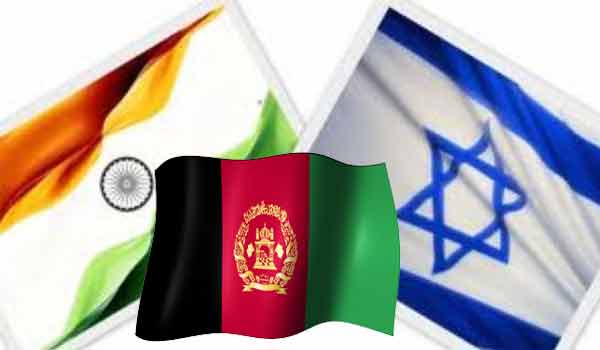
India Must Work on a ‘Common Strategy’ in Afghanistan: Germany on Delhi’s Alleged Backing of Daesh
By Dhairya Maheshwari – Sputnik – 31.08.2021
India, which had been backing a democratic government in Afghanistan before the fall of Kabul to the Taliban, is now following a “wait and watch” approach in the nation. One of Afghanistan’s largest regional donors since 2001, the nation’s takeover by the Taliban has led to India significantly scaling down its diplomatic presence.
German Foreign Minister Heiko Maas on Wednesday urged India to work on a “common strategy” with other regional nations on the security situation in Afghanistan.
The minister was responding to a question whether he would take up the issue of Delhi’s alleged backing of Daesh-K with other regional governments.
“For the broader region and also for India, it is important to discuss and develop a common strategy as far as developments in Afghanistan are concerned. We need international unity. We need to stand united. And the fact that the United Nations Security Council passed a resolution is an important step in that direction”, said the top German diplomat.
Maas was addressing a press conference with his Pakistani counterpart Shah Mahmood Qureshi in Islamabad. He is on a five-nation visit to Turkey, Uzbekistan, Tajikistan, Pakistan, and Qatar, as per the German Foreign Ministry.
The remarks come days after a suicide bombing at Kabul’s international airport, claimed by Daesh-K, left 13 US troops and 169 Afghans dead.
Speaking about the question of India’s purported backing of the group, Qureshi stated that he has been consistently warning the global community about the role of “spoilers” in the Afghan peace process.
“Beware. We have been constantly warning the international community about the roles of spoilers within and beyond Afghanistan. The international objective is peace and stability. The international community has to discern between those who are standing on the side of peace and stability and has to differentiate between those who, for self-interest, are taking steps that won’t be helpful in promoting peace and stability”, said Qureshi.
The Pakistani foreign minister added that he had been taking up the matter during his bilateral consultations with other governments.
Qureshi also blamed India for perpetrating a terrorist attack at a dam project in the Khyber Pakhtunkhwa Province in July, which left nine Chinese engineers dead.
He also said in June of this year that Islamabad has “irrefutable evidence” about India running nearly 66 terrorist training camps inside Afghanistan for Pakistan-focused violent jihadi groups such as the Tehreek-e-Taliban (TTP) and the Balochistan Liberation Army (BLA).
In November of last year, Qureshi claimed that Indian agencies were also targeting infrastructure projects under the China-Pakistan Economic Corridor (CPEC), the flagship initiative of the Beijing-backed One Belt One Road (OBOR) initiative.
In February of this year, Pakistan’s Prime Minister Imran Khan accused Delhi of using Daesh (ISIS) to incite unrest within the country.
“This is the unanimous opinion of our government and our security agencies that India is backing ISIS”, Khan stated at the time.
Time and again, India has denied Pakistan’s allegations of backing terrorist groups against Islamabad.
Amazon, “Economic Terrorism” and the Destruction of Competition and Livelihoods
By Colin Todhunter | OffGuardian | August 30, 2021
Global corporations are colonising India’s retail space through e-commerce and destroying small-scale physical retail and millions of livelihoods.
Walmart entered into India in 2016 with a US$3.3 billion take-over of the online retail start-up Jet.com. This was followed in 2018 with a US$16 billion take-over of India’s largest online retail platform, Flipkart. Today, Walmart and Amazon control almost two thirds of India’s digital retail sector.
Amazon and Walmart have a record of using predatory pricing, deep discounts and other unfair business practices to attract customers to their online platforms. A couple of years ago, those two companies generated sales of over US$3 billion in just six days during Diwali. India’s small retailers reacted by calling for a boycott of online shopping.
If you want to know the eventual fate of India’s local markets and small retailers, look no further than what US Treasury Secretary Steven Mnuchin said in 2019. He stated that Amazon had “destroyed the retail industry across the United States.”
AMAZON’S CORPORATE PRACTICES
In the US, an investigation by the House Judiciary Committee concluded that Amazon exerts monopoly power over many small- and medium-size businesses. It called for breaking up the company and regulating its online marketplace to ensure that sellers are treated fairly.
Amazon has spied on sellers and appropriated data about their sales, costs and suppliers. It has then used this information to create its own competing versions of their products, often giving its versions superior placement in the search results on its platform.
The Institute for Local Self-Reliance (ILSR) published a revealing document on Amazon in June 2021 that discussed these issues. It also notes that Amazon has been caught using its venture capital fund to invest in start-ups only to steal their ideas and create rival products and services.
Moreover, Amazon’s dominance allows it to function as a gatekeeper: retailers and brands must sell on its site to reach much of the online market and changes to Amazon’s search algorithms or selling terms can cause their sales to evaporate overnight.
Amazon also makes it hard for sellers to reduce their dependence on its platform by making their brand identity almost invisible to shoppers and preventing them from building relationships with their customers. The company strictly limits contact between sellers and customers.
According to the ILSR, Amazon compels sellers to buy its warehousing and shipping services, even though many would get a better deal from other providers, and it blocks independent businesses from offering lower prices on other sites. The company also routinely suspends sellers’ accounts and seizes inventories and cash balances.
The Joint Action Committee against Foreign Retail and E-commerce (JACAFRE) was formed to resist the entry of foreign corporations like Walmart and Amazon into India’s e-commerce market. Its members represent more than 100 national groups, including major trade, workers’ and farmers’ organisations.
JACAFRE issued a statement in 2018 on Walmart’s acquisition of Flipkart, arguing that it undermines India’s economic and digital sovereignty and the livelihoods of millions in India. The committee said the deal would lead to Walmart and Amazon dominating India’s e-retail sector. It would also allow them to own India’s key consumer and other economic data, making them the country’s digital overlords, joining the ranks of Google and Facebook.
In January 2021, JACAFRE published an open letter saying that the three new farm laws, passed by parliament in September 2020, centre on enabling and facilitating the unregulated corporatisation of agriculture value chains. This will effectively make farmers and small traders of agricultural produce become subservient to the interests of a few agrifood and e-commerce giants or will eradicate them completely.
Although there was strong resistance to Walmart entering India with its physical stores, online and offline worlds are now merged: e-commerce companies not only control data about consumption but also control data on production and logistics. Through this control, e-commerce platforms can shape much of the physical economy.
What we are witnessing is the deliberate eradication of markets in favour of monopolistic platforms.
BEZOS NOT WELCOME
Amazon’s move into India encapsulates the unfair fight for space between local and global markets. There is a relative handful of multi-billionaires who own the corporations and platforms. And there are the interests of hundreds of millions of vendors and various small-scale enterprises who are regarded by these rich individuals as mere collateral damage to be displaced in their quest for ever-greater profit.
Thanks to the helping hand of various COVID-related lockdowns, which devastated small businesses, the wealth of the world’s billionaires increased by $3.9tn (trillion) between 18 March and 31 December 2020.
In September 2020, Jeff Bezos, Amazon’s executive chairman, could have paid all 876,000 Amazon employees a $105,000 bonus and still be as wealthy as he was before COVID. Jeff Bezos – his fortune constructed on unprincipled methods that have been well documented in recent years – increased his net wealth by $78.2bn during this period.
Bezos’s plan is clear: the plunder of India and the eradication of millions of small traders and retailers and neighbourhood mom and pop shops.
This is a man with few scruples. After returning from a brief flight to space in July, in a rocket built by his private space company, Bezos said during a news conference:
I also want to thank every Amazon employee and every Amazon customer because you guys paid for all of this.”
In response, US congresswoman Nydia Velazquez wrote on Twitter:
While Jeff Bezos is all over the news for paying to go to space, let’s not forget the reality he has created here on Earth.”
She added the hashtag #WealthTaxNow in reference to Amazon’s tax dodging, revealed in numerous reports, not least the May 2021 study ‘The Amazon Method: How to take advantage of the international state system to avoid paying tax’ by Richard Phillips, Senior Research Fellow, Jenaline Pyle, PhD Candidate, and Ronen Palan, Professor of International Political Economy, all based at the University of London.
Little wonder that when Bezos visited India in January 2020, he was hardly welcomed with open arms.
Bezos praised India on Twitter by posting:
Dynamism. Energy. Democracy. #IndianCentury.”
The ruling party’s top man in the BJP foreign affairs department hit back with:
Please tell this to your employees in Washington DC. Otherwise, your charm offensive is likely to be waste of time and money.”
A fitting response, albeit perplexing given the current administration’s proposed sanctioning of the foreign takeover of the economy, not least by the unscrupulous interests that will benefit from the recent farm legislation.
Bezos landed in India on the back of the country’s antitrust regulator initiating a formal investigation of Amazon and with small store owners demonstrating in the streets. The Confederation of All India Traders (CAIT) announced that members of its affiliate bodies across the country would stage sit-ins and public rallies in 300 cities in protest.
In a letter to PM Modi, prior to the visit of Bezos, the secretary of the CAIT, General Praveen Khandelwal, claimed that Amazon, like Walmart-owned Flipkart, was an “economic terrorist” due to its predatory pricing that “compelled the closure of thousands of small traders.”
In 2020, Delhi Vyapar Mahasangh (DVM) filed a complaint against Amazon and Flipkart alleging that they favoured certain sellers over others on their platforms by offering them discounted fees and preferential listing. The DVM lobbies to promote the interests of small traders. It also raised concerns about Amazon and Flipkart entering into tie-ups with mobile phone manufacturers to sell phones exclusively on their platforms.
It was argued by DVM that this was anti-competitive behaviour as smaller traders could not purchase and sell these devices. Concerns were also raised over the flash sales and deep discounts offered by e-commerce companies, which could not be matched by small traders.
The CAIT estimates that in 2019 upwards of 50,000 mobile phone retailers were forced out of business by large e-commerce firms.
Amazon’s internal documents, as revealed by Reuters, indicated that Amazon had an indirect ownership stake in a handful of sellers who made up most of the sales on its Indian platform. This is an issue because in India Amazon and Flipkart are legally allowed to function only as neutral platforms that facilitate transactions between third-party sellers and buyers for a fee.
UNDER INVESTIGATION
The upshot is that India’s Supreme Court recently ruled that Amazon must face investigation by the Competition Commission of India (CCI) for alleged anti-competitive business practices. The CCI said it would probe the deep discounts, preferential listings and exclusionary tactics that Amazon and Flipkart are alleged to have used to destroy competition.
However, there are powerful forces that have been sitting on their hands as these companies have been running amok.
In August 2021, the CAIT attacked the NITI Aayog (the influential policy commission think tank of the Government of India) for interfering in e-commerce rules proposed by the Consumer Affairs Ministry.
The CAIT said that the think tank clearly seems to be under the pressure and influence of the foreign e-commerce giants.
The president of CAIT, BC Bhartia, stated that it is deeply shocking to see such a callous and indifferent attitude of the NITI Aayog whch have remained a silent spectator for so many years when:
…the foreign e-commerce giants have circumvented every rule of the FDI policy and blatantly violated and destroyed the retail and e-commerce landscape of the country but have suddenly decided to open their mouth at a time when the proposed e-commerce rules will potentially end the malpractices of the e-commerce companies.”
Of course, money talks and buys influence. In addition to tens of billions of US dollars invested in India by Walmart and Amazon, Facebook invested US$5.5 billion last year in Mukesh Ambani’s Jio Platforms (e-commerce retail). Google has also invested US$4.5 billion.
Since the early 1990s, when India opened up to neoliberal economics, the country has become increasingly dependent on inflows of foreign capital. Policies are being governed by the drive to attract and retain foreign investment and maintain ‘market confidence’ by ceding to the demands of international capital which ride roughshod over democratic principles and the needs of hundreds of millions of ordinary people. ‘Foreign direct investment’ has thus become the holy grail of the Modi-led administration and the NITI Aayog.
The CAIT has urged the Consumer Affairs Ministry to implement the draft consumer protection e-commerce rules at the earliest as they are in the best interest of the consumers as well as the traders of the country.
Meanwhile, the CCI probably will complete its investigation within two months.
Colin Todhunter specialises in development, food and agriculture and is a Research Associate of the Centre for Research on Globalization in Montreal.
Featured Video
Your Enslavement Begins in Gaza: The ‘Board of Peace’
or go to
Aletho News Archives – Video-Images
From the Archives
The US: The Century of Lost Wars
By James Petras | Global Research | September 12, 2018
Introduction
Despite having the biggest military budget in the world, five times larger than the next six countries, the largest number of military bases – over 180 – in the world and the most expensive military industrial complex, the US has failed to win a single war in the 21st century.
In this paper we will enumerate the wars and proceed to analyze why, despite the powerful material basis for wars, it has led to failures. … continue
Blog Roll
 Aletho News
- Israel designates five Palestinian media outlets as ‘terrorist organizations’
- Israel, not America, first: Carlson’s Huckabee interview lays bare US foreign policy priorities
- Israeli troops executed Palestinian aid workers at ‘point blank range’: Report
- Iran war What if today’s Iran is resigned to a long, hellish war with the US?
- Why Israel Is Escalating Its War Crimes Against Lebanon
- Iran in the face of the armed diplomacy of imperialism
- The US build-up around Iran constitutes strategic war option, not ‘deterrence’
- Iran to US: Sanctions and war failed; try diplomacy and respect
- China supplies Iran with radar, surveillance tech to track US stealth aircraft: Report
- Zelensky rejects territorial concessions to Russia
- If Americans Knew
- Maria Farmer: Epstein Victim Reveals Explosive Information Covered Up by Media
- Average of five Palestinians killed by Israel every day in Gaza since ceasefire – Not a ceasefire Day 136
- Palestinian church leaders admonish Christian Zionist Mike Huckabee – Not a ceasefire Day 135
- Ominous messaging from Trump’s “Board of Peace” – Not a ceasefire Day 134
- ‘Christians Out’: Jerusalem Church Tagged With Hate Graffiti, Police Investigating
- Israeli Settlers Kill American Teen
- ‘We returned from hell’: Palestinian journalists recount torture in Israeli prisons
- No mercy for Gaza in Ramadan – Not a ceasefire Day 133
- The Israeli Government Installed and Maintained Security System at Epstein Apartment
- Tucker Carlson interrogated in Israel, has passport seized after interviewing US ambassador
- No Tricks Zone
- New Research Reaffirms Clouds, Aerosols, And Surface Solar Radiation Are ‘Driving The Climate System’
- Germany: Electric Car Catches Fire At Charging Station, Sets Off Local “Inferno”, Widespread Damage
- New Study: Canada’s New Brunswick Was 1°C Warmer Than Today During The Medieval Warm Period
- Coal Power Back In Trend As Globe Tries To Keep Pace With Growing Demand For Power
- New Study: A 4°C Warmer Beaufort Sea Had ‘No Sea Ice’ 11,700 – 8200 Years Ago
- Unfudging The Data: Dutch Meteorological Institute Reinstates Early 20th Centruy Heat Waves It Had Erased Earlier
- German Gas Crisis…Chancellor Merz Allegedly Bans Gas Debate Ahead of Elections!
- Pollen Reconstructions Show The Last Glacial’s Warming Events Were Global, 10x Greater Than Modern
- Germany’s Natural Gas Storage Level Dwindles To Just 28%… Increasingly Critical
- New Study Rebuts The Assumption That Anthropogenic CO2 Molecules Have ‘Special’ Properties
 Aletho News