The Geo-Port-Politics of Gwadar and Chabahar
By Salman Rafi Sheikh – New Eastern Outlook – 08.06.2019
In a highly surprising move, Iran’s foreign minister, on an unscheduled and unannounced visit to Pakistan on Thursday (May the 23rd), announced the proposal to link Pakistan’s port of Gwadar with Iran’s Chabahar port. This announcement signals tectonic geo-political shift taking place in the region in the wake of increasing tensions between the US and Iran. The US has already successfully forced India, its chief South Asian ally, to scrap its purchase of oil from Iran, a country India was not long ago claimed to have entered into a strategic alliance with. Although the US has somehow left Chabahar out of its net of sanction, India’s decision to follow the US in its footsteps does signal its participation in the US policy of crippling Iranian economy and take Iran to the verge of massive political disruption and eventual regime change. Iran, obviously, is not unmindful of the implications of this particular decision of India.
Iran’s proposal to link Chabahar with Gawadar, despite the fact that the US sanctions don’t apply on the post, shows the deep sense of Indian betrayal prevailing in Tehran and a counter-manoeuvre to avoid isolation. Iran, obviously, does not expect India to be as robust and committed to building the rest of the port as it would have in a peaceful and sanction-less scenario. Iran, logically enough, is boosting its ties with its immediate neighbour, a country that already is deeply allied with China and aims to expand CPEC to Iran to increase regional connectivity. With Chabahar and Gwadar being linked, Iran will thus have two major regional states on its side i.e., Pakistan and China and will be far better placed in China’s extended regional connectivity programme than it is now. Zarif’s connectivity proposal itself tells everything. To quote him:
“We believe that Chabahar and Gwadar can complement each other. We can connect Chabahar and Gwadar, and then through that, connect Gwadar to our entire railroad system, from Iran to the North Corridor, through Turkmenistan and Kazakhstan, and also through Azerbaijan, Russia, and Turkey.”
As far as the US—Iran tension is concerned, unlike India, Pakistan has already said that it will not take sides in the conflict. Pakistan’s neutrality in the on-going scenario suits Tehran far more than it does for the US, that is if it does at all.
There is also no gainsaying that Tehran’s proposal to connect the two ports couldn’t have come with prior consultation with the Chinese, who are practically running the port in Pakistan. Accordingly, before coming to Pakistan, Zarif was in China where he met his Chinese counterpart and certainly discussed this proposal, leading Chinese foreign minister to “Welcome Iran” to actively take part in the joint building of the Belt and Road Initiative (BRI) through Chabahar.
China also re-affirmed its support for Iran. “China firmly opposes unilateral sanctions and the so-called ‘long-arm jurisdiction’ imposed by the United States on Iran,” Wang said, pledging to maintain the Joint Comprehensive Plan of Action and safeguard the authority of the United Nations and basic norms governing international relations.
Chinese support’s major manifestation came a few days ago when Chinese oil tanker Pacific Bravo left the Persian Gulf with 2 million barrels of Iranian light crude, ignoring the US sanctions and practically challenging the US unilateralism.
Pacific Bravo is owned by Bank of Kunlun, a financial institution that is owned by the Chinese state oil company CNPC. Bank of Kunlun has long been the financial institution at the heart of China-Iran bilateral trade—a role for which the company was sanctioned during the Obama administration. Despite already being designated, Bank of Kunlun ceased its Iran-related activities in early May when the oil waivers were revoked. But Bravo’s current moves point to a change in Chinese policy. Importantly enough, Bravo sailed from the Persian Gulf on the same day that Zarif arrived in Beijing and met Chinese foreign minister to discuss Iranian participation in the BRI (through linking Gwadar and Chabahar).
With Iran now taking this fundamental shift, what is apparent is that a major foreign policy shift in Iran has taken place whereby its leadership has come to an understanding that their relations with the US are unlikely to take a positive turn for a long time and that a necessary adjustment in the foreign policy is absolutely needed. As a matter of fact, it was only a few days ago when Iran’s supreme leader criticised Iran’s foreign policy and dropped a major hint about why changing the course of foreign policy was an utmost necessity.
Of course, its major manifestation is reorienting Iran’s relations with Pakistan via participation in the BRI. Pakistan will be least concerned about any US reaction over linking Gwadar with Chabahar, for the US sanctions do not apply to the Iranian port. But the fact that the geo-political significance of the port will undergo a significant change after a successful linkage between the two ports and that China will become a major player, the US might feel ‘compelled’ to direct its sanctions toward the port eventually.
Iran resets its foreign policy calculus
By M. K. BHADRAKUMAR | Indian Punchline | May 25, 2019
The unannounced overnight visit by Iran’s Foreign Minister Javad Zarif to Pakistan on Thursday can be seen at the very minimum as forming part of a diplomatic campaign in the backdrop of the war clouds building up in the Persian Gulf. This regional tour has already taken Zarif to Russia, China, Turkmenistan, India and Japan.
For Iran, Pakistan is an important neighbour and the two countries have a history of troubled relations. (See my recent blogs Pakistan-Iran ties set for makeover – Part I and Part II.) In the prevailing regional setting, Pakistan’s importance for the Iranian geo-strategies has become crucial.
In immediate terms, King Salman has sent out invitations to two summits he’ll be hosting in Mecca on May 30 — back-to-back summits of the Gulf Cooperation Council (GCC) and the Arab League — where the leitmotif is the rising tensions with Iran. Neither GCC nor Arab League carries credibility, but Saudi Arabia is hoping that the Muslim Middle East will stand up and be counted in the vanguard of the US-led ‘Iran project’.
Enter Pakistan. Pakistan already has stated it will not take sides in the looming confrontation. Pakistan has described the crisis in the Persian Gulf region as “disturbing” and said that Washington’s decision to deploy an aircraft carrier and bombers has fuelled tensions and exacerbated “the existing precarious security situation” in the Middle East.
Just before Zarif’s arrival in Islamabad, Pakistani foreign ministry spokesman said, “We expect all sides to show restraint, as any miscalculated move can transmute into a large-scale conflict. Pakistan always supports dialogue and desires that all issues should be settled peacefully and through engagement by all sides.”
Pakistan’s stance of ‘positive neutrality’ works in favour of Tehran. Importantly, it is in stark contrast with the deafening silence of New Delhi, which has caved in to US diktat and summarily terminated all imports of Iranian oil. Suffice to say, Pakistan has moved to neutral ground at a juncture while India is bonding with the US, Israel, Saudi Arabia and the UAE — the ‘Quad’ group that pioneers the project to force a ‘regime change’ in Iran.
Delhi gave a pro forma reception to Zarif ten days ago when he came on an unannounced visit and Indian government sources went out of the way to prompt the media to see the event as entirely at Iran’s insistance. In comparison, Pakistan graciously received Zarif, who met the Pakistani Prime Minister and Foreign Minister as well as the army chief and the speaker of the national assembly.
Without doubt, the shift in India’s Middle East policies will have registered in the Iranian political establishment at the highest level. Simply put, Delhi has turned its back on Tehran and a sense of betrayal is only natural in Tehran, which strained every nerve to befriend India. And the fact remains that unlike with Iran’s ties with Pakistan, there are no contradictions in Iran’s bilateral ties with India.
In view of the above, significantly, Zarif made a stopover in Chabahar Port en route to Islamabad on Thursday. No doubt, this development is heavy with symbolism, because Chabahar symbolises not only the unfulfilled Iranian expectations from partnership with India but stands out today as a relic of India’s betrayal. (See my blog India’s Betrayal of Iran Is Only the Beginning.)

(Iran’s FM Zarif at Chabahar en route to Islamabad on May 23, 2019)
In his first remarks after arrival in Islamabad, Zarif disclosed that he intended to put forward a “proposal” for connecting Pakistan’s Gwadar port to its “complementary” port Chabahar (located just 72 kms away in southeastern Iran.) To quote Zarif,
“We believe that Chabahar and Gwadar can complement each other. We can connect Chabahar and Gwadar, and then through that, connect Gwadar to our entire railroad system, from Iran to the North Corridor, through Turkmenistan and Kazakhstan, and also through Azerbaijan, Russia, and Turkey.”
Make no mistake that this is a wholesome proposal. An experienced career diplomat like Zarif is not in the business of kite-flying on such a sensitive issue that holds the potential to realign the geopolitics of the region.
Equally, it stands to reason that Tehran has consulted Beijing beforehand. Gwadar is synonymous with the China-Pakistan Economic Corridor and, of course, CPEC is the flagship of China’s Belt and Road (BRI) Initiative.
In fact, during what appeared to have been a highly successful visit to Beijing by Zarif a week ago, Iran-China cooperation within the framework of BRI figured prominently in his talks with Chinese State Councillor and Foreign Minister Wang Yi. The Xinhua report on the meeting underscored Wang’s remark that ‘China welcomes Iran to actively take part in the joint building of the Belt and Road and hopes to strengthen mutually beneficial cooperation.’
Equally, it must be factored in that the week before Zarif met Wang, he had travelled to Moscow and had talks with Russian Foreign Minister Sergey Lavrov where they discussed key issues in the international arena, as well as bilateral cooperation. The Russia-Iran consultations in Moscow stand out as a defining moment in regional security, as apparent from the remarks to the media, below, by the two foreign ministers:
(Joint press conference by Russian FM Sergey Lavrov (R) and Iran’s FM Javad Zarif at Moscow on May 8, 2019)
The big question is whether all this signifies a fundamental rethink in Iran’s foreign policy options in an emergent scenario where it must confront the geopolitical reality that a normalisation of relations with the US is to be ruled out for a very long time to come and some fundamental adjustments have become necessary.
Indeed, Iran’s Supreme Leader Ayatollah Ali Khamenei recently made an unprecedented open criticism of Iran’s foreign policy.
In sum, it is possible to estimate that the proposal that Zarif made to the Pakistani leadership signifies a reorientation of Iran’s foreign policy in the direction of greater integration with the two major Eurasian powers Russia and China.
In an ideal world, Iran would have preferred to pursue independent foreign policies, but life is real and a regional axis with Russia, China, Pakistan and Turkey becomes an imperative need today. Conceivably, this profound shift in Iran’s foreign policy calculus carries the imprimatur of Ayatollah Khamenei.
Read the IRNA report, here, on Zarif’s Pakistan visit.
India’s Ambassador To The US Strongly Hinted At An Anti-Russian Military Pivot
By Andrew Korybko | EurasiaFuture | 2019-05-24
India’s much-touted and over-hyped policy of “multi-alignment” is seeming more and more like a cover for unconvincingly disguising the country’s strategic alliance the US, especially after its Ambassador to America strongly hinted that Modi will undertake an anti-Russian military pivot during his second term in office.
There’s little doubt that India will ditch Russia like it just recently did Iran after its Ambassador to America strongly hinted as much in an exclusive interview that he gave to CNBC. The South Asian state’s top diplomatic representative to the US told the outlet the following in an article provocatively headlined India, facing sanctions for Russian arms deals, says it wants to pivot spending to the US:
“There has been a tradition of dependence on defense equipment from Russia. But if you go by SIPRI figures, in the block year 2008 to 2013 we imported 76% of our defense items from Russia. In the next five-year block, from 2013 to 2018, this came down 58% and in the same period our imports from the United States increased by 569%. So that itself tells you that, when we have a choice… we are obviously diversifying our purchases.”
This is the clearest signal yet that Modi’s second term in office will be dedicated to prioritizing his country’s strategic alliance with the US, especially in the military sphere and most likely to both Russia and China’s detriment. About the first, India might go back on its deal to purchase the S-400s in order to avoid sanctions and replace them with THAADs, while for the second, its “Indo-Pacific” policy clearly aims to “contain” China.
India’s era of “multi-alignment” appears to be over, though it’s keeping this discredited slogan alive as a cover for unconvincingly disguising its strategic alliance with the US. This game-changing development will certainly complicate the regional geopolitical situation, but it also nevertheless provides the impetus for Russia to strengthen its ties with the global pivot state of Pakistan as the main component of its “Return to South Asia.”
Zarif’s Visits To India & Pakistan Couldn’t Have Been More Different
By Andrew Korybko | EurasiaFuture | 2019-05-24
Iran is becoming increasingly desperate after the US intensified the economic component of its Hybrid War on the country, and while Indian Prime Minister Modi snubbed the Islamic Republic’s top diplomat during his visit to the country earlier this month and humiliatingly sent him back to his homeland empty-handed, his Pakistani counterpart Imran Khan warmly embraced Zarif and offered to mediate between Iran and the US.
Iran knows that it’s in trouble after the US rescinded its sanctions waiver for the country’s main oil partners in order to intensify the economic component of its Hybrid War on the Islamic Republic, with the intent being to deprive its rival of valuable budgetary revenue so as to compel it into undertaking painful austerity measures that could exacerbate the already-high risk of a Color Revolution. It was with this increasing strategic desperation in mind that the country dispatched its top diplomat to India earlier this month to plead for it to defy the US like it famously promised it would do last year and not submit to its unilateral sanctions regime.
Foreign Minister Zarif must have been sorely disappointed when he was unsurprisingly snubbed by Indian Prime Minister Modi who refused to meet with him so as to avoid sending any inadvertent signals to his American ally that India would even dare to consider going against Washington’s will, which is why Iran’s top diplomat was humiliatingly sent back to his homeland empty-handed after only having a brief chat with his Indian counterpart. To add insult to injury and ensure that Iran got the message that it was trying to convey, India shortly thereafter tested a surface-to-air missile that it jointly produced with “Israel“, putting to rest any hopes that New Delhi still endeavors to practice its over-hyped and now-outdated policy of “multi-alignment”.
Zarif’s dishonorable treatment by his Indian hosts was completely contrasted by the warm reception that he was just given by his Pakistani ones during his latest visit, where he met with Prime Minister Khan and was even told by his Foreign Ministry counterpart that Islamabad is willing to mediate between Iran and the US in pursuit of a peaceful solution to their latest tensions. This is very important because Pakistan already has decades’ worth of very solid ties with the US’ permanent military, intelligence, and diplomatic bureaucracies (“deep state”), which have most recently been put to use to promote the revived peace process in Afghanistan.
Perhaps sensing that Pakistani mediation could eventually be just as much of a game-changer in Iranian-American relations as it has been for American-Taliban ones, the Indian Ambassador to the US announced on the same day as Zarif’s arrival in the global pivot state that his country officially terminated its import of Iranian oil in response to Washington’s sanctions demands. The timing of this statement was very symbolic because it highlights just how different both South Asian states’ stances towards Iran are. India is playing partisan political games by unashamedly supporting the US’ policies, while Pakistan is trying to “balance” (or rather, in Indian political parlance, “multi-align”) between all Great Powers.
India wants to prove its loyalty to the US and remind America that its compliance with the unilateral sanctions regime against Iran is greatly contributing to the worsening economic crisis in the Islamic Republic, whereas Pakistan is flaunting its strategic independence by showing the world that it feels confident enough with its increasingly important geopolitical position to proactively play a leading diplomatic role in reducing tensions between those two countries. Just as significantly, Pakistan proved that it will continue to respect its partners’ state representatives instead of humiliating them like India just did to Zarif.
The main takeaway from Zarif’s totally different experiences visiting those two South Asian states is that Iran should seriously consider recalibrating its regional partnerships. India is no longer a reliable partner after it disrespected Iran’s top diplomat in such a shameful manner and then strongly signaled the strength of its new alliances with the US and “Israel” right after humiliating him. Pakistan, meanwhile, has shown itself to be totally dependable and genuinely interested in proactively playing a constructive role in supporting a peaceful solution to the latest Iranian-American tensions. As such, it would be wise for Iran to prioritize is relations with Pakistan in order to replace India as its regional strategic partner.
Observations & Implications Of A Possible BJP Victory
By Andrew Korybko | EurasiaFuture | 2019-05-21
Many media outlets are reporting that the BJP will probably win re-election according to exit polling conducted over the month-long electoral process that was finally made public after it ended, which would be the result of several important factors if true and also carry with it some very significant implications.
Practically all international media outlets are predicting a landslide re-election for the BJP-led “National Democratic Alliance” according to recently released exit polling conducted over the month-long electoral process, and while the official results won’t be known until later this week, it’s still possible to assess the reasons why this might happen as well as the effect that it’ll have on India’s domestic and foreign affairs. The following is a brief listing of some of the most important observations and implications related to this scenario, which is intended to provide a look at both the past and the future in order for the reader to better understand the historic moment in which India might very well find itself:
Observations
* The BJP’s victory would represent the triumph of nationalist rhetoric over economic realities and would be largely due to Modi distracting the masses from his unfulfilled economic promises through the Bollywood-like “surgical strike” stunt that he ordered earlier this year and the subsequent events that followed.
* The suspicious circumstances surrounding the Pulwama incident strongly suggest that a loyal faction of the Indian security services “passively facilitated” the attack that would later be used to “justify” the “surgical strike” stunt by stepping back and letting it happen instead of proactively stopping it.
* Hindutva ideologues have succeeded in wresting control of India’s permanent military, intelligence, and diplomatic bureaucracies (“deep state”) from their secular rivals just like how the neoconservative globalist faction did in the US vis-a-vis their nationalist counterparts from the Old Cold War era.
* While Kashmir is a false flag flashpoint for manufacturing international crises, the role of the Hindutva-controlled “deep state” in fomenting communal violence for political ends also shouldn’t be overlooked since it plays a key role in polarizing the country along identity lines and promoting majoritarianism.
* The famous North-South division will probably once again be on full display, but the demographic weight of the so-called “Cow Belt” in the “Hindi Heartland” and the growing Hindutva majoritarianism all across the country in general will likely lessen the political impact of this traditional division.
Implications
* A BJP victory would put India on the path to becoming a “Hindu Rashra” (fundamentalist Hindu state) if the authorities use their mandate to go forward with “constitutionally uncomfortable” “reforms” to remove the state’s legally enshrined secularity in favor of becoming a religious state to please their Hindutva base.
* Lacking Modi’s charisma and being bereft of any visionary plans for the future, the opposition would increasingly become nothing more than a “coalition of malcontent minorities” comprised of leftists, Dalits, Muslims, and maybe some ethnic minorities, further accelerating its decline in a majoritarian future.
* Modi will probably use his mandate to agree to a lopsided free trade deal with the US as long as his country is promised the chance of “poaching” Western companies from China as a consequence of the trade war, hoping that this will stimulate his “Make in India” vision even if it ends up being disastrous for millions of farmers.
* Along the same lines and bearing in mind his country’s betrayal of Iran earlier this month when it discontinued oil purchases under the pressure of American sanctions, Modi might also reconsider his promise to purchase Russia’s S-400s for the same reason.
* Considering the anti-Chinese (US free trade deal), -Iranian (stopping oil imports), and -Russian (rethinking the S-400s) moves that Modi has either already made or is likely to make after his new mandate, India will probably become the central component of the US’ “Pivot to Asia” and its main hemispheric military-strategic ally.
India’s betrayal of Iran is only the beginning
By M. K. BHADRAKUMAR | Indian Punchline | May 15, 2019
The sudden visit to New Delhi by the Iranian Foreign Minister Mohammed Javad Zarif for a meeting on May 14 with the outgoing External Affairs Minister Sushma Swaraj in the dying days of the Modi government underscores dramatically how much Tehran has been traumatised by the Indian decision under American pressure to summarily stop all imports of Iranian oil w.e.f May 2.
If one were to encapsulate the anguish and bewilderment in the Iranian mind, an analogy would be the plaintive entreaty by Julius Caesar in William Shakespeare’s play of that name — ‘Et tu, Brute’ (Even you, Brute) — when on the Ides of March in 44 BC the great Roman statesman spotted amongst the conspirators in the Senate building the pale visage of his old dear friend Marcus Junius Brutus, who were stabbing him in a pre-conceived assassination plot.
To be sure, the unexpected betrayal by the old and dear Indian friend has shocked Tehran. According to reports, Swaraj offered her best explanation by taking a de tour and reportedly holding out a non-committal assurance that Delhi will review the situation after a new government is formed “keeping in mind our commercial considerations, energy security and economic interests.”
Now, this is a big shift from the Indian stance that it will only abide by UN sanctions. But then, it is not within Swaraj’s competence to commit anything. The Boss has to decide, and he’s busy campaigning. In the final analysis, if PM Modi keeps his job, it will be a tricky decision. For, Modi enjoys wonderful friendship with three players of the infamous “B Team” — Benjamin Netanyahu, bin Salman (Saudi Crown Prince), bin Zayed (UAE Crown Prince) — and is wary of the fourth player, Bolton (Trump’s national security advisor). And the B team sponsors the Iran project, which is about ‘regime change’ in Tehran.
The most galling thing about the Indian betrayal is that amongst the three top importers of Iranian oil — China, India and Iran — it’s only India that summarily packed up under American pressure. For the Modi government which claims to be ‘muscular’, such cowardly behaviour is a matter of shame. Simply put, the strategic understanding forged during the historic meeting between Modi and Iranian President Hassan Rouhani in Ufa, Russia, on the sidelines of the SCO summit in May 2019 turns out to be a damp squib. Tehran is bound to reflect over the quality of the hand of friendship that Modi extended.
To jog memory, India is party to a trilateral MOU with Iran and Afghanistan with plans to commit at least $21billion to developing the Chabahar–Hajigak corridor, including $85 million for Chabahar port development by India. This includes $150 million line of credit by India to Iran, $8 billion India-Iran MoU for Indian industrial investment in Chabahar Special Economic Zone, $11-billion for the Hajigak iron and steel mining project awarded to seven Indian companies in central Afghanistan, and $2 billion commitment to Afghanistan for developing supporting infrastructure including the construction of the Chabahar-Hajigaj railway line.
The Chabahar-Hajigaj railway line holds the potential to expand trade manifold via connectivity to the 7,200-km-long multi-mode North-South Transport Corridor India is working on to connect to Europe and Turkey — and all across Russia by linking with the R297 Amur highway and the Trans-Siberian Highway. Over and above, a planned Herat to Mazar-i-Sharif railway will provide access for the Central Asia states via Chabahar Port to link with the Indian market. The Chabahar Port also provides the only means of India developing direct access to its erstwhile air base in Farkhor in Tajikistan. Expert opinion is that the Chabahar route will result in 60% reduction in shipment costs and 50% reduction in shipment time from India to Central Asia.
The Indian media quoted government sources to the effect that the compliance with the US sanctions against Iran is the price that Washington demanded from India as quid pro quo for its support in the UN Security Council on the designation of Masood Azhar as global terrorist. The veracity of this interpretation can never be established, because the Americans will never claim ownership of any derailment of the India-Iran relationship.
Yet, it is an unfair linkage since Azhar designation has been a far from a solo US enterprise. It was collective effort where Britain and China probably played key roles alongside some very effective behind-the-scene bilateral negotiations between Delhi and Beijing aimed at carrying Pakistan along. The Americans are always quick to claim credit when something good happens — and there is always the Indian chorus that is only too keen to echo such tall claims.
Indeed, the “big picture” is not at all reassuring. For, Washington has now added two further templates to its “linkage diplomacy” vis-a-vis India. First, Washington has ratcheted up the pressure on India to remove “overly restrictive market access barriers” against American products — to quote from a speech in Delhi by visiting US Commerce Secretary Wilbur Ross in New Delhi last week. Ross repeated President Donald Trump’s accusation that India is a “tariff king”, and threatened India with “consequences” if it responded to U.S. tariffs with counter-tariffs. Ross audaciously proposed that India could balance the trade figures by buying more American weaponry.
So, what do we have here? Delhi falls in line with the US diktat on Iran sanctions, which of course will hit the Indian economy very badly, while the US is also at the same time aggressively demanding that India should open up its market for American exports. Why can’t the Modi government prioritise India’s economic concerns?
Second, the Trump administration cracking the whip on India to give up the S-400 missile defence system and conform to the US sanctions against Russia’s arms industry. A report in the Hindustan Times says that the US would expect India to instead buy from it the Terminal High Altitude Area Defense (THAAD) and Patriot Advance Capability (PAC-3) missile defence systems as an alternative to S-400s. But these American systems are far more expensive and may still not be on par with the advanced S-400 system in capability.
Evidently, like in the case with Iran, the US attempt is to complicate India-Russia relations by forcing Modi to resile from a commitment he gave to President Vladimir Putin on the S-400 deal.
Meanwhile, another report has appeared that under American pressure, India joined a US-led naval exercise in the South China Sea with America’s Asian allies Japan and the Philippines. Whereas the US, Japan and the Philippines are longstanding allies bound together under military pacts, India is not part of any alliance system. Yet, India took part in the exercise in the disputed South China Sea within a ‘Quad Lite’ format. The US secretary of state Mike Pompeo has a cute expression for it — “banding together”.
The running theme in all this is that India’s strategic ties with Iran, Russia and China are coming under challenge from Washington. But the big question is how come Washington regards the “muscular” Modi government with a 56″ chest to be made of such cowardly stuff? Are the ruling elites so thoroughly compromised with the Americans? There are no easy answers.
US ends waiver on India’s Iran oil imports. What next?
By M. K. BHADRAKUMAR | Indian Punchline | May 3, 2019
China’s stance vis-a-vis the US sanctions against Iran’s oil exports is evolving. These are early days. Quite obviously, the Chinese assessment that Iran is not going to wilt under US pressure gives a realistic picture. But it means that there is a long haul ahead and India needs to do some creative thinking. In the improved climate of Sino-Indian relations, a window of opportunity is opening for New Delhi to take a coordinated approach with Beijing.
No sooner than the Trump administration announced in a statement on April 22 its decision that it will not extend the exemption period beyond May 2 for countries buying oil from Iran — so-called “waiver” — the Chinese Communist Party tabloid Global Times came out with an editorial acknowledging that the US decision poses a “tough choice.”
China is the biggest importer of Iranian oil. The Global Times editorial blasted Washington for this “typical manifestation of unilateralism and hegemony” and weighed in on China’s policy options. The editorial offered the following advice: “We think China should clarify its interests and principles surrounding the purchase of oil from the Middle East nation and strive to minimize the loss to China’s national interests.”
That is to say, first, China should no doubt “oppose the hegemonic approach of the US but it can’t take the lead in confronting the US on issues involving Iran.” China will push back at the US by rallying world opinion against its Iran sanctions, but will not take a confrontationist approach.
Second, “Beijing needs to coordinate with other major powers to respond to US sanctions against Iran… There is a need to strengthen coordination among countries. If the issue can be dragged, then let it drag. Otherwise, the issue can be modified. If it cannot be modified, let it be dealt with on a case-by-case basis.”
Third, “The operational safety of Chinese enterprises should be given priority and they have the right to continue to cooperate with Iran or withdraw, keeping in mind the situation on the ground.” The editorial sums up: “China does not want to have a showdown with the US over Iran, nor can Beijing just let Washington do what it wants… we cannot disregard principles or interests. This is a time to test wisdom.”
However, an editorial by the government-owned China Daily on April 23 was more forthright: “Major importers of Iranian oil, China included, have the legitimate right to have normal business ties and conduct trade with Iran, including importing oil from it, should they so choose. The Chinese government is committed to safeguarding the legitimate rights and interests of its enterprises and willing to play an active and constructive role in promoting the stability of the international energy market.”
Significantly, China Daily also hinted at willingness to make coordinated moves with other affected countries such as India.
China has skirted US sanctions against Iran before. This time around too, the likelihood of that happening is being discussed by western analysts. China will find the back door, inevitably. Apart from ship-to-ship transfers of oil, China also has the option to continue to buy some Iranian crude through the banks in China that are already under US sanctions.
The US-China trade talks do not complicate Beijing’s policy calculus on Iran oil. The trade negotiations envisage US exports of oil / LNG to China worth tens of billions of dollars. (The Wall Street Journal reported in March that in a move that would be announced as part of a broader US-China trade deal, China’s state-owned China Petroleum & Chemical Corp., known as Sinopec, will agree to a long-term contract to buy about $18 billion of liquefied natural gas from Cheniere,) This eases the US pressure on China.
On the contrary, the pressure is much higher on India, which meets 80% of its oil demand through imports. Iran used to be the third largest source of supply till the US butted in. The “waiver” allowed India to import 1.25 million tonnes of oil from Iran per month (which itself meant a 30% reduction in the level of imports).
Most important, India could avail of concessional terms, which meant a saving of around a quarter of combined costs due to favourable conditions such as prices, transportation and insurance. Equally, the rupee payment mechanism worked to India’s advantage.
India has to pay Iran in rupees for oil imports and money is deposited in a special account in India, which Iran uses to purchase humanitarian supplies such as rice and medicines from India. In essence, it was barter trade that committed Iran to buy Indian products, creating export earnings for Indian business.
President Trump is notoriously tight-fisted and will never compensate India for all this financial loss. On the other hand, he hopes to take the opportunity to expand US oil exports to India, which are not based on attractive trade terms. (Besides, why should India want Trump to navigate its energy security?)
Suffice to say, with the expiry of the “waiver” on May 2, India’s oil import costs (and its US dollar payouts) will rise, and its export revenue will decrease. India’s economic growth and exchange rate’s stability will come under great pressure. The expert opinion uniformly warns that the US sanctions against Iran will push up international oil prices, thereby increasing India’s overall oil import bills. Washington claims to be generous in leaving India-Iran cooperation over Chabahar port out of the purview of the sanctions. But the US sanctions will in due course severely stymie cooperation between India and Iran over Chabahar.
The question must be frontally asked: What are the US’ intentions toward India? New Delhi has reason to be worried about Washington’s real interests, long-term strategy and the uncertainty in ties with the US. The US’ interests and strategy appear to narrow down to using India to contain China.
Mike Pompeo has rushed to claim credit for the blacklisting by the UN of Masood Azhar. Sections of the Indian media are beside themselves with joy. But the same man went into hiding a couple of weeks ago when EAM Sushma Swaraj telephoned him in Washington seeking flexibility in the US sanctions against Iran oil.
According to media reports, EAM said India should be allowed to import Iranian crude for some more time without being impacted by US secondary sanctions, as the general election is underway in the country, and that the next government with a fresh mandate will take a final call on this issue.
But Pompeo ducked, pleading helplessness — only to resurface from hiding ten days later on May 1 with the astounding claim that his boys got China to lift the block on Azhar. What to make out of such friends?
Unfortunately, the government is waffling by claiming it is ready to deal with the impact of US sanctions against Iran by getting extra supplies from other oil producing countries to compensate for loss of Iranian oil. The matrix is not about the availability of oil — as explained above — but about the huge economic costs. Simply put, India is called upon to underwrite Trump’s maverick Iran policies.
From the Indian perspective, what matters most in the coming period will be the scope to create a trading bloc with China that would allow the two countries to buy Iranian oil without going through the US banking sector.
‘Too much money invested in war’: US defense industry drives global military spending spree
RT | April 30, 2019
Global military expenditures reached their peak in 2018, and the driving force behind this increase is the growing appetite of the US military-industrial complex rather than real threats, analysts say.
The world spent $1.8 trillion on its military in 2018, the latest report by the acclaimed Stockholm International Peace Research Institute (SIPRI). The US and its NATO allies – the self-proclaimed defenders of freedom and democracy – account for more than half of this whopping amount.
Washington’s other close friend Saudi Arabia is the third largest military spender, coming ahead of India.
“A lot of this spending, particularly in the case of Saudi Arabia and India, is for political reasons,” Michael Maloof, a former senior security policy analyst at the Pentagon, told RT. New Delhi and Riyadh seek to “curry favor” with Washington by purchasing the US weapons in hope for concessions in other areas, he explained.
Washington’s NATO allies have seen pressure from the US related to their military spending ever since Donald Trump came to power in the White House. Maloof believes it has less to do with security of the alliance and more with the interests of the US arms manufacturers.
“A lot of that is aimed at trying to help the US defense industry to stay ahead [of their competitors] and hire more people,” he explained, adding that the issue of the military expenditures has a “clear economic dimension.”
In its desire to sate the always-hungry domestic military industrial complex, the US risks escalating tensions on the international arena, analysts warn. Washington’s hawks typically justify the need for ever-increasing military expenditures with some perceived threats from Russia or China, portraying them as war mongers.
“There is no good reason” for larger defense budgets, Ted Seay, a former US diplomat and senior policy consultant with the British American Security Information Council (BASIC), told RT. It is the West’s fear of the perceived ‘Russian threat’ that has in fact led to destabilization on the European continent, he noted.
“There are military provocations taking place between NATO and Russia where there should not be any far in the 21th century when there is no logical reason for any confrontation between Europe and Russia,” Seay said.
The former US diplomat also denounced as senseless the NATO “formula” demanding that member states spend two percent of their GDP on defense.
There is not a military situation that necessitates [the likes of] Latvia or Poland to find a solution in greater military spending. It simply does not exist in this age. But there are people who seem to be intent on creating confrontation and encouraging the NATO countries to spend more money with no good reason.
Yet, it is precisely Poland and the Baltic States that top the list of nations with the highest annual defense spending increases in Europe over the recent years.
Poland’s military budget rose by 8.9 per cent in 2018 to $11.6 billion, according to SIPRI, while Latvia upped its military expenditures by staggering 24 percent over the same period. Bulgaria and Ukraine – which is not in NATO – followed closely, increasing their spending by 23 and 21 percent respectively.
Meanwhile, the US and its allies grossly outspend all the nations they perceive as alleged threats. The US expenditures alone accounted for 36 percent of global defense spending while exceeding the expenditures of the next eight largest-spending countries combined in 2018. NATO’s total military spending accounted for 53 percent of the global defense expenditures.
China was the only Washington’s perceived rival that made it into top 5 military spenders in 2018. However, Beijing’s defense budget amounted to only a fraction of the US one and accounted for 14 percent of the global military spending.
Russia, meanwhile, came it at number six by spending some $61.4 billion on the military in 2018, following consecutive defense budget cuts in the last two years. However, these facts do not stop the biggest military spender in the world to accuse Moscow of somehow initiating an “arms race.”
Anyway, the latest trends show that the world is unlikely to see easing of tensions on the international arena anytime soon, Seay warns.
The BJP Proudly Compared India’s “Anti-Terror” Strikes To “Israel’s” And The US’
By Andrew Korybko | EurasiaFuture | 2019-04-29
One of the most bald-faced lies to ever become part of the Alt-Media Community’s dogma is that India is supposedly on the same side as Russia, China, and Iran in the New Cold War just because it preaches the high-sounding policy of “multi-alignment” and its Prime Minister warmly embraces Presidents Putin, Xi, and Rouhani on camera. The “politically correct” narrative is that the BJP has returned India to its past glory and that it’s therefore destined to play a central role in the emerging Multipolar World Order, but nothing could be further from the truth. The ruling party is actually vehemently pro-Western in both its geopolitical outlook and ideology, as proven by the fact that India has since clinched game-changing military-strategic partnerships with “Israel” and the US, two interconnected and important developments that its perception managers always dishonestly attempt to downplay in order to hoodwink Russia, China, and Iran for as long as they can until it’s no longer possible to deny this obvious reality.
India’s “Israeli” & American “Anti-Terrorism” Role Models
While there’s been a plethora of proof about this regularly emerging over the past three years already, the most recent incident might be an inflection point that makes it impossible for India to repair the self-inflicted damage to its international reputation. BJP President Amit Shah was stumping on the campaign trail during the ongoing month-long electoral process in his country when he decided that the best way to inspire his party’s base to go out and vote was to proudly compare India’s “anti-terror” strikes to “Israel’s” and the US’, proving once and for all that the ruling Hindutva ideologues have much more in common with Zionism and American Exceptionalism than with the principles that embody the emerging Multilpolar World Order. Speaking about the Bollywood-style “surgical strike” from February, he said that “India is only the third country after Israel and United States of America to have retaliated to terrorism in this brave manner”, which was an unambiguous endorsement of the aggressive actions carried out by India’s two newest military-strategic partners.
Spitting In The Face Of Every Palestinian, Syrian, & Iranian
It deserves to be pointed out that “Israel” describes its attacks against the Palestinians in the occupied Gaza Strip and West Bank as “anti-terrorist” strikes, which is the exact same terminology that it uses when claiming credit for its attacks against Iran and Hezbollah in Syria. As for the US, it’s carried out “anti-terrorist” strikes all across the so-called “Greater Middle East”, most notoriously in Syria, Yemen, Somalia, and Libya, all of which BJP President Shah regards as “retaliating to terrorism in a brave manner” regardless of the countless civilian casualties that America and “Israel” are responsible for with these attacks. Interestingly, India apparently doesn’t care about the message that it’s sending to Iran by celebrating “Israel’s” “anti-terrorist” strikes in Syria that have allegedly martyred many Iranian servicemen who were legally operating in the Arab Republic, but then again, all tact regarding the Indian-Iranian partnership is being thrown out the window after New Delhi decided to abide by Washington’s unilateral sanctions against the Islamic Republic.
Bringing Accountability To The Alt-Media Community
What’s most striking about all of this is that the BJP President thinks that comparing his country’s international aggression to “Israel’s” and the US’ will help the incumbent party win re-election, strongly suggesting that India’s current rulers understand just how Islamophobic and pro-American their base really is and that many of their supporters are ecstatic about New Delhi’s new military-strategic partnerships with Tel Aviv and Washington. If the majority of Indians were really as multipolar-inclined as their government’s perception managers would deceptively have the Alt-Media Community believe, then BJP President Shah wouldn’t have dared to say what he did during the ongoing heated election where the wrong word could doom his party’s re-election prospects, proving that he’s sincerely confident that playing the pro-Western, Islamophobic, unipolar card might end up being the key to the BJP’s success. This should give India’s die-hard supporters in the Alt-Media Community a reason to reconsider the dogma that they were indoctrinated to believe and begin bringing those who brainwashed them to account.
Modi government caves in to US diktat on Iran oil
By M. K. BHADRAKUMAR | Indian Punchline | April 24, 2019
Prime Minister Narendra Modi travels around the country every day claiming to be the defender of national interests in Pulwama, Balakot, ASAT and so on. But he’s keeping deafening silence on the one issue that has come up in the foreign policy that is going to have devastating impact on the Indian economy and affect the lives of common people — US diktat to India to stop oil imports from Iran.
The White House diktat is certain to lead to a spike in India’s oil bill. And, yet, only the Communist Party of India (Marxist) has voiced concern. If foreign policy is about enabling the country’s development, Modi government should show the political courage to tell the Trump administration that its attempt to hurt India’s economic interests will be resisted.
Instead, alas, the media reports suggest that the government is meekly caving in to the White House decision on Monday to block other countries from trading in Iranian oil. Most regrettably, what we see here is an abject surrender of national interests by our government, which is completely contrary to Modi’s claims of being the custodian of India’s development and prosperity.
The government has given a spin that it has arranged “alternate sources” of supply of oil. This is plain sophistry. The real issue is that Iran has been supplying oil to India in highly concessional terms — and not about the availability of oil as such. Buying oil from the spot market has always been an option, but the government could significantly reduce its import bill by availing of Iran’s favourable terms. Not only that, oil trade is a sleazy affair and only middle men stand to gain if India switches to the spot market. The common man will bear the burden of hidden kickbacks. Iran was keen on long-term arrangements with India.
The White House announcement on Monday claimed that Saudi Arabia and the UAE have agreed to offset lost barrels from Iran. However, Saudi Arabia has since given a measured response, saying only that it would add supply if needed. The point is, Saudi Arabia also has to keep output below its ceiling as part of the OPEC+ deal (with Russia), which means that while in theory it could add a few hundred thousand barrels per day above current levels (approximately, 500,000 bps), that may not be enough to compensate for outages in Iran. (And this doesn’t take into account other disruptions in oil supply due to US sanctions against Venezuela and the civil war in Libya.)
The Saudi oil minister Khalid al-Falih has already gone to lengths to try to assuage the concerns of the OPEC+ group, stating that Riyadh would “coordinate with fellow oil producers to ensure adequate supplies are available to consumers while ensuring the global oil market does not go out of balance.” In sum, Saudi Arabia won’t act unilaterally and won’t act preemptively.
Furthermore, aside the strategic goal of keeping the OPEC+ group together, Riyadh also has budgetary concerns to keep oil price as high as possible. The IMF estimates that Saudi Arabia would need oil prices at US$ 80-85 per barrel in order to balance its 2019 budget. According to OPEC figures, the oil and gas sector generates around 50 percent of Saudi Arabia’s GDP, and accounts for some 70 percent of its export earnings. Besides, Saudi Arabia relies on proceeds from oil to fund its hugely ambitious transformation programme known as Vision 2030, the Crown Prince Mohammed bin Salman’s grand project to channel billions upon billions of US dollars in investments to diversify the Saudi economy.
Therefore, all factors taken into account, the oil price is bound to shoot up in the months ahead, vastly increasing India’s import bill. The government’s calculation would be that if the BJP is returned to power, the increase in oil price can be simply passed on to the consumer, which was what the Modi government has been doing through the past 5-year period. Of course, the danger of a worldwide economic recession due to high oil prices is already talked about.
The Modi government caved in under American pressure without even token resistance. Two countries similarly placed as India with high dependence on Iranian oil — China and Turkey — have shown the grit to stand up to Washington. At a news briefing in Beijing on Tuesday, Geng Shuang, a spokesperson for the foreign ministry, used harsh words to criticise the US decision and suggested that China has already taken pre-emptive actions. He said, “The Chinese side urges the US to seriously respect China’s interests and concerns and refrain from taking wrong actions that damage China’s interests. China has already made representations to the US side.” Geng added that China “firmly opposed” the US actions and cooperation between Iran and the international community, including China, “must be respected and protected.” (China steps up criticism of US sanctions in Iran oil, Global Times )
The Turkish Foreign Minister Mevlüt Çavuşoğlu asked in indignation: “Why are you (US) putting pressure on other countries? Take your own measures. Why do other countries have to obey your unilateral decisions?” He said, “We support an international system and multilateralism established through legal rules. The fact that a country alone disrupts this and puts pressure on everyone to comply with its decisions is damaging and jeopardising the international legal system.”
In comparison, Modi and his cabinet colleagues will not join issue with the American bully. The really bizarre part is that Washington is linking India’s compliance with its diktat on Iran with its symbolic support for India’s case on Masood Azhar! This is blackmail. An appropriate quid pro quo should have been that the US blacklisted Pakistan as a state sponsoring terrorism? Will Trump dare to do that? No, he won’t, because the US bases in Afghanistan are critically dependent on supply lines via Pakistan.
Trump apparently thinks Modi is a man of straw, contrary to the latter’s self-projection. Indeed, he says insulting things about Modi every now and then but the latter simply ducks and ingratiates himself even more. Trump hikes tariffs on India’s exports to the US but Modi won’t take reciprocal measures. Trump demands duty reduction for Harley Davidson motorbikes, and Modi not only complies but phones up POTUS to personally convey the good news that he complied. Modi invited Trump as Republic Day chief guest but Trump declined disdainfully.
Does it come as a surprise that the US decided to squash Modi’s grand vision to expand and deepen economic cooperation with Iran via a payment mechanism that bypasses dollar? Washington estimated correctly that Delhi would chicken out and surrender. Such shameful behaviour must be in our Hindu DNA — prostrating before the superior power while kicking the lowly underdog?
Right On Cue, Indian Media Blames Pakistan For The Sri Lankan Terrorist Attacks
The Cheap Shot That The Whole World Saw Coming
By Andrew Korybko | EurasiaFuture | 2019-04-24
It was only a matter of time before Indian media predictably blamed Pakistan for the Sri Lankan terrorist attacks, which just happened earlier this week in a piece by Vicky Nanjappa for “Oneindia” about “How ISI radicalised Sri Lanka through the Pakistan High Commission“. The writer wasted no time in reminding the reader about a years-long scandal in Sri Lanka initiated by India’s National Investigation Agency (NIA) and claiming that a Pakistani diplomat on the island nation was responsible for plotting a Mumbai-style attack in South India, never mind the fact that the allegedly masterminded incident that this was being based on was actually a false flag. In fact, it can be argued that one of the consequences of the Mumbai attacks is that India capitalized on the manufactured notion that Pakistan’s ISI intelligence agency was behind it in order to portray its rival as a regional bogeyman who all of South Asia had to be suspicious of from then on out, so it’s logical in hindsight why India’s RAW intelligence agency would also cook up a conspiracy about this in Sri Lanka in an attempt to weaken historically strong Pakistani-Sri Lankan relations.
Convoluted And Conspiratorial Claims
The enduring motivation to divide Pakistan from its regional partners and opportunistically misportray it as a “state sponsor of terrorism” is what’s also behind the latest attempt trying to connect it to the Sri Lankan terrorist attacks. Mr. Nanjappa reminds his reader about the fake news claims that the Bodu Bala Sena (BBS) Buddhist nationalist organization is supposedly being bankrolled by the ISI, which is more than likely another weaponized narrative that ultimately originated with RAW. According to Mr. Nanjappa’s far-reaching theory, the Pakistani diplomat supposedly responsible for organizing a Mumbai-style attack in South Asia also paid the BBS to incite anti-Muslim violence in order to improve the ISI’s recruitment prospects of local Muslims afterwards, with the clear innuendo being that this somehow makes Islamabad responsible for last weekend’s Easter suicide bombings. This convoluted narrative is understandably confusing for most people to follow, but for as much as it turns off readers from outside the region, it nevertheless is meant to be ultra-intriguing for its intended audience in South Asia, especially the Indian one.
Fearmongering For Votes
It can’t be forgotten that Prime Minister Modi is battling for his political life during his country’s ongoing month-long electoral process and that he’s hoping to win re-election on a platform that heavily emphasizes national security. India was just utterly humiliated, however, following the dogfight that it initiated with Pakistan in late February after the Bollywood-style “surgical strike”, which led to New Delhi’s rival capturing one of the downed pilots prior to releasing him as a gesture of peace and then Modi’s own Defense Minister later publicly contradicting her own government by admitting that not a single person was injured in the Balakot attack. For a political leader who prides himself on his notion of national security, these events were certainly embarrassing and reduced his dwindling credibility among the electorate, hence the need to distract voters with more fearmongering scandals in the meantime so that he can improve his re-election odds. Therein lays the relevance of the ridiculous claims that Pakistan is conspiring with Russia and China to wage Hybrid Wars against the entire world and specifically India, respectively.
The BJP’s Hybrid War On India
In reality, these public accusations by the state and civil society are actually a form of Hybrid War in and of themselves, one that’s being waged not only on the minds of the international audience that India intends to trick into thinking that Pakistan is a “state sponsor of terrorism” and therefore should be subject to unilateral US sanctions and multilateral UN ones, but also against its own citizens who these perception management practitioners want to imbue with a deep sense of fear that they can then exploit to mislead their targets into thinking that India can only be protected by re-electing Modi and continuing his “muscular” foreign policy. I predicted in my piece earlier this week about my “Initial Assessment Of The Terrorist Attacks In Sri Lanka” that “it’ll be tempting for some [international forces] to imply that their rivals’ intelligence agencies might have had a hand in the latest events, or at the very least present themselves as super tough on terrorism for domestic political reasons (e.g. Modi during the elections)” which is exactly what India is now doing.
Political Purposes
India’s “Hindi Heartland/Cow Belt”, the stronghold of the BJP’s support, has yet to go to the polls but is about to real shortly in the election’s upcoming phases, so spinning the narrative that Pakistan might have indirectly had a hand in the Sri Lankan terrorist attacks is meant to ensure that as many of Modi’s supporters come out to vote as possible in order to help him win this neck-and-neck election. As an added benefit, New Delhi would be delighted if the Sri Lankan media picked up on Mr. Nanjappa’s piece and provoked one of their pro-Indian politicians to publicly praise it and/or demand an investigation into what India is framing as “Pakistan’s Hybrid War” in the country. Even better, since his article was written in English, international media further abroad might republish it too, especially some of the forces that have an interest in sparking a so-called “Clash of Civilizations”. It would be a dream come true for Modi if these weaponized fake news claims eventually made it to the UN, too.
Concluding Thoughts
It’s unsurprising that an Indian writer decided to opportunistically spin a convoluted and conspiratorial story purporting to link Pakistan’s ISI to the Sri Lankan terrorist attacks since the fake news claims and attendant innuendo being put forth appeal to the preconceived notions of the BJP’s base and will probably succeed in improving voter turnout for this constituency during the next phases of the country’s ongoing month-long electoral process. The introduction of this weaponized narrative into the Internet’s information ecosystem also carries with it the chance that it’ll be picked up by Sri Lankan media and consequently provoke a pro-Indian politician there to publicly praise the piece in order to trigger a crisis in Pakistani-Sri Lankan relations. Moreover, it’s too early to rule out the possibility of other forces republishing it with the intent of intensifying the so-called “Clash of Civilizations”, which might have the horrifying effect of inspiring right-wing “reprisal” attacks against the Western-based Pakistani diaspora in an attempt to trigger more inter-civlizational violence that would superficially advance this false divide-and-rule narrative.
India sponsoring terror activities in Balochistan: Pakistan FM
The Frontier Post | April 23, 2019
ISLAMABAD – Foreign Minister Shah Mahmood Qureshi has said that India is trying to destabilize Pakistan and sponsoring the terror activities in Balochistan.
FM Qureshi said this on Tuesday while talking to a private news channel; Qureshi said that India is behind the terror activities in Balochistan province.
Regarding the Ormara terror incident, he said that Pakistan has already shared the details of the incident with Iranian authorities, adding that Afghanistan and Iranian territories are being used for carrying out terror acts in Pakistan.
He said Pakistan is helping Iran in recovering their kidnapped border guard personnel.
Qureshi repeated Pakistan’s resolve to have a stable and peaceful border with its neighboring countries, including Iran, to check cross border terrorism.
Earlier on Monday, Prime Minister Imran Khan reiterated his resolve not to allow any militant group to use Pakistani soil against anyone.
Addressing a joint press conference along with Iranian President Hassan Rouhani, the prime minister had said, Islamabad is taking decisive action against the militant groups.
The premier had said we will not allow Iran to be harmed from Pakistani soil and hopes to ensure the same from Iran.
It may be noted that Pakistan and Iran have also agreed to set up a Joint Rapid Reaction Force to guard the common borders.
Featured Video
Will the Gaza Genocide be the Beginning of The End of Israel & Zionism?
or go to
Aletho News Archives – Video-Images
From the Archives
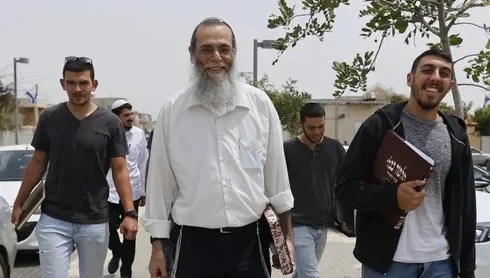
Israeli rabbi says ‘kill everyone in Gaza, including babies’
The Cradle | March 24, 2024
Rabbi Eliyahu Mali, head of the Shirat Moshe yeshiva (religious school) in the occupied city of Jaffa, called on the Israeli army to kill everyone in Gaza, including babies.
During a conference on 8 March, Mali said that “according to the halachic principle (a religious-ethical system of legal reasoning in Judaism), all residents of Gaza must be killed.”
When asked during the conference if babies should be killed as well, he said: “The same thing. You can’t be clever with the Torah. Today he’s a baby, tomorrow he’s a fighter. There are no questions here. Today’s terrorists were previously 8-year-old children.”
“Those who create the terrorists” should also be killed, he said in reference to women in Gaza.
The Rabbi went on to explain that Israel’s war on Gaza is a “Mitzvah war,” which is defined as a war of “commandment” in Jewish tradition. According to Jewish law, this kind of war does not require permission from a “Sanhedrin,” also known as a council or assembly, such as the war against Amalek – previously declared in a biblical reference by Israeli Prime Minister Benjamin Netanyahu at the start of the war on Gaza.
“There is a difference between a civilian population in other places and a civilian population in Gaza. In Gaza, according to estimates, 95 to 98 percent want us destroyed.”
“Since this is a sensitive issue, and I was told that it is being uploaded on the Internet, I want to be ahead of the curve and say that the bottom line is that you have to do exactly what is said in the IDF’s order,” Mali added.
The rabbi’s students in the Shirat Moshe yeshiva serve in the Israeli army. The Yeshiva is sponsored by the Israeli government. … Full article
Blog Roll
Recent Comments
Richard Ong on Israeli forces arrest writer a… Bill Francis on How reporting facts can now la… Gemma on Israel’s diamond industr… Bill Francis on Victoria Moves to Force Online… papasha408 on The Empire of Lies: How the BB… loongtip on US Weighs Port Restrictions on… Bill Francis on Chris Minns Defends NSW “Hate… Sheree Sheree on I was canceled by three newspa… Richard Ong on Czech–Slovak alignment signals… John Edward Kendrick on Colonel Jacques Baud & Nat… eddieb on Villains of Judea: Ronald Laud… rezjiekc on Substack Imposes Digital ID Ch…


 Aletho News
- The Epstein Saga: Chapter 3, Those friends in the Secret Service
- Venezuela under siege: Why US escalation could destabilize an entire region
- Italy arrests Palestinian activist amid crackdown on anti-Israel voices
- US Arms Sales to Taiwan Push Region Toward Conflict – Chinese Embassy
- Anti-Russia States Cannot Join Ukraine Peacekeeping – German Lawmaker
- Zelensky demands more money from Western backers
- HHS/CDC Fund Online Game ‘Bad Vaxx’ to ‘Psychologically Inoculate’ Vaccine Resistance
- NSW Premier Admits New “Security” Bill Restricts Civil Liberties, Promises More “Hate Speech” Laws Ahead
- US Under Secretary of State Slams UK and EU Over Online Speech Regulation, Announces Release of Files on Past Censorship Efforts
- Head of EU Parliament’s biggest faction wants German soldiers in Ukraine
- If Americans Knew
- Gaza hit with another winter storm – Not a ceasefire Day 79
- When will Israel’s crimes (and US complicity) end? – Not a ceasefire Day 78
- Christmas in the grip of genocide, occupation – Not a Ceasefire Day 77
- Palestinian Christians offer “Kairos,” an alternative Christmas Day sermon – Not a Ceasefire Day 76
- The Faces of AIPAC: the largest pro-Israel lobbying org in the US
- Gazan Christians mark 3rd Christmas under genocide – Not a Ceasefire Day 75
- Israeli scams children with cancer out of millions fundraised for their treatment, BBC finds
- Casey Kennedy Fired from AG Scientific Amid Zionist Troll Campaign Over Track AIPAC Work
- The Hasmoneans: The Jewish Dynasty That Gave Us Hanukkah Is a Symbol of Murder, Not Heroism and Hope
- Int’l NGOs may be blocked from Gaza starting Jan. 1 – Not a Ceasefire Day 74
- No Tricks Zone
- Meteorologist Dr. Ryan Maue Warns “Germany Won’t Make It” If Winter Turns Severe
- Merry Christmas Everybody!
- Two More New Studies Show The Southern Ocean And Antarctica Were Warmer In The 1970s
- Der Spiegel Caught Making Up Reports About Conservative America (Again)
- New Study: 8000 Years Ago Relative Sea Level Was 30 Meters Higher Than Today Across East Antarctica
- The Wind Energy Paradox: “Why More Wind Turbines Don’t Always Mean More Power”
- New Study Reopens Questions About Our Ability To Meaningfully Assess Global Mean Temperature
- Dialing Back The Panic: German Physics Prof Sees No Evidence Of Climate Tipping Points!
- Astrophysicist Dr. Willie Soon Challenges The Climate Consensus … It’s The Sun, Not CO2
- Regional Cooling Since The 1980s Has Driven Glacier Advance In The Karakoram Mountains
 Aletho News