India’s Common Man Party set for historic win in Delhi
The BRICS Post | February 10, 2015
![AAP supremo Arvind Kejriwal with supporters on February 10, 2015 [PTI]](https://i0.wp.com/thebricspost.com/wp-content/uploads/2015/02/aa_650_1423498485_020915095328.jpg)
AAP supremo Arvind Kejriwal with supporters on February 10, 2015 [PTI]
Indian anti-graft party Aam Admi (Common Man) is set for a massive landslide victory in the Assembly elections of the national capital. Arvind Kejriwal, who was briefly chief minister of Delhi last year, is leading his Aam Admi party to a majority win as early leads show they are ahead in 63 out of 70 seats in the Delhi Assembly.
Prime Minister Narendra Modi’s ruling Bharatiya Janata Party’s defeat in Delhi would be the first major setback for the party since winning power. Latest results show Modi’s party is ahead in six seats.
“This may be a historic day! The juggernaut likely to halt. David likely to overcome Goliath,” tweeted AAP member and senior leader Yogendra Yadav on Tuesday morning.
The Congress party, which was in power in the Delhi for 15 years until 2013, is trailing at the third spot.
Millions of residents in India’s capital queued up on Saturday to cast their votes in the city polls that were expected to provide an indication of how Indians perceive the work of the new government and the “pro-reform” Indian Prime Minister Modi.
In recent weeks, an army of AAP volunteers has trudged through the alleys of the city’s poorest neighbourhoods to try to tap a deep vein of dissatisfaction that has gripped New Delhi residents, particularly over a soaring cost of living.
AAP chief Arvind Kejriwal is likely to be sworn in as Chief Minister of Delhi on 14 February.
Good News! US Corporations Won’t Have to Pay for Nuclear Disasters in India
By Jim Naureckas | FAIR | January 27, 2015
“US, India Move Forward on Nuclear Energy Deal” read the headline at the top of USA Today’s front page (1/26/15). Moving forward–that sounds good, doesn’t it? The subhead was “Obama makes progress on the 1st day of his 3-day visit”–making progress also generally being seen as a good thing.
Online, the headline was “Obama, India’s Modi Cite Nuclear Investment Breakthrough” (1/25/15). And who doesn’t like a “breakthrough”?
The article itself had the same positive spin, beginning with its lead:
President Obama and Indian Prime Minister Narendra Modi said Sunday they reached “a breakthrough understanding” in freeing up US investment in nuclear energy development in India, as Obama began a three-day visit to India.
Not only is it a “breakthrough understanding,” it’s also going to be “freeing up” investment. In these word choices, USA Today is saying it wants you to know that this is good news.
But what is the news? Here’s how the paper’s Mandakini Gahlot summarizes the agreement:
Picking up from a stalled 2008 civil nuclear agreement between the two countries, the deal would allow US firms to invest in energy in India. It also resolves a dispute over US insistence on tracking fissile material it supplies to the country and over Indian liability provisions that have discouraged US firms from capitalizing on the agreement.
“Indian liability provisions”–what does that mean? The only further explanation USA Today gives is a paraphrase of the White House view that the agreement “resolves the US concerns on both tracking and liability.” In other words, it doesn’t explain much.
You get a much fuller picture from a story in the Mumbai-based newspaper Indian Express (1/26/15), which explains that the problem is with Indian law:
India’s Civil Liability for Nuclear Damage Act, 2010, has a simple purpose: to make sure that victims of a nuclear accident can get quick compensation, without having to prove the plant operator was negligent, and irrespective of who was at fault…. Section 17b of CLiNDA says the plant operators…can claim compensation from their equipment suppliers if the accident resulted as a result of “equipment or material with patent or latent defects.” And Section 46 makes both suppliers and operators liable to be sued by accident victims.
This is in conflict with the international rules that the US nuclear industry has arranged for itself when marketing its products abroad:
In the US, the law allows victims to file damages claims against operators, suppliers and designers. However, when US firms started selling abroad, they pushed for the concept of legal channeling, which left only operators liable.
These corporations–who have the political backing of the US government–have succeeded in getting international conventions to agree that “no one other than operators can be held responsible” in the event of a nuclear catastrophe. The suppliers want assurances that these international conventions, and not Indian law, will be applied in the wake of such an event.
The “breakthrough” between Obama and Modi seems to be an agreement that the law will be “tweaked” to let US corporations off the hook in case of a devastating accident. For example, suppliers of nuclear equipment could be redefined as “contractors” and therefore not be liable under Indian law.
Of course, if USA Today explained that Obama had gotten the Indian prime minister to find a loophole that would allow US corporations to avoid having to compensate victims of nuclear disasters that they contributed to, that would be harder to present as a “good news!” story.
World’s Richest 1 Percent to Own Half of Global Wealth by 2016: Oxfam
Al-Akhbar | January 19, 2015
The world’s wealthiest 1 percent are expected to own more than 50 percent of the world’s wealth by 2016, the UK-based charity Oxfam International reported Monday.
“The richest people in the world have seen their share of global wealth increase to 48 percent in 2014 from 44 per cent in 2009,” Oxfam said in the 12-page report entitled “Wealth: Having it all, and wanting more.”
The average wealth per adult in this group is $2.7 million (2.3 million euros), Oxfam said.
“At this rate, it will be more than 50 percent in 2016,” the report read.
The majority of the remaining 52 percent of global wealth shared between the other 99 percent is owned by the richest 20 percent, leaving just 5.5 percent for the remaining 80 percent of people in the world — the equivalent of $3,851 (3,330 euros) per adult.
“Do we really want to live in a world where the 1 percent own more than the rest of us combined? The scale of global inequality is quite simply staggering,” Winnie Byanyima, Executive Director of Oxfam International, warned.
In 2010, the richest 80 people in the world had a net wealth of $1.3 trillion, according to the report. By 2014, the 80 people who top the Forbes rich list had a collective wealth of $1.9 trillion, an increase of $600 billion in just 4 years.
Byanyima said failure to tackle inequality will set the fight against poverty back decades.
“The poor are hurt twice by rising inequality — they get a smaller share of the economic pie and because extreme inequality hurts growth, there is less pie to be shared around.”
Economists say extreme income inequality has consequences for economic growth and on development.
“Income inequality has a negative and statistically significant impact on subsequent growth. In particular, what matters most is the gap between low income households and the rest of the population,” economist Federico Cingano wrote in a study published by the Organization for Economic Co-operation and Development in June 2014.
Rising inequality is estimated to have knocked more than 10 percentage points off growth in Mexico and New Zealand. In the United States, the United Kingdom, Sweden, Finland and Norway, the growth rate would have been more than one fifth higher had income disparities not widened, the study shows.
“On the other hand, greater equality helped increase GDP per capita in Spain, France and Ireland prior to the crisis,” Cingano wrote.
It also has an effect on human capital: “Increased income disparities depress skills development among individuals with poorer parental education backgrounds, both in terms of the quantity of education attained (e.g. years of schooling), and in terms of its quality (i.e. skill proficiency),” Cingano said.
Laureate economist Joseph Stiglitz agreed.
“The extreme inequalities in incomes and assets we see in much of the world today harms our economies, our societies, and undermines our politics. Whilst we should all worry about this it is of course the poorest who suffer most, experiencing not just vastly unequal outcomes in their lives, but vastly unequal opportunities too,” Stiglitz said on Oxfam’s website.
Oxfam called upon states to tackle tax evasion, improve public services, tax capital rather than labor, and introduce living minimum wages, among other measures, in a bid to ensure a more equitable distribution of wealth.
The consequences of policies to reduce income inequality could be significant, the Oxfam report said. If India stopped inequality from rising, 90 million more men and women could be lifted out of extreme poverty by 2019, according to the report.
(Anadolu, Al-Akhbar, AFP)
India slashes health budget by 20%
The BRICS Post | December 24, 2014
In a setback to efforts to provide affordable healthcare to some of India’s poorest people, the Indian government has decided to cut 20 per cent of its health budget.
More than 60 billion rupees ($948 million) has been slashed from their budgetary allocation for the year ending 31 March 2015, said officials from the Indian Ministry of Health on Tuesday. The move could severely tax government-run hospitals and clinics that are invariably over-stretched and under-resourced.
Apart from being lowest among BRICS, India’s health expenditure is lower than military expenditure. India spends about 1.3 per cent of its gross domestic product (GDP) on public health while it spends 2.4 per cent on military defense. In contrast, India’s BRICS partner South Africa spent more than 8.5 per cent of GDP on healthcare in 2012.
The Indian Finance Minister Arun Jaitley is struggling to achieve the 2014/15 fiscal deficit target of 4.1 per cent of GDP.
A Reuters report quoted unnamed Indian Health Ministry officials as saying the Finance Ministry has also ordered a spending cut for India’s HIV/AIDS programme by about 30 per cent to 13 billion rupees ($205.4 million).
According to a 2011 study in the medical publication Lancet, 39 million Indians are pushed into poverty every year due to medical costs.
Meanwhile, the neighbouring Chinese government has poured billions of pounds into healthcare reform in recent years, and the system has improved accordingly. Currently, 99 per cent of the rural population gets some kind of insurance, up from 21 per cent a decade ago. China plans to roll out universal coverage by 2020.
India fares poorly in socio-economic indicators, writes development economist, Professor Reeitka Khera.
“India’s use of its meagre public resources is also a cause for concern. Public services tend to have the first claim on public revenues in other countries. With close of half of Indian children being undernourished, one-third being illiterate it is not clear how the ruling class obsessed with “superpower” status hopes to achieve it. The refusal to invest in its main economic “resource” – her own people – will ultimately prove counterproductive for the ruling class as well as ordinary people,” says Khera.
India opposition pressures Modi to clarify stance on forced conversions
Press TV – December 22, 2014
Indian opposition lawmakers have demanded that Prime Minister Narendra Modi clarify his position on the alleged ongoing forced conversion of Muslims and Christians to Hinduism.
Enraged lawmakers in the Indian parliament’s upper house on Monday demanded that Premier Modi address reports that groups linked to his ruling Hindu nationalist Bharatiya Janata Party (BJP) coerced poor Muslims and Christians into converting to the Hindu religion.
The opposition lawmakers pointed out that Modi’s silence was damaging the religious freedom guaranteed by the Indian Constitution.
Political experts say the issue is stoking a sensitive debate that has stalled the parliament and threatened the prime minister’s economic reform agenda.
The developments came after right-wing Hindu groups allied to the ruling BJP held a series of ceremonies to convert Christians and Muslims to Hinduism.
The groups have allegedly bribed some 50 poor Muslim families into converting to Hinduism in the Taj Mahal in the city of Agra. Converts say the families were promised financial incentives and ration cards if they went ahead with the conversions.
The Muslims have been wary of Modi’s Hindu nationalist BJP Party, which won a huge majority in general elections in May. Back then, the BJP won 274 seats in the 543-seat lower house of parliament, the Lok Sabha.
However, the BJP lacks a majority in the upper house, where Congress and regional lawmakers routinely protest a range of issues.
Winston Churchill was a Racist Ass#*%!
Moonlit History | October 24, 2014
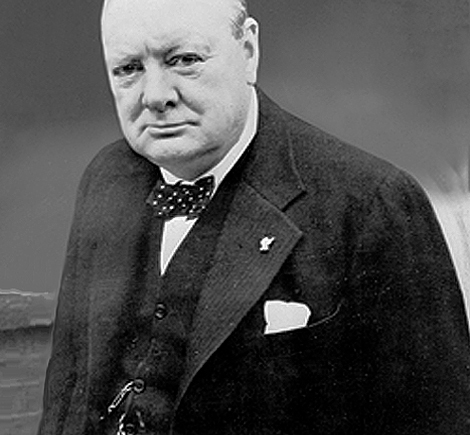
Churchill is seen as the British icon of endurance and strength through gloomy war. His drowning voice of “we shall fight on the beaches” is easily identifiable with World War II. And he was a complete drunk.
But what do common folks now-a-days know of this man? Do you know much about Dear ol’ Churchill? Let’s find out.
In December of 1910, while young Churchill was Home Secretary, he wrote:
“The unnatural and increasingly rapid growth of the Feeble-Minded and Insane classes, coupled as it is with a steady restriction among all the thrifty, energetic and superior stocks, constitutes a national and race danger which it is impossible to exaggerate. I am convinced that the multiplication of the Feeble-Minded, which is proceeding now at an artificial rate, unchecked by any of the old restraints of nature, and actually fostered by civilised conditions, is a terrible danger to the race.” Churchill was all-for forcing “feeble-minded” people to labour colonies. January 19, 1899, Churchill wrote in a letter to his cousin: “The improvement of the British breed is my aim of life.” [1]
Wait a minute, he was in favor of eugenics? This sounds really familiar to someone else in history, I just can’t remember his name. Anyway, moving on.
As a young MP, it was well-known he believed that “the Aryan stock is bound to triumph.” — Okay, wait! He sounds just like that guy with the funny mustache! Whoa!
When concentration camps were built in South Africa, for white Boers, he [Churchill] said they produced “the minimum of suffering”. The death toll was almost 28,000, and when at least 115,000 black Africans were likewise swept into British camps, where 14,000 died, he wrote only of his “irritation that Kaffirs should be allowed to fire on white men.”
As Colonial Secretary in the 1920s, he unleashed the notorious Black and Tan thugs on Ireland’s Catholic civilians, and when the Kurds rebelled against British rule, he said: “I am strongly in favour of using poisoned gas against uncivilised tribes… [It] would spread a lively terror.” [2]
And after Ghandi’s movement of peace was taking hold in the then British colony of India, Churchill was noted to have said:
“I hate Indians. They are a beastly people with a beastly religion.” Churchill’s gross demeanor towards others not of his skin did not cease while the Bengali famine occurred (which led to the death of nearly 3 million souls). He remarked the famine was not Britain’s fault, but it was “their” fault—because they “breed like rabbits.” He was talking about the Indians, of course. Amartya Sen, an economist who won the Nobel Prize in 1998, proved for a fact that the famine was due to the imperialist structure of the British Empire. [3]
In conclusion: make your own conclusion.
Sources:
[1] Winstonchurchill.org
[2] The Independent
[3] BBC
China announces $40 bn Silk Road fund
The BRICS Post | November 8, 2014
Chinese President Xi Jinping on Saturday announced China will contribute $40 billion to set up a Silk Road Fund to strengthen connectivity in the Asia-Pacific region.
Xi said the goal of the Fund is to “break the bottleneck in Asian connectivity by building a financing platform.”
The new Silk Road Fund will be used to provide investment and finance for infrastructure, industrial projects along the “Belt and Road”, Xi said, referring to China’s Silk Road Economic Belt and the 21st Century Maritime Silk Road initiatives.
He added that the fund will be “open” to investors from both within and outside Asia.
The Asian Development Bank has estimated that in the next decade Asian countries will need $8 trillion in infrastructure investments to maintain the current economic growth rate.
“The Silk Road boasts a 3-billion population and a market that is unparalleled both in scale and potential,” Xi said in September last year.
The Silk Road connected China and Europe from around 100 B.C.
The 4,000-mile road linked ancient Chinese, Indian, Babylonian, Arabic, Greek and Roman civilizations.
A new map unveiled by Xinhua shows the Chinese plans for the Silk Road run through Central China to the northern Xinjiang from where it travels through Central Asia entering Kazakhstan and onto Iraq, Iran, Syria and then Istanbul in Turkey from where it runs across Europe cutting across Germany, Netherlands and Italy.
The maritime Silk Road begins in China’s Fujian and ends at Venice, Italy.
In a landmark achievement, 21 Asian nations including China and India last month signed on a new infrastructure investment bank which would rival the World Bank.
One of the first projects of the new Bank is expected to be financing infrastructure projects along the “Silk Road Economic Belt” and the “Maritime Silk Road” re-establishment.
Meanwhile on Saturday in Beijing, the Chinese President stressed that efforts should be made to realize Asia’s connectivity by making Asian countries a priority.
“Asian countries are just like a cluster of bright lanterns. Only when we link them together, can we light up the night sky in our continent,” he said.
China will provide neighboring countries 20,000 training opportunities for connectivity professionals in the coming five years.
Experts say these new announcements will boost China’s global influence and enhance its soft power.
Apart from the AIIB, the BRICS new $100 billion Development Bank is also being headquartered in China.
“China has considerable experience in infrastructure planning and construction, and financing projects outside the country. As Finance Minister Lou Jiwei has said, China Development Bank’s commercial infrastructure loan is now far bigger than that of the World Bank and ADB combined. And surprisingly, this process started only 20 years ago,” write Asit Biswas and Cecilia Tortajada, China scholars at the Lee Kuan Yew School of Public Policy, Singapore.
TBP and Agencies
Massive new debt hides years of negative GDP growth in EU and USA
By Jon Hellevig | Oriental Review | September 29, 2014
Finland – In a groundbreaking study Awara Group reveals that the real GDP growth of Western countries has been in negative territory for years. Only by massively loading up debt have they been able to hide the true picture and delay the onset of an inevitable collapse of their respective economies. The study shows that the real GDP of those countries hides hefty losses after netting the debt figures, which gives the Real-GDP-net-of-debt.
The moral of the study is that GDP growth figures as such reveal very little about the underlying dynamics of an economy if one does not simultaneously attempt to analyze what part of the growth is credited to simply artificially fueling the economy with new loans.
The study has found that the Western countries have lost the capacity to grow their economies. All they have left is a capacity to pile up debts. By massively accumulating new debt, they are able to keep up a semblance of at least sluggish growth, or of hovering around the zero growth mark.
If this massive debt would go towards investments, then there would be nothing wrong with it. But, it is not. The debt is going towards financing the losses in the national economies and essentially it all is wasted on consumption that the countries in reality cannot afford. The Western countries act like a 19th century heir to aristocratic wealth, borrowing from year to year to keep up the former lifestyle, while the estate is relentlessly dwindling. Sooner or later the prodigal heir would be forced to face reality and sell the remaining property to stave off the creditors, downgrade his dwellings, and rein in spending. Inevitably, the European countries and the USA will have to curb their excessive consumption, too, but for the time being they are putting off the final reckoning with new debt rather the way a drunkard reaches for the morning after drink to put off sobering up. In the case of the EU and the USA, we are speaking about a debt binge that has been going on for a decade.
While the situation has been generally bad for the last decade or so, it took a dramatic turn for the worse, or should we say for the catastrophic, following the onset of the global financial crisis in 2008. The shocking figures depicting the virtual crippling of the Western economies from 2009 to 2013 are illustrated in Chart 1. It depicts the development of real-GDP-growth per country in years 2005 to 2013. The chart shows that during this period Russia has been able to deliver real non-debt fueled GDP growth, whereas the Western countries are running huge deficits. The accumulated growth of the Russian economy from 2005 to 2013 was 147% while the Western countries accumulated losses from 16.5% (Germany) to 58% (USA). In the case of Russia, the real-GDP-net-of-debt figure is also corrected to adjust for the calculation error caused by an erroneous GDP deflator that Russian Statistics Agency (Rosstat) has used. We have discussed the persistent problem of Russia’s GDP growth having been underestimated due to the use of a wrong GDP deflator in the study Awara Group Research on the Effects of Putin’s Tax Reforms 2000-2012 on State Tax Revenue and GDP

Chart 2 shows the real GDP growth net-of-debt after deducting the growth of public debt from the GDP figure. Net of debt we see the scale of the Western economies, for example the Spanish economy, which amounts to the staggering figure of minus 56.3%. This while the conventional official method of crediting GDP growth with growth of debt would give only minus 6.7%.

The analysis shows that by these measures Russian economic growth, unlike that of the Western countries, has been comparatively healthy and not debt-driven. Russia has in fact a resoundingly positive ratio by these measures, where GDP growth has exceeded growth of debt by a staggering 14 times (1400%). The figure is astonishing when compared with the Western countries that have been flooded with new debt.

Chart 3 shows how much the accumulation of debt in the Western countries exceeds the official GDP growth. The USA is leading the pack with an increase in the debt load in years 2004 to 2013 of USD 9.8 trillion (in the chart in euros, EUR 7 trillion). In those years, the growth of the USA public debt exceeded the GDP growth 9 times (900%), which is illustrated by Chart 4, comparing the proportion of growth of debt to that of growth of GDP.
The comparison of growth of debt to growth of GDP reveals the UK, as the country that has amassed the most amount of new debt relative to GDP growth, having a new-debt-to-GDP-growth ratio of 9 to 1; in other words UK has taken on 900% new debt relative to the GDP growth. But the picture is grim for all the Western countries surveyed, less so for Germany, while Russia’s debt increase amounts to only a fraction of the GDP growth.

The analysis shows that by these measures Russian economic growth, unlike that of the Western countries, has been comparatively healthy and not debt-driven. Russia has in fact a resoundingly positive ratio by these measures, where GDP growth has exceeded growth of debt by a staggering 14 times (1400%). The figure is astonishing when compared with the Western countries that have been flooded with new debt.
The above figures are adjusted taking into account public debt (general government debt), but the situation is even worse when we consider the effect of private debt on the GDP. New debt of corporations and households have at least doubled private debt of most of the Western countries since year 1996 (Chart 5).

Reviewing these figures, it becomes evident that in reality Western economies have not grown in the past decade, rather the countries have massively inflated their debt load. With these levels of debt reached this cannot continue for long. There is a real risk that the bluff will be called sooner rather than later dropping the Western economies to GDP levels that they can carry without debt leverage. But in that situation they will not be able to serve the accumulated debts leading to catastrophe scenarios.
We have not included Japan and China in the analysis due to the difficulties attributed to finding consistent data for all the input variables. For those countries we have come across problems of fractured data that do not capture all the relevant years; inconsistent data across the samples we looked at; and uncertainties about conversion of the input data into euros. (We are sure that major research houses could overcome such problems, having greater and more sophisticated resources than ours). This exclusion of Japan and China is regrettable as Japan is the country worst affected by the problem of debt-fueled GDP growth, having a public debt to GDP ratio of well above 200%, and would therefore have been very instructive for our purposes.
Japan has been essentially living on debt since the early 1990’s. However, some of the more irrational Western analysts want to take Japan as a prime example to follow, arguing that since Japan has been able to pile up debt for some 25 years now, all the Western countries would be able to do it as well for the foreseeable future. In this they fail to grasp that Japan earlier had the luxury of being the sole country living on such exorbitant levels of debt. Japan has enjoyed great support from the Western countries to be able to continue that practice, not least for political reasons. Another important consideration against the idea that Western countries could continue to accumulate debt is that they have, since the early 1990’s, rapidly lost their economic hegemony in terms of share of world trade and global GDP. I have written about this in a recent article entitled Why the West is Destined to Decline.
The West is fast shrinking in economic significance relative to the rest of the world. This is demonstrated by comparing the GDP of the Western powers as represented by the G7 countries (USA, Japan, Germany, France, UK, Italy and Canada) with the GDP of emerging powers. As recently as 1990, the combined GDP of the G7 was overwhelming in relation to that of today’s 7 emerging powers: China, India, Russia, Brazil, Indonesia, Mexico and South Korea (not necessarily constituting one political block). In 1990, the G7 countries had a combined GDP of USD 14.4 trillion and the emerging 7 had a GDP of USD 2.3, but by 2013 the tables had been turned, as the G7 had USD 32 trillion and the emerging 7 had USD 35 trillion. (Chart 6).

With the challenge of the ever increasing share of world economy belonging to the emerging countries, it becomes clear that the Western countries will not be able to profit sufficiently from world trade to service their debt loads.
For the time being the Western countries benefit from the privilege of having currencies that the rest of the world still largely trusts as reserve currencies. In essence, the USD and the euro enjoy a kind of monopoly status. This is what allows Western countries to gain access to cheap debt and fuel their economies with central bank financing (quantitative easing or “printing of money”). But the risk is that, with the deteriorating debt situation and diminishing share of the global economy, they will forfeit this privilege, perhaps even in the near future. What would follow from this is sharply more expensive financing and inflation, with hyperinflation as the eventual outcome. In this scenario – which I consider inevitable over the next 5 to 10 years – the economies of Western countries would essentially collapse.
The problem is that there is no way of averting this scenario, because the Western powers have lost their competitive advantages as economic powers. Eventually, their economies must shrink to match their resource and population bases. (I have written about this in the article referred to above). But it seems that the ruling Western elites have no intention of facing up to these realities. They will try to keep up a semblance of prosperity with ever new debt, as long as they can. The political parties of the West have been essentially converted into voting machines with one singular concern – that of winning the next elections. To do that they will continue to engage in what amounts to bribing of the electorate – creating new debt that fuels the national economy.
But there is no way to turn back this historical tide. Just as the aristocrat of the old regime eventually squandered his legacy, so will the Western powers. This inevitability of the process is what makes it really scary, because I am afraid that the Western elite might be tempted to bail itself out from this doomsday scenario with a war of epic proportions. We are now truly approaching the Armageddon between the West, with its desperate economic circumstances, and the emerging world powers.
Jon Hellevig is a business consultant and economic and political observer. He is the co-editor and co-author of Putin’s New Russia and several books on philosophy and political and social sciences.
BRICS create new Development Bank as well as a $100 billion foreign currency reserves pool
By Helmo Preuss | The BRICS Post | July 15, 2014
Fortaleza, Brazil – After some tough rounds of negotiations, BRICS nations (Brazil, Russia, India, China and South Africa) have created not only a new $100 billion Development Bank, but also a $100 billion foreign currency reserves pool.
The announcement was made after a plenary meet of the five BRICS heads of state in Fortaleza on Tuesday.
Shanghai finally won the bid to host the Bank while India will get the presidency of the Bank for the first six years. The Bank will have a rotating chair. The Bank will also have a regional office in Johannesburg, South Africa. All the five countries will have equal shareholding in the BRICS Bank.
The five Finance Ministers will constitute the Bank’s board which will be chaired by Brazil.
The Bank will initially be involved in infrastructure projects in the BRICS nations.
The authorized, dedicated and paid in capital will amount to $100 billion, $50 billion and $10 billion respectively.
The idea of the BRICS Bank was proposed by India during the 2012 Summit in New Delhi.
BRICS have long alleged that the IMF and World Bank impose belt-tightening policies in exchange for loans while giving them little say in deciding terms. Total trade between the countries is $6.14 trillion, or nearly 17 percent of the world’s total. The last decade saw the BRICS combined GDP grow more than 300 per cent, while that of the developed word grew 60 per cent.
Apart from the new development Bank, the group of five leading emerging economies also created a Contingency Reserve Arrangement on Tuesday.
BRICS central banks will keep their reserves in gold and foreign currencies.
China will fund $41 billion, Brazil, India and Russia $18 billion each and South Africa with $5 billion. The funds will be provided according to a multiple. China’s multiple is 0.5, which means that if needed, the country will get half of $41 billion. The multiple is 2 for South Africa and 1 for the rest.
BRICS Finance ministers or central banks’ governors will form a governing body to manage the CRA while it will be presided over by the BRICS President.
The BRICS CRA will not be open to outsiders.
Meanwhile, at the Summit in Fortaleza, Russian President Vladimir Putin said BRICS must form an energy alliance.
“We propose the establishment of the Energy Association of BRICS. Under this ‘umbrella’, a Fuel Reserve Bank and BRICS Energy Policy Institute could be set up,” Putin said on Tuesday.
Capitalists, Technocrats and Fanatics: The Ascent of a New Power Bloc
By James Petras :: 05.21.2014
Introduction
The sweeping electoral victory of the Bharatiya Janata Party (BJP) in India is the latest expression of the world-wide advance of a new power bloc which promises to impose a New World Order harnessing ethno-religious fanaticism and narrowly trained technocrats to capitalist absolutism.
The far-right is no longer at the margins of western political discourse. It is center-stage. It is no longer dependent on contributions by local militants; it receives financing from the biggest global corporations. It is no longer dismissed by the mass media. It receives feature coverage, highlighting its ‘dynamic and transformative’ leadership.
Today capitalists everywhere confront great uncertainty, as markets crash and endemic corruption at the highest levels erode competitive markets. Throughout the world, large majorities of the labor force question, challenge and resist the massive transfers of public wealth to an ever reduced oligarchy. Electoral politics no longer define the context for political opposition.
Capitalism, neither in theory nor practice, advances through reason and prosperity. It relies on executive fiats, media manipulation and arbitrary police state intrusions. It increasingly relies on death squads dubbed “Special Forces” and a ‘reserve army’ of para-military fanatics.
The new power bloc is the merger of big business, the wealthy professional classes, upwardly mobile, elite trained technocrats and cadres of ethno-religious fanatics who mobilize the masses.
Capitalism and imperialism advances by uprooting millions, destroying local communities and economies, undermining local trade and production, exploiting labor and repressing social solidarity. Everywhere it erodes community and class solidarity.
Ethno-Religious Fanatics and Elite Technocrats
Today capitalism depends on two seemingly disparate forces. The irrational appeal of ethno-religious supremacists and narrowly trained elite technocrats to advance the rule of capital. Ethno-religious fanatics seek to promote bonds between the corporate-warlord elite and the masses, by appealing to their ‘common’ religious ethnic identities.
The technocrats serve the elite by developing the information systems, formulating the images and messages deceiving and manipulating the masses and designing their economic programs.
The political leaders meet with the corporate elite and warlords to set the political-economic agenda, deciding when to rely on the technocrats and when to moderate or unleash the ethno-religious fanatics.
Imperialism operates via the marriage of science and ethno-religious fanaticism- and both are harnessed to capitalist domination and exploitation.
India: Billionaires, Hindu Fascists and IT “Savants”
The election of Narendra Modi, leader of the BJP and long-time member of the Hindu fascist Rashtriya Swayamsevak Sangh (RSS) para-military organization was based on three essential components:
(1) Multi-billion rupee funding from corporate India at home and abroad.
(2) Thousands of upwardly mobile IT technocrats mounting a massive propaganda campaign.
(3) Hundreds of thousands of RSS activists spreading the “Hindutva” racist doctrine among millions of villagers.
The Modi regime promises his capitalist backers that he will “open India”– namely end the land reserves of the tribes, convert farmland to industrial parks, deregulate labor and environmental controls.
To the Brahmin elite he promises to end compensatory quotas for lower castes, the untouchables, the minorities and Muslims. For the Hindu fascists he promises more temples. For foreign capitalists he promises entry into all formerly protected economic sectors. For the US, Modi promises closer working relations against China, Russia and Iran… The BJP’s ethno-religious Hindu fanaticism resonates with Israel’s notion of a “pure”Jewish state. Modi and Netanyahu have longstanding ties and promise close working relations based on similar ethno-racist doctrines.
Turkey: The Transition to Islamic-Capitalist Authoritarianism
Turkey under the rule of Erdogan’s Justice and Development Party has moved decisively toward one-man rule: linking Islam to big capital and police state repression. Erdogan’s ‘triple alliance’ is intent on unleashing mega-capitalist projects, based on the privatization of public spaces and the dispossession of popular neighborhoods. He opened the door to unregulated privatization of mines, communications, banks – leading to exponential growth of profits and the decline of employment security and a rising toll of worker deaths. Erdogan has shed the mask of ‘moderate Islam’ and embraced the jihadist mercenaries invading Syria and legislation expanding religious prerogatives in secular life. Erdogan has launched massive purges of journalists, public officials, civil servants, judges and military officers. He has replaced them with ‘party loyalists’; Erdogan fanatics!
Erdogan has recruited a small army of technocrats who design his mega projects and provide the political infrastructure and programs for his electoral campaigns. Technocrats provide a development agenda that accommodates the foreign and domestic crony corporate elite.
The Anatolian Islamists, small and medium provincial business elite, form the mass base – mobilizing voters, by appealing to chauvinist and ethnocentric beliefs. Erdogan’s repressive, Islamist, capitalist regime’s embrace of the “free market” has been sharply challenged especially in light of the worst mining massacre in Turkish history: the killing of over 300 miners due to corporate negligence and regime complicity. Class polarization threatens the advance of Turkish fascism.
Israel and the “Jewish State”: Billionaires , Ethno-Religious Fanatics and Technocrats
Israel, according to its influential promoters in the US, is a ‘model democracy’. The public pronouncements and the actions of its leaders thoroughly refute that notion. The driving force of Israeli politics is the idea of dispossessing and expelling all Palestinians and converting Israel into a ‘pure’ Jewish state. For decades Israel, funded and colonized by the diaspora, have violently seized Palestinian lands, dispossessed millions and are in the process of Judaizing what remains of the remnant in the “Occupied Territories”.
The Israeli economy is dominated by billionaires. Its “society” is permeated by a highly militarized state. Its highly educated technocrats serve the military-industrial and ethno-religious elite. Big business shares power with both.
High tech Israeli’s apply their knowledge to furthering the high growth, military industrial complex. Medical specialists participate in testing the endurance of Palestinian prisoners undergoing torture (“interrogation”). Highly trained psychologists engage in psych-warfare to gain collaborators among vulnerable Palestinian families. Economists and political scientists, with advanced degrees from prestigious US and British universities (and ‘dual citizenship’) formulate policies furthering the land grabs of neo-fascist settlers. Israel’s best known novelist, Amos Oz condemned the neo-fascist settlers who defecate on the embers of burnt-out mosques.
Billionaire real estate moguls bid up house prices and rents “forcing” many “progressive” Israelies, who occasionally protest, to take the easy road of moving into apartments built on land illegally and violently seized from dispossessed Palestinians. ‘Progressives’ join neo-fascist vigilantes in common colonial settlements. Prestigious urbanologists further the goals of crude ethno-racist political leaders by designing new housing in Occupied Lands. Prominent social scientists trade on their US education to promote Mid-East wars designed by vulgar warlords. Building the Euro American Empire: Riff-Raff of the World Unite!
Empire building is a dirty business. And while the political leaders directing it, feign respectability and are adept at rolling out the moral platitudes and high purposes, the ‘combatants’ they employ are a most unsavory lot of armed thugs, journalistic verbal assassins and highly respected international jurists who prey on victims and exonerate imperial criminals.
In recent years Euro-American warlords have employed “the scum of the slaughterhouse” to destroy political adversaries in Libya, Syria and the Ukraine.
In Libya lacking any semblance of a respectable middle-class democratic proxy, the Euro-American empire builders armed and financed murderous tribal bands, notorious jihadist terrorists, contrabandist groups, arms and drug smugglers. The Euro-Americans counted on a pocketful of educated stooges holed up in London to subdue the thugs, privatize Libya’s oil fields and convert the country into a recruiting ground and launch pad for exporting armed mercenaries for other imperial missions.
The Libyan riff-raff were not satisfied with a paycheck and facile dismissal: they murdered their US paymaster, chased the technocrats back to Europe and set-up rival fiefdoms. Gadhafi was murdered, but so went Libya as a modern viable state. The arranged marriage of Euro-American empire builders, western educated technocrats and the armed riff-raff was never consummated. In the end the entire imperial venture ended up as a petty squabble in the American Congress over who was responsible for the murder of the US Ambassador in Benghazi.
The Euro-American-Saudi proxy war against Syria follows the Libyan script. Thousands of Islamic fundamentalists are financed, armed, trained and transported from bases in Turkey, Jordan, Saudi Arabia, Iraq and Libya to violently overthrow the Bashar Assad government in Syria. The world’s most retrograde fundamentalists travel to the Euro-American training bases in Jordan and Turkey and then proceed to invade Syria, seizing towns, executing thousands of alleged ‘regime loyalists’ and planting car bombs in densely populated city centers.
The fundamentalist influx soon overwhelmed the London based liberals and their armed groups.
The jihadist terrorists fragmented into warring groups fighting over the Syrian oil fields. Hundreds were killed and thousands fled to Government controlled regions. Euro-US strategists, having lost their original liberal mercenaries, turned toward one or another of the fundamentalist groups. No longer in control of the ‘politics’ of the terrorists, Euro-US strategists sought to inflect the maximum destruction on Syrian society. Rejecting a negotiated settlement, the Euro-US strategists turned their backs on the internal political opposition challenging Assad via presidential elections.
In the Ukraine, the Euro-Americans backed a junta of servile neo-liberal technocrats, oligarchical kleptocrats and neo-Nazis, dubbed Svoboda and the Right Sector. The latter were the “shock troops” to overthrow the elected government, massacre the federalist democrats in Odessa and the eastern Ukraine, and back the junta appointed oligarchs serving as “governors”.
The entire western mass media white-washed the savage assaults carried out by the neo-Nazis in propping up the Kiev junta. The powerful presence of the neo-fascists in key ministries, their strategic role as front line fighters attacking eastern cities controlled by pro-democracy militants, establishes them as central actors in converting the Ukraine into a military outpost of NATO.
Euro-America Empire Building and the Role of Riff-Raff
Everywhere the Euro-American imperialists choose to expand – they rely on the ‘scum of the earth’: tribal gangs in Libya, fundamentalist terrorists in Syria, neo-Nazis in the Ukraine.
Is it by choice or necessity? Clearly few consequential democrats would lend themselves to the predatory and destructive assaults on existing regimes which Euro-US strategists design. In the course of imperial wars, the local producers, workers, ordinary citizens would “self-destroy”, whatever the outcome. Hence the empire builders look toward ‘marginal groups’, those with no stake in society or economy. Those alienated from any primary or secondary groups. Footloose fundamentalists fit that bill – provided they are paid, armed and allowed to carry their own ideological baggage. Neo-Nazis hostile to democracy have no qualms about serving empire builders who share their ideological hostility to democrats, socialists, federalists and culturally ‘diverse’ societies and states. So they are targeted for recruitment by the empire builders.
The riff-raff consider themselves ‘strategic allies’ of the Euro-American empire builders. The latter, however, have no strategic allies – only strategic interests. Their tactical alliances with the riff-raff endure until they secure control over the state and eliminate their adversaries. Then the imperialists seek to demote, co-opt, marginalize or eliminate their ‘inconvenient’ riff-raff allies. The falling out comes about when the fundamentalists and neo-Nazis seek to restrict capital, especially foreign capital and impose restrictions on imperial control over resources and territory. At first the empire builders seek ‘opportunists’ among the riff-raff, those willing to sacrifice their ‘ideals’ for money and office. Those who refuse are relegated to secondary positions distant from strategic decision-making or to remote outposts. Those who resist are assassinated or jailed. The disposal of the riff-raff serves the empire on two counts. It provides the client regime with a fig leaf of respectability and disarms western critics targeting the extremist component of the junta.
The riff-raff, however, with arms, fighting experience and financing, in the course of struggle, gains confidence in its own power. They do not easily submit to Euro-US strategies. They also have ‘strategic plans’ of their own, in which they seek political power to further their ideological agenda and enrich their followers.
The riff-raff, want to ‘transition’ from shock troops of empire into rulers in their own right. Hence the assaults on the US embassy in Libya, the assassination of Euro-American proxies in Syria, Right Sector riots against the Kiev junta.
Conclusion
A new power bloc is emerging on a global scale. It is already flexing its muscles. It has come to power in India, Turkey, Ukraine and Israel. It brings together big business, technocrats and ethno-religious fascists. They promote unrestrained capitalist expansion in association with Euro-American imperialism.
Scientists, economists, and IT specialists design the programs and plans to realize the profits of local and foreign capitalists. The ethno-fascists mobilize the ‘masses’ to attack minorities and class organizations threatening high rates of returns.
The Euro-Americans contribute to this ‘new power bloc’ by promoting their own ‘troika’ made up of ‘neo-liberal clients’, fundamentalists and neo-Nazis to overthrow nationalist adversaries. The advance of imperialism and capitalism in the 21st century is based on the harnessing of the most advanced technology and up-to-date media outlets with the most retrograde political and social leaders and ideologies.
Featured Video
Guy Mettan: Russophobia Made War Inevitable
or go to
Aletho News Archives – Video-Images
A Look Back At Israel’s Role In Selling The Iraq War
The Dissident | December 28, 2025
… As Netanyahu meets with Trump to push new lies to justify a new war in Iran, it is well worth remembering Israel’s previous role in pushing lies and pushing for the war in Iraq. – Read full article
Blog Roll
Recent Comments
Bill Francis on NSW Premier Admits New “Securi… Richard Ong on Israeli forces arrest writer a… Bill Francis on How reporting facts can now la… Gemma on Israel’s diamond industr… Bill Francis on Victoria Moves to Force Online… papasha408 on The Empire of Lies: How the BB… loongtip on US Weighs Port Restrictions on… Bill Francis on Chris Minns Defends NSW “Hate… Sheree Sheree on I was canceled by three newspa… Richard Ong on Czech–Slovak alignment signals… John Edward Kendrick on Colonel Jacques Baud & Nat… eddieb on Villains of Judea: Ronald Laud…


 Aletho News
- Hamas says disarmament linked to Palestinian State, end of occupation
- Guy Mettan: Russophobia Made War Inevitable
- Somali president rejects displacement of Palestinians from Gaza
- Arms, silence, and alignment: The moral and geopolitical cost of India-Israel military ties
- WHO Instructs Governments to Track Online Anti-Vaccine Messaging in Real Time with AI: Journal ‘Vaccines’
- Ireland’s Simon Harris to Push EU-Wide Ban on Social Media Anonymity
- Drone Attack on Putin’s Residence Planned by Forces Trying to Torpedo Ukraine Peace Push: Expert
- Ukraine launched 91 kamikaze drones at Putin’s state residence – Lavrov
- Ukraine Takes Part in NATO War Games, Further Integrating Into Collective Defense Architecture
- Hungary vows to defy immigrant scheme
- If Americans Knew
- Netanyahu is coming to town, likely with war on his mind – Not a ceasefire Day 80
- Gaza hit with another winter storm – Not a ceasefire Day 79
- When will Israel’s crimes (and US complicity) end? – Not a ceasefire Day 78
- Christmas in the grip of genocide, occupation – Not a Ceasefire Day 77
- Palestinian Christians offer “Kairos,” an alternative Christmas Day sermon – Not a Ceasefire Day 76
- The Faces of AIPAC: the largest pro-Israel lobbying org in the US
- Gazan Christians mark 3rd Christmas under genocide – Not a Ceasefire Day 75
- Israeli scams children with cancer out of millions fundraised for their treatment, BBC finds
- Casey Kennedy Fired from AG Scientific Amid Zionist Troll Campaign Over Track AIPAC Work
- The Hasmoneans: The Jewish Dynasty That Gave Us Hanukkah Is a Symbol of Murder, Not Heroism and Hope
- No Tricks Zone
- Meteorologist Dr. Ryan Maue Warns “Germany Won’t Make It” If Winter Turns Severe
- Merry Christmas Everybody!
- Two More New Studies Show The Southern Ocean And Antarctica Were Warmer In The 1970s
- Der Spiegel Caught Making Up Reports About Conservative America (Again)
- New Study: 8000 Years Ago Relative Sea Level Was 30 Meters Higher Than Today Across East Antarctica
- The Wind Energy Paradox: “Why More Wind Turbines Don’t Always Mean More Power”
- New Study Reopens Questions About Our Ability To Meaningfully Assess Global Mean Temperature
- Dialing Back The Panic: German Physics Prof Sees No Evidence Of Climate Tipping Points!
- Astrophysicist Dr. Willie Soon Challenges The Climate Consensus … It’s The Sun, Not CO2
- Regional Cooling Since The 1980s Has Driven Glacier Advance In The Karakoram Mountains
 Aletho News
