‘Unacceptable and shocking’: France demands explanation for NSA spying
RT |October 21, 2013
France has called for an explanation for the “unacceptable” and “shocking” reports of NSA spying on French citizens. Leaked documents revealed the spy agency records millions of phone calls and monitors politicians and high-profile business people.
The US Ambassador to France Charles Rivkin was summoned by the French Foreign Ministry to account for the espionage allegations on Monday morning.
“I have immediately summoned the US ambassador and he will be received this morning at the Quai d’Orsay [the French Foreign Ministry],” French Foreign Minister Laurent Fabius told press. He added that “we must quickly assure that these practices aren’t repeated.”
In addition, citing the report on French publication Le Monde, Interior Minister Manuel Valls spoke out on national television against US spy practices.
“The revelations in Le Monde are shocking and demand adequate explanations from the American authorities in the coming hours,” said Valls on television channel Europe 1.
He went on to say that it is totally unacceptable for an allied country to spy on France.
Ambassador Rivkin refrained from commenting on the spy allegations on Monday morning and told Reuters that French-US ties are the “best they have been for a generation.”
Le Monde revealed in a report based on the security leaks of former CIA worker Edward Snowden that the NSA recorded 70.3 million phone calls between December 10, 2012, and January 8, 2013.
The NSA reportedly carries out its espionage in France using a program called ‘US-985D’ which is able to listen in on specific telephone calls and pick up on text messages according to key words used.
Moreover, Le Monde also wrote that it had reason to believe that the spying was not just limited to citizens suspected of being involved in terrorism. According to the data released by Snowden the NSA also eavesdropped on politicians and prominent business figures.
The newspaper did not give any indications as to the identity of the high-profile people.
France is not the only EU nation to be targeted by NSA surveillance. Germany took issue with the US government after it was revealed the NSA was tapping phone lines and recording electronic data in the country.
The EU will take steps to curtail US data mining on Monday in a vote to change data protection rules. The European Parliament’s Committee on Civil Liberties is expected to decide on the issue that would authorize fines for violation of EU data protection.
‘Investment benefits’
The US maintains that its spying activities are in the interests of national security and protect against terrorism. However, Snowden leaks released by Guardian reporter Glenn Greenwald showed the NSA had monitored Brazilian state-owned oil giant Petrobras and infiltrated the electronic communications of the Brazilian and Mexican presidents.
Mexico has also demanded an explanation for reports released by Der Spiegel on extensive spying on Mexican top officials and politicians.
Der Spiegal revealed that former President Felipe Calderon had also been a target for NSA espionage. Citing a classified internal report, it said the US monitors “diplomatic, economic and leadership communications which continue to provide insight into Mexico’s political system and internal stability.”
Oakland dedicating anti-terrorism funding to surveillance supercenter
RT | October 14, 2013
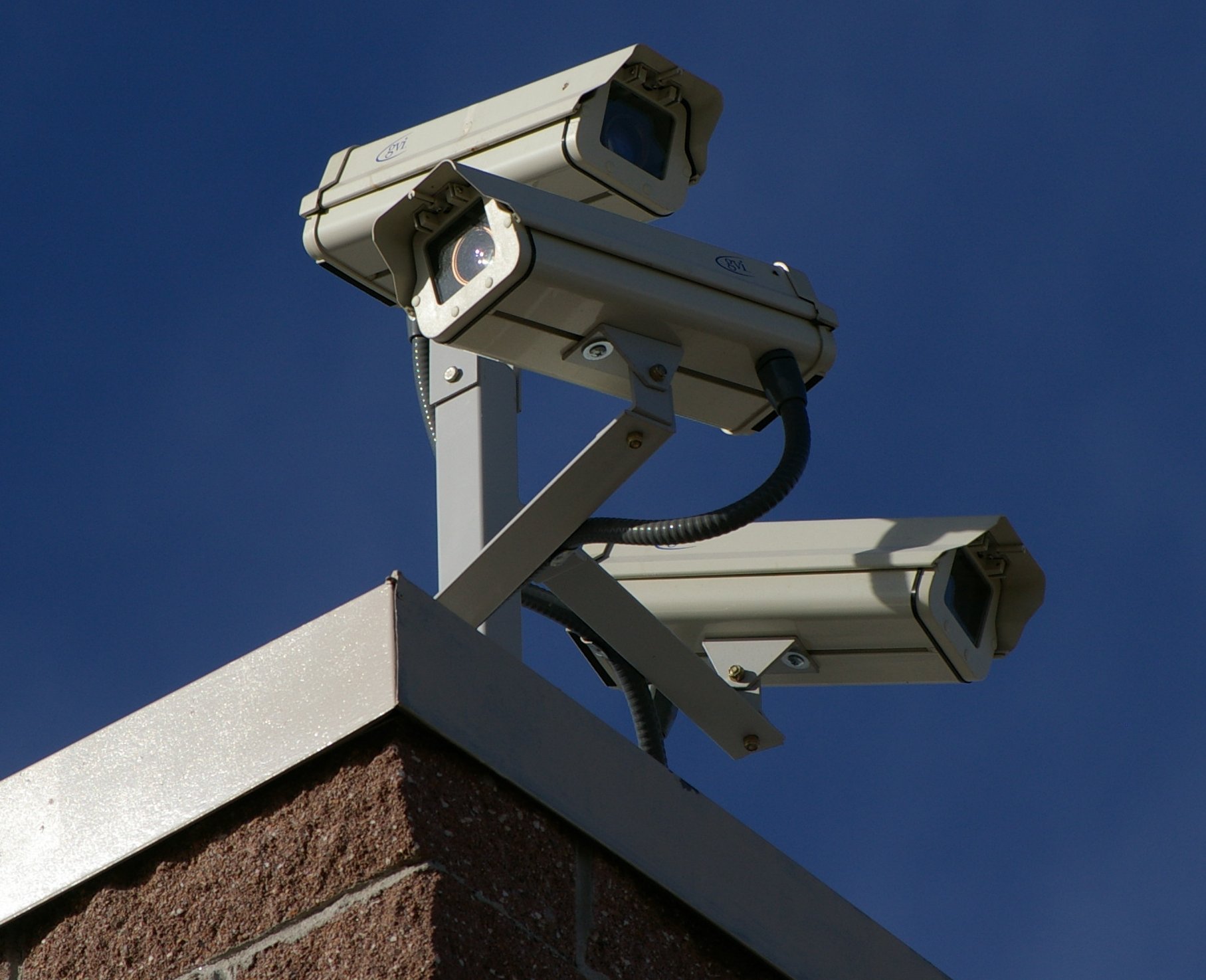 Lawmakers in Oakland intend to spend millions of dollars awarded to the California city in a federal grant to a police dragnet that promises to examine surveillance footage, riling critics who assert the intention of the grant was to stop terrorism.
When the new program debuts in approximately one year police will be able to track drivers as they travel through tolls, scan license plates with the roughly 3,000 surveillance cameras placed throughout the city, and monitor social media platforms to learn about crimes before they occur.
The Oakland program, officially referred to as the Domain Awareness Center, according to the New York Times, comes at a time when police departments across the US are using federal money to launch similar surveillance efforts modeled after the New York Police Department. The NYPD, which operates within New York City as well as far outside, has used federal grants to build a massive surveillance network capable of linking cameras and license plate readers to criminal and suspected terrorist databases.
The Domain Awareness Center also plans to plant gunshot detection sensors through Oakland, which is consistently ranked among the most dangerous cities in the US. Forbes magazine reported that violent crime affects 1,683 of every 100,000 residents in the city, making it the third most dangerous city in America with a population between 100,000 and 499,000 in 2013.
The Oakland City Council voted unanimously on July 31 to adopt the plan to build the surveillance center, which officials have said will be staffed 24 hours a day. Lawmakers voted at the same meeting to ban hammers and spray paint cans at protests in fear that the items will be used as weapons. Waiting outside, protesters admonished council members with chants of “Shame! Shame! Shame!”
“The Domain Awareness Center is the guard tower which will watch over every person in the city of Oakland,” shouted demonstrator Mark Raymond, as quoted by the San Francisco Chronicle. “This program is an attempt to criminalize and imprison all people who live and pass through Oakland.”
All told, the surveillance center’s costs are expected to total $10.2 million in federal grants, and while legislators said they were cognizant of residents’ security while drafting the bill some representatives were shouted down.
“We have tried our best to find the sweet spot where are going to take advantage of the tools that we have at hand to make our city safe… We have done everything we can to safeguard privacy,” said councilwoman Libby Schaaf before she was cut off by jeers and one protester who suggested she “go home to your mansion and kill yourself.”
Schaaf did admit that, while police have traditionally needed just a small evidence sample to arrest a suspect, the new center will have the capability to “paint a pretty detailed picture of someone’s personal life, someone who may be innocent.”
Oakland was awarded a federal grant to ramp up security near the Port of Oakland, a thriving cargo center that is one of the busiest in the US. The 19-mile waterfront is the fifth-busiest container port in the US, with 1,800 ships arriving every year, according to the San Francisco Chronicle. Over $14 billion in goods were exported from the bustling hub in 2012.
To protect the port, and watch civilians throughout the region, Oakland signed a contract with Science Applications International Corporation (SAIC) to build the Domain Awareness Center. The company, which earns most of its $12 million in annual revenue from military contracts, also worked with the NYPD but later paid $500 million to avoid a federal prosecution for receiving illegal kickbacks.
The Times reported that this project is not the first time Oakland has sought to develop such technology. A city audit viewed by the paper revealed that lawmakers spent nearly $2 million in 2012 alone on police tools that did not work or could not be used for a variety of reasons.
Linda Lye, an attorney with the American Civil Liberties Union, said this project might work as intended, but that mere intention already creates a scary problem.
“What they did is approve a vast surveillance center without understanding the implications,” she said earlier this year. “The privacy policies would be drafted only after the center is built. At that point, what opportunity will there be for to determine if the safeguards are sufficient?”
Related article
Luxembourg NSA dragnet hauls in Skype for investigation – report
RT | October 12, 2013
Once heralded as a communication tool free from eavesdropping, Skype is now reportedly under scrutiny for secretly and voluntarily handing over personal data on users to government agencies.
The Microsoft-owned instant-messaging site, used by some 600 million people worldwide, is being probed by Luxembourg’s data protection commissioner over concerns about its secret cooperation with the US National Security Agency’s Prism spying program, according to a report in the Guardian, the UK newspaper that first broke the story on NSA whistleblower Edward Snowden.
Skype, believed to be the first Internet company among many to be brought within the NSA program, could potentially face criminal and administrative charges, as well as hefty fines if it is found to be in violation of Luxembourg’s data protection laws.
If found guilty, Skype [could] be banned from passing along user data to the US spy agency, the newspaper reported.
The Luxembourg commissioner initiated an investigation into Skype’s privacy policies following revelations in June about its ties to the NSA, the Guardian said. No additional comments were immediately available.
Microsoft’s purchase of Skype for $8.5 billion in 2011 “tripled some types of data flow to the NSA,” the Guardian said, citing secret documents in its possession.
But even before the Microsoft buyout, Skype had initiated its own secret program, dubbed Project Chess, which sought ways of making customer communications “readily available to intelligence agencies and law enforcement officials,” The New York Times reported.
According to the NSA files shown by Snowden to the Guardian, Skype was served with a directive to comply with an NSA surveillance request signed by US Attorney General Eric Holder in February 2011. Several days later, the NSA had successfully monitored its first Skype transmission.
Skype, founded in Estonia in 2003 and now headquartered in Luxembourg, is facing a public backlash in the wake of the Prism disclosures.
“The only people who lose are users,” Eric King, head of research at human rights group Privacy International, said in comments to the Guardian. “Skype promoted itself as a fantastic tool for secure communications around the world, but quickly caved to government pressure and can no longer be trusted to protect user privacy.”
Canadian spy agency ‘dissected’ Brazilian Energy Ministry
RT | October 7, 2013
Canada, as well as the US, infiltrated and spied on the Brazilian Energy Ministry, a new leak by Edward Snowden has revealed. The leaked documents show how the data gleaned through espionage was shared with international spy network the ‘Five Eyes.’
Newly-released documents handed over to Guardian journalist Glenn Greenwald by former CIA employee Edward Snowden describe in detail how Canadian intelligence infiltrated Brazil’s Energy and Mines Ministry.
“I was overwhelmed by the power of the tools used. The Ministry of Energy and Mines was totally dissected,” security expert Paulo Pagliusi told Brazilian program Fantastico, which first reported on the leak.
The program showed documents from a meeting of the ‘Five Eyes’ spy network, comprising the US, UK, Canada, New Zealand and Australia, in June of last year. In a presentation the Communications Security Establishment Canada (CSRC) – the Canadian version of the NSA – outlined how they used a program called Olympia to break through the Brazilian ministry’s encryption.
The information gleaned from the ministry was then shared with all of the members of the ‘Five Eyes.’
“They [Five Eyes] are sharing all the information, handing over documents to let other countries know exactly what they are doing,” said Glen Greenwald.
As a result of the infiltration of the ministry over an unspecified period, the CSCE developed a detailed map of the institution’s communications. As well as monitoring email and electronic communications, the CSCE also eavesdropped on telephone conversations. Able to identify mobile numbers, SIM card registrations and the make of a phone, Olympia even snooped on former Brazilian ambassador to Canada Paulo Cordeiro.
Canada has so far refused to comment on the reports of its spy program. Brazil’s Minister of Mines and Energy Edison Lobao told Fantastico that the reports were “serious” and should be condemned.
Canada is one of the world’s leading energy producers and has significant economic interests in Brazil.
“Canada has interests in Brazil, especially in the mining sector. Does this spying serve the commercial interests of select groups? I cannot say,” observed Lobao.
‘No economic espionage’
Previously, Brazilian newspaper Globo News reported that the NSA was monitoring Brazil’s state oil giant Petrobras. Washington reacted to the allegations, stating that the US “does not engage in economic espionage.” The Obama administration has said on a number of occasions that US covert surveillance is in the interests of protecting US national security.
Brazil’s President Dilma Rousseff has condemned the reports of the NSA’s surveillance of Brazil and demanded the US account for its actions.
As a consequence, the Brazilian head of state postponed an official visit to Washington in October. Rousseff has also taken measures to tighten Brazilian internet security.
“I have sent an internet draft bill to Congress, an initiative that will protect the privacy of Brazilians,” Rousseff wrote on Twitter on Sunday. The government is expected to vote on the bill in the coming weeks.
Back in September, Rousseff slammed the US for “economic espionage,” dismissing US claims the NSA spying is a preventative measure to ensure national security. Addressing the UN General Assembly, President Rousseff stated that state-run Petrobras is “no threat to the security of any country. Rather, it represents one of the greatest assets of the world’s oil and the heritage of the Brazilian people.”
Related article
NSA masqueraded as Google to spy on web users – report

RT | September 13, 2013
The NSA used ‘man in the middle’ hack attacks to impersonate Google and fool web users, leaks have revealed. The technique circumvents encryption by redirecting users to a copycat site which relays all the data entered to NSA data banks.
Brazilian television network Globo News released a report based on classified data divulged by former CIA worker Edward Snowden on Sunday. The report itself blew the whistle on US government spying on Brazilian oil giant Petrobras, but hidden in amongst the data was information the NSA had impersonated Google to get its hands on user data.
Globo TV showed slides from a 2012 NSA presentation explaining how the organization intercepts data and re-routes it to NSA central. One of the convert techniques the NSA uses to do this is a ‘man in the middle’ (MITM) hack attack.
This particular method of intercepting internet communications is quite common among expert hackers as it avoids having to break through encryption. Essentially, NSA operatives log into a router used by an internet service provider and divert ‘target traffic’ to a copycat MITM site, whereupon all the data entered is relayed to the NSA. The data released by Edward Snowden and reported on by Globo News suggests the NSA carried out these attacks disguised as Google.
When the news broke about the NSA gathering information through internet browsers, tech giants such as Google and Yahoo denied complicity, maintaining they only handover data if a formal request is issued by the government.
“As for recent reports that the US government has found ways to circumvent our security systems, we have no evidence of any such thing ever occurring. We provide our user data to governments only in accordance with the law,” said Google spokesperson Jay Nancarrow to news site Mother Jones.
Google, along with Microsoft, Facebook and Yahoo, has filed a lawsuit against the Foreign Intelligence Surveillance Court (FISA) to allow them to make public all the data requests made by the NSA.
“Given the important public policy issues at stake, we have also asked the court to hold its hearing in open rather than behind closed doors. It’s time for more transparency,” Google’s director of law enforcement and information security, Richard Salgado, and the director of public policy and government affairs, Pablo Chavez, wrote in a blog post on Monday.
The tech giants implicated in NSA’s global spying program have denied criticism that they could have done more to resist NSA spying. Marissa Mayer, CEO of Yahoo, claimed that speaking out about the NSA’s activities would have amounted to ‘treason’ at a press conference in San Francisco on Wednesday.
In Yahoo’s defense, she argued that the company had been very skeptical of the NSA’s requests to disclose user data and had resisted whenever possible. Mayer concluded that it was more realistic to work within the system,” rather than fight against it.
Cellphone tracking cases highlight privacy concerns in digital age
Rt | August 20, 2013
In recent weeks, two cert petitions were filed seeking review of whether the Fourth Amendment covers police searches of cellphone records upon arrest.
From mobile phone and GPS tracking to license plate reading and domestic surveillance drones — not to mention recent revelations of widespread abuse of surveillance capabilities by the National Security Agency — these cases and many others highlight major questions that remain unanswered regarding how privacy rights of Americans can co-exist with the use of rapidly evolving technologies.
State and federal law enforcement agencies have wasted no time seizing on gaps and omissions in established legal precedent to justify vast, routine surveillance of the American public which tests Fourth Amendment rights.
On July 30, a petition was filed in Riley v. California challenging a previous ruling in a California appellate court that affirmed the petitioner’s convictions, which stemmed in part from a questionable search of his smartphone in 2009 following a traffic stop for expired license plates. And late last week, the US Department of Justice filed a petition in United States v. Wurie asking for review of a First Circuit Court of Appeals ruling that police needed a warrant to access a suspect’s phone records. Regarding Wurie, the government contends a cell phone is no different from any other item on a suspect at the time of arrest. The search pertaining to Wurie occurred in 2007.
On the surface, the two cases have much in common. But in Riley, the phone in question is a smartphone – a Samsung Instinct M800. In Wurie, the cellphone was a Verizon LG flip-phone incapable of maintaining the breadth of information – including internet searches, email, photos and other media – that a smartphone can store.
As of May, Pew Research Center found that 91 percent of Americans own cellphones, and 61 percent of those cellphones are smartphones.
GPS technology has received more scrutiny from courts than cellphones have in recent years. Last week, the Justice Department appeared before a federal court defending its right to shield legal memos that provide guidance to federal prosecutors and investigators for how to use GPS devices and other surveillance technologies from the public. In a sense, the memos were released upon a Freedom of Information Act request by the American Civil LIberties Union (ACLU), though their contents were heavily redacted.
The memos (read here and here) were legal interpretations of a January 2012 Supreme Court ruling in United States v. Jones in which the court ruled the use of GPS technology to track a car’s movements constitutes a “search” within the parameters of the Fourth Amendment. Upon release of the indecipherable legal memos, the ACLU filed a lawsuit seeking the full, uncensored guidelines.
“While we agree that executive branch lawyers should be able to freely discuss legal theories, once those opinions become official government policy the public has an absolute right to know what they are,” wrote Brian Hauss, legal fellow with the ACLU’s Speech, Privacy and Technology Project. “Otherwise, the government is operating under secret law that makes accountability to the people impossible.”
The ruling in United States v. Jones left many unanswered questions regarding the use of other location-monitoring technologies pertaining to, for example, the tracking of cellphones or the use of license-plate readers – not to mention the use of surveillance drones in the US. In addition, the Jones ruling fell short of even determining whether a warrant is necessary to use GPS devices.
Building on the Jones decision, New Jersey recently became a state ahead of the curve in defining rules for law enforcement and privacy rights in the digital age. The New Jersey Supreme Court ruled in July that state police must have a search warrant before obtaining tracking information from cellphone providers.
“Using a cellphone to determine the location of its owner can be far more revealing than acquiring toll billing, bank, or internet subscriber records,” Chief Justice Stuart Rabner wrote in the case’s opinion. “Details about the location of a cellphone can provide an intimate picture of one’s daily life and reveal not just where people go – which doctors, religious services and stores they visit – but also the people and groups they choose to affiliate with. That information cuts across a broad range of personal ties with family, friends, political groups, health care providers and others.”
In June, Montana became the first state to require police to obtain a warrant before tracking a suspect’s cellphone.
In March 2012, the ACLU reviewed records from over 200 local police departments, finding vast, aggressive use of cellphone tracking for emergency and nonemergency uses.
Another ACLU report, released in July of this year, queried around 600 local and state police departments (and other state and federal agencies) via public records requests to assess how these agencies use automatic license plate readers. The civil liberties organization found massive databases of innocent motorists’ location information gleaned through hundreds of millions of “plate reads” by the ubiquitous readers. Data is often stored for an indefinite period of time, revealing just how easy it is for law enforcement – as well as many private companies – to track any license plate with few legal restrictions in place to stop them.
For example, for every one million plates that were read in the state of Maryland in the first half of 2012, 2000 (0.2 percent) were hits, mostly regarding registration or emissions issues. Of those 2000 hits, less than 3 percent (47) were potentially connected to more serious crimes.
In addition, much of this network of readers throughout the nation is in place thanks to a large amount of federal funding – $50 million in the last five years.
Approval of licenses for domestic drones has begun, as RT has reported, even though solid rules for their eventual use in American skies have yet to materialize from either Congress or the Federal Aviation Administration. The FAA expects as many as 30,000 drones in American airspace by 2020.
For now, many local law enforcement agencies are leading the quest for drone-use approval, though requests for commercial drones are mounting. As of February 15, 2013, there were 327 active drone certifications despite there being no regulatory framework in place. However, the FAA did get around to certifying two types of unmanned aircraft for civilian use in the US in late July.
In the meantime, federal government agencies have used drones domestically both out in the open and in secret. The Federal Bureau of Investigation has admitted to already using surveillance drones despite no established law or guidelines for their use. The US Department of Homeland Security has used surveillance-capable drones along the border for years, even allowing other federal agencies to use its fleet to the tune of 250 times in 2012 alone, The New York Times reported.
NSA to open new $60mln facility in N. Carolina university amid surveillance scrutiny
RT | August 16, 2013
While new disclosures this week have exposed inept oversight and gross privacy violations within the National Security Agency, news out of North Carolina has revealed that the NSA is spending $60.75 million on another brand new facility.
In the midst of an international debate focused on how the United States’ premier spy agency has conducted dragnet surveillance over much of the world, including at home, the NSA is expanding even further. The News & Observer reported on Thursday that North Carolina State University in Raleigh, NC is receiving a $60.75 million grant from the NSA to develop a top-secret data analysis lab.
The grant, the paper reported, is three times larger than any award ever received by the university in the school’s history.
Randy Woodson, the school’s chancellor, said Thursday that the deal had been in the works for three years. He said he hoped the data center would make North Carolina a more attractive destination for technology companies. Woodson predicted that the project would create 100 jobs over five years.
“We appreciate the confidence of the National Security Agency to select NC State for this groundbreaking endeavor,” Woodson said in a statement. “Not only will it enhance the academic experience for our students and faculty, it will also add to the economic prosperity of our community through new jobs, new industry and new partnerships.”
Many details on the project have been kept secret because of national security, according to officials. But North Carolina State already has contracts with the Department of Defense, helping the agency research technology which will help soldiers identify improvised explosive devices and expand their foreign language capabilities, among other functions.
The NSA has come under harsh scrutiny in recent months due to the disclosure of classified surveillance programs which the government has used to justify monitoring the communications of Americans, as well as the international community. Internal emails published by the News & Observer reveal that North Carolina State originally intended to announce their deal with the NSA just before the leaks were published but decided to delay in fear of potential blowback.
“A very important announcement about our new NSA-funded Laboratory for Analytic Sciences was supposed to be made public this morning, but with that bit out of The Guardian newspaper on NSA collecting phone records of Verizon customers – everyone thought it best to not make the announcement just yet,” Randy Avent, the associate vice chancellor for research at NCSU, wrote in a message to other administrators. “By the way – our Lab is just that – a research program studying the fundamental science behind analytics. It is not a storage facility for classified data and does not work with any data like that mentioned in the article.”
The delayed announcement comes after another disclosure which further harmed the NSA’s reputation. The Washington Post published top-secret documents Thursday night which provide a glimpse into just how often the NSA breaks the law and invades the privacy of Americans. Thousands of violations were recorded in each of the years since the NSA’s power was expanded in 2008.
Greenwald claims up to 20,000 Snowden documents are in his possession
RT | August 7, 2013
The journalist involved in the publication of leaks provided by whistleblower Edward Snowden said in a testimony to the Brazilian government that he possesses up to 20,000 secret US government files.
Glenn Greenwald testified before a Brazilian Senate foreign relations committee on Tuesday. The Brazil-based American reporter – who was approached by Snowden while the whistleblower still worked as a contractor for the NSA – has published details of US electronic surveillance programs taking place domestically and abroad.
“I did not do an exact count, but he gave me 15,000, 20,000 documents. Very, very complete and very long,” Greenwald told Brazilian lawmakers.
“The stories we have published are a small portion. There will certainly be more revelations on the espionage activities of the US government and allied governments… on how they have penetrated the communications systems of Brazil and Latin America,” he said.
In addition to his reporting for Britain’s Guardian newspaper, Greenwald has also been a fixture on O Globo, where the journalist shared the alleged details of US electronic surveillance of Brazil and virtually all of Latin America.
During his testimony, Greenwald alleged that Brazilian companies have agreements in place with American telecoms to collect data for the National Security Agency (NSA), and stressed that their complicity should be investigated by that country’s government.
O Globo recently published claims that Washington had at least at one time maintained a spy center in the capital of Brasilia, as part of a network of 16 similar facilities worldwide designed to intercept foreign satellite transmissions.
Allegations of widespread US surveillance of Brazil prompted US Vice President Joe Biden last month to call Brazilian President Dilma Rousseff to provide an explanation. US Ambassador to Brazil Thomas Shannon had earlier denied the NSA was tapping into telecoms in the country.
The additional files in Greenwald’s possession are believed to have been handed over when Snowden took refuge at a hotel in Hong Kong before fleeing to Moscow.
“The pretext [given by Washington] for the spying is only one thing: terrorism and the need to protect the [American] people. But the reality is that there are many documents which have nothing to do with terrorism or national security, but have to do with competition with other countries, in the business, industrial and economic fields,” Greenwald said on Tuesday.
On Monday, foreign ministers of the South American trade bloc Mercosur raised the issue of alleged NSA surveillance throughout Latin America with UN Secretary-General Ban Ki-moon.
The ministers discussed with Ban a statement adopted by the bloc on July 12 following a summit in Montevideo, Uruguay. The statement called for UN members to propose ways to halt spying and potentially pursue sanctions against the United States.
But doing so would be impossible under the current framework, as only the Security Council can impose legally binding sanctions and the US holds veto privilege over any such resolution as a permanent member of the council.
One of the most recent leaks provided by Snowden – published last month – refers to a secret surveillance system named XKeyscore which is allegedly used by the NSA to monitor internet traffic.
In his Tuesday testimony, Greenwald described the system as not only able to collect metadata “but also the content of emails and what is being discussed in telephone conversations. It is a powerful program which frightens.”
Federal court approves warrantless tracking of cell phone users
RT | July 31, 2013
A ruling this week in a United States appeals court means officers of the law can legally and physically track down suspects based off of cell phone data without ever obtaining a warrant.
A 2-1 decision from the United States Court of Appeals for the Fifth Circuit on Tuesday means law enforcement needn’t prove probable cause when asking a telecom company for location data that could be used to pinpoint suspected criminals.
The verdict overturns a ruling made in 2011 by a magistrate judge from Houston, Texas who said federal authorities weren’t able to compel telecoms for 60 days’ worth of cell phone records without a warrant.
Following that ruling from US District Judge Lynn Hughes, the federal government filed an appeal asking the Fifth Circuit to step-in. On Tuesday, justices there overturned Hughes’ decision and said cell phone companies and their customers had no Fourth Amendment protected right to refute the government’s request for information.
A cell subscriber, said the appeals court, “like a telephone user, understands that his cellphone must send a signal to a nearby cell tower in order to wirelessly connect his call.” That data, the court concluded, is thus “clearly a business record” and can be collected by investigators bypassing what would otherwise require a warrant.
“We understand the cell phone users may reasonably want their location information to remain private,” wrote the court. “But the recourse for these desires is in the market or the political process: in demanding that service providers do away with such records… or in lobbying elected representatives to enact statutory protections. The Fourth Amendment, safeguarded by the courts, protects only reasonable expectations of privacy.”
Had the court ruled otherwise, federal investigators could be told they must show a judge evidence of probable cause to obtain a warrant for location data. Instead, however, the appeals court agreed that only a substantially easier to acquire court order could be used to compel telecoms for that data.
Unlike a search warrant, a court order in such a case only requires authorities to argue there are reasonable grounds that the information is relevant to an investigation.
Privacy advocates attacked Tuesday’s ruling, including George Washington University law professor, who filed an amicus brief in the case opposing the side the appeals court took.
“The opinion is clear that the government can access cell site records without Fourth Amendment oversight,” Kerr told the New York Times this week.
“This decision is a big deal,” Catherine Crump of the American Civil Liberties Union added to the Times. “It’s a big deal and a big blow to Americans’ privacy rights.”
But while the appeals verdict impacts how federal investigations will be conducted for now, recent legislation adopted in two US states have taken the first steps towards installing local laws that limit the ability to collect location data. Both Montana and New Jersey approved legislation in June and July, respectively, saying a search warrant is required by state investigators in order to collect cell phone location data.
NZ journalist spied on after ‘inconvenient, embarrassing’ Afghanistan report
RT :: July 29, 2013
New Zealand faces allegations of spying on a journalist in Afghanistan with the help of US agencies over his coverage of NZ’s treatment of prisoners. Defense denies the allegations, while the PM says reporters can get caught in surveillance nets.
The New Zealand Defense Force (NZDF) has reportedly put freelance journalist Jon Stephenson under surveillance and collected phone metadata while he was working for US news organization McClatchy in Afghanistan last year, Nicky Hager with the Sunday Star-Times newspaper revealed.
Metadata can reveal information such as the location of the caller and the length of the call.
New Zealand opened a probe into the allegations.
Allegedly NZDF was able to track who Stephenson had called and who the people he talked to subsequently called, which created what is known as a ‘tree’ of the journalist’s associates. The goal was to identify Stephenson’s contacts and sources within the Afghan government and military.
The surveillance was reportedly put in place after the government became unhappy with his reporting about New Zealand’s treatment of Afghan prisoners.
Hager revealed that it was most likely the NZ’s Government Communications Security Bureau (GCSB) that monitored Stephenson, as it had posted staff to the US’ main intelligence center north of Kabul at Bagram and was capable of such monitoring.
Stephenson told Sunday Star-Times that there is “a world of difference between investigating a genuine security threat and monitoring a journalist because his reporting is inconvenient or embarrassing to politicians and defense officials.”
NZ Prime Minister John Key denied allegations on Monday stating that his country does not spy on journalists, but said there is a chance reporters could get caught in surveillance nets when the US spies on enemy combatants.
Key said that it is theoretically possible that if a journalist called a member of the Taliban who was being watched by the US, he or she could end up in surveillance records.
NZDF added that there is no evidence that its military or the US had spied on Stephenson.
“We have identified no information at this time that supports [these] claims,” acting Defense Force Chief Maj. Gen. Tim Keating said in a statement.
This is not the first run-in the journalist has had with the NZ’s government. NZDF earlier implied that one of the interviews Stephenson published with Afghanistan’s unit commander about mishandling of prisoners was fabricated.
Stephenson sued for defamation. During this month’s trial, the NZDF confirmed that the interview may have taken place. The trial ended with the hung jury.
Advocate groups were outraged by what has unfolded. The Human Rights Foundation told Sunday Star-Times it was an abuse of fundamental human rights.
“Don’t they understand the vital importance of freedom of the press?” spokesman Tim McBride stated. “Independent journalism is especially important in a controversial war zone where the public has a right to know what really happens and not just get military public relations.”
In the meantime, the NZ government admitted to the existence of a secret order that lists investigative journalists as potential threats to security and puts them alongside other spies and terrorists.
The confidential order, which was leaked to Hager, stated that investigative journalists “may try to acquire classified information, not necessarily to give to a potential enemy, but because its use may bring the government into disrepute.”
The order was first issued a decade ago and reissued in 2005.
The US National Security Agency (NSA) sometime shares information with NZ, as part of the Five Eyes intelligence-sharing alliance, which also includes the UK, Australia and Canada.
The news comes as thousands of people marched to protest a new bill on Sunday that would grant the New Zealand government sweeping spy powers, giving the GCSB free rein to listen in on citizens’ phone conversations.
John Key has been playing down the nationwide protests, arguing that those involved in the mass demonstrations are ill-informed or have a political agenda.
The US involvement with global spying has grabbed the world’s attention after the whistleblower Edward Snowden leaked information the extent of US spy programs.
Featured Video

John Mearsheimer: US Already lost Iran war – No off-ramp in sight
or go to
Aletho News Archives – Video-Images
Frlom the Archives
With apparently fabricated nuclear documents, Netanyahu pushed the US towards war with Iran
By Gareth Porter | The Grayzone | April 29, 2020
President Donald Trump scrapped the nuclear deal with Iran and continued to risk war with Iran based on Israeli Prime Minister Benjamin Netanyahu’s claim to have proven definitively that Iran was determined to manufacture nuclear weapons. Netanyahu not only spun Trump but much of the corporate media as well, duping them with the public unveiling of what he claimed was the entire secret Iranian “nuclear archive.”
In early April 2018, Netanyahu briefed Trump privately on the supposed Iranian nuclear archive and secured his promise to leave the Joint Comprehensive Plan of Action (JCPOA). That April 30, Netanyahu took the briefing to the public in a characteristically dramatic live performance in which he claimed Israel’s Mossad intelligence services had stolen Iran’s entire nuclear archive from Tehran. “You may well know that Iran’s leaders repeatedly deny ever pursuing nuclear weapons…” Netanyahu declared. “Well, tonight, I’m here to tell you one thing: Iran lied. Big time.”
However, an investigation of the supposed Iranian nuclear documents by The Grayzone reveals them to be the product of an Israeli disinformation operation that helped trigger the most serious threat of war since the conflict with Iran began nearly four decades ago. This investigation found multiple indications that the story of Mossad’s heist of 50,000 pages of secret nuclear files from Tehran was very likely an elaborate fiction and that the documents were fabricated by the Mossad itself. … continue
Blog Roll
 Aletho News
- US failures in Iran reveal Russia is key to South Korea’s strategic security
- ‘All ports in Persian Gulf will be legitimate targets if Iranian ports are attacked’
- 40 Years of Endless War, Data Point by Data Point
- Department of War Using Palantir AI to Pick Targets in Iran
- American bases do not protect – they attack the peoples of the Persian Gulf
- ‘We’ve Obliterated Their Missiles’
- Syrian president vows ‘absolute support’ to disarm Hezbollah
- Ukraine attacking Russian gas pipeline to stop deliveries to Europe – Defense Ministry
- ‘Heinous crime’: Iran denounces Israeli assassination of 4 Iranian diplomats in Lebanon
- John Mearsheimer: U.S. Already Lost Iran War – No Off-Ramp in Sight
- If Americans Knew
- Israeli strategic plans to “remake the Middle East” from the 1950s and since
- Honoring Gaza’s women who refused to let the world look away
- 97% of victims of war on Iran are Iranian, 98% of victims in war on Gaza are Gazans – Not a ceasefire Day 152
- Early Iran strikes cost $5.6 billion in munitions, Pentagon estimates
- Israel Decided the War, But Trump’s America Fights and Pays the Bill
- Conscientious Objector Group: Phone ‘Ringing Off Hook’ As Huge Mobilization Underway
- U.S. support for Israel continues to plummet, despite media’s best efforts
- Threats and missiles fly, death tolls soar in Iran, Lebanon, Gaza – Not a ceasefire Day 151
- Lebanon: Israel’s White Phosphorous Use Risks Civilian Harm
- Corporate Media Go All Out To Support The US-Israeli War On Iran
- No Tricks Zone
- Destructive Green New Deal: German Energy And Metal Group Warns Of Drastic Crisis
- New Study Documents A 20-Year Pause In Arctic Sea Ice Decline – Driven By Internal Variability
- Wake-up Call: Survey Shows Majority Of Germans Now Favor Postponing Climate Targets!
- Televised! Leading German Political Candidate Tells Schoolchildren CO2 Makes Sun Hotter!
- New Study: A Century Warming Of 1.1°C Is ‘Commonplace’ And ‘Not Unusual’ During This Interglacial
- New Study: ‘Internal Noise’ And Volcanic Forcing Can Trigger 10-15°C Warming Within Decades
- Glaciers Worldwide Are Suddendly Surging, Experts Blame Warming!
- Surprising Discovery: Sahara Is Greening…Billions Of Trees Where Once Thought To Be Barren
- New Research Reaffirms Clouds, Aerosols, And Surface Solar Radiation Are ‘Driving The Climate System’
- Germany: Electric Car Catches Fire At Charging Station, Sets Off Local “Inferno”, Widespread Damage
 Aletho News