Oakland dedicating anti-terrorism funding to surveillance supercenter
RT | October 14, 2013
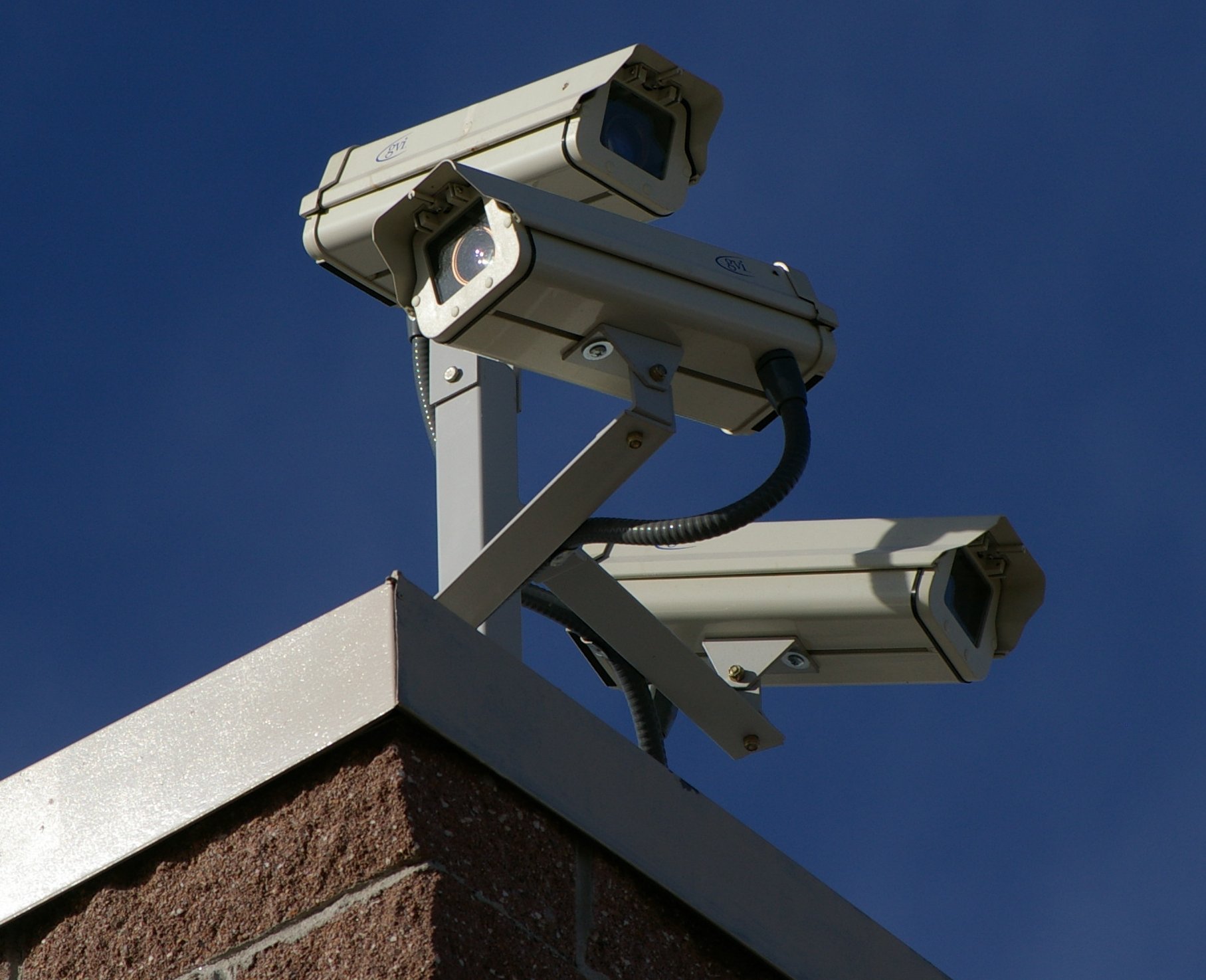 Lawmakers in Oakland intend to spend millions of dollars awarded to the California city in a federal grant to a police dragnet that promises to examine surveillance footage, riling critics who assert the intention of the grant was to stop terrorism.
When the new program debuts in approximately one year police will be able to track drivers as they travel through tolls, scan license plates with the roughly 3,000 surveillance cameras placed throughout the city, and monitor social media platforms to learn about crimes before they occur.
The Oakland program, officially referred to as the Domain Awareness Center, according to the New York Times, comes at a time when police departments across the US are using federal money to launch similar surveillance efforts modeled after the New York Police Department. The NYPD, which operates within New York City as well as far outside, has used federal grants to build a massive surveillance network capable of linking cameras and license plate readers to criminal and suspected terrorist databases.
The Domain Awareness Center also plans to plant gunshot detection sensors through Oakland, which is consistently ranked among the most dangerous cities in the US. Forbes magazine reported that violent crime affects 1,683 of every 100,000 residents in the city, making it the third most dangerous city in America with a population between 100,000 and 499,000 in 2013.
The Oakland City Council voted unanimously on July 31 to adopt the plan to build the surveillance center, which officials have said will be staffed 24 hours a day. Lawmakers voted at the same meeting to ban hammers and spray paint cans at protests in fear that the items will be used as weapons. Waiting outside, protesters admonished council members with chants of “Shame! Shame! Shame!”
“The Domain Awareness Center is the guard tower which will watch over every person in the city of Oakland,” shouted demonstrator Mark Raymond, as quoted by the San Francisco Chronicle. “This program is an attempt to criminalize and imprison all people who live and pass through Oakland.”
All told, the surveillance center’s costs are expected to total $10.2 million in federal grants, and while legislators said they were cognizant of residents’ security while drafting the bill some representatives were shouted down.
“We have tried our best to find the sweet spot where are going to take advantage of the tools that we have at hand to make our city safe… We have done everything we can to safeguard privacy,” said councilwoman Libby Schaaf before she was cut off by jeers and one protester who suggested she “go home to your mansion and kill yourself.”
Schaaf did admit that, while police have traditionally needed just a small evidence sample to arrest a suspect, the new center will have the capability to “paint a pretty detailed picture of someone’s personal life, someone who may be innocent.”
Oakland was awarded a federal grant to ramp up security near the Port of Oakland, a thriving cargo center that is one of the busiest in the US. The 19-mile waterfront is the fifth-busiest container port in the US, with 1,800 ships arriving every year, according to the San Francisco Chronicle. Over $14 billion in goods were exported from the bustling hub in 2012.
To protect the port, and watch civilians throughout the region, Oakland signed a contract with Science Applications International Corporation (SAIC) to build the Domain Awareness Center. The company, which earns most of its $12 million in annual revenue from military contracts, also worked with the NYPD but later paid $500 million to avoid a federal prosecution for receiving illegal kickbacks.
The Times reported that this project is not the first time Oakland has sought to develop such technology. A city audit viewed by the paper revealed that lawmakers spent nearly $2 million in 2012 alone on police tools that did not work or could not be used for a variety of reasons.
Linda Lye, an attorney with the American Civil Liberties Union, said this project might work as intended, but that mere intention already creates a scary problem.
“What they did is approve a vast surveillance center without understanding the implications,” she said earlier this year. “The privacy policies would be drafted only after the center is built. At that point, what opportunity will there be for to determine if the safeguards are sufficient?”
Related article
Luxembourg NSA dragnet hauls in Skype for investigation – report
RT | October 12, 2013
Once heralded as a communication tool free from eavesdropping, Skype is now reportedly under scrutiny for secretly and voluntarily handing over personal data on users to government agencies.
The Microsoft-owned instant-messaging site, used by some 600 million people worldwide, is being probed by Luxembourg’s data protection commissioner over concerns about its secret cooperation with the US National Security Agency’s Prism spying program, according to a report in the Guardian, the UK newspaper that first broke the story on NSA whistleblower Edward Snowden.
Skype, believed to be the first Internet company among many to be brought within the NSA program, could potentially face criminal and administrative charges, as well as hefty fines if it is found to be in violation of Luxembourg’s data protection laws.
If found guilty, Skype [could] be banned from passing along user data to the US spy agency, the newspaper reported.
The Luxembourg commissioner initiated an investigation into Skype’s privacy policies following revelations in June about its ties to the NSA, the Guardian said. No additional comments were immediately available.
Microsoft’s purchase of Skype for $8.5 billion in 2011 “tripled some types of data flow to the NSA,” the Guardian said, citing secret documents in its possession.
But even before the Microsoft buyout, Skype had initiated its own secret program, dubbed Project Chess, which sought ways of making customer communications “readily available to intelligence agencies and law enforcement officials,” The New York Times reported.
According to the NSA files shown by Snowden to the Guardian, Skype was served with a directive to comply with an NSA surveillance request signed by US Attorney General Eric Holder in February 2011. Several days later, the NSA had successfully monitored its first Skype transmission.
Skype, founded in Estonia in 2003 and now headquartered in Luxembourg, is facing a public backlash in the wake of the Prism disclosures.
“The only people who lose are users,” Eric King, head of research at human rights group Privacy International, said in comments to the Guardian. “Skype promoted itself as a fantastic tool for secure communications around the world, but quickly caved to government pressure and can no longer be trusted to protect user privacy.”
US media failed to cite pundits’ ties to defense industry in Syria strike debate
RT | October 11, 2013
Nearly two dozen of the commentators who appeared on major media outlets to discuss a possible US military strike on Syria had relationships with contractors and other organizations with a vested interest in the conflict, according to a new report.
The Public Accountability Initiative, a non-profit research group dedicated to “investigating power and corruption at the heights of business and government,” determined that 22 of the pundits who spoke to the media during the public debate over whether the US should bomb Syria appeared to have conflicts of interest. Seven think tanks with murky affiliations were also involved in the debate.
Some analysts held board positions or held stock in companies that produce weapons for the US military, while others conducted work for private firms with the relationships not disclosed to the public.
Perhaps the most notable example is that of Stephen Hadley, a former national security advisor to President George Bush who argued in favor of striking Syria in appearances on CNN, MSNBC, Fox News and Bloomberg TV. He also wrote an editorial in The Washington Post with the headline, “To stop Iran, Obama must enforce red lines with Assad.”
Nowhere in those appearances was it disclosed, according to the report, that Hadley is a director with Raytheon, a weapons manufacturer that produces the Tomahawk cruise missiles the US almost certainly would have used had it intervened in Syria. Hadley earns an annual salary of $128,5000 from Raytheon and owns 11,477 shares of Raytheon stock. His holdings were worth $891,189 as of August 23.
“We found lots of industry ties. Some of them are stronger than others. Some really rise to the level of clear conflicts of interest,” Kevin Connor, co-author of the report, told The Washington Post. “These networks and these commentators should err on the side of disclosure.”
The report found that, out of 37 appearances of the pundits named, CNN attempted to disclose that individual’s ties a mere seven times. In 23 appearances on Fox News there was not a single attempt to disclose industry ties. And in 16 appearances on NBC or its umbrella networks, attempts at disclosure were made five times.
Retired General Anthony Zinni, former Commander-in-Chief of US Central Command, made multiple appearances on CNN and CBS. He is an outside director at BAE Systems, which is among the largest military service companies in the world and one that received $6.1 billion in federal contracts in 2012, serves on the Advisory Board of DC Capital Partners, a private equity firm that invests in defense contractors, and a Distinguished Senior Advisor at the Center for Strategic and International Studies.
Zinni advocated a strike not just on Syria, but told CNN’s Candy Crowley that American hesitation in the Middle East has pushed US adversaries to act.
“Knowing the Iranians, they see everything as a potential opportunity to exploit,” he said. “And I’m sure they are calculating much how they could take advantage of this and maybe push the edge of the envelope.”
The retired general, speaking to the Post via email, said his membership is publicly available online.
“The media who contact me for comment should post any relevant info re my background including my board positions if they desire,” he wrote.
This report comes after Syria researcher Elizabeth O’Bagy was fired from the Institute for the Study of War think-tank for lying about her credentials. Multiple US lawmakers, most notably Secretary of State John Kerry, cited an opinion piece O’Bagy wrote in the Wall Street Journal when calling for a military intervention. It was soon revealed that O’Bagy did not disclose her ties to a lobby group advocating for Syrian opposition forces when penning the column for the Journal.
Related article
- they’re shameless, mindless, unprecedented nitwits, all of them (niqnaq.wordpress.com)
Canadian spy agency ‘dissected’ Brazilian Energy Ministry
RT | October 7, 2013
Canada, as well as the US, infiltrated and spied on the Brazilian Energy Ministry, a new leak by Edward Snowden has revealed. The leaked documents show how the data gleaned through espionage was shared with international spy network the ‘Five Eyes.’
Newly-released documents handed over to Guardian journalist Glenn Greenwald by former CIA employee Edward Snowden describe in detail how Canadian intelligence infiltrated Brazil’s Energy and Mines Ministry.
“I was overwhelmed by the power of the tools used. The Ministry of Energy and Mines was totally dissected,” security expert Paulo Pagliusi told Brazilian program Fantastico, which first reported on the leak.
The program showed documents from a meeting of the ‘Five Eyes’ spy network, comprising the US, UK, Canada, New Zealand and Australia, in June of last year. In a presentation the Communications Security Establishment Canada (CSRC) – the Canadian version of the NSA – outlined how they used a program called Olympia to break through the Brazilian ministry’s encryption.
The information gleaned from the ministry was then shared with all of the members of the ‘Five Eyes.’
“They [Five Eyes] are sharing all the information, handing over documents to let other countries know exactly what they are doing,” said Glen Greenwald.
As a result of the infiltration of the ministry over an unspecified period, the CSCE developed a detailed map of the institution’s communications. As well as monitoring email and electronic communications, the CSCE also eavesdropped on telephone conversations. Able to identify mobile numbers, SIM card registrations and the make of a phone, Olympia even snooped on former Brazilian ambassador to Canada Paulo Cordeiro.
Canada has so far refused to comment on the reports of its spy program. Brazil’s Minister of Mines and Energy Edison Lobao told Fantastico that the reports were “serious” and should be condemned.
Canada is one of the world’s leading energy producers and has significant economic interests in Brazil.
“Canada has interests in Brazil, especially in the mining sector. Does this spying serve the commercial interests of select groups? I cannot say,” observed Lobao.
‘No economic espionage’
Previously, Brazilian newspaper Globo News reported that the NSA was monitoring Brazil’s state oil giant Petrobras. Washington reacted to the allegations, stating that the US “does not engage in economic espionage.” The Obama administration has said on a number of occasions that US covert surveillance is in the interests of protecting US national security.
Brazil’s President Dilma Rousseff has condemned the reports of the NSA’s surveillance of Brazil and demanded the US account for its actions.
As a consequence, the Brazilian head of state postponed an official visit to Washington in October. Rousseff has also taken measures to tighten Brazilian internet security.
“I have sent an internet draft bill to Congress, an initiative that will protect the privacy of Brazilians,” Rousseff wrote on Twitter on Sunday. The government is expected to vote on the bill in the coming weeks.
Back in September, Rousseff slammed the US for “economic espionage,” dismissing US claims the NSA spying is a preventative measure to ensure national security. Addressing the UN General Assembly, President Rousseff stated that state-run Petrobras is “no threat to the security of any country. Rather, it represents one of the greatest assets of the world’s oil and the heritage of the Brazilian people.”
Related article
NSA chief admits govt collected cellphone location data
RT | October 02, 2013
The director of the National Security Agency admitted this week that the NSA tested a program that collected cellphone location data from American citizens starting in 2010, but suspended it shortly after.
Gen. Keith Alexander, the head of both the NSA and the United States Cyber Command, told lawmakers in Washington early Wednesday that the secretive pilot program was taken offline in 2011, but that the intelligence community may someday in the future make plans to routinely collect location data about US citizens.
Alexander briefly discussed the program during a Senate hearing on the Hill early Wednesday that focused on the data provided to the government through the Foreign Intelligence Surveillance Act, or FISA, including programs that were exposed earlier this year by unauthorized disclosures attributed to contractor-turned-leaker Edward Snowden.
Only days earlier, Sen. Ron Wyden (D-Oregon) asked Alexander during a Senate Intelligence Committee hearing if the NSA was collecting location data on American citizens.
“I’m asking, has the NSA ever collected, or ever made any plans to collect, American cell site information?” Wyden asked last Thursday.
The NSA, Alexander responded at the time, “is not receiving cell-site location data and has no current plans to do so.”
During this Wednesday’s hearing, Alexander explained that, “In 2010 and 2011, NSA received samples in order to test the ability of its systems to handle the data format, but that data was not used for any other purpose and was never available for intelligence analysis purposes.”
According to a written copy of the statement obtained by The New York Times before Wednesday’s hearing, Alexander said that location information is not being collected by the NSA under Section 215 of the Patriot Act. Alexander did not discuss if any other laws are being implemented to otherwise allow for the collection and analysis of location data.
Moments after Alexander revealed the pilot program before the Senate committee, he said that the NSA may someday want to seek approval from Washington to revive that initiative as part of a fully functioning intelligence gathering operation.
“I would just say that this may be something that is a future requirement for the country, but it is not right now,” Alexander said.
Alexander’s statement regarding the new defunct program was expected, and obtained by The New York Times moments before Wednesday’s hearing was underway. Times reporter Charlie Savage wrote that morning that information about the pilot project was only recently declassified by Director of National Intelligence James Clapper, and that the draft answer obtained by the paper and later read aloud by Alexander was prepared in case he was asked about the topic.
Still unsatisfied by the intelligence community’s explanation about the collection of cellphone location data, Sen. Wyden supplied the Times with a response suggesting that the truth behind the NSA’s activities isn’t being fully acknowledged by the intelligence community.
“After years of stonewalling on whether the government has ever tracked or planned to track the location of law-abiding Americans through their cellphones, once again, the intelligence leadership has decided to leave most of the real story secret — even when the truth would not compromise national security,” Wyden said.
In March, Wyden asked Clapper to say if the NSA was collecting personal information on millions of Americans. The intelligence director dismissed that allegation, then later apologized to the Senate for offering a “clearly erroneous” response.
“Time and time again, the American people were told one thing about domestic surveillance in public forums, while government agencies did something else in private,” Wyden told the Senate Intelligence Committee panel of witnesses last week, which included Alexander, Clapper, and Deputy Attorney General James Cole.
During last week’s meeting, Wyden said he “will continue to explore that because I believe this is something the American people have a right to know whether the NSA has ever collected or made plans to collect cell-site information.”
Related articles
NSA masqueraded as Google to spy on web users – report

RT | September 13, 2013
The NSA used ‘man in the middle’ hack attacks to impersonate Google and fool web users, leaks have revealed. The technique circumvents encryption by redirecting users to a copycat site which relays all the data entered to NSA data banks.
Brazilian television network Globo News released a report based on classified data divulged by former CIA worker Edward Snowden on Sunday. The report itself blew the whistle on US government spying on Brazilian oil giant Petrobras, but hidden in amongst the data was information the NSA had impersonated Google to get its hands on user data.
Globo TV showed slides from a 2012 NSA presentation explaining how the organization intercepts data and re-routes it to NSA central. One of the convert techniques the NSA uses to do this is a ‘man in the middle’ (MITM) hack attack.
This particular method of intercepting internet communications is quite common among expert hackers as it avoids having to break through encryption. Essentially, NSA operatives log into a router used by an internet service provider and divert ‘target traffic’ to a copycat MITM site, whereupon all the data entered is relayed to the NSA. The data released by Edward Snowden and reported on by Globo News suggests the NSA carried out these attacks disguised as Google.
When the news broke about the NSA gathering information through internet browsers, tech giants such as Google and Yahoo denied complicity, maintaining they only handover data if a formal request is issued by the government.
“As for recent reports that the US government has found ways to circumvent our security systems, we have no evidence of any such thing ever occurring. We provide our user data to governments only in accordance with the law,” said Google spokesperson Jay Nancarrow to news site Mother Jones.
Google, along with Microsoft, Facebook and Yahoo, has filed a lawsuit against the Foreign Intelligence Surveillance Court (FISA) to allow them to make public all the data requests made by the NSA.
“Given the important public policy issues at stake, we have also asked the court to hold its hearing in open rather than behind closed doors. It’s time for more transparency,” Google’s director of law enforcement and information security, Richard Salgado, and the director of public policy and government affairs, Pablo Chavez, wrote in a blog post on Monday.
The tech giants implicated in NSA’s global spying program have denied criticism that they could have done more to resist NSA spying. Marissa Mayer, CEO of Yahoo, claimed that speaking out about the NSA’s activities would have amounted to ‘treason’ at a press conference in San Francisco on Wednesday.
In Yahoo’s defense, she argued that the company had been very skeptical of the NSA’s requests to disclose user data and had resisted whenever possible. Mayer concluded that it was more realistic to work within the system,” rather than fight against it.
No economic espionage? NSA docs show US spied on Brazil oil giant Petrobras
RT | September 9, 2013
Despite earlier US assurances that its Department of Defense does not “engage in economic espionage in any domain,” a new report suggests that the intelligence agency NSA spied on Brazilian state-run oil giant Petrobras.
Brazil’s biggest television network Globo TV reported that the information about the NSA spying on Petroleo Brasileiro SA came from Glenn Greenwald, the American journalist who first published secrets leaked by whistleblower Edward Snowden.
Globo TV aired slides from an NSA presentation from 2012 that revealed the agency’s ability to gain access to private networks of companies such as Petrobras and Google Inc.
One slide specified an ‘economic’ motive for spying, along with diplomatic and political reasons.
This seems to contradict a statement made by an NSA spokesman to the Washington Post on August 30, which said that the US Department of Defense “does not engage in economic espionage in any domain, including cyber.”
An official from the NSA told Globo that the agency gathers economic information not to steal secrets, but to watch for financial instability.
Petrobras is known to have discovered some of the world’s biggest offshore oil reserves in recent years.
Some of the new reserves are estimated to be around as 100 billion barrels of oil, according to Rio de Janeiro State University.
None of the leaked slides went into the reasons behind the NSA spying on the Brazilian firm.
The US spy agency then reportedly shared the gathered information with the UK, Canada, Australia and New Zealand.
The new report about US spying on Brazil could intensify the already existing tensions between Brazil and US.
The relationship between the two countries became tense as Globo reported about allegations that NSA has intercepted private communications of Brazil’s President Dilma Rousseff and her Mexican counterpart Enrique Pena Nieto.
Brazil responded by canceling preparations for the presidential visit to the United States and beginning a probe into telecommunications companies to see if they illegally shared data with the NSA. Also, Brazil has asked for a formal apology.
During the G20 summit US tried to address the issue by US President Barack Obama pledging to work with Brazil and Mexico to address their concerns over US spying revealed in recent NSA leaks.
UK ordered Guardian to destroy hard drives in effort to stop Snowden revelations
RT | August 20, 2013
UK authorities reportedly raided the Guardian’s office in London to destroy hard drives in an effort to stop future publications of leaks from former NSA contractor Edward Snowden. The action is unlikely to prevent new materials coming out.
Guardian editor Alan Rusbridger revealed in a Monday article posted on the British newspaper’s website that intelligence officials from the Government Communications Headquarters (GCHQ) told him that he would either have to hand over all the classified documents or have the newspaper’s hard drives destroyed.
After more talks, two “security experts” from GCHQ – the British version of the National Security Agency – visited the Guardian’s London offices.
Rusbridger wrote that the government officials then watched as computers, which contained classified information passed on by Snowden, were physically destroyed in one of the newspaper building’s basements.
“We can call off the black helicopters,” Rusbridger said one of the officials joked.
Another source familiar with the event confirmed to Reuters that Guardian employees destroyed the computers as UK officials observed.
During negotiations with the government, Rusbridger said that the newspaper could not fulfill its journalistic duty if it satisfied the authorities’ requests.
But GCHQ reportedly responded by telling the Guardian that it had already sparked the debate, which was enough.
“You’ve had your debate. There’s no need to write any more,” Reuters quoted the unnamed official as saying.
In the article, Rusbridger explained that because of existing “international collaborations” between journalists, it was still possible to report the story and “take advantage of the most permissive legal environments.”
“I explained to the man from Whitehall about the nature of international collaborations… Bluntly, we did not have to do our reporting from London. Already most of the NSA stories were being reported and edited out of New York. And had it occurred to him that [reporter Glenn] Greenwald lived in Brazil?” wrote Rusbridger.
“The man was unmoved. And so one of the more bizarre moments in the Guardian’s long history occurred – with two GCHQ security experts overseeing the destruction of hard drives in the Guardian’s basement just to make sure there was nothing in the mangled bits of metal which could possibly be of any interest to passing Chinese agents.”
Rusbridger pointed out that the whole incident felt like a “pointless piece of symbolism that understood nothing about the digital age.”
The news comes after Sunday’s international incident during which David Miranda, the partner of Guardian journalist Glenn Greenwald, was held at Heathrow airport under the UK Terrorism Act for the maximum time allowed before pressing charges. Greenwald was the reporter who exclusively broke the Snowden story.
The editor promised that the Guardian will “continue to do patient, painstaking reporting on the Snowden documents, we just won’t do it in London. The seizure of Miranda’s laptop, phones, hard drives and camera will similarly have no effect on Greenwald’s work.”
Another US security source told Reuters that Miranda’s detention was meant to send a message to those who received Snowden’s classified documents, about how serious the UK is in closing all the leaks in relation to the whistleblower’s revelations.
Greenwald, who first published secrets leaked by former NSA contractor Edward Snowden, responded by promising to release more documents. He added that the UK would be “sorry” for detaining his partner for nine hours.
Snowden, who has been granted asylum by Russia, gave Greenwald up to 20,000 documents with details about the US National Security Agency and the UK’s GCHQ surveillance operations.
‘US is the intellectual author behind detention of Miranda’
Lawyer Eva Golinger told RT that the UK has violated all concepts of freedom of the press. “We are talking about a media outlet. Journalists and their spouses and partners being detained and interrogated. So clearly there has been a decision made that everything related to Edward Snowden must be captured no matter what, violating anyone’s right under any country’s laws.”
Golinger believes that government’s pressure on journalists could inspire some to cover the topic of government surveillance even more, instead of discouraging them to do so.
“The more principled the people reporting are, the more they will continue to pursue that work in the face of threat. Such cheap threats and intimidation give people even more reasons to continue doing what they are doing because it shows that those in power are clearly frightened of the information that is being put out,” she explained.
“At the same time it could certainly intimidate other journalists and create the environment of self-censorship, where many would be unwilling to take the risks that are involved with national security reporting, particularly when it comes to the US.”
Golinger argued that US is the “intellectual author behind the detainment of Miranda.”
“We are talking about a search and capture that is going on for Edward Snowden and it is the US that is leading that effort. It is not the UK or other European nations, they are merely abiding by the wishes of the US…What I believe is that Washington has simply put out a request to all of its allies that anyone related to Edward Snowden must be detained if they come into your territory and the UK abided by that and did their duty.”
NSA to open new $60mln facility in N. Carolina university amid surveillance scrutiny
RT | August 16, 2013
While new disclosures this week have exposed inept oversight and gross privacy violations within the National Security Agency, news out of North Carolina has revealed that the NSA is spending $60.75 million on another brand new facility.
In the midst of an international debate focused on how the United States’ premier spy agency has conducted dragnet surveillance over much of the world, including at home, the NSA is expanding even further. The News & Observer reported on Thursday that North Carolina State University in Raleigh, NC is receiving a $60.75 million grant from the NSA to develop a top-secret data analysis lab.
The grant, the paper reported, is three times larger than any award ever received by the university in the school’s history.
Randy Woodson, the school’s chancellor, said Thursday that the deal had been in the works for three years. He said he hoped the data center would make North Carolina a more attractive destination for technology companies. Woodson predicted that the project would create 100 jobs over five years.
“We appreciate the confidence of the National Security Agency to select NC State for this groundbreaking endeavor,” Woodson said in a statement. “Not only will it enhance the academic experience for our students and faculty, it will also add to the economic prosperity of our community through new jobs, new industry and new partnerships.”
Many details on the project have been kept secret because of national security, according to officials. But North Carolina State already has contracts with the Department of Defense, helping the agency research technology which will help soldiers identify improvised explosive devices and expand their foreign language capabilities, among other functions.
The NSA has come under harsh scrutiny in recent months due to the disclosure of classified surveillance programs which the government has used to justify monitoring the communications of Americans, as well as the international community. Internal emails published by the News & Observer reveal that North Carolina State originally intended to announce their deal with the NSA just before the leaks were published but decided to delay in fear of potential blowback.
“A very important announcement about our new NSA-funded Laboratory for Analytic Sciences was supposed to be made public this morning, but with that bit out of The Guardian newspaper on NSA collecting phone records of Verizon customers – everyone thought it best to not make the announcement just yet,” Randy Avent, the associate vice chancellor for research at NCSU, wrote in a message to other administrators. “By the way – our Lab is just that – a research program studying the fundamental science behind analytics. It is not a storage facility for classified data and does not work with any data like that mentioned in the article.”
The delayed announcement comes after another disclosure which further harmed the NSA’s reputation. The Washington Post published top-secret documents Thursday night which provide a glimpse into just how often the NSA breaks the law and invades the privacy of Americans. Thousands of violations were recorded in each of the years since the NSA’s power was expanded in 2008.
Featured Video

Theodore Postol: Iran’s Missiles & Drones Were Underestimated
or go to
Aletho News Archives – Video-Images
From the Archives
What is the Israeli Lobby in Australia Doing in Interfaith Dialogue?
By Ali Kazak | Dissident Voice | October 11, 2015
For years Israel and its lobby around the world have been trying to normalise their relations with Arabs and Muslims without solving the Palestine Question.
One of the methods they resorted to in the last few years is using human rights and community organizations such as interfaith dialogue and Multiculturalism to achieve this objective and to: isolate the Palestinians, marginalise the Palestine question, end Israel’s isolation, and prevent criticism of Israel, knowing that these organisations will be the first to stand against Israel’s violations, racial and religious discrimination.
The group responsible for this task in Australia is The Australia/Israel & Jewish Affairs Council (AIJAC); its Director of International & Community Affairs, Jeremy Jones is in charge of lobbying religious community organizations, specifically Muslims and Christians. Consequently he convened the Faith Communities for Reconciliation, founding participant in the Australian Partnership of Religious Organisations and the Australian National Dialogue of Christians, Muslims & Jews.
AIJAC is a private political propaganda group. It is recognised as the main Israeli lobby in Australia. It coordinates its activities and works intimately with the Israeli embassy in Canberra and different institutions in Israel. It is privately funded by some Jewish businessmen. It monitors closely Australian politicians, the media, ethnic and religious groups, (especially Arabs and Muslims), unions and academics on their stands towards Israel and the Palestine question. … continue
Blog Roll
 Aletho News
- The killing of three Indonesian soldiers in Lebanon should remind Jakarta that Israel does not want peace
- Defeated and delusional: Netanyahu’s remarks reveal $80bn war failure, says analyst
- Iran’s friends are about to make life much more difficult for Israel and the US
- The war of liberation of the Arab and Islamic peoples expands across the Gulf
- Envoy warns UN on Trump’s threat to ‘obliterate’ Iran’s civilian infrastructure
- The Larak Corridor: Iran’s Rial Gate With No US, No Israel, and No Way Around
- ‘Economic terrorism’: Steel facilities hit again in US-Israeli strike
- ‘War Crime’: Iran condemns attacks on Arak, Ardakan nuclear sites
- Two-thirds of Americans want quick end to Iran war even if goals unmet
- Trump to Give “Important Update on Iran” Wednesday in Prime-Time Speech
- If Americans Knew
- Gaza families reunite years after babies evacuated amid Israel’s war
- International Rescue Committee warns Gaza’s children face grave protection risks
- Iran’s Alleged 47-Year War on America: Debunking the 1,050 American Deaths Canard
- Israel wants US to bomb more of Iran’s civilian structures (113,000 is not enough) – Not a ceasefire Day 173
- Ann Coulter Rips Into Fox News for Iran War Coverage
- Joe Kent Urges Americans To Call White House and Congress To Object To Sending Troops Into Iran
- DNC Resolution to Reject AIPAC Funding Puts Democratic Leaders in the Hot Seat
- Swedish foundation to build 400 schools as over 650,000 Gaza children remain without education for 2 years
- Israeli army admits photshopping image of slain Lebanese journalist
- This is how Israel is systematically killing health workers under the cover of war in Lebanon
- No Tricks Zone
- New Study Finds Warming Saves Lives…Cold Temperatures 12 Times More Deadly Than Excess Heat
- German Science Blog Accuses PIK Climate Institute Of Hallucinating Climate Tipping Points
- Devastating Assessment Of Comirnaty Vaccine By Former Senior Pfizer Europe Toxicologist
- New Study: CO2 Is ‘Effectively Negligible’ As An Explanatory Climate Change Factor Since 2000
- Former Pfizer Toxicologist Dr. Helmut Sterz Tells Bundestag Hearing Pfizer Vaccine Should Have Never Been Approved
- Energy Expert: Germany’s Nuclear Phaseout Was A “500 Billion Euro Mistake”
- New Research: South Australia’s Mid-Holocene Sea Surface Temperatures Were 4°C Warmer Than Today
- Storing Green Energy To Last Germany 10 Days Would Require A 60-Million Tonne Battery
- New Studies: UK Sea Levels Were 4 Meters Higher Than Today During The Mid-Holocene
- Destructive Green New Deal: German Energy And Metal Group Warns Of Drastic Crisis
 Aletho News