In memory of Tom Hurndall, shot in the head by Israeli sniper 10 years ago today
International Solidarity Movement | April 11, 2013
 Occupied Palestine – The International Solidarity Movement today remembers Tom Hurndall, ISM volunteer who 10 years ago on 11th April 2003 was shot in the head by an Israeli sniper.
The Israeli army were invading the city of Rafah, in the Gaza Strip when Tom and other ISM volunteers saw a group of children in a street where snipers were firing. Witnesses say that bullets were shot around the children, who were paralysed by fear and unable to move – Tom pulled one child to safety, but as he was returning for a second, he was shot in the head by a sniper.
He went into a coma and died nine months later on 13th January 2004. He was 22 years old. Today, on the day he was shot, we pay tribute to Tom’s bravery. Our thoughts are with his family and friends. We continue to stand in solidarity with the Palestinian people, as we think Tom would have wished.
“What do I want from this life? What makes you happy is not enough. All the things that satisfy our instincts only satisfy the animal in us. I want to be proud of myself. I want more. I want to look up to myself and when I die, I want to smile because of the things I have done, not cry for the things I haven’t done.” – Tom Hurndall
Zionists attempt to intimidate International Solidarity Movement
International Solidarity Movement | April 7, 2013
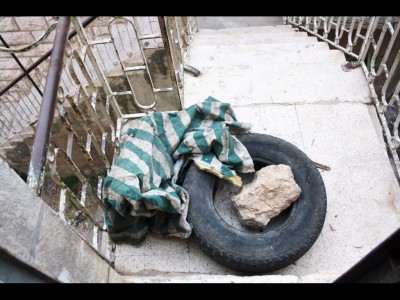 Hebron, Occupied Palestine – The ISM team based in Hebron woke up last week to find that their Zionist settler neighbours had left a present for them on their doorstop. A tyre, a large piece of cloth and a stone were organised onto a pile just outside the apartment door, which according to our Palestinian neighbours, symbolises that they plan to set fire to the apartment.
Settler intimidation and violence towards ISM activists is not unusual, especially in central Hebron where roughly 500 settlers are “protected” by thousands of Israeli soldiers. The situation is particularly tense on and around Tel Rumeida where harassment of Palestinians is frequent as settlers, often armed with machine guns, share the same street.
Only two weeks ago an international was attacked by a settler, most likely because she was wearing a head scarf and several years ago an ISM activist had a bottle smashed on her face whilst settlers chanted “We killed Jesus and we will kill you”.
Related articles
- Jewish settler’s ‘bio-war’ against the ancient city of Sabastiya (alethonews.wordpress.com)
- Racist attacks are daily reality in Hebron , even for children (palsolidarity.org)
Palestinian Amer Nassar, Aged Seventeen: A Last Poem

Amer Nassar, 17. (Photo: Via Facebook)
By Felicity Arbuthnot | Palestine Chronicle | April 4, 2013
Last night and overnight, two unarmed teenagers, cousins Amer Nassar (17) and Naji Abdul-Karim Balbeisi (18) were shot dead by Israeli Defence Force troops.
The two were from the village of Anabta, near the town of Tulkarm, in Palestine’s West Bank. Tulkarm was founded in the 13th century, its name derived from the Aramaic “Toor Karma” meaning “mount of vineyards.”
Amer died from a bullet in his chest at 22.30 on Wednesday night, according to eye witnesses. Hearing shots, three boys from the village went out and found Amer lying on the ground, with soldiers standing over him. When they tried to reach him, the soldiers opened fire, injuring one, Fadi Abu-A’sr, in the arm, and subsequently hospitalized.
The three say that ambulance crews were prevented from reaching Amer for thirty vital minutes, with threats to shoot anyone attempting to intervene. Deiyaa’ Nasser, who did attempt to reach Amer:“was arrested by the Israeli Army and taken to an unknown location.”
Naji Abdul-Karim Balbisi, was found as dawn broke this morning, lying in a field. He was reported to have been shot from behind.
Tensions have been high in Gaza and the West Bank since the death of Maysara Abu Hamidya in Israel’s Soroko prison on 2nd April. Sixty five year old Abu Hamidya was a former high ranking officer in the Palestinian Authority (PA) prior to his arrest, which took place when the IDA invaded the West Bank, destroying PA Headquarter buildings, in May 2002.
Palestinian authorities have claimed that the prison was withholding treatment for his cancer. On Monday released prisoner Ayman Sharawna alleged that Hamdiya was in a life threatening condition in the prison infirmary – with his hands and feet shackled.
The Director of the Palestinian Prisoner Society has held the Israeli regime fully responsible for his death.
So, as Palestinians mark another onslaught, the massacre in the Jenin refugee camp (April 1st-11th 2002) the mourning, heartbreak, lost lives and lost youth grind on. But so does the spirit, in young and old.
Seventeen year old Amer Nassar left a poem. When others of his age write on Facebook of their dreams, aspirations, exams, plans, dates, travels, on 15th March, his last entry, he wrote (translated):
“Point your bullet where ever you like in my body
I will die today, but my homeland will live tomorrow
Be careful, Palestine is a red line.”
He did not die on March 15th, but just two weeks and three days later, at the hands of “the most moral army” and the “only democracy in the Middle East.”
(The writer is indebted to the resident of Palestine who drew attention to and translated Amer’s poem and to the International Solidarity Movement, for their careful details of another tragedy.)
– Felicity Arbuthnot is a freelance journalist specializing in social and environmental issues with a special knowledge of Iraq.
Related articles
- Murder remains Israel’s preferred response (morningstaronline.co.uk)
- Thousands attend funerals for Palestinians killed by Israeli forces (alethonews.wordpress.com)
- Palestinian prisoner was cancer-stricken for ‘years’: autopsy report (alethonews.wordpress.com)
9 Year old Palestinian boy attacked by settlers
International Solidarity Movement | March 12, 2013
Hebron, Occupied Palestine – On the afternoon of March 12th, Yassin Knaebi was playing on the roof of his house in the old city of Hebron when suddenly stones started falling from the sky. Three young settlers who had been watching him play, began to throw stones from across the street. Yassin, was struck on the head, he lost his balance and fell from the roof of his family home, breaking his left arm in the process. Doctors are fearful of the possibility of long term damage to the young boys eye, though this is still too early to know for sure.
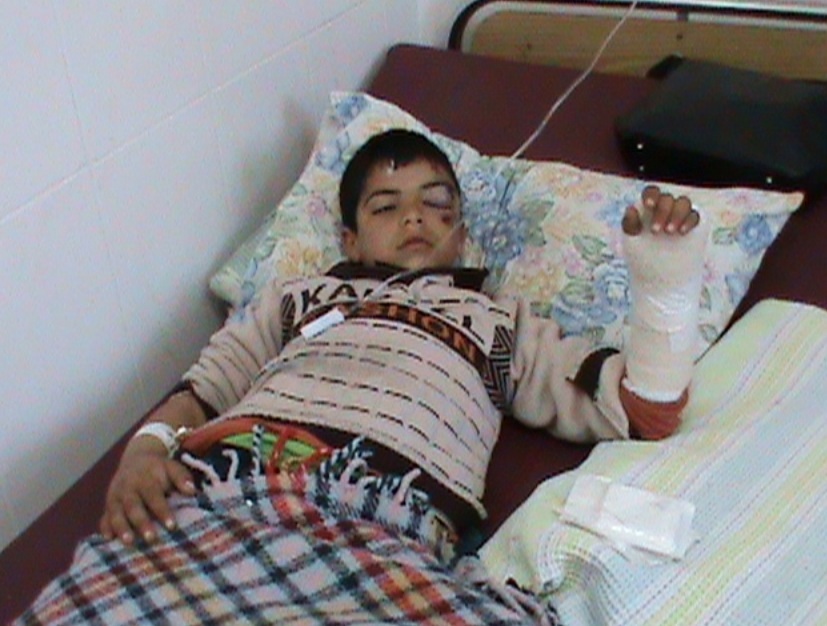
The Knaebi family are terrorised frequently by their neigbours in the Avraham Avinu Settlement. According to Mrs. Knaebi the family is harassed at least three times a week and the Israeli army does nothing to prevent it, despite having an outpost in sight of the house. The message is simple, the settlers in the settlement wish to push the family out and occupy their home, so that the future expansion plans for the neighborhood can go forward without any problems.
Related articles
- Racist attacks are daily reality in Hebron , even for children (palsolidarity.org)
- Continued harrassment of the Nasser family in Madama (alethonews.wordpress.com)
- Stranded in Shuhada: Hebron’s Qurtuba school (alethonews.wordpress.com)
British activists being detained in UK airports under anti-terrorism legislation on return home from Palestine
International Solidarity Movement, and Corporate Watch | February 28, 2013
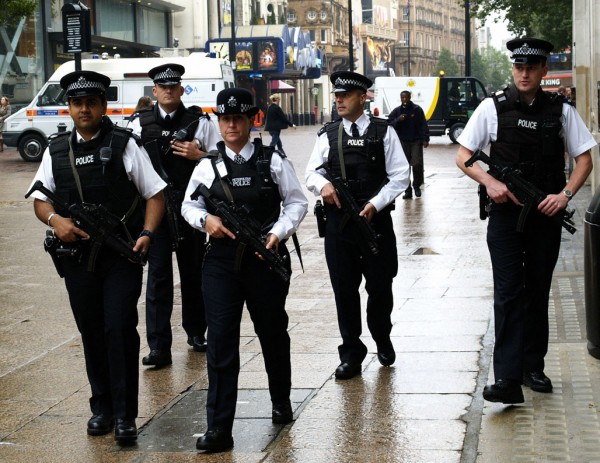 Two British peace activists have been detained in recent weeks after arriving home from the West Bank, occupied Palestine. They have been detained and taken in for questioning, over suspected links with the International Solidarity Movement.
“We are concerned about the British police using anti-terrorist legislation to target non-violent pro-Palestinian activists. We are a transparent group, trying to uphold the principles of international law; even inside Israel the International Solidarity Movement is not considered illegal. We would encourage the British Police to ask any questions they wish to do so, directly, and not by detaining affiliated activists at the airport”
The Schedule 7 of the Terrorism Act 2000, which the two activists have been held on, allows the police, under certain specified circumstances, to arrest individuals without a warrant who are reasonably suspected of being terrorists. These laws are draconian measures which give the British police powers to detain suspects for up to 28 days without charge.
Schedule 7 is clearly being used as a tool to find out more about activists involved in a wide variety of types of political dissent and to provide profiles of activists for the police to use in trying to undermine political movements. None of the questions about movements in the UK were designed to root out terrorism or uncover the preparation for terrorism. In fact, the movements concerned have never even been accused of terrorism (with the exception of completely false accusations made against the ISM, see here).
Britain abstained at the last vote at the United Nations deciding whether Palestine should be accepted as a non-member observer state. But in the last two weeks the double standards of the British government in relation to Palestine and Israel have again been laid bare; Saeed Amireh, has been refused a visa to visit the UK. Amireh is a peaceful campaigner against Israel’s occupation and the theft of Nilin’s land. He was told he hadn’t provided “enough supporting documents”, even though he had supplied everything that was asked for, including a letter of invitation and guarantee from the UK Palestine Solidarity Campaign of his costs being paid.
The use of these powers as a way to clamp down on non violent activists from Palestine and Britain is not acceptable, what is the British government afraid of? Maybe the fact the activists, returning home from Palestine, work with Corporate Watch and have helped reveal the continued supply of weaponry from Britain to the Israeli army has made them a target. This is despite the current British arms export policy stating it won’t deliver weapons to any countries breaking UN treaties. British companies are still complicit in Israeli war crimes in Gaza, as was proved in the EDO Decommisioners case of 2011.
Read more about the misuse of these powers and much more at corporateoccupation.org
Related articles
- Farming Injustice (alethonews.wordpress.com)
- Stop EU funding of Israeli military companies and illegal settlements (alethonews.wordpress.com)
- I find it sinister that the british firm securicor (“G4S”) is “providing services to israeli prisons and west bank checkpoints” (niqnaq.wordpress.com)
- Spies “monitoring” Palestine solidarity groups around world, says Israeli military correspondent (theuglytruth.wordpress.com)
Two residents from Burin arrested overnight: confrontations follow
ISM Media Group | Aletho News | February 25, 2013
Mahmoud Nasser Asaus (17) and Magdi Loai Najjar (24) were arrested last night by Israeli forces in the village of Burin and are now being held in Kishon Interrogation Centre in Haifa. Residents of Burin suspect this is the start of a wave of arrests following the Al-Manatir protest that took place In Burin at the beginning of February.
Several jeeps entered Burin at around 2.30am to raid Mahmoud and Magdi’s houses, taking them, handcuffed and blindfolded, to Huwwara military base. At 7am this morning they were transferred to Kishon Interrogation Centre where they are still being held.
These arrests come after the neighbourhood of Al-Manatir was established on a village’s hilltop threatened with confiscation by Israeli settlers. The protest camp was aimed at denouncing Israel’s grab of Burin’s land and to recover the hilltop which has been inaccessible for residents of Burin since 2007.
However, the neighbourhood of Al-Manatir, made up of metal huts and tents, was violently evicted by Israeli soldiers and border police on the same day it was established. Israeli forces protected and accompanied settlers from the nearby settlements of Bracha and Yitzhar; while they were stealing metal huts and throwing stones at Palestinian activists. Simultaneously, around twenty settlers attacked several Palestinian homes on the outskirts of Burin and chopped down one hundred olive trees. When Palestinians ran to the area to defend their homes, stone throwing between settlers and Palestinians ensued. Zakaria Najjar (17), was shot in the right leg with live ammunition by a settler.
During the eviction, eight people were arrested and three of them remained in Israeli prison for twelve days, finally being released without charges. Further reprisals took place in Burin the days following Al-Manatir. Ghassan (23) and Mohammed (19) Najjar were arrested for several hours and interrogated about the protest camp. In addition, the village was sealed off by military checkpoints. The hilltop continues to be inaccessible for residents of Burin.
Following last night’s arrests there have been further incursions into the centre of Burin today. The Israeli army again tried to raid the village resulting in confrontations that began at around midday. Tear gas and rubber coated steel bullets were fired directly into the gathering crowd; as yet no serious injuries have been reported. A further arrest was made by the Israeli authorities, Bahar Adnan Imran who is just 14 years old.
Related articles
- Israeli troops force out 200 from camp (morningstaronline.co.uk)
- Israeli Settlers Attack Palestinian Shepherds In Nablus, Hebron (imemc.org)
Bedouin communities near Qalqiliya isolated by Israel and facing school demolition
International Solidarity Movement | February 22, 2013
Nablus, Occupied Palestine – The small Bedouin communities of ‘Arab Ramadin al-Janubi and ‘Arab Ab Farda lie south of Qalqilya between the apartheid wall and the green line,close to the illegal settlement Alfe Menashe. They are separated from the rest of West Bank from all sides by the Israeli apartheid wall. The communities, founded by people deported from areas in Negev and Netanya during and after the Nakba are today home to around 500 people. They suffer from multiple restrictions imposed by the Israeli authorities,including no permissions for new buildings or expansion of existing buildings, and limits to the amount of food and gas allowed for sale in the communities.
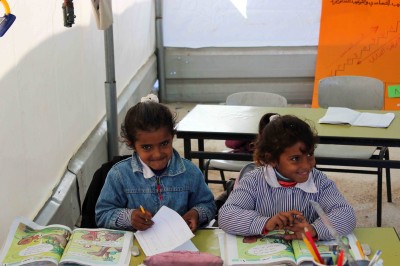
Bedouin girls at school
Access to the communities is limited by Israel with a permission system. The system of access permissions has effectively resulted in the social isolation of the communities, as people from the city of Qalqilya and neighboring villages face difficulties in obtaining permits for visiting the area.
The community of Abu Farda has no access to running water or electricity, and thus water has to be bought in tanks from the village of ‘Azzun. There is a well on the grounds of the village, but the illegal settlement Alfe Menashe has confiscated the well and closed access to it for the inhabitants of Abu Farda. People from the family Fayez living in Abu Farda told us:
“The lack of electricity is a big problem, as we are not able to refrigerate food bought from merchants or the yogurt and milk we produce ourselves for sale, and our children are not able to do their homework after dark due to lack of lighting.”
Furthermore, the Israeli authorities do not allow veterinaries access to the villages, while the village is largely dependent on the raising of livestock.
In October 2012 the community of Ramadin al-Janubi founded a school for 6 to 8 year old children. The new school gives it’s 25 students the opportunity to go to school without having to pass daily through the Israeli checkpoints between the community and a school in the nearby village of Habla. Children older than 8 years still have to go to school outside the community, and in order to reach their schools and go back home they need to cross the Israeli checkpoints twice every single day.
The school in Ramadin, consisting of 4 tents, received a demolition order from the Israeli authorities after two weeks of operation. The faculty of the school live in Qalqilya and have to spend from 30 minutes to over an hour every day passing through the checkpoint and having their papers and belongings examined by the IOF forces at the checkpoint in order to access the school. For now, the village has taken the demolition order to court, and is waiting to for the court hearings to take place.
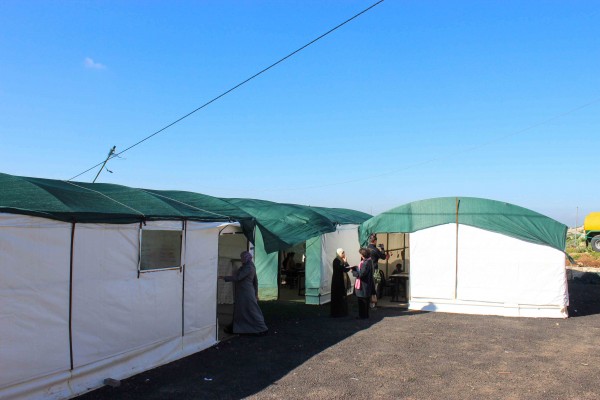
Bedouin school tents with demolition order
Related articles
- Palestinians’ Life in the Shadow of the Barrier Wall (alethonews.wordpress.com)
- West Bank: Aid agencies tread gingerly in Area C (alethonews.wordpress.com)
- Qalqiliya flooding exacerbated by separation wall (altahrir.wordpress.com)
- Israel to demolish Palestinian neighborhood (altahrir.wordpress.com)
Jewish settler’s ‘bio-war’ against the ancient city of Sabastiya
International Solidarity Movement | February 12, 2013
Sabastiya, Occupied Palestine – Sabastiya is an ancient city located just 10 km north of Nablus, West Bank. It contains Canaanite, Israelite, Hellenistic, Herodian, Roman and Byzantine ruins as well as the tomb of John the Baptiste. The winding city streets along with its history make Sabastiya an ideal place to visit. Yet, as charming and beautiful as the old city is, the nearby Israeli settlement of Shafi Shamrom is making lives of Sabastiya’s residents very difficult: settlers uprooted olive trees, introduced wild boars into the environment to damage the land, and most recently, sewage has started leaking from the settlement flooding Palestinian fields.
In 2001 settlers uprooted and destroyed around 1000 olive trees, substantially damaging the land of several families. In 2006 the army put up a fence in an attempt to confiscate the land where the trees had originally been. Sabastiya’s farmers acted: they pulled the fence down in a defiant act of resistance and since that time there have been no further attempts to install it again.
The most recent and disturbing action on the part of illegal settlers of Shafi Shamron is pumping their raw, untreated sewage directly onto Palestinian fields. As the sewage is absorbed into the land, olive and apricot trees are rendered diseased and, according to the residents, “poisoned”. The flow of human waste begins from a pipe on the perimeter of the settlement, creating a sort of reservoir which then runs through the adjacent Palestinian fields, compelling each subsequent land owner to create a canal in order to drain the sewage water on to his neighbors land and further away.
Residents of Sabastiya are currently bringing legal action against Shafi Shamron in order to stop the settlement from dumping its sewage on Palestinian lands. The malodorous sewage running through the fields must remind a regular visitor of non-violent protests of a very effective strategy used by the army; the “skunk” water, which is chemical liquid smelling of excrement commonly sprayed on protesters. Settlers are evidently using a similar technique to make local residents’ lives even more difficult.
Related articles
- Farming Injustice (alethonews.wordpress.com)
- Resist the land grab: donate a tree (palsolidarity.org)
- Israel’s Colonial Terrorism: Settlers drench Palestinian land with wastewater (occupiedpalestine.wordpress.com)
- Israel must remove all Jewish settlers from occupied West Bank – UN inquiry (alethonews.wordpress.com)
Stop EU funding of Israeli military companies and illegal settlements
Palestine Solidarity Campaign and International Solidarity Movement
Join and spread widely the latest EU-wide call to stop funding of Israeli military companies and illegal settlements:
As more and more of us become aware of the injustices against Palestinians denied their basic rights, the situation is becoming even more desperate on the ground. It has never been more important for us to make our elected representatives aware of the growing and unstoppable pressure for peace and justice.
The EU should be playing a leading role in implementing policies to ensure that Israel ends its illegal occupation and respect Palestinian human rights and international law. Instead, they are supporting Israel’s occupation by:
- allowing illegal settlement products to be traded in the UK and across Europe
- by using EU tax-payer money to fund Israeli military companies who are responsible for killing civilians and supporting Israel’s military occupation
It is time for actions, not words. Tell the EU to act today.
Read the full letter and sign the call here today: http://psc.iparl.com/lobby/96. Please spread widely.
Join and spread widely the call from Palestine to EU citizens to urge representatives to suspend trade agreements with Israel until it complies with international law, initiated by Palestinian grass-roots organizations recently:
Send letters to EU Prime Ministers and Foreign Ministers (in all EU languages!)
Send letters to Members of European Parliament (MEPs) (in all EU languages!)
Related articles
- Palestinians call for a boycott of Israeli diamonds (altahrir.wordpress.com)
- South African agricultural company cuts ties to Hadiklaim (alethonews.wordpress.com)
The most violent settlement in the West Bank encroaches on Asira al Qibliya
International Solidarity Movement | January 27, 2013
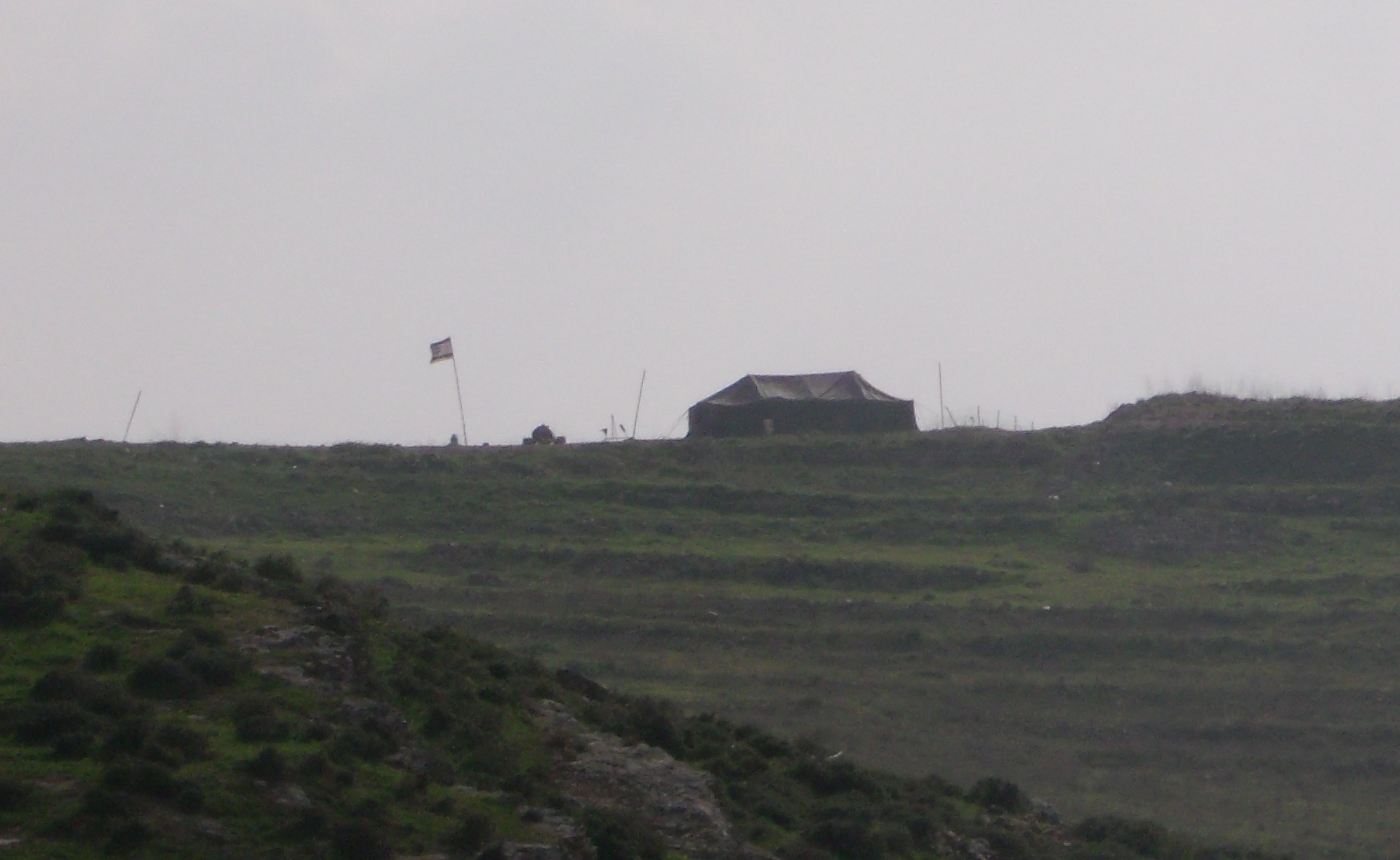
Asira al Qibliya, Occupied Palestine – According to OCHA statistics Yizhar is the most violent settlement in the whole of the West Bank with 70 recorded incidents in 2011 alone. Every week there is at least one attack by Yizhar settlers in the six affected villages.
Four months ago, settlers from Yizhar built a temporary outpost on top of a hill belonging to villagers from Urif. This continued until earlier in the week when Israeli authorities delivered maps to the village which showed that Yizhar had laid claim to 2 dunums of land. This was a massive understatement; they had in-fact seized the entire hill.
The land grab of this hillside seems to be all but complete; a shepherd who was working the land around the Yizhar outpost was recently beaten whilst tending to his sheep: the injuries he sustained were serious but not critical. In another incident, as the Palestinian owners of the land were walking along the road towards the hill this week, they were fired on by Israeli soldiers. Villagers want to challenge this latest land grab, however the law in this country is anything but just. The villagers are all too aware that if they resist they have only stones in the face of tear gas, stun grenades and the very real threat of being fired upon with live ammunition.
Harassment of the residents has also been on the rise. Currently at least once a week soldiers have been invading Asira in the middle of the night. They have been banging on villagers doors with the butts of their assault rifles, making sure people are disturbed in much the same way as has been reported in Urif as well as in Burin.
Yizhar a relatively small but very aggressive settlement in the north of the occupied West Bank. It is situated on a hill surrounded by six Palestinian villages which are all made to live in a state of constant fear.
Related articles
- Continued harrassment of the Nasser family in Madama (palsolidarity.org)
- Israeli Soldiers Attack, Evict, Bab Al-Shams, Arrest Dozens (alethonews.wordpress.com)
- PHOTOS | Settlers attack Urif and Qusra with guns, knives and stones (occupiedpalestine.wordpress.com)
Featured Video
The First Pyrrhic Victory of the Vietnam War
or go to
Aletho News Archives – Video-Images
Frlom the Archives
The 52 Major Jewish American Organizations and Israel Celebrate Passover with the Slaughter of 25 Muslim, Christian and Secular Palestinians
By James Petras • Unz Review • April 8, 2018
Introduction
As of April 7, nearly three thousand unarmed Christian, Muslim and secular Palestinians have been wounded, over three dozen are in critical condition and at least twenty-five unarmed protestors, including children have been assassinated by hundreds of Israeli snipers and heavily armed troops shooting tank shells into crowds of civilians protesting their decades of incarceration by the racist Israeli state.
The Israeli government praised the ‘restraint and morality’ of the IDF, as did the fifty-two Major Jewish American Organizations (MJAO) who largely control the US Congress. These grotesque massacres began during the Christian Holy Week on Good Friday and Easter, coinciding with the Jewish Passover. The self-righteous officials of the MJAO and their relatives and friends broke matzos at joyful Seders as the blood of Palestinians soaked into ground at the fence containing the largest open-air prison camp in history, Gaza.
While tribal loyalties bonded the Israeli and Jewish American leaders, the politicians of the Western oligarchic electoral regimes refrained from criticizing the shocking display of brute force and even defended Israel’s cold blood mass killings of Palestinian civilians in their Gaza prison.
This paper will discuss and analyze the reasons for Israel’s willing Western accomplices and the centrality of its fifth column in the United States. … continue
Blog Roll
 Aletho News
- Just Get Out! Now!
- Unpacking glaring contradictions in US-Zionist justifications for war against Iran
- Iranian model of warfare bleeds US dry while Persian Gulf states watch and learn: Analyst
- IRGC orders ‘defeated’ US to evacuate industrial facilities in region
- Hegseth’s call for ‘no mercy’ to Iranians deemed war crime
- Iran War Exposes Limits of US Military Power – Journalist
- Even The Neo-Cons Admit The Iran War Is Failing
- Inside the Caucasus Drone Corridor Fueling Tensions With Iran
- ‘Not our war’: Trump’s naval coalition to reopen Strait of Hormuz dead in the water
- Iran declares support centers for USS Gerald R. Ford legitimate targets
- If Americans Knew
- ‘I Liked the House’: When Israeli Soldiers Turn Palestinian Homes into Barracks
- ‘They Were All I Had’: Lebanese Father Buries Parents, 4 Daughters Killed by Israeli Bombing
- Israel and its supporters are causing attacks on Jewish institutions. Case in point: Michigan synagogue tragedy.
- These are the casualties and cost of the war in Iran 2 weeks into the conflict
- Chicago Teachers Union accuses AIPAC of swaying elections with ‘dark money’
- Predictions of another 9/11, amid Israel-US killing spree – Not a ceasefire Day 157
- As US-Israel war on Iran rages, Gaza faces massive dust storm – Not a ceasefire Day 156
- No let-up in attacks on Gaza as Israel takes on Iran, Lebanon – Not a ceasefire Day 155
- ‘Of Course’: IDF Drops Case Against Soldiers Accused of Raping Palestinian Prisoner
- Don’t Fall for the Regime Change Talk. Israel Is ‘Mowing the Lawn’ in Iran
- No Tricks Zone
- Storing Green Energy To Last Germany 10 Days Would Require A 60-Million Tonne Battery
- New Studies: UK Sea Levels Were 4 Meters Higher Than Today During The Mid-Holocene
- Destructive Green New Deal: German Energy And Metal Group Warns Of Drastic Crisis
- New Study Documents A 20-Year Pause In Arctic Sea Ice Decline – Driven By Internal Variability
- Wake-up Call: Survey Shows Majority Of Germans Now Favor Postponing Climate Targets!
- Televised! Leading German Political Candidate Tells Schoolchildren CO2 Makes Sun Hotter!
- New Study: A Century Warming Of 1.1°C Is ‘Commonplace’ And ‘Not Unusual’ During This Interglacial
- New Study: ‘Internal Noise’ And Volcanic Forcing Can Trigger 10-15°C Warming Within Decades
- Glaciers Worldwide Are Suddendly Surging, Experts Blame Warming!
- Surprising Discovery: Sahara Is Greening…Billions Of Trees Where Once Thought To Be Barren
 Aletho News