Iran ‘rapidly’ beefs up air defenses with Chinese help: Report
The Cradle | July 8, 2025
Iran has been beefing up its air defenses with help from China since a truce ended the 12-day war between Tel Aviv and Tehran last month, according to sources cited by Middle East Eye (MEE).
“Iran has taken possession of Chinese surface-to-air missile batteries,” the report said, adding that Tehran is moving “rapidly” to rebuild air defense capabilities targeted by Israel during the war.
An Arab official told the outlet that the Chinese batteries were delivered to Iran following the ceasefire.
Another Arab official said that US allies in the Gulf were aware of Iranian efforts to “back up and reinforce” air defenses, adding that the White House has been briefed on the matter.
The officials did not reveal the number of surface-to-air missiles that Iran has received from China since the end of the war. One official claimed Tehran was paying for the deliveries with oil shipments.
“The Iranians engage in creative ways of trading,” one of the officials said.
According to ship tracking data, Chinese imports of Iranian oil witnessed a significant jump in the month of June. Beijing is the world’s leading importer and biggest purchaser of Iranian crude oil.
Iran operates the locally produced Khordad and Bavar 373 air defense systems, which are capable of engaging drones, but have a limited ability to shoot down F-35 jets used by Israel.
The Bavar 373 is an Iranian-developed version of the Russian S-300. Iran is also believed to possess older Chinese systems such as the HQ-9.
Iranian air defenses shot down scores of drones during the 12-day war in June, including both drones launched from Israel and locally produced “small drones” operated by Mossad agents inside the country.
Unconfirmed reports of Israeli fighter jets being downed were never verified.
Israel said it launched strikes targeting Iranian air defenses across the country throughout the war, claiming “complete control” over Iran’s skies. It also said it was striking Iran’s missile capabilities.
The Israeli army said it would prevent Iran from being able to fire ballistic missiles at Israel, but failed to achieve that goal.
Iran’s missiles caused widespread destruction across Israel. Key universities, research centers, and technological hubs were struck.
Several military bases were also hit, yet media censorship has prevented details from being released.
The MEE report comes as there has been concern over a potential renewal of fighting between Israel and Iran.
Axios reported on Monday that Israel is preparing for additional military operations if Iran attempts to restart its nuclear program. Israeli officials cited in the report said that US President Donald Trump may approve renewed Israeli strikes.
In late June, Israeli Defense Minister Israel Katz said he had instructed the Israeli army to prepare a military plan targeting Iran’s nuclear and missile programs, as well as its regional alliances.
In a post on X, Katz said the “enforcement plan” would focus on “maintaining Israel’s air superiority, preventing nuclear advancement and missile production, and responding to Iran for supporting terror activity against Israel.”
“We will act regularly to thwart such threats,” he added, warning Iranian leaders to “understand and beware: Operation Rising Lion was only the preview of a new Israeli policy, after 7 October, immunity is over.”
Speaking separately to Israel’s Channel 12, Katz elaborated that the plan would be implemented regardless of the current ceasefire.
Iran has vowed a severe response to any Israeli ceasefire violations.
What Trump Should Tell Netanyahu
By Ron Paul | July 7, 2025
A few weeks ago I urged President Trump to make a deal with Iran that would satisfy his stated goal of no nuclear weapons production and would allow Iran to continue its lawful pursuit of civilian nuclear energy. The deal on the table, as described by the Iranian foreign minister himself, was a win-win “update” of Obama’s JCPOA “nuclear deal” that he could have avoided a costly and counter-productive war with Iran.
Unfortunately, the negotiations were cut short by an Israeli sneak-attack on Iran that led to a 12-day war that did not turn out as Israel imagined. This often happens in war, especially wars of aggression. After a day or so, Israel found itself overwhelmed by an Iran that proved to be more than capable of defending itself and Netanyahu called up Uncle Sam begging for assistance.
The resulting US bombing run on Iran’s nuclear sites did not lead to the end of that country’s capabilities, but to the expulsion of the UN monitoring organization and the emergence of Iranian “strategic ambiguity” regarding its program. In short, the bombing has blinded the world to what Iran may do in the future. That is not a win for Trump.
In a recent interview with Tucker Carlson, the Iranian president confirmed what most people understood at the time: President Trump promised Iran that while they were engaged in negotiations the United States would not allow Israel to attack the country. With the sixth round of negotiations just two days away, however, Israel thumbed its nose at the United States and launched an attack on Iran anyway.
Considering that Israel’s “military capabilities” are almost entirely provided by the United States, this betrayal of its benefactor will surely go down as one of the most brazen acts of ingratitude of all time.
This week Israeli Prime Minister Benjamin Netanyahu is in Washington DC for the third time in Trump’s short second term in office. While we do not know what President Trump is telling him this time around, this might be the time to finally give Israel some “tough love” that many parents practice with their teenagers.
Donald Trump may be the most “pro-Israel” president we’ve ever had, but if he really wanted to help Israel he would make clear to Netanyahu that US support does Israel no favors. Continuing to spend tens of billions of dollars a year financing Israel’s war machine and backing up Israel’s attacks on its neighbors has not produced peace or security – much less prosperity – for Israel.
In fact, as soon as Israel attacked Iran so many Israelis tried to leave the country that Tel Aviv forbade its own citizens from leaving the country. Israelis are desperate to escape the wars of their own government’s making.
If President Trump really wanted to help Israel he would inform Netanyahu this week that not another US dollar would be sent to prop up his government. Not another missile or bomb would be sent. Not another American bullet would be available for Israeli soldiers to attack their neighbors or to shoot Palestinian civilians.
If Israel had to face the hard reality that it must learn to live with its neighbors instead of attacking them, the country may actually start seeing some peace and prosperity. Whatever the case, it is not our responsibility to finance the war machine of any foreign country. Time to put America first.
The IAEA and OPCW – How International Organisations Became Tools of War
21st Century Wire | July 2, 2025
Dr. Piers Robinson is a political scientist, a former professor at the University of Sheffield, as well a research director at the International Center for 9/11 Justice, whose recent article on Substack is titled, “The IAEA and OPCW: Watchdogs for Peace or Propagandists for War?” looks at the IAEA’s questionable operations in Iran, and the similarities to the abused OPCW in Syria, and in general the role of “lying through institutions”, and plying war-propaganda through third-party institutions.
Recent events in Iran have all but exposed how these supposed ‘watchdog’ institutions have been coopted and used by US and British intelligence in order to fabricate another case for war.
Pascal Lottaz, host of Neutrality Studies, talks with the co-director for the Organisation for Propaganda Studies, Dr Piers Robinson, about this, as well as the broader geopolitical implications at play here. Watch:
BRICS leaders demand ceasefire in Gaza, condemn strikes on Iran
Al Mayadeen | July 6, 2025
Leaders of the BRICS bloc, comprising 11 emerging economies, issued a strong and unified call on Sunday for an immediate, permanent, and unconditional ceasefire in Gaza, as the war enters its 22nd month.
In the final declaration of their summit held in Rio de Janeiro, BRICS leaders urged all parties to engage in good-faith negotiations to halt the war on Gaza and demanded a full withdrawal of Israeli forces from the Strip and all other parts of the occupied Palestinian territories.
“We exhort the parties to engage in good faith in further negotiations to achieve an immediate, permanent and unconditional ceasefire,” the 11-nation bloc said in a final summit statement.
The statement comes as indirect truce negotiations between the Israeli occupation and Hamas resumed in Doha, with international pressure mounting for a resolution to the war.
BRICS condemns strikes on Iran
The summit also addressed the recent escalation between Iran and “Israel”, during which the latter launched an unprovoked 12-day war on the Islamic Republic, culminating in US airstrikes on Iranian nuclear facilities in June.
“We condemn the military strikes against the Islamic Republic of Iran since June 13, 2025,” the statement read, without directly naming the United States or “Israel”.
It added, “We express serious concern over deliberate attacks on civilian infrastructure and peaceful nuclear facilities, which constitute a violation of international law.”
BRICS demands Israeli withdrawal from Lebanon
Moreover, the statement called for a ceasefire in Lebanon and for all “parties to strictly adhere to its terms and fully implement UN Security Council Resolution 1701,” adding, “We condemn the ongoing violations of the ceasefire, as well as the violations of Lebanon’s sovereignty and territorial integrity.”
“We urge Israel to respect the terms agreed upon with the Lebanese government and to withdraw its occupying forces from all Lebanese territory, including the five remaining sites in southern Lebanon.”
BRICS demands Israeli withdrawal from Syria
Regarding Syria, the BRICS leaders reaffirmed their commitment to the independence, sovereignty, and territorial integrity of the country, calling on “Israel” to withdraw troops from Syrian territory without delay, according to the statement.
“We reaffirm our commitment to the sovereignty, independence, unity, and territorial integrity of Syria and call for a peaceful and inclusive Syrian-led and Syrian-owned, UN-facilitated political process, based on the principles of Security Council Resolution 2254 (2015), in a manner that ensures the security and well-being of the civilian population, without discrimination,” it read.
The statement further condemned the threat posed by foreign terrorists in Syria and the risk of the spread of terrorists from Syria to regional countries.
“Syria should firmly oppose all forms of terrorism and extremism and take concrete actions to respond to concerns of the international community about terrorism,” it added.
The BRICS leaders welcomed the lifting of sanctions on Syria and expressed their hope that the country’s economy will be rebuilt.
It is worth noting that the next BRICS summit will be held in India in 2026, a final declaration of the Rio De Janeiro summit said.
BRICS encourages diplomatic efforts on Ukraine
On the Ukrainian issue, the leaders expressed hope that ongoing diplomatic efforts, including the African Peace Initiative and the Group of Friends for Peace, would lead to a sustainable resolution, advocating for dialogue and diplomacy to this end.
“We recall our national positions concerning the conflict in Ukraine as expressed in the appropriate fora, including the UN Security Council and the UN General Assembly. We note with appreciation relevant proposals of mediation and good offices, including the creation of the African Peace Initiative and the Group of Friends for Peace, aimed at peaceful resolution of the conflict through dialogue and diplomacy. We expect that current efforts will lead to a sustainable peace settlement,” the statement read.
Criticism of Trump’s trade policies
In addition to Middle East affairs, the summit took aim at US economic policy. BRICS leaders expressed “serious concerns” over US President Donald Trump’s recent wave of unilateral tariffs, calling them “indiscriminate” and damaging to global trade.
“We voice serious concerns about the rise of unilateral tariff and non-tariff measures which distort trade and are inconsistent with WTO rules,” the statement said.
The bloc warned that these actions could “disrupt global supply chains” and increase economic uncertainty, particularly as Trump has threatened new tariffs on trading partners unless “deals” are reached by August 1.
Lula urges BRICS action on Gaza
In his opening remarks at the summit, Brazilian President Luiz Inácio Lula da Silva drew a parallel with the Cold War’s Non-Aligned Movement, a group of developing nations that resisted formally joining either side of a polarized global order.
“BRICS is the heir to the Non-Aligned Movement,” Lula told leaders. “With multilateralism under attack, our autonomy is in check once again.”
BRICS nations now represent more than half the world’s population and 40% of its economic output, Lula noted in remarks on Saturday to business leaders, warning of rising protectionism.
“If international governance does not reflect the new multipolar reality of the 21st century, it is up to BRICS to help bring it up to date,” Lula added in his opening remarks.
Furthermore, he defended the integrity of Iran’s borders, following the Israeli war and the US bombing of Iranian nuclear facilities, highlighting the failure of US-led wars in the Middle East.
“We cannot remain indifferent to the genocide carried out by Israel in Gaza, the indiscriminate killing of innocent civilians and the use of hunger as a weapon of war,” Lula told fellow BRICS leaders, including those from China, India, and other key emerging economies.
The renewed BRICS stance comes as Israeli Prime Minister Benjamin Netanyahu prepares to meet with Trump at the White House on Monday. Trump has been pushing for an end to the war and expressed hope for a ceasefire agreement in the coming week.
Putin calls era of liberal globalization ‘obsolete’
In his video statement, Russian President Vladimir Putin proposed the formation of a new BRICS investment platform to be developed through the New Development Bank.
“This is a matter of jointly developing harmonized tools to support and raise funds for the economies of our countries and those of the global South and East,” Putin stated, underlining the growing use of national currencies in intra-BRICS trade and calling for further expansion of this practice to reduce dependence on external systems.
Growing global influence
Putin noted that BRICS’ global authority and influence continue to grow each year, surpassing the G7 in terms of purchasing power parity.
“The authority and influence of our association in the world are growing from year to year. BRICS has rightfully established itself among the key centers of global governance,” he said.
He added that BRICS has many like-minded partners in the Global South and East and that the shift away from a unipolar world order is accelerating.
Speaking via video link to the summit in Rio de Janeiro, Putin told BRICS leaders that the era of liberal globalization was obsolete and that the future belonged to swiftly growing emerging markets, which should enhance the use of their national currencies for trade.
“Everything indicates that the model of liberal globalization is becoming obsolete,” Putin said, adding, “The center of business activity is shifting toward the emerging markets.”
Putin also called on the BRICS countries to step up cooperation in a range of spheres, including natural resources, logistics, trade, and finance.
Araghchi mourns Iranians killed by ‘Israel’ in BRICS speech
At the BRICS summit, Iranian Foreign Minister Abbas Araghchi delivered a moving speech where he mourned the Iranians killed by the recent Israeli aggression on Iran.
Araghchi expressed gratitude to fellow BRICS members who recognized the seriousness of recent escalations and condemned the aggression, detailing the destruction of residential areas, military sites, and civilian infrastructure.
The attacks, he said, resulted in the deaths of off-duty soldiers, scientists, university professors, and civilians, including women and children.
Particularly alarming, he noted, was the targeting of Iran’s peaceful nuclear facilities, which are under strict International Atomic Energy Agency (IAEA) oversight. The foreign minister accused the US of direct involvement in the strikes, reinforcing its complicity in what he called “Israel’s” broader campaign of occupation, apartheid, and regional destabilization.
He warned that these attacks not only inflicted human and infrastructural damage but also delivered a “lethal blow” to diplomacy and the international rule of law, occurring just days before a scheduled round of nuclear talks between Iran and the United States.
Calling for international accountability, the top Iranian diplomat urged BRICS leaders to recognize the dangerous precedent set by what he described as unprovoked, lawless aggression by two nuclear-armed states.
Over 6,000 People Killed or Injured in Iran During Conflict With Israel
Sputnik – 06.07.2025
TEHRAN – More than 6,000 people have been killed or injured in Iran as a result of the 12-day active phase of the Iran-Israel conflict, Iranian Foreign Minister Abbas Araghchi said on Sunday.
“The Israeli regime’s aggression against Iran was a clear violation of Article 2, item 4 of the UN Charter and an act of aggression. More than 6,000 innocent people have been killed or injured in these unlawful attacks, and our infrastructure, residential areas and nuclear facilities have been severely damaged,” Araghchi was quoted as saying at the BRICS summit in Rio de Janeiro in his social media.
On June 25, Hossein Kermanpour, a spokesman for the Iranian Health Ministry, said that a total of 627 people had been killed and 4,870 wounded as a result of Israeli attacks on the Iranian territory.
On the night of June 13, Israel launched an operation against Iran, accusing it of implementing a secret military nuclear program. Iran rejected the accusations, responding with its own attacks. The parties exchanged strikes for 12 days, which were joined by the United States, which carried out a one-time attack on Iran’s nuclear facilities on the night of June 22. The following evening, Tehran launched missile strikes on the US base Al Udeid in Qatar. US President Donald Trump said on June 23 that Israel and Iran had agreed to a ceasefire to end the “12-day war.”
Iran denies the military dimension of its nuclear program. The IAEA has not seen concrete evidence that Iran has an active nuclear weapons program, Director General Rafael Grossi said on June 18.
Benjamin Netanyahu Is Coming to Town Again
Will Donald Trump surrender or will Bibi resort to a false flag?
By Philip Giraldi • Unz Review • July 4, 2025
Benjamin Netanyahu is on his way for his third visit to Washington during the first six months of the second term of President Donald Trump. Bibi requested the visit because he clearly wants something and he never likes to hear anyone tell him “No!” The American Jewish community and the state of Israel working together are already mustering their substantial resources to give the Prime Minister anything he wants, whatever that might be. If necessary, the so-called Israel Lobby, which controls many aspects of what is referred to colloquially as the United States Government, has a unique ability to lay down a serious guilt trip on anyone who tries to interfere with their prerogatives. Their ability to persuade is frequently based on repeated invocations of a semi-mythical event called the “holocaust,” which has been and will continue to be a burden on all the rest of humanity forever.
Many Jews have consequently successfully turned themselves into something like caricatures, where they are always the victims of an irrational hatred and therefore are entitled to extraordinary measures to protect themselves. Indeed, it all means that whatever happens that involves either Jews or Israel will ipso facto grant a “license to kill” in response to ensure that there will be “never again.” South African journalist Ilana Mercer describes the current process succinctly: “Israel’s ‘strategic perspective’ requires everywhere and always an enemy. This designated enemy will be tarnished by a blood libel, an abstraction: he, she or they will be said to be antisemitic, baying for Jewish blood. This blood libel ignores the truth, because when facts and reality are scrutinized, it’s Arabs that are being exterminated daily en masse, with western grants of government privilege, not Israelis. You have to hand it to Israel. It has positioned itself as the world’s cross, a curse that every individual not Jewish-Israeli is born into and must carry like an albatross.”
It is too bad that Netanyahu will be landing in Washington, where his arrival will no doubt be protected by the battalions of soldiers brought into the Capital two weeks ago to march down Constitution Avenue in their celebration of Vietnam War draft dodger Donald Trump’s birthday. If Bibi were to land in New York he just might be arrested on the warrant issued by the International Criminal Court. The Democratic candidate for New York mayor Zohran Mamdani has the Israeli Lobby and assorted Jewish identity groups hounding him relentlessly in part because he is a Muslim but also because he declared that if he is elected mayor he would arrest Netanyahu if/when he showed up in the city. The declaration had me and others cheering but we also wished that there were some mechanism for also arresting Genocide Joe Biden and Antony Blinken. Presumably Donald Trump, another genocide enabler, is untouchable except by impeachment as he is in office, which is a shame as he and his own batch of war criminals to match those around Biden richly deserve a bit of hard time.
Some journalists are speculating that while at the White House, Trump will pressure Netanyahu to agree to a new sixty day truce in Gaza, but Bibi is unlikely to have asked for the meeting if he thought he might be trapped into stopping the killing of Palestinians. I have my own theory about why Netanyahu will be in Washington and apart from the part where he has his butt kissed by Trump and four hundred bought-and-paid-for congressmen, it won’t be pretty. You see, Bibi wants to establish Israeli hegemony “from the rivers to the sea,” which means from the Euphrates, Litani and Nile rivers and all along the seafront with the Mediterranean. That will require regime change in Iran eliminating that nation as an adversary but the recent short war against the Iranians has made it clear that Israel cannot do it alone unless it goes nuclear, which would do possibly fatal damage to Tel Aviv’s ability to deal with the rest of the world and could easily mean the de facto end of the Jewish state. So he has to convince a gullible Donald Trump to do it for him and is prepared to lie effusively about the threat posed by Iran to make that happen.
Obviously, the problem confronting Netanyahu is that Iran really does not pose any threat to the United States or, indeed, even to Israel if the Israelis were willing to cease their quest for dominance and regional expansion. So he will have to make something up, which admittedly he has a great deal of experience in doing. But what will happen if Trump does not take the bait, whatever that will turn out to be? Will Trump Riviera Resort Gaza be enough to sway the New York Real Estate man who is pretending to be the President of the United States? I rather think that Netanyahu will have several possible schemes in reserve if he runs into a wall in Washington, including false flag operations plausibly blamed on Iran that will kill a lot of Americans to get across the message that the Iranians pose a real danger to the United States.
To be sure, Israel has demonstrated that it is not shy and will not hesitate to kill Americans when its own interests suggest a need for extreme measures, witness the deliberate killing of 34 US Navy sailors on the USS Liberty in 1967 and the recent deaths of US citizens in Gaza which the American government has done nothing about. Israel knows it can get away with murder, both figuratively and literally, and even though the American people might be sick of the slaughter of Palestinians the Israel Lobby knows that it has the support of both Congress and the media no matter what it does.
I rather think that what Israel will do will rely on the White House’s apparent belief that renewing war with Iran will result in attacks on some of the many US bases in the Persian Gulf region. As Iran is not likely to want to carry out that kind of escalation, Israel might decide to do the job itself but leaving evidence behind that it was Iran or an Iranian proxy that carried it out. Israel has many active agents run by Mossad throughout the region, as was evident in the assassinations of senior Iranian government officials and scientists together with their entire families back when the first phase of the so-called “twelve day war” began with an Israeli attack back a month ago. So Israel will blow up an American base or two and then loudly proclaim that the deed was done by Iran to get revenge for the US bombing of the Natanz, Isfahan and Fordow nuclear facilities.
Or if one really wants to explore options on the dark side, Israel might decide to really float the false flag, so it just might use one of its own nukes to do the job, embellishing the tale by pointing out that the blast was clear evidence of the claim that Iran had and still has a secret nuclear weapons program. Clowns in congress like Lindsey Graham, Tom Cotton and Ted Cruz will immediately take up the cry and loudly call for revenge. Trump will be unable to resist, or at least that is what Netanyahu will be thinking, and if a nuke was used on an American base the willingness to reciprocate in kind will be overwhelming in Washington. As both Bibi and the Donald have several times recommended that the 10 million plus folks living in Iran’s capital Tehran should evacuate their homes, it is, in my opinion, quite possible that both Israel and the US have in any event been thinking of going nuke for some time. So, if all goes well for Bibi they will get what they want, i.e. regime change in a devastated Iran and the end of the Iranian challenge to Israel. Let us hope that instead of that outcome, Trump will be listening to his better angel, if he has one, and Netanyahu will be rebuffed and will go home with his tail between his legs next week!
Philip M. Giraldi, Ph.D., is Executive Director of the Council for the National Interest, a 501(c)3 tax deductible educational foundation (Federal ID Number #52-1739023) that seeks a more interests-based U.S. foreign policy in the Middle East. Website is councilforthenationalinterest.org, address is P.O. Box 2157, Purcellville VA 20134 and its email is inform@cnionline.org.
US/Israel Versus Iran – Round One
By William Schryver – imetatronink – July 5, 2025
My summary assessment of the missile war over Israel during the 12-day-long first act of the ongoing war between Israel et alia and Iran et alia :
The first Iranian counterstrike against Israel (14 June) began with a few hundred drones and relatively antiquated subsonic cruise missiles, whose primary mission was to soak up air to air and Iron Dome magazine depth.
Additionally, the IDF claims the Iranians fired over 200 ballistic missiles on 14 June. I think that is probably an exaggeration. But, in any case, the overwhelming majority were older Iranian missile stock and purpose-built decoys.
My sense is that no more than about three dozen strikes in the 14 June attack were carried out by later generation Iranian ballistic missile models. Most, if not all, got through unscathed.
Over the next week (15-21 June), in addition to continuing drone strikes, Iran fired, on average, ~25 ballistic missiles per day (again, according to the IDF).
By this time, reports began swirling in Israeli and western analytical circles that US/Israel air defenses had been severely attrited and were proving to be far less effective than advertised.
US land-based THAAD, SM-3 and SM-6 from US ships in the eastern Mediterranean, and Israeli Arrow anti-ballistic missile interceptors were being consumed at a prodigious rate, but achieving few, if any, interceptions of the few dozens of upper-tier ballistic missiles fired from Iran.
On 22 June, a large Iranian counterstrike took place, including ~100 ballistic missiles.
By this stage of the battle, the Iron Dome had been significantly depleted, and even the slow-flying Iranian drones were defeating it in many instances. THAAD had more or less disappeared, and the Israeli Arrow systems were attesting multiple “malfunctions” and what (based on OSINT video evidence) appeared to be almost frantic firing patterns against single-digit salvos of Iranian hypersonic missiles.
A half-dozen or more Israeli missiles were being fired without success against individual incoming Iranian missiles, which blew right through them, their plasma envelope glowing brightly in the night sky as they streaked down to their targets.
By the time a ceasefire was agreed on 24 June, Israeli and American air defense capability in the theater of battle had reached near-exhaustion, even as the Iranians had begun to employ modest but increasing numbers of impressively capable higher-end strike missiles.
There is no doubt the Iranians welcomed a break in the fighting in order to catch their breath and reorganize their own defenses. But it was the Israelis who were, by far, most desperate to stem the tide of events.
The Israelis suffered damage far in excess of anything inflicted upon them in their history. They also expended long-developed on-the-ground sabotage and intel assets within Iran, and the round-up of those exposed assets continues.
The Iranians have proven beyond dispute that they are capable of delivering large-warhead hypersonic strikes with high accuracy (<10m CEP). And while it remains to be seen how many of these top-shelf missiles they truly possess and what their rate of production is, the bottom line is that Iran has achieved a major strategic victory which carries a strong deterrence effect in its wake.
With each passing month, the Iranians will grow stronger – and the Israelis will become more desperate to try to do something about it.
I doubt making peace will be on their agenda.
Rep. Marjorie Taylor Greene is fed up with U.S. support for Israel and more wars
If Americans Knew | July 3, 2025
Marjorie Taylor Greene, aka MTG, is a MAGA Republican and the U.S. representative for Georgia’s 14th congressional district since 2021.
Excerpts taken from Rep. Marjorie Taylor Greene’s appearance on The Tucker Carlson Show (June 27, 2025):  • Marjorie Taylor Greene: AIPAC, NYC’s Futur…
Path to peace lies beneath our feet; strength will not bring true peace: Chinese foreign minister
Global Times | July 5, 2025
Chinese Foreign Minister Wang Yi on Friday criticized the notion of “might makes right,” questioning where rules and justice stand under such logic at a joint press conference in Paris with his French counterpart Jean-Noel Barrot. “Strength will not bring true peace; it may well open ‘Pandora’s box’. How should countries lacking strength, especially small and medium-sized ones, find their place? Are they to be laid out on the table, left at the mercy of others?” said Wang.
Wang, also a member of the Political Bureau of the CPC Central Committee, is visiting Europe from June 30 to July 6, at the invitation of High Representative for Foreign Affairs and Security Policy of the EU Kaja Kallas, Federal Foreign Minister of Germany Johann Wadephul, and Minister for Europe and Foreign Affairs of France Jean-Noel Barrot.
Responding to questions about China’s stance on the Iran nuclear issue and the current situation in the Middle East, Wang said that the Iran nuclear issue could have been a model for resolving international disputes through dialogue and negotiation. However, it has now triggered a new round of crisis in the Middle East. Despite hearing the knock of peace, the door to peace remains shut. China deeply regrets this outcome and believes there are profound lessons to be learned.
Wang reiterated China’s clear and consistent position on the Iran nuclear issue. “We value the repeated public commitments made by Iranian Supreme Leader that Iran will not develop nuclear weapons, and we also respect Iran’s right, as a signatory to the Treaty on the Non-Proliferation of Nuclear Weapons (NPT), to the peaceful use of nuclear energy,” he said.
Based on this, relevant parties should accelerate negotiations to reach a new international agreement on resolving the Iran nuclear issue, placing Iran’s nuclear activities fully under the strict supervision and safeguards of the International Atomic Energy Agency, Wang said.
He emphasized that the path to peace lies beneath our feet, and history will question the sincerity of all parties involved.
The Chinese foreign minister said that military conflicts between Israel and Iran should not be repeated as war cannot resolve the Iran nuclear issue, and preemptive strikes lack legitimacy. The excessive use of force will only escalate conflict and breed more animosity, warning that the US’s brazen bombing of a sovereign country’s nuclear facilities has set a dangerous precedent and if it leads to a nuclear disaster, the entire world will bear the consequences.
Wang also emphasized that the genuine resolution of the Iran nuclear issue cannot ignore the core issue in the Middle East, which is the Palestinian question. The humanitarian disaster in Gaza must not be allowed to continue. The Palestinian issue must no longer be marginalized. The legitimate aspirations of the Arab nation should be fulfilled as soon as possible, and the just voices of the broader Islamic world must be given due attention.
The “two-state solution” remains the only realistic path to resolving the chaos in the Middle East, and the international community should take more concrete and effective action to support this goal, Wang said.
Wang called for China and France, both as permanent members of the UN Security Council, to uphold justice and take responsibility by supporting conflict resolution through dialogue and negotiation, opposing double standards, and basing their positions on the merits of the matter itself. The UN and its Security Council should play their due role in promoting peace. China is willing to work with France to make unremitting efforts toward these goals.
Iran’s oil production at records not seen since 1978: Report
Press TV – July 5, 2025
Iran has reached a record in oil production that has not been seen in the country since 1978, when Mohammad Reza Pahlavi, the last Shah of Iran, was still in power, according to a recent report.
The report published on Thursday by Bloomberg said that Iran had produced about 4.3 million barrels per day (bpd) of crude plus another 725,000 bpd of other liquids in 2024.
The report cited figures from the UK Energy Institute and its Statistical Review of World Energy, which was published last month.
It said that an oil production of nearly 5.1 million bpd has not been seen in Iran since the last year of Shah’s reign when the oil industry in the country was still receiving huge investment and technology from Western companies.
However, it admitted that Iran has achieved a remarkable feat by raising its oil output to record levels at a time of increased American pressure.
“Developing its vast condensate and natural-gas liquids riches without foreign help wasn’t easy,” said the report by Javier Blas as he insisted that domestic companies, including those run by Iran’s elite military force the IRGC, have contributed to the country’s efforts over the past decade to develop its energy sector.
Iran has reported consistent rises in its oil production and exports since 2021, just two years after US President Donald Trump enforced a harsh regime of sanctions on buyers of Iranian oil during his first term in office.
Estimates suggest Iran’s oil exports, which mostly go to private buyers in China, have well exceeded 2.4 million bpd in recent months.
Bloomberg’s report said Iran’s rising oil exports and the revenues it generate would be key to the country’s reconstruction efforts after a recent Israeli aggression.
It also reiterated that Israel’s 12-day aggression against Iran, which ended on June 24, had failed to affect Iran’s massive oil industry and its daily operations.
‘Act of terrorism’: Iran urges formation of fact-finding group for 1982 abductees in Lebanon
Press TV – July 5, 2025
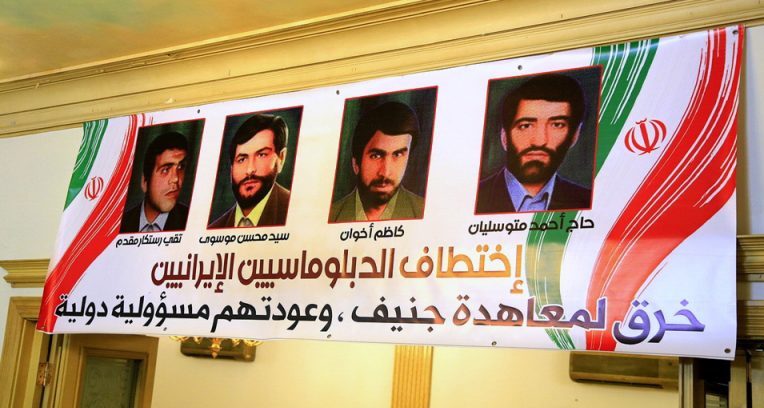
The Iranian Foreign Ministry has decried as an “act of terrorism” the 1982 kidnapping of four Iranian diplomats in Lebanon, reiterating the Islamic Republic’s call for the formation of a fact-finding group to determine the fate of the abductees.
The ministry said in a statement on the occasion of the 43rd anniversary of the abduction of the Iranian diplomats that the Israeli regime is responsible for the abduction and hostage-taking of its citizens, and continues to seriously pursue the matter with relevant international authorities.
On July 4, 1982, Ahmad Motovasselian, a military attaché at Tehran’s Embassy in Beirut, Mohsen Mousavi, the Iranian chargé d’affaires in Lebanon, Taqi Rastegar Moqaddam, an employee of the Embassy, and Kazem Akhavan, a photographer for the Islamic Republic News Agency (IRNA), were abducted by Israeli-affiliated armed groups.
“There is ample evidence, as repeatedly stated, and copious indications proving that the Iranian diplomats were abducted by an armed group inside Lebanon during the occupation of Lebanese soil by the Zionist regime, handed over to the occupying forces, and transferred to the occupied territories,” the statement said.
“The abduction of Iranian diplomats on July 4, 1982, in Beirut was not only an act contrary to international law and a flagrant violation of the 1961 Vienna Convention on Diplomatic Relations, but also constitutes an act of terrorism according to the Convention Against the Taking of Hostages (1979).”
The statement also expressed Tehran’s gratitude for the Lebanese government’s cooperation in following up on the status of the four abducted Iranian diplomats, including Beirut’s registration of the issue through correspondence with the then secretary-general of the United Nations in September 2008.
The Iranian Foreign Ministry, as the statement said, once again calls on the authorities of the Lebanese government, as well as the Secretary-General of the United Nations and the International Committee of the Red Cross and other competent international bodies, to fulfill their legal and humanitarian responsibilities in pursuing the case and to exert all their efforts to clarify the status of the abducted Iranian diplomats.
“In this framework, the proposal for the formation of a joint fact-finding committee between Iran and Lebanon, with the cooperation of the International Committee of the Red Cross, to pursue the matter and clarify the status of the abducted Iranian diplomats is once again emphasized,” the statement said.
The Iranian Foreign Ministry has repeatedly called for the Lebanese government, the UN, and the International Committee of the Red Cross to investigate the incident and determine the fate of the missing diplomats.
Lebanese militiamen from the Lebanese Forces Group admitted to the 1982 kidnapping of the four Iranian nationals who were on a diplomatic mission in North Lebanon. Investigations show that they were last handed to Israel at the time.
Although there is information about those who abducted the Iranian diplomats and their whereabouts, the fate of these Iranians is still shrouded in mystery, with their families and Iranian authorities believing they are still alive and languishing in Israeli jails.
Sy Hersh Says Lack of Radiation Means Iran Moved Uranium Before US Attack
Sputnik – 05.07.2025
No signs of radioactive contamination have been detected since US airstrikes on Iranian nuclear facilities in June, suggesting that enriched uranium may have been removed from key sites before the attack, Pulitzer Prize-winning journalist Seymour Hersh says.
Veteran US investigative journalist Seymour Hersh says Iran moved highly-enriched uranium from key sites before attacks ordered by US President Donald Trump.
The US Air Force and US Navy targeted deeply-buried Iranian nuclear sites, including those in Fordow and Isfahan, in the June 22 operation codenamed ‘Midnight Hammer’.
Trump and his Defense Secretary Pete Hegseth both claimed the targets had been “obliterated.” But Hersh’s sources say Iran had already removed large quantities of uranium enriched to up to 60% of the fissile isotope U235.
“450 pounds of enriched uranium had been moved from Fordo to the reprocessing site at Isfahan prior to the US attack there” Hersh wrote on his Substack blog.
The attack on Isfahan — a site believed to be involved in further uranium enrichment and processing — used cruise missiles launched from a US Navy submarine.
While the official objective of the strike was the “complete dismantlement” of Iran’s nuclear program, Hersh argues it was merely aimed at a temporary disruption and the destruction of critical infrastructure.
His sources say the destruction of Fordow and Isfahan has set Iran’s nuclear development back by several years, but did not eliminate the program entirely.
“Results? Glass is half-full,” Hersh writes. “a couple of years of respite and uncertain future. Critics? Half-empty. Reality? Half-full. There you are.”
He stresses that Israel was the main beneficiary of the operation, while the risk remains that Iran could restore its nuclear infrastructure and eventually resume the program.
Featured Video

NEW FAUCI EMAILS EXPOSE ATTACK ON NATURAL IMMUNITY
or go to
Aletho News Archives – Video-Images
From the Archives
Elite Western universities are a corrupt, parasitic empire
Instead of high-quality education, these institutions are fostering a global neo-feudal system reminiscent of the British Raj
By Dr. Mathew Maavak | RT | May 30, 2025
In a move that has ignited a global uproar, US President Donald Trump banned international students from Harvard University, citing “national security” and ideological infiltration. The decision, which has been widely condemned by academics and foreign governments alike, apparently threatens to undermine America’s “intellectual leadership and soft power.” At stake is not just Harvard’s global appeal, but the very premise of open academic exchange that has long defined elite higher education in the US.
But exactly how ‘open’ is Harvard’s admissions process? Every year, highly qualified students – many with top-tier SAT or GMAT test scores – are rejected, often with little explanation. Critics argue that behind the prestigious Ivy League brand lies an opaque system shaped by legacy preferences, DEI imperatives, geopolitical interests, and outright bribes. George Soros, for instance, once pledged $1 billion to open up elite university admissions to drones who would read from his Open Society script.
China’s swift condemnation of Trump’s policy added a layer of geopolitical irony to the debate. Why would Beijing feign concern for “America’s international standing” amid a bitter trade war? The international standing of US universities has long been tarnished by a woke psychosis which spread like cancer to all branches of the government.
So, what was behind China’s latest gripe? ... continue
Blog Roll
Recent Comments
seversonebcfb985d9 on Villains of Judea: Philip Esfo… loongtip on Report warns that ‘Jewish terr… Craig Nelms on New study shows that toxic gas… loongtip on A Funny Thing Happened on the… loongtip on EU free trade pact on hold as… John Edward Kendrick on Regime Change In Iran Is The F… Bill Francis on Australia Passes New Hate Spee… seversonebcfb985d9 on Australia Passes New Hate Spee… Bill Francis on Britain’s AI Policing Plan Tur… loongtip on Miami Beach Resident Questione… loongtip on Israeli agricultural export co… loongtip on The War On Free Speech In Aust…


 Aletho News
- NEW FAUCI EMAILS EXPOSE ATTACK ON NATURAL IMMUNITY
- Why is the US using Jordan as the main base in possible Iran attack?
- American Academy of Pediatrics Hit With Federal RICO Lawsuit for Vaccine Safety Fraud
- Mom Tells Trump: Dumping Sewage Sludge on Farmland Won’t Make America Healthy Again
- NIAID Funds Gain-of-Function Study Engineering Novel Influenza Viruses
- Villains of Judea: Philip Esformes and the Largest Healthcare Fraud in American History
- US sanctions Popular Conference for Palestinians Abroad over alleged Hamas links
- You reap what you sow: Ukraine’s blackout is Zelensky’s failure
- Ukraine Blackouts Caused by Zelensky’s Terrorist Attacks on Russia
- Orban Hits Out at EU Green Light for $1.5 Trillion Ukraine Aid
- If Americans Knew
- Oppose Israel’s Abuses While You Still Can
- UNRWA Heads Tell Ha’aretz: ‘We Don’t Radicalize Palestinians – Their Lived Existence Does’
- Plans Call for “New Rafah” Built in Israel’s Image — Without Palestinians
- Posing as priest, reporter is spat at many times, highlighting anti-Christian sentiment in Israel
- Leaked Documents: “Planned Community” in Rafah Would Force Palestinians Into Israeli Panopticon
- ‘Permits of Humiliation’: How Israel Strangles Christian Education in Jerusalem
- “The world sees death, destruction and injustice – and they see dollar signs” – Not a ceasefire Day 105
- War criminal Netanyahu kills 11 in Gaza, joins Board of Peace – Not a ceasefire Day 104
- Another baby dies of cold in Gaza, as Rafah crossing remains locked down – Not a ceasefire Day 103
- Brutal Beatings, Arson, and Impunity: A Palestinian Plant Nursery Becomes a Target for Settler Pogroms
- No Tricks Zone
- New Study: Sea Levels Rose 20 Times The Modern Rate During The Roman Warm Period
- As German Gas Storage Dips Dangerously Low…Shortage Hardly Avoidable
- New Study: Brazil’s Relative Sea Level Was 2+ Meters Higher And SSTs 3-4°C Warmer 6000 Years Ago
- Philosopher Schopenhauer: Climate Science Certainty Stems From Stupidity, Ignorance
- New Study: Species Extinction Rates Declining Since 1980 – ‘Climate Change Is Not An Important Threat’
- Denmark Places Climate Protection Above Animal Welfare, Poisoning And Culling Cows
- New Study: Greenland Was 3-7°C Warmer And Far Less Glaciated Than Today 6000-8000 Years Ago
- German Media Report That Current Frigid Weather Can Be Explained By Arctic Warming!
- Berlin Blackout Shows Germany’s $5 Trillion Green Scheme Is “Left-Green Ideological Pipe Dream”
- Modeling Error In Estimating How Clouds Affect Climate Is 8700% Larger Than Alleged CO2 Forcing
 Aletho News