Collapsing Empire: Iran Throws Down Gauntlet
By Kit Klarenberg | Global Delinquents | October 4, 2024
On October 1st, Iran launched scores of missiles at the Zionist entity, in response to the murder of Hezbollah leader Hassan Nasrallah, among many brazen provocations and escalations targeting the Resistance in recent months. Voluminous footage of key Israeli infrastructure, including military and intelligence sites, being comprehensively flattened by the Islamic Republic’s inexorable onslaught has circulated widely, amply contradicting predictable claims emanating from Tel Aviv and Washington that the blitzkrieg was successfully repelled by Western air defence systems.
It is the largest, most devastating attack on the Zionist entity in its 76-year history. The full impact is not yet apparent. While US officials worriedly warned hours in advance they possessed “indications” Iran was preparing to attack Israel, the incursion’s timing, scale, and severity caught all concerned by surprise. Washington dispatching thousands more troops across West Asia in the days prior, explicitly in Israel’s defence, was evidently no deterrent to Tehran.
That deployment came replete with a supposedly rock-solid Pentagon pledge to come to the rescue should the Islamic Republic seek to repeat the historic, wide-ranging drone and rocket barrage to which it subjected the Zionist entity in April. Department of Defense apparatchiks boldly declared they and Tel Aviv alike were “even better prepared for a new Iranian attack” than last time round. The ease with which Israel’s purportedly impregnable Iron Dome was bested exposes this braggadocio as hopeless hubris at best, dangerous delusion at worst.
The Islamic Revolutionary Guard Corps is ever-cautious, and has acted with extraordinary restraint since the 21st century Holocaust erupted in Gaza. Some analysts have interpreted this implacable self-control, and Tehran’s lack of immediate backlash against acts such as the audacious assassination of Hamas leader Ismail Haniyeh on Iranian soil, as not merely rigid reluctance to escalate into all-out war with Israel and its Western backers, but an inability to respond at all. Tel Aviv’s unprecedented October 1st battering should dispel any such inference.
Senior Israeli politician Yair Golan, who returned to Israeli Occupation Force (IOF) service following October 7th, has branded Iran’s latest assault a “declaration of war” against the Zionist entity. Notorious Benny Gantz boasts Tel Aviv “has capabilities that were developed for years to strike Iran, and the government has [our] full backing to act with force and determination.” Meanwhile, IOF spokesperson Daniel Hagari declares, “there was a serious attack on us and there will be serious consequences.”
The IRGC appears to have calculated such threats and pronouncements will be as empty and meaningless as the Pentagon’s pledge to be “better prepared” for a future Iranian strike. At the very least, the Islamic Republic fears no Anglo-Israeli retaliation to its latest broadside. That may mean Tehran has grounds to believe the balance of power in the region, and in any future large-scale conflict with the Zionist entity and West, has irrevocably tipped in favour of the Resistance.
Eerily, a little-noticed report published September 19th by the Jewish Institute for National Security of America (JINSA), a powerful and shadowy Zionist lobby organisation, inadvertently reached this same conclusion. It laid out in forensic detail how the Empire will be on the defence, and at grave disadvantage, in all-out hot war with Iran. Along the way, a blueprint for Resistance victory was plainly sketched. With Tehran having thrown down a gauntlet on October 1st, we could now be seeing that plan being put into action.
‘Gaining Overmatch’
Titled U.S. Bases in the Middle East: Overcoming the Tyranny of Geography, JINSA’s report was authored by former CENTCOM commander Frank McKenzie, who oversaw the Empire’s disastrous retreat from Afghanistan. It appraises the viability, value, and force projection capabilities of current US military installations throughout West Asia, focusing on Bahrain, Jordan, Kuwait, Qatar, Saudi Arabia, and UAE. The findings are stark, calling for an immediate overhaul of American basing across the region:
“Our current basing structure, inherited from years of haphazard decision-making, and driven by divergent operational and political principles, has yielded installations that are not optimally situated for the most likely threats of today and the future in the region.”

Despite mentioning “threats” in plural, JINSA’s sole focus is the Islamic Republic. While a myriad of issues with the Empire’s modern day positioning throughout West Asia are identified, the “most important” conclusion drawn is that Washington’s “current basing array detracts from our ability to deter Iran and fight them effectively in a high-intensity scenario.” McKenzie is nonetheless at pains to portray Tehran as somewhat feeble and vulnerable:
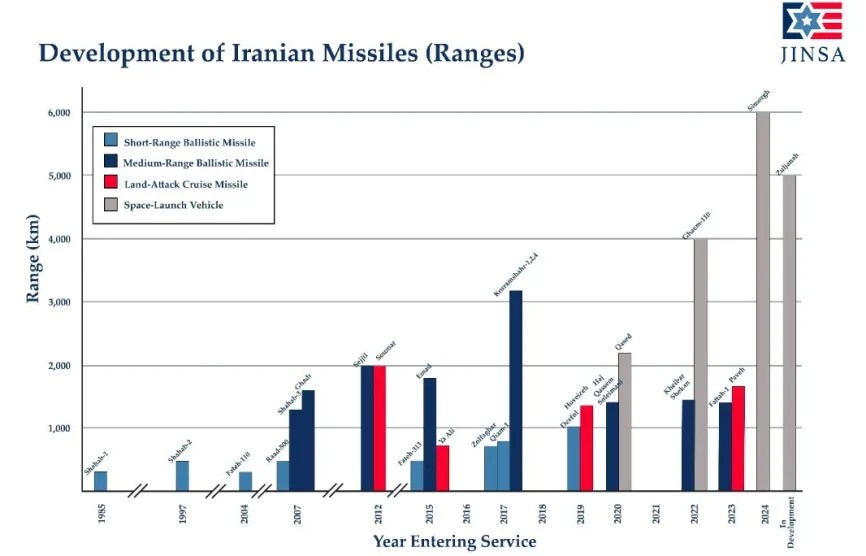
“The Iranians have no army that can be deployed as an invading force. They have a small and ineffective navy, and in practical terms, no air force. Their missile and drone force, though, is capable of gaining overmatch against many of its neighbors… they can deploy more attacking missiles and drones than can be defended against.”
As such, JINSA notes, “a theater-level war with Iran would be a war of missiles and drones,” and Tehran’s April 13th attack on Israel was a “comprehensive demonstration of Iranian operational design.” The IRGC sought to overwhelm the Zionist entity’s air defences and radar systems with waves of low-cost drones and cruise missiles, to “make it difficult for Iron Dome or Patriot to engage the ballistic missiles that followed.”
McKenzie correctly forecast that the April strike would “probably remain the basic template for large-scale Iranian attacks.” He appraised the effort – “at least conceptually” – as “a sound one,” from which “there are lessons for all to learn.” The most pressing and “obvious” takeout was, “for the defenders of the Gulf, it will be a war of strike aircraft, tankers, and air and missile defense… and here is the problem”:
“These aircraft are largely based at locations along the southern coast of the Arabian Gulf… an artifact of planning against Russian incursions in the 1970s, and the Iraq and Afghanistan campaigns of the early decades of this century. They are close to Iran, which means they have a short trip to the fight… but that is also their great vulnerability. They are so close to Iran that it takes but five minutes or less for missiles launched from Iran to reach their bases.”
The “thousands of short-range missiles” Iran possesses are also a key negative “factor”, offering “no strategic depth.” While an F-35 fighter jet “is very hard to hit in the air… on the ground it is nothing more than a very expensive and vulnerable chunk of metal sitting in the sun.” Refuelling and rearming facilities on US bases in West Asia “are also vulnerable, and they cannot be moved.” Most damagingly of all:
“These bases are all defended by Patriot and other defensive systems. Unfortunately, at such close range to Iran, the ability of the attacker to mass fires and overwhelm the defense is very real.”
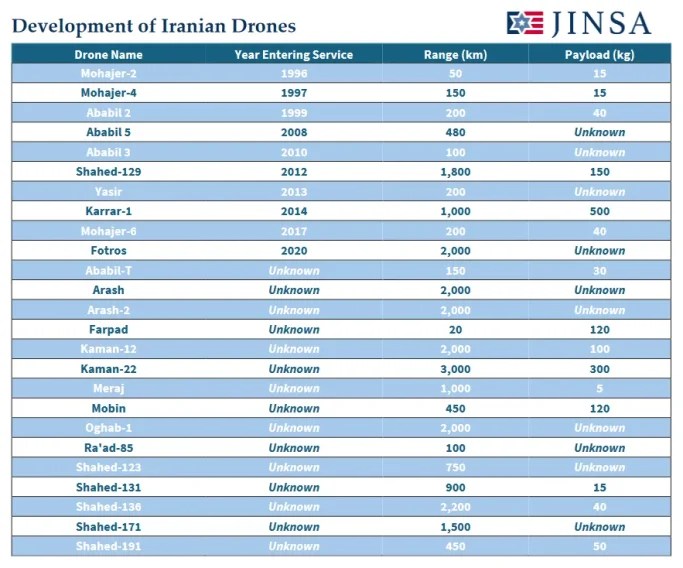
In closing his roadmap to Tehran’s victory, McKenzie bitterly laments, “it is hard to escape the conclusion that our current basing structure is poorly postured for the most likely fight that will emerge.” The Empire “will not be able to maintain these bases in a full-throated conflict, because they will be rendered unusable by sustained Iranian attack.” Imperial overreach in West Asia has now fallen victim to “the simple tyranny of geography.” And all along, the Islamic Republic has been taking rigorous notes:
“The Iranians can see this problem just as clearly as we do, and that is one of the reasons why they have created their large and highly capable missile and drone force.”
‘Nothing But Force’
For all the JINSA report’s doom and gloom, McKenzie does express some optimism – of the most fantastical, self-deceived kind. For one, he suggests Iran cannot threaten the Empire’s “carrier-based aviation” capabilities. Still, he concedes “there aren’t enough carriers, and therefore naval aviation will probably not be the central weapon in a fires war with Iran.” The former CENTCOM chief also conveniently overlooks AnsarAllah’s recent crushing defeat of the US Navy during Operation Prosperity Guardian, which unambiguously exposed the redundancy of US aircraft carriers altogether.
Elsewhere, McKenzie declares that the Empire “needs to move aggressively to develop basing alternatives that demonstrate that it is prepared to fight and prevail in a sustained high-intensity war” with Tehran, and therefore “overcome unfavorable basing geography.” One radical solution proposed by the JINSA report is to “consider basing in Israel”. US military presence in Tel Aviv has already been slowly growing over recent years. While largely unacknowledged and downplayed, it has proven incredibly controversial every step of the way.
In September 2017, the IOF announced the arrival of America’s first permanent military installation in the Zionist entity. Such was the backlash domestically and regionally, officials in Washington raced to deny this was the case, prompting a major cleanup of IOF websites referencing the site. Any move to create a fully-fledged US base in Israel, explicitly for war-fighting purposes, would inevitably spark even greater outcry, and be considered as a major escalation by the Resistance, demanding a drastic response.
Such an eventuality undoubtedly didn’t occur to the former CENTCOM chief. His analysis is hazardously unsound and fallacious in other areas too. On top of Israel’s “geographic advantages”, he praises Tel Aviv’s “powerful, proven air and missile defense capability.” It was this “competence”, combined with “US and allied assistance, and the cooperation and assistance of Arab neighbors”, that ensured Iran’s April strike on the Zionist entity was a “failure”, McKenzie muses.
He appraises this group effort, which supposedly prevented Iran from delivering decapitation strikes against the Zionist entity’s military and intelligence structure, as “in every measurable way… a remarkable success story.” If McKenzie’s view was shared by the Pentagon, this may explain why the US was so caught off guard by, and ill-prepared for, Tehran’s recent bludgeoning of Israel. Far from an embarrassing cataclysm, the April effort was a spectacular success, which exposed Israel’s fatal weaknesses, and reshaped West Asia forever.
Far from wanting to deliver a death blow, the Islamic Republic sought to deliver a measured, well-advertised show of strength, while avoiding further escalation, and a wider response. In the process, the IRGC demonstrated that if it wished, in future its missiles could successfully bypass the Iron Dome, and would wreak immense destruction. Then, a “new equation” was spelled out by a Corps Commander:
“If from now on the Zionist regime attacks our interests, assets, personalities, and citizens, at any point we will attack against them.”
That message was evidently not received in corridors of power in Brussels, London, Tel Aviv, and Washington. This is apparent from JINSA’s report, which states “events of the past two months clearly show that Iran can be deterred from undertaking irresponsible and deadly attacks in the region,” in reference to a lack of retaliation to the Zionist entity’s provocations during this time. It seems the finest Western military minds fell into the trap of believing no response was forthcoming from Tehran, because there couldn’t and wouldn’t be.
Fast forward today, and the question of whether the battlefield primacy of the Resistance in West Asia will finally be comprehended by their adversaries, in light of October 1st, remains an open one. As Russian military strategist Igor Korotchenko once observed, “this Anglo-Saxon breed understands nothing but force.”
Tehran rejects ‘baseless’ US accusations of meddling in presidential election
Press TV – October 4, 2024
Iran has rejected “baseless” US accusations that it is attempting to influence the upcoming presidential election, saying Washington, with a record of interference in other countries’ affairs, is “in no position” to make such claims against Tehran.
Iran’s Foreign Ministry spokesman Esmaeil Baghaei made the remarks on Friday, two days after an annual assessment by the Department of Homeland Security alleged that Iran, Russia and China are trying to influence the November vote, including by employing artificial intelligence to disseminate fake or divisive information.
Baghaei said, “These repeated and baseless claims, which have been made by some US officials and institutions for some time, are politically-motivated and serve domestic political purposes.”
“The US government, which has a long history of illegal interference in the internal affairs of other countries, is in no position to level such accusations at other states.”
Back in August, the campaign of US Republican presidential candidate Donald Trump claimed that it had been hacked, pinning the blame on Iran without providing evidence.
Meanwhile, the FBI and other US agencies alleged that Iranian hackers had sought to interest President Joe Biden’s campaign in information stolen from Trump’s campaign, sending unsolicited emails to people associated with the then-Democratic candidate.
The Islamic Republic said it does not accord any credence to the accusations, emphasizing that it has no intent or motive to meddle in the American election.
Iran’s oil production nears pre-sanctions levels: Report
The Cradle | October 4, 2024
Iran’s oil production is running at almost full capacity despite US sanctions, amid Israeli threats to target Tehran’s oil infrastructure in an expanded regional war, Bloomberg reported on 4 October.
The Islamic Republic’s oil output has reached 3.4 million barrels per day, just a few hundred thousand barrels below a previous high of 3.9 million.
After US President Donald Trump withdrew the US from the JCPOA nuclear deal in 2018 and reimposed sanctions on Iran, Tehran’s production dropped as low as two million barrels per day.
Iran now sells much of its oil to China at reduced prices, as Beijing has been willing to ignore US sanctions seeking to block the sales.
“Iran is having success exporting thanks to a willing customer in China, the increased sophistication of illicit transportation channels, and the relatively low interest in the US to take action,” said Henning Gloystein and Greg Brew, analysts at Eurasia Group. “There’s a risk that Israel strikes Iranian oil facilities.”
According to Bloomberg, Tehran’s increased sales to China have taken place with the “tacit approval” of the White House, as US President Joe Biden and his advisors have eased sanctions enforcement to keep gasoline prices low.
In August 2023, before the wars in Gaza and Lebanon began, Bloomberg reported that “months of secretive diplomacy” between the US and Iran “have yielded progress on prisoner exchanges, the unblocking of frozen assets, and possibly even Iran’s enrichment of uranium. They also seem to have produced an informal arrangement on oil flows.”
Israel reportedly threatened to bomb Iran’s nuclear or oil facilities following Tehran’s large-scale missile attack on Israel.
Iran fired as many as 400 ballistic missiles at Israel on 1 October in retaliation for its killing of Hamas leader Ismail Haniyeh in Tehran in July and Hezbollah leader Hassan Nasrallah in Beirut on 27 September.
In an off-the-cuff remark to a reporter, Biden said that his administration has been “discussing” possible Israeli plans to attack Iran’s oil industry in retaliation for the Iranian attack.
Bloomberg added that world oil prices jumped five percent on Thursday after Biden’s comment.
Tehran Will Strike Israeli Refineries, Gas Fields If Israel Attacks Iran – IRGC
Sputnik – 04.10.2024
TEHRAN – Tehran will strike Israeli refineries, gas fields if Israel attack Iran, deputy commander in the Iran’s Islamic Revolutionary Guard Corps (IRGC), Ali Fadavi, said on Friday.
“If the occupiers [Israel] make a mistake [by attacking Iran], we will strike at all their energy sources … all oil refineries and gas fields,” Fadavi was quoted as saying by the Mehr news agency.
Iran is a large country with many economic centers, while Israel has only three power plants and several refineries that Iran can hit at the same time, Fadavi added.
Tehran does not intend to continue to strike Tel Aviv, but if Israel takes any action against Iran, the response will be tougher, Iranian Foreign Minister Abbas Araghchi said on Friday.
“We do not intend to continue the attacks. If Israel takes any more steps against Iran, our actions will be tougher, and we will definitely respond. Our response will be proportionate and absolutely calculated,” Araghchi told a press conference in Lebanon, as quoted by the Tasnim news agency.
Explainer: Why did Israeli air defense systems again fail to intercept Iranian missiles?
By Ivan Kesic | Press TV | October 3, 2024
The successful military operation launched by the Iranian armed forces on Tuesday against the Israeli-occupied territories again demonstrated the inefficacy of Israeli air defense systems.
Iranian military officials did not specify the number of ballistic missiles that were fired directly at the Zionist entity, however, media reports put the number of missiles at more than 400.
According to a statement released by the Islamic Revolution Guard Corps (IRGC), almost 90 percent of missiles managed to penetrate through air defenses to hit the intended target.
Israeli regime sources claimed that Iran launched 180 ballistic missiles and that “a large number” or “the majority” were intercepted by air defense systems.
Some Israeli and Western media reports also claimed that 99 percent of missiles were intercepted.
Evidence in the form of verified videos circulating on social media showed that the interception was very little as missiles successfully landed on the ground, hitting the targets.
There was smoke and fire all around as sirens blared loudly across the occupied territories.
In Iran, private footage shared on social media platforms showed one salvo of missiles near Kermanshah, another salvo near Tabriz, and another salvo near Shiraz.
Hundreds of direct strikes were reported in the Israeli-occupied territories, many of them hitting the Nevatim Airbase, Tel Nof Airbase, Hatzerim Airbase and the Mossad headquarters in Tel Aviv.
Overall, the data of hundreds of ballistic missiles and 80-90 percent success rates almost perfectly match the IRGC sources and confirm that the Israeli regime is once again resorting to disinformation.
As with the April case, more than a hundred widely visible intercept explosion traces over the skies of Jordan, Syria and Iraq would be recorded in the early evening hours, while there is again virtually none.
To shoot down medium-range ballistic missiles, used in the Iranian strike, the Israeli regime uses long-range anti-ballistic systems such as Arrow and David’s Sling that operate at a range of tens or hundreds of kilometers and very high altitudes.
Both systems proved extremely ineffective during Iran’s retaliatory strike with missile salvos in April, as well as Yemen’s single hypersonic missile attack on Tel Aviv in mid-September.
The case related to Nevatim Airbase is particularly intriguing, where nearly 30 warheads hit the target simultaneously within a matter of seconds, without any visible attempt of intercepting.
Some sources suggest that one of the direct hits on Tel Nof Airbase with visible secondary explosions was actually the Arrow battery with radar.
The US-Israeli joint development of the Arrow systems over the past 25 years cost billions of dollars and was previously touted as “99 effective,” which seems bizarre today.
Based on these pompous and obviously fabricated claims, Israel secured a $3.5 billion export contract with Germany last year, marking the largest military sale in its history.
All reliable data in the past year show that these air defense systems were developed to intercept outdated ballistic missiles and are not capable of dealing with salvoes of maneuvering missiles or even single hypersonic types.
In reporting the Iranian attack, the Israeli regime also used other propaganda tools, such as emphasizing the claims that there were no deaths, although the Iranian targets were obviously military installations, not civilians.
Israeli military sources also are yet to publish any foolproof technical evidence of Iranian ballistic missiles being intercepted, basing their claims on rhetoric.
Importantly, last year Press TV website exposed the fallacy of the so-called “over 90 percent success rate” of Israel’s air defense systems, establishing why such claims were trumpeted for lucrative exports and psychological calming of its own settler population.
Iran slams G7’s ‘irresponsible’ statement on ‘necessary response’ to Israel
Press TV – October 3, 2024
Iran has condemned the Group of Seven (G7)’s “biased and irresponsible” approach toward the developments in West Asia, including Tehran’s “necessary response” to Israel’s acts of aggression.
G7 leaders in a statement on Wednesday condemned Tehran’s launch of more than 180 missiles at Tel Aviv in retaliation for Israel’s assassination of Hamas and Hezbollah leaders and an Iranian military commander.
Iran’s Foreign Ministry spokesman Esmail Baqaee on Thursday “pointed to the definite responsibility of G7 countries, especially the US, in aggravating insecurity and instability in West Asia due to their armament, financial and political support of the aggressor”.
He warned about the serious consequences of this approach on the peace and stability of the region and beyond.
“The recent missile operation by the Islamic Republic of Iran against a combination of military-intelligence targets of the Zionist regime was a necessary response to the acts of aggression by the occupying regime,” Baqaee said.
The operation was “within the framework of the inherent right of legitimate self-defense”, the spokesman said, condemning the use of threats and sanctions to put pressure on the Iranian nation.
Baqaee emphasized Iran’s determination to protect the national security and the vital interests of the Iranian people in the region.
He also criticized the “irresponsible interventions of extra-regional actors, including the US, especially through continuing their all-out support for the Israeli occupation regime” which he described as the “main cause of instability in the West Asia region”.
“If the Group of Seven is really concerned about the peace and security of the region, it should use its leverage to immediately end the Palestinian genocide and stop the aggression of the Zionist regime against Lebanon, Syria and other countries in the region,” he said.
The Foreign Ministry on Thursday said it had summoned the German and Austrian ambassadors after Berlin and Vienna summoned Iran’s representatives to protest the Islamic Republic’s response to the Israeli assassinations.
Russia concerned over Israeli signs of possibly striking Iran: Ryabkov
Al Mayadeen | October 3, 2024
Russia has expressed concern over “Israel’s” signals suggesting a potential “retaliatory strike” on Iran, which could involve targeting Iranian nuclear facilities.
In a statement to Sputnik on Thursday, Russian Deputy Foreign Minister Sergey Ryabkov emphasized that considering such scenarios is unacceptable.
He expressed deep concern, highlighting that any escalation of the current war could lead to severe consequences.
“I also want to say that nuclear facilities as such, in any case, should always be taken out of any conflict,” Ryabkov stressed.
He also emphasized the need for the international community, including the IAEA and its leadership, to speak out and condemn the mere consideration of such scenarios.
This comes shortly after Israeli media reported, citing Israeli officials, that “Israel” might respond to Iran’s significant ballistic missile attack on Tuesday by targeting strategic infrastructure, such as gas or oil rigs, or by directly striking Iran’s nuclear sites.
Now it’s oil: China, BRICS and OPEC+ build new trading system, locking out US suppliers and banks
Inside China Business | September 27, 2024
China and Iran developed a comprehensive energy market, involving shadow fleets of tankers and a system of rebranding oil for domestic use, or for further export to other Asian countries. Russia has since joined, after sanctions were placed on oil producers and banks there. The result is a parallel economy that now totals millions of barrels per day in shipments to China by OPEC+ countries, and a sharp decline in global demand from Western suppliers. The implications for US and European oil suppliers are very negative, as global crude prices are now far below profit breakeven levels. Already, US oil majors are shelving oilfield development projects, and reducing active rig count. Resources and links: Barrons, BP Says Oil Demand Is Falling, While OPEC Says It’s Rising.
What Gives? https://www.barrons.com/articles/bp-s…
Rigzone, JP Morgan Talks Global Oil Demand https://www.rigzone.com/news/jp_morga…
S&P, Barclays lowers 2024 Brent oil price forecast to $93/b on demand concerns https://www.spglobal.com/commodityins…
Oil Prices Poised To Climb in 2024 Amid Geopolitical Uncertainty https://www.investopedia.com/oil-pric…
CNBC, OPEC is highly bullish on long-term oil demand growth. Not everyone agrees https://www.cnbc.com/2024/09/24/opec-…
NPR, Oil prices plunge as demand from China falls https://www.npr.org/2024/09/14/nx-s1-…
Zerohedge, What Sanctions? China Imports Record Amount Of Iranian Oil https://www.zerohedge.com/energy/what…
The axis of evasion: Behind China’s oil trade with Iran and Russia https://www.atlanticcouncil.org/blogs…
Oil price charts from finviz.com/futures and Bloomberg https://finviz.com/futures_charts.ash…
US drillers cut oil and gas rigs for fifth week in six, Baker Hughes says https://www.xm.com/se/research/market…
Average WTI price needed for U.S. oil and gas producers to stay profitable by well status in selected U.S. oilfields as of 2024 https://www.statista.com/statistics/7…
Capital Expenditure (CapEx) Definition, Formula, and Examples https://www.investopedia.com/terms/c/…
Iran Showed Restraint for Two Months Amid Israeli Attacks – Russian UN Envoy
Sputnik – 02.10.2024
Iran has shown “exceptional” restraint for two months amid Israeli attacks, Russia’s UN envoy Vassily Nebenzia told a special meeting of the UN Security Council.
“A new victim of the Israeli war machine is Lebanon,” Nebenzia said. “After intense shelling of Lebanese cities, its southern neighbor launched a ground operation in that country.”
He added that Iran only took military action “after a series of political liquidations, including the assassination of Hamas Executive Council Head Haniyeh, Hezbollah Secretary General Nasrallah and a number of other leaders of movements opposing Israel,” and showed “exceptional restraint” for two months.
The Russian diplomat noted that statements from Western countries give the impression that “the only problem facing the Council is the response to Iran’s missile strike.”
“It is hard to imagine what role in the diplomatic process with such an assessment of the situation one can count on. It’s as if this all happened ‘in a vacuum’,” Nebenzia added. “As if nothing is happening and did not happen in Lebanon, Gaza, Syria, Yemen, which led to a new most dangerous round of the growing Middle East conflict.”
There is a strong impression that the US is negotiating the release of hostages held in Gaza and a ceasefire in the enclave with itself, the envoy noted.
“For the sake of its Middle East ally, Washington has already used its veto power five times in the Security Council and since the beginning of July has been deliberately trying to lead us all around by the nose,” Nebenzia charged, “publicizing its notorious ‘plan Biden’ and its quiet diplomacy to broker a deal between Hamas and Israel.”
“Frankly speaking, all this gives the impression that Washington is conducting these indirect negotiations with itself,” he added.
The UN Security Council may consider adopting new resolutions on Lebanon amid the escalating conflict in the region, and given the non-implementation of the 2006 resolution 1701 that was meant to keep the peace following Israel’s last invasion of the country.
“Right after the meeting, we will hold informal consultations and see what documents can be proposed by the members,” Nebenzia told reporters later.
When asked whether Tehran had warned Moscow before Israel’s attack, Nebenzia stressed that Iran is a sovereign state that makes its own decisions.
Iran missile attack: what we learned last night
Mindless march to World War 3 may have hit a brick wall yesterday
Alex Krainer’s TrendCompass | October 2, 2024
During the night of 2nd October 2024, Iran unleashed their operation “True Promise 2,” launching between 200 and 400 ballistic missiles into Israel. As the video footage coming from Israel has shown, many of these missiles reached their targets inflicting extensive damage on the ground. Apparently, some offshore gas platforms were also struck. Claims and counterclaims are a bit all over the place at the moment: Israelis have claimed that the Iranian attack failed and that most of the missiles were intercepted. Netanyahu’s aide Hananya Naftali even tweeted a “BRAVO” to Israel’s aerial defence systems for intercepting “nearly all the missiles.”
But the footage from last night gives a very different impression; it corroborates those who claimed that many missiles hit their targets. A few of the videos also confirm that the Iranians do indeed possess hypersonic missiles. We also know now that these have a long range and seem accurate enough. This lesson alone could be a game changer.
Why hypersonic missiles are a game changer
Hypersonic missiles can’t be intercepted. The most advanced Western air defence systems can shoot down incoming projectiles flying at up to mach 3. So far as the Patriot Missiles are concerned, their success rate is very poor even at that. Nothing in Western powers’ arsenal can defend against hypersonic missiles and this certainly got the Pentagon’s attention. The implication is that all US Navy assets and military bases in the Middle East are defenceless, and that Iran has the capability to strike them.
During yesterday’s attack, two U.S. destroyers in the eastern Mediterranean launched twelve SM-3 ballistic missile interceptor rockets, their most advanced air defence system. The problem is that the current production rate of SM-3s is down to zero! Thus, even if SM-3s are effective, Western air defence systems are not for the long haul and will deplete rapidly in case of further escalation.
At the same time, Iran has many thousands of missiles ready. Here’s what CSIS says about Irans’ arsenal:
“Iran possesses the largest and most diverse missile arsenal in the Middle East, with thousands of ballistic and cruise missiles, some capable of striking as far as Israel and southeast Europe. For the past decade, Iran has invested significantly to improve these weapons’ precision and lethality. Such developments have made Iran’s missile forces… a credible threat to U.S. and partner military forces in the region.”
Hezbollah can shoot 3,000 missiles a day?
Then there’s Hezbollah. According to a 130-page report titled, “The Most Deadly War of All,” compiled by a group of six Israeli think-tanks and based on three years of research and the opinions of over 100 Israeli defence experts and IDF commanders, war on Hezbollah would be, as the report’s title suggests, the most deadly war of all for Israel. According to the report, Hezbollah would be capable of launching 2,500 to 3,000 missiles per day, a combination of long-range precision guided and unguided rockets.
The barrages would be launched toward specific targets in Israel with the potential of destroying the Iron Dome air-defence capability. IDF’s reserves of Iron Dome and David’s Sling interceptor missiles would likely be depleted within a few days from the start of a full-scale war with Hezbollah, leaving Israel exposed to thousands of missiles and drones launched by Hezbollah. This all could result in thousands of casualties and widespread panic among the settlement populations (already an estimated 200,000 settlers have abandoned their settlements in the north of Israel since the start of hostilities).
Not to mention, both Iran and Hezbollah have been preparing for this outbreak for over two decades now, and the Iranians now promised a much more painful strike if Israel decides to escalate further. Western powers won’t be able to stem the tsunami that Netanyahu is working to unleash, any more than the Operation Prosperity Guardian in the Red Sea has been able to restrain the Ansarallah in Yemen. But therein lies the good news, I think.
The good news, inshallah!
Certain political factions in Israel and in the West have been working overtime to provoke a major war and draw in both Iran and the United States. Some of the pro-Israel voices are utterly rapturous about the prospect; the things they say sound utterly deranged and surreal. It’s as though they convinced themselves that Israel is somehow endowed with superpowers and that it can instantly turn anyone they wish into a smoldering heap of ashes. They also seem to think that by killing Hassan Nasrallah, Israel eliminated Hezbollah. They ignore the fact that Hezbollah is a very extensive military and political organization. If the Israelis bombed the Vatican tomorrow and killed the pope, that wouldn’t be the end of Catholic Church.
Indeed, very childish and dangerous delusions gripped the most fanatical cohort of Israel supporters and saner heads must by now be aware of the extremely reckless adventure they’re dragging us all into. If a wider war erupts, all of US, UK and NATO assets in the Middle East are sitting ducks and will be destroyed or expelled from the region.
Furthermore, an interruption of crude oil traffic from the Persian Gulf would inflict a devastating blow to G7 economies at a time when they least need it. In addition, all of this could be hitting the proverbial fan just ahead of the elections, and they haven’t even managed to assassinate Trump yet! It is all reckless in the extreme; the odds of victory (which is yet to be defined) are slim to none, while a cataclysmic failure is nearly certain.
I may be succumbing to wishful thinking myself, but I believe that we will shortly see leaders in the West pull hard on the handbrake and effect the quickest 180 degree turn yet! In the end, perhaps they will arrive at the calculation that sacrificing Benjamin Netanyahu and allowing Israel a break so they can sober up and reassess their predicament is a much better deal than following the unhinged fanatics and committing a collective suicide. We’ll know soon enough. Who knows, maybe we can avoid World War 3.
‘Iron Dome Proved to Be a Bust’: Iran Strikes Israel in Retaliation for Assassinations
By John Miles – Sputnik – October 2, 2024
Iran launched a significant retaliatory attack against Israel late Tuesday night, ending months of speculation about how or whether the country would strike back after its provocative killing of Hamas leader Ismail Haniyeh in Tehran.
The United States reportedly provided Iran with assurances after the attack against Haniyeh in July that Israel and the US would move constructively towards the establishment of a Palestinian state, ending Israel’s military aggression against its neighbors and Palestinians in the Gaza Strip, where over 42,000 have died according to figures reported by the territory’s health ministry. Tel Aviv’s deadly attack against Hezbollah chief Hassan Nasrallah in Lebanon last week dashed hopes of a cessation of violence as Israel claims it is preparing for a broader invasion of Lebanon.
“I’ve seen the videos and you can see the missiles continue to rain down and hit targets. Israel is imposing a news blackout,” former CIA analyst Larry Johnson said. “They don’t want the knowledge out there about what happened. But Iran made sure that it was not going to hit and run the risk of killing hundreds or thousands of Israeli civilians.”
“They were not going to act like the Israelis,” the analyst claimed. “They really consider themselves, if you will, more humane, more honorable, and by virtue of their action, I think they can make that case.”
Johnson claimed Iran was forced to strike Israel after false assurances from the United States that Israel would cease attacks on its neighbors after its killing of Haniyeh. Iran previously launched a retaliatory attack on Israel in April after Tel Aviv’s bombing of the Iranian embassy in Damascus, Syria killed two Iranian generals. The codename Operation True Promise was announced for the strike.
Iran’s Tuesday attack, dubbed Operation True Promise II, appears significantly more substantial than April’s strike in which the vast majority of Iranian missiles, rockets and drones were intercepted by Israel’s Iron Dome. Iran was reportedly able to successfully strike Israeli military targets Tuesday, including an Israeli air base where multiple US-provided F-35 aircraft were hit. Johnson claimed Israel’s attack against Nasrallah would’ve been launched from an F-35; the fighter jet would be key to any Israeli invasion of Lebanon.
The commentator compared Israel’s Iron Dome to the US Patriot missile system, claiming the US is unable to replenish the defense system rapidly enough to allow Israel to fight a long war of attrition.
“Lockheed Martin… can make about one and a half, one and a quarter [missiles] a day,” said Johnson. “I think Israel’s in a similar situation… [Iran] put Israel on notice, ‘If you launch any further strikes against us in any retaliation, we’re going to hit you harder next time and with more lethality.’ So this right now has a chance to really get out of control.”
“I cannot rule out that Israel is going to try to launch some conventional weapons at Iran, but I think they’re going to be defeated,” Johnson claimed.
“Israel may be tempted to try to use a nuclear device against an Iranian target,” he warned. “If that happens then we’re going to really be into another dimension, and this is going to get very, very serious. It’s already a serious situation, but it will get absolutely dangerous.”
The analyst suggested Israel would not be able to support military engagement against multiple enemies, even with the United States backing it up.
“Israel is not in a position to fight a multi-front war and it does not have the strategic depth to fight wars of attrition. And that’s exactly what it’s got itself into now,” Johnson pointed out. “It’s not going to be able to finish off Hezbollah in a week. It couldn’t even finish off Hamas in 12 months. It’s not going to be able to finish off Syria, finish off the Houthis or finish off Iran… That’s what Israel fails to understand. It does not have the ability to sustain itself in these kinds of operations for an extended period of time.”
“If US ships are involved that are off the coast of Iran, then we’ll see Iran react and they may even end up attacking some US ships,” he continued. “But they’ll certainly retaliate against Israel. Israel is not out of the woods at all, despite all the delusional nonsense that the extreme Zionist supporters are saying when they say, ‘oh, Iran didn’t touch us, Iran didn’t hurt us at all.’ Nonsense.”
The development comes as Democrats attempt to hold onto the White House in November’s presidential election, with former President Donald Trump casting himself as a defender of Israel. Vice President Kamala Harris will attempt to do the same, Johnson claimed, while also trying to prevent a regional conflagration in the Middle East before the election.
“The politics are going to dictate a lot of strategic military decisions, unfortunately,” said Johnson.
Featured Video

The Empire Enters the Cocaine Trade
or go to
Aletho News Archives – Video-Images
Book Summary
The Whole Soy Story: The Dark Side of America’s Favorite Health Food

Lies Are Unbekoming | January 20, 2026
Soybeans generate approximately $80 million annually in mandatory producer assessments alone, funding a marketing apparatus that has transformed an industrial commodity into one of America’s most trusted “health foods.” The campaign succeeded. Soy milk lines supermarket shelves beside dairy. Soy protein fortifies everything from infant formula to energy bars. Vegetarians rely on tofu and tempeh as dietary staples. Doctors recommend soy to menopausal women. School lunch programs serve soy-based meat substitutes to children. An estimated 60 percent of processed foods contain soy derivatives. The premise underlying this proliferation—that Asians have thrived on soy for millennia and that modern science validates its health benefits—has been repeated so often it functions as established fact.
Kaayla T. Daniel’s The Whole Soy Story dismantles this premise through systematic examination of the scientific literature. The book documents that traditional Asian soy consumption averaged roughly one tablespoon daily, consumed as fermented condiments after processing methods that neutralized inherent toxins—a pattern bearing no resemblance to American consumption of industrially processed soy protein isolate, soy flour, and soy oil. Daniel catalogs the antinutrients that survive modern processing (protease inhibitors, phytates, lectins, saponins), the toxic compounds created by industrial methods (nitrosamines, lysinoalanine, hexane residues), and the heavy metals concentrated in soy products (manganese, aluminum, fluoride, cadmium). She traces the mechanisms by which soy isoflavones—plant estrogens present at pharmacologically significant levels—disrupt thyroid function, impair fertility, and interact with hormone-sensitive cancers. The evidence emerges from peer-reviewed journals, FDA documents, and industry sources themselves.
The stakes extend beyond individual dietary choices. Infants fed soy formula receive isoflavone doses equivalent to several birth control pills daily, with blood concentrations 13,000 to 22,000 times higher than their natural estrogen levels. Soy protein isolate—the ingredient in formula, protein bars, and thousands of products—has never received GRAS (Generally Recognized as Safe) status; its only pre-1960s use was as an industrial paper sealant. Two senior FDA scientists formally protested their own agency’s approval of soy health claims, citing evidence of thyroid damage and reproductive harm. The Honolulu Heart Program found that men consuming tofu twice weekly showed accelerated brain aging and increased dementia. These findings have not penetrated public awareness because the institutions responsible for consumer protection have been compromised by the industry they regulate. The Whole Soy Story presents the evidence that has been systematically excluded from mainstream health messaging, enabling readers to evaluate for themselves what the soy industry prefers they never learn. … continue
Blog Roll
Recent Comments
seversonebcfb985d9 on French court jails pro-Palesti… eddieb on Fourteen Incredible Facts Abou… Bill Francis on European leaders’ shift in the… seversonebcfb985d9 on Villains of Judea: Philip Esfo… loongtip on Report warns that ‘Jewish terr… Craig Nelms on New study shows that toxic gas… loongtip on A Funny Thing Happened on the… loongtip on EU free trade pact on hold as… John Edward Kendrick on Regime Change In Iran Is The F… Bill Francis on Australia Passes New Hate Spee… seversonebcfb985d9 on Australia Passes New Hate Spee… Bill Francis on Britain’s AI Policing Plan Tur…


 Aletho News
- French court jails pro-Palestine activist and mother over Gaza genocide speech
- Shot, amputated, and imprisoned: Palestinian man seeks to rebuild life after being maimed and tortured by Israeli forces
- Building Disney Land on the Moon More Likely than Kushner’s Gaza Plan
- U.S. Funds Continue to Flow to Ecuadorian Groups Despite Trump-Era Suspension
- A pro-EU regime is moving to suppress this proud nation. Will they be able to withstand it?
- US-Russia Arms Control May Face ‘Very Dark Period’ – Scott Ritter
- Israel moves to restrict Palestinian re-entry to Gaza, ‘encourage outflow’: Report
- Trump aims to create new UN and own it, Brazil’s Lula warns
- UN rapporteur says Israeli demolition of UNRWA compound reflects broader attack on UN system
- From Proxy to Disposable: The US Betrayal of the Syrian Kurds
- If Americans Knew
- Israeli drone strike kills two children collecting firewood in Gaza – Not a ceasefire Day 107
- Another Gaza baby freezes to death on Netanyahu’s watch – Not a ceasefire Day 106
- Oppose Israel’s Abuses While You Still Can
- UNRWA Heads Tell Ha’aretz: ‘We Don’t Radicalize Palestinians – Their Lived Existence Does’
- Plans Call for “New Rafah” Built in Israel’s Image — Without Palestinians
- Posing as priest, reporter is spat at many times, highlighting anti-Christian sentiment in Israel
- Leaked Documents: “Planned Community” in Rafah Would Force Palestinians Into Israeli Panopticon
- ‘Permits of Humiliation’: How Israel Strangles Christian Education in Jerusalem
- “The world sees death, destruction and injustice – and they see dollar signs” – Not a ceasefire Day 105
- War criminal Netanyahu kills 11 in Gaza, joins Board of Peace – Not a ceasefire Day 104
- No Tricks Zone
- Germany’s Natural Gas Crisis Escalates … One Storage Site Near Empty …Government Silent
- Polar Colding…Antarctica Saw Its Coldest October In 44 Years!
- New Study: Sea Levels Rose 20 Times The Modern Rate During The Roman Warm Period
- As German Gas Storage Dips Dangerously Low…Shortage Hardly Avoidable
- New Study: Brazil’s Relative Sea Level Was 2+ Meters Higher And SSTs 3-4°C Warmer 6000 Years Ago
- Philosopher Schopenhauer: Climate Science Certainty Stems From Stupidity, Ignorance
- New Study: Species Extinction Rates Declining Since 1980 – ‘Climate Change Is Not An Important Threat’
- Denmark Places Climate Protection Above Animal Welfare, Poisoning And Culling Cows
- New Study: Greenland Was 3-7°C Warmer And Far Less Glaciated Than Today 6000-8000 Years Ago
- German Media Report That Current Frigid Weather Can Be Explained By Arctic Warming!
 Aletho News