What arsenal will Iran use to punish Israel over Haniyeh’s assassination?
By Ivan Kesic | Press TV | August 5, 2024
The stage is set for the retaliatory military operation against the Israeli regime following the assassination of Hamas political bureau leader Ismail Haniyeh in Tehran on Wednesday.
A series of statements by the Iranian leadership, including Leader of the Islamic Revolution Ayatollah Seyyed Ali Khamenei, President Masoud Pezeshkian and the Islamic Revolution Guard Corps (IRGC) indicate that the regime must brace up for a severe and unprecedented punishment.
Haniyeh was assassinated along with his bodyguard in a terrorist attack in the Iranian capital early on Wednesday. He was in Tehran to attend the swearing-in ceremony of President Pezeshkian.
The attack came barely hours after Israel killed top Hezbollah military commander Fuad Shukr in an airstrike on a residential area in the southern suburb of Beirut, in which an Iranian military advisor and some civilians were also martyred.
Following the attack on Haniyeh, Iran called upon the UN Security Council to take immediate and decisive action, describing the attack as a “serious infringement on the sovereignty and territorial integrity of Iran” and a “blatant violation of the basic norms and principles of international law.”
In a letter to the world body, Amir-Saeed Iravani, Iran’s permanent ambassador to the UN, emphasized the country’s right to self-defense under Article 51 of the United Nations Charter.
“This rogue and terrorist regime and its accomplices bear responsibility. The Islamic Republic of Iran will not hesitate to exercise its inherent right to self-defense, as enshrined in Article 51 of the United Nations Charter to respond decisively and promptly,” he said.
In a statement on Sunday, IRGC said the attack was carried out with a “short-range projectile” with a warhead of approximately 7 kg fired from outside the residence of Haniyeh in north Tehran.
How will retaliation unfold?
There is an intense and animated debate in military and policy circles about the nature of Iran’s response to the terrorist attack against Haniyeh and the kind of weapons that could be used.
Iran possesses a massive arsenal of long-range precision strike weapons, which it has demonstrated in recent years against regional terrorist strongholds and with direct strikes on the Zionist entity in April.
The country has a massive arsenal of ballistic, quasi-ballistic, cruise and hypersonic missiles, by far the largest in the region and one of the four largest in the world, as well as some of the most advanced models of loitering munitions, also in colossal quantities.
The long ballistic missiles tailor-made for retaliation against the Zionist regime include Shahab-3, Ghadr-110, Fajr-3, Ashura, Sajjil, Emad, Qiam-1, Rezvan, Khorramshahr and Kheibar, while relatively smaller ballistic missiles include Dezful, Kheibar Shekan and Haj Qasem.
The first group of ballistic missiles has a range of 1,000 to 2,500 km and a warhead of 700 to 1,500 kg, while the second group has a range of 1,000 to 1,500 km and mostly carries a half-ton warhead.
Some of them can also carry several warheads, each capable of aiming different targets and some are fitted with submunitions dispensers for striking wide areas like air bases.
This means that Iran is capable of hitting Zionist targets from every ballistic base or site across the country, and the large payload is equivalent to the most powerful bunker busters and can penetrate hardened targets protected by several meters of concrete.
Novelties in Iran’s missile arsenal are the precision-guided Fattah hypersonic missiles with a terminal speed of Mach 13 to 15, and the new Fattah-2 glider version, both untouchable for existing air defense systems.
Furthermore, the last stages of these models also have hypersonic speeds, from Mach 5 to 12, so they are also difficult to intercept by enemy systems, as proved by the operation ‘True Promise’ in April.
Iranian long-range cruise missiles include Soumar, Meshkat, Ya-Ali, Hoveyzeh, Abu Mahdi, Paveh, Talaiyeh and Qadr-474, while long-range loitering munition (kamikaze drones) include Ababil, Arash, Shahed-131, Shahed-136 and Shahed-238.
Iran also has a large fleet of warplanes and drones capable of carrying various bombs and air-to-ground missiles, but previous experience shows that the above-mentioned expendable weaponry is favored for retaliatory operations of this type.
In the April operation against Israel, Iran did not use the most capable ballistic missiles or loitering munition, but still managed to successfully hit Israeli air bases with Kheibar Shekan missiles and engaged numerous Israeli, American, British and French aircraft in the interception of Shahed-136 kamikaze drones.
In that operation, the main purpose of small, cheap and slow kamikaze drones with 50 kg warheads was not to cause damage but to load radar systems in a simultaneous attack with more powerful missiles.
A flight hour of modern jets and their air-to-air missiles, or air defense missiles, cost several times more than kamikaze drones, hence the successful shooting down of swarms represents a cost-efficiency loss.
Brigadier General Amir Ali Hajizadeh, the commander of the IRGC’s Aerospace Division, said that in the operation “True Promise” only 20 percent of the originally planned weapons were used, but the enemies had to mobilize everything at their disposal to counter them.
This time, for the announced new strike on the Zionist entity, it is possible to see newer models of missiles and kamikaze drones or those relatively older models in larger quantities.
This time, the targets could be new, since the Ramon and Nevatim air bases were targeted in April as warplanes that took part in the attack on the Iranian consulate in Damascus had taken off from there.
Since the latest terrorist attack in Tehran was most likely carried out by Zionist intelligence operatives, the headquarters of Israeli spy organizations are potential targets.
These headquarters, unlike the two mentioned air bases, are not in uninhabited desert regions but in the densely populated metropolitan Tel Aviv, where half of the population of the Zionist entity lives.
Other likely targets are military bases, vital industrial infrastructure, ports or regime buildings, also in the areas of Tel Aviv, Haifa and other major cities in the occupied territories.
Due to the high sophistication and precision of Iranian missiles, the only danger for ordinary settlers in the occupied territories is the debris of their own interceptor missiles, either in the case of successful or unsuccessful shooting down.
Warnings from Iran
On Wednesday, Ayatollah Khamenei had warned the Israeli regime of a “harsh response” for the assassination of a “dear guest” – the leader of the Hamas resistance movement.
“The criminal and terrorist Zionist regime martyred our dear guest in our homeland and left us bereaved, but it also set the ground for a harsh punishment for itself,” the Leader said.
“He was not afraid of embracing martyrdom in the way of God and saving God’s servants, but we consider it our duty to avenge his blood in this bitter and horrific incident that took place in the Islamic Republic’s territory,” he asserted.
President Pezeshkian, in a meeting with Jordanian top diplomat Ayman Safadi on Sunday, described the assassination of Haniyeh as a “great crime” that he said “will not go unanswered.”
The IRGC said in a statement that the terrorist attack was “planned and executed” by Israel with the support of the US government, warning that the Zionist regime would receive “a severe punishment at the appropriate time, place and manner.”
The top commander of IRGC, Major General Hossein Salami, strongly warned the Israeli regime of the consequences of the recent assassinations in Tehran and Beirut.
The perpetrators, he said, “should await sacred fury, harsh revenge, and vengeance on the part of the devoted, resolute, and determined mujahedeen of the various fronts of the regional resistance.”
On Friday, Ali Baqeri Kani, acting Foreign Minister, said Iran will certainly exercise its inherent and legitimate right to punish the “criminal Zionist gang” for its terrorist attack.
Baqeri made these remarks during a phone call with Josep Borrell, the EU’s High Representative for Foreign Affairs, emphasizing that the Israeli regime’s terrorist act, in addition to violating Iran’s territorial integrity and national sovereignty, has endangered regional and international peace and stability.
Parliament Speaker Mohammad Baqer Qalibaf in remarks on Sunday said Iran’s “crushing and smart response” to the Israeli regime and the US will make them regret the assassination
Meanwhile, the Pentagon has announced the deployment of additional warplanes and warships to the Persian Gulf region, as well as an additional 4,000 Marines and sailors amid heightened tensions.
Shoigu Arrives in Iran to Discuss Global, Regional Security
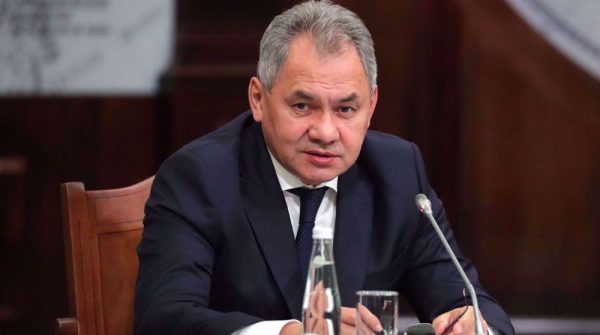
Sputnik – 05.08.2024
TEHRAN – Russian Security Council Secretary Sergei Shoigu has arrived in Iran for a planned working visit to discuss global and regional security issues, the Russian Security Council said on Monday.
Shoigu will hold talks with his Iranian counterpart, Ali Akbar Ahmadian, and Chief of the General Staff of the Iranian armed forces Mohammad Bagheri. Shoigu will be received by Iranian President Masoud Pezeshkian.
The agenda includes a wide range of issues of cooperation between Russia and Iran in Tehran, including security and economy.
Previously, Kremlin spokesman Dmitry revealed that Russian President Vladimir Putin would be meeting with Masoud Pezeshkian at the BRICS summit in Kazan in October. In July, the Iranian President-elect released a message underscoring that Russia is “a valued strategic ally and neighbor to Iran and my administration will remain committed to expanding and enhancing our cooperation.”
“I will continue to prioritize bilateral and multilateral cooperation with Russia, particularly within frameworks such as BRICS, the Shanghai Cooperation Organization and Eurasia Economic Union,” Pezeshkian stated.
Sergei Shoigu’s visit comes as Israel has been bracing for a potential attack from Iran and Lebanese Shiite movement Hezbollah in the wake of the assassination of Haniyeh and Hezbollah commander Fuad Shukr last week.
Iran to cross what ‘Israel’ deems ‘red lines’ in retaliation: Sources
Al Mayadeen | August 4, 2024
Iran considers the assassination of martyr Ismail Haniyeh to be one of its red lines that was crossed, “regardless of the details of the operation,” indicating that it will handle the response accordingly, Al Mayadeen’s correspondent in Tehran reported, citing an informed Iranian source.
That is why “Iran will respond in a way that crosses the red lines set by the Israeli occupation,” the source informed source stated.
They also pointed out that “Iran will not yield to pressures and messages of de-escalation because any abandonment of retaliation will open the door to more Israeli aggressions.”
Today, the Speaker of the Iranian Parliament, Mohammad Bagher Ghalibaf, affirmed that his country “has not and will not leave any attack on its sovereignty unanswered,” stressing that the Israeli occupation and the United States “will regret their actions and will be forced to change their calculations.”
A response stronger than ‘Operation True Promise’
Earlier, Kazem Gharibabadi, the Deputy Chief for International Affairs of the Iranian Judiciary, warned in an interview for Al Mayadeen that the Israeli occupation would face severe repercussions for its actions, such that “it would not dare to commit further acts of terrorism or violate Iran’s sovereignty.”
Gharibabadi’s remarks come in response to the Israeli assassination of Ismail Haniyeh, the head of the Political Bureau of Hamas, alongside one of his guards in Tehran, on July 31.
He emphasized that the response to the assassination of Ismail Haniyeh, the head of Hamas’ political bureau, would be “more decisive than Operation True Promise“.
Gharibabadi described the Israeli action as “an act of terrorism that defies international resolutions,” arguing that it reveals not the strength but the impotence of the Israeli entity.
He asserted that the killing of innocent civilians, including women and children in Gaza, demonstrates the defeat of the Israeli entity.
CENTCOM chief in Israel for ‘preparations’ against Iran, Hezbolla
The Cradle | August 4, 2024
The US CENTCOM chief arrived in Israel on 3 August to help Tel Aviv prepare for an Iranian retaliation to the killing of Hamas chief Ismail Haniyeh on its soil last week, as well as Hezbollah’s response to the strike on Beirut hours before.
General Michael Kurilla arrived in Israel on Saturday “as preparations continue for a possible attack against Israel from Iran [and Hezbollah] in retaliation for the assassinations of senior Hamas and Hezbollah leaders,” two US officials told Axios on 4 August.
Kurilla had already been planning a trip to Israel prior to the serious escalation, which saw Tel Aviv attack Beirut and Tehran within hours of each other.
“He is expected to use the trip to try to mobilize the same international and regional coalition that defended Israel against an attack from Iran on Apr. 13,” an official told Axios. At the time, Iran launched hundreds of drones and missiles at Israel in response to the destruction of its consulate in Damascus and the killing of several Iranian officials.
Three US officials told the outlet they expect an Iranian retaliation to Haniyeh’s killing “as early as Monday.”
According to the report, Washington is concerned it will be difficult to garner the same amount of regional support in defense of Israel as it did in April, given that Haniyeh’s assassination comes within the context of the Gaza war – for which Israel has drawn major criticism from the Arab world and internationally.
Kurilla is set to visit several Gulf nations, as well as the kingdom of Jordan – which played a major role in intercepting Iranian projectiles during the April attack. Amman has already vowed to confront any violation of its airspace.
Jordan also opened up its airspace to US and Israeli jets during Iran’s April operation. “The U.S. hopes the same will happen again if needed,” another US official told Axios.
US and Israeli officials also “don’t know if Iran and Hezbollah will conduct a coordinated attack or operate separately … they think both Iran and Hezbollah are still working on finalizing their military plans and approving them at the political level.”
Meanwhile, the Pentagon said Washington has been beefing up its presence in the region in anticipation of the Resistance Axis’s responses, which could potentially include Iraq’s resistance factions and Yemen’s Ansarallah movement.
Defense Secretary Lloyd Austin said the US will maintain the presence of the USS Abraham Lincoln aircraft carrier, and has ordered more ballistic missile and defense-capable cruisers and warships to the region.
An additional squadron of fighter jets has also been deployed, in line with US President Joe Biden’s vow to send new deployments in defense of Israel during his phone call with Benjamin Netanyahu on Thursday.
Iran’s Supreme Leader Ali Khamenei vowed last week a “harsh punishment” for Israel. Hezbollah chief Hassan Nasrallah also warned Tel Aviv: “You do not know which red lines you have crossed.”
Source tells Tasnim NYT report on Haniyeh assassination false
Al Mayadeen | August 3, 2024
An informed source has dismissed a recent report by The New York Times regarding the assassination of Hamas chief Ismail Haniyeh in Tehran. Speaking to Tasnim News Agency on Saturday, the source described the NYT article published on August 1 as being “riddled with lies” and a continuation of a psyop of the Israeli occupation that lacks any news value.
The source specifically highlighted the involvement of Ronen Bergman, one of the report’s authors, suggesting that his track record undermines the credibility of the article.
“The Zionist regime has crossed a major red line and committed a barbaric and cowardly assassination, whose full details are being investigated,” the source stated.
They accused the Israeli occupation of mobilizing its security elements within media outlets to disseminate false details, thereby confusing the public and experts to cover up their terrorist acts.
According to the source, vital information has surfaced about Haniyeh’s martyrdom. They refuted the NYT‘s claim that Haniyeh was killed by an explosive device covertly smuggled into his residence. Instead, the source stated that evidence indicates an aerial projectile, possibly carried by a drone, was responsible for the explosion.
The source further denied claims in the NYT report that members of Iran’s Supreme National Security Council met with the Leader of the Islamic Revolution Ayatollah Sayyed Ali Khamenei at 7 am on July 31.
The source described such details as part of an old media tactic designed to make readers believe in the authenticity of the report by providing seemingly precise information.
UK Joins US in Deploying Military Forces to Middle East After Israeli Escalation
Sputnik – 03.08.2024
The United Kingdom will deploy additional military personnel in the Middle East amid tensions in the region after the assassination of Hamas political leader Ismail Haniyeh, the country’s government said.
“Military personnel are also in the process of deploying to the region to provide Embassies with operational support to help British nationals,” read a statement from Whitehall.
Meanwhile, the United Kingdom Maritime Trade Operations agency said it had received a report of a distress signal from a vessel proceeding 170 nautical miles (195 miles) southwest of the Yemeni port of Aden.
Israeli Defense Minister Yoav Gallant discussed military cooperation with his UK counterpart John Healey Friday as Western countries seek to protect Israel as it escalates tensions in the Middle East. Iran enjoys the right under international law to launch a retaliatory strike against Tel Aviv after the Zionist state launched an attack on sovereign Iranian territory earlier this week.
The United Kingdom and Israel significantly upgraded relations in 2021 to “strategic partnership” status. The British government has been criticized for its foundational role in unrest in the Levant, which it provoked in 1917 by granting its colonial holdings in Palestine to Zionist settlers. The UK has continued to back Israel diplomatically and militarily, although the modern armed forces of the former colonial power are considered relatively weak.
Earlier this week Hamas confirmed that Haniyeh had been killed in an Israeli attack on his residence in Tehran after he took part in the inauguration of newly elected Iranian President Masoud Pezeshkian. Hamas blamed Israel and the United States for the highly provocative attack on its territory and vowed to retaliate.
Israel has also launched attacks on civilian targets in Yemen and Lebanon this week, killing Hezbollah commander Fuad Shukr.
Israel’s allies block Security Council statement condemning Tehran attack

The Cradle | August 1, 2024
The US, UK, and France blocked a Russian-proposed statement at the UN Security Council (UNSC) condemning the assassination of Hamas politburo chief Ismail Haniyeh in Tehran, Iran’s envoy to the UN Amir Saeid Iravani said on 1 August.
“Russia’s proposed statement condemning Israel’s heinous act was blocked by the US, UK, and France,” Iravani told Russian media following an emergency UNSC meeting on Wednesday night.
“It is now absolutely necessary to hold the occupying [Israeli] regime accountable for the atrocities it committed,” the Iranian diplomat added. “This regime cannot be allowed to escape accountability and consequences for the violations it has committed.”
During the session, Iravani stressed that Tehran “reserves its inherent right to self-defense in accordance with international law” and said that “the responsibility of the United States as a strategic ally and main supporter of the Israeli regime in the region cannot be overlooked in this horrific crime. This act could not [have] occurred without the authorization and intelligence support of the US.”
Permanent UNSC members Russia and China strongly condemned Israel’s attacks on the Iranian and Lebanese capitals, blasting Tel Aviv for once more sabotaging Gaza ceasefire talks and pushing the region to the brink of all-out war.
“China is deeply concerned about the potential for this incident to further destabilize the region,” Fu Cong, China’s permanent representative to the UN, emphasized during the meeting. “China strongly opposes and condemns recent irresponsible actions, including Israel’s attacks on southern Beirut,” he added.
Fu also called on Tel Aviv to cease all military actions in Gaza and appealed to “influential countries” to “put more pressure and work more vigorously … to put out the flames of war in Gaza.”
Russia’s first deputy envoy to the UN, Dmitry Polyansky, also condemned Haniyeh’s killing, calling it an “attempt” to drag Iran into war.
“This provocative attack was carried out while the Hamas leader was in Iran on an official invitation to attend the inauguration ceremony of the President-elect of the Islamic Republic of Iran, Masoud Pezeshkian. Those behind this political assassination had to realize how dangerous the consequences could have been for the entire region,” Polyansky said.
“The misguided practice of targeted liquidations of prominent political and military figures is bringing the Middle East to the brink of a region-wide war,” the Russian diplomat added.
Feda Abdelhady Nasser, the deputy permanent observer of the State of Palestine to the UN, told the gathered diplomats that the global community “has a choice to make” between “peace and security” or letting “Israel drag us all to the abyss.”
“Israel has been the oppressor, tormentor, and murderer of Palestinians for decades, and it is the longstanding destabilizer of our region,” Nasser highlighted.
Lebanon’s Acting Permanent Representative to the UN, Hadi Hashem, contested Israel’s claims that the attack on the Beirut suburb of Dahye this week was an act of “self-defense.”
“Israel’s claim that it seeks to protect the population it occupies is a display of hypocrisy,” Hachem said, adding, “The real goal of Israel is to prolong and escalate the hostilities. And it is ironic that the killer of tens of thousands of children in Gaza sheds tears for the children of the occupied Syrian Golan.”
Similarly, Syria’s UN ambassador, Qusai al-Dahhak, stressed that “Israel is responsible for the crime in Majdal Shams” and noted that the territory is Syrian, accusing Israel of “weaponizing” the attack on the Druze community “to continue its aggression on the states of the region.”
Robert Wood, deputy US ambassador to the UN, called on UNSC members with influence over Iran “to increase pressure on it to stop escalating its proxy conflict against Israel and other actors.”
France and the UK took a similar line, reiterating a call for an “immediate ceasefire” in Gaza and condemning what they said was Iranian support for “destabilizing actors in the region.”
Khamenei vows to avenge blood of ‘dear guest’ Haniyeh, warns Israel of ‘harsh punishment’
Press TV – July 31, 2024
Leader of the Islamic Revolution Ayatollah Seyyed Ali Khamenei has warned the Israeli regime of a “harsh response” for the the assassination of Hamas’s Political Bureau Chief Ismail Haniyeh, saying it is the Islamic Republic’s duty to avenge the blood of the Palestinian resistance leader.
Ayatollah Khamenei made the remarks on Wednesday, hours after Haniyeh, who had traveled to Tehran to attend the swearing-in ceremony of Iran’s new president, was killed in a dawn attack in the capital.
“The criminal and terrorist Zionist regime martyred our dear guest in our homeland and left us bereaved, but it also set the ground for a harsh punishment for itself,” the Leader said.
Ayatollah Khamenei commended Haniyeh’s years-long sacrifices in his fight against the Israeli occupation and said he was ready for martyrdom and sacrificed his children and households on this path.
“He was not afraid of embracing martyrdom in the way of God and saving God’s servants, but we consider it our duty to avenge his blood in this bitter and horrific incident that came to pass in the Islamic Republic’s territory,” the Leader asserted.
The Leader also extended his condolences to the Islamic Ummah, the resistance front, the proud nation of Palestine as well as Haniyeh’s family and one of his companions, who was martyred with him.
Haniyeh was in Tehran to attend the inauguration ceremony of new Iranian President Masoud Pezeshkian on Tuesday.
Iranian authorities announced that rigorous investigations have been launched into the targeted killing of Haniyeh in the capital and the results will subsequently be released.
The Islamic Republic has declared three days of national mourning for the loss of the Palestinian resistance leader.
Palestinian groups have already condemned his assassination in the strongest terms, vowing to make those behind the assassination pay the price of the heinous act.
Haniyeh, 62, was born in a refugee camp near Gaza City and joined Hamas in the late 1980s during the First Intifada or uprising.
As Hamas grew in power, Haniyeh rose through the ranks and was appointed part of a “collective leadership” in 2004 and reached the Hamas top job in 2017.
Three of his sons were killed in an Israeli airstrike on Gaza in April.
Iran Rejects US Intelligence Words on Tehran’s Alleged Interference in Elections – Reports
Sputnik – 30.07.2024
TEHRAN – Iran’s mission to the United Nations has rejected US intelligence statements regarding Tehran’s alleged interference in the upcoming elections in the United States, the IRNA news agency reported on Tuesday.
On Monday, media reported that the office of the Director of National Intelligence of the United States had unsubstantiated claims that Russia, China and Iran allegedly use marketing, communications and other means to influence US voters and the outcome of the upcoming presidential election.
“Iran has no purpose or activity aimed at influencing the US elections. Most of these accusations are being made as part of psychological actions to artificially revive election campaigns,” the Iranian mission to the UN said, as quoted by the news agency.
China responds to US election interference claim
RT | July 30, 2024
Beijing has never interfered in US elections and has no intention of doing so, the Chinese Foreign Ministry has stressed in response to accusations recently levied by US intelligence officials.
The ministry’s statement comes in response to a late July Election Security Update by the US Office of the Director of National Intelligence (ODNI) in which Russia, China and Iran were accused of supposedly using their influence to impact US politics and threaten the upcoming US presidential election, scheduled for November.
In the report, ODNI stated that while China “probably does not plan to influence the outcome of the US presidential election,” actors linked to Beijing are expected to “seek to denigrate down-ballot candidates” who are seen as a threat to China’s core interests. The agency suggested that similar actions were carried out by Chinese agents “in a handful of midterm races in 2022.”
ODNI also stated that it is aware that Beijing is using social media to sow “divisions in the US and portray democracies as chaotic.”
Speaking at a press conference on Tuesday, Chinese Foreign Ministry spokesman Lin Jian responded to the accusations by stating that “China has never interfered in and will not interfere in the US election.”
“We oppose the US spreading false information to smear China and oppose the US election using China as an excuse,” Lin stressed.
Kremlin spokesman Dmitry Peskov has also categorically rejected ODNI’s allegations of election meddling, describing them as “absurd” and accusing the US intelligence community of succumbing to “fashionable trends in domestic politics” and “looking for enemies.”
“The Americans cannot think of a better enemy than Russia,” Peskov told reporters on Tuesday, adding that more similar accusations are likely to come out in the future as the US election approaches. He explained that Russia and its President Vladimir Putin continue to be major factors for US Republicans and Democrats to exploit amid their ongoing political struggle.
The Kremlin spokesman expressed regret that Moscow has to deal with this fact, noting that the American politicians’ baseless accusations only serve to further harm Russian-American relations.
UK chief of staff says West should be ready for war in three years
Al Mayadeen | July 23, 2024
The new chief of the British Army General Staff has warned that Britain must be ready to fight a war in three years and double the army’s lethality as threats from Russia, China, Iran, and the DPRK escalate.
General Sir Roly Walker, the head of the general staff, told reporters that the West was facing “an axis of upheaval” with rising military ambitions, warning that a conflict with one nation may lead to another detonation elsewhere.
He argued that the UK and its allies must prepare “to deter or fight a war in three years,” emphasizing the seriousness due to China’s “threat” to Taiwan, Iran’s nuclear goals, and Russia’s military buildup evidenced by the war in Ukraine.
Walker cited US reports claiming that China’s President Xi Jinping had directed military readiness for a potential Taiwan “invasion” by 2027, alongside concerns about Iran potentially violating nuclear agreements and the ongoing conflict in Ukraine.
In a subsequent speech, Walker stated that he had “a bold ambition” for the army to “double our fighting power in three years and triple by the end of the decade,” not with additional resources but by utilizing technology and techniques developed on Ukrainian battlefields, such as drones and AI.
He argued that Russia, China, Iran, and DPRK‘s independence was growing, citing that they are becoming more supportive of each other with weapons and intelligence.
Walker predicted that it would take “five years to grind their way through” to re-capture the eastern Donbass, costing 1.5 million fatalities, arguing that Russia could recover despite this and may emerge with “a sense of wanting retribution for the support that was given to Ukraine,” thus constituting a higher medium-term threat than previously thought.
As the Labour administration has only recently begun a strategic military review following the election, Walker asserted that Britain has an “absolute urgency to restore credible hard power in order to underwrite deterrence.”
Featured Video

The Empire Enters the Cocaine Trade
or go to
Aletho News Archives – Video-Images
Book Summary
The Whole Soy Story: The Dark Side of America’s Favorite Health Food

Lies Are Unbekoming | January 20, 2026
Soybeans generate approximately $80 million annually in mandatory producer assessments alone, funding a marketing apparatus that has transformed an industrial commodity into one of America’s most trusted “health foods.” The campaign succeeded. Soy milk lines supermarket shelves beside dairy. Soy protein fortifies everything from infant formula to energy bars. Vegetarians rely on tofu and tempeh as dietary staples. Doctors recommend soy to menopausal women. School lunch programs serve soy-based meat substitutes to children. An estimated 60 percent of processed foods contain soy derivatives. The premise underlying this proliferation—that Asians have thrived on soy for millennia and that modern science validates its health benefits—has been repeated so often it functions as established fact.
Kaayla T. Daniel’s The Whole Soy Story dismantles this premise through systematic examination of the scientific literature. The book documents that traditional Asian soy consumption averaged roughly one tablespoon daily, consumed as fermented condiments after processing methods that neutralized inherent toxins—a pattern bearing no resemblance to American consumption of industrially processed soy protein isolate, soy flour, and soy oil. Daniel catalogs the antinutrients that survive modern processing (protease inhibitors, phytates, lectins, saponins), the toxic compounds created by industrial methods (nitrosamines, lysinoalanine, hexane residues), and the heavy metals concentrated in soy products (manganese, aluminum, fluoride, cadmium). She traces the mechanisms by which soy isoflavones—plant estrogens present at pharmacologically significant levels—disrupt thyroid function, impair fertility, and interact with hormone-sensitive cancers. The evidence emerges from peer-reviewed journals, FDA documents, and industry sources themselves.
The stakes extend beyond individual dietary choices. Infants fed soy formula receive isoflavone doses equivalent to several birth control pills daily, with blood concentrations 13,000 to 22,000 times higher than their natural estrogen levels. Soy protein isolate—the ingredient in formula, protein bars, and thousands of products—has never received GRAS (Generally Recognized as Safe) status; its only pre-1960s use was as an industrial paper sealant. Two senior FDA scientists formally protested their own agency’s approval of soy health claims, citing evidence of thyroid damage and reproductive harm. The Honolulu Heart Program found that men consuming tofu twice weekly showed accelerated brain aging and increased dementia. These findings have not penetrated public awareness because the institutions responsible for consumer protection have been compromised by the industry they regulate. The Whole Soy Story presents the evidence that has been systematically excluded from mainstream health messaging, enabling readers to evaluate for themselves what the soy industry prefers they never learn. … continue
Blog Roll
Recent Comments
seversonebcfb985d9 on French court jails pro-Palesti… eddieb on Fourteen Incredible Facts Abou… Bill Francis on European leaders’ shift in the… seversonebcfb985d9 on Villains of Judea: Philip Esfo… loongtip on Report warns that ‘Jewish terr… Craig Nelms on New study shows that toxic gas… loongtip on A Funny Thing Happened on the… loongtip on EU free trade pact on hold as… John Edward Kendrick on Regime Change In Iran Is The F… Bill Francis on Australia Passes New Hate Spee… seversonebcfb985d9 on Australia Passes New Hate Spee… Bill Francis on Britain’s AI Policing Plan Tur…


 Aletho News
- Germany to build 10GW of baseload gas plants (disguised as “future” hydrogen plants)
- French court jails pro-Palestine activist and mother over Gaza genocide speech
- Shot, amputated, and imprisoned: Palestinian man seeks to rebuild life after being maimed and tortured by Israeli forces
- Building Disney Land on the Moon More Likely than Kushner’s Gaza Plan
- U.S. Funds Continue to Flow to Ecuadorian Groups Despite Trump-Era Suspension
- A pro-EU regime is moving to suppress this proud nation. Will they be able to withstand it?
- US-Russia Arms Control May Face ‘Very Dark Period’ – Scott Ritter
- Israel moves to restrict Palestinian re-entry to Gaza, ‘encourage outflow’: Report
- Trump aims to create new UN and own it, Brazil’s Lula warns
- UN rapporteur says Israeli demolition of UNRWA compound reflects broader attack on UN system
- If Americans Knew
- Israeli drone strike kills two children collecting firewood in Gaza – Not a ceasefire Day 107
- Another Gaza baby freezes to death on Netanyahu’s watch – Not a ceasefire Day 106
- Oppose Israel’s Abuses While You Still Can
- UNRWA Heads Tell Ha’aretz: ‘We Don’t Radicalize Palestinians – Their Lived Existence Does’
- Plans Call for “New Rafah” Built in Israel’s Image — Without Palestinians
- Posing as priest, reporter is spat at many times, highlighting anti-Christian sentiment in Israel
- Leaked Documents: “Planned Community” in Rafah Would Force Palestinians Into Israeli Panopticon
- ‘Permits of Humiliation’: How Israel Strangles Christian Education in Jerusalem
- “The world sees death, destruction and injustice – and they see dollar signs” – Not a ceasefire Day 105
- War criminal Netanyahu kills 11 in Gaza, joins Board of Peace – Not a ceasefire Day 104
- No Tricks Zone
- Germany’s Natural Gas Crisis Escalates … One Storage Site Near Empty …Government Silent
- Polar Colding…Antarctica Saw Its Coldest October In 44 Years!
- New Study: Sea Levels Rose 20 Times The Modern Rate During The Roman Warm Period
- As German Gas Storage Dips Dangerously Low…Shortage Hardly Avoidable
- New Study: Brazil’s Relative Sea Level Was 2+ Meters Higher And SSTs 3-4°C Warmer 6000 Years Ago
- Philosopher Schopenhauer: Climate Science Certainty Stems From Stupidity, Ignorance
- New Study: Species Extinction Rates Declining Since 1980 – ‘Climate Change Is Not An Important Threat’
- Denmark Places Climate Protection Above Animal Welfare, Poisoning And Culling Cows
- New Study: Greenland Was 3-7°C Warmer And Far Less Glaciated Than Today 6000-8000 Years Ago
- German Media Report That Current Frigid Weather Can Be Explained By Arctic Warming!
 Aletho News