Iran releases ‘political prisoners’ amid Covid-19 outbreak, while virus-stricken UK keeps Assange behind bars
RT | April 9, 2020
Tehran has released an Iranian national seen as a political prisoner in the UK as it fights the coronavirus. British activists and media rushed to say Iran’s move was not enough – while being blind to a bigger problem at home.
Aras Amiri, an Iranian national and UK resident who worked with the British Council, has been temporarily released from jail, where she has been held since 2018 after being found guilty of spying. The move is likely to be a part of efforts taken by Tehran to stem the spread of the novel coronavirus in prisons in particular.
The UK board director of Amnesty International, Daren Nair, used the occasion to remind his Twitter followers that Amiri was “unjustly imprisoned” and to demand that Iranian authorities not just set her free but “let her come home to London to be with her fiancé.” The news was then eagerly picked up by various Western media outlets, including Radio Free Europe.
Amiri was arrested back in 2018 while on a family visit to Iran. Her work with the British Council reportedly involved organizing film festivals and other cultural exchanges between the two countries. The organization, describing itself as the UK’s “international organization for cultural relations and educational opportunities,” has been banned in Iran since 2009 in response to the launch of the BBC’s Persian service and the British embassy’s supposedly “significant role” in protests that rocked the country earlier the same year.
It seems that Iran – which various British officials and activists like to scold over alleged human rights violations – is showing concern for the fate of its inmates in the face of an epidemic that has seen more than 64,000 people infected nationwide.
Earlier, Tehran also temporarily released another person who has long been seen in the UK as a victim of unjust political persecution. Nazanin Zaghari-Ratcliffe, a British-Iranian journalist and aid worker, was sentenced to five years on charges of plotting to overthrow the Iranian government back in 2016.
In mid-March, she was among some 85,000 other inmates released from Tehran’s Evin prison as part of the state response to the spread of Covid-19. On March 29, her temporary leave was extended by an additional fortnight.
Such measures were just what UN Human Rights Chief Michelle Bachelet had called for in an address to governments around the world amid the pandemic.
However, Julian Assange, whom Amnesty International also called “a prisoner of conscience,” has so far been denied the same treatment from UK authorities. The British justice system has refused to release him from maximum security prison HMP Belmarsh on bail, even though the facility has already reported not just several confirmed coronavirus cases, but the first death within its walls from the dreaded disease.
Activists, medics and even the UN rapporteur on torture have repeatedly pointed to the WikiLeaks founder’s poor state of health while calling for his release. However, their pleas apparently do not provide enough ground for London to release Assange, who has not been found guilty of any serious offenses and is awaiting a court decision on his extradition to the US.
Why the US wouldn’t Ease Iran Sanctions
By Salman Rafi Sheikh – New Eastern Outlook – 09.04.2020
The past two weeks have seen US officials moving first from issuing an alert to their military commanders to make plans for a retaliatory strike against Iranian targets to talking about ‘easing’ sanctions on Iran if Iran ‘wants it.’ It’s obvious that there is no reason why the Iranians wouldn’t want to see sanctions against them being eased up. Yet, Trump’s desire for a formal request about this issue shows the latent intention of ignoring it, while using the whole scenario to its advantage i.e., let the situation exacerbate to an extent whereby the Iranian regime becomes unstable and incapable of rescuing its people from the virus, and thus collapse ultimately.
This would surely serve US interests, along with those of Saudi Arabia and Israel, which have been pushing hard to do a “regime change” in Tehran. In their calculation, the unprecedented crisis caused by the COVID-19 seems to have given them yet another opportunity to attain their ultimate objective.
Indeed, this was the intention when the US asked its military commanders to make plans for a retaliatory strike on Iran in response to an imaginary Iranian attack on US military bases—an attack that had neither been planned nor was it foreseen by anybody. But the fact that the US was going to ‘directly attack the Iranian forces’ in the wake of Iran supported militias attacking US troops shows that the intention was, as Trump himself said, to go “up the food chain”, thus creating a scenario that would be extremely difficult for Tehran to address.
Accordingly, as a part of US ‘war preparations’, the US military officials disclosed, seemingly on purpose, to the western media that Patriot air defence systems have been deployed to two Iraqi military bases and that the same systems were going to be deployed across two more bases.
While manufacturing a military crisis is one thing, executing it is another. Accordingly, even if the US ‘had a plan’, it doesn’t mean it was going to work due to multiple factors, including lack of support from US allies in Europe, who were already in the middle of operationalising Instex to start economic and financial transactions with Iran, bypassing US sanctions and showcasing their ‘independent’ approach towards Iran in the wake of widening gap between the US and Europe/NATO.
But the US sanctions are still intact; for easing sanctions will allow, in the US calculation, the Iranian regime to better tackle the COVID-19 crisis and thus stabilise itself politically and economically. This would thus undermine the very purpose of the US sanctions i.e., forcing the Iranian regime to implode and collapse.
Indeed, a collapse followed by a massive crisis in the Middle East, particularly one that involves Iran, is something that the US would welcome rather than desist. It shows why the US imposed new sanctions on Iran instead of removing the old ones.
It has happened recently when Iran, out of the necessity to cope with monetary shortfall, requested 5 billion dollars from the International Monetary Fund (IMF). While this was always obvious that the request will not be granted without US acquiescence, the US actually responded by announcing new sanctions on Iran’s oil industry, one of its very few remaining foreign exchange earners. The intention was to make life even more difficult for the Iranians.
Also, it explains why Washington has so far taken no serious steps to actually ease the sanctions on its own, even though sufficient conditions for doing so undoubtedly exist, including Iran’s response whereby they called for a halt to “warmongering during the coronavirus outbreak” and further warned that US military activities could create “instability and disaster”. On April 2, Foreign Minister Javad Zarif, addressing the US president, tweeted, “Don’t be misled by usual warmongers, AGAIN. Iran starts no wars, but teaches lessons to those who do.”
Notwithstanding the ‘progressive’ US rhetoric about easing sanctions if Iran asks for it, the fact of the matter remains that the US strategic aim in this part of the world remains a “regime change” in Iran, although it is also becoming clear with every day passing that this objective can never be achieved.
Europe has already started Instex, although it is yet to produce productive economic results and engage in economic and financial activity beyond the support for COVID-19. The Chinese have yet again come out against US war aggression, and the Russians remain a bulwark against any US adventure in the Middle East, particularly against Iran.
None of this, of course, means that the US will end its sanctions. On the other hand, it will continue to add more to the pool as it did a few days ago; after all, ‘Iranian crisis’ is the linchpin of the US military presence in the region and the key source of wealth for its military-industrial complex.
Salman Rafi Sheikh is a research-analyst of International Relations and Pakistan’s foreign and domestic affairs.
Iran to US: Do not politicize ex-FBI agent’s case, avoid exploiting his family’s emotions
Press TV – March 26, 2020
Iran has warned the United States against politicization of the possible death of a former FBI agent, whom the US administration alleges has been imprisoned in the Islamic Republic, after Washington claimed on Wednesday that he has died in detention in Iran.
Speaking on Thursday, Foreign Ministry Spokesman Abbas Mousavi said if Washington has made sure about the retired agent Robert Levinson’s death, “then it can [simply] announce this matter without politicization and attempting to take advantage of the Levinson family’s emotions.”
The US has, for long, been alleging that Levinson disappeared on the southern Iranian Kish Island in 2007. Tehran has categorically denied any involvement in his disappearance.
On Wednesday, Levinson’s family cited the US government as claiming he had died in Iranian custody.
The Iranian Foreign Ministry spokesman said the Islamic Republic has, over the recent years, done its utmost to find any evidence pointing to Levinson’s exact fate.
“Based on credible evidence, the aforementioned person left the Iranian soil for an unspecified destination years ago,” Mousavi said. He also reminded that the US itself had confirmed his departure back then.
On January 19, 2016, after years of pointing the finger to Iran for his fate, the White House Press Secretary Josh Earnest announced for the first time that “we have reason to believe that he no longer is in Iran.” Back then, Earnest said he rested assured that Iran would search for Levinson.
Elsewhere in his remarks, Mousavi emphasized that Tehran’s investigation has not yielded any leads pointing to Levinson’s still being alive, and condoled with his family over his likely demise.
‘US officials knew Levinson died on rogue CIA mission’
Until last December, the administration of US President Donald Trump would claim that Levinson was in Iranian custody and ask Tehran to hand him over.
Despite recent claims by his administration that Levinson has died in such a condition, there is ample evidence pointing to the fact that US officials already knew that he had died while on an unauthorized mission for the CIA some place outside Iran.
The fact that he was on a rogue mission had been already admitted in an article by The Washington Post, which wrote on December 12, 2013 that “an American man, who disappeared in Iran more than six years ago had been working for the CIA in what US intelligence officials described as a rogue operation that led to a major shake-up in the spy agency.”
The Post, back then, described the nature of the mission by citing emails and other documents that had shown “he had gone to Iran at the direction of certain CIA analysts who had no authority to run operations overseas.”
The New York Times also carried a piece on Wednesday, in which it said that the preceding administration of Barack Obama had at one point been tipped off about intelligence showing that “the remains of an American had been buried in [Pakistan’s] Balochistan.”
“American officials assumed that the remains were Mr. Levinson’s,” the paper wrote.
‘Repercussions for CIA’
The revelations showing the nature of the CIA mission enlisting Levinson, The Post noted, prompted “a major internal investigation” within the US spy agency.
The probe eventually had its leadership “discipline 10 employees, including three veteran analysts, who were forced out of their jobs.”
‘CIA paid off family’
The Post also said that the CIA reached an extrajudicial settlement with Levinson’s family after the emergence of his dealings with the agency. The agreement saw the agency paying the family “a $2.5 million annuity and an additional $120,000, the cost of renewing Mr. Levinson’s contract.”
“Both sides wanted to avoid a lawsuit that would publicly reveal details of the arrangement,” The Post noted.
See also:
Pompeo and Netanyahu paved a path to war with Iran, and they’re pushing Trump again
By Gareth Porter | The Grayzone | March 20, 2020
Though it narrowly averted war with Iran this January, the Trump administration is still pushing for all-out military conflict. The architects of the drive to war, Mike Pompeo and Benjamin Netanyahu, have relied on a series of cynical provocations to force Trump’s hand.
The US may escape the most recent conflict with Iran without war, however, a dangerous escalation is just over the horizon. And as before, the key factors driving the belligerence are not outraged Iraqi militia leaders or their allies in Iran, but Trump’s secretary of state, Mike Pompeo, and Israeli Prime Minister Benjamin Netanyahu, who has long sought to draw the US into a military confrontation with Iran.
Throughout the fall of 2019, Netanyahu ordered a series of Israeli strikes against Iranian allies in Iraq and against Lebanese Hezbollah units. He and Pompeo hoped the attacks would provoke a reaction from their targets that could provide a tripwire to outright war with Iran. As could have been expected, corporate US media missed the story, perhaps because it failed to reinforce the universally accepted narrative of a hyper-aggressive Iran emboldened by Trump’s failure to “deter” it following Iran’s shoot-down of a U.S. drone in June, and an alleged Iranian attack on Saudi oil facility in September.
Pompeo and John Bolton set the stage for the tripwire strategy in May 2019 with a statement by national security adviser John Bolton citing “troubling and escalatory indications and warnings,” implying an Iranian threat without providing concrete details. That vague language echoed a previous vow by Bolton that “any attack” by Iran or “proxy” forces “on United States interests or on those of our allies will be met with unrelenting force.”
Then came a campaign of leaks to major news outlet suggesting that Iran was planning attacks on U.S. military personnel. The day after Bolton’s statement, the Wall Street Journal reported that unnamed U.S. officials cited “U.S. intelligence” showing that Iran “drew up plans to target U.S. forces in Iraq and possibly Syria, to orchestrate attacks in the Bab el-Mandeb strait near Yemen through proxies and in the Persian Gulf with its own armed drones…”
The immediate aim of this campaign was to gain Trump’s approval for contingency plans for a possible war with Iran that included the option of sending as many as 120,000 U.S. troops into region. Trump balked at such war-planning, however, complaining privately that Bolton and Pompeo were pushing him into a war with Iran. Following Iran’s shoot-down of the U.S. drone over the Strait of Hormuz on June 20, Pompeo and Bolton suggested the option of killing Maj. Gen. Qassem Soleimani in retaliation. But Trump refused to sign off on the assassination of Iran’s top general unless Iran killed an American first, according to current and former officials.
From that point on, the provocation strategy was focused on trying to trigger an Iranian reaction that would involve a U.S. casualty. That’s when Israeli Prime Minister Benjamin Netanyahu interjected himself and his military as a central player in the drama. From July 19 through August 20, the Israeli army carried out five strikes against Iraqi militias allied with Iran, blowing up four weapons depots and killing as many Shiite militiamen and Iranian offcers, according to press accounts.
The Israeli bombing escalated on August 25, when two strikes on the brigade headquarters of a pro-Iranian militia and on a militia convoy killed the brigade commander and six other militiamen, and a drone strike on Hezbollah’s headquarters in south Beirut blew the windows out of one of Hezbollah’s media offices.
Netanyahu and Pompeo sabotage Trump and Macron’s attempt at diplomacy
Behind those strikes was Netanyahu’s sense of alarm over Trump toying with the idea of seeking negotiations with Iran. Netanyahu had likely learned about Trump’s moves toward detente from Pompeo, who had long been his primary contact in the administration. On August 26, French President Emanuel Macron revealed that he was working to broker a Trump-Rouhani meeting. Netanyahu grumbled about the prospect of U.S.-Iranian talks “several times” with his security cabinet the day before launching the strikes.
Two retired senior Israeli generals, Gen. Amos Yadlin and Gen. Assaf Oron, criticized those strikes for increasing the likelihood of harsh retaliation by Iran or one of its regional partners. The generals complained that Netanyahu’s attacks were “designed to prod [Iran] into a hasty response” and thus end Trump’s flirtation with talking to Iran. That much was obviously true, but Pompeo and Netanyahu also knew that provoking an attack by Iran or one of its allies might cause one or more of the American casualties they sought. And once American blood was spilled, Trump would have no means to resist authorizing a major escalation.
Kataib Hezbollah and other pro-Iran Iraqi militias blamed the United States for the wave of lethal Israeli attacks on their fighters. These militias responded in September by launching a series of rocket attacks on Iraqi government bases where U.S. troops were present. They also struck targets in the vicinity of the U.S. Embassy.
The problem for Netanyahu and Pompeo, however, was that none of those strikes killed an American. What’s more, U.S. intelligence officials knew from NSA monitoring of communications between the IRGC and the militias that Iran had explicitly forbidden direct attacks on US personnel.
Netanyahu was growing impatient. For several days in late October and early November, he met with his national security cabinet to discuss a new Israeli attack to precipitate a possible war with Iran, according to reports by former Israeli Ambassador Michael Oren. Oren hinted at how a war with Iran might start. ‘[P]erhaps Israel miscalculates,” he suggested, “hitting a particularly sensitive target,” which, in his view, could spark “a big war between Israel and Iran.”
But on December 27, before Netanyahu could put such a strategy into action, the situation changed dramatically. A barrage of rockets slammed into an Iraqi base near Kirkuk where U.S. military personnel were stationed, killing a U.S military contractor. Suddenly, Pompeo had the opening he needed. At a meeting the following day, Pompeo led Trump to believe that Iranian “proxies” had attacked the base, and pressed him to “reestablish deterrence” with Iran by carrying out a military response.
In fact, U.S. and Iraqi officials on the spot had reached no such conclusion, and the investigation led by the head of intelligence for the Iraqi federal police at the base was just beginning that same day. But Pompeo and his allies, Defense Secretary Mark Esper and Chairman of Joint Chiefs Gen. Mark A Milley, were not interested in waiting for its conclusion.
A deception brings the US and Iran to the brink of war
The results of a subsequent Iraqi investigation revealed that the rocket barrage had been launched from a Sunni area of Kirkuk with a strong Islamic State presence, and that IS fighters had carried out three attacks not far from the base on Iraqi forces stationed there in the previous ten days. US signals intercepts found no evidence that Iraqi militias had shifted from their policy of avoiding American casualties at all cost.
Kept in the dark by Pompeo about these crucial facts, Trump agreed to launch five airstrikes against Kataib Hezbollah and another pro-Iran militia at five locations in Iraq and Syria that killed 25 militiamen and wounded 51. He may have also agreed in principle to the killing of Soleimani when the opportunity presented itself.
Iran responded to the attacks on its Iraqi militia allies by approving a violent protest at the U.S. Embassy in Baghdad January 31. The demonstrators did not penetrate the embassy building itself and were abruptly halted the same day. But Pompeo managed to persuade Trump to authorize the assassination of Qassem Soleimani, Iran’s second most powerful figure, presumably by hammering on the theme of “reestablishing deterrence” with Iran.
Soleimani was not only the second most powerful man in Iran and the main figure in its foreign policy; he was idolized by millions of the most strongly nationalist citizens of the country. Killing him in a drone strike was an open invitation to the military confrontation Netanyahu and Pompeo so desperately sought.
During the crucial week from December 28 through January 4, while Pompeo was pressing Trump to retaliate against Iran not just once but twice, it was clear that he was coordinating closely with Netanyahu. During that single week, he spoke by phone with Netanyahu on three separate occasions.
What Pompeo and Netanyahu could not have anticipated was that Iran’s missile attack on the U.S. sector of Iraq’s sprawling al-Asad airbase in retaliation would be so precise that it scored direct hits on six U.S. targets without killing a single American. (The US service members were saved in part because the rockets were fired after the Iraqi government had passed on a warning from Iran to prepare for it). Because no American was killed in the strike, Trump again decided against further retaliation.
Towards another provocation
Although Pompeo and Netanyahu failed to ignite a military conflict with Iran, there is good reason to believe that they will try again before both are forced to leave their positions or power.
In an article for the Atlantic last November, former Israeli Ambassador Michael Oren, channeled Netanyahu when he declared it would be “better for conflict [with Iran] to occur during the current [Trump] administration, which can be counted on to provide Israel with the three sources of American assistance it traditionally receives in wartime,” than to “wait until later.”
Oren was not the only Israeli official to suggest that Israeli is likely to go even further in strikes against Iranian and Iranian allies targets in 2020. After listening to Israeli army Chief of Staff Aviv Kochavi speak in late December, Haaretz military correspondent Amos Harel reported that the Israeli army chief conveyed the clear impression that a “more serious confrontation with Iran in the coming year as an almost unquestionable necessity.” His interviews with Israeli military and political figures further indicated that Israel would “intensity its efforts to hit Iran in the northern area.”
Shockingly, Pompeo has exploited the Coronavirus pandemic to impose even harsher sanctions on Iran while intimidating foreign businesses to prevent urgently needed medical supplies from entering the country. The approaching presidential election gives both Pompeo and Netanyahu a powerful reason to plot another strike, or a series of strikes aimed at drawing the US into a potential Israeli confrontation with Iran.
Activists and members of Congress concerned about keeping the US out of war with Iran must be acutely aware of the danger and ready to respond decisively when the provocation occurs.
US-Led Coalition Closing Several Bases in Iraq Following Rocket Attacks – Reports
Sputnik – March 16, 2020
The US-led coalition against Daesh is departing from several of its smaller bases in Iraq after several recent rocket attacks against them, CNN reported on Monday citing a statement it obtained from the coalition.
“As a result of the success of Iraqi Security Forces in their fight against Daesh, the Coalition is re-positioning troops from a few smaller bases,” the coalition said as quoted by CNN. “These bases remain under Iraqi control and we will continue our advising partnership for the permanent defeat of Daesh from other Iraqi military bases.”
Earlier this month, two rocket attacks hit coalition troops near Baghdad, killing two American soldiers and a British servicewoman. It prompted massive strikes against the local Shia militants by the US-led coalition.
The attacks against the coalition forces came after the US had announced that it would move air and missile defence systems into Iraq to defend against ballistic missile and drone threats. Washington blamed the attacks on Iranian-backed militants but Tehran has rejected the accusations.
Iraq has warned the US and other foreign forces against using attacks on the coalition troops as a pretext for unauthorised military action in the country. The US command claimed they had consulted with Iraqi authorities about the “defensive” strikes but it was not clear if Baghdad had approved it.
Iranian Army to hold nationwide drills against biological warfare
Press TV – March 14, 2020
The Iranian Army will start countrywide drills on Sunday to prepare itself against biological warfare amid an outbreak of the novel coronavirus, which has so far killed over 600 people.
The plan for holding the biological defense war game war unveiled by Army Chief Commander Major General Abdolrahim Mousavi during an extraordinary meeting held on Saturday to coordinate efforts in the battle with the COVID-19.
According to General Mousavi, the war games will be kicked off on Sunday under command of the Army’s Biodefense Base and under supervision of Deputy Chief of Army for Coordination Rear Admiral Habibollah Sayyari.
The Army’s biodefense drills come in line with a Thursday edict by Leader of the Islamic Revolution Ayatollah Seyyed Ali Khamenei, in which he warned the outbreak might be the result of a “biological attack” against the Islamic Republic.
“Since there is some evidence that this incident might be a ‘biological attack’, this measure could be also some form of biological defense drill, which would add to national power and strength [of the country],” the Leader said.
As part of efforts to fight the outbreak of the novel coronavirus, the Islamic Revolution Guards Corps (IRGC) has in turn opened three field hospitals in northern and southern Iranian provinces.
“Given the outbreak of the coronavirus in the country and people’s need to have access to health and medical centers, two hospitals that contain 30-40 beds have started their work in the city of Borazjan [in the southern Bushehr Province] and a 54-bed mobile hospital in [the southern port city of] Bandar Abbas,” IRGC Navy Commander Rear Admiral Alireza Tangsiri said on Saturday.
He added that another 74-bed mobile hospital has opened in the northern city of Rasht and noted that the hospital’s capacity can be increased to 120 beds in order to provide more services to confirmed coronavirus patients.
Kianoush Jahanpour, the head of the public relations and information center of the Iranian Ministry of Health, said Saturday the new coronavirus has claimed 97 lives in the past 24 hours, taking the overall death toll to 611.
Jahanpour added that 1,365 fresh cases have been added to the number of the confirmed infections during the period, bringing the total to 12,729.
More than 4,300 of those with confirmed infections have recovered so far, he added.
Washington Post hypes fake news on coronavirus ‘burial pits’ in Iran
Press TV – March 14, 2020
The Washington Post has turned to publishing fake news about Iran’s response to the coronavirus outbreak, claiming that Iran has dug mass “burial pits” for victims of the disease and was covering the true number of deaths.
As countries across the world grapple with the COVID-19 outbreak, Iran’s struggle to contain the deadly disease has attracted more than usual attention from mainstream outlets in certain countries.
Despite numerous statements from World Health Organization officials praising Iran’s efforts against the outbreak, certain outlets have focused on erringly similar themes regarding Iran; that the country is in chaos, is mishandling the outbreak and that it’s “putting other countries at risk”.
The Washington Post has specifically published a string of exclusively conspiracy-minded and politicized reports about the coronavirus outbreak in Iran.
Its latest reports include headlines such as “Iran’s government is lying its way to a coronavirus catastrophe”, “Iran struggles to contain coronavirus outbreak, putting Middle East countries at risk” and “Coronavirus pummels Iran leadership as data show spread is far worse than reported”.
In its latest article on Iran – titled “Coronavirus burial pits so vast they’re visible from space” – the US daily claims satellite images showed newly-dug “trenches” the size of a “football field” to accommodate bodies of the coronavirus victims.
The satellite images purportedly illustrate a cemetery near Iran’s epicenter city of Qom. The paper proceeds to cite dubious reports and videos circulating over the internet about Iran covering up its coronavirus deaths.
The report concludes that the graves have been dug to “accommodate the rising number of virus victims in Qom”.
Many observers, however, have been quick to point out inconsistencies and flaws in the report, with some highlighting the unprofessional reporting used in the article; using hyped expressions such as “seen from space” to portray a false image of mass graves.
Observers have pointed that the overall length of the purported 100 yards of “burial pits” in the satellite images cannot accommodate more than about 75-100 graves, not significantly higher than the official death toll announced for the city.
Others have presented evidence showing that the vacant graves in the area are not specifically related to the coronavirus outbreak and that long rows of graves had been also dug long before the outbreak.
The dubious report, however, has circulated widely among social media accounts and various foreign-funded anti-Iran outlets, prompting Iranian officials to issue official statements on the matter.
Speaking with the Islamic Republic of Iran Broadcasting (IRIB), executive manager of Qom Municipality’s burial sites Seifoddin Mousavi said the graves had been planned before the outbreak as part of usual procedures in the cemetery.
He stressed that all the operations in the cemetery are taking place according to international protocols regarding burial sites.
On Friday, Kianoush Jahanpour, the head of the public relations and information center of the Iranian Ministry of Health, said that the new coronavirus has claimed 514 lives in the country.
Russia gives Iran 50k coronavirus testing kits to help fight epidemic
Press TV – March 10, 2020
Russia has provided Iran with tens of thousands of testing kits for the novel coronavirus (COVID-19) as the Islamic Republic steps up the battle against the flu-like virus originating from China.
Iranian Ambassador to Moscow Kazem Jalali said Tuesday that the Russian government had donated 50,000 diagnostic kits to Tehran’s Embassy, adding that the equipment will be supplied to the medical personnel at the front line of the fight against the coronavirus outbreak inside Iran as soon as possible.
He also hailed Russia’s cooperation with Iran to counter the epidemic and stressed that both countries were determined to enhance ties in the health sector.
“Iran has taken necessary measures to contain the coronavirus and prevent its spread,” said the diplomat, but added that “eradicating this virus requires regional and global cooperation.”
The Iranian ambassador further expressed hope for closer Tehran-Moscow cooperation against the growing epidemic, which he described as an international threat.
Iran is developing its own diagnostic kits, which will be supplied to the market as of March 20.
On Tuesday, Iran confirmed 54 news deaths, the highest daily toll so far, raising the total fatality count to 291. A total of 8,042 infections have been diagnosed. And 2,731 patients have recovered, the Healthy Ministry said.
Most of the infections have been reported in the provinces of Tehran, Mazandaran, Isfahan, Rasht and Qom, where the virus was first found.
The coronavirus initially emerged in China late last year and is now spreading in Europe and across the Middle East, sparking fears of a global pandemic.
The illness, whose symptoms are fever, cough and difficulty breathing, may cause lung lesions and pneumonia.
Since December 2019, over 114,510 people have been infected in several countries, with more than 4,020 deaths mostly in China.
Iran Insists IAEA Provided No Credible Reasoning for Request to Visit 2 Sites
Sputnik – March 5, 2020
Iran insists that the International Atomic Energy Agency’s (IAEA) request to visit two locations that were specified in a report on Tehran’s alleged violations of nuclear commitments lacked credible reasoning and was instead based on data provided by Israel, Iran’s permanent mission to the UN nuclear watchdog said on Thursday.
“Quite to the contrary, in its request for clarification and access to two locations, the Agency did not present any credible and reliable legal reasoning. Copies of papers presented to Iran by the Agency as the basis for its requests, are neither authentic nor related to the open-source, but rather claimed by the Israeli regime to have been acquired through a so-called secret operation,” the mission said, referring to Israel’s claims that it had information about Iran’s nuclear program.
The Iranian diplomats reaffirmed Tehran’s determination to continue cooperation with the UN agency, but “strictly in line with its commitment.”
“In view of this, Iran has announced to the Agency that it is ready to enter into a political dialogue with the Agency to enhance the common understanding in this regard. Accordingly, Iran has accepted the visit by the DDG [Deputy Director General Massimo] Aparo for further discussion, which the Agency preferred to issue a written report instead,” the mission added.
Earlier in the week, Reuters reported, citing the agency’s extraordinary report on Iran’s nuclear activities, that Tehran had accumulated more than a tonne of low-enriched uranium — in violation of the nuclear deal’s restrictions — since scrapping its core commitments under the accord in response to renewed US sanctions.
The IAEA urged Iran to provide access to two locations that were listed in the report. In an explanatory note, published on its website, Iran’s permanent mission to the IAEA said on Thursday that the organisation’s Additional Protocol, which gives it the authority to carry out inspections, stipulates that the IAEA’s requests should “specify the reasons for access”.
In April 2018, Israeli Prime Minister Benjamin Netanyahu said that Israeli intelligence had obtained about 100,000 files from a secret compound in Tehran that allegedly proved Iran’s nuclear program had a military dimension, codenamed the “Amad Project.” Iran has repeatedly denied the claim.
Zarif adviser & diplomat known for his role in Iran hostage crisis dies of coronavirus

© Wikipedia / Tasnim News Agency
RT – March 5, 2020
Hossein Sheikholeslam, adviser to Iranian foreign minister Javad Zarif, has died of coronavirus, becoming the third government figure to perish in the epidemic which has infected thousands in Iran.
Sheikholeslam, whose previous political posts have included ambassador to Syria and assistant to parliament speaker for international affairs, first rose to prominence in the country while still a student for his role in the US-Iran hostage crisis.
He died on Thursday in Tehran’s Masih Daneshvari Hospital.
The coronavirus epidemic has hit Iran hard. Some 23 lawmakers have tested positive for the illness, including the head of emergency medical services, and other high-profile deaths include a member of the council advising the Ayatollah, a former ambassador, and a newly-elected member of parliament. Schools and universities have been closed until March 20 as of Thursday, and Parliament suspended its session at the end of last month “until further notice.”
Some 3,513 Iranians are said to be infected with coronavirus, while at least 108 have died. The disease had spread through “almost all” the provinces as of Wednesday, according to President Hassan Rouhani. Iran’s fight against the epidemic has been complicated by US sanctions restricting the import of much-needed specialty drugs.
IRGC commander Hossein Salami accused the US of engineering the coronavirus outbreak earlier this week, noting the virus had targeted Iran and China most intensely – both thorns in Washington’s side. Vowing that Tehran would “fight” the virus, Salami warned it “will return” to the US. It’s not immediately clear how the epidemic, which first surfaced in Wuhan, China in December, took hold in Iran while leaving other countries closer to China relatively unscathed.
Also on rt.com:
Сoronavirus may be a product of US ‘biological attack’ aimed at Iran & China, IRGC chief claims
Who Made Coronavirus? Was It the U.S., Israel or China Itself?
By Philip Giraldi | Strategic Culture Foundation | March 5, 2020
The most commonly reported mainstream media account of the creation of the Coronavirus suggests that it was derived from an animal borne microorganism found in a wild bat that was consumed by an ethnic Chinese resident of Wuhan. But there appears to be some evidence to dispute that in the adjacent provinces in China, where wild bats are more numerous, yet have not experienced major outbreaks of the disease. Because of that and other factors, there has also been considerable speculation that the Coronavirus did not occur naturally through mutation but rather was produced in a laboratory, possibly as a biological warfare agent.
Several reports suggest that there are components of the virus that are related to HIV that could not have occurred naturally. If it is correct that the virus had either been developed or even produced to be weaponized it would further suggest that its escape from the Wuhan Institute of Virology Lab and into the animal and human population could have been accidental. Technicians who work in such environments are aware that “leaks” from laboratories occur frequently.
There is, of course and inevitably, another theory. There has been some speculation that as the Trump Administration has been constantly raising the issue of growing Chinese global competitiveness as a direct threat to American national security and economic dominance, it must might be possible that Washington has created and unleashed the virus in a bid to bring Beijing’s growing economy and military might down a few notches. It is, to be sure, hard to believe that even the Trump White House would do something so reckless, but there are precedents for that type of behavior. In 2005-9 the American and Israeli governments secretly developed a computer virus called Stuxnet, which was intended to damage the control and operating systems of Iranian computers being used in that country’s nuclear research program. Admittedly Stuxnet was intended to damage computers, not to infect or kill human beings, but concerns that it would propagate and move to infect computers outside Iran proved to be accurate as it spread to thousands of PCs outside Iran, in countries as far flung as China, Germany, Kazakhstan and Indonesia.
Inevitably there is an Israeli story that just might shed some light on what has been going on in China. Scientists at Israel’s Galilee Research Institute are now claiming that they will have a vaccine against coronavirus in a few weeks which will be ready for distribution and use within 90 days. The institute is claiming that it has been engaged in four years of research on avian coronavirus funded by Israel’s Ministries of Science & Technology and Agriculture. They are claiming that the virus is similar to the version that has infected humans, which has led to breakthroughs in development through genetic manipulation, but some scientists are skeptical that a new vaccine could be produced so quickly to prevent a virus that existed only recently. They also have warned that even if a vaccine is developed it would normally have to be tested for side effects, a process that normally takes over a year and includes using it on infected humans.
If one even considers it possible that the United States had a hand in creating the coronavirus at what remains of its once extensive biological weapons research center in Ft Detrick Maryland, it is very likely that Israel was a partner in the project. Helping to develop the virus would also explain how Israeli scientists have been able to claim success at creating a vaccine so quickly, possibly because the virus and a treatment for it were developed simultaneously.
In any event, there are definite political ramifications to the appearance of the coronavirus, and not only in China. In the United States President Donald Trump is already being blamed for lying about the virus and there are various scenarios in mainstream publications speculating over the possible impact on the election in 2020. If the economy sinks together with the stock market, it will reflect badly on Trump whether or not he is actually at fault. If containment and treatment of the disease itself in the United States does not go well, there could also be a considerable backlash, particularly as the Democrats have been promoting improving health care. One pundit argues, however, that disease and a sinking economy will not matter as long as there is a turnaround before the election, but a lot can happen in the next eight months.
And then there is the national security/foreign policy issue as seen from both Jerusalem and Washington. It is difficult to explain why coronavirus has hit one country in particular other than China very severely. That country is Iran, the often-cited enemy of both the U.S. and Israel. The number of Iran’s coronavirus cases continues to increase, with more positive tests confirmed among government officials last Saturday. There were 205 new coronavirus cases, bringing the government claimed total to 593 with 43 fatalities, though unofficial hospital reports suggest that the deaths are actually well over 100. That’s the highest number of deaths from the virus outside of China.
No less than five Iranian Members of Parliament have also tested positive amid a growing number of officials that have contracted the disease. Iran’s vice president Masoumeh Ebtekar and deputy health minister Iraj Harirchi had also previously been confirmed with the virus.
The usual suspects in the United States are delighted to learn of the Iranian deaths. Mark Dubowitz, Executive Director of the Washington-based but Israeli government connected Foundation for Defense of Democracies (FDD) boasted on twitter Tuesday that “Coronavirus has done what American economic sanctions could not: shut down non-oil exports.” An Iranian government spokesman responded that “It’s shameful and downright inhuman to cheer for a deadly Virus to spread – and enjoy seeing people suffer for it…” Dubowitz followed up with an additional taunt, that Tehran has “spread terrorism” in the Middle East and “now it’s spreading the coronavirus.”
So, you have your choice. Coronavirus occurred naturally, or it came out of a lab in China itself or even from Israel or the United States. If one suspects Israel and/or the United States, the intent clearly would have been to create a biological weapon that would damage two nations that have been designated as enemies. But the coronavirus cannot be contained easily and it is clear that many thousands of people will die from it. Unfortunately, as with Stuxnet, once the genie is out of the bottled it is devilishly hard to induce it to go back in.
Featured Video
The Board For Peace – Whitewashing Ethnic Cleansing and Genocide
or go to
Aletho News Archives – Video-Images
Book Review
Conspiracy Denial
Lies are Unbekoming | January 27, 2026
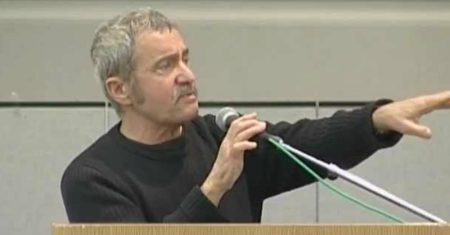
In honour of Michael Parenti (1933–2026), who passed away on 24 January 2026 at the age of 92. He spent his life naming what power prefers to leave unnamed.
In 1837, Abraham Lincoln remarked: “These capitalists generally act harmoniously, and in concert, to fleece the people.”
Today, he would be dismissed as a conspiracy theorist.
That dismissal—reflexive, automatic, requiring no engagement with evidence—is not a mark of sophistication. It is a tell. The question worth asking is not whether conspiracies exist (they are a matter of public record and a recognised concept in law) but why acknowledging their existence provokes such reliable hostility. What work does the label “conspiracy theorist” actually do?
The late political scientist Michael Parenti spent decades answering that question. His conclusion was blunt: “’Conspiracy’ refers to something more than just illegal acts. It serves as a dismissive label applied to any acknowledgment of ruling-class power, both its legal and illegal operations.” The term functions not as a descriptor but as a weapon—a thought-terminating cliché that protects the powerful from scrutiny by pathologising those who scrutinise them.
Conspiracy denial, in Parenti’s analysis, is not skepticism. It is the opposite of skepticism. It is credulity toward power dressed up as critical thinking. As he wrote in Dirty Truths: “Just because some people have fantasies of conspiracies does not mean all conspiracies are imaginary.” … continue
Blog Roll
Recent Comments
eddieb on WEF Calls for ‘Cultural Revolu… loongtip on Trump wanted to play peacemake… Coronistan on EU member to sue bloc over ‘su… loongtip on Vicious loongtip on EU turns to India for defense… Coronistan on Donald Trump Is No Peace … seversonebcfb985d9 on French court jails pro-Palesti… eddieb on Fourteen Incredible Facts Abou… Bill Francis on European leaders’ shift in the… seversonebcfb985d9 on Villains of Judea: Philip Esfo… loongtip on Report warns that ‘Jewish terr… Craig Nelms on New study shows that toxic gas…


 Aletho News
- AfD co-leader states the obvious: Pouring money into the Ukraine war is killing the German economy
- Britain’s return to piracy to stop Russian ships – desperate attempt to demonstrate power
- Czech coalition rules out higher defense spending, says 2% of GDP is enough
- G7 Hands Ukraine $40Bln Generated From Frozen Russian Assets
- Conspiracy Denial
- Ukraine expects to join EU next year – Zelensky
- Here’s what’s behind the US shift on EU allies
- UN experts alarmed by prosecution of students protesting ETH Zurich’s Israel-linked research ties
- Exposed – How the UAE Became Central to Gaza’s Concentration Camp Plot
- How South Korea’s gas ambitions sustain the occupation of Gaza
- If Americans Knew
- “The Gaza ceasefire is a minefield” – Not a ceasefire Day 110
- Israel to seek new security deal from US, official says
- Leaked “Board of Peace” Resolution Outlines U.S.-Led Plan to Rule Over Gaza
- Jonathan Greenblatt Rolls Out Plan to Activate Hispanic Evangelical Golems
- Violence against hundreds of Gazan remains to find one Israeli – Not a ceasefire Day 109
- Greenpeace Demonstrator Exposes Folly of Protest Restrictions
- From CBS to TikTok, Pro-Israel Ellison is now in the driver’s seat
- Israel pays for UK advertisements attacking Doctors Without Borders
- Israel accused of extracting billions from Gazan people to pay for their own genocide
- ‘Deliberate Assassination’: 3 Journalists Among 11 Killed by Israeli Forces in Gaza
- No Tricks Zone
- New Study Affirms Rising CO2’s Greening Impact Across India – A Region With No Net Warming In 75 Years
- Germany’s Natural Gas Crisis Escalates … One Storage Site Near Empty …Government Silent
- Polar Colding…Antarctica Saw Its Coldest October In 44 Years!
- New Study: Sea Levels Rose 20 Times The Modern Rate During The Roman Warm Period
- As German Gas Storage Dips Dangerously Low…Shortage Hardly Avoidable
- New Study: Brazil’s Relative Sea Level Was 2+ Meters Higher And SSTs 3-4°C Warmer 6000 Years Ago
- Philosopher Schopenhauer: Climate Science Certainty Stems From Stupidity, Ignorance
- New Study: Species Extinction Rates Declining Since 1980 – ‘Climate Change Is Not An Important Threat’
- Denmark Places Climate Protection Above Animal Welfare, Poisoning And Culling Cows
- New Study: Greenland Was 3-7°C Warmer And Far Less Glaciated Than Today 6000-8000 Years Ago
 Aletho News