The subject of Israeli hegemony over US must be addressed

By Walt Peretto | Press TV | December 25, 2020
It’s pardon season for President Trump. The likely outgoing president has issued 15 pardons that include two members of the Russian investigation and four convicted murderers who worked for the private security firm Blackwater.
These four were convicted of murdering 14 Iraqi civilians in 2007. Private security corporations such as Blackwater (since renamed Academi) have played a major role in war zones since the invasions of Afghanistan and Iraq after the false flag events of 9/11/2001. They are also suspected of participation in other domestic false flag events that include the Boston Marathon event in 2013.
These pardons by Trump will facilitate the use of private security firms in the near future both domestically and abroad. Further lockdowns in the US and crushing strains on small business may create unrest which could overwhelm municipal law enforcement and the federal government may choose to hire private security to deal with such occurrences. Overseas, tensions may increase in Syria as the new Democratic president may resurrect the goal of toppling President Assad which would likely be carried out by hiring private mercenaries which the West has done in the past.
I think these pardons by Trump send a signal to private security firms that their actions will not be hampered by long prison sentences for employees who engage in murder. Similar to municipal policing in which cops that murder are virtually never convicted. If the US does rededicate itself to regime change in Damascus, it’s hired security forces and clandestine paid terrorists don’t want restraints like convictions of murder in the courts.
Trump’s pardon of two people involved with the Russiagate fiasco makes sense since Russian collusion was never proven and the whole story was really a distraction for 4 years designed to take people’s eyes off of leaked emails involving Hillary Clinton, the Podesta brothers, Barack Obama and others that were quite damning if they were thoroughly investigated.
For four years the left-leaning media in the United States filled the news with accusations of Russian collusion in US elections and other illegal and immoral interactions between Russian officials and the Trump administration.
This also kept the eye off the elephant in the room called Israel which has seized control of the presidency, the Congress, the Judiciary, the economy through the FED, and the mainstream media.
China has provided another useful distraction from Israeli influence in America. If one honestly examines recent US presidential administrations — don’t strain to find any Chinese or Russian nationals in positions of power in the US federal government. Dual US/Israeli citizens are abundant and ubiquitous in the Trump administration and it will be similar in the Biden administration if he makes it to the White House. The subject of Israeli hegemony over the United States is a subject no one seems to want to address.
Judging from the proposed COVID Stimulus Package which allocates billions of dollars to other countries, this proves that the globalist intention is to bleed the United States dry until it submits wholly to the international cabal of psychopaths that includes Klaus Schwab and his World Economic Forum who are attempting to reset the world into a one-world system led by global organized psychopathy.
US plan to blacklist Iraqi Badr Organization as terrorist meant to protect Israel: Official
Press TV – December 13, 2020
A senior member of the Badr Organization, whose group is a part of the Iraqi Popular Mobilization Forces (PMU), also known by their Arabic name Hashd al-Sha’abi, has slammed Washington’s attempts to classify his organization as terrorist, stressing that such measures are meant to protect the Israeli regime.
“We do not care about the White House’s efforts to place the Badr Organization on the [so-called] US terror blacklist. Badr is an organization that has its own supporters and institutions. It is represented by a parliamentary faction and has more than 50 legislators in Fatah (Conquest) Alliance,” Qusay al-Anbari, a spokesman for the organization, told Arabic-language al-Ahad news agency on Saturday.
He added, “Badr Organization is a part of the Iraqi political system and nation, and will not be affected by such evil plots. Everyone knows that the United States is working to protect the Zionist regime through various means, and is fighting resistance groups to prevent them from defending Palestine and the Arab world.”
The remarks come as the US Congress is seeking to enact a new legislation that would designate the Badr Organization as a terror group, according to a copy of the bill obtained exclusively by the Washington Free Beacon newspaper.
The newspaper said that a member of the House Foreign Affairs Committee, Representative Joe Wilson, is leading such efforts.
Back on October 18, a political adviser to Iraqi officials and leading member of the State of Law Coalition said the United States is trying to eradicate Hashd al-Sha’abi by force and has even devised an action plan for such a purpose.
Saad al-Muttalibi told Arabic-language al-Nujaba television network in an interview at the time that not only had Iraqi authorities been informed of the plan, but also some political factions.
Muttalibi noted that a number of US state institutions have come to the conclusion that Hashd al-Sha’abi can only be removed from Iraq’s arena by military force.
He went on to say that Washington intends to assassinate some high-ranking Hashd al-Sha’abi commanders and instigate clashes with other Iraqi armed forces as part of preparation for the total annihilation of the PMU.
Hashd al-Sh’abai fighters have played a major role in the liberation of Daesh-held areas to the south, northeast and north of the Iraqi capital Baghdad, ever since the terrorists launched an offensive in the country in June 2014.
Back in November 2016, the Iraqi parliament approved a law giving full legal status to the fighters. It recognized the PMU as part of the national armed forces, placed the forces under the command of the prime minister, and granted them the right to receive salaries and pensions like the regular army and police forces.
On March 27, the New York Times reported that the Pentagon had ordered a secret directive, which called on US military commanders to prepare a campaign against Kata’ib Hezbollah, which is part of Hashd al-Sha’abi.
But the United States’ top commander in Iraq at the time, Lieutenant General Robert P. White, warned that such a campaign could be bloody and counterproductive.
China to bail out Iraq in multibillion dollar oil deal
MEMO | December 10, 2020
Iraq is currently deciding whether to go ahead with a multibillion dollar oil deal with China which will bail the country out as part of the effort to solve Baghdad’s worsening economic crisis. The deal comes after SOMO, Iraq’s state agency in charge of oil exports, welcomed bids from various oil traders and companies in a letter issued last month.
That resulted in “several offers” being made by various companies. These were then evaluated by Prime Minister Mustafa Al-Kadhimi, reported Bloomberg, which quoted cabinet spokesman Hassan Nadhim.
In the Iraqi government’s bid conditions, SOMO said that the successful company would purchase four million barrels of oil per month, or around 130,000 per day, with the first year’s supply being paid for up front. The deal is meant to last for five years.
In return for supplying oil to the winning bidder, Iraq will receive $2 billion for a fraction of the promised quantity of oil, with the balance paid later. The barrels of oil are effectively security for a loan.
The winning bidder turned out to be ZhenHua Oil Co., a major state-owned company in China with ties to the Chinese military. It is the latest example of China’s international lending strategy, in which state-controlled banks and trading organisations lend money to oil-rich countries struggling to keep afloat financially, such as Venezuela, Ecuador, Angola and now potentially Iraq.
If Prime Minister Al-Kadhimi signs the deal, then it would not be the first time that the company has dealt with Iraq. ZhenHua Oil, which trades around 1.3 million barrels per day of oil and other products, began a joint-venture with SOMO back in 2018 in order to help market Iraqi oil in China to increase exports. That venture was later scrapped.
Iraq’s economy and oil industry suffered greatly from the oil price crash earlier this year, after Russia and Saudi Arabia triggered an oil price war in March over a dispute over oil production.
In September, Iraq’s crude oil exports fell by six per cent and last week its oil minister acknowledged that the industry is in a critical condition due to the coronavirus pandemic.
See Also:
Iraq eyes construction deals with China in return for oil sales
Acting US Def Sec Miller Formally Announces Plans to Cut Troops in Afghanistan, Iraq to 2,500 Each
By Daria Bedenko – Sputnik – 17.11.2020
Earlier on Monday, CNN reported, citing two US officials, that Pentagon anticipated President Donald Trump to issue an order this week regarding troop withdrawal from Iraq and Afghanistan by 15 January.
Acting Defence Secretary Christopher Miller announced on Tuesday that President Trump will cut the number of American troops in Iraq and Afghanistan to 2,500 each by 15 January 2021.
“By 15 January, 2021, our forces, their size in Afghanistan will be 2,500 troops. Our force size in Iraq will also be 2,500 by that same day,” Miller told reporters during a Defence Department briefing.
The decision falls in line with Trump’s intention to finish “endless wars”, as Miller said the moves were announced to “bring the wars in Afghanistan and Iraq to a successful and responsible conclusion and to bring our brave service members home”.
“This is consistent with our established plans and strategic objectives, supported by the American people, and does not equate to a change in US policy or objectives”, Miller outlined.
Reaction to Troop Reduction Announcement
Shortly after the decision was announced, White House national security adviser Robert O’Brien said Trump hopes to bring all US troops from Iraq and Afghanistan home “safely and in their entirety” by May.
Republican Senate Majority Leader, Mitch McConnel, reacted to the announcement moments later, warning against any major changes in the US foreign or defence policy, including the troops drawdowns, in the coming months.
“It is extremely important here in the next couple of months not to have any earthshaking changes in regard to defense or for policy”, McConnell said.
Reports about the order to reduce troops in Afghanistan and Iraq emerged earlier on Monday, saying that a “warning order” to start planning the troops reduction was already released by Pentagon, despite warnings by then-Defence Secretary Esper against rapid withdrawal of the US forces from the countries.
Esper was replaced with Director of the National Counterterrorism Center Christopher Miller by Trump earlier this month.
Trump vs ‘Endless Wars’
It has been one of the key Trump’s pledges in his campaign to put an end to American “endless wars” in foreign countries, as he vowed to reduce the number of the US military forces in Iraq and Afghanistan.
In October, Trump tweeted that all US troops should be home by Christmas, with US National Security Adviser Robert O’Brien later saying that thousands of American servicemen were “on path” to, on the contrary, remain there.
In Iraq, there are estimated 3,000 US troops, and roughly 4,500 American military forces are stationed in Afghanistan.
After Washington reached a deal with the Taliban* in February, Trump began to withdraw troops from the country, with further withdrawal coinciding with September peace talks between the Taliban and the Afghan government in Qatar.
Sorry, Google and World Bank, but Middle Eastern Crops Keep Thriving
By H. Sterling Burnett | ClimateRealism | November 4, 2020
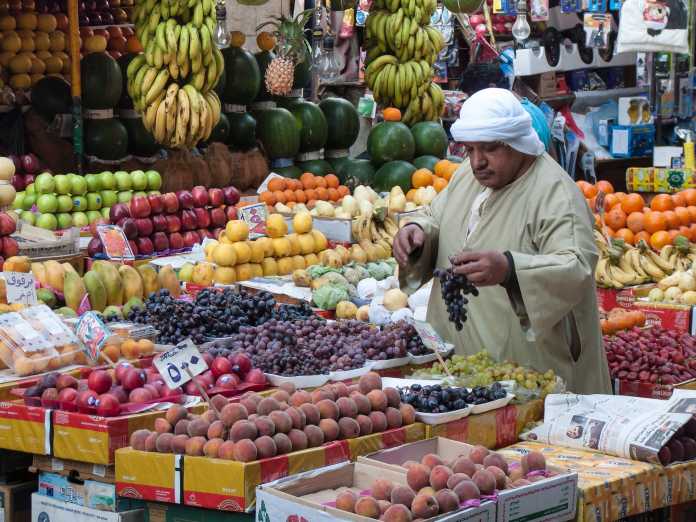
Google News today is promoting articles (see the Google-promoted PhysOrg article here, for example) about a speculative World Bank “study” claiming climate change is threatening crop production in the Middle East. The World Bank study is full of speculation but short on facts. Real-world data show crop yields per acre and total crop production are consistently and dramatically rising in each of the Middle East countries examined by the World Bank study.
In its study, titled “Water in the Balance,” the World Bank says, “[w]hile information about water scarcity at present and in the future is available there is little knowledge of what this increasing scarcity means for Middle Eastern … food security. Agriculture will suffer because of climate change and water scarcity….”
In particular the World Bank asserts water scarcity caused by climate change will reduce farm production in Iran, Iraq, Jordan, Lebanon, Syria, and Turkey. The available evidence strongly suggests that will not happen.
Had the study’s authors examined real-world data concerning crop production in the Middle Eastern countries, they would have found, even amidst substantial strife in the region, crop yields and overall production have increased dramatically. More food is being produced even as thousands of acres of agricultural lands have been abandoned during regional conflicts.
Data from the U.N. Food and Agriculture Organization show during the period of modest warming since 1989:
- Cereal crop production in Iraq increased 91 percent, even as the acreage being harvested fell 5 percent.
- Cereal crop production in Iran increased 187 percent, while the acreage harvested increased by just 2.6 percent.
- Cereal Crop production in Jordan increased 15 percent, even as the acreage harvested declined 30 percent.
- Cereal Crop production in Lebanon increased 115 percent, while acreage harvested increased 30 percent.
- Cereal Crop production in Syria increased 22 percent, even as acreage harvested declined 66 percent.
- Cereal Crop production in Turkey increased 46 percent, even though acreage harvested declined 19 percent.
It is clearly good news – and not a climate crisis – that Middle Eastern countries have increased crop production despite the fact that many of them have been embroiled in internal political strife, outright civil warfare, and external conflicts. That good news is ignored in the World Bank’s doom-and-gloom report.
Global warming lengthens growing seasons, reduces frost events, and makes more land suitable for crop production. Also, carbon dioxide is an aerial fertilizer for plant life. In addition, crops also use water more efficiently under conditions of higher carbon dioxide, losing less water to transpiration. The latter fact should have allayed the World Bank’s concern about climate change induced water shortages leading to crop failure.
The benefits of more atmospheric carbon dioxide and a modestly warming world have resulted in 17 percent more food being available per person today than there was 30 years ago, even as the number of people has grown by billions. Indeed, the last 20 years have seen the largest decline in hunger, malnutrition, and starvation in human history.
Sorry, World Bank, Google, and PhysOrg, but that does not equate to a climate crisis.
H. Sterling Burnett, Ph.D. is managing editor of Environment & Climate News and a research fellow for environment and energy policy at The Heartland Institute. Burnett worked at the National Center for Policy Analysis for 18 years, most recently as a senior fellow in charge of NCPA’s environmental policy program. He has held various positions in professional and public policy organizations, including serving as a member of the Environment and Natural Resources Task Force in the Texas Comptroller’s e-Texas commission.
Iraq Forms Committee to Develop Timeline for Withdrawal of US Troops
Sputnik – 15.10.2020
The Iraqi authorities have formed a committee that will coordinate with the United States to develop the timeline for the withdrawal of US troops from the Middle Eastern country, the Iraqi Foreign Ministry said on Thursday.
“The meeting took place at the Foreign Ministry headquarters today, Thursday, October 15, 2020, in which a technical committee emerged to undertake the task of coordinating with the US side to schedule the redeployment of US forces outside Iraq,” the Iraqi Foreign Ministry wrote in a press release.
The decision was taken during a meeting involving Iraqi Foreign Minister Fuad Hussein, National Security Adviser Qassem Al-Araji, and a range of other security officials.
The establishment of the committee follows a series of meetings between US and Iraqi officials over the summer. In August, Prime Minister Mustafa al-Kadhmi travelled to Washington for talks with US President Donald Trump, and a three-year timeline was established for the US withdrawal.
In early January, the Iraqi parliament voted to expel all foreign forces from the country following the US decision to launch a drone attack near Baghdad International Airport that killed top Iranian commander Qasem Soleimani.
Iran to use funds in Iraq for basic goods imports: CBI governor
Press TV – October 12, 2020
Iraq has agreed to release Iranian funds blocked in the Arab country because of American sanctions for Iran’s purchase of staples and basic goods, the Central Bank of Iran (CBI) governor Abdolnasser Hemmati said after meetings with senior Iraqi officials in Baghdad on Monday.
Hemmati said in a post on his Instagram page that some “good agreements” had been reached on the issue in a trilateral meeting involving him and his Iraqi counterpart as well as the CEO of Trade Bank of Iraq (TBI) where the Iranian funds are blocked.
Iran has billions of dollars in a TBI account which processes Iraq’s payments for imports of natural gas and electricity from Iran.
However, the funds have been blocked because of US sanctions on Iran which restricts the use of dollar for transactions involving Tehran.
Hemmati said Iraqi Prime Minister Mustafa Al-Kadhimi had welcomed the agreement to use the funds to reimburse Iran’s basic goods imports.
“In the meeting with the Iraqi premier … he issued the required orders to the Iraqi central bank and the TBI to speed up the implementation of the agreement,” said Hemmati, adding that Kadhimi had vowed to personally follow up the case on a weekly basis.
Hemmati made a first visit to Baghdad in June to pursue the case of blocked funds in Iraq. The CBI governor had expressed optimistic remarks about the release of funds in Iraq on that occasion but a final decision on the issue has been waiting reportedly because of growing American pressure on Baghdad.
A high-ranking trade and banking delegation accompanied Hemmati in his Monday trip to Iraq. The top banker said the visit would bolster the already growing trade relations between the two countries.
Iraq is only second to China in purchase of goods and services from Iran with recent figures showing Iranian exports to the Arab country reached $565 million in value terms in the Persian calendar month to September 21.
US forces must leave Iraq or will be forcibly expelled: Kata’ib Hezbollah
Press TV – October 10, 2020
Iraq’s anti-terror Kata’ib Hezbollah group, which is part of the country’s Popular Mobilization Units (PMU), has warned American forces against remaining in the Arab country, saying they will be forcibly expelled by means of resistance if they insist on maintaining their presence much to the dismay of Iraqis.
Muhammad Mohi, spokesman for Kata’ib Hezbollah, told Yemen’s Arabic-language al-Masirah television network on Saturday that the resistance will become stronger if the US insists on its obstinacy regarding its exit from Iraq.
Kata’ib Hezbollah is an anti-US unit operating under Hashd al-Sha’abi – an Iraqi umbrella group also known as PMU, which includes more than 40 militia groups fighting Takfiri terrorism.
He further slammed the US for making attempts to dissolve the PMU, saying Washington will fail to limit the role of the anti-terror forces.
The Iraqi forces, he said, are able to counter any possible threat against the country, adding that by remaining in the region, the US wants to guarantee the security of Israel and implement US President Donald Trump’s so-called deal of the century.
“The cause of the crises in the region is the American arrogance and its attempt to dominate the world,” he said, adding that the US” must respect the will of Iraq,” and immediately leave the country.
Reiterating the military capabilities of Iraqi resistance groups, Mohi called on the country’s parliament to implement its decision to expel American forces from Iraq.
Hashd al-Sha’abi fighters have played a major role in the liberation of areas held by Daesh terrorists ever since the Takfiri group launched an offensive in the country, overrunning vast swathes in lightning attacks.
In November 2016, the Iraqi parliament voted to integrate the PMU, which was formed shortly after the emergence of Daesh in Iraq in 2014, into the military.
The popular group, however, is a thorn in the side of the United States, which is widely believed to be managing an array of militant groups, including Daesh, to advance its Israel-centric agenda in the region.
In 2009, the US State Department blacklisted Kata’ib Hezbollah and imposed sanctions on the group, which has been the frequent target of American airstrikes in Iraq.
Iraqi lawmakers unanimously approved a bill on January 5, demanding the withdrawal of all foreign troops following the US assassination of Lieutenant General Qassem Soleimani, the commander of the Quds Force of Iran’s Islamic Revolution Guards Corps, along with Abu Mahdi al-Muhandis, the deputy head of Iraq’s PMU, and their companions.
Later on January 9, former Iraqi prime minister, Adel Abdul-Mahdi, called on the United States to dispatch a delegation to Baghdad tasked with formulating a mechanism for the move.
The 78-year-old politician said Iraq rejected any violation of its sovereignty, particularly the US military’s violation of Iraqi airspace in the assassination airstrike.
The US has refused to withdraw its troops, with Trump balking at the idea with the threat to seize Iraq’s oil money held in bank accounts in the United States.
Featured Video

Chinese jet fuel and the myth of energy independence
or go to
Aletho News Archives – Video-Images
Book Review
Former Insiders Criticize Iran Policy as U.S. Hegemony
By GARETH PORTER | CounterPunch | February 27, 2013
“Going to Tehran” arguably represents the most important work on the subject of U.S.-Iran relations to be published thus far.
Flynt Leverett and Hillary Mann Leverett tackle not only U.S. policy toward Iran but the broader context of Middle East policy with a systematic analytical perspective informed by personal experience, as well as very extensive documentation.
More importantly, however, their exposé required a degree of courage that may be unparalleled in the writing of former U.S. national security officials about issues on which they worked. They have chosen not just to criticise U.S. policy toward Iran but to analyse that policy as a problem of U.S. hegemony. … continue
Blog Roll
 Aletho News
- What is fueling unrest across the EU?
- Why no power can undermine Iran’s eternal dominance over the Strait of Hormuz
- Is The War Against Iran Over?
- Iran war will leave long-term ‘scar’ on Wall Street, investors warn
- How Iran decimated US power projection in West Asia: Military lessons of 40-day war
- Iran’s report details US-Israeli war crimes in targeting schools, hospitals, livelihoods
- NATO’s Slow Fracture: How Trump’s Iran War Exposed the Instrument of Hegemony
- Chinese jet fuel and the myth of energy independence
- Ukraine Sea Drone Fired From Libya Hit Russian Tanker in Mediterranean
- IRGC: Iranian forces launched no attacks during ceasefire hours
- If Americans Knew
- Military aid to Israel emerges as the latest political litmus test for Democrats
- The only Palestinian children’s rights organization closes following years-long Israeli campaign against it
- ‘I Can’t Forget the Smell’: Lebanese Reel After Israel Kills Over 300 in Single Day
- DNC Shoots Down Resolutions Calling Out AIPAC and Limiting Arms to Israel
- TCN: Is Israel Blackmailing President Trump?
- Israel killed at least 303 Lebanese yesterday – who were they? Daily Update
- Amnesty: Urgent – Protect Lebanese civilians from brutal escalation in Israeli attacks
- Is The War Against Iran Over?
- Inside the Israeli army’s propaganda wing
- Hundreds of Gaza Amputees Stranded in Legal Limbo
- No Tricks Zone
- New Study: No Linear Warming Or Glacier Retreat Along Northern Antarctic Peninsula Since 1980s
- An Inconvenient Tree: Uncovered In Alps… Europe Much Warmer Than Today 6000 Years Ago
- New Study Reports A 60% Slowdown In Greenland’s Ice Loss Rate In The Last Decade
- Low Intensity Tornado Wrecks Major Solar Farm, Creating A Potential Toxic Dump
- New Study Finds Warming Saves Lives…Cold Temperatures 12 Times More Deadly Than Excess Heat
- German Science Blog Accuses PIK Climate Institute Of Hallucinating Climate Tipping Points
- Devastating Assessment Of Comirnaty Vaccine By Former Senior Pfizer Europe Toxicologist
- New Study: CO2 Is ‘Effectively Negligible’ As An Explanatory Climate Change Factor Since 2000
- Former Pfizer Toxicologist Dr. Helmut Sterz Tells Bundestag Hearing Pfizer Vaccine Should Have Never Been Approved
- Energy Expert: Germany’s Nuclear Phaseout Was A “500 Billion Euro Mistake”
 Aletho News