Iraqi Resistance warns of action if US forces remain
Al Mayadeen | February 26, 2026
Iraqi Resistance factions have issued a firm warning to Washington, declaring that continued US military presence on Iraqi soil will not go unanswered.
In a statement released Wednesday, the Iraqi Resistance Coordination Committee, an umbrella body bringing together six anti-terror formations, said it stands ready to act if the United States refuses to end the “ongoing occupation” and persistent interference in national affairs.
The committee accused Washington of failing to respect its obligations under its agreement with Baghdad, which provides for the withdrawal of all foreign forces from Iraq. Despite repeated official declarations that the US combat mission ended years ago, Resistance groups argue that foreign troops remain entrenched under different titles.
“The US actions in Iraq ‘leave us with no choice but to assume our legal and moral responsibilities in taking positions befitting the dignity of our people and their legitimate right to end the occupation, if American forces insist on maintaining their presence and imposing their will on the country,” the statement said.
The coalition also charged that US forces continue to violate Iraqi airspace and undermine the country’s stability, describing such conduct as a “blatant violation” of national sovereignty and dignity.
Advisory mission pretext
While Washington claims that approximately 2,500 American troops remain only in an “advice and assist” capacity following the declared end of combat operations in December 2021, resistance factions view this designation as cosmetic. They argue that the continued deployment, however limited in scale, preserves military infrastructure, intelligence networks, and rapid-response capabilities that entrench US influence rather than end it.
From their perspective, the counter-ISIS mandate increasingly functions as a framework that justifies a long-term strategic foothold in a country central to regional power balances. Even a reduced presence, they contend, enables Washington to retain leverage over Iraqi decision-making while projecting influence across neighboring theaters.
Beyond the security dimension, the Resistance Coordination Committee pointed to direct American meddling in Iraq’s political process, saying that Washington effectively determines which Iraqi political figures may assume senior government positions.
Maliki pressure campaign
The reference was widely understood as relating to Nouri al-Maliki, whose potential return to the premiership has faced US opposition. Washington threatened sanctions on Iraqi individuals and institutions should Maliki take office. Recent reports indicate that the United States has given Iraq’s largest parliamentary bloc until February 27 to withdraw his candidacy, despite Maliki’s insistence that he will not step aside.
For Resistance factions, such moves are examples of direct political coercion, reinforcing their claim that Iraq’s sovereignty remains constrained more than two decades after the US-led invasion of 2003, a war launched on the now-discredited allegation that Baghdad possessed weapons of mass destruction.
Israeli Opposition Leader Endorses Greater Israel

The Dissident | February 24, 2026
U.S. Ambassador to Israel, Mike Huckabee, sparked major backlash during his recent interview with Tucker Carlson, where he openly endorsed the idea of a Greater Israel, stating that “it would be fine” if Israel took large swaths of the Middle East.
In damage control mode, Zionists attempted to paint Huckbee’s claims as fringe or extreme within Israel, but Israel’s opposition leader , Yair Lapid, has confirmed that the prospect of an expansionist Greater Israel is supported even by the more supposedly “liberal” wing of the Israeli political spectrum.
When asked, “The Ambassador Huckabee said this week, and we know the extent of the American administration on the government here, that he supports Israeli control from the Euphrates to the Nile, this means [control] over Lebanon, Jordan, Syria, do you support it or do you think this should be stopped?”, Lapid replied, “I don’t think I have a dispute on the biblical level [about] what the original borders of Israel are.”
Lapid went on to endorse massive Israeli expansion, saying, “support anything that will allow the Jews [to have] a big, vast, strong land, and a safe shelter for us, for our children, and for our children’s children. That’s what I support” adding, “However possible” when asked “How vast?”.
When further asked, “Until Iraq?” Lapid replied, “The discussion is a security discussion. The fact that we are in our ancestral land… Yesh Atid’s position is as follows: Zionism is based on the bible. Our mandate of the land of Israel is biblical. The biblical borders of Israel are clear. There are also considerations of security, of policy, and of time. We were in exile for 2,000 years… you don’t really want all this lecture, right? At least you were not waiting for it… The answer is: there are practical considerations here. Beyond the practical considerations, I believe that our ownership deed over the land of Israel is the bible, therefore the borders are the biblical borders”.
Lapid even advocated that Israel take “as much as possible” of Greater Israel, saying, “Fundamentally, the great, big and vast Israel, as much as possible within the limitations of Israeli security and considerations of Israeli policy”.
Similarly, Benjamin Netanyahu has previously stated that he “subscribed to a ‘vision’ for a ‘Greater Israel’” and “very much”, “felt connected to the ‘Greater Israel’ vision”.
Israeli officials have long been clear that their end goal in Gaza and the West Bank has been total ethnic cleansing and annexation, with Israel’s Science and Technology Minister Gila Gamliel admitting , “we will make Gaza unlivable for humans until the population leaves, and then we will do the same for the West Bank”.
But Yair Lapid’s comments show that across the spectrum from Netanyahu to his “liberal” opposition, Israel has expansionist ambitions beyond Gaza and the West Bank, and wants to take “as much as possible” of Greater Israel.
ISIS never left Syria, it just changed uniforms
By Fuad Walid Itayim | The Cradle | February 12, 2026
Early last month, the forces of the ‘new’ Syrian army flooded across north and east Syria. The troops seized key cities and major oil fields, effectively ending a decade of US-backed Kurdish autonomy – with Washington’s blessing.
One of those cities was Raqqa, the former capital of ISIS’s self-proclaimed ‘caliphate’ in Syria and a symbol of sectarianism, bloodshed, and iron-fist rule.
Raqqa remembers
It was in Raqqa where scores of soldiers from the now-dismantled Syrian Arab Army (SAA) were executed in cold blood by ISIS militants. Many of these soldiers had their severed heads impaled on pikes on the city’s outskirts.
It was also in Raqqa where countless young girls and women, many of them Yezidis abducted from Iraq in 2014, were sold into slavery in what ISIS called Souq al-Sabaya – the ‘market of female captives.’
As Syrian President Ahmad al-Sharaa’s (formerly known as Abu Mohammad al-Julani) armed forces entered the city in early 2026, his soldiers were gleeful, excited, and reminiscent. Many of them had been there before.
A closer look at the officers leading this offensive reveals a stark reality: ISIS has not been defeated. It has been absorbed, rebranded, and redeployed across Syria, reclaiming its ‘caliphate.’
ISIS reborn under Turkiye’s shadow
The Violations Documentation Center in Northern Syria (VDCNY), a Manbij-based human rights organization that monitors abuses against Kurds, released a report in August 2024 identifying dozens of extremist militants formerly affiliated with ISIS who were later incorporated into the Turkiye-backed Syrian National Army (SNA).
The SNA was formed by Ankara in 2017 and for years served as the Turkish military’s arm in northern Syria. Turkish forces had invaded Syria in 2016 to carry out an operation against the US-backed Kurdish-led Syrian Democratic Forces (SDF), whose dominant component is the People’s Protection Units (YPG) – which Ankara regards as the Syrian extension of the Kurdistan Workers Party (PKK). Turkiye went on to occupy swathes of Syrian territory and maintains that presence today.
Free Syrian Army (FSA) factions that assisted Turkiye’s 2016 intervention were reorganized into what became the SNA. After Raqqa fell to the SDF in 2017, this coalition absorbed scores of fleeing ISIS members. Over time, the SNA continued integrating former ISIS fighters into its ranks.
The ISIS ‘caliphate’ seemed defeated at a certain point. In reality, much of the heavy fighting against ISIS across Syria had been carried out by the former Syrian army, Lebanon’s Hezbollah, allied Iran-backed factions, and the Russian air force. The credit, however, went to Washington and the SDF – which today has been abandoned once again by the US military.
But ISIS was regrouping and reestablishing itself under a new name, with direct Turkish backing and under the watchful eye of US forces.
As VDCNY bluntly stated: “ISIS grew on the shoulders of the Free Syrian Army.”
Below is a partial list of former ISIS figures who were later absorbed into the SNA:
Abu Mohammad al-Jazrawi
According to the August 2024 VDCNY report, Abu Mohammad al-Jazrawi – born Abdullah Mohammad al-Anzi – is a Saudi national who joined ISIS in 2015 after arriving in Syria illegally via Turkiye – like tens of thousands of others from various parts of the world who did the same.
During his time with ISIS, he participated in battles against the Syrian army in the Syrian Desert and Homs countryside. He ended up becoming a military commander in Ahrar al-Sham, a notorious, sectarian extremist group responsible for many war crimes and atrocities.
Ahrar al-Sham had previously fought alongside Al-Qaeda’s Nusra Front before eventually being embedded into the SNA. The extremist group is responsible for numerous war crimes, including the deadly shelling of civilians in the Shia-majority towns of Nubul and Zahraa in Aleppo, during the early years of the war.
Bashar Smeid
Nicknamed Abu Islam al-Qalamouni, Smeid joined ISIS in 2014 and participated in fighting in the Palmyra desert, Damascus countryside, and near Al-Tanf Base – where US forces were training extremist militants.
In 2016, he took command of a security detachment that oversaw the infiltration of three car bombs into Damascus’s Sayyida Zaynab area. He ended up moving to northern Syria’s Idlib in 2017 and worked with his group to funnel ISIS leaders into Turkiye.
A year later, he joined the SNA’s Ahrar al-Sharqiya faction – another criminal sectarian organization that was happy to take in ISIS leaders. In March 2023, members of Ahrar al-Sharqiya murdered four Kurdish civilians celebrating Newroz (Kurdish New Year).
Sabahi al-Ibrahim al-Muslih
Known as Abu Hamza al-Suhail, Muslih was a leader in ISIS’s Shura Council and oversaw trials on charges of apostasy and blasphemy that resulted in dozens of executions. He ended up joining the SNA’s 20th Division. While reports said he was killed in a US drone strike a few years ago, he remains a prime example of the type of characters who were joining the SNA.
Awad Jamal al-Jarad
Jarad joined ISIS in 2015 and commanded a battalion within the organization. He later entered the SNA’s Hamza Division in 2018, participated in Turkish offensives in Afrin, and subsequently joined Ahrar al-Sharqiya.
By August 2024, he was leading a unit of 30 men and had transformed the city of Tal Abyad’s post office into his personal headquarters and command center, according to VDCNY. The Hamza Division is responsible for sectarian violence, sexual assault, and other war crimes.
Majid al-Khalid
Khalid, nicknamed Hajj Abu Omar al-Ansari, formed Liwa al-Haq in Hama during the early years of the war, before incorporating his organization into ISIS in 2014. He was considered one of the founders of ISIS in Hama city.
He ended up becoming the Emir of Hama during his time with ISIS and took command of the suicide (‘Inghimassi’) battalions – which sent thousands of young men to blow themselves up in holy sites and civilian areas. In 2017, he joined the Hamza Division and became a battalion commander in the group.
Salem Turki al-Antari
Antari, nicknamed Abu Saddam al-Ansari, joined ISIS in 2014 in the Badia desert region, where he served as a commander and led extremists in battle against the former Syrian army in Palmyra and near Al-Tanf Base.
He went on to become the Emir of Palmyra. Antari later joined Ahrar al-Sharqiya in 2017 and took part in Turkish-backed assaults against Afrin, Tal Rifaat, and Ras al-Ain. He was also implicated in the roadside execution of Kurdish politician Hevrin Khalaf in 2019. In 2024, the ex-ISIS chief was appointed as the commander of the US-backed Syria Free Army (SFA), which was formed by Washington in 2022 and trained in the Al-Tanf Base.
SFA now operates under the Syrian Defense Ministry. Between 2015 and 2017, Antari took part in the ISIS takeover of Palmyra and the battles with the Syrian army that ensued. The terrorist organization’s assault on Palmyra destroyed some of Syria’s most cherished cultural heritage. In 2015, ISIS notoriously publicly beheaded renowned 83-year-old Syrian archeologist Khaled al-Asaad for refusing to reveal the locations of hidden antiquities.
Raad Issa al-Barghash
Also known as Abu Zainab, Barghash pledged allegiance to ISIS in 2013. He fought with the group in Ain al-Arab (Kobane) and elsewhere, and was responsible for the killing of many civilians. In 2017, he fled to Aleppo and entered the ranks of Ahrar al-Sharqiya, eventually becoming a top security chief in the group.
Thamer Nasser al-Iraqi
An Iraqi citizen, he joined ISIS in 2013 in Homs and then served as the military fortifications Emir in the Al-Shaddadi area until 2015. In 2016, he became the Emir of the armaments department in Raqqa, and then an advisor to the ISIS Security Office No. 011 in Raqqa.
Iraqi participated in the Battle of Mosul in 2014. Three years later, he fled towards the city of Jarablus, east of Aleppo. In November 2017, he joined Ahrar al-Sharqiya and participated in Operation Olive Branch and Operation Peace Spring, launched by the Turkish army in 2018 and 2019. He also participated in bombings and summary executions of Kurdish civilians in the Jindires district of Afrin.
Sayf Boulad Abu Bakr
Abu Bakr, now a dual Syrian-Turkish citizen, had defected from the old Syrian military to join the FSA in 2012. These defections were encouraged by foreign intervention and funding. The FSA never maintained the status of a unified opposition force, quickly splintering into different factions that aligned themselves with extremist groups.
He joined ISIS in 2013 and was appointed governor of Al-Bab during the organization’s control over the city. A few years later, he ended up as commander in the Hamza Division, taking part in several Turkish-backed offensives against Kurdish forces.
During his time with ISIS, he appeared in a propaganda video where another member of the group is heard demanding “repentance” from around a dozen prisoners kneeling before them. The prisoners are identified in the video as members of the PKK.
Abu Bakr was also associated with Abdul Jabbar al-Okaidi, an FSA commander who publicly praised ISIS following the capture of Menagh Air Base in 2013.
Abu Bakr is now a senior commander in the Syrian army. In May 2025, the EU imposed sanctions on him, including asset freezes and a travel ban, citing “serious human rights abuses in Syria, including torture and arbitrary killings of civilians.”
Washington’s ‘partner’ in fighting ISIS
These are only select examples.
In 2025, the entire Turkish-backed SNA was formally integrated into the Syrian Defense Ministry. Following the fall of former Syrian president Bashar al-Assad, the SNA – effectively ISIS in new attire – became a core pillar of the current Syrian army, alongside Hayat Tahrir al-Sham (HTS), previously the Nusra Front. HTS itself contains numerous former ISIS members and has a long record of war crimes.
After the SDF was thrown under the bus by Washington in early 2026, Syrian forces swept across the north and captured key oil fields and cities. Soldiers were jubilant upon their entry into Raqqa, charged with nostalgia for ISIS’s glory days.
During the assault on northern Syria, tens of thousands of ISIS militants and their families were set free as troops entered Al-Hawl Prison Camp, which was previously run by the SDF.
Videos on social media showed government troops arriving at Al-Hawl and allowing the prisoners to leave. During the fighting days earlier, hundreds of ISIS prisoners escaped from Al-Shaddadi Prison. The SDF lost control of the facility and accused the US of ignoring its calls for help. Two kilometers away from the prison is a US coalition military base.
“The Islamic State of Iraq and Syria [ISIS], we are proud of this,” video footage showed one Iraqi woman, dressed in a niqab, saying as she was leaving Al-Hawl.
The new Syrian army is saturated with former ISIS commanders and fighters – yet Washington now describes it as a “partner” in combating ISIS.
This is the same army that massacred Alawites and Druze in March and July of 2025, and committed heinous war crimes against Kurds during attacks against the SDF in January 2026.
President Sharaa, the former ISIS and Al-Qaeda leader behind deadly sectarian suicide bombings in both Iraq and Syria, (as well deadly attacks in Lebanon and the occupation of the country’s border with Syria) has vowed to protect minorities, and claims he is leading a campaign to rid Syria of extremism.
This is impossible with an army made up of ISIS and a political leadership made up of violent warlords.
An investigation released by The Cradle last year reveals that since Sharaa came to power, Syria has witnessed a government-linked campaign of mass abduction and sexual enslavement targeting young Alawite women. Syrian government forces also committed massacres targeting minorities, including Druze and Alawites.
In a new video from the assault on the north, a Syrian soldier films two female Kurdish fighters captured during battle. As he drives around with the two women in the back of his vehicle, he brags about how they will make a “perfect gift” for his commander.
ISIS is very much alive. And it now rules the entirety of Syria under the protection and sponsorship of the US and Turkiye.
Nouri al-Maliki defends Hashd al-Shaabi as inseparable part of Iraqi security system
Press TV – February 11, 2026
Nouri al-Maliki, the leader of Iraq’s State of Law Coalition and a frontrunner for premiership, has quelled speculation regarding the future of the Popular Mobilization Forces (PMF), saying rumors of their dissolution are “unfounded.”
In an official statement on Wednesday, Maliki clarified his vision for Iraq’s security landscape. He said the PMF, known locally as Hashd al-Shaabi, is an “inseparable part of the Iraqi security system.”
Maliki’s remarks follow a period of speculation triggered by his earlier calls for restricting weapons to the hands of the state.
Clarifying his position, the candidate said the priority of the current phase is to consolidate state authority and unify security decision-making.
“The Hashd is an official institution established by law and approved by Parliament,” Maliki said. “Any talk of dissolution or merger must occur exclusively within the framework of the constitution and the law, not through rumors.”
The security debate is unfolding against a backdrop of severe diplomatic tension.
US President Donald Trump issued a blunt ultimatum in January, labeling Maliki a “very bad choice” and warning that the United States would “no longer help Iraq” if he were elected.
Responding to these threats, in a televised interview with al-Sharqiya, Maliki struck a defiant tone.
He said withdrawing his candidacy under foreign pressure would “jeopardize Iraqi sovereignty.”
“I am proceeding with this nomination until the end,” Maliki said, though he left a small window for change, noting he would only step aside if the Coordination Framework, the Shia alliance that nominated him, officially requested it.
Maliki, who served as Prime Minister from 2006 to 2014, remains a powerful figure in Iraqi politics.
The Coordination Framework has reiterated its support for him despite Trump’s comments.
Coordinated Media Messaging Is Prepping for Iran War
By Thomas Karat | The Libertarian Institute | February 5, 2026
Between January 27 and January 29, 2026, something carefully orchestrated unfolded across Western capitals. Within this forty-eight hour window, the USS Abraham Lincoln carrier group arrived in the Persian Gulf, President Donald Trump declared “time is running out,” the European Union unanimously designated Iran’s Revolutionary Guard as terrorists, German Chancellor Friedrich Merz announced “Iran’s days are numbered,” and oil surged 5%. This was not a spontaneous crisis but methodical preparation for military action.
Analysis of 235 news headlines from eleven countries1 reveals a coordinated information operation mirroring Iraq and Libya’s preparatory phases. The pattern: synchronized political statements, expanding legal justifications, managed market reactions, and systematic absence of dissenting voices. What emerges is not diplomacy exhausted but deliberately sidelined.
Forty-seven headlines—twenty percent of the dataset spanning back to 2021—appeared within those two days. This clustering is inconsistent with organic news flow. News organizations covering genuine crises do not synchronize attention with such precision across multiple countries unless events themselves were coordinated to generate exactly this response. The headlines did not drive events; events were staged to generate headlines.
Military deployments require weeks of planning. Carrier groups do not sail on presidential whim. The Abraham Lincoln‘s Gulf presence represented logistical preparation that necessarily preceded public rhetoric by considerable time. Yet political messaging was timed to coincide with arrival, creating the impression of responsive crisis management when reality was long-planned positioning. Iranian protests provided convenient moral framing for plans already in motion.
The European Union’s unanimous Revolutionary Guard terror designation demonstrates similar coordination. Achieving consensus among twenty-seven member states typically requires months of negotiation. Yet this designation moved with remarkable speed, arriving at unanimous approval precisely when it would provide maximum legal cover for military action. International legal frameworks precede military operations in the modern interventionist playbook. The terror designation creates legal architecture for strikes against Revolutionary Guard targets anywhere, transforming acts of war into counterterrorism operations under existing agreements.
Chancellor Merz’s “Iran’s days are numbered” represents an unprecedented declaration from a German leader on Middle East military matters. That Merz made this pronouncement within hours of the EU designation and Trump’s escalating rhetoric points to coordinated messaging at the highest levels. When pressed about advocating military action, Merz offered calculated non-denial: “I am describing reality.” The phrasing reveals purpose—presumes outcome while disclaiming responsibility for advocating it.
Meanwhile, according to multiple reports, Israeli military intelligence officials were sharing targeting data with Pentagon planners. This intelligence sharing represents not consultation among allies but active participation in operational planning. Israeli defense analysts have identified approximately three hundred sites linked to the Revolutionary Guard’s command structure and weapons programs. The message conveyed through these leaks is transparent: if American strikes occur, Israel is already integrated into the campaign. The question is not whether Israel will be involved but whether the United States will join an operation in which Israeli interests are clearly paramount.
Yet behind this public coordination lies a revealing contradiction. According to University of Chicago political scientist John Mearsheimer and multiple Israeli sources, Israeli Prime Minister Benjamin Netanyahu privately asked Donald Trump around January 14 not to launch strikes against Iran because Israeli air defenses were insufficiently prepared to handle the inevitable counterattack. After absorbing approximately eight hundred Iranian ballistic missiles throughout 2024 and 2025, along with hundreds more from Hezbollah and Houthi forces, Israel’s Arrow interceptor stockpiles had been severely depleted. The Jerusalem Post confirmed that despite reducing Iran’s pre-war missile arsenal by roughly half, Netanyahu feared the Islamic Republic retained enough firepower to overwhelm Israeli defenses in their current degraded state. The public posture of coordinated operational planning contradicted the private reality of Israeli vulnerability.
This creates an impossible position for the Trump administration. Carrier strike groups cannot maintain forward deployment indefinitely—the logistical burden and operational costs make extended positioning unsustainable without clear objectives. Yet backing down after deploying what Trump himself called a “massive armada” risks appearing weak, undermining American credibility precisely when the administration seeks to project strength. The machinery of escalation, once assembled and publicly announced, develops its own momentum. Political costs of retreat can exceed strategic costs of engagement, even when engagement serves no clear national interest.
The situation grew more complex in late January as Iran responded to American military positioning with its own demonstrations of capability. On January 30 and 31, the Revolutionary Guard conducted live-fire naval exercises in the Strait of Hormuz, prompting sharp warnings from U.S. Central Command about “unsafe and unprofessional behavior” near American forces. Iran’s military spokesman reminded audiences that “numerous U.S. military assets in the Gulf region are within range of our medium-range missiles”—a statement of fact rather than mere bluster given Iranian capabilities demonstrated repeatedly over the previous year.
Regional powers, meanwhile, moved to constrain American options. Saudi Arabia’s Crown Prince Mohammed bin Salman and UAE officials both announced their territories and airspace would not be available for strikes against Iran. Turkey offered to serve as mediator between Washington and Tehran. Egypt engaged in intensive diplomatic consultations with Iranian, Turkish, Omani, and American officials. The architecture of constraint was being constructed even as military assets concentrated. By January 31, both American and Iranian officials were signaling that talks might commence, though with contradictory preconditions: Trump demanding Iran abandon nuclear weapons [no nuclear program, no ballistic missile program, and no support to armed proxy groups] development entirely, Iranian Foreign Minister Abbas Araghchi insisting defense capabilities remain off the table. Trump told reporters Iran was “seriously talking to us,” while Ali Larijani, head of Iran’s Supreme National Security Council, acknowledged that “structural arrangements for negotiations are progressing.”
The question is whether these diplomatic signals represent genuine off-ramps or merely tactical pauses in an escalation that has acquired its own logic. Netanyahu’s private request that Trump delay strikes suggests even the most hawkish regional actor recognizes the costs of actually executing the plans being prepared. Yet the very existence of those plans, the deployment of assets, the public threats, and the coordinated messaging create pressures that constrain diplomatic flexibility. Leaders who threaten military action and then negotiate without delivering on threats risk domestic political consequences. The machinery assembled for coercion can become difficult to dismantle without appearing to capitulate.
The multiplication of justifications over seven days reveals strategic hedging rather than clarifying purpose. Nuclear negotiations, humanitarian intervention for protesters, counterterrorism via the EU designation, and finally explicit regime change language—four distinct rationales in one week. This pattern has precedent. The George W. Bush administration cycled through weapons of mass destruction, democracy promotion, and humanitarian intervention as rationales for Iraq. Paul Wolfowitz later acknowledged that WMDs were selected not because evidence was strongest but because “it was the one reason everyone could agree on”—a marketing decision, not an intelligence assessment.
When governments offer multiple expanding rationales, it indicates the decision to strike preceded the search for justification. A principled case for intervention would stand on a single foundation. The proliferation reveals a predetermined conclusion seeking retrospective legitimization. Each rationale serves a distinct constituency, constructing a coalition no single justification could achieve.
What remains absent from the 235 headlines reveals as much as what appears. Chinese state media produced zero articles captured in Western aggregation despite China’s strategic partnership with Iran and opposition to American intervention. Russian media produced only four headlines—less than 2%—despite Moscow’s regional involvement. Turkish, Saudi, and Arab League perspectives were similarly absent, despite these nations facing direct consequences from regional war. The Iranian perspective itself was reduced to threatening rhetoric with no diplomatic proposals or policy statements beyond deterrence. Western audiences encounter an information environment that presents military action as responding to Iranian aggression rather than initiating it.
This selective amplification follows established patterns. Before Iraq, weapons inspector Scott Ritter’s detailed assessments that Iraq had been disarmed received minimal coverage while administration officials making evidence-free claims dominated news cycles. Millions protesting the war globally in February 2003 generated less coverage than Secretary of State Colin Powell’s fabricated United Nations presentation. The pattern is refined through repetition.
Financial markets, often more honest in their assessments than political rhetoric, sent contradictory signals that warrant attention. Oil prices surged as expected when supply disruption from the Strait of Hormuz closure became possible—20-30% of global oil supply transits this waterway, and Iran possesses the anti-ship missiles and naval mine capability to close it for extended periods. Yet gold, the traditional safe-haven asset that rallies sharply during genuine geopolitical crisis, fell 10% during the same period. Institutional traders with billions of dollars at stake and access to the same intelligence briefings as government officials apparently viewed the escalation as a pressure campaign rather than certain prelude to war. The gold crash suggests sophisticated market participants believe the military posturing serves primarily coercive diplomatic purposes, not inevitable preparation for strikes.
This market divergence creates an interpretive dilemma. Either traders are badly misreading signals—unlikely given the sophistication of institutional risk assessment—or the public escalation deliberately overstates the probability of military action to maximize pressure on Tehran. Yet history demonstrates that pressure campaigns can transform into actual wars when escalation momentum becomes impossible to reverse without political cost. The machinery assembled for coercive purposes can be activated for actual strikes if diplomatic face-saving becomes impossible or if domestic political calculations shift. The invasion of Iraq began as a pressure campaign to force weapons inspections and compliance; it became regime change when backing down appeared politically untenable.
The costs of military action against Iran dwarf previous Middle Eastern interventions yet receive minimal discussion. Iran fields ballistic missiles capable of striking American bases and Israeli cities, anti-ship missiles threatening carrier groups, and proxy forces across Lebanon, Syria, Iraq, and Yemen. Hezbollah alone possesses 150,000 rockets—enough to overwhelm Israeli defenses. This is not Iraq 2003 with degraded capabilities.
The financial burden would exceed the six trillion dollars already spent on Iraq and Afghanistan. Iran’s population is three times Iraq’s, its military more capable, its geographic position more strategic. Regional destabilization would be immediate. Strait of Hormuz closure for two weeks would drive oil above $150 per barrel, triggering global recession. Every Gulf nation would face impossible choices. Humanitarian consequences measured in hundreds of thousands.
The blowback from intervention would generate more terrorism. The CIA’s own assessments confirm military action creates enemies faster than it eliminates them. The Islamic Republic’s proxy network exists precisely to impose costs on adversaries with conventional superiority. Strike Iran, face attacks throughout the region for years. The presumption that Tehran would absorb strikes without major retaliation contradicts both Iranian doctrine and rational assessment of their capabilities.
What is being assembled is not simply military capability but political momentum. The forty-eight hour window represented orchestrated escalation designed to create facts—legal, political, military, psychological—that constrain future options. Each element reinforces others: assets positioned, consensus constructed, frameworks established, markets reacting, attention concentrated. The machinery operates through accumulation of decisions that individually appear reasonable but collectively narrow space for alternatives.
This is how wars begin in the twenty-first century—not through sudden attacks but through gradual construction of inevitability. Diplomatic options are not explored and exhausted; they are marginalized. Intelligence is curated to support predetermined conclusions. Public opinion is manufactured through coordinated messaging and selective information. And when bombs fall, the question asked is not whether war was necessary but only whether it can be prosecuted successfully.
The next seven to fourteen days will reveal whether coordination produces strikes or sustained coercion. Carrier positioning, intelligence preparation timelines, and rhetorical escalation pace suggest decision point approaching. But whether the outcome is strikes or coercion, the pattern revealed in these 235 headlines demonstrates how consent is manufactured—not through lies alone but through timing, framing, omission, and construction of false consensus that makes dissent appear isolated. Understanding these patterns is essential not merely for analyzing this crisis but for recognizing how power operates when information warfare precedes military action.
Trump’s war posturing against Iran traces back to Bush’s infamous 2002 ‘axis of evil’ speech
By Ivan Kesic | Press TV | January 31, 2026
On January 29, 2002, US President George W. Bush’s State of the Union Address infamously branded Iran as part of an “axis of evil,” marking a rhetorical escalation that hardened a decades-long policy of confrontation and laid the groundwork for the persistent crises that continue to threaten regional stability today.
The twenty-fourth anniversary of Bush’s “axis of evil” speech came this week amid a starkly familiar backdrop: US naval “armada” massing in the Persian Gulf and renewed threats of military action from Bush’s successor, Donald Trump.
This moment is not an aberration but the continuation of a sustained, multi-decade strategy aimed at isolating and pressuring the Islamic Republic of Iran.
The policy did not originate with Bush but in the sanctions regimes of the 1990s, significantly shaped by pro-Israeli lobbying efforts within the United States.
It hardened with the rise of neoconservative thinkers who favored regime change over containment – a doctrine vividly applied to Iraq.
Throughout a campaign of disinformation and propaganda regarding weapons of mass destruction, the leveraging of exiled terrorist groups, and a consistent narrative of Iranian threat have been employed to maintain the so-called “maximum pressure.”
As history echoes in January 2026, with a Republican administration again aligning with an Israeli Likud regime to confront Iran, the patterns of the past illuminate the perilous present.
Defining Speech: January 29, 2002
Bush’s State of the Union address fundamentally reshaped the US posture toward Iran in ways that his predecessors had deliberately avoided.
In that speech, Iran was labeled a nation that “aggressively pursues these weapons and exports terror, while an unelected few repress the Iranian people’s hope for freedom.”
By grouping Iran with Iraq and North Korea as part of an “axis of evil,” the infamous and widely condemned declaration decisively rejected any tentative diplomatic outreach that had briefly flickered after the September 11 attacks.
During that period, symbolic gestures, such as candlelight vigils in Tehran, and behind-the-scenes communication channels suggested Iran’s conditional cooperation in Afghanistan.
However, the “axis of evil” label extinguished these nascent contacts. It signaled that the hostile administration in Washington would view Iran not as a potential partner, even tactically, but as a permanent adversary and a primary target in the global “war on terror.”
Crafted within a circle of advisors known for their overt pro-Israeli leanings, the phrase was immediately and enthusiastically embraced by the Israeli regime, which saw it as a long-sought alignment of US rhetoric with its own strategic goals.
The speech institutionalized a framework of hostility that would dictate policy for years, replacing the previous administration’s fluctuating approach with one of unambiguous confrontation.
Dual containment and the sanctions regime
Long before the “axis of evil” rhetoric, the framework for isolating Iran was carefully constructed during the Bill Clinton administration under the policy of “dual containment,” which targeted both Iran and Iraq.
From its inception, this policy was heavily influenced by pro-Israeli lobby groups in Washington. Even as Clinton’s foreign policy team was forming, concerns arose about appointees from the Carter administration who were deemed insufficiently sympathetic to these interests.
Warren Christopher, who was appointed Secretary of State, was initially viewed with caution but ultimately became a key architect of a hardened stance toward Iran.
Christopher, who had served as chief negotiator of the Algiers Accords and was criticized by some Iranian officials, developed a personal animosity toward Iran.
He publicly labeled Iran an “outlaw nation,” a “dangerous country,” and one of the “principal sources of support for terrorist groups worldwide.”
This rhetoric provided a public rationale for an escalating series of economic sanctions designed, in his words, to “squeeze Iran’s economy.”
A powerful proponent of this policy was Martin Indyk, former research director at the American Israel Public Affairs Committee (AIPAC)-affiliated Washington Institute for Near East Policy, who served on the National Security Council and later as Ambassador to Israel.
Under his guidance, the threefold accusations of sponsoring terrorism, opposing regional peace efforts, and pursuing weapons of mass destruction became the unwavering justification for punitive measures against the Islamic Republic.
A fierce competition emerged in Congress to demonstrate increasing hostility toward Iran, with figures like Senator Alfonse D’Amato pushing for ever-tighter sanctions – often propelled by direct lobbying from AIPAC, which acted as the “locomotive” behind the legislation.
This culminated in the Iran and Libya Sanctions Act (ILSA) of 1996, which aimed to penalize foreign companies investing in Iran’s energy sector. Later reports revealed that the explicit goal of the act was regime change in Iran.
Neoconservatives and the preference for military solutions
The arrival of the Bush administration marked a significant shift in the philosophy underlying US foreign policy – though not in its ultimate objective.
By the late 1990s, while the corporate world and some pragmatic diplomats began questioning the efficacy of unilateral sanctions, a new faction with immense influence pushed for a more radical and hard-nosed approach.
This neoconservative wing, closely aligned with Likudist ideology in the occupied Palestinian territories, viewed sanctions and containment as too slow and unreliable.
They regarded military force as a faster, more effective means of dealing with hostile states.
Key figures such as Paul Wolfowitz, Richard Perle, and Douglas Feith – all with longstanding ties to pro-Israeli think tanks and advocacy groups – assumed senior roles within the Pentagon and advisory boards.
Their worldview was crystallized in the 1996 policy paper A Clean Break: A New Strategy for Securing the Realm, prepared for Israeli Prime Minister Benjamin Netanyahu, which advocated attacking Iraq to reshape the regional landscape.
For these strategists, patient pressure through sanctions was secondary to the transformative potential of direct military action and regime rollback.
While initially focused on Iraq, Iran remained a firm subsequent target.
They argued that only the forceful removal of threatening regimes could guarantee American and Israeli security, a belief that came to define the administration’s response after the September 11, 2001 attacks.
Iraqi precedent: Destruction as a model
The neoconservative doctrine found its first full-scale application in Iraq. The 2003 invasion, premised on bogus claims of weapons of mass destruction that were later proven false, fulfilled a long-held goal to eliminate the Saddam Hussein-led Ba’athist regime.
The architects of the invasion were not satisfied with only regime change but aimed for the comprehensive degradation of Iraqi power.
After two major wars and over a decade of crippling sanctions, Iraq’s state apparatus and military-industrial base were utterly destroyed.
Some proponents openly described the objective as returning Iraq “to the pre-industrial era,” a stark admission that the goal extended beyond disarmament to eliminating Iraq’s capacity to function as a modern, sovereign regional counterweight.
The devastating consequences – civil strife, the rise of takfirism, and immense human suffering – were regarded as collateral damage within a broader strategic vision.
For those advocating confrontation with Iran, the Iraqi campaign served as both a template and a warning. It demonstrated the overwhelming military power the US could deploy to dismantle a state, while also exposing the catastrophic instability that could follow.
Nevertheless, the ability to reduce a perceived enemy to a state of permanent weakness was noted, informing the maximalist pressure later applied to Tehran.
Propaganda arsenal: Lies and manipulations
Building and sustaining public and international support for relentless pressure on Iran required a sustained campaign of allegations and propaganda.
The core accusations remained consistent: pursuit of nuclear weapons, support for terrorism, and an implacable hostility to peace in the region.
These charges were amplified through a symbiotic network of government officials, pro-Israeli lobbying organizations, sympathetic media outlets, and designated “experts.”
Sensational – and fabricated – stories were regularly fed to the press. In the early 1990s, reports frequently citing unnamed intelligence sources or anti-Iran groups aboad claimed that Iran had purchased nuclear warheads from Kazakhstan or was on the verge of developing a bomb, claims repeatedly debunked by international inspectors and the countries involved.
Media outlets with particular editorial stances published alarming estimates, suggesting Iran was only years or even months away from nuclear capability – deadlines that continually receded as each passed without incident.
The language used was deliberately inflammatory, with senior officials referring to Iran’s “evil hand” in the region and describing it as a “rogue state.”
This ecosystem ensured that any Iranian attempt at diplomatic outreach or confidence-building was overwhelmed by a pre-existing narrative of deceit and malign intent, making substantive dialogue politically untenable in Washington.
Useful tool: MKO role in anti-Iranian propaganda
A particularly revealing aspect of the propaganda and pressure campaign has been the relationship with the Mujahedin-e Khalq Organization (MKO), a terror cult with offices scattered across Europe and the US.
Designated by the US State Department as a terrorist organization due to its history of violent attacks, including against Americans in the 1970s, Iranian officials and civilians in the 1980s, and its alliance with Saddam Hussein during the Imposed War, the terror group nonetheless found influential supporters and was eventually de-listed by Hillary Clinton.
Despite its cult-like structure and lack of popular support inside Iran, the MKO managed to gain an active lobbying and public relations operation in the United States and Europe.
Senior members of the US Congress, especially those with strong pro-Israeli records, championed the group, inviting its representatives to testify and attending its rallies, arguing it represented a “democratic alternative” to the Islamic Republic.
The MKO’s utility was cynically acknowledged; one Congressman stated, “I don’t give a s*** if they are undemocratic… They are fighting Iran, which is… a terrorist state. I say let’s help them fight each other.”
This usefulness peaked in August 2002, when an MKO front held a press conference in Washington to “reveal” the existence of two secret nuclear facilities in Iran at Natanz and Arak.
While these facilities were not in violation of Iran’s safeguards agreement at the time, the revelation – intelligence reports suggest originating with Israeli intelligence and channeled through the exiles – provided the perfect pretext to demand intrusive new inspections and escalate international pressure.
Thus, the MKO served as a deniable cut-out for disinformation and a persistent amplifier of the baseless and sham accusations against the Iranian government.
Unbroken chain: Policy sustained to the present day
The strategic imperative to confront Iran has proven remarkably durable, transcending individual US administrations and enduring significant geopolitical shifts.
This hostile and bellicose policy remains intact today. In January 2026, the situation closely mirrors earlier cycles of tension between Tehran and Washington, dating back to decades of US hostility and a failed “regime change” project.
US President Donald Trump and Israeli Prime Minister Benjamin Netanyahu, leading a Likud-dominated coalition, are once again employing military threats against Iran after failing miserably in June last year to dismantle the Islamic Republic of Iran.
The US military has reportedly amassed naval and air forces around Iran’s perimeter, announced by Trump himself, a show of force reminiscent of previous escalations.
This military posture is accompanied by an intensification of a long-standing economic stranglehold, as the Trump administration enforces so-called “ultimate pressure” sanctions with renewed vigor, targeting critical sectors and aiming to sever Iran’s access to the global financial system entirely.
The foundational grievances remain unchanged: allegations of building a “nuclear weapon,” despite Iran’s continued adherence to the Joint Comprehensive Plan of Action (JCPOA) framework after its earlier collapse, and support for regional allies.
Last month, Trump and Netanyahu backed deadly riots and terrorism in Iran, and then threatened to attack Iran if “lethal force” was used against the rioters, arsonists and terrorists. After the riots ended, the focus shifted back to the non-existent “nuclear weapon.”
The tools have expanded beyond diplomatic isolation and covert pressure. Recent reports from within Iran detail how externally backed groups, employing tactics and rhetoric similar to the MKO terrorist cult, sought to exploit domestic unrest by spreading incendiary propaganda and inciting violence, apparently aiming to destabilize the country.
The alignment between the Trump administration and the Likud regime in Tel Aviv remains as close as ever, with both viewing the other as a vital partner in a long-term struggle.
Just as in 2002, diplomatic overtures from Tehran aimed at easing tensions are dismissed or met with increased demands.
The legacy of the “axis of evil” speech has created a foreign policy paradigm that has locked the US and Iran into a perpetual cycle of confrontation, where the mechanisms of pressure – economic warfare, military threat, and the use of terrorist groups – have proven easier to sustain than to dismantle, continually pushing the region toward the brink of war.
What Trump is doing today is simply a continuation of Bush’s policy, which was also carried forward by Bill Clinton, Barack Obama, and Joe Biden. The policy remains unchanged.
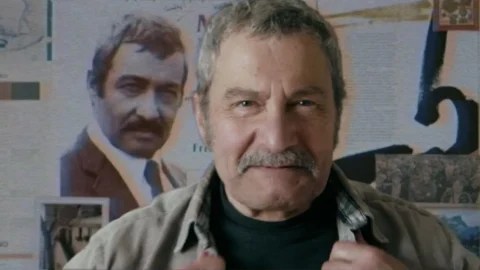
In 2007, Michael Parenti Called Out The Greater Israel Project
The Dissident | January 28, 2026
In my last article, I covered the left-wing scholar Michael Parenti- who passed away at the age of 92 this week- and his prophetic writings on the Ukraine proxy war in 2014.
Parenti’s writings on the Israel lobby and the greater Israel project were equally prophetic.
In his 2007 book “Contrary Notions” Parenti called out “Israel First” Neo-cons and Israel’s role in the Iraq war, and predicted to a tee the future Israeli/American wars in the Middle East in service of Greater Israel and the ethnic cleansing of Palestine.
In a section of the book aptly titled “Israel First”, Parenti wrote:
The neoconservative officials in the Bush Jr. administration — Paul Wolfowitz, Douglas Feith, Elliot Abrams, Robert Kagan, Lewis Libby, Abram Shulsky, and others — were strong proponents of a militaristic and expansionist strain of Zionism linked closely to the right-wing Likud Party of Israel. With impressive cohesion these “neocons” played a determinant role in shaping U.S. Middle East policy. In the early 1980s Wolfowitz and Feith were charged with passing classified documents to Israel. Instead of being charged with espionage, Feith temporarily lost his security clearance and Wolfowitz was untouched. The two continued to enjoy ascendant careers, becoming second and third in command at the Pentagon under Donald Rumsfeld.
For these right-wing Zionists, the war against Iraq was part of a larger campaign to serve the greater good of Israel. Saddam Hussein was Israel’s most consistent adversary in the Middle East, providing much political support to the Palestinian resistance. The neocons had been pushing for war with Iraq well before 9/11, assisted by the wellfinanced and powerful Israeli lobby, as well as by prominent members of Congress from both parties who obligingly treated U.S. and Israeli interests in the Middle East as inseparable. The Zionist neocons provided alarming reports about the threat to the United States posed by Saddam because of his weapons of mass destruction.
Indeed in 1996, Neo-cons who later ended up in the Bush administration named by Parenti, including Douglas Feith, wrote a latter to Benjamin Netanyahu who was the newly elected Prime Minister of Israel which urged him to “focus on removing Saddam Hussein from power in Iraq — an important Israeli strategic objective in its own right”.
This plan eventually turned into an Israeli-backed plot to “take out seven countries in five years, starting with Iraq, and then Syria, Lebanon, Libya, Somalia, Sudan, and, finishing off, Iran”, in order to isolate Palestinians and make Israel the dominant power in the Middle East.
As U.S. General Wesley Clark later revealed , the idea behind these wars was, “if you want to protect Israel, and you want Israel to succeed… you’ve got to get rid of the states that are surrounding”.
This too was predicted by Michael Parenti to a tee, who wrote, “The neocon goal has been Israeli expansion into all Palestinian territories and the emergence of Israel as the unchallengeable, perfectly secure, supreme power in the region”, “This could best be accomplished by undoing the economies of pro-Palestinian states, including Syria, Iran, Libya, Lebanon… “A most important step in that direction was the destruction of Iraq as a nation, including its military, civil service, police, universities, hospitals, utilities, professional class, and entire infrastructure, an Iraq torn with sectarian strife and left in shambles.”
Indeed, as Parenti correctly predicted, the clean break policy went through with the 2006 Israeli invasion of Lebanon, the 2011 NATO regime change war in Libya, 2011 dirty war in Syria, and the ongoing hybrid war on Iran.
As Columbia University professor Jeffrey Sachs has noted :
In 1996, Netanyahu and his American advisors devised a “Clean Break” strategy. They advocated that Israel would not withdraw from the Palestinian lands captured in the 1967 war in exchange for regional peace. Instead, Israel would reshape the Middle East to its liking. Crucially, the strategy envisioned the US as the main force to achieve these aims—waging wars in the region to dismantle governments opposed to Israel’s dominance over Palestine. The US was called upon to fight wars on Israel’s behalf.
The Clean Break strategy was effectively carried out by the US and Israel after 9/11. As NATO Supreme Commander General Wesley Clark revealed, soon after 9/11, the US planned to “attack and destroy the governments in seven countries in five years—starting with Iraq, then Syria, Lebanon, Libya, Somalia, Sudan, and Iran.”
The first of the wars, in early 2003, was to topple the Iraqi government. Plans for further wars were delayed as the US became mired in Iraq. Still, the US supported Sudan’s split in 2005, Israel’s invasion of Lebanon in 2006, and Ethiopia’s incursion into Somalia that same year. In 2011, the Obama administration launched CIA operation Timber Sycamore against Syria and, with the UK and France, overthrew Libya’s government through a 2011 bombing campaign. Today, these countries lie in ruins, and many are now embroiled in civil wars.
Netanyahu was a cheerleader of these wars of choice–either in public or behind the scenes–together with his neocon allies in the U.S. Government including Paul Wolfowitz, Douglas Feith, Victoria Nuland, Hillary Clinton, Joe Biden, Richard Perle, Elliott Abrams, and others.
These wars- as Parenti predicted- helped Israel towards it’s final goal of being “the unchallengeable, perfectly secure, supreme power in the region” and “Israeli expansion into all Palestinian territories” brought forward by the Gaza genocide and expanded settlements in the West Bank with the end goal-as Israel’s Minister of Science and Technology Gila Gamliel admitted -to “make Gaza unlivable for humans until the population leaves and then … do the same for the West Bank”.
As Jeffrey Sachs noted:
In September 2023, Netanyahu presented at UN General Assembly a map of the “New Middle East” completely erasing a Palestinian state. In September 2024, he elaborated on this plan by showing two maps: one part of the Middle East a “blessing,” and the other–including Lebanon, Syria, Iraq, and Iran–a curse, as he advocated regime change in the latter countries.
Israel’s war on Iran is the final move in a decades-old strategy. We are witnessing the culmination of decades of extremist Zionist manipulation of US foreign policy.
Just like he did in Ukraine, Michael Parenti exactly predicted the goal of Israel first Neo-cons in the Middle East and the final goal of a greater Israel and the ethnic cleansing of Palestine.
US pledges to ‘starve’ Iraq of oil revenue if pro-Iran parties join new government
The Cradle | January 23, 2026
Washington has threatened to block Iraq’s access to its own oil revenue held in the Federal Reserve Bank of New York if representatives of Shia armed parties enjoying support from Iran are included in the next government, Reuters reported on 23 January.
“The US warning was delivered repeatedly over the past two months by the US Charges d’Affaires in Baghdad, Joshua Harris, in conversations with Iraqi officials and influential Shi’ite leaders,” Reuters reported, citing three Iraqi officials and one source familiar with the matter.
The threat is part of US President Donald Trump’s effort to weaken Iran through a “maximum pressure” campaign of economic sanctions, including on the Islamic Republic’s oil exports.
Trump also bombed Iran’s nuclear sites as part of Israel’s unprovoked 12-day war on Iran in June.
Because of US sanctions, few countries can trade with Iran, increasing its reliance on Iraqi markets for exports and on Baghdad’s banking system as a monetary outlet to the rest of the world.
As punishment, the US government has restricted the flow of dollars to Iraqi banks on several occasions in recent years, raising the price of imports for Iraqi consumers and making it difficult for Iraq to pay for desperately needed natural gas imports from Iran.
However, this is the first time the US has threatened to cut off the flow of dollars from the New York Federal Reserve to the Central Bank of Iraq.
Officials in Washington can threaten Baghdad in this way because the country was forced to place all revenues from oil sales into an account at the New York Fed following the US military’s invasion of the country in 2003.
This gives Washington strong leverage against Baghdad, as oil revenue accounts for 90 percent of the Iraqi government’s budget.
While occupying Iraq for decades and controlling its oil revenues, Washington accuses Iran of infringing on Iraq’s sovereignty.
“The United States supports Iraqi sovereignty, and the sovereignty of every country in the region. That leaves absolutely no role for Iran-backed militias that pursue malign interests, cause sectarian division, and spread terrorism across the region,” a US State Department spokesperson told Reuters.
Some Shia political parties, including several that make up the Coordination Framework (CF), are linked to the Popular Mobilization Units (PMU), anti-terror militias formed in 2014 with Iranian support to fight ISIS and later incorporated into the Iraqi armed forces.
Iraq held parliamentary elections in November and is still in the process of forming the next government.
Prime Minister Muhammad Shia al-Sudani, who enjoyed good relations with both Washington and Tehran, has decided not to contend for another term as premier.
The decision has cleared the way for Nouri al-Maliki, of the State of Law Coalition and the Dawa Party, to potentially return to power.
Maliki, who enjoys support from the PMU-linked parties, served as prime minister between 2006 and 2014, including when ISIS invaded western Iraq and conquered large swathes of the country.
Trump threatened a new bombing campaign against Iran following several weeks of violent riots and attacks on security forces organized and incited by Israeli intelligence.
Trump allegedly called off the bombing after Israeli Prime Minister Benjamin Netanyahu warned him that Tel Aviv’s air defenses were not prepared for a new confrontation with Iran.
During the war in June, Iran retaliated against Israel by launching barrages of ballistic missiles and drones, which did severe damage to Israeli military sites, including in Tel Aviv.
Regime Change In Iran Is The Final Phase Of The ‘Clean Break’ Strategy
The Dissident | January 21, 2026
Lindsey Graham, the Neo-con Republican Senator, at the Zionist Tzedek conference, gave the real reason for America’s policy of regime change in Iran, namely to isolate the Palestinians in the Middle East and pave the way for Israeli domination.
Graham, referring to regime change in Iran said, “If we can pull this off, it would be the biggest change in the Middle East in a thousand years: Hamas, Hezbollah gone, the Houthis gone, the Iranian people an ally not an enemy, the Arab world moving towards Israel without fear, Saudi-Israel normalize, no more October the 7th”.
In other words, Lindsey Graham and the U.S. believe that regime change in Iran would lead to the collapse of Palestinian resistance and allied groups Hezbollah and Ansar Allah and lead Middle Eastern powers to normalize with Israel without any concessions to Palestinians, thus paving the way for the ethnic cleansing of Gaza and the West Bank, and further expansion into Syria and Lebanon in service of the Greater Israel project.
This motive is not only driving the desire for regime change in Iran, but has been the main motive for U.S. foreign policy in the Middle East since 9/11, not fighting a “war on terror”.
In 1996, key figures who ended up in high level positions in the Bush administration, such as Richard Perle, Douglas Feith and David Wurmser, who were at the time advising the newly elected Benjamin Netanyahu, sent him a letter titled, “A Clean Break: A New Strategy for Securing the Realm”, which called on him to make a “clean break” from peace talks with Palestinians and instead focus on isolating them in the region, first a for-most by, “removing Saddam Hussein from power in Iraq — an important Israeli strategic objective in its own right”.
Netanyahu kept to his word and made his “Clean Break” from the Oslo Accords during his first term as Prime Minister, later boasting:
how he forced former U.S. Secretary of State Warren Christopher to agree to let Israel alone determine which parts of the West Bank were to be defined as military zones. ‘They didn’t want to give me that letter,’ Netanyahu said, ‘so I didn’t give them the Hebron agreement [the agreement giving Hebron back to the Palestinians]. I cut the cabinet meeting short and said, ‘I’m not signing.’ Only when the letter came, during that meeting, to me and to Arafat, did I ratify the Hebron agreement. Why is this important? Because from that moment on, I de facto put an end to the Oslo accords.”
Soon after, the authors of the clean break document became key advisors on the Middle East in the George W. Bush administration.
After 9/11, they used the attack to carry out the “important Israeli strategic objective” of “removing Saddam Hussein from power in Iraq”, who was seen as too sympathetic to Palestinians.
As David Wurmser, one of the authors of the clean break document and the Middle East Adviser to former US Vice President Dick Cheney, later admitted , “In terms of Israel, we wanted Yasser Arafat not to have the cavalry over the horizon in terms of Saddam”.
George W. Bush aide, Philip Zelikow said , “the real threat (from Iraq) (is) the threat against Israel”, “this is the threat that dare not speak its name, because the Europeans don’t care deeply about that threat”, “the American government doesn’t want to lean too hard on it rhetorically, because it is not a popular sell”.
But for Israel and the Bush administration, the war in Iraq was just the first phase of the “clean break strategy”, to take out all of Israel’s enemies in the Middle East.
As the U.S. General Wesley Clark revealed the clean break went from a plan to take out Saddam Hussein in Iraq to a plan to “take out seven countries in five years, starting with Iraq, and then Syria, Lebanon, Libya, Somalia, Sudan, and, finishing off, Iran”. (Emphasis added)
As Clark later explained on the Piers Morgan show, the list came from a study which was “paid for by the Israelis” and said, “if you want to protect Israel, and you want Israel to succeed… you’ve got to get rid of the states that are surrounding”.
With every other country on the hit list either weakened (Lebanon, Somalia, Sudan) or taken out (Iraq, Libya, Syria) from the ensuing years of U.S. and Israeli intervention, Neo-cons and Zionists see Iran as the last bulwark in the way of carrying out the Clean Break plan.
Report: Kurdish Fighters Have Been Entering Iran From Iraq and Clashing With the IRGC
By Dave DeCamp | The Libertarian Institute | January 14, 2026
Turkish intelligence has warned Iran’s Islamic Revolutionary Guard Corps (IRGC) that Kurdish fighters have been entering Iran from Iraq amid protests inside Iran, Reuters reported on Wednesday.
An unnamed senior Iranian official speaking to the outlet said that the IRGC has been clashing with armed Kurdish fighters dispatched from both Iraq and Turkey. The Kurdistan Freedom Party, or PAK, a Kurdish Iranian separatist group mainly based in Iraq, has been claiming that its armed wing has been conducting operations against Iranian forces.
On Tuesday, the PAK claimed its forces launched an attack on an IRGC base in western Iran. The Reuters report and claims of Kurdish attacks come as Tehran is accusing the US and Israel of arming “terorrists” inside Iran who have attacked Iranian security forces.
The US has a significant presence in Iraqi Kurdistan, including a military base and an $800 million consulate compound that it opened in December. The Israeli Mossad is also known for having a presence in the area, and Iran claimed that it attacked a Mossad base in Iraqi Kurdistan in 2024.
The Mossad has a long history of covert operations inside Iran, and a Farsi-language X account affiliated with the Israeli spy agency suggested it had operatives on the ground in Iran when the protests first broke out. “Let’s come out to the streets together. The time has come. We are with you. Not just from afar and verbally. We are with you in the field as well,” the account said on December 29.
Israel’s Channel 14 has reported that “foreign actors” have armed protesters in Iran and said that’s the reason why hundreds of Iranian security personnel have been killed.
“We reported tonight on Channel 14: foreign actors are arming the protesters in Iran with live firearms, which is the reason for the hundreds of regime personnel killed,” Channel 14 reporter Tamir Morag wrote on X on Tuesday. “Everyone is free to guess who is behind it.”
Cover-Up Is an Indispensable Chronicle of American Overreach
A new documentary about the journalist Seymour Hersh uncovers the pathologies of U.S. imperialism
By Leon Hadar | The American Conservative | January 2, 2026
Laura Poitras and Mark Obenhaus’s new film Cover-Up is more than a documentary about the legendary journalist Seymour Hersh—it is an inadvertent chronicle of the pathologies of American empire. As a foreign policy analyst who has long advocated for realist restraint in U.S. international engagement, I find this film both vindicating and deeply troubling. It documents, through one journalist’s extraordinary career, the pattern of deception, overreach, and institutional rot that has characterized American power projection for over half a century.
What makes Hersh’s reporting invaluable from a realist perspective is that it consistently exposed the gap between stated intentions and actual policy outcomes. CIA domestic surveillance, the My Lai massacre, the secret bombing of Cambodia, Abu Ghraib—each revelation demonstrated what realists have long understood: that idealistic rhetoric about spreading democracy and protecting human rights often masks cruder calculations of power, and that unchecked executive authority in foreign affairs inevitably leads to abuse.
The documentary’s treatment of Hersh’s Cambodia reporting is particularly instructive. Here was a case where the American government conducted a massive bombing campaign against a neutral country, killing tens of thousands of civilians, while lying to Congress and the public. This wasn’t an aberration, but the logical consequence of what happens when a superpower faces no effective constraints on its use of force abroad. In exposing the scandal, Hersh also documented how empire actually functions when stripped of its legitimating myths.
Where Cover-Up excels is in revealing the architecture of official deception. Watching archival footage of government officials denying what later became undeniable, one sees the machinery of the national security state at work. These weren’t rogue actors—they were operating within institutional incentives that reward secrecy, punish dissent, and systematically mislead democratic oversight.
From a realist standpoint, this raises fundamental questions about American foreign policy. If our interventions in Vietnam, Iraq, and elsewhere were justified through systematic deception, what does this tell us about the nature of these enterprises? Realism suggests that states act according to their interests, but when those interests must be concealed from the public through elaborate cover-ups, we must question whether these policies serve genuine national interests or merely the institutional imperatives of the national security bureaucracy.
The film’s examination of Hersh’s Abu Ghraib investigation is devastating. What began as a story about individual soldiers torturing prisoners became, through Hersh’s reporting, an indictment of a policy apparatus that had systematically authorized abuse. The documentary shows how torture wasn’t an accident of war. Rather, it was deliberate policy, approved at the highest levels and then denied when exposed.
This validates a core realist insight: hegemonic projects, particularly those involving regime change and nation-building, create perverse incentives that corrupt institutions and individuals. The George W. Bush administration’s Iraq war, launched on false pretenses and executed with imperial hubris, produced precisely the kind of moral catastrophes that realists warned against.
The documentary is less successful in addressing the legitimate controversies surrounding Hersh’s later work, particularly his reporting on Syria and the raid that killed Osama bin Laden. As someone who believes the U.S. should be far less involved in Middle Eastern affairs, I’m sympathetic to questioning official narratives. However, the epistemological challenges of relying on anonymous sources while contradicting extensive documented evidence deserve more rigorous examination than this film provides.
This isn’t to dismiss Hersh’s skepticism toward official accounts—realists should always question the state’s narratives about its foreign adventures. But the documentary would have been strengthened by a more thorough engagement with these critiques. Even iconoclasts must be subject to scrutiny, especially when their reporting has significant geopolitical implications.
What Cover-Up illuminates, perhaps unintentionally, is the deterioration of the institutional ecosystem that made Hersh’s journalism possible. The New Yorker’s willingness to support lengthy investigations, to back reporters against government pressure, and to publish material that angered powerful interests—these conditions were products of a specific historical moment. Today’s fragmented media landscape, where institutional backing has weakened and partisan sorting has intensified, makes such work increasingly difficult.
This matters because realist foreign policy critique depends on investigative journalism to pierce official narratives. Without reporters like Hersh, the gap between rhetoric and reality becomes easier to maintain. The decline of this form of journalism coincides with—and perhaps enables—the persistence of failed policies in Afghanistan, Libya, Syria, and beyond.
The most powerful moments in Cover-Up are the intimate ones: Hersh describing meetings with sources who risked their careers and freedom to expose wrongdoing, the personal toll of challenging the national security establishment, the isolation that comes with being proven right in ways the powerful never forgive. These moments humanize what could otherwise be an abstract discussion of policy failures.
But they also highlight something crucial: Individual courage, while necessary, isn’t sufficient. Hersh exposed My Lai, yet the war continued for years. He revealed CIA abuses, yet the agency faced minimal accountability. He documented Abu Ghraib, yet the architects of the Iraq war faced no consequences. This pattern suggests systemic dysfunction that transcends individual malfeasance.
From a realist perspective, Cover-Up offers a sobering lesson: American foreign policy has been consistently characterized by overreach justified through deception. Whether in Vietnam, Iraq, or countless covert operations, U.S. policymakers have systematically misled the public about the nature, costs, and outcomes of military interventions.
This isn’t a partisan critique—the pattern spans administrations of both parties. It reflects structural features of how American power operates: an imperial presidency with minimal congressional oversight, a national security bureaucracy with institutional interests in threat inflation, and a foreign policy establishment committed to global primacy regardless of costs or consequences.
Hersh’s greatest contribution, documented powerfully in this film, was in providing the empirical record that supports a realist critique of American foreign policy. His reporting demonstrated that idealistic justifications for intervention—spreading democracy, protecting human rights, combating terrorism—often mask more cynical calculations and catastrophic failures.
Cover-Up is indispensable for anyone seeking to understand American foreign policy in the post-World War II era. It’s not a perfect documentary—the pacing occasionally lags, and it’s insufficiently critical of some of Hersh’s more controversial recent work—but its core achievement is significant: It documents how one journalist, through dogged investigation and institutional support, repeatedly exposed truths that powerful interests desperately wanted hidden.
For realists who have long argued for restraint in American foreign policy, this film provides historical validation. The pattern Hersh documented—overreach, deception, failure, cover-up—has repeated itself with depressing regularity. The question is whether contemporary institutions still possess the capacity to hold power accountable in the way that Hersh’s reporting once did.
In an era when American foreign policy debates remain dominated by interventionist assumptions, Cover-Up serves as a crucial reminder of where such thinking leads. It deserves the widest possible audience, particularly among those who shape and influence U.S. foreign policy. The lessons it documents remain urgent and, tragically, largely unlearned.
Featured Video
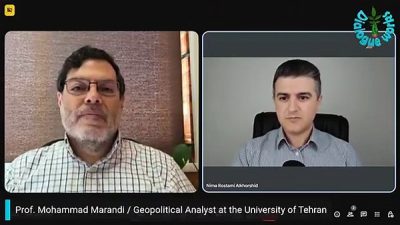
Seyed M. Marandi: U.S. Military DIVIDED? Iran’s Secret Defense EXPOSED
or go to
Aletho News Archives – Video-Images
From the Archives
‘Israel sees Iran as obstacle to its policies’
Press TV – August 25, 2017
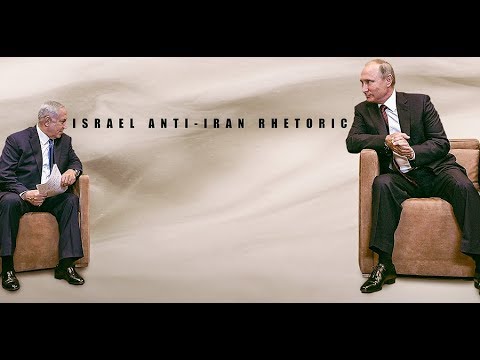
Prime Minister Benjamin Netanyahu has said that Israel felt threatened by Iran’s growing influence in the Middle East. Netanyahu expressed his Iranophobic view in a meeting with Russian President Vladimir Putin in Russia’s Black Sea resort of Sochi on Wednesday. Press TV has asked Scott Rickard, former American intelligence linguist from Tampa, Florida, and Brent Budowsky, a columnist at The Hill from Washington, to give their thoughts on the issue.
Rickard said Tel Aviv is concerned about the fact that the regime could not carry out its old project to spread sectarian divisions and pave the way for dismemberment of the countries in the Middle East region because of the Iranian-led resistance against Israeli policies, not only in the occupied territories of Palestine but also in the whole region.
“Iran is not a threat to Israel whatsoever. The threat that Israel sees is the fact that their Oded Yinon Plan is being put to a hold by Iran,” the intelligence linguist said on Thursday night.
“They (the Israelis) look at Iran as a threat only because they have no influence on their governments and Iran is autonomous and is not under the Zionist influence,” he added.
Since the victory of the Islamic Republic of Iran in 1979, Tehran has been critical of Israel’s policies in the region, whereas “no leaders [of other states] even dared to speak out against Zionism,” Rickard argued. … continue
Blog Roll
 Aletho News
- Iran declares ‘historic victory’ over US, says enemy forced to accept its proposal
- Trump Claims Ceasefire, Reopening of Strait of Hormuz Agreement with Iran
- Israeli tank fire killed UN peacekeeper in Lebanon, UNIFIL investigation finds
- Russia, China block Bahrain-sponsored UN resolution on Strait of Hormuz
- The US-Israeli War on Science is an Assault on our Future
- Trump’s Promise to Bomb Iran ‘Like Never Before’ Faces Brutal Logistics — Expert
- Germany seeks to restrict stays abroad for men of fighting age – Berliner Zeitung
- Evidence points to Ukraine being behind TurkStream attempted sabotage, but that should come as no surprise
- Sri Lanka secures supplies of Russia oil – minister
- Nations across Asia strike direct deals with Iran for Hormuz passage
- If Americans Knew
- Thousands dead and neighborhoods razed to the ground: Aid agencies fear southern Lebanon is becoming the new Gaza
- The war the US is fighting for Israel could cost trillions
- ‘Cigarette Burns, Nail Wounds’: Toddler Tortured in Gaza to Coerce Father
- Trump Says US Sent ‘a Lot of Guns’ to Protesters in Iran
- Israeli forces destroy 17 UN peacekeeper cameras in south Lebanon
- US-Israeli strikes ‘completely destroy’ synagogue in Tehran
- Archbishop for US Military Says Iran War Is Unjust Under Catholic Teaching
- Iranian leaders’ Open Letters to the American People
- Trump says Iranians appreciate bombs, WHO warns of nuclear risks – Daily Update
- U.N. experts demand Israel release prominent Gaza doctor after reports of ‘severe torture’
- No Tricks Zone
- An Inconvenient Tree: Uncovered In Alps… Europe Much Warmer Than Today 6000 Years Ago
- New Study Reports A 60% Slowdown In Greenland’s Ice Loss Rate In The Last Decade
- Low Intensity Tornado Wrecks Major Solar Farm, Creating A Potential Toxic Dump
- New Study Finds Warming Saves Lives…Cold Temperatures 12 Times More Deadly Than Excess Heat
- German Science Blog Accuses PIK Climate Institute Of Hallucinating Climate Tipping Points
- Devastating Assessment Of Comirnaty Vaccine By Former Senior Pfizer Europe Toxicologist
- New Study: CO2 Is ‘Effectively Negligible’ As An Explanatory Climate Change Factor Since 2000
- Former Pfizer Toxicologist Dr. Helmut Sterz Tells Bundestag Hearing Pfizer Vaccine Should Have Never Been Approved
- Energy Expert: Germany’s Nuclear Phaseout Was A “500 Billion Euro Mistake”
- New Research: South Australia’s Mid-Holocene Sea Surface Temperatures Were 4°C Warmer Than Today
 Aletho News