The Silence of the Israelis on ISIS
By Stephen J. Sniegoski | Consortium News | November 5, 2014
In the war on the Islamic State, the alleged scourge of humanity, little is heard about the position of America’s much-ballyhooed greatest ally in the Middle East, if not the world, Israel. Now the Islamic State has been conquering territory in very close proximity to the border of Israel. But Israel does not seem to be fearful and it is not taking any action.
And the Obama administration and American media pundits do not seem to be the least bit disturbed. This is quite in contrast to the complaints about other Middle East countries such as Turkey that are being harshly criticized for their failure to become actively involved in fighting the Islamic State.
For example, a New York Times editorial, “Mr. Erdogan’s Dangerous Game,” begins, “Turkey’s president, Recep Tayyip Erdogan, once aspired to lead the Muslim world. At this time of regional crisis, he has been anything but a leader. Turkish troops and tanks have been standing passively behind a chicken-wire border fence while a mile away in Syria, Islamic extremists are besieging the town of Kobani and its Kurdish population.”
An article in the Boston Globe read “Turkey has failed Kobani, Kurds.” An editorial in the USA Today was titled “Turkey waits as ISIL crushes Kobani.”
Neocon Charles Krauthammer in “Erdogan’s Double Game” compared Turkey’s failure to come to the defense of the Kurds in the surrounded border town of Kobani to Stalin’s unwillingness to aid the uprising of Polish nationalist forces in Warsaw in 1944, thus allowing the latter’s destruction at the hands of the Nazis.
“For almost a month, Kobani Kurds have been trying to hold off Islamic State fighters,” Krauthammer wrote. “Outgunned, outmanned, and surrounded on three sides, the defending Kurds have begged Turkey to allow weapons and reinforcements through the border. Erdogan has refused even that, let alone intervening directly.”
Even the normally antiwar Noam Chomsky expressed support for protecting the Kurds. “With regard to Kobani, it is a shocking situation,” Chomsky opined. “This morning’s newspaper described Turkish military operation against Kurds in Turkey, not against ISIS, a couple of kilometers across the border where they are in danger of being slaughtered. I think something should be done at the UN in terms of a strong resolution to call for a ceasefire.”
“It is hard to impose the use of force,” Chomsky continued, “but to the extent that it can be done try and protect Kobani from destruction at the hands of ISIS, which could be a major massacre with enormous consequences.” Chomsky added that “the strategic significance of the town in the Kurdish region is pretty obvious, and the Turkish role is critical in this.”
Israel’s Reticence
Returning to the issue of Israel, the fact of the matter is that Israel acts to protect its own national interests. At the current time, the primary goal of the Islamic State is to purify Islam rather than attack non-Muslims.
In response to Internet queries as to why the militant group wasn’t fighting Israel instead of killing Muslims in Iraq and Syria, its representatives responded: “We haven’t given orders to kill the Israelis and the Jews. The war against the nearer enemy, those who rebel against the faith, is more important. Allah commands us in the Koran to fight the hypocrites, because they are much more dangerous than those who are fundamentally heretics.”
As justification for this stance, the group cited the position of the first caliph, Abu Bakr, who began his caliphate by fighting against those he deemed apostates who still professed to be followers of Islam. (Shiites hold a negative view of Abu Bakr and his policies). Also cited was Saladin, who fought the Shiites in Egypt before conquering Christian-controlled Jerusalem.
Considering the Islamic State is targeting Muslims, the Israeli government does not see it as a significant enemy at this time. And it is reasonable for Israeli leaders to believe that the Islamic State would never move on to attack their country because it will never be able to conquer its major Islamic foes, though American military involvement would further secure Israel from any possible threat from the Islamic State.
Moreover, the fact of the matter is that the Islamic State actually benefits Israel by causing problems for those very states that do actively oppose Israel and support the Palestinians, such as Syria. What the Islamic State is causing in the Middle East is perfectly attuned with the view of the Israeli Right — as best articulated by Oded Yinon in 1982 — which sought to have Israel’s Middle East enemies fragmented and fighting among themselves in order to weaken the external threat to Israel.
Currently, these divisions are not only plaguing Syria and Iraq, but also Turkey, where ethnic Kurds are rioting because of the government’s unwillingness to help their brethren in Syria, and Lebanon, where the Shiite group Hezbollah — allied with Iran, Israel’s foremost enemy — is being assailed by the radical jihadist Nusra Front, which has the support of many Lebanese Sunnis. [See Jonathan Spyer, “The Shia-Sunni War Reaches Lebanon,” Jerusalem Post, Middle East Forum, Oct. 17, 2014.]
More than this, the Netanyahu government is trying to take advantage of the Islamic State’s aggression by falsely claiming that Hamas is its equivalent. In an address to the UN General Assembly on Sept. 29, Netanyahu asserted that “Hamas’s immediate goal is to destroy Israel. But Hamas has a broader objective. They also want a caliphate. Hamas shares the global ambitions of its fellow militant Islamists.”
Thus, Netanyahu claimed that it is wrong for countries to criticize Israel’s brutal treatment of the Palestinians in its conflict with Hamas, pointing out that “the same countries that now support confronting ISIS, opposed Israel for confronting Hamas. They evidently don’t understand that ISIS and Hamas are branches of the same poisonous tree. ISIS and Hamas share a fanatical creed, which they both seek to impose well beyond the territory under their control.”
In short, Netanyahu maintained that the Islamic State and Hamas were essentially identical, “when it comes to their ultimate goals, Hamas is ISIS and ISIS is Hamas.”
National Interest
Now there is nothing strange about Israel’s position here. It is simply acting in its own national interest. There is no reason to fight a group that doesn’t threaten it. Furthermore, it is in Israel’s interest to try to make it appear that it is acting for the good of all humanity when attacking Hamas, and though these arguments are unlikely to sway any UN members, the prime minister did provide ammunition to the Israel lobby and its supporters that could be used to persuade some gullible Americans.
It can be argued that if Israel openly entered the fray as a member of the anti-Islamic State coalition, it would be counterproductive. Since many Arabs see Israel as their major enemy, Israel’s involvement in the war would turn them against fighting the Islamic State and maybe even cause some of them to support that militant jihadist group as an enemy of Israel.
So it might be understandable that the United States would not demand that Israel participate in the war against the Islamic State, just as it did not expect Israel to fight against Saddam Hussein. Although this might be understandable, if true it would mean that Israel could not really be an ally of the United States in the Middle East because it could not participate in America’s wars in the region, which is the very raison d’état of an ally.
Conceivably, Israel could covertly support the enemies of Islamic State. Israel has been doing just that in regard to Syria. During the past two years it has launched airstrikes against Assad’s forces which has helped the rebels. Israel takes the position that any attacks on its territory from Syria are the responsibility of the Assad government even if they are made by the rebels.
Moreover, just like the United States, Israel has provided training for Syrian rebels. For example, Abdul-Ilah al-Bashir al-Noeimi, currently the Chief of Staff of the Supreme Military Council (SMC) of the Free Syrian Army, secretly trained in Israel in 2013 after being admitted into the country for medical treatment. [See “Report: Commander of Syrian Rebels Trained in Israel, Jewish Press News Briefs,” Feb. 24, 2014. In regard to Israeli participation in training Syrian rebels, see: Jason Ditz, “Report Claims US, Israeli Trained Rebels Moving Toward Damascus,” Antiwar.com, Aug. 25, 2013,; Jinan Mantash, “Israeli analyst confirms link between Israel, ‘moderate’ Syrian rebels,” Alakbar English, Oct. 17, 2014.]
Staying Out of the Fray
Israel’s pro-rebel activities in the Syrian conflict have not been counterproductive in that they have not caused any of Assad’s many Arab enemies to abandon their effort to remove his regime. But it is not apparent that Israel is taking any steps like this regarding the Islamic State, and the United States does not seem to be pressuring it to do so.
What this means is that Israel is not really any type of ally of the United States. It does not bend its foreign policy to aid the United States but only acts in its own interest. It takes actions against the Assad regime because the latter is an ally of Iran and provides a conduit for weapons being sent to Israeli’s enemy Hezbollah.
Israel’s inaction toward the Islamic State, despite its close proximity, should actually provide a model for the United States to emulate. It shows that the Islamic State should not be regarded as a threat to the faraway United States. And this lesson is further confirmed by the fact that the nearby Islamic countries, which should be far more endangered than the United States, do not seem to be fighting hard against it. It would seem that the fundamental way for the United States to face significant attacks from the Islamic State is to attack it first, which is exactly what it is now doing.
Considering Israel’s inactivity, it is ironic that in the United States it is the supporters of Israel, such as the neoconservatives, who have taken the lead in pushing for a hard-line American military position against the Islamic State. [See Jim Lobe, “Project for a New American Imbroglio,” LobeLog Foreign Policy, Aug. 28, 2014.]
Neocon Max Boot, for example, wrote about the need for “a politico-military strategy to annihilate ISIS rather than simply chip around the edges of its burgeoning empire,” which would “require a commitment of some 10,000 U.S. advisors and Special Operators, along with enhanced air power, to work with moderate elements in both Iraq and Syria.”
Fred and Kimberly Kagan have developed a strategic plan involving up to 25,000 American ground troops to combat the Islamic State, which I have already discussed at length. Some of the other noted members of the neocon war-on-the-Islamic-State chorus include Bill Kristol, John Podhoretz, Dan Senor, David Brooks, John Bolton, Richard Perle, Danielle Pletka (vice president for foreign and defense policy studies at the American Enterprise Institute), and, as noted earlier, Charles Krauthammer.
Needless to say, neither the neocons, nor any other mainstream commentators for that matter, have uttered a word about Israel’s inaction. As Scott McConnell wrote in August in The American Conservative, “over the past two generations thousands of articles have been written proclaiming that Israel is a ‘vital strategic ally’ of the United States, our best and only friend in the ‘volatile’ Middle East. The claim is a commonplace among serving and aspiring Congressmen. I may have missed it, but has anyone seen a hint that our vital regional ally could be of any assistance at all in the supposedly civilizational battle against ISIS?”
However, it would be far wiser for the United States to follow the example of Israel here — and, in fact, always follow the example of Israel by adhering to national interest (that of the United States, of course, not Israel) — than to follow the advice of those American supporters of Israel who have, because of their influence on American Middle East policy, involved the United States in endless wars creating a regional environment beneficial to Israel from the perspective of the Israeli Right.
ISIS: the Useful Enemy
By ISMAEL HOSSEIN-ZADEH | CounterPunch | October 31, 2014
The dark force of ISIS is apparently an invincible and unstoppable war juggernaut that is mercilessly killing and conquering in pursuit of establishing an Islamic State in Iraq and Syria. In reality, however, it is not as out of control as it appears. It is, indeed, carefully controlled and managed by its creators and supporters, that is, by the United States and its allies in the region—those who now pretend to have established a coalition to fight it! The U.S., Turkey, Saudi Arabia, and other allies in the region do not really need to fight ISIS to (allegedly) destroy it; all they need to do to extinguish its hellish flames is stop supplying fuel for its fire, that is, stop supplying it with funds, mercenaries, military training and armaments.
There are many ways to show the fact that, in subtle ways, ISIS benefactors control its operations and direct its activities in accordance with their own geopolitical interests. One way is to pay attention to its purported mission: to dismantle the corrupt and illegitimate regimes in Iraq and Syria and replace them with a “pure” Islamic state under the rule of a “pious caliphate.” Despite this professed mission to fight the dictatorial regimes that have tarnished Islam, however, ISIS does not question the most corrupt, dictatorial and illegitimate regimes in the region—such as the Saudi, Qatari, Kuwaiti and Jordanian regimes that fund and arm its operations.
Another way is to compare ISIS’s attack (in early August) on the Iraqi Kurds in Irbil with its current attack on the Syrian Kurds in Kobani. When Irbil came under attack by ISIS, the U.S. unleashed the full force of its air power in concert with the Kurdish peshmerga fighters to repel the attack.
By contrast, while the Kurdish city of Kobani in Northern Syria is being attacked by the disproportionately better armed forces of ISIS, and thousands of its besieged residents face certain mass killings if it falls, the forces of the “coalition to fight ISIS” are watching—in effect, playing a game of hide-and-seek, or perhaps trick-or-treat, with ISIS—as the outgunned and out-manned Kurdish forces are valiantly fighting to the death against the attackers. Only occasionally the coalition forces carry out bombing missions that seem to be essentially theatrical, or just for the record.
So, why are the Kurds in Kobani treated differently than those in Irbil? I find Ajamu Baraka’s answer to this question quite insightful:
“The reason why the Kurds of Kobani are to be sacrificed stems from the fact that they are the wrong kind of Kurds. Masoud Barzani and the bourgeois Kurds of the Kurdish Democratic Party (KDP) are the “good Kurds” and the predominant force among the Kurds of Iraq. Their control of almost 45% of Iraqi oil reserves and the booming business that they have been involved in with U.S. oil companies and Israel since their ‘liberation’ with the U.S. invasion makes them a valued asset for the U.S. The same goes for Turkey where despite the historic oppression of Kurds in Turkey, the government does a robust business with the Kurds of Iraq” (Source).
While the U.S., Turkey and their allies in the region do not view KDP as a threat to their geopolitical plans (at least for now), they do so when it comes to the “bad” Kurds in the self-governing area in Northern Syria, led by the Kurdish People’s Protection Unit (YPG). Contrary to KDP that tends to shun the Kurdistan Workers Party (PKK) in Turkey in order not to antagonize the Turks, the United States and their allies in the region, YPG welcomes support from PKK in its fight against ISIS.
Turkey’s overriding interest in Syria is not so much against ISIS as it is against the Syrian Kurds, as well as the Syrian president, Bashar al-Assad; because the rabidly anti-Kurd regime in Ankara fears that the weakened regime of Assad may not be able to do away with the self-governing Kurds in Kobani and the surrounding Kurdish areas. The Turkish regime is concerned that if the Kobani Kurds succeed in fending off the ISIS forces, their success and their experience of self-government in the Kobani region, may serve as a tempting model of self-rule for the 15-million Kurds in Turkey. The Turks are also concerned that the success of the Syrian Kurds against ISIS would thwart their long-harbored ambitions to occupy and/or annex the oil-rich Kurdish region in Northern Syria—hence their insistence on a buffer or no-fly zone in that region.
This helps explain why the Turkish regime insists that the overthrow of the Assad regime must take precedence over the fight against ISIS. It also explains why it is feverishly trying to prevent the Kurdish volunteers to cross its border with Syria to help the besieged Kobani defenders against the brutal ISIS attack—in effect, helping ISIS against the Kurds. The inaction or half-hearted action of the United States in the face of the preventable slaughter of the Syrian Kurds, which makes it complicit in the carnage, can be explained by its political horse-trading with Turkey in exchange for the Turks’ collaboration with the pursuit of its imperialistic interests in the region.
The U.S. approach to ISIS would be better understood when it is viewed in the context of its overall objectives in the region—and beyond. That overriding objective, shared and reinforced by its client states, is to undermine or eliminate “the axis of resistance,” consisting of Iran, Syria, Hezbollah, Hamas and, to a lesser extent, Shia forces in Iraq, Yemen, Bahrain and Saudi Arabia. Achievement of this goal would also be achievement of another, even broader, goal: undermining Russia’s influence and alliances in the region and, by extension, in other parts of the world—for example, its critically important role within both the Shanghai Cooperation Council (China, Russia, Kazakhstan, Kyrgyzstan, Tajikistan, and Uzbekistan) and the BRICS countries (Brazil, Russia, India, China, and South Africa).
To intervene in order to achieve these goals, the U.S. and its allies need pretexts and/or enemies—even if it means inventing or manufacturing such enemies. Without ISIS, resumption of U.S. military operations in Iraq and extension of those operations into Syria would have been difficult to justify to the American people. A year or so ago, the Obama administration’s drive to attack Syria was thwarted by the opposition from the American people and, therefore, the U.S. congress. The rise of ISIS quickly turned that opposition to support.
Viewed in this light, ISIS can be seen as essentially another (newly manufactured) instrument in the tool-box of U.S. foreign policy, which includes “global terrorism,” the 9/11 attacks on the World Trade Center, weapons of mass destruction, Iran’s nuclear technology, Al-Qaeda, and many other radical Islamic groupings—all by-products of, or blowbacks to, imperialistic U.S. foreign policies.
Ismael Hossein-zadeh is Professor Emeritus of Economics (Drake University). He is the author of Beyond Mainstream Explanations of the Financial Crisis (Routledge 2014), The Political Economy of U.S. Militarism (Palgrave-Macmillan 2007), and the Soviet Non-capitalist Development: The Case of Nasser’s Egypt (Praeger Publishers 1989). He is also a contributor to Hopeless: Barack Obama and the Politics of Illusion
JSIL vs. ISIS

By Samer Jaber | Al-Akhbar | October 23, 2014
The Jewish state of Israel in the Levant (JSIL) and the Islamic State in Iraq and Syria (ISIS) are different in many ways. The most fundamental difference is that the former is a recognized state and a member of the United Nations, while the latter is not recognized as a legitimate polity and is considered a political/military terrorist organization. However, the two share core characteristics that define them and by recognising these similarities observers may be able to make predictions about their futures.
Divine right to exist
Both JSIL and ISIS display what might be termed “self-defined righteousness.” Although Israel is a modern state, its politics and treatment of others (Palestinians) are based on religious concepts and principles that can be traced back to the first century BC and the teachings of Rabbi Hillel, someone who would be considered a fundamentalist today. He instructed Jews to have a religious and social identity separate from those of other people (tribes). Israel introduces itself to the international community as a Jewish state and, based on this interpretation of Zionist Judaism, is a home to Jews wherever they are in the world. In other words, it is a state which includes all Jews but excludes the indigenous people of Palestine, the Palestinians. It uses its interpretation of Judaism to deny Palestinians equal rights and prevent them from accessing their lands.
ISIS believes that it is enacting God’s will and defines itself as the force to enforce the Islamic moral code, religious rituals and law (Sharia). ISIS’ interpretation of Islam goes back to Ibn Taymiyyah (1263-1328) who promoted the idea that Muslims are different from non-Muslims both in their way of life as well as in religious instruction. This notion of non-acceptance together with cultural differences led Ibn Taymiyyah’s followers to the practice of excluding others and in some cases putting them to death. This particular interpretation of Islam also means the rejection of other branches of Islam.
The form of righteousness practiced by ISIS leaders and Israeli politicians is also used to set apart the “good” people from the “bad” ones. The good are those who believe and support their respective political projects while the bad ones are those who stand against them. It is this stance that makes it permissible for Israel to inflict damage on the bad ones and reward the good. As such, the Palestinian people are depicted in the official Israeli narrative as the bad people who work hard to inflict damage on the good Israeli Jews.
Historically, the state of Israel was established on the self-proclaimed premise of the Zionist movement, that anti-Semitism and murder might surge again in the world. Thus, the resurgence of another wave of anti-Semitism will inflict another Holocaust on the world’s Jews. The Zionist movement took anti-Semitism and the Holocaust out of their historical context. In other words, the concepts were given an absolute ahistoric “religious” meaning. Consequently, the “Jews” started to become reified as an ethnic identity and Israel as a refuge for the world’s Jewry from harm.
For ISIS, one of the underlying reason for Muslims’ degeneration over the centuries is that too many people have strayed far from the fundamental principles of Islam. The role of ISIS is to establish an Islamic state ruled by the caliph. It considers itself to be the force that will revive true Islam and create a state in which all Muslims can live in under its interpretation of Islam. Similarly to Israel, where non-Jews are discriminated against, there is no place for non-Muslims to live as equal citizens in the so-called Islamic State.
Both JSIL and ISIS use the self-serving interpretation of religious texts to enact pragmatic politick. The Zionist narrative that gave birth to the state of Israel and is now its official ideology starts with the idea that the Jews are God’s chosen people and that God promised them the holy land. These two concepts of chosenness are ahistorical, unconditional, and self-limited. Thus, settler colonial expansion in Palestine beyond the 1948 borders is seen as the redemption of the biblically named Judea and Samaria for the Jewish people. Putting Palestinian communities under closure during Jewish holidays is usually disguised as a religious instruction and therefore not seen for what it is: a measure of control.
ISIS also claims it is justified in its actions; it considers itself the group fighting for God and enforcing the latter’s instructions on earth. The group’s interpretation of religious texts is based on its spiritual-political leaders’ rulings that place people into two main categories – believers in ISIS’ ideology are viewed as being on the right path for following the “correct” version of Islam while everyone else, including followers of other branches of Islam, is on the wrong path. Thus the expulsion or execution of Iraqi Christians and Yazidis in Mosul who refuse to convert or pay Jizya (a tax paid by non-Muslims) is introduced as a religious instruction that permits politically motivated discrimination.
Indiscriminate attacks on perceived “enemies”
International humanitarian law forbids parties in armed conflict from deliberately launching attacks against civilians but both Israel and ISIS carry out indiscriminate attacks against their enemies, and they cite similar justifications for such attacks, mainly operational reasons.
JSIL, like ISIS, says that engaging in conflict in residential areas makes it difficult to avoid harm to civilians. Israel, which deems itself “superior” to others, says it launches military operations to prevent harm to its own people whose lives are worth much than those of “others.” ISIS believes it is on the right path and views everyone else as living in a state of sinfulness and, according to the group, sinners deserve to be put to death. Ultimately, ISIS and Israel attack civilians as part of their strategy to dispose of the natives and remove them from their lands. As such, in their quest for control of the land they both practice ethnic cleansing under a myriad of guises.In areas controlled by ISIS, in both Syria and Iraq, the group has carried out the mass executions of opposition militants captured by its forces and any person who assists its enemies is liable to be sentenced to death. Israel carries out a similar strategy of collective punishment against Palestinian resistance. It used it in its latest war on the Gaza Strip and during the so-called Operation Cast Lead in 2008-09. Even when Israel states that its attacks are intended to kill only resistance fighters, its bombardment of residential areas always leads to the killing of civilians. These attacks are clearly designed to target and punish the combatants’ families and homes.
During Israel’s latest war on Gaza in the summer of 2014, the Israeli army intentionally converted 40 percent of the Gaza Strip into uninhabited land. The Israeli army displaced up to 500,000 Palestinians out of their neighborhoods. This is the same tactic ISIS has been using in vast swaths in Syria and Iraq. The latest incident is the ongoing fighting in Kobane, the Kurdish city under Syrian jurisdiction, where ISIS’ shelling of the city forced the majority of its citizens to be displaced.
Displacement, collective punishment, terrorism and ethnic cleansing in the name of God are but a few similarities between the two entities. It is worth considering how the state of Israel has embraced the legend of the Maccabees, a sect of Judaism which fought other Jews and foreign powers in the name of piousness and righteousness, and how it has incorporated it within the contemporary ethos. The Maccabees were fundamentalists who used violence against their enemies, both Jewish and non-Jewish, and carried out forced conversions much as ISIS does today.
Samer Jaber is a political activist and researcher. He is the managing director for Dar el-Karma Inc. for Media, Researches and Publication. He tweets at @Jerusalem_sbj
Turkey allows US to use its bases for anti-ISIS operations – officials
RT | October 13, 2014
Turkey’s authorities have allowed the US to use its airbases in the fight against Islamic State militants in Iraq and Syria, said US officials , adding that Washington can also use a key Turkish installation near the Syrian border.
“Details of usage are still being worked out,” the US official told AFP on condition of anonymity.
Turkey has come under increased pressure from the US and its coalition partners in the fight against IS (also known as ISIS, or ISIL) to help combat the jihadist militia.
US military units have long been stationed in southern Turkey’s Incirlik Air Base, 8 kilometers east of Adana, the fifth-largest city in the country. At least 1,500 US airmen operate out of the base.
Now Ankara agreed that it will provide its bases, including Incirlik Air Base, to the US-led coalition against Islamic State, the officials said on condition of anonymity as they had no authorization to discuss private negotiation between the US and Turkish officials, AP reported.
US Defense Secretary Chuck Hagel held a telephone call with his Turkish counterpart Ismet Yilmaz. He thanked Ankara for its “willingness to contribute to coalition efforts, to include hosting and conducting training for Syrian opposition members,” Rear Admiral John Kirby, the chief spokesman for the Department of Defense, said.
Hagel “noted Turkey’s expertise in this area and the responsible manner in which Turkey is handling the other challenges this struggle has placed upon the country, in terms of refugees and border security,” Kirby added.
During the telephone call, Yilmaz agreed that Turkey could also host the US Central Command-European Command planning team, scheduled next week to “further develop a training regimen,” Hagel’s spokesman said.
“Both leaders stressed the need to continue taking a comprehensive, strategic approach to the threat posed by ISIL and other extremist groups.”
However, sources close to the Turkish authorities told Reuters that Ankara has not reached any agreement with the US to use its Incirlik Air Base in the fight against Islamic State militants.
But Turkey agreed with the US to train Syrian rebels to combat the militants, the sources added.
Turkey hasn’t officially joined the US-led anti-IS alliance, despite pressure from the US and the UK for Ankara to play a larger role in military operations.
Internationally, focus has turned to the majority Kurdish town of Kobani in northern Syria, on the Turkish border, where Kurdish peshmerga forces have been losing ground against IS militants following a September 16 surge to take the city. More than 550 people have been killed since the siege began, with IS militants controlling just over a third of the town.
In the meantime, Claudia Roth, deputy speaker of the German parliament, said Sunday that NATO must force Ankara to stop supporting IS, reported Rudaw Media Network, a Kurdish media group in Erbil in Iraq’s Kurdistan.
“What we have learned is that [the country’s President Recep Tayyip] Erdogan wouldn’t mind if Kurds were weakened and then annihilated,” she said, adding that Erdogan’s “dealings with the IS are unacceptable. I could not believe that Turkey harbors an IS militant camp in Istanbul.”
Turkish authorities have denied any dealings with the IS militants.
Is Hamas really like ISIS, as Netanyahu claims?
By Ibrahim Al-Madhoun | MEMO | October 8, 2014
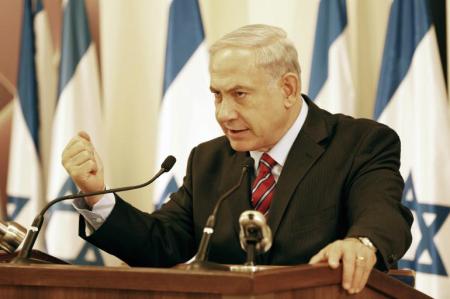
In his heart of hearts, Netanyahu is aware of the major and fundamental differences between the Palestinian Hamas movement and the so-called “Islamic State” (ISIS) that is not limited to a specific state or nationality. However, for some reason, he is trying to link the two. In doing so, he ignores what is even more dangerous than his erroneous comparison; the significant similarity between ISIS and Israel’s ideology, policies and practices.
Israel calls itself the “Jewish State”, just as Al-Baghdadi calls his group the Islamic State. From the time of its “independence” in 1948, Israel has never declared it borders; in fact, they expand and contract, just as the territory controlled by ISIS does (it rejects the ideas of borders and does not recognise nation states). Indeed, ISIS considers its borders to be wherever its forces have reached. Israel was established on the basis of colonial-settlement and mass immigration of Zionist Jews from all over the world; ISIS is also encouraging immigrants who believe in the ideology of the group, regardless of their ethnicity and nationality.
It is no wonder that the Palestinian resistance is surprised when it captures or kills Israeli soldiers only to find that they are French, British, Polish, German or Russian individuals brought in to fight on Palestinian land and join the ranks of the “Jewish State”. In addition, the war crimes and crimes against humanity committed by Israel throughout its occupation of Palestine far surpass those committed by ISIS; the Israelis kill women and children and commit massacres deliberately, with apparent impunity, and then boast about it.
I do not mean that this comparison should offend ISIS, nor am I very concerned with talking about an organisation being fought by the world. It is undoubtedly a serious phenomenon that requires further reflection and study. What I am really concerned about is revealing Netanyahu’s manipulation and his attempt to divert attention from the real nature of the conflict in Palestine. When he fights Hamas, he is fighting the rightful owners of the land, the Palestinians. He is also following terrorist logic and using unimaginably extreme methods thanks to the world overlooking the Zionist project’s excesses in the region.
The international community is applying blatant double standards in its reaction to Israel and ISIS. Alliances have been formed to fight ISIS but the world turns a blind eye to the Israeli occupation that commits war crimes witnessed by all who wish to see. Over the summer, and not for the first time, Israel bombed hospitals, schools and safe houses while they were still inhabited and Israel also used internationally-banned weapons.
Netanyahu’s repeated attempts to link Hamas to ISIS is just more proof of Israel’s defeat and failure in its latest attack on the movement. It is also a cry for help by Israel to the countries of the world after its army failed to progress more than a few metres into Gaza. This is a desperate attempt to discredit and ruin the reputation of the Palestinian resistance and link it to a terrorist organisation reviled across the world. Netanyahu still hasn’t realised that the world is no longer held hostage to Israeli propaganda, and that such links and comparisons do not harm Hamas or change the fact that occupation is terrorism in every sense of the word. There is only one state occupying someone else’s land in the Middle East, and it isn’t the “Islamic State”.
Biden shoots Washington in both feet
By Finian Cunningham | Press TV | October 6, 2014
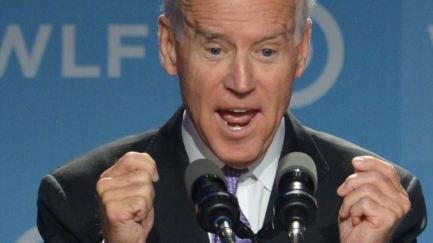
“Bazooka Joe”, as the American vice president Joe Biden is affectionately nicknamed, has managed to shoot Washington in both feet, with a couple of startling admissions.
The first shot was his blunt assessment of the US-led anti-terror coalition currently bombing Iraq and Syria. While the second blast from Bazooka Joe was his candid remarks about how Western sanctions against Russia are all down to American bullying.
Biden was speaking at Harvard University at the end of last week, and in his apparently impromptu responses to public questions he revealed more about Washington than he perhaps intended. That’s why Biden is known as a loose cannon. He tends to shoot his mouth off before aiming his thoughts.
First of all, the vice president spoke about Syria, and he stated plainly that America’s regional allies are the sponsors behind the IS terror network. Biden named names. He accused Saudi Arabia, Turkey and the United Arab Emirates of pouring money and weapons into the creation of IS, al-Nusra Front and various other al-Qaeda-type terror groups.
“Our biggest problem is our allies – our allies in the region were our largest problem in Syria,” said Biden.
Referring to Saudi Arabia, Turkey and the UAE, Biden said: “They were so determined to take down [Syrian President] Assad and essentially have a proxy Sunni-Shia war, what did they do? They poured hundreds of millions of dollars and tens, thousands of tons of weapons into anyone who would fight against Assad, except that the people who were being supplied were al-Nusra and al-Qaeda and the extremist elements of jihadis coming from other parts of the world.”
Of course, many informed observers have known this terror background already. Certainly the Syrian and Iraqi governments have been accusing these same US regional allies of doing just that – sponsoring terrorism. Nevertheless, America’s second-in-command has, in his own words, made a damning assessment of the cause behind the rise of terrorism threatening the region. This anti-terror coalition that Washington has dragooned has therefore no credibility. Just ask Biden.
Since Biden made this stupendous admission, he has been forced over the weekend to make an apology to Turkey’s President Recep Tayyip Erdogan. The latter furiously denied his country’s involvement with terror groups in Syria. But many people won’t be convinced otherwise and they will rightly see Biden’s prior candid viewpoint as closer to the truth.
Also on Syria, Biden made a second injurious disclosure: namely, that there is no such thing as a “moderate opposition” fighting the Syrian government.
The American VP said “the idea of identifying a moderate middle has been a chase America has been engaged in for a long time… there was no moderate middle because the moderate middle are made up of shopkeepers, not soldiers”.
The notion of “moderate” Syrian rebels is central to US President Barack Obama’s strategy of supposedly defeating the IS network. Along with the US-led aerial bombing campaign – costing $10 million a day, according to the Pentagon – the next phase is to allegedly train “vetted rebels” who will displace the extremists and take up the fight against the Damascus government of Bashar al-Assad. These “moderates”, if we believe Washington, are to be trained in Saudi Arabia – the terror sponsor – with $500 million of American taxpayer money, approved by the US congress.
But thanks to Joe Biden’s big mouth, we have confirmation that the notion of “moderates” is a charade, as many observers have been saying all along. What’s more, Washington knows it too.
The second damaging disclosure from Bazooka Joe was in connection to the crisis over Ukraine. Relations between Washington and Europe on the one hand and Russia on the other have sunk to their worse level since the end of the Cold War more than two decades ago. A major reason for the tensions is the slapping of economic sanctions on Russia, which in turn has responded with bans on Western imports.
Moscow’s retaliatory sanctions on agricultural products are going to hit Europe very painfully – much more than the US – as will any moves by Russia to reduce crucial gas supplies to EU countries.
What Joe Biden revealed is that the EU countries were reluctant to apply trade sanctions on Russia in the first place. Biden said that they “were embarrassed” into adopting the aggressive American agenda because Obama personally hectored European leaders.
What Biden is saying is that the crisis between Russia and the rest of Europe has been greatly exacerbated by American bullying. If it weren’t for Washington’s hostile attitude, then the crisis over Ukraine would likely be resolved diplomatically, without the provocative backdrop of a damaging trade war.
As winter approaches and hard-pressed European citizens find that they are paying dearly for American intransigence towards Russia, Biden’s words will come back to haunt with a vengeance.
It is known that many of the EU 28 member states have already deep misgivings about following the US-led sanctions. As the crisis takes more and more of an economic and social toll on Europe, the Americans will incur bitter resentment from ordinary citizens across the EU, which will in turn fragment the apparent Washington-Brussels coalition against Russia.
All in all, we owe Joe Biden a measure of gratitude for his big mouth.
It spares us a lot of time-wasting from speculation and conjecture.
All we have to do is recall his words from last week when he spelled out the fallacy of the US-led war on terror in the Middle East and the US-led new Cold War against Russia.
Israel’s false peace

By Iqbal Jassat | Media Review Network | October 2, 2014
What is it about proclamations of “peace” that allows injustice to continue unhindered?
It’s a question applicable to governments, security institutions, media columnists and pro-Israel lobbies who regularly espouse a passion for “peace in the Holy Land”.
While on the surface it appears to be a perfectly normal and laudable aspiration, in the experience of Palestine it is unfortunately riddled with inconsistencies making it alarmingly dishonest.
“Peace” as espoused by Israel’s leaders is no more than a fig leaf for it seeks to conceal the regime’s unremitting repression of Palestinian rights.
Though “peace” is a concept embodying humane values associated with calm and serenity, for Palestinians it has had a devastating opposite effect. Their daily experience whether as refugees awaiting return home or as a collective of Occupied people, points to a life of subjugation which has for decades been exploited by successive governments in Israel.
While the deception inherent in Israel’s so-called desire for “peace” is known and documented quite extensively, it is also known that by leaning on this false notion, the regime has attempted to deflect scrutiny of its unjust conduct towards Palestinians.
Such deliberate and calculated sophistry has assisted Israel and her supporters to bluff the world. By staking its claim as a “peaceful” state whose citizens deserve to live in “peace”, Israel’s social architects expect immunity from censure for any and all forms of oppression and military barbarity.
“Peace” is thus a linguistic political tool without any connection to the noble values it incorporates. Malicious and misleading to the extreme for it implies that to oppose Israel is to oppose “peace”. In other words, anti-Israelism is equated with mindless violence.
This type of faulty rationale is deliberately constructed to demonise opponents of the regime’s colonial status as violent. Thus in the context of contrasting “peace” and “violence”, Israel continues to rally support for its savagery on the basis of an aspiration most people would unhesitatingly subscribe to.
Netanyahu has repeated this trick once again at the United Nations. By casting Israel as a victim of “terrorism” perpetrated by “violent” ideologues of “Islamist radicalism”, he hopes to garner global sympathy and thereby shield his apartheid regime’s catalogue of atrocities.
America’s current bombing spree in cahoots with Britain and France and their respective Arab client-states gives Israel perfect timing and cover. In Iraq and Syria, the US-led “war on terror” has a new enemy in the guise of ISIS commonly referred to as the Islamic State.
Overnight, ISIS has emerged as a new villain threatening the existence of Western civilization. Its dominance over large swathes of Iraq and Syria including key oil fields precipitated what most people currently associate ISIS with: beheadings of Western journalists.
Suddenly this new “Islamist bogeyman” emerges to not only distract global attention from Israel’s beheadings of Palestinian families, but also to extend a fresh lifeline to America’s military industrial complex. And, of course, to provide Netanyahu the opportunity to cast resistance movements such as Hamas and Islamic Jihad in the mould of ISIS.
Such tricks conjure the minds of magicians and keep people enthralled while deceptive policies of dispossession continue uninterrupted.
Netanyahu and his clique of magicians may believe that waving the wand of “peace” will conceal Israel’s bloody carnage and ongoing aggression, but unfortunately for Zionism this illusion won’t last.
If South Africa is used as a yardstick to measure whether Israel’s bag of dirty tricks has worked, it’s pretty clear that Netanyahu has failed dismally.
Here, a sustained campaign of boycott, divestment and sanctions (BDS) led by the ANC as the ruling party and a formidable formation of civil societies, churches and trade unions has demonstrated that it has not been deceived by false notions of “peace”.
Syrian Foreign Minister: US to Conduct Airstrikes Against IS for 3 Years
RIA Novosti – September 27, 2014
The United States has informed Syria that it will conduct airstrikes against the Islamic State (IS) for three years, Syrian Foreign Minister Walid Muallem said Saturday.
“They [the United States and its allies] said they will strike for three years. They informed us but this doesn’t mean they have our acceptance,” Muallem said.
Earlier in September, the United States announced the formation of an international coalition aimed at fighting IS militants. Washington and its allies have already conducted a number of airstrikes on IS positions both in Syria and Iraq.
The United States has been carrying out airstrikes against the IS on the Syrian territory without any formal permission from Damascus.
Russian Foreign Minister Sergei Lavrov said Friday that the coalition should seek consent of the countries, in which the airstrikes are conducted.
Featured Video
Laith Marouf: Hezbollah’s position on US-Iran ceasefire
or go to
Aletho News Archives – Video-Images
From the Archives
The Dirty Little Secret behind the “Global Terrorism Index”
The Omission of Israeli Terrorism in the Occupied Palestinian Territories
By Karin Brothers | Global Research | December 6, 2014
… The Israeli settlements — all of which are illegal – have been identified as a major impediment to peace. The refusal of a major “global” terrorism report to name the Israeli settlers as one of the groups most responsible for terrorism not only misrepresents a major source of regional violence but exposes the Global Terrorism Index as a propaganda tool that supports a U.S. agenda.
In recent years, governments have been attempting to thwart terrorism by blocking supportive fund-raising. When it comes to Israeli settlements, however, the US and Canada actually encourage fund-raising by giving organizations (such as Christian Friends of Israeli Communities (CFOIC) and the Jewish National Fund) financial support in the form of donor tax-deductions.
Charities which provide funds for the Israeli settlements should be regarded as terror-financing organizations. They should not only lose their tax-deductible status, but they should be banned because they support the violation of international humanitarian law. The terror-financing laws that are being strictly enforced for Muslim charities should be applied to Christian and Jewish charities as well. … Read full article
Blog Roll
 Aletho News
- The ‘Opposition Party’ Has Done Nothing to Stop the Iran War and Much to Goad Trump Into Continuing It
- Moscow backs Tehran on status of Lebanon in US-Iran deal
- How UK Regulator Ofcom Quietly Bypassed International Law to Police American Speech
- The Black Cube Files: How Former Mossad Operatives Flipped a Nation
- Laith Marouf: Hezbollah’s position on US-Iran ceasefire: What you’re not being told
- Israel’s priority lies in destroying chances of peace between Iran, US: Ex-UN nuclear chief
- Ceasefire for all or for none: Iran shuts Hormuz over Lebanon attacks
- Strait of Hormuz is Iran’s ‘nuclear weapon’ that forced US retreat: Medvedev
- Energy crisis will last for months – Kremlin envoy
- Europe’s quiet role in the war on Iran
- If Americans Knew
- This is ceasefire? Israel’s biggest massacre yet in Lebanon, another journalist killed in Gaza – Daily Update
- Tucker Carlson on Israel: This Is the Behavior of an Ally? Really?
- Gazans face a triple crisis: severe shortages of water and bread, healthcare in tatters
- NY Times reports how Netanyahu took the US into Iran War
- A sigh of relief over Iran, but Gaza and Lebanon in dire straits – Daily Update
- Thousands dead and neighborhoods razed to the ground: Aid agencies fear southern Lebanon is becoming the new Gaza
- The war the US is fighting for Israel could cost trillions
- ‘Cigarette Burns, Nail Wounds’: Toddler Tortured in Gaza to Coerce Father
- Trump Says US Sent ‘a Lot of Guns’ to Protesters in Iran
- Israeli forces destroy 17 UN peacekeeper cameras in south Lebanon
- No Tricks Zone
- An Inconvenient Tree: Uncovered In Alps… Europe Much Warmer Than Today 6000 Years Ago
- New Study Reports A 60% Slowdown In Greenland’s Ice Loss Rate In The Last Decade
- Low Intensity Tornado Wrecks Major Solar Farm, Creating A Potential Toxic Dump
- New Study Finds Warming Saves Lives…Cold Temperatures 12 Times More Deadly Than Excess Heat
- German Science Blog Accuses PIK Climate Institute Of Hallucinating Climate Tipping Points
- Devastating Assessment Of Comirnaty Vaccine By Former Senior Pfizer Europe Toxicologist
- New Study: CO2 Is ‘Effectively Negligible’ As An Explanatory Climate Change Factor Since 2000
- Former Pfizer Toxicologist Dr. Helmut Sterz Tells Bundestag Hearing Pfizer Vaccine Should Have Never Been Approved
- Energy Expert: Germany’s Nuclear Phaseout Was A “500 Billion Euro Mistake”
- New Research: South Australia’s Mid-Holocene Sea Surface Temperatures Were 4°C Warmer Than Today
 Aletho News