Turkey has established a strict blockade of the Kurdish regions in Syria surrounded by Islamic State (IS, formerly ISIS/ISIL), depriving Syrian Kurds of essential supplies and shooting people trying to enter Turkey from Syria, RT’s Murad Gazdiev reports.
The Turkish border with the Kurdish territories in the northern Syria, which stretches for 750 kilometers, has been fitted with two layers of barbed wire, a huge minefield, and sniper towers at regular intervals. It has only two border crossings that are closed most of the time.
“They [Turks] do not let anything across: neither food, nor humanitarian aid, nor medicine. They only let returning refugees cross,” Hadir Mustafa, the head of one of the border crossings on the Syrian side, told RT.
“The Turkish soldiers do not cooperate, they are aggressive and hostile. They push, hit people and tell them to never come back,” he added.
Murad Gazdiev reported from the border that Turkish border guards had refused to let an ambulance cross the border that was transporting a man critically injured in a terrorist act in a nearby Syrian Kurdish town, saying they needed to receive permission from Turkish provincial authorities first.
Apart from maintaining the blockade, Turkish snipers on towers also target civilians on the Syrian side. They recently shot and killed a Kurdish schoolboy, who was trying to cross the border in order to find work in Turkey.
“The Turks shot him 70 meters from the border, on the Syrian side. I saw the place myself,” the boy’s father told RT.
On Sunday, a 16-year-old girl was also shot dead as she was trying to get to Turkey from Kurdish territories in Syria, while others from her group were injured and had to be treated for gunshot wounds.
The Turkish blockade of Syrian Kurdistan is “total,” Gazdiev reports citing the locals.
“The large part of what we grow here we throw away because we can’t sell it outside,” a Kurdish fruit and vegetable seller named Beze told RT, adding that it is easier to smuggle goods through IS-controlled territories than to transport them through the Turkish border.
“Things that do not grow here also have to be smuggled in. By the time they get here they cost ten times as much,” Beze added.
At the same time, the Turkish border with jihadist-controlled territories in Syria remains open. Weapons, fighters and goods flow freely through checkpoints manned by Islamic militants.
“Ex-convict accused of planning ISIS attack in Rochester” It is funny how revealing these stories are if you read them carefully.
The FBI picked a mentally disturbed ‘self-professed Muslim convert’, described as ‘an aggressive panhandler‘, an ex-con who talked crazy violence, had their operative drive him to pick up terrorism supplies, in this case, knives, a machete, ski masks and plastic cable ties (and the operative paid for them as their patsy had no money), and then drive him by a target location – a place which he didn’t like as they apparently wouldn’t let him panhandle! – and got him to discuss it as a possible target, had another operative get him to pledge some kind of ‘allegiance’ to Baghdadi, and then, to emphasize the situation, after the plot was supposedly foiled by brave FBI work, had the fireworks show in Rochester canceled (note that only the fireworks was canceled, as I guess Muslims have a particular thing about fireworks).
For over a decade Brazilian political cartoonist Carlos Latuff has championed what he calls “artistic activism” by animating world leaders and pressing global topics. No issue is considered too controversial by the artist, who has put his own spin on topics including the Gaza war, the rise of ISIS, Ebola, and the Scottish referendum. He’s also known for his bold cartoons depicting Turkey’s alleged links with ISIS.
Turkish Foreign Minister Ahmet Davutoglu (center R) talks to French President Francois Hollande (center L) during the Unity March ‘Marche Republicaine’ in Paris, France on January 11, 2014.
(Photo by Hakan Goktepe/Anadolu Agency/Getty Images)
It is now openly discussed even in mainstream media the fact that Turkey has been intimately involved in fomenting and supporting the war on Syria, with its ultimate goal being the overthrow of the Syrian government and its replacement by a compliant proxy aligned with Turkish President Erdogan and the Muslim Brotherhood. That this is no longer a ‘conspiracy theory’ but a conspiracy fact not only vindicates my analysis over the last four years, but it also brings to the fore the nefarious role of a NATO member in stoking a brutal and bloody war for its own ends.
Beyond just the war itself, Turkey has been implicated in a wide variety of crimes (some constituting war crimes) which cast Ankara in a very bad light: a supporter of terrorism, a criminal government engaging in acts of aggression against its neighbors and other world powers, the repression of journalists and others who have brought the truth to the light of day, among many others. Taken in total, it becomes clear that under President Erdogan Turkey has become a belligerent actor with delusions of hegemony and a complete disregard for human rights and sovereignty.
But how exactly has this transformation happened? What has been proven regarding Turkish government actions that make it so clear that the regime in Ankara is criminal in nature?
Cataloging Turkish Crimes
The criminality of the Erdogan government can be roughly broken down into the following categories: aggression against sovereign states, material support for international terrorism, and systematic violation of human rights. Naturally, there are many other crimes that would also be included in a full and completing accounting of Ankara’s illegal actions including, but not limited to, corruption, promoting and tacitly supporting fascist gangs, and many others. But it is the support for international terrorism that rises above all others to thrust Turkey into the spotlight as one of the single most important supporters of the global scourge of terrorism.
Turkey’s central role in each and every aspect of terrorism in Syria must be the starting point of any analysis of Turkey’s grave crimes. President Erdogan has not been shy about calling for regime change in Syria, but his position has been far more than merely rhetorical; Erdogan’s government has played a very direct role in the sponsorship, arming, facilitation and military backing of everyone from the Free Syrian Army to Jabhat al-Nusra (Al Qaeda in Syria) and the Islamic State (ISIS/ISIL/Daesh).
In 2012, the New York Timesconfirmed that the CIA was sending weapons and other military materiel into the hands of anti-Assad forces from the Turkish side of the border, using their connections with the Muslim Brotherhood to do so. However, it has also come to light that Turkish intelligence has been front and center in the ongoing campaign to arm and resupply the terror groups such as the al-Nusra Front and others. This fact was exposed by Can Dündar, the editor-in-chief of the Cumhuriyet, who now faces a potential life sentence at the behest of President Erdogan, who himself called for Dündar to receive multiple life sentences.
What is the reason for the attack on Dündar and other opposition journalists? The Cumhuriyet, one of the most widely read Turkish dailies, published video footage confirming the widespread allegations that Turkish trucks, ostensibly loaded with humanitarian supplies, were actually filled with arms bound for terror groups fighting against Assad, and that those trucks were operated by Turkey’s National Intelligence Organization (MİT). But it goes much further than that.
Turkey has been directly involved on the ground in Syria both in active military and support roles. In fact, transcripts of wiretaps obtained by Cumhuriyet, and presented in Turkish courts, along with shocking video footage, have confirmed what numerous eyewitnesses have stated: Turkish security forces have been directly involved in shelling and support operations for Nusra front and other jihadi groups in and around Kassab, Syria, among other sites. This is a crucial piece of information because it explains just why those terror groups were able to successfully capture that region in 2014, and recapture it this year. Eyewitnesses in Kassab have confirmed what Syrian soldiers speaking on condition of anonymity had reported, namely that Turkish helicopters and heavy artillery were used in support of Nusra and the other terror groups during both the 2014 and the current campaign.
Of course this policy of alliance with anti-Assad terrorists has been part of Turkey’s modus operandi since the beginning of the conflict. In 2012, Reutersrevealed that Turkey, “set up a secret base with allies Saudi Arabia and Qatar to direct vital military and communications aid to Syria’s rebels from a city near the border… ‘It’s the Turks who are militarily controlling it. Turkey is the main coordinator/facilitator. Think of a triangle, with Turkey at the top and Saudi Arabia and Qatar at the bottom,’ said a Doha-based source.”
This information was confirmed by Vice President Joe Biden in his spectacular foot-in-mouth speech at Harvard University where he stated:
Our allies in the region were our largest problem in Syria. The Turks were great friends… [and] the Saudis, the Emirates, etcetera. What were they doing?… They poured hundreds of millions of dollars and tens of tons of weapons into anyone who would fight against Assad — except that the people who were being supplied, [they] were al-Nusra, and al-Qaeda, and the extremist elements of jihadis who were coming from other parts of the world.
But one must guard against the false notion that somehow Turkey’s role has been merely as auxiliary in Syria, as a supporter, but not leader, of the terrorist factions wreaking havoc on the Syrian battlefield. Instead, it is now an inescapable fact, even acknowledged by some high-ranking military and intelligence officials, that Turkey has been the principal financier and supporter of the Islamic State and the other jihadist groups.
According to the UK Independent, President Erdogan’s son Bilal Erdogan, along with a number of other close associates, have been directly benefiting from the illicit oil trade with the Islamic State. The paper noted that, “Bilal Erdogan… is one of three equal partners in the BMZ group, a major Turkish oil and marine shipping company, which both the Russian and Syrian governments have accused of purchasing oil from ISIS… Bilal Erdogan has been directly involved in the oil trade with ISIS… Turkey downed a Russian jet on 24 November specifically to protect his oil smuggling business.”
In fact, Syria’s Information Minister Omran al-Zoabi explained that “All of the oil was delivered to a company that belongs to the son of Recep [Tayyip] Erdogan. This is why Turkey became anxious when Russia began delivering airstrikes against the IS infrastructure and destroyed more than 500 trucks with oil already. They’re importing not only oil, but wheat and historic artefacts [sic] as well.”
So it seems that Erdogan and his clique are involved not simply in fomenting war and terrorism in Syria, but also in its plunder, with complex smuggling networks being directly tied to the Turkish President himself. Indeed, just such smuggling networks have been uncovered throughout Asia, tying Turkey into the broader international architecture of terrorism trafficking.
In late 2014 and early 2015, a human trafficking ring was exposed by Chinese authorities. It was revealed that at least ten Turks were responsible for organizing and facilitating the border crossings of a number of Uighurs (Chinese Muslims from Xinjiang), at least one of whom was a wanted Uighur terrorist with others being “radicalized potential terrorists.” These individuals were likely part of a previously documented trend of Uighur extremists traveling to the Middle East to train and fight with the Islamic State and/or other terror groups.
In fact, precisely this trend was exposed two months earlier in September 2014 when Reutersreported that Beijing formally accused militant Uighurs from Xinjiang of having traveled to Islamic State-controlled territory to receive training. Further corroborating these accusations, the Jakarta Post of Indonesia reported that four Chinese Uighur jihadists had been arrested in Indonesia after having traveled from Xinjiang through Malaysia. Other, similar reports have also surfaced in recent months, painting a picture of a concerted campaign to help Uighur extremists travel throughout Asia, communicating and collaborating with transnational terror groups such as IS.
Now, with these latest revelations regarding Turkish nationals being involved in the trafficking of extremists, it seems an invaluable piece of the terrorist transit infrastructure has been exposed. Indeed my assertions above (initially made here in early February 2015) have been substantiated by Syria’s ambassador to China, quoted at length by Pulitzer Prize-winning journalist Seymour Hersh in his piece Military to Military which notes the following:
[Syria’s ambassador to China Imad Moustapha explained that] ‘China regards the Syrian crisis from three perspectives,’ he said: international law and legitimacy; global strategic positioning; and the activities of jihadist Uighurs, from Xinjiang province in China’s far west. Xinjiang borders eight nations… and, in China’s view, serves as a funnel for terrorism around the world and within China. Many Uighur fighters now in Syria are known to be members of the East Turkestan Islamic Movement – an often violent separatist organisation that seeks to establish an Islamist Uighur state in Xinjiang. ‘The fact that they have been aided by Turkish intelligence to move from China into Syria through Turkey has caused a tremendous amount of tension between the Chinese and Turkish intelligence,’ Moustapha said. ‘China is concerned that the Turkish role of supporting the Uighur fighters in Syria may be extended in the future to support Turkey’s agenda in Xinjiang. We are already providing the Chinese intelligence service with information regarding these terrorists and the routes they crossed from on travelling into Syria’ [emphasis added].
Moustapha’s concerns were echoed by a Washington foreign affairs analyst who has closely followed the passage of jihadists through Turkey and into Syria. The analyst, whose views are routinely sought by senior government officials, told me that ‘Erdoğan has been bringing Uighurs into Syria by special transport while his government has been agitating in favour of their struggle in China. Uighur and Burmese Muslim terrorists who escape into Thailand somehow get Turkish passports and are then flown to Turkey for transit into Syria.’ He added that there was also what amounted to another ‘rat line’ that was funnelling Uighurs – estimates range from a few hundred to many thousands over the years – from China into Kazakhstan for eventual relay to Turkey, and then to IS territory in Syria [emphasis added]. ‘US intelligence,’ he said, ‘is not getting good information about these activities because those insiders who are unhappy with the policy are not talking to them.’ He also said it was ‘not clear’ that the officials responsible for Syrian policy in the State Department and White House ‘get it’. IHS-Jane’s Defence Weekly estimated in October that as many as five thousand Uighur would-be fighters have arrived in Turkey since 2013, with perhaps two thousand moving on to Syria. Moustapha said he has information that ‘up to 860 Uighur fighters are currently in Syria.’
It has become clear that Turkey is now unmistakably a major supporter of international terrorism, with Syria being merely the proving ground for a stable of terror groups directly or indirectly working with Erdogan’s government. This is further evidenced by the now documented and verified fact that the Erdogan government was directly involved in the transfer of chemical weapons into the hands of ISIS.
As Turkish MP Eren Erdem explained before the Turkish parliament and to international media, “There is data in this indictment. Chemical weapon materials are being brought to Turkey and being put together in Syria in camps of ISIS which was known as Iraqi Al Qaeda during that time.” Erdem noted that according to an investigation launched (and abruptly closed) by the General Prosecutor’s Office in Adana, Turkish citizens with ties to the intelligence community took part in negotiations with ISIS-linked and Al-Qaeda-linked militants to sell sarin gas for use in Syria. The evidence of these allegations came in the form of wiretapped phone conversations similar to those published earlier this year by Cumhuriyet.
Taken in total, the case against Erdogan’s government is damning. At the same time, one must also note Erdogan’s grave crimes against his own people.
As noted already, Can Dündar and his colleagues at Cumhuriyet have been targeted by Erdogan’s state for their disclosure of Ankara’s dealings with the terrorists of Syria. Just a few weeks ago Dündar, along with Cumhuriyet’s Ankara bureau chief Erdem Gul, were charged in a Turkish court with “spying” and “divulging state secrets.” This should not come as a surprise to anyone familiar with Turkey’s track record when it comes to opposition journalism.
In fact, in December 2014, the Turkish police raided the offices of the Zaman newspaper, one of the most popular in the country, alleging that Zaman was responsible for “launching an armed terror organization.” The authorities detained the Zaman Editor-in-Chief Ekrem Dumanlı , as well as the head of the Samanyolu Media Group, Hidayet Karaca, along with a producer, scriptwriter and director.
The Turkish Journalists Association (TGC) and the Turkey Journalists’ Labor Union (TGS) released a joint statement in condemnation of the raids and the ongoing repression of journalists by the Erdogan government, noting that “Almost 200 journalists were previously held in prison on charges of being a member of a terror organization, violating their right to a fair trial. Journalists are now being detained once again. These developments mean that freedom of the press and opinion is punished in Turkey, which takes its place in the class of countries where the press is not free.”
International organizations too expressed their outrage at this blatant violation of freedom of the press. The International Federation of Journalists (IFJ), and its regional group the European Federation of Journalists (EFL), stated that, “We are appalled by this brazen assault on press freedom and Turkish democracy… One year after the exposure of corruption at the heart of government, the authorities appear to be exacting their revenge by targeting those who express opposing views… This latest act demonstrates that the authorities’ contempt for journalism has not diminished.”
Of course, Ankara’s war on freedom of speech, and the media generally, is not relegated to established media outlets such as Zaman and Cumhuriyet, but also to citizen media and social media as well. In response to the leaking of recordings on Twitter documenting corruption among Erdogan cronies and political elites within his Justice and Development Party (AKP), Erdogan attacked the social media platform, and his government immediately moved to restrict access to Twitter.
Erdogan even went so far as to suggest a total ban on all social media sites, including Facebook and YouTube, saying that “The international community can say this, can say that. I don’t care at all. Everyone will see how powerful the Republic of Turkey is.” This sort of megalomaniacal rhetoric has become the norm for Erdogan, who sees himself as less a president and more a sultan or absolute monarch.
The famous words of the International Military Tribunal at Nuremburg succinctly and matter-of-factly state that the waging of aggressive war is “essentially an evil thing… to initiate a war of aggression… is not only an international crime; it is the supreme international crime, differing only from other war crimes in that it contains within itself the accumulated evil of the whole.” This is undeniably true. But what happens when one is engaged in an international campaign to destroy a neighboring country through war? What happens when one country enables and participates in the destruction of another? What happens when one country will stop at nothing to come out victorious in a war it is not officially involved in, but covertly manages, and from which it directly benefits? Are these not simply different forms of the same crime, the supreme crime, as it were?
Let’s face it, Turkey is now a mafia state ruled by a criminal regime. It is also a NATO member state. Perhaps now the pernicious illusion of NATO as military alliance defending justice, human rights, and the rule of law can finally be put to rest. While the propagandists will continue the charade, Turkey has permanently exposed the US-NATO-GCC-Israel for the warmongers they are in Syria and around the world. Let’s just hope the world notices.
One reason why Official Washington continues to insist that Syrian President Bashar al-Assad “must go” is that he supposedly “gassed his own people” with sarin on Aug. 21, 2013, but the truth of that allegation has never been established and is in growing doubt, U.S. intelligence veterans point out.
MEMORANDUM FOR: U.S. Secretary of State John Kerry, and Foreign Minister of Russia Sergey Lavrov
FROM: Veteran Intelligence Professionals for Sanity (VIPS)
SUBJECT: Sarin Attack at Ghouta on Aug. 21, 2013
In a Memorandum of Oct. 1, 2013, we asked each of you to make public the intelligence upon which you based your differing conclusions on who was responsible for the sarin chemical attack at Ghouta, outside Damascus on Aug. 21, 2013. On Dec. 10, 2015, Eren Erdem, a member of parliament in Turkey, citing official documents, blamed Turkey for facilitating the delivery of sarin to rebels in Syria.
Mr. Kerry, you had blamed the Syrian government. Mr. Lavrov, you had described the sarin as “homemade” and suggested anti-government rebels were responsible. Each of you claimed to have persuasive evidence to support your conclusion.
Neither of you responded directly to our appeal to make such evidence available to the public, although, Mr. Lavrov, you came close to doing so. In a speechat the UN on Sept. 26, 2013, you made reference to the views we presented in our VIPS Memorandum, Is Syria a Trap?, sent to President Obama three weeks earlier.
Pointing to strong doubt among chemical weapons experts regarding the evidence adduced to blame the government of Syria for the sarin attack, you also referred to the “open letter sent to President Obama by former operatives of the CIA and the Pentagon,” in which we expressed similar doubt.
Mr. Kerry, on Aug. 30, 2013, you blamed the Syrian government, publicly and repeatedly, for the sarin attack. But you failed to produce the kind of “Intelligence Assessment” customarily used to back up such claims.
We believe that this odd lack of a formal “Intelligence Assessment” is explained by the fact that our former colleagues did not believe the evidence justified your charges and that, accordingly, they resisted pressure to “fix the intelligence around the policy,” as was done to “justify” the attack on Iraq.
Intelligence analysts were telling us privately (and we told the President in our Memorandum of Sept. 6, 2013) that, contrary to what you claimed, “the most reliable intelligence shows that Bashar al-Assad was not responsible for the chemical incident that killed and injured Syrian civilians on August 21.”
This principled dissent from these analysts apparently led the White House to create a new art form, a “Government Assessment,” to convey claims that the government in Damascus was behind the sarin attack. It was equally odd that the newly minted genre of report offered not one item of verifiable evidence.
(We note that you used this new art form “Government (not Intelligence) Assessment” a second time – again apparently to circumvent intelligence analysts’ objections. On July 22, 2014, just five days after the shoot-down of Malaysia Airlines Flight 17, after the media asked you to come up with evidence supporting the charges you leveled against “pro-Russian separatists” on the July 20 Sunday talk shows, you came up with the second, of only two, “Government Assessment.” Like the one on the chemical attack in Syria, the assessment provided meager fare when it comes to verifiable evidence.)
Claims and Counterclaims
Speaking to the United Nations General Assembly on Sept. 24, 2013, President Obama asserted: “It’s an insult to human reason and to the legitimacy of this institution to suggest that anyone other than the [Syrian] regime carried out this attack [at Ghouta].”
Mr. Lavrov, that same day you publicly complained that U.S. officials kept claiming “’the Syrian regime,’ as they call it, is guilty of the use of chemical weapons, without providing comprehensive proof.” Two days later you told the U.N. General Assembly you had given Mr. Kerry “the latest compilation of evidence, which was an analysis of publicly available information.” You also told the Washington Post, “This evidence is not something revolutionary. It’s available on the Internet.”
On the Internet? Mr. Kerry, if your staff avoided calling your attention to Internet reports about Turkish complicity in the sarin attack of Aug. 21, 2013, because they lacked confirmation, we believe you can now consider them largely confirmed.
Documentary Evidence
Addressing fellow members of parliament on Dec. 10, 2015, Turkish MP Eren Erdem from the Republican People’s Party (a reasonably responsible opposition group) confronted the Turkish government on this key issue. Waving a copy of “Criminal Case Number 2013/120,” Erdem referred to official reports and electronic evidence documenting a smuggling operation with Turkish government complicity.
In an interview with RT four days later, Erdem said Turkish authorities had acquired evidence of sarin gas shipments to anti-government rebels in Syria, and did nothing to stop them.
The General Prosecutor in the Turkish city of Adana opened a criminal case, and an indictment stated “chemical weapons components” from Europe “were to be seamlessly shipped via a designated route through Turkey to militant labs in Syria.” Erdem cited evidence implicating the Turkish Minister of Justice and the Turkish Mechanical and Chemical Industry Corporation in the smuggling of sarin.
The Operation
According to Erdem, the 13 suspects arrested in raids carried out against the plotters were released just a week after they were indicted, and the case was closed — shut down by higher authority. Erdem told RT that the sarin attack at Ghouta took place shortly after the criminal case was closed and that the attack probably was carried out by jihadists with sarin gas smuggled through Turkey.
Small wonder President Erdogan has accused Erdem of “treason.” It was not Erdem’s first “offense.” Earlier, he exposed corruption by Erdogan family members, for which a government newspaper branded him an “American puppet, Israeli agent, a supporter of the terrorist PKK and the instigator of a coup.”
In our Sept. 6, 2013 Memorandum for the President, we reported that coordination meetings had taken place just weeks before the sarin attack at a Turkish military garrison in Antakya – just 15 miles from the Syrian border with Syria and 55 miles from its largest city, Aleppo.
In Antakya, senior Turkish, Qatari and U.S. intelligence officials were said to be coordinating plans with Western-sponsored rebels, who were told to expect an imminent escalation in the fighting due to “a war-changing development.” This, in turn, would lead to a U.S.-led bombing of Syria, and rebel commanders were ordered to prepare their forces quickly to exploit the bombing, march into Damascus, and remove the Assad government.
A year before, the New York Times reported that the Antakya area had become a “magnet for foreign jihadis, who are flocking into Turkey to fight holy war in Syria.” The Times quoted a Syrian opposition member based in Antakya, saying the Turkish police were patrolling this border area “with their eyes closed.”
And, Mr. Lavrov, while the account given by Eren Erdem before the Turkish Parliament puts his charges on the official record, a simple Google search including “Antakya” shows that you were correct in stating the Internet contains a wealth of contemporaneous detail supporting Erdem’s disclosures.
Mr. Kerry, while in Moscow on Dec. 15, you said to a Russian interviewer that Syrian President Assad “has gassed his people – I mean, gas hasn’t been used in warfare formally for years – for – and gas is outlawed, but Assad used it.”
Three days later The Washington Post dutifully repeated the charge about Assad’s supposed killing “his own people with chemical weapons.” U.S. media have made this the conventional wisdom. The American people are not fully informed. There has been no mainstream media reporting on Turkish MP Erdem’s disclosures.
Renewed Appeal
We ask you again, Secretary Kerry and Foreign Minister Lavrov, to set the record straight on this important issue. The two of you have demonstrated an ability to work together on important matters – the Iran nuclear deal, for example – and have acknowledged a shared interest in defeating ISIS, which clearly is not Turkish President Erdogan’s highest priority. Indeed, his aims are at cross-purposes to those wishing to tamp down the violence in Syria.
After the shoot-down of Russia’s bomber on Nov. 24, President Vladimir Putin put Russian forces in position to retaliate the next time, and told top defense officials, “Any targets threatening our [military] group or land infrastructure must be immediately destroyed.” We believe that warning should be taken seriously. What matters, though, is what Erdogan believes.
There is a good chance Erdogan will be dismissive of Putin’s warning, as long as the Turkish president believes he can depend on NATO always to react in the supportive way it did after the shoot-down.
One concrete way to disabuse him of the notion that he has carte blanche to create incidents that could put not only Turkey, but also the U.S., on the verge of armed conflict with Russia, would be for the U.S. Secretary of State and the Russian Foreign Minister to coordinate a statement on what we believe was a classic false-flag chemical attack on Aug. 21, 2013, facilitated by the Turks and aimed at mousetrapping President Obama into a major attack on Syria.
One of our colleagues, a seasoned analyst of Turkish affairs, put it this way: “Erdogan is even more dangerous if he thinks that he now has NATO license to bait Russia — as he did with the shoot-down. I don’t think NATO is willing to give him that broader license, but he is a loose cannon.”
FOR THE STEERING GROUP, VETERAN INTELLIGENCE PROFESSIONALS FOR SANITY
Philip Giraldi, CIA, Operations Officer (ret.)
Larry Johnson, CIA & State Department (ret.)
John Kiriakou, Former CIA Counterterrorism Officer
Edward Loomis, NSA, Cryptologic Computer Scientist (ret.)
David MacMichael, National Intelligence Council (ret.)
Ray McGovern, former US Army infantry/intelligence officer & CIA analyst (ret.)
Todd E. Pierce, MAJ, US Army Judge Advocate (Ret.)
Scott Ritter, former Maj., USMC, former UN Weapon Inspector, Iraq
Coleen Rowley, FBI Special Agent and former Minneapolis Division Legal Counsel (ret.)
Robert David Steele, former CIA Operations Officer
Peter Van Buren, U.S. Department of State, Foreign Service Officer (ret.) (associate VIPS)
Kirk Wiebe, former Senior Analyst, SIGINT Automation Research Center, NSA
Ann Wright, Col., US Army (ret.); Foreign Service Officer (resigned)
Islamic State militants have managed to steal chemical weapons from underground storage facilities in Libya that were not properly guarded and the gas has already been used, a cousin of the late Libyan leader Muammar Gaddafi told RT Arabic in an exclusive interview.
“ISIS has managed to find some of the secret underground storage facilities, still holding chemical weapons, hidden in the desert. Unfortunately, they weren’t properly guarded,” said Ahmed Gaddafi Al-Dam, a cousin of Muammar Gaddafi, the Libyan leader who was killed in 2011.
Al-Dam, the stolen gas was then trafficked to the northern part of the country and sold.
“There are two known cases of this chemical agent being stolen. I know this from my sources in Tripoli. In the first case, seven drums of sarin were stolen, and in the second, I think it was five.”
And the destructive chemicals have already been used, said Ahmed Gaddafi Al-Dam, who formerly was one of Gaddafi’s most trusted security chiefs. He recalled that during the recent clashes near the Al-Quds Mosque in Tripoli, security forces discovered a vehicle loaded with sarin.
“Unfortunately, those who had driven this vehicle into the city didn’t understand the dangers of this nerve agent, and how risky it was to bring it into an urban area, let alone ever use it. I don’t want to spread panic, but that’s the reality. And the world knows this very well,” he said.
Islamic State (IS, previously ISIS/ISIL) has already used chemical weapons in Iraq and Syria, according to numerous reports.
Earlier this month, Eren Erdem, a member of Turkey’s main opposition party, the Republican People’s Party (CHP), told RT that IS terrorists in Syria had received all the necessary materials to produce deadly sarin gas via Turkey.
“The ISIL simply would not be able to support itself without American airpower,” US politician Art Olivier told Press TV on Saturday.
The United States is supporting the Daesh (ISIL) terrorist group because it does not want to end war in the Middle East, an American politician and political analyst says.
“The United States is ultimately behind ISIS,” Art Olivier said on Saturday, using an alternative acronym for the Takfiri group.
Olivier, former mayor of Bellflower, California, and former US vice presidential [Libertarian] candidate, told Press TV that the United States creates these terrorist groups “to keep fighting in the Middle East.”
“The ISIS simply would not be able to support itself without American airpower — in Iraq — and without American spies,” he noted.
On Friday, a US “friendly fire” reportedly killed at least 20 Iraqi soldiers and injured 30 others in Fallujah in Anbar province.
Olivier said US airstrikes also “attack the Syrian army when the Syrian army is fighting against ISIS. The only thing they drop on ISIS is ammunition and food.”
“Recently, some Iraqi soldiers caught some ISIS [militants] and they had fresh rations of US military food with them, and the whole idea that the US is fighting ISIS is silly,” the analyst stated.
The US and some of its allies have been conducting airstrikes against purported Daesh positions in Iraq and Syria and since last year.
The US-led coalition has done little to stop the ISIL’s advances in parts of Syria and in western Iraq.
Commenting on the recent shooting in San Bernardino, California, Olivier said, “Every witness said that they saw three tall white men with athletic skills that were the terrorists, and what they [police] ended up doing was killing a Pakistani man and his petite little 90-pound wife.”
“You know the story about ISIS is getting more ridiculous all the time,” he added.
On November 2, at least 14 people were killed in San Bernardino in the deadliest mass shooting in the US in three years on November 2.
Hours later, the suspects, Syed Rizwan Farook, 28, and Tashfeen Malik, 29, reportedly died in an exchange of fire with police. The Daesh group has claimed responsibility for the deadly attack.
The contingent of elite US commandos which is currently on the ground in Syria could well start helping the Free Syrian Army in its fight against the country’s government as soon as they are done with Daesh (ISIL/ISIS), political analyst Dr. George Masse from the American University of Science and Technology in Beirut told RIA Novosti.
“The position of the US is still unclear. They could help the Free Syrian Army though they know well it consists of Islamists. And if they start helping them, it won’t be against Daesh, but against the Syrian Army and the Russians,” added Dr. George Masse, who is also the Chairperson of the Department of International Affairs, Humanities, & Social Sciences of the University in Beirut.
The expert said that even if currently the US Special Forces are fighting Daesh, tomorrow they will turn against the Syrian Army, adding that the US TOW (“Tube-launched, Optically tracked, Wire-guided”) anti-tank missiles, which were given to the rebels, only prove it.
Dr. Masse explained that the Americans will keep an eye out where the Syrians and the Russians are gaining ground and then will provide more weaponry to the other side, the Islamist terrorists.
After Russia started its air operation in Syria,he said, the US and its allies had to adjust its strategy on the ground in fear that if they do not do anything and only watch Russia gaining success, Russian could take control of everything on the ground.
Masse, however, was doubtful that the US would provide any help to the Kurdish forces of the People’s Protection Units (YPG), as the US is an ally of Turkey, and Ankara is acting against any empowerment of the Kurds along Syria’s border with Turkey.
Turkey does not want the Kurds to have their own land as it is dangerous for Turkey, he said. The Americans, regardless of any changes in their strategy, will try to “play with the time” and watch for developments. It is in the interests of the US to avoid seeing a quick resolution to the conflict.
On Monday, President Obama revealed that a small contingent of elite US commandos has begun working with allied forces inside Syria to “tighten the squeeze” on Daesh.
Speaking at the Pentagon, the president said that about 50 US Special Operations forces would help allied groups target Daesh leadership.
What Makes Recep Run? The Making of a Modern Pasha
Erdogan began his ascent to power as a social reformer in opposition to the power elite; he was a rabble-rouser for popular Islam and social welfare. Once he takes political power he enriches his family and the business elite and purges adversaries and rivals.
With political power and economic connections, he amasses personal wealth through illicit business transactions.
With political power and personal wealth, he seeks prestige and status among the Western elites by serving imperial interests: He shoots down a Russian military jet over Syrian territory and thereby threatens hundreds of Turkish businesses and loses a major source of personal enrichment. When the Russians threaten to cut off energy exports to Turkey, Erdogan’s opponents suggest he heat his own palace and villas with cow dung this winter.
The Two Faces of Erdogan
Turkish President Recep Tayyip Erdogan has a long and ignoble history of betraying political associates, trading partners and military allies; of pledging friendship and then bombing his ‘friends’ and murdering citizens; of negotiating ‘in good faith’ and then killing rivals; of playing democrat then behaving like an ordinary demagogic dictator.
Erdogan appeals to the plebian and austere values of the Anatolian provincial petty bourgeoisie, while building the largest luxurious presidential palace in the world – fit for a 21st century Pasha. He repeatedly pronounces his fealty to the ‘Turkish Nation’, while he robs the Turkish treasury by repeatedly accepting bribes and pay-offs from building contractors who then double charge for publically-funded projects.
More recently, Erdogan claims to oppose terrorism and fight ISIS, while the major Turkish and regional newspapers, journalists and most domestic observers document the massive flow of illegal arms across the Turkish-Syrian border to ISIS terrorists.
Erdogan’s ‘Carnal Relation’ with ISIS
Erdogan supports ISIS by bombing the Syrian Kurdish fighters who resist the jihadi mercenaries; by shooting down a Russian military jet defending the Damascus government against the terrorists; by smuggling and selling oil which ISIS had stolen from Iraq and Syria; by providing medical assistance to wounded ISIS fighters; and by training and arming ISIS terrorists in Turkish bases.
There is a reciprocal relationship: Erdogan uses ISIS operatives to terrorize his own domestic opposition, including terror bombing a gathering of Kurdish ‘socialist youth’ in the town of Suruç on July 20, 2015, which killed 33 and the massive bombing in Ankara on October 10 of a ‘peace and justice’ march, which killed over 100, targeting trade unionists, leaders of professional associations, community activists and members of a democratic Kurdish electoral party and wounded many hundreds.
During the legislative election of 2015 ISIS terrorists and thugs from Erdogan’s Justice and Development Party (AKP) attacked the offices, meetings and candidates of the opposition parties, especially of the Kurdish People’s Democratic Party (HDP), to ensure that Erdogan secured a super-majority.
In other words, Erdogan has three uses for ISIS serving his external and internal interests:
(1) To attack and destroy secular Kurdish forces resisting ISIS in Syria and Iraq, thus preventing the formation of an independent Kurdish state on the Turkish border.
(2) To attack and destroy Syria’s independent Baathist government under Bashar Al-Assad, dismantle the multicultural secular state apparatus and install a Sunni Islamist client in Damascus subordinate to Erdogan’s AKP.
(3) To attack and terrorize the Turkish domestic opposition, including the broad-based Kurdish HDP, and the leftist trade union confederation (DISK).
Erdogan has a decade-long strategic alliance with the militant Wahhabi terrorists who now make up ISIS. He intends to ‘remake’ the map of the Middle East to serve his own expansionist ambitions. In part this explains why Erdogan has provided large-scale arms and material to the terrorists, trained thousands of mercenaries and provided medical aid to wounded ISIS fighters. It also explains why Erdogan took the unprecedented and extremely provocative step of shooting down a Russian military jet over Syrian territory, which had been bombing Erdogan’s ISIS allies. Russian and Syrian Army successes against ISIS have threatened his ambitions.
Erdogan’s transformation from ‘Muslim democrat’ to bloody authoritarian Islamist ruler with pretensions of becoming the dominant Middle Eastern Pasha has to be seen in light of his rise to power over the past 40 years.
What Makes Recep Run?
Erdogan, early on, showed his affinity for extremist Islamist politics. In the 1970’s he was head of the youth branch of the Islamist Salvation Party (MSP), a virulent anti-communist, anti-secular party committed to converting Turkey, a huge multi-ethnic secular state, into a theocratic regime (along the lines of contemporary ISIS).
After the military coup of 1980 the MSP was dissolved and reappeared as the Welfare Party. Erdogan became a leader of the new (re-named) Islamist party.
Erdogan and the Welfare Party exploited Turkish mass discontent with the corrupt and authoritarian military. The Welfare Party embraced a populist social welfare program with Islamist religious undertones in order to build a formidable grassroots organization in the working class neighborhoods in Istanbul. Erdogan was elected mayor of Turkey’s largest city in 1994.
As Mayor, Erdogan over-reached his power by preaching militant Islamism and was convicted in 1998 of sedition against the secular state. He served 4 months of a 10-month sentence.
Henceforth he changed tactics: His Islamist fanaticism was disguised. He changed the party name from Welfare to the modern sounding Justice and Development Party (AKP). Erdogan then launched a series of political maneuvers, in which he cleverly manipulated adversaries to gain power and then… stabbed each of them in the back.
Erdogan: Embrace and Back-Stab
Despite his earlier conviction for sedition against the secular state, the ‘reformed’ Erdogan allied with the Kemalist, secular Republican Peoples Party (CHP) to overturn the military’s ban on his participation in politics in 2002. He was elected Prime Minister in 2003. After the AKP won the general election it cut its ties with the CHP. Erdogan was re-elected Prime Minister in 2007 and 2011.
Erdogan allied with the pro-US Islamist leader Fethullah Gülen’s Hizmet or Cemaat Movement, which was influential within the judicial system, police and army. Together they launched a purge against secular military and judicial officials, journalists and media critics.
The Erdogan – Gülenist state apparatus arrested and jailed 300 secular military officers, judges and journalists and replaced them with Erdogan and Gülen loyalists – all Islamists.
Dubbed “Operation Sledgehammer” the entire purge was based on fabricated charges of treason and conspiracy. Yet it was described by the Western media in terms that flattered Erdogan’s democratic credentials, calling it an ‘effort to consolidate democracy’ against the military.
It had nothing to do with democracy: The purge consolidated Erdogan’s personal power and allowed him to pursue policies that were more overtly neo-liberal and Islamist. The purge of the judiciary further allowed Erdogan to enrich crony capitalists and family members.
Erdogan: The Birth of a Neoliberal Pasha
Erdogan then embraced an IMF-designed ‘stabilization and recovery’ program, which reduced wages, salaries and pensions while privatizing public sector enterprises and activities. This attracted a large inflow of capital as foreign investors and cronies snapped up the goodies at bargain prices. Most emblematic of this ‘free-for-all cronies’ approach to the economy was the Soma coal mine disaster in May 2014 when over 300 miners were killed in a previously state-owned mine, which had suffered a breakdown of worker safety conditions after it had been privatized to an Erdogan-crony. Despite local and international outrage, Recep ignored the scandal and unleashed police on the demonstrating miners.
Erdogan’s combination of Islam with brutal neo-liberalism attracted support from Brussels, Wall Street and the City of London. Large inflows of speculative foreign capital temporarily inflated Turkey’s GNP and Erdogan’s wealth and ego!
In the beginning of his rule Erdogan’s concessions, tax incentives, government contracts to big capital were broadly distributed to most sectors, but especially to his crony capitalists within the construction and real estate sectors.
As the capitalist boom continued and his power increased, Erdogan became more obsessed with his role as the savior of Turkey. By 2010, a serious difference developed between Erdogan and his Gülenist partners over the division of power. Erdogan moved rapidly and brutally. He launched another massive purge of suspected ‘Gülenist officials’. He arrested, fired, jailed and relocated Gülen sympathizers among judges, police and civil servants despite the fact that these were officials who had served him well during the earlier purge of the secular military.
Erdogan is not willing to share power with any other party, movement or group. Pasha Recep wanted to monopolize power. He has attacked critical newspapers, businesses and conglomerates claiming these were ‘Gülen controlled’. Erdogan ensured that only capitalists completely loyal to him would receive regime patronage. In other words, he strengthened the size, strength and importance of crony capitalists: especially in the real estate and construction sector.
Pasha Recep’s Assault on Civil Society
Turkey, under Erdogan’s absolute power, has seen a geometric increase in corruption and mindless ‘development projects’, leading to the degradation and usurpation of public spaces. His arbitrary and destructive policies have provoked sustained civil society protests, especially in the center of Istanbul – during the Gezi Park demonstrations, which began in May 2013.
In response to civil society demonstrations, Erdogan shed all pretensions, ripping off his ‘modern democratic’ mask and brutally repressing the peaceful protestors in the heart of Istanbul– resulting in 22 deaths, hundreds wounded and more arrested and sentenced to long jail term. Erdogan subsequently targeted liberal critics and business leaders, who had criticized his brutal use of force.
2013, the year of the Gezi Park Movement, was a turning point – Erdogan and family members were implicated in a $100 million-dollar corruption scandal while liberal critics of the regime were purged.
Facing opposition from sectors of the elite as well as popular classes, Erdogan became more rabidly ‘Islamist’, chauvinistic and megalomaniacal – ‘Neo-Ottoman’.
In short order, he re-launched his attack on the Turkish Kurds and increased his support to the Islamist terrorists in Syria, including what would become ISIS. These policies were designed to complement his ongoing war against the secular Kurds in Iraq and Syria.
Erdogan: Backstabbing Secular Syria and “Best Friend” Russia
From the beginning of his rule, Erdogan cultivated the ‘best of relations’ with Syria’s Bashar Al-Assad and Russian President Vladimir Putin. He signed dozens of trade agreements with Damascus and Moscow. Putin was welcomed to Ankara and Erdogan to Moscow where they signed billion-dollar energy deals and mutual co-operative agreements.
Up to 3 million Russian tourists visited Turkish resorts each year, a bonanza for one of Turkey’s major industries.
Erdogan’s regime was ebullient, effusive, embracing Moscow and Damascus while systematically preparing the ground for more backstabbing!
By 2011, Erdogan had been deeply involved in preparing the ground for what would become the bloody Islamist uprising in Syria. Early on, hundreds of armed foreign Islamist terrorists crossed the Turkish border into Syria. Their presence overwhelmed local Syrian dissidents. Armed Islamists seized villages and towns brutally purging them of Christians, Kurds, Alawites and secular Syrians. They took over the oil fields. From one day to the next, Erdogan was transformed from loving friend to deadly foe of neighboring Syria demanding ‘regime change’ through terrorist sectarian violence.
Erdogan embraced the most extreme, sectarian Wahhabi Islamist groups because they were committed to undermining the nationalist aspirations of the Syrian Kurds as well as overthrowing the secular Al-Assad government. Erdogan’s covert alliance with ISIS and other Islamist terrorist groups was motivated by several strategic considerations, which are outlined below:
1) The alliance serves to prevent the establishment of an autonomous Kurdish enclave on the Syrian-Turkish border in the event of a Damascus defeat, which Erdogan fears would then link armed Syrian Kurds with the huge disaffected Kurdish population in southeastern Turkey and lead to the formation of an autonomous secular Kurdish state.
2) Erdogan’s alliance with jihadis in Syria has served Ankara’s ambition to impose a puppet Sunni-Islamist regime in Damascus.
3) The ISIS regime controlling the Syrian and Iraqi oil fields provides Turkey with a source of cheap fuel and lucrative profits for the regime. Recep’s son, Necmettin Bilal Erdogan owns and operates the BMZ Group which buys the contraband Syrian and Iraqi oil in Turkey and sells it overseas (especially to Israel) earning nearly a billion dollars a year for ‘the family’.
It is not a surprise that the Erdogan family directly financed ISIS, which uses the cash from contraband oil, pillaged antiquities and ‘tribute’ taxes, to purchase heavy and light arms, military and transport vehicles and communications equipment in Turkey and elsewhere to support its terror campaign in Syria and Iraq. Well-informed Turkish observers believe that Erdogan’s intelligence officials are directly involved in recruiting ISIS terrorists to operate within Turkey and attack Erdogan’s internal opposition, especially the Kurdish electoral party HDP and the broad-based Turkish left and trade union movements. Observers claim Turkish intelligence operations had a direct role in the ‘ISIS’ bomb attacks in Suruç and Ankara this year, which killed and maimed hundreds of Erdogan opponents and civil society activists.
Erdogan and ISIS developed a co-dependent relation, one of mutual manipulation. Each has publicly declared their tactical enmity to the other, while busily pursuing joint strategic aims.
Ankara uses the pretext of fighting ISIS in order to bomb the Kurds in Syria who are resisting the jihadis. ISIS uses the pretext of opposing the NATO member Turkey in order to cover its massive oil and weapons trade deals with Erdogan’s family and crony business enterprises.
The Pasha Stabs the Bear and the Bear Bites Back – One Stab Too Many
Russia’s highly effective aerial bombing campaign against the jihadi and ISIS terrorist networks in Syria was in response to a formal request for military intervention by the legitimate government of President Bashar Al-Assad. Russia has long-standing ties to the Baathist regime in Damascus. The intervention has threatened to undermine Erdogan’s regional power ambitions and illicit business operations in Syria. First and foremost, it ended Erdogan’s plan to annex a large swathe of Northern Syria and call it a ‘no fly zone’. The Turkish-controlled ‘no fly zone’ in Syria would expand Turkish military training bases for ISIS and other jihadi terrorists and secure the transport routes for ISIS oil shipments smuggled out of Iraq and Syria.
Unlike the US, which had rarely bombed the strategic Erdogan-ISIS oil smuggling operations, the Russians destroyed over a thousand oil trucks and numerous ISIS oil depots and logistical centers in the first month of its air campaign. By reducing the flow of smuggled oil, Russia cut off the main source of massive profit for Bilal Erdogan’s BMZ Company as well as for Turkish arms dealers.
Like gangsters, Erdogan, his family and cronies have been immersed in massive corrupt business activities at home and abroad; he can no longer operate within the context of the larger interests of the Turkish capitalist class with its $40 billion dollar annual trade and investment relations with Russia. Erdogan’s decision to shoot down a Russian jet in Syrian territory, on November 24, 2015, was largely motivated by his fury at Russia’s successful interruption of the ISIS oil convoys. By protecting his own family interests, Erdogan stabbed more allies in the back: The Russians, as well as large sections of the Turkish capitalist class!
Up until Erdogan’s act of war against Russia, he had publicly embraced Putin as an ally, friend and partner. The two leaders had cordial relations for over a decade. The Turkish military was fully informed about Russian military operations in Syria, including its flight paths. Then suddenly in November 2015 he risked a total rupture in relations and invited retaliation against Turkey from Russia by shooting down a Russian jet.
Russia immediately responded by upgrading its most advanced weapons systems to defend its operations and bases in Northern Syria and intensified its bombing of the ISIS – Turkish oil operations.
Russia retaliated by imposing visa restrictions and economic sanctions on Turkey, adversely affecting the multi-billion dollar tourist business. Strategic energy deals were terminated. Large-scale Turkish construction contracts were ended. Turkish agricultural exports to Russian markets virtually stopped.
The Pasha Bites His own Tail
Erdogan’s unilateral actions were clearly against the broad interests of Turkey’s large export sector. From Gezi to Gülen, from one purge to another, Erdogan, the former ‘poster boy’ of neo-liberal Turkish capital, has become a self-centered despot, acting on behalf of a narrowing circle of corrupt family and crony capitalists. Erdogan set himself up as a modern day pasha more in the image of the self-indulgent Ibrahim I (the Madman) than the far-seeing Suleyman I (the Wise).
Once Erdogan realized the damage that his fit of egomaniac fury against the Russians had provoked abroad and his growing isolation within Turkey, he rushed to NATO on bended knee to beg for support. True to his authoritarian personality, Recep Erdogan crawls on his knees before his ‘superiors’ (NATO-US) while grabbing the throats of his ‘inferiors’ (the Turkish people)!
Conclusion
Erdogan’s road to absolutist power is strewn with indiscriminate purges, terror and deceit; violence against environmental and liberal protesters in Gezi Park and moderate Gülen Islamists; jail sentences and firing of journalists and publishers, military officials and judges; repression of workers and capitalists; terror bombing against activists and democrats; and war against Kurds and Syrians.
Erdogan’s paranoid and greed-driven vision of politics precludes any trust and stable relations. He thinks he is very clever with his combination of charm and broken promises, but he fools nobody. He reignites the war against the Kurds in Turkey and Syria but they retaliate!
He attacks Russia and provokes a very costly retaliation so far limited to the Turkish economy.
He increases his personal power, but undermines the interests of the Turkish nation and its people. Erdogan believes he is the rising regional hegemon, indispensable to the West. He blackmails the EU for billions of Euros to control the flood of refugees fleeing violence in Syria and Iraq with his promises to warehouse desperate refugees in Turkish concentration camps. But Europeans must know that their money can never buy trust and loyalty from the Pasha.
His oil deals with ISIS are in tatters. Russian bombs ensure that Erdogan will have to find other sources of illicit profit. Worst of all, Erdogan’s furious actions have lost markets, allies and domestic support. He faces enemies from all sides – liberal professors, students, big business owners and organized workers in Istanbul; small business people in the tourist trade; construction and oil companies in Ankara; farmers in Anatolia, and, above all, the coal miners in Soma Manis.
Who knows under what circumstances Pasha Recep (the ‘Megalomaniac’) will be replaced?
It was the chemical weapons attack that so nearly led to direct war between the US, the UK, France and the Syrian government; a war which most likely would have delivered the whole of Syria to IS and Al-Qaeda extremists.
The horrific Ghouta attack of August 21, 2013, which killed hundreds of civilians, including many children, was blamed on President Assad and his government by Western political leaders and elite media commentators.
Those who dared to question this version of events were predictably denounced as ’conspiracy theorists’ and/or ’Assad apologists’.
Today, however, new evidence has emerged that questions the ‘official’ narrative. Could it be that, as was the case with Iraqi WMDs, we were lied to again by those individuals desperate to launch another ‘regime change’ war in the Middle East?
Interestingly, the US and its allies never publicly produced any hard evidence showing that Syrian government forces had carried out the attacks, but told us that it had to be them because no one else possessed or had the capability to use chemical weapons.
But now Turkish MP Eren Erdem has told RT that Islamic State terrorists, then going under the name of Iraqi Al-Qaeda, received all the necessary materials to produce deadly sarin gas via Turkey.
Erdem, who is now being charged with treason for his comments, revealed that an investigation by Turkish police was started but then the case was closed, and all the suspects were released near the Turkish/Syrian border. He accused the Turkish authorities of a high-level cover up.
The Turkish MP says the evidence shows that IS, and not the Syrian government, was responsible for the Ghouta attacks.
“This attack was conducted just days before the sarin operation in Turkey. It’s a high probability that this attack was carried out with those basic materials shipped through Turkey. It is said the regime forces are responsible, but the indictment says it’s ISIS. UN inspectors went to the site but they couldn’t find any evidence. But in this indictment, we’ve found the evidence. We know who used the sarin gas, and our government knows it too,” Erdem said.
It’s not just Erdem’s testimony that challenges the official version of events.
US experts do too. A Massachusetts Institute of Technology (MIT) report by former UN weapons inspector Richard Lloyd and Professor Theodor Postol challenged the intelligence on which US claims against the Syrian government were made.
They revealed that the range of the rocket which was supposed to have carried the nerve gas was too short to have been launched from government-controlled areas.
“The Syrian improvised chemical munitions that were used in the August 21 nerve gas attack in Damascus have a range of about two kilometers. This indicates that these munitions could not possibly have been fired at East Ghouta from the ‘heart’ or the eastern edge of the Syrian government controlled area in the intelligence map published by the White House on August 30th 2013,” the report concluded.
The report pointed out that all the possible launching points for the rocket were in rebel-controlled areas.
“My view when I started this process was that it couldn’t be anything but the Syrian government behind the attack,” said the report’s co-author, Professor Postol. “But now I’m not sure of anything. The administration narrative was not even close to reality. Our intelligence cannot possibly be correct.”
Award-winning investigative journalist Seymour Hersh also countered the ‘administration narrative’ in articles published in the London Review of Books.
“Most significant, he (President Obama) failed to acknowledge something known to the US intelligence community: that the Syrian army is not the only party in the country’s civil war with access to sarin,” Hersh wrote in a piece entitled ’Whose Sarin?’ in December 2013.
Logic and sheer common sense also suggests that President Assad was not responsible for the attacks.
Imagine you were Bashar al-Assad in August 2013. You know that some of the most powerful nations on earth are desperately looking for an excuse to bomb you, as they know that the ‘rebels’ they’ve been backing aren’t strong enough to topple you and your government without air support.
So what do you do? Well, at the very moment when a team of UN chemical weapons inspectors are in Damascus, you order a chemical weapons attack just 12 kilometers from the center of the capital.
Does that sound logical? If we think that’s what Assad did, then we must believe that he is not only a brutal leader but a foaming at the mouth madman. But what evidence do we have that a man who has ruled Syria since 2000 is actually insane? That’s effectively what the neocons/pro-war lobby are expecting us to believe i.e. that Assad would, right when the UN are in town, do the very thing that the US/UK and others want him to do in order to provide them with a pretext for an attack. What a very obliging fellow that Mr. Assad is!
The faulty logic behind the war lobby’s claims was highlighted by George Galloway MP in his memorable speech against bombing Syria in the British Parliament. “To launch a chemical weapons attack in Damascus on the very day a UN chemical weapons team arrives in Damascus must be a new definition of madness,” Galloway declared.
It’s worth noting where the ’evidence’ that Assad’s forces were responsible for the attack originated. “The bulk of evidence proving the Assad regime’s deployment of chemical weapons, which would provide legal grounds essential to justify any Western military action, has been provided by Israeli military intelligence, the German magazine Focus has reported,” announced the Guardian on August 28, 2013.
According to Fox News, an Israeli military intelligence listening unit, called number 8200 “helped provide the intelligence intercepts that allowed the White House last weekend to conclude that the Assad regime was behind the attack.”
Israel did not publicly release these so-called intercepts, and of course that country had, and still has, a very obvious vested interest in toppling a government allied to Hezbollah and Iran.
The Ghouta chemical attack looked as if it would be the shocking event that would give the war-hawks the chance to bomb Syria and topple the Assad government.
But, unexpectedly, the British Parliament threw a spanner in the works and voted against war. It probably didn’t help that even Prime Minister David Cameron admitted that there was “no 100 percent certainty” about who was responsible for Ghouta.
The bitterness and anger of the neocons afterwards, which I detailed here, told us how badly they had wanted their ’regime change’. Ex-CIA analyst Ray McGovern revealed how he had been in a TV studio with two uber-hawks, Paul Wolfowitz and Joe Lieberman, and remarked on the “distinctly funereal atmosphere.”
“I felt I had come to a wake with somberly dressed folks (no pastel ties this time) grieving for a recently, dearly-departed war.”
Over two years on, it’s frightening to think what would have happened if the neocons had got their war in 2013. The RAF would effectively have become the air force of Al-Qaeda and ISIS. If the Syrian government had fallen in late 2013 or early 2014, radical Islamists and not non-existent ‘moderate rebels‘ would have been the beneficiaries. The black flag of ISIS would be flying high in Damascus and religious executions would be commonplace.
Yet incredibly, those who pressed so hard for war against a secular government fighting the Islamic State and al-Qaeda in 2013, are still upset that they didn’t get their way. UK Chancellor of the Exchequer and fanatical war-hawk George Osborne, said in September that Parliament voting not to bomb Syria in 2013 was “one of the worst decisions ever made.”
In the New Statesman magazine this week, Blairite Labour MP Mary Creagh called the failure to bomb the Syrian government post-Ghouta, “an understandable but unforgivable mistake and the one vote that I deeply regret.”
Yes, you read it right; an MP who voted to bomb ISIS two weeks ago deeply regrets not voting to bomb the government fighting ISIS and al-Qaeda affiliates two years ago.
Despite the official narrative on Ghouta unraveling before our eyes, some pro-Establishment Western media, including the BBC’s flagship current affairs program Newsnight, continues to assert that the chemical attack in Ghouta was carried out by the Assad government, as if it was all 100 percent proven.
My fellow RT Op-Edge columnist Dan Glazebrook lodged an official complaint with the BBC over its broadcasting “without comment,” and with an omission of the word “allegedly,” that President Assad had used chemical weapons at Ghouta.
The BBC replied: “You are right to point out that the UN did not establish that the Syrian government was responsible…. Nevertheless a number of governments concluded that the Syrian government was responsible.”
The governments the BBC referred to were of course those who were itching for an excuse to bomb Syria, namely the US, the UK and France.
We will probably never know for sure who were the evil people who fired the rockets on 21st August 2013, but taking everything into consideration, the likeliest explanation of Ghouta is that it was a ‘rebel’ operation, designed to pave the way for Western bombing of the Syrian government.
“As the months have passed… scientific studies amassing an impressive body of evidence have shown that, not only were Washington’s claims of “certainty” that Assad’s forces had used chemical weapons in their war with extremist fighters utterly baseless, but in fact the reality was quite the opposite, the rebels were the most likely culprits of the attack,” wrote Eric Draitser on the first anniversary of the attacks.
Now we have the explosive testimony of Eren Erdem too.
As was the case with Iraq’s non-existent WMDs, and Iran’s unproven nuclear weapons program, it looks, once again, as if the real conspiracy theorists were those at the top, and not those plucky souls who dared to question the war party line.
An investigation on treason charges has been opened against a Turkish MP who alleged in an exclusive interview with RT that Islamic State jihadists used Turkish territory as a transit route to deliver deadly sarin gas to Syria.
Ankara’s Chief Prosecutor’s Office opened the case against Istanbul MP Eren Erdem of Republican People’s Party (CHP) after his interview about sarin was aired on RT on Monday.
“Chemical weapon materials were brought to Turkey and put together in ISIS camps in Syria, which was known as the Iraqi Al-Qaeda at that time.”
Erdem noted that the chemicals used for the production of weapons did not originate from Turkey. “All basic materials are purchased from Europe. Western institutions should question themselves about these relations. Western sources know very well who carried out the sarin gas attack in Syria,” Erdem told RT.
As Turkish media reported Wednesday, the prosecutor’s office is planning to send a summary of proceedings to the Ministry of Justice on Thursday. Following that, the summary could be forwarded to the Turkish parliament, which could vote to strip Erdem of his parliamentary immunity.
Once Turkish mass-media reported the criminal investigation had been opened against Erdem, the hashtags #ErenErdemYalnızDeğildir – #ErenErdemYouAreNotAlone began to circulate in Turkish social networks.
On Tuesday, MP Erdem issued a written statement in his defense, saying he had become the target of a smear campaign because of his statements made in parliament.
As for his accusations about Turkish businessmen being involved in supplying Islamic State (IS, formerly ISIS/ISIL) with the poisonous gas sarin and other reactants needed for chemical warfare, Erdem maintained this statement was made based on the results of a Turkish court investigation in 2013.
Erdem revealed that five Turkish citizens had been arrested by the Adana Chief Prosecutor’s Office as a result of an investigation coded 2013/139. A Syrian national was prosecuted in Turkey for procuring chemical agents for Islamist groups in Syria. At the same time, Erdem noted all the persons arrested within the framework of the 2013/139 investigation were released a week later.
In his statement Eren Erdem claimed he had received death threats over social media following the publication of his interview to RT.
Eren Erdem said that the Turkish paramilitary organization Ottoman Hearths has published his home address on Twitter in an effort to enable at an attack on his house.
“I am being targeted with death threats because I am patriotically opposed to something that tramples on my country’s prestige,” MP Erdem said.
In an interview to Turkey’s Kanal 24 on Tuesday, Cem Küçük, a columnist at the pro-government Star daily, said that Erdem’s claims about sarin gas should be regarded as treason. Erdem should be stripped of his parliamentary immunity to “pay for his deeds,” Today’s Zaman cited Küçük as saying.
The Turkish public is “very much polarized” and those supporting the government and followers of the ruling Justice and Development Party (AKP) make up “about half of the country,” Hisyar Ozsoy, Turkish MP for leftist HDP party, told RT.
“They really do not care about what is happening in terms of freedom of expression,” Ozsoy said, adding that “anybody who is critical of the government is facing incredible pressure: indictments, court cases, even imprisonments.”
The Turkish government – and the president in particular – use polarization of the Turkish community as a mode of carrying out politics that very much worries the other half of the citizenry.
The most widely-reported chemical attack in Syria took place in the early hours of August 21, 2013, in Ghouta, on the outer fringes of Damascus. Rockets containing sarin gas were reportedly fired, killing more than 1,400 people, including no fewer than 426 children. It was on the very day a UN team of inspectors arrived in the city to investigate the alleged March 19 chemical attack in Khan al-Assal, northern Syria.
US Republican frontrunner Donald Trump has implied that Israel is supporting Daesh (ISIL) by “sending massive amounts of money” to the Takfiri terrorists in Syria and Iraq.
Trump made the remarks in a recent interview with the Morning Joe show, shortly before he cancelled his trip to Israel.
“Some of our so-called allies that we work with and that we protect militarily, they are sending massive amounts of money to ISIS and to al-Qaeda and to others,” he said, using an alternative acronym for the terrorist group.
Asked about who he was talking about, Trump said “you know who it is. What do I have to bring it up for? You know who it is.”
He said that he will not mention US allies which support Daesh because of his relationship with Israelis, but noted that no one talks about Israel, even though everyone is aware of support Israel and other states provide to ISIL.
“There are, but I’m not gonna say it, because I have a lot of relationships with people. But there are. And you know that. And everybody knows that. And nobody says it. Nobody talks about it,” Trump said.
The multi-billionaire businessman said the US government knows about it, suggesting checking records to insure his claims are true.
“All you have to do is check your records. Our government knows the countries,” he stated.
On Thursday, Trump cancelled his plan to visit Israel, saying he would reschedule “at a later date after I become President of the US.”
One reason he mentioned why he had called off his visit was that he did not want to put Israeli Prime Minister Benjamin Netanyahu “under pressure.”
Trump’s campaign has been marked by controversy from the start, but he leads the GOP field with 33 percent support among Republican primary voters.
According to American writer Mickey Z., “It’s always interesting when Donald Trump peels away a propaganda layer to offer a tiny glimpse at the corporate-political brotherhood.”
Living through five or six major wars has hardened me to what I thought were the extremes of inhuman cruelty and brutality.
Two things made those extremes almost bearable: the brutality always revealed – at least according to the media coverage – the viciousness of the enemy. It was therefore quite understandable when our “brave men and women” pulverized the enemy.
Films of Japanese torturing captive Americans somehow justified holding Japanese Americans in internment camps during World War II; and only a small percentage of Americans found the bombing of Hiroshima and Nagasaki unreasonably vengeful at best, at worst, depraved.
The media giants in America portrayed the North Koreans as barbaric beasts with their captives, quite unlike their southern counterpoints – our allies during the Korean War. No one ever felt the need to explain how the South Koreans were a civilized breed while the North Koreans were absolute savages, at least according to the official line.
In Vietnam, our warriors justifiably (or so the media made us believe) dropped napalm on the North Vietnamese who had the gall to hide in villages and tunnels to ravage our invaders. At least it was accepted practice until some rogue photojournalist filmed a young girl screaming down a Vietnamese road in flames. … continue
This site is provided as a research and reference tool. Although we make every reasonable effort to ensure that the information and data provided at this site are useful, accurate, and current, we cannot guarantee that the information and data provided here will be error-free. By using this site, you assume all responsibility for and risk arising from your use of and reliance upon the contents of this site.
This site and the information available through it do not, and are not intended to constitute legal advice. Should you require legal advice, you should consult your own attorney.
Nothing within this site or linked to by this site constitutes investment advice or medical advice.
Materials accessible from or added to this site by third parties, such as comments posted, are strictly the responsibility of the third party who added such materials or made them accessible and we neither endorse nor undertake to control, monitor, edit or assume responsibility for any such third-party material.
The posting of stories, commentaries, reports, documents and links (embedded or otherwise) on this site does not in any way, shape or form, implied or otherwise, necessarily express or suggest endorsement or support of any of such posted material or parts therein.
The word “alleged” is deemed to occur before the word “fraud.” Since the rule of law still applies. To peasants, at least.
Fair Use
This site contains copyrighted material the use of which has not always been specifically authorized by the copyright owner. We are making such material available in our efforts to advance understanding of environmental, political, human rights, economic, democracy, scientific, and social justice issues, etc. We believe this constitutes a ‘fair use’ of any such copyrighted material as provided for in section 107 of the US Copyright Law. In accordance with Title 17 U.S.C. Section 107, the material on this site is distributed without profit to those who have expressed a prior interest in receiving the included information for research and educational purposes. For more info go to: http://www.law.cornell.edu/uscode/17/107.shtml. If you wish to use copyrighted material from this site for purposes of your own that go beyond ‘fair use’, you must obtain permission from the copyright owner.
DMCA Contact
This is information for anyone that wishes to challenge our “fair use” of copyrighted material.
If you are a legal copyright holder or a designated agent for such and you believe that content residing on or accessible through our website infringes a copyright and falls outside the boundaries of “Fair Use”, please send a notice of infringement by contacting atheonews@gmail.com.
We will respond and take necessary action immediately.
If notice is given of an alleged copyright violation we will act expeditiously to remove or disable access to the material(s) in question.
All 3rd party material posted on this website is copyright the respective owners / authors. Aletho News makes no claim of copyright on such material.
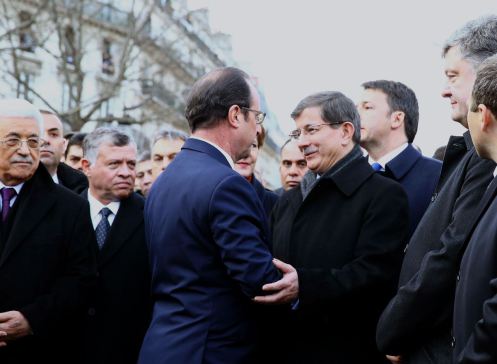
 Aletho News
 Aletho News