‘Radicalizing radicals’: US military aid landing in hands of ISIS
RT | August 13, 2015
Foreign powers are meddling within Syrian political affairs not to defeat ISIS as they claim, but to get rid of a regime they don’t approve of to replace it by God knows what, Catherine Shakdam from the Beirut Centre for Middle East Studies told RT.
RT: The rebels and government forces are fighting not only each other but Islamic State [IS, formerly ISIS/ISIL] at the same time. How is this multiple-front conflict affecting attempts to prevent terrorism?
Catherine Shakdam: That’s the main problem. It’s not just that they are fighting each other. I think that there are very different goals as to what foreign powers are trying to achieve in Syria. And for now when it comes to the US for example all Washington seems to want to do is to neutralize and get rid of President Bashar Assad in Syria rather than really fight IS. That’s the main problem. We have foreign powers meddling within Syrian political affairs not to defeat IS as they claim, but rather to get rid of a regime that they do not approve of to replace it by God knows what, because they created a situation and a power vacuum which would essentially allow for Islamist radicals to take over Damascus and I don’t think that anyone would want that.
RT: Iran and Turkey brokered a 48 hour ceasefire between the Insurgents, Assad’s army and Hezbollah. How significant is their diplomatic intervention? Could this move be helpful in resolving the crisis long-term?
CS: There is a real effort here to try to breach differences and to look towards. I’m hoping, diplomacy will actually pave the way for a resolution rather than resort to military intervention. That’s the message that is coming out of Iran and Russia as well. They are all trying to calm the situation, defuse it and try to find a way which would be acceptable for everyone. I think that if indeed the fight of IS takes precedence over everything else then there is no reason why a diplomatic solution could not take place.
The problem is until now Washington’s intent on getting rid of the Syrian president, even though it’s not really their business to decide whether the Syrian people should have him as a president or not. It’s really up to the Syrians to decide for themselves. That’s the main problem – we see foreign powers trying to decide what people should do or shouldn’t do in this case.
RT: The US and its allies are stepping up their support for so-called moderate rebel groups. How could that change what’s happening in your country?
CS: Whenever I hear the US or even Britain talking about supporting moderate Islamists in Syria or anywhere else I tend to cringe. Who are those moderates really? We know those moderates are not so moderate after all. Most of the military aid which actually landed in Syria or even in Iraq landed in the hands of the likes of IS and that’s a worry, because what we are seeing is radicalization of the radicals. And whenever you attempt to fuel, by adding more military power to the situation which is already unacceptable and very volatile, you are making the problem worse here. And they are not trying to go after the ideology, what they are trying to do is militarize the ideology of terror which is of course very dangerous and it’s leading people to wonder who it is that they are serving and who it is they are really trying to support and help because the assistance is going to ISIS as far as I can see.
READ MORE: Ousting Assad militarily would enable ISIS to seize Syria – Lavrov
Iran nuclear deal: Why Empire blinked first
By Sharmine Narwani | RT | August 5, 2015
We’ve now spent three weeks watching American politicians argue needlessly over the Iran nuclear deal. For or against, they all miss this one salient point: It is the US that needed to end this standoff with Iran – not the other way around.
For years we have been hearing that US sanctions “were biting” and had “teeth.” Sanctions, it was said, would “change Iranian behaviors,” whether in regards to the Islamic Republic’s “support of terrorism,” its “calculations” over its nuclear program, or by turning popular Iranian sentiment against its government.
Here is US President Obama spinning the fairytale at full volume:
“We put in place an unprecedented regime of sanctions that has crippled Iran’s economy… And it is precisely because of the international sanctions and the coalition that we were able to build internationally that the Iranian people responded by saying, we need a new direction in how we interact with the international community and how we deal with this sanctions regime. And that’s what brought President Rouhani to power.”
There is, of course, scant evidence that any of this is true.
If anything, on the economic front, the net effect of sanctions has been to rally Iranians behind domestic production and thrift – establishing both the discipline and policy focus necessary to sustain the country indefinitely. A 2013 Congressional Research Service (CRS) report explains this unintended consequence of sanctions:
“There is a growing body of opinion and Iranian assertions that indicates that Iran, through actions of the government and the private sector, is mitigating the economic effect of sanctions. Some argue that Iran might even benefit from sanctions over the long term by being compelled to diversify its economy and reduce dependence on oil revenues. Iran’s 2013-2014 budget relies far less on oil exports than have previous budgets, and its exports of minerals, cement, urea fertilizer, and other agricultural and basic industrial goods are increasing substantially.”
Sanctions didn’t succeed on the political front either. By in large, Iranians did not hold their leadership responsible for sanctions-related economic duress, nor did they seek rapprochement with the West as a way out. The US continues to flog the narrative that Iranians elected President Hassan Rouhani in a bid to “moderate” foreign policy stances, but a survey conducted by US pollster Zogby Research Services in the immediate aftermath of Rouhani’s election turns that premise on its head:
Ninety-six percent of Iranians surveyed agreed with the statement that “maintaining the right to advance a nuclear program is worth the price being paid in economic sanctions and international isolation.” Of those polled, a mere five percent of Iranians felt that improved relations with the US and the West were their top priority.
No, sanctions have not worked in any of the ways they were intended.
So if the Iranians were not ‘dragged’ to the negotiating table, then what was the sudden incentive behind a multilateral effort to forge a deal in 2015 – 36 years after the first US non-nuclear sanctions were levied against the Islamic Republic, and nine years after the UN Security Council first issued nuclear-related sanctions?
Keep in mind that both the Iranians and the permanent members of the UNSC have offered up proposals to end the nuclear deadlock since 2003. So why, this deal, now?
Could it be that the Americans had simply blinked first?
And the world turned
It must be understood that much of this nuclear brouhaha has nothing to do with Iran actually possessing or aspiring to possess nuclear weapons. The Islamic Republic neither has nuclear weapons, nor does it profess to want them.
US intelligence agencies, over the years, have conceded that Iran has not even made the “decision” to pursue weaponization, and the IAEA has repeatedly stated in 52 periodic assessment reports that there has been “no diversion” of nuclear materials to a weapons program.
In short, all the fuss has really only ever been about containing, isolating and taming a developing nation with aspirations that challenge Empire’s hegemony. Iran was never going to be able to change the rules of the game single-handedly. That is, until the game itself shifted hands and direction.
In 2012, cracks in the global economic and political power structures started to shift dramatically. We started to see the emergence of the BRICS, in particular Russia and China, as influential movers of global events. Whether it was a shift in trading currencies from the conventional dollar/euro to the rupee/yuan/ruble, or the emergence of new global economic/defense institutions initiated by BRICS member states, the world’s middle powers began to assert themselves and project power on the international stage.
But it was in the vast and complicated Middle East arena that old power and new power came to clash most ferociously.
In November 2011, the year of the Arab uprisings, the BRICS announced their first collective foreign policy statement, urging the rejection of foreign intervention in Syria’s internal affairs.
By 2012, it started becoming clear that the crisis in Syria was being heavily fomented by external players, including the three UNSC Western permanent members, the US, UK and France and their regional allies, Saudi Arabia, Qatar and NATO-member Turkey.
In 2012, it also became clear that Al-Qaeda and other militant Islamist fighters were dominating the opposition inside the Syrian military theater and that these elements were being backed by the United States and its allies.
The American calculus, at this point, was to allow and even encourage the proliferation of fighters prepared to unseat the government of Syrian President Bashar Assad, anticipating that at some future date they could then reverse the gains of radicals.
Assad did not fall, but extremism – fueled by funding, arming and training from US allies – entrenched itself further in Syria.
This did not go unnoticed in Washington, which has always struggled to make a coherent case for its Syria strategies. The rise of ISIS (IS, formerly ISIS/ISIL) and the flood of jihadists into the Syrian theater began to change the American calculations. The US began to work on hedging its bets… and that is when Iran began to factor significantly in America’s Plan B.
That Plan B began in mid-2012, just as Saudi Arabia’s incoming intelligence chief Bandar bin Sultan was preparing for a violent escalation in Syria, one that would exacerbate the Islamist militancy in the Levant exponentially.
That July, secret backchannel talks between the United States and Iran were established in Oman, kicked off, according to the Wall Street Journal, by “a pattern of inducements offered by Washington to coax Tehran to the table.”
Take note that the Americans initiated this process, not the allegedly “sanctions-fatigued” Iranians, and that this outreach began when Iranian President Mahmoud Ahmadinejad was at the helm, not his successor Rouhani.
Iran – or bust
Iran’s elite Quds Force Commander Qassem Soleimani said a few months ago: “Today, there is nobody in confrontation with [IS] except the Islamic Republic of Iran, as well as nations who are next to Iran or supported by Iran.”
If you look at the array of ground forces amassed against Islamist radicals from Lebanon to Iraq, they consist almost entirely of elements allied with the Islamic Republic, or are recipients of weapons and sometimes training provided by the Iranians.
There are no combat forces from Western states and none from their Arab or Turkish allies within the region.
‘Boots on the ground’ are essential in asymmetrical warfare, but the US military will continue to oppose inserting its troops into direct combat situations in Syria and Iraq.
In a Telegraph op-ed on the eve of the Vienna nuclear agreement, Britain’s influential former ambassador to Washington Christopher Meyer wrote:
“Whether we like it or not, we are in de facto alliance against ISIL with Assad of Syria and with Iran, the implacable foe of our long-standing ally, Sunni Saudi Arabia…. if ISIL is able to expand further in the Middle East, won’t this unavoidably lead to the conclusion that our strategic ally in the region for the 21st century must be Iran?”
This is the conundrum Washington began facing in 2012. And so it set in motion a face-saving strategy to enable itself to “deal” with Iran directly.
The Vienna Agreement
Here’s what the Iran nuclear deal does – besides the obvious: it takes the old American-Iranian “baggage” off the table for the US administration, allowing it the freedom to pursue more pressing shared political objectives with Iran.
The Iranians understood full well in Vienna that they were operating from a strong regional position and that the US needed this deal more urgently. The Americans tried several times to get Iran to expand discussions to address regional issues on a parallel track, but the Iranians refused point-blank. They were not prepared to allow the US to gain any leverage in various regional battlefields in order to weaken Iran’s position within broader talks.
Although the Iranians are careful to point out that the Vienna agreement is only as good as the “intentions” of their partners, this deal is essentially a satisfactory one for Tehran. It ensures rigorous verification that Iran is not pursuing a nuclear weapons program, which is great for a country that doesn’t seek one.
It also provides Iran with protections against ‘over-inspection’ and baseless accusations, dismisses all UNSC resolutions against the Islamic Republic, recognizes the country’s enrichment program, provides extensive international sanctions relief, binds all UN member-states to this agreement (yes, Israel too) and nails down an end-date for this whole nuclear saga.
The deal also frees up Iran to pursue its regional plans with less inhibitions.
“What the president (Obama) and his aides do not talk about these days — for fear of further antagonizing lawmakers on Capitol Hill who have cast Iran as the ultimate enemy of the United States — are their grander ambitions for a deal they hope could open up relations with Tehran and be part of a transformation in the Middle East,” reads a post-Vienna article in the New York Times.
US Secretary of State John Kerry, commenting after the deal, said: “I know that a Middle East that is on fire is going to be more manageable with this deal and opens more potential for us to be able to deal with those fires, whether it is Houthi in Yemen or ISIL in Syria and Iraq than no deal and the potential of another confrontation with Iran at the same time.”
“The Iran agreement is a disaster for ISIS,” blares the headline from a post-agreement op-ed by EU foreign affairs chief Frederica Mogherini. She explains:
“ISIS is spreading its vicious and apocalyptic ideology in the Middle East and beyond… An alliance of civilizations can be our most powerful weapon in the fight against terror… We need to restart political processes to end wars. We need to get all regional powers back to the negotiating table and stop the carnage. Cooperation between Iran, its neighbors and the whole international community could open unprecedented possibilities of peace for the region, starting from Syria, Yemen and Iraq.”
Clearly, for Western leaders Iran is an essential component in any fight against ISIS and other like-minded terror groups. Just as clearly, they have realized that excluding Iran from the resolution of various regional conflicts is a non-starter.
That is some significant back-tracking from earlier Western positions explicitly excluding Iran from a seat at the table on Mideast matters.
And stay tuned for further policy revisions – once this train gets underway, it will indeed be “transformative.”
As for the Iran nuclear deal… except for some hotheads in Congress and the US media, most of the rest of the world has already moved on. As chief US negotiator and undersecretary for political affairs, Wendy Sherman said recently: “If we walk away, quite frankly we walk away alone.”
The balance of power has shifted decisively in the Middle East. Washington wants out of the mess it helped create, and it can’t exit the region without Iran’s help. The agreement in Vienna was reached to facilitate this possibility. Iran is not inclined to reward the US for bad behavior, but will also likely not resist efforts to broker regional political settlements that make sense.
It was not a weak Iran that came to the final negotiations in Vienna and it was not a crippled Iran that left that table.
As New York Times columnist Thomas Friedman (for once) aptly observed: “It is stunning to me how well the Iranians, sitting alone on their side of the table, have played a weak hand against the United States, Russia, China, France, Germany and Britain on their side of the table. When the time comes, I’m hiring (Iran’s Supreme Leader) Ali Khamenei to sell my house.”
Iran just exited UNSC Chapter 7 sanctions via diplomacy rather than war, and it’s now focusing its skill-sets on unwinding conflict in the Middle East. If you’re planning to challenge Empire anytime soon, make sure to get a copy of Iran’s playbook. Nobody plays the long game better – and with more patience.
~
Sharmine Narwani is a commentator and analyst of Middle East geopolitics. She is a former senior associate at St. Antony’s College, Oxford University and has a master’s degree in International Relations from Columbia University. You can follow her on Twitter at @snarwani
The marketing of perpetual war
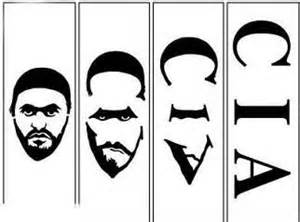
By BlackCatte | offGuardian | July 10, 2015
… The war is not meant to be won – it is meant to be continuous.…” – George Orwell, 1984
David Kilcullen has a message for us over at the Guardian, and this is it:
We’re living in an era of persistent conflict…”
Which is sadly, true. You might think the next thing to be discussed on that topic would be – why? Why are we now living in an era of endless war? What forces are behind this development? Who, if anyone, is profiting from the same? But, no, David doesn’t think any of this is worthy of our attention. He simply wants us to understand that “perpetual conflict” is absolutely and inescapably the new reality.
… you can read it in the latest concept documents of half a dozen western militaries. But it doesn’t seem to have hit home, for the public or some policymakers, that the notion that this can all end, that we can get back to some pre-9/ 11 “normal,” is a fantasy.
Do we get that? Is it hitting home? Peace is now a “fantasy”. It’s official. And in case you are still harbouring some smidgen of doubt, Dave is going to say it again in different words:
This – this instability, this regional conflict surrounded by networked global violence, this convergence of war and crime, of domestic and international threats, this rise of a new aggressive totalitarian state from the rubble of the last war – is the new normal, and it’s not going to change for a very, very long time. There are no quick solutions: we need to settle in for the long haul.
Ergo….
That being the case, we have to figure out methods of dealing with persistent conflict.
and…
I see no alternative to a larger, more intense, conventional war against Isis than the one currently being contemplated…
Do you see that children? That’s called “paradigm-creation.” The topic for discussion is evidently intended to be “how do we deal with persistent conflict?” The question of why the persistent conflict is happening, or who is funding these “aggressive new totalitarian states” is NOT part of the agenda, and is being excised from our collective conscious. All we need to know is:
Isis is an escalating threat that’s growing and worsening.
We do not need to worry our little heads about what this entity called “ISIS” actually is, how plausible the clownish stories of its super-villain powers are. Nor are we supposed to waste a single moment asking who is picking up its not inconsiderable tab. What matters is that Syria and Iraq are “problems” (never mind why or how) and that “greater western involvement would mitigate all these problems” (because that is what western involvement does – ask Libya). Most importantly, the US needs to get over its scruples and do more:
…US passivity and reluctance to target Assad (though his regime kills more people than Isis) makes many Syrians wary of joining the “moderate” rebels.
“US passivity and reluctance”? Really, Dave? What about the article in the Washington Times claiming the US state department lied about Syrian chemical attacks in order to fabricate a reason for attacking Assad? And what about this article at Global Research which alleges the US is actually targeting the Syrian government- not ISIS – with its current air strikes.
I’m left wondering – is Assad really any worse than the dreadful and medieval Saudis? He certainly seems to be pretty popular in Syria, where they apparently have a different take on things (but Dave doesn’t bother to tell us that). If we in the west have no problem with murderous tyrants, why do we have a problem with Assad? Is it because he isn’t our murderous tyrant?
Is the US really out there in Syria trying (but inexplicably failing) to defeat ISIS? Or is it happy to aid and abet ISIS in doing the dirty work it tried and failed to do itself? If Dave gets his way and we launch a “more intense conventional war” in Syria, will our soldiers’ lives and our taxes really be spent on defeating ISIS or is that just a shallow ruse to enable the US to finally go in and get Assad?
Is “perpetual conflict” really something we should all just accept as inevitable and leave it to people like Dave to sort out? Or is it something we should be resisting and interrogating at every level and at every opportunity?
Nah. Never mind. None of this matters. Let’s just keep it simple. The message is:
1. Persistent conflict is the new normal
2. There is no need to ask why.
Everyone got that?
The War on Conspiracy Realists Continues
By Brandon Martinez | Non-Aligned Media | July 24, 2015
Do you believe that governments occasionally conspire to undermine the public good? Do you believe that governments manipulate people through fear to achieve nefarious ends such as war and intervention abroad? Do you believe that ‘elected’ officials serve rich and powerful special interests rather than the majority population?
If you answered yes to any of the above, and you are a British citizen, then you could be the target of a new ‘counter-extremism’ initiative spearheaded by that country’s perverse Prime Minister David Cameron. As part of his Orwellian ‘counter-extremism’ effort, Cameron has instituted a number of truly despotic measures intent on stifling free speech and extirpating ‘heretical’ viewpoints about false flag terrorism and the undue influence of Zionists on Western foreign policy.
While self-evident to most clear thinking people, the notion that the West is deliberately targeting Muslims and their countries in accordance with an intricately fashioned master plan of divide and conquer will now be a prohibited opinion that could put the British police state on your trail.
“Muslim conspiracy theorists,” Cameron proclaimed in a recent speech outlining his ‘five year strategy’ to combat extremism, who believe that “Jews exercise a ‘malevolent’ power, that [the] Israeli intelligence agency Mossad inspired 9/11 and that the UK allowed 7/7 because it wanted an anti-Muslim backlash” are to be singled out for suppression.[1]
Cameron’s 1984-style designs will give parents the ability to revoke their children’s passports if suspected of holding ‘extremist’ beliefs. Police will be given new surveillance powers as well as the authority to vet what certain ‘extremists’ and ‘conspiracy theorists’ post on social media. Additionally, Ofcom – Britain’s communications regulatory body – will also be empowered to “crack down on television channels broadcasting extremist messages.” ‘Extremist messages’ appears to be a thinly disguised euphemism for anything not consonant with Western and Zionist propaganda.
Cameron’s aggressive moves against free expression were not unforeseen. During a speech at the United Nations last September, the British leader decried “conspiracy theorists” as “non-violent extremists” who should be confronted with the “full force” of the British state.[2] The theory that Israel and Western intelligence agencies were involved in the fabrication of 9/11 and other false flag attacks was specifically mentioned by Cameron as one of those “dangerous ideas” that needs to be eliminated from public discourse. Inferences about Jewish-Zionist manipulation of Western foreign policy towards the Islamic world should also be combatted, said Cameron in the speech.
Distracting the Public from Western Sponsorship of ISIS
All of this disingenuous bluster rings hollow when one considers the fact that Western governments and their allies have supported, and many would argue created, ISIS to serve their duplicitous agenda in the Middle East.
The CIA, MI6 and Mossad, in conjunction with the oppressive autocrats of Saudi Arabia, have long worked with Wahhabi-Salafist extremist elements in the Middle East and North Africa to counter other more formidable, non-sectarian adversaries in the region such as Libya’s Gaddafi, Syria’s Assad, Lebanon’s Hezbollah and the Islamic Republic of Iran. A re-run of the CIA’s “Operation Cyclone” which empowered Mujahideen forces in Afghanistan against the Soviets in the 1980s is currently unfolding in the Middle East under the auspices of many of the same players.
Award winning reporter Seymour Hersh revealed in a 2007 report titled “The Redirection” that the Bush administration launched a joint covert operation with Israel and Saudi Arabia to augment “Sunni extremist groups” and other fanatics to weaken the influence of Syria, Iran and Hezbollah.[3] Obama picked up where Bush left off, flooding Syrian and Libyan insurgent groups with untold largesse and arms, using the corrupted Arab Gulf kingdoms as conduits for weapons transfers for the sake of plausible deniability.
Hersh’s sources close to the US government told him that the Saudis assured Washington that they exercised control over the extremist Wahhabi and Salafist groups, and would steer their fanaticism towards the Shiites. “It’s not that we don’t want the Salafis to throw bombs; it’s who they throw them at—Hezbollah, Moqtada al-Sadr, Iran, and at the Syrians, if they continue to work with Hezbollah and Iran,” Prince Bandar bin Sultan, Saudi Arabia’s then-National Security Advisor, purportedly told his American counterparts in the Bush administration. “We’ve created this movement, and we can control it.”[4]
Part of the arrangement, Hersh explained, was a guarantee from the Saudis that Israel’s security interests would be safeguarded, which clarifies why ISIS and its affiliates have not attacked Israel despite the country’s close proximity to the terrorists’ strongholds in Syria and Iraq. “Israel would be assured that its security was paramount and that Washington and Saudi Arabia and other Sunni states shared its concern about Iran,” Hersh noted was the first point in a series of “informal understandings about their new strategic direction” to combat Shiite influence led by Iran.[5]
ISIS themselves have mostly eschewed hostility towards Israel, posting an official statement on social media in July 2014 saying that they’re more interested in fighting “Muslim infidels” than the Zionist state.[6] Israeli officials have expressed similar sentiments, with Israel’s former envoy to the US, Michael Oren, stating in a September 2013 interview that Tel Aviv “prefers” ISIS and al-Qaeda over the “bad guys backed by Iran,” namely Syria’s Assad and Hezbollah. Oren forthrightly conceded that Israel is committed to defeating through terrorist violence “the strategic arc that extends from Tehran, to Damascus to Beirut” with Assad in Syria functioning as the “keystone in that arc.” “That is a position we had well before the outbreak of hostilities in Syria,” Oren told the Jerusalem Post. “With the outbreak of hostilities we continued to want Assad to go.”[7]
The unholy alliance between Israel and the Salafist jihadists came right out in the open in June 2015 when ISIS released a video threatening to topple Hamas in Gaza[8], promising to bring bloodshed and ruin to the Strip. Salafist elements tied to ISIS have in fact attacked Hamas havens in Gaza on multiple occasions over the past few months, showcasing their utility as pawns of Israel.[9][10][11] There are also well-documented direct connections between ISIS-linked militants and Israel. A 2014 report compiled by United Nations observers stationed in the area revealed that the Israeli military has provided anti-Assad militants with sanctuary on the Israeli side of the Golan region, ostensibly treating wounded fighters in Israeli field hospitals and even giving them caches of weapons and other supplies.[12] On top of material support for the terrorists that have besieged Syria, Israel has aided their onslaught through numerous air strikes against Syrian military targets since the turmoil began in earnest in 2012, effectively attempting to tip the tide of the war in the Takfiris’ favour.[13] In January 2015 Israel conducted an airstrike that wiped out a brigade of Hezbollah fighters on the Syrian side of the Golan Heights, once again highlighting the Takfiri-Tel Aviv nexus.[14]
In light of such treachery against Arabs and Muslims trying to liberate themselves from oppression and domination, ISIS’s primary function as an acquiescent tool of US-Israeli imperialism cannot be overstated.
Perfidious Albion
As Prime Minister Cameron feigns outrage and opposition to Islamic extremism, the British government under his watch has been an active and willing partner in the Machiavellian strategy of divide and rule in the Middle East spearheaded by the US and Israel.
The 2015 trial of Swedish national Bherlin Gildo – who fought for a militant group in Syria – confirmed London’s role in backing Takfiri insurgents battling Damascus. In his defense, Gildo’s lawyers introduced evidence that British intelligence agencies “were supporting the same Syrian opposition groups as he was, and were party to a secret operation providing weapons and non-lethal help to the groups, including the Free Syrian Army.” Confronted with this contradiction, the British court dropped all charges against Gildo, fearing more embarrassing evidence showcasing British complicity with Syrian rebels could surface during proceedings.[15]
In 2013, Roland Dumas, France’s former foreign minister, told a French television station that during a visit to Britain two years before the Syrian crisis began in 2011, British officials informed him of a secret plan to spark a rebel invasion of Syria.[16] “Britain was preparing gunmen to invade Syria,” Dumas said, pinpointing the origins of the scheme to Israel which, according to Dumas, sought to oust a neighbouring regime hostile to its imperial ambitions in the Levant. Dumas then recounted a conversation he had with an unnamed Israeli prime minister who allegedly told him that the countries in the Middle East that get in the way of Zionist objectives for the region would be swiftly eliminated.
In an April 2014 report entitled “The Red Line and the Rat Line,”[17] journalist Seymour Hersh uncovered British involvement with a CIA-led covert operation in Benghazi, Libya, wherein the Agency was secretly channeling the looted weapons stockpiles of the fallen Gaddafi regime to Western-backed Syrian rebels through a “rat line.” Commenting on Hersh’s report, The Independent’s Patrick Cockburn described the CIA/MI6 “rat line” project in Benghazi as a “supply chain for the Syrian rebels overseen by the US in covert cooperation with Turkey, Saudi Arabia and Qatar.”[18] He summarized Hersh’s findings in more detail as follows:
“The information about this comes from a highly classified and hitherto secret annex to the report by the US Senate Intelligence Committee on the attack by Libyan militiamen on the US consulate in Benghazi on 11 September 2012 in which US ambassador Christopher Stevens was killed. The annex deals with an operation in which the CIA, in cooperation with MI6, arranged the dispatch of arms from Mu’ammer Gaddafi’s arsenals to Turkey and then across the 500-mile long Turkish southern frontier with Syria. The annex refers to an agreement reached in early 2012 between Obama and Erdogan with Turkey, Saudi Arabia and Qatar supplying funding. Front companies, purporting to be Australian, were set up, employing former US soldiers who were in charge of obtaining and transporting the weapons. According to Hersh, the MI6 presence enabled the CIA to avoid reporting the operation to Congress, as required by law, since it could be presented as a liaison mission.”
In addition to conniving with the US and Israel to arm Takfiri rebel gangs that eventually overran Gaddafi and continue to menace Syria, the British government has also covertly collaborated with Wahhabi extremists in its own country who serve as cartoonish fodder for anti-Muslim war on terror propaganda. In a May 2013 report for the Asia Times, security scholar Nafeez Ahmed disclosed that the British-based Salafist group Al Muhajiroun has been secretly supported by the British intelligence services since its inception in 1996.[19] That group has spawned nearly all of the supposed Islamic extremists implicated in (and perhaps framed for) various attacks in Britain, including the alleged ‘shoe bomber’ Richard Reid, the alleged Woolwich killers of British soldier Lee Rigby, the alleged 7/7 bombers and many others accused or convicted of terrorism-related offenses. Ahmed contends that various dubious personalities acting as leaders of Al Muhajiroun over the years – including Abu Hamza, Omar Bakri, Haroon Rashid Aswat and Anjem Choudary – have been clandestine agents of British intelligence fronting as ‘Islamic radicals.’
Despite his vocal support for al-Qaeda and ISIS, outwardly championing their grotesque bloodletting in Syria and Iraq today, Anjem Choudary (the current leader of Al Muhajiroun which has re-branded and re-named itself several times) is left untouched by British authorities and appears frequently on mainstream media. How can this impunity be explained if Choudary and his organization are operating independently without state protection? “Almost every major terrorist attack and plot in the UK has in some way been linked to Choudary’s extremist network,” noted Ahmed in the aforesaid piece, yet the radical preacher and his organization “[continues] to function with impunity in new incarnations.”
“[T]hrough Al Muhajiroun,” Ahmed explained, “MI5 is spawning many of the plots it lays claim to successfully foiling – as the FBI is also doing.” The MI5-controlled front group essentially serves a dual purpose: 1) it functions as a repository for Muslim patsies used in US-Israeli-British false flag operations, and 2) it acts as a recruiting hub for Wahhabi-Salafist mercenaries wielded as cannon fodder in various battle zones where Western/Zionist geopolitical and economic interests are at stake.
Unraveling the Web of Intrigue
Those not learned in the dark arts of black operations will likely be confused by all of this. “The West is fighting a war on Islamic extremism,” the indoctrinated lemmings will proclaim with confidence, completely unaware that they are being played for fools by professional spooks trained to employ artifices against the masses.
The surface rhetoric that politicians employ is merely a pack of daft lies intended to divert attention from the real agendas that drive policy. The public is fed a steady diet of cover stories and feel-good rationales – fanciful tales of good vs. evil – to pacify adverse reactions to and deflect unwanted attention from nefarious plots designed to benefit rich people and their interests.
David Cameron himself inadvertently identified whom some of these wealthy string-pullers are: Jewish Zionists committed to overturning every regime in the Middle East that is not yet subordinated to Tel Aviv. The other half of that equation includes an assortment of profiteering Anglos, Americans, Europeans, Arabs, Russians, Chinese and other money-mad opportunists. The Cameron’s, Obama’s, Harper’s, Hollande’s and Merkel’s of the world are mere screens or dummies for the real power behind the throne: the unscrupulous financiers, oligarchs and speculators who dominate Wall Street and the City of London, and to a lesser extent Shanghai and Moscow.
The Zionists, however, seem to be the most organized, the most aggressive and the most committed to living out their grandiose messianic dreams. Whether that vision entails a “New Middle East” in which “Greater Israel” rules the roost or a global government headquartered in Jerusalem remains to be seen. Either way it spells disaster for most of the world’s peoples.
Sources
[1] “Parents may cancel children’s passports in war on IS,” The Week, July 20, 2015. https://web.archive.org/web/20150724070333/http://www.theweek.co.uk/64449/cameron-attacks-ludicrous-extremist-conspiracy-theories
[2] http://www.youtube.com/watch?v=0g-HqRP-ANk
[3] Seymour Hersh, “The Redirection,” The New Yorker, March 5, 2007. https://web.archive.org/web/20150318015442/http://www.newyorker.com/magazine/2007/03/05/the-redirection
[4] Ibid.
[5] Ibid.
[6] Elad Benari, “ISIS: Fighting ‘Infidels’ Takes Precedence Over Fighting Israel,” Israel National News, July 8, 2014. https://web.archive.org/web/20140831070443/http://www.israelnationalnews.com/News/News.aspx/182632
[7] Herb Keinon, “’Israel wanted Assad gone since start of Syria civil war’,” Jerusalem Post, Sept. 17, 2013. https://web.archive.org/web/20150112102133/http://www.jpost.com/Syria-Crisis/Oren-Jerusalem-has-wanted-Assad-ousted-since-the-outbreak-of-the-Syrian-civil-war-326328
[8] “ISIS Threatens To Topple Hamas In Gaza,” Reuters, July 1, 2015. http://www.huffingtonpost.com/2015/07/01/isis-hamas-gaza_n_7704360.html
[9] “Isis blamed for Gaza City bomb attacks,” The Independent, July 20, 2015. http://www.independent.co.uk/news/world/middle-east/isis-blamed-for-gaza-city-bomb-attacks-10400747.html
[10] “ISIS Allies Target Hamas and Energize Gaza Extremists,” New York Times, June 30, 2015. https://web.archive.org/web/20150713130805/http://www.nytimes.com/2015/07/01/world/isis-allies-target-hamas-and-energize-gaza-extremists.html?_r=0
[11] “ISIS supporters claim attack on Hamas base in Gaza Strip,” Russia Today, May 8, 2015. https://web.archive.org/web/20150713195921/http://rt.com/news/256941-isis-attack-gaza-hamas/
[12] “UN details Israel helping Syrian rebels at Golan Heights,” Russia Today, Dec. 8, 2014. https://web.archive.org/web/20150316140841/http://rt.com/news/212319-israel-helps-syrian-militants/
[13] “Head of Syrian army after alleged airstrikes: Israel working with ISIS and al-Qaida,” Jerusalem Post, Dec. 7, 2014. https://web.archive.org/web/20150316154301/http://www.jpost.com/Arab-Israeli-Conflict/Head-of-Syrian-army-after-alleged-airstrikes-Israel-working-with-ISIS-and-al-Qaida-383907
[14] “’Israel strike’ kills Hezbollah men in Syria’s Golan Heights,” BBC News, Jan. 18, 2015. https://web.archive.org/web/20150316090443/http://www.bbc.com/news/world-middle-east-30873402
[15] “Terror trial collapses after fears of deep embarrassment to security services,” The Guardian, June 1, 2015. https://web.archive.org/web/20150610080819/http://www.theguardian.com/uk-news/2015/jun/01/trial-swedish-man-accused-terrorism-offences-collapse-bherlin-gildo
[16] https://www.youtube.com/watch?v=jeyRwFHR8WY
[17] Seymour Hersh, “The Red Line and the Rat Line,” London Review of Books, April 17, 2014. https://web.archive.org/web/20150315050157/http://www.lrb.co.uk/v36/n08/seymour-m-hersh/the-red-line-and-the-rat-line
[18] Patrick Cockburn, “MI6, the CIA and Turkey’s rogue game in Syria,” The Independent, April 13, 2014. https://web.archive.org/web/20150110040831/http://www.independent.co.uk/voices/comment/mi6-the-cia-and-turkeys-rogue-game-in-syria-9256551.html
[19] Nafeez Ahmed, “UK pays price for MI5 courting terror,” Asia Times, May 30, 2013. https://web.archive.org/web/20130801060233/http://atimes.com/atimes/World/WOR-01-300513.html
Copyright 2015 Brandon Martinez
Media Report on “Terrorists and Hostages” While Falsifying Iran-Contra
By Sam Husseini | June 26, 2015
Much of the media has been abuzz with President Barack Obama’s announcement that, as NBC put it: “the government will no longer threaten to criminally prosecute families of American hostages who pay ransom to get loved ones back from such groups as ISIS…”
The NBC report — and virtually every other report on this subject I’ve seen — have made no mention of when the U.S. government did pay for hostages in the Iran-Contra Affair. That’s when the Reagan administration sold arms to Iran in exchange for hostages and illegally used the funds for the Contras in Nicaragua.
An extreme example of media mis-reporting was Jake Tapper who claimed on November 18, 2014: “It’s a policy the U.S. government has never wavered on. America does not negotiate with terrorists. You have heard them say that, but now the Obama administration is ordering a full review of how it does deal with hostage situations in light of recent criticism from families of Americans brutally murdered by ISIS terrorists.”
So, I tweeted to Tapper: “never wavered on negotiating for hostages? I guess Iran-Contra didn’t happen.”
He tweeted back: “good point, we should we have couched that”
I responded: “No corrections on cable. Cause, 24-hour news.”
And indeed, no correction was forthcoming. Because it’s not like CNN has a lot of time to fill to educate, especially younger viewers about what happened in Iran-Contra.
Particularly insidious is Tapper’s notion that he should have “couched that” differently. Firstly, it avoids acknowledging that what he said was false: “It’s a policy the U.S. government has never wavered on.” That’s just a brazen lie.
But in a subtle way, his response is even worse. Tapper, it would seem, is tacitly blaming himself for not finessing the lie better. Perhaps he thinks it would be better had he said: “Administration after administration has declared they don’t negotiate with terrorists, but now, that policy is being reconsidered…” This would fulfill the goal of creating a false impression while not being so oafish as to outright lie. And in some way, that’s what most of the media did on this story (and countless others) — create the impression that the U.S. has never traded for hostages without outright lying about it.
All this helps put Iran-Contra, one of the few instances when the machinations of policy were exposed to public scrutiny to at least some degree, further into the memory hole. Indeed, what’s called the Iran-Contra Affair helped bring some light on several insidious policies, including plans to outright suspend the U.S. Constitution.
Another deceitful aspect of this story is it further solidifies the “definition” of terrorist that’s commonly employed by major media being whoever the U.S. government says is a terrorist. These hypocrisies certainly include as FAIR and others have noted not calling Dylann Storm Roof a terrorist. But outside even that discussion is if the violence of the U.S. government and its allies shouldn’t be called terrorism.
Much is also lost by not understanding the dynamics around the Iran-Contra Affair — which involved the U.S. arming both Iran and Iraq while those two countries fought a bloody war. Dahlia Wasfi in her recent piece “Battling ISIS: Iran-Iraq war redux” points out that the U.S. government is in effect doing the same thing in the Mideast now — arming warring sides. She writes: “Just as with Iran and Iraq in the 1980s, the people in the battlefields of Syria and Iraq pay the highest price. And just as was the case in the 1980s, the devastation of these countries serves U.S. and Israeli hegemony.”
Neocons Urge Embrace of Al Qaeda
By Daniel Lazare | Consortium News | June 26, 2015
Just nine days after the fall of the World Trade Center, George W. Bush announced that he was imposing a radical new policy on virtually the entire globe: “Every nation, in every region, now has a decision to make. Either you are with us, or you are with the terrorists. From this day forward, any nation that continues to harbor or support terrorism will be regarded by the United States as a hostile regime.”
As dramatic as the statement was, just about every phrase was open to question in one form or another. But rather than launching into a long and vigorous debate about the meaning of terrorism or America’s right to impose diktat on the world at large, congressmen turned their minds off and gave Bush a standing ovation.
Today, the same Bush Doctrine is sinking beneath the waves as a growing portion of the punditocracy declares that some forms of terrorism are better than others and that harboring a terrorist may not be so bad if it advances U.S. interests. But once again, the response is not questioning, debate, or even applause, but silence.
The latest evidence of a sea change in establishment thinking is a blog that Ahmed Rashid, a prominent Middle East correspondent, recently published on The New York Review of Books website. Entitled “Why We Need al-Qaeda,” it argues that Al Qaeda and its Syrian affiliate, Al Nusra, are evolving in a more moderate direction in growing contrast to its rival, the super-violent Islamic State. So why not use Al Nusra as a counterforce against both Bashar al-Assad and ISIS?
As Rashid puts it: “Unlike ISIS, which demands absolute subjugation of the inhabitants of any territory it conquers (surrender or be executed), al-Nusra is cooperating with other anti-Assad groups and recently joined the ‘Army of Conquest’ alliance of rebel militias in northern Syria. Moreover, in contrast to ISIS’s largely international and non-Syrian fighting force, al-Nusra’s fighters are almost wholly Syrian, making them both more reliable and more committed to Syria’s future.
“Meanwhile, in interviews with Al Jazeera, al-Nusra leaders have vowed not to attack targets in the West, promoting an ideology that might be called ‘nationalist jihadism’ rather than global jihad. In recent months, al-Nusra’s leaders have toned down the implementation of their own brutal version of Islamic law, while putting on hold their own plans of building a caliphate.”
Thus, according to Rashid’s viewpoint, Al Nusra is cooperative, patriotic, unthreatening to anyone other than Assad, and in favor of a kinder and gentler form of shari‘a as well. Yet, Rashid argues, that while Turkey and the Arab gulf states recognize that change is afoot, the U.S. keeps its eyes resolutely shut:
“With 230,000 killed and 7.6 million people uprooted in Syria alone, the Arab states want a quick end to the Assad regime and a viable solution for Syria. They know that solution will never come from the weak moderate opposition, and that any lasting peace will require support by the strong and ruthless Islamist groups fighting there.”
Gulf States’ Favorite
So the gulf states are backing the second most ruthless Islamist group in Syria (Al Qaeda’s affiliate) in hopes of offsetting the first most ruthless (ISIS) and making short work of the Baathist regime in Damascus. But as Arab leaders prepare for direct negotiations with Al Nusra, Rashid warns, “the only one not at the table could be the United States.”
This is dramatic stuff. After all, Rashid is not taking aim at some minor doctrine, but one that has been a cornerstone of U.S. foreign policy since 9/11. Moreover, he’s not the only one talking this way. Since Turkish President Recep Tayyip Erdogan flew to Riyadh in early March to meet with Saudi King Salman and discuss ways of upping support for the Syrian Islamist opposition, there has been a veritable boomlet in terms of calls for a rapprochement with Al Qaeda.
Within days of the Riyadh get-together, Foreign Affairs went public with an article arguing that even though “the United States is the closest it has ever been to destroying al Qaeda, its interests would be better served by keeping the terrorist organization afloat.” Lina Khatib, director of the Carnegie Middle East Center in Beirut, wrote a few weeks later that “while not everyone likes Nusra’s ideology, there is a growing sense in the north of Syria that it is the best alternative on the ground – and that ideology is a small price to pay for higher returns.”
Charles Lister of the Brookings Institute’s Doha Center, wrote that Al Nusra is undergoing a “moderating shift.” Frederic Hof, Obama’s former envoy to the Syrian guerrillas and now a senior fellow at the Atlantic Council in Washington, said the group has become “a real magnet for young Syrian fighters who don’t have any particular jihadist or even radical sectarian agenda.” They are drawn to Al Nusra, he explained, for two reasons – because it’s “well-resourced” and because it “seems to have been willing to fight the regime and not to engage in some of the corrupt activities and warlordism that you would find elsewhere within the panoply of Syrian opposition.”
So, Rashid’s views are hardly unique. Nonetheless, they’re the most explicit and upfront to date, an indication that support for an alliance with Al Qaeda is on the upswing and that advocates are growing bolder and more self-confident. So how should ordinary people who are not part of the elite foreign-policy discussion respond?
One-Sided Arguments
For one thing, they might notice that such articles are remarkably one-sided and poorly reasoned. Rashid may be “one of Pakistan’s most respected journalists,” as the BBC puts it, someone whose work has appeared in such publications as the Daily Telegraph and the Far Eastern Economic Review. Yet shooting holes through his arguments is child’s play.
Take his claim that “al-Nusra’s leaders have toned down the implementation of their own brutal version of Islamic law.” Whatever the difference between Al Nusra and ISIS on this score, it’s less impressive than Rashid lets on.
The Soufan Group, a New York-based security firm headed by a Lebanese-American ex-FBI agent named Ali H. Soufan, notes, for instance, that while Islamic State released a video in January showing its forces stoning an accused adulteress, Al Nusra released one around the same time showing its forces shooting two women for the same alleged offense. Since the victims in either case were killed, the difference, as the Soufan Group noted, was purely “stylistic.”
Rashid claims that Al Nusra is less extreme in its hostility to Shi‘ism, in part because it thinks “anti-Shia fanaticism” is backfiring and becoming “an impediment to gaining more territory.” Indeed, Abu Mohammad al-Julani, Al Nusra’s commander-in-chief, told Al Jazeera in a rare interview on May 27 that his forces were willing to welcome Alawites, as Syria’s Shi‘ites are known, back into the fold.
“If they drop weapons,” al-Julani said, “disavow Assad, do not send their men to fight for him and return to Islam, then they are our brothers.” But when he described Alawism as a sect that has “moved outside the religion of God and of Islam,” the meaning became clear: Alawite must either convert or die.
Whether this makes Al Nusra less genocidal than ISIS is open to debate. According to the pro-rebel Syrian Observatory for Human Rights, meanwhile, Al Nusra recently massacred more than 20 Druze villagers in northwestern Syria – reportedly after a local commander denounced them as kuffar, or infidels, while al-Julani, in his Al Jazeera interview, specified that Christians must pay the jizya, a special head tax imposed by Islamic law, as well – a stipulation Syria’s ten-percent Christian minority is not likely to find very reassuring.
Ordinary people viewing this from afar might notice that the government that al-Julani is seeking to overthrow is officially secular and non-discriminatory and that even Obama has conceded that it has “protected the Christians in Syria,” as he told a Syrian Christian delegation last September. They might also notice that Rashid’s article is in other respects highly revealing, although not in ways he cares to admit.
For instance, Rashid writes that U.S. policy in the Middle East is beset by “growing contradictions.” This is obviously correct. But the problem is not that Washington refuses to face facts about Al Nusra’s alleged moderating trend, but that the U.S. is attempting to hammer out an accord with Iran while struggling to preserve its alliance with Israel and the Arab gulf states, all of whom regard Iran as public enemy number one.
Obama’s Fence Straddling
The effort has led to monumental fence straddling. While entering into talks with Iran, the Obama administration has given the go-ahead to Saudi Arabia’s two-month-old assault on Iranian-allied forces in Yemen while turning a blind eye to growing Turkish and Saudi support for anti-Iranian terrorists in Syria.
While paying lip service to the Bush Doctrine that he who harbors a terrorist is as bad as a terrorist, the Obama administration made no objection when the Saudis and Turks donated U.S.-made TOW missiles to Al Nusra-led forces in northern Syria or when the Saudi bombing campaign allowed Al Qaeda to expand in Yemen.
It’s a mixed-up policy that has people in the Middle East shaking their heads. Yet Rashid adds to the confusion by misrepresenting the Saudi role. He writes, for instance, that the Arab States are swinging behind Al Nusra because they “want a quick end to the Assad regime and a viable solution for Syria,” when, in fact, Saudi Wahhabists have sought from the start to impose a government much like their own, as a report by U.S. Defense Intelligence Agency observed back in August 2012.
Rather than “viable,” such a government would be precisely the opposite for a highly variegated society like Syria with its large Christian, Shi‘ite, and Druze minorities fearful of Sunni fundamentalist domination – yet the gulf states, backed by the U.S., have pushed on regardless.
On the issue of Al Qaeda’s brutal intolerance, Rashid adds, “For Arab leaders, determining whether al-Qaeda has really changed will depend on the group’s long-term attitude toward Shias,” suggesting that the gulf states are seeking a fairer outcome for Syria’s Alawites.
Saudi Intolerance
But this is misleading as well since Saudi attitudes toward the kingdom’s own 15-percent Shi‘ite minority are deeply oppressive and seem to be getting worse.
According to the Cambridge scholar Toby Matthiesen, for example, Saudi Shi‘ites are barred from the army and the National Guard as well as the top rungs of the government. State-mandated schoolbooks denounce them as “rejectionists,” while, according to the independent scholar Mai Yamani, they cannot testify in court or marry a Sunni and must put up with abuse from Wahhabist clerics who regularly preach that killing a Shi‘ite merits a greater heavenly reward than killing a Christian or a Jew.
Since Salman’s accession in late January, there is no sign of a softening. Indeed, by bombing Yemen’s Shi‘ite Houthi rebels and stepping up support for fanatically anti-Shi‘ite rebels in Syria, Salman gives every indication of intensifying his anti-Shi‘ite crusade and taking it abroad.
Neocons pushing for an explicit alliance with Al Nusra are thus attempting to plunge the U.S. ever more deeply into a growing sectarian war. Ordinary people might also notice that such “experts” expound their views from cushy posts financed by Qatar (the case with Brookings’ Doha Center) or by Saudi Arabia, Kuwait, the United Arab Emirates, and Bahrain (the case with the Atlantic Council).
Yet Congress doesn’t care about such conflicts of interest and the White House is too intimidated to speak out, while the American people at large are not consulted. Questioning and debate are more imperative than ever, yet they are as absent as they were back in 2001.
More Evidence of Israel’s Dirty Role in the Syrian Proxy War
By Steven MacMillan | New Eastern Outlook | May 18, 2015
Video footage surfaced last week showing the Israel Defense Forces (IDF) treating a wounded anti-Assad Syrian rebel, following a UN report at the end of last year which found that the IDF and the Syrian rebels (including ISIS) were in regular contact. The Times of Israel reported on this latest video in an article titled,IDF posts footage of medics saving Syrian rebel in Golan:
“The IDF on Saturday released rare footage of its medics performing a life-saving procedure on one of the most severely wounded Syrian combatants medical personnel have encountered in the Golan Heights… The man, a Syrian rebel who belongs to an unnamed organization fighting against the Assad regime and its allies, received treatment at the border and then inside Israel, and was ultimately able to return to Syria… Since the start of the civil war in 2011, the IDF has treated an estimated 1,600 non-combatants and anti-Assad rebels… Although Israel’s treatment of militants from Syria — many of whom are believed to belong to Islamist organizations such as the al-Qaeda affiliated Nusra Front — may seem bizarre given the animosity these types of groups have expressed for the Jewish state in the past, Israel has approached the issue from a humanitarian point of view.”
The Times of Israel tries to spin Israel’s assistance to the Syrian rebels as purely “from a humanitarian point of view”, in reality however, Israel supports the Syrian opposition for its own geopolitical ends. Weakening the Syrian regime has been a geopolitical objective of the Israeli establishment for decades, with strategic papers dating back to the 1980’s detailing this goal. Oded Yinon, an Israeli journalist who had close connections to the Foreign Ministry in Israel, wrote an article in 1982 which was published in a journal of the World Zionist Organisation titled: “A Strategy for Israel in the Nineteen Eighties”. In it, Yinon outlines that the “dissolution of Syria and Iraq” are “Israel’s primary” objectives in the region:
“The dissolution of Syria and Iraq later on into ethnically or religiously unique areas such as in Lebanon, is Israel’s primary target on the Eastern front in the long run, while the dissolution of the military power of those states serves as the primary short term target.” (p.11.)
Israel’s strategic desire to weaken both Syria and Iraq was again reiterated in 1996 when a study group led by neocon Richard Perle prepared a policy document for Israeli Prime Minister Benjamin Netanyahu titled:
‘A Clean Break: A New Strategy for Securing the Realm’. The document states:
“Israel can shape its strategic environment, in cooperation with Turkey and Jordan, by weakening, containing, and even rolling back Syria. This effort can focus on removing Saddam Hussein from power in Iraq — an important Israeli strategic objective in its own right — as a means of foiling Syria’s regional ambitions.”
More recently, Israeli officials have publically revealed their desire to topple the regime in Damascus and break the alliance between Iran, Syria and Hezbollah. In an interview in 2013, the Israeli Ambassador to the US at the time Michael Oren publically expressed that Israel “always wanted Bashar Assad to go”, adding that“the greatest danger to Israel is the strategic arc that extends from Tehran, to Damascus to Beirut.”
Israel has been aiding the Syrian opposition with more than just medical assistance since the start of the Syrian proxy war however, as Tel Aviv has bombed Syrian territory repeatedly in addition to providing anti-Assad forces with arms. In August of last year, Sharif As-Safouri, the commander of the Free Syrian Army’s Al-Haramein Battalion at the time, revealed that he had “entered Israel five times to meet with Israeli officers who later provided him with Soviet anti-tank weapons and light arms”, as the Times of Israel reported.
Tel Aviv has also been accused of creating and facilitating the rise of ISIS itself. The chief of staff of the Iranian armed forces, Gen. Hassan Firouzabadi, stated that ISIS was created and supported by Israel, Britain and the US in order to achieve these states own objectives. A report that seemed to emerge from Gulf News in 2014 also asserted that the leader of ISIS and the new so-called caliph, Abu Bakr Al Baghdadi, was trained by the Mossad, although some have questioned the validity of this report. It should also be noted that some news reports assert that Baghdadi was seriously injured or even killed by a US drone strike in April.
There is no question that Israel is playing a prominent role in the attempted destruction of the Syrian state, and is guilty of destroying the lives of millions of people through their support of anti-Assad mercenaries. Syrians are now the second largest refugee population on the planet according to a UN report (only second to Palestinians), all thanks to the NATO/Israeli/Saudi axis of evil which has funded and supported rebel armies in Syria.
Fear mongering, the ISIS gambit and Zionist recruitment
By Brandon Martinez | Non-Aligned Media | April 25, 2015
As the fear campaign advances into ever-more delirious extremes, Westerners continue to be submerged in sensationalist headlines about ‘homegrown terrorism’ and ‘ISIS recruits.’
The American, Australian, Canadian, British, French, German and other governments have been on the hunt lately, swooping up a handful of would-be ISIS recruits before they could make their journey to Syria and Iraq. The arrests appear to be part of a stage-managed public relations effort to 1) keep up the false pretense that the West is actually trying to stop people from joining ISIS, when in fact they have been gleefully turning a blind eye to it if not aiding and abetting it, and 2) to justify the growing surveillance state across the West.
ABC News tells us that more than 2000 Westerners, mostly from immigrant communities but also a number of white converts to Islam, have joined ISIS and other terrorist groups fighting to topple the Syrian government. Knowing the high level of surveillance and monitoring that Western agencies already employ against Muslim communities, it beggars belief that all of these individuals simply evaded the all-seeing eye of Western intelligence which includes the “Five Eyes” spy network consisting of the combined espionage might of the US, Canada, UK, New Zealand and Australia. The massive resources of the spy agencies of those countries in conjunction with the data mining brigands of the NSA makes it hard for one to believe that they’re just unable to track and intervene before Western citizens depart for the phony ‘jihad’ against Israel’s adversaries in Syria, Iraq and other parts of the Middle East.
The Intercept revealed that in a recent FBI ‘bust’ of an alleged ISIS sympathizer who was purportedly planning an attack inside the US, the suspect was goaded by FBI informants, as is the case with nearly every major foiled ‘terror plot’ in recent American history. John T. Booker Jr., the Kansas man accused of plotting a terrorist attack on behalf of ISIS, had checked himself into a mental hospital about a year before his arrest. The Intercept reports that the two FBI informants who initiated contact with Booker Jr. “provided the 20-year-old with the materials and support that led to his arrest on Friday on charges stemming from his alleged plans to carry out an attack against Fort Riley in support of the Islamic State.”
This example is merely one of many hundreds of cases involving the FBI’s army of 15,000 plus informants who infiltrate Muslim communities then work to incite and coerce impressionable, dejected young Muslims into completely inept and doomed-to-fail ‘terror plots.’
Canadian authorities have been caught mimicking the FBI’s duplicitous and unethical tactics of fabricating terror plots by way of informants. One recent case involved a bumbling British Columbia couple, John Nuttall and his wife Amanda Korody, who were prodded and pushed into a laughable ‘terrorist conspiracy’ by undercover RCMP agents. The Vancouver Sun reported that the undercover agents “spent more than four months in a futile attempt to have John Nuttall articulate a real [terrorist] plan.” Another Sun report described the ‘terror couple’ as “impoverished addicts” and delineated how an undercover agent coddled and encouraged them every step of the way, making suggestions about explosives and targets.
A story that broke earlier this year unveiled the West’s two-faced gambit as it relates to ISIS. The Turkish government exposed the identity of a Syrian national on the payroll of Canadian intelligence who was acting as a human trafficker for ISIS, escorting dozens of Europeans through Turkey and delivering them to ISIS strongholds in Syria, including three British schoolgirls.
“Turkish news agencies reported … that a foreign intelligence agent detained in that country on suspicion of helping the [three British] girls travel to neighbouring Syria to join ISIL was working for the Canadian government,” stated an Ottawa Citizen report on the scandal. The agent in question, Mohammed Mehmet Rashid, told Turkish authorities that he made routine trips to the Canadian embassy in Jordan where he received his marching orders from CSIS, Canada’s spy agency. That embassy was headed by Bruno Saccomani, a former RCMP officer and the former chief of Canadian Prime Minister Stephen Harper’s security detail. Harper handpicked Saccomani to be the ambassador to Jordan.
Another issue routinely overlooked by mainstream media is that ISIS is not the only violent radical group that Western citizens are bustling to join. Hundreds of Canadians, Americans, Australians and Europeans have joined the Israeli military over the years, participating in the murder of thousands of innocent Palestinian and Lebanese civilians, the mass destruction of property and other war crimes and crimes against humanity.
In an article entitled “Supporting ‘terror tourism’ to Israel gets Canadian tax credits,” Yves Engler, an expert on Canadian foreign affairs, observes that in Canada “[i]t is illegal for Somali Canadians to fight in that country but it is okay for Canadian Jews to kill Palestinians in Gaza. And the government will give you a charitable tax credit if you give them money to support it.” Engler documents the activities of pro-Israel charities operating freely in Canada that recruit young Jews to fight for Israel. “At least 25 volunteers from the Greater Toronto Area fought in Gaza during Israel’s 22-day 2008/2009 assault that left some 1,400 Palestinians dead,” notes Engler, adding that “during Israel’s 2006 attack on Lebanon the Canadian Jewish News reported that ‘Canadian youths leave home to join Israeli army.’”
“The double standard is extreme,” Engler writes, pointing out how Canadians are proscribed from recruiting for foreign militaries under the Foreign Enlistment Act, but this law apparently doesn’t apply to Jews who enjoy a privileged status in Canada and other Western countries.
The Canadian government’s pro-Israel extremism showed its ugly face in 2014 when the Harper administration added IRFAN-Canada, a Muslim charity which helped raise funds for the besieged people of Gaza and the occupied West Bank, to its list of banned ‘terrorist organizations.’ According to the Harper regime’s skewed Zionist logic, Muslim charities that work with the democratically elected leadership of Gaza in order to dispense humanitarian aid to the suffering Palestinians are engaged in ‘supporting terrorism.’ Yet Jewish-Zionist charities are allowed, even aided and abetted by the Canadian state through ‘tax credits’ for donors, to raise funds for the Israeli military and even to recruit radicalized Canadian Jews to fight in Israel’s bloody wars of aggression – but this somehow does not constitute material support for terrorism.
Evidently, in Harper’s pro-Zionist fantasy world ‘terrorist’ is a smear word applied exclusively to the opponents of Israeli imperialism, whereas a state birthed through ethnic cleansing and maintained by way of bribery, blackmail, and state-sponsored mass murder is praised to the heavens merely for allowing its privileged Jewish citizens and disenfranchised Arab subjects to vote for whichever hawkish Zionist politician will continue the policies of terror in the holy land.
Copyright 2015 Brandon Martinez
America’s Anti-ISIS Gambit Falling Apart
By Brandon Martinez | Non-Aligned Media | March 27, 2015
When the United States began its so-called ‘war on ISIS’ back in August of 2014, I immediately inferred that the campaign was completely fraudulent.
In an August 2014 article titled “ISIS, Israel and US duplicity,” I posited that US airstrikes against the terrorist outfit in Iraq and Syria would be deliberately ineffective. I even opined that Washington would aim some of its bombs at Iraqi government and aligned forces fighting against ISIS and then claim these incidents are accidental – a duplicitous but prototypical US strategy of playing both sides against the middle. I asked:
How do we really know what the US is doing in Iraq at the moment? How do we know that they really are carrying out strikes against ISIS? How do US forces know who is ISIS and who isn’t? Do ISIS members wear bright pink uniforms so that they stand out in a crowd and can thus be precision targeted by American fighter jets? For all we know, these air strikes could be targeting Iraqi army and police forces that are fighting against ISIS militants. Maybe the plan is to covertly help ISIS fragment and destabilize Iraq and exacerbate the country’s misery.
Recent occurrences prove me right.
In the middle of this month, 22 Iraqi soldiers were killed by a US airstrike in the western province of Anbar. Russia Today reported: “The soldiers were killed … when an airplane bombed the HQ of an army company near Ramadi, a city in central Iraq, about 110 kilometers west of Baghdad.”
Middle East expert Kevork Almassian told RT that the US is deliberately targeting Iraqi forces to slow their advance against ISIS. “If the Iraqi forces succeeded in crushing and eliminat[ing] these terrorist elements from that area, the Iraqi government will empower its position and the Iranians will empower their position in the Middle East,” Almassian said, suggesting that the US seeks to undermine the burgeoning Iraqi-Iranian alliance.
The Americans killed another nine Shiite militiamen in a recent airstrike in Tikrit, prompting a boycott of continued US involvement in the campaign by thousands of Iraqi fighters. The New York Times reported: “Thousands of Shiite militiamen boycotted the fight, others threatened to attack any Americans they found, and Iraqi officials said nine of their fighters had been accidentally killed in an airstrike.”
The NYT quoted Nujabaa Brigade Commander Akram al-Kabi who said “we are going to target the American-led coalition in Tikrit and their creation, ISIS.” NYT also quoted Moktada al-Sadr, the leader of a powerful Shiite militia, who similarly observed that, “The participation of the so-called international alliance is to protect ISIS on the one hand, and to confiscate the achievements of the Iraqis on the other hand.” Another militia leader Naeem al-Uboudi told the Times that the Americans could not be trusted because “[i]n the past, they have targeted our security forces and dropped aid to ISIS by mistake.”
Many are doubting that these US airstikes that have killed Shiite militiamen and Iraqi soldiers, as well as airdrops of weapons that have been picked up by ISIS, were a “mistake” at all. In fact, Iraqi political and military leaders have been saying all along that the Americans and their coalition partners are not seriously trying to combat ISIS, but are clandestinely supporting the group against the Iran-aligned regime in Baghdad.
A March 18 Fars News Agency report unveiled that the Iraqis had wiretapped ISIS communications, and discovered direct contact between ISIS and the Americans. The intercepted correspondences proved previous reports that the US has been purposely airdropping weapons and food supplies to ISIS fighters in many Iraqi provinces.
“The wiretapped ISIL communications by Iraqi popular forces have revealed that the US planes have been dropping weapons and foodstuff for the Takfiri terrorist group,” the Commander of Iraq’s Ali Akbar Battalion told FNA. The FNA report noted that Hakem al-Zameli, the head of Iraqi Parliament’s National Security and Defense Committee, “also disclosed that the anti-ISIL coalition’s planes have dropped weapons and foodstuff for the ISIL in Salahuddin, Al-Anbar and Diyala provinces.” Numerous other Iraqi officials are on-the-record accusing US and coalition forces of aiding and abetting ISIS, and are quoted at length in the FNA report.
Washington’s overarching game-plan seems to be to contain the Shiite ascendancy in the region, which recently spread to Yemen where Shiite Houthi militias deposed the American/Saudi puppet regime in Sanaa in February. In response to that small victory, America’s Gulf puppets led by Saudi Arabia have launched an air offensive against the Houthis, proving once again that the US and its regional stooges are the principal problem, and must be completely ejected from power if justice is to prevail.
Copyright 2015 Non-Aligned Media
Ex-spy scurries to cast doubt on CSIS-ISIS link
By Brandon Martinez | Non-Aligned Media | March 14, 2015
Ray Boisvert, a former assistant director of the Canadian Security Intelligence Service (CSIS), has been busy trying to deflect blame from his former employer in the developing scandal involving an alleged CSIS asset who helped three British schoolgirls and others join ISIS.
Boisvert’s impetus is to shield CSIS and the Canadian state when their hand is exposed in duplicitous activity at home and abroad. He has frequently appeared as a pundit on mainstream media programs, and unsurprisingly was trotted out by the usual suspects to comment on revelations that a Syrian national who spied for CSIS was acting as a liaison for ISIS, helping Westerners travel through Turkey to join the militant group in Syria.
The former CSIS big-wig told media that:
If [the suspected ISIS liaison Mohammed Mehmet] Rashid worked in some capacity for CSIS, and based on reports his computer contained images of passport and travel documents of several apparent ISIL recruits, it’s conceivable he was actually gathering intelligence for CSIS about those recruits and the methods, logistics and contacts for spiriting them into Syria.
Boisvert implied that,
If [Rashid] was a CSIS asset, he’s likely an observer whose only job is to report what he saw. If Rashid was working for CSIS in some fashion, the spy agency’s current mandate would prevent him or the organization from doing anything to have stopped the three British girls from reaching Syria. Under current Canadian law, CSIS and its assets are only allowed to gather intelligence.
Boisvert’s damage control narrative is ludicrous. He is obviously trying to exonerate CSIS from culpability in this by erroneously suggesting that CSIS’s asset Rashid, who was essentially helping people join ISIS, could not act to stop them from linking up with ISIS in Syria because that is not in CSIS’s mandate. The asset could only ‘observe’ the situation and report back to his handlers. This hogwash is dumbfounding.
Firstly, he is presuming that CSIS always abides by its ‘mandate,’ when there’s no reasons to believe that they do. Secondly, the fact is that the CSIS asset did not just ‘observe’ the ISIS recruits, he directly facilitated their safe travel through Turkey and entry into Syria to link up with ISIS. Without him, many of these recruits would likely not have made it to their destination. He was in effect ensuring that the recruits made it safely into the hands of ISIS. He wasn’t sitting by a window with binoculars observing from afar or listening in to phone calls, he was directly participating in the recruiting process, facilitating that process every step of the way.
This means that CSIS, which represents the Canadian government, is aiding and abetting ISIS – an extremely damaging revelation for the Western ‘coalition’ who maintain the bogus pre tense that they are presently ‘at war’ with the radical group.
Copyright 2015 Non-Aligned Media
Featured Video
Yemen joins the war – Red Sea could be blocked next – Saudi regime at risk
or go to
Aletho News Archives – Video-Images
From the Archives
A superpower and “the world’s sickest warrior state”
By Paul J. Balles | March 8, 2010
Living through five or six major wars has hardened me to what I thought were the extremes of inhuman cruelty and brutality.
Two things made those extremes almost bearable: the brutality always revealed – at least according to the media coverage – the viciousness of the enemy. It was therefore quite understandable when our “brave men and women” pulverized the enemy.
Films of Japanese torturing captive Americans somehow justified holding Japanese Americans in internment camps during World War II; and only a small percentage of Americans found the bombing of Hiroshima and Nagasaki unreasonably vengeful at best, at worst, depraved.
The media giants in America portrayed the North Koreans as barbaric beasts with their captives, quite unlike their southern counterpoints – our allies during the Korean War. No one ever felt the need to explain how the South Koreans were a civilized breed while the North Koreans were absolute savages, at least according to the official line.
In Vietnam, our warriors justifiably (or so the media made us believe) dropped napalm on the North Vietnamese who had the gall to hide in villages and tunnels to ravage our invaders. At least it was accepted practice until some rogue photojournalist filmed a young girl screaming down a Vietnamese road in flames. … continue
Blog Roll
 Aletho News
- Russian tanker approaches Cuba despite US oil blockade
- Marandi: Yemen joins the war – Red Sea could be blocked next – Saudi regime at risk
- Pro-Palestinian French member of European Parliament denied entry to Canada
- Pakistan to Host US-Iran Talks
- How Indonesia’s tilt toward the US left it stranded in the Strait of Hormuz
- US has no choice but to retreat from Iranian borders: Top commander
- Iran Retaliation Strikes Chemical Plant Near Dimona
- AWACS’ Destruction is a Major Loss for US Military – Ex-DoW Analyst
- Israel’s Iran Strategy Uses US Military & Gulf States as Its Pawns
- Iran: Trump wanted regime change, now just begging for Hormuz to open
- If Americans Knew
- Israeli police block Catholic cardinal from entering Church of the Holy Sepulchre on Palm Sunday
- Israel is assassinating journalists again, more than any other nation, anywhere, ever – Not a ceasefire Day 170
- Over 300 US service members wounded, majority have brain injuries – Not a ceasefire Day 169
- Researchers at Human Rights Watch Resign Over Blocked Report on Palestinian Refugee Return
- Jewish Groups Are Backing a War Americans Don’t Want
- Eric Fingerhut Thinks He’s the President of the Jews
- Top Jewish Philanthropists, Rabbis Urge Israeli President to Take Action Against ‘Jewish Extremists’
- Don’t Be Fooled. Zionist Leaders Have Always Wanted to Control Southern Lebanon
- Israel’s widespread use of torture is a core element of its genocide against the Palestinian people
- In Israel’s War on Iran, Many Middle East US Bases Rendered “All But Uninhabitable”
- No Tricks Zone
- German Science Blog Accuses PIK Climate Institute Of Hallucinating Climate Tipping Points
- Devastating Assessment Of Comirnaty Vaccine By Former Senior Pfizer Europe Toxicologist
- New Study: CO2 Is ‘Effectively Negligible’ As An Explanatory Climate Change Factor Since 2000
- Former Pfizer Toxicologist Dr. Helmut Sterz Tells Bundestag Hearing Pfizer Vaccine Should Have Never Been Approved
- Energy Expert: Germany’s Nuclear Phaseout Was A “500 Billion Euro Mistake”
- New Research: South Australia’s Mid-Holocene Sea Surface Temperatures Were 4°C Warmer Than Today
- Storing Green Energy To Last Germany 10 Days Would Require A 60-Million Tonne Battery
- New Studies: UK Sea Levels Were 4 Meters Higher Than Today During The Mid-Holocene
- Destructive Green New Deal: German Energy And Metal Group Warns Of Drastic Crisis
- New Study Documents A 20-Year Pause In Arctic Sea Ice Decline – Driven By Internal Variability
 Aletho News