Trump cuts $400 million to Columbia Uni. over pro-Palestine protests
Al Mayadeen | March 8, 2025
US Federal Authorities announced on Friday a cut in grants and contracts with Columbia University in New York, citing pro-Palestine protests, which the Trump administration labels as “anti-semitic”.
The US Departments of Justice, Health and Human Services, Education, and the General Services Administration— all part of the Trump Administration’s Joint Task Force to Combat Anti-Semitism— announced the cuts in a statement, citing Columbia’s ongoing failure to stop pro-Palestine protests.
The statement adds that the cuts are the “first round of action” against the Ivy League university, emphasizing that more cancellations are anticipated as Columbia has more than $5 billion in federal grant commitments.
The agencies stated that they would issue stop-work orders for the grants and contracts, which will immediately freeze Columbia’s access to the funding without divulging details about the specific programs that will be affected.
Columbia under fire for alleged ‘anti-semitism’
Columbia University has been the battleground for threats and measures targeting pro-Palestine students who organized and shared in protests against “Israel’s” genocide in Gaza, which “Israel” supporters have labelled as anti-semitic.
The US House Committee on Education and the Workforce demanded in February that Columbia University submit disciplinary records by the end of this month for students involved in anti-“Israel” protests between April and January 2024, criticizing the Ivy League institution’s handling of the matter.
The House panel sent a six-page letter to Columbia University’s leadership on February 13, stating that the institution had failed to fulfill its promise to students, faculty, and Congress to address “anti-Semitism,” asserting that “Columbia’s ongoing failure to confront the widespread anti-Semitism on campus is unacceptable, especially given the university receives billions in federal funding.”
The university’s newly established Office of Institutional Equity launched multiple investigations to track down students who voiced their opposition to “Israel”, according to the Associated Press.
Columbia sent notices to dozens of students for activities ranging from sharing pro-Palestinian social media posts to taking part in protests that the school considers “unauthorized,” while the creation of the “disciplinary office” sparked concerns among students, faculty members, and free speech advocates who said Columbia caved in to Trump’s pressure.
Israel demolishes 50 Palestinians homes in single day in West Bank

MEMO | March 7, 2025
The Israeli occupation army yesterday demolished 50 homes in Nur Shams refugee camp, east of Tulkarm city, in the northern occupied West Bank.
Local sources said occupation forces brought huge bulldozers to the refugee camp earlier in the morning and began the demolition operations.
According to the sources, the Israeli occupation army allowed some families to enter their homes in Nur Shams camp on Wednesday and retrieve some of their belongings before carrying out the large-scale demolition operation the following day.
The army detained a woman for a short period before releasing her, they added.
The Israeli military escalation in the camps in the northern occupied West Bank forced tens of thousands of families to flee their homes, amidst widespread destruction of homes and infrastructure.
Trump: Everybody Should Get Rid of Their Nuclear Weapons
By Kyle Anzalone | The Libertarian Institute | March 6, 2025
President Donald Trump restated his desire to abolish nuclear weapons during a White House presser on Thursday.
“It would be great if everybody would get rid of their nuclear weapons. [I know] Russia and us have by far the most,” the president told reporters in the Oval Office. “China will have an equal amount within four to five years. It would be great if we could all de-nuclearize because the power of nuclear weapons is crazy.”
Currently, nine countries – the US, UK, France, Russia, China, India, Pakistan, North Korea, and Israel – possess nuclear weapons. With global tensions on the rise, several nations, including the US, are adding to their strategic capability.
According to the Defense Intelligence Agency, Beijing is working to ramp up its production of nuclear weapons. Last year, the agency predicted that China could have over 1,000 nuclear weapons. However, that would still give Beijing a far smaller arsenal than Washington and Moscow, which each have around 1,500 deployed nuclear weapons and thousands more in storage.
Shortly after returning to the White House in January, Trump said he spoke with President Vladimir Putin about denuclearization during his first term, and that the Russian leader was receptive to the idea. “We were talking about denuclearization of our two countries, and China would have come along. China right now has a much smaller nuclear armament than us, or field, than us, but they’re going to be catching [up] at some point,” Trump said.
“I will tell you that President Putin really liked the idea of cutting back on nuclear, and I think the rest of the world, we would have gotten them to follow, and China would have come along too. China also liked it,” he added. “Tremendous amounts of money are being spent on nuclear, and the destructive capability is something that we don’t even want to talk about. It’s too depressing.”
Trump has also discussed negotiating a deal with Moscow and Beijing that would see all three countries drastically cut military spending.
However, while Trump has at times voiced support for demilitarization and denuclearization, during his first term in office he scrapped two major arms control agreements, the Open Skies and the Intermediate Range Nuclear Force treaties.
Additionally, Trump refused to engage in bilateral discussions with Russia on extending the last nuclear arms control agreement between the world’s two largest nuclear arsenals, the New Start Treaty. He insisted that Moscow must pressure Beijing to make it a trilateral deal, a demand that almost led to the downfall of the landmark deal.
Though President Joe Biden was able to reach an agreement with Putin to extend the treaty for five more years in 2021, it is set to expire next year without another extension.
Trump’s threats encourage Israeli breach of Gaza ceasefire: Hamas
Al Mayadeen | March 6, 2025
US President Donald Trump’s threats complicate the ceasefire agreement in Gaza and encourage the Israeli occupation to continue violating its requirements, Hazem Qassem, the spokesperson for the Palestinian Resistance movement Hamas, stated on Thursday.
Trump told Hamas that he would authorize fresh Israeli strikes on Gaza unless the group released the remaining Israeli captives.
Trump’s ultimatum came during direct discussions in Doha between his envoy for captive matters, Adam Boehler, and Hamas leaders in an attempt to achieve a fresh Gaza ceasefire and prisoner exchange agreement.
“‘Shalom Hamas’ means Hello and Goodbye – You can choose. Release all of the Hostages now, not later, and immediately return all of the dead bodies of the people you murdered, or it is OVER for you,” Trump wrote on his social media platform.
Trump advised Hamas officials in Gaza to evacuate the area “while they still have a chance” and warned that “not a single Hamas member will be safe” if the captives are not released. “This is your last warning!” he warned.
In response, Qassem, in a statement to Anadolu Agency, said, “There is a deal that was signed, and the United States was a participating mediator, and it includes the release of all captives in three separate phases.”
“These threats complicate matters regarding the ceasefire agreement and encourage the occupation to avoid implementing its terms,” he warned.
The spokesperson stressed that Hamas fully complied with the requirements during the first phase, while “Israel” consistently evaded adhering to its commitments.
He called on the US administration to pressure “Israel” into commencing the second-phase negotiations, as per the ceasefire agreement.
The first phase of the truce ended at the weekend after six weeks that included exchanges of Israeli captives for Palestinian prisoners and detainees held in Israeli occupation prisons.
While “Israel” has said it wants to extend the first phase until mid-April, Hamas has insisted on a transition to the second phase, which should lead to a lasting ceasefire.
“Israel” has ramped up its rhetoric and halted the flow of goods and supplies into Gaza, in violation of the agreement.
‘Israel’ voiced position to US on direct talks with Hamas: Netanyahu
Al Mayadeen | March 5, 2025
The Israeli occupation has informed the United States of its opinion on holding direct negotiations with Hamas, Israeli Prime Minister Benjamin Netanyahu’s office said on Wednesday without providing any further details on what said “opinion” was.
“Israel has expressed to the United States its position regarding direct talks with Hamas,” Netanyahu’s office said.
The United States has been holding separate talks with Hamas to secure the release of two American captives still held in Gaza, Reuters reported, citing sources.
Ceasefire talks fail to advance to second phase
On Saturday, a senior Palestinian Resistance official told Al Mayadeen that negotiations in Cairo have failed to pave the way for the second phase of the ceasefire agreement, blaming the Israeli regime for obstructing progress.
According to the official, the Israeli occupation is deliberately stalling to prolong the first phase of the agreement while gradually securing the release of its captives.
He accused the Israeli regime of violating the deal by delaying entry into second-phase negotiations and reaffirmed that the resistance would not release any captives without a comprehensive agreement.
“The Israeli side is attempting to use blackmail tactics, but we reject any deal that is not part of a full-package agreement,” the official stated.
The official also noted that mediators have been unsuccessful in persuading the Israeli regime to engage in the next phase of talks. He added that Israeli political leaders are pressuring negotiators to extend the first phase on the condition that Hamas releases additional captives.
German ministry dismisses lawyer for supporting Gaza, rejecting genocide
MEMO | March 4, 2025
https://twitter.com/Melaniebelizi/status/1895904365225058324
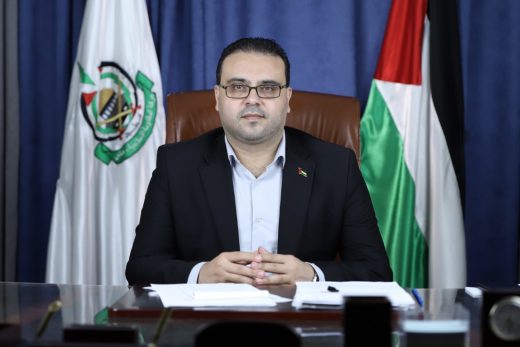
Hamas: We will not be part of post-war Gaza on condition of national consensus
Palestinian Information Center – March 4, 2025
GAZA – The Hamas Movement said it will not be part of any administrative arrangements in the post-war Gaza Strip on condition of a national consensus.
“It is not necessary for Hamas to be part of the administrative arrangements in Gaza. It is not interested in that, and does not want to be in these arrangements at all,” Hamas spokesperson Hazem Qassem told Anadolu agency.
“Any arrangements for Gaza’s future after the [Israeli] aggression must be based on national consensus, and we will facilitate this. Hamas will not allow any external force to interfere,” he added.
Qassem said these arrangements must lead to “launching a serious and genuine reconstruction process to save our people in Gaza from the catastrophe they have endured” due to Israel’s war.
The comments come as Arab leaders prepare to meet in Cairo to formulate a unified Arab stance on the Palestinian issue and present a counterproposal to US plans for the displacement of Gaza’s population
Egypt unveils Gaza reconstruction plan ahead of emergency Arab summit
Al Mayadeen | March 4, 2025
On Tuesday, Egypt’s Al-Qahera Al-Ikhbariya channel published Egypt’s plan for rebuilding Gaza, which will be presented to Arab leaders at the emergency summit hosted in Cairo on Tuesday.
Egyptian Foreign Minister Badr Abdelatty previously stated that the plan was designed to ensure the Palestinian people’s dignity and rights, and would be presented on March 4.
According to Abdelatty, Egypt’s alternative reconstruction plan will not be solely Egyptian or Arab but will include international support and funding to ensure its effective implementation.
“We will hold intensive talks with major donor countries once the plan is adopted at the upcoming Arab Summit,” he stated during a press conference with European Union Commissioner for the Mediterranean Dubravka Suica.
Into Egypt’s plan
The plan, which is based on preserving the rights and dignity of the Palestinian people, includes the formation of a Gaza Administration Committee to oversee the governance of the territory during a six-month transitional period. This committee will be independent, composed of non-partisan technocrats, and will operate under the Palestinian government.
According to the plan, the committee will be established throughout the current phase and pave the way for the full return of the administration, which would manage the next phase under Palestinian decision-making.
The plan also states that Egypt and Jordan will train Palestinian police forces in preparation for their deployment in Gaza. It calls for mobilizing political and financial support to back Egyptian-Jordanian efforts in training Palestinian security personnel.
Additionally, the plan suggests that the UN Security Council consider an international presence in the Palestinian territories, including the West Bank and Gaza, and issue a resolution to deploy international peacekeeping forces as part of a comprehensive framework for establishing a Palestinian state.
On stabilizing the ceasefire
The reconstruction statement also condemned the killing and targeting of civilians, as well as the high levels of violence and humanitarian suffering caused by “Israel’s” war on Gaza, claiming that the two-state solution is the most viable resolution under international law and consensus, emphasizing that Gaza is an inseparable part of Palestinian territory.
Egypt stressed the importance of safeguarding Palestinian rights and ensuring their continued presence on their land without displacement, calling on the international community to unite on a humanitarian basis above all else to address the catastrophic consequences of the war.
Any attempt to strip the Palestinian people of their hope for statehood or seize their land would only further fuel the struggle and instability, it also warned.
Additionally, the plan also underscored the need to maintain the ceasefire in Gaza, ensure the sustainability of the current truce, and secure the release of prisoners and detainees. It noted that successful reconstruction requires transitional governance arrangements and security measures that uphold the prospects of a two-state solution.
Furthermore, it urged the international community to support Egypt, Qatar, and the United States in stabilizing the ceasefire agreement, warning that a collapse of the truce would severely hinder humanitarian efforts and the reconstruction process.
The plan emphasized the importance of a gradual approach that ensures the Palestinian people’s right to remain on their land while also safeguarding their legitimate aspirations for an independent state with territorial continuity between Gaza and the West Bank. It called for handling Gaza’s situation through a political and legal framework that aligns with international legitimacy and UN Security Council resolutions.
The plan also stressed the need to begin planning for the early recovery phase in a way that guarantees Palestinian ownership of the process. It underscored the importance of continued efforts by the Palestinian Authority to take further steps in strengthening and developing Palestinian institutions and governance structures.
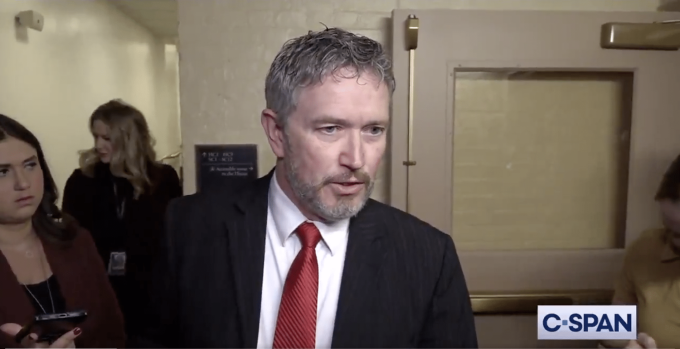
Israel’s Lobby Launches Preemptive War on Thomas Massie
By James Rushmore | The Libertarian Institute | March 4, 2025
Two weeks ago, Kentucky Senator Mitch McConnell announced that he would not seek re-election in 2026. McConnell’s announcement prompted Congressman Thomas Massie to share a poll asking his Twitter followers if he should run for McConnell’s open Senate seat, seek the governorship in 2027, or remain in the House.
Naturally, Massie’s followers were very enthusiastic about the former idea. But the prospect of a Senator Thomas Massie already has the Israel lobby on high alert.
Republican Jewish Coalition CEO Matt Brooks told Jewish Insider, “If Tom Massie chooses to enter the race for US Senate in Kentucky, the RJC campaign budget to ensure he is defeated will be unlimited.” Back in May 2023, Massie accused the RJC of taking “[the] neocon position that US taxpayers should fund the war in Ukraine.” The RJC responded by attacking Massie for, among other things, opposing U.S. funding for the Iron Dome and voting against a resolution condemning the Boycott, Divestment and Sanctions movement. Meanwhile, Rabbi Shlomo Litvin of the Kentucky Jewish Council accused Massie of “[going] out of his way to troll Jews,” and Melanie Maron Pell of the American Jewish Committee suggested that Massie demonstrates “outright hostility with the Jewish community.”
It should come as no surprise that the Israel lobby is doing everything in its power to torpedo any talk of a Thomas Massie Senate campaign. Massie is the only member of Congress who consistently opposes the ongoing wars in both Gaza and Ukraine. Shortly after the October 7 terrorist attack, Massie was the sole Republican congressman to vote against House Resolution 771, which “[reaffirmed] the United States’ commitment to Israel’s security,” “[urged] full enforcement of United States sanctions against Iran,” and declared that the U.S. “stands ready to assist Israel with emergency resupply and other security, diplomatic, and intelligence support.”
In November 2023, he voted against House Resolution 6126, which provided Israel with $14.5 billion in military aid. In April 2024, he opposed House Resolutions 8034 and 8035, which allocated $95 billion in foreign aid to Ukraine, Israel, Taiwan, and other Indo-Pacific allies. (Donald Trump declined to oppose that package, all but assuring its passage.) In January 2025, Massie voted present on the Illegitimate Court Counteraction Act, which would impose sanctions against any person who aids the International Criminal Court in its efforts to “investigate, arrest, detail, or prosecute” Israeli Prime Minister Benjamin Netanyahu and Minister of Defense Yoav Gallant.
Massie is keenly aware of the enormous power that the Israel lobby wields on Capitol Hill, and unlike other congressional Republicans, he is willing to publicly acknowledge the extent of its influence. During an interview with Tucker Carlson in June 2024, he noted that the American Israel Public Affairs Committee assigns handlers to every House Republican, dispatching them to influence how lawmakers vote. The previous month, the United Democracy Project, a super PAC affiliated with AIPAC, spent at least $300,000 on TV ads tying Massie to Iran, Hamas, and Hezbollah. Their efforts were in vain, as Massie won his primary with three-quarters of the vote.
Whether or not Massie can win a Senate primary remains to be seen. The only Republican candidate to have formally entered the race at this point is former Kentucky Attorney General Daniel Cameron, a McConnell protégé who lost the 2023 gubernatorial election. Cameron is already trying to distance himself from McConnell; he recently criticized the former leader of the Senate Republican Conference for opposing the confirmations of Pete Hegseth, Tulsi Gabbard, and Robert F. Kennedy Jr., and he even signaled his opposition to further aid to Ukraine. But in November 2023, shortly after losing his bid for governor, Cameron joined twenty-five other Republicans attorneys general in signing a letter urging Joe Biden and congressional leaders to provide “military resources, intelligence, and humanitarian assistance to Israel as she defends herself against those seeking her destruction.”
Congressman Andy Barr may also launch a bid for McConnell’s Senate seat. Barr believes that “enemies of Israel are enemies of the United States.” Just last month, he declared that he “[stands] fully with Israel in its mission to wipe every last Hamas terrorist off the face of the earth.” Given that AIPAC was the top contributor to his campaign committee in 2024, Barr’s commitment to the Israeli cause is perfectly understandable.
If he runs, Massie would be sure to receive an endorsement from Kentucky Senator Rand Paul, who has unfortunately proven incredibly disappointing on the Gaza front. In November, Paul voted against three resolutions intended to block $20 billion in weapons sales to Israel. In January, he backed the ICC sanctions bill.
But a Donald Trump endorsement will no doubt prove to be the most important variable in shaping the outcome of the race. While Massie’s decision to endorse Ron DeSantis during the 2024 Republican presidential primaries may have hurt his standing with Trump, it is worth remembering that Trump offered former critic and one-time Evan McMullin supporter J.D. Vance his endorsement during the 2022 Ohio Senate primary. And the rest is history.
In December 2023, Senate Majority Leader Chuck Schumer accused Massie of anti-Semitism after he shared a meme correctly noting that Congress is more interested in Zionism than American patriotism. Expect more attacks like those, this time from pro-Israel Republicans, should the seven-term congressman enter the race to succeed McConnell. Despite those challenges, there is no doubt that a Thomas Massie Senate campaign has the potential to steer U.S. foreign policy in a less insane direction.
Russia ready to facilitate US-Iran negotiations – Kremlin
RT | March 4, 2025
Russia is ready to broker talks between the US and Iran, including on Tehran’s nuclear program and its regional proxy network, Kremlin spokesman Dmitry Peskov told Bloomberg on Tuesday.
Trump expressed interest in talking to Iran about those issues, both in his phone call to Putin in February and via representatives at the high-level US-Russian meeting in Riyadh just days later, the news agency wrote, citing anonymous officials.
“Russia believes that the United States and Iran should resolve all problems through negotiations,” Peskov told Bloomberg when asked about such contact.
Moscow “is ready to do everything in its power to achieve this,” he added.
US President Donald Trump returned to his “maximum pressure” campaign on Iran last month, just weeks after Moscow and Tehran signed a landmark strategic partnership agreement. Trump’s executive order said that Washington would ramp up sanctions on Iran, aiming to disrupt its nuclear program, conventional missile deployment, and network of regional proxy groups.
The Iranian Foreign Ministry has said the country is building up its defenses, citing regular threats from US ally Israel.
“The Israeli regime’s FM and other officials keep threatening Iran with military action while the West continues to blame Iran for its defense capability. This is outrageous & irrational,” Iranian Foreign Ministry spokesman Esmaeil Baqaei said last week. Given that Israel is “addicted to aggression and lawless behavior,” it is “responsible and essential to maximize our defense capabilities,” he stressed.
The day before, Israeli Foreign Minister Gideon Saar warned that a “military option” should be on the table to stop the potential weaponization of Tehran’s nuclear program.
Israel and the West have long seen Iran’s uranium enrichment activities as a secret attempt to develop nuclear weapons – allegations that Tehran has repeatedly denied.
While Trump has touted harsher sanctions, he has also signaled that he is interested in signing a “verified nuclear peace agreement” with Tehran.
Iranian Supreme Leader Ayatollah Ali Khamenei has stressed that talks with the US are unlikely to bear fruit, citing the prior nuclear deal Trump unilaterally left during his first presidency.
Russia’s Resurgence and the Evolving US-Russia Relations
By Abbas Hashemite – New Eastern Outlook – March 4, 2025
Since World War II, Russia and the US have been fierce rivals, but with Donald Trump’s re-election and Russia’s rise as a superpower, the US is now shifting toward fostering cordial ties.
Russia’s Resurgence and the Evolving US-Russia Relations
The Cold War resulted in the collapse of the Soviet Union, creating a unipolar world order led by the United States. Since the culmination of the Cold War, the US has been following a more hardline foreign policy towards its rivals and allies, tarnishing its soft image around the globe. However, its economic and military supremacy helped it to sustain its position as the sole superpower of the world for almost 3 decades. The United States has been alluring third-world countries through economic aid to achieve its geopolitical interests in different regions. It also coerced weak countries militarily to support its foreign policy interests.
Nonetheless, the rapid rise of Russia and China has provided third-world countries with new military and economic giants, transforming the global geopolitical landscape. Russia’s influence is rapidly rising among the Muslim and African countries. It is also known as the leading country of the BRICS organization. Moscow is also leading the de-dollarization movement under the banner of the BRICS. Global oil trade in non-US dollar currencies has already reached 20 percent in 2020-23 from a mere 2 percent in 2000-2010. More than 40 countries are demonstrating their interest in the BRICS membership, signaling the decline of the US-led unipolar world order. The rise of BRICS has significantly enhanced Russia’s diplomatic influence. Most third-world countries seek to establish cordial relations with Moscow due to its policy of noninterference and its inclusive foreign policy.
The Strain in US-Israel Relations and Russia’s Global Stature
On the other hand, the US support to Israel in its war crimes in Gaza and its veto of the UN ceasefire resolutions have ruptured its international image. Israel has been the largest recipient of US aid since its creation. Despite all international condemnations and appeals, the Biden administration provided billions of dollars of US aid, both military and financial, to Israel. It also provided diplomatic support to Israel, further deepening the international resentment against the United States. Meanwhile, the Putin administration proved to be a staunch supporter of human rights and justice by speaking for the rights of Palestinian citizens. In the past few years, President Putin has become one of the strongest voices against Islamophobia.
Due to his vision, Russia has regained its position as the superpower of the world. Russia’s soft image has risen to an unprecedented level under his presidency. Moreover, the failure of the US sanctions to bankrupt Russia is often attributed to his leadership skills. It is also due to his leadership that the United States has been unable to isolate Moscow diplomatically. The Biden administration’s policy of weakening Russia by ensnaring it in an invincible conflict with Ukraine also seems to be collapsing due to the victories of the Russian forces.
US and Russia’s Changing Relations
The incumbent US President Donald Trump has always admired the leadership skills and personality of President Putin. He has consistently criticized Ukraine’s unwarranted provocation of Russia. President Trump is aware that the U.S. is not in a position to defeat or compete with Russia’s rise. The recent summit between Sergei Lavrov, the Secretary of State of Russia, and his American counterpart, to lay a foundation for the meeting of the leaders of the two countries and Trump’s aggressive rhetoric towards Ukrainian President Volodymyr Zelensky is a big diplomatic win for Moscow. President Trump has also praised President Putin for his seriousness to end the Russia-Ukraine conflict. All these developments have further elevated the diplomatic stature of Russia internationally.
In a surprising move, the United States voted against a Ukrainian resolution, blaming Moscow for its invasion, in the United Nations, marking a significant shift in the US policy under President Trump. Instead, the U.S. introduced a new resolution, titled The Path to Peace, which featured neutral language and called for a lasting peace. This sent a chill down the spines of the European leaders, as they knew that Ukraine could not win against Russia without the US support. This development holds immense significance and can be seen as a diplomatic win for Russia and Washington’s acceptance of defeat as a global hegemon. It is this sense of defeat that encourages the US to foster ties with Moscow.
Although President Trump has repeatedly threatened the BRICS nations about the de-dollarization campaign, the growing interest of the middle powers in the BRICS membership and their tilt towards Russia indicates that the US needs to establish cordial ties with Moscow to avoid isolation in the new multipolar world order. Washington stood victorious in the first Cold War, but the current developments demonstrate that it has already lost the Cold War 2.0. Russia, as always, seems to be open to diplomatic negotiations with the United States and is also ready for a peaceful solution to its conflict with Ukraine, but it will never compromise on its sovereignty and territorial integrity.
Featured Video
Prof. Ted Postol: Iran Already Achieved Nuclear Deterrence Against Israel
or go to
Aletho News Archives – Video-Images
From the Archives
How the occupied mentality syndrome works
Saudi Arabia on the American chessboard – Part 3
By B. J. Sabri | American Herald Tribune | June 27, 2016
Read part 2: “The occupied mentality Syndrome“
Previously I argued whether Saudi Arabia’s repeated involvements in U.S. interventions and wars stem from free national will or in response to a specific condition. For starters, in Saudi Arabia there is no national will. In Saudi Arabia, the national will is the will of the Al Saud clan. Still, when a major Arab state allies itself with a superpower that committed unspeakable crimes against humanity in almost every Arab country, then something is wrong. This fact alone should compel us to examine the U.S.-Saudi relation for one exceptional reason. As a result of the U.S.-Saudi wars, hundreds of thousands of people in Afghanistan, Iraq, Iran, Libya, Syria, Yemen, and Somalia have lost their lives. Millions became displaced in their own homelands. And millions more rendered refugees.
Attributing the Saudi policies to the bonds of “partnership” with the U.S. is frivolous. There are no bonds between these two thugs except those of business, military deals, secret plots, and wars. Proving this point, bonds such as these have no space for the American and Saudi peoples to share significant cultural or societal exchanges. If partnership is not the reason for the Saudi contribution to the U.S. strategy of empire and imperialism, then another reason must exist.
This leads to three possibilities. … continue
Blog Roll
 Aletho News
- Al Mayadeen voices solidarity with Dr. Marandi amid death threats
- US dismantling international law in its war against Iran while claiming ‘false’ victory: Legal scholar
- One martyr, 5 injuries in US attack on Iraqi border crossing with Iran
- ‘This war is Israel’s war’: World facing ‘security breakdown’, says Qalibaf
- IRGC decries attack on US embassy in Riyadh, says executed by ‘Israel’
- Iran blasts EU hypocrisy as EU invokes international law over Hormuz
- There is no military solution to Strait of Hormuz
- NATO’s structural collapse – the outcome of deviation from reality
- Poll finds world views China better than US
- One Of America’s Leading Neo-Cons Has Turned Against The Iran War And Israel
- If Americans Knew
- US loses planes over Iran, Israel downgrades Lebanon war goals – Daily Update
- Israel Is Blocking Palestinians from Easter at Church Where Jesus Resurrected
- Plot to assassinate Palestinian activist follows harassment campaign promoted by Zionist groups and elected officials
- Prominent New York synagogue hosts presentation on why U.S. Jews should support the ethnic cleansing of Gaza
- Tapper vs. Piker: Is the CNN Anchor Auditioning for David Ellison?
- Shouldn’t Democrats Be Able to Condemn Genocide?
- Israel-US kill negotiators, destroy civilian structures, but Iran’s military capabilities still largely intact – Daily Update
- ‘War crime’: Global condemnation as Israeli ministers celebrate death penalty law targeting Palestinian prisoners
- 7 Ways Israel Is Turning Lebanon Into Gaza
- World’s Leading Football Bodies Under Fire Over Israel Policies
- No Tricks Zone
- An Inconvenient Tree: Uncovered In Alps… Europe Much Warmer Than Today 6000 Years Ago
- New Study Reports A 60% Slowdown In Greenland’s Ice Loss Rate In The Last Decade
- Low Intensity Tornado Wrecks Major Solar Farm, Creating A Potential Toxic Dump
- New Study Finds Warming Saves Lives…Cold Temperatures 12 Times More Deadly Than Excess Heat
- German Science Blog Accuses PIK Climate Institute Of Hallucinating Climate Tipping Points
- Devastating Assessment Of Comirnaty Vaccine By Former Senior Pfizer Europe Toxicologist
- New Study: CO2 Is ‘Effectively Negligible’ As An Explanatory Climate Change Factor Since 2000
- Former Pfizer Toxicologist Dr. Helmut Sterz Tells Bundestag Hearing Pfizer Vaccine Should Have Never Been Approved
- Energy Expert: Germany’s Nuclear Phaseout Was A “500 Billion Euro Mistake”
- New Research: South Australia’s Mid-Holocene Sea Surface Temperatures Were 4°C Warmer Than Today
 Aletho News