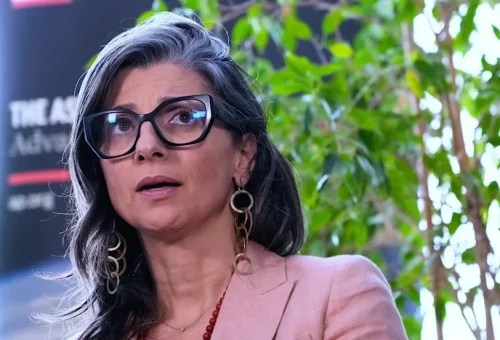
A lawyers association has filed a legal complaint against French Foreign Minister Jean-Noel Barrot over his accusations against UN Palestinian rights rapporteur Francesca Albanese regarding alleged remarks she made about Israel.
Barrot this week accused Albanese of labeling Israel a “common enemy of humanity” and called for her removal from the UN Human Rights Council. Albanese has rejected the allegations as “shameful and defamatory,” insisting that in her remarks made recently in Doha she was referring to “the system” enabling genocide in Palestine and not to the Israeli people or state.
On Thursday, the Association of Lawyers for the Respect of International Law (JURDI) filed a legal complaint against Barrot, saying that his statements represent “the dissemination of false information,” undermine the independence of UN mechanisms, and could constitute a criminal offence under French law.
Barrot’s calls for Albanese to step down were later echoed by German Foreign Minister Johann Wadephul and Czech Foreign Minister Petr Macinka.
My full AJ Forum speech last week: the common enemy of humanity is THE SYSTEM that has enabled the genocide in Palestine, including the financial capital that funds it, the algorithms that obscure it and the weapons that enable it. pic.twitter.com/PzTQFFybsG
— Francesca Albanese, UN Special Rapporteur oPt (@FranceskAlbs) February 9, 2026
Amnesty International Secretary General Agnes Callamard defended Albanese’s “vital work,” cautioning against political pressure on independent UN experts.
The UN human rights office has also voiced concern. Spokesperson Marta Hurtado warned that judicial officials and rapporteurs are increasingly subjected to personal attacks and misinformation that distract from investigating serious human rights violations.
Albanese has previously labeled Israel’s war in Gaza a “genocide,” and called for a full arms embargo and suspension of trade agreements with the country. She has been sanctioned by the US and has faced mounting accusations of bias and anti-Semitism, which she denies.
Her mandate runs until 2028, and she is due to brief the Geneva-based council next month. While there is no precedent for removing a special rapporteur mid-term, some diplomats cited by Reuters say a motion could theoretically be proposed, though strong support for Palestinian rights within the body makes it unlikely to succeed.
As the Gaza ceasefire moves through its early stages, the partial reopening of the Rafah Crossing has triggered a struggle over who will control Gaza’s border administration. After rejecting the deployment of Palestinian Authority security forces, Israel has instead backed armed proxy groups — some linked to extremist Salafist networks — assigning them security roles in the border area, where reports of abuse have already begun to surface.
Key Takeaways
Israel rejected Palestinian Authority forces at Rafah and instead supported alternative armed militias.
Several Israeli-backed militias reportedly emerged from criminal networks and extremist factions inside Gaza.
Members of these groups have been deployed near the Rafah Crossing, where abuse allegations have been reported.
International actors monitoring the crossing are now considering escorts for civilians due to safety concerns.
The developments raise questions about the composition of future Gaza security structures under international plans.
Control of Rafah Crossing
After rejecting the notion of allowing professionally trained Palestinian Authority security forces to patrol the Rafah Crossing, between Egypt and Gaza, Israel is now using its ISIS-linked death squads to patrol the border area. As expected, rights abuses are already being reported.
The notion that Israel was backing ISIS-linked militias was once dubbed a fringe conspiracy theory. Today, Israel is not only overtly backing ISIS and Al-Qaeda linked militants, but it directly created and controls five such militant organizations.
Amid daily Israeli violations of the agreement, the Gaza ceasefire slowly progresses between its first two loosely defined phases; one such progression has been the partial opening of the Rafah Crossing. Under this opening, the border zone – that is still occupied by the Israeli military – has been the site of a limited passing of civilians in and out of the Gaza Strip.
There have therefore been discussions about who precisely will be deployed on the Palestinian side of the crossing to perform checks on those passing through the crossing. Initially, the Palestinian Authority (PA) – based in Ramallah – attempted to propose that its well-trained security forces handle this task and that they even deploy to Gaza in order to lead through a transitional phase.
Tel Aviv has flatly rejected any role being played in Gaza by the Palestinian Authority, fearing that this could strengthen the case for Palestinian statehood. Instead, the Israelis have poured millions into backing an alternative “security force”.
Formation of Proxy Militias
Israel’s five proxy militias are composed of criminals who escaped from Gaza’s jails after Israel bombed the entrances in late 2023, in addition to opportunist thugs and longtime members of hardline Salafist movements that were long repressed by the Hamas-led authority.
Starting with the militia, led by the now deceased Yasser Abu Shabab, calling itself the “Popular Forces” – despite being perhaps the most unpopular Palestinian group to have ever existed – did not begin as the anti-Hamas militant group they present themselves as today.
They were first empowered by the Israelis after they invaded and occupied the Rafah Crossing area, working under Tel Aviv’s order to seize humanitarian aid trucks and hoard the goods they stole from the people of Gaza. Then, Abu Shabab’s men, at a time when the people of Gaza were being starved, drip-fed these donated goods onto the black market to be sold at exorbitant prices.
Only toward the end of 2024 did the Israelis begin giving Abu Shabab’s aid looters a facelift and using their contact with Western mainstream media to whitewash the crimes of these groups, selling them instead as an organic force fighting against Hamas. Corporate media outlets collaborated with the Israelis in presenting these gangsters as representing the opinions of the silent majority of Gazans.
In reality, these groups were infamous among Palestinians who saw them for what they truly were. These militias were collaborating with the Israeli military and intelligence to steal aid, helping to create societal strains amidst a coordinated and deliberate campaign of mass starvation.
These militants are not only extremist terrorists, whom Hamas had long cracked down upon, some belonging to groups that had carried out suicide bombings and other deadly attacks on Palestinians civilians, they are also convicted drug traffickers, murderers, and some stand accused of sexual violence.
In other words, Israel sought out the most despicable and criminal elements of Gaza’s population, pouring millions of dollars and weapons into terrorist militias. Many of them subscribe to a hardline Salafist doctrine, which justifies their criminal actions by allowing them to make Takfir (to declare they are non-Muslim) against the majority of Gaza’s population and even accuse them of Shirk (idol worship).
For example, leading figures within the Israeli-backed militias have attacked Hamas for siding with Iran, as the Salafists deem the Islamic Republic to be non-Muslim due to its Shia faith.
Deployment and Reported Abuses
Last Monday, the head of the ISIS-linked “Popular Forces” Ghassan Duhine announced through the Hebrew media that his Israeli-backed forces would be playing “an important security role regarding entry and exit through the Rafah crossing”.
Days later, reports that these death squads had been deployed at Israeli-controlled checkpoints emerged, alongside accounts of abuse. One woman, whose identity was concealed, informed the BBC that the collaborator militants told her that they could help her travel to Europe if she collaborated with them.
The woman’s hands were then bound, as the ISIS-linked militants insulted and physically assaulted her. In addition to this, she testified to having been tripsearched alongside three other women.
As a result of such reports, the European Union, which has its own monitors who are active at the Rafah Crossing, later stated it would consider sending its own people to escort Palestinians to the Israeli checkpoint in order to avoid such cases in the future.
Other reports emerged, some of which were also covered by the BBC, which suggested that the personal items of Palestinian travelers were confiscated by the EU’s officials. A woman named Rabia remarked that “They took perfumes, accessories, make-up, cigarettes, headphones – everything, they didn’t leave anything with us”.
International Oversight
All of this is being carried out under the watchful eye of the International Community, as are the daily Israeli ceasefire violations that have led to the mass murder of nearly 600 Palestinians in Gaza since October 10, 2025, when the ceasefire began. The Civil Military Coordination Center (CMCC), led by the US and Israeli militaries, is made up of over 20 different countries, which watch on as Israel demolishes civilian homes, funnels millions into ISIS-linked militias, and murders civilians.
There are also now questions about the future planned “Palestinian security forces” that are vaguely mentioned in the US’s plans for Gaza, with some speculating that the five Israeli-backed groups will make up a significant portion of that planned force.
In other words, the international community is permitting ISIS-linked militants with a diverse array of criminal convictions – who have a history of committing torture, executions, armed robbery, and raids on hospitals, all under Israel’s guidance – to play “security roles” in Gaza, all so that Palestinians are robbed of any sign of future statehood.
– Robert Inlakesh is a journalist, writer, and documentary filmmaker. He focuses on the Middle East, specializing in Palestine. He contributed this article to The Palestine Chronicle.
It appears the main topic of discussion at Wednesday’s meeting between Donald Trump and Bibi Netanyahu was Iran’s ballistic missile program. It really was not a discussion… Instead it was Bibi, with his advisers, trying to sell Trump and his team on the necessity of ending Iran’s ballistic missile capability. Why the emphasis on those missiles when, until recently, the big concern was whether Iran could build a nuclear bomb? The US and Israeli narrative about Iran’s missile and drone strikes in Israel during the 12-day war in June 2025 insists that Iran did little damage and that the combined might of US and Israeli air-defense systems knocked down 90% of the Iranian ballistic missiles. If that was true, why is Netanyahu pressing Trump touting on the need for Iran to eliminate its ballistic missile force?
I have the answer… We need only look at the damage Iran’s ballistic missiles caused in Israel during the 12-day war in June 2025 — based on reporting and independent analyses of the conflict (much of the detailed damage was initially censored or not fully disclosed by Israeli authorities, but independent and foreign sources have provided information).
Iran launched more than 1,000 ballistic missiles toward Israel over the 12 days, often in large salvos that overwhelmed the Israeli and US air defenses. Israel’s multilayered missile defense systems intercepted some, but a significant number still penetrated and struck targets. Hundreds of buildings in major cities such as Tel Aviv suburbs (Bat Yam, Ramat Gan) were damaged — with some buildings so badly hit they were later demolished. In Tel Aviv alone, analysts mapped damage to around 480 buildings across multiple strike sites.
Iranian missiles damaged key public facilities, such as the Soroka Medical Center in Be’er Sheva, which was hit by an Iranian missile, causing structural damage and chemical leaks; the affected wing was evacuated. Power and water infrastructure also were hit, contributing to service disruptions.
Iran’s ballistic strikes hit high-value facilities as well. The Weizmann Institute of Science (a major research institution in Rehovot) was severely damaged — with an estimated 90% of structures affected, destruction of dozens of labs, and suspension of about 25% of its operations.
Independent radar data and reporting showed that Iranian missiles directly hit around five Israeli Defense Forces (IDF) facilities, including an air base, intelligence center, and logistics base. Israeli authorities did not publicly confirm these hits at the time, due to military censorship. Israeli oil refining infrastructure — especially in Haifa Bay — also suffered direct hits and damage from Iranian missiles, including to critical units and pipelines at the Bazan refinery and associated casualties. The strike on the Bazan oil refinery complex in Haifa Bay, one of Israel’s most important energy facilities, heavily damaged the power generation unit and other infrastructure critical for operation.
Wednesday’s meeting between Trump and Netanyahu lasted nearly three hours (longer than scheduled) and, according to Israeli media, also included US Secretary of State Marco Rubio, Defense Secretary Pete Hegseth, US Special Envoy Steve Witkoff, Jared Kushner, US Ambassador to Israel Mike Huckabee, Israel’s ambassador to the US Yechiel Leiter, Military Secretary Maj.-Gen. Roman Gofman, acting director of the National Security Council Gil Reich, Michael Eisenberg, Ziv Agmon, and advisor Ofir Falk.
So what did President Trump and Bibi talk about on Wednesday. According to the Jerusalem Post :
[T]he prime minister presented intelligence on Iran’s military buildup, including developments related to its ballistic missile program. He also conveyed the message that if Trump decides to strike Iran, the operation should include targeting the ballistic missile project as well.
Haaretz echoed the Jerusalem Post’s report, but also noted that Netanyahu is worried that Trump will strike a deal with Iran that ensures Iran does not and will not have a nuke. Netanyahu thinks that would be bad for Israel:
Messages from the Prime Minister’s Office indicate that such a deal would be bad not only for Israel but for the entire Middle East. Netanyahu was expected to attempt to thwart an agreement that does not include significant restrictions on ballistic missile production in Iran, while at the same time avoiding being perceived as encouraging the United States to go to war with unpredictable outcomes.
Remember all the times that Bibi showed up at the UN and the US Congress with pictures of an imaginary Iranian nuclear bomb? The bomb is no longer the Israeli priority… Eliminating Iran’s ballistic missiles is now number one on the hit list because Israel took a severe beating last June and Netanyhu fears what Iran could do if Iran makes good on its threats to unleash its missile force if attacked.
Trump tried to placate Bibi by announcing that he has ordered the Navy to PREPARE to deploy another carrier strike group to the Arabian Sea. The key word is PREPARE… Preparing is not the same as a Deployment Order. I am happy to say that I was wrong about the US launching an attack this week. Based on Trump’s account of the session with Bibi, there is going to be at least one more round of talks in Oman between the US and Iran before a new attack on Iran is unleashed.
Despite Trump’s constant boasting about the mighty prowess of the US military, the US lacks the capability to destroy Iran’s ballistic missile force. For starters, the Iranian missiles are stored below ground in hardened tunnels that are scattered across Iran. The US military embarrassed itself last March when it failed to destroy the Houthi ballistic missiles during the seven weeks of Operation Rough Rider… Finding and destroying a mobile missile launcher is damn hard. Unlike Yemen, which did not have an integrated air-defense system or an air force, Iran has both. The lack of air supremacy by the US complicates the task of locating and destroying ballistic missiles in Iran. And that is assuming that Iran is not also using decoys in order to deplete the US inventory of missiles it would use to destroy the Iranian capability.
Iran is willing and ready to make a deal that will assure Trump that it is not building a nuke. And, based on Rick Sanchez’s recent interview with Iran’s Foreign Minister Araghchi, Iran is willing to make concessions on the enrichment of uranium. While Trump will be loathe to admit it, if he accepts Iran’s offer then he is in effect reviving the JCPOA.
The UK High Court ruled on Friday that the government’s proscription of Palestine Action under the Terrorism Act was unlawful.
On Friday, three judges led by Dame Victoria Sharp, president of the King’s Bench Division, concluded that the decision to ban the group was unlawful. However, the ban will remain temporarily in place to allow the government time to appeal.
From July 5 last year, membership of or public support for Palestine Action became a criminal offence punishable by up to 14 years in prison. The group had been placed on the list of proscribed organisations, categorizing it alongside internationally recognized armed groups.
The court upheld the challenge on two of four grounds. Judges found that the proscription represented “a very significant interference” with the rights to freedom of speech, peaceful assembly, and association. They also ruled that Yvette Cooper’s decision was inconsistent with her own stated policy.
Sharp described Palestine Action as an organisation “that promotes its political cause through criminality and encouragement of criminality”, but continued, “The court considered that the proscription of Palestine Action was disproportionate. A very small number of Palestine Action’s activities amounted to acts of terrorism within the definition of section 1 of the 2000 Act.”
“For these, and for Palestine Action’s other criminal activities, the general criminal law remains available. The nature and scale of Palestine Action’s activities falling within the definition of terrorism had not yet reached the level, scale, and persistence to warrant proscription,” Sharp added.
Legal and political repercussions
The judgment marks the first time an organisation banned under the Terrorism Act has successfully challenged its proscription in court.
According to the campaign group Defend Our Juries, more than 2,700 people have been arrested since the ban took effect, most under section 13 of the Terrorism Act. More than 500 individuals, including clergy, pensioners, and military veterans, have been charged.
If the proscription order is ultimately quashed, the charges could be dropped. For now, those charged remain in legal uncertainty while the ban stays in force pending appeal.
Government to appeal decision
Current home secretary Shabana Mahmood said she would challenge the ruling.
Palestine Action co-founder Huda Ammori described the decision as a “monumental victory” and said the ban was based on property damage rather than violence against individuals.
“We were banned because Palestine Action’s disruption of Israel’s largest weapons manufacturer, Elbit Systems, cost the corporation millions of pounds in profits and to lose out on multibillion-pound contracts.
“We’ve used the same tactics as direct action organisations throughout history, including anti-war groups Keir Starmer defended in court, and the government acknowledged in these legal proceedings that this ban was based on property damage, not violence against people.
“Banning Palestine Action was always about appeasing pro-Israel lobby groups and weapons manufacturers, and nothing to do with terrorism … Today’s landmark ruling is a victory for freedom for all, and I urge the government to respect the court’s decision and bring this injustice to an end without further delay.”
The case is likely to intensify debate in the United Kingdom over the balance between national security powers and civil liberties.
Most mega-donors buy influence quietly. Jewish oligarch Haim Saban prefers to explain exactly how it works.
The question came from the stage at the 10th annual Israeli-American Council National Summit, held in Hollywood, Florida in January 2026. Shawn Evenhaim, the IAC’s board chairman emeritus, turned to the two most powerful Jewish, pro-Israel megadonors in American politics and asked them, simply, how they gain influence over politicians.
Miriam Adelson declined to answer, saying she wanted to “be truthful” but “there are so many things I don’t want to talk about.”
Haim Saban had no such reluctance.
“It’s a system that we did not create,” he said. “It’s a legal system and we just play within the system. Those who give more have more access and those who give less have less access. It’s simple math. Trust me.”
Moments earlier, when asked whether Jewish community influence in the United States was weakening, Saban dismissed the anxiety with characteristic confidence. “I can tell you,” he told the 3,500 assembled Israeli-Americans, “that my influence is not weakening.”
To understand why Saban could say that with a shrug, you must go back to where he started.
Haim Saban was born on October 15, 1944, in Alexandria, Egypt. In 1956, amid anti-Jewish hostility following the Suez Crisis, the Saban family fled Egypt and immigrated to Israel, settling in a rough Tel Aviv neighborhood where they shared a communal bathroom, as Saban frequently recounts, “with a hooker and her pimp.” A school principal told the young Saban he was “not cut out for academic studies.” He served in the Israel Defense Forces during both the Six Day War and the Yom Kippur War.
In 1966, he became bassist for the Israeli rock band The Lions of Judah despite not knowing how to play bass, conditioning his work booking their gigs on becoming their musician. The band signed with Polydor and appeared on the BBC, but money ran dry. By the early 1970s, Saban had relocated to France, where he and partner Shuki Levy built a niche creating theme music for American TV shows broadcast overseas, providing the music free while retaining the rights.
The business generated 15 gold and platinum records and $10 million annually within seven years. But the empire rested on a fault line. A 1998 Hollywood Reporter investigation revealed that Saban had not actually composed all 3,700 works credited to his name. Ten composers threatened legal action, and Saban quietly settled out of court.
Saban moved to Los Angeles in 1983 and founded Saban Entertainment in 1988. His breakthrough came after eight years of failed pitches when Fox agreed to buy his Americanized adaptation of a Japanese children’s show. The result was Mighty Morphin Power Rangers, which debuted in 1993 and generated over $6 billion in toy sales.
The franchise’s success came with costs. In 1998, the Screen Actors Guild declared Saban Entertainment “unfair to performers” and accused the company of “economic exploitation of children,” ordering members not to work for his shows. Power Rangers was produced non-union, with child actors denied residuals and subjected to hazardous conditions. In 2001, Fox Family Worldwide sold to The Walt Disney Company for $5.3 billion.
In 2003, Saban led a consortium acquiring a controlling stake in ProSiebenSat.1 Media, Germany’s largest commercial television company. He reportedly received the call confirming the deal while standing in the Dachau crematorium with his son. The consortium sold its stake in 2007 for roughly three times what they paid.
In 2006, Saban Capital Group led a consortium acquiring Univision Communications, the largest Spanish-language broadcaster in the United States, for approximately $13.7 billion. It sold in 2020 for around $800 million for a 64% stake, making the investment one of the most expensive failures in media history.
What Saban lost in money, he appeared to gain when it came to consolidating pro-Zionist narratives In Spanish-speaking media. Critics at Al Jazeera noted that Univision’s 2011 documentary “La Amenaza Iraní” (The Iranian Threat), examining Iran’s alleged ties to Latin American governments, “regurgitate[d] all the pro-war right’s by now familiar talking points about nefarious Islamists acting in concert with leftist Bolivarians to bring Terror to the US’ doorstep.” It was screened for English-speaking audiences at the Hudson Institute, a neoconservative Washington think tank that routinely pushes a hardline Zionist agenda. The SourceWatch project characterized Univision’s channels as having “been used to broadcast pro-Israeli propaganda” under Saban’s ownership.
The Univision-Clinton entanglement deepened the scrutiny. A 2014 early childhood initiative between Univision and the Clinton Foundation featured Hillary Clinton’s face in five of seven promotional slides on Univision’s website. When the network later reported on allegations that foundation donations had influenced Clinton as Secretary of State, Univision did not disclose its own foundation partnership.
Across both business and politics, Saban operated under a single guiding principle: advancing what he believed to be in Israel’s best interests. “I’m a one-issue guy,” he said publicly, “and my issue is Israel.”
His three-pronged strategy, outlined at his own Saban Forum, is to fund political campaigns, bankroll think tanks, and control media. He gave the Democratic National Committee a single gift of $7 million in 2002, at the time the largest donation in DNC history. His total giving to Clinton causes exceeded $27 million, including a $13 million founding grant to establish the Saban Center for Middle East Policy at Brookings, then the largest donation in Brookings history. He recruited Martin Indyk, former U.S. Ambassador to Israel and former AIPAC deputy research director, to run it.
He funds the Saban National Political Leadership Training Seminar through AIPAC, providing up to 300 college students with pro-Israel advocacy training annually. He was an early donor to the IAC beginning in 2008, briefly partnered with Sheldon Adelson on Campus Maccabees, an anti-BDS initiative, from 2013 to 2015, then quietly pulled out to preserve his standing with Clinton.
Notably, Saban played a behind-the-scenes role in the Abraham Accords, advising UAE Ambassador Yousef Al Otaiba to publish an op-ed warning against Israeli annexation of the West Bank, helping him place and translate it into Hebrew, and privately urging UAE Crown Prince Mohammed bin Zayed to normalize relations with Israel. Jared Kushner credited that op-ed as a catalyst for the normalization talks.
As mentioned before, Saban is a flexible strategist when it comes to dealing with Left and the Right. He has forged close ties with Ariel Sharon, who moved him in a more hawkish direction on security matters. “History proved that Sharon was right and I was wrong,” Saban has said. “In matters relating to security, that moved me to the right. Very far to the right.”
When Saban decided in 2014 that Obama might strike a bad deal with Iran, he did not mince words at the Israeli American Council. “I would bomb the living daylights out of these sons of bitches.” Despite being a reliable donor to the Democratic Party, Saban has shown a willingness to attack people in the party who deviate from the Zionist consensus. He labeled DNC chair candidate Keith Ellison “clearly an anti-Semite.” When Joe Biden conditioned weapons shipments to Israel in 2024, Saban sent an angry email calling it a “bad,,,bad,,,bad,,,decision” and arguing there were “more Jewish voters, who care about Israel, than Muslim voters that care about Hamas.”
Saban’s fierce advocacy for Israel is inseparable from his identity. Haim Saban currently holds dual Israeli-American citizenship. The Jerusalem Postranked him number one on its list of the 50 Most Influential Jews in 2016. Israeli TV host Dana Weiss once called him “our rich uncle.”
In Saban’s political universe, the traditional left-right spectrum is little more than a convenient vehicle—to be boarded or abandoned depending on which direction best serves the project of Israeli dominance in the Middle East.
Germany has called for the resignation of UN Special Rapporteur for the Palestinian Territories Francesca Albanese, following remarks she made about the Israeli occupation regime during a forum organized by the Al Jazeera network in Doha.
German Foreign Minister Johann Wadephul said on Thursday that Albanese was no longer fit to continue in her mandate, citing what he described as repeated inappropriate statements.
“I respect the UN system of independent rapporteurs. However, Ms Albanese has made numerous inappropriate remarks in the past. I condemn her recent statements about Israel. She is untenable in her position,” Wadephul wrote on X.
Germany calls for Albanese’s resignation one day after France issued a similar demand, escalating diplomatic pressure on the UN official.
France calls for Albanese’s resignation
On Wednesday, France formally urged Albanese to step down over the same remarks.
French Foreign Minister Jean-Noel Barrot told lawmakers: “France unreservedly condemns the outrageous and reprehensible remarks made by Ms Francesca Albanese, which are directed not at the Israeli government, whose policies may be criticised, but at Israel as a people and as a nation, which is absolutely unacceptable,” arguing that the comments went beyond criticism of Israeli government policies and instead targeted “Israel” as a state and people.
Albanese’s Remarks at the Forum
Speaking via videoconference at the Doha forum on Saturday, Albanese criticized what she described as global complicity in the war on Gaza.
“The fact that instead of stopping Israel, most of the world has armed, given Israel political excuses, political sheltering, economic and financial support is a challenge. The fact that most of the media in the Western world has been amplifying the pro-apartheid genocidal narrative is a challenge. And here also lies the opportunity. Because if international law has been stabbed in the heart, it is also true that never before has the global community seen the challenges that we all face. We who do not control large amounts of financial capital, algorithms, and weapons now see that we, as humanity, have a common enemy, and that freedoms, the respect of fundamental freedoms, are the last peaceful avenue, the last peaceful toolbox that we have to regain our freedom.”
Following the controversy, Albanese posted the full video of her speech on X, writing:
“My full AJ Forum speech last week: the common enemy of humanity is THE SYSTEM that has enabled the genocide in Palestine, including the financial capital that funds it, the algorithms that obscure it and the weapons that enable it.”
My full AJ Forum speech last week: the common enemy of humanity is THE SYSTEM that has enabled the genocide in Palestine, including the financial capital that funds it, the algorithms that obscure it and the weapons that enable it. pic.twitter.com/PzTQFFybsG
— Francesca Albanese, UN Special Rapporteur oPt (@FranceskAlbs) February 9, 2026
Albanese has denied that her remarks described “Israel” as the “common enemy of humanity.”
In an interview with France 24, she denounced what she called “completely false accusations” and “manipulation” of her words.
“I have never, ever, ever said ‘Israel is the common enemy of humanity’,” Albanese told the broadcaster.
She contended that her comments were being misrepresented and maintained that she was referring to broader systemic structures enabling violations of international law in Gaza.
Mounting Diplomatic Pressure on the UN Mandate
The coordinated calls from Germany and France add to a growing campaign of political pressure surrounding Albanese’s mandate as UN special rapporteur for the Palestinian territories.
Her tenure has increasingly drawn opposition from Western governments, particularly following her reports on Gaza and her calls for accountability mechanisms, including action at the International Criminal Court. The US sanctions imposed in July 2025 marked an unprecedented step against a UN mandate holder and signaled Washington’s direct challenge to her work.
Osama Hamdan, a leader in the Islamic Resistance Movement (Hamas), said on Wednesday that the joining of Israeli Prime Minister Benjamin Netanyahu, who is wanted by the International Criminal Court, to the so-called “Peace Council” represents “the farce of the era.”
In remarks broadcast by Al Jazeera, Hamdan said the movement had not received from mediators any draft or official proposals concerning the weapons of the resistance.
He stressed that Hamas has not officially adopted any decision regarding freezing its weapons, and that its national position is firm in considering resistance a legitimate right as long as the occupation exists.
Hamdan stressed that the Palestinian people reject any form of external guardianship and cannot accept international forces replacing the Israeli army inside the Gaza Strip.
He added that the movement had contacted the Indonesian government and made clear that the role of any international force should be limited to deployment along the borders of the Gaza Strip to separate it from the occupation.
He said that any international stabilisation force, if established, should work to prevent attacks against the Palestinian people, in line with the plan proposed by US President Donald Trump.
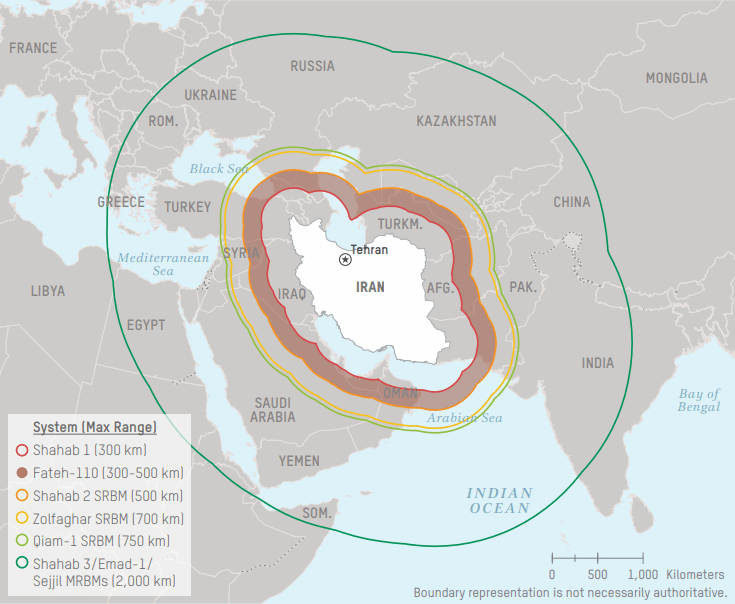
Israel says it will attack Iran if Tehran does not agree to a deal that includes restricting the range of its missiles to 300 kilometers (186 miles).
According to Ynet, Israel is demanding that any deal the US makes with Iran include Tehran eliminating its uranium enrichment program, limiting the range of its ballistic missiles to 300 kilometers, and cutting ties with its allies in the region.
President Donald Trump has suggested he will order an attack on Iran if Tehran does not make a deal with the US. Tel Aviv says any deal between Washington and Tehran must include missile range restrictions or Israel will attack Iran.
Iranian officials have stated that Tehran is unwilling to place restrictions on its missile program. Limiting the range of its missiles to 300 kilometers would prevent Iran from having a meaningful retaliatory capability.
Israeli officials, according to Ynet, do not believe that Iran will accept limitations on its missile program.
Trump met with Prime Minister Benjamin Netanyahu on Wednesday about Iran. Officials said that Washington and Tel Aviv would continue to prepare for war with Iran, and an immediate attack is unlikely.
On Wednesday, the Wall Street Journal reported that Trump had ordered a second aircraft carrier strike group to prepare for deployment to the Middle East.
What do we know about Jeffrey Epstein’s ties to Israel? We talk with Craig Mokhiber, who spent decades inside the UN system, about what millions of newly released files reveal about Epstein’s effort to reshape the Middle East in Israel’s favor, why this story remains underreported, and what it means for how power operates globally.
In this episode:
Craig Mokhiber (@craigmokhiber), Human Rights Lawyer and Former UN Official
This episode was produced by Marcos Bartolomé, Chloe K. Li, and Tamara Khandaker, with Melanie Marich, Maya Hamadeh, Tuleen Barakat, and our guest host, Kevin Hirten. It was edited by Alexandra Locke.
Our sound designer is Alex Roldan. Our video editors are Hisham Abu Salah and Mohannad al-Melhemm. Alexandra Locke is The Take’s executive producer. Ney Alvarez is Al Jazeera’s head of audio.
While many nations occasionally resort to a “state of exception” to deal with temporary crises, Israel exists in a permanent state of exception. This Israeli exceptionalism is the very essence of the instability that plagues the Middle East.
The concept of the state of exception dates back to the Roman justitium, a legal mechanism for suspending law during times of civil unrest. However, the modern understanding was shaped by the German jurist Carl Schmitt, who famously wrote that the “sovereign is he who decides on the exception.” While Schmitt’s own history as a jurist for the Third Reich serves as a chilling reminder of where such theories can lead, his work provides an undeniably accurate anatomy of raw power: it reveals how a ruler who institutes laws also holds the power to dismiss them, under the pretext that no constitution can foresee every possible crisis.
It is often argued that Israel, a self-described democracy, still lacks a formal constitution because such a document would force it to define its borders—a problematic prospect for a settler-colonial regime with an insatiable appetite for expansion.
But there is another explanation: by operating on “Basic Laws” rather than a constitution, Israel avoids a comprehensive legal system that would align it with the globally accepted foundations of international law. Without a constitution, Israel exists in a legal vacuum where the “exception” is the rule. In this space, racial laws, territorial expansion, and even genocide are permitted so long as they fit the state’s immediate agenda.
Isolating specific examples to illustrate this point is a daunting task, primarily because nearly every relevant pronouncement from Israeli officials—particularly during the genocide in Gaza—is a textbook study in Israeli exceptionalism.
Consider Israel’s relentless assault on UNRWA, the UN-mandated body responsible for the survival of millions of Palestinian refugees. For decades, Israel has sought the dismantling of UNRWA for one reason: it is the only global institution that prevents the total erasure of Palestinian refugee rights.
These rights are not mere grievances; they are firmly anchored in international law, most notably via UN Resolution 194.
While UNRWA is not a political organization in a functional sense, its very existence is profoundly political. First, it stands as the institutional legacy of a specific political history; second, and more crucially, its presence ensures the Palestinian refugee remains a recognized political entity. By existing, UNRWA preserves the status of the refugee as a subject with the legal right to demand a return to historic Palestine—a demand that the “state of exception” seeks to permanently silence.
In October 2024, Israel unilaterally legislated the closure of UNRWA, once more asserting its “exception” over the entire framework of the United Nations. “It is time the international community (…) realizes that UNRWA’s mission must end,” Prime Minister Benjamin Netanyahu had already declared on January 31, 2024, signaling the coming erasure. This rhetoric reached its physical conclusion on January 20, when the UNRWA headquarters in occupied Jerusalem were demolished by the Israeli military in the presence of National Security Minister Itamar Ben-Gvir.
“A historic day!” Ben-Gvir announced on that same date. “Today these supporters of terror are being driven out.” This horrific act was met with bashful responses, mute concerns, or total silence by the very powers tasked with preventing states from positioning themselves above the law.
By allowing this Israeli “exception” to stand unchallenged, the international community has effectively sanctioned the demolition of its own legal foundations.
In the past, Israeli leaders masked their true intentions with the language of a “light unto the nations,” projecting a beacon of morality while practicing violence, ethnic cleansing, and military occupation on the ground. The genocide in Gaza, however, has stripped away these pretenses. For the first time, Israeli rhetoric fully reflects a state of exception where the law is not just ignored, but structurally suspended.
“No one in the world will let us starve two million citizens, even though it may be justified and moral until they return the hostages to us,” Finance Minister Bezalel Smotrich admitted on August 5, 2024. This “justified and moral” stance reveals a localized morality that permits the extermination of a population as an ethically defensible act. Yet Smotrich also lied; the world has done nothing practical to dissuade Israel from its savage pulverization of Gaza.
The global community remained idle even when Smotrich declared on May 6, 2025, that Gaza would be “entirely destroyed” and the population “concentrated in a narrow strip.” Today, that vision is a reality: a genocide-fatigued population is confined to roughly 45% of the territory, while the remainder stays empty under Israeli military control.
Netanyahu himself, who has stretched the state of exception beyond any predecessor, defined this new reality during a cabinet meeting on October 26, 2025: “Israel is a sovereign state… Our security policy is in our own hands. Israel does not seek anyone’s approval for that.” Here, Netanyahu defines sovereignty as the raw power to act—genocide included—without regard for international law or human rights.
If all states adopted this, the world would fall into a lawless frenzy. In his seminal State of Exception, Giorgio Agamben diagnosed this “void”—a space where law is suspended but “force of law” remains as pure violence. While his recent stances have divided the academic community, his critique of the exception as a permanent tool of governance remains an indispensable lens for understanding the erasure of Palestinian life.
Israel has already created that void. In the hands of a genocidal settler-colonial society, the state of exception is a relentless nightmare that will not stop at the borders of Palestine. If this “exception” is allowed to become the permanent regional rule, no nation in the Middle East will be spared. Time is of the essence.
Iran’s security chief says the country received no concrete proposal from the United States during the first round of talks aimed at resolving disputes around Tehran’s nuclear program.
Ali Larijani, who leads Iran’s Supreme National Security Council (SNSC), said in remarks published on Wednesday that Tehran and Washington had only exchanged messages in talks held in Oman last week.
However, Larijani said that Washington has taken the “wise and logical” decision to enter talks with Iran rather than threatening the country with military action.
He said that talks with the US will continue and that Iran views them positively, while insisting that countries in the region are also contributing to efforts aimed at bringing the Iran-US talks to a successful conclusion.
The top security official made the remarks in an interview with Qatar-based Al Jazeera Arabic TV during a visit to the country, where he met with senior officials to discuss developments related to the Iran-US nuclear talks.
Responding to a question about US demands for Iran to entirely halt its nuclear enrichment program, Larijani said that the country will never accept the zero enrichment condition, as it needs the technology for energy production as well as for manufacturing certain medicines.
He reiterated Iran’s previous warnings that any US attack on its territory will receive a harsh and decisive response.
“If the United States attacks us, we will target its military bases in the region,” said the SNSC chief, according to a Persian transcript of the interview published by the Tasnim news agency.
Larijani also said that the Israeli regime has been trying to sabotage the Iran-US talks and is seeking to draw the region into a new war.
In the last 48 hours, the U.S. Department of Justice has begun dumping what officials say amounts to more than three million pages of material tied to Jeffrey Epstein—an archive so vast it includes thousands of videos and hundreds of thousands of images. The tranche is only a fraction of what exists. Officials acknowledge that millions of additional documents remain under review, meaning the public has seen just a sliver of the government’s total Epstein archive. What is being unloaded into the public domain is not just evidence of private depravity; it is an inadvertent blueprint of how power really works when no one is supposed to be watching, an industrial‑scale influence machine whose files casually braid together billionaires, cabinet‑level officials, and strategic infrastructure from New York to the Horn of Africa. And even now, the public is being allowed to see only what officials deem manageable, with redactions still shielding some of the most sensitive names and millions of pages kept out of sight.
Hidden within those documents, leaks, screenshots, and email excerpts now circulating online, are connections that stretch far beyond Manhattan, Palm Beach, or even Paris. They reach deep into the Persian Gulf, into Dubai’s executive suites, and into the personal inboxes of officials in the United Arab Emirates.
These emails offer a unique glimpse behind the opulent shadows of Dubai’s towers, where untraceable billions flow like oil. In that world, a convicted pedophile whispers ministerial appointments to a UAE diplomat while discussing port deals that could move cargo and secrets across continents. According to persistent intelligence‑linked information surrounding his operations, Jeffrey Epstein was not acting alone or merely chasing thrills; he was allegedly operating as a geopolitical asset, cultivating leverage over Gulf elites, with places like Somaliland emerging as potential pawns in a larger strategic game. It is in such an environment that figures like Epstein thrive the best, because their private perversions double as statecraft.
Hind Al Owais and the Epstein Emails That Stain a Nation
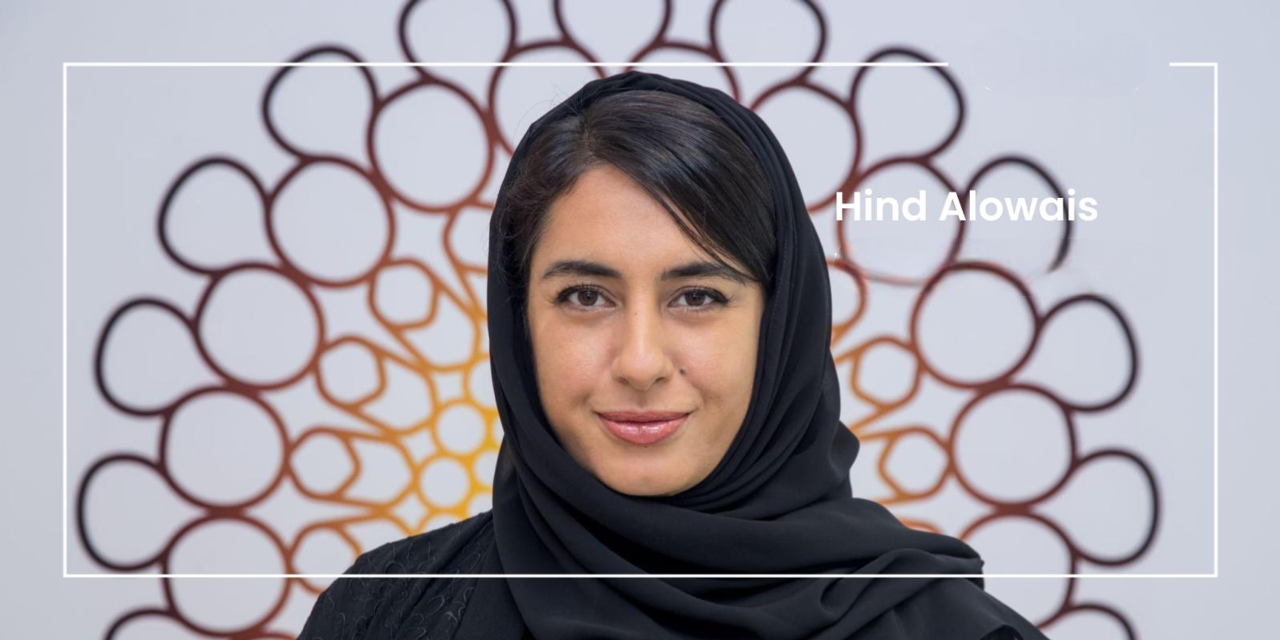
Emails unearthed from the DOJ Epstein library reveal troubling facts about Jeffrey Epstein’s exchanges with Hind Al Owais, a young, ambitious Emirati woman navigating the opulent halls of UAE diplomacy. With her polished LinkedIn profile and lofty titles, she appears at first glance to be a symbol of progress. As director of the UAE’s Permanent Committee for Human Rights and a UN adviser since 2015, she has publicly championed women’s empowerment, declaring it both a moral and strategic imperative. On paper, Hind Al Owais is the face of a “modern” UAE: a diplomat, UN adviser, and later a senior human‑rights official fronting panels on women’s rights and regional mechanisms.
Hind Al Owais, UAE’s Permanent Committee for Human Rights and a UN adviser since 2015 (Source: YourStory.com)
In press releases, she speaks of “dignity” and “gender equality” while chairing events under the banner of the Permanent Committee for Human Rights in Abu Dhabi. In the emails, the tone is very different. The same woman who would later open high‑level human‑rights dialogues is trading easy banter with a convicted sex offender, eagerly accepting his career advice, and bringing family into his orbit. The contrast is not just personal hypocrisy; it looks like the textbook use of a polished, progressive female diplomat as a shield for an authoritarian system willing to outsource leverage work to a man like Epstein while selling the world a sanitised narrative at the UN.
The correspondence begins in 2011, during Epstein’s post‑prison resurgence. Al Owais, then a rising figure in UAE foreign affairs, began emailing the financier. Their communications suggest the exchanges were part of a broader effort to compromise UAE elites for Israeli leverage. Numerous emails linked to Hind Al Owais and Jeffrey Epstein from January 2012 are currently the subject of extensive scrutiny, prompting unsettling questions regarding the nature of their relationship. One email (EFTA01844869) states: “Getting one girl ready is difficult enough; two girls, you can certainly call a challenge.” Another conversation is said to mention introducing her sister to Epstein. In one message, Epstein positioned her as a future UAE Minister of Culture, declaring there would be “no competition.” (EFTA00909346)
One email (EFTA01845739) from January 26, 2012, stands out. Al Owais expresses excitement about introducing her sister, Hala, allegedly just 13 at the time, to Epstein, a man infamous for preying on underage girls. Epstein’s reply is suggestive, promising more time with both. Another message jokes about the challenge of preparing “two girls.” Critics online have seized on these exchanges, arguing that Al Owais was not just a passive contact but an active facilitator, a kind of soft‑power handler who normalised Epstein’s access to young Emirati women.
The DOJ emails that have surfaced so far do not explicitly spell out sexual transactions or list ages, which conveniently allows defenders to hide behind literalism. But in the real world, context matters: a senior diplomat, working in New York, repeatedly arranging access for “girls” to a man already notorious for abusing minors is not a neutral act; it is complicity dressed up as networking.
Online backlash was immediate. Critics claimed Al Owais worked as a procurer, supplying minors, including her own sister, to Epstein. Viral posts branded her a “pimp” and “Satan worshipper,” drawing thousands of retweets amid outrage over her UN role. Although no direct proof of underage involvement appears in the emails themselves, it can be argued that the pattern fits Epstein’s methods, which rest on compromising officials feeding a machine designed not only for pleasure but for leverage. Emails from 2017 show him lobbying against Qatar, accusing Doha of terrorism financing in line with UAE‑Israel strategies, underscoring that his communications with Gulf elites were deeply political, not merely social.
Photos circulating online show Al Owais beside Epstein, her diplomatic poise clashing with his predatory grin. Critics highlight the contradiction: how can someone linked to Epstein lead human‑rights initiatives in a country notorious for the kafala system? The kafala regime has long been described by rights groups as a system of modern servitude, binding migrant workers to employers in conditions ripe for abuse; placing an Epstein‑linked diplomat at the helm of “human rights” in such a state is less reform than reputation‑laundering.
Adding another layer, discussions online claim Ghislaine Maxwell received girls supplied through the same network. Ex‑spy Ari Ben‑Menashe alleges the pair ran Mossad honeytraps together, building on older reports that Maxwell’s father, Robert Maxwell, had served as a Mossad asset. These accounts are contested and not fully documented, but the emerging patterns in the Epstein–UAE files sit uncomfortably close to what one would expect from an intelligence‑linked kompromat operation targeting Gulf elites.
Even as these revelations spread across social media, Abu Dhabi appears to have kept Al Owais anchored in its human‑rights machinery, letting her continue to front events and initiatives in the UAE’s name. The message is unmistakable: whatever passed between her and Epstein does not disqualify her from helping launder the regime’s image on the international stage.
Timeline of Epstein’s UAE–Israel Web
Year – Event
2009 – Bin Sulayem sends Epstein a torture video; Epstein replies, “I loved the torture video.”
2010 – Epstein allegedly linked in commentary to the Mossad hit on Hamas leader Mahmoud al‑Mabhouh in Dubai, fitting the broader narrative of an Israeli intelligence‑adjacent operator moving through Gulf territory.
2011–2012 – Al Owais emails Epstein about her sister and career boosts; Epstein dangles ministerial suggestions, positioning her as a future UAE Minister of Culture.
2013 – Epstein brokers Ehud Barak–bin Sulayem meetings for port investments, cementing a triangle linking an ex‑Israeli prime minister, a Dubai port magnate, and a convicted predator.
2017 – Epstein lobbies anti‑Qatar pressure in line with UAE and Israeli strategies, echoing the blockade politics that would reshape Gulf alliances.
2018 – Bin Sulayem shares Somaliland history; Epstein touts equity in the port and boasts of being basically in charge of nearby Djibouti facilities.
2020 – Abraham Accords normalize UAE–Israel ties, formalising a relationship that had already been woven in through years of quiet cooperation and shared interests.
2026 – Files and commentary claim Epstein trained under Barak for global blackmail operations, merging personal depravity with strategic utility.
If a diplomat could allegedly facilitate such access, the question becomes unavoidable: what might a billionaire port magnate do?
The Sultan’s Sordid Secrets — Bin Sulayem’s Torture Videos and Port Empires
From the intimate whispers of diplomatic emails, the narrative expands into the world of Sultan Ahmed bin Sulayem, the CEO of DP World—a state‑linked giant controlling a significant share of global container traffic. According to the files, bin Sulayem exchanged thousands of emails with Epstein over more than a decade. The correspondence blends lewd banter, elite introductions, and geopolitical scheming.
Sultan Ahmed bin Sulayem does not run a boutique firm; he sits atop a state‑linked conglomerate that touches roughly one in ten containers moved on the planet, with stakes in more than 80 ports and terminals from London to Dakar to Berbera. In other words, when he jokes with Epstein about torture videos and shares “gifts” like a fragment of the Kaaba’s covering, he is not just another vulgar rich man; he is the point where a sovereign logistics empire meets a blackmail broker.
One revelation stands out (EFTA00749241): the torture‑video exchange. Unredacted after scrutiny by Rep. Thomas Massie in February 2026, it identifies bin Sulayem as the sender. This echoes the accusations from a 2009 scandal involving Sheikh Issa bin Zayed Al Nahyan torturing an Afghan grain merchant with cattle prods, sand, and fire—and another 25 victims, according to American businessman Bassam Nabulsi. The old torture tape was once treated as an embarrassing aberration; in light of the Epstein emails, it looks more like a symptom of a system where sadism and impunity are bonding rituals among the elite.
Online backlash was swift. Critics labelled bin Sulayem part of the UAE’s “filthiest scum.” Theories spread that the video served as kompromat—leverage collected by Epstein to secure cooperation. Whether or not that specific file was ever brandished as blackmail, the logic is clear: a regime that records torture and a fixer who monetises secrets are natural partners.
Meanwhile, bin Sulayem gifted Epstein a sacred Kaaba Kiswa cloth intended for Islam’s holiest site. Emails (EFTA01051761) show UAE businesswoman Aziza Al‑Ahmadi arranging the shipment. Epstein reportedly used it as a carpet, prompting outrage and accusations of desecration. This is what impunity looks like when religion is instrumentalised for power. A cloth destined for the Kaaba is rerouted through a UAE billionaire to a US sex offender, laid out on the floor as a decorative prop in his private den of exploitation. For many Muslims, the outrage is not just about sacrilege; it is about the casual way a state‑backed executive treated the sacred as one more chip in a game of influence with a man whose entire business model revolved around defilement.
The correspondence contains further lewd exchanges, including jokes about sexual exploits and discussions of foreign students. Bin Sulayem facilitated introductions to Emirati royals and even pitched ideas to Elon Musk through Epstein in 2015 EFTA02716369), using the predator as a networking hub into Western tech and political circles.
But the ports are the real story. DP World’s infrastructure controls intercontinental traffic. For a trafficker, critics argue, such systems offer anonymity and reach: containers are counted, not souls. Some theories cast bin Sulayem as Epstein’s logistics partner, someone whose empire could provide the plausible deniability that only large‑scale shipping can offer. Since 2006, Epstein acted as a go‑between, linking former Israeli Prime Minister and Defense Minister Ehud Barak with bin Sulayem. This triangular relationship—Barak, bin Sulayem, and Epstein—shows in Epstein file EFTA02600899, enabling discreet communications that certainly contributed to the foundation of later economic and political alignments, including the 2020 Abraham Accords, which normalised relations between the UAE and Israel. From here, the story shifts naturally to Somaliland.
The Somaliland Gambit — UAE Ports, Epstein’s Equity, and the Israeli Shadow
The bin Sulayem scandal converges in the dusty ports of Somaliland, a self‑declared republic clinging to independence from war‑torn Somalia. Here, the narrative escalates from personal perversions to geopolitical machinations, and Epstein’s fingerprints appear on deals that could turn strategic harbours into conduits for exploitation—all within the UAE’s ecosystem that has harboured money launderers and opaque fortunes for years, providing Epstein a fertile ground to operate.
Recently published articles and DOJ‑linked emails (EFTA01885124) show Epstein’s circle eyeing Somaliland as early as 2012 for water and finance ventures. One message describes “huge water reserves, untapped (and clean) near the port city of Berbera. providing direct access to the Saudi market. Easy to ship. Minimal transport.” The language is chilling in its simplicity: a territory reduced to a resource node on someone else’s spreadsheet, its water turned into a line item in a private equity‑style pitch.
Here, the UAE, through DP World and bin Sulayem, has poured billions into Berbera port, signing controversial agreements that bypass Somalia’s central government. DP World and its partners have committed up to 1 billion USD to logistics infrastructure along the Berbera corridor, tying the port into Ethiopian trade routes and Gulf markets, all under a legal framework that treats Somaliland as a quasi‑sovereign partner despite its lack of international recognition. For Mogadishu, this is a direct challenge to its sovereignty; for Dubai, it is a lucrative wedge into the Red Sea; for actors like Epstein, it is an ideal gray zone, where jurisdiction is murky, and oversight is thin.
Epstein’s role appears in multiple 2018 emails: bin Sulayem shares a brief history of Somaliland’s recognition push with Epstein, including a document (EFTA00842536) titled along the lines of “The recognition of Somaliland – a brief history,” inviting him into the conversation not as a bystander but as a broker. Epstein, in turn, claims equity in the port and boasts of being basically in charge of nearby Djibouti facilities, casting himself as a shadow stakeholder in the region’s maritime chokepoints. Whether that equity was real or inflated bravado, the intent is clear: he wanted to position himself at the junction of finance, infrastructure, and political recognition in one of the world’s most strategically sensitive corridors.
Recently uncovered emails from the DOJ Epstein library (EFTA01876256) reveal his enduring fascination with Somaliland, discussing strange projects like “building a small studio in Somaliland and calling it SOMALIWOOD STUDIOS, to produce shows like Sesame Street type, including children’s programming, etc. for African kids.” The proposed “Somaliwood” studio reads like black comedy until you remember who is talking. Here is a man accused of systemically abusing minors, now sketching out soft‑power projects aimed at African children in a territory whose legal status is deliberately ambiguous and whose poverty makes scrutiny difficult. It is the colonial mission civilisatrice updated for the age of offshore finance and private jets: entertain the children, harvest the elite.
These emails include conversations from the years prior to Epstein’s “death” with DP World chief Sultan bin Sulayem regarding proposals aimed at recognising the territory as an independent state. (EFTA00842536) For Somaliland’s people, the stakes are immediate. Poverty and instability persist while foreign powers carve up their coastline. Critics describe the deals as neo‑colonial projects. Some claim the UAE lobbied for Somaliland’s separation ahead of the Abraham Accords, with Epstein acting as an intermediary promoting Israeli technology, turning the territory into a bargaining chip in a three‑way game between Abu Dhabi, Tel Aviv, and Western security planners.
DP World handles roughly 80 million containers annually. To those who suspect trafficking behind the trade routes, that scale offers perfect cover. Israel was among the earliest nations to acknowledge the brief five‑day independence of British Somaliland in 1960, but it was on December 26, 2025, that Israel officially declared it would be the first nation to fully recognise Somaliland, sparking new developments in the Red Sea Basin. As part of this agreement, Israel plans to set up a diplomatic and potentially security presence in the region for the first time since its relations with Eritrea soured in 2020.
The human consequences are stark. Somali migrants fleeing famine risk falling into trafficking routes. Epstein’s proposed cultural projects in Somaliland echo the recruitment tactics used elsewhere in his network: philanthropy as bait, media as camouflage, and vulnerable populations as raw material.
Epstein, Mossad, and the Israeli Interest
For years, former intelligence officials, investigative journalists, and independent researchers have argued that Epstein was not simply a freelance blackmailer but an asset embedded in Israeli intelligence networks. Ari Ben‑Menashe, a self‑described former Israeli intelligence officer, has claimed that Epstein and Ghislaine Maxwell ran a Mossad “honeytrap” operation, seeded by her father Robert Maxwell—himself long reported as a Mossad asset. These accounts are disputed and not yet backed by a full documentary record, but they sketch a plausible frame: private vice harnessed for state leverage, with Epstein as the smiling frontman.
What the DOJ files now reveal is a pattern that fits uncomfortably well with that hypothesis. You have an Israeli‑aligned fixer cultivating leverage over Gulf elites, moving seamlessly between private jets, UN corridors, and port concessions, just as Israel sought to break its regional isolation, secure new security corridors, and reposition itself along the Red Sea. Look at the map.
The same years in which Epstein is emailing bin Sulayem about “recognition of Somaliland” and boasting of influence around Djibouti are the years in which Israel is quietly repositioning itself on the Red Sea, negotiating normalisation with Gulf monarchies, and searching for ways to project power near Bab el‑Mandeb without provoking domestic backlash.
A privatised network of ports, logistics corridors, and pliable elites, facilitated by someone who holds their secrets, solves several problems at once. It offers deniable access, commercial cover, and a ready‑made human‑intelligence pipeline into regimes that officially still have to perform outrage for the Arab street. In that light, the Abraham Accords no longer look like a sudden breakthrough of “peace” but the public codification of relationships that had already been wired in through years of backchannel deals, port concessions, and blackmail‑ready kompromat.
Was Epstein’s network decisive in sealing those agreements? The evidence is not yet complete. But the architecture is visible: Emirati royals and executives enjoying the services of a man whose alleged handlers, according to multiple intelligence veterans, sat in Tel Aviv; strategic infrastructure in places like Berbera and Djibouti drifting quietly into Emirati hands; and, finally, a ribbon‑cutting ceremony in Washington where everyone pretends this was all about tourism and flights.
The Geopolitical Knot — Theories, Implications, and the Call for Justice
Viewed together, the Epstein–UAE saga becomes, in the eyes of its critics, more than a criminal case. It becomes a portrait of how global power allegedly weaponises personal vice. From Al Owais’s alleged facilitation to bin Sulayem’s torture‑video exchange and the port deals in Somaliland, the narrative paints Epstein as a fixer for Israeli strategic interests, operating in the gray zones where intelligence services, corporate empires, and royal courts overlap. His activities reportedly included brokering Qatari‑Israeli meetings and backchannels involving Russia and Syria, further blurring the line between private financier and unofficial envoy.
Some theories suggest the Abraham Accords were sealed with kompromat, transforming ports into surveillance nodes and trafficking corridors. Online outrage reflects broader anger at perceived hypocrisy. The victims, underage girls, abused labourers, displaced Somalis, remain central to the story, even as elites evade accountability and rebrand themselves as champions of reform.
Ghislaine Maxwell’s refusal to testify before Congress adds to the sense of impunity. Rep. Thomas Massie’s push for unredacted files hints at further revelations, including six redacted names—one reportedly a senior foreign official. His posts have already identified figures like Leslie Wexner as co‑conspirators and bin Sulayem as the sender of the torture video. Theories of intelligence‑agency cover‑ups persist, fueled by Epstein’s highly convenient death in custody. Some speculate unreleased files may map deeper links to Israeli intelligence operations financed through the UAE’s untraceable wealth, routed through free zones, shell companies, and sovereign funds that answer to no electorate.
If you strip away the PR gloss, the pattern is brutally simple. Israel secures new corridors and listening posts along the Red Sea, marketed as “normalisation”; the UAE entrenches itself as a logistics empire and financial safe haven, its human‑rights abuses airbrushed by friendly diplomats at the UN; Western elites enjoy access, contracts, and plausible deniability. Somaliland, meanwhile, becomes another bargaining promise land in a game it did not design, its coastline sliced into concessions, its sovereignty traded in PDFs and email attachments between a Dubai tycoon and a US sex offender.
The DOJ archive does not just expose individual monsters. It sketches the contours of a system in which the abuse of girls, the torture of workers, and the carving up of fragile states are all part of the same circuitry of power. And as long as that circuitry continues to serve the strategic interests of states like Israel and their Gulf partners, there is every incentive to let Epstein die on camera, redact a few names, and insist the machine is gone—when, in reality, only the frontman has changed.
But the emphasis on the existential threat to Israel ignores a more basic issue for Americans to ponder: a nuclear-armed Iran represents a dagger at the heart of America and an existential threat to our status as a superpower and guarantor of the West’s security. As to the former, Iran is pressing ahead with its long-range ballistic missile program. First the Middle East and Eastern Europe, then all of Europe and, within a matter of years, the U.S. will be within range of Iranian missiles. If those are nuclear and not conventional, what then? We’re not talking about whether Iran is going to be “merely” a destabilizing factor in the Middle East or whether it will set off an arms race with its neighbors or imperil Israel’s existence. We’re talking about whether America will then be at risk (and lacking sufficient missile-defense capabilities if we continue to hack away at our defense budget). The argument about whether mutual assured destruction can really work against Islamic fundamentalists who have an apocalyptic vision becomes not about Israel’s ability to deter an attack but about ours. Those who oppose American military action have an obligation to explain why America should place itself in that predicament.
I would argue that any obligation to present an explanation lies with those whose disastrous policy prescriptions with respect to Iraq lead America into the worst strategic blunder in the country’s recent history. That aside, note the blind faith in the power of the military to actually achieve its ends. … continue
This site is provided as a research and reference tool. Although we make every reasonable effort to ensure that the information and data provided at this site are useful, accurate, and current, we cannot guarantee that the information and data provided here will be error-free. By using this site, you assume all responsibility for and risk arising from your use of and reliance upon the contents of this site.
This site and the information available through it do not, and are not intended to constitute legal advice. Should you require legal advice, you should consult your own attorney.
Nothing within this site or linked to by this site constitutes investment advice or medical advice.
Materials accessible from or added to this site by third parties, such as comments posted, are strictly the responsibility of the third party who added such materials or made them accessible and we neither endorse nor undertake to control, monitor, edit or assume responsibility for any such third-party material.
The posting of stories, commentaries, reports, documents and links (embedded or otherwise) on this site does not in any way, shape or form, implied or otherwise, necessarily express or suggest endorsement or support of any of such posted material or parts therein.
The word “alleged” is deemed to occur before the word “fraud.” Since the rule of law still applies. To peasants, at least.
Fair Use
This site contains copyrighted material the use of which has not always been specifically authorized by the copyright owner. We are making such material available in our efforts to advance understanding of environmental, political, human rights, economic, democracy, scientific, and social justice issues, etc. We believe this constitutes a ‘fair use’ of any such copyrighted material as provided for in section 107 of the US Copyright Law. In accordance with Title 17 U.S.C. Section 107, the material on this site is distributed without profit to those who have expressed a prior interest in receiving the included information for research and educational purposes. For more info go to: http://www.law.cornell.edu/uscode/17/107.shtml. If you wish to use copyrighted material from this site for purposes of your own that go beyond ‘fair use’, you must obtain permission from the copyright owner.
DMCA Contact
This is information for anyone that wishes to challenge our “fair use” of copyrighted material.
If you are a legal copyright holder or a designated agent for such and you believe that content residing on or accessible through our website infringes a copyright and falls outside the boundaries of “Fair Use”, please send a notice of infringement by contacting atheonews@gmail.com.
We will respond and take necessary action immediately.
If notice is given of an alleged copyright violation we will act expeditiously to remove or disable access to the material(s) in question.
All 3rd party material posted on this website is copyright the respective owners / authors. Aletho News makes no claim of copyright on such material.

 Aletho News