Massive Attack says Singapore detained band after Gaza chants
Al Mayadeen | August 3, 2026
British band Massive Attack said its members were detained and questioned by Singapore police following a concert in the city-state after audience members chanted pro-Palestine slogans.
In a statement posted on social media, the band said the incident occurred after its performance at the Star Theatre on July 29, describing the authorities’ response as unexpected and disappointing.
According to the band, all members were detained by police, separated for questioning, and subjected to individual interrogations.
The group said some members also had their hotel rooms searched, while others temporarily had their passports confiscated before being allowed to continue their travel.
Band links detention to pro-Palestine chants
Massive Attack said concertgoers had spontaneously begun chanting slogans in support of Palestine both before and after the performance.
The band thanked the audience for expressing solidarity with Palestine and questioned why its members were detained following the event.
Massive Attack has been among the most outspoken music groups in expressing support for Palestine and has frequently used its social media platforms to criticize the Israeli occupation’s war on Gaza.
The band has previously called for an end to the assault on the Gaza Strip and has shared statements condemning Israeli military actions against Palestinians.
Band frontman among 500 arrested at Palestine Action protest
Massive Attack frontman Robert Del Naja was previously detained during the mass protest against the ban on Palestine Action in central London in early April, as reported by The Guardian.
Del Naja, also known as 3D, was seen holding a sign that read: “I Oppose Genocide, I Support Palestine Action” in Trafalgar Square before police approached and carried him away from the demonstration as other protesters cheered.
In footage of his arrest, the musician can be heard saying, “I’m being unlawfully arrested” when asked why he was being detained.
Before his arrest, Del Naja told the Press Association he had concerns about how an arrest could affect his ability to travel and obtain visas for the band’s upcoming summer tour.
“Being a musician, obviously, there was a lot of trepidation around how we might not be able to travel and get visas,” he said. “But I thought ‘this is ridiculous’ and then the police making that U-turn to arrest people again, I thought that is even more ridiculous. So I’m going to hold a sign today.”
He added that he believed the actions of Palestine Action were “highly patriotic because they were pretty much protecting our country from getting involved in serious war crimes and breaking international law.”
“How much more patriotic can you be than that?” he said.
Call Off the Iran War. Just Walk Away!
By Ron Paul | August 3, 2026
After several days of increasing threats against Iran, including social media posts like “FINISH THE JOB!” and “Take the oil. No mercy!,” President Trump has over the weekend called off a planned major escalation in the Middle East. For now.
“The U.S.A. is locked and loaded and ready to go against the Islamic Republic of Iran, at levels of Military Terror, Strength, and Power not seen since World War II,” he wrote on his social media account. “Despite this, we have just been asked by Iran, and other Middle Eastern Countries, to hold off any attack in that the perimeters of a deal has been agreed to,” he added.
Iran denies any communication with the US and has threatened retaliation against energy infrastructure in the region if its energy infrastructure is attacked. Such destruction could plunge the world into an economic depression.
Iranian retaliation – including against critical water desalination plants – could also depopulate US allies in the region, including Saudi Arabia, Kuwait, and others. Saudi Arabia’s Mohammed bin Salman personally called President Trump to request he not escalate against Iran.
According to various media articles, the US is running dangerously low on missiles, especially interceptor missiles such as the Patriot system. Our ability to protect our military bases in the Middle East appears to be gone.
Reportedly, President Trump was warned by his top military advisors that a ground operation against Iran would result in a high level of US casualties and would have no guarantee of success. Already the official totals are 18 US service members killed and more than 700 injured in the operation.
Over the weekend the US military completed its evacuation of a major military base in the Kurdish region of Iraq. This follows similar evacuations of virtually every US base in the region, including the home of the US 5th Fleet in Bahrain and “safe” US bases in Jordan.
The entirety of US military power in the region appears to have been relocated to Israel.
The war which was supposed to last a couple of weeks and “pay for itself” is entering into its sixth month and the price tag so far is above $100 billion. A war that was started to thwart an Iranian nuclear threat that according to US Intelligence didn’t exist has become a war to open a waterway – the Hormuz Strait – that was open before the war started.
Things are so bad that, according to the Washington Post, the US general in charge of the US European Command sent a message to senior Pentagon officials “saying that without another Navy destroyer he will be forced to choose defense of the United States ‘homeland’ over that of Israel.” How is defending a foreign country over our own country even a choice?
The US attack on Iran is the most unpopular major US military operation in history and is becoming more unpopular by the day. President Trump’s polling numbers have been dragged down to the low 30s by the conflict. Midterm elections are three months away.
President Trump is rapidly running out of options in his war of choice against Iran. There is no path to victory in the war. It is now only about how to manage defeat. That’s why the Constitution does not allow presidents to start wars on their own.
Get out now. Completely out. The foolish war on Iran must end!
His Majesty’s plunder: The royal machine behind the Trump Highway and Western Sahara’s phosphate wealth

The Cradle | August 3, 2026
There is a machine in the Sahara you can see from space. A conveyor belt, the longest on earth, nearly one hundred kilometers of steel from a mine called Bou Craa to the Atlantic. For half a century it has moved phosphate out of occupied Western Sahara, through wars, ceasefires, and a promised referendum that never came. The richest layer of the deposit is already gone, sold before the Sahrawis could ever vote on it. And the electricity that keeps the belt running is sold to the state by a wind farm belonging to the king.
On 26 July, US President Donald Trump announced that the highway running past this machine now carries his name. The announcement arrived as a four-minute Truth Social video, narrated by an obvious AI voice praising his “historic courage.” Rabat, six days on, has not said the name out loud. It does not need to. The name was never the payment.
The road is. It is 1,055 kilometers of settlement poured across Africa’s last colony, the kind of road empires have always built and named for themselves. It connects the mine, the port, an Israeli-held offshore block, and the duty-free fertilizer now sailing for New Orleans under an emergency Washington manufactured itself. Follow it far enough and the asphalt runs from phosphate to palace.
An occupation, bought in installments
Every payment has a paper trail, and this one begins five years before the name. The convention that built the road was signed in the presence of Moroccan King Mohammed VI in El-Aaiun (also known as Laayoune) in 2015, on the 40th anniversary of the Green March, at a cost of 10 billion Moroccan dirhams (MAD) – or around $1.074 billion. Morocco poured its annexation in asphalt, as empires always have, long before Washington blessed it. What arrived in December 2020 was not the road. It was the signature.
Morocco became the fourth Arab state to normalize relations with the occupation state, and in exchange the US recognized Moroccan sovereignty over the whole of Western Sahara. Jared Kushner, Trump’s son-in-law, negotiated the deal and supplied the doctrine, likening the Sahara recognition to Trump’s recognition of Israeli sovereignty over the occupied Golan Heights. One occupation legitimized on the template of another. The architect said it so no analyst has to.
Tel Aviv paid its own installment in July 2023, when Netanyahu sent Mohammed VI a letter recognizing the Moroccan claim. A senior Moroccan official explained what the letter was for – Rabat expects the recognition to encourage Israeli investment in the territory. Recognition as prospectus. This is trans-Zionism as designed: the occupation state sets the template, Washington executes, the client kingdom collects.
What the road runs past
South of El-Aaiun, the machine comes back into view. The Bou Craa mine feeds its conveyor belt to the harbor at El-Aaiun, where bulk vessels have carried the territory’s wealth abroad since 1975. According to the figures of the world’s largest phosphate and fertilizer producer, Morocco’s OCP Group, Bou Craa delivers around a fifth of the company’s exports from just eight percent of its extracted volume. That is what occupations are for.
The quality tells its own story. Bou Craa’s deposit sits in two layers, and Western Sahara Resource Watch, which tracks every bulk shipment out of El-Aaiun, documented that Morocco has practically sold off the high-grade layer that should have been available to the Sahrawi people, mining the poorer second seam since 2014. What remains is the residue.
None of this is legally ambiguous. The UN’s legal counsel concluded in 2002 that further exploitation of the territory’s resources against the wishes of its people would violate international law. A South African court ruled in 2018 that ownership of a phosphate cargo from El-Aaiun was never lawfully vested in OCP at all. The company ships stolen goods. A court has said so. The road Trump wants his name on is the overland artery of that trade.
An emergency of Washington’s own making
The American market took the long way round. In 2021, Washington slapped a 19.97 percent countervailing duty on OCP after Florida’s Mosaic Company complained of subsidized competition. The rate yo-yoed for five years until a trade court cut it to 2.11 percent in December 2025 and Washington quietly dropped its appeal. Then came the war.
Washington’s strikes on Iran choked the Strait of Hormuz, the artery for roughly a third of the world’s seaborne fertilizer trade. Prices climbed, farmers rationed, and on 29 June Trump declared a national emergency under a Depression-era clause of the 1930 Tariff Act, suspending the duties entirely. The suspension is time-bound, not volume-bound: a USDA official confirmed OCP can ship unlimited tonnage for eight months. Washington set fire to the supply chain, declared an emergency over the smoke, and handed the normalization partner the keys to the American market.
Now examine what sails in. North African sedimentary phosphate is naturally high in cadmium, a carcinogen the EU capped at 60 milligrams per kilo in its fertilizers. OCP’s response was to lobby against the cap, hiring Dechert LLP and Edelman and proposing Brussels raise the limit to 80. The US has no comparable federal ceiling, leaving oversight to a patchwork of state rules. Europe’s restricted rock has found a market with no thermostat. American capital wasted no time: two weeks after the proclamation, US-based firm Koch Ag signed a joint venture stake in OCP’s fertilizer complex at Jorf Lasfar. The same conglomerate poured half a billion dollars into the occupation state’s tech sector through its investment arm Koch Disruptive Technologies (KDT), built under Eli Groner, Israeli Prime Minister Benjamin Netanyahu’s former top civil servant, settled in the occupied West Bank.
From phosphate to palace
Tracing the flow of revenue shows that it extends beyond the state treasury. OCP belongs to the Moroccan state. But the throne sits atop a parallel structure: the royal family controls roughly 60 percent of the Al-Mada conglomerate through personal holdings named SIGER and ERGIS, both derived from regis, Latin for king, feeding a fund in which Mohammed VI holds 50.6 percent. SIGER’s director, Mounir Majidi, is also the king’s private secretary: one man running the head of state’s office and the family vault.
Al-Mada’s energy arm, Nareva, is where the phosphate money turns royal. The wind farm at Foum el-Oued, built by a wholly-owned Nareva subsidiary, supplies nearly all the electricity OCP needs to mine Bou Craa, run the conveyor belt, and wash the rock for export. The state plunders the phosphate. The king sells the state the power that does the plundering. Every tonne leaving El-Aaiun has burned royal electricity first. All but one wind farm in the occupied territory sits in Nareva’s portfolio, and WSRW poses the question that answers itself: why would a king who profits from occupation ever back a UN peace process?
Moroccan outlet Barlamane reported that quantities invoiced on the expressway far exceeded the work actually built, prompting the equipment minister to bar the implicated survey bureau from public contracts for five years. On the road to Dakhla, even the overcharging is infrastructure.
The name was never the payment
Empires have always paved roads through conquered land and called it civilization. Rome did it, France did it in this same desert, and in July 2026 the tradition produced its densest month yet: duty-free phosphate sailing for New Orleans, Kosh Ag signing into Jorf Lasfar, and an American president naming a highway across a territory that was never Morocco’s to give. The belt at Bou Craa keeps turning, the royal turbines keep spinning, the receipts keep printing – and the only thing Rabat has still not done is say the name out loud.
Israel protects Mexican official wanted for mass kidnap-murder, along with accused sex criminals and fraudsters
Israel is home to droves of international criminals
By Nate Bear – ¡DoNotPanic! – July 31, 2026
Israel has become a haven for international criminals. Many are dual-nationals who have taken advantage of their ability to move seamlessly between Israel and their second country of citizenship to commit crimes and, in some cases, evade justice.
The scale of the criminality, and the volume of cases (relative to the population of Israel), is astonishing.
Among the most notorious accused criminals being protected from justice by Israel is Timur Mindich, the ultimate financial beneficiary of the Ukrainian drone maker Fire Point. Mindich fled to Israel last year, just days before being charged as the mastermind behind a $100 million embezzlement scheme involving Ukraine’s state nuclear power company. Mindich also happens to be the co-owner of Kvartal 95 Studio, the production company founded by Volodymyr Zelensky.
Mindich, like many in this article, has taken advantage of Israel’s controversial Law of Return which allows any Jew in the world to claim Israeli citizenship without having to renounce their home country passport.
Some of those accused and charged have made minor or international headlines, some haven’t, but the scale of the issue was such that I thought it would be useful to document my research here.
In some cases, Israel has refused to extradite the wanted person despite requests from the country in which the crimes were committed.
Staying on Ukraine and refused extradition requests, we have Oleksandr Dubilet, the former Chairman of the Board of Ukraine’s PrivatBank. Dubilet is currently a fugitive in Israel and the subject of multiple criminal investigations and extradition requests for his role in embezzling at least $100 million dollars following the 2016 privatisation of PrivatBank. To date, Israel has refused to extradite him.
Israel as a bolthole for financial fraudsters is a common theme. One of the most significant SEC fraud cases in recent years involved over 150 Israelis (some with dual US-Israeli nationality, others not), wanted for their role in conducting binary options fraud worth upwards of $100 billion.
Binary options are a type of financial bet where the outcome is essentially all-or-nothing. Instead of buying a stock or currency, you bet on whether the price of a stock or currency will be above or below a certain level at a specific time. While not illegal, the Israeli companies were accused of rigging and manipulating prices and expiry times and using fake identities.
For a decade until 2017, Israel was the global centre for the online binary-options industry. The Israeli police failed to investigate, so hundreds of cases were filed in Israeli courts by people from dozens of countries who had been defrauded.
One of the most notorious fraudsters was Lee Elbaz, the CEO of Yukom Communications, a dual US-Israeli national. She was arrested in 2017 when on holiday in New York and eventually convicted of wire fraud and sentenced to 22 years in prison.
Other prime Israeli movers in the binary options fraud business were Yossi Herzog and Yakov Cohen, both connected with Yukom and other binary options front companies. They were charged with $140 million fraud in 2019 but despite being under a DOJ criminal investigation the US choose not to pursue their extradition, while other Israeli co-conspirators in the Yukom case have joined Elbaz in serving jail sentences.
Other Israeli kingpins in the binary options sector include Ran Amiran and Malhaz Patarkazishvili, also known as Pini Peter. They were charged with $100 million fraud by the SEC for their role managing the fraudulent options trader Spot Option. Because it was a civil case and the DOJ wasn’t involved they weren’t eligible for extradition from Israel and continue to reside in Israel. It was reported in 2021 that Amiran had reached a financial settlement for the damages with the SEC, likely so that he could once again travel to the US. Peter, a friend of Netanyahu’s, remains unrepentant, despite being ordered to pay the US government $87 million, a judgment he has appealed.
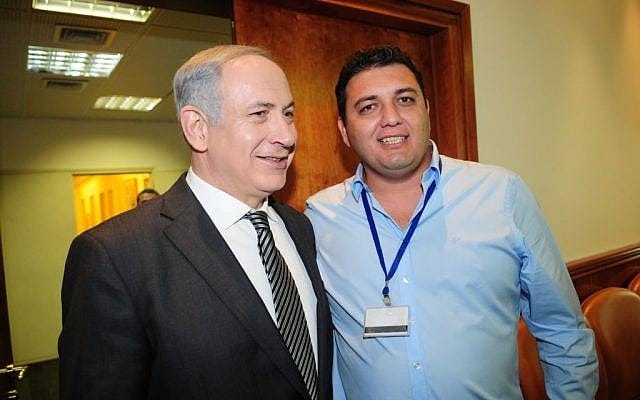
Benjamin Netanyahu with financial fraudster Pini Peter
There are hundreds of other Israel-linked individuals charged with binary options fraud identified on the SEC website, including joint German-Israel nationals Gil and Raz Beserglik who ran binary options call centres out of Germany to scam people.
Another hotbed of Israeli fraud is the moving industry, where companies pose as legitimate household goods movers only to steal belongings or withhold items unless additional payment is made. One of the largest “hostage load” prosecutions was of Advanced Moving Systems, an Israeli-run company which lured customers with artificially low moving estimates and then extorted them by holding their household goods hostage until they paid fraudulently inflated prices. Many of the dozens of people behind the scam remain wanted, with their current location unknown. Dozens of other Israelis connected with fraudulent moving companies also remain on the run, and have likely fled to Israel. (Incidentally, the Israelis arrested by the FBI on September 11th and quickly released were working for a Mossad counterintelligence operation using a moving company as cover. But that’s another story).
Penny stock fraud is another rich seam for Israeli crooks. This type of fraud takes place when the stocks of small companies trading under $5 a share are marketed to often older and uniformed people using high pressure sales marketing tactics, with the caller promising guaranteed returns, often claiming to have inside information. One of the largest instances in recent years saw dual US-Israeli citizen Sharone “Barry” Perlstein and numerous Israeli co-conspirators charged with creating at least 15 fraudulent public shell companies to sell millions of dollars worth of penny stocks using fraudulent tactics. Previous penny stock fraud cases had also involved Israeli nationals.
The diamond industry has also attracted a fair share of Israeli swindlers. One of the most well-known is Mordechai “Moti” Ferder, a California-based luxury jeweller at the centre of one of the largest fraud scandals in the American jewellery industry. Ferder was accused of juicing his company’s accounts to boost the valuation before selling to an investment company, while in reality he was racking up liabilities worth hundreds of millions of dollars. In 2025, with an FBI investigation underway, Ferder fled California for Tel Aviv.
Then there is Gery Shalon, the Georgia-born Israeli responsible for hacking JP Morgan and carrying out the largest theft of customer data from an American financial institution in history.
Outside the fraud cases, Israel also attracts politicians attempting to shield themselves from justice in their home countries. One of the most notorious and ongoing cases is that of Tomás Zerón, the former director of the Criminal Investigation Agency of Mexico. Zerón, who received training in Israel before assuming control of Mexico’s version of the FBI, is accused by Mexican authorities of having direct involvement in the kidnap, torture, and likely murder of dozens of university students.

The Ayotzinapa kidnapping is considered one of Mexico’s most heinous human rights abuse cases. It took place in 2014, when forty-three leftist students were kidnapped and disappeared on their way to Mexico City to commemorate the anniversary of the 1968 Tlatelolco massacre. Zerón is said to have known or ordered the students to be handed over to a cartel group to be murdered and disposed of. The former Mexican top cop promptly fled to Israel after being officially accused of participating in the crime.
Despite an extradition order, an Interpol red notice and numerous requests from Mexico to hand him over, Israel has refused, reportedly as punishment for Mexico’s criticism of Israel at the UN.
Another Mexican diplomat who fled to Israel is Andrés Roemer. Formerly Mexico’s Ambassador to UNESCO based in Paris, and Consul General of Mexico in San Francisco, Roemer fled to Israel in 2021 after being accused by 61 women of rape and sexual assault. While a Jerusalem court has authorized the former diplomat’s extradition to Mexico, he remains in Israel under house arrest.
Roemer is not alone among Jewish sex criminals fleeing from justice in the home countries to Israel. The phenomenon is so prevalent that even CBS News has covered it. Probably the most famous accused sex criminals to have fled to Israel are the Hollywood directors Brett Ratner and Bryan Singer. Rush Hour director Ratner, a good friend of Netanyahu’s, fled to Israel in 2023 after being accused by multiple women of sexual misconduct and assault on set.
Singer, the director of two X-Men films and the 1990’s hit, The Usual Suspects, fled to Israel around 2020 after being accused of sexual abuse, including of children.

Brett Ratner with Benjamin and Sarah Netanyahu, and ultra-Zionist attorney Alan Dershowitz
Israel is a magnet for criminals of all flavors, making this brief compendium just the tip of the iceberg. The Law of Return, known to be policed very lightly, is a gateway allowing Jews to use their dual nationality to commit crimes and then swerve justice under an ethno-supremacist legal regime set up to protect them. Some succeed in avoiding justice, while others are not so lucky.
How Lockheed Martin, Raytheon & BAE Systems Are Propagandizing Children to Support War Through STEM
By Alan Macleod| MintPress News | August 1, 2026
Raytheon sponsors the Girl Scouts of America. BAE Systems is reading your toddlers their favorite fairytale stories. And Lockheed Martin funds children’s math and STEM festivals. This is done with great fanfare, supposedly to empower and inspire children to pursue their passion for science. In reality, though, these companies are attempting to launder their images and enlist the next generation to become cogs in the military-industrial complex.
All the while, these organizations’ products are being used across the world by the United States and Israel to commit war crimes – in Iran, Yemen, Palestine, and beyond – to target children.
MintPress explores the murky world of the arms companies training kids to bomb kids.
Normalizing War to Kids
When many Americans think of Raytheon (now officially rebranded as RTX Corporation), they don’t envisage rockets and cruise missiles; they think of math. For decades, the second-largest arms manufacturer on the planet has bankrolled a wide range of organizations aimed at getting children excited about STEM subjects.
Since 2009, Raytheon has been the title sponsor of MATHCOUNTS, a non-profit organization that provides engaging math programs for middle school students in every U.S. state, as well as organizing math competitions to find the brightest children in America.
In 2005, Raytheon launched its MathMovesU program, aimed, in its own words, “to inspire middle school students to get excited about math and science.” In addition to the materials provided, it has also spent millions on scholarships, grants, and study awards to thousands of students, teachers, and volunteers.
And its MathAlive! traveling exhibit promises, in rather outdated branding, to take math “2theXtreme”. MathAlive! Has also traveled to several countries in West Asia, including Qatar, Kuwait, the United Arab Emirates, and Saudi Arabia – all of them among the biggest purchasers of Raytheon weapons technology.
The company also enjoys a longtime partnership with the Girl Scouts of the United States of America (GSUSA). In 2017, for example, it launched the GSUSA’s first national computer science program and cyber challenge for middle and high school girls.
“The progress to diversify the STEM workforce needs to be accelerated… At a time when technology is transforming the way we live and work, we can – and should – show young women a clear path to taking an active role in this transformation,” said Thomas A. Kennedy, then-Raytheon CEO; “Working together, Raytheon and Girl Scouts will help girls build confidence to see themselves as the robotics engineers, data scientists and cybersecurity professionals who will create a better tomorrow.”
Raytheon also spearheaded the GSUSA’s “Think Like a Programmer” project, which encourages girls to explore the world of artificial intelligence and cybersecurity, and developed many of the programming badges available to the scouts.
GSUSA appears proud of this relationship. Its website profiles one former scout who now works at Raytheon as a success story and a model to follow. The article includes a step-by-step guide and a list of tips for those wishing to follow in her footsteps.
Unsurprisingly, Raytheon also works closely with the U.S. military on these matters, establishing four new STEM “centers of innovation” with the Boys & Girls Clubs of America in Michigan, Oklahoma, Colorado, and Washington, D.C., all near military bases.
While some might be surprised by the closeness of the relationship between a children’s organization and an arms manufacturer, it is worth remembering that the scouting movement was originally established by Lieutenant-General Robert Baden-Powell, as a stepping stone towards boys joining the military. Baden-Powell was deeply concerned that English boys would not be physically fit enough to fight for their country in any upcoming wars, and designed an organization that would train them both physically and mentally to do so.
Kirsten Bayes from the Campaign Against the Arms Trade was unimpressed by Raytheon’s attempts to improve their image and to train the next generation of weapons manufacturers. “Our view is that arms companies have no place in schools or colleges, and should certainly not be working with children’s educational charities,” she told MintPress, adding:
“Schools and other places of education should be places where children learn, grow and develop their full potential. They should not be a recruiting ground where arms companies whitewash their activities.”
Lockheed Martin U
But Raytheon is far from the only weapons giant directly targeting America’s children. Lockheed Martin hosts CYBERQUEST, an annual high school competition that encourages children to pursue careers in intelligence and cybersecurity. The 2026 event was held in 11 locations across the country, as well as virtually around the world. The arms giant offers high school internship programs designed to fast-track America’s brightest young minds into careers in defense. Every year, Lockheed Martin hires thousands of young interns, and claims that 60% of these candidates go on to paid work at the company.
It also sponsors “young minds at work” days, setting up hands-on experiments for children to play with, including bottle rocket experiments and more.
Universities are a key recruitment ground. The corporation spends huge sums attracting top talent, including hosting “Lockheed Martin Day” at more than a dozen colleges nationwide, where company recruiters are allowed on campus to dazzle students with virtual reality exhibitions, flight simulators, and even landing helicopters directly on college greens.
Lockheed Martin has entered into partnerships with several top colleges. A $1.5 million donation to the University of Texas at Arlington, for instance, resulted in the renamed of one of their buildings as the Lockheed Martin Career Development Center.
The company touts its reputation as a safe space for women and LGBT employees, and is regularly listed as one of the best employers for inclusivity. One woman the company itself profiles is Haley, who, as a girl, dreamed of becoming an inventor. “As a child,” they write, “Haley clung to a notebook where she sketched her ideas and inventions. On the cover she scribbled, ‘Haley’s Way to Make Life Better.’ Her best idea? A self-folding Christmas tree cleverly called ‘Merry, Bright and Boxed’ to make cleaning up after the holidays more efficient.” Today, that child with dreams of making the world a better place is a missiles and fire control engineer with Lockheed Martin, developing weapons that efficiently kill people all across the planet.
Targeting Toddlers
Boeing, too, has developed a number of projects aimed at young children. Their “Engineering is Elementary” program is designed for pre-K, kindergarten, elementary and middle school students, and, like those from Raytheon and Lockheed Martin, is focussed on funnelling young minds into a career in weapons manufacturing. “Boeing has a strategic community focus to increase teacher effectiveness in math and science and to attract more students into STEM-related careers,” a company representative said, adding,
“Engineering is Elementary provides teachers and students a greater understanding of engineering, and it accomplishes that in a fun, interactive way. Our goal is to interest students in engineering at an early age and increase the number of scientists and engineers.”
Aerospace manufacturer BAE Systems, however, goes even further. The London-based giant that produces jet aircraft, missiles, howitzers, and warships published a series of bizarre videos featuring both its employees and members of the British Armed Forces reading classic fairytales to children. This included Rapunzel, Jack and the Beanstalk, Goldilocks and the Three Bears, Cinderella, and Hansel and Gretel. These came complete with worksheets to help extremely young children with their problem-solving skills.
Reading bedtime stories to babies is just part of a wider strategy BAE Systems is conducting in order to, in their own words, “improve our corporate reputation at both a local and national level.” Other initiatives include hosting school roadshows, robotics festivals, science camps, and local community outreach programs, all aimed at children. During the COVID-19 pandemic, it also stepped in to provide schools with branded learning materials for children as young as five.
Bayes appeared appalled at the company’s actions, stating:
“We are aware that BAE Systems claims to spend as much as £100m [U.S.$134m] per year on educational activities. It claims its motives are community based, but we would say that this is part of their recruiting strategy: seeking to influence young people without presenting the full facts of what an arms company is, and what the consequences of working for them would be.”
Fairytales and Nightmares
As much as these companies attempt to present themselves neutrally as scientific entities, the reality is that their primary businesses revolve around producing the hardware and weaponry that the United States uses to dominate the world.
In the past twelve months alone, the United States has bombed seven countries: Iran, Iraq, Nigeria, Somalia, Syria, Venezuela, and Yemen. And it is companies like Raytheon and Lockheed Martin that make this kind of extraordinary planetary violence possible.
For example, on February 28, the United States launched an attack on the Shajareh Tayyebeh Girls’ School in Minab, Iran. A Tomahawk cruise missile – one of the most precise guided weapons on the planet – was launched from a nearby warship and pummelled the building, causing the school to collapse in on itself. Soon after, a second missile hit the school’s courtyard, where desperate survivors were gathering.
The attack was timed precisely for maximum damage: 10:45am on a school day. At least 156 people were killed, most of them pupils at the school, which neither served any military purpose, nor was located near any military target. Over 100 more were injured.
The event was immediately denounced as a major war crime. But Secretary of War Pete Hegseth brushed it off, and later stated that, “The only ones that need to be worried right now are Iranians who think they’re going to live.”
The Tomahawk cruise missile is produced by Raytheon, and subsystems used in the operation were made by a subsidiary of BAE Systems.
Washington also uses its primacy in weapons to keep its allies in power. Saudi Arabia is by far the U.S.’ top arms customer, purchasing hundreds of billions of dollars worth of hi-tech weaponry, which it immediately uses against Yemen, and to suppress domestic dissent.
Riyadh has pursued a genocidal attack on civilian infrastructure in Yemen, including against farms, sewage, and water facilities, causing the deaths of hundreds of thousands of civilians. In August 2018, it dropped a 227 kg (500lb) laser-guided bomb on a school bus in Dhahyan, northern Yemen. Fragments found at the scene identified the bomb as having been produced by Lockheed Martin. Forty children were killed in the attack – a far from uncommon occurrence during the Saudi-led campaign to topple Ansar Allah from power.
If Saudi Arabia is Washington’s biggest customer, then Israel is its prime recipient of welfare. A study from Brown University found that in the two years following the October 7, 2023 attack, the United States spent $21.7 billion on military aid to Israel, including aircraft, missiles, and all manner of small arms munitions.
Israel has used these weapons to systematically target children in Gaza and beyond. At least 97% of schools in the densely-populated strip have been hit. One of the more notable examples was the Khadija Girls’ School in Deir al-Balah, which was targeted on July 27, 2024. A Human Rights Watch investigation found that Israel dropped at least two GBU-39 bombs on the school – munitions manufactured in the United States by Boeing.
Thus, while arms manufacturers read fairytales to Western kids, children across the world are forced to live out a very real nightmare, thanks in no small part to these companies.
Whether they live in the United States or one of the countries under its boot, however, children everywhere are being targeted by these weapons firms, though in different ways. In the United States, Raytheon, Lockheed Martin, Boeing, and others have stepped in to bolster cash-strapped education departments. While their rhetoric emphasizes empowering children – especially girls – to follow their science dreams, their true intent is to launder their reputations as merchants of death, and to train up the next generation of Americans to become willing members of the American war machine.
Children on the other side of the globe, however, are given no such illusions, and have to live with the constant terror that they be these companies’ next victims. This image, is not the one the likes of Raytheon want us to think about when we picture their products, and so they spend millions attempting to distract us with stories of empowerment and discovery. What a world we live in, where weapons companies are training kids to bomb kids.
Alan MacLeod is Senior Staff Writer for MintPress News. He completed his PhD in 2017 and has since authored two acclaimed books: Bad News From Venezuela: Twenty Years of Fake News and Misreporting and Propaganda in the Information Age: Still Manufacturing Consent, as well as a number of academic articles. He has also contributed to FAIR.org, The Guardian, Salon, The Grayzone, Jacobin Magazine, and Common Dreams. Follow Alan on Twitter for more of his work and commentary: @AlanRMacLeod.
No question of surrendering weapons; proposal only covers heavy weapons storage: Hamas representative
Press TV – August 2, 2026
A Hamas official says the newly announced agreement to end Israel’s genocidal war on Gaza does not signify abandoning resistance, but outlines a conditional, Palestinian-led process contingent on the Tel Aviv regime fulfilling its obligations under the agreement.
Speaking to the Press TV website, Khaled Qaddoumi, the representative of Hamas in the Islamic Republic of Iran, expounded on how the Palestinian resistance movement views the newly announced agreement, which has been widely portrayed in media reports as a “Hamas disarmament” deal.
“There is no question of surrendering or relinquishing weapons. What we specifically offered was to discuss the gathering or storage of heavy weapons under a Palestinian administrative authority – from Palestinian factions to a Palestinian authority. No authority other than a Palestinian one has any role in this matter,” he stated.
The remarks came after Hamas announced it had agreed to a phased deal intended to bring Israel’s genocidal war on Gaza to a complete end.
The proposal, announced by US President Donald Trump after mediators from Egypt, Qatar, Turkey and the United States finalized a roadmap for the next phase of the ceasefire, outlines a mechanism under which heavy weapons would be inventoried and stored under a Palestinian National Committee while Israeli occupation forces gradually withdraw from Gaza.
Israel has not publicly endorsed the proposal, while Hamas has maintained that no provisions related to its weapons can be implemented unless Israel first fulfills its own obligations under the agreement.
Addressing concerns among Palestinians that any discussion of weapons could undermine Gaza’s future ability to defend itself from external aggression, Qaddoumi rejected media portrayals of the proposal as a disarmament deal.
“It is not a relinquishment of weapons. It is not an isolated step. It is not a withdrawal from, or retreat from, the concept of resistance,” he told the Press TV website.
Resistance inherent right of Palestinians
The Hamas representative noted that resistance, in all its forms and by all its means, “is an inherent right of any nation living under occupation – especially the Palestinian people, who have lived under occupation for nearly a century.”
“They have the right to defend themselves in whatever way they consider appropriate, including armed resistance,” he stated.
According to Qaddoumi, even that discussion would depend entirely on the Israeli regime implementing the broader agreement.
“Moreover, this step is conditional upon Israel fulfilling and implementing the other parts of the agreement, including the withdrawal of its forces, the opening of the border crossings, the entry of humanitarian aid into Gaza, and the complete cessation of the genocide,” he said.
He further noted that Israel would have to allow the Palestinian National Committee to enter Gaza to administer civilian affairs, oversee reconstruction and prepare for “a political electoral process that will ultimately lead to an independent Palestinian state.”
“Only within that framework and according to those benchmarks can any discussion regarding weapons take place. Beyond that, there is no such thing as the resistance relinquishing its weapons,” he remarked.
“Our strength comes from our faith, our people, and our just cause. We will continue until this occupation ends and until our nation achieves independence, peace, and prosperity.”
The proposed roadmap envisages a phased process in which heavy weaponry, military production sites, weapons depots and tunnel infrastructure would be inventoried and stored under Palestinian oversight while Israeli troops withdraw in stages.
Hamas has repeatedly said those steps cannot proceed independently of Israel’s commitments regarding withdrawal, humanitarian access and reconstruction.
The genocidal onslaught on the besieged Gaza Strip has killed more than 73,000 Palestinians and injured over 174,000 others since October 23, 2023, most of them women and children, and caused widespread destruction affecting 90% of civilian infrastructure.
The UN estimates reconstruction costs at approximately $70 billion.
‘No trust’ in US, Israel
Asked whether Hamas trusted Washington and Israel to uphold any agreement, Qaddoumi said experience had left little room for confidence.
“There is no such thing as trust or confidence. Historical experience has not been positive when dealing with the Americans or the Israelis,” he told the Press TV website, pointing to failures to implement previous commitments. “On the one hand, President Trump, before the whole world, proposed this ceasefire agreement, saying that the genocide would stop. It did not stop.”
Since the ceasefire came into effect, he noted that more than 1,200 innocent civilians lost their lives, killed in cold blood by the Israeli occupation forces in the refugee camps.
Qaddoumi also noted that border crossings remain closed, humanitarian aid has yet to enter Gaza, reconstruction materials continue to be blocked, and the Palestinian National Committee formed in Egypt has not been allowed into the territory.
“That’s why we’re skeptical,” he said. “We have every right to be.”
Even so, he added that Hamas has continued participating in negotiations in coordination with other Palestinian factions.
“On the other hand, we are still moving toward improving the lives of our people because we have carried this responsibility in consensus with the other Palestinian factions,” he stated.
“With an open mind and a good heart, we entered these negotiations to prevent the genocide from resuming. We sought to achieve a fair political solution for our people.”
Palestine has nothing more to give
The Hamas official said Palestinians have already fulfilled their part of the process.
“At this point, nobody should ask the Palestinians to give anything more, because the Palestinian side has already given everything that was asked of it. There is nothing more to give,” he told the Press TV website.
Instead, he said, responsibility now rests with international guarantors. “Now it is time for the guarantors. It is time for the President of the United States to put sufficient pressure on Israel to abide by its commitments.”
Qaddoumi said statements by members of Israeli regime prime minister Benjamin Netanyahu’s coalition have further reinforced Hamas’s doubts about the implementation of the deal.
“The presence of extreme figures in Netanyahu’s cabinet, such as Ben-Gvir, gives us little reason for optimism because they openly say that these proposals do not meet Israel’s demands; but what are Israel’s demands? What we see today is that Israelis are obsessed either by personal agenda or ideological extremist agenda,” he said.
“Netanyahu wants to remain in power, while ideological fanatic elements like Ben-Gvir are driven by the belief that Palestinians have no right to live in Gaza. They believe Palestinians should leave Gaza and that Israelis should replace them and build settlements there. With such a mentality, hope is very scarce.”
Nevertheless, he said Hamas would continue urging international actors to ensure implementation of the agreement to end the Israeli genocidal war on Gaza.
“We will continue to call on the international community to fulfill its responsibility by guaranteeing the implementation of the agreement and creating mechanisms to move the process forward, rather than allowing the genocide to resume,” he stressed.
“The world must compel and pressure the Israeli forces to withdraw from Gaza, allow the Palestinian National Committee to enter Gaza, permit the entry of food, water, and reconstruction materials, and reopen the border crossings.”
Palestinian consensus
On coordination among Palestinian resistance factions, Qaddoumi said the latest proposal reflects a unified Palestinian position.
“The latest statement announcing a positive step toward strengthening the ceasefire stems from Palestinian consensus. Our brothers in Islamic Jihad and the other Palestinian factions were with us in Egypt, and we discussed it together,” he noted.
He emphasized that discussions about weapons should not be confused with surrendering resistance.
“By the way, the term ‘disarmament’ must be clearly understood,” Qaddoumi said. “When we talk about heavy weapons, we have conditioned any discussion on the implementation of the first stage of the agreement, and the political solution to a Palestinian independent state”
He reiterated that those conditions included humanitarian measures, Israeli military withdrawal, reconstruction, reopening crossings, allowing the Palestinian National Committee into Gaza and progress toward an independent Palestinian state.
“Only then can any political solution and any step toward disarmament–or, as we have said, gathering or storing the weapons, whatever term is used–be addressed,” he said.
“First, this is a matter of national Palestinian consensus; second, it is an entirely Palestinian issue that concerns the future shape of Palestine, its political life, and how Palestinians choose to address these matters.”
Qaddoumi said the Hamas resistance movement views the sacrifices of its martyred leaders, including Haniyeh, as part of a broader struggle for Palestinian self-determination.
“Those great people gave their lives for a noble cause,” he said. “Martyr Haniyeh himself said that there is a price for this cause and this responsibility.”
Haniyehs assassination came a day after he attended the inauguration ceremony of President Masoud Pezeshkian.
“We carry this responsibility knowing that the price will be heavy and that our lives are at stake — for the sake of our people, for the sake of our noble cause, and for the sake of our homeland,” Qaddoumi said.
He concluded by recalling remarks delivered by Hamas’s newly-elected leader Khalil al-Hayya at Haniyeh’s funeral in Tehran one day after the assassination.
“The enemy is deluded if they think that we will be diverted from our path or from the path of those great leaders and martyrs. On the contrary, we will insist on continuing our road toward independence because those people who offered their lives for the sake of their people did so for a reason. That reason is to live in peace and prosperity and to give our children a better life. Martyrdom is a school that teaches us how to live, he said.
“Martyrdom is the art of those great people who gave their lives to grant future generations a prosperous, peaceful, and dignified life. Today, we are strong enough to carry the flag of those great people and move forward toward the development of our people and our nation.”
‘Israel’ kills 17 Palestinians in Gaza on day 279 of the ‘ceasefire’
Al Mayadeen | August 2, 2026
The Israeli occupation continued its violations of the ceasefire agreement in the Gaza Strip for the 297th consecutive day, killing 17 Palestinians and injuring dozens over the past 24 hours, according to reports.
The Israeli attacks killed 10 Palestinians and wounded others during a series of overnight attacks that continued across the Gaza Strip until dawn on Sunday.
Among those killed was Sheikh Kamal Abu Ma’ili, who was deliberately targeted alongside his wife after the Israeli occupation struck their home in the al-Mashaila area west of Deir al-Balah in central Gaza. The strike also injured four Palestinians who were transferred to Al-Aqsa Martyrs Hospital.
In the same city, Palestinian civilian Saber Mohammad Khalil Rabee was killed, and another person was injured after the Israeli occupation targeted their home in the al-Mahatta area.
‘Israel’ targets liberated Palestinian prisoner
In northern Gaza, the Israeli occupation carried out demolitions of civilian homes in Beit Lahia at dawn on Sunday.
In Gaza City and its governorate, three Palestinians were killed after an Israeli airstrike targeted an apartment in al-Sousi Tower west of the city.
The attacks also killed liberated prisoner Mohammad Abdul Ahmad Abu Ras, who was targeted while among a group of civilians on Omar al-Mukhtar Street, only one week after his release from Israeli occupation prisons.
Meanwhile, young Palestinian Ahmad Wael al-Khudari succumbed to injuries sustained several days earlier in an Israeli strike on al-Jalaa Street.
In another attack, an Israeli unmanned aircraft targeted a group of civilians near al-Ghazali intersection in Gaza City, killing Hassan Ibrahim Qahman and Alaa Imad al-Taramisi and injuring two others.
The Israeli occupation also targeted the roof of a home in the al-Sinaa area of Tal al-Hawa neighborhood southwest of Gaza City, killing Kamal Alaa Aliwa and Zakaria Ahmad Zaidiya and injuring others.
The Palestinian Red Crescent transported the body of Hassan Hisham al-Khudari, 38, after he was killed in an Israeli strike on al-Thalathini Street in southern Gaza City.
Israeli attacks continue across southern Gaza
In Khan Younis in southern Gaza, three Palestinians, including a child, were killed after an Israeli strike targeted an apartment belonging to the al-Hams family in al-Mawasi, northwest of al-Qarara town.
Palestinian civilian Salem Abu Labda also died from injuries sustained in an Israeli airstrike that targeted him on Saturday afternoon in the same al-Mawasi area.
Earlier on Saturday, seven Palestinians were killed and around 10 others injured in different areas across the Gaza Strip as a result of Israeli ceasefire violations.
Brazil approaches NATO and Israel to modernize its armed forces
By Raphael Machado | Strategic Culture Foundation | August 2, 2026
In an unusual statement given the turbulent relations of recent years, Brazilian President Lula defended the rearmament and modernization of Brazil’s Armed Forces. According to him, Brazil must have strong armed forces, even if it does not intend to use them, but as deterrent forces to prevent direct interference from foreign powers in the country.
The statement took place at an event organized under the auspices of Avibras Aeroco, an important strategic company in the Brazilian defense sector. Avibras is best known for producing the Astros anti-aircraft systems, which are operated by Saudi Arabia, Qatar, Iraq, Bahrain, Angola, Indonesia, Malaysia and, naturally, Brazil itself. In addition to the Astros, Avibras also produces various types of armored personnel carriers and some other anti-aircraft equipment such as the SKYFIRE and the EDT-FILA. The company is also developing an anti-ship missile, a laser-guided missile, a fiber-optic guided missile, an air-to-air missile and an upgrade to the Astros.
Such a high level of activity on Avibras’s part is notable because the company only resumed its operations in May-June 2026, after more than 4 years of total operational standstill. Avibras’s problems began during the pandemic era (which leads us to reflect once again on the role of health crisis management in the deindustrialization of numerous countries and the destruction of their middle classes). While most relevant defense industry companies worldwide are subsidized or receive some type of government support, Brazil had been treating its companies in this sector as private enterprises like any other for decades. Thus, with reduced orders and the impossibility of travel, Avibras gradually became unable to pay its debts, salaries and cover its operational costs. In 2022, all activities are halted and a strike begins over more than 1 year of overdue wages.
Meanwhile, foreign companies (especially from Australia, Saudi Arabia and China) showed interest in acquiring Avibras, which could result in an uncomfortable and uninteresting situation, especially if Avibras were acquired by Australia.
A mobilization of patriotic sectors of Brazilian society, however, throughout this entire period, managed to exert enough pressure on the government to convince it of Avibras’s importance, leading to new contracts with the Armed Forces, a bankruptcy protection agreement and the end of the workers’ strike.
The Avibras case – which points to a renewal of interest in military affairs on the part of the Brazilian State – is not isolated, however.
Brazil’s military spending rose about 13% in 2025, but the country remained in 21st place globally – a ridiculous level given the country’s size and its international leadership aspirations. For 2026, a 6% increase was forecast, and at the end of 2025, approximately 6 billion extra dollars were also approved, due to budgetary limits for specific modernization projects.
The modernization projects in question fall within the logic of the Transformation Policy, a document built from observation of the Russian special military operation in Ukraine and recent conflicts in the Middle East. Based on this document, Brazil’s Armed Forces defined as part of their objectives the expansion of military drone use, the development of anti-drone systems, the national-level integration of sensor and radar systems and the expansion of cyber warfare capabilities.
Specifically, the project aimed at integrating and connecting military sensors, radars, satellites, aircraft and electronic systems is SISFRON (Integrated Border Monitoring System), which is set to receive approximately 600 million dollars. The drones used in this system will be from Israel’s Elbit.
Another program receiving historic attention from Brazil is Prosub, aimed at developing conventional submarines and nuclear-powered submarines, the result of a partnership with France dating back to 2008. Needless to say, for 14 years of cooperation this Brazil-France partnership has little to show so far, but there are promises that this year and next summer will see the delivery and launching of submarines.
The Brazilian Navy also expanded its fleet through the incorporation of a new frigate – to NATO standards – developed jointly by Brazil’s Embraer and Germany’s ThyssenKrupp.
The Air Force’s focus, in turn, is the Gripen Program, the result of a long-standing cooperation between Brazil and Sweden, which is only now yielding results. The Gripen fighters are assembled in Brazilian factories, and Brazil recently set aside a budget of approximately 400 million dollars for this program, which eventually envisions a fleet of 56 modern fighters.
There is also the recent formalization of a contract with the Italian CIO consortium for the acquisition of Centauro II armored vehicles, for use on Brazil’s borders, with a budget of approximately 1 billion dollars to acquire approximately 100 combat vehicles.
It is important to note that the fact that Brazil has understood the need to improve its Armed Forces is reassuring, and we imagine that the U.S. attack on Venezuela was one of the elements that reinforced this conviction and facilitated the acceleration of plans and the expansion of budgets.
It is also noteworthy that few of the projects and plans under development involve the U.S., which is peculiar considering the umbilical ties that exist between the U.S. Armed Forces and Brazil’s Armed Forces since World War II. Recently, the Commander of the Brazilian Navy, Marcos Olsen, reaffirmed the commitment to a doctrinal alignment of Brazil’s Armed Forces with the U.S. in an interview with CNN. But now, Brazil is preferring not to acquire its equipment or develop joint projects with the U.S., with the exception of the recent plan to acquire outdated (and used) Black Hawk helicopters.
It should also be noted that most of these partnerships developed by Brazil involve technology transfer, which is always of interest to Brazil and has guided Brasília’s international cooperation decisions. Agreements with the U.S. rarely involve technology transfer.
At the same time, however, it is striking that all the projects involve cooperation with NATO countries or their close allies, such as the State of Israel. Even with technology transfer, cooperation with countries like France and Israel raises concerns.
France is a country already notorious for handing over Argentine military secrets to its British allies during the Falklands War. Meanwhile, Israel has a history of placing backdoors in all electronic systems sold to foreign countries since the PROMIS case of the 1980s.
This is, then, clearly a crossroads situation in which the Brazilian government’s stance of not taking a geopolitical position and maintaining a certain “neutrality” facilitates the strengthening of ties with countries that are very clearly involved in international conflicts on the globalist and Atlanticist side of the equation.
US punished Colombia’s outgoing leader for calling Gaza war ‘genocide’ – FM
RT | August 2, 2026
Israel is at the heart of Washington’s long-running tensions with Colombia and its outgoing President Gustavo Petro, Foreign Minister Rosa Yolanda Villavicencio has told RT.
In an exclusive interview aired on Sunday, Villavicencio insisted that the decisive factor behind US sanctions on Petro was not his alleged failure to combat drug trafficking but rather his outspoken support for Palestine and repeated accusations that Israel was committing genocide in Gaza.
Relations between Bogota and Washington – Colombia’s largest trading partner – steadily deteriorated during Petro’s presidency over US policy in Latin America, particularly toward Venezuela and Cuba, regional anti-drug efforts, and broader geopolitical differences, most notably Petro’s outspoken support for Palestine and criticism of Israel. This culminated in Washington sanctioning Petro last year, accusing him of “allowing drug cartels to flourish” and “refusing to stop” narcotics trafficking.
US President Donald Trump called Petro an “illegal drug leader,” and openly backed right-wing presidential candidate Abelardo de la Espriella, who campaigned on restoring closer ties with Washington, over Petro ally and left-wing Senator Ivan Cepeda in the election earlier this year.
Villavicencio rejected Washington’s justification for sanctioning Petro, arguing that his administration had delivered record results in combating drug trafficking.
“We are talking about record-breaking seizures of cocaine, exceeding the figures achieved by any previous administration,” she said, adding that authorities had dismantled cocaine laboratories, extradited suspects, confiscated criminal assets, and kept the US informed of those efforts.
“President [Petro’s] inclusion on the OFAC list [is] in no way related to drug trafficking. These measures were taken against the president because of his firm and principled stance when he openly described what is happening in Palestine as genocide,” Villavicencio declared. “That was the real reason.”
Petro severed diplomatic ties with Israel in 2024 over its military campaign in Gaza, repeatedly accusing West Jerusalem of committing genocide and becoming one of Israel’s fiercest critics in Latin America.
He also suspended all Israeli arms purchases, ending Colombia’s long-standing reliance on Israeli military technology, banned coal exports to Israel, and later expelled Israel’s remaining diplomats after an aid flotilla carrying Colombian activists was intercepted by Israeli forces. Colombia also formally joined South Africa’s genocide case against Israel at the International Court of Justice (ICJ).
Petro is due to hand power to President-elect de la Espriella on August 7. He has said he will not attend the inauguration, challenged the legitimacy of the election, and alleged that Israel manipulated Colombia’s presidential vote by hacking election servers. Apart from aligning Colombia more closely with Washington, de la Espriella has pledged to restore full diplomatic ties with Israel, effectively reversing nearly every major foreign-policy decision of the Petro administration.
Meanwhile, the Gaza conflict remains unresolved despite recent political developments. Earlier this week, Hamas said it had accepted Trump’s Board of Peace proposal for phased disarmament, provided Israel fulfills its commitments, including a phased military withdrawal, humanitarian access, and progress on reconstruction.
Israel has yet to formally endorse the proposal, however, insisting that any withdrawal can only begin after Hamas fully disarms, leaving the process deadlocked. Israeli forces have meanwhile continued operations across Gaza, with Palestinian officials reporting at least one person killed and several others wounded in strikes on Friday. … Video interview
Claims of Iran agreeing to reopen Hormuz Strait are false: Report
Press TV – August 2, 2026
Media reports claiming that the Islamic Republic of Iran has agreed to a plan to reopen the Strait of Hormuz are false, and no change has been made to the country’s policy regarding the strategic waterway, according to a report.
Foreign media outlets, citing Israeli journalist Barak Ravid, have claimed earlier that Iran had accepted a proposal under which ships would enter the Persian Gulf through Iranian territorial waters and leave through Omani territorial waters.
Fars News Agency, citing a source close to Iran’s nuclear negotiating team, rejected those claims, with the source saying, “The Islamic Republic of Iran has reached no agreement on reopening the Strait of Hormuz, and the reports published in this regard are false.”
According to Fars, a military source also dismissed the claims, saying they were entirely unfounded.
“As long as the hostile actions and acts of malice by the United States continue, the Strait of Hormuz will remain closed,” the military source was quoted as saying.
“Passage will only be possible through the designated route, in coordination with the Islamic Revolution Guards Corps Navy and after obtaining permission to transit the Strait of Hormuz. Otherwise, other routes are unsafe, and vessels attempting to use them will certainly encounter incidents.”
The source further emphasized that reports claiming that Iran had agreed to any plan to reopen the Strait of Hormuz were “baseless” and that no decision or policy change had been made regarding the strategic waterway.
It came after US President Donald Trump said he had canceled declared attacks on Iran, following warnings from Tehran that any new US or Israeli aggression would face strong retaliation.
In a post on Truth Social on Saturday, Trump claimed that the US was “locked and loaded” and prepared to launch a military assault against Iran, describing the potential aggression as involving levels of military power “not seen since World War II.”
The latest round of war against Iran began on February 28, when US and Israeli forces launched large-scale strikes on Iranian territory.
Iran responded with daily waves of missiles and drones targeting US and Israeli assets across the region, while closing the Strait of Hormuz.
Iran and the US later signed the Islamabad Memorandum of Understanding (MoU) on June 17 in an effort to end the war across all fronts.
However, renewed US military aggression against Iran in recent weeks has prompted Tehran to resume missile and drone strikes against US assets in the region and close the Strait of Hormuz once again.
Seyed M. Marandi: Morocco Invades Spain?
Glenn Diesen | August 1, 2026
Prof. Seyed Mohammad Marandi is a former advisor to Iran’s nuclear negotiation team. Prof. Marandi discusses the 60,000 Moroccans storming into Spain and the possible encouragement from the US and Israel to reward Morocco and punish Spain.
Singapore police open probe over Palestinian flag displayed at Massive Attack concert
The Cradle | July 31, 2026
Singaporean police are investigating an incident involving the display of a Palestinian flag during a concert by the British band Massive Attack, which ended its performance in the country by raising the flag on stage, according to a police statement issued on 31 July.
Police and media stated that investigations are ongoing concerning what was described as “a possible breach of license conditions.”
Under Singaporean law, no foreign national emblem may be shown in public without a permit or an exemption.
The Palestinian flag carries particular sensitivity given Israel’s genocide of Palestinians in Gaza and the country’s sizable Muslim population.
The home affairs ministry issued a public advisory in 2023 against displaying or wearing items connected to events in Palestine and Israel.
“The ongoing Israel-Hamas conflict is an emotive issue. We would like to advise against the public display and wearing of articles in relation to the conflict, given the heightened sensitivities,” the ministry said.
The case of Massive Attack is far from the first display of solidarity with Palestine to draw legal action.
Since the start of the Gaza genocide in October 2023, efforts to support Palestine have faced some of the broadest and most diverse crackdowns on public protests.
In the US, authorities and universities have responded to Gaza solidarity demonstrations with mass arrests, suspensions, and criminal charges against students and faculty, while federal officials have threatened funding cuts and investigations targeting pro‑Palestinian activism.
The UK government has used anti‑terror legislation and public‑order powers to ban groups, impose strict conditions on rallies and detain thousands of protesters, activists and academics for expressing support for Palestine.
In France, interior‑ministry directives have led to repeated nationwide bans on pro‑Palestinian demonstrations, with police deploying tear gas, water cannon and mass fines to disperse gatherings and prosecutors pursuing criminal cases against organizers and participants.
In Germany, one of Israel’s staunchest allies, state authorities have treated common pro‑Palestinian slogans as criminal offenses, imposed protest bans, carried out hundreds of arrests and fines, and pursued deportations and other immigration measures against foreign activists involved in solidarity actions.
Featured Video

Trita Parsi: Israel Set a Trap for Total War in the Region
or go to
Aletho News Archives – Video-Images
From the Archive
Zionism’s Violent Legacy
By Donald Neff | Washington Report On Middle East Affairs | January 1996
On January 4, 1948, Jewish terrorists drove a truck loaded with explosives into the center of the all Arab city of Jaffa and detonated it, killing 26 and wounding around 100 Palestinian men, women and children.[1] The attack was the work of the Irgun Zvai Leumi – the “National Military Organization,” also known by the Hebrew letters Etzel – the largest Jewish terrorist group in Palestine. The Irgun was headed by Revisionist Zionist Menachem Begin and had been killing and maiming Arabs, Britons and even Jews for the previous ten years in its efforts to establish a Jewish state.
This terror campaign meant that at the core of Revisionist Zionism there existed a philosophical embrace of violence. … continue
Blog Roll
 Aletho News
- Trita Parsi: Israel Set a Trap for Total War in the Region
- Trump’s Iran war is on an Israeli leash
- Saudi oil boss issues global supply warning
- Riyadh Says Its Oil System Is Intact. The Numbers Say Otherwise.
- Trump and Netanyahu Want to “Finish the Job” on Iran
- US ‘one-sided dictation’ not Iran’s beliefs makes rational talks impossible: Baghaei
- Iran’s Next Strike May Not Explode. It Could Shut You Down /Col Doug Macgregor
- Iran: US political targets legitimate if assassinations return
- Iraq shuts key border crossing with Iran under US pressure: Report
- Undersea Internet cables could be targeted in retaliation for attacks on Iran: IRGC deputy chief
- If Americans Knew
- The Israel Lobby’s Changing Fortunes
- AIPAC has become such a political liability that it’s shifting to a more “nimble” approach to buying politicians
- At least 160 Israeli settler attacks in 2 weeks
- Will Gaza’s Ancient Christian Community Disappear Forever?
- Israel’s vision of regional security rests on keeping Arab states weak
- Heidi Levine recounts how Palestinian youths helped save her in settler attack
- DAILY UPDATE: Latest essential news on Palestine, Israel, & region
- Trump’s Intensifying Sabotage of the ICC, for Israel’s Sake
- Israeli military detain US and UK volunteers in West Bank including Democratic NY politician Brad Lander
- Americans at National Conservatism Conference held in Israel this year criticize Israel
- No Tricks Zone
- E-Cars Reduce CO2 Emissions By Only 41% Compared To Internal Combustion Engine Vehicles
- Predictions Made By Renowned Climate Professor Over Past Decades Have Been Proven To Be Poor
- New Study Suggests Large Regions Of The Pacific Ocean Have Been Cooling For The Last 80 Years
- Germany’s Green Energy Debacle: High Energy Costs Force Kahla Porzellan to Close After 182 Years!
- New Study: 50 Years Of The Most Aggressive ‘Net Zero’ Policies Can Only Affect The Global Climate By 0.03°C
- US September “Heat” Was No Record…Many Records Set Decades Ago
- Latest European Green Energy Debacle; Portugal’s Largest Flagship Solar Park Insolvent!
- Green Energy Debacle: German Expert Professor Fritz Vahrenholt Warns Of Severe Economic And Social Consequences
- Two More Paleo Reconstructions Affirm Meters-Higher Sea Levels Across Ireland, Brazil 7000-6000 Years Ago
- New Study: Earth And Venus Surface Warmth Largely Explained By Convection And Lapse Rate, Not CO2 Or Radiation

