Israeli Rabbi Calls for Execution of Palestinians

“We must eradicate this evil from within our midst”
IMEMC News & Agencies | January 24, 2016
Chief Israeli Rabbi Shmuel Eliyahu announced Tuesday, on Facebook, that Palestinians should be executed in order to establish safety in Israel.
“Israeli army has to stop arresting Palestinians,” he posted on his Facebook wall, “but, it must execute them and leave no one alive.”
According to the PNN, Eliyahu is well known for his racist behavior and controversial statements about Arabs and Muslims. He has been calling on the government to carry out state-sanctioned revenge against Arabs in order to, in his words, “restore Israel’s deterrence.”
The hard-right wing and bloodthirsty Chief Rabbi of Safed, and also a member of the Chief Rabbinate Council additionally declared that the Palestinians are the enemy of the Israeli occupation state and they “must be destroyed and crushed in order to end violence.”
In 2007, according to the Jerusalem Post, Eliyahu was quoted saying that “If they don’t stop after we kill 100, then we must kill a thousand. And if they do not stop after 1,000 then we must kill 10,000. If they still don’t stop we must kill 100.000, even a million.”
In 2012, Eliyahu was charged for racist statements. Among these were, according to Israel national news: “The Arab culture is very cruel,” and “The Arabs behave according to different codes, and violent norms that have turned into ideology.”
The rabbi allegedly stated that examples of this new Arab “ideology” now include stealing farm equipment from Jews and blackmailing farmers for protection against thefts. He also supposedly said that “the minute you make room for Arabs among Jews, it takes five minutes before they start to do whatever they want.” The justice ministry dropped the charges because the statements ‘may’ have been altered by reporters.
The Jerusalem Post reported him saying: “Should we leave them alive in order to then free them in another gesture to Palestinian Authority President Mahmoud Abbas? The fact that they still have a desire to commit terrorist attacks shows that we are not operating strongly enough,” he said.
Explaining more about his fatwa, Eliyahu wrote, on his facebook, page that “the Israel Police officers who do keep terrorist Palestinians alive should be prosecuted under the law.”
He went on: “We must not allow a Palestinian to survive after he was arrested. If you leave him alive, there is a fear that he will be released and kill other people.” He added: “We must eradicate this evil from within our midst.”
Also of interest: 2015: 130 Palestinians Detained for Social Media Posts
Israeli forces demolish homes in Jerusalem-area Bedouin neighborhood

Ma’an | January 20, 2016
JERUSALEM – Israeli bulldozers demolished three housing structures belonging to Palestinian Bedouins in Jerusalem district on Thursday, displacing 17 Palestinians, half of them children.
Israeli bulldozers escorted by Israeli forces raided and surrounded the Jabal al-Baba neighborhood of the village of al-Eizariya, forcibly evacuated residents, and demolished the houses.
Jabal al-Baba representative Atallah Mazaraa told Ma’an that the demolition was sudden and without prior notice, adding that an Israeli court had frozen all demolition orders in the area around a year ago.
Mazaraa said that he and the residents were held at gunpoint for hours while the demolition took place, causing fear and panic among the children present.
Mazaraa said the three demolished homes belonged to Hamda Muhammad Odeh Abu Kutaiba, her son, Ali Abu Kutaiba, and Ghassan Jahalin. The families’ furniture and possessions were still inside when the housing structures were destroyed.
Ali Abu Kutaiba and Jahalin had been living with their families in mobile homes donated by the European Union.
Mazaraa said the EU-donated structures could have easily been taken apart instead of demolished.
Israeli forces also leveled the lands on which the houses were standing in order to prevent any attempts at reconstruction, he added.
COGAT, the Israeli defense ministry unit in charge of civil administration in the Palestinian territories, only confirmed the demolition of two structures, saying in a statement that “enforcement steps were taken against two illegal constructions which were built without a permit.”
The statement added that the demolitions were carried out “after completing the supervision process and issuing the relevant factors.”
Mazaraa said the whole Jabal al-Baba area, which counts some 300 people, was being threatened with demolition.
Jabal al-Baba is one of several Bedouin villages facing repeated demolitions due to plans by Israeli authorities to build thousands of homes for Jewish-only settlements in the E1 corridor.
Although Israeli Prime Minister Benjamin Netanyahu was forced to suspend work on the housing units in 2013, settlement watchdog Peace Now reported last week that the Ministry of Housing has “quietly” continued planning 8,372 homes in the corridor.
Settlement construction in E1 would effectively divide the West Bank and make the creation of a contiguous Palestinian state — as envisaged by the internationally backed two-state solution to the Palestinian-Israeli conflict — almost impossible.
Palestinian Prime Minister Rami Hamdallah slammed the displacement of Palestinian Bedouin communities near Jerusalem in a press release on Wednesday, saying that “Israel’s systematic violation of international laws is no longer acceptable by the international community.”


Slovenia’s biggest supermarket chain takes Israeli products off shelves
Palestine Information Center – January 21, 2016
 OCCUPIED JERUSALEM – Mercator, Slovenia’s largest supermarket chain, has removed Israeli products from its shelves – including pomelos, dates and avocados, following pressure from the BDS movement, Ynetnews newspaper reported Wednesday.
The Slovenian ambassador to Israel was summoned this week for a discussion at the Foreign Ministry in Occupied Jerusalem, the same source added.
According to the newspaper, senior Israeli ministry officials explained the seriousness with which the Israeli occupation views the affair.
Israel’s ambassador to Slovenia, Shmuel Meirom, is expected to arrive in the country soon in order to raise the issue with Slovenia’s Foreign Ministry, as well as with Mercator’s management.
In 2014, the chain attempted to boycott Israeli “JAFFA”-branded grapefruits, again following pressure from BDS activists.
The move comes a couple of days after European Union Foreign Ministers pushed for boycotting Israeli products manufactured in illegal settlements, a move dubbed by observers a barefaced condemnation of Israel’s illegitimate settlement policies in the occupied Palestinian territories.
Israeli forces rebuild roadblock in Kafr Qaddum

The reconstructed roadblock, in the village of Kafr Qaddum. Photo credit: ISM
International Solidarity Movement | January 16, 2016
Kafr Qaddum, Occupied Palestine – On the 16th of January, Israeli forces shot a young protester with live ammunition while the villagers of Kafr Qaddum were protesting the theft of their land. The Israeli military also rebuilt a roadblock, restricting the movement of the villagers even further.
Kafr Qaddum neighbours the illegal Israeli settlement of Kedumin that was established in 1976. The illegal settlement now occupies five hilltops next to Kafr Qaddum, and houses more than 3000 illegal Israeli settlers.
More than half of the village’s land is located in Area C, which makes it a part of the approximately 60% of the West Bank that is under full Israeli control. This means that many villagers need to get a special permission from the Israeli authorities to access their own land. Getting this permission is almost impossible, and a lot of villagers that do receive a permission complain that Israel only allows them to enter their land for a few days per year, thus not giving them enough time to cultivate their land.
In 2003 the Israeli military closed the entrance of the village by constructing a permanent roadblock. The residents are now forced to drive a 13km long detour in order to reach the main road into the village. In 2010, after waiting five years for a court decision, an Israeli court ruled that the closure of the road is illegal, but also stated, inaccurately, that the road is too dangerous to travel, and the Israeli army has used that as an excuse to keep the road closed ever since.
In addition to the permanent roadblock placed next to the entrance of the Kedumim settlement, Israeli forces have periodically put an extra dirt mound as a roadblock on the same road approximately 1 kilometer before the permament roadblock. One Palestinian family-home is closed of and isolated from the rest of the village by this dirt mound, and both cars and ambulances are prevented from driving to this particular home. This roadblock also limits the residents’ access to their farmlands even further. To reach their land in this part of the village, they now have to go by foot, and are forced to carry their harvest and all the tools that are necessary for the work by hand.
Every Friday and Saturday the residents of Kafr Quddum protest the road-closure and the theft of their lands. During last weeks Friday demonstration, Israeli soldiers together with an Israeli military bulldozer entered the village. One Israeli sniper hid on the bulldozer and shot a young protester in his leg as soon as the Israeli military entered the village. When protesters drew back to seek cover the bulldozer and the Israeli Forces started rebuilding the roadblock, that was removed only a few weeks ago.
Since July 2014, the Israeli Occupation Forces have been using live ammunition more frequently. To this day, more than 70 protesters have been injured with live ammunition. Protesters have also sustained serious injuries after being hit by ‘less-lethal ammunition’. One protester is blind on one eye after being hit by a rubber coated metal bullet, and protesters have sustained serious brain damage after being hit by this kind of bullet or tear gas canisters in their head.
During the Saturday protest on the 9th of January, a 60-year old villager was hit in his leg with live ammunition when he was walking back home from a visit at his neighbours house. An Israeli sniper hid behind a parked car, and international observers state that live ammunition was frequently used during the non-violent protest, even though the demonstrators posed no threat to the soldiers at all.
Netanyahu to downgrade diplomatic representation in Brazil
MEMO | January 14, 2016
 Israeli Prime Minister Benjamin Netanyahu yesterday decided to downgrade diplomatic representation in Brazil over the latter’s refusal to approve settler leader Dani Dayan as Israeli ambassador, local media reported.
The Jerusalem Post newspaper reported Netanyahu saying: “If Brazil won’t approve former settler leader Dani Dayan as its ambassador, Israel won’t offer another diplomat.”
The Israeli PM’s decision came one week after reports surfaced that Netanyahu would withdraw Dayan’s name as an ambassador to Brazil and give him another diplomatic position in the US.
Arabic news website Arab48.com reported officials from the Israeli foreign ministry accusing Brazil of a “personal boycott” of Dayan; however, a group of 40 retired Brazilian diplomats signed a statement against the appointment of Dayan.
Dayan has previously said: “To be an ambassador or not, it is not the question for me, but if this was not, will 700,000 Israeli [settlers] be banned from working in embassies?”
He added: “As it has objecting to the labelling of Israeli products, Israel must object to the labelling of people.”
Settlers breach wall of Palestinian home in Jerusalem’s Old City
Ma’an – January 4, 2016
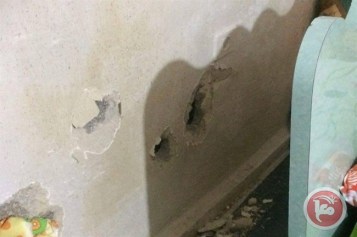
JERUSALEM – Israeli settlers on Sunday made a number of breaches through the wall of a Palestinian home belonging to Noura Sub Laban in the Old City of Jerusalem, family members told Ma’an.
Noura’s son, Ahmad Sub Laban, said the family was shocked to find at least six breaches through the wall, which borders a property that was taken over by settlers just two weeks ago.
Ahmad said the family called Israeli police, who arrived on the scene and asked that the settlers repair the damage without bringing any formal procedures against them, despite the settlers admitting to breaching the wall.
An Israeli police spokesperson had no immediate information on the reports.
Ahmad said: “I do not know the motivations behind this action, but this has confirmed that our house is in real danger as it is surrounded by Israeli enclaves on all sides, which means the house could be stormed at any moment.”
The far-right settlement organization Ateret Cohanim has been trying to seize the home of Noura Sub Laban, which lies in the Old City’s Oqbit al-Khalidiya area, since 2010, with the Sub Laban fighting to defend the home in Israel’s courts.
There are more than 500,000 Israeli settlers living in the West Bank, including East Jerusalem, in contravention of international law.
Ariel university continues to pollute Salfit environment
Palestine Information Center – January 3, 2016
SALFIT – The Ariel settlement university has continued to pour its harmful chemical waste through its sewer system onto Palestinian agricultural land in al-Matwi Valley in Salfit province, local sources complained on Sunday.
Residents from the area told the Palestinian Information Center that the Israeli university persists in disposing of hazardous chemical waste into the valley with no regard for the environment in the surrounding areas.
Palestinian researcher Khaled Ma’ali said that the Israeli human rights group B’Tselem had affirmed in previous reports that Israeli settlements and Ariel university in the West Bank violate international and local environmental protection laws.
Ma’ali invited international and local environmental institutions to visit Salfit province and witness its suffering from the pollution resulting from the flow of wastewater from several settlements, especially Ariel.
Israeli settlers attack Palestinian home near Nablus
Ma’an – January 3, 2015
NABLUS – Israeli settlers on Saturday attacked a Palestinian home in the village of Beit Furik near Nablus in the occupied West Bank, a Palestinian Authority official said.
Ghassan Daghlas, a PA official who monitors settlement activities in the northern West Bank, told Ma’an that settlers threw stones at the home of Nihad Hanani before leaving behind a Molotov cocktail and a letter.
Daghlas said that the settlers — believed to be from the nearby illegal settlement of Itamar — were chased by locals as they fled the scene after attacking the home. The attack is the most recent to be carried out by settlers in the occupied West Bank.
The Nablus area where Beit Furik is located is site to several settlements who have gained a reputation for being home to extremists who regularly carry out attacks on Palestinians and their property, also known as “price tag attacks.”
Palestinian residents in the area have often orchestrated nightly patrols of locals to protect their villages from such attacks, as Palestinian security forces have no jurisdiction over Israeli settlers and Israeli forces rarely intervene in such attacks on behalf of Palestinians.
Last week in the Ramallah area, suspected Israeli settlers threw tear-gas bombs into the home of a Palestinian family and spray-painted the phrases “revenge” and “hello from the detainees of Zion” in Hebrew on the side of the home.
No injuries were reported in the attack, which appeared to be a revenge attack for the arrest of Jewish extremists who carried out a deadly attack on a Palestinian family in the Nablus-area village of Duma last summer.
The US State Department’s 2013 Country Reports on Terrorism included price tag attacks for the first time, citing UN figures of some “399 attacks by extremist Israeli settlers that resulted in Palestinian injuries or property damage” that year.
Such attacks were “largely unprosecuted,” it said.
7-year-old girl chased by notorious Israeli settler in Hebron

Ma’an – December 29, 2015
HEBRON – A Palestinian father living in Hebron’s Old City told Ma’an that his 7-year-old daughter was injured while being chased by notorious Israeli extremist Baruch Marzel on Monday.
Raed Abu Irmeileh said that he had to take his daughter, Dana, to the Hebron Governmental Hospital “after she had fallen to the ground while being chased by Baruch Marzel near the Ibrahimi mosque.”
Irmeileh told Ma’an that Israeli forces present in the area did not stop Marzel from chasing his children, and assaulted his 10-year-old son Hutasem as well as two brothers Nabil, 14, and Farhat Nader al-Rajabi, 10.
An Israeli army spokesperson did not have immediate information on the incidents.
Irmeileh is one of thousands of Palestinians living in the Israeli-controlled center of Hebron — the largest city in the occupied West Bank — among hundreds of Israeli settlers living illegally in the area.
Israeli rights group B’Tselem regularly documents Israeli settlers attacking locals under the protection of Israeli forces in Hebron.
Marzel is well-known among Palestinians living in Hebron who fear the right-winger, follower of radical rabbi Meir Kahana and member to the Kach movement — outlawed by Israel in 1994 under anti-terrorism laws.
Hebron’s Old City was declared a closed military zone in November, banning entrance to the area to all except registered Palestinian residents and Israeli settlers.
Palestinian PM Rami Hamdallah following the ban called for the presence of Palestinian security forces in al-Shuhada Street and Tel Rumeida areas of Hebron in order to provide “security and protection” for Palestinians against Israeli settler assaults.
Israeli Apartheid Wall destroys Palestinian lives

Palestine Information Center
On 29 March, 2002, the Israeli Occupation Forces (IOF) conducted a large-scale military operation in the West Bank, called “Operation Defensive Shield”. During the operation, the Israeli forces raided many Palestinian towns and villages and committed heinous crimes against the Palestinians.
The operation brought to light the Israeli government’s plans to conquer more Palestinian lands and to expel the Palestinians from their own homes. A major step in these plans was to build the Apartheid Wall, or what Israel calls the Separation Wall.
The Israeli government commenced building the Apartheid Wall on 23 June, 2002, at a planned length of 770 km. Now, around 406 km, i.e. 52.7%, of the Wall is completed.
The Wall in numbers
The Wall is 60-150 meters wide in some areas. This includes a buffer zone and roads on both sides of the Wall that the Israeli military uses to watch the Wall. The Wall is 8 meters high, and it contains:
1. Barbed wire
2. A 4-meter wide and deep trench, aiming to prevent the vehicles and pedestrians from passing
3. Military patrol roads
4. A sandy road to track footsteps
5. An electric fence with an 8-meter high cement wall
6. Watchtowers with cameras and sensors
The Wall separates an area of 733 km2 of the Palestinian lands that falls behind the Wall from the West Bank. In other words, these 733 km2 would be under full Israeli control, besides the occupied lands of 1948.
The Wall would also occupy 220 km2 of Jordan Valley, east of Palestine. The Valley is a main source of food for Palestinians, and is also known as their “food basket”.
The Wall passes through eight Palestinian governorates. In Jerusalem, building the Wall accelerated in 2006-2007. It separates a number of heavily populated Palestinian neighborhoods, like Shufat and Kafr ‘Aqab.
Effects of the Wall
In spite of the claimed Israeli security motives behind building the Wall, it negatively impacts the Palestinian people and cause.
First: Effects on the Palestinian daily life
As the Wall passes through the West Bank, it negatively impacts the lives of 210,000 Palestinians, who live in 67 Palestinian towns and villages.
Because of the Wall, 13 Palestinian neighborhoods would be isolated between the green line and the Wall. Furthermore, a second wall would create a security belt, stranding 19 Palestinian neighborhoods in isolated areas.
The Wall would also hinder the Palestinians’ movement and would prevent them from reaching their farms and selling their goods and produce.
Second: Economic and environmental effects
37% of the Palestinian villages, cut with the Wall, would lose their economic resources. Moreover, 12 km of irrigation systems were destroyed.
Confiscating and bulldozing Palestinian farms would cost the Palestinians 6500 jobs, in addition to harming the olive oil industry and fruit and vegetable farming.
The Apartheid Wall would affect the Palestinian water resources, as the West Bank would lose 200 million cubic meters of the Jordan Valley water.
Third: Effects on movement
Statistics show that the Wall would violate the right of movement of two million Palestinians. They will have to seek Israeli permits to be able to reach their houses and farms in different Palestinian areas. Such restrictions would force at least 2.8% Palestinians to leave their homes and find other places to live in.
Fourth: Effects on education and medical sectors
Many Palestinian students and teachers were affected by the Wall, as it prevented them from reaching their schools, forcing 3.4% Palestinians to drop out.
On the medical level, it is getting increasingly difficult for Palestinians to reach the hospitals and medical centers to the east of the Wall, and the Palestinian villages to the west of the Wall have no medical services at all.
Fifth: Effects on Palestinian water resources
The Israeli occupation has strategically chosen the path of the Wall in order to guarantee Israel as much water as possible and thus depriving Palestinians of a basic right. Once finished, the Wall will enable Israel to confiscate and control 165 water wells and 53 springs, which in total culminate into 55 million cubic meters annually. Furthermore, the Wall now means Israel controls an additional amount of 679 million cubic meters annually.
Stop unacceptable harassment of human rights defenders in Occupied Palestinian Territory – UN experts
UN Human Rights Council | December 18, 2015
GENEVA – United Nations independent experts today expressed grave concerns at continued reports that human rights defenders are being subjected to physical attacks, harassment, arrest and detention, and death threats, particularly in Hebron in the Occupied Palestinian Territory (OPT), in an apparent bid by Israeli authorities and settler elements to stop their peaceful and important work.
“Amidst a charged and violent atmosphere over past months in the OPT, Palestinian and international defenders are providing a ‘protective presence’ for Palestinians at risk of violence, and documenting human rights violations,” said the UN Special Rapporteur the situation of human rights defenders, Michel Forst.
“The continued harassment of human rights defenders in the OPT, who are exercising their rights to freedoms of expression and association, is simply unacceptable. It should cease immediately,” Mr. Forst stressed.
Earlier this month, a group of UN human rights experts urged the Israeli Government to ensure a protective environment where human rights defenders in the Occupied Palestinian Territory can work without unlawful restriction and without fear of retaliatory acts.
“We recently addressed concerns to the Israeli Government regarding retaliatory acts by Israeli authorities against members of one organisation based in Hebron, Youth Against Settlements, after its Centre was subjected to raids and settlers allegedly called for it to be closed,” noted the UN Special Rapporteur the situation of human rights in the OPT, Makarim Wibisono.
“The Centre has now effectively been shut down as a result of the Israeli military declaring the surrounding area a military zone,” Mr. Wibisono said. “We urge Israeli authorities to lift this military order.”
The experts’ statement has been endorsed by the Special Rapporteur on torture and other cruel, inhuman or degrading treatment or punishment, Mr. Juan E. Méndez, and by the Special Rapporteur on the rights to freedom of peaceful assembly and of association, Mr. Maina Kiai.
Israel plans to build walls around Palestinian towns
MEMO | December 18, 2015
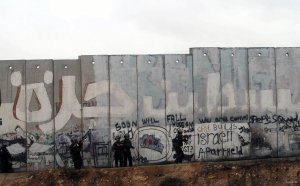 Media reports in Israel have reported that the army is planning to build walls around Palestinians towns and villages on the pretext that it will stop stones being thrown at illegal Jewish settlers.
“The army will build 9 metre high walls in the areas of Beit Ummar, Al-Arroub, Gush Etzion, and the areas surrounding Highway 60, south of the West Bank,” claimed Channel 2 TV.
In response, Mustafa Barghouti, the Secretary-General of the Palestinian National Initiative, told Anadolu, “The Israeli army’s decision to build walls around important and vital areas in the southern part of the West Bank aims to control large Palestinian areas for settlers. It also aims to isolate the areas from each other in order to prevent any chance to establish a Palestinian state.”
Such walls, added Barghouti, are in addition to the 676 military checkpoints in the occupied West Bank as part of the Israeli plan to divide the territory and control all of its vital areas.
Featured Video

Stanislav Krapivnik: Russia-Iran Cooperation & Escalation in Ukraine
or go to
Aletho News Archives – Video-Images
Frlom the Archives
A dark page from the CIA’s history: What was Project Artichoke, launched 74 years ago?
By Erkin Oncan | Strategic Culture Foundation | August 22, 2025
One of the most useful instruments hidden behind the U.S. empire’s rhetoric of “freedom and democracy” was the Central Intelligence Agency, founded on September 18, 1947, as the successor of the Office of Strategic Services (OSS).
Since its creation, the CIA has carried out countless inhumane operations: assassinations, coups, drug trafficking, support for terrorism, conspiracies. The list of its crimes is endless. But among the darkest and most inhumane chapters of its record lie the notorious “mind control” experiments. … continue
Blog Roll
 Aletho News
- Are the Jews indigenous to Palestine?
- Stanislav Krapivnik: Russia-Iran Cooperation & Escalation in Ukraine
- Indonesia suspends participation in Board of Peace following attack on Iran
- ‘Operation Epic Fury’ burns an estimated $5.82 billion in just 100 hours
- Zionism’s grip over the world: From Epstein to Greater Israel
- How Israel and the FBI manipulated assassination plots to goad Trump into Iran war
- Iranian Strikes Dispel the Illusion of US Security Umbrella
- US Boasts of Destroyed Iranian Launchers Lack Credibility – Ex-DoD Official
- Europe not in position to cooperate with US and Israel against Iran
- Iran Has ‘Broken the Myth’ of Israeli Military Power: Former Pakistani Envoy
- If Americans Knew
- US troops were told war on Iran was ‘all part of God’s divine plan’, watchdog alleges
- Trump wants to run the show in Iran, but doesn’t know what he’s doing – Not a ceasefire Day 147
- ‘Dirty Work’ :The truth about how Israel was founded
- Mass Expulsion in Lebanon as Israel Expands War: “We Don’t Know Where to Go”
- Lies, distortions, and propaganda: how the U.S. mainstream media coverage on Iran hides the truth
- Palestinians in Gaza fear famine returning as Israel cuts off food amid Iran war
- AIPAC, other pro-Israel groups enter midterms with $100 million to spend
- Iranian girls killed by ‘double-tap’ strikes on Minab school
- Bari Weiss Is Going Full ‘Propaganda-Palooza’ With the Iran War
- Inside the Pro-Israel Campaign to Stop ‘The Voice of Hind Rajab’ From Winning an Oscar
- No Tricks Zone
- Televised! Leading German Political Candidate Tells Schoolchildren CO2 Makes Sun Hotter!
- New Study: A Century Warming Of 1.1°C Is ‘Commonplace’ And ‘Not Unusual’ During This Interglacial
- New Study: ‘Internal Noise’ And Volcanic Forcing Can Trigger 10-15°C Warming Within Decades
- Glaciers Worldwide Are Suddendly Surging, Experts Blame Warming!
- Surprising Discovery: Sahara Is Greening…Billions Of Trees Where Once Thought To Be Barren
- New Research Reaffirms Clouds, Aerosols, And Surface Solar Radiation Are ‘Driving The Climate System’
- Germany: Electric Car Catches Fire At Charging Station, Sets Off Local “Inferno”, Widespread Damage
- New Study: Canada’s New Brunswick Was 1°C Warmer Than Today During The Medieval Warm Period
- Coal Power Back In Trend As Globe Tries To Keep Pace With Growing Demand For Power
- New Study: A 4°C Warmer Beaufort Sea Had ‘No Sea Ice’ 11,700 – 8200 Years Ago
 Aletho News