Lawsuit: US taxpayer dollars fund ‘Jewish terror’ against Palestinians
Press TV – August 25, 2015
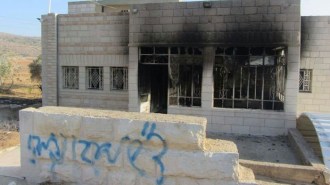 A rights organization has filed a complaint in the United States against an Israeli group for using US taxpayer money to sponsor “Jewish terrorism” against Palestinians.
In the lawsuit, T’ruah, The Rabbinic Call for Human Rights, asked the New York state Attorney General’s Office to investigate Honenu, a New York-based Israeli nonprofit organization that provides financial support to Jewish settlers convicted of or on trial for violence against Palestinians.
The complaint also names Honenu’s fiscal sponsor, the Central Fund of Israel, according to Israeli media.
Since 2003, Honenu has operated a fundraising program in the state of New York. The tax-exempt Israeli organization raised $233,700 in 2010, the last year for which official data is available, according to tax filings.
Israeli media say Honenu’s budget for 2013 was approximately $600,000.
In one instance in 2013, the organization provided funds to the family of an Israeli convicted of killing seven Palestinians in May 1990.
The lawsuit follows a recent expose by Israel’s Channel 10 about Israeli settlers’ crimes in the occupied Palestinian territory.
The television program was aired earlier this month in the aftermath of the July 31 firebombing of a Palestinian home in the West Bank by Israeli settlers in which a Palestinian baby and his father were burned to death.
In a statement issued hours after the incident, the Palestinian Liberation Organization (PLO) condemned the “brutal assassination” of the Palestinian infant, stressing that the regime in Tel Aviv bears “full responsibility” for the arson attack.
Earlier this month, Israel released all suspects held in connection with the arson attack in the village of Duma.
Another Palestinian Home Burned in Douma

IMEMC News & Agencies | August 24, 2015
Unknown assailants have set fire to a Palestinian house in Douma village, to the east of Nablus, on Monday; no causalities reported. Locals believe that Israeli settlers are behind the attack.
Al Ray reports that the official presiding over the West Bank settlements file, Ghassan Douglas, said that the house of Mnour Dawabsha was burned, causing suffocation among the inhabitants. They were taken to the hospital immediately.
Civil defense reached the house, put out the fire, and rescued the family members. Palestinian police have begun an investigation into the incident.
Douglas explained that the circumstances of this arson attack are similar to the attack on Sa’ad Dawabsha’s family, last month, in which a one-year boy was burned alive, His father later died of injuries sustained in the fire, while his brother and mother are still in critical condition.
Douglas said that it was too early to confirm the identity of the perpetrators, calling for caution from rushing in charging the settlers, for if it is proved that there is no connection between the settlers and the attack, the Israeli occupation will take advantage to acquit the Israeli settlers of the former crime.
The Age of Imperial Wars
From Regional War, “Regime Change” to Global Warfare
By Prof. James Petras | Global Research | August 22, 2015
2015 has become a year of living dangerously.
Wars are spreading across the globe.
Wars are escalating as new countries are bombed and the old are ravaged with ever greater intensity.
Countries, where relatively peaceful changes had taken place through recent elections, are now on the verge of civil wars.
These are wars without victors, but plenty of losers; wars that don’t end; wars where imperial occupations are faced with prolonged resistance.
There are never-ending torrents of war refugees flooding across borders. Desperate people are detained, degraded and criminalized for being the survivors and victims of imperial invasions.
Now major nuclear powers face off in Europe and Asia: NATO versus Russia, US-Japan versus China. Will these streams of blood and wars converge into one radiated wilderness drained of its precious life blood?
Living Dangerously: The Rising Tide of Violent Conflicts
There is no question that wars and military threats have replaced diplomacy, negotiations and democratic elections as the principal means of resolving political conflicts. Throughout the present year (2015) wars have spread across borders and escalated in intensity.
The NATO allies, US, Turkey and the EU have openly attacked Syria with air strikes and ground troops. There are plans to occupy the northern sector of that ravaged country, creating what the Erdogan regime dubs a ‘buffer zone’ cleansed of its people and villages.
Under the pretext of ‘fighting ISIS’, the Turkish government is bombing Kurds (civilians and resistance fighters) and their Syrian allies. On Syria’s southern border, US Special Forces have accelerated and expanded operations from their bases in Jordan on behalf of the mercenary terrorists – funded by the monarchist Gulf States.
Over 4 million Syrians have fled their homes as refugees and over 200,000 have been killed since the US-EU-Turkey-Saudi-sponsored war against the secular Syrian government was launched four years ago.
Dozens of terrorist, mercenary and sectarian groups have carved up Syria into rival fiefdoms, pillaged its economic and cultural resources and reduced the economy by over ninety percent.
The US-EU-Turkish military intervention extends the war into Iraq, Lebanon and…. Turkey – attacking secular governments, ethnic minority groups and secular civil society.
The feudal, monarchist Saudi Arabia and the United Arab Emirates have invaded Yemen with tanks, launching air strikes against a country without any air defenses. Major cities and towns are devastated. Saudi ground troops and armored carriers are killing and wounding thousands – mostly civilians. The brutal Saudi air and sea blockade of Yemen’s ports have led to a humanitarian crisis, as ten million Yemenis face starvation deliberately imposed by a grotesque and obscenely rich monarchy.
The Yemeni resistance fighters, driven out of the major cities, are preparing for prolonged guerrilla warfare against the Saudi monsters and their puppets. Their resistance has already spread across the frontiers of the absolutist Saudi dictatorship.
The brutal Israeli occupation troops, in collaboration with armed ‘settler’ colonists, have accelerated their violent seizure of Palestinian lands. They have stepped up the ethnic cleansing of Palestinians, Bedouins, Druze and Christian inhabitants replacing their communities with racist ‘Jews-only’ colonial settlements.
Daily assaults against the huge ‘concentration camps’ of Gaza accompany an armed blockade of land, air and water, preventing the reconstruction of the tens of thousands of homes, schools, hospital, factories and infrastructure, destroyed by last year’s Israeli blitzkrieg.
Israel’s continued annexation and ethnic cleansing of Palestinian territory precludes any diplomatic process; colonial wars have been and continue to be Israel’s policy of choice in dealing with its Arab neighbors and captive populations.
Africa’s wars, resulting from earlier US-EU interventions, continue to ravage-the Continent. Somalia, Sudan, Kenya, Libya are riven by bloody conflicts between US-EU backed regimes and armed Islamic and nationalist resistance movements.
Throughout North and Sub-Sahara Africa, US-EU backed regimes have provoked armed upheavals in Libya, Nigeria (Boko Harem), Egypt (ISIS, Moslem Brotherhood et al), Chad, Niger, South Sudan, Somalia and elsewhere.
Imperial client Egyptian and Ethiopian dictators rule with iron fists – financed and armed by their EU and US sponsors.
Imperial wars rage throughout the Middle East and South Asia. Hundreds of experienced Baathist Iraqi military officers, who had been expelled or jailed and tortured by the US Occupation army, have now made common cause with Islamist fighters to form ISIS and effectively occupy a third of Iraq and a strategic swath of Syria.
There are daily bombings in Baghdad undermining its US client. Strategic advances by ISIS are forcing the US to resume and escalate its direct combat role
The US-Baghdad retreat and the defeat of the US-trained Iraqi military in the face of the Baathist-Islamist offensive is the opening salvo of a long-term, large-scale war in Iraq and Syria. The Turkish air-war against the Kurds in Iraq will escalate the war in Northern Iraq and extend it into southeast Turkey.
Closer to ‘home’, the EU-US-backed coup (‘regime change’) in Kiev and the attempt to impose dictatorial-pro-West oligarchic rule in Ukraine have detonated a prolonged civil-national war devastating the country and pitting NATO’s proxies against Russian-backed allies in the Donbas.
US, England, Poland and other NATO powers are deeply committed to pushing war right up to Russia’s borders.
There is a new Cold War, with the imposition of wide-ranging US-EU economic sanctions against Russia and the organizing of major NATO military exercises on Russia’s doorsteps. It is no surprise that these provocations are met with a major counter-response – the Russian military build-up. The NATO power grab in Ukraine, which first led to a local ethnic war, now escalates to a global confrontation and may move toward a nuclear confrontation as Russia absorbs hundreds of thousands of refugees from the slaughter in Ukraine.
The US puppet regime in Afghanistan has faced a major advance of the Taliban in all regions, including the capital, Kabul.
The Afghan war is intensifying and the US-backed Kabul regime is in retreat. US troops can scarcely advance beyond their bunkers.
As the Taliban military advances, its leaders demand total surrender of the Kabul puppets and the withdrawal of US troops. The US response will be a prolonged escalation of war.
Pakistan, bristling with US arms, faces a major conflict along its borders with India and permanent war in its semi-autonomous Northwest frontier states with Islamist and ethnic Pashtu guerrilla movements backed by mass regional political parties. These parties exercise de facto control over the Northwest region providing sanctuary and arms for Taliban militants operating in Afghanistan and Pakistan.
Armed ethno-religious conflicts persist in western China, Myanmar and northern India. There are large-scale popular resistance movements in the militant northeast Thailand opposed to the current military-monarchist dictatorship in Bangkok.
In the 21st century, in South and Southeast Asia, as in the rest of the world, war and armed conflicts have become central in resolving ethnic, social, tribal and regional differences with central states: diplomacy and democratic elections have been rendered obsolete and inefficient.
Latin America – On the Verge
Burgeoning violent extra-parliamentary right-wing movements, intent on overthrowing or ‘impeaching’ elected center-left Latin American governments face major confrontations with the state and its mass supporters.
 In Ecuador, Venezuela and Brazil, US-backed opposition groups are engaged in violent demonstrations, directed toward ousting the elected regimes. In the case of Ecuador, ‘popular sectors’, including some indigenous leaders and sectors of the trade union movement, have called for an ‘uprising’ to oust President Correa. They seem oblivious of the fact that the hard-right oligarchs who now control key offices in the three principal cities (Guayaquil, Quito and Cuenca) will be the real beneficiaries of their ‘uprisings’.
The resurgent Right envisions violent ‘regime change’ as the first step toward ‘wiping the slate clean’ of a decade of social reforms, independent regional organizations and independent foreign policies.
‘Civil war’ may be too strong a word for the situation in Latin America at this time – but this is the direction which the US-backed opposition is heading. Faced with the mess and difficulty of dislodging incumbent regimes via elections, the US and its local proxies have opted for the choreography of street violence, sabotage, martial law and coups – to be followed by sanitized elections – with US-vetted candidates.
War and violence run rampant through Mexico and most of Central America. A US-backed military coup ousted the popularly elected, independent President Zelaya in Honduras. The ensuing US-proxy regime has murdered and jailed hundreds of pro-democracy dissidents and driven thousands to flee the violence.
The 1990’s US-brokered ‘Peace Accords’ in El Salvador and Guatemala effectively blocked any agrarian reform and income redistribution that might have led to the rebuilding of their civil societies. This has led to over two decades of mass disaffection, the rise of armed ‘gangs’ numbering over 100,000 members and an average of six to ten thousand homicides a year with El Salvador becoming the ‘murder capital of the hemisphere’ on a per capita basis. The annual murder toll under the US-brokered ‘Peace Accords’ now exceeds those killed each year during the civil war.
The real ‘carnage capital’ of the hemisphere is Mexico. Over 100,000 people have been murdered during the decade-long, US-backed ‘war on drugs’ – a war which has become a state-sponsored war on the Mexican people.
The internal war has allowed the Mexican government to privatize and sell the crown jewels of the national economy – the petroleum industry. While thousands of Mexicans are terrorized and slaughtered, the US and EU oil companies are curiously shielded from the drug lords. The same Mexican government, its police, officials and military, who collaborate with the drug lords in dividing up the billions of drug dollars, protect foreign oil companies and their executives. After all, narco-dollars are laundered by banks in New York, Miami, Los Angeles and London to help fuel the speculation!
From Regional to Nuclear Wars
Regional and local wars spread under the shadow of a looming world war. The US moves its arms, planes, bases and operations to the Russian and Chinese borders.
Never have so many US troops and war planes been placed in so many strategic locations, often less than an hour drive from major Russian cities.
Not even during the height of the Cold War, did the US impose so many economic sanctions against Russian enterprises.
In Asia, Washington is organizing major trade, military and diplomatic treaties designed to exclude and undermine China’s growth as a trade competitor. It is engaged in provocative activities comparable to the boycott and blockade of Japan which led to the Second World War in Asia.
Open ‘warfare by proxy’ in Ukraine is perhaps the first salvo of the Third World War in Europe. The US-EU-sponsored coup in Kiev has led to the annexation of Western Ukraine. In response to the threat of violence toward the ethnic Russian majority in Crimea and the loss of its strategic naval base on the Black Sea, Russia annexed Crimea.
In the lead-up to the Second World War, Germany annexed Austria. In a similar manner the US-EU installed a puppet regime in Kiev by violent putsch as its own initial steps toward major power grabs in Central Asia. The military build-up includes the placement of major, forward offensive military bases in Poland.
Warsaw’s newly elected hard-right regime of President Andrzej Duda has demanded that Poland become NATO’s central military base of operation and the front line in a war against Russia.
Wars and More Wars and the Never-ending Torrents of Refugees
The US and EU imperial wars have devastated the lives and livelihoods of scores of millions of people in South Asia, North and Sub-Sahara Africa, Central America, Mexico, the Balkans and now Ukraine.
Four million Syrian refugees have joined millions of Afghan, Pakistani, Iraqi, Yemeni, Somali, Libyan, Palestinian and Sudanese refugees fleeing US-EU bombs, drones and proxy mercenaries ravaging their countries.
Millions of war refugees escape toward safety in Western Europe, joining the millions of economic refugees who have fled free market destitution in Lithuania, Latvia, Estonia, Bulgaria, Romania, Poland, the Balkans and other EU satellites.
Panic among the civilian population of Western Europe sets in as hundreds of thousands cross the Mediterranean, the Aegean and the Balkans.
Droves of refugees perish each day. Tens of thousands crowd detention centers. Local labor markets are saturated. Social services are overwhelmed.
The US builds walls and detention camps for the millions trying to escape the harsh consequences of imperial-centered free markets in Mexico, narco-terror and the fraudulent ‘peace accord’-induced violence in Central America.
As Western wars advance, the desperate refugees multiply. The poor and destitute clamber at the gates of the imperial heartland crying: ‘Your bombs and your destruction of our homelands have driven us here, now you must deal with us in your homeland’.
Fomenting class war between the refugees and ‘natives’ of the imperial West – may not be on the agenda . . . for now, but the future for ‘civil’ society in Europe and the US is bleak.
Meanwhile, more and even bigger wars are on the horizon and additional millions of civilians will be uprooted and face the choice of starving, fleeing with their families or fighting the empire. The ranks of seasoned and infuriated resistance fighters are swelling in Afghanistan, Iraq, Libya, Yemen, Ukraine and elsewhere.
The US and EU are becoming armed fortresses. US police deal with the marginalized citizenry as an occupying army, assaulting African-Americans, immigrants and dissidents – while looting poor communities . . . and protecting the rich…
Conclusion
War is everywhere and expanding: No continent or region, big or small, is free from the contagion of war.
Imperial wars have spawn local wars . . . igniting mass flights in a never-ending cycle. There are no real diplomatic success stories! There are no enduring, viable peace accords!
Some pundits may protest this analysis: They point to the recent US – Cuba rapprochement as a ‘success’. They conveniently forget that the US is still subverting Cuba’s biggest trading partner, Venezuela; that Washington’s major regional proxies are demanding regime change among Cuba’s allies in Ecuador, Brazil and Bolivia and that Washington is increasingly threatening Cuba’s alternative markets in Russia and China. The vision of the US flag flapping in the breeze outside its embassy in Havana does little to cover Washington’s iron fist threatening Cuba’s allies.
Others cite the US – Iran peace accord as a major ‘success’. They ignore that the US is backing the bloody Saudi invasion of neighboring Yemen and the massacre of Shiite communities; that the US has provided Israel with a road map detailing Iran’s entire defense system and that the US [Israel] and EU are bombing Iran’s Syrian ally without mercy.
As for the US – Cuba and Iranian agreements– are they enduring and strategic or just tactical imperial moves preparing for even greater assaults?
The war epidemic is not receding.
War refugees are still fleeing; they have no homes or communities left.
Disorder and destruction are increasing, not decreasing; there is no rebuilding the shattered societies, not in Gaza, not in Fallujah, not in the Donbas, not in Guerrero, not in Aleppo.
Europe feels the tremors of a major conflagration.
Americans still believe that the two oceans will protect them. They are told that placing NATO missiles on Russia’s borders and stationing warships off China’s shores and building electrified walls and laying barbed wire along the Rio Grande will protect them. Such is their faith in their political leaders and propagandists.
What a packet of lies! Inter-continental missiles can ‘rain down’ on New York, Washington and Los Angeles.
It is time to wake up!
It is time to stop the US – EU headlong race to World War III!
Where to start? Libya has been irrevocably destroyed; it is too late there! Syria, Iraq and Afghanistan are aflame. We are being plunged deeper into war while being told we are withdrawing! Ukraine sucks in more guns and more troops!
Can we really have peace with Iran if we cannot control our own government as it dances to the Israelis tune? And Israel insists on war – our waging war for them! As the Israeli war criminal General and Prime Minister Ariel Sharon once told some worried American Zionists: “Trouble with the US? We lead them by the nose…!”
Just look at the terrified families fleeing carnage in the Middle East or Mexico.
What is to be done?
When will we cut our losses and shake off the bonds of these war makers – foreign and domestic?
Are Zionist terrorist settlers backed by the Israeli regime?
Press TV
After the burning alive of 18-month-old Ali Dawabsheh by a fanatical Zionist settler, the world has reacted with outrage.
The attack was so horrendous that even Israeli leader Benjamin Netanyahu distanced himself from it, calling it an act of terrorism.
But on today’s show we will be asking to what extent Israel is responsible for the activities of its extremists. Are these fanatical terrorists really just a few bad apples, as Netanyahu would have us believe?
Or are they the product of decades of deliberate Zionist policy to colonize stolen land?
Israeli forces destroy 100 trees to build separation wall in Beit Jala
Ma’an – August 17, 2015
 BETHLEHEM – Israeli forces on Monday destroyed more than 100 trees as they leveled Palestinian-owned land in the Beit Jala area to make way for construction of the separation wall, locals said.
Israeli bulldozers reportedly destroyed the trees in an area known as Bir Onah, near the illegal settlement of Gilo.
The trees belonged to the Al-Shatla, Abu Eid, Abu Ghattas, Abu Saada, Khaliliya, and Abu Mohor families, locals said.
Witnesses told official Palestinian news agency Wafa that Israeli bulldozers razed an area of 30 dunams near Beit Jala for the expansion of the wall following a recent court ruling to change the route of the controversial infrastructure.
Residents in Beit Jala have been engaged in a nine-year legal battle against a 2006 Israeli military order to build the separation wall around Beit Jala and Har Gilo.
In 2013, 58 local landowners as well as nuns from the Salesian convent who joined their legal action, lost an appeal against the route of the separation wall.
Residents hoped that an Israeli Supreme Court decision in 2014 — which ordered the Israeli state to justify the route of the separation wall in Beit Jala’s Cremisan valley — was an indication that the proposed land seizure could be canceled, with a ruling in April this year in favor of a petition by locals creating further hope construction of the wall could be suspended.
However, in July the Israeli High Court approved construction of the wall using an alternative route, which would still separate the Salesian monastery and convent from the community it serves in Beit Jala.
The Cremisan Valley lies between the sprawling settlement of Gilo in annexed East Jerusalem, and the smaller West Bank settlement of Har Gilo, a few kilometers to the southwest.
Palestinians have long argued the the separation wall in Cremisan had no security benefit for Israel and was being constructed to annex land and connect illegal settlements in the area.
In 2004, the International Court of Justice issued an advisory opinion calling on Israel to stop building the wall and dismantle or re-route sections that had been constructed.
The separation wall will be approximately 708 kilometers long when complete, nearly twice the length of the 1949 Armistice Line due to its meandering route, and 85 percent of the wall will be located in the occupied West Bank, according to UNOCHA.
Israeli forces punish Kafr Qaddum by damaging the water supply system
International Solidarity Movement | August 16, 2015
Kafr Qaddum, Occupied Palestine – On Saturday the 15th of August 2015, the villagers from Kafr Qaddum once again demonstrated against the blockage of the road leading to Nablus as well as the nearby Kedumin settlement. In solidarity with the local people there were a few international activists and journalists covering the demonstration.
The non-violent protest was immediately suppressed by the Israeli occupation forces shooting dozens of teargas canisters and live ammunition. Instead of the frequently used bad-smelling skunk water, the army drove a bulldozer into the village. This bulldozer destroyed the only water pipe in the village, leaving the people Kafr Qaddum without any connection to water until the pipe is repaired. Especially during the hot summer months, water is a scarce and essential good.
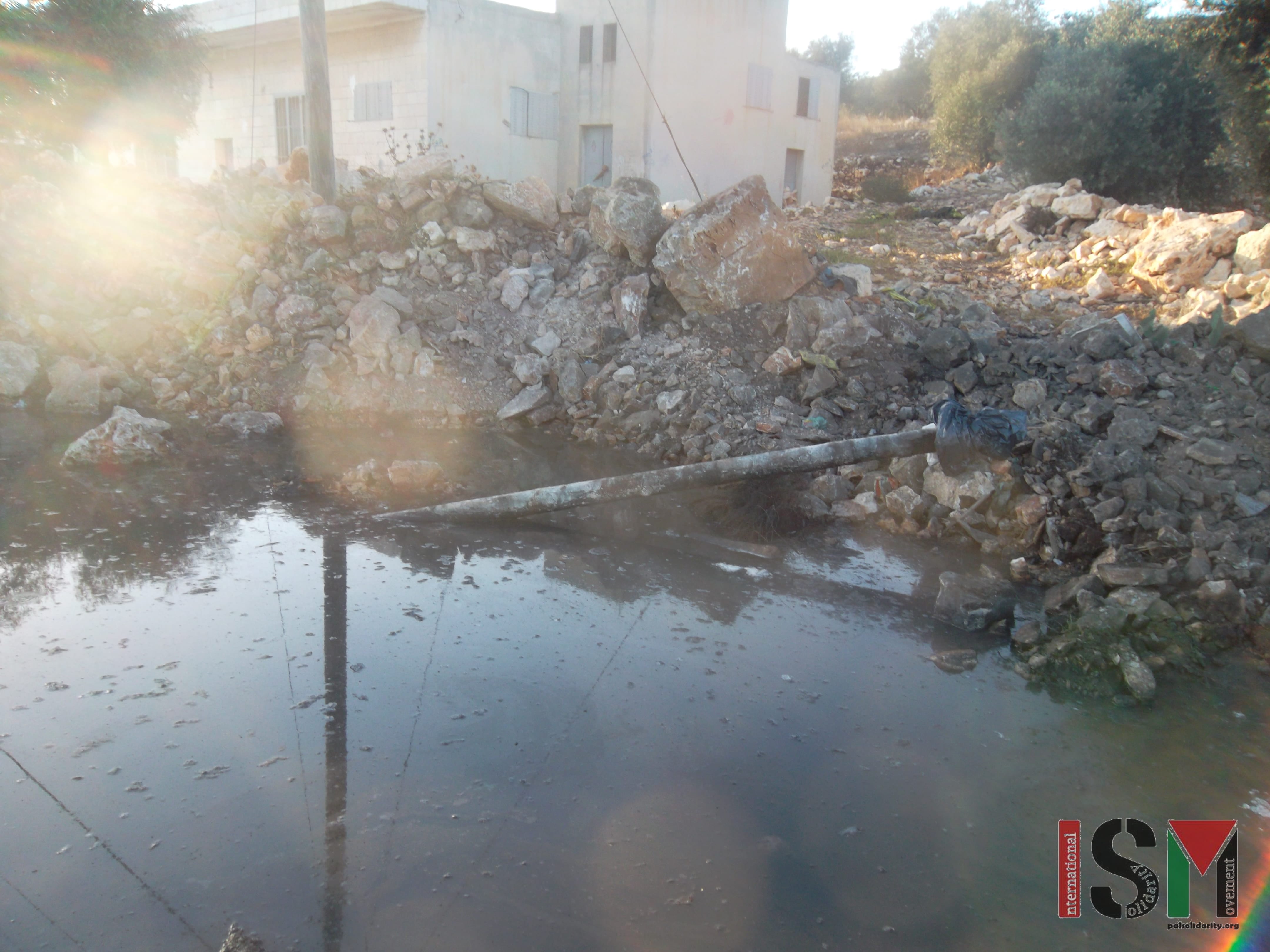
Murad Shtaiwi, one of the leaders of Kafr Qaddum Popular Committee, understands the damage to the water pipe as a way to collectively punish the village for its ongoing resistance. The costs of a new pipe have to be paid for by the municipality. As Murad explains, damaging the water pipe is a deliberate attempt by the Israeli army to suppress the support among the villagers to continue to protests and thus block future demonstrations.
Israeli settlers torch Bedouin tent near Ramallah

(MaanImages/Zakariyya al-Sidda)
Ma’an – August 13, 2015
RAMALLAH – Israeli settlers torched a Bedouin tent in the area of Ein Samiya near Kafr Malik village in northern Ramallah Thursday morning, local sources told Ma’an.
A group of Israeli settlers raided the village of Ein Samiya and threw flammable material on a Bedouin tent before the residents noticed and attacked the settlers, forcing them to flee the area.
An Israeli army spokesperson confirmed the attack but could give no further details.
The fire caused substantial damages to the tent but locals were able to put the fire out without any injuries, locals said.
Israeli settlers also sprayed “price tag” near the scene and signed slogans calling for the killing of Palestinians and expelling them out of their lands.
Graffiti sprayed in red paint also read “administrative revenge” alongside a crudely drawn Star of David.

The graffiti seemed to refer to the internment without charge — known as administrative detention — of three alleged Jewish extremists in the wake of a July 31 arson attack in the West Bank village of Duma that killed 18-month-old Palestinian Ali Saad Dawabsha and his father Saad.
Locals said Israeli forces and police arrived to the area, investigated the incident, and dusted for fingerprints at the scene.
On Wednesday, Israeli forces had closed the Ein Samiya area road and prevented Palestinians from using it.
Recent weeks have seen a rise in Israeli settler attacks against Palestinians in the West Bank.
An 18-month-old Palestinian, Ali Dawabsha, was burned alive when alleged Israeli extremists firebombed their home at the end of last month in the village of Duma near Nablus.
The toddler’s father, Saad Dawabsha, succumbed to his wounds a week later, after suffering third degree burns on 80 percent of his body.
On Saturday morning, Israeli settlers attacked a Palestinian home with firebombs and rocks in an area east of Tayba in the Ramallah district. The bombs landed outside of the house, causing no damage, locals told Ma’an.
Israeli settlers have carried out at least 120 attacks on Palestinians in occupied East Jerusalem and the West Bank since the start of this year, according to the UN Office for the Coordination of Humanitarian Affairs.
Zionist Entity Releases Suspects in Arson Attack
Al-Manar | August 10, 2015
 Israeli occupation authorities released all suspects detained as part of a probe into the firebombing of a Palestinian home that burned to death an 18-month-old child and his father.
“All those arrested yesterday for interrogation have been released,” a spokeswoman for the Shin Bet security agency told AFP, without providing further details.
They did not provide the number of those detained in the raids early Sunday in wildcat Jewish settlement outposts in the West Bank near the Palestinian village of Duma, where the brutal firebombing occurred.
Wildcat outposts in the Israeli-occupied West Bank are notorious for housing Zionist settlers, referred to as hilltop youth.
The Palestinian family’s small brick and cement home in Duma was gutted by fire early on July 31, and a Jewish Star of David spray-painted on a wall along with the words “revenge” and “long live the Messiah”.
The arson attack on the family’s home in the occupied West Bank that killed 18-month-old Ali Dawabsha and his father, Saad sparked an international outcry over the ongoing Israeli crimes against Palestinians.
Mother Riham and four-year-old son Ahmed were also in an Israeli hospital, where a spokeswoman described their condition last week as life-threatening.
Source: AFP
As Palestinians Die, NY Times Shields Israel
By Barbara Erickson | TimesWarp | August 9, 2015
One week has passed since a Palestinian toddler died in an arson fire, one day since the boy’s father also perished from burns, and The New York Times has provided us with some half dozen stories on the tragedy. Only one of these was deemed fit to make the front page, however, and this fact is instructive: The favored story was not the original crime or the deaths of two villagers but a report on Israeli angst.
This maneuver was just one more piece of evidence that the Times has tried to provide an Israeli spin to this story. The paper has also adopted the government line that the concern here is extremism, not official policies and actions, and it has failed to provide the full context of settler violence in occupied Palestine.
When the story broke, the Times placed the news that 18-month-old Ali Dawabsheh was burned to death on page 4 of the Aug. 1 of the print edition. The brief article about his father’s demise appears on page 9 today. Other stories—concerning protests, accusations and additional responses to the news—were also on inside pages.
It was only when Jerusalem bureau chief Jodi Rudoren filed an article on Israeli “soul searching” that the editors saw fit to give the story a prominent spot in its Friday edition.
The print article, “Two Killings Make Israelis Look Inward,” received a favored site on page 1 above the fold. This, the editors are saying, is the real news here—not the shocking death of a helpless child, the lingering and painful death of his father or even the legacy of settler attacks—but the feelings of ordinary Israelis.
The arson attack has received this much attention in the Times only because it was impossible to ignore: It made headlines worldwide and forced Israeli officials to condemn the act and vow to take action. But the Times stories have failed to report the full extent of violence against Palestinians and official complicity in these actions.
Readers of the newspaper are unlikely to know that Israeli settlers have often resorted to arson and that their actions have never, until now, caused much concern among government officials. B’Tselem, an Israeli rights group, reports that “in recent years Israeli civilians set fire to dozens of homes, mosques, businesses, agricultural land and vehicles in the West Bank. The vast majority of these cases were never solved, and in many of them the Israeli police did not even bother taking elementary investigative actions.”
B’Tselem also notes that West Bank Palestinians are tried in military courts, with minimal rights and protection, while settlers living in the same area appear in civilian courts. Most shocking of all: The conviction rate for Palestinians in military courts is 99.74 percent.
The Times has acknowledged the charges of unequal treatment in an Isabel Kershner story titled “Israeli Justice in West Bank Is Seen as Often Uneven,” but the headline leaves the impression that we are dealing with opinions here, not facts, and the story fails to provide the data that would reveal just how uneven the system is.
In fact, B’Tselem reports that over an 11-year period only 11 percent of settler violence cases resulted in an indictment, nearly a quarter of the cases were never investigated and in the few cases where settlers were tried and convicted, they usually received “extremely light sentences.” The numbers are even more glaring when we note that Palestinians, knowing the outcomes and facing obstacles, often fail to file complaints.
These percentages, however, are less scandalous than the statistics concerning security forces. The Israeli monitoring group Yesh Din reports that 94 percent of the investigations into complaints about Israeli soldiers suspected of violence against Palestinians and their property are closed without action.
Yet the Times, following the lead of the Israeli government, has focused on “extremists” as the problem, ignoring the officially sanctioned destruction wrought by the military: In defiance of international law, the army helps the state confiscate land and destroy property to make room for illegal Jewish settlements.
In recent weeks and months, the Israeli army has been responsible for widespread destruction of Palestinian property in the West Bank. Here are a few examples:
- On July 22 the army invaded the village of Beit Ula and destroyed a Roman-era water well and 450 olive trees.
- On July 2 the army uprooted an acre of agricultural land west of Hebron and issued demolition orders for a home and a water well.
- On June 15 the Israeli army uprooted dozens of olive tree saplings over five acres in Husan, a village west of Bethlehem.
- On May 4 the army evacuated the residents of Wadi al Maleh in the Jordan Valley for “training exercises” and set fire to grazing land using live ammunition. Residents were denied access to the land to put out the fires.
- During the month of June in the Jordan Valley the army forced hundreds of Palestinians from their homes for “military maneuvers” and used live ammunition that set fire to acres of grazing land.
- As of Aug. 3 the army was responsible for demolishing 302 Palestinian structures in 2015, displacing 304 people in the West Bank and East Jerusalem.
Times readers almost never read of these actions taken by the military with the official blessing of the government, and they rarely learn of most settler attacks. (Nor do they learn that settlers are allowed to carry weapons while Palestinians are denied even the most basic arms for defense.)
Now the Times, in the face of an international scandal, has done what it can to minimize the damage to Israel, muting the charges of unequal justice, placing Israeli “soul searching” on prominent display, joining the Israeli effort to blame extremists and ignoring the officially sanctioned crimes against Palestinians.
Israeli angst is fit to print in the Times, but Israeli crimes against Palestinians are something else again. If they are deemed worthy of notice, they may come to light in the back pages, under evasive headlines—all part of an effort to protect Israel at the expense of our right to be informed.
Nablus residents protest Israeli water supply cut-off

Ma’an – August 5, 2015
NABLUS – Dozens of Palestinian residents of the West Bank village of Kafr Qaddum staged a sit-in on Wednesday to protest the Israeli national water company cutting off its supply to the village, locals said.
Hamzeh Jumaa, the head of the village council, told Ma’an that the Israeli water company Mekorot cut off its supply on Sunday.
He said that the water supplies some 4,000 people living in Kafr Qaddum in Nablus, which he highlighted was an agricultural village.
He said that thousands of poultry birds had died due to a lack of water combined with extreme temperatures.
Jumaa said that they have not received any answer from Mekerot as to why the water was cut off or when it will be brought back.
The council head added that Mekerot provides water to all Palestinian villages and illegal Israeli settlements in the surrounding area.
Israelis, including settlers, have access to 300 liters of water per day, according to EWASH, while the West Bank average is around 70 liters, below the World Health Organization’s recommended minimum of 100 liters per day for basic sanitation, hygiene and drinking.
Kafr Qaddum has lost large swathes of its land to Israeli settlements, outposts and the separation wall, all illegal under international law.
According to the Applied Research Institute of Jerusalem, more than 10 percent of the village’s land has been confiscated for the establishment of the settlements alone — Kedumim, Kedumim Zefon, Jit, and Givat HaMerkaziz.
Residents of Kafr Qaddum stage regular protests, including a weekly Friday march, to protest land confiscations as well as the closure of the village’s southern road by Israeli forces.
The road, which has been closed 13 years, is the main route to the nearby city of Nablus, the nearest economic center.
Israeli forces regularly use violent means to suppress the protests.
Update on Photo of “Israeli Officer Being Shielded from Stone-throwing Settlers”

Popular Struggle Coordination Committee Facebook page
Video showing the actual story not apparent in the viral picture of RHR Field Coordinator Zakaria Sadah and Qusra Mayor… returning policewoman to prevent second officer from shooting Palestinians…
“The bottom line is that, while settlers are calling this an intentional publicity stunt, and some Palestinians are angry with Zakaria and the Qusara mayor for having helped an Israeli policewoman. (The residents of Qusara and the hundreds of additional Palestinians he has helped are not angry with him.)
The fact is that Zakaria may very well have saved Palestinian lives, as another police officer was preparing to shoot. Zakaria is a one person command center who is often the first person to get a call when something happens. He is hated by settlers in the area for having foiled many attempts to attack, threaten, invade and trespass.
On this particular day, he was with reporters in Douma (where he had also been the first to arrive early last Friday morning, and help evacuate the wounded) when he received the call to come quickly to Qusra, because Israelis had descended from the Eish Kodesh outpost and were trying to prevent Palestinians from developing land in Area B by shouting and standing in front of the equipment.
Although the army now acknowledges that this is Area B, where they have no authority to stop land development, when Zakaria arrived, the army seemed to be siding with the Israelis.
In another video posted on Ynet, you see a settler claiming that Palestinians had thrown stones at him. just before the portion of the video here, you see a police officer speaking with the Israelis. This officer, then, comes over and attempts to arrest Palestinians. Quickly he starts using a taser and, then, the Palestinains do start throwing stones.
The frightened policewoman froze, began to cry, and got caught in between the Palestinians, on one side, and security forces with Israeli citizens on the other. She wasn’t hurt, but rocks were falling near her from one side, and tear gas and stun grenades from the other.
Sensing that she was in danger, the police officer in a t-shirt, whom we see later extending his hand to take the policewoman, prepared to shoot at Palestinians.
You can hear Zakaria shouting “Don’t shoot! Don’t shoot!”
You then see Zakaria and the Qusara mayor escorting the policewoman and the other officer extending his hand to draw her to him.”
http://rhr.org.il/eng/2015/08/the-context-behind-the-photo/
Updated from:
08/04/15 (Press TV/Al Ray) In this picture, which was posted on social media websites last week, two Palestinians can be seen protecting a female Israeli police officer from a group of stone-throwing Israeli settlers.
Shaul Golan, an Israeli photographer, took the picture during clashes between settlers and Palestinian farmers in the illegal Israeli settlement of Esh Kodesh in the West Bank on Saturday.
When Israeli police forces arrived on the scene to break up the clashes, the settlers started throwing rocks at them too.
According to the UN Office for the Coordination of Humanitarian Affairs, settlers frequently attack local Palestinian villages and prevent farmers from reaching their lands.
The Israeli regime maintains a defiant stand on the issue of its illegal settlements on Palestinian land as it refuses to freeze settlement expansion. Tel Aviv has come under repeated and widespread international condemnation over the issue.
Israel opens pub on Islamic cemetery lands in Jerusalem
MEMO | August 3, 2015
Israeli authorities yesterday opened a new coffee shop and pub build on part of the land belonging to the historical Islamic cemetery of Ma’manillah in the old city of Jerusalem, Quds Press reported.
In a statement, Al-Aqsa Organisation for Waqf and Heritage said that an Israeli coffee network is running the new facility while the building is managed by the Israeli municipality in Jerusalem.
The group condemned the “violation” against the cemetery, noting that opening this pub and coffee shop came as part of a series of violations against this historic cemetery.
Only 20 of the 200 dunams of the original total area of the cemetery has not been destroyed, the organisation said. However, it reiterated that this area is desecrated on a daily basis.
Ma’manillah is a historic Muslim cemetery that contains the remains of figures from the early Islamic period. It includes several historic shrines and tombs. Muslims stopped using it in 1927 when the Supreme Muslim Council decided to preserve it as an historic site.
Featured Video
Stanislav Krapivnik: Russia-Iran Cooperation & Escalation in Ukraine
or go to
Aletho News Archives – Video-Images
Frlom the Archives
Are the Jews indigenous to Palestine?
By David Miller | Al Mayadeen | August 3, 2022
There is a rising tide of claims from apologists for the crimes of Zionism that they have been misunderstood. Palestinians might be indigenous to Palestine, but the Jews definitely are. What is called the ‘Israel-Palestine’ conflict, they say, is competition over the same small piece of land by two rival groups of indigenous people. But are the Jews indigenous to the Levant? And what are the consequences of the argument?
In fact, most of the power structure of the Zionist state is dominated by Ashkenazi Jews who have no ancestral link to Palestine. Overall despite very significant financial and infrastructural contributions from Western European countries (especially the US, UK and France, for example via the Rothschild family), Eastern European Ashkenazim have been at the centre of the Zionist power structure since the early years of the 20th Century. … continue
Blog Roll
 Aletho News
- USA and Israel: Who is the lord and who is the colony?
- Indian journalist reveals severe Israeli censorship after escape from occupied territories
- Majority of Israelis Back War with Iran as Anti-War Minority Faces Stigmatization
- Are the Jews indigenous to Palestine?
- Stanislav Krapivnik: Russia-Iran Cooperation & Escalation in Ukraine
- Indonesia suspends participation in Board of Peace following attack on Iran
- ‘Operation Epic Fury’ burns an estimated $5.82 billion in just 100 hours
- Zionism’s grip over the world: From Epstein to Greater Israel
- How Israel and the FBI manipulated assassination plots to goad Trump into Iran war
- Iranian Strikes Dispel the Illusion of US Security Umbrella
- If Americans Knew
- US, Israel ravage Iran and Lebanon; 4 killed in Gaza – Not a ceasefire Day 148
- US troops were told war on Iran was ‘all part of God’s divine plan’, watchdog alleges
- Trump wants to run the show in Iran, but doesn’t know what he’s doing – Not a ceasefire Day 147
- ‘Dirty Work’ :The truth about how Israel was founded
- Mass Expulsion in Lebanon as Israel Expands War: “We Don’t Know Where to Go”
- Lies, distortions, and propaganda: how the U.S. mainstream media coverage on Iran hides the truth
- Palestinians in Gaza fear famine returning as Israel cuts off food amid Iran war
- AIPAC, other pro-Israel groups enter midterms with $100 million to spend
- Iranian girls killed by ‘double-tap’ strikes on Minab school
- Bari Weiss Is Going Full ‘Propaganda-Palooza’ With the Iran War
- No Tricks Zone
- Televised! Leading German Political Candidate Tells Schoolchildren CO2 Makes Sun Hotter!
- New Study: A Century Warming Of 1.1°C Is ‘Commonplace’ And ‘Not Unusual’ During This Interglacial
- New Study: ‘Internal Noise’ And Volcanic Forcing Can Trigger 10-15°C Warming Within Decades
- Glaciers Worldwide Are Suddendly Surging, Experts Blame Warming!
- Surprising Discovery: Sahara Is Greening…Billions Of Trees Where Once Thought To Be Barren
- New Research Reaffirms Clouds, Aerosols, And Surface Solar Radiation Are ‘Driving The Climate System’
- Germany: Electric Car Catches Fire At Charging Station, Sets Off Local “Inferno”, Widespread Damage
- New Study: Canada’s New Brunswick Was 1°C Warmer Than Today During The Medieval Warm Period
- Coal Power Back In Trend As Globe Tries To Keep Pace With Growing Demand For Power
- New Study: A 4°C Warmer Beaufort Sea Had ‘No Sea Ice’ 11,700 – 8200 Years Ago
 Aletho News