9 Israeli claims at the UNSC that are pure fiction
MEMO | October 21, 2015
On 16 October 2015, Israeli Ambassador Roet addressed the UN Security Council in an emergency session on the escalating situation in Israel and Palestine. Below are excerpts of his speech followed by facts disproving them provided by the Palestinian government in a statement released yesterday.
Israeli Ambassador Roet: “Israel is facing an onslaught of terrorism; men, women and children are being stabbed to death on the streets on a daily basis. Yet for them there has been no demand for an emergency session at the Security Council.”
Fact: The Palestinian people are a defenceless and unarmed population suffering gross violations of human rights under Israel’s illegal occupation. It is in fact the Israeli occupation that is the source and context of all of the violence, violence that has been inflicted by Israel with total impunity for over 48 years on the Palestinian people. Yet Israel has the audacity to oppose international action to protect the civilian population.
Israeli Ambassador Roet: “These are just a few of the silent victims of Palestinian terror.”
Fact: Individuals that carried out the alleged stabbings acted alone and without the support of others. On the contrary, Israeli settlers carry out terrorist acts with Israeli state protection – military and political. Nearly 200 acts have been carried out by settlers against Palestinian civilians in the past month. These include stoning and firebombing Palestinian cars, houses and civilians; trespassing on villages and property; setting fire and damaging crops; and attacking, beating and shooting at Palestinians, including children.
Israeli Ambassador Roet: “Over the course of the last month, 24 terror attacks have claimed the lives of eight Israelis, and injured 70.”
Fact: Israel, the occupying power, is not a victim in this situation. Since 1 October 2015, over 1,850 Palestinians have been injured and at least 46 killed, including at least 18 in demonstrations. The Israeli occupying forces (IOF) have greatly intensified their excessive use of force, especially to suppress protests, through the use of rubber bullets, tear gas, sound canisters and live fire.
Israeli Ambassador Roet: “The root cause of this wave of terror is clear.”
Fact: The root cause of the current violence is Israel’s half century illegal occupation of the Palestinian land and its subjugation of the Palestinian people. Palestinians, many of them children, are killed, wounded, arrested and harassed and intimidated every day while their property is seized, demolished, or bombed. This incessant oppression leaves little hope for a peaceful and stable future, deepens despair and encourages the oppressed to resist injustice.
Israeli Ambassador Roet: “Israel is firmly committed to the status quo which protects the right of Muslims to pray in the mosque.”
Fact: The IOF has intensified incursions and attacks at Al-Aqsa Mosque compound by allowing terrorist settlers free reign to storm the holy site in attempts to change the historic status quo. Between 14 January and 15 September, the IOF and settlers under their protection carried out more than 450 attacks against this holy site and Palestinian civilian worshippers.
Israeli Ambassador Roet: “It is inflammatory rhetoric and lies lit the fuse, and incitement that keeps feeding the flames.”
Fact: Israeli leaders have long and recklessly cultivated a culture of hate against Palestinians that’s manifested in the constant and excessive use of violence by the IOF and terrorist settlers. For example:
“We will not provide immunity to any rioter, inciter, or terrorist, not anywhere and under no conditions. Israel’s security forces have no limits when it comes to defending Israelis,” said Benjamin Netanyahu, prime minister of Israel, on 5 October.“Palestinians have to understand they won’t have a state and Israel will rule over them,” said Eli Ben-Dahan, deputy defence minister of Israel, on 10 October. “The entire Palestinian people is the enemy…in wars the enemy is usually an entire people, including its elderly and its women, its cities and its villages, its property and its infrastructure,” said Ayelet Shaked, Israeli justice minister, on 7 July 2014.
“Instead of calming tensions, Palestinian leaders continue to lie and use inflammatory rhetoric.”
Fact: The Palestinian Government has repeatedly affirmed that it supports peaceful and legal means to end the illegal Israeli occupation. President Abbas recently stated: “I support a popular, nonviolent struggle and oppose all violence and use of weapons. I’ve made clear a number of times that I don’t want to return to the cycle of violence.”
Israeli Ambassador Roet: “Such acts of terror do not occur in a vacuum.”
Fact: Indeed, they don’t occur in a vacuum. They occur when there is constant impunity for brutal crimes by the IOF and terrorist settlers. This includes the burning of teenager Mohammed Abu Khdeir, the arson attack of the Dawabsheh family home, and the mounting executions of Palestinian civilians, including children and youths by the IOF with live fire. When the IOF investigates soldiers for suspected criminal activity against Palestinians, it closes 94 per cent of cases without prosecution.
Israeli Ambassador Roet: “Prime Minister Netanyahu stood here in the UN and declared that he is ready for direct negotiations with the Palestinians without any preconditions.”
Fact: The Israeli government tells the UN it’s prepared for negotiations while telling the Israeli public a Palestinian state will never come to be. On 18 October, Justice Minister Shaked avowed: “We are against a Palestinian state. There is not and there will be no Palestinian state.” Direct negotiations are inherently asymmetrical as Palestine is under Israel’s occupation. The international community must present a multilateral and time-bound negotiating process to salvage the prospects of peace, beginning with concrete steps to end this illegal occupation without delay.
Shoot First Don’t ask Questions Later
International Solidarity Movement | October 20, 2015
West Bank, occupied Palestine – A video posted on October 12th by Shehab news agency described as an attack on a Palestinian girl from Haifa in her twenties for allegedly trying to assault a taxi driver in Tel Aviv after an argument between them. The video shows a woman pinned to the ground by a man as passers-by argue about whether or not to beat and kill her. One woman claims she saw the woman had a knife and screams “Why are you playing around. They are coming to kill our children!” and demands her execution. Another bystander asks the man “Did she come at you with a knife?” and he replies “She put her hand in her pocket.” Yet Another kicks her in the head.
While there undoubtedly are stabbings of Israelis taking place, there are also undoubtedly mistaken or false accusations and pressure from Israeli civilians to kill people they suspect of being terrorists. The latest example being the Eritrean asylum seeker Mulu Habtom Zerhom who was shot and beaten to death in the Beersheva central bus station after being mistaken for an Arab. Because Mulu was not Palestinian there will be an investigation committee looking into his murder.
Palestinians who are killed are assumed guilty by default. In the case of the Palestinian woman in the video taken in Tel Aviv, if some of the bystanders hadn’t intervened and the woman had been lynched it would have been reported as: “knife wielding terrorist neutralized”. This is how the Israeli media portrayed 23 year old Ahmed Sha’ban from Ras el-Amud in Occupied East Jerusalem. Al Quds Newspaper published a video showing an Israeli security guard shooting twice directly at Ahmed’s body after he is already on the ground. An Israeli eye witness is heard stating: “Central bus station in Jerusalem, just now, a terrorist was exterminated, bro, right in front of me! Right in front of me he shot him ten times! Ten bullets were shot at him now! It’s such a mess here! I don’t know, he didn’t touch anything… He didn’t have a knife in his hand. Everyone shouted ‘terrorist’. The security guard shot him. I am telling you the bullets are right in front of me. My head hurts.”
Israeli officials have been criticised by human rights organisations for calling on Israelis with licensed guns to carry them in public and to kill any suspect. They have made it clear that it is not necessary to determine if the suspect is holding a knife before shooting to kill. At a press conference on October 8th Israeli Minister of defence Moshe Yaalon stated “Right now it is required primarily to be vigilant, determined, to respond quickly to any local attack, to eliminate the terrorist stabber or the perpetrator, stone thrower and the like, immediately on the spot. This is the answer to this kind of terrorism.” Other Israeli officials rushed to echo the sentiment On the 11th of October MK Yair Lapid Head of the Yesh Atid party said on a televised interview,” whoever takes out a knife or a screwdriver or whatever it may be, needs to be shot to kill”, adding “don’t hesitate. Even at the start of an attack, shooting to kill is correct.”
There have been many cases of alleged knife wielders shot in the last months since the killing of Hadeel al-Hashlamoun in Hebron that Amnesty international categorized as an extrajudicial execution. They all deserve an investigative committee. Whether a suspect is falsely accused or did actually carry out an attack, shooting and/or killing people who do not constitute an immediate threat to anyone is war crime.
200 Israeli settlers attack Palestinian village with firebombs
Ma’an – October 18, 2015
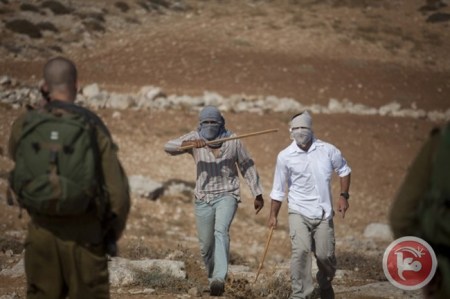
HEBRON – More than 200 Israeli settlers attacked the Palestinian villages of Wad al-Haseen and Wad al-Nasara near the illegal Israeli settlement of Kiryat Arba overnight in the eastern Hebron district of the occupied southern West Bank, locals and medics said.
During the attack, Israeli settlers threw stones and firebombs at Palestinian homes and injured at least three people, two of which were minors, while Israeli forces later shot and injured one Palestinian with live fire.
An Israeli army spokesperson said she did not have reports of any injuries with live fire.
The spokesperson said clashes between Palestinians and Israelis broke out in the area, after which Israeli forces “arrived at the scene and dispersed the clashes using riot dispersal means.”
Kayed Daana, one of the residents whose home was attacked told Ma’an that dozens of Israeli settlers attacked her neighborhood and injured at least three of her neighbors who have been identified as 40-year-old Imad and two minors, Abdullah, 13, and Muhammad, 17.
Muhammad’s injuries were the most serious of the three, as he was hit in the chest with one of the fire bombs, medics said.
Daana told Ma’an that she would like to urge the International Red Cross and others in the international community intervene against Israeli violations and attacks on Palestinians.
Bassam al-Jabri, one of the residents, said he saw the attacking Israeli settlers cutting the blockade fence that separates the illegal Israeli settlement of Kiryat Arab from nearby Palestinian homes, while under the protection of the Israeli troops before they attacked his neighborhood with fire bombs.
Al-Jabri said his house was one of those set ablaze, but that he and his neighbors were able to put the fire out before the fire was able to damage his whole home.
During the attacks, Palestinian villagers fled to their local mosques and used the mosque amplifier to call for help from neighboring Palestinian villages and communities, who responded to their calls.
Israeli forces then got involved, shooting tear gas at Palestinians who showed up to help.
Community member Farid al-Razim, told Ma’an that villagers in his area were attacked by Israeli settlers with firebombs, while Israeli forces were shooting tear gas, and that one of the Palestinians from a neighboring village who had come to help was shot and injured with live fire.
While relations between Palestinian residents and Israeli settlers in the occupied West Bank are normally tense, the situation has been significantly deteriorating since settlers’ torched a home belonging to the Duwabsha family in Nablus on July 31.
An 18-month-old toddler was burned alive during the attack, while his mother and father succumbed to their burn wounds while being treated at separate hospitals. The family’s four-year-old son is the only remaining survivor of the attack.
On Oct. 1, suspected Palestinians shot and killed Eitam and Naama Henkin, two settlers who were driving between the illegal settlements of Itamar and Elon More in an area near Huwwara in Nablus.
Their four children, aged between four months and nine years, were found unharmed in the back of the car.
It is speculated that the shootings were a revenge attack on Israeli settlers, following months of increased restrictions at the Al-Aqsa Mosque compound and calls from right-wing Jewish groups, urging their supporters to visit the compound, which is venerated by Jews as the Temple Mount.
Following the shooting, hundreds of Israeli settlers rioted across the occupied West Bank, with multiple attacks reported on Palestinian homes and vehicles.
Palestinian towns and villages in the Nablus area are surrounded by Israeli settlements and outposts, many of which are protected by the Israeli military and have gained notoriety for being comprised of the most extremist settlers.
The Palestinian government has no jurisdiction over Israelis in the West Bank, and violent acts carried out by Israeli settlers often occur in the presence of Israeli military forces who rarely act to protect Palestinian residents.
Palestinians are therefore left to fend for themselves as few options for their personal security remain.
While Israeli forces will detain a Palestinian in the occupied West Bank for possessing a knife or gun, Israelis living in the same area are legally able to carry such weapons.
Rights groups have criticized Israel for implementing different legal systems for Palestinians and Israeli settlers living in the same area.
Such practices, they say, protect the expansion of settlements while systematically removing the ability for Palestinians to move freely throughout the occupied territory.
Ruthless killing of Palestinian youths in al-Khalil (Hebron)
International Solidarity Movement, al-Khalil team | October 17, 2015
Hebron, occupied Palestine – Today, Israeli forces and Israeli settlers in occupied al-Khalil (Hebron) murdered two Palestinian youth within three hours.
In the morning, Israeli settlers from the illegal settlements within al-Khalil, walked past the 18-year old Palestinian youth Fadel al-Qawasmeh in segregated Shuhada street, cursing him as an ‘Arab’ and then pulled a gun shooting him from point blank range. The settler fired four shots at the Palestinian youth with his pistol, one shot directly in the head. This execution was entirely unprovoked. Israeli soldiers rushed to the scene, but prevented a Palestinian ambulance from treating the critically injured Palestinian youth who was lying on the ground bleeding. Whereas the area around the execution was immediately closed for Palestinians and international observers by the Israeli forces, settlers at all times were allowed to freely stroll alongside the scene of the murder, with soldiers taking pictures with their private phones.

Israeli settlers standing right next to the scene of the execution
Later on, Israeli forces blocked all entrances to a Palestinian house nearby where activists where trying to document [events]. In the meantime, settlers from the nearby illegal settlement of Beit Hadassah, watching from down on the street close by a checkpoint were enjoying tea and biscuits, brought from the settlement, with the soldiers and the police. After Israeli forces washed off the blood from the street, they broke into the house where Palestinians had been filming, with 11 children, the youngest only a year old, present. Heavily armed Israeli soldiers searched the house and confiscated all phones and cameras. Once they left the house, they checked all the photos and videos taken after the execution of Fadel, and showed them to the settlers nearby.
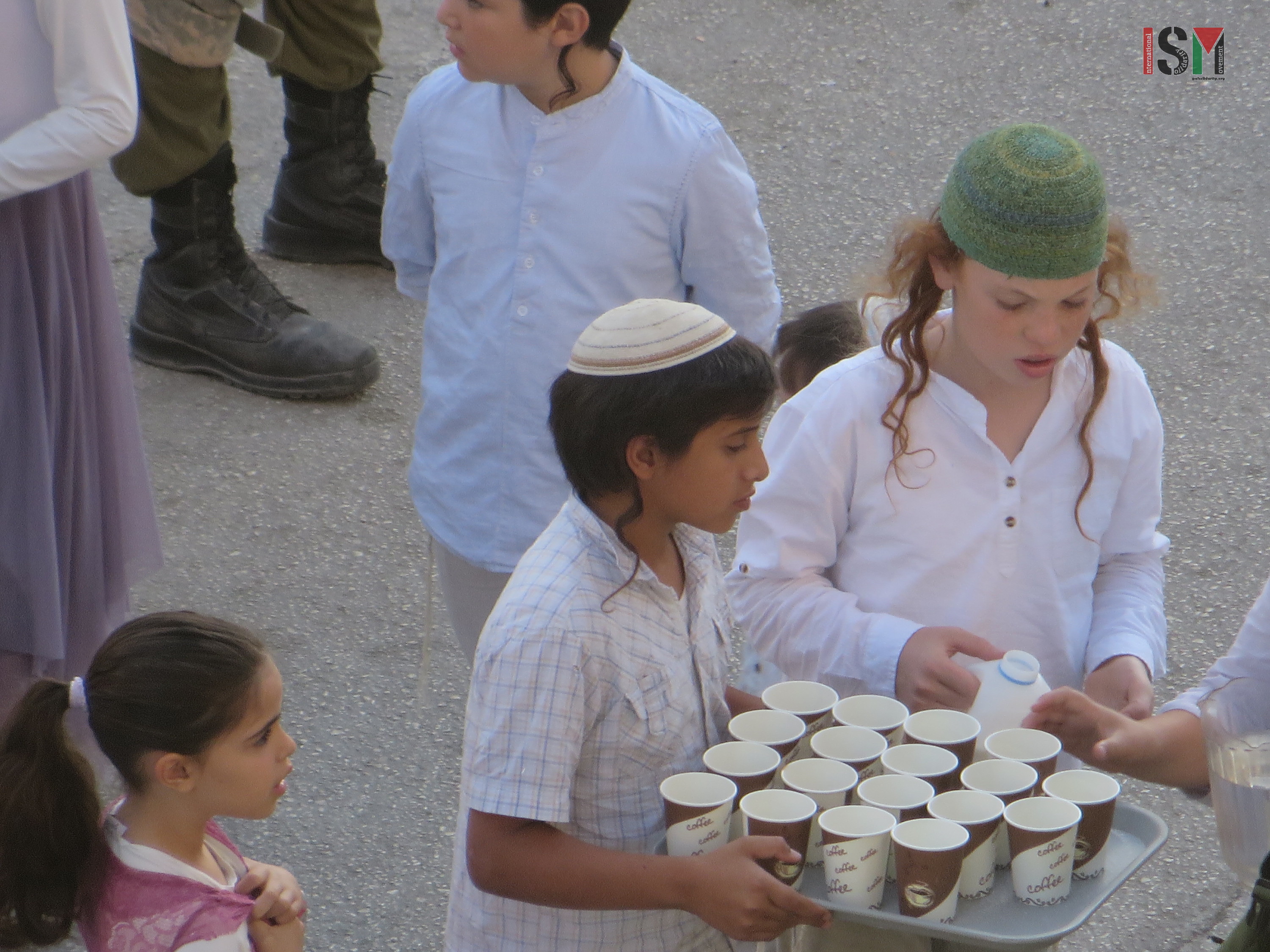
Israeli settlers and soldiers sharing tea at the scene of the execution of Fadel al-Qawasmeh

Israeli soldiers having tea brought by settlers
Palestinians and international human rights observers trying to document this violent attack on a family home were repeatedly forced by Israeli forces to move away from the incident, whereas the settlers were allowed to freely walk around and curse and hurl insults at them, even threatening them that they will be the next to be killed. One Palestinian man was forced by Israeli soldiers to pass through a checkpoint even though soldiers were throwing stun grenades right outside the checkpoint. 23-year old Abed al-Salaymeh was detained in Tel Rumeida for one and a half hours, after soldiers prevented him from going back to his home in segregated Shuhada Street. Different soldiers repeatedly ordered him and internationals to either move up the hill from the checkpoint, or when further up to move back down, all the time prohibiting him from going back to his house. Once up the hill, he was detained for one and a half hours, with soldiers freely admitting that this is because he ‘annoyed’ them before. Settlers passing by were threatening him and internationals that ‘tomorrow they would be the ones to be killed’.
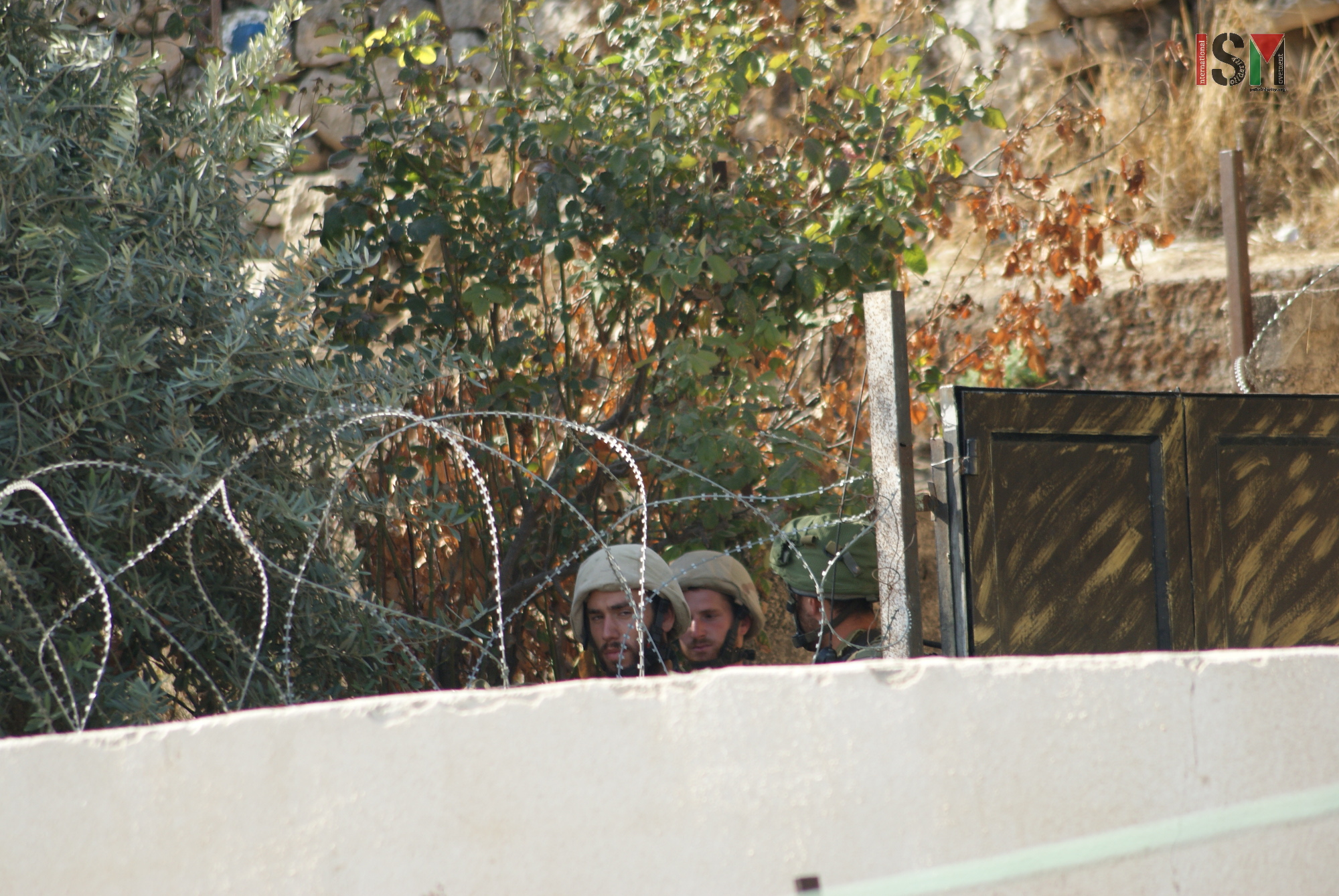
Israeli forces blocking the entrances to a Palestinian house
Only three hours later, Israeli forces shot and killed 16-year old Palestinian teenager Bayan Eiseleh at the Ibrahimi mosque. Her parents, rushing to the scene of her killing, were brutally attacked and beaten by Israeli forces. International human rights observers trying to document this senseless killing were detained by Israeli forces and then one of them was arrested for ‘taking pictures and posting them online’. She is still being held at the police station in the illegal settlement of Kiryat Arba.
Settlers terrorize Palestinian farmers in Burin: burn trees and disrupt olive harvest
International Solidarity Movement | October 14, 2015
Burin, occupied Palestine – A Palestinian farmer and English human rights defender have been hospitalized and at least 40 olive trees burned following an attack by illegal Israeli settlers in the northern West Bank town of Burin today.
At 10am this morning, as ISM and other international volunteers accompanied olive farmers who have repeatedly been restricted from accessing their fields, gun shots were heard ringing out across the valley from the settlement above. Approximately thirty masked settlers from the illegal Yizhar settlement then descended the hill and started throwing stones at the group which had peacefully been picking olives for several hours. International human rights defender David Amos, a Quaker from London, was repeatedly attacked with rocks from three meters away, causing two head wounds and copious bleeding. The owner of the land, Abed Musaa, was hit in the front and back with stones and has been treated for lacerations and bruising. The attacking settlers also stole phones, a camera and a bag from the international human rights defenders.
The settlers were then witnessed setting four separate fires to grass on the edge of the olive groves which rapidly grew in dimensions, consuming olive trees and the grasslands between family plots. Two Israeli forces jeeps and two collaborating illegal settler vehicles drove into the valley, took photos of the scene, and then parked alongside each other on the road to Yizhar as more fires were lit by the masked settlers throughout the valley.
Israeli forces then scaled the valley and were witnessed saying to Palestinians, “yes you want peace, we want peace, they want peace,” referring to the settlers. Burin farmer and school teacher Doha and Samir were prohibited from continuing to pick olives on their land, being told they required a permit despite no legal provision to that effect, being within Area B zoning under the Oslo accords.
Palestinian firefighters were prohibited from accessing the fire for three hours, being told that a permit was required to utilize the road to the Yizhar settlement, which has been heavily restricted to Palestinian traffic in recent weeks. Palestinian civil workers, farmers, and international human rights defenders attempted to put out the blaze with sand, shovels, and olive branches but were unable to stop the spread of the fire amid 30 degree heat and rising winds.
Olives are a traditional produce of the Nablus district and constitute 25% of the West Bank’s economy (OCHA 2014). This critical October harvest season falls amid rising tensions in the West Bank, as Israeli forces increase their deployment of soldiers and use of violence in the occupied territories. The Yizhar settlement has also been implicated in the tragic [arson] death of 18 month old Ali Dawabsheh and his parents in the Palestinian village of Duma two months ago.
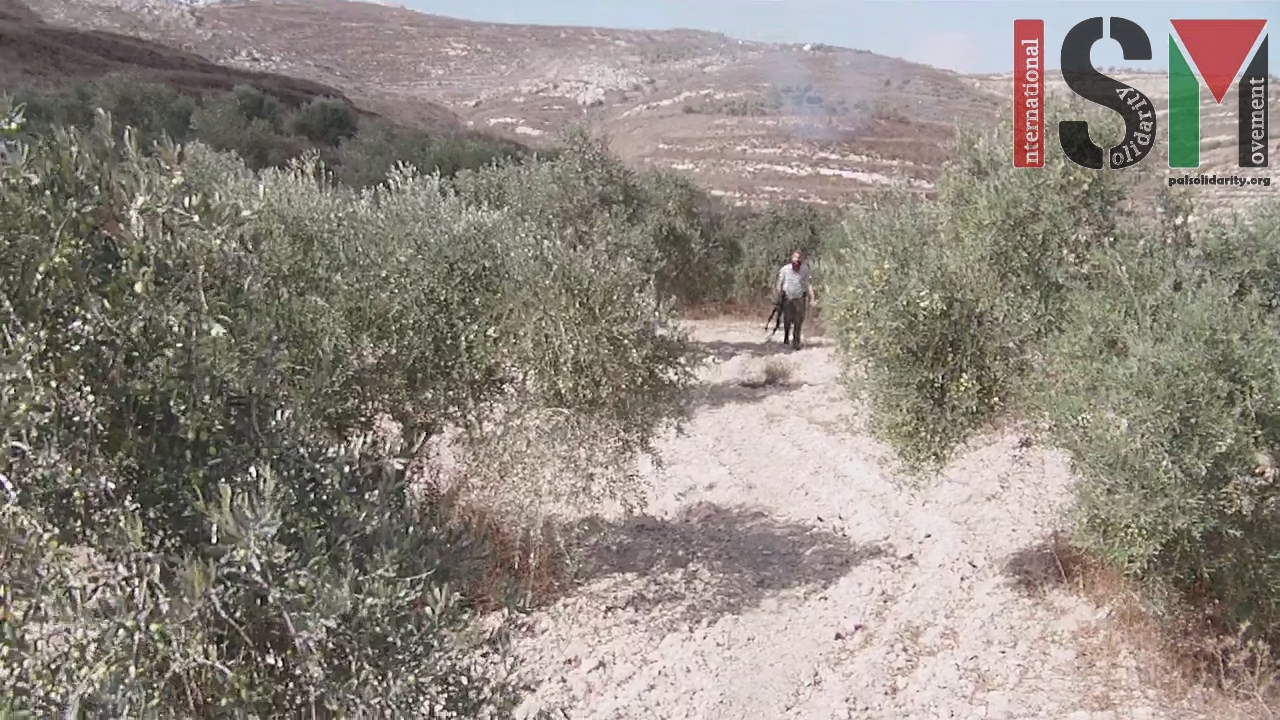
Armed illegal settler
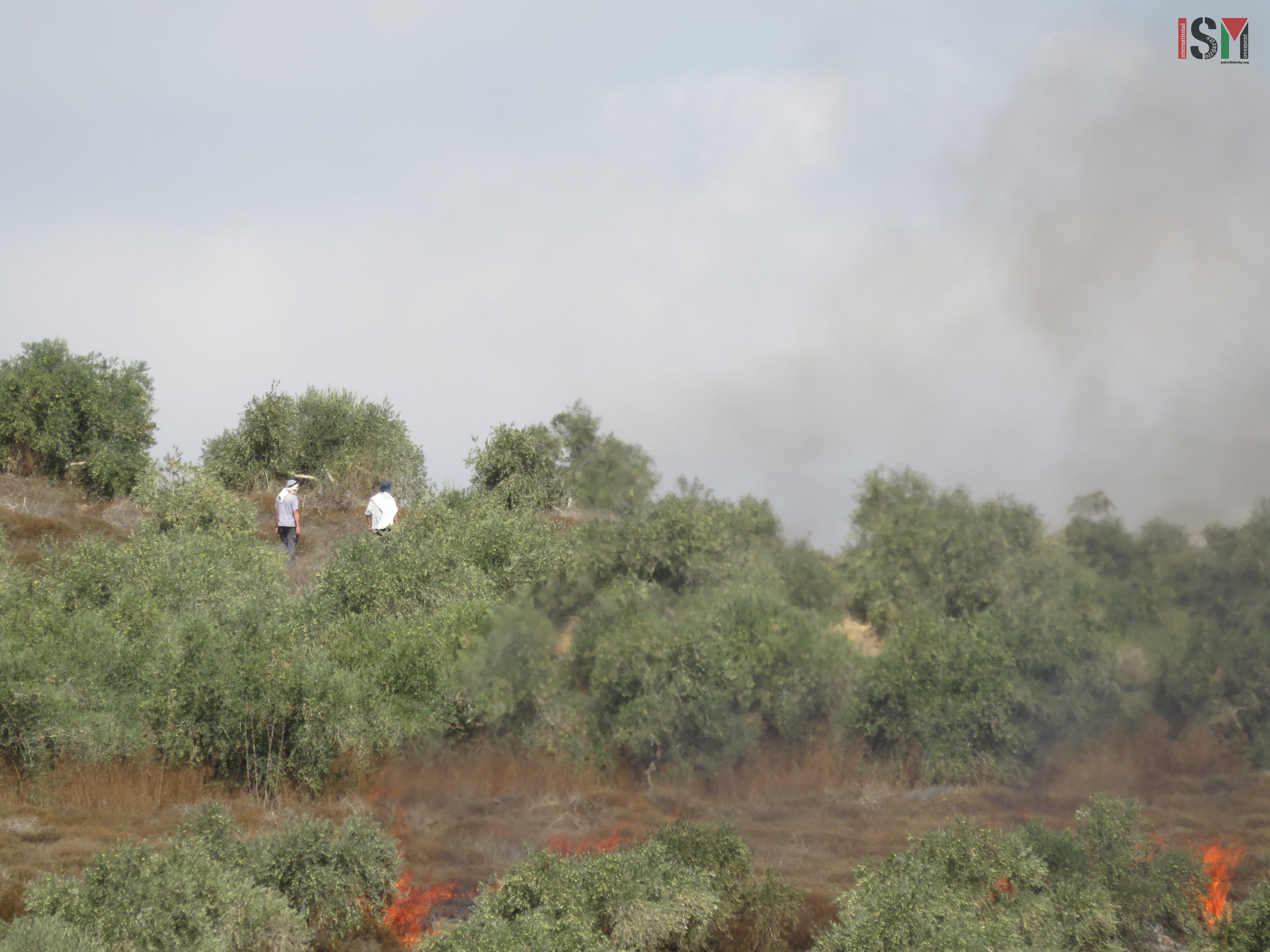
Settlers lighting fires throughout valley
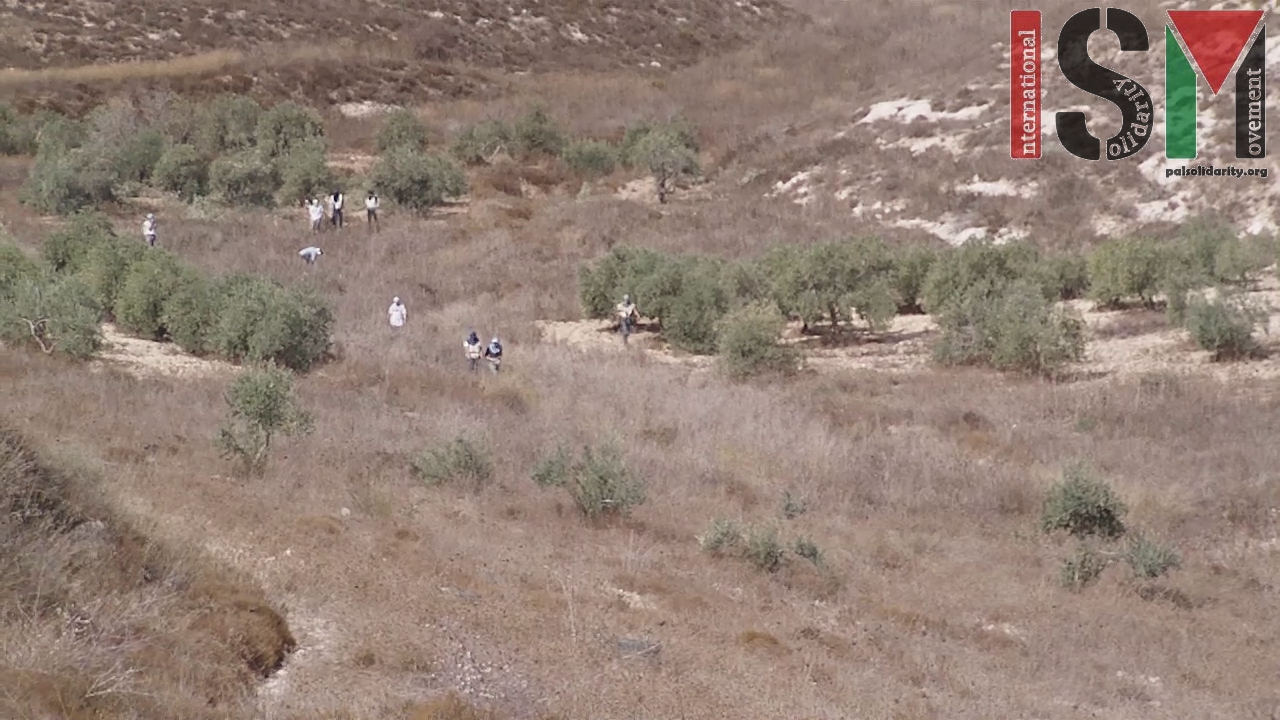
Masked settlers in the olive fields
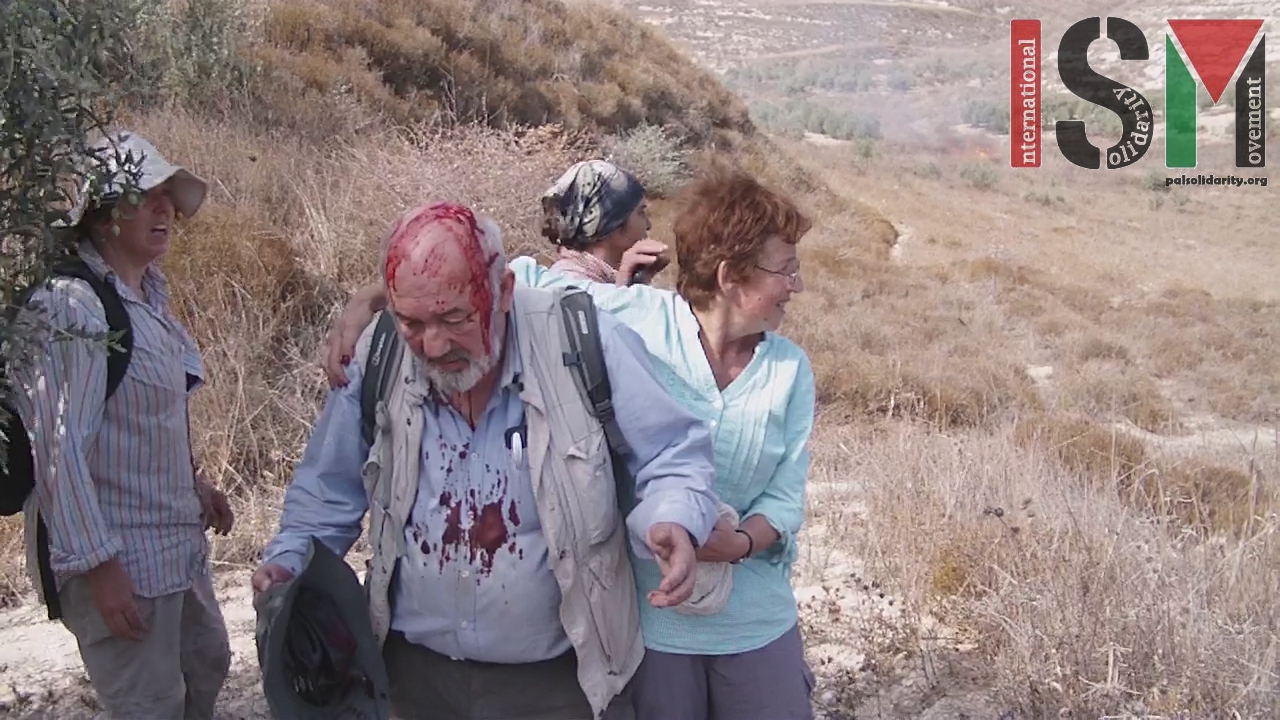
International human rights observer David Amos attacked by settlers
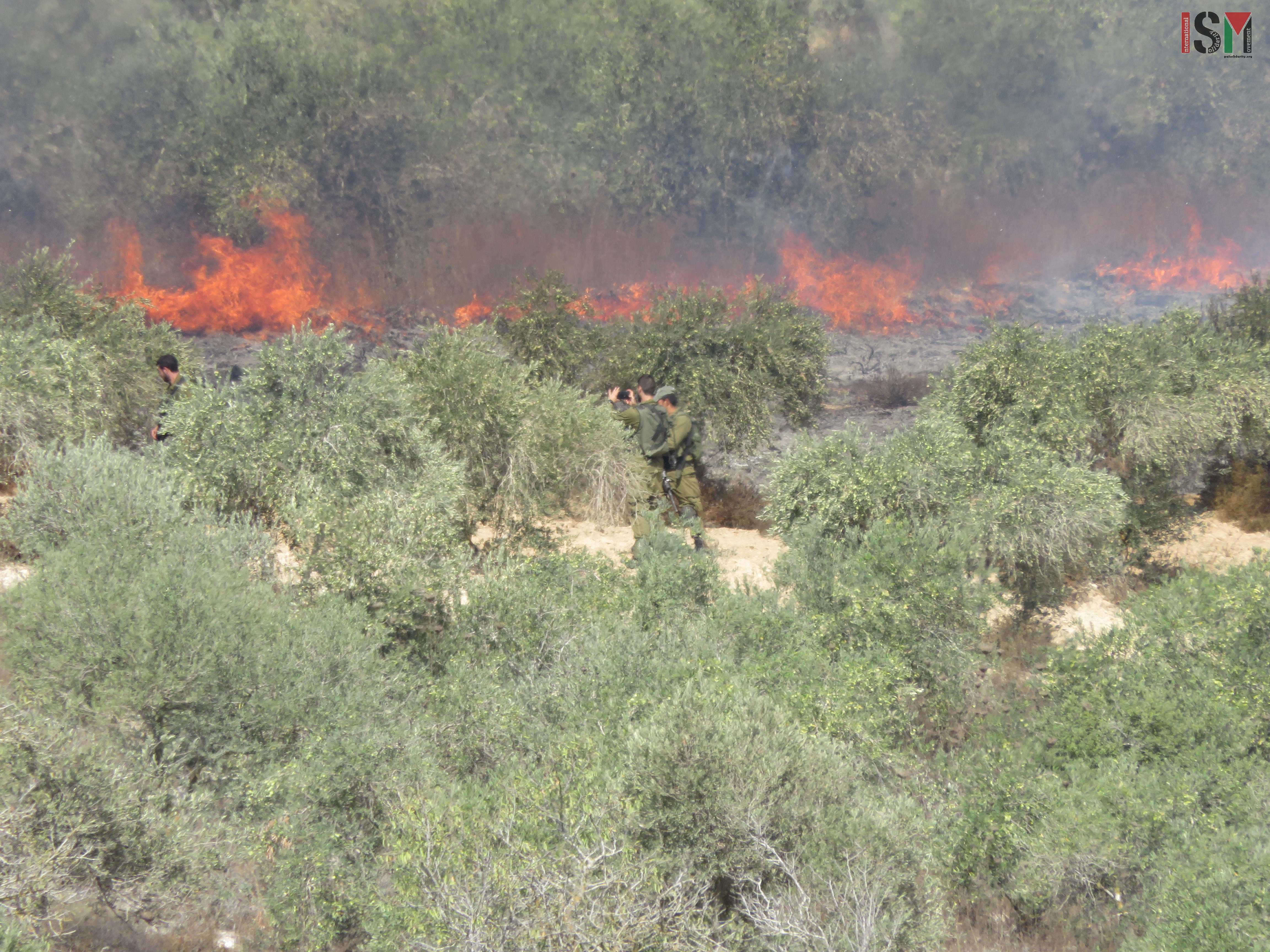
Israeli forces photograph fires
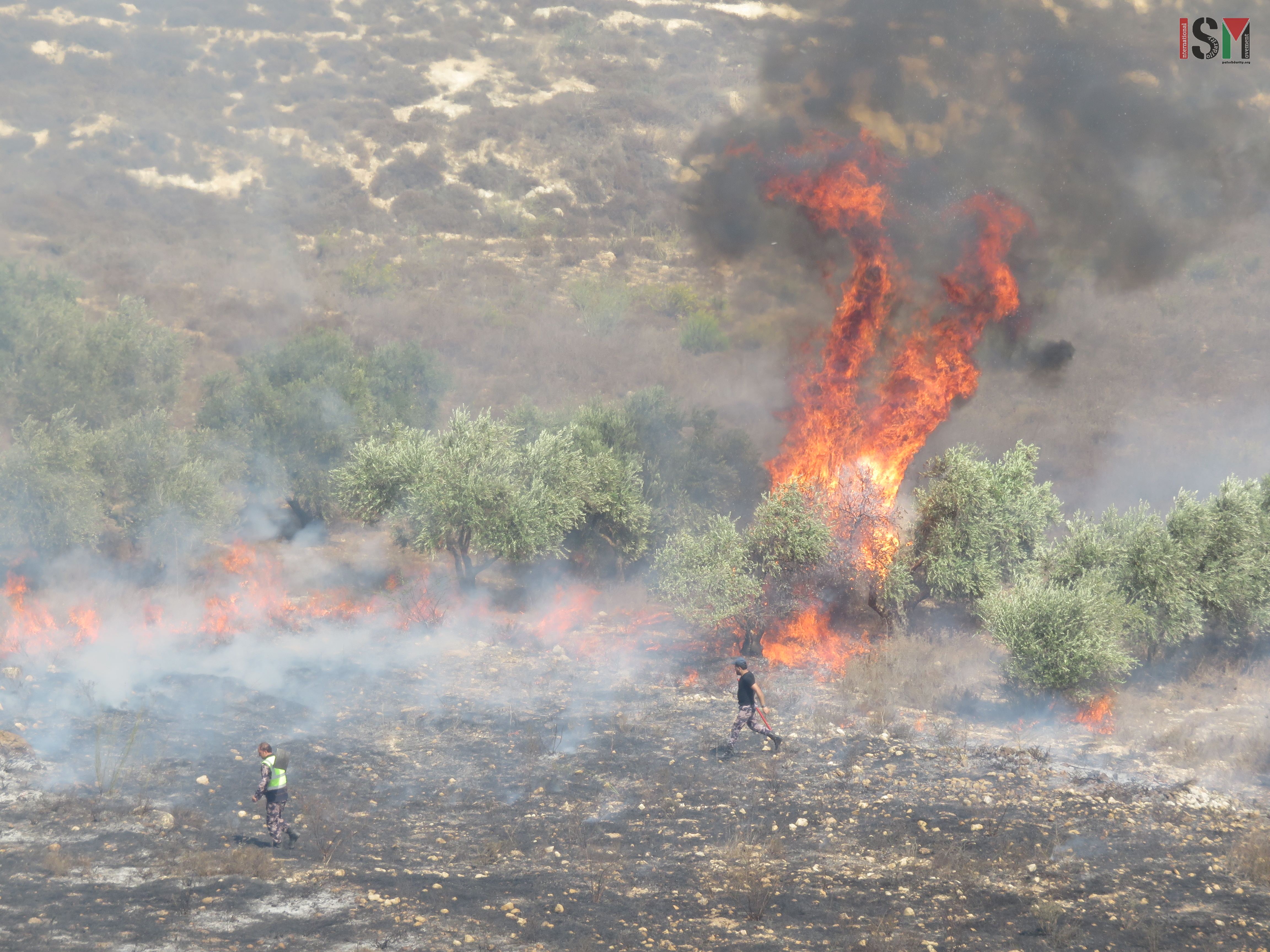
Palestinian civil workers attempt to put out fires while fire truck prohibited entry
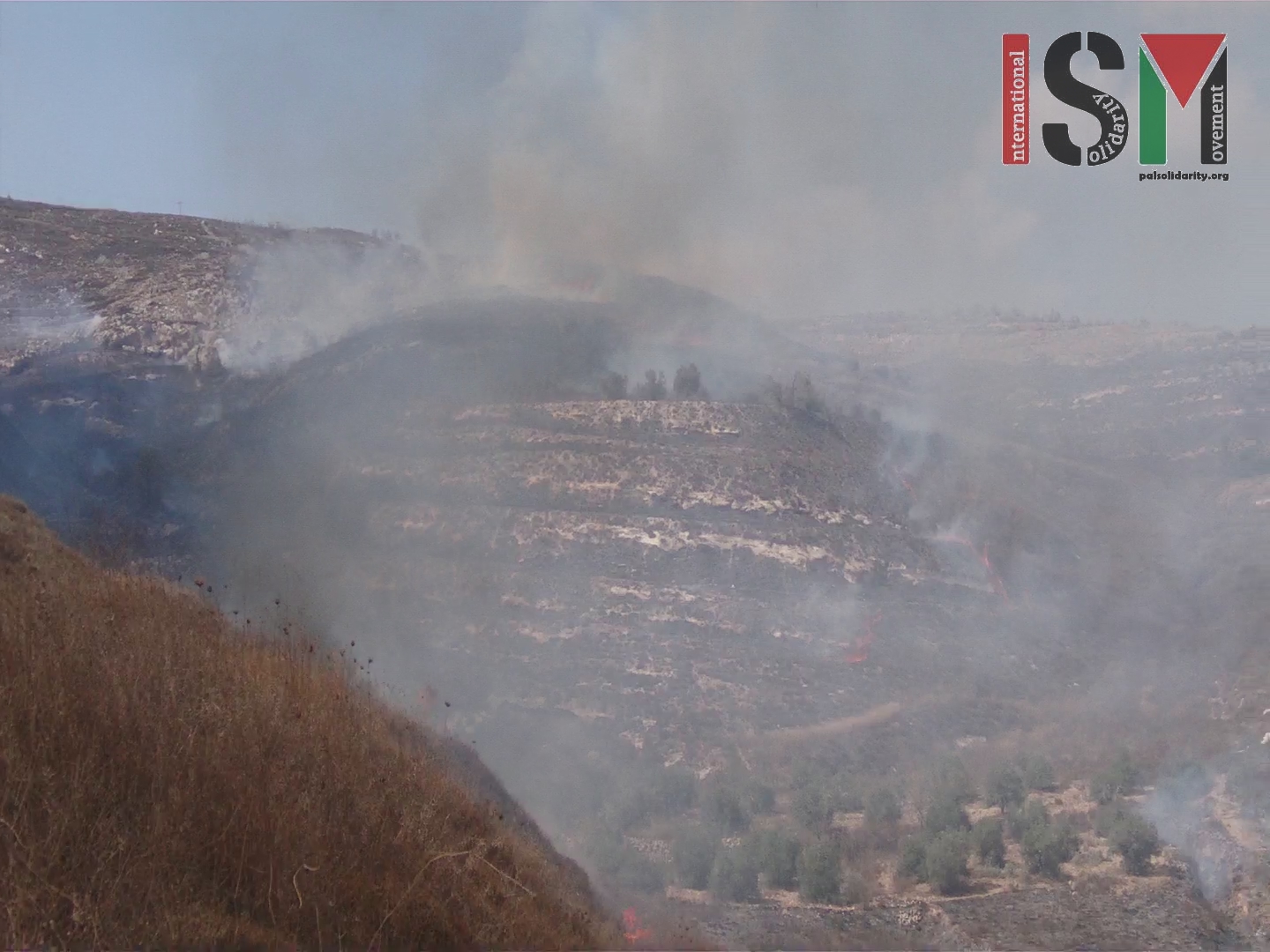
Fires rage across Burin valley
Israeli settlers shoot live fire at Palestinian homes
Ma’an – October 14, 2015
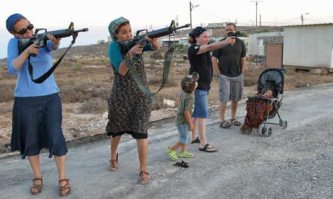 HEBRON – Israeli settlers on Tuesday attacked Palestinian homes in the Jabal Jalis area east of Hebron in the occupied West Bank, locals said.
Local sources told Ma’an that settlers from the illegal Givat Gal outpost opened live fire on homes in the village. No injuries were reported.
Attacks carried out by settlers on Palestinians in the occupied Palestinian territory are near-daily, and have increased in recent weeks after two settlers were killed near Nablus by suspected Palestinian gunmen on Oct 1.
The Palestinian government has no jurisdiction over Israelis living illegally in the occupied West Bank, and settlers often carry out attacks in the presence of armed Israeli forces.
Settlers clashed with Palestinians in Hebron on Sunday and Israeli forces reportedly intervened in the confrontation, shooting off tear gas and rubber-coated steel bullets at Palestinians. Several were injured with the rubber bullets, while others suffered from tear gas inhalation.
The day before, locals said that settlers attacked Palestinian homes in the Hebron-area village of Wad al-Hisn, spraying waste water and firing tear gas canisters while Israeli soldiers reportedly protected them.
According to the Palestinian Negotiation Affairs department, over 130 attacks were carried out by Israeli settlers in the first week of October.
Palestinian child bleeds out while Israeli police & civilians watch, shouting insults
IMEMC & Agencies | October 12, 2015
 “Die, you son of a whore!! Die!!” shouted Israeli men at a seriously wounded Palestinian child, who was left to bleed while police stood around him doing nothing. One of the officers repeatedly pushed the boy down with his foot, whenever he tried to sit up.
While the child was bleeding to death, Israelis surrounded him, shouting at him in a mix of Arabic and Hebrew, “Die, you son of a whore!”, “Die, you son of the biggest whore!”, and telling the police to “Do him a favor, and shoot him in the head!”
The officers did not shoot him, but left him bleeding with head injuries, broken legs and other serious injuries on the ground. The boy was able to raise his head a few times, but the police officers kicked him back down.
The Palestinian child has been identified as Hasan Khaled Manasra, 15 years of age, while his cousin Ahmad Saleh Manasra, 13, suffered a serious injury. They are both from Beit Hanina, in Jerusalem.
The incident took place near Pisgat Zeev Israeli settlement, in occupied Jerusalem. The police claimed that the boys stabbed two settlers, wounding them.
A settler who chased the boys with his car also rammed Ahmad. But the police presented no evidence to connect the two children with the crime that they claimed the boys committed. […]
Since October 1st, when two Israelis were killed in a ‘lone wolf’ attack by a Palestinian in Jerusalem, 26 Palestinians have been killed, including a pregnant woman and her two-year old child killed in an Israeli bombing on Sunday morning. Over 1200 Palestinians have been injured, many of them hit by live ammunition fired by Israeli troops at Palestinian demonstrators armed only with stones.
During that time period, no Israelis have been killed beyond the two who died in the October 1st attack, but six have been wounded in alleged attacks by Palestinians. No Palestinian faction has claimed responsibility for any attack, and it appears that the Palestinians who wounded Israelis were acting on their own.
In addition, Israeli authorities have been revealed on several occasions to have lied about the Palestinians they have killed – claiming falsely that the Palestinians had been attempting to stab or attack Israelis, but eyewitness and video evidence disproved this claim in a number of cases. – Full article with video (warning, extremely graphic)
The youtube upload at IMEMC has been taken down. Therefore I am posting another upload here and will attempt to maintain a working upload.
By Rima Najjar Merriman
This incredibly shocking and painful-to-watch video in the Jewish colony of Pisgat Ze’ev in annexed and occupied East #Jerusalem is being shared on Israeli social media sites. The #Palestinian teenager (Ahmad Manasra, 13) is surrounded by Israeli police and Jewish “settlers” hurling insults at him, as he bleeds to death. The circumstances of the shooting are unclear. My ex-colleague at Al-Quds University (Randa Hilal) writes: “What’s happening is a new #Nakba, new terror and forced displacement of the [Palestinian] people of #Jerusalem. They are killing school children. Today, three school children were killed, the latest a girl from Al-Ma’mounieh school. A [Jewish] colonist threw a knife next to her and started screaming for her to be shot.”
الي بصير نكبة جديدة وأسلوب جديد وترهيب وتهجير لاهالي القدس
عم يقتلو أطفال مدارس
اليوم ٣ أطفال آخرهم بنت من مدرسه المامونيه مستوطن رمى سكينه جنبها وصار يصيح قتلوها
I downloaded this clip from the FB wall of Mira Atmi (https://www.facebook.com/profile.php…), who has the following comment in Hebrew attached to it (The terrorist bastard in Pisgat Ze’ev in Jerusalem):
המחבל הבן זונה בפסגת זאב בירושלים
(The terrorist bastard Pisgat Ze’ev in Jerusalem)
Settler attacks international – eats notebook
International Solidarity Movement | October 12, 2015
Hebron, occupied Palestine – Yesterday afternoon, two girls were arrested by Israeli forces in occupied al-Khalil (Hebron). International human rights observers documenting the ungrounded arrest were harassed by settlers in front of the Israeli police station.
Two young school-girls, aged 14 and 16, were stopped by Israeli forces at one of the many checkpoints at Ibrahimi mosque. Israeli forces accused them of having a knife and walked them to the police station at the Ibrahimi mosque. Both of them were eventually released after being taken to the police station in the illegal settlement of Kiryat Arba, which clearly illustrates that the arrest was based on a random accusation. Child arrests in the recent weeks have skyrocketed in al-Khalil, with children facing the threat of arrest at any given time of the day. The rights of Palestinian children in al-Khalil are continuously violated by the Israeli forces, with illegal arrests, ill-treatment during arrests and detentions as well as violent attacks with tear-gas, rubber coated steel bullets and live ammunition on children on the increase.
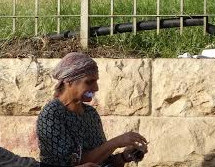 International observers, documenting the arrest, were accosted by settlers while waiting outside the police station to find out the names of the children. After about two hours of waiting, the infamous and violent settler Ofer called another group of settlers to come to the police station, amongst them the infamous and aggressive settler woman Anat Cohen. Immediately after her arrival, she confronted the international volunteers and stole a notebook from one of the internationals, attempting to hit her in the face and punch her several times.
In order to make sure that the international would not be able to get her notebook back, Anat Cohen put part of it in her mouth and chewed it up. Even though all of this happened right in front of the police station, about five soldiers and two police men watching everything happen refused to intervene, even when the internationals present repeatedly asked them to stop the attacks. Instead, after they allowed the settlers to leave with the stolen notebook, they told the international to ‘go to Syria’.
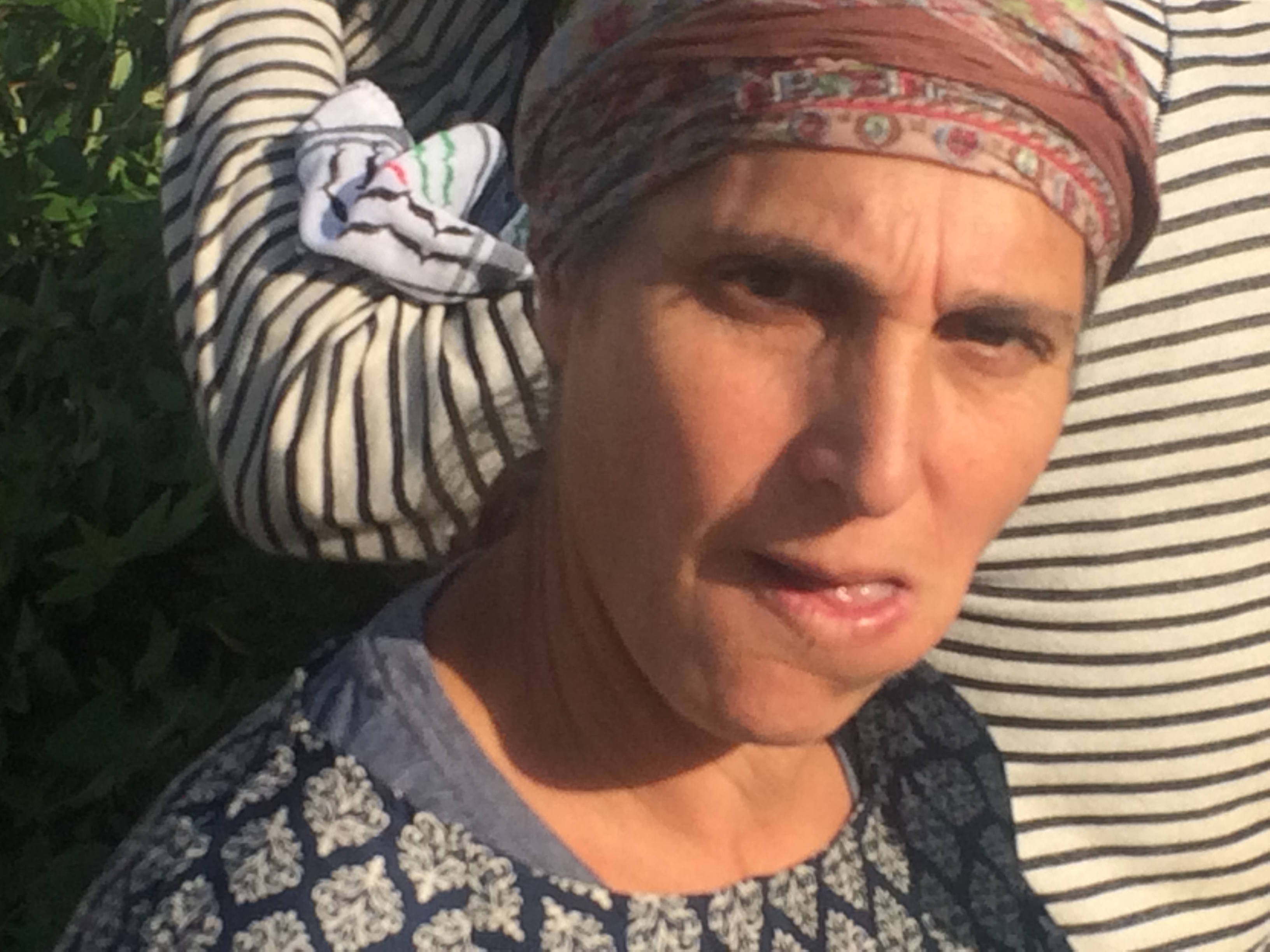
Anat Cohen eating the notebook
This again illustrates the total impunity settlers are granted by the Israeli forces for their actions, even if it involves internationals – who usually receive more protection under the law than do Palestinians.
US refuses to label Israeli attacks on Palestinians ‘terror’
MEMO | October 10, 2015
The State Department said Friday that recent attacks by Palestinians against Israelis are “acts of terror” but failed to apply the same standard when violence is committed against Palestinians by Israelis.
“We would consider these violent acts [by Palestinians] that we’re talking about specifically here as acts of terror,” spokesman John Kirby said in response to a question about violence in the occupied territories.
But when asked whether he also considered to be terrorist acts the stabbing of a Palestinian by a 17-year-old Israeli in the city of Dimona, Kirby brushed it aside and said he was not aware of the incident.
“I don’t have the details on that, so I’d really rather not get into this event by event,” he said.
“But we do consider these particular acts of violence that we’ve seen – the stabbings and the killings there particularly in East Jerusalem – as terror,” he said, referring to attacks by Palestinians while being careful not to label Israeli attacks as “terror”.
He added, however, that “all the violence needs to stop and calm should be restored”.
In the last seven days, several violent clashes have erupted between Palestinian youth and Israeli troops in the Israeli-occupied West Bank and East Jerusalem.
At least 1,600 Palestinians have been injured during clashes with Israelis since Oct. 3, according to the Palestinian Red Crescent.
The other occupation: Settlers terrorize Palestinians of the West Bank
International Solidarity Movement | October 11, 2015
Hebron, occupied Palestine – It was another emotional day for Palestinians in al-Khalil, (Hebron) after the burial of martyr Muhammad al-Jabari who was shot to death by Israeli forces near the entrance to the illegal Kiryat Arba settlement.
Thousands filled the streets as the body of the 19 year old boy was carried through the masses up to the martyr’s cemetery which is the same place where 18 year old unarmed Palestinian female student Hadeel Hashlamoun was shot to death at the checkpoint yawning into segregated Shuhada Street.
Immediately beyond the service, Palestinians gathered in the Bab al-Zawiya section of Khalil for a demonstration against the Israeli occupation forces use of violence which has now claimed the lives of nearly 20 young Palestinians in just one week. The demonstration was met with extreme violence by the Israeli military which settlers in the Tel Rumeida neighborhood gathered to watch on Saturday afternoon.
The Shamsiyyeh family’s home has long been the target of violence from Israeli settlers who have thrown rocks and other debris as well as poisoning their water tanks on several occasions and even cutting their water pipes on the roof. Today, settlers again filed onto the family home’s roof to watch the Israeli military assault on Palestinians in Bab al-Zawwiya, some armed with machine guns.
Israeli occupation forces predictably did nothing to calm the situation or remove the settlers from the roof of the family home. One settler sprayed pepper spray from the roof, gassing the family and subsequently himself. Israeli forces allowed him to leave with the pepper spray without asking a single question.
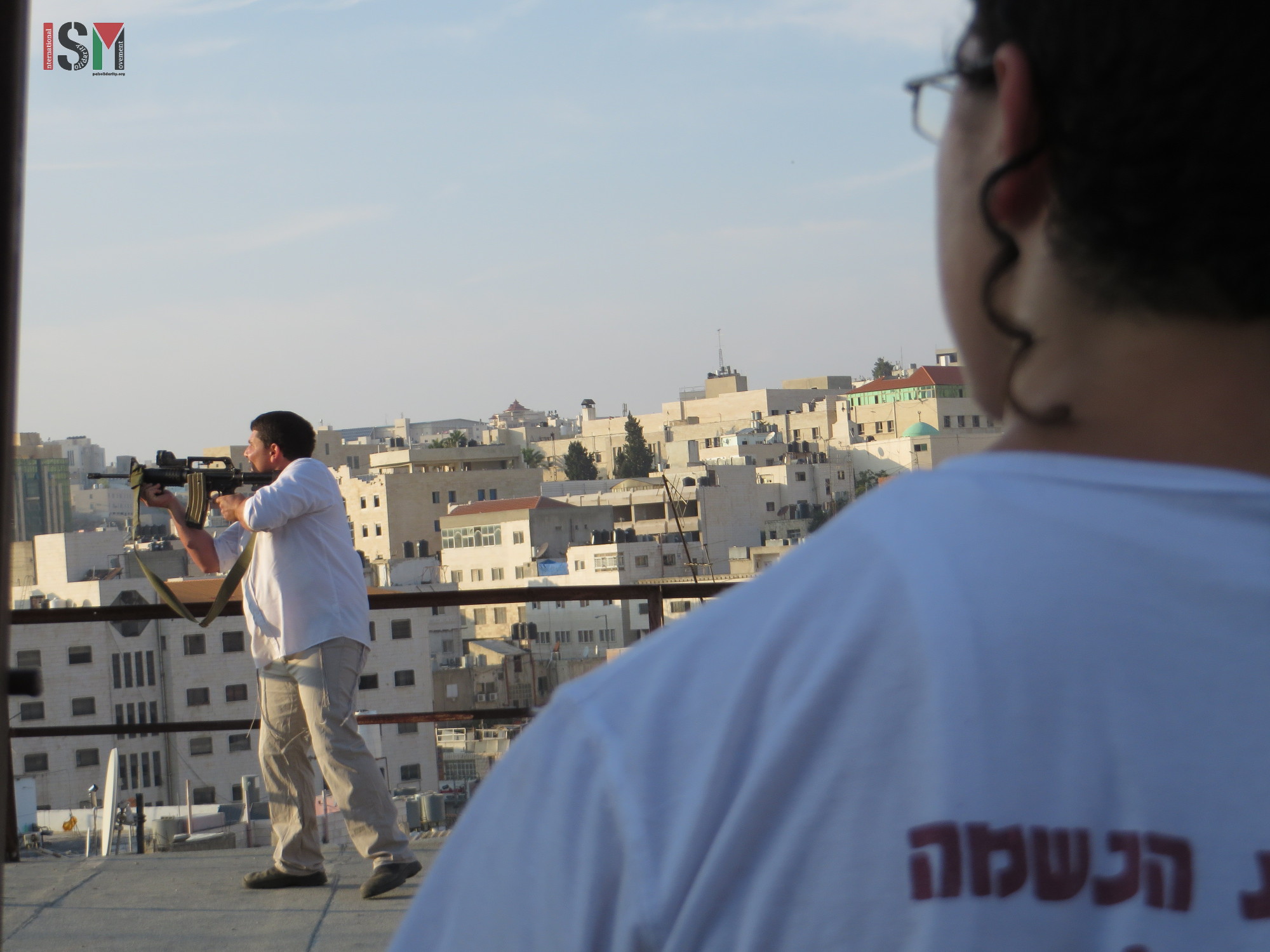
Israeli settler pointing his gun at Palestinian families
Just a few hours later, a settler armed with a machine gun, lightly slung around him just like an accessory, came onto the roof. Soldiers close-by refused to ask the settler to leave from the private Palestinian family home’s roof. The settler then suddenly pointed his machine gun at Palestinians, including small children, on nearby roofs. Soldiers at first watched the events unfold only to join the settler on the roof, taking orders from him on what to do.
Watch a video here:
In occupied al-Khalil, it has been apparent that settlers rule the military, both through demanding arrests and ID checks of Palestinians and through getting away with any transgression of Palestinian’s human rights by being handed total impunity by the occupying forces. This is especially disturbing since a West Jerusalem mayor has publicly called for settlers to carry guns amidst a high pressure situation with exploding violence across the occupied Palestinian territories.
In the Tel Rumeida section of al-Khalil, just days ago, settlers held a large march up the hill chanting “Death to Arabs” and burning Palestinian flags.
Israeli army prevents farmers to pick olives in Burin
International Solidarity Movement | October 9, 2015
Burin, Occupied Palestine – This Friday morning, at approximately 10:30 am, a group of 6 soldiers came down the mountain from the illegal Israeli settlement, Arousa, in the village of Burin, to prevent the family of Ahmad Mustafa Najjar from picking their olives.

Israeli soldiers prevent Ahmad’s family from picking their olives
Early in the morning, a group of illegal Israeli settlers from Arousa came to the farm and began threatening and intimidating Ahmad’s family. Ahmad’s uncle, Salah Najjar, telephoned Abu Mursi, from the District Coordination Office, to ask for help and managed to make settlers go away. Soon afterwards, a group of six soldiers arrived shouting aggressively and demanding the family to stop working. The family protested and the commander argued they were not authorized to pick olives, despite the fact that the family owns the land and trees and, therefore, does not need to have a permit. International activists asked the commander and soldiers what was the reason to stop them from picking olives from their own trees inside their privately owned land, and the commander and soldiers would not give an answer.
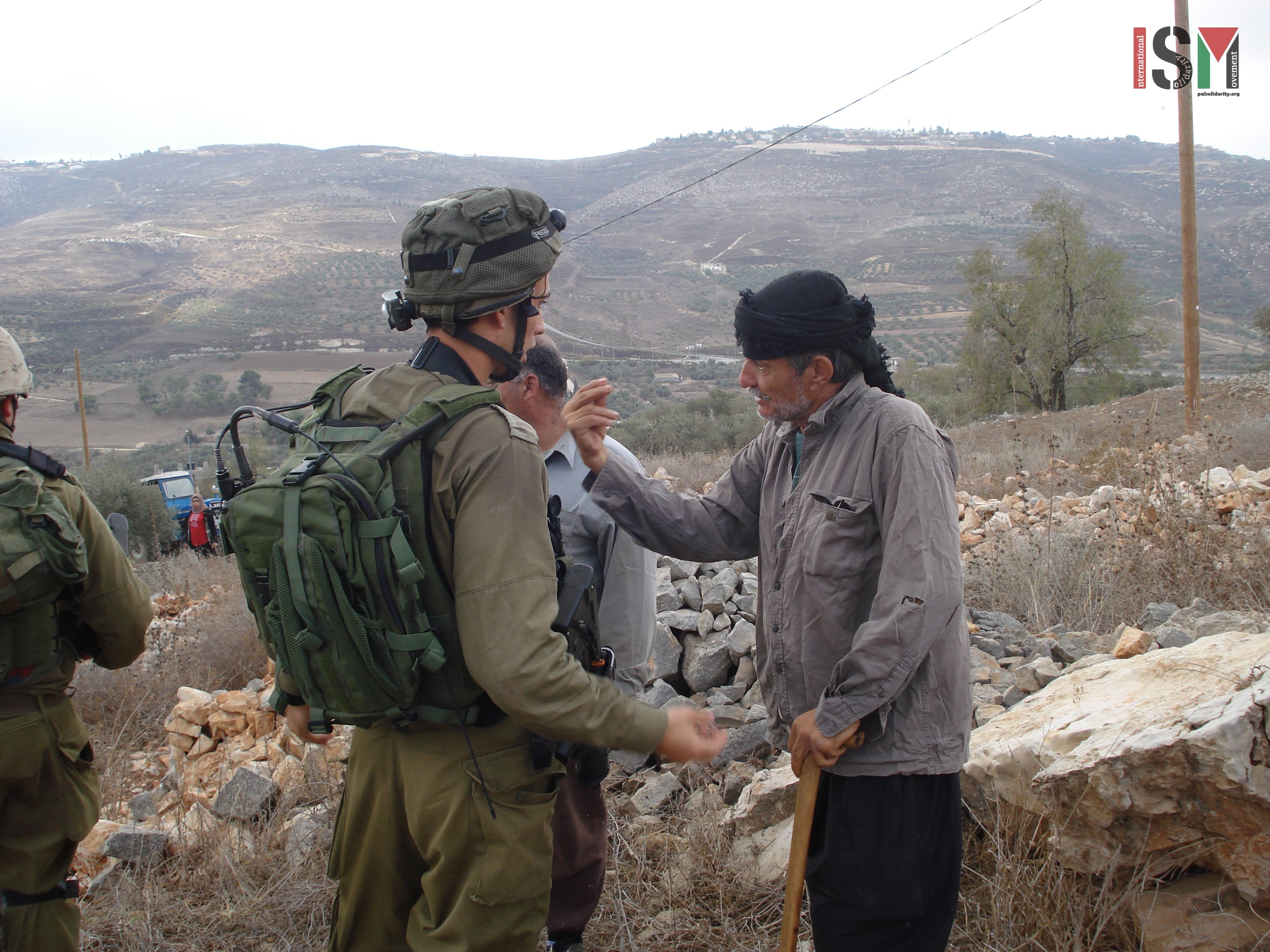
Abu Mursi, member of the village council, argues with commander that the family is entitled to pick olives in their field
Abu Mursi, member of the DCO, quickly arrived to the field to insist to the soldiers that the family does not need permission to pick their olives.
The argument continued for one hour, until a second commander arrived and made the decision that the family was not allowed to pick olives from the four highest trees, forcing them to move downwards to pick olives from other trees instead.
According to Ahmad, his family has lost $3.000 shekels because those 4 trees would make 120 liters of olive oil. He adds, “The soldiers violently beat my cousins, Muntasar and Mohammad, and I had to stand between them to stop the soldiers from killing them.”
Burin is a village located south west of the city of Nablus, which suffers from an ongoing harassment from the Israeli army. During the last month, Israeli soldiers have carried out several night raids into the villagers’ homes, waking up families in the middle of the night and searching their houses, with the clear purpose of terrifying the villagers.
Particularly during the olive harvest season, the farmers of Burin are scared of going to their fields to pick olives, especially in the farms located near the illegal settlements, due to the high risk of being attacked by settlers.
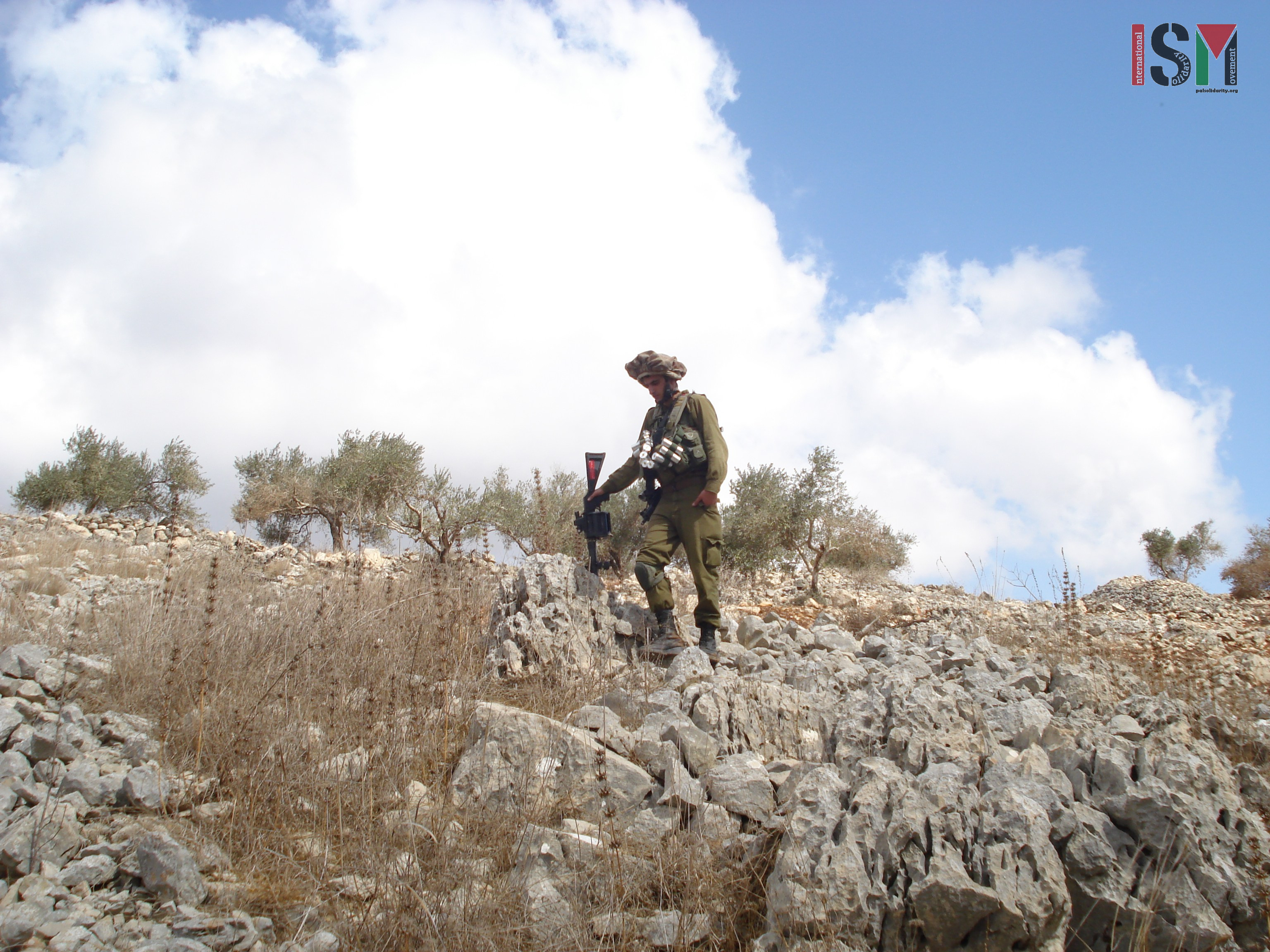
Note how one of the soldiers who came today is loaded with tear gas canisters; an unjustified excess of weapons
Settlers march through occupied al-Khalil attacking, insulting and threatening Palestinians and internationals
International Solidarity Movement | October 8, 2015
Al-Khalil/Hebron, occupied Palestine – Yesterday night, October 7th 2015, a large group of settlers harassed, insulted and physically assaulted Palestinian residents and internationals in the Tel Rumeida neighbourhood of occupied al-Khalil (Hebron), injuring several.
Around 08:00 pm, more than 50 settlers from the illegal settlements within al-Khalil, most of them children and teenagers, accompanied by a few adults, marched around the Palestinian neighbourhood of Tel Rumeida, chanting insults and hate-speech, calling for the death of Arabs. The group was not only chanting racist abuse, but also demonstrated a high level of violence and aggression towards the Palestinian residents of the neighbourhood.
After marching through the streets loudly chanting, they attacked Palestinians right outside a shop, running towards them and beating them, and hurling rocks at Palestinian youth and internationals documenting these violent assaults. Instead of intervening, Israeli forces watched these attacks happen at first just to point their loaded guns at Palestinians that just a few seconds before were standing in a hail of stones, threatening to shoot. Two persons were injured with stones thrown by the settlers, a Palestinian youth in his hand and an international in his chest. In the meantime, the settlers openly picked up more stones and rocks from the ground, attacking families that opened their main gates to find out what the shouting was about. Again, instead of preventing or stopping attacks by the settlers, the army violently pushed Palestinians to move back into their homes, yelling at them. All complaints made by Palestinians against the attacks by the settlers were ignored by the soldiers. But not only the settlers, also the Israeli soldiers violently attacked several Palestinians and beat them.
Many families rushed into their homes upon hearing the yelling, locked their doors and then had to watch the settlers chanting abuse at them from behind their windows – protected only by the metal grids installed in the past due to frequent settler attacks. Soldiers, in the best case, are standing idly by. Last night, they were pointing their guns at children and women watching in fear from the roof of their houses – the one place farthest away from the settlers down on the street; and soldiers were banging on the door of Palestinian family homes, while the group of settlers are aggressively chanting and threatening the families while standing right behind the soldiers.
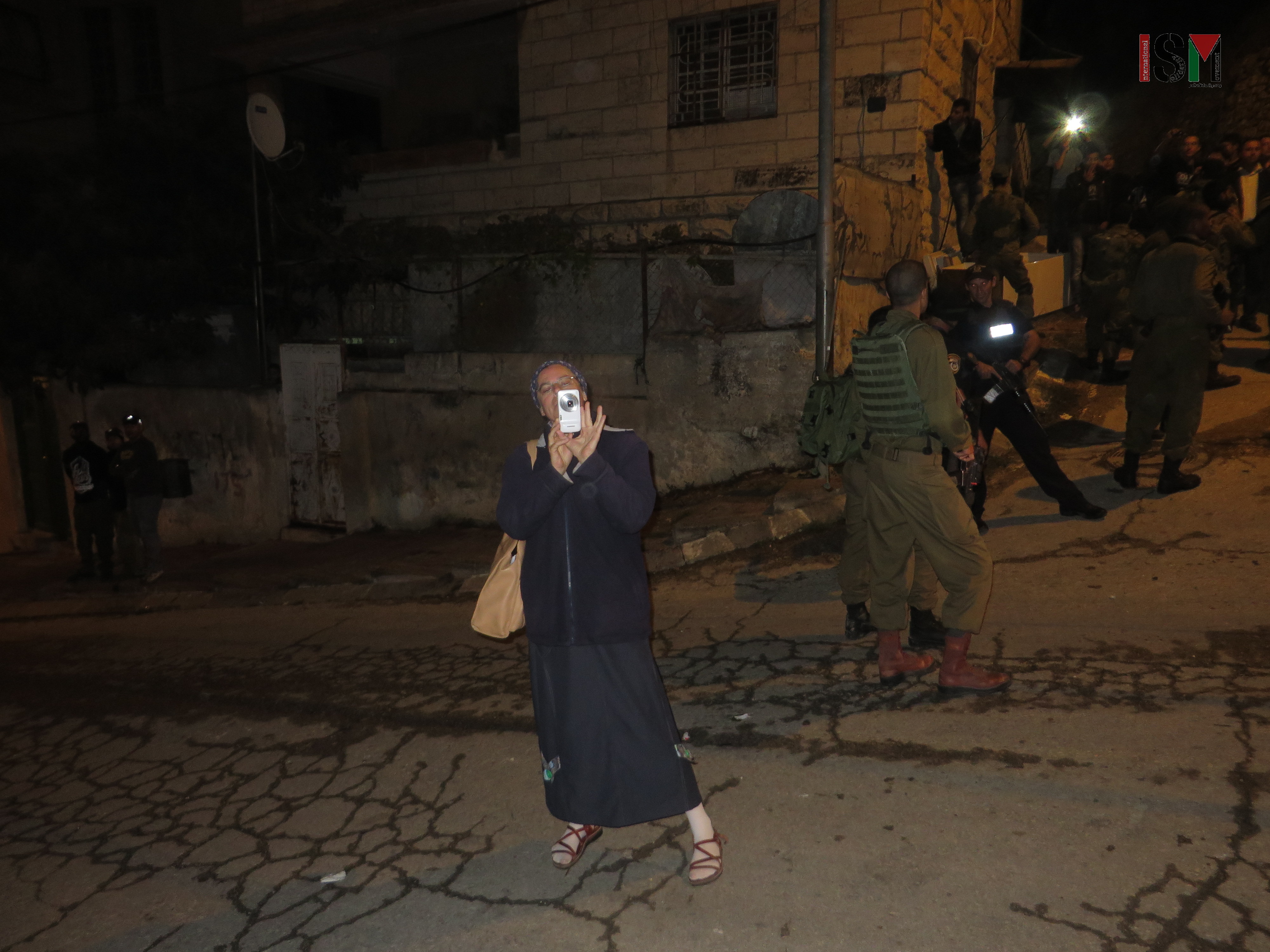
Settler woman photographing internationals getting attacked
When the march proceeded down the hill towards Shuhada checkpoint, where over two weeks ago the Israeli army ruthlessly gunned down and killed the Palestinian student Hadeel al-Hashlamoun, more than two dozen activists from Youth Against Settlement arrived to document the racist abuse and attacks against Palestinians. Israeli forces that by then finally arrived, immediately stopped the Palestinians and isolated them in an alley, preventing them from going anywhere. The group of settlers on the other hand was allowed to keep on chanting racist abuse and burned Palestinian flags, cheering and clapping. Israeli soldiers were getting their guns ready, facing the Palestinians that were clearly upset when their flags were being burned, but did not do anything to stop the flag-burning.
In order to allow for the greatest possible space for the settlers to move around and keep on chanting, Israeli forces pushed back the Palestinians, with one soldier threatening an international that he would ‘break his face’ if he didn’t move right away. Settler children and women also attempted to break cameras of internationals, blocking them from documenting the events and spit at them.
Infamous, aggressive settler Anat Cohen repeatedly attacked an international observer while she was standing right in front of a police car with two policemen inside, that did not even bother to get out of the car and instead just kept watching from inside. Soldiers did at no point try to prevent Anat Cohen’s attacks and instead ordered the internationals to go back up the hill, which at that point was not safe with settlers still roaming the streets. The settler woman both tried to grab the international observer’s camera and attempt to punch her in the face without soldiers intervening. When the international observer was ordered by soldiers to move towards the Palestinians detained on the other side of the road, Anat Cohen pushed her as she was passing in front of the police car, and her daughter kicked the her in the stomach. Soldiers still did not intervene and refused to take a complaint about this attack, forcing her and another international to leave.
This incident again illustrates the power settlers hold over the Israeli army. Even when attacking Palestinians – or internationals that enjoy a greater protection than any Palestinian – settlers enjoy the protection of the Israeli army.
Last evening, most Palestinian families, did not go to sleep, staying up late scared of what might happen during the night. Unfortunately, this incident in al-Khalil is only a case in point in a long record of settler attacks, that recently have been escalating not only in al-Khalil, but throughout the occupied West Bank.
Featured Video

“Historic Russia”: The Land Putin Will Not Give Back
or go to
Aletho News Archives – Video-Images
Book Review
Why the War on Conspiracy Theories Is Bad Public Policy
By Kevin Barrett • Unz Review • February 1, 2019
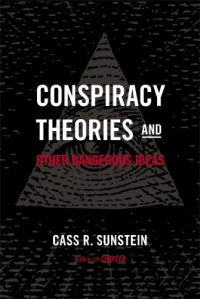 A Review of Conspiracy Theories and Other Dangerous Ideas by Cass Sunstein (based on an earlier paper co-authored with Adrian Vermeule); In Defense of Troublemakers: The Power of Dissent in Life and Business by Charlan Nemeth; and Conspiracy Theories and the People Who Believe Them, edited by Joseph E. Uscinski
On January 25 2018 YouTube unleashed the latest salvo in the war on conspiracy theories, saying “we’ll begin reducing recommendations of borderline content and content that could misinform users in harmful ways—such as videos promoting a phony miracle cure for a serious illness, claiming the earth is flat, or making blatantly false claims about historic events like 9/11.”
At first glance that sounds reasonable. Nobody wants YouTube or anyone else to recommend bad information. And almost everyone agrees that phony miracle cures, flat earthism, and blatantly false claims about 9/11 and other historical events are undesirable.
But if we stop and seriously consider those words, we notice a couple of problems. First, the word “recommend” is not just misleading but mendacious. YouTube obviously doesn’t really recommend anything. When it says it does, it is lying. … continue
Blog Roll
 Aletho News
- BRITAIN’S WARNING: PREPARE FOR WAR
- “Historic Russia”: The Land Putin Will Not Give Back
- How the Cambridge Analytica scandal still haunts Mark Zuckerberg
- The Ongoing Cancellation Campaign Against a Dissenting Academic in Norway
- Yemen and ‘the Houthis’: Challenging Sami Hamdi’s Narrative
- No, Christians did not invent Zionism
- AIPAC-led lobbying network opens branches in Cypriot, Greek parliaments
- Araghchi blasts ‘parasitic’ alliance as US taxpayers pay for Israel’s war on Iran
- Easy fix for Europe’s chaos? Stop fueling war against Russia
- Putin’s key remarks on peace talks and Europe’s ‘schizophrenia’
- If Americans Knew
- An error has occurred; the feed is probably down. Try again later.
- No Tricks Zone
- Two New Studies Find Thwaites Glacier Melt Cannot Be Driven By Human Activity Or A Warming Ocean
- E-Cars Reduce CO2 Emissions By Only 41% Compared To Internal Combustion Engine Vehicles
- Predictions Made By Renowned Climate Professor Over Past Decades Have Been Proven To Be Poor
- New Study Suggests Large Regions Of The Pacific Ocean Have Been Cooling For The Last 80 Years
- Germany’s Green Energy Debacle: High Energy Costs Force Kahla Porzellan to Close After 182 Years!
- New Study: 50 Years Of The Most Aggressive ‘Net Zero’ Policies Can Only Affect The Global Climate By 0.03°C
- US September “Heat” Was No Record…Many Records Set Decades Ago
- Latest European Green Energy Debacle; Portugal’s Largest Flagship Solar Park Insolvent!
- Green Energy Debacle: German Expert Professor Fritz Vahrenholt Warns Of Severe Economic And Social Consequences
- Two More Paleo Reconstructions Affirm Meters-Higher Sea Levels Across Ireland, Brazil 7000-6000 Years Ago

