Palestinians continue the struggle against the Adei Ad outpost
International Solidarity Movement | December 20, 2014
Turmusaya, Occupied Palestine – Hundreds of Palestinian children, women, and men gathered at Turmusaya on Friday December 17th to complete the tree planting began by Palestinian Authority minister Ziad Abu Ein, who was killed by Israeli soldiers on Friday December 10th.
“Ziad was planning to plant olive trees on private Palestinian land near the illegal outpost of Adei Ad, but was violently prevented from reaching the site by the Israeli military who assaulted and killed him. We thought that after killing the minister, yesterday the military would allow us to plant trees peacefully but we found the same soldiers prepared to use even more violence against us,” said human rights defender Abdullah Abu Rahmah.
“Despite the occupation forces’ violence, we planted trees in the place where Ziad had planned to plant them. Despite their violence, we will continue to struggle with the farmers whose land is stolen and the farmers who are prevented from cultivating their land by the occupation.” Abu Rahmah was injured by a stun grenade that was thrown directly at him while he was planting an olive tree.
After praying near the spot where the minister was stopped by the army, protesters with olive trees climbed the hill to the site where Abu Ein had intended to plant trees. They began planting under a barrage of tear gas; stun grenades, and beatings by Israeli border police.

Mohammed Khatib
Two Palestinian activists, Mohammed Khatib and Jaffar Hamayel, Israeli citizen and ISM co-founder Neta Golan, and US citizen and activist Danika Padilla, were all violently arrested.

Danika Padilla, to the left, and Neta Golan as they are arrested.
In another area of the protest, youths responded to the military assault with stones as the army sprayed demonstrators with putrid water known as “skunk”, fired rubber-coated steel bullets and .22 caliber live ammunition. Many demonstrators suffered severe tear gas inhalation and two Palestinians sustained leg injuries from the .22 bullets.
The four arrested activists were taken to the Binyamin settlement police station. Neta and Danika were released in the early hours of this morning. Mohammed and Jaffar have been charged with assaulting and disturbing the border police and rioting after being told to disperse. They have been taken to the Russian Compound police station in West Jerusalem where they will remain in detention until their court date tomorrow, December 21st, at Ofer military court.

Jaffar Hamayel
~
More from Yesh Din:
The outpost of Adei Ad sits on land belonging to the villages of Jalud, Al Mughayer, Qaryut and Turmusaya. Twenty-six percent of the constructed area of the outpost sits atop private Palestinian land, while the rest was built on “public land” allotted by the Settlement Division of the World Zionist Organization (Hebrew). The Palestinian agricultural land around the outpost is classified as private and unregistered.. As a direct result of the building of the outpost, residents of the four villages have systematically lost access to their land and found themselves victims of violence by Israeli civilians. Between 1998 and 2012 we managed to document 96 criminal incidents around the outpost. It is important to note that these are not all the criminal incidents that took place near the outpost, but merely those we managed to document (the actual number must be assumed to be significantly higher). Most of the incidents consisted of theft or vandalism, although 22 percent included physical assault or threats by use of a weapon. The Samaria and Judea Police Department (SJPD), as usual, proved incompetent: of the 56 cases in Yesh Din documented a complaint filed with the police, 46 – 80 percent – were closed due to the failure of the police investigation. We must further note that since April 2013, when our report was published, Yesh Din investigators documented 13 more incidents around Adei Ad, one of which included violence.
The violence surrounding Adei Ad has a clear, ideological reason: to strike fear in the heart of the Palestinians and dispossess them of their land. Israeli civilians have taken over this land rapidly: in 1998 the size of the outpost was 15,554 square meters; in 2010 it ballooned into 465,331 square meters, growing some 30 times in size. At the time our report was published, 26 families lived in Adei Ad.
Due to the presence of these 26 families, the situation of the villages whose land was taken over by Adei Ad has deteriorated greatly. The fear of working your land with the knowledge that you may be attacked by outlaws, that no one will protect you and that the area’s ruler will turn a blind eye, leads Palestinians to abandon their villages. While we do not have data on Al Mughayer and Turmusaya, we do know that 6,000 people have already left Qaryut, leaving only 2,800 residents. Of the 1,000 residents of Jalud, 400 have abandoned the village.
The very presence of Adei Ad harms the right of the Palestinians to their property with the support of the authorities (these are mostly agrarian communities who make their livelihood off of the land). As soon as the outpost was built, the army hastened to declare areas around it as closed off to Palestinians. Sometimes these took the form of undocumented, oral orders (which cannot be appealed), while other times these were official orders. But when the rights of the Palestinians to the land collided with the lack of rights of the squatters, the army stood (and continues to stand) by the latter time and time again. This harms not just the right of the Palestinians to their land, located in Area C and under full Israeli military and civil control, but also their right to freedom of movement and right to work.
And all this so that 26 families can lord over a territory of 465,321 square meters (not including a much larger region around the outpost, where Palestinians are routinely denied entry). The economic existence of four villages is endangered – leaving their residents defenseless in the face of ideological violence – in the name of 26 families of the chosen people, who are sentenced in one justice system while their neighbours are sentenced in another.
Yet Adei Ad is but one outpost. There are about 100 of them, and a 100 more proper settlements.
Palestinian woman who stabbed Israeli settler was defending herself: official
Al-Akhbar | December 17, 2014
A Palestinian woman suspected of stabbing an Israeli settler on December 1 was defending herself after being harassed by the man, a Palestinian official claimed Tuesday.
Amal Jamal Taqatqa, 22, was shot and critically wounded by soldiers near Gush Etzion on December 1 after allegedly stabbing an Israeli settler.
The director of Bethlehem’s military liaison department told Ma’an news agency that officials requested an investigation into the shooting, but that it has been delayed due to the political atmosphere.
“Is it reasonable that 46 surveillance cameras in Gush Etzion settlement bloc have failed to document what really happened between Amal Taqatqa, 22, from Beit Fajjar and an Israeli settler who claimed that she attempted to stab him?” Khaled Qaddura said.
Taqatqa reportedly engaged in a hand-to-hand fight with the settler after he verbally abused her, causing a minor scratch to the settler’s neck, Qaddura said.
“At that point, the settlers asked an Israeli soldier who was in the area to shoot the girl, and the soldier immediately shot her in the chest. The girl fell to the ground then tried to get up and run away, but the soldier shot her again in the feet causing her to fall down again then he approached her and shot a last round,” the official added.
Taqatqa is still receiving medical treatment at Hadassah hospital and is in a stable condition.
Qaddura slammed Israel’s labeling of Taqarqa as a “terrorist”, noting that the term “terrorism” is used automatically when Israelis – whether civilians or soldiers – are injured.
He urged Palestinians who witness such incidents to film them or record the registration number of the military vehicles involved.
Unrest has gripped Jerusalem and the West Bank on an almost daily basis for the past five months, flaring up after a group of Zionist settlers kidnapped and burned a young Palestinian to death because of his ethnicity, and worsened by the deadly Israeli assault on the Gaza Strip in July and August.
(Ma’an, Al-Akhbar)
Israel earmarks Palestinian land for natural reserve
Ma’an – December 14, 2014
NABLUS – In an indirect way to confiscate private Palestinian land, Israeli authorities have earmarked hundreds of acres in the western outskirts of the village of Kafr al-Dik near Salfit in the central West Bank as natural reserves, a researcher said Sunday.
Khalid Maali told Ma’an that Israeli forces have seized a bulldozer while trying to enlarge a dirt road in the area known locally as Banat Bar. The driver was told that he was unlawfully excavating in a natural reserve.
The soldiers seized the bulldozer without telling the driver when or how he can take it back.
The Banat Bar area is located near the Israeli settlements of Ale Zahav, Peduel and Leshem.
Maali said that earmarking Palestinian land as a natural reserve was part of preparation for confiscation so as to expand the three settlements.
AL-KHALIL (HEBRON): Israeli military arbitrarily change rules around Checkpoint 56 closure, detains elderly, sick people
CPTnet | December 12, 2014
On 10 December, Israeli soldiers prevented teachers from the Qurtuba School, elderly people, a disabled man, and both a doctor and an ill woman trying to reach the hospital from passing through Checkpoint 56 in Hebron. In some cases, they delayed people trying to pass through for one hour; in others, as much as three.
Checkpoint 56 has been subject to closure and restrictions by Israeli forces since it was burned from the inside nearly three weeks ago.
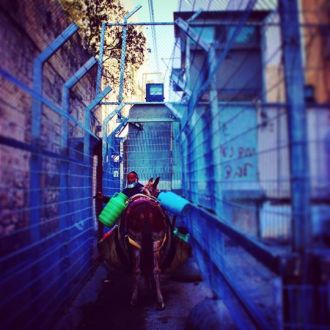 No one knows who is responsible for the burning of the checkpoint, and Israeli forces have not released footage.
Leading onto the small section of Shuhada Street on which Palestinians are allowed to walk, checkpoint 56 connects Bab iZaweyya, the commercial district in Palestinian Authority-governed H1, with the neighbourhood of Tel Rumeida in Israeli-controlled H2.
Checkpoint closure here demands that families living in Tel Rumeida and school children and teachers from the Qurtuba School walk an extra hour or that they walk a difficult route through the homes and gardens of other Palestinians to reach their homes. For the past week, Israeli soldiers and border police have permitted elderly people, teachers, children and ill people seeking medical treatment to pass the checkpoint.
When CPTers arrived at 11:00 a.m. on 12 December, one 60-year-old doctor told them that he had been at the checkpoint for two hours.
CPTers, ISMers, and those wishing to pass through the checkpoint, attempted to ascertain the reasoning behind this change, which was subjecting teachers leaving work, and older people of varying physical abilities to stand in the sun for hours. CPT and ISM stood in solidarity with the affected Palestinians and joined them in negotiating with soldiers to reopen the checkpoint.
At about 12:00 p.m., soldiers allowed individuals through the checkpoint one by one until approximately twenty minutes later when an elderly man arrived with a donkey, which initiated another arbitrary change in the ‘rules’ of occupation. The Israeli military again closed the checkpoint, and CPT was unable to gain an answer from the soldiers as to why this donkey appeared to necessitate another closure.
Israeli settlers stab Palestinian youth on his family’s land
CPTnet | December 9, 2014
 On 8 December 2014, Israeli settlers attacked seventeen-year-old Palestinian boy, Moad Al Rajabi on his family land in Bani Naim, on the outskirts of Al-Khalil/Hebron. He was sitting with his father, Noah Al Rajabi, and two of his cousins when settler cars stopped nearby. As seven settlers exited the cars and came towards them, Noah ran away with his two nephews, believing that his son was also with him. He soon realised his son was not there, and turned to see seventeen-year-old Moad encircled by the settlers.
The seven were stabbing Moad, but fled as Noah ran back in a bid to rescue his son from the assault. Moad required hospitalization to treat the stab wounds, one of which penetrated to the bones in the hand; the other was on his thigh. He is now stable, and the hospital hopes to discharge him later today.
The Al Rajabi family has also suffered the violence of home demolition and the destruction of their livelihood by the Israeli military. In May 2012, Israeli forces destroyed the family’s dairy farm and home, which was on the land where Moad was stabbed yesterday. Commenting on the destruction of the caravan (mobile home) in which the family lived, an iron barn stabling cows, milking machines and other equipment worth over 8000 USD, Noah explained that the Israeli army not “only destroy[ed] my livelihood but also the livelihoods of three other families; our farm is our bread and butter.” The Al Rajabi family has continued to have financial difficulties ever since the demolition.
Is Torah Jewish, or is it Zionist?
By Nahida the Exiled Palestinian
For years, I was asking to be shown the most revered, most glorified, most bragged about values, namely the “Jewish values”, to no avail.
At every occasion, defenders of “Jewishness” and Jewish ideology, would repeat the mantra, Judaism has NOTHING to do with Zionism, and Zionism does not originate from Judaism, nor does it represent “Jewish values”.
Then when I ask about these “Jewish values”, and request to be shown what they are, I am faced with deafening silence. In my quest for answers, I dove into the heart of the matter, I set off on a mission, searching for these mystical values, by myself. What better place to start, but the Jewish Bible, Torah?
This is what I found
Yeshayahu- Isaiah – Chapter 60
10. And foreigners shall build your walls, and their kings shall serve you, for in My wrath I struck you, and in My grace have I had mercy on you. י. וּבָנוּ בְנֵי נֵכָר חֹמֹתַיִךְ וּמַלְכֵיהֶם יְשָׁרְתוּנֶךְ כִּי בְקִצְפִּי הִכִּיתִיךְ וּבִרְצוֹנִי רִחַמְתִּיךְ:
.
11. And they shall open your gates always; day and night they shall not be closed, to bring to you the wealth of the nations and their kings in procession. יא. וּפִתְּחוּ שְׁעָרַיִךְ תָּמִיד יוֹמָם וָלַיְלָה לֹא יִסָּגֵרוּ לְהָבִיא אֵלַיִךְ חֵיל גּוֹיִם וּמַלְכֵיהֶם נְהוּגִים:
.
12. For the nation and the kingdom that shall not serve you shall perish, and the nations shall be destroyed. יב. כִּי הַגּוֹי וְהַמַּמְלָכָה אֲשֶׁר לֹא יַעַבְדוּךְ יֹאבֵדוּ וְהַגּוֹיִם חָרֹב יֶחֱרָבוּ:
.
14. And the children of your oppressors shall go to you bent over, and those who despised you shall prostrate themselves at the soles of your feet, and they shall call you ‘the city of the Lord, Zion of the Holy One of Israel.’ יד. וְהָלְכוּ אֵלַיִךְ שְׁחוֹחַ בְּנֵי מְעַנַּיִךְ וְהִשְׁתַּחֲווּ עַל כַּפּוֹת רַגְלַיִךְ כָּל מְנַאֲצָיִךְ וְקָרְאוּ לָךְ עִיר יְהֹוָה צִיּוֹן קְדוֹשׁ יִשְׂרָאֵל:
.
16. And you shall suck the milk of nations and the breast of kings you shall suck, and you shall know that I am the Lord, your Savior, and your Redeemer, the Mighty One of Jacob. טז. וְיָנַקְתְּ חֲלֵב גּוֹיִם וְשֹׁד מְלָכִים תִּינָקִי וְיָדַעַתְּ כִּי אֲנִי יְהֹוָה מוֹשִׁיעֵךְ וְגֹאֲלֵךְ אֲבִיר יַעֲקֹב:
.


Devarim – Deuteronomy – Chapter 23
20. You shall not give interest to your brother, [whether it be] interest on money, interest on food or interest on any [other] item for which interest is [normally] taken. כ. לֹא תַשִּׁיךְ לְאָחִיךָ נֶשֶׁךְ כֶּסֶף נֶשֶׁךְ אֹכֶל נֶשֶׁךְ כָּל דָּבָר אֲשֶׁר יִשָּׁךְ:
.
21. You may [however,] give interest to a gentile, but to your brother you shall not give interest, in order that the Lord, your God, shall bless you in every one of your endeavors on the land to which you are coming to possess. כא. לַנָּכְרִי תַשִּׁיךְ וּלְאָחִיךָ לֹא תַשִּׁיךְ לְמַעַן יְבָרֶכְךָ יְהֹוָה אֱלֹהֶיךָ בְּכֹל מִשְׁלַח יָדֶךָ עַל הָאָרֶץ אֲשֶׁר אַתָּה בָא שָׁמָּה לְרִשְׁתָּהּ:
.


Devarim – Deuteronomy – Chapter 7
1. When the Lord, your God, brings you into the land to which you are coming to possess it, He will cast away many nations from before you: the Hittites, the Girgashites, the Amorites, the Canaanites, the Perizzites, the Hivvites, and the Jebusites, seven nations more numerous and powerful that you. א. כִּי יְבִיאֲךָ יְהֹוָה אֱלֹהֶיךָ אֶל הָאָרֶץ אֲשֶׁר אַתָּה בָא שָׁמָּה לְרִשְׁתָּהּ וְנָשַׁל גּוֹיִם רַבִּים | מִפָּנֶיךָ הַחִתִּי וְהַגִּרְגָּשִׁי וְהָאֱמֹרִי וְהַכְּנַעֲנִי וְהַפְּרִזִּי וְהַחִוִּי וְהַיְבוּסִי שִׁבְעָה גוֹיִם רַבִּים וַעֲצוּמִים מִמֶּךָּ:
.
2. And the Lord, your God, will deliver them to you, and you shall smite them. You shall utterly destroy them; neither shall you make a covenant with them, nor be gracious to them. ב. וּנְתָנָם יְהֹוָה אֱלֹהֶיךָ לְפָנֶיךָ וְהִכִּיתָם הַחֲרֵם תַּחֲרִים אֹתָם לֹא תִכְרֹת לָהֶם בְּרִית וְלֹא תְחָנֵּם:
.
3. You shall not intermarry with them; you shall not give your daughter to his son, and you shall not take his daughter for your son. ג. וְלֹא תִתְחַתֵּן בָּם בִּתְּךָ לֹא תִתֵּן לִבְנוֹ וּבִתּוֹ לֹא תִקַּח לִבְנֶךָ:
.
5. But so shall you do to them: You shall demolish their altars and smash their monuments, and cut down their asherim trees, and burn their graven images with fire. ה. כִּי אִם כֹּה תַעֲשׂוּ לָהֶם מִזְבְּחֹתֵיהֶם תִּתֹּצוּ וּמַצֵּבֹתָם תְּשַׁבֵּרוּ וַאֲשֵׁירֵהֶם תְּגַדֵּעוּן וּפְסִילֵיהֶם תִּשְׂרְפוּן בָּאֵשׁ:
.
6. For you are a holy people to the Lord, your God: the Lord your God has chosen you to be His treasured people, out of all the peoples upon the face of the earth. ו. כִּי עַם קָדוֹשׁ אַתָּה לַיהֹוָה אֱלֹהֶיךָ בְּךָ בָּחַר | יְהֹוָה אֱלֹהֶיךָ לִהְיוֹת לוֹ לְעַם סְגֻלָּה מִכֹּל הָעַמִּים אֲשֶׁר עַל פְּנֵי הָאֲדָמָה:
.
13. And He will love you and bless you and multiply you; He will bless the fruit of your womb and the fruit of your soil, your grain, your wine, and your oil, the offspring of your cattle and the choice of your flocks, in the land which He swore to your forefathers to give you. יג. וַאֲהֵבְךָ וּבֵרַכְךָ וְהִרְבֶּךָ וּבֵרַךְ פְּרִי בִטְנְךָ וּפְרִי אַדְמָתֶךָ דְּגָנְךָ וְתִירשְׁךָ וְיִצְהָרֶךָ שְׁגַר אֲלָפֶיךָ וְעַשְׁתְּרֹת צֹאנֶךָ עַל הָאֲדָמָה אֲשֶׁר נִשְׁבַּע לַאֲבֹתֶיךָ לָתֶת לָךְ:
.
14. You shall be blessed above all peoples: There will be no sterile male or barren female among you or among your livestock. יד. בָּרוּךְ תִּהְיֶה מִכָּל הָעַמִּים לֹא יִהְיֶה בְךָ עָקָר וַעֲקָרָה וּבִבְהֶמְתֶּךָ:
.
15. And the Lord will remove from you all illness, and all of the evil diseases of Egypt which you knew, He will not set upon you, but He will lay them upon all your enemies. טו. וְהֵסִיר יְהֹוָה מִמְּךָ כָּל חֹלִי וְכָל מַדְוֵי מִצְרַיִם הָרָעִים אֲשֶׁר יָדַעְתָּ לֹא יְשִׂימָם בָּךְ וּנְתָנָם בְּכָל שׂנְאֶיךָ:
.
16. And you shall consume all the peoples which the Lord your God gives you; you shall not spare them, nor shall you worship their gods, for that will be a snare for you. טז. וְאָכַלְתָּ אֶת כָּל הָעַמִּים אֲשֶׁר יְהֹוָה אֱלֹהֶיךָ נֹתֵן לָךְ לֹא תָחוֹס עֵינְךָ עֲלֵיהֶם וְלֹא תַעֲבֹד אֶת אֱלֹהֵיהֶם כִּי מוֹקֵשׁ הוּא לָךְ:
.
20. And also the tzir’ah, the Lord, your God, will incite against them, until the survivors and those who hide from you perish. כ. וְגַם אֶת הַצִּרְעָה יְשַׁלַּח יְהֹוָה אֱלֹהֶיךָ בָּם עַד אֲבֹד הַנִּשְׁאָרִים וְהַנִּסְתָּרִים מִפָּנֶיךָ:
.
23. But the Lord, your God, will deliver them to you, and He will confound them with great confusion, until they are destroyed. כג. וּנְתָנָם יְהֹוָה אֱלֹהֶיךָ לְפָנֶיךָ וְהָמָם מְהוּמָה גְדֹלָה עַד הִשָּׁמְדָם:
.
24. And He will deliver their kings into your hand, and you will destroy their name from beneath the heavens; no man will be able to stand up before you, until you have destroyed them. כד. וְנָתַן מַלְכֵיהֶם בְּיָדֶךָ וְהַאֲבַדְתָּ אֶת שְׁמָם מִתַּחַת הַשָּׁמָיִם לֹא יִתְיַצֵּב אִישׁ בְּפָנֶיךָ עַד הִשְׁמִדְךָ אֹתָם:
.
Devarim – Deuteronomy – Chapter 7


Devarim – Deuteronomy – Chapter 9
5. Not because of your righteousness or because of the honesty of your heart, do you come to possess their land, but because of the wickedness of these nations, the Lord your God drives them out from before you, and in order to establish the matter that the Lord swore to your forefathers, Abraham, Isaac, and Jacob. ה. לֹא בְצִדְקָתְךָ וּבְישֶׁר לְבָבְךָ אַתָּה בָא לָרֶשֶׁת אֶת אַרְצָם כִּי בְּרִשְׁעַת | הַגּוֹיִם הָאֵלֶּה יְהֹוָה אֱלֹהֶיךָ מוֹרִישָׁם מִפָּנֶיךָ וּלְמַעַן הָקִים אֶת הַדָּבָר אֲשֶׁר נִשְׁבַּע יְהֹוָה לַאֲבֹתֶיךָ לְאַבְרָהָם לְיִצְחָק וּלְיַעֲקֹב:
.
6. You shall know that, not because of your righteousness, the Lord, your God, gives you this land to possess it; for you are a stiffnecked people. ו. וְיָדַעְתָּ כִּי לֹא בְצִדְקָתְךָ יְהֹוָה אֱלֹהֶיךָ נֹתֵן לְךָ אֶת הָאָרֶץ הַטּוֹבָה הַזֹּאת לְרִשְׁתָּהּ כִּי עַם קְשֵׁה עֹרֶף אָתָּה:
.


Devarim – Deuteronomy – Chapter 28
1. And it will be if you obey the Lord, your God, to observe to fulfill all His commandments which I command you this day, the Lord, your God, will place you supreme above all the nations of the earth. א. וְהָיָה אִם שָׁמוֹעַ תִּשְׁמַע בְּקוֹל יְהֹוָה אֱלֹהֶיךָ לִשְׁמֹר לַעֲשׂוֹת אֶת כָּל מִצְוֹתָיו אֲשֶׁר אָנֹכִי מְצַוְּךָ הַיּוֹם וּנְתָנְךָ יְהֹוָה אֱלֹהֶיךָ עֶלְיוֹן עַל כָּל גּוֹיֵי הָאָרֶץ:
.
12. The Lord will open up for you His good treasury, the heaven, to give your land its rain in its [right] time, and to bless everything you do. And you will lend many nations, but you will not [need to] borrow. יב. יִפְתַּח יְהֹוָה | לְךָ אֶת אוֹצָרוֹ הַטּוֹב אֶת הַשָּׁמַיִם לָתֵת מְטַר אַרְצְךָ בְּעִתּוֹ וּלְבָרֵךְ אֵת כָּל מַעֲשֵׂה יָדֶךָ וְהִלְוִיתָ גּוֹיִם רַבִּים וְאַתָּה לֹא תִלְוֶה:
.

Devarim – Deuteronomy – Chapter 11
23. then the Lord will drive out all these nations from before you, and you will possess nations greater and stronger than you. כג. וְהוֹרִישׁ יְהֹוָה אֶת כָּל הַגּוֹיִם הָאֵלֶּה מִלִּפְנֵיכֶם וִירִשְׁתֶּם גּוֹיִם גְּדֹלִים וַעֲצֻמִים מִכֶּם:
.
24. Every place upon which the soles of your feet will tread, will be yours: from the desert and the Lebanon, from the river, the Euphrates River, and until the western sea, will be your boundary. כד. כָּל הַמָּקוֹם אֲשֶׁר תִּדְרֹךְ כַּף רַגְלְכֶם בּוֹ לָכֶם יִהְיֶה מִן הַמִּדְבָּר וְהַלְּבָנוֹן מִן הַנָּהָר נְהַר פְּרָת וְעַד הַיָּם הָאַחֲרוֹן יִהְיֶה גְּבֻלְכֶם:
.
25. No man will stand up before you; the Lord your God will cast the fear of you and the dread of you on all the land upon which you tread, as He spoke to you. כה. לֹא יִתְיַצֵּב אִישׁ בִּפְנֵיכֶם פַּחְדְּכֶם וּמוֹרַאֲכֶם יִתֵּן | יְהֹוָה אֱלֹהֵיכֶם עַל פְּנֵי כָל הָאָרֶץ אֲשֶׁר תִּדְרְכוּ בָהּ כַּאֲשֶׁר דִּבֶּר לָכֶם:
.
29. And it will be, when the Lord, your God, will bring you to the land to which you come, to possess it, that you shall place those blessing upon Mount Gerizim, and those cursing upon Mount Ebal. כט. וְהָיָה כִּי יְבִיאֲךָ יְהֹוָה אֱלֹהֶיךָ אֶל הָאָרֶץ אֲשֶׁר אַתָּה בָא שָׁמָּה לְרִשְׁתָּהּ וְנָתַתָּה אֶת הַבְּרָכָה עַל הַר גְּרִזִּים וְאֶת הַקְּלָלָה עַל הַר עֵיבָל:
.
31. For you are crossing the Jordan, to come to possess the land which the Lord, your God, is giving you, and you shall possess it and dwell in it. לא. כִּי אַתֶּם עֹבְרִים אֶת הַיַּרְדֵּן לָבֹא לָרֶשֶׁת אֶת הָאָרֶץ אֲשֶׁר יְהֹוָה אֱלֹהֵיכֶם נֹתֵן לָכֶם וִירִשְׁתֶּם אֹתָהּ וִישַׁבְתֶּם בָּהּ:
.



Devarim – Deuteronomy – Chapter 12
1. These are the statutes and ordinances that you shall keep to perform in the land which the Lord God of your fathers gives you to possess all the days that you live on the earth. א. אֵלֶּה הַחֻקִּים וְהַמִּשְׁפָּטִים אֲשֶׁר תִּשְׁמְרוּן לַעֲשׂוֹת בָּאָרֶץ אֲשֶׁר נָתַן יְהֹוָה אֱלֹהֵי אֲבֹתֶיךָ לְךָ לְרִשְׁתָּהּ כָּל הַיָּמִים אֲשֶׁר אַתֶּם חַיִּים עַל הָאֲדָמָה:
.
2. You shall utterly destroy from all the places where the nations, that you shall possess, worshipped their gods, upon the lofty mountains and upon the hills, and under every lush tree. ב. אַבֵּד תְּאַבְּדוּן אֶת כָּל הַמְּקֹמוֹת אֲשֶׁר עָבְדוּ שָׁם הַגּוֹיִם אֲשֶׁר אַתֶּם יֹרְשִׁים אֹתָם אֶת אֱלֹהֵיהֶם עַל הֶהָרִים הָרָמִים וְעַל הַגְּבָעוֹת וְתַחַת כָּל עֵץ רַעֲנָן:
.
3. And you shall tear down their altars, smash their monuments, burn their asherim with fire, cut down the graven images of their gods, and destroy their name from that place. ג. וְנִתַּצְתֶּם אֶת מִזְבְּחֹתָם וְשִׁבַּרְתֶּם אֶת מַצֵּבֹתָם וַאֲשֵׁרֵיהֶם תִּשְׂרְפוּן בָּאֵשׁ וּפְסִילֵי אֱלֹהֵיהֶם תְּגַדֵּעוּן וְאִבַּדְתֶּם אֶת שְׁמָם מִן הַמָּקוֹם הַהוּא:
.
10. And you shall cross the Jordan and settle in the land the Lord, your God, is giving you as an inheritance, and He will give you rest from all your enemies surrounding you, and you will dwell securely. י. וַעֲבַרְתֶּם אֶת הַיַּרְדֵּן וִישַׁבְתֶּם בָּאָרֶץ אֲשֶׁר יְהֹוָה אֱלֹהֵיכֶם מַנְחִיל אֶתְכֶם וְהֵנִיחַ לָכֶם מִכָּל אֹיְבֵיכֶם מִסָּבִיב וִישַׁבְתֶּם בֶּטַח:
.
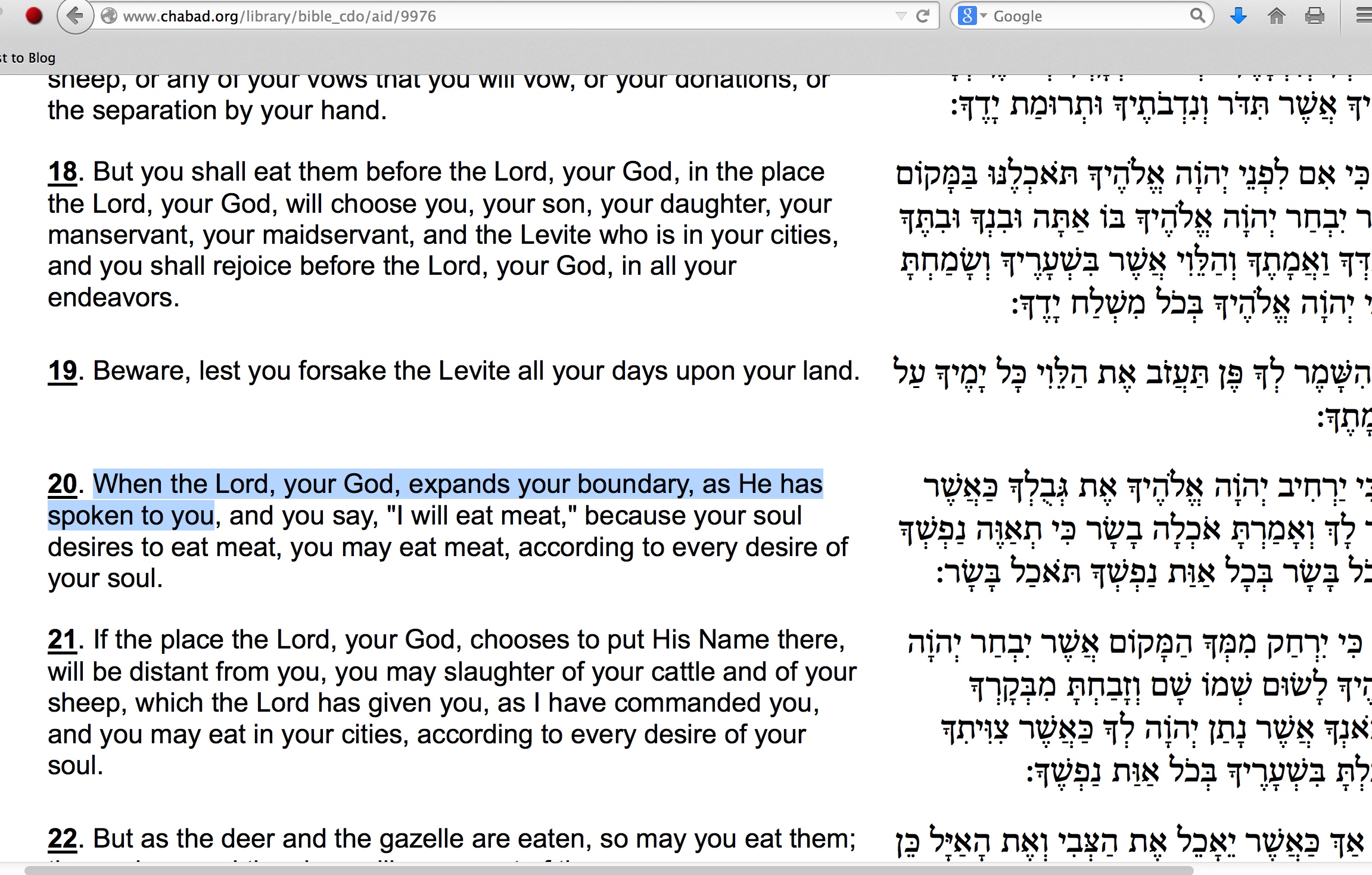
20. When the Lord, your God, expands your boundary, as He has spoken to you, and you say, “I will eat meat,” because your soul desires to eat meat, you may eat meat, according to every desire of your soul. כ. כִּי יַרְחִיב יְהֹוָה אֱלֹהֶיךָ אֶת גְּבֻלְךָ כַּאֲשֶׁר דִּבֶּר לָךְ וְאָמַרְתָּ אֹכְלָה בָשָׂר כִּי תְאַוֶּה נַפְשְׁךָ לֶאֱכֹל בָּשָׂר בְּכָל אַוַּת נַפְשְׁךָ תֹּאכַל בָּשָׂר:
.
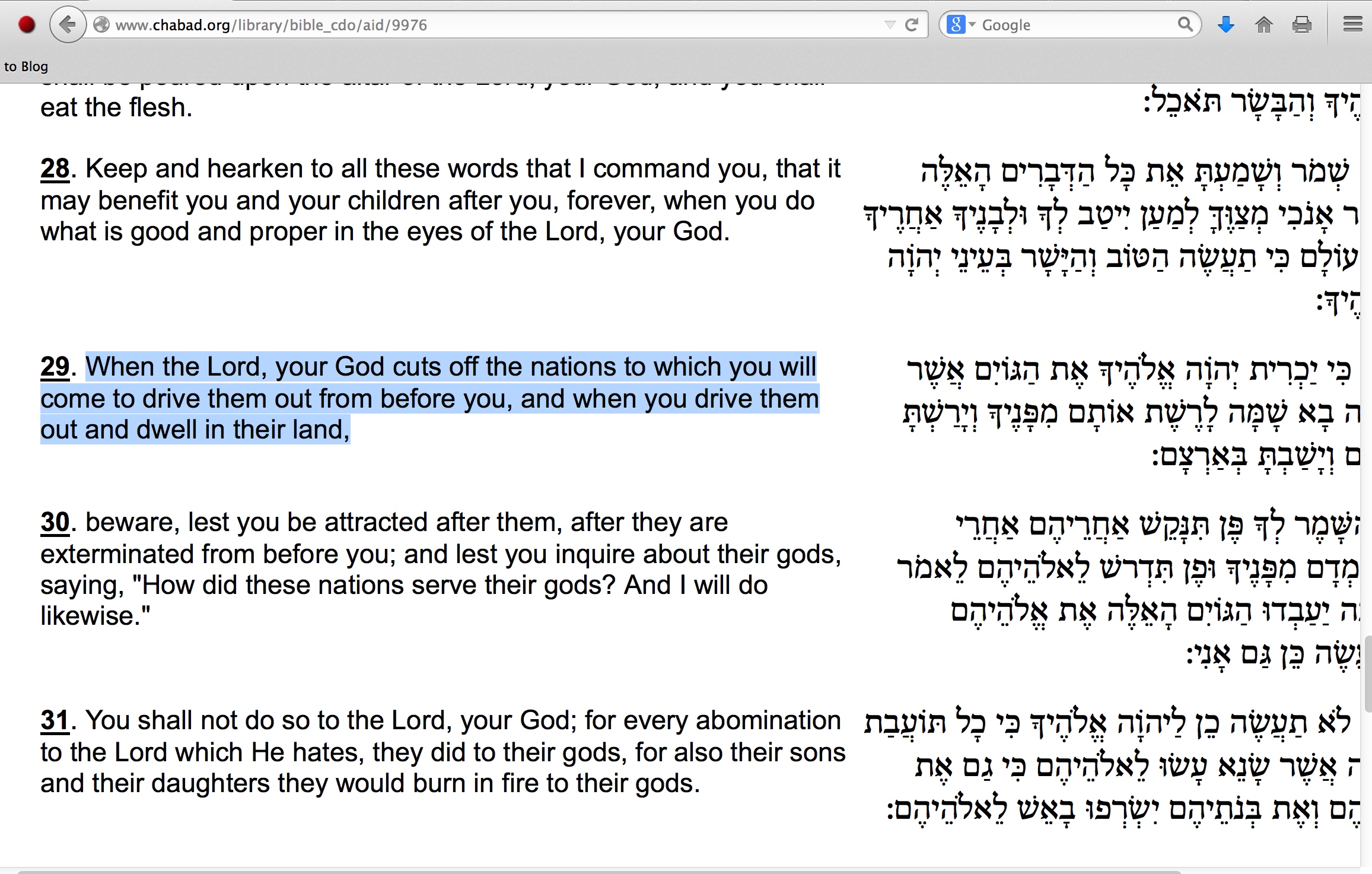
29. When the Lord, your God cuts off the nations to which you will come to drive them out from before you, and when you drive them out and dwell in their land, כט. כִּי יַכְרִית יְהֹוָה אֱלֹהֶיךָ אֶת הַגּוֹיִם אֲשֶׁר אַתָּה בָא שָׁמָּה לָרֶשֶׁת אוֹתָם מִפָּנֶיךָ וְיָרַשְׁתָּ אֹתָם וְיָשַׁבְתָּ בְּאַרְצָם:
.
30. beware, lest you be attracted after them, after they are exterminated from before you; and lest you inquire about their gods, saying, “How did these nations serve their gods? And I will do likewise.” ל. הִשָּׁמֶר לְךָ פֶּן תִּנָּקֵשׁ אַחֲרֵיהֶם אַחֲרֵי הִשָּׁמְדָם מִפָּנֶיךָ וּפֶן תִּדְרשׁ לֵאלֹהֵיהֶם לֵאמֹר אֵיכָה יַעַבְדוּ הַגּוֹיִם הָאֵלֶּה אֶת אֱלֹהֵיהֶם וְאֶעֱשֶׂה כֵּן גַּם אָנִי:
.



Devarim – Deuteronomy – Chapter 20
10. When you approach a city to wage war against it, you shall propose peace to it. י. כִּי תִקְרַב אֶל עִיר לְהִלָּחֵם עָלֶיהָ וְקָרָאתָ אֵלֶיהָ לְשָׁלוֹם:
.
11. And it will be, if it responds to you with peace, and it opens up to you, then it will be, [that] all the people found therein shall become tributary to you, and they shall serve you. יא. וְהָיָה אִם שָׁלוֹם תַּעַנְךָ וּפָתְחָה לָךְ וְהָיָה כָּל הָעָם הַנִּמְצָא בָהּ יִהְיוּ לְךָ לָמַס וַעֲבָדוּךָ:
.
12. But if it does not make peace with you, and it wages war against you, you shall besiege it, יב. וְאִם לֹא תַשְׁלִים עִמָּךְ וְעָשְׂתָה עִמְּךָ מִלְחָמָה וְצַרְתָּ עָלֶיהָ:
.
13. and the Lord, your God, will deliver it into your hands, and you shall strike all its males with the edge of the sword. יג. וּנְתָנָהּ יְהֹוָה אֱלֹהֶיךָ בְּיָדֶךָ וְהִכִּיתָ אֶת כָּל זְכוּרָהּ לְפִי חָרֶב:
.
14. However, the women, the children, and the livestock, and all that is in the city, all its spoils you shall take for yourself, and you shall eat the spoils of your enemies, which the Lord, your God, has given you. יד. רַק הַנָּשִׁים וְהַטַּף וְהַבְּהֵמָה וְכֹל אֲשֶׁר יִהְיֶה בָעִיר כָּל שְׁלָלָהּ תָּבֹז לָךְ וְאָכַלְתָּ אֶת שְׁלַל אֹיְבֶיךָ אֲשֶׁר נָתַן יְהֹוָה אֱלֹהֶיךָ לָךְ:
.
15. Thus you shall do to all the cities that are very far from you, which are not of the cities of these nations. טו. כֵּן תַּעֲשֶׂה לְכָל הֶעָרִים הָרְחֹקֹת מִמְּךָ מְאֹד אֲשֶׁר לֹא מֵעָרֵי הַגּוֹיִם הָאֵלֶּה הֵנָּה:
.
16. However, of these peoples’ cities, which the Lord, your God, gives you as an inheritance, you shall not allow any soul to live. טז. רַק מֵעָרֵי הָעַמִּים הָאֵלֶּה אֲשֶׁר יְהֹוָה אֱלֹהֶיךָ נֹתֵן לְךָ נַחֲלָה לֹא תְחַיֶּה כָּל נְשָׁמָה:
.
17. Rather, you shall utterly destroy them: The Hittites, and the Amorites, the Canaanites, and the Perizzites, the Hivvites, and the Jebusites, as the Lord, your God, has commanded you. יז. כִּי הַחֲרֵם תַּחֲרִימֵם הַחִתִּי וְהָאֱמֹרִי הַכְּנַעֲנִי וְהַפְּרִזִּי הַחִוִּי וְהַיְבוּסִי כַּאֲשֶׁר צִוְּךָ יְהֹוָה אֱלֹהֶיךָ:
.


Devarim – Deuteronomy – Chapter 25
5. If brothers reside together, and one of them dies having no son, the dead man’s wife shall not marry an outsider. [Rather,] her husband’s brother shall be intimate with her, making her a wife for himself, thus performing the obligation of a husband’s brother with her. ה. כִּי יֵשְׁבוּ אַחִים יַחְדָּו וּמֵת אַחַד מֵהֶם וּבֵן אֵין לוֹ לֹא תִהְיֶה אֵשֶׁת הַמֵּת הַחוּצָה לְאִישׁ זָר יְבָמָהּ יָבֹא עָלֶיהָ וּלְקָחָהּ לוֹ לְאִשָּׁה וְיִבְּמָהּ:
.
11. If [two] men, a man and his brother, are fighting together, and the wife of one of them approaches to rescue her husband from his assailant, and she stretches forth her hand and grabs hold of his private parts יא. כִּי יִנָּצוּ אֲנָשִׁים יַחְדָּו אִישׁ וְאָחִיו וְקָרְבָה אֵשֶׁת הָאֶחָד לְהַצִּיל אֶת אִישָׁהּ מִיַּד מַכֵּהוּ וְשָׁלְחָה יָדָהּ וְהֶחֱזִיקָה בִּמְבֻשָׁיו:
.
12. you shall cut off her hand You shall not have pity. יב. וְקַצֹּתָה אֶת כַּפָּהּ לֹא תָחוֹס עֵינֶךָ:
.
17. You shall remember what Amalek did to you on the way, when you went out of Egypt, יז. זָכוֹר אֵת אֲשֶׁר עָשָׂה לְךָ עֲמָלֵק בַּדֶּרֶךְ בְּצֵאתְכֶם מִמִּצְרָיִם:
.
19. [Therefore,] it will be, when the Lord your God grants you respite from all your enemies around [you] in the land which the Lord, your God, gives to you as an inheritance to possess, that you shall obliterate the remembrance of Amalek from beneath the heavens. You shall not forget! יט. וְהָיָה בְּהָנִיחַ יְהֹוָה אֱלֹהֶיךָ | לְךָ מִכָּל אֹיְבֶיךָ מִסָּבִיב בָּאָרֶץ אֲשֶׁר יְהֹוָה אֱלֹהֶיךָ נֹתֵן לְךָ נַחֲלָה לְרִשְׁתָּהּ תִּמְחֶה אֶת זֵכֶר * (זֶכֶר) עֲמָלֵק מִתַּחַת הַשָּׁמָיִם לֹא תִּשְׁכָּח:
.


Devarim – Deuteronomy – Chapter 21
10. If you go out to war against your enemies, and the Lord, your God, will deliver him into your hands, and you take his captives, י. כִּי תֵצֵא לַמִּלְחָמָה עַל אֹיְבֶיךָ וּנְתָנוֹ יְהֹוָה אֱלֹהֶיךָ בְּיָדֶךָ וְשָׁבִיתָ שִׁבְיוֹ:
.
11. and you see among the captives a beautiful woman and you desire her, you may take [her] for yourself as a wife. יא. וְרָאִיתָ בַּשִּׁבְיָה אֵשֶׁת יְפַת תֹּאַר וְחָשַׁקְתָּ בָהּ וְלָקַחְתָּ לְךָ לְאִשָּׁה:
.
12. You shall bring her into your home, and she shall shave her head and let her nails grow. יב. וַהֲבֵאתָהּ אֶל תּוֹךְ בֵּיתֶךָ וְגִלְּחָה אֶת רֹאשָׁהּ וְעָשְׂתָה אֶת צִפָּרְנֶיהָ:
.
15. If a man has two wives-one beloved and the other despised-and they bear him sons, the beloved one and the despised one, and the firstborn son is from the despised one. טו. כִּי תִהְיֶיןָ לְאִישׁ שְׁתֵּי נָשִׁים הָאַחַת אֲהוּבָה וְהָאַחַת שְׂנוּאָה וְיָלְדוּ לוֹ בָנִים הָאֲהוּבָה וְהַשְּׂנוּאָה וְהָיָה הַבֵּן הַבְּכֹר לַשְּׂנִיאָה:
.
18. If a man has a wayward and rebellious son, who does not obey his father or his mother, and they chasten him, and [he still] does not listen to them, יח. כִּי יִהְיֶה לְאִישׁ בֵּן סוֹרֵר וּמוֹרֶה אֵינֶנּוּ שֹׁמֵעַ בְּקוֹל אָבִיו וּבְקוֹל אִמּוֹ וְיִסְּרוּ אֹתוֹ וְלֹא יִשְׁמַע אֲלֵיהֶם:
.
19. his father and his mother shall take hold of him and bring him out to the elders of his city, and to the gate of his place. יט. וְתָפְשׂוּ בוֹ אָבִיו וְאִמּוֹ וְהוֹצִיאוּ אֹתוֹ אֶל זִקְנֵי עִירוֹ וְאֶל שַׁעַר מְקֹמוֹ:
.
20. And they shall say to the elders of his city, “This son of ours is wayward and rebellious; he does not obey us; [he is] a glutton and a guzzler.” כ. וְאָמְרוּ אֶל זִקְנֵי עִירוֹ בְּנֵנוּ זֶה סוֹרֵר וּמֹרֶה אֵינֶנּוּ שֹׁמֵעַ בְּקֹלֵנוּ זוֹלֵל וְסֹבֵא:
.
21. And all the men of his city shall pelt him to death with stones, and he shall die. So shall you clear out the evil from among you, and all Israel will listen and fear. כא. וּרְגָמֻהוּ כָּל אַנְשֵׁי עִירוֹ בָאֲבָנִים וָמֵת וּבִעַרְתָּ הָרָע מִקִּרְבֶּךָ וְכָל יִשְׂרָאֵל יִשְׁמְעוּ וְיִרָאוּ:
.


Devarim – Deuteronomy – Chapter 22
15. Then the girl‘s father and her mother shall obtain evidence of the girl’s virginity, and take it out to the elders of the city, to the gate. טו. וְלָקַח אֲבִי הַנַּעֲרָה וְאִמָּהּ וְהוֹצִיאוּ אֶת בְּתוּלֵי הַנַּעֲרָה אֶל זִקְנֵי הָעִיר הַשָּׁעְרָה:
.
16. And the girl’s father shall say to the elders, “I gave my daughter to this man as a wife, and he despised her; טז. וְאָמַר אֲבִי הַנַּעֲרָה אֶל הַזְּקֵנִים אֶת בִּתִּי נָתַתִּי לָאִישׁ הַזֶּה לְאִשָּׁה וַיִּשְׂנָאֶהָ:
.
17. And behold, he made libelous charges, saying, ‘I did not find evidence of your daughter’s virginity.’ But this is the evidence of my daughter’s virginity!’ And they shall spread the garment before the elders of the city. יז. וְהִנֵּה הוּא שָׂם עֲלִילֹת דְּבָרִים לֵאמֹר לֹא מָצָאתִי לְבִתְּךָ בְּתוּלִים וְאֵלֶּה בְּתוּלֵי בִתִּי וּפָרְשׂוּ הַשִּׂמְלָה לִפְנֵי זִקְנֵי הָעִיר:
.
18. Then, the elders of that city shall take the man and chasten him. יח. וְלָקְחוּ זִקְנֵי הָעִיר הַהִוא אֶת הָאִישׁ וְיִסְּרוּ אֹתוֹ:
.
19. And they shall fine him one hundred [shekels of] silver because he defamed a virgin of Israel, and he give it to the girl’s father. And she shall be his wife; he shall not send her away all the days of his life. יט. וְעָנְשׁוּ אֹתוֹ מֵאָה כֶסֶף וְנָתְנוּ לַאֲבִי הַנַּעֲרָה כִּי הוֹצִיא שֵׁם רָע עַל בְּתוּלַת יִשְׂרָאֵל וְלוֹ תִהְיֶה לְאִשָּׁה לֹא יוּכַל לְשַׁלְּחָהּ כָּל יָמָיו:
.
20. But if this matter was true: [indeed,] no evidence of the girl’s virginity was found כ. וְאִם אֱמֶת הָיָה הַדָּבָר הַזֶּה לֹא נִמְצְאוּ בְתוּלִים לַנַּעֲרָה:
.
21. they shall take the girl out to the entrance of her father’s house, and the men of her city shall pelt her with stones, and she shall die, for she did a disgraceful thing in Israel, to commit adultery [in] her father’s house. So shall you clear away the evil from among you. כא. וְהוֹצִיאוּ אֶת הַנַּעֲרָה אֶל פֶּתַח בֵּית אָבִיהָ וּסְקָלוּהָ אַנְשֵׁי עִירָהּ בָּאֲבָנִים וָמֵתָה כִּי עָשְׂתָה נְבָלָה בְּיִשְׂרָאֵל לִזְנוֹת בֵּית אָבִיהָ וּבִעַרְתָּ הָרָע מִקִּרְבֶּךָ:
.
22. If a man is found lying with a married woman, even both of them shall die the man lying with the woman and the woman. So shall you clear away the evil from Israel. כב. כִּי יִמָּצֵא אִישׁ שֹׁכֵב | עִם אִשָּׁה בְעֻלַת בַּעַל וּמֵתוּ גַּם שְׁנֵיהֶם הָאִישׁ הַשֹּׁכֵב עִם הָאִשָּׁה וְהָאִשָּׁה וּבִעַרְתָּ הָרָע מִיִּשְׂרָאֵל:
.
23. If there is a virgin girl betrothed to a man, and [another] man finds her in the city, and lies with her, כג. כִּי יִהְיֶה נַעֲרָה בְתוּלָה מְאֹרָשָׂה לְאִישׁ וּמְצָאָהּ אִישׁ בָּעִיר וְשָׁכַב עִמָּהּ:
.
24. you shall take them both out to the gate of that city, and you shall pelt them with stones, and they shall die: the girl, because she did not cry out [even though she was] in the city, and the man, because he violated his neighbor’s wife. So shall you clear away the evil from among you. כד. וְהוֹצֵאתֶם אֶת שְׁנֵיהֶם אֶל שַׁעַר | הָעִיר הַהִוא וּסְקַלְתֶּם אֹתָם בָּאֲבָנִים וָמֵתוּ אֶת הַנַּעֲרָ עַל דְּבַר אֲשֶׁר לֹא צָעֲקָה בָעִיר וְאֶת הָאִישׁ עַל דְּבַר אֲשֶׁר עִנָּה אֶת אֵשֶׁת רֵעֵהוּ וּבִעַרְתָּ הָרָע מִקִּרְבֶּךָ:
.
28. If a man finds a virgin girl who was not betrothed, and seizes her and lies with her, and they are found, כח. כִּי יִמְצָא אִישׁ נַעֲרָה בְתוּלָה אֲשֶׁר לֹא אֹרָשָׂה וּתְפָשָׂהּ וְשָׁכַב עִמָּהּ וְנִמְצָאוּ:
.
29. the man who lay with her shall give fifty [shekels of] silver to the girl’s father, and she shall become his wife, because he violated her. He shall not send her away all the days of his life. כט. וְנָתַן הָאִישׁ הַשֹּׁכֵב עִמָּהּ לַאֲבִי הַנַּעֲרָה חֲמִשִּׁים כָּסֶף וְלוֹ תִהְיֶה לְאִשָּׁה תַּחַת אֲשֶׁר עִנָּהּ לֹא יוּכַל שַׁלְּחָהּ כָּל יָמָיו:
.


Vayikra – Leviticus – Chapter 26
38. I am the Lord, your God, Who took you out of the land of Egypt, to give you the land of Canaan, to be a God to you. לח. אֲנִי יְהֹוָה אֱלֹהֵיכֶם אֲשֶׁר הוֹצֵאתִי אֶתְכֶם מֵאֶרֶץ מִצְרָיִם לָתֵת לָכֶם אֶת אֶרֶץ כְּנַעַן לִהְיוֹת לָכֶם לֵאלֹהִים:
.
44. Your male slave or female slave whom you may have from the nations that are around you, from them you may acquire a male slave or a female slave. מד. וְעַבְדְּךָ וַאֲמָתְךָ אֲשֶׁר יִהְיוּ לָךְ מֵאֵת הַגּוֹיִם אֲשֶׁר סְבִיבֹתֵיכֶם מֵהֶם תִּקְנוּ עֶבֶד וְאָמָה:
.
45. And also from the children of the residents that live among you, from them you may acquire [slaves] and from their family that is with you whom they begot in your land, and they shall become your inheritance. מה. וְגַם מִבְּנֵי הַתּוֹשָׁבִים הַגָּרִים עִמָּכֶם מֵהֶם תִּקְנוּ וּמִמִּשְׁפַּחְתָּם אֲשֶׁר עִמָּכֶם אֲשֶׁר הוֹלִידוּ בְּאַרְצְכֶם וְהָיוּ לָכֶם לַאֲחֻזָּה:
.
46. You shall hold onto them as an inheritance for your children after you, as acquired property, and may thus have them serve you forever. But as for your brethren, the children of Israel, a man shall not work his brother with rigor. מו. וְהִתְנַחַלְתֶּם אֹתָם לִבְנֵיכֶם אַחֲרֵיכֶם לָרֶשֶׁת אֲחֻזָּה לְעֹלָם בָּהֶם תַּעֲבֹדוּ וּבְאַחֵיכֶם בְּנֵי יִשְׂרָאֵל אִישׁ בְּאָחִיו לֹא תִרְדֶּה בוֹ בְּפָרֶךְ:


The Dirty Little Secret behind the “Global Terrorism Index” (GTI)
The Omission of Israeli Terrorism in the Occupied Palestinian Territories
By Karin Brothers | Global Research | December 6, 2014
The Global Terrorism Index from 2000 – 2013[1] was launched on December 5, 2014, endorsed by such luminaries as the Dalai Lama, Bishop Tutu and Jane Goodall; it describes itself as ”a comprehensive study that accounts for the direct and indirect impact of terrorism in 162 countries.” The GTI not only lists the countries most affected by terrorism (Iraq, Pakistan and Afghanistan), and the major terrorists (Muslims: Al Qaeda, the Taliban, Boko Haram and ISIS), but also advises on the most effective ways of dealing with it, noting that terrorism is connected more to injustice than to poverty.
Produced by the Institute for Economics and Peace (IEP), which also produces the Global Peace Index, the Global Terrorism Index (GTI) is based on data from the Global Terrorism Database (GTD) which is collected and collated by the National Consortium for the Study of Terrorism and Responses to Terrorism (START), which is supported by the Department of Homeland Security.
A Self-Serving Definition of Terror Incidents?
The Global Terrorism Index uses data from START’s Global Terrorism Database (GTD) which includes incidents meeting the following criteria:
1. The incident must be intentional – the result of a conscious calculation on the part of a perpetrator.
2. The incident must entail some level of violence or threat of violence — including property violence, as well as violence against people
3. The perpetrators of the incidents must be sub-national actors. This database does not include acts of state terrorism.
In addition to this baseline definition, two of the following three criteria have to be met in order to be included in the START database from 1997:
… The violent act was aimed at attaining a political, economic, religious, or social goal.
… The violent act included evidence of an intention to coerce, intimidate, or convey some other message to a larger audience (or audiences) other than the immediate victims.
… The violent act was outside the precepts of international humanitarian law.
There is a contradiction in the definition of terrorist incidents in the study. While the GTI claims that their database only includes acts which are contrary to international humanitarian law, the “two out of three” criteria allows for legal actions to be included. Legal actions included in the GTD database are Palestinian resistance attacks on the Israeli military. [2]
A unique feature of the GTI is described as a “lagged scoring”, or replicating a terror event for up to five years to weight the estimated psychological impact of a terror event. Examples of such scoring were given as the bombing of a marketplace or the 2011 massacre in Norway of 77 youth.
Global Terror Database Notes and Anomalies
A cursory look at the Global Terror Database[2] for Israel indicates various problems. Some of the listed incidents are inadequately documented, with “unknown” location. Actions attributed to Hamas are counted despite what should have been its state exclusion and the exclusion for legal actions. The “West Bank and Gaza Strip” is listed but the incidents involving Palestinians are far from complete.
The Terror Omission
It is only in Appendix C that the Global Terrorism Index mentions that despite a “notable amount of terrorism” in the occupied Palestinian territories (oPt), this region is excluded “by Global Peace Index convention”. Since the GTI was supposed to be using the START Global Terrorism Database, it is not clear why the Global Peace Index “convention” was relevant; also, the GPI’s source, the Economist Intelligence Unit, does include the Palestinian Territories. By excluding the occupied West Bank, East Jerusalem, and pre-2006 Gaza Strip from the survey, the attacks by Israeli settlers are omitted.
It becomes apparent why the occupied Palestinian territories were excluded when the incidence of Israeli settler violence is examined. According to their definition of terrorism, the Israeli settlers’ violence not only qualifies as terrorism, but puts them near the top of the listing of the most violent terrorists. With over 1,750 violent settler attacks fully documented from 2006 – 2013[3], the only group credited with more terror attacks was the Taliban, with 2,757 incidents from 2002 – 2013. Al Qaeda’s 1,089, Boko Haram’s 750 and ISIL’s 492 attacks aren’t even close.[4] When the numbers of settler attacks on Palestinians are combined with the number of non-military Israeli attacks on the Arabs within Israel, the problem of Israeli violence within the tiny state can be seen to be one of staggering proportions. Yet, according to the GTI, Israel was not in the 20 worst states for terrorism.
Moreover, the number of violent incidents, as the report points out, should be weighted by factors reflecting the psychological impact on a victim community. About half of the incidents listed in the GTI report were from explosions, which typically aim for a broader, less personal, target community. The settler attacks on Palestinians tend to be of a more personal nature: shootings, running down civilians with vehicles, beatings, and damage or destruction of civilian property, such as razing agricultural land and raiding houses. Children have been frequent targets, as are Palestinian farmers and workers. Because settlers are allowed to attack Palestinians with impunity from prosecution and often target those whose neighbouring lands they want, settler attacks tend to be more traumatic and should be accorded the full psychological weighting factor.
Are Israeli Settlers Comparable to Muslim terrorists?
Although the actions of Israeli settlers fit the definition of terrorism, can they be considered as comparable to the organizations accused of terrorism? The Muslim organizations accused of being terrorist are a variety of political and/or religious ideological movements that typically arose as a reaction to western power. Israeli settlers are by definition people who have chosen to violate international humanitarian laws by living on territory they have no right to; the settler movement is led by right-wing, religious extremists. That some settlers make the choice for economic motives is similar to the ISIS or Taliban fighters who join because they need the wages.
Additionally, settler attackers are doubly guilty of terrorism: the act of living illegally on Palestinian land fits this definition of terrorism; subsequent attacks on Palestinians are further acts of terrorism.
The Global Implications of Not Naming Settler Attacks as “Terrorism”
The Israeli settlements — all of which are illegal – have been identified as a major impediment to peace. The refusal of a major “global” terrorism report to name the Israeli settlers as one of the groups most responsible for terrorism not only misrepresents a major source of regional violence but exposes the Global Terrorism Index as a propaganda tool that supports a U.S. agenda.
In recent years, governments have been attempting to thwart terrorism by blocking supportive fund-raising. When it comes to Israeli settlements, however, the US and Canada actually encourage fund-raising by giving organizations (such as Christian Friends of Israeli Communities (CFOIC) and the Jewish National Fund) financial support in the form of donor tax-deductions.
Charities which provide funds for the Israeli settlements should be regarded as terror-financing organizations. They should not only lose their tax-deductible status, but they should be banned because they support the violation of international humanitarian law. The terror-financing laws that are being strictly enforced for Muslim charities should be applied to Christian and Jewish charities as well. Governments that do not recognize settler violence as terrorism are feeding what Naomi Klein once termed “the engine that keeps the War on Terror running”: injustice in Israel.
Notes
1. The Global Terrorism Index is at: http://www.visionofhumanity.org/sites/default/files/Global%20Terrorism%20Index%20Report%202014_0.pdf
2. Global Terror Database on Israel: http://www.start.umd.edu/gtd/search/Results.aspx?search=israel&sa.x=0&sa.y=0
3. Annual reports of the Palestinians Center for Human Rights Gaza (PCHRGaza) at: http://www.pchrgaza.org/portal/en/index.php?option=com_content&view=category&layout=blog&id=40&Itemid=172,
Israeli settler attacks from 2000-2013 accounted for 63 deaths, and from 2006 – 2013 at least 1766 violent attacks. (From 2002 – 2013, there were 35 deaths and over 1750 attacks documented.)
While PCHRGaza has published weekly reports that have included settler violence since 1997, it only started to compile the total number of settler attacks in their annual reports from 2006 onwards. One would have to examine the weekly reports for 2000 to 2005 to obtain the annual totals that should have been used for the Global Terrorism Index’s 2000 – 2013 study.
The PCHRGaza noted on at least some of their annual reports that their totals for Israeli settler attacks were not complete because they included only those for which they had documentation. Al Haq and the UN also kept documentation of settler attacks, only some of which overlap PCHRGaza’s.
4. Global Terrorism Index “Targets and Tactics, 2000 – 2013″: totals of incidents by group p. 51
UN: Israeli trade control causes $310m loss for PA
Al-Akhbar | December 3, 2014
The Palestinian Authority lost at least $310 million in customs and sales tax in 2011 as a result of importing from or through Israeli-occupied territories, the UN said Wednesday, urging a radical change to the system.
The lost revenue, worth 250 million euros, was equivalent to 3.6 percent of gross domestic product (GDP) and 18 percent of the tax revenue of the authority, the UN Conference on Trade and Development (UNCTAD) said.
The figures point to “the pressing need to change the modus operandi of the Palestinian import regime to ensure Palestinian rights in all economic, trade, financial and taxation areas,” it said in a new study.
UNCTAD said the 1994 Paris Protocol which governs economic ties between Israeli-occupied and Palestinian territories causes “instability and uncertainty for the Palestinian territory” and should be reformed.
It said barriers should be removed to trade with other countries, and criticized Israel’s “disproportionate influence” on collecting Palestinian revenues.
Israel often freezes the transfer of funds under the pretext of a punitive measure in response to diplomatic or political developments it deems harmful.
About 40 percent of the so-called “fiscal leakage” is related to direct and indirect imports from Israel, and 60 percent from evasion of customs duties, the UN said.
The report cited data from the Israeli Central Bank indicating that 39 percent of Palestinian imports from Israel-occupied territories originate in third countries, but are cleared in Israel and sold on as if produced by Israel.
Customs revenues from these “indirect imports” is collected by the Israeli authorities but not transferred to the Palestinian authority, it said.
Another problem comes from goods smuggled over the border from Israeli-occupied territories, the report said, highlighting the Palestinians’ lack of control over their borders.
Smuggling results in lost sales and purchase taxes for the Palestinian authorities and, where the goods are produced in a third country, lost tariff revenues.
UNCTAD added that its figures are likely to underestimate the problem and urged further research.
The Palestinian economy is bound closely to Israel’s through infrastructure and trade and has few foreign trading partners.
It said that Israel’s system of checkpoints and restrictions in the area inflict long-term damage on Palestinians’ ability to compete in the global market.
The policies are causing a contraction in manufacturing and agricultural sectors, “alarmingly” high unemployment and social problems that would outlive any Israeli-Palestinian peace agreement, the organization said.
Israel occupied East Jerusalem and the West Bank during the 1967 Middle East War. It later annexed the holy city in 1980, claiming it as the capital of the self-proclaimed Zionist state – a move never recognized by the international community.
In November 1988, Palestinian leaders led by Arafat declared the existence of a State of Palestine inside the 1967 borders and the State’s belief “in the settlement of international and regional disputes by peaceful means in accordance with the charter and resolutions of the United Nations.”
Heralded as a “historic compromise,” the move implied that Palestinians would agree to accept only 22 percent, almost 17 percent now after the expansion of Israeli settlements, of historic Palestine in exchange for peace with Israel.
Throughout the 1990s and 2000s, Palestinian leaders sought to create the institutions of statehood despite the lack of an actual state, leading to the development of a security apparatus under US tutelage and a Palestinian bureaucracy.
While major Palestinian cities have boomed in the 26 years since “independence,” Israeli confiscation of land in border regions has continued unabated.
Last year, the World Bank estimated that Israeli control over Area C — the 61 percent of the West Bank under full Israeli military control — costs the Palestinian economy around $3.4 billion annually, or more than one-third of the Palestinian Authority’s GDP.
According to the PLO, between 1989 and 2014, the number of Israeli settlers on Palestinian land soared from 189,900 to nearly 600,000. These settlements, meanwhile, are located between and around Palestinians towns and villages, making a contiguous state next to impossible.
In its Independence Day statement last month, the PLO sought international solidarity to achieve the dream of a Palestinian state free of occupation denied since 1948.
“One effective step that the international community can take is to recognize the State of Palestine over the 1967 border with East Jerusalem as its capital and support Palestine’s diplomatic initiatives such as the UNSC resolution to put an end to the Israeli occupation as well as our access to international treaties and organizations. This will provide additional support to the two-state solution between Israel and Palestine while nullifying any Israeli attempt to change the status quo of the occupied State of Palestine,” the PLO said.
“The international community must ban all Israeli settlement products, divest from all companies involved directly or indirectly in the Israeli occupation and take all possible measures in order to hold Israel, the occupying power, accountable for its daily violations to Palestinian rights and international law.”
The Palestinian Authority this year set November 2016 as the deadline for ending the Israeli withdrawal from the territories occupied by Israel during the Six-Day War in 1967 and establishing a two-state solution.
It is worth noting that numerous pro-Palestine activists argue in favor of a one-state solution, arguing that the creation of a Palestinian state beside Israel would not be sustainable. They add that the two-state solution, which is the only option considered by international actors, won’t solve existing discrimination, nor erase economic and military tensions.
(AFP, Al-Akhbar)
Israeli forces close Nablus-area school, say vehicles were stoned
Ma’an – 03/12/2014
NABLUS – Israeli troops on Wednesday morning shut down a secondary school which serves two Palestinian villages south of Nablus in the northern West Bank, a Palestinian official and locals said Wednesday.
Ghassan Daghlas, who monitors settlement-related activities in the northern West Bank, told Ma’an that Israeli soldiers denied hundreds of schoolchildren from al-Lubban and al-Sawiya villages entry to their secondary school located near the main road between Nablus and Ramallah.
The Israelis notified the school administration that it would be closed because Israeli vehicles driving on the nearby street have been attacked with stones.
Palestinian government sources told Ma’an that the Israeli liaison department notified its Palestinian counterpart of the decision to shut down the school for one day.
Several More Abducted in West Bank, Settler Assaults Taxi Driver with Pepper Spray
IMEMC News & Agencies | December 2, 2014
An Israeli settler, Monday, reportedly attacked a Palestinian taxi driver in Jerusalem with pepper spray before fleeing the scene, according to Israeli media sources. Additionally, several more Palestinians were abducted by Israeli forces between Sunday evening and Monday morning.
The Jerusalemite was driving on King George Street when he was attacked by the settler with pepper spray, according to WAFA Palestinian News Agency. He was transferred to hospital for exposure to pepper spray fumes.
Police said a search is underway to locate the whereabouts of the assailant.
In related news, Ynet reports that a 50-year-old Israeli settler was knocked down by a car and critically injured on Monday, to south of Nablus, near the northern West Bank checkpoint known as “Zaatara”.
The vehicle fled the scene of the incident, leaving the man critically injured.
An Israeli army spokesman could not confirm the nature of the incident.
A Ma’an reporter said that Israeli forces closed the Huwwara and Zaatara military checkpoints, following the incident, as Israeli forces search for the driver.
— —
Updated from: 12/1/14 Soldiers Kidnap Six Palestinians In The West Bank
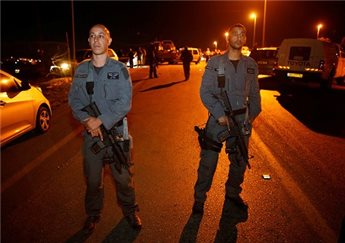 Israeli forces abducted, early Monday and Sunday night, at least 12 Palestinians, including a minor, from occupied West Bank districts, including Jerusalem.
WAFA further reports that Israeli police raided Ras al-Amud neighborhood in East Jerusalem, where they arrested three Palestinians from the Najdi family; Sa’ed, Yazan and Rami, after breaking into and ransacking their families’ houses.
Meanwhile, Israeli forces took into custody three Palestinians while they were attending a trial for their arrested relative, Omar al-Abbasi, in Jerusalem District Central Court.
Forces assaulted ‘Ali Ibrahim al-‘Abassi, 25, for attempting to take a photo of his brother Omar during his court session, triggering a scuffle with al-‘Abbasi’s relatives. As a result, ‘Ali al-‘Abbasi, the uncle, 38, and ‘Imad Mhanna, 27, were arrested along with ‘Ali Ibrahim.
Israeli police also raided al-‘Issawiya, to the north of the city, where troops deployed in streets, assaulting and kidnapping 13-year-old Haitham ‘Ibaid.
According to Ahrar Center for Detainees’ Studies and Human Rights, out of 650 people taken from the occupied West Bank, Gaza and Jerusalem in November, 42 were documented as minors, with 30 having been taken from the city of Jerusalem.
Meanwhile, in the Hebron district, forces raided Beit Kahel village to the northwest of the city, where they kidnapped ‘Imad-addin ‘Asafra, after breaking into his house. They also set up a road block at Halhul Bridge, where they stopped vehicles holding Palestinian-registered plates and examined passengers’ ID cards.
In the Nablus district, Israeli Special Forces raided al-Jabal al-Shamali neighborhood in the city, where they nabbed Tamer Sharaf, age 24.
Soldiers stationed near Zaatara checkpoint, to the south of the city, took one Palestinian under the pretext of carrying a knife. The man has not been identified, as of yet.
In Jenin district, forces set up a flying checkpoint near ‘Arraba, where they abducted Nimr al-Damaj, age 23, a resident of Jenin refugee camp.
Furthermore, in the Ramallah district, forces raided Silwad village to the east of the city, where they broke into and ransacked the house of Bassam Hamed, 40, a former prisoner, and detained the family members in one room before re-arresting Bassam. Forces also handed ‘Anwar Hamed a notice to appear before Israeli intelligence for interrogation.
Forces also raided the Ramallah areas of Deir ‘Ammar and Beitillu, where they broke into several houses, occupied their rooftops, and set up a road block at the villages entrances.
No further kidnappings were reported.
Zionist Settlers Torch Palestinian Home in West Bank
Al-Manar | November 23, 2014
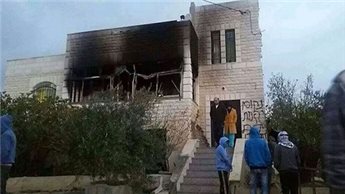 Zionist extremists firebombed a house in a Palestinian village in the occupied West Bank early on Sunday.
The mayor of Khirbet Abu Falah, Masud Abu Mura, reported the attack, saying: “At 4:00 am (0200 GMT), settlers came and threw molotov cocktails at a house which partly burned down.”
Four women were inside the house at the time, but they all escaped unharmed, the mayor of the village which lies northeast of Ramallah said.
Near the house, the assailants scrawled “Death to Arabs” in Hebrew.
Mohammad Abdelkarim Hamayel, whose aunt and two female cousins live in the house, said the assailants were believed to be from the Shilo settlement, a few kilometers to the north of the village.
“In the middle of the night, my aunt woke up when she heard voices speaking Hebrew. Someone knocked on the door but she didn’t answer because she was afraid,” he told AFP.
“They threw a tear gas canister and several molotov cocktails at the balcony which caught fire.”
Israeli occupation police also confirmed the attack, with its spokesman Luba Samri saying: “It is a two-storey house and the fire caused major damage to the ground floor.”
On November 12, Zionist settlers also torched a mosque in the neighboring village of Al-Mughayir.
Source: AFP
Featured Video

Stanislav Krapivnik: Russia-Iran Cooperation & Escalation in Ukraine
or go to
Aletho News Archives – Video-Images
Frlom the Archives
Are the Jews indigenous to Palestine?
By David Miller | Al Mayadeen | August 3, 2022
There is a rising tide of claims from apologists for the crimes of Zionism that they have been misunderstood. Palestinians might be indigenous to Palestine, but the Jews definitely are. What is called the ‘Israel-Palestine’ conflict, they say, is competition over the same small piece of land by two rival groups of indigenous people. But are the Jews indigenous to the Levant? And what are the consequences of the argument?
In fact, most of the power structure of the Zionist state is dominated by Ashkenazi Jews who have no ancestral link to Palestine. Overall despite very significant financial and infrastructural contributions from Western European countries (especially the US, UK and France, for example via the Rothschild family), Eastern European Ashkenazim have been at the centre of the Zionist power structure since the early years of the 20th Century. … continue
Blog Roll
 Aletho News
- UK readies deployment of Prince of Wales carrier amid war on Iran
- Iran warns of consequences after US strike on water plant
- US Bases in Middle East Fail to Secure Nations & Become Safety Risk – Expert
- Iranian Crisis Becomes Embarrassment for US Military That Can’t Protect Anyone – MidEast Analyst
- IAEA Never Had Reasons to Forgo Talks With Iran — Russian MFA Spox
- Iran pledges to ‘respect sovereignty of neighbors’, declares US-Israel assets ‘primary targets’
- USA and Israel: Who is the lord and who is the colony?
- Indian journalist reveals severe Israeli censorship after escape from occupied territories
- Majority of Israelis Back War with Iran as Anti-War Minority Faces Stigmatization
- Are the Jews indigenous to Palestine?
- If Americans Knew
- US, Israel ravage Iran and Lebanon; 4 killed in Gaza – Not a ceasefire Day 148
- US troops were told war on Iran was ‘all part of God’s divine plan’, watchdog alleges
- Trump wants to run the show in Iran, but doesn’t know what he’s doing – Not a ceasefire Day 147
- ‘Dirty Work’ :The truth about how Israel was founded
- Mass Expulsion in Lebanon as Israel Expands War: “We Don’t Know Where to Go”
- Lies, distortions, and propaganda: how the U.S. mainstream media coverage on Iran hides the truth
- Palestinians in Gaza fear famine returning as Israel cuts off food amid Iran war
- AIPAC, other pro-Israel groups enter midterms with $100 million to spend
- Iranian girls killed by ‘double-tap’ strikes on Minab school
- Bari Weiss Is Going Full ‘Propaganda-Palooza’ With the Iran War
- No Tricks Zone
- Televised! Leading German Political Candidate Tells Schoolchildren CO2 Makes Sun Hotter!
- New Study: A Century Warming Of 1.1°C Is ‘Commonplace’ And ‘Not Unusual’ During This Interglacial
- New Study: ‘Internal Noise’ And Volcanic Forcing Can Trigger 10-15°C Warming Within Decades
- Glaciers Worldwide Are Suddendly Surging, Experts Blame Warming!
- Surprising Discovery: Sahara Is Greening…Billions Of Trees Where Once Thought To Be Barren
- New Research Reaffirms Clouds, Aerosols, And Surface Solar Radiation Are ‘Driving The Climate System’
- Germany: Electric Car Catches Fire At Charging Station, Sets Off Local “Inferno”, Widespread Damage
- New Study: Canada’s New Brunswick Was 1°C Warmer Than Today During The Medieval Warm Period
- Coal Power Back In Trend As Globe Tries To Keep Pace With Growing Demand For Power
- New Study: A 4°C Warmer Beaufort Sea Had ‘No Sea Ice’ 11,700 – 8200 Years Ago
 Aletho News