Palestinian teen abducted, killed in Jerusalem
Al-Akhbar | July 2, 2014
A Palestinian teenager from occupied east Jerusalem was kidnapped and killed early Wednesday, hours after Israelis rampaged through the city calling for Arabs to die in “revenge” for the deaths of three settlers by unknown assailants.
The killing of 16-year-old Mohammed Abu Khudair from the Jerusalem neighborhood of Shuafat sparked a wave of clashes in east Jerusalem where hundreds of angry young Palestinians demonstrated.
 Police fired rubber bullets and sound grenades at the demonstrators, injuring at least 12 people including a reporter and photographer, local news agency Ma’an said.
Quoting witnesses, army radio said the boy was seen being forced into a car in the city. Ma’an cited witnesses who said the car involved in the kidnapping was a Hyundai with three settlers inside.
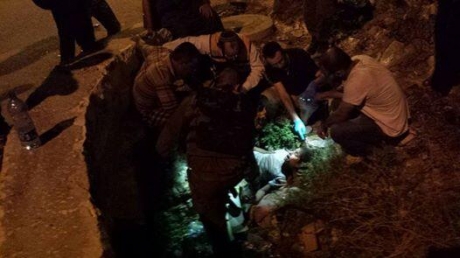
A burned body was found shortly afterwards in another part of the city, the radio said, describing it as a “suspected revenge attack” for the kidnapping of three Israeli settlers from the southern West Bank on June 12.
Israel’s Ynet web site said the body, discovered in a forest in the area of Deir Yassin, was charred and showed signs of violence.
Ma’an also reported that the body had been burned.
Palestinian Authority president Mahmud Abbas on Wednesday demanded Israel condemn the kidnapping and suspected murder.
“The president of Palestine, Mahmoud Abbas, demanded that Israeli Prime Minister Benjamin Netanyahu condemn the kidnapping and murder of Palestinian teenager Mohammed Abu Khudair as we condemned the kidnapping of the three Israelis,” a presidential statement said.
A cousin of the missing youth who gave his name only as Mahmoud, said locals had tried to chase the car involved in the abduction immediately after the suspected settlers abducted the boy, but were unable to catch the fleeing car.
“They chased him in two cars through the village. The cars drove fast but they didn’t manage to reach them,” he told army radio.
Residents had filed a police complaint in recent days that someone in the same car had tried unsuccessfully to snatch a seven-year-old child.
Shortly after the kidnapping was reported, a body was found in a forest near Givat Shaul in west Jerusalem, the radio said, indicating it had been burned. It had earlier said there were signs of stab wounds.
Several hours after three Israeli settlers found dead Monday were buried on Tuesday, hundreds of Israelis rampaged through Jerusalem, stopping cars and the light rail and shouting “Death to Arabs,” police and witnesses said. Police said 47 people were arrested.
Police spokeswoman Luba Samri confirmed they were investigating reports of a kidnapping and said they had found a body but refused to say whether the two incidents were connected. She did not give details on the victim’s identity.
“In the early hours of Wednesday morning, police received a report of a person being forced into a car in Beit Hanina,” Samri told AFP, referring to a well-heeled east Jerusalem neighborhood.
“Within an hour, a body was found in Jerusalem that has still not been identified. We are looking to see if there is a connection between the two incidents.”
Quoting witnesses, army radio said a black car had stopped next to a youth who was hitchhiking and he was forced inside. The car then took off.
Some time later, the family of the youth, who is understood to be around 16, reported him missing, it said.
The body was discovered in a forest in Givat Shaul in southwest Jerusalem. An AFP correspondent said police had sealed off a large area around the neighborhood.
Israeli Prime Minister Benjamin Netanyahu, in a statement, urged police to “to swiftly investigate who was behind the loathsome murder and its motive.” He called on all sides “not to take the law into their own hands.”
Tensions were also high in the West Bank, where around 40 Palestinians were arrested in raids on Tuesday, the latest in a campaign by Israel to cripple Hamas there.
Four people were wounded by live bullets early on Wednesday in an Israeli raid in the Palestinian city of Jenin.
Near Hebron, Israeli forces destroyed the home of a Palestinian arrested on charges of shooting dead an off-duty police officer in the West Bank in April.
(AFP, Reuters, Al-Akhbar)
Bias, Racism and the New York Times
By Robert Fantina | CounterPunch | July 1, 2014
The New York Times, in its never-ending fawning over Apartheid Israel, published recently what is obviously meant to be a heart-rending story of a Jewish woman whose son was killed during the intifada of 2001. The article talks about Sherri Mandall, an American living in settlements that the world condemns as illegal. She, herself, is also part of a serious violation of international law that states that an occupying power must not move residents onto occupied land.
The article discusses the ‘murder’ of her son, and her ‘noble’ efforts to assist others who have lost loved ones.
This writer searched the New York Times archives in vain to find an article that interviewed a Palestinian mother whose young son had been killed by IDF (Israeli Defense Forces) terrorists. Was The Times unable to find such an individual? In the last 14 years, while 129 Israeli children have been killed by Palestinians, at least 1,530 Palestinian children have been killed by Israelis. Surely, one or two mothers could have been located from among that number. Perhaps the mother of Nadim Nawara, 17, unarmed and shot in the back by IDF soldiers, a crime captured by a video camera and shown around the world, might be interested in telling her story. Surely The Times could extract some human pathos from such an interview.
Or perhaps The Times is only interested in interviewing U.S. citizens (Mrs. Mandall holds dual U.S. and Israeli citizenship). This writer also searched the archives for an interview with Craig and Cindy Corrie, parents of Rachel Corrie, a U.S. citizen who was crushed to death by a bulldozer in Gaza, as she was attempting to stop an illegal home demolition. Unfortunately, he was not successful in finding such an interview.
Could it be that The New York Times, once undeservedly revered for publishing ‘all the news that’s fit to print’, somewhere along the line decided to print just what it determines is news?
The recent disappearance of three Israeli teenagers, living illegally in the West Bank, has garnered extensive coverage in The Times. However, the kidnapping of hundreds of Palestinian youths each year, some of them pre-teens, by the IDF, usually does not warrant so much as a mention by the paper. The cold-blooded murder of Nadim Nawara, in May of this year, did receive an unprecedented three articles over a period of a week. But there has been no mention of Mr. Nawara since the end of May. This writer would imagine that his mother may be available for comment.
It is difficult to see this happening, this lack of reporting, without the ugly word ‘racism’ coming to mind. Is the grief of an Israeli mother somehow, in the opinion of The New York Times, more poignant or searing than that of a Palestinian mother? If that is not the opinion of The Times, then what would be the reason for highlighting one while ignoring the other?
Information about home-made bottle rockets being shot into Israel from the Gaza Strip also seems to be considered newsworthy by The Times. But what of the carpet bombing of Gaza, with sophisticated weaponry, including chemical weapons, provided by the United States? If the use of chemical weapons in Syria is so serious, shouldn’t the same standard apply to their usage in Palestine? Or is anything acceptable as long as it’s done by Israel?
Journalism is, by nature, expected to be unbiased. News is reported simply because it is newsworthy. The disappearance of hundreds of Palestinian children each year, often violently taken from their beds in the middle of the night by IDF terrorists, is news. Proportionally, it is more newsworthy than the disappearance of three Israeli teenagers, simply because the numbers kidnapped are so much greater.
This racism is reflected in journalistic circles throughout the United States. The ‘Missing White Woman Syndrome’ describes the disproportionate amount of news coverage given to upper-middle-class white women who disappear, over minority women who disappear. About half of people, including men, women and children, who are reported missing in the U.S. each year are white, and they receive about 80% of the media coverage of missing persons.
So The New York Times, a rag inexplicably popular with the left, is only following the long-standing national trend: report in depth on the sufferings of whites, but let minorities fend for themselves.
One might ask how Israel fits into all this. Why are the children of settlers, living in communities that the world has condemned as illegal, so very precious, while the children of the oppressed Palestinians are somehow expendable? Why does this mindset seem also to permeate the hallowed halls of Congress, and the White House?
There seems to be a perverse symbiotic relationship at work: the American Israel Political Affairs Committee (AIPAC) purchases members of Congress, who then toe the Israeli line. The New York Times, wanting nearly unlimited access to the corridors of power in the U.S., report what those power-holders say, and want reported. And the only thing to get lost in all this is truth.
Since this writer began this article, news that the bodies of the three missing teenagers have been found has been reported. One feels sorrow and compassion for their survivors, but no more so than one feels for the surviving loved ones of Nadim Nawara and the countless other Palestinians murdered in cold-blood by Israel. Palestinian victims are living in their homelands; the three Israeli teenagers were part of an occupying population, living where they were in violation of international law. This does not alter the sorrow of the families, but there is certainly some risk in living in a settlement as part of a brutal occupation.
How will The Times report on this new development, and Israel’s horrifically brutal response? Will the three Israeli victims be honored, while the countless Palestinian victims are ignored and forgotten? Will the anticipated carpet-bombing of the Gaza Strip, and the further crack down in the West Bank, be reported as reasonable responses to the deaths? And will any Palestinian resistance to this unspeakable brutality be ascribed as the work of terrorists?
The Israeli public relations machine, so effective with the U.S. press and political establishment, will shift into high gear, to ensure support for whatever oppressive cruelty, and whatever extreme and shocking violation of human rights, Israel decides to perpetrate. And The New York Times will follow Israel’s game plan to the letter.
Perhaps this will finally motivate that stooge of Israel, Palestinian President Mahmoud Abbas, to petition the International Criminal Court for redress. Were he not a puppet of Israel he would have done so long ago, but perhaps even for him there is a tipping point. If the expected brutal barrage that Israel is now expected to unleash on Palestine isn’t enough incentive for him to act, nothing will be. The sooner Palestinian elections are held, and the sooner he can be removed from office, the better it will be for all Palestinians.
But regardless of the actions of the weak, corrupt Mr. Abbas, The New York Times will continue to report on Israel’s ‘victimhood’ and Palestinian ‘terrorism’, once again demonstrating that in the world of U.S. journalism, black is white and white is black. One looks in vain for any real, fact-filled, investigative reporting from The Times.
Robert Fantina’s latest book is Empire, Racism and Genocide: a History of US Foreign Policy (Red Pill Press).
Israeli settler strikes 9-year old girl with his car, leaves her in ditch with head injuries
Child hit by settler car (image by Nasser @PAL_1948 )
IMEMC | July 1, 2014
A child was seriously wounded in the head when an Israeli settler ran her down Monday night as Israeli settlers marched through the city of Hebron demanding vengeance.
Sanabel Attous, 9, from Jab’a village southwest of Bethlehem was hit by an Israeli car which witnesses say deliberately ran her down.
She was taken to the Bethlehem Arab Society Hospital suffering serious fractures and bruises in the head, face and abdomen.
Eyewitnesses said the settler struck her intentionally, and left her in a ditch, on the side of the road without providing assistance to the wounded child, and left the scene.
Israeli troops closed all entrances to the city of Hebron and the village of Halhoul, near Hebron, where the bodies of three settlers were found on Monday.
Israeli extremists attacked two Palestinians in Jerusalem. A taxi driver was sprayed with pepper spray, and a second man was beaten by Israeli settlers in West Jerusalem.
Settlers across the West Bank have stepped up attacks on Palestinian civilians over the past 18 days, since 3 Israeli settlers disappeared.
When the bodies of the three settlers were found on Monday, Israeli settler leaders and Israeli government officials vowed revenge against the Palestinian people and particularly the Hamas party, though there has been no evidence linking the deaths of the three settlers to Hamas.
One former Israeli Knesset (Parliament) member posted a video Monday called Palestinian children “little terrorists”, and called for “Death to the enemy, evacuation, and wiping off of [their] smile”, according to a translation by the Electronic Intifada.
EI also quoted Tzachi Hanegbi, a former cabinet minister from the ruling Likud party, as saying, “I don’t know how many Hamas leaders will remain alive after tonight.”
‘We want to work without being treated as slaves’

By Tom Anderson and Therezia Cooper | Corporate Watch | June 27, 2014
During January 2013, Corporate Watch conducted interviews with Palestinians who work in the illegal Israeli settlements in the Jordan Valley. Part one to three of our findings can be read here, here and here.
We met 44 year old Rashid* and 38 year old Zaid* in their hometown of Tammoun in the northern West Bank. They both work in the illegal Israeli settlement of Beqa’ot. A colony with 171 residents situated close to the Palestinian community of Al Hadidya in the Jordan Valley.

Palestinian bedouin close to Beqa’ot are prevented from building permanent structures by the Israeli military, photo taken by Corporate Watch in February 2013
Tammoun is situated just outside the Jordan Valley. Like thousands of other Palestinian workers Zaid and Rashid travel into the Jordan Valley in search of work on a daily basis. To cross into the valley they have to pass through the Israeli military checkpoint at Tayasir or Al Hamra.
Rashid has worked in Beqa’ot since the early ’90s whereas Zaid worked in Israel until 5 years ago. Zaid tells us: “Now it is impossible for me to get a permit to work outside the West Bank.”
For Israeli companies, sourcing their goods from the settlements in the Jordan Valley allows them to circumvent workers rights and health and safety regulations. According to Zaid: “Inside Israel the workers have contracts and the conditions are better. This is because in Israel there are some controls on companies, unlike in the West Bank.”
Both men work all year round except for September-November when there is no work available. They have no contracts and tell us that none of their workmates do either. Their job is to plant grapes and tend to the vines, pruning them and spraying them with fertilisers and chemicals. At harvest time they cut and collect the grapes.

Grapevines in the settlement of Beqa’ot, photo taken by Corporate Watch, February 2013
Zaid and Rashid both work in the fields outside the boundaries of Beqa’ot. They do not have a permit to enter the settlement itself.
Paid below the minimum wage
Palestinian workers in Israeli settlements have been entitled to the Israeli minimum wage since an Israeli Supreme Court ruling in 2007 (see here). In 2010 Corporate Watch conducted over 40 interviews with settlement workers showing that Palestinians are consistently paid as little as half the minimum wage. These conditions remained largely unchanged when we returned in 2014.
The current hourly minimum wage is 23.12, NIS (New Israeli Shekels),the equivalent of 184.96 NIS for an eight hour working day, having risen from 20.70 NIS in 2009. However, for Palestinian workers on Israeli settlements in the Jordan Valley these conditions seem an impossible dream.
Zaid and Rashid are employed directly by the settlers in Beqa’ot and speak to them directly to arrange their work. Both get paid 82 New Israeli Shekels (NIS), 18 of which goes towards daily transport.
They have no insurance provided by their employer. Rashid explains: “Last year one of the workers died, but the settlers did not help his family at all.
The men do not receive any paid holiday, even for religious holidays. This is despite the fact that an Israeli government website advises that workers are entitled to 14 days paid holiday and must receive a written contract and payslips from their employer (see here).
Both men are members of the General Palestinian Workers Union (GPWU). However, they are unable to represent workers in Beqa’ot or negotiate with their bosses. According to Rashid: “We organise trainings for agricultural workers but we are not recognised by the settlers, we do not receive any representation from Histradrut”.
Histradrut is the Israeli trade union organisation. Many campaigners for boycott, divestment and sanctions against Israeli apartheid have called for a boycott of the Histradrut because of its failure to represent Palestinian workers and its overt support of Israeli state policies. For example, in 2010 the British University and College Union broke ties with the Histradrut; a UCU spokesperson said the Histradrut, “supported the Israeli assault on civilians in Gaza” and “did not deserve the name of a trade union”.
Companies sourcing produce from Beqa’ot

Mehadrin Tnuport boxes ready to be packed with grapes, photo taken by Corporate Watch in February 2013

Carmel Agrexco boxes ready to be packed with grapes, photo taken by Corporate Watch in February 2013

STM boxes ready to be packed with grapes, photo taken by Corporate Watch in February 2013

Export label on a box in Beqa’ot statying that these grapes are shipped by Carmel agrexco, Photo taken in Febuary 2013 by Corporate Watch
Rashid tells us: “We label the grapes ‘Made in the Jordan Valley’ and mark them with the name and phone number of the Israeli settler.
“Each of the settler has his own packing house. When we harvest the grapes they are taken first of all to packing houses in Beqa’ot owned by individual settler, then transported to a central refrigeration unit owned by the Moshav [a Hebrew word for a cooperative farm]. Then a refrigeration truck takes them to be exported.”
The men tell us that the majority of the grapes they harvest are exported through Mehadrin.
Corporate Watch visited Beqa’Ot in February 2013 and photographed several packing houses displaying Mehadrin signage. Israeli company Mehadrin Tnuport Export (MTEX) is a part of the huge Mehadrin Group which owns a 50% of STM Agricultural Exports Ltd – another Israeli company dealing in vegetables. MTEX export around 70% of all their produce to outside Israel and are one of the largest suppliers for the Jaffa brand world wide. Sainsburys confirmed to Corporate Watch in August 2013 that the supermarket sourced fresh vegetables from Mehadrin. Mehadrin is also certified to supply fresh produce to Tesco (see here).
Corporate Watch also photographed boxes and export labels for Carmel Agrexco in Beqa’ot. Carmel Agrexco was the Israeli state owned fresh produce export company. In 2011 the company went into liquidation, due in part to the international boycott movement. The brand has since been bought by Gideon Bickel of Israeli firm Bickel Flowers and has been fighting to regain lost contracts.
Working for poverty wages on land stolen from their families
Rashid and Zaid refer to Beqa’ot by its Palestinian name, Libqya. Rashid tells us: “Before the occupation in 1967 Libqya was owned by Palestinians who used it for planting crops and raising animals. All of the families around here owned land in Libqya.
“I remember when my mother passed Libqya when I was young she told us how she used to play there with her brothers and sisters. Our family owned 70 dunums of land there.
“This reality is too painful. When I was older I tried to reach the land my mother told me about. But a settler told me I was forbidden to go there.”
‘We will get back our land’
Both men are supportive of the call for a boycott of Israeli agricultural companies. When it was pointed out that if the boycott was successful then their employers would not be able to pay them a wage any longer Zaid responded: “We support the boycott even if we lose our work. We might lose our jobs but we will get back our land. We will be able to work without being treated as slaves.”
* Names have been changed at the authors’ discretion
Missing Israeli settlers: Al Jazeera English’s distorted reporting

By Orouba Othman | Al-Akhbar | June 23, 2014
Gaza – Al Jazeera English’s reporting on the missing Israeli settlers was not naive and it is rather impossible to classify it as part of the rhetoric of neutrality and objective reporting on the Palestinian-Israeli conflict.
It is simply deliberate coverage that targets the Palestinians’ presence on their own land and their just cause, while giving leverage to the “perseverance” of the Israeli society living in a jungle of “barbaric” Palestinians. Al Jazeera English correspondent Jane Ferguson started her report a few days ago by focusing on the feelings of Israelis and specifically their shock following the [alleged] capture of three Israelis about 10 days ago.
This shock, of course, did not not originate from the Palestinians’ right to face their enemies, but was ignited due to the Palestinians’ insensitivity, which was displayed through their “kidnapping of three teenagers” who could be robbed of their lives with a fatal bullet, or rather “a deceiving” bullet in the words of the Qatari channel.
Certainly, all the misery the Palestinians have suffered for 66 years at the hands of those expressing their shock is insignificant. Today, the only thing that matters is the sorrow of the Israeli people. Ferguson began her report with images of a tent erected by residents of Nof Ayalon village to pray for the safe return of Naftali Fraenkel, a town native and one of the three [allegedly] kidnapped individuals.
Ferguson did not miss the opportunity to remind viewers that the three Israelis (Naftali Frenkel, Gil-ad Shaer and Eyal Yifrach) were teenagers, further seeking the viewers’ compassion by stating that they were all under the age of 19. The reporter did not stop there, but gave Fraenkel’s aunt a platform to express her feelings on air, saying “I am still in shock, it is hitting me repeatedly, Fraenkel went to school and didn’t come back. It is really difficult, and the whole family is crushed.”
The correspondent’s report does not mention neither the suffering of over 5,700 Palestinians held in the occupation’s prisons, nor the fact that four of those prisoners died under physical and psychological torture in the past year.
“Not only in this small village are people waiting anxiously to hear news about the missing teenagers, but across the entire nation, everyone is gripped by this story,” Ferguson commented in her report, adding that Israeli channels have been in the village for days to cover the incident.
The scene displaying solidarity with the town’s locals is later taken off screen to be replaced with images of a street populated by Israeli settlers. The channel then sheds light on the challenges faced by Israelis to strengthen their “perseverance” on a land that is not theirs, saying that they are not scared and that they are going on with their lives as usual.
To give more credibility to her short analysis, Ferguson gives a female settler the opportunity to explain whether or not the “kidnapping incident” had negatively affected her life. The settler confirms Ferguson’s view by saying, “there is nothing to be afraid of. If there was a bombing on a bus, does it means we should not catch buses? This is the same for me, this is our lifestyle.”
The reporter seemed to have forgotten how Palestinians resist death and how much they love life even though they are besieged by their enemy’s weapons from the front, its tanks from behind and its planes from above.
Perhaps, Palestinian viewers would have better received the report if Ferguson had also visited towns and refugee camps in the West Bank, and had broadcast live images of the arrest campaigns and the raids on Palestinian homes, as well as Israel’s policy of systematic killing, as reflected by the fact that four Palestinians have already been killed since the beginning of the operation.
Meanwhile, Al Jazeera English’s Gaza correspondent Charles Stratford started his report by linking the operation in Hebron to the Gaza Strip by showing two Palestinian boys from Gaza training on how to use weapons and participate in combat missions at a camp affiliated to Hamas.
Stratford then commented that “these are the children of people who believe, like the majority of Gaza residents, that Hamas represents the future of Palestine and is a part of the unity government rejected by Israel.”
The correspondent sought to differentiate between “terrorist” boys following Hamas’ path and other “innocents” that fall in the hands of the group that is training droves of “terrorists.”
The English-language Qatari channel claims to have been launched to change the stereotype about the Middle East. However, today it has become another burden on Palestinians, promoting the Israeli side of the story in the West while disregarding the real narrative.
Jewish Settlers Attack Funeral Of Slain Palestinian In Ramallah

By Saed Bannoura | IMEMC & Agencies | June 22, 2014
Sunday evening a number of fanatic Israeli settlers attacked the funeral of a Palestinian, killed by the Israeli army in al-Biereh, near the central West Bank city of Ramallah, wounding one Palestinian.
The Palestinians were participating in the funeral procession of resident Mohammad at-Tareefi, 30, in Jabal at-Tawil neighborhood, when settlers of the Psagot illegitimate settlement opened fire on them, wounding one resident.
Several minutes later, dozens of soldiers arrived at the scene, and fired live ammunition at the residents, and several homes, in al-Biereh.
The Israeli military attack pushed dozens of residents to advance towards Psagot settlements, and hurl stones at it.
The soldiers chased the residents in Dahiat Jabal at-Tawil and al-Jinan area, while firing dozens of rounds of live ammunition, gas bombs, concussion grenades, and rubber-coated metal bullets.
The funeral procession started in front of the Palestine Medical Center in Ramallah, heading towards the home of the slain Palestinian in Betunia, before advancing towards the Jamal Abdul-Nasser Mosque in al-Biereh city.
At-Tareefy was shot by a live round in his chest during Sunday dawn clashes with Israeli soldiers invading Ramallah.
Israel’s military offensive in different parts of the occupied West Bank started ten days ago, following the disappearance of three Israeli settlers from Gush Etzion settlement, near Bethlehem.
Although Israel said Hamas is behind the “abduction”, Hamas denied the claim.
The ongoing Israeli military invasion led to the abduction of more than 400 Palestinians, many of them are children, and the soldiers invaded and searched more than 1000 areas in the West Bank.
The army alleged uncovering dozens of tunnels under Palestinian homes in the West Bank, and that the soldiers “located underground labs used for the production of explosives”.
The army said Israel had no prior information about the alleged labs and tunnels, but uncovered them during the extensive searches of homes and property.
In a Sunday report by the Palestinian Center for Human Rights, the center said Israeli soldiers shot and killed four Palestinians in the last ten days. Two of them were killed Sunday.
At least 38 Palestinians have been kidnapped by the Israeli army on Sunday, in different parts of the occupied West Bank.
The army also shot and wounded dozens of Palestinians in the ongoing offensive.
The Siege on Hebron
By Matthew Vickery and Sheren Khalel | MEMO | June 22, 2014
As the lockdown on Hebron enters its tenth day, the atmosphere in the city is tense and restless, with people living under a state of erratic checkpoints and military closure for the past week. On the streets of the city, there is only talk of what will happen if the three missing Israeli settlers are not found, or the mystery around their disappearance is not resolved. Every day since their disappearance Israel has imposed ever-increasing restrictions on the West Bank, but residents of Hebron, near the original location of the teens’ disappearance, are feeling the brunt of the crackdown.
The road through Halhul to Hebron is usually a simple route to negotiate, but now the streets of Halhul are besieged with Israeli soldiers, jeeps, and checkpoints making travel through the small city arduous. Halhul is within the Hebron governorate and like the majority of cities and towns in Hebron, the past week has been filled with a series of difficulties and tragedies. Residents face the daily reality of being locked down— restricted to their small area, unable to travel due to imposed Israeli military restrictions, as well as having armed soldiers positioned outside on throughways, often in great numbers. Houses are repeatedly and unpredictably raided, leaving homes in a state of chaos.
“There are so many soldiers and army jeeps here now, it feels like a thousand are here in Halhul” Mohammed Rabah, a resident of the city told Middle East Monitor. “The soldiers are breaking houses down, raiding them at night, arresting people and kicking people out because they are searching for the three settlers. It has become a very bad situation.”
Over 300 Palestinians in the West Bank have been detained so far this week by Israel, almost all during these night raids. While the majority of those arrested have an affiliation to Hamas, Hamas has denied responsibility for the missing Israeli teens. However three small groups in the occupied West Bank have claimed responsibility, Ahrar al-Khalil, the Islamic State of Iraq in the Levant (ISIL), and Al-Aqsa Martyrs Brigades.
On Friday, these now regular night raids, clashes and arrests in the Hebron area resulted in the death of a 14 year old boy who was shot in the chest by the Israeli forces in the early morning. By the afternoon, clashes were already occurring in Hebron’s city centre, as young men faced off against Israeli forces near the entrance to the illegal Israeli settlement situated in the along Shuhada Street.
During the demonstration, a 23-year-old Palestinian man was shot in the ankle by Israeli forces after four hours of clashes, with what his friends and fellow demonstrators said was a live round. Four young men quickly dragged him out of the line of fire and carried him to a car that screeched up to the protest after realizing someone had been shot.
“The bullet is lodged in his ankle for sure,” One of the protestors who helped carry the young man to the car told MEMO. “We are throwing rocks, and they are shooting bullets. Where else in the world is like this?”
A ten-year-old boy was also arrested during the protest.
According to protestors and bystanders, this demonstration was more intense than any they’d experienced before, as the recent Israeli crackdown on the city in search for the three missing Israeli settlers continues.
Previously the Israeli government had announced that the Israeli forces were permitted to use “all measures” to help find the missing settlers. MEMO contacted the Ministry of Defense several times for further comment on what all measures may involve, but the Ministry declined to return these phone calls or emails.
Earlier this week Israeli human rights NGO B’Tselem released a press release urging the Israeli government and Israeli forces “to refrain from meting out collective punishment on the local population,” while carrying out their hunt for the missing Israelis.
With the demonstration in the background and speaking to MEMO under terms of anonymity, many of the young men at the protest spoke of increasing aggressive actions by the army and their belief that they had to respond to it.
While clashes continued into the late afternoon, the streets of Hebron’s city centre were deserted, an increasingly common site. Stores were closed and tourist spots were desolate. The Ministry of Tourism’s information office in the heart of the souk didn’t bother opening for business.
“Two weeks ago, it was very good with tourists who came to Hebron, but because of the problems with the Israeli here, there isn’t anything,” Shadi Sider, who runs a tour group and souvenir shop in Hebron said. “There isn’t work here in Hebron now, the work is just enough to take food in the house—no work, no food.”
The head of the Palestinian businessmen forum in Hebron, Mohammad Nafeth al-Herbawi, said the district of Hebron is losing $10 million a day during the siege on the area. While laborers are facing up to $2 million in losses, according to Ma’an News Agency.
While Sider is one of those who is severely impacted by the lack of business prospects during the siege, he says the problems he faces at home are more worrying. Sider’s home, positioned beside Shuhada Street where an illegal Israeli settlement is situated, is surrounded by illegal settlers. His house has been raided, and his roof annexed a number of times throughout the past week. Due to the proximity of the settlement to his home, Sider is rather used to living life surrounded by soldiers, but this week has been more punishing.
“Thereares more soldiers than there has ever been before. The soldiers come here in my house, and they go on my roof to see, to guard, to make problems,” Sider said. “For the last week since the kidnappings it has been much worse, there are so many soldiers here.”
While Israel’s increased military presence focused on Hebron during the beginning of the search for the missing settlers, it is quickly expanding. Houses have been raided and people arrested through the greater West Bank, and injuries from Israeli forces have been reported in almost every district. Already five Palestinians have been shot dead since the search began including the 14 year old in Dura, a 22 year old in Qalandiya refugee camp, a 20 year old in Ramallah’s al-Jalazun refugee camp, and last night a 35 year old in Nablus and a 30 year old in Ramallah’s city center.
Israel imposing ‘collective punishment’ on Palestinian people
Ma’an – 15/06/2014
RAMALLAH – The Palestinian Authority on Sunday condemned the Israeli arrest campaign across the West Bank and airstrikes against the Gaza Strip, denouncing the “collective punishment of the Palestinian people” by Israeli forces.
Spokesman for the Palestinian national consensus government Ehab Bessaiso on Sunday also reiterated Palestinian insistence that they have no responsibility for security in the settlements, as Israel continued assaults against Palestinians that began after the disappearance of three Israeli teenagers from the Gush Etzion settlement between Bethlehem and Hebron on Thursday.
“The Israeli government cannot hold the Palestinians responsible for security in occupied territories which are not under Palestinian sovereignty and which house dozens of settlements and outposts,” Bessaiso said in a statement.
Bessaiso highlighted that the three youths went missing in the approximately 62 percent of the West Bank that is considered Area C and is under full Israeli control.
Bessaiso also said that the detention of 80 people across the West Bank and the bombing of Gaza overnight constitute “collective punishment against the entire Palestinian people,” and called upon the “international community and all international human rights organizations to protect the Palestinian people against the Israeli escalation.”
Bessaiso highlighted that even Palestinian prisoners in Israeli custody were being punished by Israel, through the banning of family visits and “other oppressive procedures,” even as around 125 administrative detainees entered their 53rd day of a collective hunger strike.
Bessaiso also said that Israel had imposed a general closure on the Hebron area in the southern West Bank, leaving thousands of Palestinians under siege.
Earlier Sunday, Hamas denied Israeli allegations that their members were involved in the kidnapping of the three Jewish youths, calling the claims “stupid.”
Overnight Sunday Israeli forces detained 80 Palestinians including a number of former ministers and top lawmakers and carried out airstrikes across the Gaza Strip, injuring a woman and a 15-year-old girl.
On Saturday, Netanyahu had said he held the Palestinian Authority responsible for the disappearance of the youths, while the PA has insisted it has no authority over the territory in which the youths disappeared.
Israel arrests 80 Palestinians, locks down Hebron in search for missing teens

Al-Akhbar | June 15, 2014
Israel on Sunday broadened the search for three Israeli teenagers believed kidnapped by militants, arresting 80 Palestinians overnight and imposing a tight closure on the southern West Bank city of Hebron.
It was the biggest arrest operation in years and came after Prime Minister Benjamin Netanyahu ordered security forces to “use all tools at their disposal” to find the three teenagers he said had been “kidnapped by a terror organization.”
Most of those arrested belonged to the Islamist movement Hamas, and included several members of the Palestinian parliament, Israeli press reports said.
“In a combined… effort to return the three abducted Israeli teenagers, approximately 80 Palestinian suspects were detained in a widespread overnight operation,” an army statement said, with a spokesman warning troops would leave no stone unturned.
“Palestinian terrorists will not feel safe, will not be able to hide and will feel the heavy arm of the Israeli military capabilities,” Lieutenant Colonel Peter Lerner said.
As the massive manhunt for the missing teens entered its third day, the defense ministry imposed a complete lockdown on the southern city of Hebron and the surrounding area, as well as a closure on the Gaza Strip.
The closure on the Hebron district began at midnight, a defense ministry statement said indicating that access to Gaza via the Erez crossing would be limited to humanitarian cases only, while only fuel would be allowed in through the southern goods crossing.
Inside Hebron, the West Bank’s largest city, Israeli paratroopers fanned out across the streets, and no cars were allowed in or out of the city, an AFP correspondent said.
Following late-night consultations with his security cabinet, which ended close to midnight, Netanyahu was to convene the weekly cabinet at his office at the defense ministry in Tel Aviv, his office said.
“Our young people have been kidnapped by a terror organisation… there is no doubt about that,” Netanyahu told reporters in Tel Aviv late on Saturday.
The teens, one of whom also holds a US passport, are believed to have been snatched Thursday night from the Gush Etzion settlement bloc between Bethlehem and Hebron, reportedly while hitchhiking.
The missing teenagers, who study at two Jewish seminaries in the West Bank, have been identified as Gilad Shaer, 16, from Talmon settlement near Ramallah, Naftali Frenkel, 16, from Nof Ayalon in Israel, and Eyal Ifrach, 19, from Elad near Tel Aviv.
Netanyahu said he placed responsibility for their safe return on the shoulders of Palestinian Authority president Mahmoud Abbas and his government, saying they must do “whatever necessary to help the hostages get home safely.”
The suspected abductions occurred 10 days after a new Palestinian unity government was sworn in, pieced together with the Hamas movement.
Israel has vowed to boycott all contact with the new government, whose emergence has ended seven years of divided rule between the West Bank and Gaza, with Netanyahu insisting Abbas be held responsible for all acts of violence emanating from anywhere in the Palestinian territories.
Israeli and Palestinian officials confirmed Palestinian security services were assisting in the search for the youths, who are believed to be “still alive,” Defense Minister Moshe Yaalon said on Saturday.
Israel’s air force also hit three targets in the southern and central Gaza Strip overnight on Saturday, the second consecutive night of strikes.
(AFP, Al-Akhbar)
Israelis seize 4 schoolgirls in south Hebron hills
Ma’an – 28/05/2014
BETHLEHEM – Israeli forces on Tuesday detained four Palestinian girls in the south Hebron hills after a settler accused them of stealing cherries, human rights group B’Tselem said.
The girls, aged 11 to 15, were on their way home from school with an Israeli army escort when Israeli police arrested them. They were taken to an Israeli police station in Hebron with no adult accompaniment and held for four hours until being handed over to Palestinian police and released.
“The absurdity and injustice of holding four girls on suspicion of such a minor offense is disgraceful and outrageous, especially given that the authorities systematically refrain from enforcing the law on settlers who attack these girls and their families,” B’Tselem said.
International volunteers from Operation Dove filmed the incident.
Israel postpones moving its ministries to Jerusalem for five years
MEMO | May 19, 2014
The Israeli government has decided to postpone moving its ministerial offices to Jerusalem for five additional years; Israel’s Haaretz newspaper reported.
The newspaper pointed out that the government took the decision during its weekly cabinet meeting, chaired by Prime Minister Benjamin Netanyahu, who endorsed the decision.
The paper noted that the government has decided to postpone the move due to two factors; one the fear of the international reaction possibly an angry nature and the need to prepare the city to receive the vast number of employees who will have to relocate their residence there.
Haaretz said that transferring the ministerial offices and headquarters to Jerusalem is one of the most dangerous settlement projects in the city and paves the way for increasing the number of settlers in East Jerusalem.
Meanwhile, Jerusalem mayor, Nir Barkat called to modify the resolution and move the government’s offices to Jerusalem soon, considering the government’s decision to postpone the move a serious insult to the city.
Featured Video

Stanislav Krapivnik: Russia-Iran Cooperation & Escalation in Ukraine
or go to
Aletho News Archives – Video-Images
Frlom the Archives
Are the Jews indigenous to Palestine?
By David Miller | Al Mayadeen | August 3, 2022
There is a rising tide of claims from apologists for the crimes of Zionism that they have been misunderstood. Palestinians might be indigenous to Palestine, but the Jews definitely are. What is called the ‘Israel-Palestine’ conflict, they say, is competition over the same small piece of land by two rival groups of indigenous people. But are the Jews indigenous to the Levant? And what are the consequences of the argument?
In fact, most of the power structure of the Zionist state is dominated by Ashkenazi Jews who have no ancestral link to Palestine. Overall despite very significant financial and infrastructural contributions from Western European countries (especially the US, UK and France, for example via the Rothschild family), Eastern European Ashkenazim have been at the centre of the Zionist power structure since the early years of the 20th Century. … continue
Blog Roll
 Aletho News
- Iran Red Crescent says 6,668 civilian sites targeted in US-Israeli attacks
- Maybe Attacking Iran Was Not Such A Good Idea
- UK readies deployment of Prince of Wales carrier amid war on Iran
- Iran warns of consequences after US strike on water plant
- US Bases in Middle East Fail to Secure Nations & Become Safety Risk – Expert
- Iranian Crisis Becomes Embarrassment for US Military That Can’t Protect Anyone – MidEast Analyst
- IAEA Never Had Reasons to Forgo Talks With Iran — Russian MFA Spox
- Iran pledges to ‘respect sovereignty of neighbors’, declares US-Israel assets ‘primary targets’
- USA and Israel: Who is the lord and who is the colony?
- Indian journalist reveals severe Israeli censorship after escape from occupied territories
- If Americans Knew
- US, Israel ravage Iran and Lebanon; 4 killed in Gaza – Not a ceasefire Day 148
- US troops were told war on Iran was ‘all part of God’s divine plan’, watchdog alleges
- Trump wants to run the show in Iran, but doesn’t know what he’s doing – Not a ceasefire Day 147
- ‘Dirty Work’ :The truth about how Israel was founded
- Mass Expulsion in Lebanon as Israel Expands War: “We Don’t Know Where to Go”
- Lies, distortions, and propaganda: how the U.S. mainstream media coverage on Iran hides the truth
- Palestinians in Gaza fear famine returning as Israel cuts off food amid Iran war
- AIPAC, other pro-Israel groups enter midterms with $100 million to spend
- Iranian girls killed by ‘double-tap’ strikes on Minab school
- Bari Weiss Is Going Full ‘Propaganda-Palooza’ With the Iran War
- No Tricks Zone
- Televised! Leading German Political Candidate Tells Schoolchildren CO2 Makes Sun Hotter!
- New Study: A Century Warming Of 1.1°C Is ‘Commonplace’ And ‘Not Unusual’ During This Interglacial
- New Study: ‘Internal Noise’ And Volcanic Forcing Can Trigger 10-15°C Warming Within Decades
- Glaciers Worldwide Are Suddendly Surging, Experts Blame Warming!
- Surprising Discovery: Sahara Is Greening…Billions Of Trees Where Once Thought To Be Barren
- New Research Reaffirms Clouds, Aerosols, And Surface Solar Radiation Are ‘Driving The Climate System’
- Germany: Electric Car Catches Fire At Charging Station, Sets Off Local “Inferno”, Widespread Damage
- New Study: Canada’s New Brunswick Was 1°C Warmer Than Today During The Medieval Warm Period
- Coal Power Back In Trend As Globe Tries To Keep Pace With Growing Demand For Power
- New Study: A 4°C Warmer Beaufort Sea Had ‘No Sea Ice’ 11,700 – 8200 Years Ago
 Aletho News