US-led drills pose threat to peace in Asia – Lavrov
RT | July 12, 2025
The military activities of the US and its allies around the Korean Peninsula threaten the stability of the entire region, Russian Foreign Minister Sergey Lavrov said during his visit to North Korea.
The US, South Korea, and Japan are increasing the number of joint military drills, some of which involve “a nuclear component,” Lavrov told reporters at a press conference in Wonsan on Saturday.
“This does not contribute to peace and stability, not only on the Korean Peninsula but throughout Northeast Asia,” the diplomat said, expressing skepticism about Seoul’s intentions to normalize relations with Pyongyang.
Lavrov condemned what he described as “dangerous attempts by actors outside the Indo-Pacific to form exclusive alliances and expand NATO infrastructure in the region.” He emphasized that countries should not build alliances at the expense of others, adding that both Russia and North Korea are committed to “equal and indivisible security” for all nations in Eurasia.
The US, South Korea, and Japan conducted joint exercises this week involving the deployment of America’s nuclear-capable B-52H strategic bombers. In a joint statement, the allies accused Pyongyang of “unlawful activities” that “destabilize the Korean Peninsula.”
Russia and North Korea signed a defense pact in June 2024, after which Pyongyang dispatched troops to help expel Ukrainian forces from Russia’s Kursk region later that year. The cooperation is a testament to the “invincible brotherhood” between the two countries, Lavrov said.
How India-Pakistan war will affect global and regional political order
By Salman Rafi Sheikh – New Eastern Outlook – May 24, 2025
The recent India-Pakistan war, though limited in scope, has triggered significant geopolitical reverberations by showcasing Chinese military superiority and prompting a strategic reassessment in Washington.
The China angle in regional geopolitics
Beyond the oft-repeated rhetoric of the Pakistan-China relationship being “all-weather” and “iron-clad,” the recent India-Pakistan war may come to be seen as its first major demonstration in action. Pakistan’s use of Chinese PL-15 missiles, deployed from Chinese-made J-10C fighter jets to successfully engage French-made Rafale aircraft, has underscored the strategic depth of this partnership. This has received considerable international attention, both in the media and otherwise. This show of alignment is particularly notable given recent strains in the Pak-China bilateral relationship, including attacks on Chinese interests and infrastructure projects within Pakistan.
With Pakistan importing almost 80 per cent of its weapons—which also includes cooperation in the field of military technology—from Beijing, the supply ensured to help Islamabad maintain the balance of power vis-à-vis New Delhi. More than this, China’s policy was also motivated by its desire to counter-balance Washington’s efforts to boost India against China. Ironically enough, it was only days before the recent war that the US Vice-President was in India to discuss ways to collectively counter China. But China’s support for Pakistan meant that New Delhi remained preoccupied more with Pakistan than China in a strategic sense. With this war, New Delhi’s focus will be more on Islamabad than China for at least a few more years to come. By the same token, China will most likely continue to help Pakistan develop its defence capability. Even before the war took place, media reports in Pakistan and China reveled ongoing talks between Beijing and Islamabad for the sale and purchase of J-35 fifth-generation stealth fighter jets.
These developments highlight at least four key takeaways. First, China’s defense technology—likely tested in actual combat for the first time—has proven effective enough to attract interest from other regional powers. Its demonstrated performance could prompt these countries to purchase and integrate Chinese systems into their own militaries. This, in turn, would strengthen China’s position in the regional arms market and help it outcompete rival defense exporters. Second, China’s willingness to export advanced military technology—such as the PL-15 missile and J-35 fighter jets—signals a broader strategic intent to deepen its global partnerships. This approach is consistent with Beijing’s “no-limits” alliance with Moscow.
Third, the demonstrated effectiveness of Chinese weaponry against India could encourage regional states to reassess their foreign policy alignments, potentially fostering deeper integration with Beijing over New Delhi. This trend is already evident in countries like Sri Lanka and the Maldives, where pro-Beijing political shifts have gained momentum—most notably in the Maldives, where the new government compelled Indian troops to withdraw. Fourth, Pakistan’s military successes in this conflict challenge a common narrative in global discourse: that partnerships with China inevitably lead to economic “debt traps.” On the contrary, Pakistan’s economic ties with China appear to have laid the foundation for robust military-to-military cooperation, illustrating how economic integration can support broader strategic alignment.
India’s position in Washington’s arc
Can Washington still push—with enough confidence—India as its key ally? What is the material reality of India’s standing within the US-led Quadrilateral Security Dialogue (QUAD)? If the QUAD was ever to become a military alliance, the only power in the region that the US expected to be effective on its own against China is/was India—not only because India and China have a long history of rivalry, but also because India remains a big military power. Needless to say, it is the only nuclear power part of the QUAD from the Indo-Pacific region. In this sense, it can maintain deterrence vis-à-vis Beijing. But nuclear deterrence can prevent a nuclear war, as is evident from the recent India-Pakistan conflict. It cannot necessarily prevent conventional conflict. Can India act as the front-line ally for Washington in the region in a conventional war?
The outcome of India-Pakistan was means Washington will have to rethink its strategy. It can take two shapes. First, it is very much possible that Washington will deepen its cooperation with New Delhi. Donald Trump has already offered to sell F-35 fifth-generation stealth fighters. (Russia has also offered New Delhi to sell its own fifth-generation Su-57 jets.) This, however, will necessarily involve China deepening its cooperation with Pakistan. As a result, an arms race will be triggered in the region.
A second strategic path for Washington could involve renewed engagement with China. While the timing of the Trump administration’s trade negotiations with Beijing may coincide with the outcome of the India-Pakistan conflict purely by chance, it nonetheless suggests that even a confrontational administration has not entirely ruled out dialogue as a preferred tool. Washington might also pursue a dual-track approach—engaging China while simultaneously strengthening military alliances elsewhere.
However, in the wake of shifting dynamics following the India-Pakistan conflict, the US will likely need to reassess its regional strategy and consider alternatives to India. Japan, for instance, emerges as a strong candidate. With its recent push toward military normalization and a growing appetite for deeper strategic engagement, Tokyo could become a more prominent partner in Washington’s Indo-Pacific security architecture.
To be clear, this does not imply a fundamental rupture in US-India relations. But it is increasingly likely that Washington will place India’s role under careful review, potentially redefining its status as the principal frontline ally in countering China. In response to China’s growing influence and military reach, the US will need to significantly bolster the defense capabilities of other regional actors—most notably Japan and Australia—as part of a broader strategic recalibration.
Salman Rafi Sheikh, research analyst of International Relations and Pakistan’s foreign and domestic affairs
Is North Korea a nuclear state?
By Konstantin Asmolov – New Eastern Outlook – February 4, 2025
The transition from the Biden to the Trump government was marked by an interesting discussion as to how the outgoing and coming administrations view North Korea’s nuclear potential.
Republicans: DPRK is a nuclear state and de-nuclearisation is unlikely
On January 14, US Secretary of Defence nominee Pete Hegseth called North Korea a “nuclear power” that poses a threat to global stability. He noted Pyongyang’s success in increasing its nuclear potential, bringing down the size of nuclear warheads and improving mobile launch platforms, which is of particular concern given North Korea’s proximity to the territories where US military contingents are located.
Also, Donald Trump intends to appoint Elbridge Colby, who served as Deputy Assistant Secretary of Defence for Strategy and Force Development in his first term, to the post of Under Secretary of Defence for Policy. This is a man who believes that the de-nuclearisation of the DPRK is an ‘unlikely’ goal. In addition, Colby believes that US troops on the Korean peninsula should focus more on threats from China and that “North Korea is not the primary threat to the United States”. “It is irrational to sacrifice several American cities to fight the DPRK” and Washington should allow South Korea to develop its own nuclear weapons or at least to seriously consider such a possibility.
Democrats: DPRK is not a nuclear state, de-nuclearisation remains the goal
On the same day, January 14, the outgoing US president’s national security adviser, John Kirby, noted that the White House’s policy on this issue had not changed. The current US administration, led by Joe Biden, does not agree with Pete Hegseth’s statement.
On January 7, former US Ambassador to the Republic of Korea, Philip Goldberg, stated that, despite the issues associated with the development of Pyongyang’s nuclear and weapons capabilities, the de-nuclearisation of North Korea should remain a goal that must continue to be fought for.
The South Korean Foreign Ministry made similar statements: “North Korea’s de-nuclearisation has been a principle consistently upheld by South Korea, the United States and the international community” … Under the NPT (Treaty on the Non-Proliferation of Nuclear Weapons), North Korea can never be recognised as a nuclear-armed state”.
The conservative media in South Korea also began to sound the alarm; such terminology ‘not only changes the international community’s understanding of North Korea’s nuclear status, but also undermines the long-standing efforts of South Korea and the United States to achieve the de-nuclearisation of the North’. “Recognising North Korea as a nuclear power is fundamentally different from recognising its technical nuclear capabilities”. Their writing show concerns that by shifting the conversation from de-nuclearisation to arms control, Washington and Pyongyang may eventually agree to freeze the nuclear programme, from which the US-ROK alliance would take a blow and which could also trigger a nuclear domino effect. “If North Korea is recognised as a nuclear power, countries like South Korea, Japan and even Taiwan may reconsider their non-nuclear positions”.
Marco Rubio’s views
A while later, on January 16, in response to statements that the US’ policy towards North Korea, including sanctions, is ‘ineffective’ and Pyongyang is only doubling down on its nuclear and missile programmes, Secretary of State nominee Marco Rubio has already noted that Washington should take a serious look at policy on North Korea to study how to reduce the risk of an ‘unintended’ war between the two Koreas and prevent a crisis on the Korean peninsula without encouraging countries to build their own nuclear weapons.
Note that the new Secretary of State does not make the North out to be a ‘threat to humanity’ and sets more practical tasks, avoiding what the author calls ‘conflict for irrational reasons’ and the likely fall of the nuclear non-proliferation regime due to the emergence of new nuclear actors (we shall not name them specifically, but all is clear to everyone).
Rubio admitted that he was initially sceptical about engaging with Pyongyang, but during his first term as president, Trump “stopped missile tests. This did not stop the development of the programme, but at least it calmed the situation down a bit”.
Rubio did not directly mention de-nuclearisation, but noted that Kim Jong Un “used nuclear weapons as an insurance policy to stay in power” and “no sanctions prevented him from developing this potential”.
The South Korean Foreign Ministry’s response to Rubio’s remark on January 16, 2025, was similar to the answer to Hegseth: the de-nuclearisation of North Korea is a “unanimous goal” shared by the international community. We have heard Rubio, but “the new Trump administration has yet to outline its policy towards Pyongyang” and South Korea “intends to maintain close contacts with the United States in the process of reviewing its policies to ensure a coordinated response to North Korea’s nuclear and other challenges”.
In summary…
Previously, US officials refused to publicly recognise North Korea as a nuclear power, even though Pyongyang has called itself a nuclear power in its constitution, adopted a nuclear doctrine and showed no willingness to discuss giving up its nuclear weapons. In their opinion, the use of this term can be interpreted as the recognition of the DPRK’s nuclear status and thus negatively affect US efforts to prevent the proliferation of nuclear weapons.
The Biden administration tried to look the other way and not acknowledge the reality, perceiving the North Korean regime as a country that does not yet have real nuclear potential and, importantly, may even be subject to de-nuclearisation. Although, it was clear by the end of the 2010s that such a process was possible only after a regime change.
The Trump administration is more realistic in this regard. Perhaps the fact of the matter is that there are quite a lot of military personnel who have worked in the field and are well aware of what real North Korean nuclear missile power is.
The question, however, is how US policy will be adjusted in relation to the idea of a nuclear North. Say Trump decides to recognise North Korea’s nuclear status; what practical steps will follow and how it will affect changes in sanctions? On the one hand, it becomes clear that de-nuclearisation, which was the main formal goal of the negotiations between Donald Trump and Kim Jong Un at the previous stage, no longer makes sense. At best, it makes sense to talk about arms control and here there are some theoretical prospects. On the other hand, for American public opinion, North Korea remains an ‘evil state’ to which concessions are unacceptable. This means that Donald Trump will have to think very carefully to come up with a proposal that Pyongyang will actually be ready to discuss. Moreover, if such a proposal is formulated, the American deep state and public opinion will be strongly opposed to such concessions and it is unclear whether Donald Trump will be able to put his ideas into practice.
Nevertheless, it is still pleasant that the new US administration is beginning to recognise reality vis-à-vis Korea.
Konstantin Asmolov, PhD in History, Leading research fellow at the Center for Korean Studies, Institute of China and Modern Asia, Russian Academy of Sciences
Kiev reveals terms of $20 billion US loan
RT | December 9, 2024
The Ukrainian government has approved the terms of a conditional agreement with the US Federal Financing Bank (FFB) for a 40-year loan of $20 billion which will be backed by profits from frozen Russian state assets.
It’s part of a broader $50 billion G7 loan deal, which includes a separate $20 billion EU commitment, and $10 billion to be split by G7 members Britain, Japan and Canada.
The money will be transferred to the Facilitation of Resources to Invest in Strengthening Ukraine Financial Intermediary Fund, established by the World Bank on October 10, “for the sake of the state,” a resolution issued by Ukraine’s Cabinet of Ministers on Friday stated.
The transfer will be based on a Certificate Purchase Agreement between Ukraine, the FFB, and the US Agency for International Development (USAID), along with a loan guarantee and repayment agreement between Ukraine and USAID.
Under the deal, Ukraine’s Finance Ministry will issue a certificate of indebtedness to the FFB, guaranteed by USAID, the government resolution said.
The loan, which has an annual interest rate of 1.3% plus the current average rate for one-year US Treasury bills, will be repaid using interest earned from immobilized Russian sovereign assets.
The US and its allies froze an estimated $300 billion in assets belonging to the Russian central bank following the escalation of the Ukraine conflict in February 2022. In June, G7 members pledged a $50 billion loan for Kiev, with the frozen Russian assets to be used as collateral, to help Kiev buy weapons and rebuild damaged infrastructure. The agreement was finalized in October.
Moscow has repeatedly denounced the asset freeze as “theft” and argued that tapping into these funds would be illegal and set a dangerous precedent. The Russian Finance Ministry has warned that it will initiate retaliatory measures mirroring the West’s actions against resources of Western investors held in the country.
The latest move is part of the current US administration’s last-minute strategy to bolster Kiev’s war effort, which includes a new $725 million military aid package to Kiev and another round of sanctions against Russia. It comes as uncertainty grows over Washington’s commitments under the upcoming presidency of Donald Trump, particularly after US House Speaker Mike Johnson dismissed President Joe Biden’s request to include $24 billion in additional aid to Ukraine in a government funding bill last week.
Indo-Pacific braces for Trump 2.0
By Salman Rafi Sheikh – New Eastern Outlook – November 10 2024
The victory of Donald Trump in the US presidential election is far from unexpected. Yet, the fact that he has won means that many countries across the world will brace for the impact this win will have on them.
This is especially true for countries in Asia – in particular, in the Asia Pacific region – where the Biden administration, despite its flawed plans, appeared willing to invest US resources, both economic and military, to offset China. Although Donald Trump is, in many ways, more anti-China than Joe Biden is, his anti-China geopolitics is confined primarily to one arena: the US-China trade (im)balance.
It means that the Trump administration will be far less interested in extending military and economic assistance to the regional countries than the Biden administration has been in the past four years. On the contrary, his administration is likely to slap heavy tariffs, which will negatively affect Washington’s bilateral trade with regional countries. In such a scenario, regional countries will have one key policy option: turn more towards China to resolve bilateral ties via diplomatic means and reduce their dependence on Washington.
The Aftermath of the Victory
If Trump’s previous four years in office are any guides to the future, Washington’s Indo-Pacific allies, such as Japan and South Korea, are deeply worried. As former officials of the Trump administration, such as the former National Security Adviser John Bolton, revealed later in their memoirs, Trump had plans to withdraw US military forces from South Korea, keep up with his planned rapprochement with North Korea, and demand massive payments from Japan to pay for the American defence role. During his campaign, Trump defended his foreign policy and repeatedly vowed to continue after assuming the presidency.
For Japan, defence payments are, however, only one of the major areas of concern. Trump will hit trade as well. A key Trump campaign pledge is slapping 10- to 20-percent tariffs on all imports to the United States. Trump has also vowed to “absolutely” block Nippon Steel Corp.’s proposed 2-trillion-yen ($13 million) acquisition of US Steel Corp. More importantly, the US-Japan trade gap has widened to the disadvantage of the US – a situation that Trump would like to reset. According to US official data,
“In 2022, both U.S. exports to Japan and imports from Japan continued to grow for a third year in a row. U.S. exports totaled $80.3 billion, an increase of 7.7% ($5.8 billion), and U.S. imports totaled $148.3 billion, an increase of 10.0% ($13.5 billion). The trade deficit was $68.0 billion, increasing 12.8% ($7.7 billion) from 2021”.
“Our allies have taken advantage of us more than our enemies,” Trump said in a media interview on October 15, referring to the US trade deficit and other issues. With Trump having repeatedly referred to cutting off US support for NATO, Japan’s idea of an ‘Asian NATO’, too, seems in deep trouble. The military pacts Joe Biden made with Japan, South Korea, and Australia are likely to face the same fate. According to Trump, one of the key reasons why the Biden administration entered into these pacts was the pressure the Ukraine conflict generated on these states.
Therefore, he believes, that if he can end the Ukraine conflict – which he promised to end quickly by cutting off US aid to Ukraine – this will allow for the US to divest its sources away from these countries. On the other hand, Trump would not only want South Korea and Japan to spend more on defence but also push them to join him in slapping tariffs on China, thus pushing them into a ‘trade war’ with Beijing. Given South Korea’s and Japan’s trade (im)balance with China, they are bound to suffer from such a policy step because China has the leverage to retaliate. Therefore, they are unlikely to initiate their ‘trade war’. Alternative routes, however, exist.
The Alternative Option
Official Think Tanks in India are already proposing that India should join the China-led Regional Comprehensive Economic Partnership (RCEP) Agreement. This policy shift probably speaks volumes about the direction that most regional countries might be willing to take. India is also one country that recently signed an agreement to jointly manage the disputed border. Now, this pact is crucial – not only because it signifies peaceful management of tensions, but also because the India-China border dispute is probably one major issue where China actually fought. This is unlike the South and East China Seas. Therefore, if China is able to diplomatically resolve its tense issues with India, there is little denying that other countries can do the same. There is, thus, a silver lining for countries like Japan, the Philippines, etc. to resolve their issues without relying on the US (or any other external power, such as the EU or NATO).
In some ways, an inward-looking approach, i.e., an approach that does not seek external mediation, would help push external powers permanently out of the region. Knowing that the Trump administration will itself be looking for disengagement, regional countries wouldn’t have to worry about annoying the US too.
For China, it presents an excellent opportunity to capitalise on US disengagement and deepen its ties with countries in the Indo-Pacific. Although China will probably be fighting a ‘trade war’ in the Atlantic, it can still find a major leeway in the Indo-Pacific. Its willingness and openness will only find regional countries ready to jump on the regional bandwagon of free trade for growth and diplomacy for dispute resolution.
Salman Rafi Sheikh, research analyst of International Relations and Pakistan’s foreign and domestic affairs.
Attack of the Replicons
The Biopharmaceutical Complex’s self-amplifying mRNA assault has already begun
By Nicolas Hulscher, MPH | Courageous Discourse | November 7, 2024
The Biopharmaceutical Complex is preparing for the large-scale deployment of replicon (self-amplifying) mRNA injections. There are currently at least 33 candidates in development.
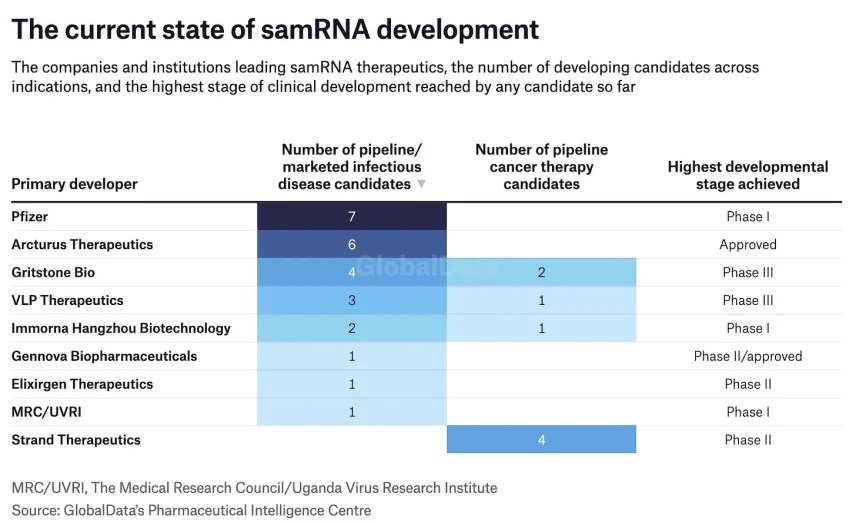
These products behave like a synthetic virus. The replicon mRNA is designed to encode not only the target antigen but also viral replicase, enabling the mRNA to replicate itself within the target cells. This replication machinery allows for an unknown period of toxic antigen production. Concerningly, none of the clinical trials have addressed the major concern of product shedding.
The Coalition for Epidemic Preparedness Innovations (CEPI) and the Biomedical Advanced Research and Development Authority (BARDA) are the primary funders behind this technology to combat ‘Disease X’. This is an extremely high risk ‘vaccine’ platform that should be avoided at all costs. Cellular installation of synthetic replicons requires decades of intense safety testing.
The very first replicon injection for human use received emergency use authorization (EUA) from The Office of the Drugs Controller General of India (DCGI) back in June 2022: Gennova Biopharmaceuticals’ GEMCOVAC-19. This was followed by reckless EUA approval in June 2023 for GEMCOVAC-OM, a replicon booster shot that targets the Omicron strain.
In November 2023, Japan’s Ministry of Health, Labor and Welfare (MHLW) fully approved CSL and Arcturus Therapeutics’ replicon shot: KOSTAIVE ARCT-154. Dismissing all concerns, Japan’s MHLW approved the updated booster shot in September 2024 to target the JN.1 lineage of Omicron subvariants.
In the clinical trials for ARCT-154, 5 deaths occurred among the injected in study phase 3b. Injected participants experienced a 90% adverse event rate (74.5% systemic – 15.2% required medical attention) after the first dose in study phases 1, 2, and 3a combined. Many of the authors are full time employees of Arcturus Therapeutics, meaning their conclusions are likely biased.

Meanwhile, the USDA quietly approved an experimental self-amplifying RNA injection for dogs developed by Merck in June 2024: Nobivac NXT Canine Flu H3N2. It appears that Merck is attempting to camouflage the fact that this product is self-amplifying. The primary product description only indicates that it uses “revolutionary RNA particle technology.” However, the novel platform works by RNA particles targeting dendritic cells, where they self-replicate and result in sustained antigen production.
The possibility of product shedding from dogs to humans or other animals was never tested. This injection is currently widely available for online purchase and canine administration. While the Biopharmaceutical Complex struggles to get self-amplifying mRNA injections approved for humans, they seem to have no problem targeting our pets.

Deployment of this experimental platform has continued in September 2024 to target cats: Nobivac NXT FeLV. Nowhere in the product brochure does it mention the RNA self-amplification mechanism of action. They hope that unsuspecting vets won’t think twice about accepting the ‘new and improved’ product. The so-called ‘safety’ data for this product is as follows:
“Demonstrated safety under field conditions” from “Data on file. Merck Animal Health.”
In other words, no public safety data is provided. It’s become abundantly clear that the pharmaceutical industry and captured regulatory agencies have zero regard for the massive safety concerns of undefined synthetic mRNA replication resulting in uncontrolled toxic antigen production. These experimental injections must not receive further regulatory approval for humans or animals if we are to prevent another public health disaster. All self-amplifying mRNA injections currently available for humans and animals should be immediately withdrawn until comprehensive, long-term safety studies are conducted.
India does not share Japan’s vision of NATO-like alliance in Asia: FM
By Ahmed Adel | October 4, 2024
Japan’s new Prime Minister, Shigeru Ishiba, on October 1 stressed the need to seek deeper ties with allied nations, especially to create a NATO-like organisation in Asia. However, this pursuit is not shared by India, the second most powerful military in Asia, which is also projected to overtake Japan economically in the next few years.
Ishiba has repeatedly called for a more balanced relationship with Washington, including greater oversight of bases in Japan used by the US military, but he has also proposed creating an Asian version of NATO’s collective security group to deter China, an idea that could draw Beijing’s ire and has already been dismissed by a senior US official as hasty, Reuters reported.
On the same day, Indian Foreign Minister Subrahmanyam Jaishankar said he does not share Ishiba’s vision of an “Asian NATO.” Jaishankar said at an event at the Carnegie Endowment for International Peace in Washington that, unlike Japan, India has never been a treaty ally of another country.
“We don’t have that kind of strategic architecture in mind. We have … a different history and different way of approaching,” Jaishankar said when asked about Ishiba’s call.
In addition to the creation of a NATO-like organisation in Asia, the new premier has called for the stationing of Japanese troops on US soil and even shared control of Washington’s nuclear weapons as a deterrent against Japan’s nuclear-armed neighbours, namely China, Russia and North Korea.
“In his victory speech [on September 28], he spoke about the need to beef up Japan’s security after recent territorial incursions by Chinese and Russian military vessels,” Reuters reported.
Since a so-called Asian NATO would also target Russia, India clearly wants to distance itself from any notion of being involved, considering the burgeoning relations the two countries share, which are only growing stronger.
In his address at the 79th United Nations General Assembly on September 28, Russian Foreign Minister Sergey Lavrov expressed his country’s support for India’s bid for a permanent seat on the United Nations Security Council, stressing that a “fairer world order” requires the expansion of the representation of the Global South.
“A fairer world order undoubtedly requires the expansion of the representation of the Global South in the UN Security Council. We support our position in favour of the candidacies of Brazil and India, while at the same time taking a positive decision on the well-known initiatives of the African Union,” Lavrov said.
Meanwhile, during his appearance at the Carnegie Endowment for International Peace, Jaishankar answered a question about helping Russia and Ukraine resolve their differences: “I’m glad you used the word communication because I think at the moment perhaps (it) is the best description for what we are currently.”
At the same time, Russia was again the largest crude supplier to India in September, registering an increase of 11.5% to 1.79 million barrels per day against 1.61 million barrels per day in August, data from Vortexa showed. This comes as the two countries continue efforts to conduct trade in their respective currencies rather than the US dollar.
Given New Delhi’s traditional and long-held ties with Moscow, it is little surprise that Jaishankar has announced his reservations about Japan’s idea to establish a NATO-like alliance in Asia, which would target not only China but also Russia.
With the US expressing scepticism and India, as Asia’s second power, creating distance, Tokyo has humiliatingly backtracked from immediately pursuing Ishiba’s vision.
Japanese Foreign Minister Takeshi Iwaya on October 2 described Ishiba’s proposal for a NATO-like alliance in Asia as a “future vision” for longer-term consideration, downplaying the idea to avoid provoking China and Russia.
“It is quite difficult to immediately set up an organisation that would impose mutual defence obligations in Asia,” the 67-year-old former defence minister said during a press conference after Ishiba formed his Cabinet a day before.
“This is an issue to consider in the medium- to long-term, spending some time,” he added.
In an attempt to avoid backlash from Beijing and Moscow, Iwaya claimed that the Asian NATO idea is “not something directed toward any particular country.” However, the Chinese and Russians obviously would not believe this for a moment.
Although some regional states, such as South Korea, would obviously support the formation of such an alliance to oppose China, Ishiba’s idea was put to bed the moment the US and India expressed scepticism. However, the US is highly occupied by events in Ukraine and the Middle East and can very well activate Ishiba’s proposal once these other fronts have been pacified. This would leave India as the only major power without a stake in opposing a NATO-like alliance in Asia.
Ahmed Adel is a Cairo-based geopolitics and political economy researcher.
Biden’s Last QUAD summit: All substance and no real Action
By Salman Rafi Sheikh – New Eastern Outlook – September 27, 2024
When Biden hosted the leaders of the Quadrilateral Security Group (QUAD) from India, Australia, and Japan in the US in 2021, they did not directly mention China. Still, the emphasis on “shared security and prosperity” was an unmistakable reference to a joint mechanism to counter Beijing’s influence in the Indo-Pacific, particularly.
One would have expected the Biden administration to leave a legacy of a significantly functional mechanism producing collective security and prosperity at the end of its era in 2024. But, as it turns out, QUAD remains where it was in 2021: a club that hosts little more than tea parties to mean anything. The club, as the Indian Prime Minister remarked after the latest summit, is “here to stay”. The question, however, is: will it, or can it, turn into more than a club for occasional gatherings to talk about abstract geopolitics? It is quite unlikely. Donald Trump’s victory will dampen it even further. If Harris wins, she is unlikely to introduce any major changes from the Biden administration, for obvious reasons (she is currently part of the same administration!).
The Last Summit: What is new?
The last summit is, therefore, no different from the earlier ones insofar as it offers little more than a set of “commitments”, and occasional references to “unity”, “democracy” and certain joint ventures, such as Maritime Initiative for Training in the Indo-Pacific (MAITRI). Apparently a new initiative, MAITRI is backed by little to nothing actionable and concrete. It aims to equip partner countries with “tools” that they will use “to monitor and secure their waters, enforce their laws, and deter unlawful behavior”. Who will fund this initiative? What counts as “unlawful behaviour” and what exact action will be taken against those involved in any unlawful activity are some of the ‘black holes’ that need massive filling before this initiative can qualify to acquire any geostrategic significance. There are other concerns too.
While the joint statement mentions China several times, it does not mention Russia at all. Although it refers to Ukraine, the fact that it does not refer to Russia is due to the nature of Indian ties with Moscow. What does this mean for the future of QUAD? No references to any threats other than those emerging from, or associated with, China leave QUAD a club squarely and singularly focused on China. Is this an advantage or a disadvantage?
The China Factor
Being squarely anti-China means QUAD can never sell itself to the wider region as a framework of security. Had QUAD been a general framework of security, it could have attracted several other countries from the region. However, it is unable to do this because a large number of countries in the region do not wish to gang up against China due to the nature of their ties with Beijing. For instance, there is probably not a single example where a country from this region, which is not a QUAD member, ever endorsed anything QUAD said or did. In other words, QUAD operates in a disconnected regional space as an abstract idea rather than as a force to be reckoned with.
This is despite the fact that the latest QUAD summit categorically said China is “testing us”. Conversely, QUAD is “testing” China, but China’s advantage is that it does not have many real regional rivals. That includes India too.
Now, PM Modi thinks that QUAD is here to stay, but the exact purpose it will serve for him is far from clear to other QUAD members. Consider the bilateral trade volume, for instance. It has already reached US$118 billion in 2024. Despite so-called “tensions”, the overall trade grew by 1.5 per cent in terms of year-on-year growth. More significantly, QUAD downplays the role – and the possibility – of regional countries utilising bilateral channels for dispute resolution. Is QAUD the only mechanism that, for instance, PM Modi might depend upon in the wake of another border clash with China?
Bilateralism Trumps QUAD’s Multilateralism
Let’s see what both India and China have done in the past two years. Instead of relying on QUAD, New Delhi happens to have preferred meetings and regular interaction with China at the Corps Commander level. According to data shared by India’s Ministry of Home Affairs, 21 meetings have been held until February 2024. None of these meetings either involved any third party, nor did New Delhi stress a multilateral approach for ‘effective’ dispute resolution. The Indian readout stressed the friendly and amicable nature of talks.
This is not the only mechanism. Since 2012, the Working Mechanism for Consultation & Coordination (WMCC) on India-China Border Affairs has been another key bilateral avenue of dispute resolution, and it has remained relevant despite the border clashes. On August 29, the WMCC held its 31st meeting. The meeting’s aim was “to narrow down the differences and find early resolution of the outstanding issues”.
Now, the emphasis on narrowing down existing differences not only signals success, but also the willingness to remain nonviolent in their approaches to conflict resolution. Nonviolence directly implies the irrelevance of the securitised approach of the QUAD vis-à-vis China’s position in the Indo-Pacific.
There is, in simple words, a lesson for countries in the region. Many countries in Southeast Asia, for instance, have concerns about China’s dominance in the South and East China seas. Should they opt for a military approach considering that India, a much bigger military power than any country in Southeast Asia, is itself following dialogue and diplomacy to resolve disputes? The lesson, in other words, is to emphasise bilateral approach and talk directly to China.
All of these factors combine to produce the utter inability of QUAD to evolve, since its establishment in 2004, as a significant military or economic alliance. Much to Washington’s disappointment, it still does not have a regional mechanism to ‘contain’ China.
Salman Rafi Sheikh is a research analyst of International Relations and Pakistan’s foreign and domestic affairs.
Japan’s Mistakes at Pearl Harbor
Tales of the American Empire | September 12, 2024
The December 7, 1941 Japanese attack on Hawaii was a key moment for the American empire. This channel produced four tales explaining how this attack was provoked by American President Franklin Roosevelt who allowed it to happen. See the playlist linked in the description. While the Japanese attack was successful, it was cautious and could have caused far more damage. Should the Japanese have launched their planned third aerial attack wave? Should their six aircraft carriers have searched for the two missing American carriers? Should they have landed ground troops to invade Hawaii?
_____________________________________________________
“Japanese Invasion of Pearl Harbor”; Navy Matters; April 22, 2019; https://navy-matters.blogspot.com/201…
“The Hawaiian Islands Under Imperial Japan – 1942 Japanese Military Invasion”; John Bond; Ewa Field; September 11, 2019; https://ewafield.blogspot.com/2019/09…
Related Tale: “Treachery by US Army Generals in World War II”;  • Treachery by US Army Generals in Worl…
“Harbor Defense of Pearl Harbor”; Wikipedia; http://www.fortwiki.com/Category:Harb…
Related Tales: “The Attack on Pearl Harbor”; • The Attack on Pearl Harbor
Typhon Missile Deployment is Part of US Plans to Maintain ‘Primacy Over the Planet’
Sputnik -10.09.2024
Having previously deployed the medium-range Typhon missile systems – a weapon banned under the now-obsolete INF Treaty – in the Philippines, the United States now moves to station them in Japan in relatively close proximity to China and North Korea.
Washington’s plans to deploy these weapons in Asia are “part of a much wider long-running US strategy to encircle and contain China,” with this move itself being “part of a global post-Cold War strategy to eliminate any peer or near-peer competitor and maintain US primacy over the planet,” geopolitical analyst and former US Marine Brian Berletic tells Sputnik.
The US plans to deploy Typhon missile systems in Europe are also “part of a wider strategy to encircle and contain Russia,” Berletic adds.
According to him, the deployment of these weapons “reveals several important factors regarding US foreign, policy including continuity of agenda.”
For one, Berletic notes, the US pulled out from the INF Treaty during Donald Trump’s presidency, but the deployment of the Typhon missiles in various corners of the globe takes place with Joe Biden at the helm.
“The process of withdrawing from a treaty, developing, and then deploying such systems took place over the course of two presidential administrations, serving one single agenda, regardless of who sat in the White House,” he says.
“The Typhon’s deployment also reveals the true nature of US foreign policy and its disruptive nature for supposed US ‘allies’,” Berletic remarks.
Though both the Philippines and Japan “count China as their largest trade partner,” they both end up hosting US missiles aimed squarely at Beijing, which does little to improve their relations.
“This is just the latest in a long line of provocations complicating what would otherwise be increasingly constructive relations with China,” Berletic explains, arguing that the Philippines and Japan’s willingness to enable such US provocations “reveals the absence of agency in terms of either nations’ foreign policy.”
“It is very clear that this policy of hosting US forces seeking to encircle and contain China is a policy determined in Washington, not Manila or Tokyo, and is a policy serving US interests at the expense of the Philippines and Japan,” he states.
Berletic also deemed ironic the fact that the United States claims that its deployment of weapon systems around the world “is necessary to ensure global peace and stability,” even as the US “consistently demonstrates that it itself is the greatest threat to both.”
PM Kishida Who Militarized Japan at US’ Behest to Resign
By Oleg Burunov – Sputnik – 14.08.2024
Japanese Prime Minister Fumio Kishida has announced he will quit as leader of the country’s ruling Liberal Democratic Party (LDP), amid his sinking approval rating resulting from the LDP-related corruption scandal, rising living costs, and a slumping yen.
Under Kishida, Japan pledged to double its defense spending up to the NATO standard of two percent of gross domestic product by 2027, in a US-encouraged U-turn from decades of strict pacifism.
Public support for Fumio Kishida’s Cabinet plummeted to 15.5% last month, another low since the LDP returned to power in Japan in December 2012.
Apart from his poor domestic strategy, what developments have marked Kishida’s foreign policy?
- Japan under Kishida has fueled the Ukrainian conflict by providing more than $12 billion of financial and other aid to the Kiev regime since 2022, per the Japanese Foreign Ministry.
- Japan embarked on the path of militarization, issuing in 2022 a new national security doctrine aimed at doubling the country’s defense spending within the next five years.
- The same year, Japan’s parliament did not think twice before approving a deal to spend $8.6 billion over five years to host American military personnel on Japanese soil.
- Tokyo continues to take part in the annual US-led RIMPAC, the world’s largest maritime military drills described by Chinese experts as “demonstration of America’s hegemony” in the region.
- The US currently has about 56,000 active-duty service members in Japan, more than in any other country, according to Pentagon data.
- Last month, Japan agreed on establishing a Joint Operations Command (JJOC) with the US on its territory by next March.
- What’s more, Tokyo and Washington reportedly discussed “extended deterrence”, which stipulated for the use of nuclear weapons in US protection of Japan.
- The US is now pushing for Japan to be included in Pillar II of the AUKUS agreement. China has repeatedly castigated the arrangement as part of America’s “new Cold War” antagonism aimed at containing Beijing by fueling the militarization of the Asia-Pacific region.
Featured Video
Ted Postol: Fraud of Missile Defence Exposed in Iran War
or go to
Aletho News Archives – Video-Images
Frlom the Archives
“Contested histories”, “contested narratives”: What kind of nonsense is this?
A war of words and concepts!
By Khalil Nakhleh • January 28, 2010
Numerous books and articles have been written, guided by the main thesis that the reason for the prolonged and intractable conflict between Israel and Palestine, and which is constantly at an impasse, is that there are two “contested” histories (of Jews and Arabs in Palestine!), and two “contested” narratives. And one is directed to read and internalize that “contested”, in this sense, means that both narratives are equally valid and with equal legitimacy, and that all alternative reading and interpretation of it, and all attempts to question it are “subjective”, “very personal”, “emotive”, “irrational”, “not credible”, “unreliable”, and “removed from history” … This is, in my view, a total and utter nonsense.
Such an approach ignores actual historical developments and ignores origins of real versus mythical historical developments, and de-legitimizes the continued Palestinian presence in the land of historical Palestine.
Before the onslaught of the Zionist colonial attack on Palestine in the 19th century, there were no claims recorded that the history of Palestine was a “contested history”. The local history was clear and in sharp relief. The indigenous population in Palestine was largely Palestinian Arabs (Muslims and Christians), in addition to a small minority of Palestinian Jews. The majority and minority co-existed and interacted with each other, as they always do in other normal open spaces, through commerce, rituals and friendships, etc. This was in the entire region under Ottoman rule. … continue
Blog Roll
 Aletho News
- Ted Postol: Fraud of Missile Defence Exposed in Iran War
- How An Atrocity Propaganda Campaign Led To The U.S. And Israel Committing Real Atrocities In Iran
- Calls for the reconfiguration of military arrangements in the Gulf region
- Openly Pro-Israel Tech Group Now Has Control over UK’s Most Sensitive National Security Data
- US Intelligence Community is Covering its Ass… What is Really Going On with the US War on Iran?
- Step into My Parlor
- The Trump Administration is Lying About American Casualties in the Persian Gulf Region
- Hezbollah Foils Israeli Landing in Lebanon’s Bekaa
- Iraqi Resistance: Attacks on Beirut suburbs threaten US interests
- US approves $151.8M weapons sale to Israel, waiving congressional review
- If Americans Knew
- At Israel’s hands, Iran is burning, Lebanon and Gaza are crumbling – Not a ceasefire Day 149
- Israel is using the ‘Gaza doctrine’ in Lebanon and Iran
- Saudi journalist says ‘not all attacks’ on Gulf coming from Iran, fears US-Israel dragging monarchies into war
- Iranian officials say Israel carried out some of the drone strikes on Gulf energy sites
- US, Israel ravage Iran and Lebanon; 4 killed in Gaza – Not a ceasefire Day 148
- US troops were told war on Iran was ‘all part of God’s divine plan’, watchdog alleges
- Trump wants to run the show in Iran, but doesn’t know what he’s doing – Not a ceasefire Day 147
- ‘Dirty Work’ :The truth about how Israel was founded
- Mass Expulsion in Lebanon as Israel Expands War: “We Don’t Know Where to Go”
- Lies, distortions, and propaganda: how the U.S. mainstream media coverage on Iran hides the truth
- No Tricks Zone
- Wake-up Call: Survey Shows Majority Of Germans Now Favor Postponing Climate Targets!
- Televised! Leading German Political Candidate Tells Schoolchildren CO2 Makes Sun Hotter!
- New Study: A Century Warming Of 1.1°C Is ‘Commonplace’ And ‘Not Unusual’ During This Interglacial
- New Study: ‘Internal Noise’ And Volcanic Forcing Can Trigger 10-15°C Warming Within Decades
- Glaciers Worldwide Are Suddendly Surging, Experts Blame Warming!
- Surprising Discovery: Sahara Is Greening…Billions Of Trees Where Once Thought To Be Barren
- New Research Reaffirms Clouds, Aerosols, And Surface Solar Radiation Are ‘Driving The Climate System’
- Germany: Electric Car Catches Fire At Charging Station, Sets Off Local “Inferno”, Widespread Damage
- New Study: Canada’s New Brunswick Was 1°C Warmer Than Today During The Medieval Warm Period
- Coal Power Back In Trend As Globe Tries To Keep Pace With Growing Demand For Power
 Aletho News