Jeremy Corbyn Calls on British PM to Tackle Tax Avoidance
teleSUR – April 5, 2016
Labour Party leader Jeremy Corbyn slammed David Cameron on the tax avoidance scandal saying the “unfairness and abuse must stop.”
The leader of Britain’s main opposition party called on the government Tuesday to tackle tax havens, saying it was high time British Prime Minister David Cameron stopped allowing “the super rich elite [to] dodge their taxes.”
“There cannot be one set of tax rules for the wealthy elite and another for the rest of us,” Labour Party leader Jeremy Corbyn said at the launch of the party’s campaign for local elections next month.
“The unfairness and abuse must stop… I say this to the government and to the chancellor, no more lip service, the richest must pay their way.”
After leaked documents from a Panamanian law firm revealed how the world’s powerful use secretive offshore company structures to stash their wealth, Cameron has come under pressure to clamp down on tax evasion in British-linked territories after the “Panama Papers” implicated his father, Ian Cameron, in running an offshore tax-evasion fund.
Disarmament or Bust
Nations Meet to Discuss International Treaty to Ban Nuclear Weapons
By Lesley Docksey | Dissident Voice | March 9, 2016
With the debate going on about whether the UK should renew the Trident missile programme or get rid of it, hardly anything is said about what is happening internationally to rid the world of nuclear weapons – which shows how inward-looking Britain can be, despite claiming a prime position on the world stage.
While national media reported on the Stop Trident demonstration in London, it ignored the discussions taking place in Geneva, or their background including:
- three international, government-level conferences, the last in Vienna, on the humanitarian impact of nuclear weapons, which produced
- the signing and endorsing of the Humanitarian Pledge by a majority of nations
- a vote in the UN General Assembly (voted against by nuclear-armed states which called the Resolution ‘divisive’) but passed by 135 states, to establish an Open Ended Working Group (OEWG) to take forward multilateral nuclear disarmament negotiations
- the first meeting of which took place in Geneva in February
You’d think that deserved a headline or two, the attention of more than some MPs and loud trumpeting from anti-nuclear campaigners, but no. At the London demonstration, organised by the Campaign for Nuclear Disarmament (CND), Labour’s Leader Jeremy Corbyn did speak about the Vienna conference and the humanitarian issues.
And the Green Party’s Caroline Lucas mentioned the OEWG talks in Geneva. In a New Statesman article she also urged the UK government to take part in those meetings. Take part? They are boycotting them.
But no one mentions that.
Yet the wit, wisdom and yes, the whingeing, displayed in statements from Ambassadors and delegates, the depth of the debates, were in many ways far more worthy of our attention than another march to Trafalgar Square.
The aim was to identify the legal gaps in the nuclear weapons treaties and agreements that prevented genuine progress towards disarmament. Naturally some states insisted that there were no legal gaps and the old ‘step-by-step’ process was working even though the world is no nearer to disarmament.
Delegates from 90 nations were there, as was civil society. In a statement delivered by Beatrice Fihn on behalf of ICAN and its 440 partner organisations, she listed all the legal gaps needing to be filled. And she reminded all those there that “Non-nuclear-weapon states are not merely encouraged to take positive steps towards nuclear disarmament; they are required to do so – regardless of the continued failure of nuclear-weapon states to act.”
From the start, a treaty banning nuclear weapons was mentioned more than any other legal instrument as a path towards disarmament, even by nuclear-alliance states begging for ‘caution’ and ‘we can’t do this without the input of nuclear states’. They can; and a ban treaty seems the best way forward.
“States that ‘rely on nuclear weapons in their security doctrines remain reluctant to consider moving ahead without the nuclear-armed states” reported the daily updates from Reaching Critical Will.
So what are the nuclear-alliance states? They are those states (such as NATO members) which, although they have no nuclear weapons of their own, claim that they base their ‘security’ on those that do. To quote Reaching Critical Will:
“While many states called for urgent action, others, including Germany, Netherlands, Japan, Canada speaking on behalf of a group of states, and Finland, cautioned that security considerations of states must be taken into account… Bangladesh asked what could be a bigger security concern than being the victim of a nuclear attack.” Good question.
Does this second-hand security mean that these states are depending on someone else to blow up the world? Would they not be equally guilty under international humanitarian law?
Still, give these states their due. They are at least taking part. The nuclear-armed states are determinedly boycotting the OEWG. Not being able to control what’s happening, they are relying on their alliance to fling a few spanners into the works for them.
The Netherlands tried. It argued that the nuclear-armed states should take part in the discussions. The majority of the world somehow cannot move forward without their willingness to take part. The OEWG should use its time thinking of ways to tempt the armed states into giving up their toys. And how was this for a circular argument:
… the Netherlands is not against a ‘ban’. We see it as a final element towards a world without nuclear weapons, when nuclear weapons no longer fulfil a function in the security of states. It is clear that we have not reached this stage yet and that starting negotiations on a ‘ban’ would therefore be premature.
So we should only have a ban when nuclear weapons are deemed useless anyway.
But as the Irish Ambassador said, in a very quotable speech:
This is a small planet, getting smaller every day… In such a world, questions of security impact us all… And in such a world there is no place for nuclear weapons… In any area of life, work or governance, if something wasn’t working for 20 years, or indeed for over 70, we would try to fix it.
As all those taking part in the OEWG wanted a world free of nuclear weapons; that, having signed up to the Nuclear Non-Proliferation Treaty (NPT), they seemed to know how to get there; that they were even more aware now of the terrible humanitarian consequences of using such weapons and the inability of any nation to cope with such an event; despite all that, said Ireland:
… the problem is that we are no nearer multilateral nuclear disarmament now than we were 20 years ago, when the NPT was indefinitely extended.
Ah, but look at how the non-proliferation part of the NPT has succeeded, was the reply. South Africa, among those nations that got rid of their nuclear arsenals, made a telling point: “nuclear disarmament and non-proliferation are mutually reinforcing processes — the disregard of one has a direct impact on the advancement of the other.”
Delegates were coming to realise that working for a ban treaty does not exclude other legal processes towards disarmament. They can work together, but the big gap is the lack of a ban treaty. By the second day they were agreeing that, given the refusal of nuclear-armed states to take part in the discussions, a ban treaty was perhaps the most sensible way forward.
Malaysia explained that as most legal measures proposed are currently blocked by the nuclear-armed states, three not mutually exclusive options remain: a treaty banning nuclear weapons, a framework convention, and increasing verification capacity. They also pointed out that a ban treaty could be negotiated now and be part of a wider framework later, something the nuclear alliance has difficulty accepting, perhaps because they know their ‘security blanket’ will not approve.
New Zealand’s delegate was quite clear:
I have heard some recent suggestion that while a legally-binding prohibition may be necessary for maintaining a nuclear weapon-free world, it is not in fact necessary in order to attain one. However, no clear explanation for why, as a matter of international law, this might be the case has yet to be put forward.
This is surely part of the ‘smoke and mirrors’ game played by nuclear-armed states.
We see no reason why the pathway adopted for the elimination of other weapon systems, including the elimination of both other types of WMD – that of a legally binding prohibition – should not equally be applicable as a pathway for the elimination of nuclear weapons… There is no need to reinvent the wheel…
Indeed no. But we can make it very, very ornate. Australia delivered a fascinating working paper on behalf of itself and 17 other countries – fascinating because nowhere does it mention a ban treaty. Instead it talks of ‘no quick fixes’, ‘addressing the legitimate security concerns’ of nuclear-armed states and ‘incremental but necessary steps that will enhance security for all’.
It is all about ‘means and sequencing’ and identifying “concrete and practical building blocks”. The NPT is brought into play, as is the Comprehensive Nuclear-Test-Ban Treaty. There are lists of all the tiny steps we might take, or consider taking, along with a), b), c) and so on to m). There absolutely must be transparency and… well, think of it all as a trust-building exercise.
Mexico took up the challenge of the ‘legitimate security concerns’. This concept was not elaborated enough, Mexico argued, as it is not clear whose security these concerns focus on and if states are for or against collective security. As Austria pointed out, collective security is a very different thing to the security of individual nations.
As for the lack of trust, Austria argued this is due to the failures of states to implement various agreements and commitments that had been agreed to by consensus. The onus is on those countries that have nuclear weapons or rely on them as part of nuclear alliances to diminish that mistrust.
Unable to resist a tiny dig at the pro-nuclear states Mexico pointed out that nuclear-armed states boycotting the meeting would not increase trust. Rather the reverse, one would think.
Austria, a leading light in these discussions, reminded delegates that in the Humanitarian (Pledge now adopted by the UN) it says:
We call on all states parties to the NPT to renew their commitment to the urgent and full implementation of existing obligations under Article VI, and to this end, to identify and pursue effective measures to fill the legal gap for the prohibition and elimination of nuclear weapons…
A large number of states share the belief that such a legal gap exists, something pro-nuclear states try to deny. Austria’s working paper on this issue is masterly, laying out all the arguments and exposing the legal gaps. The very structure of the NPT requires additional legal (and non-legal) measures for its full implementation. This applies to Article VI just as much as it applies to the non-proliferation obligations.
(Article VI commits the nuclear armed states to “pursue negotiations in good faith on effective measures relating to cessation of the nuclear arms race at an early date and to nuclear disarmament, and on a treaty on general and complete disarmament under strict and effective international control,” (emphasis added).
All approaches to implementing Article VI should be followed. The ‘step-by-step’ method can sit alongside a comprehensive ban treaty. They are, argues Austria, complementary, and the humanitarian issue is now so serious that all available steps should be taken. Brazil reminded delegates that provisions under the NPT allowed the Nuclear Weapon States only to hold those weapons temporarily, something constantly ignored.
Austria also ripped up the ‘security’ and ‘deterrence’ arguments used by the USA et al. Deterrence rests on the threat of readiness to inflict mass destruction on a global scale, and on the awareness this would be suicidal. Thus, explains Austria:
Ultimately, it is difficult to reconcile this with the underlying foundation of nuclear deterrence that it leads to rational behaviour of all actors involved. The threat is either credible, which requires – in light of the new evidence – readiness to act entirely irrationally. Alternatively, the threat is non-credible since rational analysis cannot lead to the conclusion of risking the use of nuclear weapons.
Not for nothing was Mutually-Assured-Destruction considered MAD.
During 5 days of presentations and debate, many states called for a ban treaty. And key supporters of the Humanitarian Pledge – Mexico, Austria, South Africa, Brazil, and Indonesia – stressed the time has now come to start the negotiations to prohibit nuclear weapons.
The OEWG reconvenes in May for another session. Dare we hope that we will see them start negotiating and putting together the text for a treaty that bans these weapons? It’s beginning to look that way.
• (With grateful thanks to Reaching Critical Will)
• See here for an overview of civil society’s campaign which led, finally, to the disarmament talks in Geneva
Lesley Docksey is the former editor of Abolish War.
Most Britons ‘proud’ of colonial legacy they know little about

Brits executing Indians in Singapore who refused to fight the Ottomans, 1914
By Danielle Ryan | RT | February 18, 2016
A recent poll conducted in the UK found that 44 percent of British people are “proud” of the British Empire, while only 21 percent of respondents “regretted” that it existed.
The YouGov poll found 43 percent of respondents felt the empire had been a “good” thing while 19 percent said it was “bad”.
At its peak in 1922, the British Empire governed one-fifth of the world’s population and one-quarter of the world’s land area. Slave-trading, famine, concentration camps, massacres; those all sound like a history that would evoke a sense of shame, not pride.
But this isn’t about bashing Britons for being proud of their history and telling them to feel ashamed instead. It’s about the fact that they — too many of them — don’t actually know their history. The history of the empire is not widely taught in UK schools — and what is taught is a watered-down or varnished version of the truth.
As British-Nigerian historian and writer David Olusoga put it: “The empire has become reduced to the abolition of slavery, the building of the Indian railways and some vague talk about the rule of law, British values and the spread of the English language.”
Calls for an overhaul
Last year, Labour leader Jeremy Corbyn called for an overhaul of the country’s national history curriculum to include more teaching about the crimes of the empire. He also called for more teaching on the rise of the trade unions and “socialist tradition” in Britain. On the subject of the British Empire, he said: “You need to get the story from the people where the empire expanded into, rather than those that came there to take control of it.”
But Corbyn is not the only one to take issue with Britain’s history curriculum. Leading historians have called for an unvarnished approach to teaching about the country’s past. Ashley Jackson, Professor of Imperial and Military History at King’s College London, told the Independent that, understandably, “a lot of British people would like to think that the imperial past was generally okay, but unfortunately if you look at the record of empire it’s very difficult to say that overall it was a good thing.”
Andrea Major, an associate professor in British colonial history at the University of Leeds said there was a “collective amnesia about the levels of violence, exploitation and racism involved in many aspects of imperialism” and that “better education” and “more open public debate” was needed.
The results of the YouGov poll were released last month on the same day as a UN report into the violence committed by the Islamic State terror group in Iraq, which led to some uncomfortable comparisons on Twitter.
Look over there!
Countries deal with traumatic histories and legacies in much the same way. Let’s call it the “Look over there!” approach. The bad is downplayed to near irrelevance, while the good is magnified. This is a kind of natural default displayed by great powers. At the same time, the crimes committed by others take on a disproportionate level of importance. A barely audible mumble of ‘yes we made some mistakes’ is quickly followed up with ‘but look at how awful [insert other country] is!’
A present day example can be found in Syria. When bombs dropped by the US or UK kill civilians, it is denied or passed off as a terrible mistake. No one bats much of an eyelid at the BBC or CNN. But when Russian bombs kill civilians, they suddenly change their tunes and it becomes must-read news. Look over there! Look what they did! To save myself from shouts of “hypocrisy” let’s be clear: This happens in Russian media, too.
Cameron and the Empire vs. Putin and Stalin
While former UK Prime Minister Tony Blair apologized in 2006 for Britain’s role in the early slave trade, current PM David Cameron has been somewhat less critical of the country’s colonial past, notably refusing to apologize for the Amritsar massacre of 1919, which saw British troops open fire on crowds of Indian nationalists, killing nearly 400 and wounding many more. Visiting Amritsar in 2013, Cameron argued that it would not be right to “reach back into history” and reasoned that it was enough that the event had already been “rightly criticized” at the time, adding that there was still an “enormous amount” to be proud of in what the empire was responsible for.
In some ways, we could compare the results of the YouGov poll to Russian public opinion on Stalin. There is much criticism in the West for Vladimir Putin’s alleged “rehabilitation” of the dictator. Westerners are astounded to learn that Russians could have any positive feelings at all regarding the Stalin era — and they’re not shy about blaming Putin and labeling him a modern-day reincarnation of the dictator himself. However, Cameron’s comments about pride in the empire don’t get quite the same treatment. That is for many reasons — but the overriding one is simply that we in the West are allowed to be unapologetically proud of our histories. It’s always ‘others’ who should hang their heads in shame, groveling for acceptance.
Looking in the mirror
But is there really any use in comparing and contrasting? Britons are proud of an empire they know little about. Americans still haven’t managed to build a national slavery museum. Russians are still grappling with the legacy of Stalin and even Lenin. Wouldn’t we all just be better off worrying more about our own histories than everyone else’s?
History is delicate. It can rarely be discussed in ‘all good’ or ‘all bad’ terms. Its subtleties and nuances are as important to our understanding of the past as they are to informing our understanding of the present. I recently visited Moscow’s state-run Gulag Museum. On one of the walls in the museum it was written: “We have yet to fully study, understand and accept this history”.
The same can be said for modern-day Britain and its understanding of the Empire.
Danielle Ryan is an Irish freelance journalist and media analyst. She has lived in the US and Germany and is currently based in Moscow. She previously worked as a digital desk reporter for the Sunday Business Post in Dublin. She studied political reporting at the Washington Center for Politics & Journalism in Washington, DC and also has a degree in business and German. She focuses on US foreign policy, US-Russia relations and media bias.
UK Israeli boycott ban contradicts official govt business guidelines

RT | February 18, 2016
Britain’s ban on the public boycott of goods from Israel’s occupied territories contradicts its own official business guidelines, documents have revealed.
The controversial new law, which would ban local councils, student unions and other public bodies from boycotting goods for political reasons, was announced by the government on Monday and has been implemented without parliamentary debate or vote.
However, documents first seen by the Independent show the Foreign Office’s Overseas Business Risk assessment for Israel states that the government does “not encourage or offer support” to business with the occupied territories, apparently contradicting the new regulation.
“Settlements are illegal under international law, constitute an obstacle to peace and threaten to make a two-state solution to the Israeli-Palestinian conflict impossible,” the document reads.
“There are therefore clear risks related to economic and financial activities in the settlements, and we do not encourage or offer support to such activity.”
The new rules do not apply exclusively to Israel, but would ban institutions that receive the majority of their funding from the government from participating in procurement political campaigns, choosing not to buy products from companies on political grounds. The only exception would be nationwide boycotts mandated by the government.
The Palestinian Liberation Organization (PLO) has attacked the new law, saying it undermines the democratic rights and freedoms of public bodies.
PLO Executive Committee Members Dr Hanan Ashrawi and Dr Saeb Erekat released a joint statement after meeting with Middle East Minister Tobias Ellwood on Wednesday.
“This represents a serious regression in British policy and it would empower the Israeli occupation by sending a message of impunity,” said Ashrawi and Erekat.
“In order to accommodate the Israeli occupation, the British government is undermining British democracy and their own people’s rights.”
The Labour Party has panned the new measures as an “attack on democracy.”
“This government’s ban would have outlawed council action against apartheid South Africa. Ministers talk about devolution, but in practice they’re imposing Conservative Party policies on elected local councils across the board,” Labour Party leader Jeremy Corbyn said.
The government, however, has defended the anti-boycott measures, saying they are necessary for “community cohesion” and national security.
“There are wider national and international consequences from imposing such local level boycotts. They can damage integration and community cohesion within the United Kingdom, hinder Britain’s export trade, and harm foreign relations to the detriment of Britain’s economic and international security,” ministers said in a procurement policy note sent out to public authorities.
Coinciding with the law’s announcement, Cabinet Minister Matthew Hancock, who has recently come under fire for accepting a £4,000 donation from a right wing think tank, weeks before announcing a crackdown on lobbying by charities, is currently in Israel promoting business and trade links with the UK.
Read more:
Like Thatcher with apartheid: UK to ban public bodies from boycotting Israeli West Bank goods
Britain’s ‘proxy war’ in Yemen condemned by critics
RT | January 28, 2016
Britain is at war in Yemen and is arming and facilitating a brutal Saudi dictatorship that is bombing innocent civilians, a growing chorus of critics has warned.
The allegation that Britain is engaged in covert warfare in Yemen was first made by Scottish National Party (SNP) Westminster leader Angus Robertson during a heated discussion in Parliament on Monday. However, it has since been echoed by political commentators and human rights campaigners, who are demanding the government come clean on the role of UK forces in the Saudi-led campaign.
The conflict in Yemen consists of a range of regional, local and international power struggles emanating from historical and recent events. As scrutiny of Britain’s involvement in the war intensifies, campaigners and commentators insist that the UK is intervening in the conflict. They argue that Britain’s arming of the Saudi-led coalition and provision of advice to Saudi military personnel amounts to proxy warfare.
‘Reckless conduct’
Britain’s arms sales to Saudi Arabia totaled £2.95 billion (US$4.23 billion) for the first nine months of 2015, and roughly £7 billion since Prime Minister David Cameron took office in 2010. Amid mounting concerns that UK-made weapons have been used to bomb schools, hospitals, markets and other civilian targets in Yemen, Cameron has been urged to suspend all arms sales to Saudi Arabia.
Labour Party leader Jeremy Corbyn and Shadow Foreign Secretary Hilary Benn sent a letter to the PM on Wednesday demanding transparency on Britain’s involvement, after a leaked version of a UN panel’s report concluded attacks on Yemeni civilians had been “widespread and systemic.”
The 51-page report, which was obtained by the Guardian, examined 199 missions conducted by the Saudi-led coalition that violated international law.
Many of the attacks involved repeated airstrikes on civilian objects, including refugee camps; civilian gatherings such as weddings; civilian vehicles such as buses; residential areas; medical facilities; schools; mosques; markets, factories and essential civilian infrastructure. Three cases of civilians being pursued and shot at by aircraft as they fled residential bombings were also recorded.
UK director of Human Rights Watch said the findings of the UN report “flatly contradict” UK ministers’ rhetoric about the Saudi-led coalition’s actions in Yemen.
“For almost a year, [Foreign Secretary] Philip Hammond has made the false and misleading claim that there is no evidence of law or war violations by the UK’s Saudi ally and other members of the coalition,” he told the Guardian.
Amnesty International UK’s head of policy and government affairs Allan Hogarth expressed disgust at the government’s attempt to downplay concerns over Saudi Arabia’s conduct in Yemen.
“Thousands of civilians have already died and it’s been utterly dismaying to see Downing Street brushing aside extremely serious concerns about the reckless conduct of Saudi Arabia in this devastating conflict,” he said.
Conflict in Yemen
Saudi Arabia revealed earlier this month that British and American forces are stationed in the control center from which military operations against Yemen are being directed. However, the Ministry of Defence (MoD) has refused to disclose how many British personnel are involved.
The department also insists Britain’s involvement is confined to advice and training geared at ensuring Saudi Arabia complies with international law.
Yemen’s civil war kicked off in 2014, after Zaidi Shiite-led Houthi rebels overran the capital, Sanaa. The rebels, who had been targeted in six separate wars by Yemen’s central government, were loyal to Yemen’s former President Ali Abdullah Saleh.
During the Arab spring in 2011, the Houthis had gained control of Yemen’s Saada province. However, it wasn’t until September 2014 that they conquered Sanaa. The Shiite-led rebels subsequently forced President Hadi to resign in January 2015, and seized control of swaths of southern Yemen.
The following March, a Saudi-led coalition of states launched airstrikes against the Houthis in a bid to retake Yemen. Sometime later, a Saudi-led ground operation also began. By August 2015, the Houthis had been pushed back by resistance fighters supported by the Saudi-led coalition.
As the conflict rolls onward and civilian fatalities continue to mount, criticism of Britain’s role in the Saudi-led military campaign is growing ever stronger.
Piers Corbyn on religion of climate change
Piers Corbyn, a meteorologist (and brother to Labour Party leader Jeremy Corbyn), says the religion of climate change is a con, much of it being pushed by big money, and politicians that are twisting science for their tax and payola agenda for their mates in industry.
UK’s Corbyn ‘Systematically’ Undermined by British Press, Report Finds
Sputnik – 27.11.2015
Whether it’s the color of his tie, his suit – or shell suit – his beard, his position on Trident or airstrikes in Syria, the Labour party’s new leader Jeremy Corbyn has been “systematically” undermined by the British press.
New research by the Media Reform Coalition found there was a “barrage of overwhelmingly negative coverage” written about him.
Sixty percent of the total number of articles written about him, including comment pieces and editorials, were negative, A mere 13 percent of articles on Corbyn were written in a positive manner. Just 27 percent offered a neutral position on the man voted to lead the Labour party.
Further scrutiny of individual papers by the Media Reform Coalition revealed that in the Sun and the Sun on Sunday, one of Britain’s most popular right leaning publications, 32 out of 36 news stories about Corbyn were negative. In the Daily Mail and Mail on Sunday, 50 of the 52 news stories were negative.
One hundred percent of the editorials in the Sun, Mail and Express didn’t say anything nice or positive about the Labour leader.
“Let’s not forget that Jeremy Corbyn was elected leader of this country’s main opposition party by 250,000 people, which is 100,000 more than the number of people who elected David Cameron as leader of the Conservatives,” Dr Justin Schlosberg, chair of the Media Reform Coalition said.
Cameron in Crisis Over Syria After Labour Leader Splits Party
Sputnik – 27.11.2015
UK Prime Minister David Cameron is facing a political crisis after calling for support for airstrikes against ISIL in Syria, but failing to gain the support of Labour leader Jeremy Corbyn who has now caused a major rift in the opposition.
Cameron told lawmakers in London Thursday that Britain should join a coalition of forces in airstrikes against ISIL in Syria. The country is already bombing ISIL in neighboring Iraq, but Cameron needs a mandate from parliament to extend the operations into Syria.
The issue is politically sensitive as Cameron lost a vote to launch airstrikes against Syrian President Bashar al-Assad in 2013, with cost him political value. This time around — in a vote on bombing Assad’s enemies — he cannot afford to lose political face again.
However, the Scottish National Party (SNP) has indicated that it will vote against action in Syria and Cameron needs the support of the Labour opposition to confirm his policy. Labour leader Jeremy Corbyn — who has long been an anti-war campaigner — has written to his party lawmakers telling them he cannot support airstrikes in Syria.
The move has caused chaos within his party, with many members supporting airstrikes against ISIL. If Corbyn exercises his leadership right to demand all his lawmakers follow his lead — in what is known as a three-line whip — he stands to face a mass revolt in his party, which could force a leadership challenge, which would throw the party into chaos.
If — on the other hand — he allows his lawmakers a free vote, then he would remain leader of his party, and lawmakers would be allowed to vote whichever way they wish. Either way, Corbyn’s leadership will have been damaged.
Lesson Not Learned From Iraq
Cameron has other headaches too. Public opinion was strongly against the invasion of Iraq in 2003 and there are many who believe the decision to go to war against Saddam Hussein was based on flawed intelligence, with some — including Corbyn — believing the invasion was illegal.
The Chilcot Inquiry into the reasons for going to war, and its aftermath, has yet to be published and there are many lawmakers who believe its findings will be critical of the invasion because it lacked any exit strategy for Iraq, which has been plunged into civil war ever since. Few want to repeat the mistakes in Syria and are calling for an exit strategy and a strong commitment to support a rebuilding of the country following any invasion to erase ISIL.
If Cameron fails to gain a parliamentary majority on a vote — due next week — over bombing in Syria, he will be politically damaged among his NATO allies, leaving him out in the cold on the global stage. He is also facing calls for the UK not to put itself further at risk than it already is from reprisal terrorist attacks.
Others believe bombing in Syria will play into the hands of ISIL. Jürgen Todenhöfer, the German politician and journalist who, in 2014, spent time with ISIL in both Iraq and Syria, wrote in the Guardian :
“A bombing strategy will above all hit Syria’s population. This will fill ISIL fighters with joy.”
With Corbyn’s party in disarray, the SNP set to vote against bombing and his political worth on the line, Cameron is facing a difficult time in the week ahead and can only hope public opinion in the wake of the Paris attacks on November 13 can save him.
Featured Video
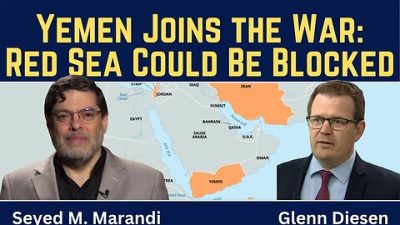
Yemen joins the war – Red Sea could be blocked next – Saudi regime at risk
or go to
Aletho News Archives – Video-Images
From the Archives
Should Europeans ‘Thank’ the Americans for Destroying Nord Stream?
By Robert Bridge | Strategic Culture Foundation | September 29, 2022
With an investigation continuing into the destruction of the Nord Stream gas pipeline that provided energy supplies to Europe from Russia, there appears to be just one prime suspect, and that should surprise nobody.
Following the sabotage of the Nord Stream 1 and 2 gas pipelines, former Polish Foreign Minister Radoslaw Sikorski already seemed to know the identity of the perpetrator when he tweeted out: “Thank you, USA.”
At first glance, it seemed that Sikorski was speaking sarcastically, berating Washington for carrying out an attack that will have severe repercussions for the people of Europe. After all, how could anyone see any good coming from the termination of Europe’s primary source of gas reserves with winter just around the corner? It was Sikorski’s homeland of Poland, after all, that urged its citizens to collect firewood in the face of dwindling gas reserves.
In fact, the Polish diplomat was speaking one-hundred percent literally… continue
Blog Roll
 Aletho News
- US should start removing its troops for Germany, proposes AfD co-leader Chrupalla
- Iran Red Crescent: 600 educational centers attacked in US-Israeli ‘war crimes’
- Russian Oil Tanker Arrives in Cuba Amid U.S. Blockade
- America Racing to Strategic Defeat in Iran: Lt Col Daniel Davis
- FTC Warns Visa, Mastercard, PayPal, Stripe Over Political Debanking
- Russian tanker approaches Cuba despite US oil blockade
- Marandi: Yemen joins the war – Red Sea could be blocked next – Saudi regime at risk
- Pro-Palestinian French member of European Parliament denied entry to Canada
- Pakistan to Host US-Iran Talks
- How Indonesia’s tilt toward the US left it stranded in the Strait of Hormuz
- If Americans Knew
- Israeli police block Catholic cardinal from entering Church of the Holy Sepulchre on Palm Sunday
- Israel is assassinating journalists again, more than any other nation, anywhere, ever – Not a ceasefire Day 170
- Over 300 US service members wounded, majority have brain injuries – Not a ceasefire Day 169
- Researchers at Human Rights Watch Resign Over Blocked Report on Palestinian Refugee Return
- Jewish Groups Are Backing a War Americans Don’t Want
- Eric Fingerhut Thinks He’s the President of the Jews
- Top Jewish Philanthropists, Rabbis Urge Israeli President to Take Action Against ‘Jewish Extremists’
- Don’t Be Fooled. Zionist Leaders Have Always Wanted to Control Southern Lebanon
- Israel’s widespread use of torture is a core element of its genocide against the Palestinian people
- In Israel’s War on Iran, Many Middle East US Bases Rendered “All But Uninhabitable”
- No Tricks Zone
- New Study Finds Warming Saves Lives…Cold Temperatures 12 Times More Deadly Than Excess Heat
- German Science Blog Accuses PIK Climate Institute Of Hallucinating Climate Tipping Points
- Devastating Assessment Of Comirnaty Vaccine By Former Senior Pfizer Europe Toxicologist
- New Study: CO2 Is ‘Effectively Negligible’ As An Explanatory Climate Change Factor Since 2000
- Former Pfizer Toxicologist Dr. Helmut Sterz Tells Bundestag Hearing Pfizer Vaccine Should Have Never Been Approved
- Energy Expert: Germany’s Nuclear Phaseout Was A “500 Billion Euro Mistake”
- New Research: South Australia’s Mid-Holocene Sea Surface Temperatures Were 4°C Warmer Than Today
- Storing Green Energy To Last Germany 10 Days Would Require A 60-Million Tonne Battery
- New Studies: UK Sea Levels Were 4 Meters Higher Than Today During The Mid-Holocene
- Destructive Green New Deal: German Energy And Metal Group Warns Of Drastic Crisis
 Aletho News