Calls for dividing Al-Aqsa temporally and spatially between Muslims and Jews
Palestine Information Center – 05/11/2013
OCCUPIED JERUSALEM — Al-Aqsa Foundation for Endowments and Heritage said Israeli groups seek to enact laws and regulations aiming at partitioning the Aqsa Mosque between Muslims and Jews, and defining times and areas where collective and individual Jewish prayers can be held.
The Foundation said in a statement that Israeli ministers, MKs and party members, in addition to Israeli organizations and decision-makers, are seeking to reach a political and religious consensus to change the status quo in the Aqsa Mosque, and turn it into a Jewish holy site under the occupation authority.
It stated that the Knesset Interior Committee held a session on Monday in this regard, attended by Deputy Minister of Religious Affairs Eli Ben Dahan who called on the new “Chief Rabbinate” to issue an advisory opinion allowing Jews to pray at Al-Aqsa Mosque.
For her part, the head of the Knesset Interior Committee, Likud party member Mary Rigab, pointed out that the aim of holding the consecutive sessions is to enact regulations that will define the times and areas where Jewish prayers will be held in the “Temple Mount”, regardless of the opinion of the “Chief Rabbinate”, and regardless of the threats of a third intifada.
Iran news agency slams CNN for ‘fabricating’ Rouhani’s Holocaust remarks
RT | September 26, 2013
Iran’s state-owned Fars News Agency (FNA) claims that CNN has ‘fabricated’ the remarks made by President Hassan Rouhani in response to the question about the Holocaust. The US news channel added to or changed parts of his remarks, the agency said.
On Tuesday, the newly elected Iranian president gave his first English-language TV message in an interview with CNN’s Christiane Amanpour. The interview made international headlines with hundreds of news agencies worldwide boasting titles like “Iran’s President Rouhani calls Holocaust ‘reprehensible’ crime against Jews” or “Rouhani recognizes the Holocaust as crime against Jews”.
Asking about Rouhani’s take on the Holocaust, Amanpour noted that his predecessor, President Ahmadinejad, infamously denied the Holocaust. “Do you accept what it was, and what was it?” the US journalist asked.
However, according to Iran’s FNA, the news channel made up parts of Rouhani’s answers, adding the word ‘Holocaust’ among other placatory remarks to its translation from the answers given in Farsi.
According to the exact English translation provided by FNA, the Iranian President said,
“I have said before that I am not a historian and historians should specify, state and explain the aspects of historical events, but generally we fully condemn any kind of crime committed against humanity throughout history, including the crime committed by the Nazis both against the Jews and non-Jews, the same way that if today any crime is committed against any nation or any religion or any people or any belief, we condemn that crime and genocide. Therefore, what the Nazis did is condemned, [but] the aspects that you talk about, clarification of these aspects is a duty of the historians and researchers, I am not a history scholar.”
Meanwhile, the CNN translation of Rouhani’s answer stated:
“I’ve said before that I am not a historian and then, when it comes to speaking of the dimensions of the Holocaust, it is the historians that should reflect on it. But in general I can tell you that any crime that happens in history against humanity, including the crime that Nazis committed towards the Jews as well as non-Jews is reprehensible and condemnable. Whatever criminality they committed against the Jews, we condemn, the taking of human life is contemptible, it makes no difference whether that life is Jewish life, Christian or Muslim, for us it is the same, but taking the human life is something our religion rejects but this doesn’t mean that on the other hand you can say Nazis committed crime against a group now therefore, they must usurp the land of another group and occupy it. This too is an act that should be condemned. There should be an even-handed discussion.”
According to FNA, the word ‘Holocaust’ as well as the statement “whatever criminality they committed against the Jews, we condemn” are “the worst parts of the fabrications which totally change what President Rouhani has said.”
Two-State Solution or Illusion?

By Lawrence Davidson | Al-Ayham Saleh | September 21, 2013
Part I – The Two-State Solution
Peter Beinart is a “liberal Zionist” who has written a piece in the New York Review of Books of 26 September 2013 entitled “The American Jewish Cocoon.” In this essay he laments, “The organized Jewish community [is] a closed intellectual space.” By this he means that most American Zionist Jews (it is important to remember that not all Jews are Zionists) know little or nothing about those who oppose them, particularly Palestinians. They also seem to have no interest in changing this situation. For these Zionists the opposition has been reduced to an irredeemably anti-Semitic “them.”
Beinart goes on to tell us that such is the political clout of the organized Zionist community that this know-nothing attitude has come to characterize the “debate about Israel in Washington” and the opinions offered in the mass media as well. While Mr. Beinart does not say so, I can tell you that this has been the basic situation since the early 1920s. Beinart does note, however, that over time this situation has led Palestinians and those who support them to show less willingness to dialogue with Zionists, most of whom they consider irredeemably racist.
Beinart thinks this prevailing ignorance is a disaster. Why so? Because he feels that Jews betray the lessons of their own past by failing to understand the meaning of the “dispersion and dispossession” of the Palestinians. They do not seem to care that this particular people has had its “families torn apart in war – [continue] to struggle to maintain [their] culture, [their] dignity, [their] faith in God in the face of forces over which [they] have no control.” This sort of situation, according to Beinart, is something “the Jews should instinctively understand.”
Be this as it may, achieving such an understanding is, for Beinart, a means to an end. That end is realizing a two-state solution to the ongoing Israeli-Palestinian struggle. For this to happen the Zionists have to essentially feel the pain of the Palestinians and the Palestinians have to understand their no-win situation so that everyone agrees to a Palestinian mini-state on “22 percent of British mandatory Palestine” along with “compensation and resettlement [for the] people whose original villages and homes have long ceased to exist.”
Part II – The Two-State Illusion
An important question is whether Mr. Beinart’s two-state solution does not itself represent a goal whose practicality has “long ceased to exist”? That certainly is the opinion of Ian Lustick, a professor of political science at the University of Pennsylvania. In the Sunday Review section of the New York Times of 15 September 2013, he published an op-ed piece entitled “Two-State Illusion.”
According to Professor Lustick, the two-state idea has become something of a fraud behind which lies opportunistic political motives. For instance, the Palestinian Authority (PA) keeps this hope alive so that it can “get the economic aid and diplomatic support that subsidizes the lifestyle of its leaders, the jobs of tens of thousands of soldiers, spies, police officers and civil servants.” The Israeli government keeps this hope alive because “it seems to reflect the sentiments of the Jewish Israeli majority and it shields the country from international opprobrium, even as it camouflages relentless efforts to expand Israel’s territory into the West Bank.” Finally, the U.S. government maintains the hope of a two-state solution to “show that it is working toward a diplomatic solution, to keep the pro-Israel lobby from turning against them and to disguise their humiliating inability to allow any daylight between Washington and the Israeli government.”
Lustick believes the two-state solution is an impossible hope that has produced periodic negotiations which have always been “phony” and have prevented new ideas for positive change from being seriously entertained. This long-term stifling has also set the stage for possible “sudden and jagged” events that can send the conflict off in catastrophic directions. Oddly enough Lustick finds this prospect of heightened conflict a necessary one.
He tells us that only when the “neat and palatable” two-state solution disappears – and with it the PA and its policies of collaboration – will we get the “mass mobilization, riots, brutality, terror, Jewish and Arab emigration and rising tides of international condemnation of Israel,” along with the subsequent withdrawal of unconditional U.S. support for the Zionist State. At that point
“Israeli leaders may then begin to see, as South Africa’s white leaders saw in the late 1980s, that their behavior is producing isolation, emigration and hopelessness.” Then, finally, they will become reasonable, and something new and acceptable (a one-state solution?) will be possible.
Lustick’s necessary scenario happens to be Peter Beinart’s nightmare and in the latter’s essay it is called “civil war.” Beinart’s call for greater mutual understanding is designed to prevent this violence. One can assume that, for Professor Lustick, things have gone too far for this understanding to suddenly prevail. “Peacemaking and democratic state building require blood and magic,” he tells us. Delaying the inevitable with false hopes will only make things worse.
By the way, Lustick is not alone in his view that the two-state formula is a dead end. One of Israel’s very best historians, Ilan Pappe, who now is the director of the University of Exeter’s European Centre for Palestinian Studies, believes that this prospect has been dead for over a decade. What killed it, and what keeps it dead, are “Zionist greed for territory and the ideological conviction that much more of Palestine [beyond the 1967 borders] is needed in order to have a viable Jewish State.” It is worth noting that it is just this ideological conviction that renders Peter Beinart’s plea for more understanding of the Palestinian position by American Zionist Jews a nonstarter. Any ideology that can justify incessant ethnic cleansing has to make its adherents incapable feeling their victims’ pain.
Part III – Conclusion
If Beinart’s hope for mutual understanding is naive, Lustick’s hope that more “blood” will lead to the “magic” of a positive outcome is not at all assured.
One might ask just how much disaster is necessary before the hard-line Zionists who have long controlled Israel will compromise their ideological commitment. Keep in mind that the Israeli political elites, right and left, have always been expansionist. Even Peter Beinart is not pushing for a return to the 1967 Green Line and an evacuation of illegal settlements, as far as I can tell. In the past, the Israeli elites have judged their terror and brutality to be justified. They will do so in the future as well. Some of them will interpret any increase in Jewish emigration (a process already ongoing) as a weeding out of weak elements. Militarily the Israelis can probably maintain superiority over their neighbors even in the face of reduced American aid, and as far as world opinion is concerned, most of them care little about it. If this assessment has any validity, the Israelis could go on ethnically cleansing for a very long time.
In my view, the only viable weapon against such vicious stubbornness is a worldwide comprehensive economic boycott on the South Africa model. However, even this may not be the last page in the drama. Such an economic boycott may prove strong enough to undermine the will of some Israeli ideologues, but not all of them. And then, unlike South Africa, you may need an intra-Israeli Jewish civil war to finally bring the curtain down on the tragedy of Zionism.
Related article
Tension rises in Khalil during Sukkot celebrations
International Solidarity Movement | September 21, 2013
Hebron, Occupied Palestine – Sukkot is a joyful festival in Judaism; however its impact upon day-to-day life in Khalil has only caused greater problems for the Palestinians. Many residents of Khalil have commented that it is during this holiday period every year where daily life in the city becomes all the more difficult.
Last week soldiers began preparations for taking over a house next to the container checkpoint 209 (Quatoum/Abu Rish), which belongs to a Palestinian family. The family received a military order informing them that this house would be occupied by the Israeli army until Tuesday 24th September, the end of Sukkot. Due to the large number of Jewish tourists visiting Hebron during Sukkot, reinforcement brigades have been sent to Hebron, and due to lack of accommodation for these additional soldiers, the army decided to take over this Palestinian house and use it as a military base for the duration of the holiday. Residents of this area have stated that since the soldiers began occupying the house, child detainment and arrests have increased, and there are further concerns that checkpoint 209 may be moved in an attempt to increase control in the surrounding area.
Today, Saturday 21st September, several clashes and attacks took place between settler youth and Palestinian children and teenagers in Tel Rumeida. Additionally, as on every Shabbat, settlers invaded the roof of the Abu Shamsiyeh family and verbally attacked international activists who, at the request of the family, were monitoring the entrance to the roof as it is often entered without family permission. In the past, settlers have attacked the family by throwing stones, spitting at, beating members of the family and urinating into their garden.
On Friday 20th September, clashes erupted in the afternoon as Palestinian youths threw stones at checkpoint 56. After the PA (responsible for this area of Hebron which is part of H1) chased away the stone-throwers, the clashes moved into the OldCity and souq of Hebron, which is part of H2 and thus under Israeli military control. Throughout Friday evening and most of Saturday, Palestinian youths were throwing stones and Molotov cocktails, whilst Israeli soldiers responded with sound grenades, teargas and rubber-coated steel bullets. International activists witnessed border police shooting teargas canisters directly at protesters, as opposed to shooting it in an arch as they are supposed to under Israeli army regulations. Further clashes are expected tomorrow as settlers and Jewish tourists invade area H1.
On Sunday 22nd and Monday 23rd September, tens of thousands of Jewish tourists are expected to descend upon Hebron for Sukkot celebrations. On important Jewish holidays, there is a tradition of the settler community, alongside Jewish tourists, visiting a house in H1 (the Palestinian-controlled part of Hebron) which they claim used to be the home of a rabbi and thus holds religious significance. The Israeli military has ordered the closure of the road outside checkpoint 56 leading to Yatta between 10am and 3pm on Sunday 22nd September. The house that the settlers and Jewish tourists pilgrim to is located on said road, however it is the first time ever that the Israeli military has formally ordered the closure of the road and the shops located there. This order is a clear violation of the Hebron Agreement, signed in 1997 by the Palestinian Authority and the Israeli government, which divided the city into areas H1 and H2 under Palestinian and Israeli military control respectively.
Related articles
Israel: A great place to be white!
By Charles Davis | False Dichotomy | June 29, 2013
Not everyone who lives in Israel is of pasty white European heritage, but you wouldn’t know it from the Israeli government’s outreach. For reasons only fully understood by the gods and the person trolling me, I was recently subscribed to the newsletter of the Jewish National Fund (JNF), a quasi-governmental organization that seeks to replace brown people in Israel with Jews and trees.
An explicitly racist organization (Israel’s second largest property owner, it refuses to rent land to Arabs), it was not surprising to find that JNF’s printed propaganda featured almost exclusively smiling white people. On one page, smiling white college kids whose trip to the Holy Land totally rocked. On another page, a smiling white foodie dishing the inside scoop on Israeli cuisine. Here a white person; there a white person; everywhere a white person. The reader at home’s takeaway: Go to Israel and you won’t have to mix with the coloreds, unless of course you book the 4 day / 3 night Ethnic Immersion tour package.
What’s a little weird is that when I tweeted something snarky about the awful lot of white folk in JNF’s newsletter, the CEO of JNF, seemingly awful white person Russell Robinson, saw fit to retweet it. Judging by the rest of his tweets — yes, older friends, I too find my generation’s language insufferable — it does not appear this was an act of passive aggression, though I probably shouldn’t jump to any conclusions. Perhaps he was just distracted by how pasty white I am and hit the wrong button.

The Painted Frog of Palestine

Lake Huleh. (Photo: Wikimedia Commons)
By Jeremy Salt | Palestine Chronicle | June 14 2013
The good news from Palestine is that the ‘painted frog’ of the Huleh valley is not extinct after all. Recently it turned up again after not having been seen for the past half century. Behind the disappearance of the painted frog stands a much bigger story, the fate of the Huleh valley after the conquest of Palestine by the Zionists and behind that story is the reality behind one of the foundation myths of the Zionists, that of a barren, stagnant and empty land awaiting redemption in the hands of the Jewish people.
In the 19th century the Huleh wetlands were one of Palestine’s prize natural assets. They were formed over millennia by three rivers flowing south into the Huleh valley from their headwaters in Syria, the Hasbani, the Banias and the Liddan. The valley stretched for a distance of about 25 kilometers in length and six in width. Its centerpiece was Lake Huleh and its adjoining wetlands, covering an area of about 60 square kilometers, expanding and contracting in tune with the seasons. The lake itself was more than five kilometers long and more than four wide at its broadest point. The river flow continued southwards into Lake Tiberias and then the Jordan River. The fertile land around the lake provided the surrounding villages and beduin cultivators with a good living from cereal crops, maize, rice and honey. The lake and wetlands were a nesting and feeding spot for masses of migratory birds. The life beneath the water was just as rich as on the outside.
Here are descriptions of the Huleh wetlands by the Rev. W.M. Thomson, an American missionary who visited Palestine in the 1850s to follow in the footsteps of the master but still took detailed notes of everything he saw, the food people ate, the clothes they wore, the crops they cultivated, the glassware and soap they produced in their worships as well as the flora, the fauna, the valleys, hills, plains and rivers. (1):
“There lies the Huleh like a vast carpet with patterns of every shade and shape and size, thrown down In Nature’s most bewitching negligence and laced all over with countless streams of liquid light …. The plain is clothed with flocks and herds of black buffalo bathe in the pools. The lake is alive with fowls, the trees with birds and the air with bees.” (‘Unrivalled beauty of the Huleh’, p. 225)
“The soil of this plain is a water deposit like that of the Mississipi Valley about New Orleans and extremely fertile. The whole country around it depends mainly upon the harvests of the Huleh for wheat and barley. Large crops of Indian corn, rice and sesamun (simsum) are also grown by the Arabs of the Huleh, who are all of the Ghawareneh tribe. They are permanent residents although dwelling in tents. All the cultivation is done by them. They also make large quantities of butter from their herds of buffalo and gather honey in abundance from their bees. The Huleh is, in fact, a perpetual pasture field for cattle and flowery paradise for bees. At Mansura and Sheikh Hazeib I saw hundreds of cylindrical hives of basket work, pitched, inside and outside, with a composition of mud and cow dung. They are piled tier above tier, pyramid fashion, and roofed over with thatch or covered with a mat. The bees were very busy and the whole region rang as though a score of hives were swarming at once. Thus this plain still flows with milk and honey and well deserves the report which the Danite spies carried back to their brethren: ‘A place where there is no lack of anything that is in the earth.” (‘Produce of the land of Huleh’, p. 253).
“This Huleh – plain, marsh, lake and surrounding mountains – is the finest hunting ground in Syria and mainly so because it is very rarely visited. Panthers and leopards, bears and wolves, jackals and hyenas and foxes and many other animals are found, great and small, while it is the very paradise of the wild boar and the fleet gazelle. As to waterfowl, it is scarcely an exaggeration to affirm that the lower end of the lake is absolutely covered with them in the winter and spring.” (‘Wild animals of the Huleh’, p. 260).
Dr. Thomson does not mention the painted frogs of Huleh but they must have been there in abundance, breeding in the protection of the rushes, hunted by the pelicans and storks that stopped at the lake on their flights from the north. He noted the presence of the ‘lilies of the valley’ growing amongst the rushes, which in places were so densely entangled with bamboo as to make approaches to the water impenetrable. The Huleh valley was one part of a rich environmental and agricultural mosaic stretching across Palestine. Of course part of it was barren. It still is but one would not say Australia is a barren land because of the Simpson desert or the United States because of the Mojave desert in California. It was not just the fertility of the Huleh valley that took Dr. Thomson’s attention. He was equally fulsome in his praise of the groves of citrus fruits, the extensive fields of wheat and barley grown along the seaboard right down to Gaza and the grapes and olives of the interior. His descriptions are corroborated in numerous other contemporary accounts, which stand as the most effective rebuttal of the central myth of the barren land.
Indeed, the central problem for the Zionists was that all the fertile land was already being cultivated, by people who were not prepared to part with it. Like all native peoples the land for them was an integral part of the cycle of life. That was the way it had always been and not until the Zionists arrived had they had to face life without it. It was the latifundistas living outside Palestine and the middlemen who negotiated the deals who gave the Zionists their foothold. Once the contracts were signed they drove the tenant cultivators away. There was no remorse: where these uprooted people went was none of their business. The British, in charge of this supposedly ‘sacred trust of civilisation’, as the mandate was described in article 22 of the Covenant of the League of Nations, were complicit in this ruthless process, providing an umbrella of armed and pseudo-legal protection.
Through legal purchase the Zionists were never going to get what they wanted. By 1945 they had acquired less than six per cent of Palestine and remained a one-third minority of the population despite the massive immigration of the 1930s. David Ben-Gurion and other Zionist leaders knew that only war would give them what they wanted. They played a crafty game, dumping the British when they were no longer of any use and turning to the United States. Partition was a complete violation of the natural rights of the indigenous people but was welcomed by the Zionists, naturally, as they were being given what they did not possess and had no right to possess. At the same time as pretending to be satisfied with partition, they regarded it only as the first step. It was not just that the Americans had concluded by early 1948 that Palestine could not be partitioned peacefully. The Zionists would never allow it to be partitioned peacefully as this would leave the Palestinians on their land. There could be no Jewish state as long as they stayed, and if there is a regret in the Benny Morris school of historical reflection it is only that the opportunity was lost to get rid of them all.
In the meantime land hunger focused settler eyes on possibilities in the rich, fertile and well watered Huleh valley. Draining what were called the swamps of Huleh would create more room for colonization but for the time being remained beyond their technical and financial means. When it happened it was inscribed as one of the founding myths of Zionists: the redemption of the land, making the desert bloom, and all the rest of it, when in fact the settlers ruined in the Huleh valley what was an ecologically rich wetland with few parallels in the Middle East.
From the beginning control of water was essential to the Zionist project. Weizmann fought hard at the Paris peace conference in 1919 for the Syrian headlands of Palestine’s water to be included in the British mandate and therefore within the borders of the Zionist state Lloyd-George, Balfour and Churchill wanted to establish in the heart of the Middle East while talking endlessly about nothing more than a ‘national homeland’ for the Jewish people. Weizmann’s scheming and lobbying broke against the rock of French strategic interest but seizing and controlling water resources in and around Palestine remained a prime target of the Zionist leadership, with their diversion of these waters creating one of the many crises that preceded the 1967 war.
The Huleh valley stood out from the beginning of Zionist settlement. The first colony in the valley was established in the 1880s but because of the ravages of malaria no further settlements were established for half a century. In the 1930s Steinmatsky’s Palestine Guide (2) noted the drainage of ‘swamps and marshes’ since the First World War, ending the scourge of malaria and restoring ‘fertile tracts of land to cultivation thus increasing the tillable area of Palestine’. Unique amongst Palestine’s network of rivers, lakes and subterranean aquifers, the Huleh wetlands ‘which are now marshy tracts offer untold opportunities for agricultural development. Thorough drainage is the first need to be followed by systematic irrigation. This land has been granted for use under a concession to a group which did not avail itself of the concession. The concession has now passed to a Jewish group which will soon start on the preliminary work.’ (p. xii).
In his collection of essays on land acquisition and development in Palestine, Arthur Ruppin, a German lawyer who settled in Jaffa as the chief land purchasing and development officer for the Palestine Office of the World Zionist Organization, lists the Huleh wetlands as land which might be uncultivable for the Palestinian settled and nomad population but would be cultivable for incoming Jewish colons, given their access to credit and use of modern farm machinery. (3) The fertile land around the lake was either state land from Ottoman times or already owned and cultivated, with only one Zionist settlement having been established up to the outbreak of the Second World War. Ruppin wanted to open up land for settlement by draining the wetlands, which for him were no more than marsh and swamp waiting to be reclaimed.
In a memorandum handed to Sir John Hope Simpson, sent to Palestine in 1930 to investigate immigration, land development and settlement, the three major causes of rising distress amongst the Palestinians, Ruppin attempted to show that ‘if the farming of the fellaheen were to be a little bit intensified – in the coastal zone, Beisan, Huleh and the lower Jordan Valley – the Jews would be able to buy 1,300,000 dunums without displacing the people who have so far [sic.] worked the land. Fifty-five thousand [Jewish] families could be settled on this land.’(4) Hope-Simpson demurred on various grounds, one of them being that the Jewish National Fund (JNF) would not let ‘Arabs’ work on its land and that ‘increasing land purchase will displace the Arabs from many parts of Palestine’. This in fact is what happened as part of a process Hope-Simpson described as the ‘extra territorialisation’ of land once purchased by the JNF and put beyond the purchase or rental by non-Jews forever. Zionist colonists who still used the Palestinians on the land or in workshops and factories were violating the Jewish-only labor ‘principles’ that were the corollary of the ‘principles’ governing land purchase.
At the age of 50 Ruppin and others founded the Brit Shalom movement. It was committed to ‘Jewish-Arab’ friendship but the refusal of the Palestinians to give up their rights and their land eventually forced him to conclude that negotiations would achieve nothing and that if the Zionist project was to succeed, ‘we must increase our strength and our numbers until we reach parity with the Arabs. The life or death of the Zionist movement will depend on this …. Perhaps a bitter truth but it is the truth with a capital T’. Writing in 1936 he expected this point to be reached in five to ten years. (5) Ruppin died in 1943 so was not around when not just parity but numerical superiority was achieved by expelling the bulk of the indigenous Palestinian population in 1948. In the language of the occupier, there were 12 ‘Jewish’ and 23 ‘Arab’ ‘settlements’ in the Huleh valley by 1948. ‘Following the establishment of the State of Israel and during the 1948 War of Independence the Arab inhabitants left the valley, moving to neighboring Arab countries’. (6)
Meron Benvenisti has put the number of villages in the region at 60 but this includes semi-permanent beduin encampments built from rushes or mud bricks. (7) Walid Khalidi has documented how they ‘left’ and what happened to their ‘settlements’. Village after village was depopulated and destroyed before being built over by Zionist settlements. (8) All that remained after the Zionist assault through the Huleh valley was one Beduin settlement,(9) with the Zionist settlers now free to take the land left behind and harvest the crops planted by those they had expelled.
With the Palestinians gone and the state of Israel established over their heads and on their land there were no barriers to the exploitation of the Huleh valley. Beginning in 1951 it was subjected to ‘redevelopment’ that amounted to ecological vandalism on a grand scale by blundering land-hungry settler administrators. The wetlands were drained and turned into arable land, shrinking the lake to perhaps one tenth of its original size. At the time the drainage and irrigation works were seen as a brilliant engineering achievement, of which the most significant benefits were regarded as the creation of thousands of dunums of cultivable land and the eradication of malaria. Yet it was not long before disappointment and an understanding of the damage that had been done set in. As summarized by Zohary and Hambright, while the drained peat soil proved suitable for agriculture, ‘the anticipated exceptional yields were never obtained’. (10)
Furthermore, ‘as the level of groundwater fell, air penetrated into the dried peat, enhancing microbial decomposition of organic matter. Often these processes led to uncontrollable underground fires and the formation of dangerous caverns within the peat. The weathered peat soils turned into infertile black dust. Strong winds sweeping the valley produced dust storms that caused major damage to agricultural crops. Consequently, the ground surface subsided by up to three meters in some regions and inundation of these areas during winter rains restricted cultivation in many areas. An indirect problem associated with the drying of the soils was the proliferation of field mice populations which soared and wreaked havoc on agricultural crops in the valley. Over time, farmers abandoned more and more of the valley where cultivation was no longer profitable, thereby further enhancing the rate at which these soils deteriorated’.
By 1958 this was the state of the valley described in such glowing terms by Dr. Thomson only a century before. A unique wetlands region which had been part of the landscape for thousands of years had been mostly destroyed within the space of nine. Elsewhere in Palestine olive groves, pomegranates and citrus orchards were uprooted as part of a dual process of settlement building and the removal from the land of all traces and symbols of the Palestinian presence. The olive and pomegranate were preeminent symbols of the ‘primitive’ Palestinian village and so had to go along with the houses. (11) Through the vindictive destruction of olive trees by settlers on the West Bank this process continues to the present day.
Along with the shrinking of Lake Huleh and the drying of the land came the destruction of flora and fauna. The lake had been a rich source of aquatic life, with researchers listing ‘260 species of insects, 95 crustaceans, 30 snails and claims, 21 fishes, seven amphibians and reptiles, 131 birds and three mammals’. (12) After the drainage ‘119 animal species were lost to the region of which 37 were totally lost from Israel [sic]. Similarly, many freshwater plant species became extinct and many of the massive flocks of migratory birds that used to land in the valley found alternative feeding sites on their routes between Europe and Asia.’ Only in the 1980s was it decided to take steps to repair the damage, by flooding part of the valley in the hope of renewing something of the original bio-diversity but only a ‘small fragment of an extinct eco-system’ has been revived.’ The painted frog with its mottled back and belly speckled with white spots belongs to an amphibian family thought to have died out 10,000 years ago until spotted in the Huleh wetlands in the 1940s. This ‘living fossil’ was believed to have been one of the species that were ‘lost’ when the wetlands were drained in the 1950s but two years ago a ranger saw one and now it is thought that there is a colony of hundreds.
The Huleh eco-system did not die of natural causes. It did not become ‘extinct’ because of sudden climate change or any of the other natural catastrophes that have killed off species and reshaped the surface of the planet for millennia. It was another casualty of the nakba. The Zionist colons had none of the skills that come with husbanding the land generation after generation over countless centuries. They had to learn and their vandalism in the Huleh valley was born of their ignorance and their haste to settle and cover all traces of where the people they drove out had lived, prayed, studied and farmed and where their ancestors were buried.
Where the painted frog went as the Huleh wetlands were drained only the frog knows. Most probably, it burrowed deeper into what remained of the mud and rushes until it was safe to come out, a period of time that spanned more than 50 years. The parallel with the people is unmistakable: driven towards extinction as a people, they have survived and are waiting for the time when they also will be able to return.
– Jeremy Salt is an associate professor of Middle Eastern history and politics at Bilkent University in Ankara, Turkey. He contributed this article to PalestineChronicle.com.
Notes:
(1) Rev. W. M. Thomson, The Land and the Book (Nelson and Sons: London, 1879).
(2) Steimatsky’s Palestine Guide (Jerusalem: Steinmatsky Publishing Company, n.d. , 1930s?).
(3) Arthur Ruppin, Three Decades of Palestine (Jerusalem: Schocken, 1936), pp. 207-8
(4) Alex Bein., ed., Arthur Ruppin: Memoirs, Diaries, Letters (London: Weidenfeld and Nicolson, 1971)
(5) Ibid., p.320
(6) Tamar Zohary and K.David Hambright, ‘Lake Hula-Lake Agmon’, http://www.jewishvirtuallibrary.org
(7) Meron Benvenisti, Sacred Landscapes. The Buried History of the Holy Land Since 1948 (Berkeley: University of California Press, 2000), p.127.
(8) Walid Khalidi ed., All That Remains. The Palestinian Villages Occupied and Depopulated by Israel in 1948 (Washington: Institute for Palestine Studies, 1992), pp. 428-509 passim for the fate of Palestinian villages on the Huleh plain.
(9) Ibid, p. 131
(10) Zohary and Hambright, op. cit.
(11) Benvenisti, p.216.
(12) Ibid.
A letter to David Cameron
A letter to British Prime Minister David Cameron, following his speech at the Annual dinner of United Jewish Israel Appeal
By Anne Candlin | Uprooted Palestinians | October 26, 2012
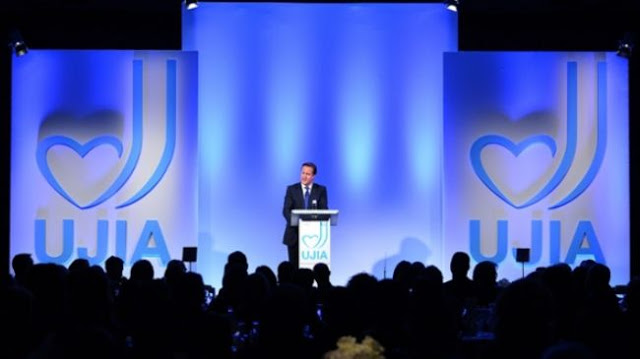
Dear Mr Cameron, How self-interested and partisan was your speech last week to the Jewish Israel Appeal. Carefully pre-scripted, it said everything the Jewish Zionists in your audience wished to hear. Your final quips about settlement- building and house- demolitions were moral soundbites for the Media, to give the appearance of being fair minded and caring about the Law. Your audience knew full well, as indeed you do, that the government has not the slightest intention of lifting a finger to help the displaced victims of settlement-building and house demolitions. I happened to be in E.Jerusalem when the Al Khurd family were dragged out of their home by Jewish settlers and thrown, with all their belongings and children, onto the streets. The father of the family, who was disabled and in a wheelchair, died soon after this event. The family were left to live in a tent on a patch of land in front of their former home, able to see the comings and goings of the two young Jewish families who now inhabited their home. I’m puzzled by your allusion to a Jewish philanthropic spirit when I see such things. I was shocked to see the Israeli soldiers, “the most moral army in the world,” beating up a young Palestinian Christian farmer in Al Khadre near Bethlehem, whose land had been illegally annexed for the building of a military terminal. Shocked to see them breaking his arm by stamping on it and then trying to prevent the ambulance from taking him to hospital. Shocked to see them beating up courageous Israeli Jewish activists who had come to support the farmer. Shocked to learn that Palestinian women gave birth at checkpoints and sometimes lost their babies because the Jewish soldiers would not let them go through to reach the Maternity Hospital. Your audience must be flattered and bemused by the rosy view you have of such people. We, each of us, must individually choose to embrace a humane way of living and stand or fall by our own actions. It is not enough to lazily shelter under the supposed morality of any given inherited tradition.
May I remind you that you have Muslim and Christian citizens in this country. There are Moslems, Christians, Jews and Secular people both here and in Palestine who do not necessarily share your rosy view of Israel or of it’s Jewish or non-Jewish supporters. Many of us remember that when the UK helped bring Iraq to it’s knees through sanctions, a million innocent little children died as a result. Was the celebrated Jewish sense of justice offended by that? clearly your own conscience was not moved. Sanctions produced nothing good for the Iraqi people and did not prevent war. Quite the contrary: sanctions were, and continue to be, a hypocritical and cruel devise used by western powers to conceal their already well-laid plans for the invasion, destruction and de-development of Muslim, oil-rich countries.
Not satisfied with so many deaths in Iraq, Israel and it’s economic cohorts eagerly await the death of thousands more innocent people in Iran, another oil-rich Muslim country. Sanctions first to soften the people through impoverishment and death, to alienate their leaders, then, on the eve of invasion you will wring your hands in front of the world’s media and say “look, we tried peaceful measures first, didn’t we…” But starving a population, reducing them to poverty, is as violent and genocidal as other acts of war. It is particularly deplorable that you reveled in the implementation of plans to starve thousands of others while you were feasting and dining to your heart’s content in London. One is reminded of the rich man who, while feasting at his own table, refused Lazarus a crumb of bread.
Who has been the prime aggressor in the Middle East, invading Lebanon, Syria, Sinai, Gaza? Who has defied more UN Resolutions than any other country in the world? Who threatens daily the existence of Palestinians? who assassinates Palestine’s spiritual and political leaders? Who has imprisoned the Palestinian population behind walls? Who illegally imprisons and frequently tortures 7,000 Palestinian children annually? Who has made a Palestinian state impossible through it’s theft of land and refusal to acknowledge the right of Palestinian refugees to return to their legal lands? Who has dozens of discriminatory laws against it’s minority Arab population? You know the answer yet you are proud to have such friends.
You threaten invasion against a country for even thinking about developing a nuclear weapon, but befriend Israel which has more nuclear weapons than France and the UK together. What possible rationale can you have for such uneven-handedness apart from self-interested economic and financial advantage? Will you ever publicly or privately ask the Jewish community to face Israel’s iniquities? So you believe that the interests of thieves, child-abductors, torturers, criminals, racists and warmongers are written into the DNA of the Conservative Party. What a disquieting boast. But please do not presume to confer on all the British people such a questionable genetic makeup. I am British, Caucasian, educated, middle class, a pensioner. Boringly, boringly mainstream. Hardly a candidate for Muslim extremist. I neither share Israel’s “cultural DNA” nor embrace such an unscientific and foolish notion.
Related articles
- Cameron warns UK students against boycotting Israel (foa.org.uk)
Featured Video
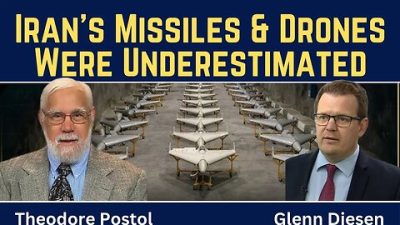
Theodore Postol: Iran’s Missiles & Drones Were Underestimated
or go to
Aletho News Archives – Video-Images
From the Archives
Wars for Israel: A reminder of who’s giving the marching orders
By Damian Lataan | February 7, 2012
As the West prepares to march off to yet another war in the Middle East, we should perhaps remind ourselves of who is giving the West their marching orders.
In February 2003, just weeks before the US and their allies launched their attack on Iraq and her peoples, a delegation of US congressmen, together with the US Ambassador to the United Nations, John Bolton, a well known pro-Zionist and neoconservative war-hawk, were in Israel at the invitation of the Israeli government then led by Israeli Prime Minister Ariel Sharon.
Addressing the congressmen, Sharon told them ‘that Iran, Libya and Syria should be stripped of weapons of mass destruction after Iraq’. Later, Sharon told John Bolton ‘that Israel was concerned about the security threat posed by Iran, and stressed that it was important to deal with Iran even while American attention was focused on Iraq’. … continue
Blog Roll
 Aletho News
- Iran sets up ‘tollbooth’ system in Strait of Hormuz
- Wave 90: IRGC strikes US-linked industrial sites in Gulf
- Iran Says US-Israeli Claims of Its Military Strength Are Wrong
- Trump’s April Fools’ Address to the nation
- The Most Important Bet You’ve Never Heard Of
- The killing of three Indonesian soldiers in Lebanon should remind Jakarta that Israel does not want peace
- Defeated and delusional: Netanyahu’s remarks reveal $80bn war failure, says analyst
- Iran’s friends are about to make life much more difficult for Israel and the US
- The war of liberation of the Arab and Islamic peoples expands across the Gulf
- Envoy warns UN on Trump’s threat to ‘obliterate’ Iran’s civilian infrastructure
- If Americans Knew
- Gaza families reunite years after babies evacuated amid Israel’s war
- International Rescue Committee warns Gaza’s children face grave protection risks
- Iran’s Alleged 47-Year War on America: Debunking the 1,050 American Deaths Canard
- Israel wants US to bomb more of Iran’s civilian structures (113,000 is not enough) – Not a ceasefire Day 173
- Ann Coulter Rips Into Fox News for Iran War Coverage
- Joe Kent Urges Americans To Call White House and Congress To Object To Sending Troops Into Iran
- DNC Resolution to Reject AIPAC Funding Puts Democratic Leaders in the Hot Seat
- Swedish foundation to build 400 schools as over 650,000 Gaza children remain without education for 2 years
- Israeli army admits photshopping image of slain Lebanese journalist
- This is how Israel is systematically killing health workers under the cover of war in Lebanon
- No Tricks Zone
- Low Intensity Tornado Wrecks Major Solar Farm, Creating A Potential Toxic Dump
- New Study Finds Warming Saves Lives…Cold Temperatures 12 Times More Deadly Than Excess Heat
- German Science Blog Accuses PIK Climate Institute Of Hallucinating Climate Tipping Points
- Devastating Assessment Of Comirnaty Vaccine By Former Senior Pfizer Europe Toxicologist
- New Study: CO2 Is ‘Effectively Negligible’ As An Explanatory Climate Change Factor Since 2000
- Former Pfizer Toxicologist Dr. Helmut Sterz Tells Bundestag Hearing Pfizer Vaccine Should Have Never Been Approved
- Energy Expert: Germany’s Nuclear Phaseout Was A “500 Billion Euro Mistake”
- New Research: South Australia’s Mid-Holocene Sea Surface Temperatures Were 4°C Warmer Than Today
- Storing Green Energy To Last Germany 10 Days Would Require A 60-Million Tonne Battery
- New Studies: UK Sea Levels Were 4 Meters Higher Than Today During The Mid-Holocene
 Aletho News