Fifty-five years ago, on November 22, 1963, John F. Kennedy was assassinated. Although there has been a great deal written about this event over the years, I want to draw attention to one exceptionally important article, originally delivered as a talk on November 20, 1998. Vincent Salandria gave this talk in Dallas at the invitation of the Coalition on Political Assassinations. (See Sources.)
Salandria had been a high school teacher at the time of the assassination (he later became a lawyer) and was one of the first people in the US to write essays expressing dissent from the government narrative of lone gunman Lee Harvey Oswald, maverick leftist.
In his 1998 talk Salandria went through over a dozen of the famous obstacles to the government story—the grassy knoll witnesses, the “magic bullet,” the testimony of the doctors at Parkland Hospital, and so on—but he did not let himself get sidetracked into detailed debates on any of these. By 1998 he had already seen, and participated in, 35 years of such debates. He had long ago concluded that, “the national security state at the very highest level of its power killed President John F. Kennedy for his efforts at seeking to develop a modus vivendi with the Soviets and with socialist Cuba.”
In 1998 he felt it was time to warn researchers about the danger of wasting time in “false debates,” where the essential facts had clearly been established and the wrangling served only the purposes of the assassins. Rather than repeat the debates, Salandria decided in 1998 to outline his basic approach. I will call this the Salandria Approach. I draw attention to it because I believe it helps us find our feet when we tackle not only the JFK killing but many of the killings in the 21st century’s War on Terror.
Here are Salandria’s words:
I began to sift through the myriad facts regarding the assassination which our government and the US media offered us. What I did was to examine the data in a different fashion from the approach adopted by our news media. I chose to assess how an innocent civilian-controlled US government would have reacted to those data. I also envisioned how a guilty US national security state which may have gained control of and may have become semi-autonomous to the civilian US governmental structure would have reacted to the data of the assassination.”
He adds that,
only a guilty government seeking to serve the interests of the assassins would consistently resort to accepting one improbable conclusion after another while rejecting a long series of probable conclusions.”
Let us take two cases from Salandria’s list of over one dozen in order to see what he was getting at.
The Grassy Knoll
Dozens of witnesses thought there were shots from an extended grassy rise, containing several structures, situated west of the famous Texas School Book Depository Building. Salandria, refusing to get drawn into the familiar debate, says:
Let us assume arguendo [for the sake of argument] that all of the eyewitnesses who had concluded that shots were fired from the grassy knoll were dead wrong. But an innocent government could not and would not at that time have concluded that these good citizens were wrong and would not have immediately rushed to declare a far-fetched single assassin theory as fact.”
Note that Salandria’s emphasis is not on the details of the grassy knoll discussion but on the method the government followed in its investigation. And he is right, both about the immediate claim that Oswald acted alone— presented, as he explains, by a government representative on November 22 itself—and about the identical statement presented later by the Warren Commission.
In both cases the claim flew in the face of the eyewitness evidence. For example, despite the fact that there are references to dozens of witnesses to shots from the grassy knoll in the 26 volumes of evidence appended to the Warren Report, the Commission itself displayed little interest in them. And when the Commission dismissed every single one of the grassy knoll witnesses to protect its lone gunman theory it did so without bothering to make a sustained argument.
It chose instead to play a credibility game. It pronounced:
No credible evidence suggests that the shots were fired from the railroad bridge over the Triple Underpass, the nearby railroad yards or any place other than the Texas School Book Depository Building” Warren Report, p. 61
In other words, the Commission decided to gather together into one great agglomeration the credibility of its seven well dressed and high-ranking white men associated with government and use this to crush the credibility of the “good citizens” who were present in the Plaza and witnessed, with their senses, the unfolding of events.
It was a breathtaking move. But in what way could it be said to characterize an innocent government? How could any serious investigator pretend to solve an evidential problem by playing a credibility game? Standard practice in a homicide investigation would be to find all witnesses, to interview them, and to record their statements impartially, making sure to ask each one of them where they thought the shots came from and why they reached their conclusion. How would the opinions of congressmen, spies and the like possibly be relevant to the case when these gentlemen declined to offer adequate counter-evidence or to give a serious argument to support their peculiar conclusion?
Readers who have never had the opportunity to see and hear for themselves the good citizens in question may benefit from Mark Lane’s documentary:
Well, where, in such a case, does the Salandria Approach lead us? We have no choice but to conclude that the Warren Commission’s investigation was not what we would expect from “an innocent civilian-controlled US government.”
It was more characteristic of “a guilty government seeking to serve the interests of the assassins.” There was a predetermined perpetrator and an insistence on the guilt of this perpetrator, while evidence suggestive of a conspiracy was systematically ignored, distorted or suppressed.
Suppose we were to apply the Salandria Approach to events of the 21st century–to the eyewitnesses at the World Trade Center on September 11, 2001, for example? We have over 150 witnesses who reported that they saw, heard or felt explosions at the time of the beginning of destruction of the Twin Towers. (See Sources for assertions in this and the following paragraph.)
Their testimony constitutes very significant support for the theory that the Trade Center was blown up and did not undergo collapse from structural failure caused by airplane collision. We are not simply talking about loud sounds here. We are talking about sounds that experienced firefighters suspected were caused by bombs. We are talking about patterns of explosions seen pulverizing the buildings. We are talking, in some cases, about witnesses who say these explosions threw them through the air. Now, avoiding the debates about the details of this testimony, let us follow Salandria and ask: What did the government’s 9/11 Commission do with these eyewitness accounts, all of which were in its possession?
The answer is that it called for no comprehensive search for eyewitnesses (neither did the FBI, as far as I can discover), nor did it have such witnesses asked the appropriate questions. It devoted to these witnesses a single line in the roughly 585 pages of its Report. And that single line is both dismissive and extremely misleading.
What about the National Institute of Standards and Technology, assigned by government the task of looking in detail at the destruction of the Trade Center and sorting out the reasons for its destruction? In the thousands of pages of its reports on the Twin Towers we find not a single mention of the explosion witnesses. Despite NIST’s pride in its interviewing techniques, and despite its access to all the relevant information, it somehow missed over 150 witnesses. It made no attempt to find them, to sort out their testimony, or to discover how their words might illumine the mystery of the so-called “collapses.”
We should recall that the efforts of the 9/11 Commission and NIST were mere follow-through. A strenuous attempt to promote the structural failure hypothesis was begun on the very day of September 11, 2001, in the absence of serious evidence in its favour and in bold contradiction to what large numbers of witnesses were saying. (Sources)
When we adopt the Salandria Approach we must, to paraphrase Salandria, conclude that, “an innocent government could not and would not at that time have concluded that these good citizens were wrong and would not have immediately rushed to declare a far-fetched [structural failure] theory as fact.”
The Magic Bullet
In his essay Salandria explains the absurdity of the single bullet (“magic bullet”) theory, according to which one bullet passed entirely through the president’s body and then caused all of Governor Connally’s wounds, emerging after its adventure in near-pristine condition. This bullet evidently had no difficulty changing direction in mid-air, nor did it balk at losing mass in Connally’s body and then regaining this mass at the end of its journey. Salandria concludes:
“our Cold War government in the context of the assassination had declared a moratorium on the science of physics.”
Remember: the issue before us is not merely he single bullet theory itself but the behavior of government representatives in investigating this hypothesis. So it is in those moments when we read the Warren Commission transcripts and watch counsel Arlen Specter leading and pressuring witnesses into accepting the single bullet theory that we realize we are seeing the handiwork of a guilty state.
Now, what might we find if we were to apply the Salandria Approach to the destruction of the World Trade Center? To restrict ourselves, for the sake of this discussion, to World Trade 7, what would the approach of an innocent government to this building destruction look like? Would we not expect a thorough search for eyewitnesses?
Would not all of the recoverable steel be preserved carefully and made accessible to civilian experts? Would there not be a serious attempt to explain evidence of corrosion and vaporization of the steel? Would there not be the most rigorous examination of the Trade Center dust, searching for evidence that would allow ascertainment of temperatures reached during the building’s destruction and searching as well for residue of explosives and incendiaries?
Would there not be frank astonishment at the fact that the descent of this 47-storey building, not hit by a plane, began rapidly, symmetrically, and at free fall acceleration? Would not physicists openly debate this astounding event, troubled by the fact that the vertical columns of this well constructed steel-framed high-rise offered no resistance whatsoever when, for mysterious reasons, the collapse began?
Surely an innocent government sincerely probing for the truth would not choose, instead of taking the path outlined above, to construct a computer simulation that, even with manipulation, could not replicate the historical event clearly preserved on video? Surely investigators would not bring the simulation to an abrupt end before it was able to represent total collapse, and surely they would not refuse to release the complete data set used in their simulation, claiming it might compromise national security? (Sources)
When we ask these questions and contemplate the answers we see at once what game NIST has been playing in its account of World Trade 7. In the 21st century there is, perhaps, no more obvious demonstration that the US government, for the sake of its War on Terror, has “declared a moratorium on the science of physics.”
There is an entire organization, Architects & Engineers for 9/11 Truth, which has taken as its task for over a decade the pointing out of such violations of the laws of physics in the US government’s account of the September 11, 2001 crime. The organization is to be praised for its creativity and persistence. Yet the false debate continues, and the intelligentsia continues to insist that the Emperor is well dressed, thank you very much.
Political Implications of Grassy Knolls and Magic Bullets
There is something I have always found arresting about the grassy knoll, and my concerns extend to the suppressed witnesses of September 11. In both cases we have ordinary folks—people like ourselves—who are, supposedly, citizens of a democracy. They are also, as far as we can tell, of sound mind and body, able to perceive with their senses and assess with their minds. Yet, all of a sudden, when their bodies and minds tell them something that conflicts with a government dictum, they are considered by government of no more political competence than cattle. I find it hard to think of a greater insult to these “good citizens” and to the notion of democracy, and I find it hard to think of a more brash assertion of the principle of authority.
This is why witnesses from the grassy knoll and the World Trade Center should be at the centre of the current debate about state deception and its relation to democracy.
As for magic bullets in Dealey Plaza and the mysterious collapse of World Trade 7, they are, I suggest, of comparable political importance to the abused witnesses. We face a collection of gentlemen in suits and ties (seven gentlemen in the Warren Commission and ten in the 9/11 Commission) telling us that their stories are more potent than the laws of the universe. How poor must be our self-confidence that we can put up with this guff? How defective must be our educational systems if they produce citizens who accept this?
Here we are, then, at the 55th anniversary of the murder of a president who was moving away from Cold War thinking and entering a different path. As we reflect on the direction in which his assassins have steered the United States of America, to the detriment of all of us, US citizens and otherwise, let us reflect on Salandria’s words:
By coming to understand the true answer to the historical question of who killed President Kennedy and why, we will have developed a delicate and precisely accurate prism through which we can examine how power works in this militarized country. By understanding the nature of this monumental crime, we will become equipped to organize the struggle through which we can make this country a civilian republic in more than name only.”
Graeme MacQueen is the former director of the Centre for Peace Studies at McMaster University. He is a member of the 9/11 Consensus Panel, former co-editor of the Journal of 9/11 Studies, and an organizer of the 2011 Toronto Hearings, the results of which have been published in book form as The 9/11 Toronto Report. He is a Research Associate of the Centre for Research on Globalization (CRG).
Sources
The Salandria essay that is the basis of my article, “The JFK Assassination: A False Mystery Concealing State Crimes,” can be found here.
3. The list of 156 eyewitnesses to explosions in the Twin Towers can be found here. A discussion of the method used to arrive at the list as well as the treatment of these witnesses by the 9/11 Commission and NIST can be found in my article, “Eyewitness Evidence of Explosions in the Twin Towers” in The 9/11 Toronto Report, ed. James Gourley, International Center for 9/11 Studies, 2012.
For a discussion of Kennedy’s turn away from the Cold War see James Douglass’s brilliant JFK and the Unspeakable: Why He Died and Why It Matters (New York: Simon and Schuster, 2008).
It is rare that Thanksgiving falls on a significant date, as it does this year, November 22, the date President Kennedy was assassinated in 1963. When we gather to give thanks, we should remember the extraordinarily courageous John F. Kennedy and the absent presence of a man whose death, dark and bloody as it was, is a sign of hope in these dark times.
For if John Kennedy had not had the spiritual conscience to secretly carry-on a back channel letter correspondence with the courageous Nikita Khrushchev, facilitated by Pope John XXIII, we very well might not be here, having been incinerated in a nuclear holocaust.
As then, so today, do we desperately need such a meeting of minds as the U.S. continually pushes Russia into a defensive posture that makes a nuclear confrontation so much more likely.
A true war hero twice over, John Kennedy risked his life to save his men in World War II, and then, after a radical turn toward peace-making in the last year of his life, he died in his own country at the hands of his domestic enemies as a soldier in a non-violent struggle for peace and reconciliation for all people across the world.
Hope? Not because he was assassinated, but why he was assassinated.
We know who killed him: the national security state, led by the CIA, killed him, not Lee Harvey Oswald. It was a coup d’état purposely conducted in plain sight to send a message that every president since has heeded: Your job is to make war and threaten nuclear annihilation for the Deep State elites. Follow orders or else. And they have followed.
If you find my assertion about the CIA audacious and absurd, first read James Douglass’s JFK and the Unspeakable: Why He Died and Why It Matters, a book widely regarded as the best book on the assassination and its meaning. Read it very closely and slowly. Check all his sources, read his endnotes, and analyze his logic. Approach his meticulous research as if you agreed with Gandhi’s saying that truth is God and God is truth. Try to refute Douglass. You will be stymied.
Then read David Talbot’s The Devil’s Chessboard: Allen Dulles, the CIA, and the Rise of America’s Secret Government for further clarification. You will come away from these two books profoundly shaken to your core. Be a truth-seeker, if you are not one already.
Or if you prefer, call me a “conspiracy theorist,” as the CIA wants, since it was the Agency that produced CIA Dispatch # 1035-960. “Most Americans,” writes Professor Lance deHaven-Smith of Florida State University, “will be shocked to learn that the conspiracy theory label was popularized as a pejorative term by the Central Intelligence Agency (CIA) in a propaganda campaign initiated in 1967.”
This program was aimed at critics of the Warren Commission. The CIA requested that its own people and corporate media accomplices, including all its many journalist assets, besmirch the good names of anyone who dared to point out the absurdities in the government claim that Lee Harvey Oswald, a man working for the CIA as a fall guy, could have killed Kennedy.
So be careful how you use the term, if you don’t want to be working with the assassins to silence their critics.
But my intention here is not to debate the obvious. In a season of thanksgiving and hope, I want to remind you to remember and honor JFK. Because he knew the horror of war and grasped the systemic evil of its proponents within his own government, John Kennedy grew out of the war machine – in James Douglass’s words in JFK and the Unspeakable, when he was assassinated, JFK “was turning, Teshuvah, ‘turning,’ the rabbinic word for repentance,” against war and toward peace as his actions in the last year of his life make crystal clear. As a result, the unspeakable deep-state forces murdered him. He knew they would, but as a man of great courage, he knew he must follow the words of Abraham Lincoln dear to his heart: “I know there is a God – and I see a storm coming. If he has a place for me, I believe that I am ready.”
Hope comes from facing the truth, not from fleeing from it. The Trappist monk, Thomas Merton, called our denial of the truth about JFK and his turn toward peace that led to his murder by forces within his own government, the “unspeakable”: “the void that gets into the language of public and official declarations at the very moment when they are pronounced, and makes them ring dead with the hollowness of the abyss.”
We are living in that abyss today. But we can still speak; we can refuse to be silenced. And in speaking up we will find hope.
Jim Douglass asks: “How can we take hope from a peacemaking president’s assassination by his own national security state?”
He answers: “The story of why John Kennedy died encircles the earth. Because JFK chose peace on earth at the height of the Cold War, he was executed. But he turned toward peace, in spite of the consequences to himself, humanity is still alive and struggling. That is hopeful, especially if we understand what he went through and what he has given us as his vision.”
His life’s story is the story of the courage to change radically and turn toward truth and peace-making no matter what the cost.
We should all raise our glasses in a Thanksgiving toast to John Kennedy. In his story is ours; the hope he bequeathed to us through his courageous death is one of hope for life. Our gratitude to JFK must follow with our commitment to oppose the killers in our own government who want to silence us all, now and forevermore.
A popular lament about the JFK assassination is, “Golly, I guess we’ll never know what really happened.” The reason people express that lament is that they are thinking of what the law calls “direct evidence,” like a videotaped confession or a written memorandum detailing plans to conduct the assassination.
What such lamenters fail to consider, however, is the important role that circumstantial evidence can tell us about what happened on that fateful day in November 1963. They either fail to understand the importance of circumstantial evidence or they are simply too frightened to consider the possibility that officials might be lying about the official account of the assassination.
What is circumstantial evidence? It is indirect evidence that is used to establish certain facts. Suppose people in Atlanta wake up tomorrow morning and see the streets of the city flooded with water. Even though they slept through the night, they can conclude that it rained the previous night. The flooded streets are circumstantial evidence that it did in fact rain, even if no one saw it rain.
Every court in the land holds that circumstantial evidence is just as valid as direct evidence. Thus, courts put equal weight on an eyewitness who saw it rain and on the fact that the streets are flooded to establish that it did in fact rain.
Let’s consider an important aspect of the Kennedy assassination, one that I am currently exploring in my new video/podcast series on the assassination: the autopsy that the U.S. military conducted on the body of President Kennedy just a few short hours after the assassination. It’s an aspect of the assassination about which many Americans are unfamiliar but one that can enable people to have a better understanding about the assassination itself.
After the Warren Commission issued its official conclusions in 1964, it ordered much of its investigative records to be kept secret for a period of 75 years. After the House Select Committee on Assassinations reopened the investigation into JFK’s death in the mid-1970s, it ordered that much of its investigative records be kept secret for 50 years. Meanwhile, from the very beginning, the U.S. national-security establishment shrouded its JFK-related records in an indefinite and perpetual cloak of “national-security” secrecy and “classified-information” secrecy.
The official secrecy was especially pronounced with respect to the autopsy that the U.S. military conducted on the body of President Kennedy. Participants in the autopsy were told that the entire operation was “classified.” They were ordered to never disclose to anyone what they had seen. They were threatened with court martial and criminal prosecution if they ever talked to anyone about what they had witnessed. They were required to sign official “letters of secrecy” by which they acknowledged their vow to keep the autopsy secret.
By and large, and with a few exceptions, that military secrecy held for some 30 years. Much of it came to a screeching halt, however, in the 1990s, when Congress enacted the JFK Records Act, which mandated that the military, the CIA, and other elements of the national-security establishment release their JFK-related records. The law was enacted in response to the outrage produced by Oliver Stone’s movie JFK, which posited that the assassination was a national-security regime-change operation, no different in principle from those conducted in places like Iran in 1953, Guatemala in 1954, Congo in 1961, Cuba in the early 1960s, Vietnam in 1963, and, later, in Chile in 1973. Stone’s movie informed people of the 30-year old wall of secrecy that the U.S. national-security establishment had constructed around the JFK assassination. That caused Congress to enact the JFK Records Act. To enforce the Act, Congress called into existence the Assassination Records Review Board (ARRB).
Here are some of the things we have learned about the JFK autopsy, mostly because of the JFK Records Act and the enforcement measures taken by the ARRB, as detailed in the five-volume book Inside the Assassination Records Review Board by Douglas Horne, who served on the staff of the ARRB:
1. While most everyone thought that the president’s body was being transported in a U.S Navy vehicle to the Bethesda Naval Facility after Air Force One landed at Andrews Air Force Base, along with the president’s wife Jacqueline and his brother Bobby, it was actually sneaked into the back entrance of the Bethesda morgue almost 1 ½ hours before it was officially introduced into the front of the facility at 8 pm.
How do we know this? Through a combination of both direct and indirect evidence, most of which wasn’t discovered until the 1990s as part of the JFK Records Act and the ARRB’s enforcement actions, as follows:
a. The testimony of several enlisted men, which established that they carried the president’s body into the morgue in a cheap “shipping casket,” similar to the types the military used for transporting the bodies of soldiers who were being killed in the Vietnam War, rather than the expensive, ornate, heavy casket into which the president’s body had been placed at Parkland Hospital in Dallas after he was declared dead.
b. A written report from Gawler’s Funeral Home, the most prestigious funeral home in Washington. It conducted the embalming of the president’s body and then the president’s funeral. The report, which was prepared contemporaneously with events in November 1963, established that the president’s body was brought into the morgue in a shipping casket.
c. A written report from U.S. Marine Sgt. Roger Boyajian, which was also prepared near the time of the autopsy, establishing that his team carried Kennedy’s body into the morgue at 6:35 p.m. in a shipping casket, which was almost 1 ½ hours before the official 8:00 p.m. time that the body was brought into the morgue in the Dallas casket.c
d. The testimony of Jerrol Custer, a U.S. Navy x-ray technician at the autopsy, who stated that he was carrying x-rays of the president’s head in the main foyer of the building when Jacqueline Kennedy entered the front of the facility at around 6:55 p.m. When she entered the building, the Dallas casket which she believed contained the body of the president was still sitting in the front of the facility.
e. At 8 p.m., Commander James Humes, one of the three military pathologists who would conduct the autopsy, telephoned Army Lt. Col. Pierre Finck to request his help with the autopsy. That was also the time — 8 p.m. — that the president’s body was being officially brought into the morgue for the autopsy.
During that telephone call, Humes told Finck that they already had x-rays of the president’s head. Humes’s statement is what the law calls an “admission against interest.” It is akin to a confession. At the risk of belaboring the obvious, the only way they could already have x-rays of the president’s head is if the president’s body had in fact previously been brought into the morgue prior to 8:00 p.m. time that the body was officially being brought into the facility, which was the same time that Humes was making his telephone call to Finck.
2. U.S. Navy Petty Officer Saundra Spencer’s testimony before the ARRB in the 1990s helped establish that the military had conducted a fraudulent autopsy on the body of President Kennedy. Spencer worked in the U.S. Navy’s photography lab in Washington. She had a top-secret security clearance. Her job included developing photographs. She worked closely with the White House, especially on classified photographs. No one has ever questioned the competence, integrity, and veracity of Saundra Spencer.
Spencer told the ARRB an astounding story, one that she had kept secret for some 30 years, owing to the fact that what she had done was, she was led to believe, constituted “classified information.” After the ARRB released her from her obligation of secrecy, Spencer testified that on the weekend of the assassination she was asked to develop, on a top-secret basis, the autopsy photographs of President Kennedy.
When the general counsel for the ARRB, a lawyer named Jeremy Gunn, showed her the autopsy photographs of the back of JFK’s head in the official record, she carefully examined them and stated firmly, directly, and unequivocally that they were not the ones she developed on the weekend of the assassination. She stated that the autopsy photographs she developed showed a massive wound in the back of the president’s head, which matched what the Dallas treating physicians had stated, along with other many other witnesses, including Secret Service agent Clint Hill, FBI agents Francis O’Neill and James Sibert, nurses Diane Bowrun and Audrey Bell, and assassination eyewitnesses Charles Brehm, Marilyn Willis, and motorcycle policemen B.J. Martin and Bobby Hargis. The autopsy photographs in the official record show the back of the president’s head to be fully intact, i.e., no massive sized wound.
3. The ARRB discovered that the military pathologists had conducted two separate brain examinations, which they falsely represented to be only one brain examination. ARRB staff members were able to discover this through circumstantial evidence. The official photographer for the autopsy, John Stringer, testified that he was at the first brain exam, which took place within a couple of days of the autopsy. He stated that the brain was “sectioned” or cut into slices (like a loaf of bread), which was standard procedure for gunshot wounds to the head. Col. Finck testified that he attended a brain examination about a week after the autopsy. Finck was not at the first brain exam. Stringer was not at the second brain exam. That is how we know they are lying about there being only one brain exam. That’s the power of circumstantial evidence.
Moreover, at the second brain exam, a full-sized, albeit damaged, brain was examined. Necessarily, that could not have been the president’s brain because the president’s brain was “sectioned” at the first brain exam. Moreover, the brain at the second exam weighed more than an average person’s brain, which could not have been the president’s brain given that the president had lost around 25-30 percent of brain mass with the gunshot that hit his head.
4. The ARRB discovered that the military was using both an official photographer and a secret photographer for the autopsy. The official photographer was John Stringer, who taught medical photography at the Bethesda Naval Medical School (which necessarily would have brain specimens for the students to practice on). The secret photographer was Robert Knudsen, who worked as the White House photographer for five presidents. Knudsen was summoned to Andrews Air Force Base on the day of the assassination and was gone from his family for 3 days. When he returned, he told his family that he photographed the autopsy but that he was forbidden to disclose what he had done. He later told a national photography magazine that he had been the photographer for the Kennedy autopsy. Everyone agrees that Knudsen was not at the official autopsy. The photographs he took were clearly part of a top-secret, classified operation. Many years later, Knudsen privately disclosed to his family that there were shenanigans taking place regarding the autopsy photographs.
5. In November 1966, three years after the assassination, a top-secret meeting was held at the National Archives. It included two of the three autopsy pathologists who had conducted the autopsy, Humes and Commander J. Thornton Boswell, the autopsy radiologist Navy Capt. John Ebersole, and the official autopsy photographer John Stringer. At that meeting, a lawyer from the Justice Department presented them with a detailed written inventory of the JFK autopsy photographs and x-rays in the official record.
Their job was to compare the photographs and x-rays in the official record with the detailed written inventory. At the end of the inventory, the Justice Department had inserted an affirmation that stated that this was a complete and accurate inventory and that the signers had no reason to believe that any photographs or x-rays were missing.
During this process, Stringer stated that some of the photographs he took were not in the official record or in the inventory. Humes agreed with him. Nonetheless, all four of them signed the affirmation, knowing that it was false and that they were committing perjury or false official statement.
Thirty years later, when Stringer appeared before the ARRB, he acknowledged that he had knowingly signed that false affirmation. When Gunn, the ARRB’s general counsel, observed that there were people who objected to this sort of thing, Stringer agreed with him but also stating that such people don’t get very far either.
All of this is just part of the fraud and deception in the U.S. military’s autopsy of President John F. Kennedy.
Why would the military conduct a fraudulent autopsy? As I am detailing in my video-podcast series, the answer to that question enables us to better understand the assassination itself.
Coming up with the answer to that question requires us to examine the actions of the man who launched the fraudulent autopsy in the first place — the man who became president when Kennedy was declared dead, Lyndon Baines Johnson. That requires us to turn to Parkland Hospital in Dallas.
Immediately upon being Kennedy’s being declared dead, a team of Secret Service agents, stating that they were operating under orders, informed the Dallas County Medical Examiner, Dr. Earl Rose, that they were not going to permit him to conduct an autopsy, even though Texas law required it. Brandishing guns and screaming, yelling, and emitting a stream of profanities, they forced their way out of hospital with the president’s body.
Keep in mind an important fact: the federal government had no jurisdiction in the assassination of John F. Kennedy. That’s because assassinating the president was not a federal crime at that time. The only officials who had jurisdiction over the murder of John F. Kennedy Dallas County officials, including the County Medical Examiner, Dr. Earl Rose, the man who was prohibited by that team of Secret Service agents from conducting the autopsy that state law required him to conduct.
The only one who could reasonably have issued the order to that team of Secret Service agents to get the body out of Parkland without permitting an autopsy to be conducted was Lyndon Johnson, who had immediately proceeded to Dallas’s Love Field, where he began having seats removed from Air Force One to make room for the casket that he was awaiting from that team of Secret Service agents. Johnson then flew the body to Andrews Air Force Base and delivered it into the hands of the military, which then proceeded to conduct the fraudulent autopsy.
Here is the question to ponder in the context of all this circumstantial evidence: When did Johnson conceive of the plan to have the military conduct a fraudulent autopsy on the body of President Kennedy: (1) during the 30-minute or so time period between the time the president was shot and the time he was declared dead or (2) prior to the assassination itself? That’s one of the questions we are exploring in my video-podcast series on the JFK assassination. (Episode 12 has been posted today.)
One of the most fascinating aspects of the Kennedy assassination has been “anti-conspiracy theorists,” especially within the mainstream press. People are so scared of being labeled a “conspiracy theorist” that they will do everything they can to avoid making a careful examination of the circumstantial evidence pointing toward a national-security regime-change operation in Dallas on November 22, 1963.
Consider, for example, Saundra Spencer, who I discuss both in my book The Kennedy Autopsy and in my current, ongoing video-podcast series on the JFK assassination.
Spencer was a U.S. Navy petty officer who was serving in the U.S. Navy’s photography lab in Washington D.C., in November 1963. She had a top-secret security clearance. Her job included the development of classified photographs. She worked closely with the White House. It would be virtually impossible to find a more credible and competent witness than Saundra Spencer. No one has ever questioned her veracity, integrity, and competence.
As most everyone knows, when someone in the military acquires what is known as “classified information,” he is required to keep it secret for the rest of his life, even if he leaves the military. Every member of the U.S. military — indeed, every employee of the U.S. national-security establishment — knows that if he ever breaches the secrecy principle, he is subject to severe punishment.
In the 1990s, Spencer was summoned to testify before the Assassination Records Review Board, the commission charged with enforcing the JFK Records Act, which forced the U.S. national-security establishment to disclose its records relating to the JFK assassination to the public.
Spencer related an astounding story, one that she had kept secret for some 30 years owing to its classified nature. After the ARRB released her from her obligation of secrecy, Spencer stated that on the weekend of the assassination, she had been asked to develop, on a top-secret basis, the photographs of the autopsy that the U.S. military had performed on President Kennedy’s body on the evening of the assassination.
The ARRB’s general counsel showed Spencer the official autopsy photographs, which she carefully examined. She stated directly, firmly, and unequivocally that those autopsy photographs were not the autopsy photographs that she developed on the weekend of the assassination. The ones she developed, she said, showed a large, exit-sized wound in the back of President Kennedy’s head. The official autopsy photographs showed the back of Kennedy’s head to be intact, that is, without a large exit-sized wound.
What are we to make of this? Well, according to anti-conspiracy theorists, nothing. We are not supposed to go down that road. We are not supposed to ask any questions, for to do so would mean that we have entered the dreaded realm of “conspiracy theory.”
Even the fact that the treating physicians at Dallas’s Parkland Hospital, who described the large, exit-sized wound in the lower back of the president’s head, from which, they said, was leaking cerebellum, which is the lower back part of the brain, is not supposed to cause us to wonder what is going on here. That could lead down the dangerous road to being called a “conspiracy theorist.”
As shown in Dallas businessman Abraham Zupruder’s famous film of the assassination, immediately after the president was shot Secret Service agent Clint Hill grabbed onto the back of the presidential limousine, pushed Jacqueline Kennedy back into her seat, and put his body on that of President Kennedy, in an attempt to shield the president from any more shots. For the 6-8 minutes that it took to get to Parkland Hospital, Hill said he was staring at the large, exit-sized wound in the back of the president’s head.
But we can’t go there either. That might make us a “conspiracy theorist.”
Parkland nurse Diana Bowrun was one of the hospital personnel helping to get the president out of the car and into the hospital. When she put her hand behind the president’s head, she felt the large, exit-sized wound in the back of Kennedy’s head.
Nurse Audrey Bell was helping the treating physicians inside the hospital. She later emphasized the large, exit-sized wound in the back of JFK’s head.
Don’t even think about what Bowrun and Bell said. It could make you a “conspiracy theorist.”
Charles Brehm was a bystander who was situated to the left rear of the presidential limousine when the president was shot. He saw (for lack of a better term) exit debris from the wound in the back of President Kennedy’s head landing in the grass near him. A woman named Marilyn Willis, who was also behind the limousine said that she saw exit debris coming out of the back of Kennedy’s head. Her daughter said she saw the back side of the president’s head blow out. A motorcycle cop named Jimmy Hargis, who was situated to the left rear of the vehicle, got splattered with exit debris.
Don’t go down that road! Remember: Conspiracy theory!
FBI agents Francis O’Neil and James Sibert were at the autopsy that the U.S. military conducted on President Kennedy’s body. When the ARRB showed them the official autopsy photographs, they said that the autopsy photographs were incorrect because they failed to show the massive damage on the back of the president’s head. One of them used the term “doctored” to describe the photographs.
Just forget their testimony. It could lead you to being considered a “conspiracy theorist.”
In 1966, the official autopsy photographer, John Stringer, was summoned to a meeting to confirm an inventory of the official autopsy photographs, which were still being kept secret from the American people. After reviewing the inventory, Stringer said that it wasn’t accurate because it did not include all of the autopsy photographs he had taken. He was ordered to sign it anyway, which he did. When the ARRB asked him in the 1990s why he had signed the inventory knowing that it was false, he said he did so because he was ordered to do so. When the ARRB general counsel pointed out that some people in the military say no to such things, Stringer responded that such people don’t last long in the military.
But you’re not supposed to wonder about all this. You’re not supposed to question it. After all, why take the risk of being called a “conspiracy theorist”? Isn’t it much safer to just remain an “anti-conspiracy theorist,” even if that necessarily means that you believe that all of those people must have gotten together to concoct, for some unknown reason, the wound in the back of President Kennedy’s head?
Robert LeRoy Knudsen, 61, a retired photographer with the White House staff, where he served for 28 years, died Jan. 27 at the Bethesda Naval Hospital after a heart attack. He lived in Annandale. Mr. Knudsen had provided photographic coverage of every president from Harry Truman to Richard M. Nixon, and his photographs chronicled most of the major events at the White House for nearly three decades. He photographed President Truman’s election in 1948 and the election of President Eisenhower in 1952. His pictures included Eisenhower’s meeting with Nikita Krushchev in 1959, the first steps of John F. Kennedy Jr., and President Kennedy’s autopsy. Mr. Knudsen photographed the weddings of Linda and Luci Johnson and Tricia Nixon’s White House wedding. He accompanied President Nixon on his historic trips to China and the Soviet Union in 1972, and photographed Nixon’s farewell in 1974.
Two days later, the New York Times published an obituary of Knudsen, which stated in part:
Mr. Knudsen worked on the White House photography staff in five administrations: Truman, Eisenhower, Kennedy, Johnson and Nixon. Among his most celebrated photographs were the first pictures of John F. Kennedy’s son, John Jr., walking in the Oval Office at the age of 18 months in May 1962. He photographed the 1948 and 1952 elections of Harry S. Truman and Dwight D. Eisenhower, the historic 1959 meeting between Eisenhower and Nikita Khrushchev, the autopsy of the slain President Kennedy in 1963, President Nixon’s 1972 trips to China and the Soviet Union, Mr. Nixon’s 1974 farewell in the wake of the Watergate scandal and the White House weddings of three daughters of Presidents, Lynda and Luci Johnson and Tricia Nixon.
The pertinent parts of those two obituaries, insofar as this article is concerned, are the following:
Washington Post: “He photographed … President Kennedy’s autopsy.”
New York Times: “He photographed … the autopsy of the slain President Kennedy in 1963.”
According to information provided to the Assassination Records Review Board (ARRB) in the 1990s by Knudsen’s wife and children, on the afternoon of November 22, 1963, the day President Kennedy was shot in Dallas, Knudsen received a telephone call summoning him to Andrews Air Force Base, where the president’s body was being delivered from Dallas on Air Force One.
His family said that Knudsen was gone for three days. When he returned home, he told his family that he had photographed the autopsy of President Kennedy. He also told them that he could not provide any further information because he had been sworn to secrecy. Mrs. Knudsen told the ARRB that her husband treated classified information just like the military does — that he would take it to the grave with him without ever revealing it to anyone.
In 1977, a national photography magazine, Popular Photography, published an interview with Knudsen in which he stated that he had photographed the president’s autopsy and that it was “the hardest assignment of my life.”
No one has ever questioned the integrity, veracity, or competence of Robert Knudsen. He was highly respected, both personally and professionally. It would be difficult to find a more credible witness than Robert Knudsen.
There is one big problem, however: Knudsen did not photograph the president’s autopsy. The official autopsy photographer was John T. Stringer, a highly respected autopsy photographer for the U.S. Navy who taught photography at the Bethesda Naval Medical School. It is undisputed that Stringer photographed the president’s autopsy and that Knudsen wasn’t even at the autopsy.
What then are we to make of this? Why would Knudsen make up a story that could easily be exposed as false? Why would he take the chance of sullying the reputation for integrity that he had built up over the decades? Why would he risk a highly prestigious job as a White House photographer by lying about having been the official photographer for the Kennedy autopsy? Why would he give a false story to a national photography magazine knowing that it would be easy to expose the falsity of it? Why didn’t anyone in the U.S. military, which conducted the president’s autopsy, come forward and expose Knudsen’s story as false?
In the 1970s, Knudsen was summoned to testify before the House Select Committee on Assassinations, which was reinvestigating the Kennedy assassination. During his testimony, Knudsen was shown autopsy photographs that are in the official autopsy record.
According to his wife and children, Knudsen returned home and indicated to his family that autopsy photographs he had been shown during his testimony were fraudulent. He said that there were clearly some shenanigans going on and that if anything were ever to blow up, he wanted his family to know that he had had nothing to do with it. Protecting his integrity within his family was obviously extremely important to Robert Knudsen.
If Knudsen was telling the truth, and there is no reason to doubt that he was, then it is clear that on the weekend of the assassination, he photographed a procedure that he believed was the president’s autopsy and that he was made to believe was the president’s autopsy but actually wasn’t the president’s autopsy. It is also clear that whoever convinced Knudsen to believe that he was photographing the official autopsy also swore Knudsen to secrecy by telling him that the entire procedure he was photographing was classified.
The mystery of Robert Knudsen is compounded by the testimony before the ARRB of Saundra Spencer. She was a U.S. Navy petty officer who worked in the U.S. Navy’s photography lab in Washington, D.C., in 1963. She had a top-secret security clearance and worked closely with the White House on top-secret, classified photographs. No one has ever questioned the integrity, professionalism, and competence of Saundra Spencer. As with Knudsen, it would be difficult to find a more credible witness than Saundra Spencer.
The reason that Spencer was summoned to testify before the ARRB in the 1990s is that the ARRB had learned that on the weekend of the assassination, she had been asked, on a top-secret basis, to develop autopsy photographs of President Kennedy’s body. Pursuant to the culture of secrecy and classified information in the military, Spencer kept her role in developing those autopsy photographs secret for some 30 years, until she was summoned to testify before the ARRB.
During her testimony, Spencer was shown the official autopsy photographs of the President’s body. After carefully examining them, she testified directly and unequivocally that the autopsy photographs in the official record were not the ones that she developed on the weekend of the assassination. She stated that the autopsy photographs she developed showed a large exit-sized wound in the back of President Kennedy’s head, which matched what treating physicians at Parkland Hospital had stated. The photographs in the official record show the back of Kennedy’s head to be fully intact. A large exit-sized wound in the back of the president’s head would, of course, imply a shot fired from the president’s front.
After Spencer’s testimony before the ARRB, no one came forward to challenge, question, or dispute the truthfulness and accuracy of her testimony.
What are we to make of Knudsen and Spencer?
There are two conclusions that can be reasonably drawn: First, the official autopsy of President Kennedy, which was carried out by the U.S. military, was fraudulent and, second, there is no conceivable innocent explanation for having carried out a fraudulent autopsy.
The U.S. military’s treatment of Army Lt. Spenser Rapone provides additional circumstantial evidence that the official story about accused lone-nut presidential assassin Lee Harvey Oswald is pure bunk.
Rapone is a West Point graduate who was admitted to West Point after serving as an enlisted man in Afghanistan. Recently, the army brass gave him a less-than-honorable discharge. The reason? Rapone believes in communism and opposes U.S. imperialism. He made this clear when he posted on social media a picture of himself at graduation at West Point with a sign on the inside of his hat that said “Communism will win” and another picture of himself wearing a t-shirt under his uniform with a picture of communist Che Guevara.
Florida U.S. Senator Marco Rubio perfectly expressed the mindset of the military establishment: “While in uniform, Spenser Rapone advocated for communism and political violence, and expressed support and sympathy for enemies of the United States.”
None of this should surprise anyone. This is precisely how we would expect the U.S. military to react to a U.S. soldier who believes in communism. After all, let’s not forget: the entire 45 years of the Cold War was driven by the U.S. national-security establishment’s antipathy toward communism and communists.
Which brings up Lee Harvey Oswald, the supposed communist that the U.S. establishment continues to claim assassinated President John F. Kennedy.
Who was Oswald? Like Rapone, he was a U.S. soldier, specifically a U.S. Marine. Also, Oswald was supposedly a communist.
Yet, interestingly enough, the military’s treatment of Oswald was totally different from its treatment of Rapone.
Rapone’s ideological evolution to socialism and communism occurred after he had already served in Afghanistan and while he was a student at West Point.
Not so with Oswald. The official story is that he was a communist devotee before he joined the military.
But does that make any sense?
For one thing, why would a communist want to join the Marines, especially soon after the Korean War, during which the U.S. military killed millions of North Korean people, all of whom were considered to be communists? Wouldn’t a genuine communist be angry with the Marines for doing that?
Moreover, since a peace treaty wasn’t signed with North Korea, there was the distinct possibility that the war could again erupt at any time, which necessarily would have involved the United States, given the Pentagon’s insistence on keeping U.S. troops in Korea. Why would a communist join an organization knowing that he could suddenly be called upon to kill his fellow communists?
While he was in the military, Oswald learned fluent Russian and continued studying communist doctrine. His fellow soldiers even came to jokingly calling him “Osvaldovitch.” What are the chances that the U.S. military would permit such a thing to happen within their midst, especially at the height of the Cold War? The military brass and the Marco Rubios of that time would have gone ballistic over a self-avowed communist serving in the Marines.
Oswald asked the Marine Corps to release him early so that, he told them, he could help his ailing mother. The Marine Corps granted the request. But it was lie. Instead, Oswald proceeded to the Soviet Union where he expressed a desire to give up his U.S. citizenship and, even graver, promised to give the Soviets classified information he had acquired while serving in the U.S. military, including his time at Atsugi Air Base in Japan, which housed the CIA’s top-secret spy plane, the U-2.
Oswald later expressed a desire to come home. No problem! U.S. officials paved the way for him, even covering some of his travel expenses. No matter that he had supposedly tried to give up his U.S. citizenship and defect to America’s Cold War “enemy,” the communist Soviet Union. No matter that he was returning with a Red wife. No matter that he had expressed sympathy for America’s foremost Cold War enemy, the communist Soviet Union. No matter that he had lived there for a couple of years. And no matter that he might have given classified information to the Soviets, which theoretically could have enabled them to shoot down U-2 spy pilot Francis Gary Powers over the Soviet Union.
They didn’t touch Oswald. No Edward Snowden treatment. No John Walker Lindh treatment. No Dalton Trumbo treatment. No Martin Luther King treatment. No McCarthyist treatment. No grand jury indictment. Why, not even a subpoena to testify before a federal grand jury. Instead, one of the supposedly most notorious communists in U.S. history saunters across the Cold War stage of history with nary a peep of protest from the U.S. military and the Marco Rubios of that time.
Later, Oswald discovered that the U.S. military had changed his discharge from honorable to dishonorable while he was in the Soviet Union. But why didn’t they do that when “Osvaldovitch” was studying Russian and openly proclaiming himself to be a “communist” while he was serving in the Marine Corps, as they have done with Rapone? Why did they give him an honorable discharge in the first place, even permitting him to leave the military early to supposedly help his mother? When was the last time you saw the U.S. military, especially the Marines, treat any supposed communist with kindness and consideration?
So, what was going on here?
Soon after new President Lyndon Johnson called into existence the Warren Commission to conduct an “investigation” into the Kennedy assassination, the head of the commission, Earl Warren, called a top-secret meeting of the commission. He gravely informed the group that he had received some very disturbing information. The information was that Oswald was actually an informant or asset for U.S. intelligence or the FBI or both.
So, how did the Warren Commission resolve this disturbing information? They simply asked the heads of the FBI and CIA whether it was true. They both denied it, and that was the end of the matter. The possibility that they might have been lying apparently wasn’t given serious consideration. Warren ordered the members of the commission to keep the contents of that meeting permanently secret from the American people. He ordered the court reporter at the meeting to destroy her transcript of the meeting.
But Oswald as U.S. intelligence informant/asset is the only thing that makes sense. When Oswald was young, his favorite television program was I Led Three Lives, which was about a U.S. official who falsely posed as a communist to ferret out communists in American society. It would have made sense that Oswald fantasized about that type of job — a job for a real “patriot.” The fact that he joined the Marines, as his older brother had, would confirm that he viewed himself as a “patriot.” Semper fie!
Where does the CIA recruit from? The Marines are one of the CIA’s primary places for recruitment. That would explain how Oswald learned fluent Russian in the military. They were training him to be an asset and an infiltrator. This would also explain why the military establishment didn’t harass or evict “Osvaldovitch” from active duty, as they have with Rapone. Oswald was being trained to be a communist infiltrator, similar to the assets and informants that the CIA and the FBI were using to infiltrate the Fair Play for Cuba Committee, the U.S. Communist Party, the civil-rights movement, and other suspect organizations.
It would explain why Oswald tried to get his discharge from the military changed back to “honorable” after he returned from the Soviet Union. After all, why would a real communist care about receiving a less-than-honorable discharge from the U.S. military?
And it would explain why Oswald was positioned as the assassin of President Kennedy. After all, what better patsy than one who is a “communist”?
Lisa Pease on James Angleton, counterintelligence chief. There’s no one more interesting and important in the JFK story–and indeed the history of the CIA–who is more important than the late James Angleton. Lisa Pease has studied the man and had a few things to say at the AARC’s conference on the Warren Commission last fall. This version of Ms. Pease lecture is somewhat edited and shortened.
About a decade ago, I got a Netflix subscription and was amazed that the Internet now provided immediate access to so many thousands of movies on my own computer screen. But after a week or two of heavy use and the creation of a long watch-list of prospective films I’d always wanted to see, my workload gained the upper hand, and I mostly abandoned the system.
Back then, nearly all Netflix content was licensed from the major studios and depending upon contract negotiations might annually disappear, so when I happened to browse my account again in December, I noticed that a couple of films on my selection list included warning notices saying they would no longer be available on January 1st. One of these was Oliver Stone’s famous 1991 film JFK, which had provoked quite a stir at the time, so thinking now or never, I clicked the Play button, and spent three hours that evening watching the Oscar winner.
Most of the plot seemed bizarre and outlandish to me, with the president’s killing in Dallas supposedly having been organized by a cabal of militantly anti-Communist homosexuals, somehow connected with both the CIA and the mafia, but based in New Orleans. Kevin Costner starred as a crusading District Attorney named Jim Garrison—presumably fictional—whose investigation broke the assassination conspiracy wide open before the subtle tentacles of the Deep State finally managed to squelch his prosecution; or at least that’s what I vaguely remember from my single viewing. With so many implausible elements, the film confirmed my belief in the wild imagination of Hollywood scriptwriters and also demonstrated why no one with any common sense had ever taken seriously those ridiculous “JFK conspiracy theories.”
Despite its dramatic turns, the true circumstances of President John F. Kennedy’s death seemed an island of sanity by comparison. Lee Harvey Oswald, a disgruntled young marine had defected to the USSR in 1959 and finding life behind the Iron Curtain equally unsatisfactory, returned to America a couple of years later. Still having confused Marxist sympathies, he’d joined public protests supporting Fidel Castro’s Cuba, and gradually turning toward violence, purchased a mail-order rifle. During the presidential visit, he had fired three shots from the Dallas School Book Depository, killing JFK, and was quickly apprehended by the local police. Soon, he too was dead, shot by an outraged Kennedy supporter named Jack Ruby. All these sad facts were later confirmed by the Warren Commission in DC, presided over by the U.S. Chief Justice together with some of America’s most respected public figures, and their voluminous report ran nearly 900 pages.
Yet although the film seemed to have affixed an enormous mass of incoherent fictional lunacy on top of that basic history—why would a murder plot in Dallas have been organized in New Orleans, five hundred miles distant?—one single detail troubled me. Garrison is shown denouncing the “lone gunman theory” for claiming that a single bullet was responsible for seven separate wounds in President Kennedy and Texas Gov. John Connolly, seated beside him in the limousine. Now inventing gay CIA assassins seems pretty standard Hollywood fare, but I found it unlikely that anyone would ever insert a fictional detail so wildly implausible as that bullet’s trajectory. A week or so later, the memory popped into my head, and I googled around a bit, discovering to my total astonishment that the seven-wounds-from-one-bullet claim was totally factual, and indeed constituted an absolutely essential element of the orthodox “single gunman” framework given that Oswald had fired at most three shots. So that was the so-called “Magic Bullet” I’d occasionally seen conspiracy-nuts ranting and raving about. For the first time in my entire life, I started to wonder whether maybe, just maybe there actually had been some sort of conspiracy behind the most famous assassination in modern world history.
Any conspirators had surely died of old age many years or even decades earlier and I was completely preoccupied with my own work, so investigating the strange circumstances of JFK’s death was hardly a high personal priority. But the suspicions remained in the back of my mind as I diligently read my New York Times and Wall Street Journal every morning while periodically browsing less reputable websites during the afternoon and evening. And as a result, I now began noticing little items buried here and there that I would have previously ignored or immediately dismissed, and these strengthened my newly emerging curiosity.
Among other things, occasional references reminded me that I’d previously seen my newspapers discuss a couple of newly released JFK books in rather respectful terms, which had surprised me a bit at the time. One of them, still generating discussion, was JFK and the Unspeakable published in 2008 by James W. Douglass, whose name meant nothing to me. And the other, which I hadn’t originally realized trafficked in any assassination conspiracies, was David Talbot’s 2007 Brothers: The Hidden History of the Kennedy Years, focused on the relationship between John F. Kennedy and his younger brother Robert. Talbot’s name was also somewhat familiar to me as the founder of Salon.com and a well-regarded if liberal-leaning journalist.
None of us have expertise in all areas, so sensible people must regularly delegate their judgment to credible third-parties, relying upon others to distinguish sense from nonsense. Since my knowledge of the JFK assassination was nil, I decided that two recent books attracting newspaper coverage might be a good place to start. So perhaps a couple of years after watching that Oliver Stone film, I cleared some time in my schedule, and spent a few days carefully reading the combined thousand pages of text.
I was stunned at what I immediately discovered. Not only was the evidence of a “conspiracy” absolutely overwhelming, but whereas I’d always assumed that only kooks doubted the official story, I instead discovered that a long list of the most powerful people near the top of the American government and in the best position to know had been privately convinced of such a “conspiracy,” in many cases from almost the very beginning.
The Talbot book especially impressed me, being based on over 150 personal interviews and released by The Free Press, a highly reputable publisher. Although he applied a considerable hagiographic gloss to the Kennedys, his narrative was compellingly written, with numerous gripping scenes. But while such packaging surely helped to explain some of the favorable treatment from reviewers and how he had managed to produce a national bestseller in a seemingly long-depleted field, for me the packaging was much less important than the product itself.
To the extent that notions of a JFK conspiracy had ever crossed my mind, I’d considered the argument from silence absolutely conclusive. Surely if there had been the slightest doubt of the “lone gunman” conclusion endorsed by the Warren Commission, Attorney-General Robert Kennedy would have launched a full investigation to avenge his slain brother.
But as Talbot so effectively demonstrates, the reality of the political situation was entirely different. Robert Kennedy may have begun that fatal morning widely regarded as the second most powerful man in the country, but the moment his brother was dead and his bitter personal enemy Lyndon Johnson sworn in as the new president, his governmental authority almost immediately ebbed away. Longtime FBI Director J. Edgar Hoover, who had been his hostile subordinate, probably scheduled for removal in JFK’s second term, immediately became contemptuous and unresponsive to his requests. Having lost all his control over the levels of power, Robert Kennedy lacked any ability to conduct a serious investigation.
According to numerous personal interviews, he had almost immediately concluded that his brother had been struck down at the hands of an organized group, very likely including elements from within the U.S. government itself, but he could do nothing about the situation. As he regularly confided to close associates, his hope at the age of 38 was to reach the White House himself at some future date, and with his hands once again upon the levels of power then uncover his brother’s killers and bring them to justice. But until that day, he could do nothing, and any unsubstantiated accusations he made would be totally disastrous both for national unity and for his own personal credibility. So for years, he was forced to nod his head and publicly acquiesce to the official story of his brother’s inexplicable assassination at the hands of a lone nut, a fairy tale publicly endorsed by nearly the entire political establishment, and this situation deeply gnawed at him. Moreover, his own seeming acceptance of that story was often interpreted by others, not least in the media, as his wholehearted endorsement.
Although discovering Robert Kennedy’s true beliefs was a crucial revelation in the Talbot book, there were many others. At most three shots had allegedly come from Oswald’s rifle, but Roy Kellerman, the Secret Service agent in the passenger seat of JFK’s limousine, was sure there had been more than that, and to the end of his life always believed there had been additional shooters. Gov. Connolly, seated next to JFK and severely wounded in the attack, had exactly the same opinion. CIA Director John McCone was equally convinced that there had been multiple shooters. Across the pages of Talbot’s book, I learned that dozens of prominent, well-connected individuals privately expressed extreme skepticism towards the official “lone gunman theory” of the Warren Commission, although such doubts were very rarely made in public or on the record.
For a variety of complex reasons, the leading national media organs—the commanding heights of “Our American Pravda”—almost immediately endorsed the “lone gunman theory” and with some exceptions generally maintained that stance throughout the next half-century. With few prominent critics willing to publicly dispute that idea and a strong media tendency to ignore or minimize those exceptions, casual observers such as myself had generally received a severely distorted view of the situation.
If the first two dozen pages of the Talbot book completely overturned my understanding of the JFK assassination, I found the closing section almost equally shocking. With the Vietnam War as a political millstone about his neck, President Johnson decided not to seek reelection in 1968, opening the door to a last minute entry into the Democratic race by Robert Kennedy, who overcame considerable odds to win some important primaries. Then on June 4, 1968, he carried gigantic winner-take-all California, placing him on an easy path to the nomination and the presidency itself, at which point he would finally be in a position to fully investigate his brother’s assassination. But minutes after his victory speech, he was shot and fatally wounded, allegedly by another lone gunman, this time a disoriented Palestinian immigrant named Sirhan Sirhan, supposedly outraged over Kennedy’s pro-Israel public positions although these were no different than those expressed by most other political candidates in America.
All this was well known to me. However, I had not known that powder burns later proved that the fatal bullet had been fired directly behind Kennedy’s head from a distance of three inches or less although Sirhan was standing several feet in front of him. Furthermore, eyewitness testimony and acoustic evidence indicated that at least twelve bullets were fired although Sirhan’s revolver could hold only eight, and a combination of these factors led longtime LA Coroner Dr. Thomas Naguchi, who conducted the autopsy, to claim in his 1983 memoir that there was likely a second gunman. Meanwhile, eyewitnesses also reported seeing a security guard with his gun drawn standing right behind Kennedy during the attack, and that individual happened to have a deep political hatred of the Kennedys. The police investigators seemed uninterested in these highly suspicious elements, none of which came to light during the trial. With two Kennedy brothers now dead, neither any surviving member of the family nor most of their allies and retainers had any desire to investigate the details of this latest assassination, and in a number of cases they soon moved overseas, abandoning the country entirely. JFK’s widow Jackie confided in friends that she was terrified for the lives of her children, and quickly married Aristotle Onassis, a Greek billionaire, whom she felt would be able to protect them.
Talbot also devotes a chapter to the late 1960s prosecution efforts of New Orleans DA Jim Garrison, which had been the central plot of the JFK film, and I was stunned to discover that the script was almost entirely based on real life events rather than Hollywood fantasy. This even extended to its bizarre cast of assassination conspiracy suspects, mostly fanatically anti-Communist Kennedy-haters with CIA and organized crime ties, some of whom were indeed prominent members of the New Orleans gay demimonde. Sometimes real life is far stranger than fiction.
Taken as a whole, I found Talbot’s narrative quite convincing, at least with respect to demonstrating the existence of a substantial conspiracy behind the fatal event.
Others certainly had the same reaction, with the august pages of The New York TimesSunday Book Review carrying the strongly favorable reaction of presidential historian Alan Brinkley. As the Allan Nevins Professor of History and Provost of Columbia University, Brinkley is as mainstream and respectable an academic scholar as might be imagined and he characterized Talbot as
the latest of many intelligent critics who have set out to demolish the tottering credibility of the Warren Commission and draw attention to evidence of a broad and terrible conspiracy that lay behind the assassination of John Kennedy — and perhaps the murder of Robert Kennedy as well.
The other book by Douglass, released a year later, covered much the same ground and came to roughly similar conclusions, with substantial overlap but also including major additional elements drawn from the enormous volume of extremely suspicious material unearthed over the decades by diligent JFK researchers. Once again, the often bitter Cold War era conflict between JFK and various much harder-line elements of his government over Cuba, Russia, and Vietnam is sketched out as the likely explanation for his death.
Summarizing a half-century of conspiracy research, the Talbot and Douglass books together provide a wealth of persuasive evidence that elements of organized crime, individuals with CIA connections, and anti-Castro Cubans were probably participants in the assassination plot. Oswald seems to have been working with various anti-Communist groups and also had significant connections to U.S. intelligence, while his purported Marxism was merely a very thin disguise. With regard to the assassination itself, he was exactly the “patsy” he publicly claimed to be, and very likely never fired a single shot. Meanwhile, Jack Ruby had a long history of ties to organized crime, and surely killed Oswald to shut his mouth.
Many others may have suffered a similar fate. Conspirators daring enough to strike at the president of the United States would hardly balk at using lethal means to protect themselves from the consequences of their action, and over the years a considerable number of individuals associated with the case in one way or another came to untimely ends.
Less than a year after the assassination, JFK mistress Mary Meyer, the ex-wife of high-ranking CIA official Cord Meyer, was found shot to death in a Washington DC street-killing with no indications of attempted robbery or rape, and the case was never solved. Immediately afterwards, CIA counterintelligence chief James Jesus Angelton was caught breaking into her home in search of her personal diary, which he later claimed to have destroyed.
Dorothy Kilgallen was a nationally-syndicated newspaper columnist and television personality, and she managed to wrangle an exclusive interview with Jack Ruby, later boasting to her friends that she would break the JFK assassination case wide open in her new book, producing the biggest scoop of her career. Instead, she was found dead in her Upper East Side townhouse, having apparently succumbed to an overdose of alcohol and sleeping pills, with both the draft text and the notes to her Jack Ruby chapter missing.
Shortly before Jim Garrison filed his assassination charges, his top suspect David Ferrie was found dead at age 48, possibly of natural causes, though the DA suspected foul play.
During the mid-1970s, the House Select Committee on Assassinations held a series of high-profile hearings to reopen and investigate the case, and two of the witnesses called were high-ranking mafia figures Sam Giancana and Johnny Rosselli, widely suspected of having been connected with the assassination. The former was shot to death in the basement of his home one week before he was scheduled to testify, and the body of the latter was found in an oil-drum floating in the waters off Miami after he had been subpoenaed for an additional appearance.
These were merely a few of the highest-profile individuals with a connection to the Dallas assassination whose lives were cut short in the years that followed, and although the deaths may have been purely coincidental, the full list is rather a long one.
Having read a couple of books that completely upended my settled beliefs about a central event of twentieth century America, I simply didn’t know what to think. Over the years, my own writings had put me on friendly terms with a well-connected individual whom I considered a member of the elite establishment, and whose intelligence and judgment had always seemed extremely solid. So I decided to very gingerly raise the subject with him, and see whether he had ever doubted the “lone gunman” orthodoxy. To my total astonishment, he explained that as far back as the early 1990s, he’d become absolutely convinced in the reality of a “JFK conspiracy” and over the years had quietly devoured a huge number of the books in that field, but had never breathed a word in public lest his credibility be ruined and his political effectiveness destroyed.
A second friend, a veteran journalist known for his remarkably courageous stands on certain controversial topics, provided almost exactly the same response to my inquiry. For decades, he’d been almost 100% sure that JFK had died in a conspiracy, but once again had never written a word on the topic for fear that his influence would immediately collapse.
If these two individuals were even remotely representative, I began to wonder whether a considerable fraction, perhaps even a majority, of the respectable establishment had long harbored private beliefs about the JFK assassination that were absolutely contrary to the seemingly uniform verdict presented in the media. But with every such respectable voice keeping so silent, I had never once suspected a thing.
Few other revelations in recent years have so totally overturned my understanding of the framework of reality. Even a year or two later, I still found it very difficult to wrap my head around the concept, as I described in another note to that well-connected friend of mine:
BTW, I hate to keep harping on it, but every time I consider the implications of the JFK matter I’m just more and more astonished.
The president of the US. The heir to one of the wealthiest and most powerful families in America. His brother the top law enforcement officer in the country. Ben Bradlee, one of his closest friends, the fearless crusading editor of one of the nation’s most influential media outlets. As America’s first Catholic president, the sacred icon of many millions of Irish, Italian, and Hispanic families. Greatly beloved by top Hollywood people and many leading intellectuals.
His assassination ranks as one of the most shocking and dramatic events of the 20th century, inspiring hundreds of books and tens of thousands of news stories and articles, examining every conceivable detail. The argument from MSM silence always seemed absolutely conclusive to me.
From childhood, it’s always been obvious to me that the MSM is completely dishonest about certain things and over the last dozen years I’ve become extremely suspicious about a whole range of other issues. But if you’d asked me a couple of years ago whether JFK was killed by a conspiracy, I would have said “well, anything’s possible, but I’m 99% sure there’s absolutely no substantial evidence pointing in that direction since the MSM would surely have headlined it a million times over.”
Was there really a First World War? Well, I’ve always assumed there was, but who really knows?….
Our reality is shaped by the media, but what the media presents is often determined by complex forces rather than by the factual evidence in front of their eyes. And the lessons of the JFK assassination may provide some important insights into this situation.
A president was dead and soon afterward his supposed lone assassin suffered the same fate, producing a tidy story with a convenient endpoint. Raising doubts or focusing on contrary evidence might open doors better kept shut, perhaps endangering national unity or even risking nuclear war if the trail seemed to lead overseas. The highest law enforcement officer in the country was the slain president’s own brother, and since he seemed to fully accept that simple framework, what responsible journalist or editor would be willing to go against it? What American center of power or influence had any strong interest in opposing that official narrative?
Certainly there was immediate and total skepticism overseas, with few foreign leaders ever believing the story, and figures such as Nikita Khrushchev, Charles DeGaulle, and Fidel Castro all immediately concluded that a political plot had been responsible for Kennedy’s elimination. Mainstream media outlets in France and the rest of Western Europe were equally skeptical of the “lone gunman theory,” and some of the most important early criticism of U.S. government claims was produced by Thomas Burnett, an expatriate American writing for one of the largest French newsweeklies. But in pre-Internet days, only the tiniest sliver of the American public had regular access to such foreign publications, and their impact upon domestic opinion would have been nil.
Perhaps instead of asking ourselves why the “lone gunman” story was accepted, we should instead be asking why it was ever vigorously challenged, during an era when media control was extremely centralized in establishmentarian hands.
Oddly enough, the answer may lie in the determination of a single individual named Mark Lane, a left-liberal New York City attorney and Democratic Party activist. Although JFK assassination books eventually numbered in the thousands and the resulting conspiracy theories roiled American public life throughout the 1960s and 1970s, without his initial involvement matters might have followed a drastically different trajectory.
From the very first, Lane had been skeptical of the official story, and less than a month after the killing, The National Guardian, a small left-wing national newspaper, published his 10,000 word critique, highlighting major flaws in the “lone gunman theory.” Although his piece had been rejected by every other national periodical, the public interest was enormous, and once the entire edition sold out, thousands of extra copies were printed in pamphlet form. Lane even rented a theater in New York City, and for several months gave public lectures to packed audiences.
After the Warren Commission issued its completely contrary official verdict, he began working on a manuscript, and although he faced enormous obstacles in finding an American publisher, once Rush to Judgment appeared, it spent a remarkable two years on the national bestseller lists, easily reaching the #1 spot. Such tremendous economic success naturally persuaded a host of other authors to follow suit, and an entire genre was soon established. Lane later published A Citizens Dissent recounting his early struggles to break the total American “media blackout” against anyone contradicting the official conclusion. Against all odds, he had succeeded in sparking a massive popular uprising sharply challenging the narrative of the establishment.
According to Talbot, “By late 1966, it was becoming impossible for the establishment media to stick with the official story” and the November 25, 1966 edition of Life Magazine, then at the absolute height of its national influence, carried the remarkable cover story “Did Oswald Act Alone?” with the conclusion that he probably did not. The next month , The New York Times announced it was forming a special task force to investigate the assassination. These elements were to merge with the media furor soon surrounding the Garrison investigation that began the following year, an investigation that enlisted Lane as an active participant. However, behind the scenes a powerful media counterattack was also being launched at this same time.
In 2013 Prof. Lance deHaven-Smith, past president of the Florida Political Science Association, published Conspiracy Theory in America, a fascinating exploration of the history of the concept and the likely origins of the term itself. He noted that during 1966 the CIA had become alarmed at the growing national skepticism of the Warren Commission findings, especially once the public began turning its suspicious eyes toward the intelligence agency itself. Therefore, in January 1967 top CIA officials distributed a memo to all their local stations, directing them to employ their media assets and elite contacts to refute such criticism by various arguments, notably including an emphasis on Robert Kennedy’s supposed endorsement of the “lone gunman” conclusion.
This memo, obtained by a later FOIA request, repeatedly used the term “conspiracy” in a highly negative sense, suggesting that “conspiracy theories” and “conspiracy theorists” be portrayed as irresponsible and irrational. And as I wrote in 2016,
Soon afterward, there suddenly appeared statements in the media making those exact points, with some of the wording, arguments, and patterns of usage closely matching those CIA guidelines. The result was a huge spike in the pejorative use of the phrase, which spread throughout the American media, with the residual impact continuing right down to the present day.
This possible cause-and-effect relationship is supported by other evidence. Shortly after leaving The Washington Post in 1977, famed Watergate journalist Carl Bernstein published a 25,000 word Rolling Stonecover story entitled “The CIA and the Media” revealing that during the previous quarter century over 400 American journalists had secretly carried out assignments for the CIA according to documents on file at the headquarters of that organization. This influence project, known as “Operation Mockingbird,” had allegedly been launched near the end of the 1940s by high-ranking CIA official Frank Wisner, and included editors and publishers situated at the very top of the mainstream media hierarchy.
For whatever reason, by the time I came of age and began following the national media in the late 1970s, the JFK story had become very old news, and all the newspapers and magazines I read provided the very strong impression that the “conspiracy theories” surrounding the assassination were total nonsense, long since debunked, and only of interest to kooks on the ideological fringe. I was certainly aware of the enormous profusion of popular conspiracy books, but I never had the slightest interest in looking at any of them. America’s political establishment and its close media allies had outlasted the popular rebellion, and the name “Mark Lane” meant almost nothing to me, except vaguely as some sort of fringe-nut, who very occasionally rated a mention in my mainstream newspapers, receiving the sort of treatment accorded to Scientologists or UFO activists.
Oddly enough, Talbot’s treatment of Lane was also rather dismissive, recognizing his crucial early role in preventing the official narrative from quickly hardening into concrete, but also emphasizing his abrasive personality, and almost entirely ignoring his important later work on the issue, perhaps because so much of it had been conducted on the political fringe. Robert Kennedy and his close allies had similarly boycotted Lane’s work from the very first, regarding him as a meddlesome gadfly, but perhaps also ashamed that he was asking the questions and doing the work that they themselves were so unwilling to undertake at the time. Douglass’s 500 page book scarcely even mentions Lane.
Reading a couple of Lane’s books, I was quite impressed by the enormous role he had seemingly played in the JFK assassination story, but I also wondered how much of my impression may have been due to the exaggerations of a possible self-promoter. Then, on May 13, 2016 I opened my New York Times and found nearly a full page obituary devoted to Lane’s death at age 89, the sort of treatment these days reserved for only the highest-ranking U.S. Senators or major rap stars. And the 1,500 words were absolutely glowing, portraying Lane as a solitary, heroic figure struggling for decades to reveal the truth of the JFK assassination conspiracy against an entire political and media establishment seeking to suppress it.
I read this as a deep apology by America’s national newspaper of record. President John F. Kennedy was indeed killed by a conspiracy, and we are sorry we spent more than a half century suppressing that truth and ridiculing those who uncovered it.
Just as I repeatedly predicted, President Trump, the CIA, and the National Archives decided to continue keeping those 50-year-old JFK-assassination records of the CIA and other elements of the U.S. national-security establishment secret from the American people. On yesterday’s deadline, Trump dutifully issued an executive decree ordering at least three more years of official secrecy.
My new prediction: When the new deadline arrives on October 26, 2021, it will be extended again. The American people will never — repeat never — be permitted to see those records.
Last October, I also correctly predicted that Trump would accede to CIA demands to extend the time for secrecy when the original deadline that had been sent 25 years ago arrived for releasing those 50-year-old records.
Now, before you call me Nostradamus, let me point out that it doesn’t take a psychic or even a rocket scientist to predict that the CIA would do whatever is necessary to keep those records secret, even after 50 years. That’s what guilty people do — they do whatever is necessary to keep their guilt concealed.
Secrecy was always an essential aspect of the regime-change operation that took place on November 23, 1963 (just as secrecy was essential to the U.S. regime-change operations that took place in Iran, Guatemala, Cuba, Congo, and Chile from 1953-1973). That’s why official investigations were shut down immediately after suspected assassin Lee Harvey Oswald was himself assassinated. It was imperative to the success of the operation that secrecy be maintained. Otherwise, it was a virtual certainty that investigations would pierce through the pat lone-nut theory and discover that the assassination was instead a highly sophisticated regime-change operation, one involving the frame-up of a U.S. intelligence agent, former U.S. Marine Oswald, who had been secretly trained to pose as a communist agent as a way to infiltrate the Soviet Union (America’s WW II partner and ally that had been converted into an official Cold War enemy) and, later, to help destroy domestic “communist” organizations like the Fair Play for Cuba Committee.
Keep in mind the top-secret assassination manual that the CIA started developing in 1954, as part of its regime-change operation against the president of Guatemala, Jacobo Arbenz, who, like Kennedy, was democratically elected in a national election. That manual, which didn’t come to light until the 1990s, established that the CIA was specializing not only in the art of assassination but also in the art of covering up any CIA involvement in the assassination. Keep in mind also that they were willing to assassinate Arbenz, an innocent man, because they had concluded that he was a grave threat to “national security.”
If you haven’t already read FFF’s ebook JFK’s War with the National Security Establishment: Why Kennedy Was Assassinated by Douglas Horne, I highly recommend you do so. Horne served on the staff of the Assassination Records Review Board, which was the enforcement commission of the JFK Records Act, which mandated the release of all records held by the CIA and other federal agencies relating to the assassination.
JFK’s War explains motive. Kennedy’s war with the Pentagon and the CIA was much worse (from their standpoint) than anything Arbenz had done and, for that matter, what Mossadegh in Iran had done, Lumumba in Congo had done, what Castro in Cuba had done, and what Allende in Chile would do. Just as all those foreign leaders were believed to be threats to U.S. “national security” and, therefore, were made targets of U.S. regime-change operations, including assassination, why should it surprise anyone that Kennedy himself would be made a target of a domestic regime-change operation given that what he was doing, from the standpoint of the U.S. national security establishment, was much worse than anything that those other leaders had done or would do? Or to put it another way, if foreign leaders who pose a threat to U.S. “national security” are going to be removed from power, why wouldn’t a domestic leader who posed an even greater threat to U.S. “national security” be removed from power?
Kennedy’s war with the U.S. national-security establishment had to be kept secret, for obvious reasons. If Americans had discovered that that war was going on, they would have become even more suspicious over the pat facts that pointed to a lone-nut assassination. Thus, Americans were led to believe, falsely, that everything had been hunky dory with Kennedy and that Lyndon Johnson, the Pentagon, and the CIA were just continuing his foreign policies, especially by revitalizing the Cold War, which Kennedy had vowed to end, expanding troops in Vietnam, which Kennedy was withdrawing, and ending all negotiations with Soviet Premier Khrushchev and Cuban leader Fidel Castro, which Kennedy had secretly initiated, something the American people wouldn’t discover for decades.
Ask yourself an obvious question: If President Kennedy really was the victim of a random assassination by some lone nut who had no motive to kill him, would it really have been necessary to shroud the Warren Commission hearings in secrecy, based on the ridiculous claim of “national security”?
No matter how good the Pentagon and the CIA were at regime-change operations — and there is no doubt that they were extremely good (as reflected by their success in Iran, Guatemala, Congo, Chile, Iraq, Afghanistan, and many other places), a domestic regime-change operation is extremely difficult, especially one involving a frame-up of an innocent man. There are obviously lots of pieces to that type of sophisticated operation, including the assassination, the frame-up, and the cover-up.
Lots of things can go wrong in that type of operation, and they did. I recommend FFF’s ebook The Kennedy Autopsy, which I authored. It documents many of the things that went wrong with the military autopsy of President’s Kennedy’s body. For example, there were numerous witnesses, including enlisted men, who could confirm that Kennedy’s body was secretly brought into the Bethesda morgue earlier than anyone knew, which then enabled the military pathologists to secretly work on the body before the official autopsy began.
To have those witnesses seeing the body secretly brought into the morgue early clearly could not have been part of the original plan. They could have blown the cover-up sky-high. Thus, U.S. military officials swore those witnesses to secrecy by written oath, with threats of extreme punishment if they ever revealed what they had seen. Secrecy guaranteed their silence … until the 1970s, when the House Select Committee began reinvestigating the Kennedy assassination and the witnesses were released from their vow of silence, which caused the autopsy part of the cover-up to begin unraveling.
Or consider Mexico City, where Oswald supposedly visited the Soviet and Cuban embassies shortly before the assassination. Isn’t that convenient? The accused assassin does things to confirm that he is a “communist” just before he happens to get a job at a place in Dallas where the president just happens to be passing by. Like I say, the evidence supporting the lone-nut theory has always been a bit too pat.
Except for one thing: Everything obviously went wrong with that part of the frameup, which is why they immediately shut down the official investigation into Mexico City. After all, ask yourself: Why would they shut down the part of the investigation that supposedly confirmed their version of events — that a former U.S. Marine communist had visited the Soviet and Cuban embassies just before the assassination? Don’t you think they would want to investigate all aspects of that part of the story?
Not if everything went wrong. For example, they came up with a photograph of a guy who wasn’t Oswald. FBI Director J. Edgar Hoover telephoned Lyndon Johnson and said that they had telephone recordings of Oswald except that the voice wasn’t Oswald. The CIA said that its cameras monitoring the Cuban embassy were broken. Imagine that!
Not surprisingly, the Mexico City operation is still shrouded in mystery. Guess what: Some of those 50-year old records that Trump, the CIA, and the National Archives are still keeping secret pertain to Mexico City. Do you see why they might want to continue keeping them secret?
No, there is no videotaped confession in the still-secret records. No, there is no acknowledgement that the national-security establishment assassinated Kennedy in one of its much-vaunted national-security state regime-change operations. But the CIA knows that the records that are still being kept secret would fill more of the mosaic that has slowly come into view over the decades as more and more circumstantial evidence has been uncovered, a mosaic that points to a domestic regime-change operation against a president that was at war with his own national-security establishment over the future direction of America, a president who was deemed to be an even greater threat to national security than Mossadegh, Arbenz, Castro, Lumumba, and, later, Allende.
CIA & JFK: The Secret Assassination Files by Jefferson Morley, the former Washington Post reporter who uncovered the CIA’s long-secret and still highly secret role in an organization called the DRE, which was being secretly monitored and supervised by the CIA, specifically a CIA officer named George Joannides. The DRE was the first organization after Kennedy was assassinated to publicly advertise Oswald’s communist bona fides, only no one but the CIA knew that the CIA was supervising and funding the DRE. Joannides, by the way, would later play an instrumental role in obstructing congressional investigators in the 1970s from accessing the CIA’s records on Oswald’s trip to Mexico City.
In a recent editorial referring to Trump’s lawyer Michael Cohen and the attorney-client privilege, the New York Times wrote, “Anyway, one might ask, if … Mr. Trump has nothing illegal or untoward to hide, why does he care about the privilege in the first place?”
The obvious question arises: If the CIA and the rest of the U.S. national-security establishment have nothing to hide from the release of those 50-year-old records, then why keep them secret? The answer is that they do have something to hide, and it has nothing to do with “national security.”
Referring to President Trump’s condemnation of the Justice Department’s violation of attorney-client privilege with its subpoena on Trump’s lawyer Michael Cohen, the New York Times writes in an editorial today, “Anyway, one might ask, if … Mr. Trump has nothing illegal or untoward to hide, why does he care about the privilege in the first place?”
Of course, one has to ask why the Times doesn’t address the same question to the CIA with respect to the upcoming April 26 deadline for the release of official records relating to the JFK assassination: If the CIA has nothing illegal or untoward to hide, why does it care whether the National Archives releases the records that the CIA has been keeping secret for more than 50 years? Why does it continue fighting the release of those long secret records?
Trump would probably respond to the Times by saying: The principle of the attorney-client privilege is such an important part of a free society that it is worth fighting to preserve even if someone has nothing to hide.
The CIA, on the other hand, can’t make the same type of argument. The best it can do is come up with the standard “national-security” justification for continued secrecy, which, as everyone knows, has been used to cover up all sorts of official crimes and other wrongdoing ever since the federal government was converted into a national-security state after World War II.
After all, let’s state the patently obvious: If the National Archives complies with the JFK Records Act and releases the CIA’s long-secret JFK assassination-related records, the United States is not going to fall into the ocean and the federal government is not going to fall to the communists.
In other words, no matter what definition is placed on that nebulous term “national security,” the United States and the federal government will continue to exist.
After all, think of all the secret records that the JFK Records Act and the Assassination Records Review Board succeeded in getting disclosed back in the 1990s. The CIA, the Pentagon, the Secret Service, the FBI, and other federal agencies had succeeded in keeping those records secret for some 30 years, on grounds of “national security.” When they were released, nothing happened. The United States continued standing.
After the lapse of 50 years, even the old tried-and-true justification for secrecy — that somebody might retaliate against some CIA assassin — doesn’t hold muster. That’s because CIA assassins in the 1960s are either dead or sitting in some retirement home waiting to die.
There is only one conceivable reason for the CIA’s wish for continued secrecy in the JFK assassination: It does have something illegal and untoward to hide: that it conspired to effect a domestic regime-change operation against President Kennedy, the president that decided to go to war against the Pentagon, the CIA, and the rest of the U.S. national security establishment over the future direction of the United States. (See JFK’s War with the National Security Establishment: Why Kennedy Was Assassinated by Douglas Horne.)
That’s why “national security” and secrecy surrounded the JFK assassination from the get-go. Secrecy was absolutely essential to the success of the plot and the cover-up.
Think about the official story: A lone-nut assassin suddenly decides to kill the president. He in turn is killed two days later. End of story. The investigation is quickly shut down. Everything is shrouded in secrecy. Even the Warren Commission hearings are held in secret. “National security” is cited.
Does any of that make sense? If it’s just some lone nut that has killed the president, why any secrecy at all? How could “national security” apply to a random murder?
In fact, as one begins to critically analyze the evidence in the case, a mosaic begins forming: Everything is just too pat. As it would be in a frame-up and cover-up.
Indeed, as the circumstantial evidence in the case has slowly been released over the decades, especially in the 1990s, it has overwhelmingly pointed in the direction of a frame-up of Lee Harvey Oswald, the purported assassin.
For one thing, no motive. Proponents of the lone-nut theory have always maintained that Oswald killed Kennedy because Oswald was a little man who wanted to kill a big man. Really? Then why did he deny having committed the offense?
In fact, Oswald did more than deny it. He himself alleged that he was being framed. That’s what he meant when he called himself a “patsy.”
The circumstantial evidence overwhelmingly points to the fact that Oswald was working in some capacity for U.S. intelligence, either CIA, FBI, or Naval Intelligence. After all, he was a U.S. Marine. How many communist Marines have you ever heard of? Why would a genuine communist even join the Marines, especially in the 1950s when Marines could easily be sent back to Korea or to Vietnam to kill communists? It makes no sense.
But if you have an intelligence agent whose job it is to pose as a communist, then you have a perfect patsy to frame, especially because no one outside a very tight intelligence circle would know that Oswald was, in fact, an intelligence agent or informant.
As former Washington Post reporter Jefferson Morley has discovered from an investigation and close examination of long-secret CIA records, the CIA, contrary to what it has stated ever since the assassination, was closely monitoring Oswald ever since he left the Marines and moved to the Soviet Union. That tight surveillance continued all the way up to the weeks preceding the assassination.
There are two possible reasons for the surveillance.
One possibility is because they considered Oswald to be a threat to “national security.” But if that was the case, why not indict, harass, and abuse him, like they were doing to suspected communists like Martin Luther King? And why not advise the FBI and Dallas authorities prior to JFK’s visit to Dallas? And why keep the existence of that surveillance secret for decades?
The other possibility: They were monitoring their intelligence agent and then, later, setting him up as a patsy in the JFK assassination. A frame-up would have required keeping the patsy under close watch, not only to place him in a position to be framed but also to make sure that he didn’t figure out what they were doing to him.
There were two major things that pointed to Oswald’s supposed bona fides as a communist after the assassination: his activities in New Orleans and his trip to Mexico City, both of which, interestingly enough, have connections to the CIA.
In New Orleans, Oswald was pamphleteering for the Fair Play for Cuba Committee, which the CIA and the FBI were intent on destroying. While engaged in that activity, Oswald made contact with an organization named the DRE, which, as it turns out, was being secretly funded and supervised by the CIA.
That’s another thing that Morley uncovered: that a CIA agent named George Joannides was the CIA’s liaison with the DRE. The CIA knowingly and intentionally kept that fact secret from threee different official organizations that investigated the JFK assassination: the Warren Commission, the House Select Committee, and the ARRB.
Why the secrecy regarding Joannides? Because the DRE was the very first organization that began advertising Oswald’s communist bona fides immediately after the assassination, with the support of Joannides and the CIA. The CIA didn’t want anyone to know that they were behind the DRE’s post-assassination advertising campaign.
To this day, the CIA steadfastly refuses to release its files relating to Joannides. Such files are apparently not even part of the CIA records that are set to be released on April 26. The CIA never turned over its Joannides records at all to the National Archives, notwithstanding the fact that the JFK Records Act required it to do so.
What’s the CIA hiding and why?
Oswald’s trip to Mexico City was also intended to show that he was a genuine communist. Instead, however, the official investigation into that trip was quickly shut down and today it is still shrouded in mystery. Perhaps the reason is because everything that could go wrong with that part of the operation did.
The CIA’s records relating to Mexico City are part of the records that the National Archives is set to release on April 26. My prediction: Those records will never see the light of day. The American people will not — cannot — be permitted to view them. There can be only one reason for that — no, not “national security” — but rather because the records show that the CIA has something to hide — its participation in the assassination of president Kennedy and its cover-up involving the framing of a U.S. intelligence agent who had been trained to pose as a communist.
When the JFK Records Act was enacted, it was the last thing the U.S. national-security establishment wanted. As far as they were concerned, they wanted everything to remain secret forever. But they did get a 25-year extension for secrecy, which must have felt like an eternity to CIA officials back then.
That 25-year period expired last October. When it arrived, the CIA pleaded for President Trump for more time and more secrecy. Trump gave them 6 more months, which expires on April 26. My prediction: The CIA will plead for even more time and more secrecy. It really has no other choice. That’s because it really does have something to hide. My other prediction: that for some reason Trump will give them what they want, which will ensure that the JFK cover-up will continue.
Whatever else might be said about the assassination of President Kennedy, one thing is for sure: The cover-up of this particular U.S. regime-change operation was one of the most ingenious and cunning plots ever designed. This shouldn’t surprise anyone, given that practically from its inception in 1947 the CIA was specializing in the arts of assassination, regime change, and cover-up.
As far back as 1953, the CIA published an assassination manual that the CIA succeeded in keeping secret from the American people for more than 40 years. It came to light in 1997 as a result of a Freedom of Information request. That was around the time that the Assassination Records Review Board, which was overseeing the mandatory release of JFK-related assassination records of the CIA and other federal agencies that had been kept secret from the American people since 1963.
Today, Americans can read the CIA’s assassination manual online. Titled “Study of Assassination,” the manual spells out various ways to assassinate people. Here is what the manual states in part regarding the use of firearms:
Firearms are often used in assassination, often very ineffectively…. Public figures or guarded officials may be killed with great reliability and some safety if a firing point can be established prior to an official occasion. The propaganda value of this system may be very high.
The manual also makes it clear that the CIA was studying ways to assassinate people without being detected. Note the following excerpt:
For secret assassination, either simple or chase, the contrived accident is the most effective technique. When successfully executed, it causes little excitement and is only casually investigated.
It would be safe to assume that the CIA continued developing and expanding on the assassination principles enunciated in that early assassination manual. That’s what we would expect from an agency whose specialties included assassination. We can also assume that the CIA continued to refine the ways to avoid detection when assassinating someone.
The CIA published that secret assassination manual as part of its preparations for a U.S. regime-change operation in Guatemala, one that was designed to violently remove the nation’s democratically elected socialist president, Jacobo Arbenz, from office and replace him with an unelected, right-wing, pro-U.S. military general.
As part of the Guatemala regime-change operation, the CIA prepared a list of Guatemalan officials to be assassinated. While the CIA has never revealed the names of the people it targeted for assassination, there is little doubt that Arbenz, the president, was at the top of the list.
There is something important to note: Neither Arbenz nor any other Guatemalan official had ever attacked the United States or even threatened to do so.
So, why were they targeted for assassination? Because Arbenz had reached out to the Russians and Cubans in a spirit of peace and friendship, just as John Kennedy would do ten years later. That’s why the CIA targeted Guatemala for regime change and why it targeted Arbenz and other Guatemalan officials for assassination.
Although Arbenz was able to escape the country, the CIA’s regime-change operation was a total success, with Arbenz being replaced by the pro-U.S. Gen. Carlos Castillo Armas, who proceeded to instigate a reign of terror across Guatemala.
The Guatemalan operation was brilliant and ingenious. The CIA officials were secretly honored for protecting “national security” by removing President Arbenz from office and replacing him with a pro-U.S. military general. Tracy Barnes, one of the CIA officials responsible for the operation, was awarded the Distinguished Intelligence Medal, the CIA’s second-highest medal.
The CIA’s cover-up in the JFK assassination was even more brilliant and ingenious.
The doctors at Parkland Hospital stated that President Kennedy had a big exit-sized wound in the back of his head, which implied a shot having been fired from the front. At a press conference immediately after the president died, two treating physicians stated that the other wound — the one in the front of Kennedy’s neck — was an entry wound, which implied that Kennedy had been hit by another shot fired from the front.
This necessarily meant that Kennedy had been shot from the front, not the rear, where accused assassin Lee Harvey Oswald was situated.
Keep in mind something important: After he was arrested, Oswald claimed his innocence. But he also went a step further. He said that he was being framed for the crime.
The obvious question arises: Why frame an innocent man who is situated in the rear by killing the president with shots fired from the front? Wouldn’t it be more logical to either have the shots fired from the rear, where Oswald was, or, alternatively, place Oswald in the front, where the shots were fired?
That’s where the brilliance, ingenuity, and cunningness of the cover-up come into play.
If Oswald is in the rear and since shots are fired from the front, that could mean only one thing: that Oswald had confederates firing from the front.
Who would those confederates be? There could be only one answer: communists. Soviet and Cuban communists, to be more specific.
How would we know this? That’s where Oswald’s trip to Mexico City right before the assassination comes into play.
Oswald traveled to Mexico City where he purportedly visited the Soviet and Cuban embassies and where he supposedly met with a premier assassin for the Soviet Union.
Keep in mind that this was the height of the Cold War between the United States and that the Cuban Missile Crisis, which brought the world to the brink of nuclear war, had taken place the previous year.
So, President Kennedy has been assassinated. Oswald is immediately arrested. He has confederates firing from the front, who almost certainly are Soviet and Cuban communists, especially since Oswald has supposedly just recently visited the Soviet and Cuban embassies in Mexico City.
What does all that mean? An assassination of the president by the Soviet Union and Cuba is obviously an act of war. That means nuclear war is about to break out because there is no way that the United States is going to sit idly by when the Reds have just assassinated America’s president.
Except for one thing: The communist part and the nuclear-war part were concocted. That was all part of the plan. That was the ingenious way that the CIA was able to get the investigation into the assassination squelched just as soon as Oswald was murdered.
In the early days of the Warren Commission, commission chairman Earl Warren called a top-secret meeting of the commission. Its purpose was to discuss information that Warren had received that Oswald was actually a U.S. intelligence agent or an informant for the FBI or both.
How did Warren resolve this troubling issue? He simply asked the heads of the CIA and FBI whether it was true. They said no. That was the end of the matter.
The issue was so sensitive that Warren ordered the members of the commission to never reveal the meeting to the American people. He ordered all notes and other written references to be destroyed. He also ordered the court reporter to destroy her notes of the meeting. Unbeknownst to him, the court reporter inadvertently kept a recording of the meeting that ultimately came to light.
This troubling issue arose again yesterday, November 2, in the Washington Post in an article entitled “Tantalizing Mystery of JFK Assassination Files Solved – 23 Years Ago.” In the article, author Ian Shapira points out that among the long-secret CIA records that were recently released was a deposition of former CIA Director Richard Helms taken in 1975 before the President’s Commission on CIA Activities, which stated as follows:
BELIN: Well, now, the final area of my interrogation relates to charges that the CIA was in some way conspiratorially involved with the assassination of President Kennedy. During the time of the Warren Commission, you were Deputy Director of Plans, is that correct?
HELMS: I believe so.
BELIN: Is there any information involved with the assassination of President Kennedy which in any way shows that Lee Harvey Oswald was in some way a CIA agent or an age[nt.…
That’s where the transcript ends according to few secret records of the CIA that were recently released by the National Archives.
Shapira points out, “Several news organizations, including The Washington Post, seized on the truncated file as an example of the government’s continued secrecy about the assassination.” Shapira points out that Helms’ full deposition has been in the public arena since 1994.
(The year 1994 was during the tenure of the Assassination Records Review Board, the agency charged with securing the mandated release of JFK assassination records from the CIA and other federal agencies. The ARRB had been formed after Americans had learned of the official secrecy after watching Oliver Stone’s movie JFK, which posited that the JFK assassination was a U.S. regime-change operation, no different in principle from the one the CIA had carried out in Guatemala nine years before.)
Shapira then proceeds to provide the answer that Helms gave, which, as he points out, has been public:
HELMS: Mr. Belin, this question, and I think you may recall this, was raised at the time and the Agency was never able to find any evidence whatsoever, and we really searched that it had any contact with Lee Harvey Oswald. As far as the FBI was concerned, my recollection is not all that precise. I believe that Mr. Hoover testified that he had not been an agent of theirs either. He was certainly not an agent of the CIA. He was certainly never used by the CIA. Whether any CIA officer ever talked to him any place or not I don’t know but I certainly felt quite comfortable — I believe Mr. [John] McCone [a previous CIA director] was asked to testify before the Commission on this point. I believe he was asked to testify. It was a hot item anyway at the time. And my recollection is that I informed Mr. McCone that we could find no evidence that Oswald had any connection with the CIA.
Shapira ends his article by suggesting that commentators should do more complete research, maybe even use Google, before they jump to conclusions.
But Shapira would be wise to follow his own advice because he himself is guilty of what he accuses others of. That’s because he failed to conclude his article with one great big important point about former CIA Director Richard Helms.
What is that great big important point that Shapira, who, according to his tagline on his article, “enjoys writing about people who have served in the military and intelligence communities,” left out of his article?
Perjury. He left out that former CIA Director Richard Helms was a perjurer. A liar. A CIA official who would tell falsehoods, even under oath, whenever he felt that “national security” required it.
Shapira failed to note that Helms was convicted in a federal district court of lying to Congress under oath about another CIA regime-change operation ten years after the Kennedy assassination in Chile.
Interesting enough, in the Chile regime-change operation, the CIA and the Pentagon were telling their counterparts in the Chilean national-security establishment that they had a moral duty to violate their nation’s constitution and violently remove their nation’s democratically elected president, Salvador Allende, from office. The reason? Allende was reaching out to the Russians and Cubans in a spirit of peace and friendship, just as Arbenz had done and just as Kennedy had done.
Thus, given that Helms was an admitted perjurer and convicted liar, what value does his denial that Oswald was an intelligence agent have? It has no value at all. And Shapira, who “enjoys writing about people who have served in the military and intelligence communities,” had an ethical duty to point out Helms’ proclivity for lying in his article.
The circumstantial evidence overwhelmingly establishes that Oswald was working for U.S. intelligence. How often have you ever heard of a U.S. Marine communist? If Oswald was a genuine communist, why would he have joined the Marines in the 1950s, given that the Marines hated communists and had just helped kill millions of them in the Korean War? Why would a genuine communist want to join an organization in which he could be ordered, on a moment’s notice, to return to Korea or be sent to Vietnam, Laos, China, the Soviet Union, or Europe to kill communists? Don’t forget: this is the height of the Cold War!
After Oswald supposedly tried to “defect” to the Soviet Union and promised to give the Russians all the secrets he learned about in the military, why would U.S. officials agree to let him back in the country, and with a communist wife? Why wouldn’t they indict him or at least haul him before a federal grand jury to testify as to what secrets he gave the Russians? Why wouldn’t they harass, abuse, humiliate, persecute, or prosecute him, like they did to Martin Luther King, Dalton Trumbo, John Walker Lindh, Chelsea Manning, Edward Snowden, and other people they have deemed to be communists or traitors? How is it possible that Oswald could learn fluent Russian while serving in the U.S. military without having U.S. military tutors teaching him? How is it possible that a veteran who embarrasses the U.S. Marine Corps by openly proselytizing for communism in New Orleans is able to saunter across the Cold War stage of history, not long after the McCarthy hearings, without nary a care in the world?
The answer: Helms lied. There is no reasonable doubt that Oswald was a U.S. intelligence agent, one who was ordered to travel to Mexico City to set the framework for his frame-up.
But things obviously went dreadfully wrong in Mexico City, which is why the CIA had to shut down that part of the post-assassination investigation. Not surprisingly, the CIA’s Mexico City operations regarding Oswald are among the 98 percent of the records that Trump and the CIA have chosen to continue keeping secret from the American people, on grounds of “national security” of course.
Thus, when Oswald was claiming that he was being framed, there could be only one entity that he could have been thinking about: the CIA, the agency whose officials, as former Washington Post investigative reporter Jefferson Morley has documented, were secretly monitoring his activities in the weeks leading up to the assassination, no doubt to ensure that Oswald had not figured out what was about to happen to him.
We can assume that any frame-up by the CIA is going to be good. The operation is going to be carefully planned and executed.
But no plan is perfect. Things are inevitably going to go wrong. The pieces aren’t going to fit together perfectly. The Mexico City operation is a good example of that. That’s why the CIA has to continue keeping those records secret.
But here’s another example, a small but important one: Recall that Oswald supposedly hid the rifle before he headed down the steps from the sixth floor of the school book depository. Ask yourself: If someone has just assassinated the president of the United States, is he really going to take the time to hide the rifle? What good would that do? Wouldn’t officials conduct a thorough search of the area? Wouldn’t an assassin instead simply leave the rifle there and get out of there as soon as he could?
Then why the hidden rifle? Because it’s consistent with a frame-up. The framers had to hide the rifle in advance in a place where no one would see it during the morning of the assassination, which took place after noon.
No matter how good a frame-up was, the CIA knew that it could be detected with an aggressive investigation. That’s where ingenuity and cunning come into play. They had to figure out a way to shut down the investigation so that the frame-up would remain intact.
That’s why they had shots fired from the front and placed Oswald in the rear. The idea was that since an investigation would lead to Oswald’s supposed communist confederates in the front, which in turn would lead to nuclear war, the investigation had to be shut down immediately, especially since it was the CIA itself that had started the assassination game by repeatedly attempting, in partnership with the Mafia, to assassinate Castro.
It was one of the most brilliant and cunning ruses in history. They get the body out of Parkland by force, in violation of Texas law, and put it in the hands of the military in Maryland, which conducts a secret fraudulent and bogus autopsy. (See my book The Kennedy Autopsy.) Lyndon Johnson telephones Dallas District Attorney Henry Wade on the night of the assassination and orders him to shut down any investigation of a conspiracy because it might lead to nuclear war. As soon as Oswald is assassinated, the FBI orders Wade to turn over all his investigative files to the FBI. At the same time, Deputy Attorney General Nicholas Katzenbach and FBI Head J. Edgar Hoover both write secret memos and reports saying any further investigation must stop immediately. Lyndon Johnson gets Earl Warren and Sen. Richard Russel to join the Warren Commission by telling them that the assassination could lead to World War III. Johnson appoints former CIA Director Allan Dulles, who Kennedy had fired as a result of the CIA’s regime-change operation at the Bay of Pigs, to the Warren Commission, thereby guaranteeing that there will be no investigation of the CIA.
Then keep all the records secret for decades, when many people won’t care anymore who killed President Kennedy. And employ Operation Mockingbird-like journalistic assets in the private sector to flood the market with alternative “conspiracy theories” to confound and confuse the public. And smear anyone who questions the official narrative as a “communist sympathizer” or a “conspiracy theorist.”
The CIA’s cunning cover-up in the JFK assassination worked brilliantly. Thanks to President Trump and the CIA’s decision to continue keeping 98 percent of the CIA’s decades-long secret records secret from the American people, the CIA’s cunning cover-up of the JFK assassination continues to work brilliantly today.
The mainstream media and the acolytes of the U.S. national-security establishment continue to emphasize that there are no “smoking guns” in the tiny (2 percent) of the 50-year-old JFK records that President Trump, the National Archives, and the CIA have recently permitted the American people to see.
Of course, these people define “smoking gun” as a videotaped confession or a memorandum summarizing how and why the CIA orchestrated the November 22, 1963 regime-change operation. If the released records don’t contain a confession or such a memorandum, then in the minds of the people that means the official narrative must stand: A lone-nut former U.S. Marine communist with no motive suddenly decided to kill the president.
Even with the tiny release of records, however, it is possible to draw logical inferences that show the falsity of the official narrative. This type of analytical analysis, however, only works for people who have a critical and analytical mindset. It doesn’t work for people whose mindset is one of deference to authority and inconceivability that the CIA would be willing to protect national security with a domestic regime-change operation.
The 20-page document, dated March 12, three weeks before King was assassinated in Memphis, is included in the latest trove of government files about President John F. Kennedy’s assassination, which the National Archives released Friday. It alleges that King’s political ideologies and the creation of his civil rights organization, the Southern Christian Leadership Conference, were heavily influenced by communists, specifically the Communist Party USA. The FBI document went into great detail about one of King’s most trusted advisers, Stanley Levison, a New York lawyer and businessman who served as a top financier for the Communist Party years before he met King in 1956.
One big question that arises, of course, is why the FBI chose to keep this 50-year-old analysis secret from the American people until now.
One possibility, of course, is that the FBI was just embarrassed about having published such a report.
A second possibility, however, is that the FBI orchestrated the assassination of King and decided that the analysis would constitute evidence of motive. After all, don’t forget, this was the era of the Cold War, when the CIA was targeting communists for assassination. Before anyone cries, “Conspiracy theory, Jacob!” let’s not forget that in a civil lawsuit brought by King’s family, after weighing all the evidence the jury found, in its official verdict, that government agencies conspired to kill King.
Does the FBI analysis on King have any bearing on the Kennedy assassination?
Actually, yes. That’s where critical thinking, circumstantial evidence, inferential thinking, and common sense come into play.
The FBI analysis on King reflects the national-security establishment’s overwhelming obsession with Russia (i.e., the Soviet Union) and communists during the Cold War. It is impossible to overstate the magnitude of this anti-communist obsession—it is 1000 times greater than the national-security establishment’s and mainstream media’s obsession with Russia today. Think of the Korean War. The McCarthy hearings. The search for communists in the Army and the State Department. The invasion of a country that never attacked the United States (Cuba). Regime-change operations, including assassination, in Iran, Guatemala, Cuba, Congo, and, later, Chile. The U.S. invasion of Vietnam.
Not to mention COINTELPRO, MKULTRA, secret hiring of Nazis, infiltration of the U.S. Communist Party and the Fair Play for Cuba Committee, prosecution of members of the U.S. Communist Party, and other totalitarian-like domestic programs to protect America from communists and communism.
The focus on King was all part of this anti-communist obsession. The FBI, especially its head J. Edgar Hoover, was absolutely, totally convinced that King was a communist, which is why they spied on him, wiretapped him, smeared him, and even blackmailed him in an attempt to get him to commit suicide. In fact, Hoover was convinced that the entire civil-rights movement was a secret front for the international communist conspiracy.
Okay, so you have the picture? Communists are bad. Communists are trying to take over America. Spy on them. Infiltrate their organizations. Kill them or try to destroy them. Or try to get them to commit suicide.
Now, here’s a funny part. That Washington Post article concludes with the following sentence: “The FBI document was among the 676 files that the National Archive released Friday. Among the recent disclosures are more than 500 never-before-seen CIA files that contain information about Lee Harvey Oswald….”
Why is that funny? Because it shows how obtuse the mainstream press can be when it comes to Lee Harvey Oswald. They just leave it at that!
This is where common sense, logic, and an analytical and critical mindset come into play.
What does the official narrative say about Oswald? Doesn’t it say that he was a communist?
Let’s review the facts.
Oswald gets interested in communism and joins the Marines, an institution that hates communists and kills communists. He is stationed in Japan at the military base that houses the top-secret CIA U-2 spy plane. He learns fluent Russian while in the military. Fellow soldiers laughingly refer to him as “Osvaldovitch.”
And yet, no one does anything to him, notwithstanding the national anti-communist crusade that is ferreting out and destroying communists everywhere!
Does that make any sense?
Oswald travels to Moscow, enters the U.S. Embassy, announces that he wishes to renounce his citizenship, and says that he is going to reveal everything he learned in the military to the Russians. He ends up living in Russia, marrying a woman whose uncle was a colonel in the Soviet Ministry of Internal Affairs.
Oswald changes his mind and decides he now wants to return to the United States, with his Red wife. U.S. officials let him back in and even help him to return.
He moves to Dallas, where he hangs out with right-wing people rather than fellow-traveler, left-wing, commie types. He gets a job at a photography business that develops top-secret photographs for the CIA.
He moves to New Orleans, where he somehow gets a job with business owned by a right-wing, anti-communist American. He is seen at the offices of a former FBI agent, who seems to be connected to U.S. intelligence. He openly proselytizes for one of the organizations that the FBI and CIA are trying to destroy, the Fair Play for Cuba Committee. He even stamps one of his FPCC pamphlets with the return address where the FBI agent had his office. He approaches a secret CIA anti-communist front organization, the DRE, and offers to help train its members.
Oswald travels to Mexico City, where he visits with the Cuban and Soviet embassies. He supposedly meets with one of the top assassins for the Soviet Union.
Okay, you get the picture?
Now, think about what they did to Martin Luther King, who arguably wasn’t a communist at all. Think about what they did to Dalton Trumbo and the Hollywood 10. Think about what they did to all the people hauled up to testify before Sen. McCarthy and forced to answer whether “they are now or ever have been members of the Communist Party.” Think about all the communists they targeted for assassination. Think about all the communists they killed in Korea and Vietnam. Think about what they did to Fidel Castro, Che Guevara, and Communist Cuba. Think what they did to Mossadegh, Arbenz, Allende, and Lamumba.
Now, ask yourself: What did they do to a supposedly real, died-in-the-wool, honest-to-goodness, self-avowed American communist named Lee Harvey Oswald?
Answer: They did nothing! Nothing at all. No COINTELPRO. No harassment. No abuse. No prosecution or persecution. No torture. No jailing. No military tribunal. No hauling before a federal grand jury. No criminal indictment for treason. No humiliation. No nothing!
And here’s the thing: It’s not as if they didn’t know about Oswald. In fact, as Jefferson Morley figured out several decades after the Kennedy assassination, a small section of the CIA, headed by CIA counterintelligence chief James Jesus Angleton, was secretly monitoring Oswald’s movements in the weeks leading up to the JFK assassination.
Why not harass, abuse, prosecute, or persecute this supposed communist? Why not treat him like they treated Martin Luther King and other people they were convinced were communists?
There can be only one logical answer: Oswald wasn’t a real communist. Instead, he was exactly what some people were saying he was after the assassination: He was a U.S. intelligence agent who had been trained to behave as a communist in order to infiltrate the Soviet Union, the Fair Play for Cuba Committee, and perhaps even Cuba as part of the CIA’s many assassination programs against Fidel Castro. In fact, recently released records among the two percent that were released also reveal that the CIA was in fact using secret agents to infiltrate communist organizations.
And don’t forget: Oswald vowed to give all his military secrets to the Russians. Would U.S. officials really ignore that threat, especially given that CIA pilot Francis Gary Powers was shot down while flying a CIA U-2 spy plane illegally flying over Russia while Oswald was living in Russia? Not a chance! Look at how they have treated Edward Snowden who simply revealed illegal acts of the NSA to the world.
So, why would the CIA be secretly monitoring Oswald and, equally important, why keep that secret from the American people for decades? Indeed, once the CIA learned that Oswald had supposedly met with a top Soviet assassin, why not report that to the Secret Service?
Indeed, where are the telephone recordings and photographs of the CIA’s Mexico City surveillance of Oswald? Why was Lyndon Johnson told that someone had impersonated Oswald in Mexico City? Why are the CIA and the National Archives still keeping the CIA’s records on Oswald’s trip to Mexico City secret from the American people?
There is only one answer that makes any sense: Oswald was exactly what he said he was after he was arrested. He was a “patsy” — a person who was being framed by the people around him. In order to make the frame-up succeed, they needed not only to fortify his bona-fides as a “communist,” they also needed to watch him carefully to make sure that he hadn’t figured out that he was being set up.
As Jefferson Morley recently pointed out at JFKfacts.org, “Pre-assassination communications about the unimportant Lee Oswald went straight to the top of the agency, i.e., to James Angleton.”
Needless to say, however, the mainstream media and the acolytes of the CIA are pointing to a recently disclosed CIA record that denies that Oswald was a U.S. intelligence agent.
Well, duh!
Let’s not forget one important thing about the CIA: It lies. Everyone knows it. In fact, lying is one of the core features of the CIA.
For example, recall CIA Director Richard Helms. He intentionally and knowingly lied under oath to Congress about the CIA’s role in instigating the Chilean coup in 1973. Perjury. He lied to protect “national security,” which meant protecting the secrecy of what the CIA had done to bring regime change to Chile.
Even though other CIA officials clearly knew that Helms had committed perjury, they intentionally and knowingly let the perjury stand. The need for secrecy was considered of paramount importance.
Moreover, when Helms returned to the CIA after being caught and sentenced, he was treated by his fellow CIA operatives as a hero and a patriot. They thought his lying was great. They even passed a hat around to help him pay his fine.
At the risk of belaboring the obvious, if they would lie to protect the secrecy of their regime-change operation in Chile, why wouldn’t they lie to protect the secrecy of their regime-change operation here in the United States on November 22, 1963?
For years Israel and its lobby around the world have been trying to normalise their relations with Arabs and Muslims without solving the Palestine Question.
One of the methods they resorted to in the last few years is using human rights and community organizations such as interfaith dialogue and Multiculturalism to achieve this objective and to: isolate the Palestinians, marginalise the Palestine question, end Israel’s isolation, and prevent criticism of Israel, knowing that these organisations will be the first to stand against Israel’s violations, racial and religious discrimination.
The group responsible for this task in Australia is The Australia/Israel & Jewish Affairs Council (AIJAC); its Director of International & Community Affairs, Jeremy Jones is in charge of lobbying religious community organizations, specifically Muslims and Christians. Consequently he convened the Faith Communities for Reconciliation, founding participant in the Australian Partnership of Religious Organisations and the Australian National Dialogue of Christians, Muslims & Jews.
AIJAC is a private political propaganda group. It is recognised as the main Israeli lobby in Australia. It coordinates its activities and works intimately with the Israeli embassy in Canberra and different institutions in Israel. It is privately funded by some Jewish businessmen. It monitors closely Australian politicians, the media, ethnic and religious groups, (especially Arabs and Muslims), unions and academics on their stands towards Israel and the Palestine question. … continue
This site is provided as a research and reference tool. Although we make every reasonable effort to ensure that the information and data provided at this site are useful, accurate, and current, we cannot guarantee that the information and data provided here will be error-free. By using this site, you assume all responsibility for and risk arising from your use of and reliance upon the contents of this site.
This site and the information available through it do not, and are not intended to constitute legal advice. Should you require legal advice, you should consult your own attorney.
Nothing within this site or linked to by this site constitutes investment advice or medical advice.
Materials accessible from or added to this site by third parties, such as comments posted, are strictly the responsibility of the third party who added such materials or made them accessible and we neither endorse nor undertake to control, monitor, edit or assume responsibility for any such third-party material.
The posting of stories, commentaries, reports, documents and links (embedded or otherwise) on this site does not in any way, shape or form, implied or otherwise, necessarily express or suggest endorsement or support of any of such posted material or parts therein.
The word “alleged” is deemed to occur before the word “fraud.” Since the rule of law still applies. To peasants, at least.
Fair Use
This site contains copyrighted material the use of which has not always been specifically authorized by the copyright owner. We are making such material available in our efforts to advance understanding of environmental, political, human rights, economic, democracy, scientific, and social justice issues, etc. We believe this constitutes a ‘fair use’ of any such copyrighted material as provided for in section 107 of the US Copyright Law. In accordance with Title 17 U.S.C. Section 107, the material on this site is distributed without profit to those who have expressed a prior interest in receiving the included information for research and educational purposes. For more info go to: http://www.law.cornell.edu/uscode/17/107.shtml. If you wish to use copyrighted material from this site for purposes of your own that go beyond ‘fair use’, you must obtain permission from the copyright owner.
DMCA Contact
This is information for anyone that wishes to challenge our “fair use” of copyrighted material.
If you are a legal copyright holder or a designated agent for such and you believe that content residing on or accessible through our website infringes a copyright and falls outside the boundaries of “Fair Use”, please send a notice of infringement by contacting atheonews@gmail.com.
We will respond and take necessary action immediately.
If notice is given of an alleged copyright violation we will act expeditiously to remove or disable access to the material(s) in question.
All 3rd party material posted on this website is copyright the respective owners / authors. Aletho News makes no claim of copyright on such material.
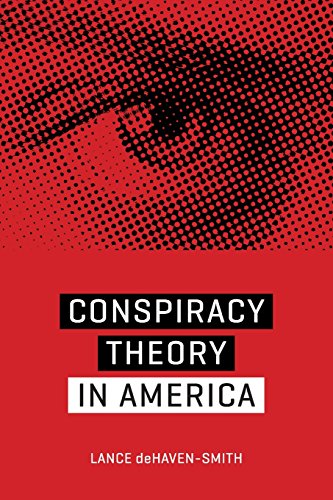

 Aletho News