Bomb blast rocks Syrian TV station, three people reported injured
RT | August 6, 2012
A bomb has detonated at a state-run television and radio building in the capital of Damascus, Syrian TV reported.
The explosion occurred on the third floor of the building, which houses administrative offices including the station director’s, RT Damascus correspondent Oksana Boiko said.
The station’s studios were frequently used by foreign journalists for live broadcasts from the city, she said. Three people were injured in the blast.
“It is clear that the blast was caused by an explosive device,” Syrian Information Minister Omran al-Zoabi said. “Several of our colleagues were injured, but there were no serious injuries, and no dead.”
“Nothing can silence the voice of Syria or the voice of the Syrian people,” al-Zoubi added while inspecting the damage at the TV building. “We have a thousand locations to broadcast from.”
The station continued to broadcast in the wake of the bombing.
The pro-government private Syrian TV station Al-Ikhbariya broadcast pictures of employees inspecting damage in the building and tending to a wounded colleague, the AP reported. [Photos]
Opposition forces mounted an assault on Aleppo’s main television and radio station on Saturday, August 4. The rebel gunmen failed to capture the building.
Seven journalists and workers were killed in June when an armed group attacked the headquarters of Syria’s al-Ikhbaryia TV.
Related articles
- Casualties reported after Syrian TV center blast (english.ruvr.ru)
Why The NSA Can’t Be Trusted to Run U.S. Cybersecurity Programs
By Mark M. Jaycox and Lee Tien and Trevor Timm | EFF | July 30, 2012
This week, the Senate will be voting on a slew of amendments to the newest version of the Senate’s cybersecurity bill. Senators John McCain and Kay Bailey Hutchison have proposed several amendments that would hand the reins of our nation’s cybersecurity systems to the National Security Agency (NSA). All of the cybersecurity bills that have been proposed would provide avenues for companies to collect sensitive information on users and pass that data to the government. Trying to strike the balance between individual privacy and facilitating communication about threats is a challenge, but one thing is certain: the NSA has proven it can’t be trusted with that responsibility. The NSA’s dark history of repeated privacy violations, flouting of domestic law, and resistance to transparency makes it clear that the nation’s cybersecurity should not be in its hands.
In case you need a refresher, here’s an overview of why handing cybersecurity to the NSA would be a terrible idea:
- An executive order generally prohibits NSA from conducting intelligence on Americans’ domestic activities
Executive Order 12333 signed by President Reagan in 1981 (and amended a few times since1), largely prohibits the NSA from spying on domestic activities:no foreign intelligence collection by such elements [of the Intelligence Community] may be undertaken for the purpose of acquiring information concerning the domestic activities of United States persons.
If amended, the Cybersecurity Act would allow the NSA to gain information related to “cybersecurity threat indicators,” which would allow it to collect vast quantities of data that could include personally identifiable information of U.S. persons on American soil. Law enforcement and civilian agencies are tasked with investigating and overseeing domestic safety. The NSA, on the other hand, is an unaccountable military intelligence agency that is supposed to focus on foreign signals intelligence—and it’s frankly dangerous to expand the NSA’s access to information about domestic communications.
- NSA has a dark history of violating Americans’ constitutional rightsIn the 1960’s, a Congressional investigation, led by four-term Senator Frank Church, found that the NSA had engaged in widespread and warrantless spying on Americans citizens. Church was so stunned at what he found, he remarked that the National Security Agency’s “capability at any time could be turned around on the American people, andno American would have any privacy left, such is the capability to monitor everything.” (emphasis added) The investigation led to the passage of the Foreign Intelligence Surveillance Act, which provided stronger privacy protections for Americans’ communications—that is, until it was weakened by the USA-PATRIOT Act and other reactions to 9/11.
- NSA has continued its warrantless wiretapping scandalIn 2005, the New York Times revealed that the NSA set up a massive warrantless wiretapping program shortly after 9/11, in violation of the Fourth Amendment and several federal laws. This was later confirmed by virtually every major media organization in the country. It led to Congressional investigations and several ongoing lawsuits, including EFF’s. Congress passed the FISA Amendments Act to granttelecom companies retroactive immunity for participating in illegal spying and severely weaken privacy safeguards for Americans communicating overseas.Since the FISA Amendments Act (FAA) passed, the NSA has continued collecting emails of Americans. A 2009 New York Times investigation described how a “significant and systemic” practice of “overcollection” of communications resulted in the NSA’s intercepting millions of purely domestic emails and phone calls between Americans. In addition, documents obtained via a Freedom of Information Act request by the ACLU, although heavily redacted, revealed “that violations [of the FAA and the Constitution] continued to occur on a regular basis through at least March 2010″— the last month anyone has public data for.
- NSA recently admitted to violating the Constitution.Just last week, the Office of the Director of National Intelligence—which oversees the NSA—begrudgingly acknowledged that “on at least one occasion” the secret FISA court “held that some collection… used by the government was unreasonable under the Fourth Amendment.” Wired called it a “federal sidestep of a major section of the Foreign Intelligence Surveillance Act,” and it confirmed the many reports over the last few years: the NSA has violated the Constitution.
- NSA keeps much of what it does classified and secretBecause cybersecurity policy is inescapably tied to our online civil liberties, it’s essential to maximize government transparency and accountability here. The NSA may be the worst government entity on this score. Much of the NSA’s work is exempt from Freedom of Information Act (FOIA) disclosure because Congress generally shielded NSA activities from FOIA2. Even aside from specific exemption statutes, much information about NSA activities is classified on national security grounds. The NSA has also stonewalled organizations trying to bring public-interest issues to light by claiming the “state secrets” privilege in court. EFF has been involved in lawsuits challenging the NSA’s warrantless surveillance program since 2006. Despite years of litigation, the government continues to maintain that the “state secrets” privilege prevents any challenge from being heard. Transparency and accountability simply are not the NSA’s strong suit.
We remain unconvinced that we need any of the proposed cybersecurity bills, but we’re particularly worried about attempts to deputize the NSA as the head of our cybersecurity systems. And even the NSA has admitted that it does “not want to run cyber security for the United States government.”
Thankfully, new privacy changes in the cybersecurity bill heading towards the Senate floor have explicitly barred intelligence agencies like the NSA from serving as the center of information gathering for cybersecurity. We need to safeguard those protections and fend off amendments that give additional authority to the NSA. We’re asking concerned individuals to use our Stop Cyber Spying tool to tweet at their Senators or use the American Library Association’s simple tool to call Senators. We need to speak out in force this week to ensure that America’s cybersecurity systems aren’t handed to the NSA.
- 1. Executive Order 12333 was amended in 2003 by Executive Order 13284, in 2004 by Executive Order 13355, and in 2008 by Executive Order 13470. The resulting text of Executive Order 12333 is available here (pdf).
- 2. Three of the most common statutes that NSA uses to fight transparency: Section 6 of the National Security Agency Act of 1959 (Public Law 86-36, 50 U.S.C. Sec. 402 note), which provides that no law shall be construed to require the disclosure of, inter alia, the functions or activities of NSA; The Intelligence Reform and Terrorism Prevention Act of 2004, 50 U.S.C. Sec. 403- 1(i), which requires under the Responsibilities and Authorities of the Director of National Intelligence that we protect information pertaining to intelligence sources and methods; and 18 U.S.C. Sec. 798, which prohibits the release of classified information concerning communications intelligence and communications security information to unauthorized persons.
Related articles
- Congress Must Act After US Government Admits To Unconstitutional Warrantless Wiretapping For the First Time (eff.org)
- Why won’t the Obama administration reveal how many Americans’ emails the NSA has collected and reviewed without a warrant? (eff.org)
- NSA whistle blowers allege data being collected on every American (rawstory.com)
- Why won’t the Obama administration reveal how many Americans’ emails the NSA has collected and reviewed without a warrant? (informationliberation.com)
McCain set to launch international think tank for interventionists
By Maidhc Ó Cathail | The Passionate Attachment | May 29, 2012
According to a report on azcentral.com, Sen. John McCain’s political legacy is set to be preserved with a high-profile new institute:
“The charge of the McCain Institute for International Leadership fits in perfectly with Arizona State University’s core mission of having a significant positive impact on the larger community, and we are grateful to Senator McCain for his support of this important university endeavor,” ASU President Michael Crow said in a written statement. “It will be guided by the values that have animated the career of Senator McCain — a commitment to sustaining America’s global leadership role, promoting freedom, democracy and human rights, as well as maintaining a strong, smart national defense.”
Sen. McCain, whose political career was a product of organized crime, deserves to be remembered for his longstanding service on Capitol Hill, especially for his supporting role to Sen. Joe Lieberman in promoting American involvement in wars for Israel.
Colombia: Obama’s Bloodiest Betrayal?
Obama Poised to Give Presidential Seal of Approval to Gross Labor Rights Violations in Colombia
By DANIEL KOVALIK, GIMENA SANCHEZ-GARZOLI & ANTHONY DEST | CounterPunch | April 11, 2012
On November 9, 2011, the family of Juan Carlos Galvis – a prominent union leader with Sinaltrainal and personal friend of ours – was subjected to a violent home invasion by two presumed paramilitaries. The intruders entered the Galvis home while Juan Carlos and his son were away and assaulted his wife, Mary, and his two daughters, Jackeline and Mayra. They grabbed Mayra, a child with Downs Syndrome, and put a gun to her head, threatening to kill her if Mary did not tell them the whereabouts of Juan Carlos and his son. They then bound and gagged Mary and Jackeline, again asking them to say where Juan Carlos and his son were. The assailants then proceeded to spray paint Mary and Juan’s faces on a wedding photo the family had posted on the wall. Before leaving the home, they stole two laptops, some USB memory drives, documents, and trashed the house. The traumatic attack left Mayra in shock for days and unable to speak.
The family was forced to flee to another town where they are now hiding. Their fears are well founded. Two of Juan Carlos’ Sinaltrainal colleagues, John Fredy Carmona Bermudez and Luis Medardo Prens Vallejo, were killed in recent months.
All in all, 30 unionists were killed in Colombia last year. The National Labor School (ENS) reports that 4 have already been killed this year, and other trade union movements have reported additional murders (e.g., Justice for Colombia has reported 6). Such killings have made Colombia, where around 3,000 unionists have been killed since 1986, the most dangerous country in the world to be a trade unionist, and if the assassination rate this year continues as it has thus far, Colombia will most certainly retain this notorious distinction.
Meanwhile, the Colombian government has done nothing effective to prosecute those responsible for such anti-union violence, with the UN recently reporting that Colombia’s rate of impunity for such crimes remains at 95% – meaning that only 5% of the union killings have ever been successfully prosecuted.
It was these two factors – the unprecedented rate of union killings and the high rate of impunity for these killings – that led Barack Obama in 2008 to declare in his third debate with John McCain that he opposed the Colombia Free Trade Agreement (FTA).
While being a trade unionist in Colombia is dangerous, those that are unionists are the few that can more freely organize. Under the Alvaro Uribe Velez Administration the “associative labor cooperatives” (CTAs) model proliferated throughout Colombia. This union-busting model that precludes direct contracts between workers and companies gravely debilitates working conditions, salaries, and occupational safety protections. Workers have risked losing their meager livelihoods by holding stoppages to obtain direct contracts that are more likely to guarantee their basic labor rights.
In April 2011, Presidents Obama and Santos presented a Labor Action Plan designed to address anti-union violence, prosecute anti-union crimes, do away with labor inter-mediation, and improve conditions for workers in the port, sugar, oil palm, and other sectors. Since the LAP was signed, Colombia has played the game of appearing to comply with the LAP while at the same time undermining its purpose. It has met surface requirements like setting up the Labor Ministry, passing legislation, and fining abusive companies.
While the number of trade unionists killed has gone down (and of course, as Father Javier Giraldo opined some time ago, there are indeed many less unionists to kill), the security climate and death threats against them have not changed. This leaves the possibility that the number of murders and attacks could flare up once the FTA moves forward. The murder of trade unionists and labor activists is often spun to be unrelated to their labor rights activities—robbery, jealous lovers or links to narcotrafficking are the reasons used to whitewash the murders. For example, Hernan Dario, a lawyer who represented the largest public sector union in Valle del Cauca (Sintraemcali) and several labor activists in the sugarcane sector, was murdered. His name was subsequently dragged through the mud based on unsubstantiated allegations linking him to drug dealers. This tactic was utilized in order to create an environment of confusion and impede actions for justice in this case.
Last year, Colombia passed a law that supposedly banned CTAs, yet the reality is that this only restricts them by name since other forms of labor inter-mediation, including the Simplified Stock Companies, shell companies, and supposed “union contracts,” have replaced them. In the sugar and port sectors, leaders of work stoppages and those affiliated to trade unions are rarely rehired through these new contracts. The Ministry of Labor and the labor inspectors designated by the LAP are not effectively intervening to remedy these situations. Over 70 Afro-Colombian port workers in Turbo who attempted to form a union in October 2011 have been fired. Those workers were given an ultimatum—sign a letter stating they will not affiliate with a trade union or enjoy unemployment.
The Ministry is not even intervening to implement the International Labor Organization’s (ILO) recommendations as mandated by the Labor Action Plan. The case of 51 fired public sector workers of EMCALI is just one of many examples. Rather than implement the ILO’s March 2012 recommendations to rehire the workers, authorities proceeded to evict the workers who held a hunger strike in Cali last week. These victims of Colombia’s unjust labor practices, all of whom have been unemployed since 2004 since they were blacklisted for standing up for labor rights, are not even permitted to protest.
Some of the workers who would most benefit from effective implementation of the Labor Action Plan are Afro-Colombians. Most Afro-Colombian workers, who make up an estimated 25% of Colombia’s population and a disproportionate number of the country’s over 5.2 million internally displaced, work in sectors where labor rights standards are weakest. As such, many are not able to freely exercise their right to unionize, and if they try to do so face death threats or impoverishment. Many Afro-Colombian workers describe their situation as “modern day slavery.”
Afro-Colombian dockworkers in Buenaventura, a key port for the FTA, work in one of Colombia’s most abusive environments. In this port, Afro-Colombians come to work in hazardous conditions for 24 to 48 hours straight, often sleeping on the containers. The demanding environment obligates them to stay inside the port complex for an entire week without the possibility to return home. Healthcare is often reserved for the more privileged individuals working in offices, and workers who are hurt or disabled are often fired. Those attempting to organize are threatened or denied employment. It took a work stoppage in January 2012 for some of these workers to receive direct contracts. The majority of port workers continue to be employed through intermediaries, and those with the direct contracts have low salaries and are prohibited from unionizing. Only today, after months of pressure, has the Ministry of Labor opened up an investigation into some of these abuses.
Still, despite continued anti-union violence, the high rate of impunity, serious impediments to union organizing, and the dire conditions faced by workers, President Obama is now poised to announce at the Summit of the Americas that Colombia has complied with the Labor Action Plan. Working conditions and protection for trade unionists in Colombia do not reflect the U.S. government’s evaluation of the Labor Action Plan. If Obama goes ahead with his plans in Cartagena to green light the FTA, Colombian and U.S. workers will lose their last bit of leverage to stem the tide of anti-union violence and defend the rights of Colombia’s most vulnerable populations.
Daniel Kovalik is general counsel of the United Steelworkers.
Gimena Sanchez-Garzoli and Anthony Dest work for the Washington Office on Latin America (WOLA)
Related articles
- Colombia Remains Violent for Trade Unionists, Even After US Free Trade Deal (news.firedoglake.com)
- Why Campaigning for Democrats Cripples Unions (alethonews.wordpress.com)
Marching Toward Syria with Eyes Cast Towards Iran
By Ben Schreiner | Dissident Voice | March 7th, 2012
While all the incessant warmongering directed toward Iran at the annual AIPAC policy conference in Washington was grabbing the headlines, the momentum for Western intervention into Syria continued to steadily build. All those neo-con “real men,” it appears, just might prefer to go to Tehran via Damascus.
Taking to the Senate floor on Monday, Arizona Senator John McCain, one of the first supporters of arming the Free Syrian Army, upped the ante by calling for a U.S.-led air campaign against Syrian military targets. McCain deemed such an escalation necessary to establish “humanitarian corridors.”
“The United States should lead an international effort to protect key population centers in Syria, especially in the north, through airstrikes on Assad’s forces,” the intervention-hungry McCain declared.
And as the Washington Post reported in late February, Obama administration officials have made it clear that “additional measures” might still be considered in order to oust Assad. That favored refrain of all options being on the table appears to be in effect in regards to Syria.
Indeed, for according to CNN, the Pentagon has already composed “detailed plans” for military action inside Syria. As the network reported, the Pentagon has especially focused on securing Syrian chemical weapons sites, with one scenario in particular calling “for tens of thousands of troops to potentially be used for guarding the installations.”
Although, according to a December email recently published by Wikileaks from the U.S. global intelligence firm Stratfor (known as a private C.I.A.), special operations forces from the U.S., U.K., France, Jordan, and Turkey are already on the ground in Syria. And as the email states, these forces are actively “training the Free Syrian Army.” Additional measures indeed!
Not wanting to be left behind in any march on Syria, the U.S. corporate media has largely begun to join the ranks of the recently ascendant intervention hawks.
In an editorial on Friday, the New York Times, although ruling out military force, called for providing greater tactical assistance to the Free Syrian Army. As the paper wrote: “The United States and its allies should consider providing the rebels with communications equipment, intelligence and nonlethal training.” Of course, a mission providing such tactical support would ultimately transform into more explicit military involvement.
Meanwhile, the Washington Post also editorialized on Friday for a more credible threat of force against Assad. As the paper wrote:
The Obama administration’s public arguments against the use of force in Syria are simply encouraging a rogue regime to believe it can act with impunity. Until he is faced with a credible threat of force, from the opposition or outsider powers, Mr. Assad’s slaughter will go on.
The Christian Science Monitor has likewise called for the U.S. to help “forcefully” end Assad’s rule.
Of course, the driving force behind such intense Western interest in Syria is Iran. Let there be no doubt, the ouster of Assad is not driven by some great humanitarian impulse, or “responsibility to protect.” Nor does the bloodletting and slaughter inside the country disturb U.S. elites. After all, the U.S. had no qualms with laying siege to Fallujah. Rather, all the contrived moralizing is being utilized in an attempt to garner support for imposing Syrian “regime change,” which would deal a strategic defeat to Tehran. It’s all nothing more than realpolitik. The Syrian people and their revolution are being cynically recruited as means to imperial ends, and thus would be wise to resist all foreign intervention.
For instance, when the Atlantic’s Jeffery Goldberg stated in a recent interview with President Obama, “But it would seem to me that one way to weaken and further isolate Iran is to remove or help remove Iran’s only Arab ally,” the president responded, “Absolutely.”
Similarly, former Mossad chief Efraim Halevy has argued, “The current standoff in Syria presents a rare chance to rid the world of the Iranian menace to international security and well-being.”
It’s target Iran, albeit on a Syrian battlefield. Therefore, that anti-Iran propaganda machine that is the U.S. media revs up.
Writing in the Washington Post, stenographers Joby Warrick and Liz Sly reported over the weekend that:
U.S. officials say they see Iran’s hand in the increasingly brutal crackdown on opposition strongholds in Syria, including evidence of Iranian military and intelligence support for government troops accused of mass executions and other atrocities in the past week.
The Post’s report was, of course, based solely on three anonymous U.S. officials. And as Warrick and Sly even admit in their piece, “such accounts are generally difficult to verify independently.” Thus they don’t.
On Monday, though, a similar piece of propaganda appeared at CNN. Penned by CNN Pentagon correspondent Barbara Starr, it also reports of Iranian infiltration into Syria, although Starr only relies on two anonymous U.S. officials. What hay a seasoned propagandist can make with such limited sources!
Yet amidst this mounting drive for Western intervention into Syria, President Obama spoke on Tuesday in an apparent attempt to tamp down all such notions, going so far as to call military intervention a “mistake.” As the president went on to state, “the notion that the way to solve every one of these problems is to deploy our military, that hasn’t been true in the past and it won’t be true now.”
Such reassurances aside, actions do, as the president himself implored in his AIPAC speech over the weekend, speak louder than words. And so while the president publicly posits that military intervention would be a mistake, his military readies for intervention into Syria, while continuing its larger ongoing build-up in the region.
The march towards Syria with eyes cast towards Iran continues on. For as Albeit Einstein once remarked, “You cannot simultaneously prevent and prepare for war.”
Ben Schreiner is a freelance writer living in Salem, Oregon. He may be reached at: bnschreiner@gmail.com.
Related articles
- Israel’s No.1 asset in the Senate calls for airstrikes against Syria (alethonews.wordpress.com)
Progressives Embrace Humanitarian Imperialism – Again!
DemocracyNow! Hosts a Non-debate on Syria
By John V. Walsh | Dissident Voice | February 25th, 2012
“Foreign Intervention in Syria? A Debate with Joshua Landis and Karam Nachar” promised the headline on DemocracyNow! on 22 February. Eagerly I tuned in, hoping to hear a thorough exposé of the machinations of the US Empire in Syria on its march to Iran.
But this was neither exposé nor debate. Both sides, Landis and Nachar, were pro-intervention for “humanitarian” reasons. Nor did the host Amy Goodman or her co-host take these worthies to task for their retrograde views on imperial military action against a sovereign nation that had made no attack on the US. It was yet one more sign that the “progressive” movement in the West has largely abandoned its antiwar, anti-intervention stance.
The segment began with a clip of John McCain advocating yet another war, for the good of the Syrians of course, bombing them to save them. The first guest was Joshua Landis, a prof in Oklahoma whose bio tells us that he “regularly travels to Washington DC to consult with the State Department and other government agencies.” The other agencies are not specified, but he speaks at the Council on Foreign Relations and similar venues. Professor Landis represents the anti-intervention voice in the universe of Amy Goodman, but his opening words manifested the limits of that universe: “Well, I’m not opposed to helping the (Syrian) opposition.” He continued, “The problem right now, the dangers right now with arming the opposition, is that we’re not sure who to arm.”
Confused, I thought surely the next guest would be the anti-interventionist. He was Karam Nachar “cyber-activist” and Princeton Ph.D. candidate, working with Syrian “protesters” via “social media platforms.” That means he is safely ensconced in New Jersey far from where U.S. bombs would fall. Perhaps this fellow would say loud and clear the Syrians did not need the interference of the West, did not need sanctions to starve them nor bombs to pulverize their cities. Perhaps he would laud the Chinese-Russian proposal for both sides to stop firing and to negotiate a solution.
But he did not. He also was for intervention by the West. And he did not think the disorganization of the opposition, cited by Landis, justified hesitation or delay in arming that opposition. That and not any principled anti-interventionism distinguished the two sides in this “debate.” Said the cyber-activist: “Well, to start with, I disagree with Professor Landis’s portrayal of the situation with the Syrian opposition. It is true that, for instance, in the Syrian National Council, there are a lot of disagreements. But (the opposition is) still frustrated with the leadership of the Syrian National Council because of its inability to solicit more international support…. And I believe that the State Department, Secretary Clinton and the American administration is heading towards that. … It’s going to require a lot of money and a lot of courage and a lot of involvement on the part of the international community.” [Emphasis added]
And then the boy cyber-activist got nasty: “I am just a little wary that this overemphasis on how leaderless the Syrian opposition is actually a tactic being used of people who actually do not want the regime to be overthrown and who have always actually defended the legitimacy of the Syrian regime, and especially of Bashar al-Assad.” There it is. Even if one is for intervention in principle, no delay is to be countenanced. Such people are surely on the side of Bashar Al-Assad.
This is the kind of “debate” we get on “progressive” media outlets. It is not even a debate about whether there should be imperial intervention, once completely verboten on the Left, but when and under what circumstances military intervention should occur. This phony debate should simply be ignored whether it appears on DemocracyNow! or on NPR, increasingly indistinguishable in content and outlook or anywhere else. In fairness to Amy Goodman, just a few weeks back on February 7, she hosted the British writer and long time student of Syria, Patrick Seale. Said Seale: “I believe dialogue is the only way out of this. And indeed, the Russians have suggested to both sides to come to Moscow and start a dialogue. But the opposition says, ‘No, we can’t dialogue with Bashar al-Assad. He must be toppled first.’ Well, that’s a dangerous—a dangerous position to adopt.” That interview is well worth reading. And Goodman would do well to stick with that instead of shifting over to empty debates between interventionism now versus interventionism later. After repeatedly hosting the CIA consultant Juan Cole to cheer the cruel war on Libya, Goodman now seems to be going down the same path with Syria. It is a sad spectacle and one more indication of how little the “progressives” in the West understand the nature of Humanitarian Imperialism which uses human rights to sell war. It looks like it’s time to abandon Goodman and switch to Alyona.
John V. Walsh can be reached at john.endwar@gmail.com.
Related articles
- Syria Opposition Group Boycotts Tunis Meeting, Rejects Escalated Militarization (alethonews.wordpress.com)
Obama: “The Devil” Made Me Take the Super Pac Money
A Black Agenda Radio commentary by Glen Ford | February 7, 2012
President Obama is like comedian Flip Wilson’s character, Geraldine: He blames everything on the Devil. The Devil made him do it.
And so, the Devil has just forced Mr. Obama to put together his own infernal Super Pac, the demon-spawn of the Supreme Court’s Citizen’s United decision allowing corporations and wealthy individuals to spend as much money as they like on elections. Only days ago, Obama was calling Super Pacs a “threat to democracy,” but that was then, and now it’s time to make sure that the president has an equal opportunity to join in the corruption. But, don’t blame Obama. The Koch brothers made him do it, with reports that the far-right siblings plan to gather $100 million in Super Pac money. As Geraldine would say, those Koch Devils made Obama do it.
Not that there’s any danger of Obama being outspent in his re-election bid. He’s raised more money than all the Republican candidates, combined. In fact, he’s raised a lot more money from employees of Mitt Romney’s private equity firm, Bain Capital, than Romney has. All indications are that Obama will win the race for Wall Street’s campaign contributions, hands down, no matter who the Republicans nominate, just as Wall Street preferred Obama to John McCain, four years ago.
Candidate Obama opted out of public financing in the 2008 campaign, the first president since Watergate to run without public funding. He had earlier promised to accept public financing, and the limits on spending that go with it, if McCain did. McCain kept his part of the bargain, but Obama was getting more money than he could bring himself to turn down. In fact, by that time, Obama had raised twice as much as McCain, so he couldn’t claim a disadvantage. Instead, Obama’s excuse was that the public financing system was “broken.” But, of course, it was Obama’s withdrawal that definitively broke the system, paving the way for the billion dollar election of 2012.
In the summer of 2007, Obama explained the difference between himself and all of his Democratic and Republican opponents, when it comes to taking money from the rich and greedy. “The argument is not that I’m pristine, because I’m swimming in the same muddy water,” he said. “The argument is that I know it’s muddy and I want to clean it up.” But there is no evidence that Obama wants to clean up campaign financing, only that he finds all kinds of excuses to take the money.
The Wall Street crowd loves Obama, and they show it with their checkbooks. He returns their love a thousand times over, by protecting their interests while skillfully hoodwinking the Democratic base into believing that he’s on their side. The most pitiful marks in this hustle are small contributors, who Obama claims are his real base of support. Back in 2008, he even claimed that his fundraising was a better reflection of democracy than public financing, because he had so many small contributors. But it turns out that Obama got almost exactly the same proportion of his campaign funds from the little guys as George Bush did, in 2004.
It’s a rich man’s game, in which the future of the country and the world is purchased cheaply with campaign contributions. It is common sense that the player that collects the most money, has also sold the most influence. This election year, just like last time, the top influence seller is Barack Obama.
Glen Ford can be contacted at Glen.Ford@BlackAgendaReport.com.
Featured Video
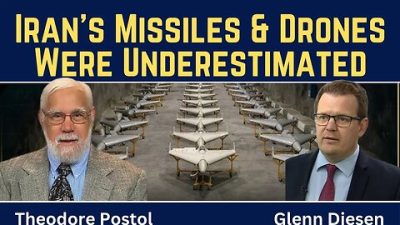
Theodore Postol: Iran’s Missiles & Drones Were Underestimated
or go to
Aletho News Archives – Video-Images
From the Archives
What is the Israeli Lobby in Australia Doing in Interfaith Dialogue?
By Ali Kazak | Dissident Voice | October 11, 2015
For years Israel and its lobby around the world have been trying to normalise their relations with Arabs and Muslims without solving the Palestine Question.
One of the methods they resorted to in the last few years is using human rights and community organizations such as interfaith dialogue and Multiculturalism to achieve this objective and to: isolate the Palestinians, marginalise the Palestine question, end Israel’s isolation, and prevent criticism of Israel, knowing that these organisations will be the first to stand against Israel’s violations, racial and religious discrimination.
The group responsible for this task in Australia is The Australia/Israel & Jewish Affairs Council (AIJAC); its Director of International & Community Affairs, Jeremy Jones is in charge of lobbying religious community organizations, specifically Muslims and Christians. Consequently he convened the Faith Communities for Reconciliation, founding participant in the Australian Partnership of Religious Organisations and the Australian National Dialogue of Christians, Muslims & Jews.
AIJAC is a private political propaganda group. It is recognised as the main Israeli lobby in Australia. It coordinates its activities and works intimately with the Israeli embassy in Canberra and different institutions in Israel. It is privately funded by some Jewish businessmen. It monitors closely Australian politicians, the media, ethnic and religious groups, (especially Arabs and Muslims), unions and academics on their stands towards Israel and the Palestine question. … continue
Blog Roll
 Aletho News
- The Most Important Bet You’ve Never Heard Of
- The killing of three Indonesian soldiers in Lebanon should remind Jakarta that Israel does not want peace
- Defeated and delusional: Netanyahu’s remarks reveal $80bn war failure, says analyst
- Iran’s friends are about to make life much more difficult for Israel and the US
- The war of liberation of the Arab and Islamic peoples expands across the Gulf
- Envoy warns UN on Trump’s threat to ‘obliterate’ Iran’s civilian infrastructure
- The Larak Corridor: Iran’s Rial Gate With No US, No Israel, and No Way Around
- ‘Economic terrorism’: Steel facilities hit again in US-Israeli strike
- ‘War Crime’: Iran condemns attacks on Arak, Ardakan nuclear sites
- Two-thirds of Americans want quick end to Iran war even if goals unmet
- If Americans Knew
- Gaza families reunite years after babies evacuated amid Israel’s war
- International Rescue Committee warns Gaza’s children face grave protection risks
- Iran’s Alleged 47-Year War on America: Debunking the 1,050 American Deaths Canard
- Israel wants US to bomb more of Iran’s civilian structures (113,000 is not enough) – Not a ceasefire Day 173
- Ann Coulter Rips Into Fox News for Iran War Coverage
- Joe Kent Urges Americans To Call White House and Congress To Object To Sending Troops Into Iran
- DNC Resolution to Reject AIPAC Funding Puts Democratic Leaders in the Hot Seat
- Swedish foundation to build 400 schools as over 650,000 Gaza children remain without education for 2 years
- Israeli army admits photshopping image of slain Lebanese journalist
- This is how Israel is systematically killing health workers under the cover of war in Lebanon
- No Tricks Zone
- New Study Finds Warming Saves Lives…Cold Temperatures 12 Times More Deadly Than Excess Heat
- German Science Blog Accuses PIK Climate Institute Of Hallucinating Climate Tipping Points
- Devastating Assessment Of Comirnaty Vaccine By Former Senior Pfizer Europe Toxicologist
- New Study: CO2 Is ‘Effectively Negligible’ As An Explanatory Climate Change Factor Since 2000
- Former Pfizer Toxicologist Dr. Helmut Sterz Tells Bundestag Hearing Pfizer Vaccine Should Have Never Been Approved
- Energy Expert: Germany’s Nuclear Phaseout Was A “500 Billion Euro Mistake”
- New Research: South Australia’s Mid-Holocene Sea Surface Temperatures Were 4°C Warmer Than Today
- Storing Green Energy To Last Germany 10 Days Would Require A 60-Million Tonne Battery
- New Studies: UK Sea Levels Were 4 Meters Higher Than Today During The Mid-Holocene
- Destructive Green New Deal: German Energy And Metal Group Warns Of Drastic Crisis
 Aletho News