Response to Nation Article on Single Payer: Improved Medicare for All is the Solution
By Margaret Flowers | Health Over Profit for Everyone | August 7, 2017
On August 2, 2017, The Nation published an article by Joshua Holland, “Medicare for All isn’t the Solution for Universal Health Care,” chastising Improved Medicare for All supporters because, in his view, the single payer movement has “failed to grapple with the difficulties of transitioning to a single-payer system.” The article, which doesn’t quote anyone involved in the movement for Improved Medicare for All, begs a response because it shows what liberals opposed to single payer believe. Holland dredges up the same arguments used to keep single payer off the table during the creation of the Affordable Care Act (ACA). He even dusted off a few that were used to try to stop Medicare from coming into existence in the 1960s. And then he attempts to distract single payer supporters away from supporting Improved Medicare for All and settling for something less, as was done successfully in 2009.
The first error that Holland makes is confusing the term “Medicare for All” as meaning that advocates would simply take the current Medicare system, with both traditional and ‘Advantage’ plans, and expand that. This is why it is important to use the phrase “Improved Medicare for All.” As outlined in HR 676: The Expanded and Improved Medicare for All Act, the new system would be based on the current Medicare system, which is already national, but it would be a single public plan that is comprehensive in coverage and does not have out-of-pocket costs or caps. It would ban investor-owned facilities and ban private insurers from selling policies that duplicate what the system covers. A single system is the simplest for patients and health professionals because there is one transparent set of rules.
Most people who purchase health insurance have no idea which plan is best for them because nobody can anticipate what their healthcare needs will be in the future. A study of the Massachusetts health exchange plans done by the Center for American Progress showed that some plans were best for patients with cancer and other plans were best for people with heart disease or diabetes, but that isn’t something that can be advertised up front. Even if it were, people can’t predict if they will be diagnosed with cancer, heart disease or diabetes in the future. HR 676: The Expanded and Improved Medicare for All Act solves this problem by creating a single public plan designed to cover whatever our healthcare needs will be.

A second error that Holland makes is saying that HR 676 calls for the new system to start within a single year. The bill will take effect “on the first day of the first year that begins more than [emphasis added]1 year after the date of the enactment of this Act.” This means that if HR 676 were to be signed by the President in July of 2018, then it would take effect in January of 2020. Holland raises the concern that we can’t move the whole country into the new Improved Medicare for All system that quickly. In fact, HR 676 has transition periods for the Veteran’s Administration, the Indian Health Service, displaced workers and buying out for-profit health providers.
When Medicare was enacted in 1965, more than 50% of seniors were uninsured and the rest had some form of health insurance. Without computers and without a national health system in place, all 19 million seniors were enrolled in the first year (almost twice as many as were enrolled in the ACA in the first four years). At present, the United States has Medicare infrastructure in place and all practicing health professionals have a National Provider Identifier issued to them by the Centers for Medicare and Medicaid Services (CMS). When the new Improved Medicare for All system takes effect, enrollment will be very simple because there is only one plan that is universal and paid for up front though taxes. All health professionals will be in it. Every person could be sent a card, much as CMS does now for people who are turning 65. For those who do not receive a card, HR 676 has a solution – when they present for care at a health facility, they are assumed to be in the system, are treated first and then are enrolled in the system afterwards.
Next, Holland brings up the same arguments used to prevent universal health care attempts in the past. He states that people don’t want to give up what they have. This is called ‘loss aversion.’ It is a task of the single payer movement to build the public support for Improved Medicare for All necessary to overcome any potential loss aversion. Public figures and elected officials can play a role in building support as well.
Holland raises concerns that employers and seniors won’t want to give up their private plans, but that is based on his mistaken belief that Improved Medicare for All will be the same as current Medicare. The reality is that people will be less worried about giving up what they have if they know that it will be replaced with something better and that they will no longer fear losing their doctor as they will all be in the new system. Improved Medicare for All will provide more comprehensive benefits, no out-of-pocket costs and an unrestricted network of health professionals from which to choose. Employers will no longer be burdened with the high costs of health insurance. People with pre-existing health conditions will no longer worry about losing coverage or having to pay more. Unions and employers can offer supplemental plans for extras not covered by the new system, as is done in countries like France, if they choose to do so.
Holland also raises the concern that people will lose their doctor because they will opt out of the system due to low reimbursements. We are already losing doctors because of the current system. Physician burnout was listed as the second biggest concern by the Surgeon General last year. Under Improved Medicare for All, all health professionals will be in the system. There won’t be any place to opt out to. And why would they want to? Health professionals will save tens of thousands of dollars each year on billing and won’t have to worry about whether a patient has insurance or not. They can see anyone who calls for an appointment. And they will have a system with which to negotiate fair reimbursement. Private health insurance doesn’t negotiate with physicians and hospitals. Each year they make an offer and providers can either basically take it or leave it. Doctors in single payer systems that spend much less per capita than the United States are paid well, so the US can certainly afford to reimburse doctors adequately.
 Every transformative change has suffered from loss aversion, but that hasn’t stopped them. When Medicare was enacted, it was called socialized medicine, a government intrusion that would take away people’s choices and freedom and become an opening to government control over our lives. The scare tactics didn’t work and Medicare is one of the most popular parts of our current healthcare system. Desegregation, women’s rights, workers’ rights and more were great changes that were successful and we are a better society for them. Why is the right to health care any different?
Finally, Holland dives into the myth that we can’t afford Improved Medicare for All because it will be too expensive. My first response when I hear this is that the same excuse wasn’t made when we spent $16 trillion to bail out the banks in 2008 and is never made when we invade another country, so why is it raised when it comes to one of the most basic necessities a society can have? The United States has the highest wealth and the highest wealth inequality of industrialized nations. The new “Commitment to Reducing Inequality Index” recommends social spending on education, health and other basic social protections as its top priority. Congress can appropriate the funds to do this. This should be a top priority in the United States as well.
The reality is that the United States is already spending the most on health care per person each year because the market has failed to control costs. That is exactly why we need a single payer system like National Improved Medicare for All. It is the only way to simplify the bloated bureaucracy of the current healthcare system, which would save around $500 billion each year, and to control the costs of medical procedures, medical devices and pharmaceuticals by having a single system that can negotiate fair prices. In addition to the bureaucracy created by a multi-payer system, the US subsidized the insurance industry with more than $300 billion last year. A system based on health, rather than profits for investors, can identify and prioritize our greatest health needs and work to address them.
For example, the US is failing when it comes to care for people with chronic diseases. There are numerous reasons why this is occurring – lack of access to consistent care, inability to afford medications, insufficient time for health education when patients see a health professional, cheap and highly processed food, environmental pollutants and more. An actual health system could take meaningful action to address these issues, and keep people healthier. Think about it: people with high blood pressure or diabetes in the US may not be able to see the doctor regularly or stay on their medicines due to cost, but when they suffer a stroke or kidney failure, and need long term care or dialysis, then they can receive disability benefits and Medicare. How much better and less expensive would it be for everyone to prevent strokes and kidney failure in the first place?
Just as many ‘progressive’ groups did during the health reform process that resulted in the ACA, Holland works to convince us that we don’t need a single payer system, and that we can work with the current system. Once again, Jacob Hacker, a leading advocate for the ACA and single payer opponent, is invoked and we are told that we can add a Medicare buy-in or another form of a public option. We are told that other countries use private insurance, so why can’t we? The Democrats, beholden to the medical industrial complex, want us to believe these false non-solutions that protect the insurance industry. It feels like 2009 all over again.
Rather than go through all of the reasons why these approaches will fail, I urge you to read articles on that topic posted on HealthOverProfit.org (Click here for a list of them). Instead, I refer to a saying used by my now-deceased mentor Dr. Quentin Young: “You can’t cross an abyss in two jumps.” The only way we can get to a universal single payer healthcare system in the United States is by creating a universal single payer healthcare system in the United States. Anything less than that will fail because it will not achieve the savings on administration and prices needed to cover everyone and it will not compete with the powerful private insurance industry.
Throughout time, every great social movement has been told that it was asking for too much. Advocates for worker’s rights, women’s rights, civil rights, etc., were labelled as unreasonable radicals wishing for some pie-in-the-sky change that can’t be achieved. Holland is doing the same to the single payer movement. Don’t fall for it. We have the resources in the US to have one of the top healthcare systems in the world. We have health policy experts who have helped to design excellent systems for other countries. Single payer is a proven solution, unlike the plans being proposed by the Democratic leadership.
One thing that Holland and I do agree on is that there is more than one way to skin a cat, so to speak. We could have an excellent national debate about which type of single payer healthcare system we support – a fully socialized system like the Veteran’s Health Administration, a national health service, or a socialized payer with multiple types of providers as in the Expanded and Improved Medicare for all Act. At the basis of our discussion must be the principles that every person in the US deserves high quality health care without financial barriers.
Fake News on Russia in the New York Times, 1917-2017

By Edward S. Herman | Monthly Review | July-August 2017
It has been amusing watching the New York Times (Times) and its fellow mainstream media (MSM) cohort express their dismay over the rise and spread of “fake news.” They take it as an obvious truth that what they provide is straightforward and unbiased fact-based news. They do offer such news, but they also provide a steady flow of their own varied forms of genuinely fake news, often in disseminating false or misleading information supplied them by the CIA, other branches of government, and sites of corporate power. An important form of MSM fake news is that which is presented while suppressing information that calls the preferred news into question. This was the case with “The Lie That Wasn’t Shot Down,” the title of a January 18, 1988 Times editorial referring to a propaganda claim of five years earlier that the editors had swallowed and never looked into any further. The lie–that the Soviets knew that Korean airliner 007, which they shot down on August 31, 1983, was a civilian plane–was eventually uncovered by congressman Lee Hamilton, not by the Times.
MSM fake news is especially likely where a party line is quickly formed on a topic, with deviationism therefore immediately looking naïve, unpatriotic or simply wrong. In a dramatic illustration, in a book chapter entitled “Worthy and Unworthy Victims,” Noam Chomsky and I showed that coverage by Time, Newsweek, CBS News and the New York Times of the 1984 murder of the priest Jerzy Popieluzko in communist Poland, a dramatic and politically useful event for the politicized western MSM, exceeded their coverage of the murders of 100 religious figures killed in Latin America by U.S. client states in the post-World War II years taken together.1 It was cheap and free of any negative feedback to focus heavily on the “worthy” victim, whereas looking closely at the deaths of the 100 would have required an expensive and sometimes dangerous research effort and would have upset the State Department. But it was a form of fake news to discriminate so heavily with news (and indignation) on a politically useful victim while ignoring large numbers whose murder the political establishments wanted downplayed or completely suppressed.
The Fake News Tradition on Russia in the New York Times
Fake news on Russia is a Times tradition that can be traced back at least as far as the 1917 revolution. In a classic study of the paper’s coverage of the Russian revolution from February 1917 to March 1920, Walter Lippmann and Charles Merz found that “From the point of view of professional journalism the reporting of the Russian Revolution is nothing short of a disaster. On the essential questions the net effect was almost always misleading, and misleading news is worse than none at all….They can fairly be charged with boundless credulity, and an untiring readiness to be gulled, and on many occasions with a downright lack of common sense.”2 Lippmann and Merz found that strong editorial bias clearly fed into news reporting. The editors very much wanted the communists to lose, and serving this end caused the paper to report atrocities that didn’t happen and the imminent fall of the Bolshevik regime on a regular basis (at least 91 times). There was a heavy and uncritical acceptance of official handouts and reliance on statements from unidentified “high authority.” This was standard Times practice.
This fake news performance of 1917-1920 was repeated often in the years that followed. The Soviet Union was an enemy target up to World War II, and Times coverage was consistently hostile. With the end of World War II and the Soviet Union at that point a major military power, and soon a rival nuclear power, the Cold War was on. Anti-communism became a major U.S. religion, and the Soviet Union was quickly found to be trying to conquer the world and needing containment. With this ideology in place and U.S. plans for its own real global expansion of power well established,3 the communist threat would now help sustain the steady growth of the military-industrial complex and repeated interventions to deal with purported Soviet aggressions.
An Early Great Crime: Guatemala
One of the most flagrant cases in which the Russian threat was used to justify U.S.-organized violence was the overthrow of the social democratic government of Guatemala in 1954 by a small proxy army invading from U.S. ally Somoza’s Nicaragua. This action was provoked by government reforms that upset U.S. officials, including a 1947 law permitting the formation of labor unions, and government plans to buy back (at tax rate valuations) and distribute to landless peasants some of the unused land owned by United Fruit Company and other large landowners. The U.S., which had been perfectly content with the earlier 14-year- long dictatorship of Jose Ubico, could not tolerate this democratic challenge and the elected government, led by Jacobo Arbenz, was soon charged with assorted villainies, with the main fake news base of an alleged Red capture of the Guatemalan government.4
In the pre-invasion propaganda campaign the unified MSM leveled a stream of false charges of extreme repression, threats to its neighbors, and the communist takeover. The Times featured these alleged abuses and threats repeatedly from 1950 onward (my favorite, Sidney Gruson’s “How Communists Won Control of Guatemala,” March 1, 1953). Arbenz and his predecessor, Juan Jose Arevalo, had carefully avoided establishing any embassies with Soviet bloc countries, fearing U.S. reactions. But it was to no avail. Following the removal of Arbenz and installation of a right-wing dictatorship, court historian Ronald Schneider, after studying 50,000 documents seized from communist sources in Guatemala, found that not only did the communists never control the country, but that the Soviet Union “made no significant or even material investment in the Arbenz regime” and was too preoccupied with internal problems to concern itself with Central America.5
The coup government quickly attacked and decimated the organized groups that had formed in the democratic era, like peasant, worker and teacher organizations. Arbenz had won 65 percent of the votes in a free election, but the “liberator” Castillo Armas quickly won a “plebiscite” with 99.6 percent of the vote. Although this is a result familiar in totalitarian regimes, the MSM had lost interest in Guatemala and barely mentioned this electoral outcome. The Times had claimed back in 1950 that U.S. Guatemala policy “is not trying to block social and economic progress but is interested in seeing that Guatemala becomes a liberal democracy.”6 But in the aftermath the editors failed to note that the result of U.S. policy was precisely to “block social and economic progress,” and via the installation of a regime of terror.
In 2011, more than half a century after 1954, Elizabeh Malkin reported in the Times that Guatemalan president Alvaro Colom had apologized for that ”great crime [the violent overthrow of the Arbenz government in 1954] …an act of aggression to a government starting its democratic spring.” (“An apology for a Guatemalan Coup, 57 Years Later,” October 20, 2011). Malkin mentions that, according to president Colom, the Arbenz family is “seeking an apology from the United States for its role” in the “great Crime.” There has never been any apology or even acknowledgement of its role in the Great Crime by the editors of the New York Times.
Another Great Crime: Vietnam
There were many fake news reports in the Times and other mainstream publications during the Vietnam war. The claim that the Times was anti-Vietnam-war is misleading and essentially false. In Without Fear or Favor, former Times reporter Harrison Salisbury acknowledged that in 1962, when U.S. intervention escalated, the Times was “deeply and consistently” supportive of the war policy.7 He contends that the paper became steadily more oppositional from 1965, culminating in the publication of the Pentagon Papers in 1971. But Salisbury fails to recognize that from 1954 to the present the paper never abandoned the Cold War framework and language of apologetics, according to which the U.S. was resisting somebody else’s aggression and protecting “South Vietnam.” The paper never applied the word aggression to this country, but used it freely in referring to North Vietnamese actions and those of the National Liberation Front in the southern half of Vietnam.
The various halts in the U.S. bombing war in 1965 and later in the alleged interest of “giving peace a chance” were also fake news, as the Johnson administration used the halts to quiet antiwar protests, while making it clear to the Vietnamese that U.S. officials demanded full surrender. The Times and its colleagues swallowed this bait without a murmur of dissent.8
Furthermore, although from 1965 onward the Times was willing to publish more information that put the war in a less favorable light, it never broke from its heavy dependence on official sources or its reluctance to check out official lies or explore the damage being wrought on Vietnam and its civilian population by the U.S. war machine. In contrast with its eager pursuit of Cambodian refugees from the Khmer Rouge after April 1975, the paper rarely sought out testimony from the millions of Vietnamese refugees fleeing U.S. bombing and chemical warfare. In its opinion columns as well, the new openness was limited to commentators who accepted the premises of the war and would confine their criticisms to its tactical problems and costs–;to us. From beginning to end those who criticized the war as aggression and immoral at its root were excluded from the debate by the Times.9
The 1981 Papal Assassination Attempt. The “Missile Gap,” and “Humanitarian Intervention” in Yugoslavia
Papal Assassination Attempt. A major contribution to Cold War propaganda was provided by fake news on the assassination attempt on Pope John Paul II in Rome in May 1981. This was a time when the Reagan administration was trying hard to demonize the Soviet Union as an “evil empire.” The shooting of the Pope by the Turkish fascist Ali Agca was quickly tied to Moscow, helped by Agca’s confession, after 17 months imprisonment, interrogations, threats, inducements, and access to the media, that the Bulgarians and Soviet KGB were behind it. There was never any credible evidence of this connection, the claims were implausible, and the corruption in the process was remarkable. (See Manufacturing Consent, chapter 4 and Appendix 2). And Agca also periodically claimed to be Jesus Christ. The case against the Bulgarians (and implicitly the KGB) was lost even in Italy’s extremely biased and politicized judicial framework. But the Times bought it, and gave it long, intensive and completely uncritical attention, as did most of the U.S. media.
In 1991, in Senate hearings on the qualifications of Robert Gates to head the CIA, former CIA officer Melvin Goodman testified that the CIA knew [from the start that Agca’s confessions were false because they had “very good penetration” of the Bulgarian secret services. The Times omitted this statement by Goodman in reporting on his testimony. In the same year. with Bulgaria now a member of the Free World, conservative analyst Allen Weinstein obtained permission to examine Bulgarian secret service files on the papal assassination attempt. His mission was widely reported when he went, including in the Times, but when he returned without having found anything implicating Bulgaria or the KGB, a number of papers, including the Times, found this not newsworthy.
Missile Gap. There was a great deal of fake news in the “missile gap” and other gap eras, from roughly 1975 to 1986, with Times reporters passing along official and often false news in a regular stream. An important case occurred in the mid-1970s, at a time when the U.S. war-party was trying to escalate the Cold War and arms race. A 1975 report of CIA professionals found that the Soviets were aiming only for nuclear parity. This was unsatisfactory, so CIA head George H.W. Bush appointed a new team of hardliners, who soon found that the Soviets were achieving nuclear superiority and getting ready to fight a nuclear war. This Team B report was taken at face value in a Times front page article of December 26, 1976 by David Binder, who failed to mention its political bias or purpose and made no attempt by tapping experts with different views to get at the truth. The CIA admitted in 1983 that the Team B estimates were fabrications. But throughout this period, 1975-1986, the Times supported the case for militarization by disseminating lots of fake news. Much of this false information was convincingly refuted by Tom Gervasi in his classic The Myth of Soviet Military Supremacy (New York: Harper & Row, 1986), a book never reviewed in the paper despite the paper’s frequent attention to its subject matter.
Yugoslavia and “Humanitarian Intervention.” The 1990s wars of dismantlement of Yugoslavia succeeded in removing an independent government from power and replacing it with a broken Serbian remnant and poor and unstable failed states in Bosnia and Kosovo. It did provide unwarranted support for the new concept of “humanitarian intervention,” which rested on a mass of fake news. The demonized Serbian leader Slobodan Milosevic was not an ultra-nationalist seeking a “Greater Serbia,” but rather a non-aligned leader on the Western hit list who tried to help Serb minorities in Bosnia, Croatia and Kosovo remain in Yugoslavia as the U.S. and EU supported a legally questionable exodus by several constituent Yugoslav Republics. He supported each of the proposed settlements of these conflicts, sabotaged by Bosnian and U.S. officials who wanted better terms or the outright military defeat of Serbia, the latter of which they achieved. Milosevic had nothing to do with the July 1995 Srebrenica massacre, which involved Bosnian Serbs taking revenge on Bosnian Muslim soldiers who had been ravaging nearby Bosnian Serb villages from their base in Srebrenica under NATO protection. The several thousand Serb civilian deaths were essentially unreported in the MSM, while the numbers of Srebrenica executed victims were correspondingly inflated. The Times’s reporting on these events was fake news on a systematic basis.10
The Putin Era: A Golden Age of Fake News
The U.S. establishment was shocked and thrilled with the 1989-1991 fall of the Soviet Union, and its members were happy with the policies carried out under President Boris Yeltsin, a virtual U.S. client, under whose rule ordinary Russians suffered a calamity but a small set of oligarchs was able to loot the broken state. Yeltsin’s election victory in 1996, greatly assisted by U.S. consultants, advice and money, and otherwise seriously corrupt, was, for the editors of the Times, “A Victory for Russian Democracy” (NYT, ed, July 4, 1996). They were not bothered by either the electoral corruption, the creation of a grand-larceny-based economic oligarchy, or, shortly thereafter, the new rules centralizing power in the office of president.11
Yeltsin’s successor, Vladimir Putin, by gradually abandoning the Yeltsin era subservience was thereby perceived as a steadily increasing menace. His re-election in 2012, although surely less corrupt than Yeltsin’s in 1996, was treated harshly in the media. The lead Times article on May 5, 2012 featured “a slap in the face” from OSCE observers, claims of no real competition, and “thousands of anti-government protesters gathered in Moscow square to chant ‘Russia without Putin’” (Ellen Barry and Michael Schwartz, “After Election, Putin Faces Challenges to Legitimacy”). There had been no “challenges to legitimacy” reported in the Times after Yeltsin’s corrupt victory in 1996.
The process of Putin demonization escalated with the Ukraine crisis of 2014 and its sequel of Kiev warfare against Eastern Ukraine, Russian support of the East Ukraine resistance, and the Crimean referendum and absorption of Crimea by Russia. This was all declared “aggression” by the U.S. and its allies and clients, sanctions were imposed on Russia, and a major U.S.-NATO military buildup was initiated on Russia’s borders. Tensions mounted further with the shootdown of Malaysia Airlines Flight 17 over southeastern Ukraine, effectively, but almost surely falsely, blamed on the “pro-Russian” rebels and Russia itself.12
A further cause of demonization and anti-Russian hostility resulted from the escalated Russian intervention in Syria from 2015 in support of Bashar al-Assad and against ISIS and al-Nusra, an offshoot of al-Qaeda. The U.S. and its NATO and Middle East allies had been committing aggression against Syria, in de facto alliance with ISIS and al-Nusra, for several years. Russian intervention turned the tide, the U.S. (Saudi, etc.) goal of removing Assad was upset and the tacit U.S. allies ISIS and al-Nusra were also weakened. Certainly demonic behavior by Putin!
The Times has treated these further developments with unstinting apologetics–for the February 2014 coup in Kiev, which it never calls a coup, with the U.S. role in the overthrow of the elected government of Victor Yanukovych suppressed, and with anger and horror at the Crimea referendum and Russian absorption, which it never allows to be a defensive response to the Kiev coup. Its call for punishment of the casualty-free Russian “aggression” in Crimea is in marked contrast with its apologetics for the million-plus-casualty–rich U.S. aggression “of choice” (not defensive) in Iraq from March 2003 on. The editors and liberal columnist Paul Krugman angrily cite Putin’s lack of respect for international law,13 with their internalized double standard exempting their own country from criticism for its repeated violations of that law.
In the Times’s reporting and opinion columns Russia is regularly assailed as expansionist and threatening its neighbors, but virtually no mention is made of NATO’s expansion up to the Russian borders and first-strike-threat placement of anti-missile weapons in Eastern Europe, the latter earlier claimed to be in response to a missile threat from Iran! Analyses by political scientist John Mearsheimer and Russia authority Stephen F. Cohen that featured this NATO advance could not make it into the opinion pages of the Times.14 On the other hand, a member of the Russian Pussy Riot band, Maria Alyokhina, was given op-ed space to denounce Putin and Russia,15 and the punk-rock group was granted a meeting with the Times editorial board. Between January 1 and March 31, 2014 the paper had 23 articles featuring the Pussy Riot group and its alleged significance as a symbol of Russian limits on free speech. Pussy Riot had disrupted a church service in Moscow and only stopped upon police intervention, which was at the request of the church authorities. A two year prison sentence followed. In contrast, in February 2014, 84 year old Sister Megan Rice was sentenced to four years in prison in the U.S. for having entered a nuclear weapons site in July 2012 and carried out a symbolic protest action. The Times gave this news a tiny mention in its National Briefing section under the title “Tennessee Nun is Sentenced for Peace Protest.” No op-ed columns or meeting with the Times board for Rice. There are worthy and unworthy protesters as well as victims.
As regards Syria, with Russian help the Assad forces were able to dislodge the rebels from Aleppo, to the dismay of Washington and the MSM. It has been enlightening to see how much concern has been expressed over casualties to civilians in Aleppo, with pictures of forsaken children and many stories of civilian distress. The Times focused heavily on those civilians and children, with great indignation at Putin-Assad inhumanity,16 in sharp contrast with their virtual silence on civilian casualties in Falluja in 2004 and beyond, and recently in rebel-held areas of Syria, and in Mosul (Iraq), under U.S. and allied attack.17 The differential treatment of worthy and unworthy victims has been in full sway in dealing with Syria, displayed again with the chemical weapons casualties and Trump bombing response in April 2017 (discussed below).
A further and important phase of intensifying Russophobia may be dated from the October 2016 presidential debates, where Hillary Clinton declared that Mr. Trump would be a Putin “puppet” as president, and her campaign stressed this threat. This emphasis increased after the election, with the help of the media and intelligence services, as the Clinton camp sought to explain the election loss, maintain party control, and possibly get the election result overturned in the courts or electoral college by blaming the Trump victory on Russia.
The Putin connection was given great impetus by the January 6, 2017 release of a report of the Office of Director of National Intelligence (DNI), on Background of Assessing Russian Activities and Intention in Recent US Elections This short document spends more than half of its space describing the Russian-sponsored RT-TV network, which it treats as an illegitimate propaganda source given its sponsorship and sometimes critical reports on U.S. policy and institutions! RT is allegedly part of Russia’s “influence campaign,” and the DNI says that “We assess the influence campaign aspired to help President-elect Trump’s chances of victory when possible by discrediting Secretary Clinton and publicly contrasting her unfavorably to the President-elect.” There is no semblance of proof that there was a planned “campaign” rather than an ongoing expression of opinion and news judgments. All the logic and proofs of a Russian “influence campaign” could be applied with at least equal force to U.S. media and Radio Free Europe’s treatment of any Russian election, and of course the U.S. intervention in the 1996 Russian election was overt, direct and went far beyond any “influence campaign.”
As regards the DNI’s proof of a more direct Russian intervention in the U.S. election, the authors concede the absence of “full supporting evidence,” but they provide no supporting evidence—only assertions, assessments, assumptions and guesses. It states that “We assess that … Putin ordered an influence campaign in 2015” designed to defeat Mrs. Clinton, and “to undermine public faith in the U.S. democratic process,” but it provides no evidence whatsoever for any such order. It also provides no evidence that Russia hacked the Democratic National Committee (DNC), the e-mails of Clinton and former Clinton campaign manager Podesta, or that it gave hacked information to WikiLeaks. Julian Assange and former British diplomat Craig Murray have repeatedly claimed that these sources were leaked by local insiders, not hacked by anybody. And the veteran intelligence agency experts William Binney and Ray McGovern also contend that the WikiLeaks evidence was surely leaked, not hacked.18 It is also notable that among the three intelligence agencies who signed the DNI document, only “moderate confidence” in its findings was expressed by the National Security Agency (NSA), the agency that would most clearly be in possession of proof of Russian hacking and transmission to WikiLeaks as well as any “orders” from Putin.
But the Times has taken the Russian hacking story as established fact, despite the absence of hard evidence (as with the Reds ruling Guatemala, the “missile gaps,” etc.). Times reporter David Sanger refers to the report’s “damning and surprisingly detailed account of Russia’s efforts to undermine the American electoral system,” but he then acknowledges that the published report “contains no information about how the agencies had … come to their conclusions.”19 The report itself includes the amazing statement that “Judgments are not intended to imply that we have proof that shows something to be a fact.” This is a denial of the credibility of its own purported evidence (i.e., “assessments”). Furthermore, if the report was based on “intercepts of conversations” as well as hacked computer data, as Sanger and the DNI claim, why has the DNI failed to quote a single conversation showing Putin’s alleged orders and plans to destabilize the West?
The Times never cites or gives editorial space to William Binney, Ray McGovern or Craig Murray, who are dissident authorities on hacking technology, methodology and the specifics of the DNC hacks. But op-ed space was given to Louise Mensch’s “What to ask about Russian hacking” (NYT, March 17, 2017). Mensch is a notorious conspiracy theorist with no technical background in this area and who is described by Nathan Robinson and Alex Nichols as best-known for “spending most of her time on Twitter issuing frenzied denunciations of imagined armies of online ‘Putinbots’” and is “one of the least credible people on the internet.”20 But she is published in the Times because, in contrast with the well-informed and credible William Binney and Craig Murray, she follows the party line, taking Russian hacking of the DNC as a premise.
The CIA’s brazen intervention in the election process in 2016 and 2017 broke new ground in secret service politicization. Former CIA head Michael Morell had an August 5, 2016 op-ed in the Times entitled “I Ran the C.I.A. Now I’m Endorsing Hillary Clinton”; and former CIA boss Michael Hayden had an op-ed in the Washington Post just days before the election, entitled “Former CIA Chief:- Trump is Russia’s Useful Fool” (November 3, 2016). Morell had another op-ed in the Times on January 6, now openly assailing the new president (“Trump’s Dangerous Anti-CIA Crusade”). These attacks were unrelievedly insulting to Trump and laudatory to Clinton, even making Trump a traitor; they also make it clear that Clinton’s more pugnacious approach to Syria and Russia is much preferred to Trump’s leanings toward negotiation and cooperation with Russia.
This was also true of the further scandal with former Trump Defense Intelligence nominee Michael Flynn’s call from the Russian Ambassador, which possibly included exchanges about future Trump administration policy actions. This was quickly grasped by the outgoing Obama officials, security personnel and MSM, with the FBI interrogating Flynn and with widespread expressions of horror at Flynn’s action, allegedly possibly setting him up for blackmail. But such pre-inauguration meetings with Russian diplomats have been a “common practice” according to Jack Matlock, the U.S. ambassador to Russia under Reagan and Bush, and Matlock had personally arranged such a meeting for Jimmy Carter.21 Obama’s own Russia adviser, Michael McFaul, admitted visiting Moscow for talks with officials in 2008 even before the election. Daniel Lazare makes a good case that not only are the illegality and blackmail threat implausible, but that the FBI’s interrogation of Flynn also reeks of entrapment. And he asks what is wrong with trying to reduce tensions with Russia? “Yet anti-Trump liberals are trying to convince the public that it’s all ‘worse than Watergate’.”22
So the political point of the Assessment seems to have been, at minimum, to tie the Trump administration’s hands in its dealings with Russia. Some non-MSM analysts have argued that we may have been witnessing an incipient spy or palace coup, that fell short but still had the desired effect of weakening the new administration.23 The Times has not offered a word of criticism of this politicization and intervention in the election process by the intelligence agencies, and in fact the editors have been working with them and the Democratic Party as a loosely-knit team in a distinctly un- and anti-democratic program designed to reverse the results of the 2016 election, while using an alleged foreign electoral intervention as their excuse.
The Times and MSM in general have also barely mentioned the awkward fact that the allegedly Russian-hacked disclosures of the DNC and Clinton and Podesta e-mails described uncontested facts about real electoral manipulations on behalf of the Clinton campaign that the public had a right to know and that might well have affected election results. The focus on the evidence-free claims of a Russian hacking intrusion helped divert attention from the real electoral abuses disclosed by the WikiLeaks material. So here again, official and MSM fake news helped bury real news!
Another arrow in the campaign quiver labeling Trump a knowing or “useful fool” instrument of Putin was a private intelligence “dossier” written by Christopher Steele, a former British intelligence agent working for Orbis Business Intelligence, a private firm hired by the DNC to dig up dirt on Trump. Steele’s first report, delivered in June 2016, made numerous serious accusations against Trump, most notably that Trump had been caught in a sexual escapade in Moscow, that his political advance had been supported by the Kremlin for at least five years, under the direction of Putin, and with the further aims of sowing discord within the U.S. and disrupting the Western alliance. This document was based on alleged conversations by Steele with distant (Russian) officials; that is, strictly hearsay evidence, whose assertions, where verifiable, are sometimes erroneous.24 But it said just what the Democrats, MSM and CIA wanted said, so intelligence officials declared the author “credible” and the media lapped this up, with the Times covering over its own cooperation in this ugly denigration effort by calling the report “unverified” but nevertheless reporting its claims.25
The Steele dossier also became a central part of the investigation and hearings on “Russia-gate” held by the House Intelligence Committee starting in March 2017, led by Democratic Representative Adam Schiff. While basing his opening statement on the hearsay-laden dossier, Schiff expressed no interest in establishing who funded the Steele effort (he produced 17 individual reports), the identity and exact status of the Russian officials who were the hearsay sources, and how much they were paid. Apparently talking to Russians with a design of influencing a U.S. presidential election is perfectly acceptable if the candidate supported by this Russian intrusion is anti-Russian!
The Times has played a major role in this Russophobia-enhancement process, reminiscent of its 1917-1920 performance in which, as noted back in 1920 “boundless credulity, and an untiring readiness to be gulled” characterized the news-making process. While quoting the CIA’s admission that they were showing no hard evidence, but were relying on “circumstantial evidence” and “capabilities,” the Times was happy to spell these capabilities out at great length and imply that they proved something.26 Editorials and news articles have worked uniformly on the supposition that Russian hacking was proved, which it was not, and that the Russians had given these data to WikiLeaks, also unproven and strenuously denied by Assange and Murray. So these reiterated claims are arguably first class “fake news” swallowed as palatable facts.
The Times has run neck-and-neck with the Washington Post in stirring up fears of the Russian information war and improper involvement with Trump. The Times now easily conflates fake news with any criticism of established institutions, as in Mark Scott and Melissa Eddy’s “Europe Combats a New Foe of Political Stability: Fake News,” February 20, 2017.27 But what is more extraordinary is the uniformity with which the paper’s regular columnists accept as a given the CIA’s Assessment of the Russian hacking and transmission to WikiLeaks, the possibility or likelihood that Trump is a Putin puppet, and the urgent need of a congressional and “non-partisan” investigation of these claims. This swallowing of a new war-party line has extended widely in the liberal media (e.g., Bill Moyers, Robert Reich, Ryan Lizza, Joan Walsh, Rachel Maddow, Katha Pollitt, Joshua Holland, the AlterNet web site, etc.).
Both the Times and Washington Post have given tacit support to the idea that this “fake news” threat needs to be curbed, possibly by some form of voluntary media-organized censorship or government intervention that would at least expose the fakery.
The Times has treated uncritically the Schiff hearings on dealing with Russian propaganda, and its opinion column by Louise Mensch strongly supports government hearings to expose Russian propaganda. Mensch names 26 individuals who should be interrogated about their contacts with Russians, and she supplies questions they should be asked.
The most remarkable media episode in this anti-influence-campaign campaign was the Washington Post‘s piece by Craig Timberg, “Russian propaganda effort helped spread ‘fake news’ during election, experts say” (November 24, 2016). The article features a report by an anonymous author or authors, PropOrNot, that claims to have found 200 web sites that wittingly or unwittingly, were “routine peddlers of Russian propaganda.” While smearing these web sites, the “experts” refused to identify themselves allegedly out of fear of being “targeted by legions of skilled hackers.” As Matt Taibbi says, “You want to blacklist hundreds of people, but you won’t put your name to your claims? Take a hike.”28 But the Post welcomed and featured this McCarthyite effort, which might well be a product of Pentagon or CIA information warfare. (And these entities are themselves well funded and heavily into the propaganda business.)
On December 23, 2016 President Obama signed the Portman-Murphy “Countering Disinformation and Propaganda Act,” which will supposedly allow this country to more effectively combat foreign (Russian, Chinese) propaganda and disinformation. It will encourage more government counter-propaganda efforts (which will, by patriotic definition, not be U.S. propaganda) and provide funding to non-government entities that will help in this enterprise. It is clearly a follow-on to the claims of Russian hacking and propaganda, and shares the spirit of the listing of 200 knowing or “useful fools” of Moscow featured in the Washington Post. Perhaps PropOrNot will qualify for a subsidy and be able to enlarge its list of 200. Liberals have been quiet on this new threat to freedom of speech, undoubtedly influenced by their fears of Russian-based fake news and propaganda. But they may wake up, even if belatedly, when Trump or one of his successors puts it to work on their own notions of fake news and propaganda.
The success of the war party’s campaign to contain or overthrow any tendencies of Trump to ease tensions with Russia was dramatically clear in the Trump administration’s speedy bombing response to the April 4, 2017 Syrian chemical weapons deaths. The Times and other MSM editors and journalists greeted this aggressive move with almost uniform enthusiasm,29 and once again did not require evidence of Assad’s guilt beyond their government’s say-so. The action was damaging to Assad and Russia, but served the rebels well. But the MSM never ask cui bono? in cases like this. In 2003 a similar charge against Assad, which brought the U.S. to the brink of a full-scale bombing war in Syria, turned out to be a false flag operation, and some potent authorities believe the current case is equally problematic.30 But Trump moved quickly (and unlawfully) and any further rapproachement between this country and Russia was set back. The CIA, Pentagon, liberal-Democrats and rest of the war party had won an important skirmish in the struggle for and against permanent war.
- Manufacturing Consent (New York: Pantheon, 1988, 2002, 2008), chap. 2.
- Walter Lippmann and Charles Merz, A Test of the News (New York: New Republic, 1920).
- On the Grand Area framework, see Noam Chomsky, “Lecture one, The New Framework of Order,” On Power And Ideology: The Managua Lectures (Boston, South End Press, 1987).
- Edward Herman, “Returning Guatemala to the Fold,” in Gary Rawnsley, ed., Cold War Propaganda in the 1950s (London, Macmillan, 1999).
- Ronald Schneider, Communism in Guatemala, 1944-1954 (New York: Praeger, 1959), 41, 196-7, 294.
- “The Guatemala Incident,” New York Times (ed., April 8, 1950).
- Harrison Salisbury, Without Fear or Favor (New York: Times Books, 1980), 486.
- Richard DuBoff and Edward Herman, America’s Vietnam Policy: The Strategy of Deception (Washington, D.C.: Public Affairs Press, 1966).
- See Manufacturing Consent, chap. 6 (Vietnam).
- Edward S. Herman and David Peterson, “The Dismantling of Yugoslavia,” Monthly Review, October 2007; Herman and Peterson, “Marlise Simons on the Yugoslavia Tribunal: A Study in Total Propaganda Service,” ZNet, April 16, 2005.
- Stephen F. Cohen, Failed Crusade: America and the Tragedy of Post-Communist Russia (New York: W.W. Norton, 2000).
- Robert Parry, “Troubling Gaps in the New MH-17 Report,” Consortiumnews.com. September 28, 2016.
- Paul Krugman says “Mr. Putin is someone who doesn’t worry about little things like international law,” in “The Siberian Candidate,” New York Times, July 22, 2016. The fake news implication is that U.S. leaders do worry about it.
- A version of Mearsheimer’s article “Why the Ukraine Crisis Is the West’s Fault,” published in Foreign Affairs, Sept. 10, 2014, was offered to the Times but not accepted. Stephen Cohen’s 2012 article “The Demonization of Putin” was also rejected by the paper.
- “Sochi Under Siege,” New York Times, February 21, 2014.
- Michael Kimmelman, “Aleppo’s F aces Beckon to Us, To Little Avail,” New York Times,, Dec. 15, 2016. Above this front page article are four photos of dead or injured children, the most prominent one in Syria. The accompanying editorial: “Aleppo’s Destroyers: Assad, Putin, Iran,” December. 15, 2016, omits some key actors and killers.
- Rick Sterling, “How US Propaganda Plays in Syrian War,” Consortiumnews.com, September. 23, 2016.
- William Binney and Ray McGovern, “The Dubious Case on Russian ‘Hacking’,” Consortiumnews.com January 6, 2017.
- David Sanger, “Putin Ordered ‘Influence Campaign’ Aimed at U.S. Election, Report Says,” NYT, January 6, 4017.
- Nathan Robinson and Alex Nichols, “What Constitutes Reasonable Mainstream Opinion,” Current Affairs, March 22, 2017.
- “Contacts With Russian Embassy,” JackAMatlock.com, March 4, 2017.
- Daniel Lazare, “Democrats, Liberals, Catch McCarthyistic Fever,” Consortiumnew.com, February 17, 2917.
- Robert Parry, “A Spy Coup in America?,” Consortiumnews,com, Dec. 18, 2016; Andre Damon, “Democratic Party Floats Proposal for a Palace Coup,” Information Clearing House, March 23, 2017.
- Robert Parry, “The Sleazy Origins of Russia-gate,” Consortiumnews.com, March 29, 2017.
- Scott Shane et al, “How a Sensational, Unverified Dossier Became a Crisis for Donald Trump,” New York Times, January 11, 2017.
- Matt Fegenheimer and Scott Shane,” “Bipartisan Voices Back U.S. Agencies On Russia Hacking,” NYT, January 6, 2017; Michael Shear and David Sanger, “Putin Led a Complex Cyberattack Scheme to Aid Trump, Report Finds,“ NYT January 7, 2017; Andrew Kramer, “How the Kremlin Recruited an Army of Specialists to Wage Its Cyberwar,” NYT, Dec. 30, 2016.
- Robert Parry, “NYT’s Fake News about Fake News,”Consortium news.com, February 22, 2017.
- Matt Taibbi, “The ‘Washington Post’ ‘Blacklist’ Story Is Shameful and Disgusting,” Rolling Stone.com, November 28, 2016.
- Adam Johnson, “Out of 47 Media Editorials on Trump’s Syria Strikes, Only One Opposed,” Fair, April 11, 2017.
- Scott Ritter, “Wag the Dog—How Al Qaeda Played Donald Trump And The American Media: Responsibility for the chemical event in Khan Sheikhoun is still very much in question,” Huffingtonpost.com, April 9, 2017; James Carden, ”The Chemical Weapons Attack in Syria; Is there a place for skepticism?,” Nation, April 11, 2017.
Edward S. Herman is an economist and media analyst with a specialty in corporate and regulatory issues as well as political economy and the media.
Featured Video
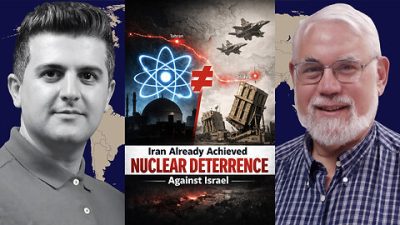
Prof. Ted Postol: Iran Already Achieved Nuclear Deterrence Against Israel
or go to
Aletho News Archives – Video-Images
From the Archives
How the occupied mentality syndrome works
Saudi Arabia on the American chessboard – Part 3
By B. J. Sabri | American Herald Tribune | June 27, 2016
Read part 2: “The occupied mentality Syndrome“
Previously I argued whether Saudi Arabia’s repeated involvements in U.S. interventions and wars stem from free national will or in response to a specific condition. For starters, in Saudi Arabia there is no national will. In Saudi Arabia, the national will is the will of the Al Saud clan. Still, when a major Arab state allies itself with a superpower that committed unspeakable crimes against humanity in almost every Arab country, then something is wrong. This fact alone should compel us to examine the U.S.-Saudi relation for one exceptional reason. As a result of the U.S.-Saudi wars, hundreds of thousands of people in Afghanistan, Iraq, Iran, Libya, Syria, Yemen, and Somalia have lost their lives. Millions became displaced in their own homelands. And millions more rendered refugees.
Attributing the Saudi policies to the bonds of “partnership” with the U.S. is frivolous. There are no bonds between these two thugs except those of business, military deals, secret plots, and wars. Proving this point, bonds such as these have no space for the American and Saudi peoples to share significant cultural or societal exchanges. If partnership is not the reason for the Saudi contribution to the U.S. strategy of empire and imperialism, then another reason must exist.
This leads to three possibilities. … continue
Blog Roll
 Aletho News
- NIAID/NIH and USDA Fund Bioengineered Chimeric Influenza Viruses Built Using Pandemic H1N1 Components: Journal ‘Science Advances’
- Hezbollah hits Israeli warship off Lebanon’s coast, sets it aflame
- Iran slams US strikes on B1 bridge, Mahshahr petrochemical plants as ‘blatant acts of state terrorism’
- In letter to UN chief, Araghchi warns of dire consequences of US-Israeli attacks on Iran’s nuclear facilities
- Why the CIA conspiracy to invade Iran with Kurdish militias failed
- Why Are Upbeat US Claims About Mission to Rescue Pilot ‘Highly Questionable’?
- Aircraft destroyed during US ‘rescue’ of downed F-15 pilot cost more than $100 million each
- Washington University removes professor who condemned US-Israeli war on Iran
- Russia Warns of Retaliation as UK Authorizes Seizure of Vessels
- Serbia thwarts plot to bomb Russia-Hungary gas pipeline – Vucic
- If Americans Knew
- In Iran, Israel-US take aim at “reason, research, and freedom of thought” – Daily Update
- US loses planes over Iran, Israel downgrades Lebanon war goals – Daily Update
- Israel Is Blocking Palestinians from Easter at Church Where Jesus Resurrected
- Plot to assassinate Palestinian activist follows harassment campaign promoted by Zionist groups and elected officials
- Prominent New York synagogue hosts presentation on why U.S. Jews should support the ethnic cleansing of Gaza
- Tapper vs. Piker: Is the CNN Anchor Auditioning for David Ellison?
- Shouldn’t Democrats Be Able to Condemn Genocide?
- Israel-US kill negotiators, destroy civilian structures, but Iran’s military capabilities still largely intact – Daily Update
- ‘War crime’: Global condemnation as Israeli ministers celebrate death penalty law targeting Palestinian prisoners
- 7 Ways Israel Is Turning Lebanon Into Gaza
- No Tricks Zone
- An Inconvenient Tree: Uncovered In Alps… Europe Much Warmer Than Today 6000 Years Ago
- New Study Reports A 60% Slowdown In Greenland’s Ice Loss Rate In The Last Decade
- Low Intensity Tornado Wrecks Major Solar Farm, Creating A Potential Toxic Dump
- New Study Finds Warming Saves Lives…Cold Temperatures 12 Times More Deadly Than Excess Heat
- German Science Blog Accuses PIK Climate Institute Of Hallucinating Climate Tipping Points
- Devastating Assessment Of Comirnaty Vaccine By Former Senior Pfizer Europe Toxicologist
- New Study: CO2 Is ‘Effectively Negligible’ As An Explanatory Climate Change Factor Since 2000
- Former Pfizer Toxicologist Dr. Helmut Sterz Tells Bundestag Hearing Pfizer Vaccine Should Have Never Been Approved
- Energy Expert: Germany’s Nuclear Phaseout Was A “500 Billion Euro Mistake”
- New Research: South Australia’s Mid-Holocene Sea Surface Temperatures Were 4°C Warmer Than Today
 Aletho News