Connecting the Dots

By Larry Romanoff • Unz Review • June 24, 2020
It often happens that events we view as isolated occurrences are connected as integral parts of a much larger picture, often as part of a wide-ranging plan, and frequently with important social, economic, and/or political implications which become evident only when seen in total. The several topics of this essay add a necessary context to all major social, commercial, and geo-political events of recent decades, which may help us in connecting dots. For this, it is extremely important to realise and understand that in these matters there are no accidents, that ‘crises’ (other than things like volcanic eruptions) do not just happen, and that the final result of any crisis, however it may appear, was the result intended.
As one example, this many decades ago, we noticed that in our city in Canada one brand of American convenience store seemed to have a habit of opening new stores within a stone’s throw of the existing ‘mom and pop’ variety stores (as they were then called), these shiny and attractive new shops inevitably resulting in the closure of our traditional community stores with the resulting loss of livelihood of the owner-families. It was a surprise to learn later that this practice existed in all cities in Canada and it eventually became clear that each such apparently minor event reflected the gradual execution of an astonishingly predatory plan to not only become established in another country but to progressively eliminate all existing competition in doing so. The dawning of this realisation came too late for authorities to take preventive action, resulting in the destruction of what had been an important part of Canada’s community cultural landscape.
In a different category, and more recently, we learned that during a period of ten or more years ending around 2015, GlaxoSmithKline engaged in an enormous tax and marketing fraud in China[1][2], involving billions of RMB in massive and systemic bribery and falsified accounts, the discovery punctuated by the company’s China CEO Mark Reilly fleeing the country on the first plane to England “on a previously-planned business trip”, and intending to remain there “to help with the investigation from that end”.[3] Lacking additional information, we tend to view this revelation as a domestic issue involving the typical group of ‘a few bad apples’. But with a bit of investigation we discover that GSK carried on a series of virtually identical criminal adventures simultaneously in the US and other countries as well, having been fined billions of dollars in the US alone for repeated occurrences. This additional knowledge substantially amends our perception of the picture. When, with a bit of additional investigation, we discover that all the major pharma companies have repeatedly engaged in a wide range of criminal activities resulting in fines totaling tens of billions of dollars in the US alone, our appreciation of GSK’s activities in China, and of the entire landscape of big pharma, are much altered and more accurate. We now know something we didn’t know before, and we now understand we are not dealing with a few bad apples in an isolated if unfortunate event, but with an industry corrupt to its core, worldwide. [4][5]
Similarly, we learned that Apple, the darling of the US stock market and of iphone fans everywhere, was being hounded by the Chinese commercial authorities, this time over warranty periods, Chinese law categorising Apple’s ipad as a computer requiring a two-year warranty with Apple insisting the ipad was a phone and refusing to comply. Following stringent insistence and a huge public outcry, Apple was eventually forced to conform.[6][7] Reading this as an isolated occurrence, we might judge this as a technical domestic argument of little consequence but, with a bit of investigation, we discover that Apple’s warranties had been under fire for years throughout Europe (and other countries) for precisely the same reasons and with precisely the same outcome – Apple stubbornly flouting the consumer laws of dozens of countries.[8][9] With this additional information, our perception of Apple’s behavior in China assumes a different flavor. We no longer see a simple dispute between a retailer and a socialist government with perhaps sticky laws, but a multinational corporation suffused with sufficient arrogance to not only challenge but attempt to dictate consumer laws and warranty policies to all sovereign nations where it does business. To say nothing of some bold tax dodges.[10] Further investigation reveals that, of all computer and mobile phone companies, only Apple appears to take this position. We now have a more accurate picture of the international IT landscape and Apple’s position within it, our sympathy for Apple’s difficulties in China certainly moderating if not transforming into outright hostility.
In each case, our understanding has been substantially amended because we can see the whole picture and we now know something we did not know before. It is true for a great many occurrences in the world, of many different kinds, that these are not single disconnected events but are related in a set pattern and to a set purpose. Simply put, if one house burns down on a street, that’s unfortunate; if two houses burn down on that street, that’s a coincidence; if five houses burn down on that same street, that’s a plan.
Thus, for many of the world’s events, most especially those containing strong social, economic and/or geo-political effects, it behooves us to bypass the mass media who force-feed us with only carefully-selected sound bytes, and to engage ourselves in a bit of independent research to discover whether these apparently disconnected events are in fact related in a larger context. It is necessary to bypass the media because the absence of connection between these apparently disparate (but related) events is not accidental; the media coverage by design and intent renders it impossible for the general public to connect the dots.
The Official Narrative
In attempting to understand social, economic and geo-political events, there is a second matter demanding our attention, that of the initial mass media coverage, because this often betrays secrets of an event that might otherwise be unknown.
Consider: if there is an explosion in a shopping mall somewhere, at first neither we nor the relevant authorities know anything. It might have been caused a gas line leak, perhaps from faulty maintenance, or stored chemicals, or perhaps a disgruntled citizen set off a bomb. At first, we don’t even know what, much less having a clear idea of who or how, or why, and it takes time to ferret out these details and form a sensible working theory of that event. If it appears that persons were responsible, the authorities require additional time to determine why and who, then begin their search.
But, if we are paying attention, it often happens that immediately upon the occurrence of such an event, the mass media present us with a full-blown story lacking only small details, a more or less complete description of what, how, who and why, a story that could not possibly be known at that stage. Not only is the media description immediate, but it is universal and unanimous, with all apparently unrelated media presenting the same story line, often verbatim, with no disagreement on any significant elements, these uniform storylines sometimes flooding the news for days, weeks, and even months.
Such a unanimous flood can occur only with all participants reading from the same script, prepared beforehand and readied for simultaneous release. In the above case, there are only two possibilities:[1] The story, if true, could be known only by the perpetrators or, [2] the story is a fabricated falsehood, taking the microphone to pre-empt independent rational thought by the public and force the discussion into desired channels, resulting in the elimination of critical public analysis and preventing the truth from escaping confinement.
At one time, not so long ago, this was impossible. But today, with the intense concentration of media ownership across all continents, (and with the increasingly strong censorship of the social media) we have only five or six people, all colleagues, controlling perhaps 90% of all media content and with a powerful financial influence on the remainder.
As one ready example, we could review the unfortunate flight of Korean Airlines 007 in 1983, a Boeing 747 which was shot down by Russian aircraft when it ventured about 500 kilometers off-course and perilously close to some Russian military installations. The media response was immediate and universal that “the Russians” killed hundreds of innocent passengers, and a great deal else. I don’t want to dwell on this here but, if you would like some personal entertainment, you might enjoy doing some thorough research on this event. One of the more entertaining issues was that the water was shallow where the aircraft eventually went down, and the Russians searched thoroughly but located only a few bodies of the crew. No hundreds of innocent passengers. One other discovery was hundreds of pairs of new sneakers and a great deal of new clothing still folded in its original packaging. But no bodies. The official response was that when the aircraft was hit by the missiles, the decompression “sucked all the passengers out of their clothes”, then presumably folding and packaging their clothing. Mother Nature is nothing if not neat and tidy.
The events of 9-11 were certainly one of these, with the entire final version of the “official story” appearing the next day in all the Western media, all verbatim including the who, how and why. SARS and ZIKA fit this pattern in every respect, and COVID-19 also fit very well as do the seven biological pathogens unleashed on China during the past two years alone. With the 2019 swine flu, the entire Western media knew instantly that Chinese “criminal gangs” and “pork speculators” were for unknown reasons infecting all of China’s pigs, although no evidence ever surfaced to support any part of their story. If we review the media coverage for many notable events in our recent history, the pattern is the same. We are then facing the only sensible conclusion that those events were executed as part of a plan with the unanimous media coverage arranged well in advance – and with the knowing participation of the media owners.
Normally, subsequent contradictory theories arise over time as we learn details and assemble the pieces in what might be a more logical and sensible combination but, in these cases, all contradictions are first ignored by the mass media, then condemned as “conspiracy theories”, those presenting them unanimously mocked and derided. The more attention these contradictory theories generate, and the more that serious flaws are exposed in the official story, the louder the derision and more vicious the condemnation, again unanimous and universal. Moreover, as these theories gain traction, the underlying facts are increasingly ignored in exchange for attacking their proponents. If we don’t like the message, we kill the messenger. There is no shortage of examples of historians, authors, various experts, being hounded to bankruptcy, infamy, and even death, merely for publishing (or even attempting to publish) inconvenient truths. This process is now so well-established that whenever we see accusations of ‘conspiracy theories’ we can be certain that a government or a corporation has something to hide.
As time passes, the public become inundated with what we term “the official narrative”, most tending to believe a story repeated daily for weeks from dozens of apparently independent and reputable sources, to the point where the matter is no longer news and dissenting opinions are lost in the haze. It then becomes almost impossible for hidden truths to emerge and, even if they do emerge, it is too late to significantly alter the public conviction or to obtain the required critical mass of dissention for a re-examination of the facts. It is said that if we hear a lie five times, especially from five different sources, we will believe it as true and will later be astonishingly reluctant to alter our opinion even in the face of irrefutable evidence to the contrary. This is one of the fundamental tenets of all propaganda.
In so many past instances, generally involving malfeasance, the US government or some branch of it quickly took the initiative to promulgate an “official story” that it wanted the public to accept, always with widespread media and scientific or other support. It isn’t usually difficult to distinguish between these crafted tales and other situations where the truth of an event innocently emerges as facts are sequentially discovered. One sure sign that we are being told a story is when “the official narrative” appears much too soon – before any actual facts emerge that would support the hypothesis, a ploy necessary to pre-empt independent conclusions and prevent more realistic or more factual versions from gaining traction.
Directed Channels of Discourse
There is one other item that serves to actively prevent our connecting the dots and forming correct conclusions about events, this being an intense and coordinated media focus to direct public discourse into desirable channels and away from the key issues. As a simple example, some years ago there were intense debates about the future of the Euro, with growing public opinion that the group currency was a failed experiment and European nations should revert to their original national currencies. But the mass media spawned a flood of debate centered on a wide range of options more or less titled “What is the best way to save the Euro?”, forcing public debate into a context where continuation of the Euro was assumed as immutable and all discussion focused on methods of preservation. Of course, the real question was “Should the Euro be saved?”, but those raising this question were ignored, mocked, derided, and painted as traitors to Europe.
If we pay attention to the mass media on the occurrence of many events, it is easy to see that we are often being propagandised and programmed to see the world through the same pair of eyes – the pair our masters want us to look through. It is a most effective tool of public manipulation, with most of us unaware this thought control is taking place. As Noam Chomsky noted in discussing propaganda[11], “The smart way . . . is to strictly limit the spectrum of acceptable opinion, but allow very lively debate within that spectrum. That gives people the sense that there’s free thinking going on, while all the time the presuppositions of the system are being reinforced by the limits put on the range of the debate.” In simple terms, if you can focus the public on asking the wrong questions, you needn’t worry about the answers.
A Brief Case Study in Connecting Dots
In 2001, an outbreak of foot-and-mouth disease ravaged the British farming industry. Exports from the UK of live animals, meat and dairy products were banned by other nations, and the government ordered a mass slaughter of millions of animals. The losses to British farmers were nearly incalculable, with a great many farmers going bankrupt or otherwise put out of business, and some farmers committing suicide in anguish over their losses. Within six months, almost 4 million animals had been slaughtered and their carcasses burned. Oddly, in the face of this enormous disaster, the government refused to hold a public inquiry into the outbreak, announcing instead three small separate investigations, the results of which would not be made public. A similar event occurred again a few years later. It was later admitted that the pathogen for this disease had gone “missing” from Porton Down and Pirbright, the UK’s two primary L-4 bio-weapons labs, the government then claiming “animal rights activists” had entered these military-guarded labs, stolen huge amounts of pathogen and released it. No information as to why they might do such a thing. The outcome of the UK foot and mouth disease outbreaks was to eliminate small farmers and turn over the UK’s beef supply to a few billionaire owners of Big Agra.
I won’t provide more detail here, but I have written a brief article covering this, the details of which will shock you.[12] As one example, for months prior to the outbreak the UK government was scouring the country for all loose volumes of timber admittedly to be used to burn the carcasses of the millions of cattle soon to become infected and slaughtered.
But so far, even to a suspicious mind, no clear evidence of malfeasance and no conspiracy. But we have other layers of dots here. It seems that immediately prior to this disastrous outbreak of a deadly biological pathogen, there was a ‘simulation’ dealing with precisely this eventuality, exactly the same as that held prior to the outbreak of COVID-19 and including most of the same players, most notably Pirbright who were the admitted source of the bovine pathogen and also who had developed and held patents on five coronavirus varieties, I believe the same five that infected the US and then the world.
And yet another layer of dots. Dr. Mae-Wan Ho wrote a report in the Institute of Science in Society, dated September 24, 2001, entitled “Foot & Mouth Outbreak, GM Vaccine and Bio-warfare”. It was after her report that investigations by the Evening Chronicle discovered papers leaked from the Canadian Food Inspection Agency that confirmed the simulation which had been secret to that point. Readers may recall this is the same Dr. Ho who called for a full investigation into the possible genetic engineering and dissemination of the SARS virus, the evidence eventually conclusive that SARS emerged from a lab.
Let’s turn to the swine flu outbreak in China in 2019 where the nation’s pork was raised by hundreds of thousands of small farmers much as the beef in the UK. With 50% of the livestock slaughtered, American firms had an open door to take control of China’s pork supply. In this case the effort failed because the Chinese government, not being a party to the pathogen, immediately provided financing and other assistance for the small farmers to rebuild their herds.
However, if we research the outbreaks of animal pathogens around the world – swine flu, bird flu, the evidence seems to indicate that the expansion of Big Agra follows closely on their heels. This is an apparently natural occurrence, given that small competitors have been eliminated while market demand remains constant – unless this occurs more than once or twice. When these outbreaks inexplicably appear repeatedly on all continents with Big Agra in the background, we have dots to connect. I do not possess details of every outbreak of an animal pathogen in all countries for the past ten or twenty years, but I have a powerful suspicion that if we correlate these with the growth in market share of the world’s few Big Agra companies, we would receive a surprise.
Larry Romanoff is a retired management consultant and businessman. He has held senior executive positions in international consulting firms, and owned an international import-export business. He has been a visiting professor at Shanghai’s Fudan University, presenting case studies in international affairs to senior EMBA classes. Mr. Romanoff lives in Shanghai and is currently writing a series of ten books generally related to China and the West. He can be contacted at: 2186604556@qq.com.
Notes
[1] https://www.nytimes.com/2016/11/02/business/international/china-rules-glaxo-bribes-sex-tape-whistleblower-cautionary-tale.html
[2] https://money.cnn.com/2014/09/19/news/china-gsk-bribery/index.html
[3] https://www.reuters.com/article/us-glaxo-settlement-idUSBRE8610S720120702
[4] https://fortune.com/2016/03/31/big-pharma-fines/
[5] https://www.independent.co.uk/life-style/health-and-families/health-news/drug-giants-fined-11bn-for-criminal-wrongdoing-8157483.html
[6] www.china.org.cn/business/2013-03/31/content_28407911.htm
[7] https://www.reuters.com/article/us-china-apple-apology-idUSBRE9300DM20130402
[8] https://discussions.apple.com/thread/2367484
[9] https://apple.stackexchange.com/questions/48730/how-does-apples-two-year-warranty-in-europe-work
[10] https://www.theguardian.com/business/2016/aug/30/apple-pay-back-taxes-eu-ruling-ireland-state-aid
[11] Noam Chomsky [2013]. “How the World Works”, p.234, Soft Skull Press
Bolton’s statements on Trump-Kim summit are ‘distorted,’ Seoul says
RT | June 22, 2020
South Korea said on Monday that accounts by former US National Security Advisor John Bolton of discussions between leaders of the United States and the two Koreas in his upcoming book are inaccurate and distorted.
Reports have cited Bolton as writing that South Korean President Moon Jae-in, who is keen to improve relations with Pyongyang, had raised unrealistic expectations with both the North’s leader, Kim Jong-un, and US President Donald Trump, for his own “unification” agenda.
“It does not reflect accurate facts and substantially distorts facts,” South Korea’s national security adviser, Chung Eui-yong, said in a statement referring to Bolton’s description of the consultations.
Chung did not elaborate on specific areas but said the publication set a “dangerous” precedent. “Unilaterally publishing consultations made based on mutual trust violates the basic principles of diplomacy and could severely damage future negotiations,” Reuters quoted him as saying.
Secret Nuclear Sites of DPRK? Or is Everything Visible from Above?
By Konstantin Asmolov – New Eastern Outlook – 28.05.2020
Since 2018, North Korea has continued to adhere to its moratorium on nuclear, and medium- and long-range missile tests. This has created an impression that DPRK’s missile and nuclear weapons program has been put on hold. Still, analysts have been asking whether this is actually the case and the answer tends to depend on their political bias. Naturally, those who have come to perceive Pyongyang as an Evil Empire believe that North Korea has not stopped working on such projects and is continuing to develop weapons of mass destruction. Within US expert circles, aside from holding such opinions, analysts linked with the Democratic party typically seek ways to show how politically incompetent Donald Trump is. In fact, any of their statements about successes made on the North Korean front actually imply that Donald Trump is being deceived but does not realize this.
Such ideological blinders further restrict the limited capabilities of these “Pyongyang experts”. Analyzing satellite images is essentially the only means they use to learn what is happening in the DPRK. But it is impossible to see everything from up above. Therefore, analysts end up basing their assumptions on a politicized interpretation of information, i.e. if a building can theoretically house a missile, it must be meant for that very purpose.
This, in turn, generates sensational stories about yet another secret site linked to the DPRK’s nuclear weapons program being located. Such reports are often published by Beyond Parallel, an analytic vehicle funded by the Center for Strategic and International Studies (CSIS) or 38 North, currently a project of the Henry L. Stimson Center (formerly a program of the US-Korea Institute at Johns Hopkins University’s Paul H. Nitze School of Advanced International Studies).
On August 28, 2019, Beyond Parallel wrote that their latest satellite images provided “circumstantial evidence of the construction of a new ballistic missile submarine and preliminary evidence of possible preparations for a test” in the DPRK. Photographs of Sinpo South Shipyard showed “support vessels and a crane” suggesting “possible preparations, based on past practice, to tow the missile test stand barge out to sea for an SLBM (submarine-launched ballistic missile) test flight”. And although the authors of the article stated that there was “no conclusive evidence” that the preparation was nearing completion, media outlets reported that as an evidential fact.
On September 5, 2019, experts of the UN Security Council Sanctions Committee on North Korea submitted a report stating that the Uranium enrichment facility and the Experimental Light Water Reactor (ELWR) continued their operations at North Korea’s Yongbyon Nuclear Scientific Research Center.
On September 18, 2019, the International Atomic Energy Agency (IAEA) said that a nuclear reactor at Yongbyon was shut down for a sufficient period of time to be “de-fueled and subsequently re-fueled” in its report. The document also stated that there had been “signs of use at the centrifuge enrichment facility” there although “no indications of reprocessing activities” had been detected at the radiochemical lab in the plant.
In December 2019, the 38 North website reported that Stanford University’s Center for International Security and Cooperation (CISAC) had “observed activity at the Experimental Light Water Reactor (ELWR)” in Yongbyon indicating that it might be operational. According to the article, the “construction of the ELWR began in late 2010”, and although it appeared to be externally complete in early 2013, the North Korean government “has not spoken publicly about the reactor or its status” since November 2011.
Commercial satellite images made early in 2019 showed “a narrow but steady liquid effluent likely trailing from a pipeline stemming from the Turbine-Generator Building of the ELWR”. The report said that since 2017, photographs have shown “frequent movement of vehicles, cranes and equipment around the reactor’s entrance, the emplacement of a transmission tower and electrical transmission lines in 2017”. And in early 2018, the construction of a dam and spillway were observed. The authors of the article concluded that such activity indicated that the reactor was being prepared “for start-up operation”, and this “could have significant implications for North Korea’s nuclear weapons program and would complicate any denuclearization process”. According to the report, “the stated purpose for the ELWR is electricity generation”, but “the reactor could be operated to produce weapons-grade plutonium or tritium for boosted fission or hydrogen bombs”.
On January 30, 2019, South Korea’s leading conservative newspaper the Chosun Ilbo wrote that the DPRK had supposedly “built a large tunnel in Ryanggang Province near the border with China” that appeared “to be an underground missile base”. The conclusion was based on observations of the facility and imagery showing that the tunnel had only one entrance with “two cylindrical objects measuring around 10 m in length” near it, which appeared “to be missile-launching tubes”.
In March 2020, 38 North wrote about “a previously publicly unidentified underground facility (UGF) beneath a hill in Bungang” near the Yongbyon Nuclear Scientific Research Center. The article provided a lot of details, based on satellite imagery, about its construction that had started in 2004. And, most importantly, the author made the following conclusion: “Underground structures in residential areas are not unusual and may be used for storage, civil defense or other innocuous purposes. While there is no evidence that it is related to the North Korean nuclear program, the site’s proximity may raise suspicions. Moreover, there is reason to believe there may be other underground sites in the area that may also provoke the same concerns. Therefore, any future denuclearization agreements covering the Yongbyon nuclear facility may need to take this site and any others discovered nearby into consideration when formulating verification provisions.” The report also mentioned that “no electrical lines feeding into” the UGF were observed, and “no external ventilation systems” were visible.
On March 27, 2020, the 38 North website issued a warning that “a new North Korean version of the Army Tactical Missile System (ATACMS), test-fired” in March, could be capable of carrying nuclear warheads.
On April 8, citing 38 North, South Korea’s Yonhap News Agency reported that the DPRK had “recently conducted a dummy missile ejection test at its Sinpo shipyard”. According to the article, satellite imagery from April 5 showed that “the service tower on the ejection test pad pulled back from its static position”. In addition, the photographs also depicted a “glimpse of the bow of the SINPO-class experimental ballistic missile submarine”, however, “it was mostly obscured by the environmental awning”.
Another report published by Beyond Parallel on May 5, 2020 caused quite a stir. It said that a new facility was nearing completion in the village of Sil-li (not far from Pyongyang International Airport), and that it was “almost certainly related to North Korea’s expanding ballistic missile program”. According to the article, it “could be complete and ready for operations sometime during late-2020 or early-2021”.
The author of the story, Joseph Bermudez, based his conclusions on the following information:
- “A high-bay building within the facility is large enough to accommodate an elevated Hwasong-15 intercontinental ballistic missile and, therefore, the entirety of North Korea’s known ballistic missile variants.” The building bay doors up to 8 m in height also indicate this.
- The facility has been constructed next to a UGL “whose likely size is also large enough to easily accommodate all known North Korean ballistic missiles and their associated launchers and support vehicles”.
- An “unusually large covered rail terminal” and a “new rail spur line” are probably meant “to support ballistic missile operations” at the facility. All the structures there are connected by “a 9- to 10-meter-wide surfaced road network with wide radius turns suitable for the movement of large trucks and ballistic missile launchers”.
- The facility is “relatively close to ballistic missile component manufacturing plants in the Pyongyang area” (for example, Tae-sung Machine Factory, Mangyongdae Light Electric Factory) and can, therefore, be used for “the assembly of ballistic missiles from components delivered by rail”
- “There are at least 17 air defense artillery bases and numerous military and paramilitary barracks within a 5-kilometer radius of the facility”.
Citing Joseph Bermudez’s article, ROK’s Yonhap News Agency elaborated that the Sil-li Ballistic Missile Support Facility, nearing completion, could be used to test-fire intercontinental ballistic missiles. And on May 9, it was reported that “multiple intercontinental ballistic missiles (ICBMs)” were “newly manufactured in Sain-ri, Pyongsong in North Korea”.
However, a Principal Researcher at Korea Atomic Energy Research Institute (KAERI) and the former Director General of Korea Institute of Nuclear Nonproliferation and Control (KINAC), Hwang Yong-soo was very critical of Joseph Bermudez’s conclusions comparing them to baseless rumors about the North Korean leader’s health.
Hwang Yong-soo pointed out that Bermudez leapt from “hypothesis to inferred conclusion” in his Beyond Parallel report, which was based solely on “interpreted open source satellite imagery”. He was also skeptical that “North Korea’s leaders would construct their most critical missile facility adjacent to Sunan Airport” (DPRK’s national airport). In addition, “transport of large missiles and components to and from Sil-li would be apparent via national technical means to the United States and its allies”. Hwang Yong-soo also suggested that alternative explanations for large buildings being constructed “next to an airport seem entirely logical as the purpose attributed to these buildings by CSIS”.
It is no secret that North Korea often builds underground facilities to prepare for a possible military conflict during which Pyongyang’s enemies would dominate in the skies. Hence, many of DPRK’s manufacturing and strategic complexes are located underground, but this does not mean that all of them are linked to the missile and nuclear weapons program.
Still, North Korea has surprised the rest of the world on occasion, thus western analysts tend to err on the side of caution when it comes to the DPRK. After all, underestimating one’s enemies is far more dangerous than overestimating them. Nonetheless, it is worth treating reasonable concerns in a different manner to attempts to produce cheaply sensational reports based on biased interpretations or data that is low on quality and quantity.
Konstantin Asmolov, PhD in History is a Leading Research Fellow at the Center for Korean Studies of the Institute of Far Eastern Studies of the Russian Academy of Sciences.
North Korean leader pledges to increase ‘nuclear deterrence’ capabilities
Press TV – May 24, 2020
North Korean leader Kim Jong-un has outlined his policies for further boosting his country’s nuclear “deterrence” capabilities amid stalled denuclearization talks with the United States.
After a three-week-long absence from public view, the 36-year-old leader made the comments at a meeting of his party’s powerful Central Military Commission, after a previous absence that gave rise to intense global speculation that he might have health issues or even been brain-dead.
According to a report by North Korea’s state news agency KCNA on Sunday, the meeting revolved round measures to bolster the peninsular country’s armed forces and “reliably contain the persistent big or small military threats from the hostile forces.”
It also discussed “increasing the nuclear war deterrence of the country and putting the strategic armed forces on a high alert operation,” through adopting “crucial measures for considerably increasing the firepower strike ability of the artillery pieces,” the report added.
Kim’s rare outings during the past two months, with his absence from a key national anniversary, have coincided with North Korea’s intense measures against the coronavirus (COVID-19) pandemic. Pyongyang says it has recorded no confirmed cases so far, but South Korea’s intelligence agency claims that it cannot rule out that the North has had an outbreak.
North Korea is under crippling US sanctions for years over Pyongyang’s nuclear and ballistic missile programs.
US President Donald Trump has attempted to de-escalate tensions with Pyongyang, and although he has met with Kim three times, he has so far refused to relieve any of the harsh sanctions on the North over its military programs, and that has in turn hampered the so-called efforts to demilitarize the Korean Peninsula.
The Washington-Pyongyang nuclear talks have made little progress since late last year, particularly after the global fight to curb the pandemic, which has so far infected more than 5,434,600 people and killed over 344,500 others around the world.
Kim’s pledge to boost its nuclear capabilities comes at a time when Washington, according to some news reports, might conduct its first full-fledged nuclear test since 1992.
Last December, Kim ended a moratorium on the country’s missile tests and said North Korea would soon develop a “new strategic weapon.”
The ending of the moratorium came as the United States refused to relieve any of the sanctions on the North even though Pyongyang had taken goodwill steps in the course of the now-stalled diplomacy with Washington.
The North is also at loggerheads with South Korea over its “provocative” military drills with the US, stressing that Seoul’s war games demand an appropriate response from Pyongyang.
Wild Boars Continue to Spread ASF, but How did it Reach the Korean Peninsula?
By Konstantin Asmolov – New Eastern Outlook – 24.05.2020
Earlier, the author believed that South Korea deserved to be commended for its efforts in combating African swine fever (ASF) within its borders, but the situation turned out to be more serious than previously thought.
The following paragraphs provide an incomplete record of the growing number of dead wild boars found not too far from ROK’s border with North Korea. On January 16, there were altogether 74 ASF cases among wild pigs. The aforementioned corpses had been found in South Korea’s Civilian Control Zone, stretching along the Demilitarized Zone (DMZ). By January 24, the number of infected wild boars rose to 106. And in subsequent months, the growth in the number of cases continued. On March 13, there were 366 infected animals in total, and according to the latest reports, the number of ASF cases was 612 on May 12.
Each of the corpses were buried and the places where they had been found disinfected. The authorities have been trying to solve this issue by building fences in the border zone in order to restrict the movement of wild boars and ensure they do not come in contact with domestic pigs.
In 2019 and this year, South Korea (the fourth largest consumer of pork in Asia) killed and buried more than 153,000 pigs, and also sent hundreds of soldiers and civilians to hunt wild boars near the border in order to prevent the disease from spreading and to keep pig farms safe. The last reported ASF case on a farm was on October 9.
During a meeting with reporters on February 13, Minister of Agriculture Kim Hyeon-soo said that “in order to allow the affected farms to resume operations, infections from wild boars” needed to at least slow down, and that at the given rates of increase, it was not the right time yet. Currently, there is no vaccine or cure against African swine fever and the disease is lethal for almost 100% of the animals. It is unclear from newspaper reports whether pig farms are still closed for business or not. As a rule, quarantine is lifted six months after the last known death, and a pig farm in an affected area is allowed to reopen a year after the restrictions have been eased.
In addition, in some aspects the cure turned out to be worse than the disease, as South Korean officials are facing criticism for allegedly causing damage “to the Imjin River ecosystem by spreading a toxic disinfectant along the North Korean border.” The “disinfectant solution that helicopters indiscriminately sprayed over parts of the Imjin River and the DMZ to stop the virus from traveling south” turned out to contain “quaternary ammonium compounds, also known as Quats”. They are “found in detergents and other household cleaning solutions”, and “some studies have shown that high concentrations” of such chemicals can be fatal to fish populations.
The problem came to light “after a group of local fishermen in Paju” had reported “a drastic drop in the Imjin River’s fish stocks”. According to The Korea Times article, “the Ministry of Agriculture, Food and Rural Affairs (MAFRA) ― which is in charge of the ASF quarantine ― immediately rebutted the fishermen’s claims that the drop in fishing stock could be related to the anti-ASF solution, saying it only used environmentally-friendly disinfectants” that decomposed easily after use and did not accumulate in living matter.
However, The Hankyoreh, a center-left daily newspaper, painted a different story in its follow-up report. According to the article, the disinfectant solutions sprayed over Paju and Yeongcheon starting at the end of September 2019 did contain Quats. This continued for a month “without proper oversight”, until finally the ministry became aware of the problem at the end of October, and “demanded local governments to provide more eco-friendly disinfectant solutions” based on citric acid.
The Korea Times contacted MAFRA officials but they “declined to comment on the matter, saying they were not ready to confirm the reports.” South Korea’s Ministry of Environment, on the other hand, stated it would test the Imjin River water for contamination, and it did not try to deny claims that “Quats had been released into the ecosystem”. However, the truth is that the story ended then and there – there were no further reports in the media about the topic. The tests are most likely still being conducted, and the focus of the discussion on the epidemic was skillfully turned to the possibility of a link between North Korea and the outbreak, and the effect of the disease on the DPRK if any.
It is unclear what the situation in North Korea is really like when it comes to ASF. On February 28, South Korea’s Yonhap news agency reported that the DPRK was “strengthening efforts to prevent the African swine fever and other animal-related diseases”. According to the agency, “in an article entitled ‘Preventive measures against veterinary virus infection,’ the Korean Central News Agency (KCNA) reported that the country” was actively taking measures “to prevent the spread of African swine fever and avian flu”. KCNA also stated that Pyongyang’s veterinary quarantine center was “dispatching officials and experts to the provinces and strengthening the network so as not to miss out on the slightest symptoms and to respond right away”. It added that “observation posts to examine wild animals and birds” were being installed and “tests on domestic animals in farms” were being conducted.
On March 3, 2020, North Korea’s Rodong Sinmun newspaper also called “for greater efforts to tackle African swine fever and other animal diseases”.
Still, if there had indeed been an outbreak of ASF in the DPRK, it would have been possible to find out about it indirectly, for example, based on the price of pork or attempts to purchase it from China (where it is the most widely consumed type of meat). Hence, there is reason to believe that the outbreak originated in the Demilitarized Zone (DMZ), a 4-km stretch of land that has essentially become a “nature reserve”. This region could also be where the disease spread as prearranging any activities, especially hunting, in the area is a very complex process. But questions that then arise are “How quickly are wild boars reproducing in that territory?” and “How many of them are there?”.
Since the answers remain unclear, some anti-Pyongyang propagandists have alleged that the DPRK has been waging a biological war against South Korea in such a manner. And according to them, even if infected wild boars happen to die on route to the south, this simply means that the authoritarian regime in the DPRK is incapable of coming up with a more rational military strategy.
There is an even more interesting theory. On May 7, a spokesperson for the National Institute of Environmental Research (NIER), affiliated with South Korea’s Ministry of Environment, made interim results of a study to investigate origins and spread of African swine flu public. The report, compiled by scientists from the institute, says that the virus genotype found in South Korea was the same as that prevalent in Russia and China. Although the genotype of North Korea’s ASF virus is not known internationally, the researchers speculated that the DPRK “may have played an intermediary role in spreading” it. Pyongyang’s veterinary authorities officially reported to the World Organization for Animal Health that ASF infections had been detected in May of last year.
However, this is not where the story started. The scientists from NIER stated that ASF “started to spread in Georgia” in 2007, and was then “transferred to central Russia” by wild boars. Outbreaks have started and ended every so often since then due to a large population of wild boars. In 2017, there was another outbreak of ASF in the Russian Federation, and then from 2018, the disease spread to Asia, including China, Mongolia and Vietnam.
If one were to view these facts in the same manner as was done earlier to allege involvement of the DPRK, it would be appropriate to mention a biolab in Georgia, which is supposedly developing bioweapons capable of not only targeting people but also economies. In addition, some enemies of the DPRK genuinely wish to see this nation “erased from the map of the world” by any means. After all, “ungentlemanly methods” can be used when it comes to countries viewed as pariahs. And the current expectation is that the Coronavirus, and not AFS, will finally lead to an economic collapse in the DPRK, which will, at first, result in famine and then a “democratic revolution”.
By misusing facts, it would be easy to postulate that certain interested parties are deliberately infecting wild boars so that they could spread the disease in North Korea. And, the negative impact on the ROK was all part of the cunning plan but then something went wrong, and the disease spread out of control. Such a theory can essentially be used as an explanation for any further developments.
From the point of view of the author, none of the above theories have been proven thus far. Nonetheless, he will continue monitoring the measures being taken to fight ASF, and perhaps, with time, there will be more clarity to the situation.
Konstantin Asmolov is a Leading Research Fellow at the Center for Korean Studies of the Institute of Far Eastern Studies of the Russian Academy of Sciences.
Western media continues to spread fake new about North Korea
By Lucas Leiroz | April 28, 2020
In modern warfare, one of the greatest weapons is the power to manipulate information. In a globalized international society, extremely integrated and connected by an infinite information circulation network, a media which controls the dissemination and content of such information is in an extremely advantageous position, as this power allows it to shape public opinion. In the mass society, we are all hostages to the dissemination of information and to the way it is carried out, which puts us in a position of extreme fragility, as we are daily forced to consume false information strategically manipulated by its disseminators.
Lies fill a large part of the mass media, as it is controlled by the most powerful groups in society and which are better able to guarantee their interests. In the Western world, the use of false information to denigrate the public image of people, countries, ideologies and movements that in some way oppose the liberal hegemonic ideology has become frequent. One of the biggest victims of this information war is North Korea, a country that is extremely denigrated in the West with numerous and repeated lies about its political regime and its society as a whole.
North Korean President Kim Jong-un was the youngest victim of the unfounded “death” news in Western media. In fact, it has become common for all North Korean public figures who are absent from the media spotlight for a few days to be reported as “dead” around the world – these death reports are often accompanied by weird accusations that such people were “sentenced to death”, even if there is no evidence for such conclusions. Once again, history repeated itself: after about two weeks without public appearances, Kim Jong-un was presumed dead by the West.
The trigger for world hysteria was Kim’s absence from the celebration of the last Day of the Sun – a traditional Korean holiday – on April 15th. Immediately, a media bombardment began in the West, with worldwide reports of the alleged “death” or “serious state of health” of the Korean President. The legend was generated around an alleged cardiac surgery, which would have been unsuccessful. According to the New York Post, the deputy director of HKSTV in Hong Kong said that Kim would be dead, citing a “very solid source” – which was not identified – while the Japanese newspaper, Shukan Gendai, said that Kim would be in “vegetative state” after undergoing cardiac surgery at the beginning of the month. On social media, the hashtag #kimjongundead quickly gained absurd popularity, being one of the most accessed on Twitter.
Apparently, the West wants to see Kim Jong-un dead, but the truth came out, with a series of official responses denying the avalanche of lies by the mass media. The South Korean intelligence service was the first to report the lie behind the information that Kim either died or was ill. “Our position in the government is firm”, special national security adviser, Moon Chung-in, said in an interview with CNN this Sunday (26), “Kim Jong-un is alive and well”. The adviser also said that Kim had been in Wonsan – a tourist town in the east of the country – since April 13 – which is why he was absent from public commitments – adding, “No suspicious movements were detected so far ”.
Then, a satellite photo captured an image of the President in Wonsan, showing that Kim is alive and well. The North Korean media then responded to the Western media offensive with several messages from Kim, confirming his health and thanking the messages of support received from public figures around the world who sympathized with the President’s alleged serious state of health. The most curious thing is that the lies invented by the West call attention for the degree of accuracy and complexity. Not satisfied with inventing death, vegetative condition and heart surgery, the media agencies released fake news stating that China had sent a team of doctors to operate Kim. Fortunately, Beijing denied the information immediately, leaving no doubt to its deleterious character.
In the end, Kim is alive, well and there is no concrete data that can tell us anything more accurate about his health. Obviously, the lie promoters already knew all this with antecedence, but they were concerned to make a lie in order to provoke inflamed reactions worldwide and destabilize Korea by tarnishing its image, portraying it as a dictatorial country, extremely closed and with a systemic censure – so strong that they are able to hide from the whole world a news as important as the death of their own president.
The darker side of this “fake news age” is that this false information drives big political decisions and is capable of influencing the actions of the people on large scale. Another example of the info-war power is Brazil, where fake news accusing China of having created the new coronavirus was officially admitted by the government, generating a serious diplomatic crisis between both countries and causing a wave of sinophobia and hostility against Asians in the country, with Chinese immigrants being beaten on the streets. On social media, millions of messages containing fake news about the virus are spread daily and already completely permeate the popular mentality.
An important tactic of information warfare is the handling of which news should be broadcast. Despite the huge repercussions of Kim Jong-un’s “death”, very few agencies have so far reported about the farce of this information, or, if they did, have invested little in its dissemination. The reason is simple: in addition to the interest in spreading fake news, denying previous information is costly and damages the image of these media outlets, which prefer to keep the lie.
Even though Pyongyang denies Kim’s death, Beijing denies having sent doctors for heart surgery and South Korea itself admits that it is all about fake news, in the popular imagination of Western mass societies, an image of Korea as a “terrible dictatorship” and “the most closed country in the world” is already formed and can hardly be rebuilt without a strong media work committed to the truth (which is far from emerging).
The fact is that Kim Jong-un is alive and, more than ever, it is proven that most of the content released about non-Western countries is made up of fake news. In our times, the circulation of information is a real battlefield, really worthy of attention for purposes of national defense and strategy.
Lucas Leiroz is a research fellow in international law at the Federal University of Rio de Janeiro.
Why does MSM believe bizarre rumors coming from the South about North Korea?
The two countries are still technically AT WAR!
By Helen Buyniski | RT | April 21, 2020
The rash of stories claiming North Korean leader Kim Jong-un is on his deathbed – all sourced to a South Korean blog post – show Western media will run any horrific item on the Hermit Kingdom, confident they won’t be contradicted.
North Korean leader Kim Jong-un is clinging to life by a thread after heart surgery went horribly, horribly wrong! Or at least, US intelligence is monitoring reports that Kim was “in grave danger” after botched surgery, as CNN reported on Monday. The source for Kim’s health troubles was a single report from South Korean web outlet The Daily NK, itself citing a single source in the North.
While CNN acknowledged it “couldn’t independently verify” the story (or anything else happening in North Korea), the outlet ran with it anyway, leading others to do the same. And while the Guardian eventually front-loaded its own article with official denials from China and South Korea as the story began to unravel, its Twitter account reveals the original title, “North Korean leader Kim Jong-un has heart surgery – report,” a much more authoritative-sounding line than the lukewarm “South Korea and China play down Kim Jong-un health claims” it became.
By the time the stories had been edited, however, fervent speculation on “the North Korean succession” was already underway.
None of these stories thought to mention that the South Korean source regularly runs sensationalist pieces depicting the North as a seething pit of death and misery (“Pyongyang hospital construction workers stealing to survive” and “Chagang Province forestry official executed for illegal corn farm” are some recent headlines). Nor do they mention that the South and North never formally concluded the decades-long war that split the Korean landmass, or explain that such atrocity propaganda is typical among enemies.
Indeed, Western media rely on South Korea for news about the North, a weakness which has resulted in some truly preposterous stories being reported with a straight face by Western outlets eager to take a whack at the DPRK piñata.
A 2014 story claiming Kim had his uncle (and several aides) killed by stripping them naked and feeding them to a pack of starving dogs was reported by numerous “reputable” outlets, including NBC and the UK’s Channel 4 even though it originated with a satirical post on a Chinese social network.
About the only thing more embarrassing than publishing the Chinese equivalent of the Onion as straight news is for one of Kim’s “grisly execution” victims to appear in public alongside her executioner. The Telegraph, HuffPost and other ‘reputable’ Western outlets reported in 2013 that Kim had his ex-girlfriend, pop singer Hyon Song-wol, executed by firing squad, citing a South Korean news outlet that in turn cited an anonymous Chinese source. The story was proven spectacularly false last year, when she was photographed alongside the North Korean leader on a factory tour. Incredibly, some outlets still tried to spin the story – the Daily Mail hinted that 10 performers rumored to have been shot alongside her were actually dead, citing South Korea’s intelligence director as their source in a way that implied only Hyon had managed to (literally) dodge the executioner’s bullets.
Yet “numerous” individuals reported executed in South Korean media have later surfaced very much alive, News.com.au admitted last year… before repeating unverified claims that multiple North Korean officials had been executed over the failed US-DPRK peace talks in Vietnam. Why do these outlets keep repeating South Korean propaganda if they know it’s false?
It’s easy for western media to run the most lurid horror stories about the ‘hermit kingdom,’ confident that the only denials will come from state-run media and will be summarily dismissed as the controlled rantings of an ‘Evil Dictator’. Who are you going to believe, a charter member of the Axis of Evil or good old CNN? At a time when the media establishment is widely distrusted and loathed almost as much as politicians, atrocity propaganda is always good for ratings and patriotic sentiment, and there’s no risk of an inconvenient fact-checker bumbling in and making life difficult.
It’s worth noting that trying something similar with other heads of state lasts about five minutes. When UK PM Boris Johnson was hospitalized with coronavirus last month, RIA Novosti published an anonymous NHS source’s claim that he was more seriously ill than the public knew and was to be placed on a ventilator. This was immediately slapped down as “Russian disinformation” (even though it was later admitted that Johnson’s condition had worsened significantly while in hospital). But if the mainstream media is willing to perpetrate this level of disinformation about North Korea, it’s long past time to reconsider trusting their reporting on other countries as well.
Follow Helen Buyniski on Twitter @velocirapture23
South Korean bank submits to US fine over Iran transactions
Press TV – April 21, 2020
South Korea’s Industrial Bank of Korea (IBK) says it has submitted to the US demand to pay $86 million in fine for processing Iranian transactions.
The compromise includes paying $51 million to US prosecutors and $35 million to the New York State Department of Financial Services, the lender said Tuesday.
South Korea’s Yonhap news agency cited Geoffrey S. Berman, the US attorney for the Southern District of New York, as saying that IBK’s branch in New York had failed to detect and report $10 million in US dollar payments from South Korean entities to Iranian banks.
Authorities said IBK entered a two-year deferred prosecution agreement with the US Department of Justice and a nonprosecution agreement with New York Attorney General Letitia James.
South Korea was among Iran’s major trade partners before falling in line with US guidelines after Washington withdrew from an international nuclear deal with Tehran in 2015 and imposed unilateral sanctions on the Islamic Republic.
Iran was South Korea’s third biggest export market in the Middle East and companies such as Samsung and LG Electronics were among popular brands for TV sets, air conditioners, telecommunications equipment and washing machines.
Samsung’s sales also notably covered about half of Iran’s lucrative android phone market, with almost 18 million Iranians having Samsung devices as of February 2018, according to a report published by Iran’s largest app market Café Bazaar.
In February, Iran’s Foreign Ministry warned that foreign companies leaving the country due to the US sanctions would not be able to return to the country’s market easily after Samsung and LG Electronics pulled down their last advertisement banners in Iran.
According to a statement by the Ministry of Trade, Industry and Energy in Seoul, Iran was once the sixth largest market in terms of orders won by South Korean builders before the 2011 sanctions.
South Korea was also the biggest client of Iranian condensate with 300,000 barrels per day (bpd) on top of 100,000 bpd of crude oil, but it stopped shipments two months before the sanctions kicked in.
South Korean companies have mostly even refused to fulfill Iran’s orders for medicine and medical equipment which is supposedly not subject to the US sanctions.
According to Iranian companies, South Korean banks are refusing to process payments related to Iran’s imports of pharmaceuticals for fear of falling foul of the sanctions.
Iran’s Health Ministry said Saturday South Korea had rejected a SWIFT payment request by Tehran for purchase of coronavirus testing kits.
Ministry spokesman Kianoush Jahanpour disclosed an international financial message recently sent by South Korea’s Woori Bank to Iran’s Keshavarzi Bank, noting that it could not take over an import letter of credit for 5.3 billion won issued by the Iranian bank.
As a result Iran was unable to import the kits because the Korean exporter could not receive payment after Woori Bank’s refusal to take over the import letter of credit.
“This shows claims of medicine and medical equipment not being subject to sanctions are lies. The bank has officially stated that the purchase is not possible due to the sanctions,” Jahanpour said.
The US government has intensified its sanctions on Iran despite international calls on Washington to suspend them to allow the Islamic Republic to secure necessary medicine and equipment in the midst of the coronavirus fight.
Washington claims the sanctions do not target medicine for Iran, but they make it all but impossible for importers to obtain letters of credit or conduct international transfers of funds through banks.
Last week, Iran’s Permanent Mission to the United Nations in New York dismissed the Swiss Humanitarian Trade Arrangement (SHTA) which the Europeans belatedly announced with much fanfare to have made operational in coordination with the US to barter medicine and food with Iran.
The mission said the United States has forced SHTA to pursue a very tight and tough procedure, making it practically very difficult for companies to trade with Iran.
According to the mission, several companies that supply the medical equipment required to fight the coronavirus have recently stopped shipping to Iran because the current US sanctions regime makes the shipping of such items to Iran almost impossible.
The only message the US is sending with intensifying its sanctions amid the coronavirus is that companies must avoid doing any business with Iran, even if their work is humanitarian in nature, it said.
More on “North Korean Hackers”
By Konstantin Asmolov – New Eastern Outlook – 14.04.2020
North Korean hackers are an unavoidable subject of discussions considering the recent hype about them yet again. Hence, it is worth looking into the wrongdoings they have been accused of and to what extent they are guilty once more.
On 30 May 2019, radio station Voice of America reported that in the opinion of US intelligence agencies, the DPRK, facing economic difficulties due to imposed sanctions, was engaging in cyberattacks against banks and other financial institutions in order to obtain money. Erin Cho, the head of the National Cybersecurity and Communications Integration Center (an agency of the Department of Homeland Security), pointed out that North Korean cyber attacks were targeting virtual currency, a relatively new means of stealing money.
Former US State Department senior adviser Balbina Hwang also generated publicity with her statements in August 2019. The visiting professor at Georgetown University talked about a story by the Associated Press that “cited a report from the United Nations Security Council” about North Korea’s use of cyberspace to launch “increasingly sophisticated attacks to steal funds from financial institutions and cryptocurrency exchanges to generate income. The hardest-hit was South Korea, the victim of 10 North Korean cyberattacks, followed by India with three attacks and Bangladesh and Chile with two each”.
As it turns out, “South Korea’s Bithumb, one of the largest cryptocurrency exchanges in the world, was reportedly attacked at least four times”. Two attacks occurred in February and July 2017, each resulting in losses of approximately $7 million, “while a June 2018 attack led to a $31 million loss and a March 2019 attack to a $20 million loss”.
13 September 2019, the US Department of the Treasury imposed sanctions against hacking groups from the DPRK: the Lazarus Group and two of its subsidiaries, Bluenoroff and Andariel. According to the Treasury Department, in 2014, the Lazarus Group was responsible for the cyber attack against Sony Pictures and also for infecting 300,000 computers with viruses in 150 nations world-wide. Bluenoroff managed to steal $1.1 billion from various financial institutions, including $80 million from the central bank of Bangladesh. Andariel is suspected of crimes targeting the South Korean government and infrastructure, and also of attempting to steal classified military information.
At the end of September 2019, experts from the Kaspersky cybersecurity company detected previously unheard of spyware Dtrack, designed by the Lazarus Group, in networks of Indian finance organizations and research centers. This malware can provide access to a device it has infected allowing data to be either uploaded to it or downloaded from it. The spyware is somewhat similar to DarkSeoul, linked to a cyber attack against South Korea in 2013.
In October 2019, Patrick Wardle, the Principal Security Researcher at Jamf (a software provider for the Apple platform), said that hackers, believed to be sponsored by North Korea, had “found a novel way to attack Apple Macs”. They did so by using a fake cryptocurrency trading app. To add legitimacy to the software, the group even created JMT Trading, a front company “complete with an official-looking website”.
In January 2020, Russian cybersecurity company Kaspersky reported that the Lazarus Group had accrued large amounts of cryptocurrency by using Telegram, a popular messaging app that uses its own proprietary security protocol. In fact, links to groups hosted by malicious Telegram users can be found on many fake websites. In addition, the Lazarus Group continues to design and launch numerous fraudulent websites (as for instance, Union Crypto Trader) that appear to be trading platforms for cryptocurrency or ICO hosts (Initial Coin Offering) but, in reality, they are used to steal users’ confidential information. The malware developed by the Lazarus group is also “capable of loading in devices’ memory (RAM) exclusively, bypassing hard drives”, which makes it even more dangerous.
The latest incident possibly related to hackers from the DPRK occurred in January 2020 when 16 North Korean computer programmers were “found to have been working in Cambodia illegally” and were subsequently ordered to leave the country. However, soon it came to light that they were not hackers but temporary IT staff working for a “Chinese online gambling operation”.
On 17 February 2020, ESTsecurity (a cyber security company based in Seoul) reported that a North Korea-linked group was probably responsible for hacking the smartphone belonging to Thae Yong-ho, a former DPRK diplomat who defected to South Korea in 2016. The hackers used “spear phishing” to access his new name, text messages, photographs and other information. According to security experts, their attack patterns “were similar to those formerly used by North Korean hacking groups”, such as Geumseong121, that targeted “the websites of government departments, North Korea-related organizations and media officials”. The name of the group is fairly patriotic. There is also a possibility that some other team of hackers “used such attack patterns to give the impression of being a North Korean group.” According to Mun Chong-hyun from ESTsecurity, Geumseong 121, believed, in the opinion of South Korean experts, to be backed by DPRK intelligence agencies, was capable of hacking mobile phones of a number of ROK citizens, such as Thae Yong-ho, whose work is related to North Korea and foreign policy. Mun Chong-hyun also pointed out that phishing emails and messages contained, for example, “an attachment that, when clicked, directed the reader to a website masquerading as the website of a North Korean human rights organization based in the US”. Once users were lured to such a website, their devices were infected with malicious files or software that then accessed “systems and sensitive data”.
2 March 2020 The US Department of Justice charged two Chinese citizens, Tian Yinyin, and Li Jiadong, with money laundering. They were indicted for stealing more than $100 million as a result of two cyber attacks. But, according to a joint investigation conducted by U.S. intelligence and South Korean law enforcement agencies, starting at the end of 2017, North Korean hackers have stolen cryptocurrency from exchanges, and have then laundered approximately $250 million with the aid of the Chinese nationals. The funds are believed to have been used to finance North Korea’s nuclear weapons program. It was not the first time such accusations were made. In 2017, the United States alleged that Chinese company Mingzheng International Trading Ltd “facilitated prohibited” monetary transactions on behalf of a North Korean bank. Prosecutors “said they would seek $1.9 million in civil penalties”.
On 23 March 2020, the Cyprus Police issued a public warning saying they had received a number of complaints regarding telephone calls that appeared to come from North Korea, as the numbers started with 00850 (the DPRK country code). There were grounds to believe that it was a “scam leading to recipients” being overcharged.
Unfortunately, all of these disconcerting reports do not provide any evidence to support their claims. And some time ago, the author conducted his own investigation into such incidents. And we would simply like to remind our readers about its outcomes.
- The claim that the attack patterns were similar to those used by other North Korean groups is unjustified. After all, since there are few unique hacking tools, most hackers have a limited arsenal at their disposal. It is common practice for them to use each other’s attack patterns to not only save time but also misdirect and shift the blame elsewhere. Considering the fact that North Korea’s involvement in the previous attacks was not proven, the so-called evidence could actually turn out to be an extrapolation. A vicious cycle is thus created, as one “highly likely” claim multiplies, and for some reason, this uncertainty is not reflected in conclusions drawn, and DPRK involvement is then viewed as an “incontrovertible” fact.
- The hackers’ use of typically North Korean linguistic expressions also does not prove DPRK involvement. After all, any criminal group may choose to utilize such language (e.g. Chollima) in order to cover up their tracks and deceive law enforcement agencies.
- Hiding IP addresses or caller ID spoofing are common tools used by scammers. In fact, a VPN (a Virtual Private Network) allows you to change your apparent location.
- Discussions about hacking seemingly secure networks not connected to the internet (as for instance, banking systems) usually prompt the question “But how is that possible?” A virus needs to be introduced somehow, and this is possible when a device is connected to the internet. If a network cannot be infected in this manner, then a saboteur (not malware) is probably involved. Another possibility is that the system in question was not completely secure or isolated from the outside world due to a high level of incompetence.
- Public accusations along the lines of ‘X could have been involved in Y’ are mere speculation if they are not supported by evidence. Statements, such as ‘groups with ties to Pyongyang’, also fall into the same category, as it is important to prove such a relationship. After all, simply saying ‘hackers target enemies of the DPRK’ is not evidence. In addition, the Lazarus Group, Bluenoroff and Andariel are highly unusual names for hacker groups, in comparison to Geumseong121, taking into account how isolated North Korea is as a nation.
- In fact, there are ongoing debates about where the Lazarus Group is from among experts. It is especially enjoyable to hear the word “Chollima” in reference to its subgroups. Chollima is a mythical winged horse capable of travelling 1,000 li (400 km) per day. For a long time, the animal symbolized the speed of North Korea’s economic development, which, over a period of at least two years, has increased 10-fold. Hence, nowadays, it is customary to refer to such progress with the expression “Mallima”.
Interestingly, it is not only cyber crime that is on the rise in North Korea itself, where there are over 600,000 mobile phone users, telephone scams are spreading there too. According to defectors from the DPRK, criminals often “pretend to be law enforcers or financial supervisors” who threaten to arrest people they target if they do not pay up. “Such classic scams still work because victims do not dare question the identity of the purported government officials”.
In all likelihood, the DPRK and pro-North Korea hackers are responsible for the so called “phishing campaigns designed to obtain passwords and other personal information” once a victim opens a link or an attachment sent in a message. In September 2019, such correspondence with malware was sent to “people working in the North Korea field.” These types of attacks, using email addresses that appear to belong to “people working on North Korea issues”, started as far back as 2010.
According to a report by Palo Alto Networks, Inc. (a cybersecurity company) issued in January 2020, “a group of hackers suspected to be linked to North Korea” had attacked “a U.S. government agency and researchers working on DPRK issues with a new type of malware”. They “sent emails with six different Microsoft Word documents in Russian that contained malicious macros aiming to give attackers control over the recipients’ computers.”
The latest “malicious email campaigns” occurred at the end of February 2020.
In summary, an interesting situation is seemingly taking shape. Sanctions imposed against the DPRK are forcing the nation to look for new ways of generating income. And since the use of digital technologies is not prohibited by them and is also difficult to monitor, North Korea has seemingly started to bank on this sector. Any work performed by DPRK IT specialists and software developed by them are not covered by sanctions. And Pyongyang has begun to take advantage of this by, for example, using money transfer apps (designed similarly to Chinese analogues) that allow users to bypass standard bank procedures to send and receive money.
Clearly, there is a push to shut down such tools and tighten the digital blockade, hence, the reports about hackers. But for every action, there is an equal and opposite reaction, and it is possible that, just as in self-fulfilling prophecies, myths about North Korean hackers may just become a reality.
Konstantin Asmolov, PhD in History is a Leading Research Fellow at the Center for Korean Studies of the Institute of Far Eastern Studies of the Russian Academy of Sciences.
Featured Video
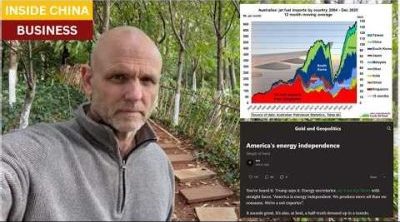
Chinese jet fuel and the myth of energy independence
or go to
Aletho News Archives – Video-Images
Book Review
Former Insiders Criticize Iran Policy as U.S. Hegemony
By GARETH PORTER | CounterPunch | February 27, 2013
“Going to Tehran” arguably represents the most important work on the subject of U.S.-Iran relations to be published thus far.
Flynt Leverett and Hillary Mann Leverett tackle not only U.S. policy toward Iran but the broader context of Middle East policy with a systematic analytical perspective informed by personal experience, as well as very extensive documentation.
More importantly, however, their exposé required a degree of courage that may be unparalleled in the writing of former U.S. national security officials about issues on which they worked. They have chosen not just to criticise U.S. policy toward Iran but to analyse that policy as a problem of U.S. hegemony. … continue
Blog Roll
 Aletho News
- What is fueling unrest across the EU?
- Why no power can undermine Iran’s eternal dominance over the Strait of Hormuz
- Is The War Against Iran Over?
- Iran war will leave long-term ‘scar’ on Wall Street, investors warn
- How Iran decimated US power projection in West Asia: Military lessons of 40-day war
- Iran’s report details US-Israeli war crimes in targeting schools, hospitals, livelihoods
- NATO’s Slow Fracture: How Trump’s Iran War Exposed the Instrument of Hegemony
- Chinese jet fuel and the myth of energy independence
- Ukraine Sea Drone Fired From Libya Hit Russian Tanker in Mediterranean
- IRGC: Iranian forces launched no attacks during ceasefire hours
- If Americans Knew
- Military aid to Israel emerges as the latest political litmus test for Democrats
- The only Palestinian children’s rights organization closes following years-long Israeli campaign against it
- ‘I Can’t Forget the Smell’: Lebanese Reel After Israel Kills Over 300 in Single Day
- DNC Shoots Down Resolutions Calling Out AIPAC and Limiting Arms to Israel
- TCN: Is Israel Blackmailing President Trump?
- Israel killed at least 303 Lebanese yesterday – who were they? Daily Update
- Amnesty: Urgent – Protect Lebanese civilians from brutal escalation in Israeli attacks
- Is The War Against Iran Over?
- Inside the Israeli army’s propaganda wing
- Hundreds of Gaza Amputees Stranded in Legal Limbo
- No Tricks Zone
- An Inconvenient Tree: Uncovered In Alps… Europe Much Warmer Than Today 6000 Years Ago
- New Study Reports A 60% Slowdown In Greenland’s Ice Loss Rate In The Last Decade
- Low Intensity Tornado Wrecks Major Solar Farm, Creating A Potential Toxic Dump
- New Study Finds Warming Saves Lives…Cold Temperatures 12 Times More Deadly Than Excess Heat
- German Science Blog Accuses PIK Climate Institute Of Hallucinating Climate Tipping Points
- Devastating Assessment Of Comirnaty Vaccine By Former Senior Pfizer Europe Toxicologist
- New Study: CO2 Is ‘Effectively Negligible’ As An Explanatory Climate Change Factor Since 2000
- Former Pfizer Toxicologist Dr. Helmut Sterz Tells Bundestag Hearing Pfizer Vaccine Should Have Never Been Approved
- Energy Expert: Germany’s Nuclear Phaseout Was A “500 Billion Euro Mistake”
- New Research: South Australia’s Mid-Holocene Sea Surface Temperatures Were 4°C Warmer Than Today
 Aletho News