Secret Nuclear Sites of DPRK? Or is Everything Visible from Above?
By Konstantin Asmolov – New Eastern Outlook – 28.05.2020
Since 2018, North Korea has continued to adhere to its moratorium on nuclear, and medium- and long-range missile tests. This has created an impression that DPRK’s missile and nuclear weapons program has been put on hold. Still, analysts have been asking whether this is actually the case and the answer tends to depend on their political bias. Naturally, those who have come to perceive Pyongyang as an Evil Empire believe that North Korea has not stopped working on such projects and is continuing to develop weapons of mass destruction. Within US expert circles, aside from holding such opinions, analysts linked with the Democratic party typically seek ways to show how politically incompetent Donald Trump is. In fact, any of their statements about successes made on the North Korean front actually imply that Donald Trump is being deceived but does not realize this.
Such ideological blinders further restrict the limited capabilities of these “Pyongyang experts”. Analyzing satellite images is essentially the only means they use to learn what is happening in the DPRK. But it is impossible to see everything from up above. Therefore, analysts end up basing their assumptions on a politicized interpretation of information, i.e. if a building can theoretically house a missile, it must be meant for that very purpose.
This, in turn, generates sensational stories about yet another secret site linked to the DPRK’s nuclear weapons program being located. Such reports are often published by Beyond Parallel, an analytic vehicle funded by the Center for Strategic and International Studies (CSIS) or 38 North, currently a project of the Henry L. Stimson Center (formerly a program of the US-Korea Institute at Johns Hopkins University’s Paul H. Nitze School of Advanced International Studies).
On August 28, 2019, Beyond Parallel wrote that their latest satellite images provided “circumstantial evidence of the construction of a new ballistic missile submarine and preliminary evidence of possible preparations for a test” in the DPRK. Photographs of Sinpo South Shipyard showed “support vessels and a crane” suggesting “possible preparations, based on past practice, to tow the missile test stand barge out to sea for an SLBM (submarine-launched ballistic missile) test flight”. And although the authors of the article stated that there was “no conclusive evidence” that the preparation was nearing completion, media outlets reported that as an evidential fact.
On September 5, 2019, experts of the UN Security Council Sanctions Committee on North Korea submitted a report stating that the Uranium enrichment facility and the Experimental Light Water Reactor (ELWR) continued their operations at North Korea’s Yongbyon Nuclear Scientific Research Center.
On September 18, 2019, the International Atomic Energy Agency (IAEA) said that a nuclear reactor at Yongbyon was shut down for a sufficient period of time to be “de-fueled and subsequently re-fueled” in its report. The document also stated that there had been “signs of use at the centrifuge enrichment facility” there although “no indications of reprocessing activities” had been detected at the radiochemical lab in the plant.
In December 2019, the 38 North website reported that Stanford University’s Center for International Security and Cooperation (CISAC) had “observed activity at the Experimental Light Water Reactor (ELWR)” in Yongbyon indicating that it might be operational. According to the article, the “construction of the ELWR began in late 2010”, and although it appeared to be externally complete in early 2013, the North Korean government “has not spoken publicly about the reactor or its status” since November 2011.
Commercial satellite images made early in 2019 showed “a narrow but steady liquid effluent likely trailing from a pipeline stemming from the Turbine-Generator Building of the ELWR”. The report said that since 2017, photographs have shown “frequent movement of vehicles, cranes and equipment around the reactor’s entrance, the emplacement of a transmission tower and electrical transmission lines in 2017”. And in early 2018, the construction of a dam and spillway were observed. The authors of the article concluded that such activity indicated that the reactor was being prepared “for start-up operation”, and this “could have significant implications for North Korea’s nuclear weapons program and would complicate any denuclearization process”. According to the report, “the stated purpose for the ELWR is electricity generation”, but “the reactor could be operated to produce weapons-grade plutonium or tritium for boosted fission or hydrogen bombs”.
On January 30, 2019, South Korea’s leading conservative newspaper the Chosun Ilbo wrote that the DPRK had supposedly “built a large tunnel in Ryanggang Province near the border with China” that appeared “to be an underground missile base”. The conclusion was based on observations of the facility and imagery showing that the tunnel had only one entrance with “two cylindrical objects measuring around 10 m in length” near it, which appeared “to be missile-launching tubes”.
In March 2020, 38 North wrote about “a previously publicly unidentified underground facility (UGF) beneath a hill in Bungang” near the Yongbyon Nuclear Scientific Research Center. The article provided a lot of details, based on satellite imagery, about its construction that had started in 2004. And, most importantly, the author made the following conclusion: “Underground structures in residential areas are not unusual and may be used for storage, civil defense or other innocuous purposes. While there is no evidence that it is related to the North Korean nuclear program, the site’s proximity may raise suspicions. Moreover, there is reason to believe there may be other underground sites in the area that may also provoke the same concerns. Therefore, any future denuclearization agreements covering the Yongbyon nuclear facility may need to take this site and any others discovered nearby into consideration when formulating verification provisions.” The report also mentioned that “no electrical lines feeding into” the UGF were observed, and “no external ventilation systems” were visible.
On March 27, 2020, the 38 North website issued a warning that “a new North Korean version of the Army Tactical Missile System (ATACMS), test-fired” in March, could be capable of carrying nuclear warheads.
On April 8, citing 38 North, South Korea’s Yonhap News Agency reported that the DPRK had “recently conducted a dummy missile ejection test at its Sinpo shipyard”. According to the article, satellite imagery from April 5 showed that “the service tower on the ejection test pad pulled back from its static position”. In addition, the photographs also depicted a “glimpse of the bow of the SINPO-class experimental ballistic missile submarine”, however, “it was mostly obscured by the environmental awning”.
Another report published by Beyond Parallel on May 5, 2020 caused quite a stir. It said that a new facility was nearing completion in the village of Sil-li (not far from Pyongyang International Airport), and that it was “almost certainly related to North Korea’s expanding ballistic missile program”. According to the article, it “could be complete and ready for operations sometime during late-2020 or early-2021”.
The author of the story, Joseph Bermudez, based his conclusions on the following information:
- “A high-bay building within the facility is large enough to accommodate an elevated Hwasong-15 intercontinental ballistic missile and, therefore, the entirety of North Korea’s known ballistic missile variants.” The building bay doors up to 8 m in height also indicate this.
- The facility has been constructed next to a UGL “whose likely size is also large enough to easily accommodate all known North Korean ballistic missiles and their associated launchers and support vehicles”.
- An “unusually large covered rail terminal” and a “new rail spur line” are probably meant “to support ballistic missile operations” at the facility. All the structures there are connected by “a 9- to 10-meter-wide surfaced road network with wide radius turns suitable for the movement of large trucks and ballistic missile launchers”.
- The facility is “relatively close to ballistic missile component manufacturing plants in the Pyongyang area” (for example, Tae-sung Machine Factory, Mangyongdae Light Electric Factory) and can, therefore, be used for “the assembly of ballistic missiles from components delivered by rail”
- “There are at least 17 air defense artillery bases and numerous military and paramilitary barracks within a 5-kilometer radius of the facility”.
Citing Joseph Bermudez’s article, ROK’s Yonhap News Agency elaborated that the Sil-li Ballistic Missile Support Facility, nearing completion, could be used to test-fire intercontinental ballistic missiles. And on May 9, it was reported that “multiple intercontinental ballistic missiles (ICBMs)” were “newly manufactured in Sain-ri, Pyongsong in North Korea”.
However, a Principal Researcher at Korea Atomic Energy Research Institute (KAERI) and the former Director General of Korea Institute of Nuclear Nonproliferation and Control (KINAC), Hwang Yong-soo was very critical of Joseph Bermudez’s conclusions comparing them to baseless rumors about the North Korean leader’s health.
Hwang Yong-soo pointed out that Bermudez leapt from “hypothesis to inferred conclusion” in his Beyond Parallel report, which was based solely on “interpreted open source satellite imagery”. He was also skeptical that “North Korea’s leaders would construct their most critical missile facility adjacent to Sunan Airport” (DPRK’s national airport). In addition, “transport of large missiles and components to and from Sil-li would be apparent via national technical means to the United States and its allies”. Hwang Yong-soo also suggested that alternative explanations for large buildings being constructed “next to an airport seem entirely logical as the purpose attributed to these buildings by CSIS”.
It is no secret that North Korea often builds underground facilities to prepare for a possible military conflict during which Pyongyang’s enemies would dominate in the skies. Hence, many of DPRK’s manufacturing and strategic complexes are located underground, but this does not mean that all of them are linked to the missile and nuclear weapons program.
Still, North Korea has surprised the rest of the world on occasion, thus western analysts tend to err on the side of caution when it comes to the DPRK. After all, underestimating one’s enemies is far more dangerous than overestimating them. Nonetheless, it is worth treating reasonable concerns in a different manner to attempts to produce cheaply sensational reports based on biased interpretations or data that is low on quality and quantity.
Konstantin Asmolov, PhD in History is a Leading Research Fellow at the Center for Korean Studies of the Institute of Far Eastern Studies of the Russian Academy of Sciences.
North Korean leader pledges to increase ‘nuclear deterrence’ capabilities
Press TV – May 24, 2020
North Korean leader Kim Jong-un has outlined his policies for further boosting his country’s nuclear “deterrence” capabilities amid stalled denuclearization talks with the United States.
After a three-week-long absence from public view, the 36-year-old leader made the comments at a meeting of his party’s powerful Central Military Commission, after a previous absence that gave rise to intense global speculation that he might have health issues or even been brain-dead.
According to a report by North Korea’s state news agency KCNA on Sunday, the meeting revolved round measures to bolster the peninsular country’s armed forces and “reliably contain the persistent big or small military threats from the hostile forces.”
It also discussed “increasing the nuclear war deterrence of the country and putting the strategic armed forces on a high alert operation,” through adopting “crucial measures for considerably increasing the firepower strike ability of the artillery pieces,” the report added.
Kim’s rare outings during the past two months, with his absence from a key national anniversary, have coincided with North Korea’s intense measures against the coronavirus (COVID-19) pandemic. Pyongyang says it has recorded no confirmed cases so far, but South Korea’s intelligence agency claims that it cannot rule out that the North has had an outbreak.
North Korea is under crippling US sanctions for years over Pyongyang’s nuclear and ballistic missile programs.
US President Donald Trump has attempted to de-escalate tensions with Pyongyang, and although he has met with Kim three times, he has so far refused to relieve any of the harsh sanctions on the North over its military programs, and that has in turn hampered the so-called efforts to demilitarize the Korean Peninsula.
The Washington-Pyongyang nuclear talks have made little progress since late last year, particularly after the global fight to curb the pandemic, which has so far infected more than 5,434,600 people and killed over 344,500 others around the world.
Kim’s pledge to boost its nuclear capabilities comes at a time when Washington, according to some news reports, might conduct its first full-fledged nuclear test since 1992.
Last December, Kim ended a moratorium on the country’s missile tests and said North Korea would soon develop a “new strategic weapon.”
The ending of the moratorium came as the United States refused to relieve any of the sanctions on the North even though Pyongyang had taken goodwill steps in the course of the now-stalled diplomacy with Washington.
The North is also at loggerheads with South Korea over its “provocative” military drills with the US, stressing that Seoul’s war games demand an appropriate response from Pyongyang.
Wild Boars Continue to Spread ASF, but How did it Reach the Korean Peninsula?
By Konstantin Asmolov – New Eastern Outlook – 24.05.2020
Earlier, the author believed that South Korea deserved to be commended for its efforts in combating African swine fever (ASF) within its borders, but the situation turned out to be more serious than previously thought.
The following paragraphs provide an incomplete record of the growing number of dead wild boars found not too far from ROK’s border with North Korea. On January 16, there were altogether 74 ASF cases among wild pigs. The aforementioned corpses had been found in South Korea’s Civilian Control Zone, stretching along the Demilitarized Zone (DMZ). By January 24, the number of infected wild boars rose to 106. And in subsequent months, the growth in the number of cases continued. On March 13, there were 366 infected animals in total, and according to the latest reports, the number of ASF cases was 612 on May 12.
Each of the corpses were buried and the places where they had been found disinfected. The authorities have been trying to solve this issue by building fences in the border zone in order to restrict the movement of wild boars and ensure they do not come in contact with domestic pigs.
In 2019 and this year, South Korea (the fourth largest consumer of pork in Asia) killed and buried more than 153,000 pigs, and also sent hundreds of soldiers and civilians to hunt wild boars near the border in order to prevent the disease from spreading and to keep pig farms safe. The last reported ASF case on a farm was on October 9.
During a meeting with reporters on February 13, Minister of Agriculture Kim Hyeon-soo said that “in order to allow the affected farms to resume operations, infections from wild boars” needed to at least slow down, and that at the given rates of increase, it was not the right time yet. Currently, there is no vaccine or cure against African swine fever and the disease is lethal for almost 100% of the animals. It is unclear from newspaper reports whether pig farms are still closed for business or not. As a rule, quarantine is lifted six months after the last known death, and a pig farm in an affected area is allowed to reopen a year after the restrictions have been eased.
In addition, in some aspects the cure turned out to be worse than the disease, as South Korean officials are facing criticism for allegedly causing damage “to the Imjin River ecosystem by spreading a toxic disinfectant along the North Korean border.” The “disinfectant solution that helicopters indiscriminately sprayed over parts of the Imjin River and the DMZ to stop the virus from traveling south” turned out to contain “quaternary ammonium compounds, also known as Quats”. They are “found in detergents and other household cleaning solutions”, and “some studies have shown that high concentrations” of such chemicals can be fatal to fish populations.
The problem came to light “after a group of local fishermen in Paju” had reported “a drastic drop in the Imjin River’s fish stocks”. According to The Korea Times article, “the Ministry of Agriculture, Food and Rural Affairs (MAFRA) ― which is in charge of the ASF quarantine ― immediately rebutted the fishermen’s claims that the drop in fishing stock could be related to the anti-ASF solution, saying it only used environmentally-friendly disinfectants” that decomposed easily after use and did not accumulate in living matter.
However, The Hankyoreh, a center-left daily newspaper, painted a different story in its follow-up report. According to the article, the disinfectant solutions sprayed over Paju and Yeongcheon starting at the end of September 2019 did contain Quats. This continued for a month “without proper oversight”, until finally the ministry became aware of the problem at the end of October, and “demanded local governments to provide more eco-friendly disinfectant solutions” based on citric acid.
The Korea Times contacted MAFRA officials but they “declined to comment on the matter, saying they were not ready to confirm the reports.” South Korea’s Ministry of Environment, on the other hand, stated it would test the Imjin River water for contamination, and it did not try to deny claims that “Quats had been released into the ecosystem”. However, the truth is that the story ended then and there – there were no further reports in the media about the topic. The tests are most likely still being conducted, and the focus of the discussion on the epidemic was skillfully turned to the possibility of a link between North Korea and the outbreak, and the effect of the disease on the DPRK if any.
It is unclear what the situation in North Korea is really like when it comes to ASF. On February 28, South Korea’s Yonhap news agency reported that the DPRK was “strengthening efforts to prevent the African swine fever and other animal-related diseases”. According to the agency, “in an article entitled ‘Preventive measures against veterinary virus infection,’ the Korean Central News Agency (KCNA) reported that the country” was actively taking measures “to prevent the spread of African swine fever and avian flu”. KCNA also stated that Pyongyang’s veterinary quarantine center was “dispatching officials and experts to the provinces and strengthening the network so as not to miss out on the slightest symptoms and to respond right away”. It added that “observation posts to examine wild animals and birds” were being installed and “tests on domestic animals in farms” were being conducted.
On March 3, 2020, North Korea’s Rodong Sinmun newspaper also called “for greater efforts to tackle African swine fever and other animal diseases”.
Still, if there had indeed been an outbreak of ASF in the DPRK, it would have been possible to find out about it indirectly, for example, based on the price of pork or attempts to purchase it from China (where it is the most widely consumed type of meat). Hence, there is reason to believe that the outbreak originated in the Demilitarized Zone (DMZ), a 4-km stretch of land that has essentially become a “nature reserve”. This region could also be where the disease spread as prearranging any activities, especially hunting, in the area is a very complex process. But questions that then arise are “How quickly are wild boars reproducing in that territory?” and “How many of them are there?”.
Since the answers remain unclear, some anti-Pyongyang propagandists have alleged that the DPRK has been waging a biological war against South Korea in such a manner. And according to them, even if infected wild boars happen to die on route to the south, this simply means that the authoritarian regime in the DPRK is incapable of coming up with a more rational military strategy.
There is an even more interesting theory. On May 7, a spokesperson for the National Institute of Environmental Research (NIER), affiliated with South Korea’s Ministry of Environment, made interim results of a study to investigate origins and spread of African swine flu public. The report, compiled by scientists from the institute, says that the virus genotype found in South Korea was the same as that prevalent in Russia and China. Although the genotype of North Korea’s ASF virus is not known internationally, the researchers speculated that the DPRK “may have played an intermediary role in spreading” it. Pyongyang’s veterinary authorities officially reported to the World Organization for Animal Health that ASF infections had been detected in May of last year.
However, this is not where the story started. The scientists from NIER stated that ASF “started to spread in Georgia” in 2007, and was then “transferred to central Russia” by wild boars. Outbreaks have started and ended every so often since then due to a large population of wild boars. In 2017, there was another outbreak of ASF in the Russian Federation, and then from 2018, the disease spread to Asia, including China, Mongolia and Vietnam.
If one were to view these facts in the same manner as was done earlier to allege involvement of the DPRK, it would be appropriate to mention a biolab in Georgia, which is supposedly developing bioweapons capable of not only targeting people but also economies. In addition, some enemies of the DPRK genuinely wish to see this nation “erased from the map of the world” by any means. After all, “ungentlemanly methods” can be used when it comes to countries viewed as pariahs. And the current expectation is that the Coronavirus, and not AFS, will finally lead to an economic collapse in the DPRK, which will, at first, result in famine and then a “democratic revolution”.
By misusing facts, it would be easy to postulate that certain interested parties are deliberately infecting wild boars so that they could spread the disease in North Korea. And, the negative impact on the ROK was all part of the cunning plan but then something went wrong, and the disease spread out of control. Such a theory can essentially be used as an explanation for any further developments.
From the point of view of the author, none of the above theories have been proven thus far. Nonetheless, he will continue monitoring the measures being taken to fight ASF, and perhaps, with time, there will be more clarity to the situation.
Konstantin Asmolov is a Leading Research Fellow at the Center for Korean Studies of the Institute of Far Eastern Studies of the Russian Academy of Sciences.
Western media continues to spread fake new about North Korea
By Lucas Leiroz | April 28, 2020
In modern warfare, one of the greatest weapons is the power to manipulate information. In a globalized international society, extremely integrated and connected by an infinite information circulation network, a media which controls the dissemination and content of such information is in an extremely advantageous position, as this power allows it to shape public opinion. In the mass society, we are all hostages to the dissemination of information and to the way it is carried out, which puts us in a position of extreme fragility, as we are daily forced to consume false information strategically manipulated by its disseminators.
Lies fill a large part of the mass media, as it is controlled by the most powerful groups in society and which are better able to guarantee their interests. In the Western world, the use of false information to denigrate the public image of people, countries, ideologies and movements that in some way oppose the liberal hegemonic ideology has become frequent. One of the biggest victims of this information war is North Korea, a country that is extremely denigrated in the West with numerous and repeated lies about its political regime and its society as a whole.
North Korean President Kim Jong-un was the youngest victim of the unfounded “death” news in Western media. In fact, it has become common for all North Korean public figures who are absent from the media spotlight for a few days to be reported as “dead” around the world – these death reports are often accompanied by weird accusations that such people were “sentenced to death”, even if there is no evidence for such conclusions. Once again, history repeated itself: after about two weeks without public appearances, Kim Jong-un was presumed dead by the West.
The trigger for world hysteria was Kim’s absence from the celebration of the last Day of the Sun – a traditional Korean holiday – on April 15th. Immediately, a media bombardment began in the West, with worldwide reports of the alleged “death” or “serious state of health” of the Korean President. The legend was generated around an alleged cardiac surgery, which would have been unsuccessful. According to the New York Post, the deputy director of HKSTV in Hong Kong said that Kim would be dead, citing a “very solid source” – which was not identified – while the Japanese newspaper, Shukan Gendai, said that Kim would be in “vegetative state” after undergoing cardiac surgery at the beginning of the month. On social media, the hashtag #kimjongundead quickly gained absurd popularity, being one of the most accessed on Twitter.
Apparently, the West wants to see Kim Jong-un dead, but the truth came out, with a series of official responses denying the avalanche of lies by the mass media. The South Korean intelligence service was the first to report the lie behind the information that Kim either died or was ill. “Our position in the government is firm”, special national security adviser, Moon Chung-in, said in an interview with CNN this Sunday (26), “Kim Jong-un is alive and well”. The adviser also said that Kim had been in Wonsan – a tourist town in the east of the country – since April 13 – which is why he was absent from public commitments – adding, “No suspicious movements were detected so far ”.
Then, a satellite photo captured an image of the President in Wonsan, showing that Kim is alive and well. The North Korean media then responded to the Western media offensive with several messages from Kim, confirming his health and thanking the messages of support received from public figures around the world who sympathized with the President’s alleged serious state of health. The most curious thing is that the lies invented by the West call attention for the degree of accuracy and complexity. Not satisfied with inventing death, vegetative condition and heart surgery, the media agencies released fake news stating that China had sent a team of doctors to operate Kim. Fortunately, Beijing denied the information immediately, leaving no doubt to its deleterious character.
In the end, Kim is alive, well and there is no concrete data that can tell us anything more accurate about his health. Obviously, the lie promoters already knew all this with antecedence, but they were concerned to make a lie in order to provoke inflamed reactions worldwide and destabilize Korea by tarnishing its image, portraying it as a dictatorial country, extremely closed and with a systemic censure – so strong that they are able to hide from the whole world a news as important as the death of their own president.
The darker side of this “fake news age” is that this false information drives big political decisions and is capable of influencing the actions of the people on large scale. Another example of the info-war power is Brazil, where fake news accusing China of having created the new coronavirus was officially admitted by the government, generating a serious diplomatic crisis between both countries and causing a wave of sinophobia and hostility against Asians in the country, with Chinese immigrants being beaten on the streets. On social media, millions of messages containing fake news about the virus are spread daily and already completely permeate the popular mentality.
An important tactic of information warfare is the handling of which news should be broadcast. Despite the huge repercussions of Kim Jong-un’s “death”, very few agencies have so far reported about the farce of this information, or, if they did, have invested little in its dissemination. The reason is simple: in addition to the interest in spreading fake news, denying previous information is costly and damages the image of these media outlets, which prefer to keep the lie.
Even though Pyongyang denies Kim’s death, Beijing denies having sent doctors for heart surgery and South Korea itself admits that it is all about fake news, in the popular imagination of Western mass societies, an image of Korea as a “terrible dictatorship” and “the most closed country in the world” is already formed and can hardly be rebuilt without a strong media work committed to the truth (which is far from emerging).
The fact is that Kim Jong-un is alive and, more than ever, it is proven that most of the content released about non-Western countries is made up of fake news. In our times, the circulation of information is a real battlefield, really worthy of attention for purposes of national defense and strategy.
Lucas Leiroz is a research fellow in international law at the Federal University of Rio de Janeiro.
Why does MSM believe bizarre rumors coming from the South about North Korea?
The two countries are still technically AT WAR!
By Helen Buyniski | RT | April 21, 2020
The rash of stories claiming North Korean leader Kim Jong-un is on his deathbed – all sourced to a South Korean blog post – show Western media will run any horrific item on the Hermit Kingdom, confident they won’t be contradicted.
North Korean leader Kim Jong-un is clinging to life by a thread after heart surgery went horribly, horribly wrong! Or at least, US intelligence is monitoring reports that Kim was “in grave danger” after botched surgery, as CNN reported on Monday. The source for Kim’s health troubles was a single report from South Korean web outlet The Daily NK, itself citing a single source in the North.
While CNN acknowledged it “couldn’t independently verify” the story (or anything else happening in North Korea), the outlet ran with it anyway, leading others to do the same. And while the Guardian eventually front-loaded its own article with official denials from China and South Korea as the story began to unravel, its Twitter account reveals the original title, “North Korean leader Kim Jong-un has heart surgery – report,” a much more authoritative-sounding line than the lukewarm “South Korea and China play down Kim Jong-un health claims” it became.
By the time the stories had been edited, however, fervent speculation on “the North Korean succession” was already underway.
None of these stories thought to mention that the South Korean source regularly runs sensationalist pieces depicting the North as a seething pit of death and misery (“Pyongyang hospital construction workers stealing to survive” and “Chagang Province forestry official executed for illegal corn farm” are some recent headlines). Nor do they mention that the South and North never formally concluded the decades-long war that split the Korean landmass, or explain that such atrocity propaganda is typical among enemies.
Indeed, Western media rely on South Korea for news about the North, a weakness which has resulted in some truly preposterous stories being reported with a straight face by Western outlets eager to take a whack at the DPRK piñata.
A 2014 story claiming Kim had his uncle (and several aides) killed by stripping them naked and feeding them to a pack of starving dogs was reported by numerous “reputable” outlets, including NBC and the UK’s Channel 4 even though it originated with a satirical post on a Chinese social network.
About the only thing more embarrassing than publishing the Chinese equivalent of the Onion as straight news is for one of Kim’s “grisly execution” victims to appear in public alongside her executioner. The Telegraph, HuffPost and other ‘reputable’ Western outlets reported in 2013 that Kim had his ex-girlfriend, pop singer Hyon Song-wol, executed by firing squad, citing a South Korean news outlet that in turn cited an anonymous Chinese source. The story was proven spectacularly false last year, when she was photographed alongside the North Korean leader on a factory tour. Incredibly, some outlets still tried to spin the story – the Daily Mail hinted that 10 performers rumored to have been shot alongside her were actually dead, citing South Korea’s intelligence director as their source in a way that implied only Hyon had managed to (literally) dodge the executioner’s bullets.
Yet “numerous” individuals reported executed in South Korean media have later surfaced very much alive, News.com.au admitted last year… before repeating unverified claims that multiple North Korean officials had been executed over the failed US-DPRK peace talks in Vietnam. Why do these outlets keep repeating South Korean propaganda if they know it’s false?
It’s easy for western media to run the most lurid horror stories about the ‘hermit kingdom,’ confident that the only denials will come from state-run media and will be summarily dismissed as the controlled rantings of an ‘Evil Dictator’. Who are you going to believe, a charter member of the Axis of Evil or good old CNN? At a time when the media establishment is widely distrusted and loathed almost as much as politicians, atrocity propaganda is always good for ratings and patriotic sentiment, and there’s no risk of an inconvenient fact-checker bumbling in and making life difficult.
It’s worth noting that trying something similar with other heads of state lasts about five minutes. When UK PM Boris Johnson was hospitalized with coronavirus last month, RIA Novosti published an anonymous NHS source’s claim that he was more seriously ill than the public knew and was to be placed on a ventilator. This was immediately slapped down as “Russian disinformation” (even though it was later admitted that Johnson’s condition had worsened significantly while in hospital). But if the mainstream media is willing to perpetrate this level of disinformation about North Korea, it’s long past time to reconsider trusting their reporting on other countries as well.
Follow Helen Buyniski on Twitter @velocirapture23
South Korean bank submits to US fine over Iran transactions
Press TV – April 21, 2020
South Korea’s Industrial Bank of Korea (IBK) says it has submitted to the US demand to pay $86 million in fine for processing Iranian transactions.
The compromise includes paying $51 million to US prosecutors and $35 million to the New York State Department of Financial Services, the lender said Tuesday.
South Korea’s Yonhap news agency cited Geoffrey S. Berman, the US attorney for the Southern District of New York, as saying that IBK’s branch in New York had failed to detect and report $10 million in US dollar payments from South Korean entities to Iranian banks.
Authorities said IBK entered a two-year deferred prosecution agreement with the US Department of Justice and a nonprosecution agreement with New York Attorney General Letitia James.
South Korea was among Iran’s major trade partners before falling in line with US guidelines after Washington withdrew from an international nuclear deal with Tehran in 2015 and imposed unilateral sanctions on the Islamic Republic.
Iran was South Korea’s third biggest export market in the Middle East and companies such as Samsung and LG Electronics were among popular brands for TV sets, air conditioners, telecommunications equipment and washing machines.
Samsung’s sales also notably covered about half of Iran’s lucrative android phone market, with almost 18 million Iranians having Samsung devices as of February 2018, according to a report published by Iran’s largest app market Café Bazaar.
In February, Iran’s Foreign Ministry warned that foreign companies leaving the country due to the US sanctions would not be able to return to the country’s market easily after Samsung and LG Electronics pulled down their last advertisement banners in Iran.
According to a statement by the Ministry of Trade, Industry and Energy in Seoul, Iran was once the sixth largest market in terms of orders won by South Korean builders before the 2011 sanctions.
South Korea was also the biggest client of Iranian condensate with 300,000 barrels per day (bpd) on top of 100,000 bpd of crude oil, but it stopped shipments two months before the sanctions kicked in.
South Korean companies have mostly even refused to fulfill Iran’s orders for medicine and medical equipment which is supposedly not subject to the US sanctions.
According to Iranian companies, South Korean banks are refusing to process payments related to Iran’s imports of pharmaceuticals for fear of falling foul of the sanctions.
Iran’s Health Ministry said Saturday South Korea had rejected a SWIFT payment request by Tehran for purchase of coronavirus testing kits.
Ministry spokesman Kianoush Jahanpour disclosed an international financial message recently sent by South Korea’s Woori Bank to Iran’s Keshavarzi Bank, noting that it could not take over an import letter of credit for 5.3 billion won issued by the Iranian bank.
As a result Iran was unable to import the kits because the Korean exporter could not receive payment after Woori Bank’s refusal to take over the import letter of credit.
“This shows claims of medicine and medical equipment not being subject to sanctions are lies. The bank has officially stated that the purchase is not possible due to the sanctions,” Jahanpour said.
The US government has intensified its sanctions on Iran despite international calls on Washington to suspend them to allow the Islamic Republic to secure necessary medicine and equipment in the midst of the coronavirus fight.
Washington claims the sanctions do not target medicine for Iran, but they make it all but impossible for importers to obtain letters of credit or conduct international transfers of funds through banks.
Last week, Iran’s Permanent Mission to the United Nations in New York dismissed the Swiss Humanitarian Trade Arrangement (SHTA) which the Europeans belatedly announced with much fanfare to have made operational in coordination with the US to barter medicine and food with Iran.
The mission said the United States has forced SHTA to pursue a very tight and tough procedure, making it practically very difficult for companies to trade with Iran.
According to the mission, several companies that supply the medical equipment required to fight the coronavirus have recently stopped shipping to Iran because the current US sanctions regime makes the shipping of such items to Iran almost impossible.
The only message the US is sending with intensifying its sanctions amid the coronavirus is that companies must avoid doing any business with Iran, even if their work is humanitarian in nature, it said.
More on “North Korean Hackers”
By Konstantin Asmolov – New Eastern Outlook – 14.04.2020
North Korean hackers are an unavoidable subject of discussions considering the recent hype about them yet again. Hence, it is worth looking into the wrongdoings they have been accused of and to what extent they are guilty once more.
On 30 May 2019, radio station Voice of America reported that in the opinion of US intelligence agencies, the DPRK, facing economic difficulties due to imposed sanctions, was engaging in cyberattacks against banks and other financial institutions in order to obtain money. Erin Cho, the head of the National Cybersecurity and Communications Integration Center (an agency of the Department of Homeland Security), pointed out that North Korean cyber attacks were targeting virtual currency, a relatively new means of stealing money.
Former US State Department senior adviser Balbina Hwang also generated publicity with her statements in August 2019. The visiting professor at Georgetown University talked about a story by the Associated Press that “cited a report from the United Nations Security Council” about North Korea’s use of cyberspace to launch “increasingly sophisticated attacks to steal funds from financial institutions and cryptocurrency exchanges to generate income. The hardest-hit was South Korea, the victim of 10 North Korean cyberattacks, followed by India with three attacks and Bangladesh and Chile with two each”.
As it turns out, “South Korea’s Bithumb, one of the largest cryptocurrency exchanges in the world, was reportedly attacked at least four times”. Two attacks occurred in February and July 2017, each resulting in losses of approximately $7 million, “while a June 2018 attack led to a $31 million loss and a March 2019 attack to a $20 million loss”.
13 September 2019, the US Department of the Treasury imposed sanctions against hacking groups from the DPRK: the Lazarus Group and two of its subsidiaries, Bluenoroff and Andariel. According to the Treasury Department, in 2014, the Lazarus Group was responsible for the cyber attack against Sony Pictures and also for infecting 300,000 computers with viruses in 150 nations world-wide. Bluenoroff managed to steal $1.1 billion from various financial institutions, including $80 million from the central bank of Bangladesh. Andariel is suspected of crimes targeting the South Korean government and infrastructure, and also of attempting to steal classified military information.
At the end of September 2019, experts from the Kaspersky cybersecurity company detected previously unheard of spyware Dtrack, designed by the Lazarus Group, in networks of Indian finance organizations and research centers. This malware can provide access to a device it has infected allowing data to be either uploaded to it or downloaded from it. The spyware is somewhat similar to DarkSeoul, linked to a cyber attack against South Korea in 2013.
In October 2019, Patrick Wardle, the Principal Security Researcher at Jamf (a software provider for the Apple platform), said that hackers, believed to be sponsored by North Korea, had “found a novel way to attack Apple Macs”. They did so by using a fake cryptocurrency trading app. To add legitimacy to the software, the group even created JMT Trading, a front company “complete with an official-looking website”.
In January 2020, Russian cybersecurity company Kaspersky reported that the Lazarus Group had accrued large amounts of cryptocurrency by using Telegram, a popular messaging app that uses its own proprietary security protocol. In fact, links to groups hosted by malicious Telegram users can be found on many fake websites. In addition, the Lazarus Group continues to design and launch numerous fraudulent websites (as for instance, Union Crypto Trader) that appear to be trading platforms for cryptocurrency or ICO hosts (Initial Coin Offering) but, in reality, they are used to steal users’ confidential information. The malware developed by the Lazarus group is also “capable of loading in devices’ memory (RAM) exclusively, bypassing hard drives”, which makes it even more dangerous.
The latest incident possibly related to hackers from the DPRK occurred in January 2020 when 16 North Korean computer programmers were “found to have been working in Cambodia illegally” and were subsequently ordered to leave the country. However, soon it came to light that they were not hackers but temporary IT staff working for a “Chinese online gambling operation”.
On 17 February 2020, ESTsecurity (a cyber security company based in Seoul) reported that a North Korea-linked group was probably responsible for hacking the smartphone belonging to Thae Yong-ho, a former DPRK diplomat who defected to South Korea in 2016. The hackers used “spear phishing” to access his new name, text messages, photographs and other information. According to security experts, their attack patterns “were similar to those formerly used by North Korean hacking groups”, such as Geumseong121, that targeted “the websites of government departments, North Korea-related organizations and media officials”. The name of the group is fairly patriotic. There is also a possibility that some other team of hackers “used such attack patterns to give the impression of being a North Korean group.” According to Mun Chong-hyun from ESTsecurity, Geumseong 121, believed, in the opinion of South Korean experts, to be backed by DPRK intelligence agencies, was capable of hacking mobile phones of a number of ROK citizens, such as Thae Yong-ho, whose work is related to North Korea and foreign policy. Mun Chong-hyun also pointed out that phishing emails and messages contained, for example, “an attachment that, when clicked, directed the reader to a website masquerading as the website of a North Korean human rights organization based in the US”. Once users were lured to such a website, their devices were infected with malicious files or software that then accessed “systems and sensitive data”.
2 March 2020 The US Department of Justice charged two Chinese citizens, Tian Yinyin, and Li Jiadong, with money laundering. They were indicted for stealing more than $100 million as a result of two cyber attacks. But, according to a joint investigation conducted by U.S. intelligence and South Korean law enforcement agencies, starting at the end of 2017, North Korean hackers have stolen cryptocurrency from exchanges, and have then laundered approximately $250 million with the aid of the Chinese nationals. The funds are believed to have been used to finance North Korea’s nuclear weapons program. It was not the first time such accusations were made. In 2017, the United States alleged that Chinese company Mingzheng International Trading Ltd “facilitated prohibited” monetary transactions on behalf of a North Korean bank. Prosecutors “said they would seek $1.9 million in civil penalties”.
On 23 March 2020, the Cyprus Police issued a public warning saying they had received a number of complaints regarding telephone calls that appeared to come from North Korea, as the numbers started with 00850 (the DPRK country code). There were grounds to believe that it was a “scam leading to recipients” being overcharged.
Unfortunately, all of these disconcerting reports do not provide any evidence to support their claims. And some time ago, the author conducted his own investigation into such incidents. And we would simply like to remind our readers about its outcomes.
- The claim that the attack patterns were similar to those used by other North Korean groups is unjustified. After all, since there are few unique hacking tools, most hackers have a limited arsenal at their disposal. It is common practice for them to use each other’s attack patterns to not only save time but also misdirect and shift the blame elsewhere. Considering the fact that North Korea’s involvement in the previous attacks was not proven, the so-called evidence could actually turn out to be an extrapolation. A vicious cycle is thus created, as one “highly likely” claim multiplies, and for some reason, this uncertainty is not reflected in conclusions drawn, and DPRK involvement is then viewed as an “incontrovertible” fact.
- The hackers’ use of typically North Korean linguistic expressions also does not prove DPRK involvement. After all, any criminal group may choose to utilize such language (e.g. Chollima) in order to cover up their tracks and deceive law enforcement agencies.
- Hiding IP addresses or caller ID spoofing are common tools used by scammers. In fact, a VPN (a Virtual Private Network) allows you to change your apparent location.
- Discussions about hacking seemingly secure networks not connected to the internet (as for instance, banking systems) usually prompt the question “But how is that possible?” A virus needs to be introduced somehow, and this is possible when a device is connected to the internet. If a network cannot be infected in this manner, then a saboteur (not malware) is probably involved. Another possibility is that the system in question was not completely secure or isolated from the outside world due to a high level of incompetence.
- Public accusations along the lines of ‘X could have been involved in Y’ are mere speculation if they are not supported by evidence. Statements, such as ‘groups with ties to Pyongyang’, also fall into the same category, as it is important to prove such a relationship. After all, simply saying ‘hackers target enemies of the DPRK’ is not evidence. In addition, the Lazarus Group, Bluenoroff and Andariel are highly unusual names for hacker groups, in comparison to Geumseong121, taking into account how isolated North Korea is as a nation.
- In fact, there are ongoing debates about where the Lazarus Group is from among experts. It is especially enjoyable to hear the word “Chollima” in reference to its subgroups. Chollima is a mythical winged horse capable of travelling 1,000 li (400 km) per day. For a long time, the animal symbolized the speed of North Korea’s economic development, which, over a period of at least two years, has increased 10-fold. Hence, nowadays, it is customary to refer to such progress with the expression “Mallima”.
Interestingly, it is not only cyber crime that is on the rise in North Korea itself, where there are over 600,000 mobile phone users, telephone scams are spreading there too. According to defectors from the DPRK, criminals often “pretend to be law enforcers or financial supervisors” who threaten to arrest people they target if they do not pay up. “Such classic scams still work because victims do not dare question the identity of the purported government officials”.
In all likelihood, the DPRK and pro-North Korea hackers are responsible for the so called “phishing campaigns designed to obtain passwords and other personal information” once a victim opens a link or an attachment sent in a message. In September 2019, such correspondence with malware was sent to “people working in the North Korea field.” These types of attacks, using email addresses that appear to belong to “people working on North Korea issues”, started as far back as 2010.
According to a report by Palo Alto Networks, Inc. (a cybersecurity company) issued in January 2020, “a group of hackers suspected to be linked to North Korea” had attacked “a U.S. government agency and researchers working on DPRK issues with a new type of malware”. They “sent emails with six different Microsoft Word documents in Russian that contained malicious macros aiming to give attackers control over the recipients’ computers.”
The latest “malicious email campaigns” occurred at the end of February 2020.
In summary, an interesting situation is seemingly taking shape. Sanctions imposed against the DPRK are forcing the nation to look for new ways of generating income. And since the use of digital technologies is not prohibited by them and is also difficult to monitor, North Korea has seemingly started to bank on this sector. Any work performed by DPRK IT specialists and software developed by them are not covered by sanctions. And Pyongyang has begun to take advantage of this by, for example, using money transfer apps (designed similarly to Chinese analogues) that allow users to bypass standard bank procedures to send and receive money.
Clearly, there is a push to shut down such tools and tighten the digital blockade, hence, the reports about hackers. But for every action, there is an equal and opposite reaction, and it is possible that, just as in self-fulfilling prophecies, myths about North Korean hackers may just become a reality.
Konstantin Asmolov, PhD in History is a Leading Research Fellow at the Center for Korean Studies of the Institute of Far Eastern Studies of the Russian Academy of Sciences.
A Year after the North Korea–United States Hanoi Summit: Expectations for the Next One
By Konstantin Asmolov – New Eastern Outlook – 23.03.2020
Just over a year has gone by since US President Donald Trump met with Chairman of the DPRK State Affairs Commission Kim Jong-un in Hanoi. It was the second North Korean-American summit to be held, following on from the first 2018 North Korea–United States Singapore Summit. Many were surprised that the meeting ended without any concrete agreements being made, due to a variety of reasons. The primary disagreements between the two sides were made more difficult to resolve due to actions taken by American conservatives and domestic politics in the United States at the time, which prevented Trump from making any concessions.
The talks which followed between working groups and high-level officials also ended without any visible results. A brief meeting between the Supreme leader of the DPRK and the US President on the sidelines of Trump’s visit to South Korea was little more than a media photo op, and the working-level talks in Stockholm got off to a bad start: North Korea demanded that Washington come up with a new plan by the end of 2019 if the US wants denuclearization talks.
Towards the end of 2019, the North Korean leader gave a clear delineation of relations between the two countries, yet Kim Jong-un did not keep his promise to deliver a “Christmas gift”, by which he meant a demonstration of North Korea’s new strategic weapons. As it was put at the time, “the door is closed, but not locked.” There are several different explanations given for this. Pro-Pyongyang experts say Kim made a gesture of goodwill. Others believe that China used its leverage to make North Korea call off the demonstration and avoid exasperating the situation. We would like to add that given the increased attention the DPRK was receiving during this period (due to its satellites, constant use of reconnaissance aircraft, etc.), it would not have made sense for Pyongyang to “show its cards” at the time.
Failed efforts to impeach Donald Trump did not help them make any progress either, and the DPRK conducted a planned short-range missile launch which almost coincided with the anniversary of the summit. This missile test and others have yet to quell discussions over whether North Korea’s defense industry is modern, or whether its rusty missiles have been cobbled together using stolen technologies from Ukraine, China or Russia.
The outcome has been summed up in the South Korean media: “One year on since the meeting in Hanoi, the North Korean situation seems to have reverted back to its former state”. Given the current situation, I would like to discuss the prospects for this dialog between the United States and North Korea based on a series of quotes made on March 4-6, 2020.
Let’s start with Trump, who was posed a question on his 2020 presidential campaign trail about what he would do with North Korea if re-elected. The question sparked an enthusiastic response: the US President stressed that his relationship with Kim is “very good,” but insisted that he has not given anything to the communist regime and that sanctions have not been lifted. At the same time, Donald Trump reiterated that the policies being put forward by his opponents would lead to a big war with the DPRK, and also took credit for the beginning of inter-Korean rapprochement.
The US President actually dismissed the fact that a short-range missile was launched: “No reaction,” was what he had to say. Unlike at previous events, he did not even try to play this card in the UN Security Council. On March 5, the Security Council discussed this issue, but the North Korean issue was raised in a separate category for additional topics at a meeting about Syria. Immediately after the meeting, the United Kingdom, France, Germany, Belgium and Estonia adopted a joint statement condemning the actions of the DPRK and calling on Pyongyang to resume negotiations on denuclearization, but it should be noted that this statement is meaningless from a legal point of view, and the United States did not participate in it.
Interestingly, the South Korean authorities took a more right-wing position. During a speech at South Korea’s Air Force Academy on March 4, President Moon Jae-in pointed out the unpredictability of the security situation on the Korean Peninsula and underlined the importance of an impregnable defense. The South Korean media also rebuked Trump. They say the US President “brushed off North Korea’s missile tests, even though they are prohibited by U.N. Security Council resolutions” and instead took credit for Pyongyang’s suspension of its long-range missile tests and nuclear tests.
Meanwhile, US Secretary of Defense Mark Esper said North Korea’s ballistic missile capabilities pose an “increasingly complicated” threat, as the regime seeks to modernize its missile systems. When asked whether North Korea’s long-range ballistic missiles pose a threat to the United States, his answer was affirmative.
But on a tactical level, the United States “stands ready to resume denuclearization negotiations with North Korea as soon as possible and hopes to hear back from the regime.” Assistant Secretary of State for International Security and Non-Proliferation Christopher Ford made this comment on March 5: “From a State Department perspective, it remains true that we are ready and willing and prepared for the beginning of working-level discussions with North Korea – in which they will, one hopes, implement the commitments made in Singapore.”
Lastly, we will consider the public opinion on this issue in the United States. A recent poll conducted by the Chicago Council on Global Affairs found that 52% of Americans view North Korea’s nuclear weapons program as a critical threat. That is a large amount of people, but this figure had been 75% at the height of tensions in 2017.
When asked which country poses the greatest threat to the United States, 13% of respondents chose North Korea. The DPRK came in behind Iran (34%), Russia (28%) and China (16%). In 2017, North Korea ranked the highest among these four countries at 59%.
Out of the list of options on how to deal with the North’s nuclear program, tighter economic sanctions received the most support, with 73%.
According to Chicago Council on Global Affairs who conducted the poll, these results are not so much a reflection of the lack of progress that has been made on the diplomatic front, but rather stem from the prolonged absence of noticeable tension and a weakening of the perception of North Korea as a threat.
What can we expect? According to the information the Chicago think tank has gleaned from respondents, there is a sort of informal directive being followed in Washington: make no sudden movements in any direction before the November elections. Amid the race for the White House, fussing over the relations between the United States and North Korea would hardly have a positive effect on Trump’s approval ratings, and certainly should not see them fall.
It became clear to both sides during the working talks that with the time that has passed since Hanoi, the DPRK is prepared to make a certain number of concessions, but Pyongyang is demanding that they are met with proportionate actions in return. Washington is not prepared to take these steps, because the idea of easing sanctions flies in the face of American dogma, and according to this dogma, Kim Jong-un did not cooperate as a gesture of goodwill, but because he was pressured into doing so by an unprecedented level of sanctions. The belief is therefore that this is the main leverage America has to force North Korea into negotiations, and they cannot let up on it.
In the run-up to the election, it is therefore very important “not to get on Kim Jong-un’s nerves”, because any sort of tough response from North Korea will hurt Trump’s campaign, who is still selling his electorate the idea that relations between Washington and Pyongyang would be much worse under any other American president.
Of course, Trump could hardly say no to another photo-op meeting, but both sides know that they can only hold so many of these purely symbolic events, and they have already reached their limit, now they must have something to show for all those handshakes, posing in front of flashing cameras.
This is where we should note the debate among experts regarding the motives of each side. One theory is that Kim and Trump would both like to get more out of the talks, but are prepared to settle for a minor victory, where no answer can be found, but the search for one can continue once the process is put on pause. The view other experts take is that Trump believes the denuclearization of North Korea is a real possibility, but it has been put on hold while he is busy with his re-election campaign, and he is working according to his belief that during the next ten years, something could happen that could change North Korea’s position. However, we must not forget that nuclear weapons are seen in Pyongyang as an unambiguous guarantee of the regime’s survival. This is not only a lesson for Libya, but Iran should also take note (be it the American actions on the Iran nuclear deal or the assassination of General Soleimani).
The pause is likely to go on until the US presidential election is held, but then what? If Trump wins, American political analysts have two theories. One is that Kim will continue the “period of peaceful respite”, devoting his energy to making a few final arrangements so that the economy will be more prepared if it is hit with another round of sanctions. The moratorium will remain abandoned, especially given that it had only ever been a verbal promise, and it was the ultimate failure of the summit in Hanoi that prevented it from being transformed into a written commitment.
The second theory is that North Korea is truly disappointed with the strategic prospects of the dialog. Kim had hoped that it could lead to sanctions being lifted, but it turned out that the materials from the December 2019 plenum ruled this out as something he cannot even dream about, and he now sees the need to move as quickly as possible to increase the country’s military might with nuclear weapons and missiles, in order to ensure a guaranteed level of deterrence. In this context, we can expect to hear about ICBM launches with missiles fired on a flat trajectory, or the hypothetical Hwasong-20, which is said to have no problem reaching anywhere on US territory.
The long-awaited North Korean Navy’s Sinpo class submarine is no less likely to make an appearance, capable of carrying 3-4 missiles with nuclear warheads. We believe it could be revealed as North Korea’s “new strategic weapon”.
What if the Democrats win? There may not necessarily be a radical change of course under a slogan like “anything but what Trump did.” A large number of officials from the Democratic Party who write the bills that are then signed by politicians in government are gradually coming around to the idea that we will have to live with a nuclear North Korea.
Therefore, after weighing up the best and worst options in comparison with the current status quo, we hope that the dialog will continue after November 2020, or that the two sides will finally meet again by the next anniversary of the Hanoi summit.
Konstantin Asmolov, PhD in History, is a Leading Research Fellow at the Center for Korean Studies of the Institute of Far Eastern Studies of the Russian Academy of Sciences.
COVID-USA: Targeting Italy and South Korea?
By Larry Romanoff | Global Research | March 21, 2020
A high-level Italian virologist, Giuseppe Remuzzi, has published papers in the Lancet and other articles in which he states facts not hitherto known. (1)
The doctor stated that Italian physicians now recall having seen:
“a very strange and very severe pneumonia, particularly in old people in December and even November [2019]. This suggests that the virus was circulating, at least in Lombardy, and before we were aware of this outbreak occurring in China.“(2)
Chinese medical authorities have determined the same underlying phenomenon, that the virus had been circulating among the population for perhaps two months before it finally broke out into the open.
Further, according to the Italian National Health Service (ISS):
“It is not possible to reconstruct, for all patients, the chain of transmission of infection. Most cases reported in Italy report an epidemiological link with other cases diagnosed in Lombardy, Emilia Romagna and Veneto, the areas most affected by the epidemic.” [translation from Italian] (3)
The above statement is of crucial importance since it supports in itself the assertion of several simultaneous infection clusters and several ‘patients zero’. There are cases in Lombardy that could not be placed in an infection chain, and this must also be true for other areas. (see below) Given that the virus broke out separately in disparate regions of Italy, we can expect the identification of independent infectious clusters in those regions as well. That would mean Italy was hit by at least several individual ‘seedings’ of the virus.
China’s outbreak of consequence was primarily in the city of Wuhan but with multiple sources in the city and multiple patients zero, with a minor outbreak in Guangdong that was easily contained. China had multiple clusters in Wuhan. There was no single source, and no patient zero has been identified which is similar to those of Italy.
The mystery of Italy’s “Patient No. 4”
Was the Italian outbreak caused by infections from China? Yes, and no.
Before February 20, 2020, there were only three cases of coronavirus infection in Italy, two tourists from Wuhan, China, confirmed on January 30th, and an Italian man who returned to Rome from Wuhan on February 6th. These were clearly imported cases with Italy experiencing no new infections during the next two weeks.
Then suddenly there appeared new infections that were unrelated to China. On February 19, the Lombardy Health Region issued a statement that a 38-year-old Italian man was diagnosed with the new coronavirus, becoming the fourth confirmed case in Italy. The man had never traveled to China and had no contact with the confirmed Chinese patients.
Immediately after this patient was diagnosed, Italy experienced a major outbreak. In one day, the number of confirmed cases increased to 20 and, after little more than three weeks, Italy had 17,660 confirmed cases.
The Italians were not idle in searching for their patient zero. They renamed the “patient 4” “Italian No. 1”, and attempted to learn how he became infected. The search was apparently fruitless, the article stating that “America’s pandemic of the century has become the subject of suspicion by Italians“.(4)
The mystery of South Korea’s “Patient No. 31”
South Korea’s experience was eerily similar to that of Italy, and also to that of China. The country had experienced 30 imported cases which began on January 20, I believe all of which were traceable to contact with Hubei and/or Wuhan.
But then South Korea discovered a “Patient No. 31”, a 61 year-old South Korean woman diagnosed with the new coronavirus on February 18. This ‘local’ patient had no ties to China, had had no contact with any Chinese, and no contact whatever with any of the infected South Koreans. Her infection was a South Korean source.
Just as with Italy, the outbreak in South Korea exploded rapidly after the discovery of Patient 31. By the next day, February 19 (Italy was February 21, for comparison), there were 58 confirmed cases in South Korea, reaching 1,000 in less than a week. After little more than three weeks, South Korea had 8,086 confirmed cases. It would now seem likely (yet to corroborated) that South Korea and Italy could have been ‘seeded’ at approximately the same time.
Like the Italians, South Korea performed a massive hunt for the source of the infection of their “Korean No. 1”, combing the country for evidence, but without success. They discovered the confirmed cases in South Korea were mainly concentrated in two separate clusters in Daegu and Gyeongsang North Road, most of which – but not all – could be related to “Patient 31”. As with Italy, multiple clusters and multiple simultaneous infections spreading like wildfire – and without the assistance of a seafood market selling bats and pangolins.
For both Italy and South Korea, I could also add that there is no supposed “bio-weapons lab” anywhere within reach (as was claimed for China), but that wouldn’t be accurate. There are indeed bio-weapons labs easily within reach of the stricken areas in both Italy and South Korea – but they belong to the US Military.
Korea is particularly notable in this regard because it was proven likely that MERS resulted from a leak at the American military base at Osan. The official Western narrative for the MERS outbreak in South Korea was that a Korean businessman became infected in the Middle East then returned to his home in Gyeonggi Province and spread the infection. But there was never any documentation or evidence to support that claim, and to my best knowledge it was never verified by the South Korean Government.
Pertinent to this story is that according to the Korean Yonhap News Service, at the onset of the outbreak about 100 South Korean military personnel were suddenly quarantined at the USAF Osan Air Base. The Osan base is home to the JUPITR ATD military biological program that is closely related to the lab at Fort Detrick, MD, both being US military bio-weapons research labs.
There is also a (very secretive) WHO-sponsored International Vaccine Institute nearby, which is (or at least was) managed by US military biological weapons personnel. At the time, and given the quarantine mentioned above, the event sequence accepted as most likely was that of a leak from a JUPITR biowarfare project. (5) (6)
The Korean path is similar with that of Italy. If we look at a map of the virus-stricken areas of Italy, there is a US military base within almost a stone’s throw of all of them. This is of course merely a case of circumstance arousing suspicion, and by no means constitutes proof of anything at all.
However, there is a major point here which cannot be overlooked, namely the fact of simultaneous eruptions of a new virus in three different countries, and in all three cases no clear epidemiology, and an inability to identify either the original source or a patient zero.
Multiple experts on biological weapons are in unanimous agreement that eruptions in a human population of a new and unusual pathogen in multiple locations simultaneously, with no clear idea of source and cases with no proven links, is virtually prima facie evidence of a pathogen deliberately released, since natural outbreaks can almost always be resolved to one location and one patient zero. The possibility of a deliberate leak is as strong in Italy and South Korea as in China, all three nations apparently sharing the same suspicions.
Larry Romanoff is a retired management consultant and businessman. He has held senior executive positions in international consulting firms, and owned an international import-export business. He has been a visiting professor at Shanghai’s Fudan University, presenting case studies in international affairs to senior EMBA classes. Mr. Romanoff lives in Shanghai and is currently writing a series of ten books generally related to China and the West.
He is a Research Associate of the Centre for Research on Globalization (CRG).
He can be contacted at: 2186604556@qq.com
Notes
(A) This is an aside, but Italy has experienced a fatality rate nearly twice that of Wuhan, but there may be an external contributing factor. Observations were made that, in most cases especially among the elderly in Italy, ibuprophen was widely used as a painkiller. The Lancet published an article demonstrating that the use of ibuprophen can markedly facilitate the ability of the virus to infect and therefore to increase the risk of serious and fatal infection. (YY)
https://www.thelancet.com/journals/lanres/article/PIIS2213-2600(20)30116-8/fulltext
(B) “The mean age of those who died in Italy was 81 years and more than two-thirds of these patients had . . . underlying health conditions, but it is also worth noting that they had acute respiratory distress syndrome (ARDS) caused by . . . SARS-CoV-2 pneumonia, needed respiratory support, and “would not have died otherwise.”
(3) https://www.iss.it/web/guest/primo-piano/-/asset_publisher/o4oGR9qmvUz9/content/id/5293226
(4) http://dy.163.com/v2/article/detail/F7N756430514G9GF.html
(5) https://www.21cir.com/2015/06/south-korea-mers-emerged-out-of-the-pentagons-biowarfare-labs-2/
(6) https://www.businessinsider.com/almost-200-north-korean-soldiers-died-coronavirus-2020-3
Copyright © Larry Romanoff, Global Research, 2020
US Military Accuses North Korea of Lying About Coronavirus Infection Rate of Zero
Sputnik – March 17, 2020
North Korea, whose contacts with the outside world remain limited even in a normal situation, was one of the first countries to introduce tough inspection and quarantine measures, canceling tourist visits, cutting off flights and rail travel and quarantining all workers coming home from abroad.
Nearly three months into the COVID-19 outbreak, North Korean health officials maintain that the country has zero cases of the virus.
The Korean Central News Agency reported last week that it there were no cases of COVID-19 in the country, but urged the public to remain vigilant. The agency reported that the country has enforced “strict, top-class anti-epidemic measures,” to intensify its coronavirus response, including the tightening of inspection and quarantine of imports from abroad. The measures are said to include comprehensive “inspection and disinfection of vehicles, vessels and goods,” and a 10-day quarantine of imports.
The World Health Organization too has indicated that it’s not aware of any cases of the virus in the self-isolating country, although the organization does plan to send equipment and supplies to help Pyongyang battle COVID-19. North Korea had previously asked the WHO for material assistance including disposable gowns, gloves and hazmat suits.
The popular Coronavirus Resource Center map run by Johns Hopkins’ University School of Medicine, which depends on credible sources including the WHO and the US Centers for Disease Control and Prevention, also reports zero cases for North Korea thus far.
However, US officials believe Pyongyang, which is required to report on any outbreak of contagious viruses as part of its WHO membership obligations, is lying.
Speaking to reporters last week, US Forces Korea commander Gen. Robert Abrams said the Pentagon was “fairly certain” that the country had coronavirus cases given the lack of noticeable military activity. According to the US commander, the North Korean military only recently restarted training following a month-long lockdown.
Keith Luse, executive director of the National Committee on North Korea, a Washington-based think tank, told Bloomberg that it “it’s hard to imagine that North Korea could dodge the COVID-19 bullet.”
Western media have similarly spread stories suggesting that the virus was quietly raging throughout the country, with one report by the US National Endowment for Democracy-sponsored Daily NK online newspaper claiming that as many as 200 soldiers had already died, and that another 4,000 people were in quarantine. These claims, citing anonymous sources, were never verified, but have been spread widely by English-language media.
North Korea, which is thought to have successfully weathered both the SARS and Ebola outbreaks in 2003 and 2014, became one of the first countries in the world to mount a nation-wide emergency response to COVID-19 amid rising infection rates in neighbouring China, South Korea and Japan.
These measures included a ban on all foreign tourists in late January, quarantine for travellers from China exhibiting potential symptoms of the virus in Sinuiju in the country’s west, and the declaration of a “state emergency” to deal with the epidemic on January 30, including the creation of a special ‘Central Emergency Anti-Epidemic Headquarters’.
North Korea’s presumed infection rate stands in sharp contrast to those of its neighbours, with China, where the virus originated, reporting over 81,000 cases, including some 218 cases in the North-Korea neighbouring regions of Liaoning and Jilin. South Korea has 8,320 confirmed cases. Japan has reported 833 cases. Russia, meanwhile, has 93 confirmed cases.
Featured Video
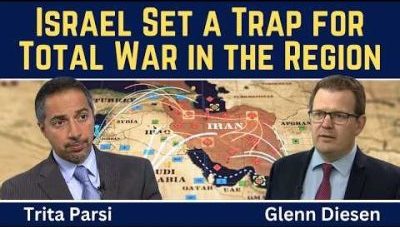
Trita Parsi: Israel Set a Trap for Total War in the Region
or go to
Aletho News Archives – Video-Images
From the Archive
Zionism’s Violent Legacy
By Donald Neff | Washington Report On Middle East Affairs | January 1996
On January 4, 1948, Jewish terrorists drove a truck loaded with explosives into the center of the all Arab city of Jaffa and detonated it, killing 26 and wounding around 100 Palestinian men, women and children.[1] The attack was the work of the Irgun Zvai Leumi – the “National Military Organization,” also known by the Hebrew letters Etzel – the largest Jewish terrorist group in Palestine. The Irgun was headed by Revisionist Zionist Menachem Begin and had been killing and maiming Arabs, Britons and even Jews for the previous ten years in its efforts to establish a Jewish state.
This terror campaign meant that at the core of Revisionist Zionism there existed a philosophical embrace of violence. … continue
Blog Roll
 Aletho News
- Trita Parsi: Israel Set a Trap for Total War in the Region
- Trump’s Iran war is on an Israeli leash
- Saudi oil boss issues global supply warning
- Riyadh Says Its Oil System Is Intact. The Numbers Say Otherwise.
- Trump and Netanyahu Want to “Finish the Job” on Iran
- US ‘one-sided dictation’ not Iran’s beliefs makes rational talks impossible: Baghaei
- Iran’s Next Strike May Not Explode. It Could Shut You Down /Col Doug Macgregor
- Iran: US political targets legitimate if assassinations return
- Iraq shuts key border crossing with Iran under US pressure: Report
- Undersea Internet cables could be targeted in retaliation for attacks on Iran: IRGC deputy chief
- If Americans Knew
- The Israel Lobby’s Changing Fortunes
- AIPAC has become such a political liability that it’s shifting to a more “nimble” approach to buying politicians
- At least 160 Israeli settler attacks in 2 weeks
- Will Gaza’s Ancient Christian Community Disappear Forever?
- Israel’s vision of regional security rests on keeping Arab states weak
- Heidi Levine recounts how Palestinian youths helped save her in settler attack
- DAILY UPDATE: Latest essential news on Palestine, Israel, & region
- Trump’s Intensifying Sabotage of the ICC, for Israel’s Sake
- Israeli military detain US and UK volunteers in West Bank including Democratic NY politician Brad Lander
- Americans at National Conservatism Conference held in Israel this year criticize Israel
- No Tricks Zone
- E-Cars Reduce CO2 Emissions By Only 41% Compared To Internal Combustion Engine Vehicles
- Predictions Made By Renowned Climate Professor Over Past Decades Have Been Proven To Be Poor
- New Study Suggests Large Regions Of The Pacific Ocean Have Been Cooling For The Last 80 Years
- Germany’s Green Energy Debacle: High Energy Costs Force Kahla Porzellan to Close After 182 Years!
- New Study: 50 Years Of The Most Aggressive ‘Net Zero’ Policies Can Only Affect The Global Climate By 0.03°C
- US September “Heat” Was No Record…Many Records Set Decades Ago
- Latest European Green Energy Debacle; Portugal’s Largest Flagship Solar Park Insolvent!
- Green Energy Debacle: German Expert Professor Fritz Vahrenholt Warns Of Severe Economic And Social Consequences
- Two More Paleo Reconstructions Affirm Meters-Higher Sea Levels Across Ireland, Brazil 7000-6000 Years Ago
- New Study: Earth And Venus Surface Warmth Largely Explained By Convection And Lapse Rate, Not CO2 Or Radiation

