Territorial dispute growing between Guyana and Venezuela
By Lucas Leiroz | March 4, 2021
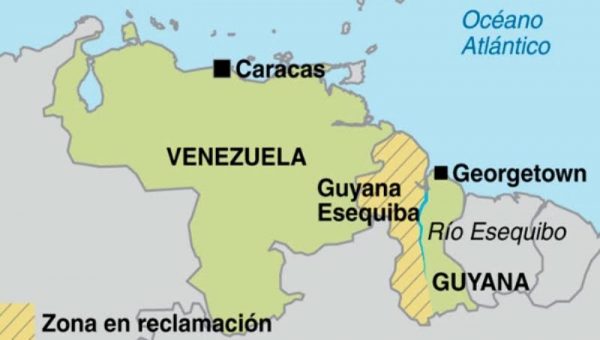
An old territorial dispute in South America is reaching its most tense point in decades. The territory known as Essequibo has been mutually claimed by Guyana and Venezuela since the 19th century when Guyana still belonged to the United Kingdom. In 1897, the Venezuelan and British authorities agreed to submit their dispute to an arbitrary international court in Paris, which ruled that the land belonged to the UK. For decades, the arbitration decision was accepted by Caracas, but in 1948 Venezuelan authorities revealed some irregularities in the trial, which were documented in old government files. As a result, the decision was considered null, and years later, in 1963, Venezuela formally submitted its territorial claim to the United Nations, and the dispute remains unresolved till today, when the interests of foreign oil companies threaten to increase the tensions.
As a region rich in oil, Essequibo has recently entered the map of the large multinationals in this sector, especially the American Exxon Mobil. More than that, the economic sanctions imposed on Venezuela and the political alignment of Guyana with Washington contribute to create an even more controversial scenario. Guyana has the support of the large private oil sector and the American government, while Venezuela remains alone. Last year, the case was filed with the International Court of Justice, but Venezuela did not accept it and remained out of the trial.
However, in a sentence on December 18, 2020, the Court proclaimed its competence to intervene in the dispute, despite Venezuela’s position. It is necessary to highlight that, regardless of any decision taken by the Court over who really has sovereignty in Essequibo, this sentence must be considered null, since the absence of Venezuelan consent prevents the execution of the sentence. The need for consent is one of the most elementary principles of international law and the very fact that the Court declares itself competent already leads us to question whether its judges are really impartial – clearly, the norms of international law are being violated in favor of Guyana.
Guyana has publicly admitted that its expenses for the court case in The Hague were paid by Exxon Mobil. Although the American oil company has been operating in Guyana for decades, its interest has been greatly increased with the recent discoveries of oil reserves and investors are willing to do anything to ensure the exploration of local natural resources. Currently, Exxon Mobil is interested in expanding its facilities over an area of more than 26,000 square kilometers, which not only crosses the disputed territory in Essequibo, but also violates Venezuelan undisputed national territory.
With this scenario of clear attack on Venezuelan national sovereignty and possible collaboration of the International Court with one of the parties, Venezuela is at a disadvantage mainly due to its diplomatic weakness. Venezuela, at this point, lacks sufficient influence to cause the Court to review its decision or judge the case in a really partial way. For that, only strong international alliances can help Caracas. The large nations that are not aligned with Washington and have so far cooperated strongly with Venezuela, Russia and China, might be provoked by the Venezuelan government to incite international pressure in this regard. Only these two countries can mediate a parallel agreement that may be established between Caracas and The Hague in order to choose between two paths: either Venezuela agrees to submit to trial on the condition that there is a partial judgment and without the influence of private companies, or the Court declines jurisdiction. As the first scenario is unlikely and difficult to monitor, the most viable route would be for The Hague to abdicate any form of judgment.
It is important to mention that, in the absence of international judgment, what is in force in Essequibo is the Geneva Agreement of 1966, which did not decide on sovereignty in the region, but, in search of a peaceful solution, defined what activities would be allowed or prohibited in Essequibo. Oil exploration by foreign companies is not allowed, so, in principle, Guyana is violating the agreement and its activities could only become lawful if there was a decision by the International Court on the matter, allowing exploration. As Venezuela does not submit to the Court, the trial is impossible and, therefore, exploration remains prohibited and Guyana is committing an international offense.
However, more worrying than that is the fact that the American military is working in Essequibo, carrying out tests with the aim of intimidating Venezuela and pressuring Caracas to renounce its demands. There are American military ships in Essequibo “protecting” Exxon Mobil facilities and provoking Caracas. In addition, considering that the American company wants to publicly explore areas within Venezuelan territory, what will become of the American presence? If Caracas does not allow the activities of Exxon Mobil, it is the Venezuelan right to control or even destroy the facilities in its territory. And what would be the American reaction to that – considering Biden’s aggressive interventionist policy?
It is for these reasons that, more than ever, countries of greater international relevance must mediate the issue in order to maintain the status of illegality to the Exxon Mobil’s activities. With international pressure, it is possible that the American company will retreat or that at least the American military in the region will leave and with that we would have a reduction in tensions.
Still, it is possible that with international mediation a mutual exploration agreement will be reached that allows both countries to enjoy the local wealth, without, however, allowing companies that violate the Geneva Agreement to operate.
Lucas Leiroz is a research fellow in international law at the Federal University of Rio de Janeiro.
Bolivia’s Central Bank Returns Añez’s Requested Loan To IMF
teleSUR | February 17, 2021
Bolivia’s Central Bank announced on Wednesday that it had returned US$346.7 million to the International Monetary Fund (IMF), a loan irregularly managed by the de facto government of Jeanine Añez.
“This loan, in addition to being irregular and onerous due to its financial conditions, generated additional and millionaire economic costs to the Bolivian State, which as of February 2021 amount to US$24.3 million of which US$19.6 million are due to exchange rate fluctuations 19.6 million for exchange variation and 4.7 million for commissions and interest,” the institution explained in a statement.
The Central Bank denounced that the IMF jeopardized the “country’s sovereignty and economic interests” through its Rapid Financing Instrument (RFI), which conditioned the funds to fiscal, financial, exchange rate monetary duties, which violate the Bolivian legal framework.
Moreover, authorities explain that they would start an investigation to prosecute all officials involved in the IMF’s illegal arrangement.
Argentina Denounces Presence of US Submarine

teleSUR | February 13, 2021
The Argentine Foreign Ministry, through an official statement published on its website expressed Friday its “serious concern” about the presence in the South Atlantic of the U.S. nuclear submarine USS Greeneville.
“The Argentine government expresses its serious concern over information that emerged from the official Twitter account of the Commander, Submarine Force Atlantic, by which it is pointed out that they would have recently operated with British support in the South Atlantic,” the Foreign Ministry expresses.
The statement also recalls that “carrying and using nuclear weapons” in the mentioned area contradicts resolutions of the United Nations Organization and urged to respect the region as a “zone of peace and cooperation.”
“The presence of ships capable of carrying and using nuclear weapons in the South Atlantic contradicts Resolution 41/11 of the United Nations General Assembly (Zone of Peace and Cooperation in the South Atlantic),” the communiqué stresses.
The official document recalls that the aforementioned resolution “calls upon States of all other regions, especially militarily important States, to scrupulously respect the South Atlantic region as a zone of peace and cooperation.”
“It is not the first time that Argentina” denounces “the presence of a British military base in the Malvinas Islands”, which is contrary to “various United Nations resolutions such as 31/49, which calls on the Governments of Argentina and the United Kingdom of Great Britain and Northern Ireland to expedite negotiations on the sovereignty dispute.”
Human Rights Watch denounces Cuba for human rights violations
By Lucas Leiroz | February 9, 2021
Denunciations of human rights violations against Cuba have become routine in the West. For decades, governments, NGOs and activists have denounced the Cuban government for various attitudes of abuse of universal rights, but the sources of such reports and evidence of crimes remain weak and vague. Once again, the NGO Human Rights Watch issued a report warning of an alleged “abusive” situation with regard to human rights on the island – and again the evidence is weak and reveals an ideologized action.
Every year, Human Rights Watch releases its global reports, covering all regions of the planet and warning against alleged human rights violations worldwide. In its 2021 edition, published on January 13, in the topic dedicated to Cuba, several crimes were reported, including alleged arbitrary arrests on the island, lack of freedom of expression, presence of political prisoners in Cuban penitentiaries, travel restrictions and several others acts that are presented to international society as frequent and structural in Cuba.
There are explanations for Human Rights Watch’s frontal opposition to Cuba, which are little publicized in the international media. In the past, the Cuban government has accused the National Endowment for Democracy (NED) of funding more than 20 organizations to promote complaints and defamations against the Latin country, including HRW. NED’s ties to the CIA prompted the Cuban government to veto agents from organizations linked to the NED into the country. In fact, regardless of whether or not there is a plot against the island organized by the NED and the CIA, it is clear that HRW’s annual reports are focused on denouncing and criticizing emerging countries, especially non-aligned nations, anticipating coercive measures taken by the US and other Western powers. This led Havana to endorse the narrative that HRW creates justifications for subsequent coercive measures with its allegations of human rights violations.
The central problem for the credibility of HRW reports is the authenticity of the organization’s sources. The reports are based on data provided by anti-government activists who are ideologically committed to the end of communism and the triumph of American interests on the island. To this end, such activists, who work inside and outside Cuba, adulterate, exaggerate or even create data that does not correspond to the reality of the country, as has been reported several times by Havana. The speech of anonymous activists follows a model predefined by American agencies interested in the fall of the Cuban government. This speech is disseminated by human rights NGOs and finally justifies coercive measures by the American government. For this reason, Havana sees HRW as a threat to its national security and this will not change, even if Washington strengthens its sanctions further, as there is a central ideological incompatibility between these countries that cannot be overcome with mere coercive maneuvers.
Exaggeration is certainly the greatest weapon of these agents. Surely, there are human rights violations in Cuba – just as there are in any nation. There is no country that has been successful in completely abolishing acts contrary to human rights. Many nations may have officially abolished such practices, but they certainly still exist unofficially and, equally, deserve investigation and criticisms. However, this persecution against “human rights violators” is generally applied when the charged state is an emerging nation geopolitically opposed to Washington, like Cuba. In this way, NGOs like HRW observe cases of violation and exaggerate them, claiming that there is a state policy to confront universal rights, when, in fact, they are only marginal practices that exist in any country.
Just as mistakes are exaggerated, merits are ignored. Cuba has some of the best social indicators on the American continent, being a global reference in education and with some of the most qualified medical professionals in the world. Havana is responsible for several humanitarian missions sending doctors and equipment to nations in need of medical care, including not only poor countries, but developed states in emergencies, such as Italy during the pandemic. Furthermore, Cuba seems to be advanced in many agendas exalted in the West. For example, women occupy 51% of the deputies in the National Assembly and are 62% of the country’s scientists – which are remarkably high numbers by Western standards. These indices show that, with or without structural disrespect, there is undeniable progress in terms of human rights, and this cannot be ignored.
However, Havana is right to think that HRW’s reports are not by chance. What we should expect for the future is the resurgence of a focus of tensions between Washington and Havana. Trump, in his last days in government, reversed a process of rapprochement between the countries when he considered Cuba again as a terrorist financing nation – a totally unreasonable accusation and without any material evidence, which Trump certainly did not believe, but made this decision as a strategic maneuver to harm Biden and transfer power to his successor with more international tensions. Biden promised to review Trump’s policy against Cuba but gave no details of exactly what points he will reform. However, a peaceful policy for Havana was never expected from the new American president. Biden’s reforms are likely to occur, more likely, to facilitate the flow of migration and to include “humanitarian” issues in relations, shifting the focus of tensions from a security and defense perspective to one of respect for human rights and democracy.
In practice, this means that Biden must try to harm Cubans even more by imposing international sanctions in order to force Havana to comply with humanitarian standards that are already respected but whose compliance will never be recognized by NGOs committed to the American government.
Lucas Leiroz is a research fellow in international law at the Federal University of Rio de Janeiro.
Armed conflict between Venezuela and Guyana will involve US forces
By Lucas Leiroz | February 3, 2021
A new focus of tensions is emerging in South America. Since the discovery of oil in Guyana, this country has been increasingly approaching Washington both as an economic partner and as a political ally. The Americans see the partnership with the Guyanese as an opportunity to fill the void left in the global oil market with the economic sanctions imposed on Venezuela. But, in addition to a mere economic alliance, the ties between both countries are also rising to the military sphere, which is generating concerns in Caracas.
On January 21, regional tensions reached their peak. Guyanese fishing boats Nady Nayera and Sea Wolf were intercepted by Venezuela after an illegal incursion into Venezuelan territory. Caracas, not having authorized the entry of the vessels, interpreted the maneuver as dangerous to national security and kept the boats under its control. However, this Venezuelan version of the facts was denied by Georgetown, which claimed that the ships were detained within Guyana’s Exclusive Economic Zone.
Some noteworthy factors preceded this escalation of tensions. On January 7, Venezuelan President Nicolás Maduro signed a decree that establishes the formation of a new maritime territory on the Atlantic coast. The decree includes part of the Essequibo region, in which there is a territorial dispute with Guyana. The so-called “Guyana Essequiba” refers to a territory currently under the rule of Guyana that previously belonged to Venezuela, having been transferred to Guyanese possession after an arbitrary sentence in an international court organized by the United Kingdom at the end of the 19th century.
Venezuela has since claimed sovereignty over Essequibo, but tensions have been mild most of the time. However, Guyana, since aligning with the US, has been adopting more aggressive measures in the region. The US armed forces recently began military exercises in Guyana and deployed several military ships along Essequibo’s 159,000 km². The territory is rich in oil and the American justification for the exercises is precisely to protect the oil extraction bases installed by the company ExxonMobil. In the midst of such circumstances, Venezuela has its national sovereignty violated and is therefore trying to establish minimum measures to guarantee its interests.
However, despite the rivalry having resumed an old territorial dispute, it is necessary to emphasize that there is an agreement in force on Essequibo that Guyana is directly violating. In 1966, Guyana and Venezuela signed the Geneva Agreement, mediated by the United Nations, which determined which activities would be permitted in which area of Essequibo. In this document, oil exploration by foreign companies is not allowed. Since 2015, the Guyanese government has violated the pact, allowing multinationals to explore for oil there. In 2018, Venezuela had already intercepted ExxonMobil vessels that invaded its territory to explore oil. Now, Venezuelan President Nicolás Maduro has determined the creation of a Special Strategic Zone to increase security over Essequibo because the tendency is for territorial violations to increase further, considering that regional diplomacy is already broken, and that Guyana has become a satellite nation of Washington’s interests – which publicly plans to overthrow Maduro. The Venezuelan decision was condemned by the president of Guyana, Irfaan Ali, which prompted Caracas to issue a statement saying that such positions suggested preparation for an armed confrontation.
The Guyanese attitude has not changed over time. Now, once again, ships have entered Venezuelan territory, leading to their capture by the Bolivarian forces. If that situation continues, the Venezuelan response to foreign incursions may become increasingly rigid and the armed forces are likely to start taking down invasive vessels, which will lead to Washington’s severe responses. Currently, we can no longer regard the South American scenario as “unlikely” for a war to arise. The security crisis is widespread and with Biden in power many experts suggest that American foreign policy will become more aggressive and interventionist. Guyana has a much weaker military apparatus than the Venezuelan State and cannot face the neighboring country with its own forces. It remains to be seen what Washington’s willingness to invest in a conflict in South America will be.
More than ever, a new international agreement is needed to establish a new regulation for the region. The agreement, however, must be impartial and try to favor both nations. In an ideal scenario, the other South American nations, being co-participants in the disputes, should mediate such an agreement. But, today, the political structure of South America is absolutely broken, and no nation has sufficient diplomatic strength to resolve a demand of this nature.
Lucas Leiroz is a research fellow in international law at the Federal University of Rio de Janeiro.
Felony Murder and Gen. Rene Schneider
By Jacob G. Hornberger | FFF | January 14, 2021
 Some legal experts are speculating about the possibility that people who participated in the January 6 Capitol melee could be charged with murdering Capitol police officer Brian Sicknick, even though they did not participate in his killing. The felony-murder rule holds that if a person is involved in the commission of a felony in a conspiracy with others, he can be charged with murder even though others in the conspiracy did the killing.
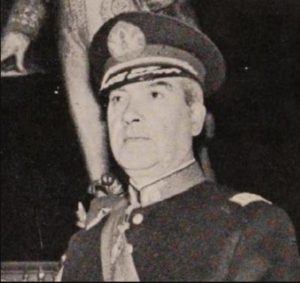
When I read that, I immediately thought about the kidnapping and murder of Chilean General Rene Schneider, who was killed in 1970. In fact, it’s interesting that while the members of Congress and the mainstream press express shock and outrage over recent events in the Capitol, they have long been non-plussed by the shocking and outrageous violence that U.S. government officials instigated and in which they participated in 1970.
Schneider was the overall commander of Chile’s armed forces. He was a man of deep integrity, had a family, and believed that it was the duty of the military to support and defend the constitution of the country.
In the 1970 presidential election, the Chilean people delivered a plurality of votes to a man named Salvador Allende, who U.S. officials reviled because he was a socialist. Like President Kennedy ten years before, Allende was interested in establishing friendly relations with the communist world, including the Soviet Union and Cuba, two official Cold War enemies of the U.S. national-security establishment. Keep in mind that in 1970, the Cold War was still continuing and that the communists were defeating U.S. military and CIA forces in the Vietnam War.
U.S. officials determined that Allende posed a grave threat to “national security” — not only the “national security” of the United States but also the “national security” of Chile. They decided to prevent his accession to the presidency, either through bribes to the Chilean congress or through a U.S.-supported coup that would install a right-wing military dictatorship in the country.
There was one big obstacle to a coup: Gen. Rene Schneider.
The Chilean constitution provided for only two ways to remove a duly elected president from office: by impeachment (and conviction) or through the next election. The Chilean constitution did not provide for a coup as a third way to remove a president from office.
The Chilean congress had been unable to secure enough votes to remove Allende from office through impeachment. That left the next election, which would have meant that Allende would stay in office for the next 6 years.
Schneider’s position was very simple: Since the Constitution did not provide for a coup to remove the president, the military could not act to remove him.
The U.S. national-security establishment’s position was different: While it too favored supporting and defending the U.S. Constitution, it held that there was an implicit exception to the rule, which was: Whenever a country’s president is determined to be a grave threat to the “national security” of his own country, it becomes the the moral duty of the national-security establishment to protect “national security” by removing the president from office. (As I point out in an upcoming article in FFF’s monthly journal Future of Freedom, this mindset has clear ramifications in the Kennedy assassination, which occurred ten years prior to Allende’s election.)
In order to achieve the coup, it was necessary to remove Schneider as an obstacle. Thus, U.S. officials within the CIA and other parts of the U.S. government entered into a conspiracy to kidnap Schneider.
Now, before a go further, I know what some of you are thinking: “Conspiracy theory, Jacob! Conspiracy theory! There is no way that officials of the U.S. government would ever conspire to violently kidnap an innocent man! It’s outrageous that you would even suggest such a thing about our government!”
But the fact is that that this conspiracy did in fact occur, notwithstanding the fervent mindset that some might have to deny its existence. The CIA secretly hired the kidnappers, paid them money, including hush money after the fact, and even smuggled high-powered weapons into the country, which they gave to their Chilean co-conspirators.
When the kidnappers attempted to kidnap Schneider on the streets of Santiago, he was armed and fought back. The kidnappers shot him and Schneider died three days later from his wounds.
The CIA claimed that it never intended to murder Schneider. It said that it just wanted to kidnap him. However, that claim has the word “lie” written all over it. After all, what could they have done with him after kidnapping him? They couldn’t return him, given that would have restored him as the obstacle to the coup. Moreover, if they returned him, he might have been able to lead law-enforcement personnel to the kidnappers and ultimately to the CIA. Thus, it is a virtual certainty that Schneider would have been killed by one of the kidnappers and that the CIA would have dutifully expressed shock.
Nonetheless, enter the felony-murder rule. Kidnapping is a felony. So is conspiracy to kidnap. Under the felony-murder rule, the U.S. conspirators were as responsible for Schneider’s murders as the actual killers.
The CIA and other U.S. officials who participated in the conspiracy tried desperately to keep their involvement in the conspiracy secret. People who suspected their complicity in the plot were undoubtedly labeled “conspiracy theorists.” But investigators in the private sector kept pushing and ultimately the truth came out: The CIA and other U.S. officials had participated in a felony, with the conspiracy taking place in both Virginia and Washington, D.C.
Nonetheless, the Justice Department has never charged any of the conspirators with kidnapping or murder or conspiracy to commit kidnapping and murder. Keep in mind that there is no statute of limitations for murder. But even if a federal grand jury were to return a criminal indictment, it is a virtual certainty that the federal judiciary would immediately dismiss it on grounds of “national security.”
It’s probably worth mentioning that when the family of Rene Schneider sued in federal district court for Schneider’s wrongful death, the federal courts threw them out on their ears, without even permitting them to take depositions that could have determined the full extent of the conspiracy. When it comes to extraordinary measures to protect “national security,” including kidnapping and assassination, secrecy in a national-security state is always paramount.
But that’s the nature of any national-security state: omnipotent power to inflict violence on innocent people with immunity and impunity, even while decrying violence committed by others.
Jacob G. Hornberger is founder and president of The Future of Freedom Foundation. He was born and raised in Laredo, Texas, and received his B.A. in economics from Virginia Military Institute and his law degree from the University of Texas. He was a trial attorney for twelve years in Texas. He also was an adjunct professor at the University of Dallas, where he taught law and economics. In 1987, Mr. Hornberger left the practice of law to become director of programs at the Foundation for Economic Education.
Revealed: UK Sets Up Media Influencing Project in Venezuela
By Matt Kennard and John McEvoy | Declassified UK | January 6, 2021
The UK government has established a journalism project to ‘influence’ Venezuela’s ‘media agenda’ while a Foreign Office-funded foundation is spending £750,000 on a secretive ‘democracy-promotion’ programme in the country, as Britain appears to deepen efforts to remove the Maduro government.
- UK government has allocated £250,000 from its aid budget to ‘influence’ local and national ‘media agendas’
- British funding for journalism should not be ‘referred or linked to’, government says
- Westminster Foundation for Democracy has spent over £750,000 in Venezuela since 2016
- It refuses to tell Declassified details about its partners in Venezuela
- Foundation’s country representative sympathised with armed coup attempt in the country
As Venezuela’s political crisis continues, the UK government has initiated a new project promoting investigative journalism in Latin America which furtively covers Venezuela.
The project, launched last summer and intended to “influence” the media agenda in the country, follows a long history of the British government using journalism as an influencing tool. It raises suspicions that it aims to help remove the leftist government of Venezuela president Nicolás Maduro.
In a separate programme, the Westminster Foundation for Democracy (WFD), a majority UK-government funded organisation, has spent over £750,000 to “strengthen democracy” in Venezuela since 2016, according to documents obtained by Declassified.
The WFD’s programmes in the country are shrouded in secrecy due to apparent concerns about the security of its staff, although its country representative advertises his affiliation to the organisation online.
The British government controversially recognises Venezuelan opposition figure Juan Guaidó as president and is running a number of anti-government programmes in the country using the Conflict, Stability and Security Fund (CSSF) which supports projects designed “to tackle instability and to prevent conflicts that threaten UK interests”.
The aim of the fund’s new journalism project is stated to be the creation of a “new platform that strengthens media organisation [sic] throughout the region and provides journalists with a platform in which they can collaborate and build regional stories”.
Programme literature notes that successful applicants should display “a capacity to link into – and ultimately influence – local and national media agendas”.
But they are warned that “the British government — and its resourcing of the project — should not be expressly referred or linked to the individual outputs of the project (i.e. individual articles, events etc).”
Run by the British embassy in Bogotá, Colombia, the call for applications noted that successful bids would start in August 2020. There has been no public update since, although the Foreign Office told Declassified there had been delays due to the coronavirus pandemic.
On the public advert, applicants are advised to budget up to £250,000 for their projects, but the Foreign Office told Declassified : “it is not currently possible to confirm what budget will be available for this project.”
Declassified’s repeated questions about the project to its two coordinators in Bogotá went unanswered. However, a Foreign Office spokesperson told Declassified: “It is inaccurate to conflate this call for bids with the UK position on Venezuela, which has not changed. We want to see a democratic transition with free and fair elections take place in Venezuela.”
The CSSF put out a public call in June last year for applications from journalists seeking to cover crime and corruption in Colombia, Peru and Panama, adding there was the “potential to cover linked events in other neighbouring countries”. The word Venezuela did not appear.
However, CSSF documentation published three days before the advert outlined the same programme with the addition of Venezuela in its title. The furtive inclusion of the country appears to reflect Foreign Office reticence to publicise its increased involvement in Venezuela.
The summary of another CSSF programme, again in Colombia for the year ending March 2020, includes the recommendation to “engage” Foreign Office officials “about options to develop CSSF programmes in Venezuela”.
A September 2019 job advert for a CSSF programme manager in Lima, Peru, notes that the successful applicant will work “with colleagues in Colombia, Panama and, potentially, Venezuela”.
Declassified recently revealed that the CSSF has spent £450,000 setting up an anti-government coalition in Venezuela, again by furtively adding the project to an existing programme focused on Colombia and beginning in 2019.
Journalism as information war
The UK government has long used the media to undermine foreign leaders and political movements it perceives as a threat to British business interests.
Declassified recently revealed that a secretive Cold War propaganda unit, named the Information Research Department (IRD), tried to prevent Chilean socialist Salvador Allende from winning presidential elections in 1964 and 1970.
Declassified files also reveal that during the Brazilian dictatorship of 1964-1985, the IRD “assiduously cultivated” one of Brazil’s leading left-wing publishers, Samuel Wainer.
Though the unit was shut down in 1977, Britain has continued to sponsor journalistic ventures in Latin America. In response to a freedom of information request, the Foreign Office revealed that, between January 2016 and September 2018, it funded Venezuelan news outlet Fundación Efecto Cocuyo, as well as the Instituto Radiofónico Fe y Alegría and Sindicato Nacional de Trabajadores de la Prensa.
While receiving funds from the British government, Efecto Cocuyo teamed up with two British organisations — Bellingcat and Forensic Architecture — to “call for more evidence” regarding the killing of Óscar Pérez at the hands of Venezuelan police. Pérez, a police officer, had hijacked a police helicopter and, on 27 June 2017, used it to attack a number of government buildings in central Caracas.
In July 2019, Efecto Cocuyo’s editor, Luz Mely Reyes, spoke at the UK government’s “Global Conference for Media Freedom” event in London. Then foreign secretary Jeremy Hunt, addressing the conference, said Reyes “has defied the Maduro regime by co-founding an independent news website, Efecto Cocuyo”, without mentioning the website’s links to the British government.
London’s support for media projects in Venezuela appears to mirror that of the US National Endowment for Democracy (NED). According to its accounts, the NED has funded “freedom of information” projects in Venezuela aimed at fostering a “greater understanding of the spillover effects of Venezuelan corruption and criminal activity” by working with “investigative journalists and partner organisations”.
A 2017 NED project, with a budget of over $60,000, aims to “increase transparency and accountability in the Venezuelan government procurement processes. And to foster collaboration with journalists across the region”.
Media freedom group, Reporters Without Borders, which is also funded by the NED, notes: “Venezuela’s president since 2013, Nicolás Maduro persists in trying to silence independent media outlets and keep news coverage under constant control.”
It adds: “The climate for journalists has been extremely tense since the onset of a political and economic crisis in 2016, and is exacerbated by Maduro’s frequent references to ‘media warfare’ in an attempt to discredit national and international media criticism of his administration.”
The embassy in Bogotá
One of the two Foreign Office points of contact for the project at the British embassy in Bogotá is Claudia Castilla, a Colombian national who was a UK government-funded Chevening Scholar in London from 2017-18.
Castilla appears to be a strong supporter of the Venezuelan opposition, writing in February 2014 “I think I fell in love with Leopoldo López”, referring to a leading opposition figure. At the time US-educated López was promoting street protests in a strategy known as “The Exit”, after Maduro won presidential elections in April 2013.
From 2014-15, Castilla worked as a research assistant for the Colombian chapter of Transparency International, where she “formulated public policy recommendations”. Declassified recently revealed the UK government funded Transparency International’s Venezuelan chapter to set up an “anti-corruption” coalition in the country.
From 2012 to 2013, Castilla worked for the Cerrejón Foundation, the charitable arm of the controversial Cerrejón coal mine in Colombia which is run by three London-listed mining multinationals. For the latter period of her employment, Castilla was the foundation’s “social control advisor”.
‘Democracy promotion’
Documents obtained by Declassified also show that the Westminster Foundation for Democracy — Britain’s “democracy promotion” arm — has been running expensive programmes in Venezuela.
The WFD claims to be “the most effective organisation sharing the UK democratic experience”, but its operations are shrouded in secrecy.
Venezuela hosts the WFD’s only full-scale programme and permanent office in Latin America as part of a project which began in 2016. Since then the WFD has spent £760,680, according to figures obtained by Declassified.
The largest outlay was £248,725 in 2017-2018, as the EU announced a sanctions regime against Venezuela and British officials intensified calls for “different people at the helm” of the Venezuelan government.
Alan Duncan, then minister of state for the Americas, said in 2018: “Maduro’s double crime is that his destruction of the economy has been followed by the systemic undermining of democracy.” He added: “The revival of the oil industry [in Venezuela] will be an essential element in any recovery, and I can imagine that British companies like Shell and BP, will want to be part of it.”
Last year, the WFD spent £113,193 on its Venezuela operations, while Declassified understands a bid for funding of just over £27,500 for next year is awaiting approval. The WFD has two full-time staff in Venezuela.
In December, UN human rights experts found that “since November 2020 Venezuela has systematically stigmatised and persecuted civil society organisations, dissenting voices and human rights defenders”.
The WFD has no similar programmes in UK government-allied dictatorships such as Saudi Arabia, Oman, Bahrain, or the United Arab Emirates.
The Foundation told Declassified: “WFD works to strengthen democracy around the world. We are funded by the UK as well as other governments (including Canada, Germany, Norway and Switzerland) and international organisations (such as the United Nations Development Programme) and are operationally independent.”
But the vast majority of the WFD’s funding comes from the British government. In the year to March 2020, it provided £11.4-million to the Foundation, while all other sources of income added up to £1.5-million.
The WFD said that in Venezuela it works “with a range of MPs, National Assembly staff, civil society, and academics” but it refused to disclose to Declassified information about who those partners are. It said this was “to avoid endangering the physical health or safety of those partners”.
However, the WFD’s country representative in Venezuela advertises his position on his public Linkedin page, and his email and phone number are available through WFD job adverts.
As its Venezuela programme began in 2016, the WFD published an article on the independent news site openDemocracy in association with Daniel Fermín, a Venezuelan researcher.
The article asked: “Can Venezuela’s president [Nicolás Maduro] be unseated peacefully?”. In the following two years, openDemocracy was awarded $99,661 (£74,131) by the US analogue of the WFD, the National Endowment for Democracy.
According to a 2018 WFD posting for a job in Venezuela’s capital, Caracas, its country representative is expected to work with the British embassy and must “contribute to development of future business opportunities in Venezuela”.
When asked why it focused on Venezuela, the foundation told Declassified: “WFD programmes have been active in other countries across Latin America. We stand ready to launch new programmes and country offices when the opportunity arises.”
Neutrality
The WFD says that it “works on a cross-party basis” in Venezuela, “seeking to engage all sides of the political divide while supporting democratic institutions in the country”.
In January 2019, shortly after Guaidó proclaimed himself president, the WFD’s country representative wrote that “last years elections [sic] were a sham and therefore Maduro is an usurper”.
The next month — after trucks of the United States Agency for International Development (USAID) attempted to enter Venezuelan territory — he said: “Non-intervention cannot be an absolute principle that doesn’t consider other factors”.
On 30 April, when Guaidó launched an armed coup attempt in Caracas, the WFD’s representative announced that Guaidó’s actions were “not an assault on democracy but the other way round”. Elsewhere, he has described Chavismo — referring to former president Hugo Chávez — as a “plague”.
UK parliamentarians overseeing WFD’s operations have also disparaged the Venezuelan government. Conservative MP Richard Graham, the chair of WFD’s board of governors for the duration of its Venezuela project, said in December 2019 that “Islington Corbynsistas [sic] don’t get that extreme left ideas never work, whether in 2019 Venezuela or 80s Liverpool”.
The WFD’s board is appointed by the UK foreign secretary and is modelled on the NED, which has been described by the Washington Post as the “sugar daddy of overt [US] operations”. Since Chávez’s election in 1998, the NED has been the guiding hand behind a number of efforts to overthrow the government in Venezuela.
While the NED’s operations abroad have received some independent scrutiny, the WFD – has largely operated under media silence.
Matt Kennard is head of investigations at Declassified UK. John McEvoy is an independent journalist who has written for International History Review, The Canary, Tribune Magazine, Jacobin, Revista Forum, and Brasil Wire.
Declassified UK is an investigative journalism organisation that covers the UK’s role in the world. Follow Declassified on Twitter, Facebook and YouTube. Sign up to receive Declassified’s monthly newsletter here.
Featured Video

Chinese jet fuel and the myth of energy independence
or go to
Aletho News Archives – Video-Images
Book Review
Former Insiders Criticize Iran Policy as U.S. Hegemony
By GARETH PORTER | CounterPunch | February 27, 2013
“Going to Tehran” arguably represents the most important work on the subject of U.S.-Iran relations to be published thus far.
Flynt Leverett and Hillary Mann Leverett tackle not only U.S. policy toward Iran but the broader context of Middle East policy with a systematic analytical perspective informed by personal experience, as well as very extensive documentation.
More importantly, however, their exposé required a degree of courage that may be unparalleled in the writing of former U.S. national security officials about issues on which they worked. They have chosen not just to criticise U.S. policy toward Iran but to analyse that policy as a problem of U.S. hegemony. … continue
Blog Roll
 Aletho News
- What is fueling unrest across the EU?
- Why no power can undermine Iran’s eternal dominance over the Strait of Hormuz
- Is The War Against Iran Over?
- Iran war will leave long-term ‘scar’ on Wall Street, investors warn
- How Iran decimated US power projection in West Asia: Military lessons of 40-day war
- Iran’s report details US-Israeli war crimes in targeting schools, hospitals, livelihoods
- NATO’s Slow Fracture: How Trump’s Iran War Exposed the Instrument of Hegemony
- Chinese jet fuel and the myth of energy independence
- Ukraine Sea Drone Fired From Libya Hit Russian Tanker in Mediterranean
- IRGC: Iranian forces launched no attacks during ceasefire hours
- If Americans Knew
- Military aid to Israel emerges as the latest political litmus test for Democrats
- The only Palestinian children’s rights organization closes following years-long Israeli campaign against it
- ‘I Can’t Forget the Smell’: Lebanese Reel After Israel Kills Over 300 in Single Day
- DNC Shoots Down Resolutions Calling Out AIPAC and Limiting Arms to Israel
- TCN: Is Israel Blackmailing President Trump?
- Israel killed at least 303 Lebanese yesterday – who were they? Daily Update
- Amnesty: Urgent – Protect Lebanese civilians from brutal escalation in Israeli attacks
- Is The War Against Iran Over?
- Inside the Israeli army’s propaganda wing
- Hundreds of Gaza Amputees Stranded in Legal Limbo
- No Tricks Zone
- An Inconvenient Tree: Uncovered In Alps… Europe Much Warmer Than Today 6000 Years Ago
- New Study Reports A 60% Slowdown In Greenland’s Ice Loss Rate In The Last Decade
- Low Intensity Tornado Wrecks Major Solar Farm, Creating A Potential Toxic Dump
- New Study Finds Warming Saves Lives…Cold Temperatures 12 Times More Deadly Than Excess Heat
- German Science Blog Accuses PIK Climate Institute Of Hallucinating Climate Tipping Points
- Devastating Assessment Of Comirnaty Vaccine By Former Senior Pfizer Europe Toxicologist
- New Study: CO2 Is ‘Effectively Negligible’ As An Explanatory Climate Change Factor Since 2000
- Former Pfizer Toxicologist Dr. Helmut Sterz Tells Bundestag Hearing Pfizer Vaccine Should Have Never Been Approved
- Energy Expert: Germany’s Nuclear Phaseout Was A “500 Billion Euro Mistake”
- New Research: South Australia’s Mid-Holocene Sea Surface Temperatures Were 4°C Warmer Than Today
 Aletho News